Idiopathic Intracranial Hypertension in Children and Adolescents with Obesity: A Narrative Review
 , , , ,
Highlights
- The increasing incidence of IIH in children and adolescents is strongly linked to the global obesity epidemic.
- Weight loss (6–10%) remains the cornerstone of treatment, with bariatric surgery and new anti-obesity medications (GLP-1 agonists) emerging as highly effective options for long-term IIH remission.
- The complex pathophysiology—linking obesity, hormones, and CNS pressure—mandates a multidisciplinary team (Neuro-Ophthalmology, Pediatric Endocrinology, Nutrition) for optimal patient prognosis.
- Since weight loss is the only etiological treatment, therapeutic strategies must prioritize prompt, effective weight reduction, incorporating newer anti-obesity agents and surgical options in refractory adolescent cases to prevent permanent vision loss.
Abstract
1. Introduction
2. Materials and Methods
3. Epidemiology of IIH
4. Clinical Presentation of IIH
5. Diagnosis of IIH
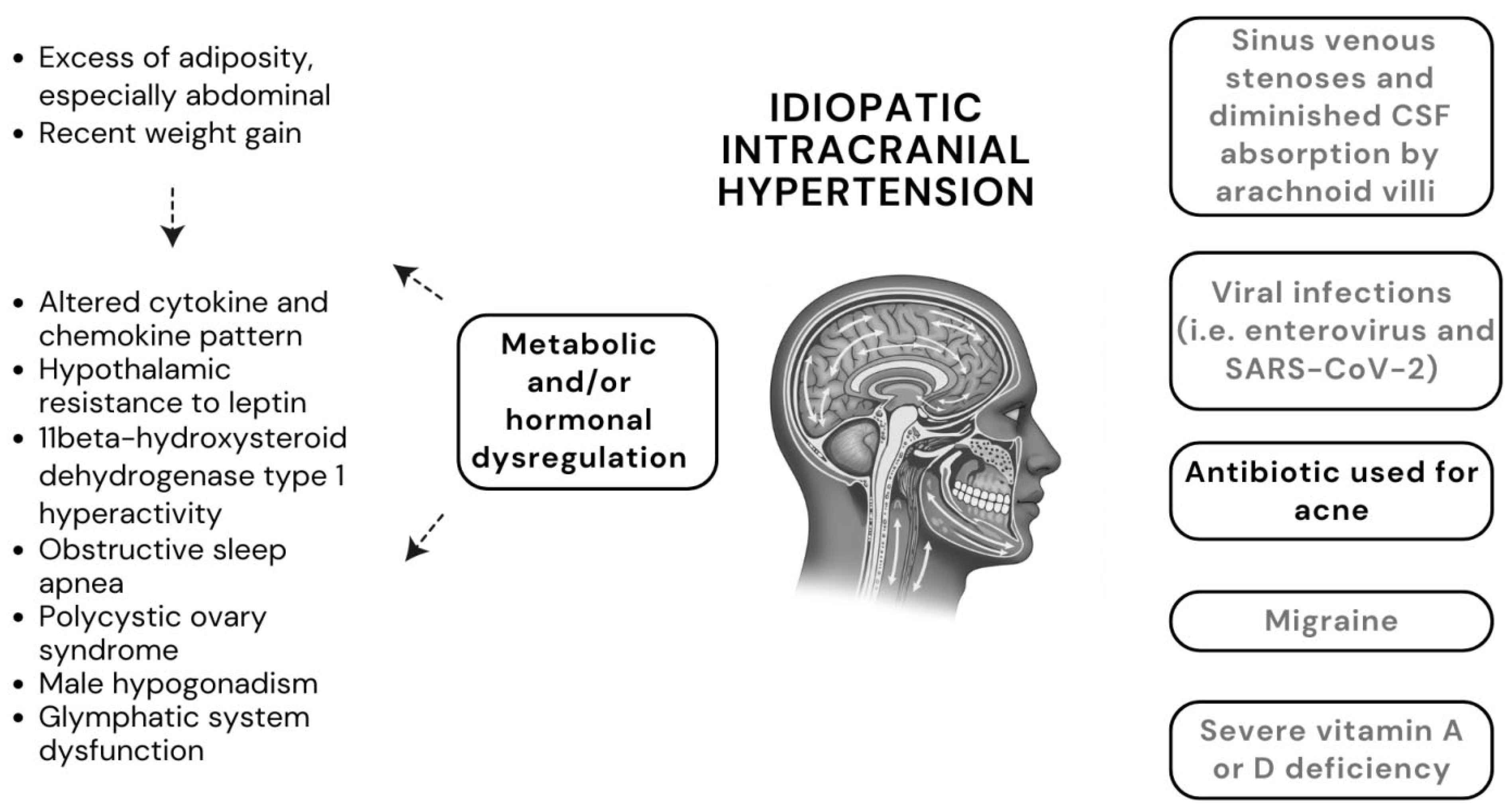
6. Pathophysiology Underlying the Association Between IIH and Obesity: A Roadmap to Novel Treatments
7. Current and Emerging Strategies for Pediatric IIH Management
7.1. Non-Pharmacological Weight Loss Strategies
7.2. Traditional Pharmacotherapy
7.3. Beyond Symptomatic Relief: Emerging Pathophysiology-Targeted Therapies for IIH
7.4. Surgical Options
8. Treatment Monitoring
9. The Impact of Obesity on Long-Term Outcomes of IIH
10. Conclusions and Future Directions
Author Contributions
Funding
Institutional Review Board Statement
Informed Consent Statement
Data Availability Statement
Conflicts of Interest
Abbreviations
| 11βHSD1 | 11β-Hydroxysteroid Dehydrogenase Type 1 |
| BMI | Body Mass Index |
| CSF | Cerebrospinal Fluid |
| GIP | Glucose-Dependent Insulinotropic Polypeptide |
| GLP-1 RAs | Glucagon-Like Peptide-1 Receptor Agonists |
| GS | Glymphatic System |
| HRQoL | Health-Related Quality Of Life |
| ICP | Intracranial Pressure |
| IIH | Idiopathic Intracranial Hypertension |
| MRI | Magnetic Resonance Imaging |
| OCT | Ocular Coherence Tomography |
| ONSF | Optic Nerve Sheath Fenestration |
| OP | Opening Pressure |
| OSA | Obstructive Sleep Apnea |
| PCOS | Polycystic Ovary Syndrome |
| VSS | Venous Sinus Stenting |
References
- Mollan, S.P.; Davies, B.; Silver, N.C.; Shaw, S.; Mallucci, C.L.; Wakerley, B.R.; Krishnan, A.; Chavda, S.V.; Ramalingam, S.; Edwards, J.; et al. Idiopathic Intracranial Hypertension: Consensus Guidelines on Management. J. Neurol. Neurosurg. Psychiatry 2018, 89, 1088–1100. [Google Scholar] [CrossRef]
- Hoffmann, J.; Mollan, S.P.; Paemeleire, K.; Lampl, C.; Jensen, R.H.; Sinclair, A.J. European Headache Federation Guideline on Idiopathic Intracranial Hypertension. J. Headache Pain 2018, 19, 93. [Google Scholar] [CrossRef] [PubMed]
- Andrews, L.E.; Liu, G.T.; Ko, M.W. Idiopathic Intracranial Hypertension and Obesity. Horm. Res. Paediatr. 2014, 81, 217–225. [Google Scholar] [CrossRef]
- Apperley, L.; Kumar, R.; Senniappan, S. Idiopathic Intracranial Hypertension in Children with Obesity. Acta Paediatr. 2022, 111, 1420–1426. [Google Scholar] [CrossRef] [PubMed]
- Steinruecke, M.; Tiefenbach, J.; Park, J.J.; Kaliaperumal, C. Role of the Glymphatic System in Idiopathic Intracranial Hypertension. Clin. Neurol. Neurosurg. 2022, 222, 107446. [Google Scholar] [CrossRef]
- Chen, B.; Lenck, S.; Thomas, J.-L.; Schneeberger, M. The Glymphatic System as a Nexus between Obesity and Neurological Diseases. Nat. Rev. Endocrinol. 2025, 21, 1–2. [Google Scholar] [CrossRef] [PubMed]
- Malem, A.; Sheth, T.; Muthusamy, B. Paediatric Idiopathic Intracranial Hypertension (IIH)—A Review. Life 2021, 11, 632. [Google Scholar] [CrossRef]
- Nitzan-Luques, A.; Bulkowstein, Y.; Barnoy, N.; Aran, A.; Reif, S.; Gilboa, T. Improving Pediatric Idiopathic Intracranial Hypertension Care: A Retrospective Cohort Study. Sci. Rep. 2022, 12, 19218. [Google Scholar] [CrossRef]
- Mollan, S.P.; Aguiar, M.; Evison, F.; Frew, E.; Sinclair, A.J. The Expanding Burden of Idiopathic Intracranial Hypertension. Eye 2019, 33, 478–485. [Google Scholar] [CrossRef]
- McCluskey, G.; Doherty-Allan, R.; McCarron, P.; Loftus, A.M.; McCarron, L.V.; Mulholland, D.; McVerry, F.; McCarron, M.O. Meta-analysis and Systematic Review of Population-based Epidemiological Studies in Idiopathic Intracranial Hypertension. Eur. J. Neurol. 2018, 25, 1218–1227. [Google Scholar] [CrossRef]
- Matthews, Y.-Y.; Dean, F.; Lim, M.J.; Mclachlan, K.; Rigby, A.S.; Solanki, G.A.; White, C.P.; Whitehouse, W.P.; Kennedy, C.R. Pseudotumor Cerebri Syndrome in Childhood: Incidence, Clinical Profile and Risk Factors in a National Prospective Population-Based Cohort Study. Arch. Dis. Child. 2017, 102, 715–721. [Google Scholar] [CrossRef] [PubMed]
- Radhakrishnan, K.; Thacker, A.K.; Bohlaga, N.H.; Maloo, J.C.; Gerryo, S.E. Epidemiology of Idiopathic Intracranial Hypertension: A Prospective and Case-Control Study. J. Neurol. Sci. 1993, 116, 18–28. [Google Scholar] [CrossRef]
- Craig, J.J.; Mulholland, D.A.; Gibson, J.M. Idiopathic Intracranial Hypertension; Incidence, Presenting Features and Outcome in Northern Ireland (1991–1995). Ulst. Med. J. 2001, 70, 31–35. [Google Scholar]
- Carta, A.; Bertuzzi, F.; Cologno, D.; Giorgi, C.; Montanari, E.; Tedesco, S. Idiopathic Intracranial Hypertension (Pseudotumor Cerebri): Descriptive Epidemiology, Clinical Features, and Visual Outcome in Parma, Italy, 1990 to 1999. Eur. J. Ophthalmol. 2004, 14, 48–54. [Google Scholar] [CrossRef] [PubMed]
- Kesler, A.; Gadoth, N. Epidemiology of Idiopathic Intracranial Hypertension in Israel. J. Neuroophthalmol. 2001, 21, 12–14. [Google Scholar] [CrossRef] [PubMed]
- The GBD 2015 Obesity Collaborators. Health Effects of Overweight and Obesity in 195 Countries over 25 Years. N. Engl. J. Med. 2017, 377, 13–27. [CrossRef]
- UK Surveillance of Childhood Idiopathic Intracranial Hypertension (IIH)|Archives of Disease in Childhood. Available online: https://adc.bmj.com/content/97/Suppl_1/A6.1.full.pdf+html (accessed on 23 September 2025).
- Adderley, N.J.; Subramanian, A.; Nirantharakumar, K.; Yiangou, A.; Gokhale, K.M.; Mollan, S.P.; Sinclair, A.J. Association Between Idiopathic Intracranial Hypertension and Risk of Cardiovascular Diseases in Women in the United Kingdom. JAMA Neurol. 2019, 76, 1088. [Google Scholar] [CrossRef]
- Tibussek, D.; Distelmaier, F.; von Kries, R.; Mayatepek, E. Pseudotumor Cerebri in Childhood and Adolescence–Results of a Germany-Wide ESPED-Survey. Klin. Padiatr. 2013, 225, 81–85. [Google Scholar] [CrossRef]
- Ko, M.W.; Liu, G.T. Pediatric Idiopathic Intracranial Hypertension (Pseudotumor Cerebri). Horm. Res. Paediatr. 2010, 74, 381–389. [Google Scholar] [CrossRef]
- Lyons, H.S.; Mollan, S.L.P.; Liu, G.T.; Bowman, R.; Thaller, M.; Sinclair, A.J.; Mollan, S.P. Different Characteristics of Pre-Pubertal and Post-Pubertal Idiopathic Intracranial Hypertension: A Narrative Review. Neuroophthalmology 2023, 47, 63–74. [Google Scholar] [CrossRef]
- Boles, S.; Martinez-Rios, C.; Tibussek, D.; Pohl, D. Infantile Idiopathic Intracranial Hypertension: A Case Study and Review of the Literature. J. Child. Neurol. 2019, 34, 806–814. [Google Scholar] [CrossRef]
- Aylward, S.C.; Waslo, C.S.; Au, J.N.; Tanne, E. Manifestations of Pediatric Intracranial Hypertension from the Intracranial Hypertension Registry. Pediatr. Neurol. 2016, 61, 76–82. [Google Scholar] [CrossRef]
- Azzam, A.Y.; Nassar, M.; Morsy, M.M.; Mohamed, A.A.; Wu, J.; Essibayi, M.A.; Altschul, D.J. Epidemiological Patterns, Treatment Response, and Metabolic Correlations of Idiopathic Intracranial Hypertension: A United States-Based Study from 1990 to 2024. ASIDE Intern. Med. 2025, 1, 31–39. [Google Scholar] [CrossRef] [PubMed]
- Smith, J.L. Whence Pseudotumor Cerebri? J. Clin. Neuroophthalmol. 1985, 5, 55–56. [Google Scholar]
- Zafar, S.; Panthangi, V.; Cyril Kurupp, A.R.; Raju, A.; Luthra, G.; Shahbaz, M.; Almatooq, H.; Foucambert, P.; Esbrand, F.D.; Khan, S. A Systematic Review on Whether an Association Exists Between Adolescent Obesity and Idiopathic Intracranial Hypertension. Cureus 2022, 14., e28071. [Google Scholar] [CrossRef]
- Sager, G.; Kaplan, A.T.; Yalçin, S.Ö.; Çalişkan, E.; Akın, Y. Evaluation of the Signs and Symptoms of Pseudotumor Cerebri Syndrome in Pediatric Population. Childs Nerv. Syst. 2021, 37, 3067–3072. [Google Scholar] [CrossRef]
- Rangwala, L.M.; Liu, G.T. Pediatric Idiopathic Intracranial Hypertension. Surv. Ophthalmol. 2007, 52, 597–617. [Google Scholar] [CrossRef] [PubMed]
- Shah, S. Paediatric Idiopathic Intracranial Hypertension: Epidemiology, Clinical Features and Treatment Outcomes in a Tertiary Care Centre in Western Australia. J. Paediatr. Child Health 2024, 60, 499–504. [Google Scholar] [CrossRef] [PubMed]
- Barmherzig, R.; Szperka, C.L. Pseudotumor Cerebri Syndrome in Children. Curr. Pain Headache Rep. 2019, 23, 58. [Google Scholar] [CrossRef]
- Bhalla, S.; Nickel, N.E.; Mutchnick, I.; Ziegler, C.; Sowell, M. Demographics, Clinical Features, and Response to Conventional Treatments in Pediatric Pseudotumor Cerebri Syndrome: A Single-Center Experience. Childs Nerv. Syst. 2019, 35, 991–998. [Google Scholar] [CrossRef]
- Gondi, K.T.; Chen, K.S.; Gratton, S.M. Asymptomatic Versus Symptomatic Idiopathic Intracranial Hypertension in Children. J. Child. Neurol. 2019, 34, 751–756. [Google Scholar] [CrossRef] [PubMed]
- Beres, S.J. Update in Pediatric Pseudotumor Cerebri Syndrome. Semin. Neurol. 2020, 40, 286–293. [Google Scholar] [CrossRef]
- Balcer, L.J.; Liu, G.T.; Forman, S.; Pun, K.; Volpe, N.J.; Galetta, S.L.; Maguire, M.G. Idiopathic Intracranial Hypertension: Relation of Age and Obesity in Children. Neurology 1999, 52, 870. [Google Scholar] [CrossRef]
- Mahajnah, M.; Genizi, J.; Zahalka, H.; Andreus, R.; Zelnik, N. Pseudotumor Cerebri Syndrome: From Childhood to Adulthood Risk Factors and Clinical Presentation. J. Child. Neurol. 2020, 35, 311–316. [Google Scholar] [CrossRef] [PubMed]
- Distelmaier, F.; Tibussek, D.; Schneider, D.T.; Mayatepek, E. Seasonal Variation and Atypical Presentation of Idiopathic Intracranial Hypertension in Pre-Pubertal Children. Cephalalgia 2007, 27, 1261–1264. [Google Scholar] [CrossRef]
- Bassan, H.; Berkner, L.; Stolovitch, C.; Kesler, A. Asymptomatic Idiopathic Intracranial Hypertension in Children. Acta Neurol. Scand. 2008, 118, 251–255. [Google Scholar] [CrossRef]
- Labella Álvarez, F.; Fernández-Ramos, J.A.; Camino León, R.; Ibarra de la Rosa, E.; López Laso, E. Pseudotumor Cerebri in the Paediatric Population: Clinical Features, Treatment and Prognosis. Neurol. (Engl. Ed.) 2024, 39, 105–116. [Google Scholar] [CrossRef]
- Markey, K.A. Understanding Idiopathic Intracranial Hypertension: Mechanisms, Management, and Future Directions. Lancet Neurol. 2016, 15, 78–91. [Google Scholar] [CrossRef]
- Ravid, S.; Shahar, E.; Schif, A.; Yehudian, S. Visual Outcome and Recurrence Rate in Children with Idiopathic Intracranial Hypertension. J. Child. Neurol. 2015, 30, 1448–1452. [Google Scholar] [CrossRef]
- Tibussek, D.; Schneider, D.T.; Vandemeulebroecke, N.; Turowski, B.; Messing-Juenger, M.; Willems, P.H.G.M.; Mayatepek, E.; Distelmaier, F. Clinical Spectrum of the Pseudotumor Cerebri Complex in Children. Childs Nerv. Syst. 2010, 26, 313–321. [Google Scholar] [CrossRef] [PubMed]
- Soiberman, U.; Stolovitch, C.; Balcer, L.J.; Regenbogen, M.; Constantini, S.; Kesler, A. Idiopathic Intracranial Hypertension in Children: Visual Outcome and Risk of Recurrence. Childs Nerv. Syst. 2011, 27, 1913–1918. [Google Scholar] [CrossRef] [PubMed]
- Szewka, A.J.; Bruce, B.B.; Newman, N.J.; Biousse, V. Idiopathic Intracranial Hypertension: Relation between Obesity and Visual Outcomes. J. Neuroophthalmol. 2013, 33, 4–8. [Google Scholar] [CrossRef] [PubMed]
- Kristoffersen, E.S.; Børte, S.; Hagen, K.; Zwart, J.-A.; Winsvold, B.S. Migraine, Obesity and Body Fat Distribution—A Population-Based Study. J. Headache Pain 2020, 21, 97. [Google Scholar] [CrossRef]
- Frattale, I.; Papetti, L.; Ursitti, F.; Sforza, G.; Monte, G.; Voci, A.; Proietti Checchi, M.; Mazzone, L.; Valeriani, M. Visual Disturbances Spectrum in Pediatric Migraine. J. Clin. Med. 2023, 12, 2780. [Google Scholar] [CrossRef] [PubMed]
- Tepe, D.; Demirel, F.; Dağ Şeker, E.; Arhan, E.; Tayfun, M.; Esen, I.; Kara, O.; Kizilgun, M. Prevalence of Idiopathic Intracranial Hypertension and Associated Factors in Obese Children and Adolescents. J. Pediatr. Endocrinol. Metab. JPEM 2016, 29, 907–914. [Google Scholar] [CrossRef]
- Moavero, R.; Sforza, G.; Papetti, L.; Battan, B.; Tarantino, S.; Vigevano, F.; Valeriani, M. Clinical Features of Pediatric Idiopathic Intracranial Hypertension and Applicability of New ICHD-3 Criteria. Front. Neurol. 2018, 9, 819. [Google Scholar] [CrossRef]
- Wall, M. The Headache Profile of Idiopathic Intracranial Hypertension. Cephalalgia 1990, 10, 331–335. [Google Scholar] [CrossRef]
- Friedman, D.I.; Liu, G.T.; Digre, K.B. Revised Diagnostic Criteria for the Pseudotumor Cerebri Syndrome in Adults and Children. Neurology 2013, 81, 1159–1165. [Google Scholar] [CrossRef]
- Cleves-Bayon, C. Idiopathic Intracranial Hypertension in Children and Adolescents: An Update. Headache 2018, 58, 485–493. [Google Scholar] [CrossRef]
- Mollan, S.P. Papilledema. Contin. Lifelong Learn. Neurol. 2025, 31, 436–462. [Google Scholar] [CrossRef]
- Frisén, L. Swelling of the Optic Nerve Head: A Staging Scheme. J. Neurol. Neurosurg. Psychiatry 1982, 45, 13–18. [Google Scholar] [CrossRef]
- Shuper, A.; Snir, M.; Barash, D.; Yassur, Y.; Mimouni, M. Ultrasonography of the Optic Nerves: Clinical Application in Children with Pseudotumor Cerebri. J. Pediatr. 1997, 131, 734–740. [Google Scholar] [CrossRef]
- El-Dairi, M.A.; Holgado, S.; O’Donnell, T.; Buckley, E.G.; Asrani, S.; Freedman, S.F. Optical Coherence Tomography as a Tool for Monitoring Pediatric Pseudotumor Cerebri. J. AAPOS 2007, 11, 564–570. [Google Scholar] [CrossRef] [PubMed]
- Irazuzta, J.E.; Brown, M.E.; Akhtar, J. Bedside Optic Nerve Sheath Diameter Assessment in the Identification of Increased Intracranial Pressure in Suspected Idiopathic Intracranial Hypertension. Pediatr. Neurol. 2016, 54, 35–38. [Google Scholar] [CrossRef] [PubMed]
- Gaier, E.D.; Heidary, G. Pediatric Idiopathic Intracranial Hypertension. Semin. Neurol. 2019, 39, 704–710. [Google Scholar] [CrossRef]
- Kerscher, S.R.; Zipfel, J.; Haas-Lude, K.; Bevot, A.; Schuhmann, M.U. Ultrasound-Guided Initial Diagnosis and Follow-up of Pediatric Idiopathic Intracranial Hypertension. Pediatr. Radiol. 2024, 54, 1001–1011. [Google Scholar] [CrossRef] [PubMed]
- Lee, Y.A.; Tomsak, R.L.; Sadikovic, Z.; Bahl, R.; Sivaswamy, L. Use of Ocular Coherence Tomography in Children with Idiopathic Intracranial Hypertension—A Single-Center Experience. Pediatr. Neurol. 2016, 58, 101–106.e1. [Google Scholar] [CrossRef]
- Gerstl, L.; Schoppe, N.; Albers, L.; Ertl-Wagner, B.; Alperin, N.; Ehrt, O.; Pomschar, A.; Landgraf, M.N.; Heinen, F. Pediatric Idiopathic Intracranial Hypertension—Is the Fixed Threshold Value of Elevated LP Opening Pressure Set Too High? Eur. J. Paediatr. Neurol. 2017, 21, 833–841. [Google Scholar] [CrossRef]
- Wakerley, B.R.; Warner, R.; Cole, M.; Stone, K.; Foy, C.; Sittampalam, M. Cerebrospinal Fluid Opening Pressure: The Effect of Body Mass Index and Body Composition. Clin. Neurol. Neurosurg. 2020, 188, 105597. [Google Scholar] [CrossRef]
- Berdahl, J.P.; Yu, D.Y.; Morgan, W.H. The Translaminar Pressure Gradient in Sustained Zero Gravity, Idiopathic Intracranial Hypertension, and Glaucoma. Med. Hypotheses 2012, 79, 719–724. [Google Scholar] [CrossRef]
- Çağ, Y.; Sağer, S.G.; Akçay, M.; Kaytan, İ.; Söbü, E.; Erdem, A.; Akın, Y. The Relationship between Body Mass Index and Cerebrospinal Fluid Pressure in Children with Pseudotumor Cerebri. Ital. J. Pediatr. 2024, 50, 150. [Google Scholar] [CrossRef] [PubMed]
- Bono, F.; Lupo, M.R.; Serra, P.; Cantafio, C.; Lucisano, A.; Lavano, A.; Fera, F.; Pardatscher, K.; Quattrone, A. Obesity Does Not Induce Abnormal CSF Pressure in Subjects with Normal Cerebral MR Venography. Neurology 2002, 59, 1641–1643. [Google Scholar] [CrossRef]
- Whiteley, W.; Al-Shahi, R.; Warlow, C.P.; Zeidler, M.; Lueck, C.J. CSF Opening Pressure: Reference Interval and the Effect of Body Mass Index. Neurology 2006, 67, 1690–1691. [Google Scholar] [CrossRef]
- Grech, O.; Mollan, S.P.; Wakerley, B.R.; Alimajstorovic, Z.; Lavery, G.G.; Sinclair, A.J. Emerging Themes in Idiopathic Intracranial Hypertension. J. Neurol. 2020, 267, 3776–3784. [Google Scholar] [CrossRef]
- Sheldon, C.A.; Paley, G.L.; Xiao, R.; Kesler, A.; Eyal, O.; Ko, M.W.; Boisvert, C.J.; Avery, R.A.; Salpietro, V.; Phillips, P.H.; et al. Pediatric Idiopathic Intracranial Hypertension: Age, Gender, and Anthropometric Features at Diagnosis in a Large, Retrospective, Multisite Cohort. Ophthalmology 2016, 123, 2424–2431. [Google Scholar] [CrossRef]
- Brara, S.M.; Koebnick, C.; Porter, A.H.; Langer-Gould, A. Pediatric Idiopathic Intracranial Hypertension and Extreme Childhood Obesity. J. Pediatr. 2012, 161, 602–607. [Google Scholar] [CrossRef]
- Hornby, C.; Botfield, H.; O’Reilly, M.W.; Westgate, C.; Mitchell, J.; Mollan, S.P.; Manolopoulos, K.; Tomlinson, J.; Sinclair, A. Evaluating the Fat Distribution in Idiopathic Intracranial Hypertension Using Dual-Energy X-Ray Absorptiometry Scanning. Neuroophthalmology 2017, 42, 99–104. [Google Scholar] [CrossRef] [PubMed]
- Kassen, N.; Wells, C.-L.; Moodley, A. Pseudotumor Cerebri and Implanon: Is Rapid Weight Gain the Trigger? Neuroophthalmology 2015, 39, 281–284. [Google Scholar] [CrossRef]
- Berdon, W.E.; Baker, D.H.; Barash, F.S. Radiographic and Computed Tomographic Demonstration of Pseudotumor Cerebri Due to Rapid Weight Gain in a Child with Pelvic Rhabdomyosarcoma. Radiology 1982, 143, 679–681. [Google Scholar] [CrossRef]
- Lisk, D.R.; Cummings, C.C.; Charles, C.C.; Foley, E.; Ujah, U. Rapid Weight Gain and Benign Intracranial Hypertension in an AIDS Patient on Treatment with Highly Active Anti-Retroviral Therapy (HAART). West. Indian. Med. J. 2000, 49, 338–339. [Google Scholar] [PubMed]
- Daniels, A.B.; Liu, G.T.; Volpe, N.J.; Galetta, S.L.; Moster, M.L.; Newman, N.J.; Biousse, V.; Lee, A.G.; Wall, M.; Kardon, R.; et al. Profiles of Obesity, Weight Gain, and Quality of Life in Idiopathic Intracranial Hypertension (Pseudotumor Cerebri). Am. J. Ophthalmol. 2007, 143, 635–641. [Google Scholar] [CrossRef] [PubMed]
- Klein, A.; Stern, N.; Osher, E.; Kliper, E.; Kesler, A. Hyperandrogenism Is Associated with Earlier Age of Onset of Idiopathic Intracranial Hypertension in Women. Curr. Eye Res. 2013, 38, 972–976. [Google Scholar] [CrossRef]
- O’Reilly, M.W.; Westgate, C.S.J.; Hornby, C.; Botfield, H.; Taylor, A.E.; Markey, K.; Mitchell, J.L.; Scotton, W.J.; Mollan, S.P.; Yiangou, A.; et al. A Unique Androgen Excess Signature in Idiopathic Intracranial Hypertension Is Linked to Cerebrospinal Fluid Dynamics. JCI Insight 2019, 4, e125348. [Google Scholar] [CrossRef]
- Apter, D. Endocrine and Metabolic Abnormalities in Adolescents with a PCOS-like Condition: Consequences for Adult Reproduction. Trends Endocrinol. Metab. 1998, 9, 58–61. [Google Scholar] [CrossRef]
- McCartney, C.R.; Blank, S.K.; Prendergast, K.A.; Chhabra, S.; Eagleson, C.A.; Helm, K.D.; Yoo, R.; Chang, R.J.; Foster, C.M.; Caprio, S.; et al. Obesity and Sex Steroid Changes across Puberty: Evidence for Marked Hyperandrogenemia in Pre- and Early Pubertal Obese Girls. J. Clin. Endocrinol. Metab. 2007, 92, 430–436. [Google Scholar] [CrossRef]
- Alvarez-Blasco, F.; Botella-Carretero, J.I.; San Millán, J.L.; Escobar-Morreale, H.F. Prevalence and Characteristics of the Polycystic Ovary Syndrome in Overweight and Obese Women. Arch. Intern. Med. 2006, 166, 2081–2086. [Google Scholar] [CrossRef]
- Valcamonico, F.; Arcangeli, G.; Consoli, F.; Nonnis, D.; Grisanti, S.; Gatti, E.; Berruti, A.; Ferrari, V. Idiopathic Intracranial Hypertension: A Possible Complication in the Natural History of Advanced Prostate Cancer. Int. J. Urol. 2014, 21, 335–337. [Google Scholar] [CrossRef]
- Malozowski, S.; Tanner, L.A.; Wysowski, D.; Fleming, G.A. Growth Hormone, Insulin-like Growth Factor I, and Benign Intracranial Hypertension. N. Engl. J. Med. 1993, 329, 665–666. [Google Scholar] [CrossRef]
- Iwabuchi, J.; Koshimizu, K.; Nakagawa, T. Expression Profile of the Aromatase Enzyme in the Xenopus Brain and Localization of Estradiol and Estrogen Receptors in Each Tissue. Gen. Comp. Endocrinol. 2013, 194, 286–294. [Google Scholar] [CrossRef] [PubMed]
- Dhungana, S.; Sharrack, B.; Woodroofe, N. Cytokines and Chemokines in Idiopathic Intracranial Hypertension. Headache 2009, 49, 282–285. [Google Scholar] [CrossRef] [PubMed]
- Edwards, L.J.; Sharrack, B.; Ismail, A.; Tench, C.R.; Gran, B.; Dhungana, S.; Brettschneider, J.; Tumani, H.; Constantinescu, C.S. Increased Levels of Interleukins 2 and 17 in the Cerebrospinal Fluid of Patients with Idiopathic Intracranial Hypertension. Am. J. Clin. Exp. Immunol. 2013, 2, 234–244. [Google Scholar]
- Sinclair, A.J.; Walker, E.A.; Burdon, M.A.; van Beek, A.P.; Kema, I.P.; Hughes, B.A.; Murray, P.I.; Nightingale, P.G.; Stewart, P.M.; Rauz, S.; et al. Cerebrospinal Fluid Corticosteroid Levels and Cortisol Metabolism in Patients with Idiopathic Intracranial Hypertension: A Link between 11β-HSD1 and Intracranial Pressure Regulation? J. Clin. Endocrinol. Metab. 2010, 95, 5348–5356. [Google Scholar] [CrossRef]
- Sandeep, T.C.; Andrew, R.; Homer, N.Z.M.; Andrews, R.C.; Smith, K.; Walker, B.R. Increased In Vivo Regeneration of Cortisol in Adipose Tissue in Human Obesity and Effects of the 11β-Hydroxysteroid Dehydrogenase Type 1 Inhibitor Carbenoxolone. Diabetes 2005, 54, 872–879. [Google Scholar] [CrossRef] [PubMed]
- Markey, K.; Mitchell, J.; Botfield, H.; Ottridge, R.S.; Matthews, T.; Krishnan, A.; Woolley, R.; Westgate, C.; Yiangou, A.; Alimajstorovic, Z.; et al. 11β-Hydroxysteroid Dehydrogenase Type 1 Inhibition in Idiopathic Intracranial Hypertension: A Double-Blind Randomized Controlled Trial. Brain Commun. 2020, 2, fcz050. [Google Scholar] [CrossRef] [PubMed]
- Lampl, Y. Serum Leptin Level in Women with Idiopathic Intracranial Hypertension. J. Neurol. Neurosurg. Psychiatry 2002, 72, 642–643. [Google Scholar] [CrossRef]
- Ball, A.K.; Sinclair, A.J.; Curnow, S.J.; Tomlinson, J.W.; Burdon, M.A.; Walker, E.A.; Stewart, P.M.; Nightingale, P.G.; Clarke, C.E.; Rauz, S. Elevated Cerebrospinal Fluid (CSF) Leptin in Idiopathic Intracranial Hypertension (IIH): Evidence for Hypothalamic Leptin Resistance? Clin. Endocrinol. 2009, 70, 863–869. [Google Scholar] [CrossRef] [PubMed]
- Klok, M.D.; Jakobsdottir, S.; Drent, M.L. The Role of Leptin and Ghrelin in the Regulation of Food Intake and Body Weight in Humans: A Review. Obes. Rev. 2007, 8, 21–34. [Google Scholar] [CrossRef]
- Kabanovski, A.; Chan, A.; Shapiro, C.; Margolin, E. Obstructive Sleep Apnea in Men with Idiopathic Intracranial Hypertension: A Prospective Case-Control Study. J. Neuroophthalmol. 2023, 43, 531–534. [Google Scholar] [CrossRef]
- Yiangou, A.; Mitchell, J.L.; Nicholls, M.; Chong, Y.J.; Vijay, V.; Wakerley, B.R.; Lavery, G.G.; Tahrani, A.A.; Mollan, S.P.; Sinclair, A.J. Obstructive Sleep Apnoea in Women with Idiopathic Intracranial Hypertension: A Sub-Study of the Idiopathic Intracranial Hypertension Weight Randomised Controlled Trial (IIH: WT). J. Neurol. 2022, 269, 1945–1956. [Google Scholar] [CrossRef]
- Onder, H.; Aksoy, M. Resolution of Idiopathic Intracranial Hypertension Symptoms by Surgery for Obstructive Sleep Apnea in a Pediatric Patient. J. Pediatr. Neurosci. 2019, 14, 110–112. [Google Scholar] [CrossRef]
- Wardly, D.E. Intracranial Hypertension Associated with Obstructive Sleep Apnea: A Discussion of Potential Etiologic Factors. Med. Hypotheses 2014, 83, 792–797. [Google Scholar] [CrossRef] [PubMed]
- Abraham, A.; Peled, N.; Khlebtovsky, A.; Benninger, F.; Steiner, I.; Stiebel-Kalish, H.; Djaldetti, R. Nocturnal Carbon Dioxide Monitoring in Patients with Idiopathic Intracranial Hypertension. Clin. Neurol. Neurosurg. 2013, 115, 1379–1381. [Google Scholar] [CrossRef]
- Amin, S.; Monaghan, M.; Forrest, K.; Harijan, P.; Mehta, V.; Moran, M.; Mukhtyar, B.; Muthusamy, B.; Parker, A.; Prabhakar, P.; et al. Consensus Recommendations for the Assessment and Management of Idiopathic Intracranial Hypertension in Children and Young People. Arch. Dis. Child. 2024, 109, 654–658. [Google Scholar] [CrossRef]
- Mollan, S.P.; Tahrani, A.A.; Sinclair, A.J. The Potentially Modifiable Risk Factor in Idiopathic Intracranial Hypertension: Body Weight. Neur Clin. Pract. 2021, 11, e504–e507. [Google Scholar] [CrossRef]
- Wong, R.; Madill, S.A.; Pandey, P.; Riordan-Eva, P. Idiopathic Intracranial Hypertension: The Association Between Weight Loss and the Requirement for Systemic Treatment. BMC Ophthalmol. 2007, 7, 15. [Google Scholar] [CrossRef]
- Sinclair, A.J.; Burdon, M.A.; Nightingale, P.G.; Ball, A.K.; Good, P.; Matthews, T.D.; Jacks, A.; Lawden, M.; Clarke, C.E.; Stewart, P.M.; et al. Low Energy Diet and Intracranial Pressure in Women with Idiopathic Intracranial Hypertension: Prospective Cohort Study. BMJ 2010, 341, c2701. [Google Scholar] [CrossRef]
- Smith, S.V.; Friedman, D.I. The Idiopathic Intracranial Hypertension Treatment Trial: A Review of the Outcomes. Headache 2017, 57, 1303–1310. [Google Scholar] [CrossRef] [PubMed]
- Sjöström, L. Review of the Key Results from the Swedish Obese Subjects (SOS) Trial—A Prospective Controlled Intervention Study of Bariatric Surgery. J. Intern. Med. 2013, 273, 219–234. [Google Scholar] [CrossRef]
- Mollan, S.P.; Mitchell, J.L.; Ottridge, R.S.; Aguiar, M.; Yiangou, A.; Alimajstorovic, Z.; Cartwright, D.M.; Grech, O.; Lavery, G.G.; Westgate, C.S.J.; et al. Effectiveness of Bariatric Surgery vs Community Weight Management Intervention for the Treatment of Idiopathic Intracranial Hypertension: A Randomized Clinical Trial. JAMA Neurol. 2021, 78, 678–686. [Google Scholar] [CrossRef] [PubMed]
- Mirdad, R.T.; Morsy, M.M.; Azzam, A.Y.; Abadi, A.M.; Dalboh, A.A.; Alsabaani, N.A.; Aldhabaan, W.A.; Aboonq, M.S.; Essibayi, M.A.; Morsy, M.D.; et al. Comparison of Bariatric Surgery and Community Weight Management for Idiopathic Intracranial Hypertension in a Multicenter Retrospective Cohort Study. Sci. Rep. 2025, 15, 13982. [Google Scholar] [CrossRef]
- Abbott, S.; Chan, F.; Tahrani, A.A.; Wong, S.H.; Campbell, F.E.J.; Parmar, C.; Pournaras, D.J.; Denton, A.; Sinclair, A.J.; Mollan, S.P. Weight Management Interventions for Adults with Idiopathic Intracranial Hypertension: A Systematic Review and Practice Recommendations. Neurology 2023, 101, e2138–e2150. [Google Scholar] [CrossRef]
- Hampl, S.E.; Hassink, S.G.; Skinner, A.C.; Armstrong, S.C.; Barlow, S.E.; Bolling, C.F.; Avila Edwards, K.C.; Eneli, I.; Hamre, R.; Joseph, M.M.; et al. Clinical Practice Guideline for the Evaluation and Treatment of Children and Adolescents with Obesity. Pediatrics 2023, 151, e2022060640. [Google Scholar] [CrossRef]
- Ybarra, M.; dos Santos, T.J.; Queiroz, E.S.; Rachid, L.; Franco, R.R.; Cominato, L.; Moura, F.C.; Velhote, M.C.; Damiani, D. Bariatric surgery as a treatment for idiopathic intracranial hypertension in a male adolescent: Case report. Rev. Paul. Pediatr. 2020, 38, e2018239. [Google Scholar] [CrossRef]
- Tovia, E.; Reif, S.; Oren, A.; Mitelpunkt, A.; Fattal-Valevski, A. Treatment Response in Pediatric Patients with Pseudotumor Cerebri Syndrome. J. Neuroophthalmol. 2017, 37, 393–397. [Google Scholar] [CrossRef] [PubMed]
- Piper, R.J.; Kalyvas, A.V.; Young, A.M.H.; Hughes, M.A.; Jamjoom, A.A.B.; Fouyas, I.P. Interventions for Idiopathic Intracranial Hypertension. Cochrane Database Syst. Rev. 2015, 2015, CD003434. [Google Scholar] [CrossRef]
- Scotton, W.J.; Botfield, H.F.; Westgate, C.S.; Mitchell, J.L.; Yiangou, A.; Uldall, M.S.; Jensen, R.H.; Sinclair, A.J. Topiramate Is More Effective than Acetazolamide at Lowering Intracranial Pressure. Cephalalgia 2019, 39, 209–218. [Google Scholar] [CrossRef] [PubMed]
- Mitchell, J.L.; Lyons, H.S.; Walker, J.K.; Yiangou, A.; Thaller, M.; Grech, O.; Alimajstorovic, Z.; Tsermoulas, G.; Brock, K.; Mollan, S.P.; et al. A Randomized Sequential Cross-over Trial Evaluating Five Purportedly ICP-Lowering Drugs in Idiopathic Intracranial Hypertension. Headache 2025, 65, 258–268. [Google Scholar] [CrossRef] [PubMed]
- Hardy, R.S.; Botfield, H.; Markey, K.; Mitchell, J.L.; Alimajstorovic, Z.; Westgate, C.S.J.; Sagmeister, M.; Fairclough, R.J.; Ottridge, R.S.; Yiangou, A.; et al. 11βHSD1 Inhibition with AZD4017 Improves Lipid Profiles and Lean Muscle Mass in Idiopathic Intracranial Hypertension. J. Clin. Endocrinol. Metab. 2021, 106, 174–187. [Google Scholar] [CrossRef]
- O’Leary, S.; Price, A.; Camarillo-Rodriguez, L.; Costa, M.; Karas, P.; Young, C.C.; Srinivasan, V.M.; Kan, P. Impact of GLP-1 Receptor Agonists on Idiopathic Intracranial Hypertension Clinical and Neurosurgical Outcomes: A Propensity-Matched Multi-Institutional Cohort Study. J. Neurosurg. 2025, 143, 1037–1047. [Google Scholar] [CrossRef]
- Krajnc, N.; Itariu, B.; Macher, S.; Marik, W.; Harreiter, J.; Michl, M.; Novak, K.; Wöber, C.; Pemp, B.; Bsteh, G. Treatment with GLP-1 Receptor Agonists Is Associated with Significant Weight Loss and Favorable Headache Outcomes in Idiopathic Intracranial Hypertension. J. Headache Pain 2023, 24, 89. [Google Scholar] [CrossRef]
- Larsen, P.J.; Tang-Christensen, M.; Holst, J.J.; Orskov, C. Distribution of Glucagon-like Peptide-1 and Other Preproglucagon-Derived Peptides in the Rat Hypothalamus and Brainstem. Neuroscience 1997, 77, 257–270. [Google Scholar] [CrossRef] [PubMed]
- Damkier, H.H.; Brown, P.D.; Praetorius, J. Cerebrospinal Fluid Secretion by the Choroid Plexus. Physiol. Rev. 2013, 93, 1847–1892. [Google Scholar] [CrossRef] [PubMed]
- Carraro-Lacroix, L.R.; Malnic, G.; Girardi, A.C.C. Regulation of Na+/H+ Exchanger NHE3 by Glucagon-like Peptide 1 Receptor Agonist Exendin-4 in Renal Proximal Tubule Cells. Am. J. Physiol. Ren. Physiol. 2009, 297, F1647–F1655. [Google Scholar] [CrossRef]
- House, P.M.; Stodieck, S.R.G. Octreotide: The IIH Therapy beyond Weight Loss, Carbonic Anhydrase Inhibitors, Lumbar Punctures and Surgical/Interventional Treatments. Clin. Neurol. Neurosurg. 2016, 150, 181–184. [Google Scholar] [CrossRef]
- Botfield, H.F.; Uldall, M.S.; Westgate, C.S.J.; Mitchell, J.L.; Hagen, S.M.; Gonzalez, A.M.; Hodson, D.J.; Jensen, R.H.; Sinclair, A.J. A Glucagon-like Peptide-1 Receptor Agonist Reduces Intracranial Pressure in a Rat Model of Hydrocephalus. Sci. Transl. Med. 2017, 9, eaan0972. [Google Scholar] [CrossRef]
- Grech, O.; Mitchell, J.L.; Lyons, H.S.; Yiangou, A.; Thaller, M.; Tsermoulas, G.; Brock, K.; Mollan, S.P.; Sinclair, A.J. Effect of Glucagon like Peptide-1 Receptor Agonist Exenatide, Used as an Intracranial Pressure Lowering Agent, on Cognition in Idiopathic Intracranial Hypertension. Eye 2024, 38, 1374–1379. [Google Scholar] [CrossRef]
- Azzam, A.Y.; Essibayi, M.A.; Farkas, N.; Azab, M.A.; Morsy, M.M.; Elamin, O.; Elswedy, A.; Al Zomia, A.S.; Alotaibi, H.A.; Alamoud, A.; et al. Efficacy of Tirzepatide Dual GIP/GLP-1 Receptor Agonist in Patients with Idiopathic Intracranial Hypertension. A Real-World Propensity Score-Matched Study. Endocrinol. Diabetes Metab. 2025, 8, e70019. [Google Scholar] [CrossRef]
- Azzam, A.Y.; Essibayi, M.A.; Vaishnav, D.; Azab, M.A.; Morsy, M.M.; Elamin, O.; Al Zomia, A.S.; Alotaibi, H.A.; Alamoud, A.; Mohamed, A.A.; et al. Semaglutide as an Adjunctive Therapy to Standard Management for Idiopathic Intracranial Hypertension: A Real-World Data-Based Retrospective Analysis 2024. medRxiv 2024. [Google Scholar] [CrossRef]
- Katz, S.E. Expression of Somatostatin Receptors 1 and 2 in Human Choroid Plexus and Arachnoid Granulations: Implications for Idiopathic Intracranial Hypertension. Arch. Ophthalmol. 2002, 120, 1540. [Google Scholar] [CrossRef] [PubMed]
- Panagopoulos, G.N.; Deftereos, S.N.; Tagaris, G.A.; Gryllia, M.; Kounadi, T.; Karamani, O.; Panagiotidis, D.; Koutiola-Pappa, E.; Karageorgiou, C.E.; Piadites, G. Octreotide: A Therapeutic Option for Idiopathic Intracranial Hypertension. Neurol. Neurophysiol. Neurosci. 2007, 1, 1–6. [Google Scholar]
- Inger, H.E.; McGregor, M.L.; Jordan, C.O.; Reem, R.E.; Aylward, S.C.; Scoville, N.M.; Bai, S.; Rogers, D.L. Surgical Intervention in Pediatric Intracranial Hypertension: Incidence, Risk Factors, and Visual Outcomes. J. AAPOS 2019, 23, 96.e1–96.e7. [Google Scholar] [CrossRef]
- Bulkowstein, Y.; Nitzan-Luques, A.; Schnapp, A.; Barnoy, N.; Reif, S.; Gilboa, T.; Volovesky, O. The Manifestations of Metabolic Acidosis during Acetazolamide Treatment in a Cohort of Pediatric Idiopathic Intracranial Hypertension. Pediatr. Nephrol. 2024, 39, 185–191. [Google Scholar] [CrossRef] [PubMed]
- Subramaniam, S.; Fletcher, W.A. Obesity and Weight Loss in Idiopathic Intracranial Hypertension: A Narrative Review. J. Neuro-Ophthalmol. 2017, 37, 197–205. [Google Scholar] [CrossRef]
- Maffeis, C.; Olivieri, F.; Valerio, G.; Verduci, E.; Licenziati, M.R.; Calcaterra, V.; Pelizzo, G.; Salerno, M.; Staiano, A.; Bernasconi, S.; et al. The Treatment of Obesity in Children and Adolescents: Consensus Position Statement of the Italian Society of Pediatric Endocrinology and Diabetology, Italian Society of Pediatrics and Italian Society of Pediatric Surgery. Ital. J. Pediatr. 2023, 49, 69. [Google Scholar] [CrossRef]
- Weghuber, D.; Barrett, T.; Barrientos-Pérez, M.; Gies, I.; Hesse, D.; Jeppesen, O.K.; Kelly, A.S.; Mastrandrea, L.D.; Sørrig, R.; Arslanian, S. Once-Weekly Semaglutide in Adolescents with Obesity. N. Engl. J. Med. 2022, 387, 2245–2257. [Google Scholar] [CrossRef]
- Aslam, S.; Gupta, V. Carbonic Anhydrase Inhibitors. In StatPearls; StatPearls Publishing: Treasure Island, FL, USA, 2025. [Google Scholar]
- Hilely, A.; Hecht, I.; Goldenberg-Cohen, N.; Leiba, H. Long-Term Follow-up of Pseudotumor Cerebri Syndrome in Prepubertal Children, Adolescents, and Adults. Pediatr. Neurol. 2019, 101, 57–63. [Google Scholar] [CrossRef]
- Ko, M.W.; Chang, S.C.; Ridha, M.A.; Ney, J.J.; Ali, T.F.; Friedman, D.I.; Mejico, L.J.; Volpe, N.J.; Galetta, S.L.; Balcer, L.J.; et al. Weight Gain and Recurrence in Idiopathic Intracranial Hypertension: A Case-Control Study. Neurology 2011, 76, 1564–1567. [Google Scholar] [CrossRef]
- Bouthour, W.; Bruce, B.B.; Newman, N.J.; Biousse, V. Factors Associated with Vision Loss in Idiopathic Intracranial Hypertension Patients with Severe Papilledema. Eye 2025, 39, 185–191. [Google Scholar] [CrossRef] [PubMed]
- Stiebel-Kalish, H.; Kalish, Y.; Lusky, M.; Gaton, D.D.; Ehrlich, R.; Shuper, A. Puberty as a Risk Factor for Less Favorable Visual Outcome in Idiopathic Intracranial Hypertension. Am. J. Ophthalmol. 2006, 142, 279–283.e1. [Google Scholar] [CrossRef]
- Kleinschmidt, J.J.; Digre, K.B.; Hanover, R. Idiopathic Intracranial Hypertension: Relationship to Depression, Anxiety, and Quality of Life. Neurology 2000, 54, 319. [Google Scholar] [CrossRef] [PubMed]
- Mulla, Y.; Markey, K.A.; Woolley, R.L.; Patel, S.; Mollan, S.P.; Sinclair, A.J. Headache Determines Quality of Life in Idiopathic Intracranial Hypertension. J. Headache Pain 2015, 16, 45. [Google Scholar] [CrossRef] [PubMed]
- Mollan, S.P.; Subramanian, A.; Perrins, M.; Nirantharakumar, K.; Adderley, N.J.; Sinclair, A.J. Depression and Anxiety in Women with Idiopathic Intracranial Hypertension Compared to Migraine: A Matched Controlled Cohort Study. Headache 2023, 63, 290–298. [Google Scholar] [CrossRef] [PubMed]


| Author, Year, [Ref.] | Geographical Area | Study Design | Reference Population/Database | Age Range (Years) | Diagnostic Criteria for IIH | N. of IIH Cases | % of Females | Incidence Per Year | % of Overweight/Obese | Incidence Per Year in Obese Patients | Other |
|---|---|---|---|---|---|---|---|---|---|---|---|
| Tibussek et al., 2013, [19] | Germany | Prospective surveillance among all 368 paediatric hospitals and departments in Germany between January and December 2008 | 13 million | <18 | Friedman | 61 | 57.4 | 0.47 per 100,000 | 72.1% of IIH patients were obese | NA | 47.54% of the IIH cases were post-pubertal |
| Aylward et al., 2016, [23] | United States of America, 37 countries | Registry-based retrospective study from 2003 onwards | NA/Intracranial Hypertension Registry | <18 | Modified Dandy | 142 (primary cases) | 72.5 | NA | 50.4% of primary IIH patients were obese | NA | The BMI was higher in the post-pubertal group (30.7 kg/m2) compared to the pre-pubertal group (21.6 kg/m2) in females |
| Matthews et al., 2017, [11] | United Kingdom and the Republic of Ireland | Prospective population -based survey among general or specialised paediatricians between August 2007 and October 2009 | 12.451742/British Paediatric Surveillance Unit | 1–16 | Friedman | 185 | 67 | 0.71 (0.57–0.87) per 100,000 1–6 years 0.17 per 100,000 7–11 years 0.75 per 100,000 12–16 years 1.32 per 100,000 | 81% of IIH patients were obese | 4–6 years 0.45 per 100,000 for boys 0.56 per 100,000 for girls 7–11 years 1.24 per 100,000 for boys 3.44 per 100,000 for girls 12–15 years 4.18 per 100,000 for boys 10.7 per 100,000 for girls | The relative risk s associated with obesity compared to normal weight children were 3.6 and 8.1 in 7–11-year-old boys and girls, respectively and 23.3 and 26.2 in 12- 15 year old boys and girls, respectively |
| Nitzan-Luques et al., 2022, [8] | Metropolitan area of Jerusalem | Retrospective observational study among all three medical centers serving one metropolitan area between 2007 and 2018 | 400.000 | <18 | Friedman | 82 | 46.34 | NA | 78% of IIH patients were obese | NA | 67% of the IIH cases were post-pubertal |
| Azzam et al., 2025, [24] | United States | Retrospective observational study based on electronic health records from participating healthcare organizations between January 1990 and December 2024 | 51.526 (including adults)/TriNetX platform | <19 | Modified Friedman | NA | NA | 4–14 years from 14.0 (1990–1999) to 56.0 per 100,000 (2020–2024) 15–19 years from 24 (1990–1999) to 116.0 per 100,000 (2020–2024) | NA | NA | NA |
| Pathophysiological Category | Proposed Mechanism | Key Evidence/Clinical Implications |
|---|---|---|
| Body Fat Distribution and Pressure | Abdominal fat increases pressure within the abdomen and chest cavity, potentially raising central venous pressure. | Abdominal fat, but not BMI, correlates with CSF OP. Therapeutic weight loss to reduce truncal fat leads to decreased intracranial pressure (ICP). |
| Weight Dynamics and Growth | Excess growth hormone or sex steroids production. | Moderate (5–15%) weight gain increases IIH risk in young adults (obese and non-obese). Adolescents with IIH have higher height Z-scores. |
| Sex Hormones | Excess androgens enhance CSF secretion by acting through androgen receptors and AKR1C3 on the choroid plexus. | Higher prevalence of PCOS in women with IIH. PCOS women with IIH show a distinct androgen profile, suggesting androgen production from abdominal fat. Men with testosterone deficiency may have higher risk of IIH. |
| Inflammation and CSF Metabolism | A. Inflammation: Increased cytokines and chemokines (CCL2, IL-2, IL-17) in the CSF. | Higher concentrations of inflammatory markers found in the CSF of obese subjects with IIH. |
| B. Adipose Enzymes: the 11β-HSD1 enzyme (converting inactive cortisone to active cortisol) is active in fat tissue and the choroid plexus, where it stimulates sodium transporters. | Weight loss-induced reduced 11β-HSD1 activity is paralleled by ICP reduction. 11β-HSD1 inhibitors significantly decrease ICP. | |
| C. Leptin: Hyperleptinemia and/or hypothalamic leptin resistance. | Higher leptin levels in serum and CSF of individuals with IIH (even compared to BMI-matched controls). | |
| Obstructive Sleep Apnea (OSA) | Nocturnal hypoxia and hypercapnia, leading to cerebral vasodilation and increased cerebral blood flow and/or intrathoracic pressure. | Resolution of OSA can improve visual symptoms and CSF OP independent of BMI changes. |
| Glymphatic System (GS) dysfunction | Dysfunctional clearing of brain waste via CSF. | Animal studies show altered Aquaporin 4 reduces glymphatic flow, contributing to raised ICP. |
| Drug | Mechanism of Action | Route of Administration | Dosages | Trial in IIH Adolescents | Adverse Drug Reactions | Notes |
|---|---|---|---|---|---|---|
| Acetazolamide | Reduced CSF production by inhibiting carbonic anhydrase in the choroid plexus Supposed: hyperventilation secondary to metabolic acidosis, leading to improved oxygenation and reduced carbon dioxide concentrations | oral/iv | Starting dose 15 to 25 mg/kg/day, divided into two to three doses Gradual increase up to 100 mg/kg/day (maximum 2 g/day in children and 4 g/day in adolescents and adults) | Yes | Fatigue, anorexia, nausea, diarrhea, abdominal pain, altered taste, paresthesias, and altered glucose metabolism. Rare: Aplastic anemia, hypokalemia and metabolic acidosis with low serum CO2. | Lack of evidence in vivo suggesting significant reduction in ICP Insufficient evidence supporting its efficacy highlighted by a Cochrane review Not effective on headache |
| Furosemide or amiloride | Inhibition of choroid plexus carbonic anhydrase, Additional mechanisms supposed | oral/iv | furosemide 1–2 mg/kg/day divided in three doses or 20–40 mg three times a day (if >40 kg) amiloride 0.05–0.2 mg/kg/day, once daily or in two divided doses with a maximum 10–20 mg/day | Yes | Dehydration, hypokalemia, hyponatremia, hypomagnesemia, hypocalcemia dizziness, headache, nausea, vomiting, diarrhea, abdominal cramps, muscle weakness, increased blood sugar, hyperuricemia, ototoxicity, photosensitivity, allergic reactions, hepatic dysfunction, pancreatitis. | Second line treatment when acetazolamide not tolerated (or in adjunction to acetazolamide) |
| Topiramate | Weak inhibition of choroid plexus carbonic anhydrase Weight loss (possibly due a combination of dysgeusia or other gastro-intestinal effects plus suppression of appetite through an increase in gamma aminobutyric acid activity) Anti-inflammatory and immunosuppressant properties | oral | 6–12 years 15 mg once daily, with an increase to a target dose of 2 to 3 mg/kg/day in two divided doses (maximum 200 mg/day) Adolescents 25 mg daily, with a gradual increase by adding 25 mg each week until reaching 50 mg twice daily. | Yes | Paresthesia, fatigue, dizziness, somnolence, nausea, diarrhea, weight loss, loss of appetite, speech and concentration problems, taste alteration, depression, anxiety, ciliochoroidal effusion syndrome, metabolic acidosis, rash (including severe skin reactions like Stevens-Johnson syndrome), Accelerated metabolism of drugs metabolized by CYP3A4 (ie oral contraceptives) Teratogenic effects. | In vivo evidence suggesting reduction in ICP Considered an alternative option in children who do not tolerate acetazolamide FDA-approved for neurological disorders and also, in combination with phentermine, for obesity in patients ≥ 12 years of age. Experience limited to case reports or case series with severe visual impairment |
| Metilprednisolone | Reduction in cerebral edema Supposed: regulation of cerebrospinal fluid dynamics | iv | High dose (15 mg/kg) | Not | Hyperglycemia, polyuria, polydipsia, weakness or fatigue, blurry vision, infections | Given in adjunction to acetazolamide until surgical treatment |
| Octreotide | Inhibition of GH secretion and GH receptors blockade, which can help decrease intracranial pressure Regulation of cerebrospinal fluid dynamics (somatostatin receptors expressed in the choroid plexus) | subcutaneous/iv | 5–20 mcg/kg/day | Yes (limited to a few pediatric patients) | A single case report on pediatric patient | |
| Glucagon-like peptide 1 (GLP-1) receptor agonists (RAs) or GIP/GLP-1 receptor activator | Diuretic effects, with increased sodium and water excretion in the kidneys. Improvement in excess weight, body composition, glucose and lipid metabolism, liver transaminases and blood pressure Supposed: regulation of cerebrospinal fluid dynamics (GLP-1Rs expressed in the choroid plexus), anti-inflammatory and neuroprotective properties | subcutaneous | Semaglutide Starting dose 0.25 mg per week. Monthly (or slower) increase in the dose up to 2.4 mg per week Tirzepatide Starting dose 2.5 mg per week. Monthly (or slower) increase in the dose up to 15 mg per week | Not | Nausea, vomiting, diarrhea, and constipation. Less common: acute pancreatitis, acute gallstone disease | Semaglutide approved for severe obesity above 12 years and for type 2 diabetes mellitus above 18 years Tirzepatide approved only for adults with severe obesity or type 2 diabetes mellitus |
| 11ß-HSD1 inhibitors | Reduced CSF secretion by lowering cortisol production in the choroid plexus | oral | 400 mg twice daily for 12 weeks | Not | Tiredness; hot sweats; flu like symptoms; disrupted sleep; toothache/infection; breast pain; menstrual problems; mouth ulcers; transient nausea and headaches | Experience limited to a phase II trial in adult women |
Disclaimer/Publisher’s Note: The statements, opinions and data contained in all publications are solely those of the individual author(s) and contributor(s) and not of MDPI and/or the editor(s). MDPI and/or the editor(s) disclaim responsibility for any injury to people or property resulting from any ideas, methods, instructions or products referred to in the content. |
© 2025 by the authors. Licensee MDPI, Basel, Switzerland. This article is an open access article distributed under the terms and conditions of the Creative Commons Attribution (CC BY) license.
Share and Cite
Improda, N.; Ballarin, G.; Lenta, S.; D’Acunto, L.; Tucci, C.; Giovengo, M.; Mandato, C.; Varone, A.; Licenziati, M.R. Idiopathic Intracranial Hypertension in Children and Adolescents with Obesity: A Narrative Review. Children 2026, 13, 1. https://doi.org/10.3390/children13010001
Improda N, Ballarin G, Lenta S, D’Acunto L, Tucci C, Giovengo M, Mandato C, Varone A, Licenziati MR. Idiopathic Intracranial Hypertension in Children and Adolescents with Obesity: A Narrative Review. Children. 2026; 13(1):1. https://doi.org/10.3390/children13010001
Chicago/Turabian StyleImproda, Nicola, Giada Ballarin, Selvaggia Lenta, Laura D’Acunto, Celeste Tucci, Marta Giovengo, Claudia Mandato, Antonio Varone, and Maria Rosaria Licenziati. 2026. "Idiopathic Intracranial Hypertension in Children and Adolescents with Obesity: A Narrative Review" Children 13, no. 1: 1. https://doi.org/10.3390/children13010001
APA StyleImproda, N., Ballarin, G., Lenta, S., D’Acunto, L., Tucci, C., Giovengo, M., Mandato, C., Varone, A., & Licenziati, M. R. (2026). Idiopathic Intracranial Hypertension in Children and Adolescents with Obesity: A Narrative Review. Children, 13(1), 1. https://doi.org/10.3390/children13010001