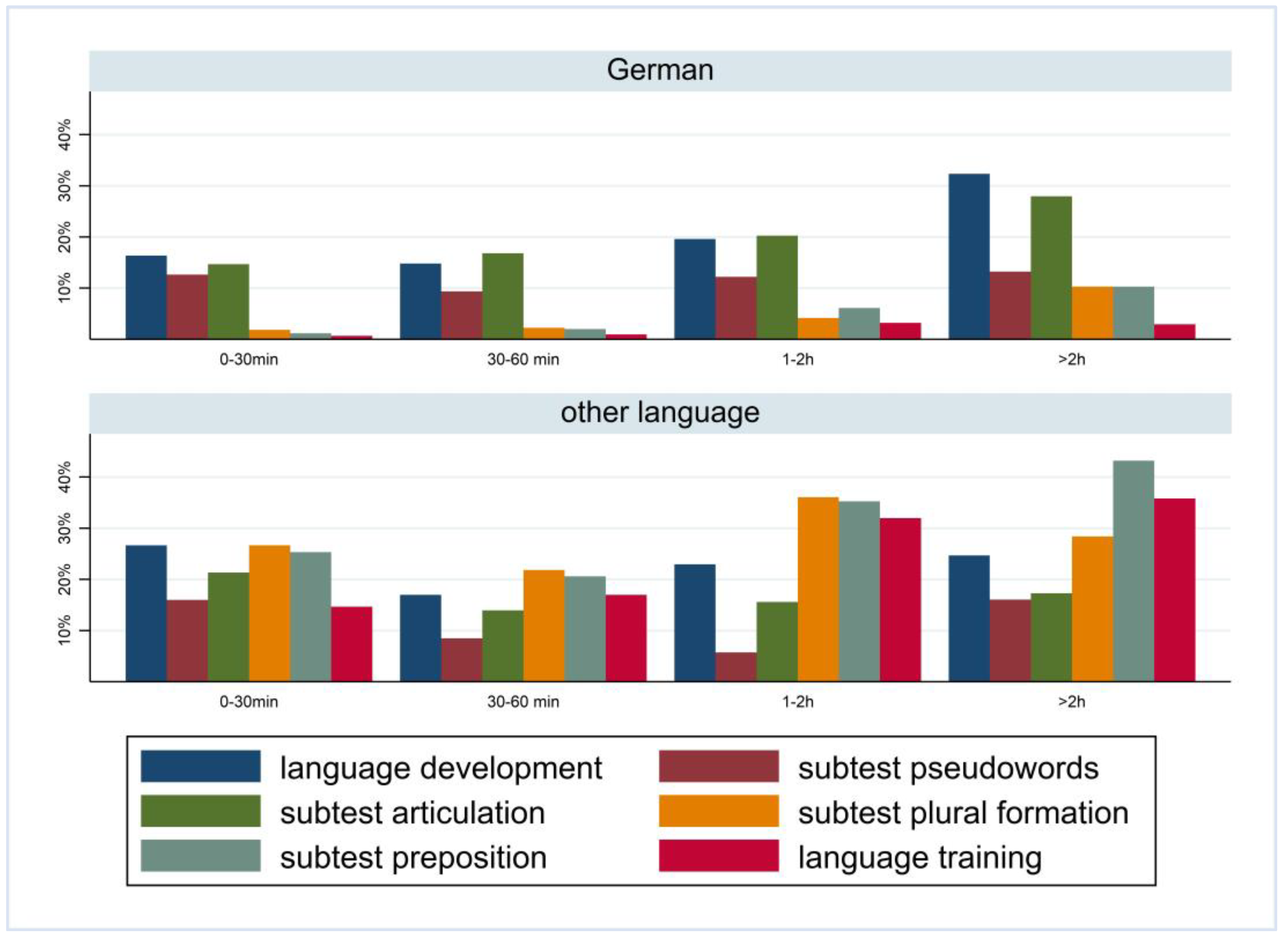
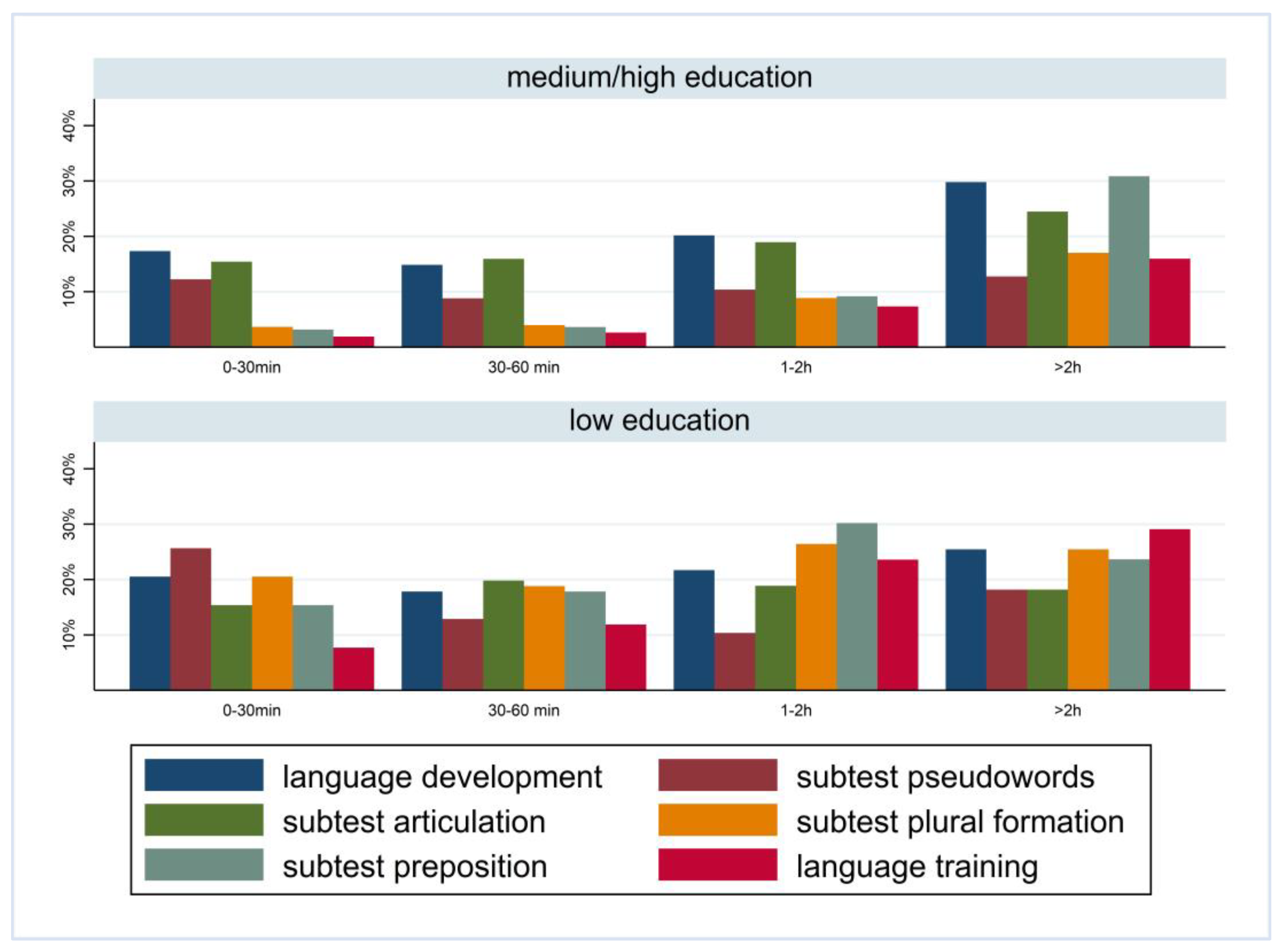
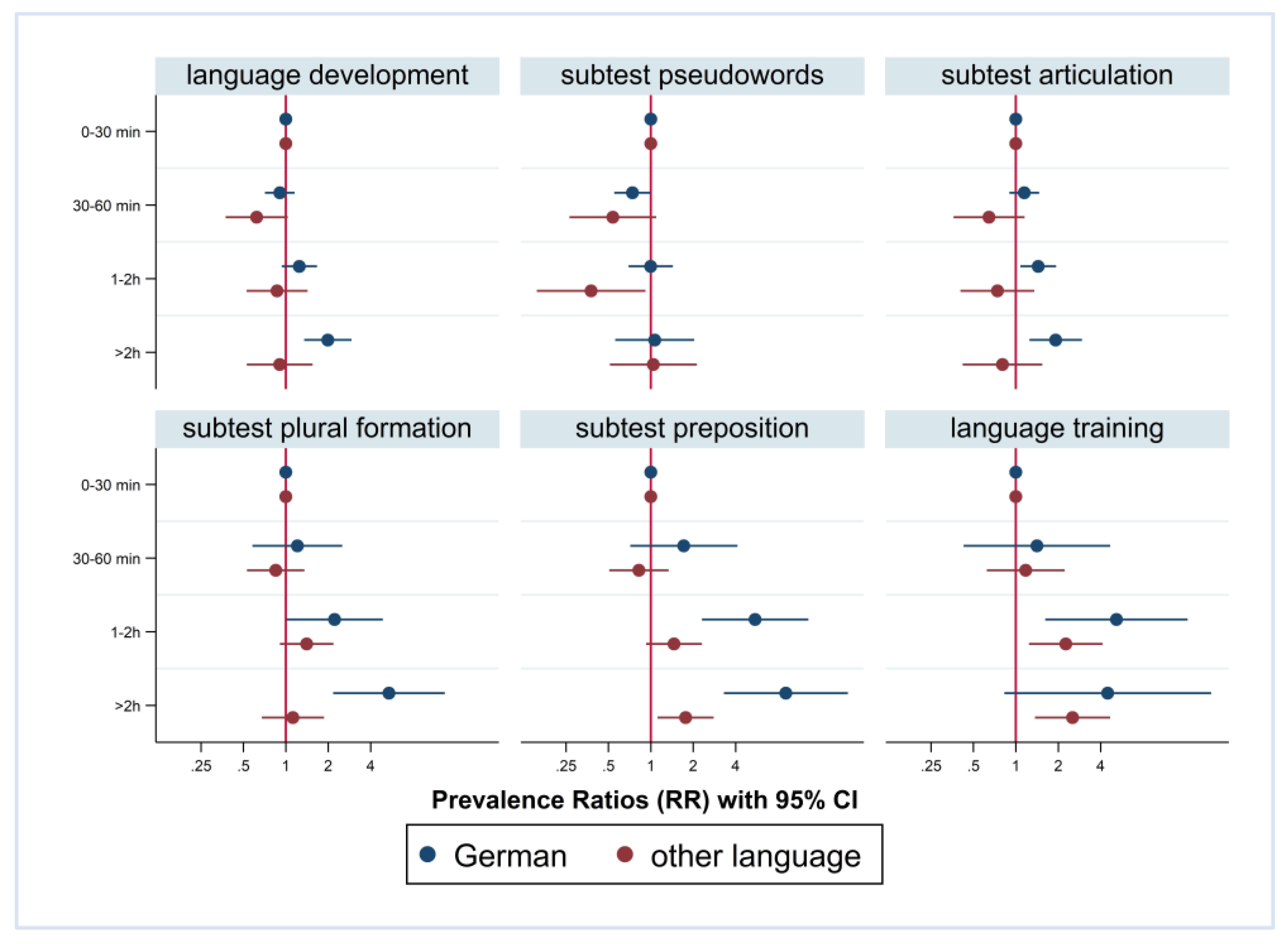
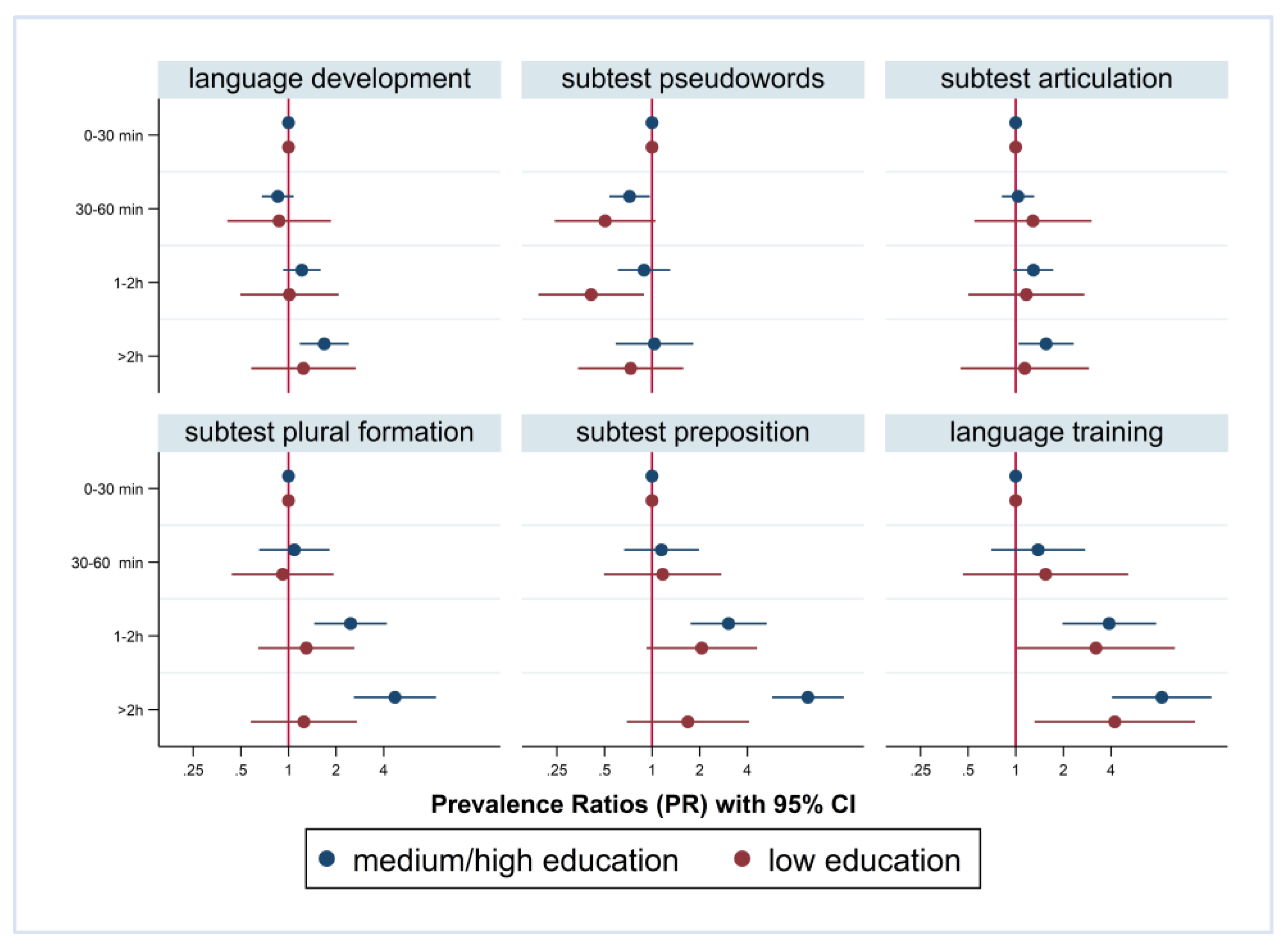
Does the Association between Preschool Media Use and Language Difficulties at School Entry Vary by First Language of the Child and Parental Education?

Abstract
Share and Cite
Hammrich, C.M.; Götz, S.; Daseking, M.; Weyers, S. Does the Association between Preschool Media Use and Language Difficulties at School Entry Vary by First Language of the Child and Parental Education? Children 2023, 10, 1848. https://doi.org/10.3390/children10121848
Hammrich CM, Götz S, Daseking M, Weyers S. Does the Association between Preschool Media Use and Language Difficulties at School Entry Vary by First Language of the Child and Parental Education? Children. 2023; 10(12):1848. https://doi.org/10.3390/children10121848
Chicago/Turabian StyleHammrich, Chiara Maria, Simon Götz, Monika Daseking, and Simone Weyers. 2023. "Does the Association between Preschool Media Use and Language Difficulties at School Entry Vary by First Language of the Child and Parental Education?" Children 10, no. 12: 1848. https://doi.org/10.3390/children10121848
APA StyleHammrich, C. M., Götz, S., Daseking, M., & Weyers, S. (2023). Does the Association between Preschool Media Use and Language Difficulties at School Entry Vary by First Language of the Child and Parental Education? Children, 10(12), 1848. https://doi.org/10.3390/children10121848