Article

Albumin-Bound Fatty Acids Modulate Endogenous Angiotensin-Converting Enzyme (ACE) Inhibition

1
Division of Clinical Physiology, Department of Cardiology, Faculty of Medicine, University of Debrecen, 4032 Debrecen, Hungary
2
Kálmán Laki Doctoral School, University of Debrecen, 4032 Debrecen, Hungary
3
Department of Surgery, Faculty of Medicine, University of Debrecen, 4032 Debrecen, Hungary
4
Department of Emergency Medicine, Faculty of Medicine, University of Debrecen, 4032 Debrecen, Hungary
*
Author to whom correspondence should be addressed.
These authors contributed equally to this work.
Biomedicines 2026, 14(1), 103; https://doi.org/10.3390/biomedicines14010103

Submission received: 29 November 2025 / Revised: 27 December 2025 / Accepted: 1 January 2026 / Published: 4 January 2026
(This article belongs to the Special Issue Renin-Angiotensin System in Cardiovascular Biology, 2nd Edition)

Abstract

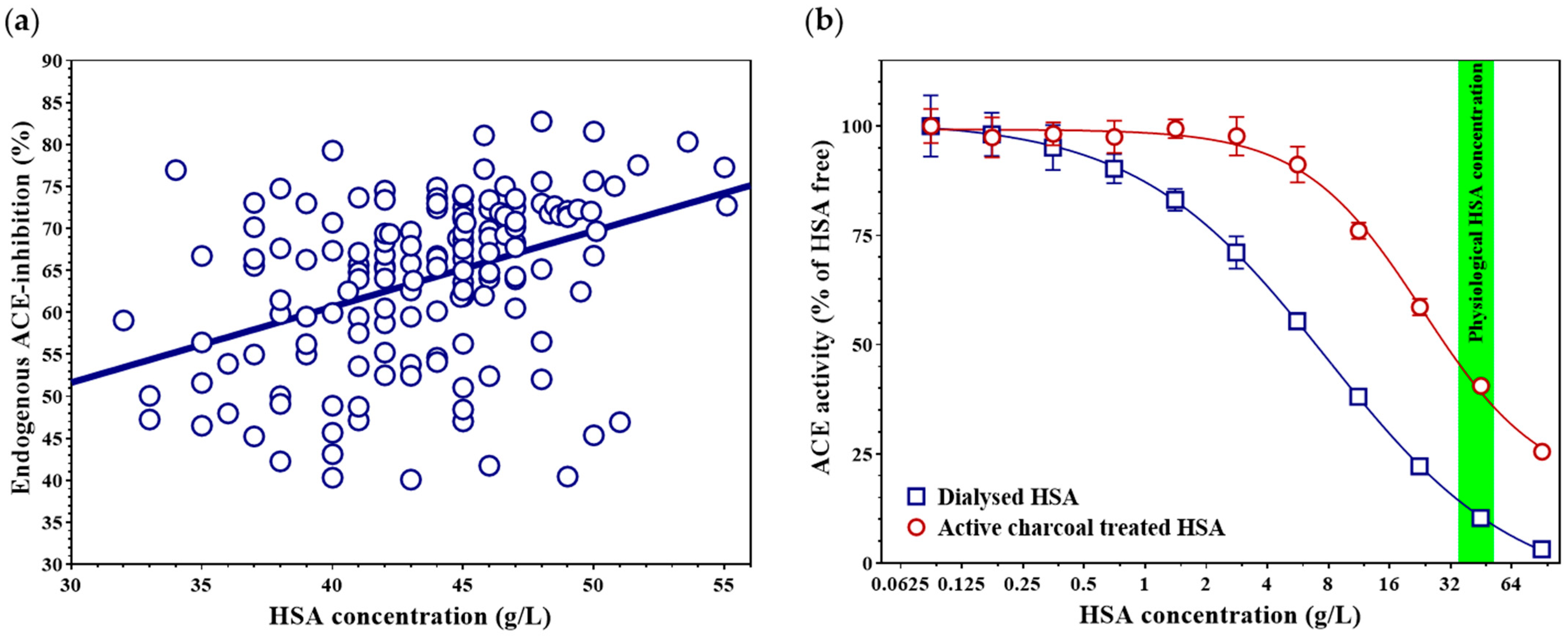
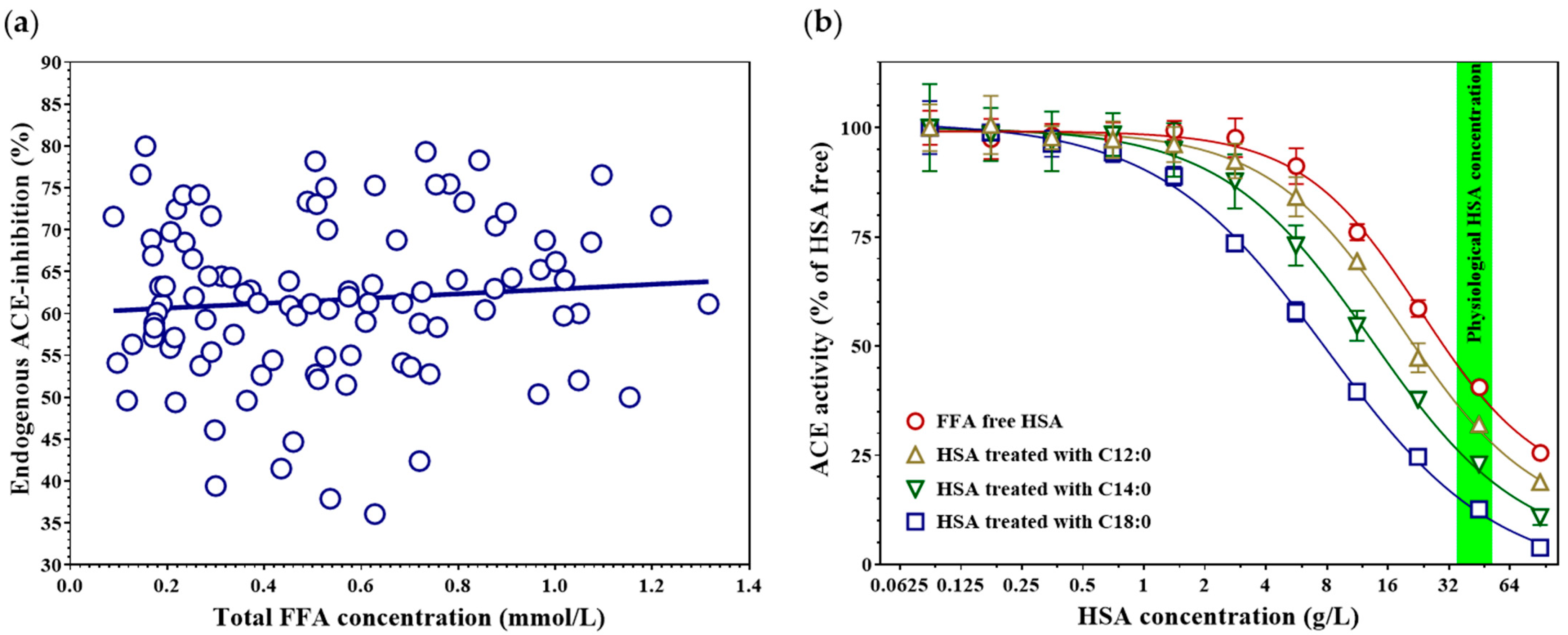
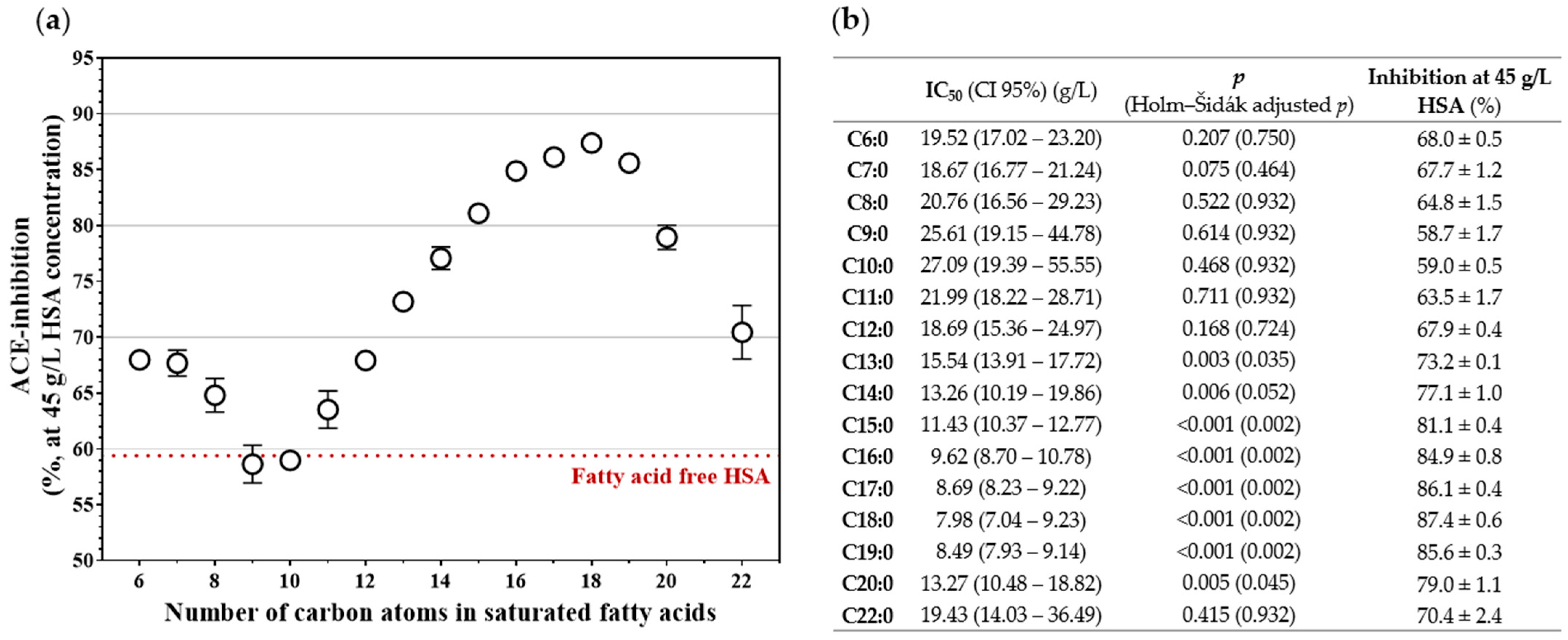
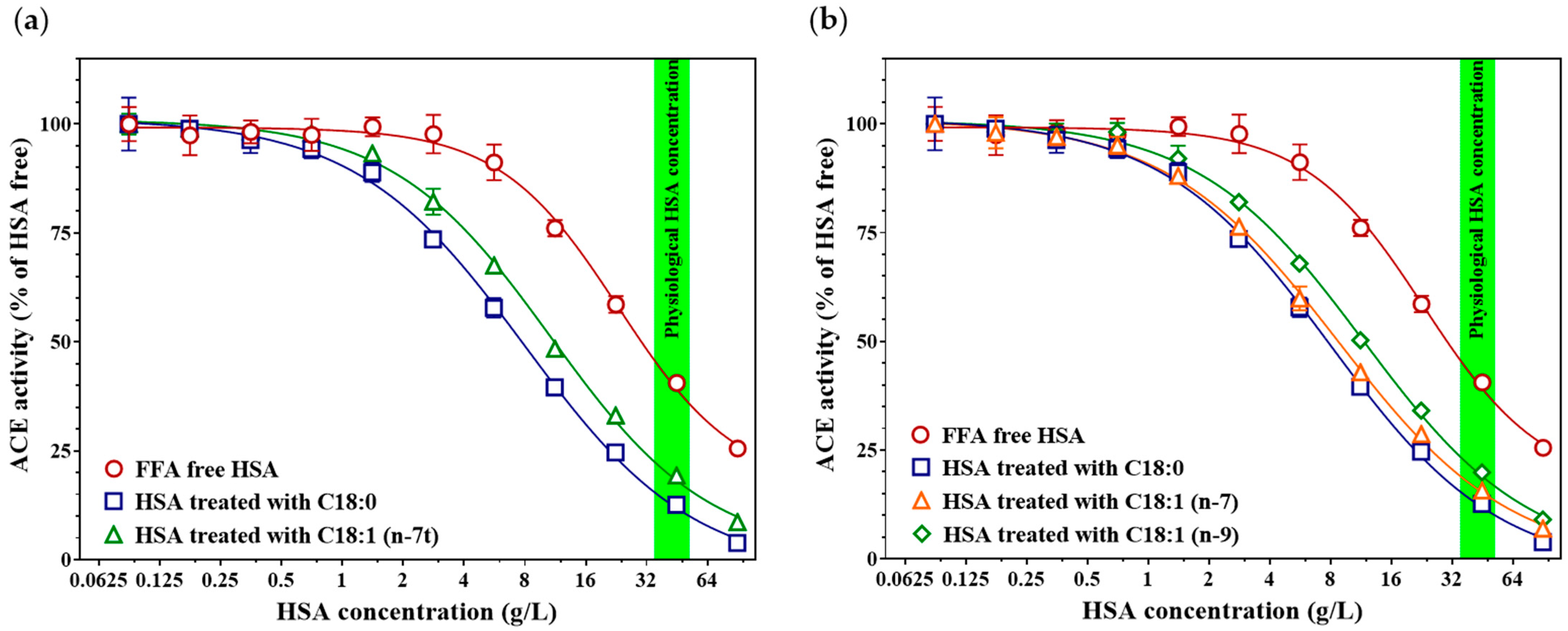
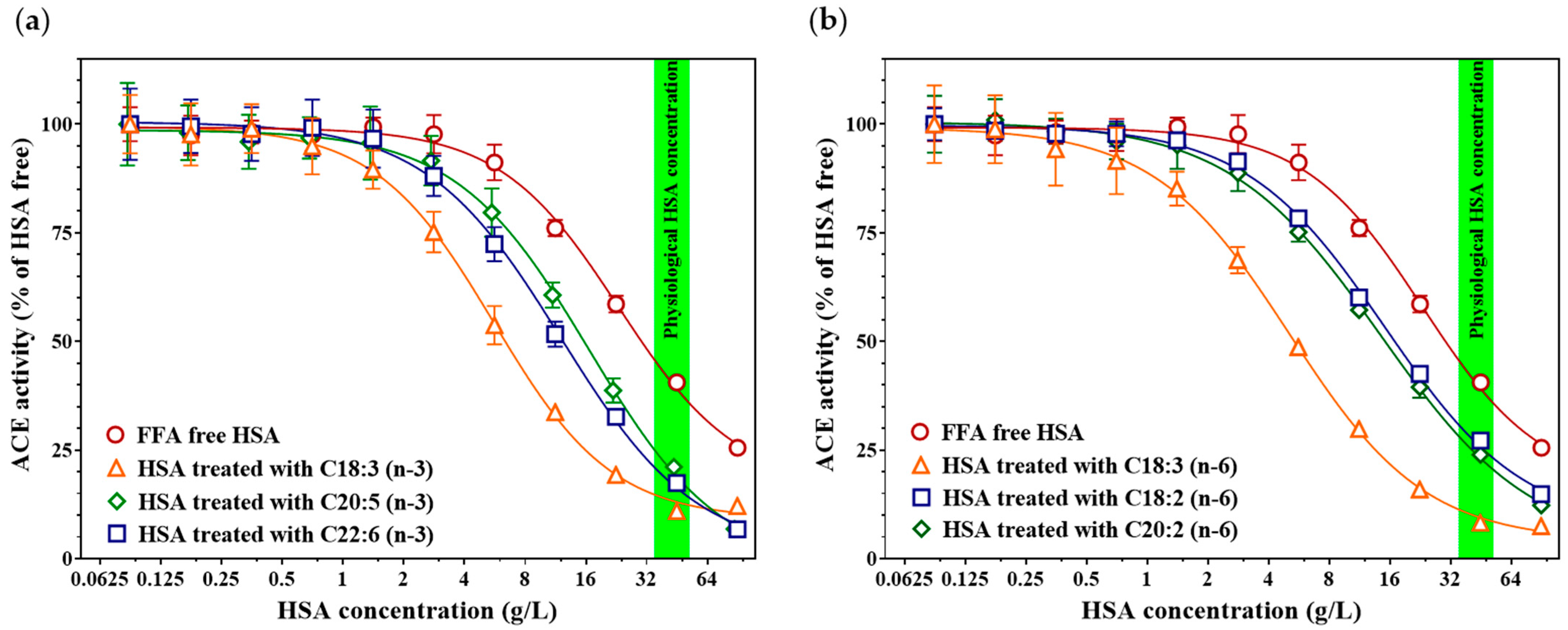
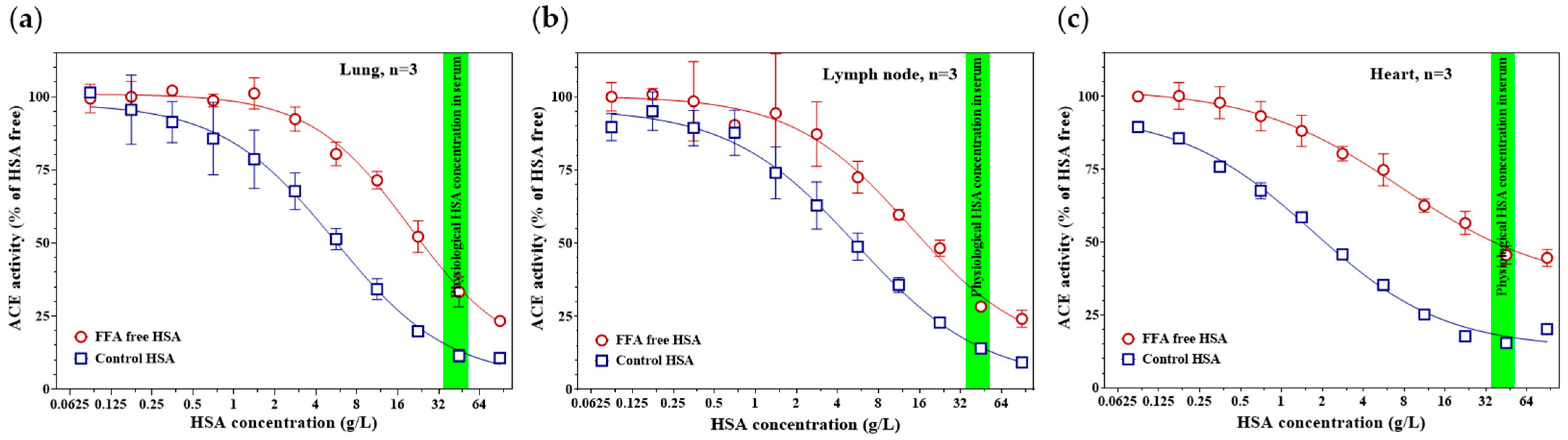
Background/Objectives: Human serum albumin (HSA) is a major endogenous inhibitor of angiotensin-converting enzyme (ACE) and helps fine-tune the activity of the renin–angiotensin–aldosterone system (RAAS), thereby potentially influencing the development of cardiovascular (CV) diseases. As the principal transport protein for free fatty acids (FFAs), HSA may have its ACE-inhibitory capacity modified by its FFA cargo and, through this mechanism, may also affect CV disease risk. We therefore tested the hypothesis that the composition of HSA-bound FFAs determines the magnitude of endogenous ACE inhibition. Methods: We quantified endogenous ACE inhibition and examined the effect of FFA concentration on this inhibition in clinical patients (n = 161 and n = 101, respectively). We measured the effects of HSA treated with saturated, monounsaturated, and polyunsaturated FFAs, as well as FFA-free HSA, on recombinant ACE and on tissue ACE. Results: Endogenous ACE inhibition was stronger in patients with higher serum HSA concentrations (Spearman’s rho = 0.422, 95% CI 0.281–0.544, p < 0.001), whereas total FFA concentration was not associated with endogenous ACE inhibition (Spearman’s rho = 0.088, p = 0.38, n = 101). However, removal of free fatty acids substantially worsened the ACE-inhibitory effect of HSA on recombinant ACE (charcoal-treated HSA: IC50 = 23.24 [19.40–29.78] g/L vs. control HSA: 7.84 [6.58–9.75] g/L, p < 0.001) and on tissue ACE isolated from lung, heart, and lymph node. FFA chain length, degree and position of unsaturation, and cis/trans configuration all differentially modulated endogenous ACE inhibition. Among saturated fatty acids, stearic acid (IC50 = 7.98 [7.04–9.23] g/L), and among omega-3 and omega-6 fatty acids, α-linolenic (IC50 = 5.60 [4.28–6.15] g/L) and γ-linolenic acids (IC50 = 5.09 [4.28–6.15] g/L) produced the greatest enhancement of the ACE-inhibitory capacity of HSA. Conclusions: The present results indicate that HSA concentration relates to endogenous ACE inhibition in serum, and in vitro experiments demonstrate that HSA-bound FFAs can modulate HSA-mediated ACE inhibition, a mechanism that may be relevant to cardiovascular physiology and disease.
Keywords: angiotensin-converting enzyme; free fatty acid; ACE inhibition; human serum albumin; albumin–fatty acid binding; renin–angiotensin–aldosterone system; RAAS modulation; NEFA; FFA; non-esterified fatty acid; HSA angiotensin-converting enzyme; free fatty acid; ACE inhibition; human serum albumin; albumin–fatty acid binding; renin–angiotensin–aldosterone system; RAAS modulation; NEFA; FFA; non-esterified fatty acid; HSA