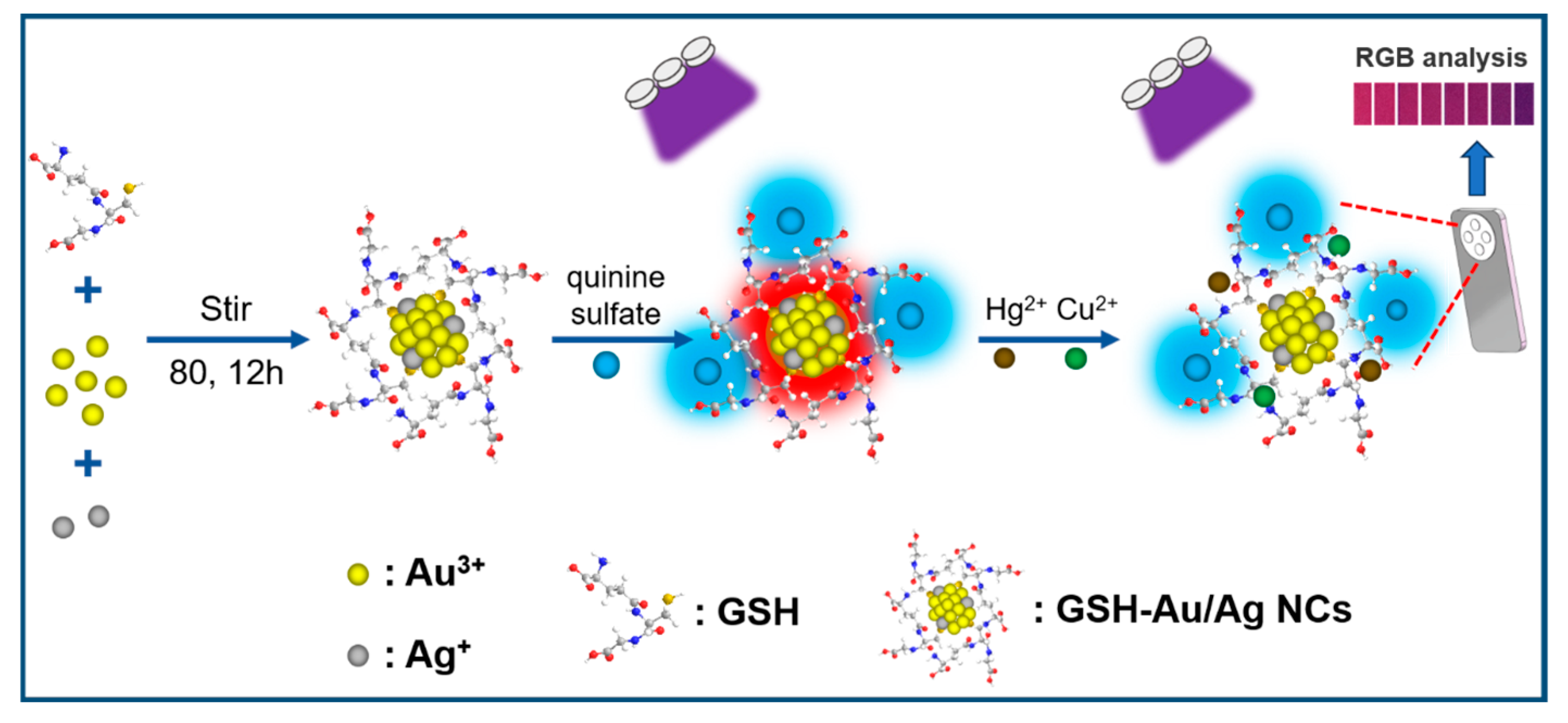
Facile One-Pot Synthesis of Au/Ag Bimetallic Nanoclusters as a Fluorescent Probe for the Detection of Hg2+ and Cu2+


Abstract
1. Introduction
2. Materials and Methods
2.1. Materials and Instruments
2.2. Synthesis of GSH-Au/Ag NCs
2.3. Fluorescence Detection for Hg2+ and Cu2+
2.4. Analysis of Real Water Samples
2.5. Visual Detection for Hg2+ and Cu2+
3. Results
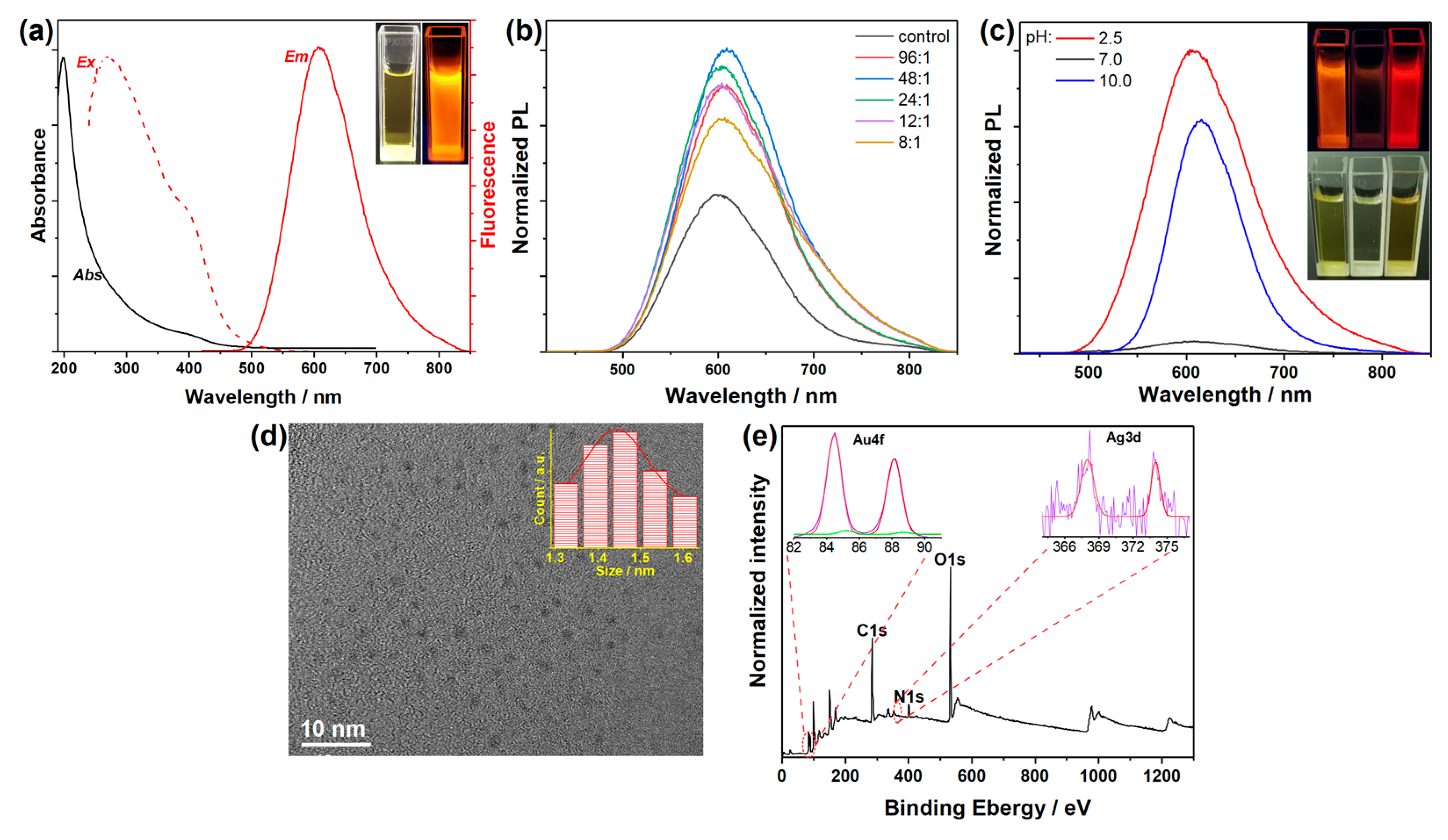
3.1. Synthesis and Characterizations of GSH-Au/Ag NCs
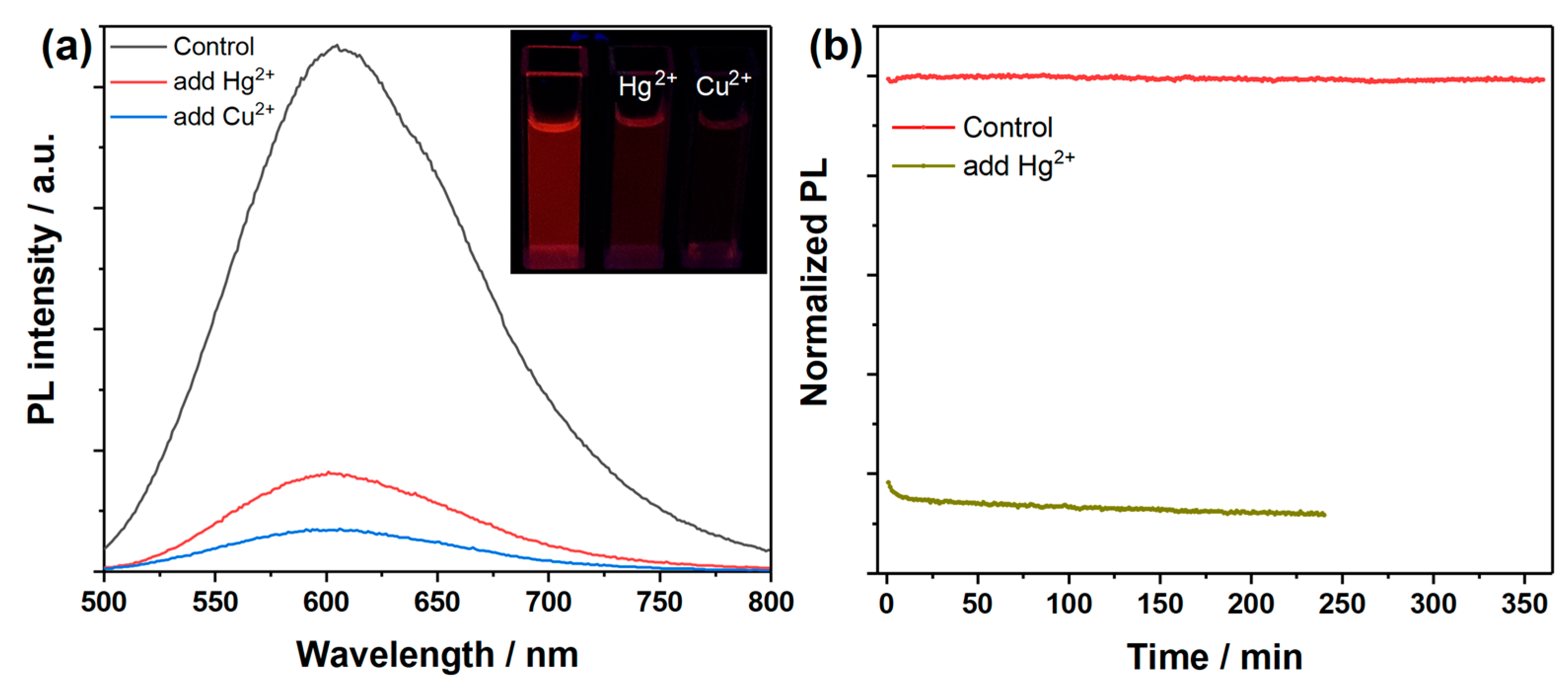
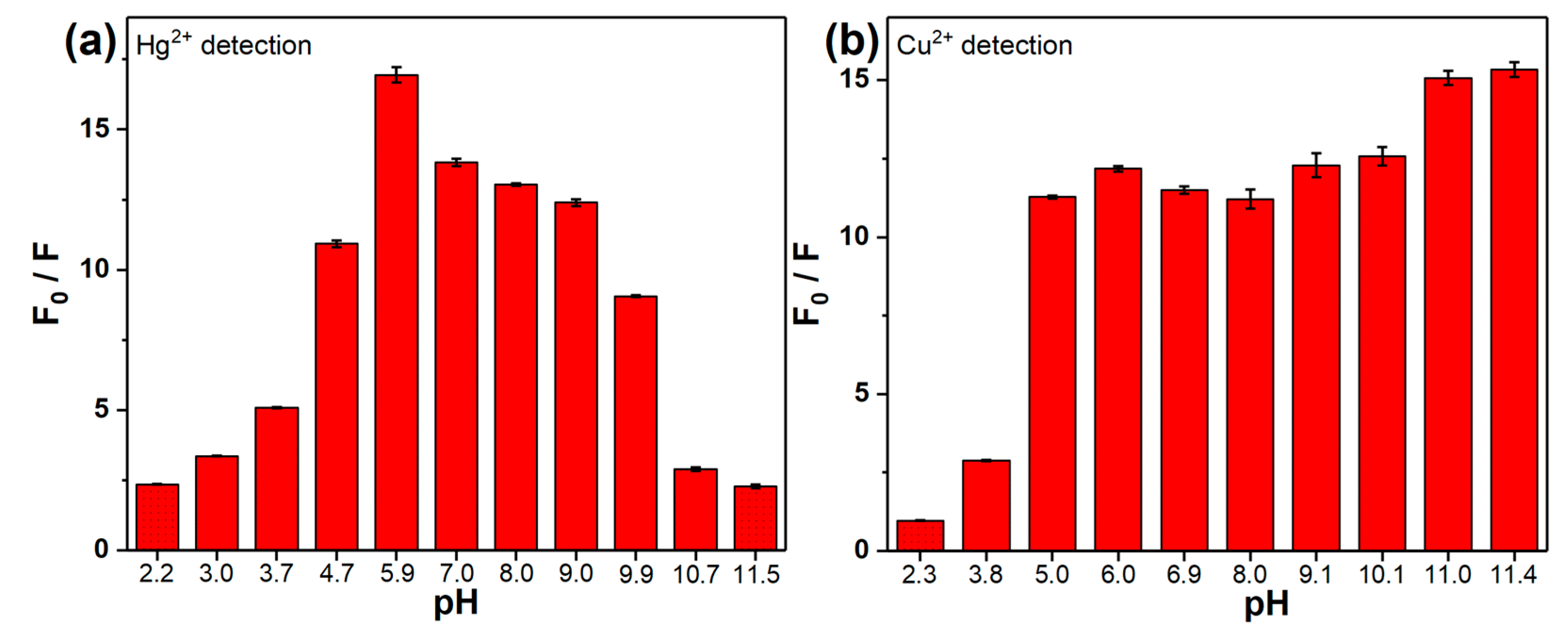
3.2. Feasibility Analysis and Optimization of Experimental Conditions
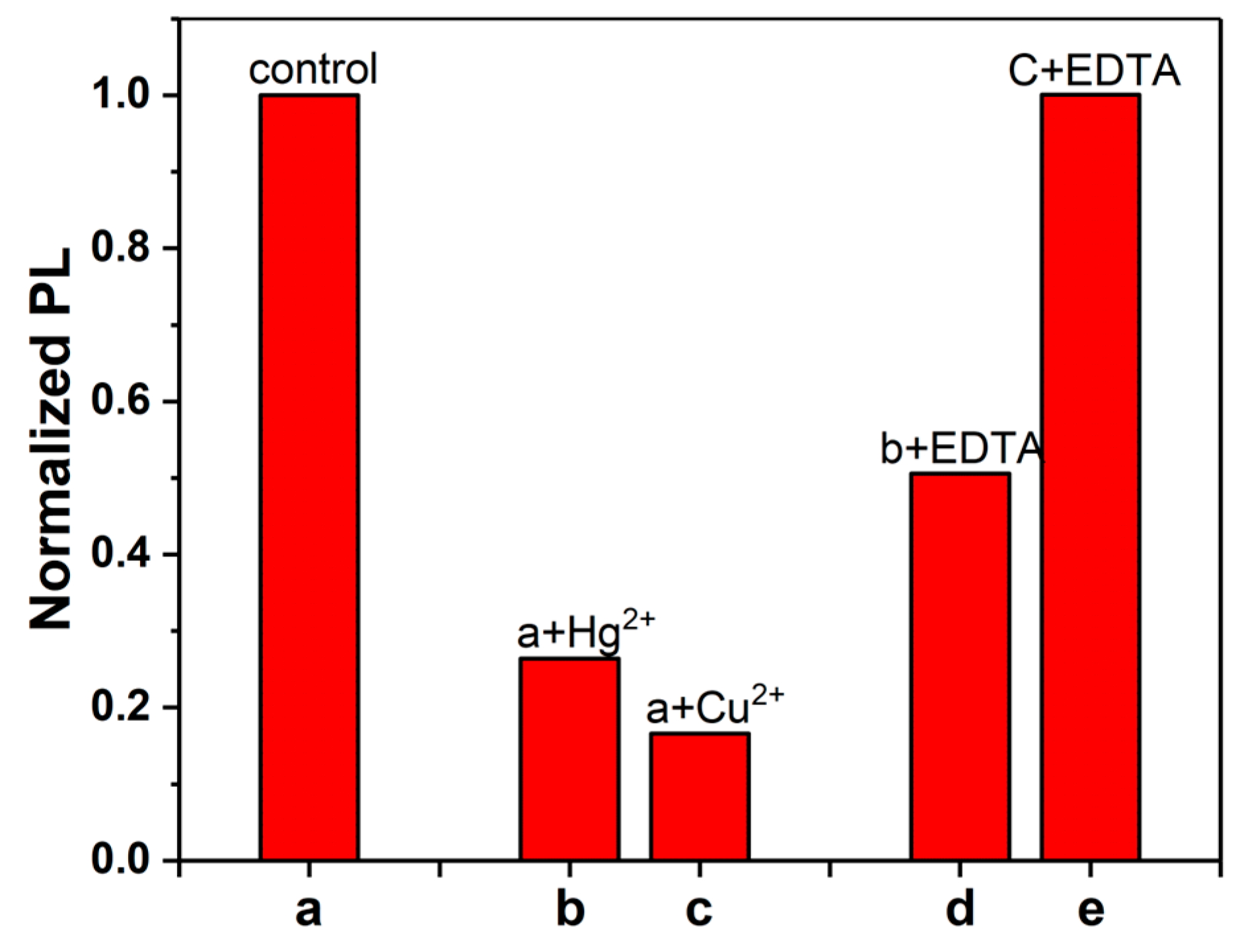
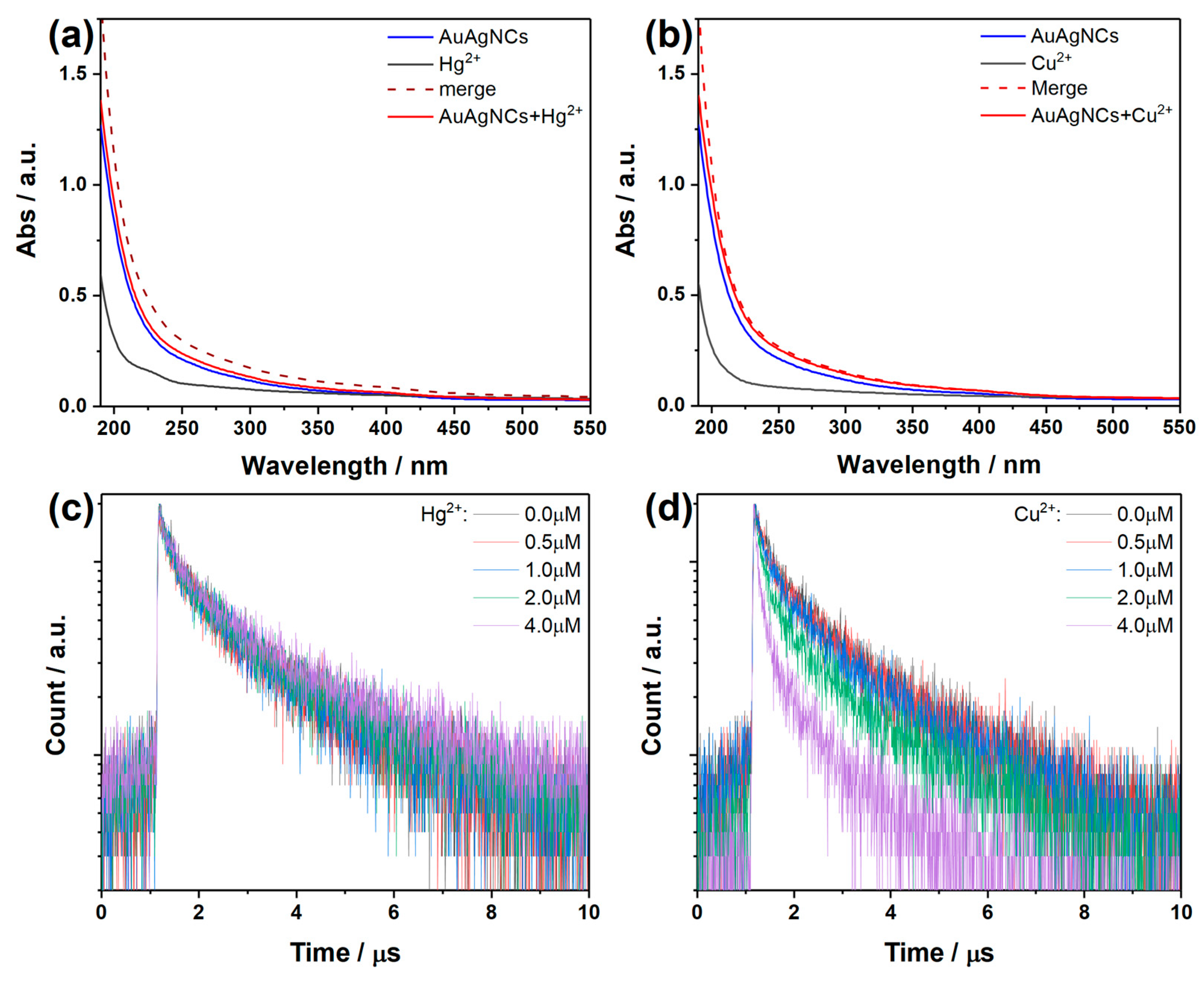
3.3. Exploration of Detection Mechanism
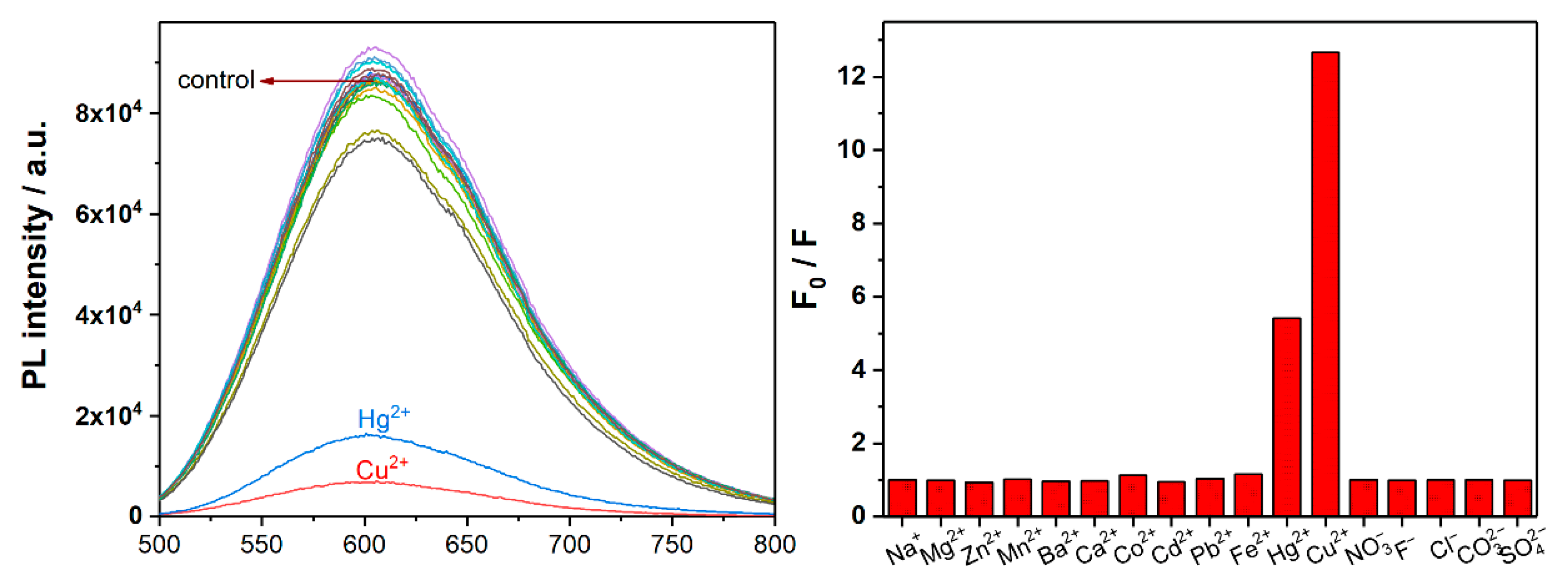
3.4. Selectivity Analysis of GSH-Au/Ag NCs
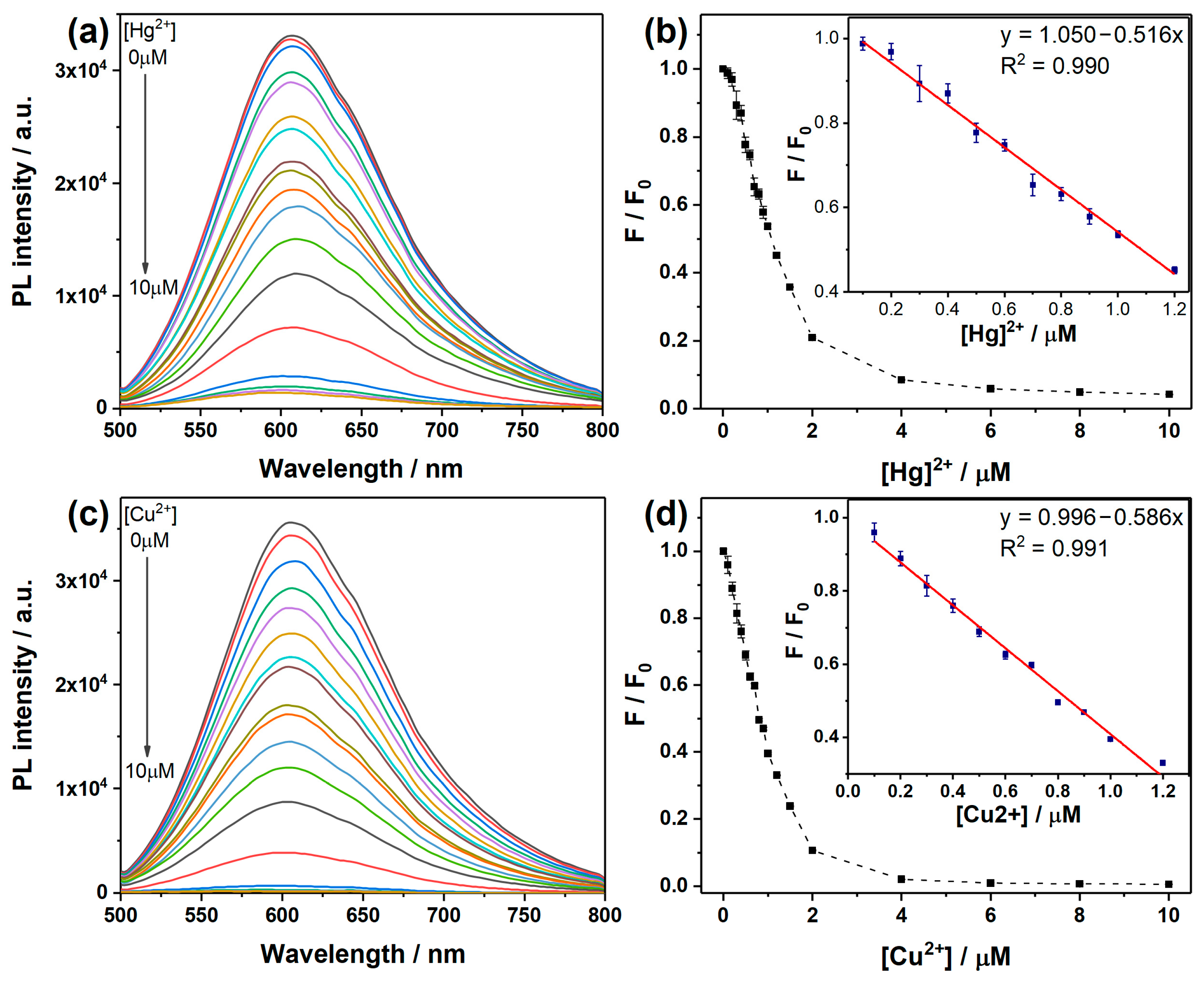
3.5. Determination of Hg2+ and Cu2+ by GSH-Au/Ag NCs
3.6. Real Water Sample Analysis
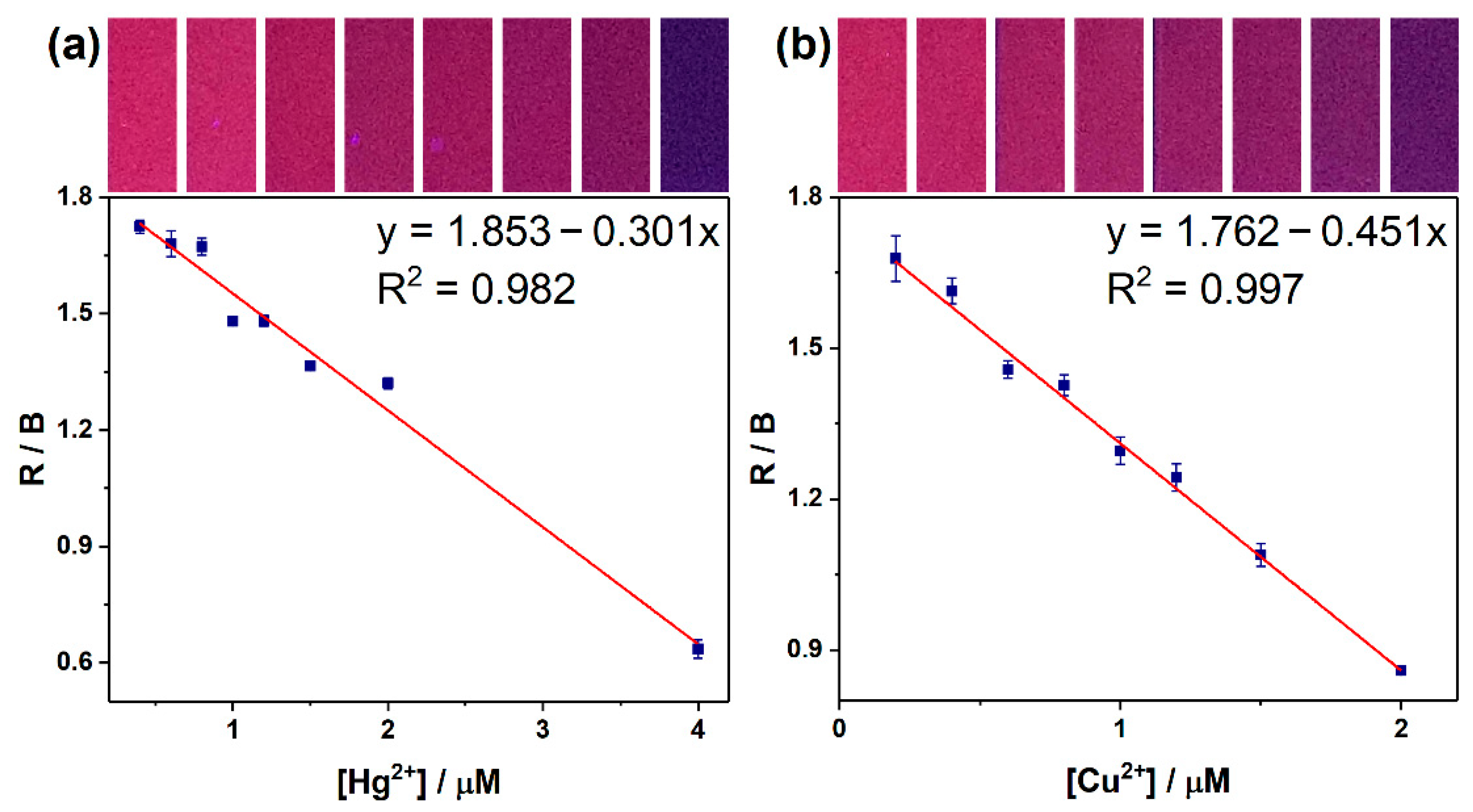
3.7. Visual Detection of Hg2+ and Cu2+
4. Conclusions
Supplementary Materials
Author Contributions
Funding
Institutional Review Board Statement
Informed Consent Statement
Data Availability Statement
Conflicts of Interest
References
- Shu, Y.; Li, D.; Xie, T.; Zhao, K.; Zhou, L.; Li, F. Antibiotics-heavy metals combined pollution in agricultural soils: Sources, fate, risks, and countermeasures. Green Energy Environ. 2025, 10, 869–897. [Google Scholar] [CrossRef]
- Huang, E.; Li, Y.; Ge, Y.; Dong, J.; Zhang, W. Early warning of soil and groundwater pollution by heavy metals: Progresses, perspectives and challenges. Groundw. Sustain. Dev. 2026, 32, 101567. [Google Scholar] [CrossRef]
- Emamverdian, A.; Hasanuzzaman, M.; Ding, Y.; Barker, J.; Mokhberdoran, F.; Liu, G. Zinc Oxide Nanoparticles Improve Pleioblastus pygmaeus Plant Tolerance to Arsenic and Mercury by Stimulating Antioxidant Defense and Reducing the Metal Accumulation and Translocation. Front. Plant Sci. 2022, 13, 841501. [Google Scholar] [CrossRef] [PubMed]
- De Silva, M.; Cao, G.; Tam, K.C. Nanomaterials for the removal and detection of heavy metals: A review. Environ. Sci. Nano 2025, 12, 2154–2176. [Google Scholar] [CrossRef]
- Abo, L.D.; Areti, H.A.; Jayakumar, M.; Rangaraju, M.; Subashini, S. Nanobiomaterials-enabled sensors for heavy metal detection and remediation in wastewater systems: Advances in synthesis, characterization, and environmental applications. Results Eng. 2025, 27, 105694. [Google Scholar] [CrossRef]
- Chauhan, S.; Dahiya, D.; Sharma, V.; Khan, N.; Chaurasia, D.; Nadda, A.K.; Varjani, S.; Pandey, A.; Bhargava, P.C. Advances from conventional to real time detection of heavy metal(loid)s for water monitoring: An overview of biosensing applications. Chemosphere 2022, 307, 136124. [Google Scholar] [CrossRef]
- Yuan, L.; Liang, M.; Hummel, M.; Shao, C.; Lu, S. Rational Design Copper Nanocluster-Based Fluorescent Sensors towards Heavy Metal Ions: A Review. Chemosensors 2023, 11, 159. [Google Scholar] [CrossRef]
- Chen, J.; Tian, R.; Li, D.; Sun, X.; Li, H.; Zhang, Y. Ratiometric fluorescence detection of Hg2+ based on gold nanocluster/carbon quantum dots nanohybrids. Anal. Methods 2024, 16, 884–891. [Google Scholar] [CrossRef]
- Yu, F.; Xiang, H.; He, S.; Zhao, G.; Cao, Z.; Yang, L.; Liu, H. Gold nanocluster-based ratiometric fluorescent probe for biosensing of Hg2+ ions in living organisms. Analyst 2022, 147, 2773–2778. [Google Scholar] [CrossRef]
- Luo, X.; Kong, J.; Xiao, H.; Sang, D.; He, K.; Zhou, M.; Liu, J. Noncovalent Interaction Guided Precise Photoluminescence Regulation of Gold Nanoclusters in Both Isolate Species and Aggregate States. Angew. Chem. Int. Ed. 2024, 63, e202404129. [Google Scholar] [CrossRef]
- Yang, Y.; Liu, W.; Cao, J.; Wu, Y. On-site, rapid and visual determination of Hg2+ and Cu2+ in red wine by ratiometric fluorescence sensor of metal-organic frameworks and CdTe QDs. Food Chem. 2020, 328, 127119. [Google Scholar] [CrossRef]
- Yin, S.; Leen, V.; Snick, S.V.; Boens, N.; Dehaen, W. A highly sensitive, selective, colorimetric and near-infrared fluorescent turn-on chemosensor for Cu2+ based on BODIPY. Chem. Commun. 2010, 46, 6329–6331. [Google Scholar] [CrossRef] [PubMed]
- Altunay, N.; Yıldırım, E.; Gürkan, R. Extraction and preconcentration of trace Al and Cr from vegetable samples by vortex-assisted ionic liquid-based dispersive liquid–liquid microextraction prior to atomic absorption spectrometric determination. Food Chem. 2018, 245, 586–594. [Google Scholar] [CrossRef] [PubMed]
- Zhang, X.-X.; Tang, S.-S.; Chen, M.-L.; Wang, J.-H. Iron phosphate as a novel sorbent for selective adsorption of chromium(iii) and chromium speciation with detection by ETAAS. J. Anal. At. Spectrom. 2012, 27, 466–472. [Google Scholar] [CrossRef]
- Zhang, Y.; Shi, L.; Wu, Y. Determination of seven elements in manganese brass by inductively coupled plasma atomic emission spectrometry. Metall. Anal. 2017, 37, 40–44. [Google Scholar]
- Aydin, F.A.; Soylak, M. Separation, preconcentration and inductively coupled plasma-mass spectrometric (ICP-MS) determination of thorium(IV), titanium(IV), iron(III), lead(II) and chromium(III) on 2-nitroso-1-naphthol impregnated MCI GEL CHP20P resin. J. Hazard. Mater. 2010, 173, 669–674. [Google Scholar] [CrossRef]
- Bednar, A.J.; Kirgan, R.A.; Jones, W.T. Comparison of standard and reaction cell inductively coupled plasma mass spectrometry in the determination of chromium and selenium species by HPLC–ICP–MS. Anal. Chim. Acta 2009, 632, 27–34. [Google Scholar] [CrossRef]
- Yu, X.; Chen, B.; He, M.; Wang, H.; Hu, B. 3D Droplet-Based Microfluidic Device Easily Assembled from Commercially Available Modules Online Coupled with ICPMS for Determination of Silver in Single Cell. Anal. Chem. 2019, 91, 2869–2875. [Google Scholar] [CrossRef]
- Wang, X.; Liu, G.; Qi, Y.; Yuan, Y.; Gao, J.; Luo, X.; Yang, T. Embedded Au Nanoparticles-Based Ratiometric Electrochemical Sensing Strategy for Sensitive and Reliable Detection of Copper Ions. Anal. Chem. 2019, 91, 12006–12013. [Google Scholar] [CrossRef]
- Bansod, B.; Kumar, T.; Thakur, R.; Rana, S.; Singh, I. A review on various electrochemical techniques for heavy metal ions detection with different sensing platforms. Biosens. Bioelectron. 2017, 94, 443–455. [Google Scholar] [CrossRef]
- Zhang, J.; Li, S. Sensors for detection of Cr(VI) in water: A review. Int. J. Environ. Anal. Chem. 2019, 101, 1051–1073. [Google Scholar] [CrossRef]
- Alam, P.; Leung, N.L.C.; Zhang, J.; Kwok, R.T.K.; Lam, J.W.Y.; Tang, B.Z. AIE-based luminescence probes for metal ion detection. Coord. Chem. Rev. 2021, 429, 213693. [Google Scholar] [CrossRef]
- Kateshiya, M.R.; Desai, M.L.; Malek, N.I.; Kailasa, S.K. Advances in Ultra-small Fluorescence Nanoprobes for Detection of Metal Ions, Drugs, Pesticides and Biomarkers. J. Fluoresc. 2023, 33, 775–798. [Google Scholar] [CrossRef] [PubMed]
- Wu, Y.-S.; Li, C.-Y.; Li, Y.-F.; Tang, J.-L.; Liu, D. A ratiometric fluorescent chemosensor for Cr3+ based on monomer–excimer conversion of a pyrene compound. Sensor. Actuat. B Chem. 2014, 203, 712–718. [Google Scholar] [CrossRef]
- Kaviya, S.; Kabila, S.; Jayasree, K.V. Room temperature biosynthesis of greatly stable fluorescent ZnO quantum dots for the selective detection of Cr3+ ions. Mater. Res. Bull. 2017, 95, 163–168. [Google Scholar] [CrossRef]
- Tang, J.; Zhang, J.; Zhang, W.; Xiao, Y.; Shi, Y.; Kong, F.; Xu, W. Modulation of red-light emission from carbon quantum dots in acid-based environment and the detection of chromium (III) ions. J. Mater. Sci. Technol. 2021, 83, 58–65. [Google Scholar] [CrossRef]
- Yang, T.Q.; Peng, B.; Shan, B.Q.; Zong, Y.X.; Jiang, J.G.; Wu, P.; Zhang, K. Origin of the Photoluminescence of Metal Nanoclusters: From Metal-Centered Emission to Ligand-Centered Emission. Nanomaterials 2020, 10, 261. [Google Scholar] [CrossRef]
- Benavides, J.; Quijada-Garrido, I.; García, O. The synthesis of switch-off fluorescent water-stable copper nanocluster Hg2+ sensors via a simple one-pot approach by an in situ metal reduction strategy in the presence of a thiolated polymer ligand template. Nanoscale 2020, 12, 944–955. [Google Scholar] [CrossRef]
- Liu, P.; Hao, R.; Sun, W.; Lin, Z.; Jing, T. One-pot synthesis of copper nanocluster/Tb-MOF composites for the ratiometric fluorescence detection of Cu2+. Luminescence 2022, 37, 1793–1799. [Google Scholar] [CrossRef]
- Youn, J.; Kang, P.; Crowe, J.; Thornsbury, C.; Kim, P.; Qin, Z.; Lee, J. Tripeptide-Assisted Gold Nanocluster Formation for Fe3+ and Cu2+ Sensing. Molecules 2024, 29, 2416. [Google Scholar] [CrossRef]
- Liu, J.; Zhao, R.; Wang, X.; Gao, X.; Zou, G. Mechanistic investigations into synergistically enhanced radiative-charge-transfer in Au-Ag bimetallic nanoclusters. Chem. Commun. 2020, 56, 5665–5668. [Google Scholar] [CrossRef] [PubMed]
- Chen, T.; Yang, S.; Chai, J.; Song, Y.; Fan, J.; Rao, B.; Sheng, H.; Yu, H.; Zhu, M. Crystallization-induced emission enhancement: A novel fluorescent Au-Ag bimetallic nanocluster with precise atomic structure. Sci. Adv. 2017, 3, e1700956. [Google Scholar] [CrossRef] [PubMed]
- Wang, X.; Zhong, Y.; Li, T.; Wang, K.; Dong, W.; Lu, M.; Zhang, Y.; Wu, Z.; Tang, A.; Bai, X. Sequential addition of cations increases photoluminescence quantum yield of metal nanoclusters near unity. Nat. Commun. 2025, 16, 587. [Google Scholar] [CrossRef] [PubMed]
- Mi, W.; Tang, S.; Jin, Y.; Shao, N. Au/Ag Bimetallic Nanoclusters Stabilized by Glutathione and Lysozyme for Ratiometric Sensing of H2O2 and Hydroxyl Radicals. ACS Appl. Nano Mater. 2021, 4, 1586–1595. [Google Scholar] [CrossRef]
- Li, D.; Wang, H.; Li, C.; Song, X.; Liu, X. GSH-AuAg NCs based fluorescent probe for multiple indicators in tap water: Free chlorine and copper ion. J. Photoch. Photobiol. A 2024, 454, 115712. [Google Scholar] [CrossRef]
- Wang, H.; Yang, L.; Chu, S.; Liu, B.; Zhang, Q.; Zou, L.; Yu, S.; Jiang, C. Semiquantitative Visual Detection of Lead Ions with a Smartphone via a Colorimetric Paper-Based Analytical Device. Anal. Chem. 2019, 91, 9292–9299. [Google Scholar] [CrossRef]
- Luo, Z.; Yuan, X.; Yu, Y.; Zhang, Q.; Leong, D.T.; Lee, J.Y.; Xie, J. From aggregation-induced emission of Au(I)-thiolate complexes to ultrabright Au(0)@Au(I)-thiolate core-shell nanoclusters. J. Am. Chem. Soc. 2012, 134, 16662–16670. [Google Scholar] [CrossRef]
- Yang, T.; Shan, B.; Huang, F.; Yang, S.; Peng, B.; Yuan, E.; Wu, P.; Zhang, K. P band intermediate state (PBIS) tailors photoluminescence emission at confined nanoscale interface. Commun. Chem. 2019, 2, 132. [Google Scholar] [CrossRef]
- Yang, T.; Dai, S.; Yang, S.; Chen, L.; Liu, P.; Dong, K.; Zhou, J.; Chen, Y.; Pan, H.; Zhang, S.; et al. Interfacial Clustering-Triggered Fluorescence-Phosphorescence Dual Solvoluminescence of Metal Nanoclusters. J. Phys. Chem. Lett. 2017, 8, 3980–3985. [Google Scholar] [CrossRef]
- Yang, T.; Li, L.; Zhou, J.; Shan, B.; Gao, H.; Zhu, C.; Chen, G.; Zhang, K. Regulation of aggregation-induced emission properties of Ag(0)@Ag(I) rich-thiolate core-shell nanoclusters: Ligand assembly dominated. J. Chem. Phys. 2023, 159, 234702. [Google Scholar] [CrossRef]
- Yang, T.; Zhou, J.; Shan, B.; Peng, B.; Li, L.; Gao, H.; Chen, G.; Zhang, K. Formation of Multiple Emission Centers of Gold Nanoclusters during the Aggregation-Induced Emission Process. ACS Appl. Nano Mater. 2023, 6, 17924–17931. [Google Scholar] [CrossRef]
- Yao, Q.; Yu, Y.; Yuan, X.; Yu, Y.; Xie, J.; Lee, J.Y. Two-Phase Synthesis of Small Thiolate-Protected Au15 and Au18 Nanoclusters. Small 2013, 9, 2696–2701. [Google Scholar] [CrossRef] [PubMed]
- Brinas, R.P.; Hu, M.; Qian, L.; Lymar, E.S.; Hainfeld, J.F. gold-nanoparticle-size-controlled-by-polymeric-au(i)-thiolate-precursor-size. J. Am. Chem. Soc. 2008, 130, 975–982. [Google Scholar] [CrossRef] [PubMed]
- Yang, T.; Dai, S.; Tan, H.; Zong, Y.; Liu, Y.; Chen, J.; Zhang, K.; Wu, P.; Zhang, S.; Xu, J.; et al. Mechanism of Photoluminescence in Ag Nanoclusters: Metal-Centered Emission versus Synergistic Effect in Ligand-Centered Emission. J. Phys. Chem. C 2019, 123, 18638–18645. [Google Scholar] [CrossRef]
- Babaee, E.; Barati, A.; Gholivand, M.B.; Taherpour, A.; Zolfaghar, N.; Shamsipur, M. Determination of Hg2+ and Cu2+ ions by dual-emissive Ag/Au nanocluster/carbon dots nanohybrids: Switching the selectivity by pH adjustment. J. Hazard. Mater. 2019, 367, 437–446. [Google Scholar] [CrossRef]
- Lin, Y.-H.; Tseng, W.-L. Ultrasensitive Sensing of Hg2+ and CH3Hg+ Based on the Fluorescence Quenching of Lysozyme Type VI-Stabilized Gold Nanoclusters. Anal. Chem. 2010, 82, 9194–9200. [Google Scholar] [CrossRef]
- Xie, J.; Zheng, Y.; Ying, J.Y. Highly selective and ultrasensitive detection of Hg2+ based on fluorescence quenching of Au nanoclusters by Hg2+-Au+ interactions. Chem. Commun. 2010, 46, 961–963. [Google Scholar] [CrossRef]
- Niu, C.; Liu, Q.; Shang, Z.; Zhao, L.; Ouyang, J. Dual-emission fluorescent sensor based on AIE organic nanoparticles and Au nanoclusters for the detection of mercury and melamine. Nanoscale 2015, 7, 8457–8465. [Google Scholar] [CrossRef]
- Durgadas, C.V.; Sharma, C.P.; Sreenivasan, K. Fluorescent gold clusters as nanosensors for copper ions in live cells. Analyst 2011, 136, 933–940. [Google Scholar] [CrossRef]
- Marino, T.; Toscano, M.; Russo, N.; Grand, A. Structural and Electronic Characterization of the Complexes Obtained by the Interaction between Bare and Hydrated First-Row Transition-Metal Ions (Mn2+, Fe2+, Co2+, Ni2+, Cu2+, Zn2+) and Glycine. J. Phys. Chem. B 2006, 110, 24666–24673. [Google Scholar] [CrossRef]
- GB 8978-1996; Integrated Wastewater Discharge Standard. State Environmental Protection Administration of China: Beijing, China, 1994.
- GB 5749-2022; Standards for Drinking Water Quality. State Administration for Market Regulation of China and Standardization Administration of China: Beijing, China, 2022.
- Wu, Z.; Lu, T.; Hu, Y.; Mao, J.; Hu, X.; Qiu, J. Colorimetric and fluorescent AuNM nanosensors for mercury ion detection. Coord. Chem. Rev. 2025, 537, 216711. [Google Scholar] [CrossRef]
- Pang, L.; Pi, X.; Zhao, Q.; Man, C.; Yang, X.; Jiang, Y. Optical nanosensors based on noble metal nanoclusters for detecting food contaminants: A review. Compr. Rev. Food Sci. Food Saf. 2024, 23, e13295. [Google Scholar] [CrossRef]
- Luo, M.; Di, J.; Li, L.; Tu, Y.; Yan, J. Copper ion detection with improved sensitivity through catalytic quenching of gold nanocluster fluorescence. Talanta 2018, 187, 231–236. [Google Scholar] [CrossRef]
- Luo, T.; Zhang, S.; Wang, Y.; Wang, M.; Liao, M.; Kou, X. Glutathione-stabilized Cu nanocluster-based fluorescent probe for sensitive and selective detection of Hg2+ in water. Luminescence 2017, 32, 1092–1099. [Google Scholar] [CrossRef]
- Wen, R.; Li, H.; Chen, B.; Wang, L. Facile preparation of fluorescent gold nanocluster via polysaccharide-templated approach and its application for Cu2+ sensing. Sens. Actuators B Chem. 2017, 248, 63–70. [Google Scholar] [CrossRef]



| Sample | FL Probe (nM) | ICP-MS (nM) | Added (nM) | Total Found (nM) | RSD (%) | Recovery (%) |
|---|---|---|---|---|---|---|
| 1 (Hg2+) | Not detected | Not detected | 400 | 416 | 2.4 | 104.0% |
| 2 | 600 | 533 | 3.6 | 88.8% | ||
| 3 | 800 | 797 | 0.5 | 99.6 | ||
| 4 (Cu2+) | Not detected | 10 nM | 400 | 408 | 5.0 | 102.0 |
| 5 | 600 | 605 | 1.2 | 100.8 | ||
| 6 | 800 | 791 | 1.3 | 98.9 |
| Probe | Detected Ion | Visual Detection | Linear Range | LOD | Reference |
|---|---|---|---|---|---|
| Au NCs/CQDs | Hg2+ | No | 0.83–77 µM | 0.36 µM | [8] |
| Cu2+ | - | - | |||
| Cu NCs | Hg2+ | No | 0.04–60 µM | 20 nM | [56] |
| Cu2+ | - | - | |||
| Au NCs | Fe3+ | No | 0.25–100 µM | 3.2µM | [30] |
| Cu2+ | 0.25–25 µM | 0.77 µM | |||
| Cu NCs/Tb-MOF | Hg2+ | No | - | - | [29] |
| Cu2+ | 1–30 µM | 178 nM | |||
| Au NCs | Hg2+ | No | - | - | [57] |
| Cu2+ | 0.01–1.8 µM | 8 nM | |||
| Au/Ag NCs/CDs | Hg2+ | No | 20–2000 nM | 5 nM | [45] |
| Cu2+ | 20–600 nM | 7 nM | |||
| MOF/CdTe QDs | Hg2+ | yes | 20–120 nM | 1 nM | [11] |
| Cu2+ | 62–620 nM | 4 nM | |||
| GSH-Au/Ag NCs | Hg2+ | Yes | 0.1–1.2 µM | 40 nM | This work |
| Cu2+ | 0.1–1.2 µM | 33 nM |
Disclaimer/Publisher’s Note: The statements, opinions and data contained in all publications are solely those of the individual author(s) and contributor(s) and not of MDPI and/or the editor(s). MDPI and/or the editor(s) disclaim responsibility for any injury to people or property resulting from any ideas, methods, instructions or products referred to in the content. |
© 2026 by the authors. Licensee MDPI, Basel, Switzerland. This article is an open access article distributed under the terms and conditions of the Creative Commons Attribution (CC BY) license.
Share and Cite
Lin, H.; Yang, T.; Li, L.; Liu, L. Facile One-Pot Synthesis of Au/Ag Bimetallic Nanoclusters as a Fluorescent Probe for the Detection of Hg2+ and Cu2+. Chemosensors 2026, 14, 78. https://doi.org/10.3390/chemosensors14040078
Lin H, Yang T, Li L, Liu L. Facile One-Pot Synthesis of Au/Ag Bimetallic Nanoclusters as a Fluorescent Probe for the Detection of Hg2+ and Cu2+. Chemosensors. 2026; 14(4):78. https://doi.org/10.3390/chemosensors14040078
Chicago/Turabian StyleLin, Hongbo, Taiqun Yang, Lei Li, and Lang Liu. 2026. "Facile One-Pot Synthesis of Au/Ag Bimetallic Nanoclusters as a Fluorescent Probe for the Detection of Hg2+ and Cu2+" Chemosensors 14, no. 4: 78. https://doi.org/10.3390/chemosensors14040078
APA StyleLin, H., Yang, T., Li, L., & Liu, L. (2026). Facile One-Pot Synthesis of Au/Ag Bimetallic Nanoclusters as a Fluorescent Probe for the Detection of Hg2+ and Cu2+. Chemosensors, 14(4), 78. https://doi.org/10.3390/chemosensors14040078