Article

Porous-Architecture-Driven Performance of Electrospun SnO2 Nanofibers for Reliable H2S Detection


by
Milica Počuča-Nešić
1,2,*,
Katarina Vojisavljević
1,
Slavica Savić Ružić
3,
Zorica Marinković Stanojević
1,2,
Aleksandar Malešević
1,2,
Tian Tian
4,
Nan Ma
4,
Rong Qian
4,
Mao Huang
4,
Matejka Podlogar
5,
Goran Branković
1,2 and
Zorica Branković
1,2
1
Institute for Multidisciplinary Research, National Institute of the Republic of Serbia, University of Belgrade, 11000 Belgrade, Serbia
2
Center of Excellence for Green Technologies, Institute for Multidisciplinary Research, National Institute of the Republic of Serbia, University of Belgrade, 11000 Belgrade, Serbia
3
Biosense Institute, Center for Sensing Technologies, University of Novi Sad, 21000 Novi Sad, Serbia
4
Shanghai Institute of Ceramics, Chinese Academy of Sciences (SICCAS), Shanghai 201899, China
5
Department for Nanostructured Materials, Jožef Stefan Institute, 1000 Ljubljana, Slovenia
*
Author to whom correspondence should be addressed.
Chemosensors 2026, 14(2), 32; https://doi.org/10.3390/chemosensors14020032
Submission received: 26 December 2025 / Revised: 21 January 2026 / Accepted: 27 January 2026 / Published: 1 February 2026
(This article belongs to the Section Nanostructures for Chemical Sensing)

Abstract

Pure SnO2 nanofibers were synthesized via an electrospinning method and subsequently calcined at 550 °C to investigate the structure–property relationship governing H2S gas sensing performance. X-Ray diffraction confirmed the formation of the crystalline rutile-type SnO2. FE-SEM and TEM methods revealed a hierarchically porous morphology with fiber diameters ranging from 70 to 160 nm. BET measurements indicated a high specific surface area of 75 m2/g, consistent with the observed porous architecture. Gas sensing measurements toward H2S revealed a pronounced response value of 25 at 200 °C with the response time of 23 s, both superior to those recorded for acetone, ethanol, and hydrogen. The enhanced sensitivity and dynamic response are attributed to the large surface area and interconnected porous network of the nanofibers, which provide the abundant active sites and facilitate efficient gas diffusion.

1. Introduction

Hydrogen sulfide (H2S) is a highly toxic, corrosive, and flammable gas encountered in industries such as oil and gas, wastewater treatment, and mining. Acute exposure to concentrations above 100 ppm can cause rapid loss of consciousness and death, while chronic exposure at lower levels leads to neurological and respiratory disorders. Regulatory agencies such as OSHA (Occupational Safety and Health Administration) and NIOSH (National Institute for Occupational Safety and Health) have set exposure limits of 10–20 ppm (ceiling), with an immediately dangerous to life or health (IDLH) value of 100 ppm [1]. In nature, H2S occurs near volcanoes, sulfur springs, hydrothermal vents, and wetlands. It is also released from crude oil, natural gas, sewage systems, and industrial waste processing. Upon atmospheric release, H2S oxidizes into SO2, contributing to acid rain and subsequent soil and water pollution. The gas’s strong odor reminiscent of rotten eggs is detectable at low concentrations, but olfactory fatigue renders it undetectable at higher levels, increasing the risk of unnoticed exposure. Therefore, reliable H2S detection using gas sensors is essential for industrial safety, environmental monitoring, and even medical diagnostics via breath analysis [2]. Reliable real-time detection of H2S is essential for ensuring workers’ safety, preventing environmental contamination, and enabling medical diagnostics. This urgency is underscored by industrial accidents, such as fatalities in sewage systems caused by sudden high-concentration exposure [3], as well as medical studies linking elevated H2S levels in human breath to various diseases [2] and mechanistic research implicating H2S in liver disease pathophysiology [4].
Current detection technologies, including optical sensors [5], electrochemical sensors based on nanomaterial-modified electrodes [6], and chemiresistive sensors utilizing conductive polymers and inorganic oxides [7] vary in sensitivity, selectivity, response time, and suitability for field deployment [8,9,10,11,12].
Chemiresistive sensors based on semiconducting metal oxides (SMOX), such as SnO2, are particularly attractive due to their low cost, scalability, and high sensitivity. However, pure SnO2 sensors often require high operating temperatures (>200 °C) and suffer from limited selectivity and humidity interference, motivating the development of advanced nanostructures and composite materials [10,11,12,13]. Nanostructuring and the creation of porous morphologies significantly enhance gas sensor performance by increasing the density of active sites, facilitating rapid gas diffusion, and enabling efficient charge transfer [11,12,13,14,15,16].
Various synthesis methods including hydrothermal [17,18,19], spray pyrolysis [2,20,21,22], sol-gel [23,24,25], electrospinning [11,26,27,28,29,30,31,32], flame synthesis [33], colloidal wet chemical synthesis [34], and green synthesis [35] have been employed to fabricate SnO2 nanostructures for gas sensing applications. Recent studies have demonstrated that SnO2 nanowires, nanotubes, and hollow fibers exhibit superior sensitivity and selectivity for H2S detection compared to bulk or thin-film counterparts.
Among these, electrospinning stands out for its ability to produce continuous high-aspect-ratio nanofibers with tunable porosity and morphology, enabling scalable fabrication of sensor devices with enhanced surface area and gas accessibility [12,14,36]. Electrospinning as a simple, cost-effective, and versatile technique is widely used for synthesizing one-dimensional porous ceramic nanofibers. In this process, ultrafine fibers are produced by applying a high voltage, which causes a polymer solution or polymer melt to form a charged jet that elongates and solidifies into long continuous fibers. Various parameters influence the morphology of the resultant nanofibers, including the properties of the precursor solution (type of polymer, polymer and metal ion concentrations, and solvent properties) and experimental setup conditions (applied voltage, distance between the spinneret and collector, and feeding rate of precursor solution), as well as environmental factors such as temperature and humidity [37,38]. From this perspective, the changing of solution parameters can be used to tailor the nanofibers’ structure and morphology. The polymer agent in ceramic precursor solutions is used to adjust the solution’s viscosity, assist in jet formation, and to control the nanofibers’ morphology [39]. On the other hand, Wali et al. reported on the preparation of various one-dimensional nanomorphologies of SnO2 by controlling the tin concentration in the precursor solution [26].
Despite recent advances, the systematic control of porosity and morphology in electrospun SnO2 nanofibers for optimized H2S sensing remains underexplored. In this work, electrospinning parameters identified through preliminary experiments and guided by the established literature were applied to engineer nanofibers with enhanced surface area and controlled pore structure with the hypothesis that these features would lead to improved sensitivity, preferential response, and response times toward H2S. The materials are characterized using SEM, TEM, XRD, and BET surface area analysis, and their H2S sensing performance is evaluated in terms of sensitivity, selectivity, response/recovery time, and stability. The results are compared with the recent literature to evaluate the practical relevance and potential applicability of the proposed approach.

2. Materials and Methods

2.1. Materials

High-purity reagent-grade chemicals were carefully selected for the electrospinning synthesis of SnO2 nanofibers. These included tin(II) chloride dihydrate (SnCl2·2H2O, purity ≥ 98%, Acros Organics, Geel, Belgium), polyvinylpyrrolidone ((C6H9NO)n, PVP, Mw ~1,300,000, Sigma-Aldrich Chemie GmbH, Steinheim am Albuch, Germany), absolute ethanol (C2H5OH, purity ≥ 99.8%, Honeywell, Seelze, Lower Saxony, Germany), and N,N-dimethylformamide (HCON(CH3)2, DMF, purity ≥ 99.9%, Sigma-Aldrich, St. Louis, MO, USA). Additionally, the organic functional additive α-terpineol (C10H18O, Aldrich, St. Louis, MO, USA) played a crucial role in the thick film fabrication process, enhancing the structural and functional integrity of the sensor.

2.2. Synthesis of Multichannel SnO2 Nanofibers

One-dimensional hollow SnO2 nanofibers with multichannel structure were prepared via a single-nozzle electrospinning technique.
Initially, the solution parameters were selected based on previously published studies [12,26,40] and theoretical considerations [37,38] with the aim of obtaining a precursor solution suitable for stable electrospinning of SnO2 nanofibers. In the preliminary stage, PVP concentrations of 6, 6.5, and 7 wt.% were investigated together with tin-to-PVP mass ratios of 1:2, 1:2.5, and 1:3. An equal volume ratio of ethanol and DMF was used as the initial solvent composition. Among these conditions, the combination of 7 wt.% PVP and a tin-to-PVP ratio of 1:2.5 resulted in the most favorable fiber formation.
To obtain continuous and homogeneous nanofiber mats, the solvent composition was subsequently adjusted by increasing the ethanol content, leading to a final DMF:EtOH volume ratio of 2:3. This solvent ratio was selected because it improved fiber thickness, uniformity, and deposition yield.
To synthesize the electrospinning precursor solution, 0.9032 g of PVP was dissolved in 9.2 mL of solvent mixture composed of DMF and EtOH (v/v 2:3). The solution was magnetically stirred at 700 rpm for 2.5 h at room temperature. Separately, 0.3454 g of SnCl2·2H2O was dissolved in 5 mL of the same solvent mixture and preheated at 45 °C in an oil bath while stirring for 15 min. The PVP solution was then gradually added to the Sn precursor solution, and the resulting mixture was homogenized by stirring at 700 rpm for 2 h at 45 °C, followed by stirring overnight at room temperature.
Once a stable precursor solution was achieved and bead-free, continuous nanofibers were reproducibly deposited on alumina substrates, the electrospinning parameters—namely applied voltage, solution flow rate, tip-to-collector distance, and collector rotational speed—were further fine-tuned to improve fiber uniformity, mat homogeneity, and deposition efficiency. The tested parameter ranges and the final selected values are summarized in the Table 1.
The prepared electrospinning solution was loaded into a 10 mL syringe equipped with a 21-gauge stainless steel needle (inner diameter: 0.51 mm) and deposited onto aluminum foil for 40 min. Electrospinning was carried out at a flow rate of 0.7 mL/h under an applied voltage of 20 kV with a tip-to-collector distance of 18 cm and a collector rotational speed of 1000 rpm. The process was performed under controlled environmental conditions of 22–24 °C and 35–40% relative humidity (RH).
The as-spun fibers were subsequently thermally treated in air using a four-step calcination process with a heating rate of 1 °C/min. The fibers were held at 200 °C and 250 °C for 30 min each, followed by 347 °C for 1 h and, finally, 550 °C for 1 h, yielding crystalline SnO2 nanofibers (see Figure S1).

2.3. Characterization Methods

The morphological characteristics of the synthesized SnO2 fibers were analyzed using a field emission scanning electron microscope (FE-SEM (SEM, Verios 4G HP, Thermo Fisher Scientific Inc., Waltham, MA, USA) and a conventional 200 kV transmission electron microscope (TEM, JEOL JSM-2100, Jeol Ltd., Tokyo, Japan). Prior to FE-SEM analysis, the powder was spread onto a carbon tape and sputter-coated with a thin layer of gold to minimize charging during imaging. Images were acquired in secondary electron mode at 5 kV (2 kV). For TEM analysis, the sample was ultrasonically dispersed in absolute ethanol for 10 min, and a drop of the suspension was deposited onto a carbon-coated Ni TEM grid prior to observation.
The XRD patterns of the samples were collected using a Rigaku SmartLab diffractometer and Cu and Kβ radiation. The XRD data were collected in a 2θ range between 20 and 90° with a step size of 0.02° and a counting rate of 3°/min. Both the lattice parameter and the crystallite size, Dxrd, values were obtained by fitting the data collected in the space group P42/mnm (No.136) using the integrated PDXL 2 software (Rigaku Co., Ltd., Tokyo, Japan). Dxrd values were extracted by applying the Halder–Wagner (HW) method.
Nitrogen adsorption–desorption isotherms were measured at −196 °C using an ASAP 2020 surface area and porosity analyzer (Micromeritics, Norcross, GA, USA). Prior to analysis, the sample was degassed under vacuum at 120 °C for 6 h to remove moisture and physisorbed species. The specific surface area (SBET) was calculated using the Brunauer–Emmett–Teller (BET) equation applied to the linear region of the adsorption isotherm in the relative pressure range P/P0 = 0.05–0.30. The mesopore volume (Vmeso) and mesopore size distribution, including the average mesopore diameter ( d _ m e s o BET ), were obtained from the desorption branch of the isotherm using the Barrett–Joyner–Halenda (BJH) method. Using the obtained SBET values for SnO2 NFs and the formula for the BET equivalent particle diameter, L BET = ( Ψ A · Ψ v 1 ) / S BET · ρ t , the primary particle size value was calculated. In this equation, ( Ψ A · Ψ v 1 ) is the shape factor ratio (=6), SBET is the specific surface area of the SnO2 NFs, and ρ t is the theoretical density of SnO2 (6.95 g/cm3) [41].

2.4. Fabrication and Testing of SnO2 Gas Sensors

The SnO2 NF sensor was prepared using the screen printing technique. The powder was mixed with a small amount of α-terpineol to form uniform slurry, which was subsequently printed onto a 4 mm × 4 mm Al2O3 substrate. The substrate featured a pair of gold interdigitated electrodes on the front side for resistance measurements and a platinum microheater on the reverse side for temperature control. The printed thick film was then heat-treated at 160 °C for 1 h to remove the organic binder and improve adhesion between the sensing layer and the substrate.
The gas sensor was tested using a custom-built dynamic testing system. The gas sensing measurements were conducted using the following setup: mass flow controllers (MFC, S48 300/HMT, HORIBA Precision Instruments, Beijing, China), a test chamber with a volume of approximately 26 cm3, calibrated H2S gas (10 ppm H2S in air, Shanghai Wetry Standard Gas Analysis Technology Co., Ltd., Shanghai, China), and synthetic air (99.999%, Shanghai Laokang Chemistry Technology, Shanghai, China). A schematic diagram of the experimental setup can be found in the [42]. The target gas concentration was precisely controlled by mass flow controllers, and the total gas flow was set to 100 mL/min. The sensing properties were investigated by recording the change in resistance by a source electrometer Keithley DAQ6510 (Solon, OH, USA) in the presence of analyte gases and different temperatures controlled by a dc power supply system (RIGOL DP832). Four sensors were inserted in a four-channel multiplexer and measurements were executed from room temperature up to 400 °C depending on the type of the analyte gas. To determine the performance of the sensors, gas sensing tests were carried out three and in some cases five times at a constant temperature. At each working temperature, synthetic air and analyte gases (10 ppm H2S, acetone, and ethanol, as well as 50 ppm H2) were sequentially introduced into the gas sensing chamber. Each cycle consisted of 10 min of synthetic air followed by 10 min of analyte gas. To evaluate the sensor response at different concentrations of the target analyte, H2S was introduced at 0.5, 1, 2, 5, and 10 ppm under the previously determined optimal operating temperature. The sensor response was calculated as S = Ra/Rg, where Ra and Rg denote the sensor resistance in the presence of the synthetic air and target gas, respectively.
The response time was defined as the time required for the sensor to reach 90% of its maximum signal upon exposure to H2S, while the recovery time was defined as the time needed for the signal to return to 10% above the baseline after removal of the gas.
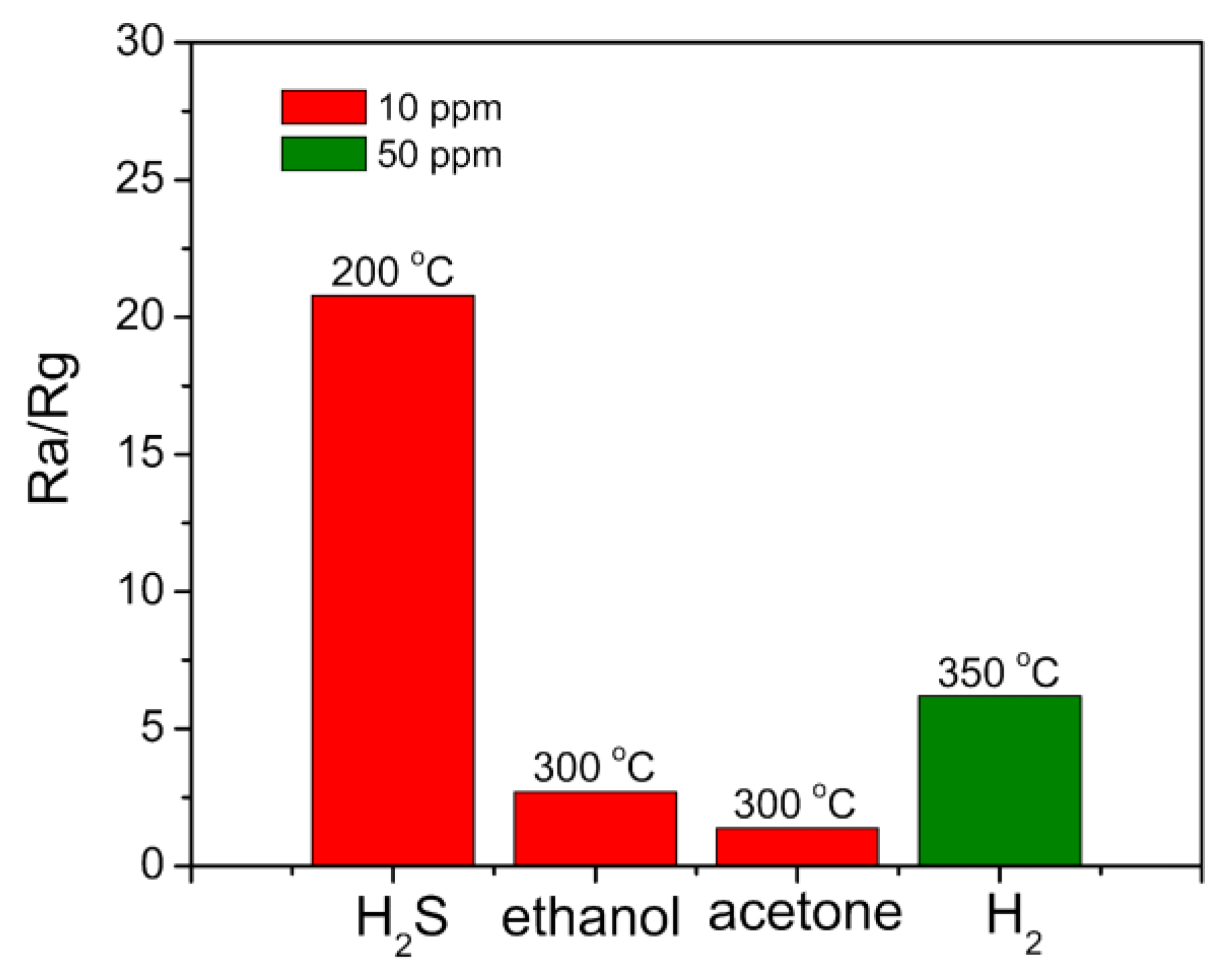
The cross-sensitivity of the SnO2 NF sensor was evaluated by exposing the sensing layer to different gases, including ethanol, acetone, and hydrogen, in separate experiments under the respective optimal measurement temperatures at which these gases exhibit the highest response. The concentrations of these gases were equal to or higher than that of H2S.

3. Results and Discussion

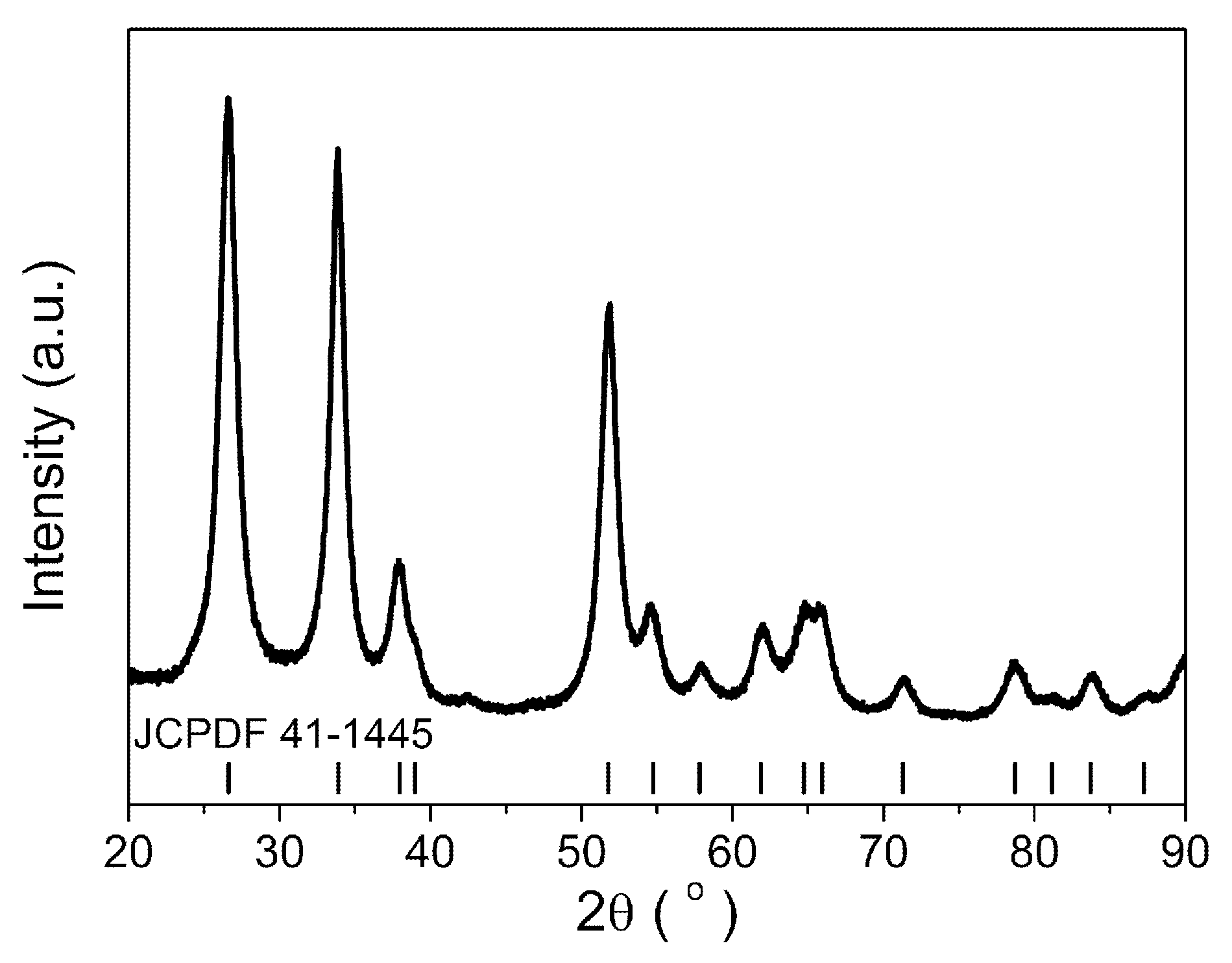
The crystalline structure and phase composition of calcined nanofibers were characterized by XRD analysis. The diffraction peaks observed in the pattern (Figure 1), corresponding to the (100), (101), (200), (211), and (220) planes, confirm the formation of cassiterite SnO2 with a rutile-type tetragonal unit cell (S.G. P42/mnm, JCPDF 41-1445). The calculated lattice parameters a = b = 4.7365 Å and c = 3.1890 Å are consistent with values reported in the literature. The crystallite size Dxrd, estimated from the XRD data, is approximately 5 nm.
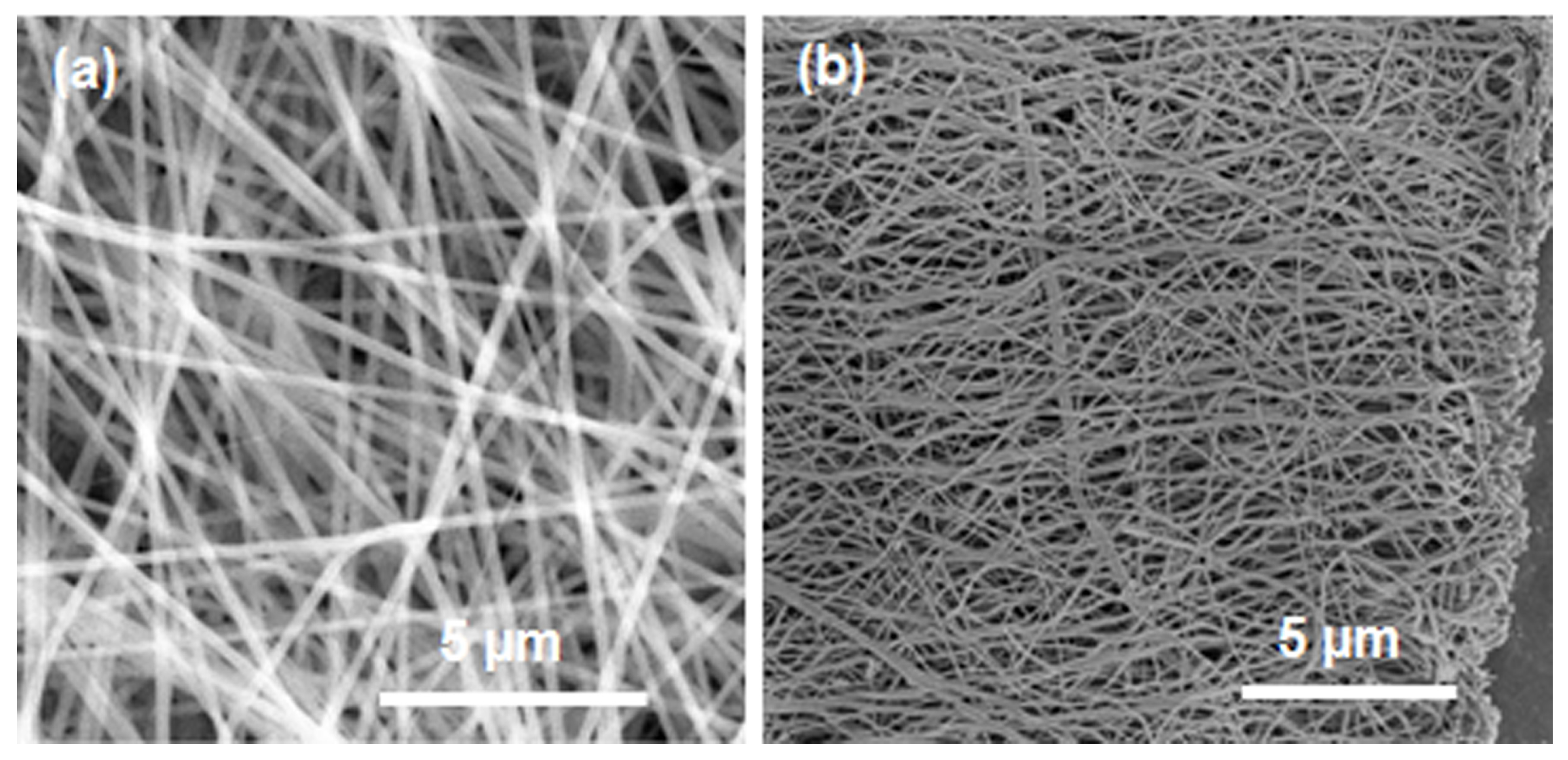
The micrographs presented in Figure 2 reveal the microstructure of electrospun fibers before and after calcination. The electrospinning process produced randomly distributed SnO2/PVP nanofibers with smooth surfaces and uniform diameters along their length (Figure 2a). After calcination, the fibers retained this continuous fibrous morphology, though their diameters decreased as a result of PVP decomposition and shrinkage during thermal treatment (Figure 2b).
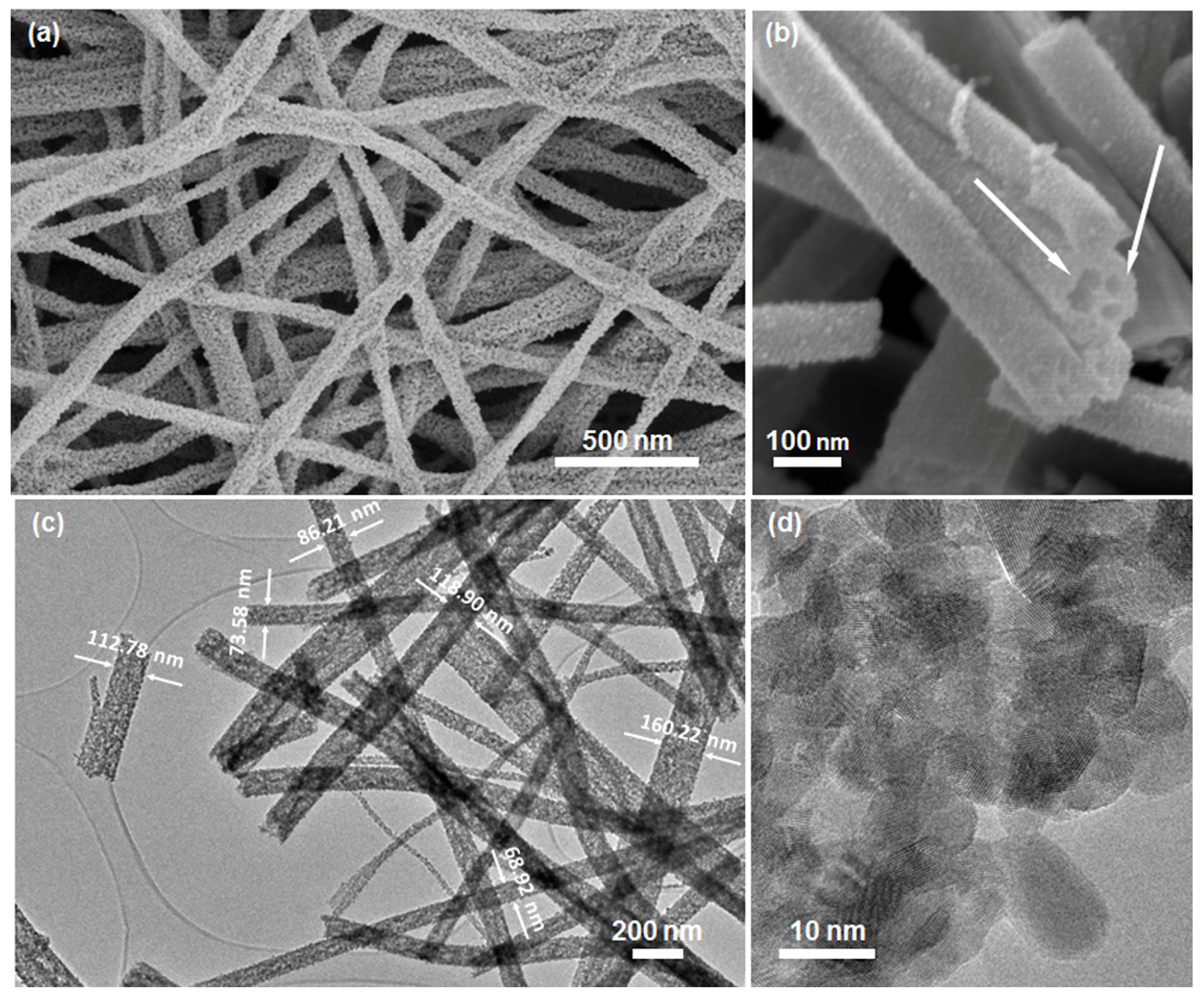
Calcination significantly influences the morphology of as-spun SnO2 nanofibers. During PVP decomposition, the release of CO2 and H2O promotes fiber expansion, thereby enhancing porosity and surface area [29,43]. Variations in heating rate further tune the structural characteristics, enabling the formation of hollow, porous, or dense fibers [44,45]. However, excessively high heating rates may lead to structural collapse and the formation of shortened fibers [29]. As shown in Figure 3a, a low heating rate of 1 °C/min produced NFs with rough surfaces, attributed to the gradual decomposition of PVP. Although lower heating rates are often reported to yield dense nanofibers [29,44], the obtained SnO2 NFs are distinctly multiporous with internal channels evident (Figure 3b).
The fiber diameters range from 70 to 160 nm (Figure 3c). This observation aligns with the findings of Wali et al., who demonstrated that multiporous SnO2 nanofibers can be achieved by adjusting the tin concentration in the precursor solution and applying a slow heating rate during calcination [26]. High-resolution TEM images further reveal that the NFs consist of interconnected nanoparticles with uniform morphology and an average particle size below 10 nm (Figure 3d).
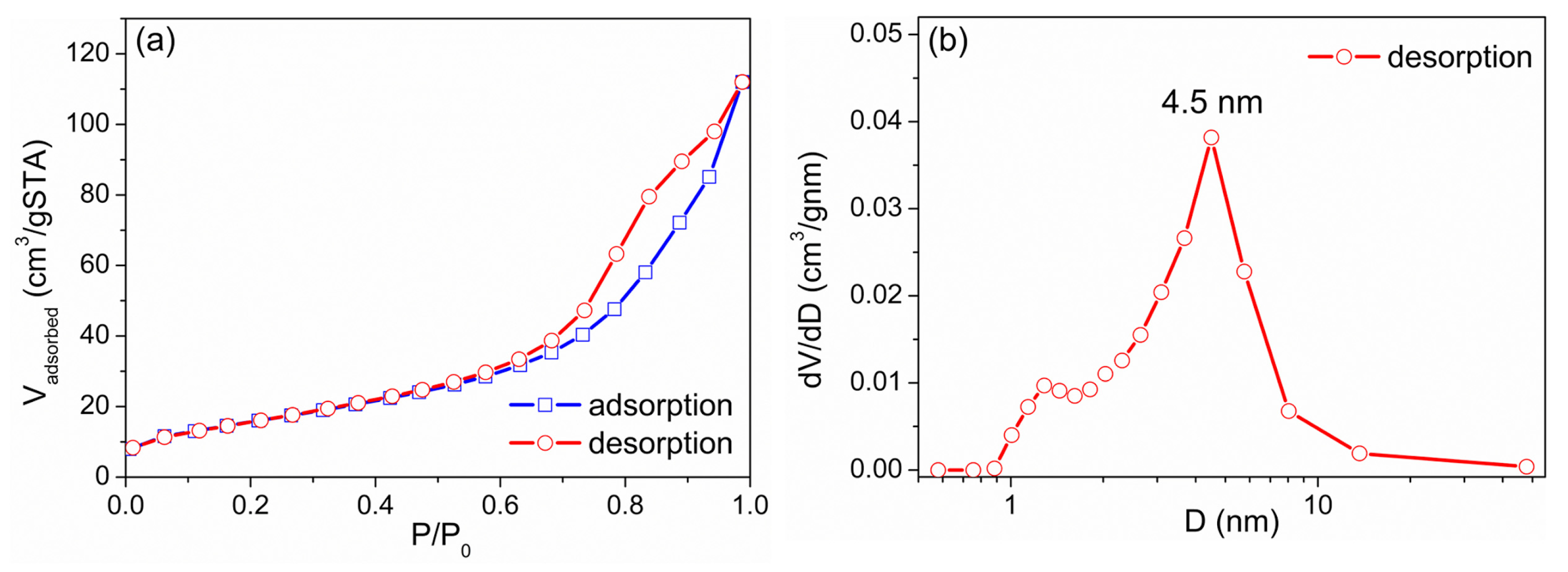
The specific surface area, a morphology-dependent property, plays a crucial role in determining the sensing performance of materials. For the SnO2 NFs, nitrogen adsorption–desorption isotherms were measured and analyzed using the Brunauer–Emmett–Teller (BET) method. According to IUPAC classification [46], the obtained isotherms (Figure 4a) correspond to type IV, which is characteristic of mesoporous materials. The calcined SnO2 NFs exhibited a specific surface area of 75 m2/g. The pore size distribution (Figure 4b), calculated using the Barrett–Joyner–Halenda (BJH) method from the desorption branch of the isotherm, revealed an average pore diameter of 4.5 nm. The primary particle size, calculated to be 11.5 nm, is consistent with TEM observations.
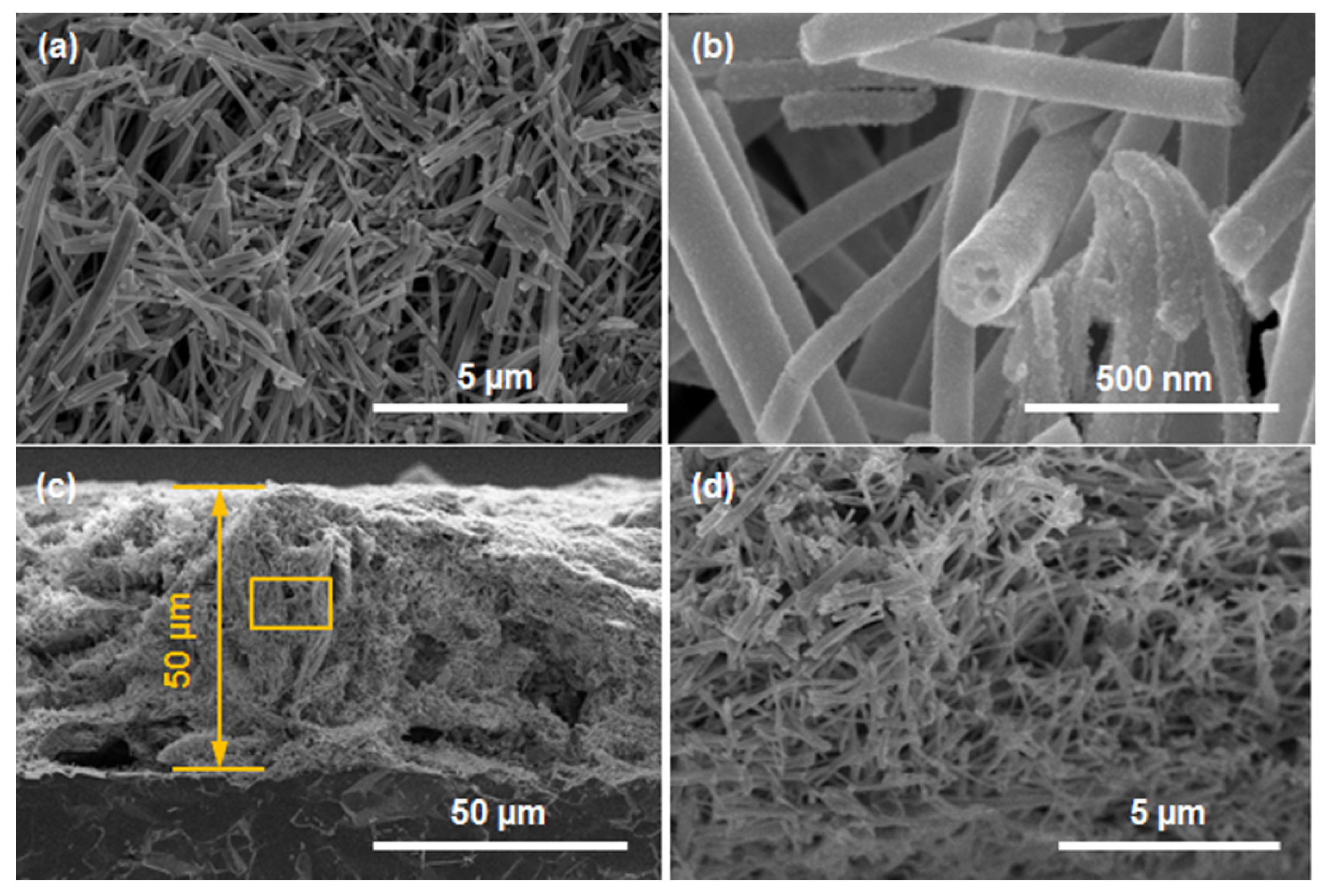
Mesoporous materials with high specific surface areas are excellent candidates for gas sensing applications, as they offer numerous active sites for adsorption and promote enhanced interaction between gas molecules and the sensing layer. Figure 5a,b show the surface of the thick film prepared from calcined SnO2 NFs. These micrographs reveal a highly porous fibrous structure that is preserved during film formation. The individual fibers form a continuous network, providing pathways for gas diffusion and efficient exposure of active sites for gas–solid reactions.
The cross-sectional morphology reveals that the film has a thickness of approximately 50 μm, confirming that the porous structure extends throughout the entire volume and showing no evidence of the collapse of the fibrous network (Figure 5c,d).
The gas sensing behavior of n-type MOX sensors is governed by the adsorption and desorption of gaseous species on the sensors’ surface. In ambient air, oxygen molecules are adsorbed on the SnO2 surface and extract electrons from the conduction band, forming ionized chemisorbed oxygen species (O2, O, O2−) depending on the operating temperature, which leads to the formation of an electron depletion layer at the grain surface. At relatively low temperatures, O2 species dominate, whereas O becomes the predominant form at typical operating temperatures of SnO2-based sensors (150–400 °C), while O2− may appear at higher temperatures. Upon exposure to a reducing gas such as H2S, the gas reacts with these chemisorbed oxygen species, releasing trapped electrons back into the conduction band and resulting in a decrease in the electrical resistance of the sensing material [7,47,48,49]. The extent and kinetics of these surface reactions are strongly influenced by the operating temperature, which affects both oxygen ionization processes and charge carrier mobility. Given that the optimal operating temperature of a SnO2-NF-based sensor is 200 °C, we could assume that the chemisorbed oxygen species on the SnO2 surface are generally dominated by O ions, which are primarily responsible for surface redox reactions with reducing gases. Accordingly, the possible surface reactions can be expressed as follows [7].
2 H 2 S g + 3 O 2 a d s 2 H 2 O g + 2 S O 2 g + 3 e
H 2 S g + 3 O a d s H 2 O g + S O 2 g + 3 e
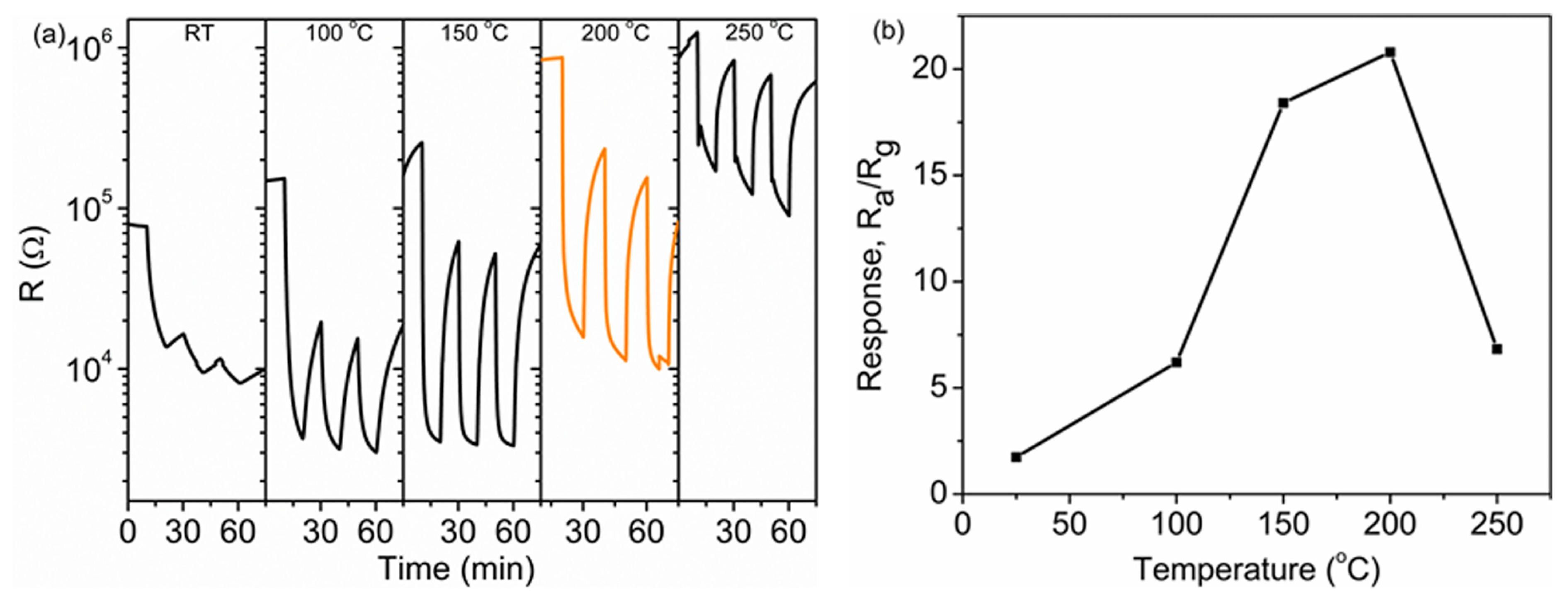
To determine the optimum operating temperature, the sensing responses of prepared SnO2-NF-based sensors were evaluated in the (25–250) °C range under exposure to 10 ppm of H2S (Figure 6a).
The response increased with temperature up to 200 °C, indicating that lower temperatures do not provide sufficient energy to activate oxidation processes and reaction with H2S (Figure 6b). At this temperature, the surface reaction between adsorbed oxygen species and gas molecules is enhanced, yielding the maximum sensor response. Further increase in temperature resulted in a significant decrease in response, likely due to reduced gas adsorption, and the possible desorption of oxygen species, which increases the number of electrons in the conduction band and thereby raises the material’s resistance. Consequently, 200 °C was selected as the optimum operating temperature for subsequent measurements. At this temperature, the sensors’ response reached 20.8, which is comparable to values reported in the literature for both pure [20,48] and SnO2-based sensors [27,50,51,52,53]. The enhanced sensitivity and faster kinetics of our SnO2 NFs can be attributed to their high surface area and hierarchically porous network, which provide abundant active sites and facilitate gas diffusion.
Table 2 presents a comparative overview of SnO2-based sensors for H2S detection, including synthesis methods, operating temperatures, and response times, with our results included for reference. As shown, most reported sensors operate at temperatures of 200 °C or higher, which aligns with the optimum temperature identified in our study. However, our work also demonstrates that high sensitivity can be achieved at 150 °C, accompanied by more stable response behavior (Figure 6).
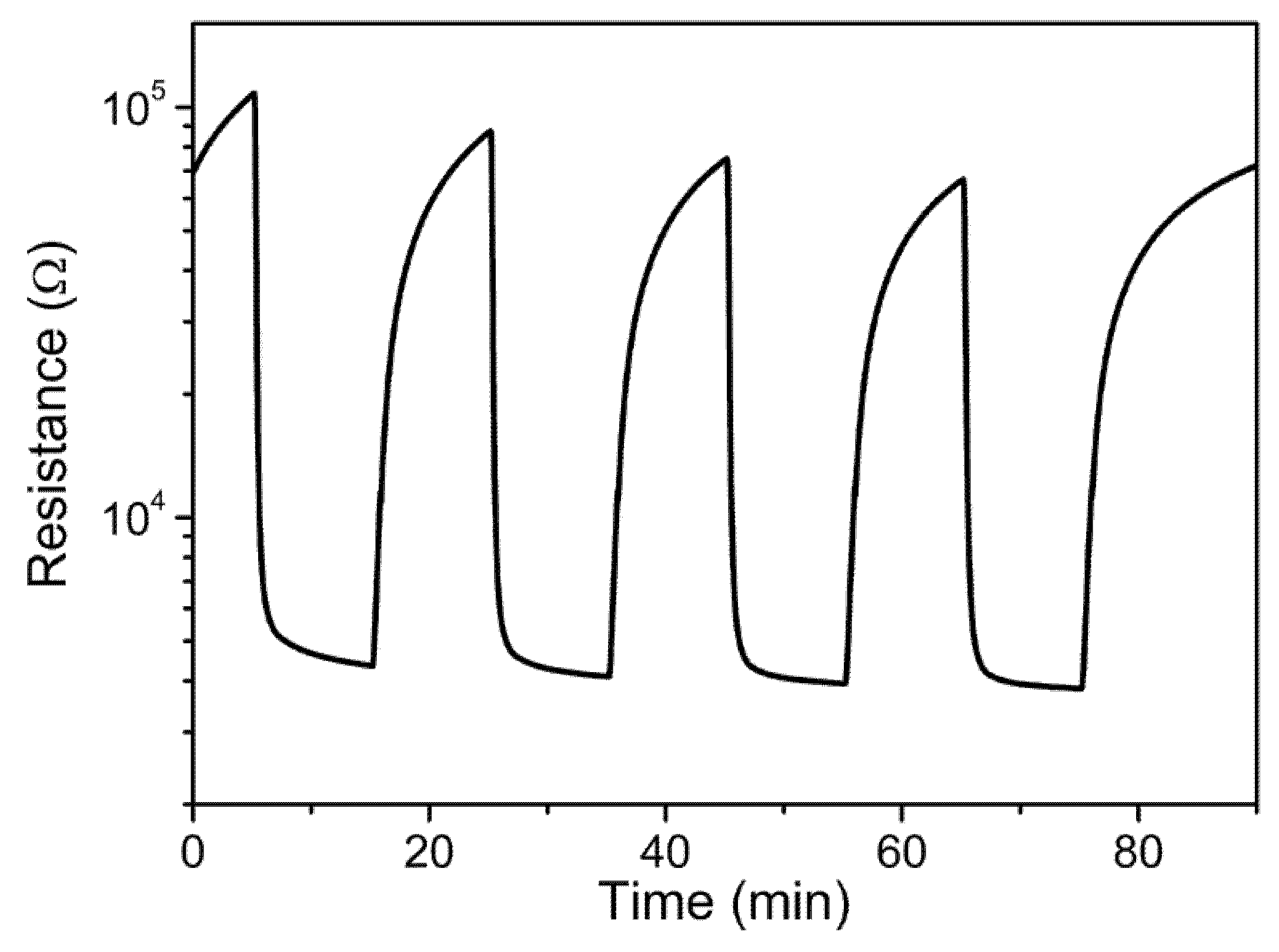
To assess the short-term repeatability of the gas sensing performance, the sensor was exposed to 10 ppm H2S at 200 °C over four successive cycles. The corresponding dynamic response is presented in Figure 7.
The obvious decrease in sensor response upon successive exposure to 10 ppm H2S can be attributed to the partial retention of gas molecules, either H2S or reaction products on the sensor’s surface. These species, due to their slow desorption, can temporarily occupy active adsorption sites. Additionally, the strong affinity of SnO2 for H2S leads to the formation of tin sulfide (SnSx) phases that are difficult to reoxidize once formed [54], along with the formation of sulfite and sulfate species in SnO2-based sensors [55]. These reactions occur simultaneously with those given by Equations (1) and (2) and, consequently, decrease the sensors’ response. However, the high specific surface area and large number of accessible sites mitigate this effect, facilitating gas diffusion through the porous nanofiber network and across the film volume. As a result, the sensor response highlights the benefit of the synthesis method in generating a porous microstructure that improves surface accessibility and overall performance. At the same time, it also indicates that problems related to surface poisoning can be mitigated by surface modifications with suitable additives or by specific technical procedures such as cleaning the sensors’ surface using the quick and short heating of the sensor at 500 °C [55,56].
Table 2. Comparative study of SnO2-based sensors for H2S detection, including synthesis methods, operating temperatures, and response times.
MaterialFormSynthesis
Method
H2S
Concentration
[ppm]
Operating
Temperature
[°C]
Sensor
Response 1
[/] or [%]
tres
[s]
Ref.
SnO2nanofiberselectrospinning12005.4491this work
SnO2nanofiberselectrospinning520012.4144this work
SnO2nanofiberselectrospinning1020024.2923this work
SnO2-electrospinning1020019.83%≈90[27]
SnO2nanofiberselectrospinning5025010.49≈70[50]
SnO2dense
nanofibers
electrospinning53002.6≈40[55]
SnO2nanotubeselectrospinning53004.7≈70[55]
SnO2hollow
nanofibers
electrospinning100300118.630[12]
SnO2full
nanofibers
electrospinning10030045.860[12]
SnO2-co-precipitation102751.06-[52]
Fe-SnO2-co-precipitation102753.1-[52]
1 Sensor response S = Ra/Rg [/]; S = [(Ra − Rg)/Rg] × 100 [%].
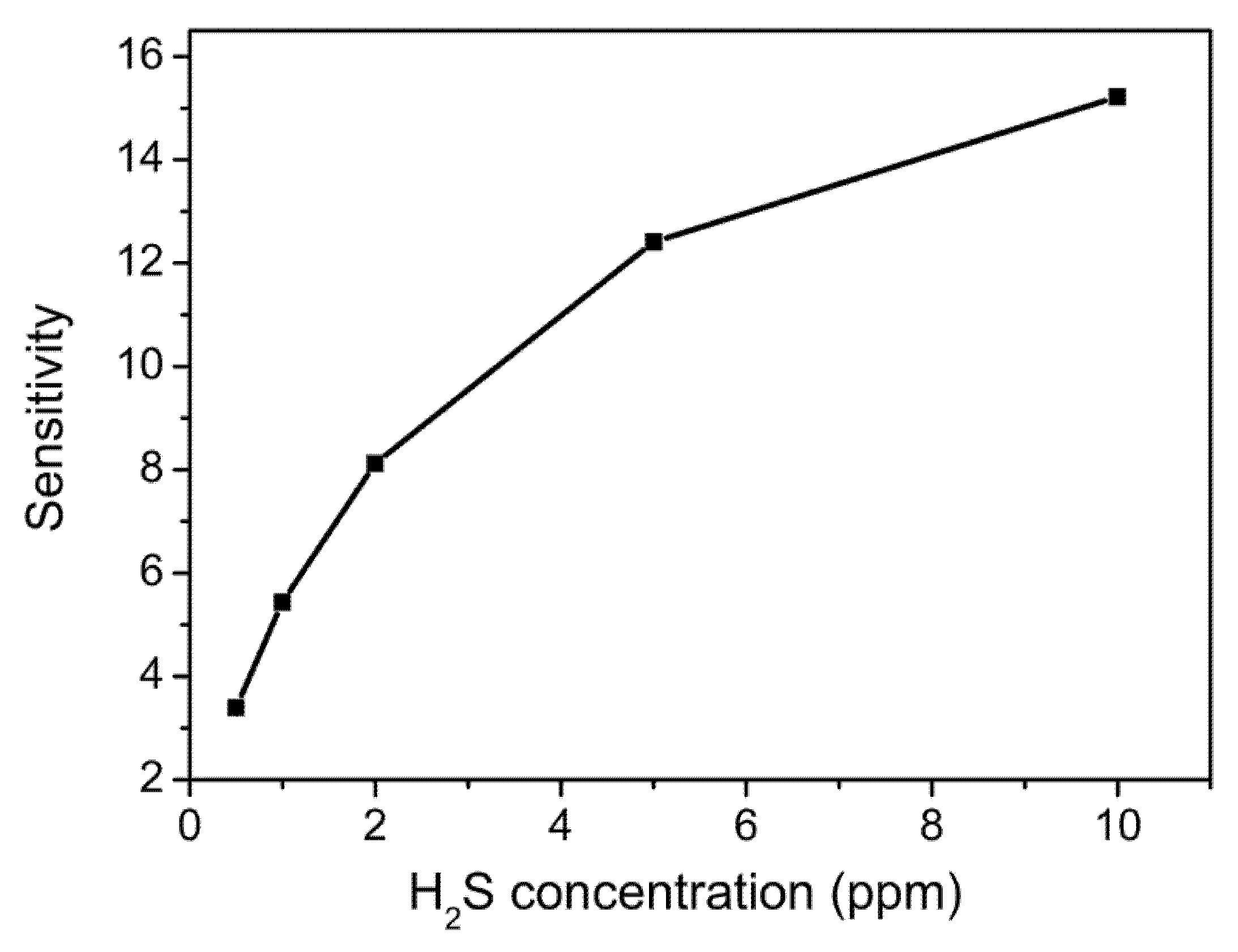
The dynamic response of the SnO2 NF sensor to varying H2S concentrations was investigated at the optimum operating temperature of 200 °C. As presented in Figure 8, increasing the H2S concentration from 0.5– to 10 ppm led to a rise in response values from 3.4 to 15.2. This upward trend indicates that a higher concentration of H2S molecules enhances the surface reaction with adsorbed oxygen species, resulting in a greater change in sensor resistance. The response times for 0.5, 1.0, 2.0, 5.0, and 10 ppm H2S were 156 s, 91 s, 67 s, 44 s, and 33 s, respectively. The observed decrease in response time with increasing gas concentration can be attributed to the greater number of gas molecules available for surface reactions.
At lower concentrations, the diffusion of H2S molecules through the porous network of SnO2 NFs becomes a rate limiting factor, thereby prolonging the response time. At higher concentrations, the reaction rate between H2S and the chemisorbed oxygen species is enhanced. The increased probability of interaction accelerates electron transfer, reduces resistivity more rapidly, and allows the sensor to reach equilibrium in a shorter time. However, after each exposure cycle, the baseline resistance did not fully return to its initial value. This behavior is consistent with the gradual decrease in sensor response observed during repeated exposures to 10 ppm H2S. The incomplete recovery suggests that a fraction of the adsorbed H2S, or its reaction products, remained on the sensor surface, hindering complete desorption. Consequently, reliable recovery times could not be determined. Prolonged recovery, which is common in SnO2-based H2S sensors, can be attributed to the strong affinity of SnO2 for H2S, leading to the formation of tin sulfide (SnSx) phases that are difficult to reoxidize once formed [54]. Additionally, the formation of sulfite and sulfate species in SnO2-based sensors may further extend the recovery period [55].
The cross-sensitivity of the SnO2-nanofiber-based sensors was evaluated by exposing them, in separate experiments, to possible interfering gases under their respective optimal conditions: acetone and ethanol (10 ppm, 300 °C) and hydrogen (50 ppm, 350 °C). These test conditions involved higher temperatures and, in the case of hydrogen, a higher concentration than those used for H2S detection. As shown in Figure 9, the sensor exhibited a markedly higher response to H2S compared with the other tested gases. Cross-sensitivity demonstrates that the sensor’s response to possible interfering gases is negligible (ten times lower to acetone and ethanol) compared to its response to the target gas. This behavior can be attributed to the higher chemical affinity and stronger reducing nature of H2S, whose reaction with adsorbed oxygen species proceeds more rapidly and releases a greater number of electrons into the SnO2 conduction band. These results demonstrate that sensors based on mesoporous SnO2 NFs exhibit strong cross-sensitivity toward H2S and show potential for reliable detection in complex gas environments.
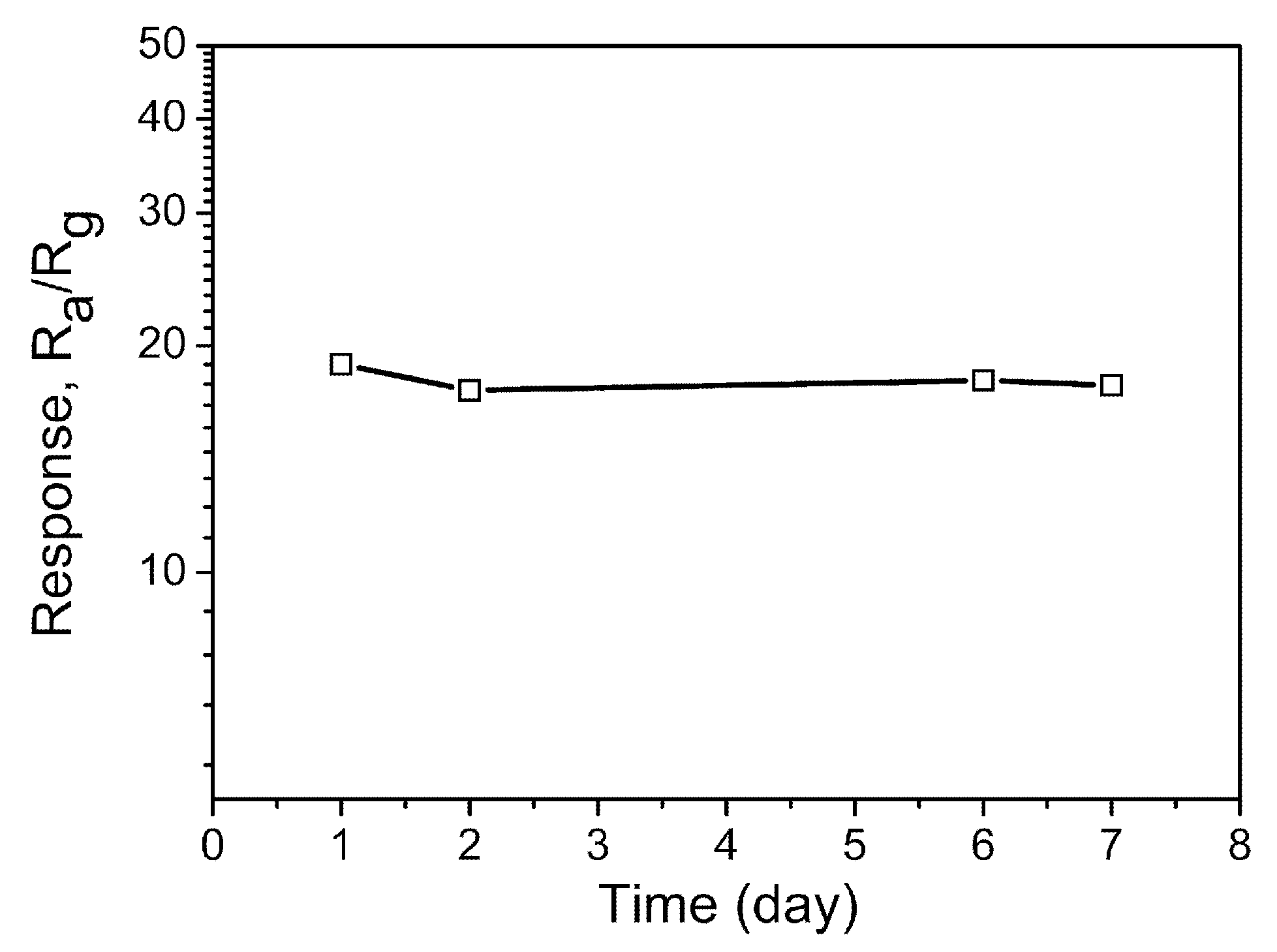
Additionally, the long-term stability of the sensor was assessed over a one-week period (Figure 10). Under repeated exposure to 10 ppm H2S at 200 °C, the sensor maintained consistent sensitivity values with only minor fluctuations, confirming reliable operational stability.

4. Conclusions

Multiporous SnO2 nanofibers with hierarchically porous architecture and high specific surface area were synthesized via electrospinning followed by controlled calcination. Structural and morphological analyses confirmed cassiterite-phase SnO2 composed of interconnected nanoparticles (<10 nm) forming mesopores (~4.5 nm), while multichannel fibers (diameter 70–160 nm) contributed macroporous voids, yielding a surface area of 75 m2/g with mesopores averaging 4.5 nm. Thick-film sensors fabricated from these nanofibers exhibited excellent sensitivity toward 10 ppm H2S at 200 °C, with a maximum response of 24.29 enabled by the large surface area and open porous network that provide abundant active sites and facilitate rapid electron transfer.
Dynamic response measurements demonstrated reproducible performance across repeated cycles, while concentration-dependent studies revealed accelerated response times with increasing H2S levels, underscoring efficient gas diffusion and reaction kinetics. Recovery was not fully complete, reflecting the strong interaction between H2S and the SnO2 surface; however, this highlights an important direction for future optimization aimed at improving long-term stability. Cross-sensitivity tests further confirmed a markedly stronger response to H2S compared with acetone, ethanol, and hydrogen, emphasizing both the chemical affinity of H2S and the robustness of the nanofiber design.
Overall, these results establish mesoporous SnO2 nanofibers prepared via electrospinning as a reliable platform for toxic gas detection, combining high sensitivity, reproducibility, and selectivity. The synthesis route offers a versatile basis for engineering advanced porous nanostructures, and future work may explore doping, heterostructure formation, or flexible substrates to enhance recovery and broaden application in environmental monitoring and industrial safety.

Supplementary Materials

The following supporting information can be downloaded at: https://www.mdpi.com/article/10.3390/chemosensors14020032/s1, Figure S1: TG curve of the electrospun SnO2 precursor nanofibers.

Author Contributions

Conceptualization, M.P.-N., K.V., S.S.R., G.B. and Z.B.; methodology, G.B.; Z.B., K.V., S.S.R. and N.M.; validation, K.V., S.S.R., N.M. and G.B.; formal analysis, M.P.-N., K.V., S.S.R., Z.M.S., T.T., N.M., R.Q. and M.H.; investigation, M.P.-N., K.V., S.S.R., Z.M.S., A.M., T.T., N.M., R.Q. and M.P.; resources, Z.B., N.M. and M.P.; data curation, K.V., N.M. and Z.B.; writing—original draft preparation, M.P.-N.; K.V. and S.S.R.; writing—review and editing, M.P.-N., S.S.R., K.V. and Z.B.; visualization, K.V.; supervision, Z.B.; project administration, Z.B.; funding acquisition, Z.B. All authors have read and agreed to the published version of the manuscript.

Funding

This research was supported by the Science Fund of the Republic of Serbia, #GRANT No 7069, A new approach for multiple gas sensing with high sensitivity and selectivity—MULTISENSE; the Serbian Ministry of Science, Technological Development and Innovation (contract numbers: 451-03-136/2025-03/200053 and 451-03-136/2025-03/200358); Serbian Ministry of Education, Science and Technological Development and German Academic Exchange Service (DAAD) through Serbian–German bilateral project “Nanostructured semiconducting metal-oxides as gas sensors for medical diagnostics by breath analysis” (2020/2021) and Serbian Ministry of Science, Technological Development and the Ministry of Science and Technology of the People’s Republic of China through Mobility Project “The cooperative study of high-performance and low-cost gas sensors for smart agriculture”. The work of the Chinese team was funded through Scientific and technological cooperation projects between the Republic of Serbia and the People’s Republic of China, the International Partnership Program of Chinese Academy of Sciences (No. 030GJHZ2022039FN and No. 030GJHZ2024069FN). The financial support of the Slovenian Research and Innovation Agency (ARIS) is gratefully acknowledged (Project No. J2-3051 and Program No. P2-0084).

Institutional Review Board Statement

Not applicable.

Informed Consent Statement

Not applicable.

Data Availability Statement

The original contributions presented in this study are included in the article/Supplementary Material. Further inquiries can be directed to the corresponding author.

Acknowledgments

We acknowledge the CEMM and JSI for the use of SEM and TEM.

Conflicts of Interest

The authors declare no conflicts of interest.

References

  1. Occupational Safety and Health Administration (OSHA). Hydrogen Sulfide Hazards. U.S. Department of Labor. Available online: https://www.osha.gov/hydrogen-sulfide/hazards (accessed on 26 January 2026).
  2. Liewhiran, C.; Punginsang, M.; Inyawilert, K.; Siriwalai, M.; Wisitsoraat, A. Selectivity toward H2S against various gaseous disease markers in exhaled breath of flame-produced CuOx-loaded SnO2 nanosensors. Sens. Actuators B Chem. 2025, 424, 136856. [Google Scholar] [CrossRef]
  3. Song, H.; Wan, R.; Tian, Q.; Liu, Y.; Ruan, H.; Liu, P.; Wang, Y.; Liu, L. A serial analysis of hydrogen sulfide poisoning: Three group accidents. Forensic Sci. Med. Pathol. 2024, 20, 1014–1021. [Google Scholar] [CrossRef] [PubMed]
  4. Wu, D.D.; Wang, D.Y.; Li, H.M.; Guo, J.C.; Duan, S.F.; Ji, X.Y. Hydrogen sulfide as a Novel Regulatory Factor in Liver Health and Disease. Oxidative Med. Cell. Longev. 2019, 2019, 3831713. [Google Scholar] [CrossRef] [PubMed]
  5. Ali, F.I.M.; Awwad, F.; Greish, Y.E.; Mahmoud, S.T. Hydrogen Sulfide (H2S) Gas Sensor: A Review. IEEE Sens. J. 2019, 19, 2394–2407. [Google Scholar] [CrossRef]
  6. Liu, H.; Weng, L.; Yang, C. A review on nanomaterial-based electrochemical sensors for H2O2, H2S and NO inside cells or released by cells. Microchim. Acta 2017, 184, 1267–1283. [Google Scholar] [CrossRef]
  7. Wang, L.; Choi, J. Advances in inorganic conductive material and organic conductive polymer-based resistive gas sensors for room-temperature H2S detection. Micro Nano Syst. Lett. 2025, 3, 5. [Google Scholar] [CrossRef]
  8. Korotcenkov, G. Metal oxides for solid-state gas sensors: What determines our choice? Mater. Sci. Eng. B 2007, 139, 1–23. [Google Scholar] [CrossRef]
  9. Liu, X.; Cheng, S.; Liu, H.; Hu, S.; Zhang, D.; Ning, H. A survey on gas sensing technology. Sensors 2012, 12, 9635–9665. [Google Scholar] [CrossRef]
  10. Kong, Y.; Li, W.; Zhang, H.; Wang, Z. SnO2 nanostructured materials used as gas sensors for the detection of hazardous and flammable gases: A review. Nano Mater. Sci. 2022, 4, 339–350. [Google Scholar] [CrossRef]
  11. Shah, V.; Bhaliya, J.; Patel, G.M.; Joshi, P. Room-temperature chemiresistive gas sensing of SnO2 nanowires: A review. J. Inorg. Organomet. Polym. Mater. 2022, 32, 741–772. [Google Scholar] [CrossRef]
  12. Zhao, N.; Chen, Z.; Zeng, W. Enhanced H2S sensor based on electrospun mesoporous SnO2 nanotubes. J. Mater. Sci. Mater. Electron. 2015, 26, 9152–9157. [Google Scholar] [CrossRef]
  13. Berwal, P.; Singh, P.; Sheokand, A.; Rani, S.; Sihag, S.; Bulla, M.; Chaudhary, P.; Gangwar, A.K.; Kumar, V. Fabrication of durable and sensitive SnO2-Based gas sensor for NO2 detection. Appl. Phys. A 2025, 131, 700. [Google Scholar] [CrossRef]
  14. Song, J.; Lin, X.; Ee, L.Y.; Li, S.F.Y.; Huang, M. A Review on Electrospinning as Versatile Supports for Diverse Nanofibers and Their Applications in Environmental Sensing. Adv. Fiber Mater. 2023, 5, 429–460. [Google Scholar] [CrossRef]
  15. Panigrahi, P.K.; Chandu, B.; Puvvada, N. Recent Advances in Nanostructured Materials for Application as Gas Sensors. ACS Omega 2024, 9, 3092–3122. [Google Scholar] [CrossRef] [PubMed]
  16. Goswami, Y.C.; Kumar, V.; Rajaram, P.; Malik, M.A.; O’Brien, P. Synthesis of SnO2 nanostructures by ultrasonic-assisted sol-gel method. J. Sol-Gel Sci. Technol. 2014, 69, 617–624. [Google Scholar] [CrossRef]
  17. Qian, Y.; Zhang, H.; Xiong, Y.; Wu, Y.; Fu, Z.; Guo, P.; Jiang, H.; Li, J.; Wang, Y.; Yu, S.; et al. Enhanced low-temperature sensitivity of H2S gas sensing via oxygen vacancy-rich NiO-SnO2 heterojunction nanostructures. Microchem. J. 2025, 212, 113177. [Google Scholar] [CrossRef]
  18. Motsoeneng, R.G.; Kortidis, I.; Ray, S.S.; Motaung, D.E. Designing SnO2 Nanostructure-Based Sensors with Tailored Selectivity toward Propanol and Ethanol Vapors. ACS Omega 2019, 4, 13696−13709. [Google Scholar] [CrossRef] [PubMed]
  19. Alhadi, A.; Ma, S.; Yang, T.; Pei, S.; Yun, P.; Abbakar, K.A.; Zhang, Q.; Ma, N.; Wang, L.; Balal, M.H.; et al. Pure SnO2 Gas Sensor with High Sensitivity and Selectivity towards C2H5OH. Adv. Nanopart. 2021, 10, 66–74. [Google Scholar] [CrossRef]
  20. Doubi, Y.; Hartiti, B.; Batan, A.; Siadat, M.; Labrim, H.; Tahiri, M.; Kotbi, A.; Thevenin, P.; Jouiad, M. Controlled SnO2 nanostructures for enhanced sensing of hydrogen sulfide and nitrogen dioxide. Sens. Actuators B Chem. 2025, 440, 137878. [Google Scholar] [CrossRef]
  21. Yoon, J.-W.; Choi, S.H.; Kim, J.-S.; Jang, H.W.; Kang, Y.C.; Lee, J.-H. Trimodally porous SnO2 nanospheres with three-dimensional interconnectivity and size tunability: A one-pot synthetic route and potential application as an extremely sensitive ethanol detector. NPG Asia Mater. 2016, 8, e244. [Google Scholar] [CrossRef]
  22. Ueda, T.; Torai, S.; Fujita, K.; Shimizu, Y.; Hyodo, T. Effects of Au Addition to Porous CuO2-Added SnO2 Gas Sensors on Their VOC-Sensing Properties. Chemosensors 2024, 12, 153. [Google Scholar] [CrossRef]
  23. Karmaoui, M.; Jorge, A.B.; McMillan, P.F.; Aliev, A.E.; Pullar, R.C.; Labrincha, J.A.; Tobaldi, D.M. One-Step Synthesis, Structure, and Band Gap Properties of SnO2 Nanoparticles Made by a Low Temperature Nonaqueous Sol−Gel Technique. ACS Omega 2018, 3, 13227–13238. [Google Scholar] [CrossRef] [PubMed]
  24. Li, S.-H.; Meng, F.-F.; Chu, Z.; Luo, T.; Peng, F.-M.; Jin, Z. Mesoporous SnO2 Nanowires: Synthesis and Ethanol Sensing Properties. Adv. Condens. Matter Phys. 2017, 2017, 9720973. [Google Scholar] [CrossRef]
  25. Gherardi, S.; Astolfi, M.; Gaiardo, A.; Malagù, C.; Rispoli, G.; Vincenzi, D.; Zonta, G. Investigating the Temperature-Dependent Kinetics in Humidity-Resilient Tin–Titanium- Based Metal Oxide Gas Sensors. Chemosensors 2024, 12, 151. [Google Scholar] [CrossRef]
  26. Wali, Q.; Fakharuddin, A.; Ahmed, I.; Ab Rahim, M.H.; Ismail, J.; Jose, R. Multiporous nanofibers of SnO2 by electrospinning for high efficiency dye-sensitized solar cells. J. Mater. Chem. A 2014, 2, 17427. [Google Scholar] [CrossRef]
  27. Ruksana, S.; Kumar, A.; Lakshmy, S.; Kishore, K.R.; Sharma, C.S.; Kumar, M.; Chakraborty, B. Highly Efficient CuO-Anchored SnO2 Nanofiber for Low-Concentration H2S Gas Sensors. ACS Appl. Eng. Mater. 2024, 2, 431–442. [Google Scholar] [CrossRef]
  28. Cai, Z.; Park, S. A superior sensor consisting of porous, Pd nanoparticle–decorated SnO2 nanotubes for the detection of ppb-level hydrogen gas. J. Alloys Compd. 2022, 907, 164459. [Google Scholar] [CrossRef]
  29. Su, P.; Li, W.; Zhang, J.; Xie, X. Chemiresistive gas sensor based on electrospun hollow SnO2 nanotubes for detecting NO at the ppb level. Vacuum 2022, 199, 110961. [Google Scholar] [CrossRef]
  30. Zhang, J.; Ma, S.; Wang, B.; Pei, S. Preparation of composite SnO2/CuO nanotubes by electrospinning and excellent gas selectivity to ethanol. Sens. Actuators A Phys. 2021, 332, 113090. [Google Scholar] [CrossRef]
  31. Bulemo, P.M.; Cho, H.-J.; Kim, N.-H.; Kim, I.-D. Mesoporous SnO2 Nanotubes via Electrospinning−Etching Route: Highly Sensitive and Selective Detection of H2S Molecule. ACS Appl. Mater. Interfaces 2017, 9, 26304–26313. [Google Scholar] [CrossRef]
  32. Kader, M.A.; Azmi, N.S.; Kafi, A.K.M.; Hossain, M.S.; Masri, M.F.B.; Ramli, A.N.M.; Tan, C.S. Synthesis and Characterization of a Multiporous SnO2 Nanofibers-Supported Au Nanoparticles-Based Amperometric Sensor for the Nonenzymatic Detection of H2O2. Chemosensors 2023, 11, 130. [Google Scholar] [CrossRef]
  33. Güntner, A.T.; Pineau, N.J.; Pratsinis, S.E. Flame-made chemoresistive gas sensors and devices. Prog. Energy Combust. Sci. 2022, 90, 100992. [Google Scholar] [CrossRef]
  34. Suematsu, K.; Uchiyama, A.; Watanabe, K.; Shimanoe, K. Highly Sensitive Carbon Monoxide Sensor Element with Wide-Range Humidity Resistance by Loading Pd Nanoparticles on SnO2 Surface. Sensors 2022, 22, 2934. [Google Scholar] [CrossRef]
  35. Dadkhah, M.; Tulliani, J.-M. Green Synthesis of Metal Oxides Semiconductors for Gas Sensing Applications. Sensors 2022, 22, 4669. [Google Scholar] [CrossRef]
  36. Zhao, Y.-S.; Huang, J.; Yang, X.; Wang, W.; Yu, D.-G.; He, H.; Liu, P.; Du, K. Electrospun nanofibers and their application as sensors for healthcare. Front. Bioeng. Biotechnol. 2025, 13, 1533367. [Google Scholar] [CrossRef]
  37. Cho, H.-J.; Kim, Y.H.; Park, S.; Kim, I.-D. Design of Hollow Nanofibrous Structures using Electrospinning: An Aspect of Chemical Sensor Applications. ChemNanoMat 2020, 6, 1014–1027. [Google Scholar] [CrossRef]
  38. Li, D.; Xia, Y. Electrospinning of Nanofibers: Reinventing the Wheel? Adv. Mater. 2004, 16, 1151–1170. [Google Scholar] [CrossRef]
  39. Esfahani, H.; Jose, R.; Ramakrishna, S. Electrospun Ceramic Nanofiber Mats Today: Synthesis, Properties, and Applications. Materials 2017, 10, 1238. [Google Scholar] [CrossRef] [PubMed]
  40. Pascariu, P.; Airineia, A.; Olarua, N.; Petrila, I.; Nica, V.; Sacarescu, L.; Tudorache, F. Microstructure, electrical and humidity sensor properties ofelectrospun NiO–SnO2 nanofibers. Sens. Actuators B 2016, 222, 1024–1031. [Google Scholar] [CrossRef]
  41. Reed, J.S. Principles of Ceramics Processing; John Wiley & Sons: Hoboken, NJ, USA, 1995. [Google Scholar]
  42. Chen, X.; Hua, Z.; Geng, C.; Ma, N. Facile synthesis of novel YbFeO3–BiFeO3 composite for highly sensitive ppb-level acetone sensing at low temperature. J. Mater. Sci. Mater. Electron. 2023, 34, 1588. [Google Scholar] [CrossRef]
  43. Busuioc, A.D.; Ciovică, I.; Stoleriu, Ş.; Enculescu, M.; Evanghelidis, A.; Vişan, T. Morphological and optical properties of electrospun SnO2 fibers. Dig. J. Nanomater. Biostruct. 2017, 12, 1097–1105. [Google Scholar]
  44. Jang, J.-S.; Kim, S.-J.; Choi, S.-J.; Kim, N.-H.; Hakim, M.; Rothschild, A.; Kim, L.-D. Thin-walled SnO2 nanotubes functionalized with Pt and Au catalysts via the protein templating route and their selective detection of acetone and hydrogen sulfide molecules. Nanoscale 2015, 7, 16417–16426. [Google Scholar] [CrossRef]
  45. Wang, L.; Luo, X.; Zheng, X.; Wang, R.; Zhang, T. Direct annealing of electrospun synthesized highperformance porous SnO2 hollow nanofibers for gas sensors. RSC Adv. 2013, 3, 9723–9728. [Google Scholar] [CrossRef]
  46. Sing, K.S.W.; Everett, D.H.; Haul, R.A.W.; Moscou, L.; Pierotti, R.A.; Rouquerol, J.; Siemieniewska, T. Reporting physisorption data for gas/solid systems with special reference to the determination of surface area and porosity. Pure Appl. Chem. 1985, 57, 603–619. [Google Scholar] [CrossRef]
  47. Barsan, N.; Koziej, D.; Weimar, U. Metal oxide-based gas sensor research: How to? Sens. Actuators B 2007, 121, 18–35. [Google Scholar] [CrossRef]
  48. Wang, C.; Yin, L.; Zhang, L.; Xiang, D.; Gao, R. Metal Oxide Gas Sensors: Sensitivity and Influencing Factors. Sensors 2010, 10, 2088–2106. [Google Scholar] [CrossRef] [PubMed]
  49. Sun, Y.-F.; Liu, S.-B.; Meng, F.-L.; Liu, J.-Y.; Jin, Z.; Kong, L.-T.; Liu, J.-H. Metal Oxide Nanostructures and Their Gas Sensing Properties: A Review. Sensors 2012, 12, 2610–2631. [Google Scholar] [CrossRef] [PubMed]
  50. Zhao, J.; Shen, W.; Gao, Y.; Lv, D.; Son, W.; Tan, R. Optimization of SnO2-based MEMS sensor array for expeditious and precise categorization of meat types and freshness status. Sens. Actuators A Phys. 2025, 391, 116680. [Google Scholar] [CrossRef]
  51. Lu, Z.; Zhou, Q.; Wang, C.; Wei, Z.; Xu, L.; Gui, Y. Electrospun ZnO–SnO2 Composite Nanofibers and Enhanced Sensing Properties to SF6 Decomposition Byproduct H2S. Front. Chem. 2018, 6, 540. [Google Scholar] [CrossRef]
  52. Khan, L.A.; Ali, S.; Ali, N.; Zhu, L.; Zulfiqar, S.; Shah, S.; Hussain, S.A.; Shaik, M.R.; Khan, T.; Khan, G.; et al. Investigation of the Fe-doped SnO2 NPs with enhanced H2S gas sensing performance. Ceram. Inter. 2025, 51, 6783–6792. [Google Scholar] [CrossRef]
  53. Mao, L.-W.; Zhu, L.-Y.; Wu, T.T.; Xu, L.; Jin, X.-H.; Lu, H.-L. Excellent long-term stable H2S gas sensor based on Nb2O5/SnO2 core-shell heterostructure nanorods. Appl. Surf. Sci. 2022, 602, 154339. [Google Scholar] [CrossRef]
  54. Phuoc, P.H.; Hung, C.M.; Van Toan, N.; Van Duy, N.; Hoa, N.D.; Van Hieu, N. One-step fabrication of SnO2 porous nanofiber gas sensors for sub-ppm H2S detection. Sens. Actuators A Phys. 2020, 303, 111722. [Google Scholar] [CrossRef]
  55. Yang, T.; Boepple, M.; Hémeryck, A.; Jay, A.; Karwounopoulos, S.; Weimar, U.; Barsan, N. H2S Sensing with SnO2-Based Gas Sensors: Sulfur Poisoning Mechanism Revealed by Operando DRIFTS and DFT Calculations. Angew. Chem. Int. Ed. 2025, 64, e202504696. [Google Scholar] [CrossRef]
  56. Lantto, V.; Romppainen, P.; Rantala, T.S.; Leppävuori, S. Equilibrium and Non-equilibrium Conductance Response of Sintered SnO2 Samples to H2S. Sens. Actuators B 1991, 4, 451–455. [Google Scholar] [CrossRef]
Figure 1. XRD pattern of calcined SnO2 nanofibers.
Chemosensors 14 00032 g001
Figure 2. SEM micrographs of (a) SnO2/PVP fibers and (b) calcined SnO2 nanofibers.
Chemosensors 14 00032 g002
Figure 3. FE-SEM micrographs: (a) SnO2 nanofibers calcined at 550 °C (low magnification) and (b) nanofibers with multi-channels (high magnification, marked with arrows). TEM micrographs: (c) nanofibers’ diameter and (d) particle size.
Chemosensors 14 00032 g003
Figure 4. (a) Nitrogen adsorption–desorption isotherm and (b) pore size distribution plot of SnO2 NFs.
Chemosensors 14 00032 g004
Figure 5. SE Micrographs of surface (a,b) and cross-section (c,d) of SnO2-NF-based thick film, where (d) represents a higher-magnification view of the rectangular region highlighted in (c).
Chemosensors 14 00032 g005
Figure 6. (a) Resistance curves of SnO2-NF-based sensors at different temperatures toward 10 ppm H2S and (b) sensor responses to 10 ppm H2S as a function of operating temperature.
Chemosensors 14 00032 g006
Figure 7. The sensors’ response to four repeated exposures to 10 ppm H2S at 200 °C.
Chemosensors 14 00032 g007
Figure 8. Sensitivity dependence of SnO2-NF-based sensor toward H2S concentrations in the range of 0.5–10 ppm.
Chemosensors 14 00032 g008
Figure 9. Comparison of gas sensing responses of SnO2-nanofiber-based sensors to H2S, ethanol, acetone, and H2.
Chemosensors 14 00032 g009
Figure 10. Long-term stability test of SnO2-NF-based sensor toward 10 ppm H2S at 200 °C.
Chemosensors 14 00032 g010
Table 1. Tested ranges and final selected electrospinning parameters for the fabrication of SnO2 nanofibers.
ParameterTested RangeFinal Value
voltage [kV]19–2220
tip-to-collector distance [cm]15–2018
solution flow rate [mL/h]0.5–10.7
collector rotational speed [rpm]900–12001000
Disclaimer/Publisher’s Note: The statements, opinions and data contained in all publications are solely those of the individual author(s) and contributor(s) and not of MDPI and/or the editor(s). MDPI and/or the editor(s) disclaim responsibility for any injury to people or property resulting from any ideas, methods, instructions or products referred to in the content.