Article

Optimization by Hydrogen Plasma Treatment of a-CH and Hydrogen/Nitrogen-Assisted a-CH Layers for SAW Sensors


National Institute for Laser, Plasma and Radiation Physics, 409 Atomistilor Str., 077125 Magurele, Romania
*
Authors to whom correspondence should be addressed.
Chemosensors 2024, 12(9), 194; https://doi.org/10.3390/chemosensors12090194

Submission received: 21 August 2024 / Revised: 17 September 2024 / Accepted: 19 September 2024 / Published: 20 September 2024
(This article belongs to the Special Issue Functional Nanomaterial-Based Gas Sensors and Humidity Sensors)

Abstract

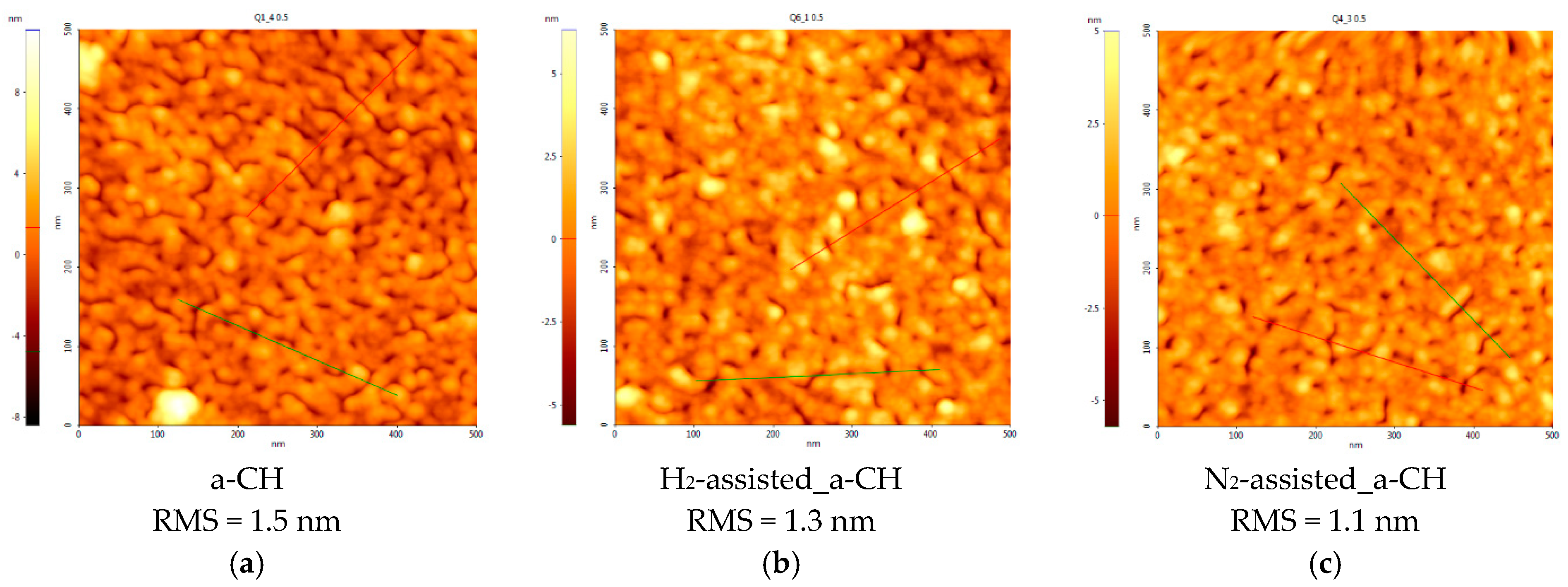
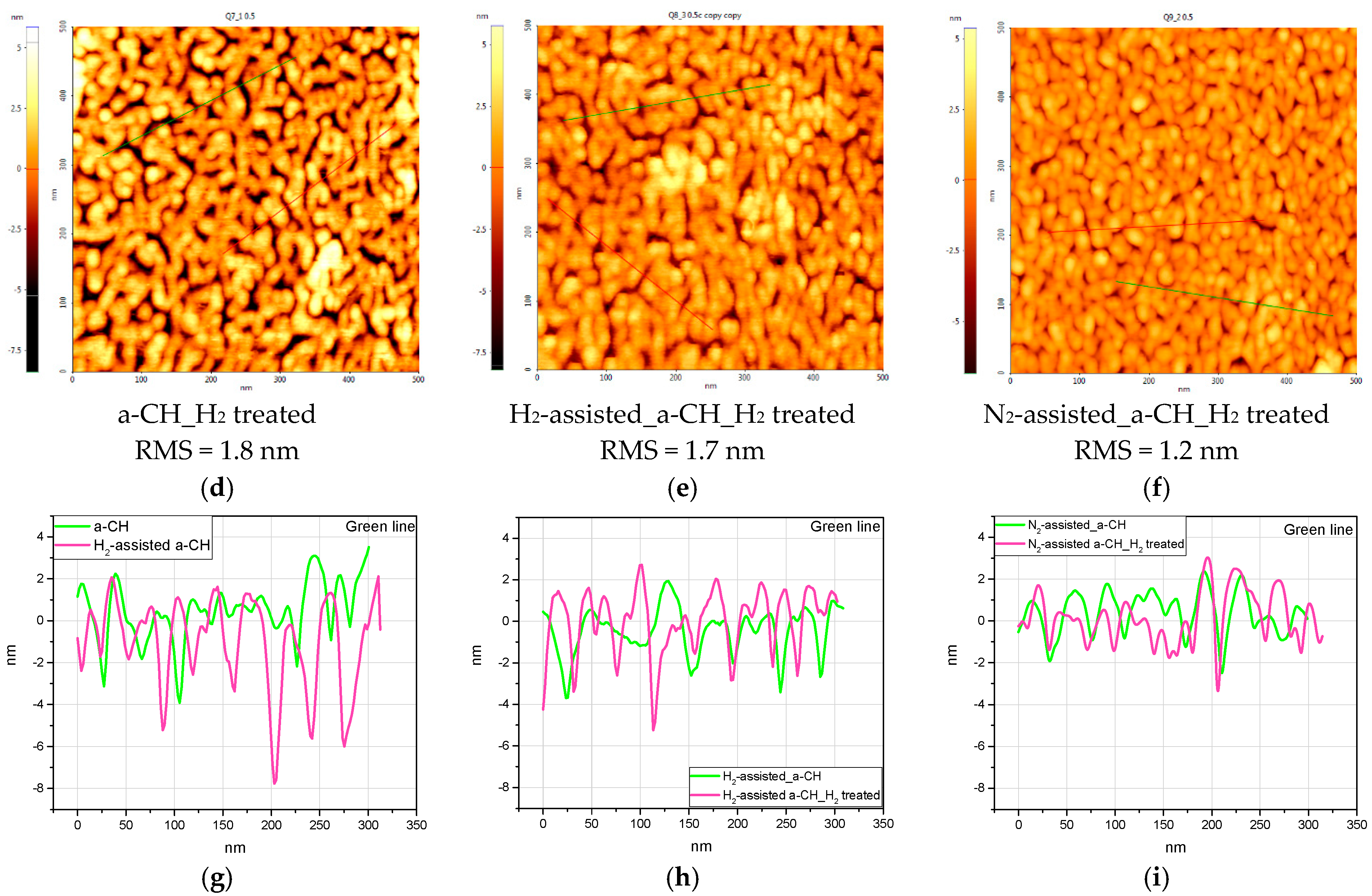
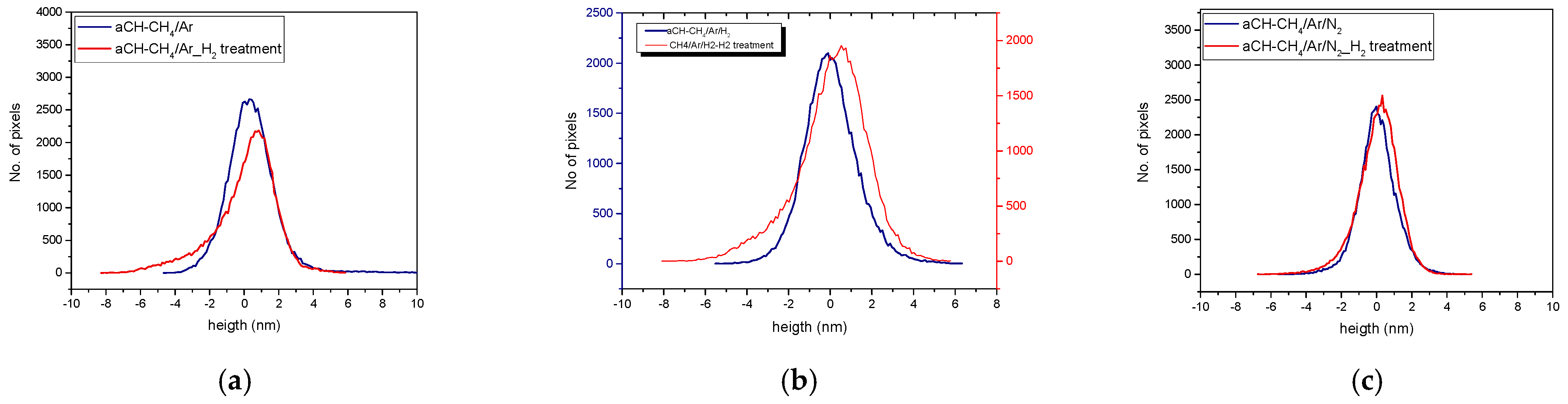
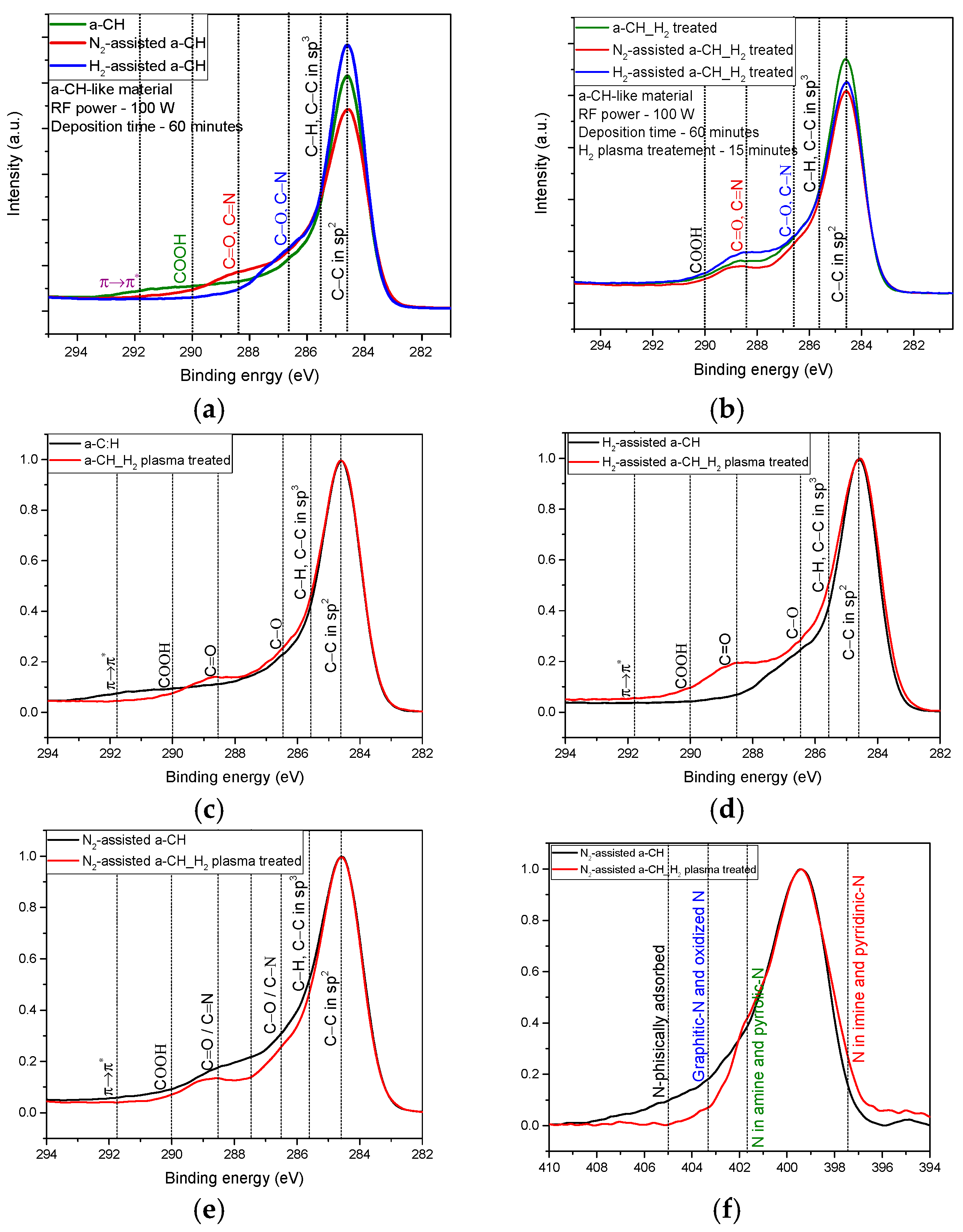
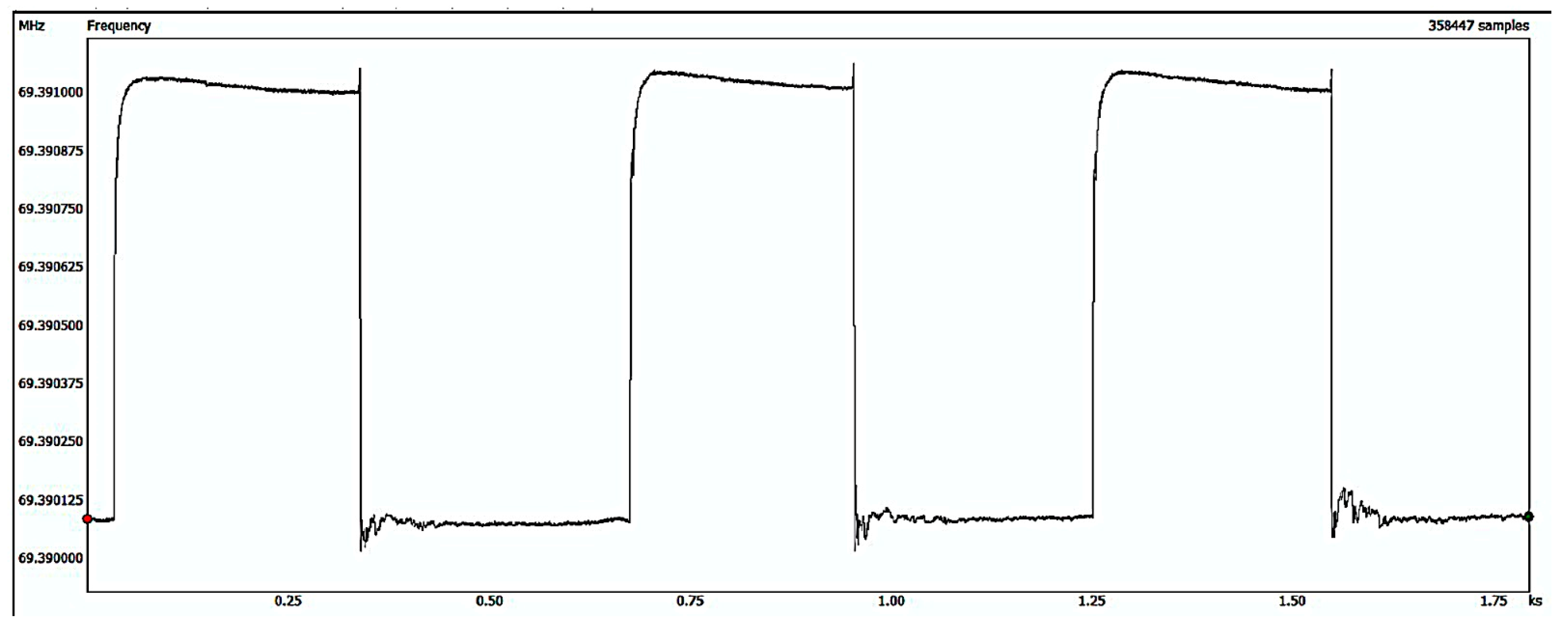
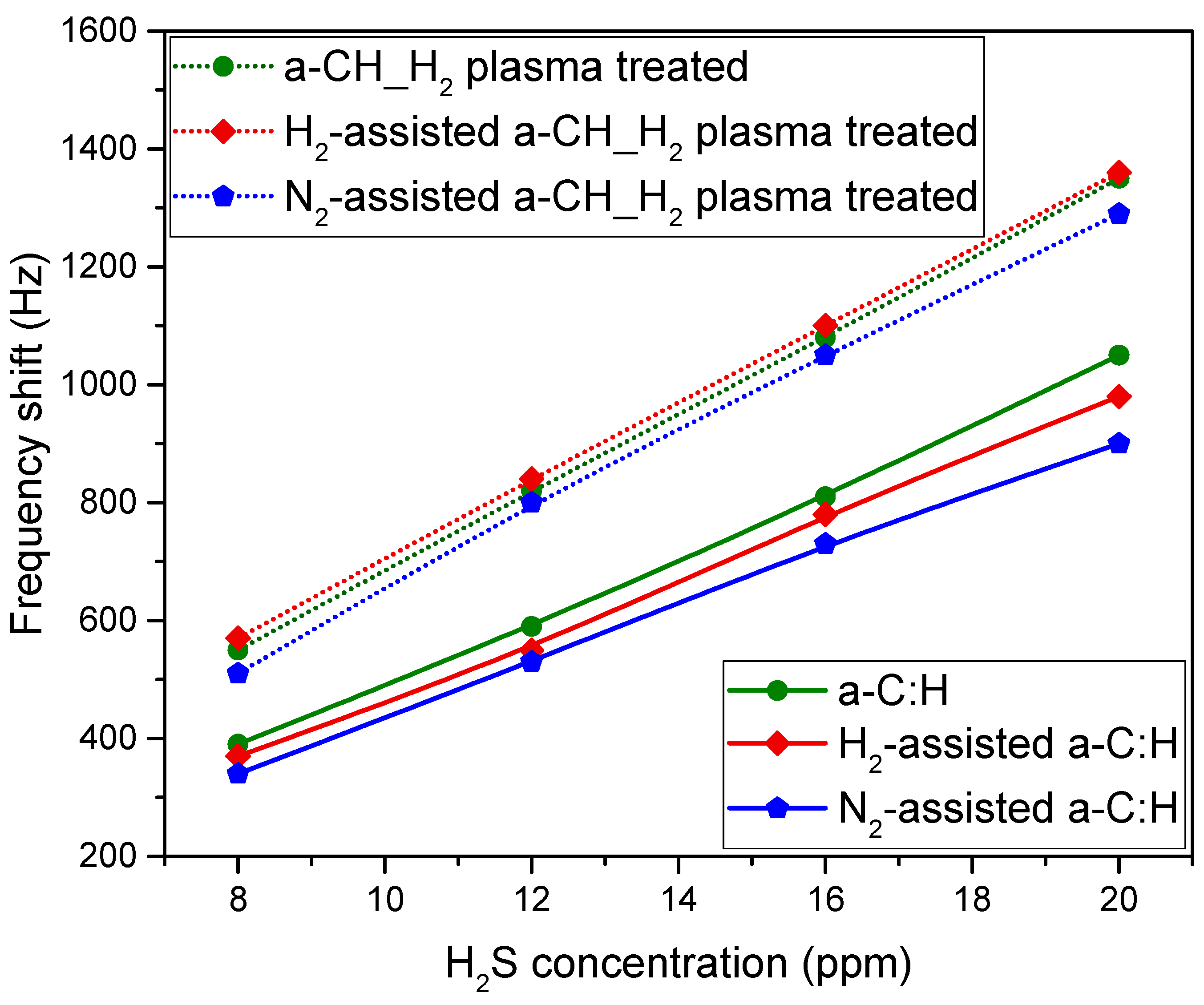
The high toxicity of hydrogen sulfide combined with poor sensitivity at room operating temperature urge for the development of new sensitive materials for sensors complying with this requirement, as well as a fast response and low cost. In this work, we have successfully developed materials for surface acoustic wave (SAW) sensors sensitive to H2S gas that provide a reversible response at room temperature. The sensitive materials were created by plasma-enhanced chemical vapor deposition of a-CH films using methane as a precursor with argon and argon admixed with hydrogen or nitrogen and applied on piezoelectric quartz substrates. Smooth films, with an AFM root mean square below 1.5 nm, were obtained in all cases, although slight topographical variations were noted, depending on the gas types. XPS detected varying degrees of oxidation, indicating that the assisting gases played a crucial role in introducing oxygen-containing functional groups, thus influencing the material’s surface chemistry and sensitivity response. A hydrogen plasma treatment was applied on the a-CH deposited sensors as a further sensor preparation step. The hydrogen plasma treatment resulted in significant modifications in the topographical features, including roughness increase and notable variations in the surface aspect ratios, as confirmed through AFM data analysis, which involved advanced pixel height analysis and line profile processing. X-ray photoelectron spectroscopy (XPS) studies indicated the formation of new functional groups, increased defect density, and a significant reduction in electron transitions following hydrogen plasma treatment. The sensors demonstrated a reversible response to H2S gas within 8 to 20 ppm concentration ranges, effectively detecting these levels. The sensitivity of the sensors was significantly enhanced, up to 39% through hydrogen plasma treatment, reaching an improved overall performance in detecting low concentrations of H2S down to 0.9 ppm. These findings highlight a-CH thin films as an excellent candidate for next-generation SAW sensors. The study also suggests the potential for experimenting with various assisting gases during plasma deposition and additional plasma treatments to push detection capabilities to below ppm levels.
Keywords: a-CH sensitive layer; nitrogen/hydrogen-assisted gases; PECVD plasma deposition; hydrogen plasma treatment; SAW sensors; H2S detection a-CH sensitive layer; nitrogen/hydrogen-assisted gases; PECVD plasma deposition; hydrogen plasma treatment; SAW sensors; H2S detection