Cardiometabolic Health During the Climacteric Transition: A Narrative Review of Lifestyle, Physiological, and Nutritional Approaches

 ,
,  , , , and
Highlights
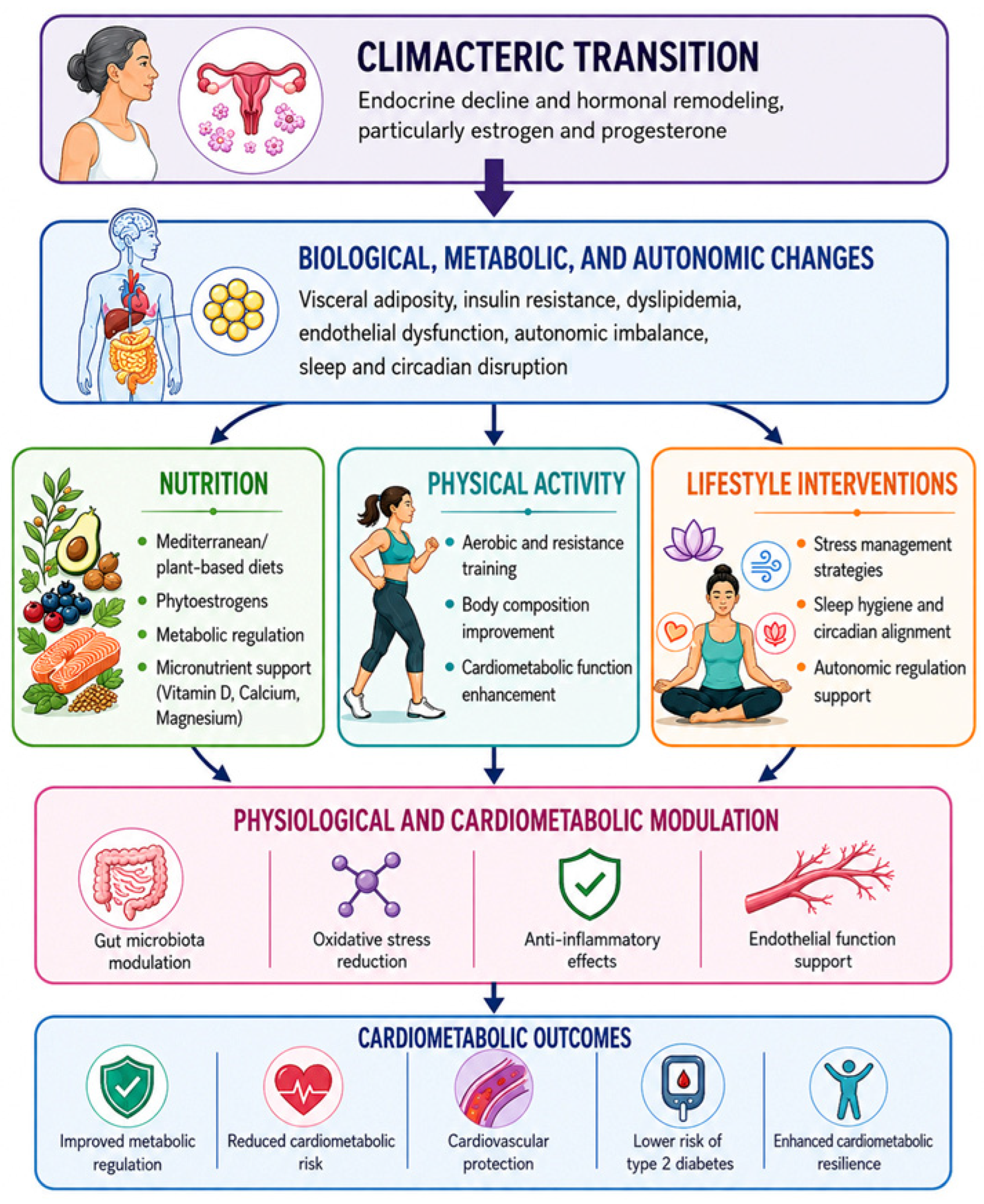
- The climacteric transition is characterized by increased visceral adiposity, reduced lean mass, and a higher prevalence of cardiometabolic risk factors.
- Autonomic dysfunction, reflected by alterations in heart rate variability, together with lifestyle factors such as diet and exercise, plays a key role in midlife health.
- Integrative lifestyle interventions, including dietary strategies, phytoestrogens, and structured exercise, may improve cardiometabolic and autonomic health in climacteric women.
- Further longitudinal and interventional studies are needed to clarify mechanisms and develop personalized prevention strategies.
Abstract
1. Introduction
2. Materials and Methods
2.1. Review Design
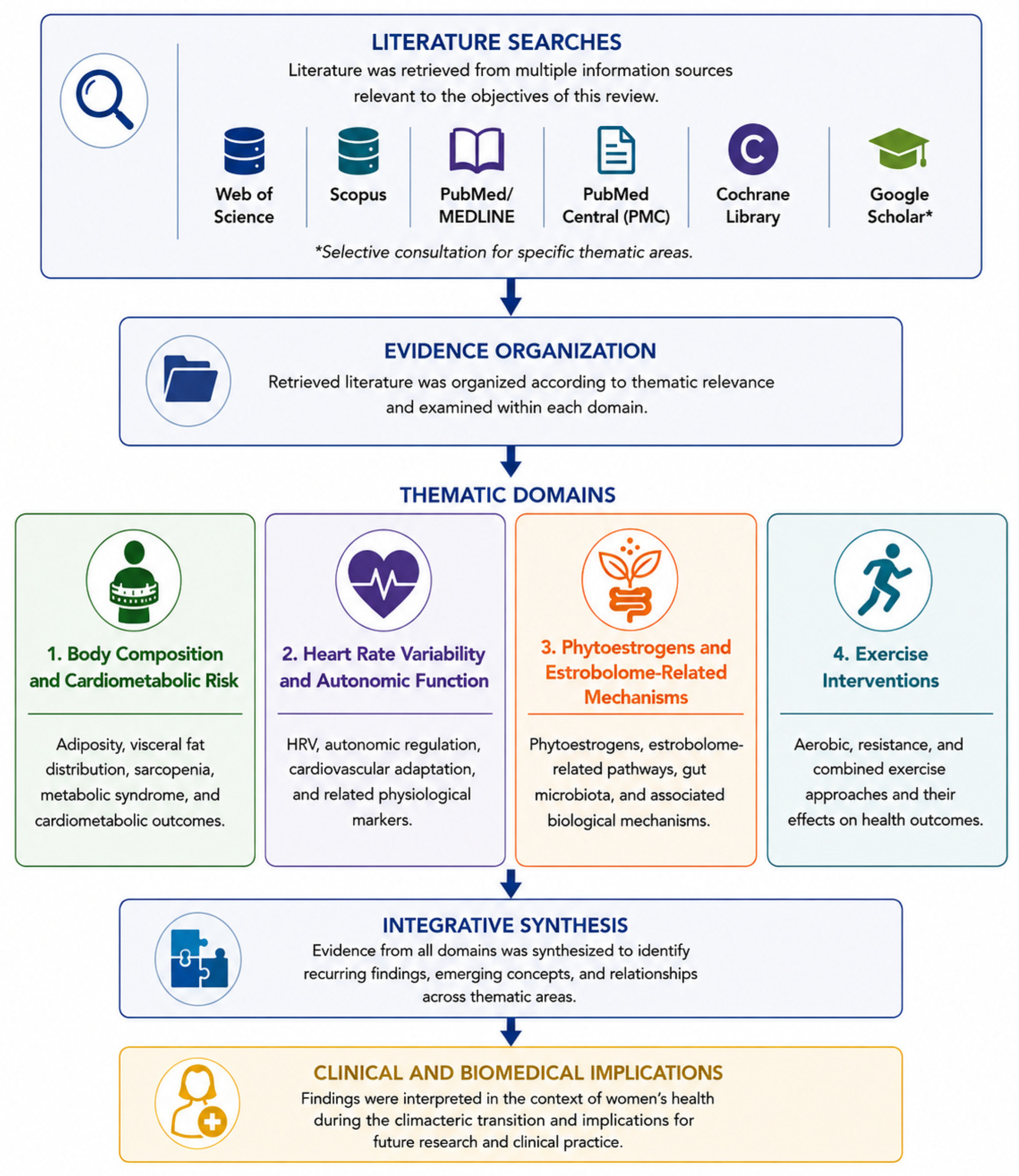
2.2. Search Strategy and Data Sources
2.3. Thematic Scope
2.4. Literature Identification and Thematic Organization
2.5. Literature Organization and Narrative Synthesis
2.6. Methodological Considerations
3. Results
3.1. Body Composition Changes and Cardiometabolic Risk During the Climacteric Transition
3.1.1. Sarcopenia and Sarcopenic Obesity as Key Components of Body Composition Changes During the Climacteric Transition
3.1.2. Key Insights on Sarcopenia and Sarcopenic Obesity
3.2. Heart Rate Variability, Autonomic Regulation, and Cardiometabolic Health During the Climacteric Transition
Heart Rate Variability as a Marker of Autonomic and Cardiometabolic Health
3.3. Phytoestrogens and Nutritional Approaches
3.3.1. Effects of Phytoestrogens (Isoflavones, Lignans) on Vasomotor Symptoms and Metabolism
3.3.2. Therapeutic Potential and Current Limitations of Phytoestrogens
3.3.3. Gut Microbiota and Human Health
3.3.4. Mediterranean Diet, Microbiota, and Estrogen Metabolism
3.3.5. DASH Diet and Gut Microbiota
3.3.6. Plant-Based Diets, Microbiota, and Estrogens
3.3.7. Key Insights on Phytoestrogens and Nutritional Approaches
3.4. Physical Activity and Exercise Prescription
3.4.1. Pathophysiological Rationale for Exercise in the Climacteric Transition
3.4.2. Aerobic Training
3.4.3. Resistance Training
3.4.4. High-Interval Training and Combined Training
3.4.5. Effects of Exercise on Body Composition
3.4.6. Effects of Exercise on Bone Mass
3.4.7. Effects of Exercise on Lipid Profile and Cardiometabolic Markers
3.4.8. Role of Exercise in Reducing Oxidative Stress and Inflammation
3.4.9. Key Insights on Physical Activity and Exercise Prescription
4. Discussion
4.1. Integrated Perspective on Sarcopenia and Sarcopenic Obesity During the Climacteric Transition
4.2. Integrative Perspective on Heart Rate Variability Changes During Menopause
4.3. Gut Microbiota, Estrobolome, and Cardiometabolic Health During the Climacteric Transition
4.4. Exercise-Mediated Mechanisms and Cardiometabolic Benefits During the Climacteric Transition
4.5. Strengths and Limitations
5. Conclusions
Author Contributions
Funding
Institutional Review Board Statement
Informed Consent Statement
Data Availability Statement
Conflicts of Interest
References
- Lau, E.S.; Michos, E.D. Blood Pressure Trajectories through the Menopause Transition: Different Paths, Same Journey. Circ. Res. 2022, 130, 323–325. [Google Scholar] [CrossRef]
- Carson, M.Y.; Thurston, R.C. Vasomotor Symptoms and Their Links to Cardiovascular Disease Risk. Curr. Opin. Endocr. Metab. Res. 2023, 30, 100448. [Google Scholar] [CrossRef]
- Brown, L.; Hunter, M.S.; Chen, R.; Crandall, C.J.; Gordon, J.L.; Mishra, G.D.; Rother, V.; Joffe, H.; Hickey, M. Promoting Good Mental Health over the Menopause Transition. Lancet 2024, 403, 969–983. [Google Scholar] [CrossRef]
- Hurtado, M.D.; Saadedine, M.; Kapoor, E.; Shufelt, C.L.; Faubion, S.S. Weight Gain in Midlife Women. Curr. Obes. Rep. 2024, 13, 352–363. [Google Scholar] [CrossRef]
- Clayton, G.L.; Soares, A.G.; Kilpi, F.; Fraser, A.; Welsh, P.; Sattar, N.; Nelson, S.M.; Tilling, K.; Lawlor, D.A. Cardiovascular Health in the Menopause Transition: A Longitudinal Study of up to 3892 Women with Repeated Measures. BMC Med. 2022, 20, 299. [Google Scholar] [CrossRef] [PubMed]
- Samargandy, S.; Matthews, K.A.; Brooks, M.M.; Barinas-Mitchell, E.; Magnani, J.W.; Janssen, I.; Kazlauskaite, R.; El Khoudary, S.R. Abdominal Visceral Adipose Tissue over the Menopause Transition and Carotid Atherosclerosis: The SWAN Heart Study. Menopause 2021, 28, 626–633. [Google Scholar] [CrossRef] [PubMed]
- Wu, B.; Fan, B.; Qu, Y.; Li, C.; Chen, J.; Liu, Y.; Wang, J.; Zhang, T.; Chen, Y. Trajectories of Blood Lipid Profile in Midlife Women: Does Menopause Matter? J. Am. Heart Assoc. 2023, 12, e030388. [Google Scholar] [CrossRef] [PubMed]
- Huang, J.; Feng, P.; Tang, R.; Huang, F.; Fan, Y.; Yang, X. Menopausal Transition and Metabolic Syndrome Risk: Insights from the Chinese PALM Longitudinal Cohort. Climacteric 2026, 1–15. [Google Scholar] [CrossRef]
- Thurston, R.C.; Joffe, H. Vasomotor Symptoms and Menopause: Findings from the Study of Women’s Health Across the Nation. Obstet. Gynecol. Clin. N. Am. 2011, 38, 489–501. [Google Scholar] [CrossRef]
- Nilsson, S.; Qvick, A.; Henriksson, M.; Lawesson, S.S.; Holm, A.S.; Leander, K. Menopausal Vasomotor Symptoms and Subclinical Atherosclerotic Cardiovascular Disease: A Population-Based Study. J. Am. Heart Assoc. 2024, 13, e033648. [Google Scholar] [CrossRef]
- Baig, M.; Moafi-Madani, M.; Qureshi, R.; Roberts, M.B.; Allison, M.; Manson, J.E.; LaMonte, M.J.; Liu, S.; Eaton, C.B. Heart Rate Variability and the Risk of Heart Failure and Its Subtypes in Post-Menopausal Women: The Women’s Health Initiative Study. PLoS ONE 2022, 17, e0276585. [Google Scholar] [CrossRef]
- Singh, P.; Beyl, R.A.; Stephens, J.M.; Noland, R.C.; Richard, A.J.; Boudreau, A.; Hebert, R.C.; Ravussin, E.; Broussard, J.L.; St-Onge, M.-P.; et al. Effect of Sleep Restriction on Insulin Sensitivity and Energy Metabolism in Post-Menopausal Women: A Randomized, Crossover Trial. Obesity 2023, 31, 1204–1215. [Google Scholar] [CrossRef]
- Liu, Z.; Yang, X.; Sun, F.; Feng, H.; You, T.; Chen, C.; Qiu, J. Association between Sleep-Related Disorders and Hypertension in Postmenopausal Women from the United States. Menopause 2026, 33, 305–314. [Google Scholar] [CrossRef]
- Huerta-Franco, M.R.; Vargas-Luna, M.; Somoza, X.; Delgadillo-Holtfort, I.; Balleza-Ordaz, M.; Kashina, S. Gastric Responses to Acute Psychological Stress in Climacteric Women: A Pilot Study. Menopause 2019, 26, 469–475. [Google Scholar] [CrossRef]
- Sánchez-Barajas, M.; García-Pérez, M.; Córdova-Fraga, T.; Huerta-Franco, M.-R. Clinical, Biochemical, and Psychological Predictors of Metabolic Syndrome in Climacteric Women. Healthcare 2025, 13, 3214. [Google Scholar] [CrossRef] [PubMed]
- Manson, J.E.; Chlebowski, R.T.; Stefanick, M.L.; Aragaki, A.K.; Rossouw, J.E.; Prentice, R.L.; Anderson, G.; Howard, B.V.; Thomson, C.A.; LaCroix, A.Z.; et al. Menopausal Hormone Therapy and Health Outcomes during the Intervention and Extended Poststopping Phases of the Women’s Health Initiative Randomized Trials. JAMA 2013, 310, 1353–1368. [Google Scholar] [CrossRef] [PubMed]
- Cano, A.; Chedraui, P.; Goulis, D.G.; Lopes, P.; Mishra, G.; Mueck, A.; Senturk, L.M.; Simoncini, T.; Stevenson, J.C.; Stute, P.; et al. Calcium in the Prevention of Postmenopausal Osteoporosis: EMAS Clinical Guide. Maturitas 2018, 107, 7–12. [Google Scholar] [CrossRef] [PubMed]
- Trujillo-Muñoz, P.J.; Sánchez-Ojeda, M.A.; Rodríguez-Huamán, E.C.; Mezyani-Haddu, K.; Hoyo-Guillot, I.; Navarro-Prado, S. Effects of Physical Exercise on Symptoms and Quality of Life in Women in Climacteric: A Systematic Review and Meta-Analysis. Healthcare 2025, 13, 644. [Google Scholar] [CrossRef]
- Cramer, H.; Lauche, R.; Langhorst, J.; Dobos, G. Effectiveness of yoga for menopausal symptoms: A systematic review and meta-analysis of randomized controlled trials. Evid.-Based Complement. Altern. Med. 2012, 2012, 863905. [Google Scholar] [CrossRef]
- Hartman, S.J.; LaCroix, A.Z.; Sears, D.D.; Natarajan, L.; Zablocki, R.W.; Chen, R.; Patterson, J.S.; Dillon, L.; Sallis, J.F.; Schenk, S.; et al. Impacts of Reducing Sitting Time or Increasing Sit-to-Stand Transitions on Blood Pressure and Glucose Regulation in Postmenopausal Women: Three-Arm Randomized Controlled Trial. Circulation 2025, 152, 492–504. [Google Scholar] [CrossRef]
- Numao, S.; Katayama, Y.; Nakata, Y.; Matsuo, T.; Nakagaichi, M.; Tanaka, K. Association of abdominal fat with metabolic syndrome components in overweight women: Effect of menopausal status. J. Physiol. Anthropol. 2020, 39, 12. [Google Scholar] [CrossRef]
- Chen, G.C.; Arthur, R.; Kamensky, V.; Chai, J.C.; Yu, B.; Shadyab, A.H.; Allison, M.; Sun, Y.; Saquib, N.; Wild, R.A.; et al. Body fat distribution, cardiometabolic traits, and risk of major lower-extremity arterial disease in postmenopausal women. Diabetes Care 2022, 45, 222–231. [Google Scholar] [CrossRef]
- Gulbahar, A.; Caglar, G.S.; Arslanca, T. Evaluation of Visceral Adiposity Index with Cardiovascular Risk Factors and Biomarkers in Postmenopausal Women to Predict Cardiovascular Disease: A 10 Year Study. Exp. Gerontol. 2022, 170, 111986. [Google Scholar] [CrossRef]
- Harraqui, K.; Oudghiri, D.E.; Hannoun, Z.; Naceiri Mrabti, H.; Aboulghras, S.; Assaggaf, H.M.; Rajab, B.S.; Attar, A.A.; Bouyahya, A.; Bour, A. Frequency of Metabolic Syndrome and Study of Anthropometric, Clinical and Biological Characteristics in Peri- and Postmenopausal Women in the City of Ksar El Kebir (Northern Morocco). Int. J. Environ. Res. Public Health 2022, 19, 6109. [Google Scholar] [CrossRef]
- Kodoth, V.; Scaccia, S.; Aggarwal, B. Adverse Changes in Body Composition during the Menopausal Transition and Relation to Cardiovascular Risk: A Contemporary Review. Women’s Health Rep. 2022, 3, 573–581. [Google Scholar] [CrossRef]
- Marlatt, K.L.; Pitynski-Miller, D.R.; Gavin, K.M.; Moreau, K.L.; Melanson, E.L.; Santoro, N.; Kohrt, W.M. Body Composition and Cardiometabolic Health across the Menopause Transition. Obesity 2022, 30, 14–27. [Google Scholar] [CrossRef]
- Matta, R.A.; AbdElftah, M.E.; Essawy, M.G.; Saedii, A.A. Interplay of Serum Hepcidin with Female Sex Hormones, Metabolic Syndrome, and Abdominal Fat Distribution among Premenopausal and Postmenopausal Women. Egypt. J. Intern. Med. 2022, 34, 8. [Google Scholar] [CrossRef]
- Miranda, H.; Bentes, C.; Resende, M.; Netto, C.C.; Nasser, I.; Willardson, J.; Marinheiro, L. Association between Handgrip Strength and Body Composition, Physical Fitness, and Biomarkers in Postmenopausal Women with Metabolic Syndrome. Rev. Assoc. Med. Bras. 2022, 68, 323–328. [Google Scholar] [CrossRef]
- Ottarsdottir, K.; Tivesten, Å.; Ohlsson, C.; Li, Y.; Hellgren, M.; Lindblad, U.; Daka, B. Endogenous Sex Hormone Levels Are Associated with the Revised Framingham Stroke Risk Profile in Postmenopausal Women: A Longitudinal Study in a Swedish Cohort. BMC Endocr. Disord. 2025, 25, 24. [Google Scholar] [CrossRef]
- Stamm, E.; Marques-Vidal, P.; Rodriguez, E.G.; Vollenweider, P.; Hans, D.; Lamy, O. Association of Adiposity Evaluated by Anthropometric, BIA, and DXA Measures with Cardiometabolic Risk Factors in Nonobese Postmenopausal Women: The CoLaus/OsteoLaus Cohort. Menopause 2022, 29, 450–459. [Google Scholar] [CrossRef]
- Cheung, Y.M.M.; Hoermann, R.; Van, K.; Wu, D.; Healy, J.; Halim, B.; Raval, M.; McGill, M.; Al-Fiadh, A.; Chao, M.; et al. Effects of Aromatase Inhibitor Therapy on Adiposity and Cardiometabolic Health in Postmenopausal Women: A Controlled Cohort Extension Study. Endocr. Connect. 2023, 12, e230076. [Google Scholar] [CrossRef]
- El Shikieri, A.B.; Elmugadam, A.; Elfadil, G.A. Visceral adipose index, lipid accumulation product, and selected cardiometabolic risk markers among postmenopausal Sudanese women: A cross-sectional study. Hum. Nutr. Metab. 2023, 34, 200222. [Google Scholar] [CrossRef]
- Barrios Ospino, Y.B.; Carías Picón, D.; Acosta García, E.J.; Albornoz González, M.G. Adiposidad y perfil lipídico en mujeres posmenopáusicas venezolanas [Adiposity and lipid profile in Venezuelan postmenopausal women]. Acta Bioquím. Clínic. Latinoam. 2023, 57, 175–183. [Google Scholar]
- Erdoğan, K.; Sanlier, N. Metabolic Syndrome and Menopause: The Impact of Menopause Duration on Risk Factors and Components. Int. J. Womens Health 2024, 16, 1249–1256. [Google Scholar] [CrossRef]
- Lambrinoudaki, I.; Armeni, E. Understanding of and Clinical Approach to Cardiometabolic Transition at the Menopause. Climacteric 2024, 27, 68–74. [Google Scholar] [CrossRef]
- Pernoud, L.E.; Gardiner, P.A.; Fraser, S.D.; Dillon-Rossiter, K.; Dean, M.M.; Schaumberg, M.A. A Systematic Review and Meta-Analysis Investigating Differences in Chronic Inflammation and Adiposity before and after Menopause. Maturitas 2024, 190, 108119. [Google Scholar] [CrossRef]
- Cybulska, A.M.; Schneider-Matyka, D.; Walaszek, I.; Panczyk, M.; Ćwiek, D.; Lubkowska, A.; Grochans, E.; Rachubińska, K.; Malewicz, K.; Chabowski, M. Predictive Biomarkers for Cardiometabolic Risk in Postmenopausal Women: Insights into Visfatin, Adropin, and Adiponectin. Front. Endocrinol. 2025, 16, 1527567. [Google Scholar] [CrossRef]
- Khalaf, M.S.; Hussein, W.N. Pro-Inflammatory Cytokines and Insulin Resistance in Postmenopausal Women with Central Obesity: A Cross-Sectional Analytical Study. Regul. Mech. Biosyst. 2025, 16, e25147. [Google Scholar] [CrossRef]
- Liu, Y.; Liang, Z.; Li, X.; Xiong, J. Association between BMI Trajectories and Metabolic Syndrome in Postmenopausal Women: A Cross-Sectional Study from NHANES 1999–2018. BMC Public Health 2026, 26, 121. [Google Scholar] [CrossRef]
- Orhan, İ.; Koçak, H.S.; Kaplan, E. Determination of Cardiometabolic Risk in Pre- and Post-Menopausal Women. BMC Cardiovasc. Disord. 2025, 25, 399. [Google Scholar] [CrossRef]
- Park, J.Y.; Park, H.M.; Chung, Y.-J.; Kim, M.-R.; Hwang, K.J.; Song, J.-Y. Age-Related Trends in Dual-Energy X-Ray Absorptiometry–Measured Adiposity and Their Clinical Relevance: A Multicenter Cross-Sectional Study of Korean Peri- and Postmenopausal Women. Medicina 2025, 61, 1301. [Google Scholar] [CrossRef] [PubMed]
- de Luis, D.; Muñoz, M.; Izaola, O.; Lopez Gomez, J.J.; Rico, D.; Primo, D. Body Roundness Index (BRI) Predicts Metabolic Syndrome in Postmenopausal Women with Obesity Better than Insulin Resistance. Diabetology 2025, 6, 60. [Google Scholar] [CrossRef]
- Beydoun, M.A.; Beydoun, H.A.; Tsai, J.; Tinker, L.F.; Gradidge, P.J.L.; Maldonado, A.I.; Le Kennedy, J.; Allison, M.; Jung, S.Y.; Zonderman, A.B.; et al. Anthropometric Indices of Obesity and Their Relationships with Diabetes Risk by Race and Ethnicity among Postmenopausal Women. Nutr. Metab. Cardiovasc. Dis. 2026, 36, 104430. [Google Scholar] [CrossRef]
- Szeliga, A.; Chedraui, P.; Meczekalski, B. The Impact of the Menopausal Transition on Body Composition and Abdominal Fat Redistribution. J. Clin. Med. 2026, 15, 740. [Google Scholar] [CrossRef]
- Félix-Soriano, E.; Martínez-Gayo, A.; Cobo, M.J.; Pérez-Chávez, A.; Ibáñez-Santos, J.; Palacios Samper, N.; Goikoetxea Galarza, I.; Cuervo, M.; García-Unciti, M.; González-Muniesa, P.; et al. Effects of DHA-Rich n-3 Fatty Acid Supplementation and/or Resistance Training on Body Composition and Cardiometabolic Biomarkers in Overweight and Obese Post-Menopausal Women. Nutrients 2021, 13, 2465. [Google Scholar] [CrossRef]
- Magalhães, A.C.L.D.; Carvalho, V.F.; Cruz, S.P.D.; Ramalho, A. Characteristics of the Metabolically Unhealthy Phenotype in Menopausal Resistance Training Practitioners. Nutr. Hosp. 2023, 40, 975. [Google Scholar] [CrossRef]
- Cota E Souza, L.A.; Guerra-Sá, R.; Lima, A.A. Impact of a Yoga Intervention over 6, 12, and 24 Months in Sedentary Climacteric Women with Metabolic Syndrome. Complement. Ther. Med. 2026, 96, 103308. [Google Scholar] [CrossRef] [PubMed]
- Jóźwiak, B.; Domin, R.; Krzywicka, M.; Laudańska-Krzemińska, I. Effect of Exercise Alone and in Combination with Time-Restricted Eating on Cardiometabolic Health in Menopausal Women. J. Transl. Med. 2024, 22, 957. [Google Scholar] [CrossRef] [PubMed]
- Ilich, J.Z.; Liu, P.-Y.; Shin, H.; Kim, Y.; Chi, Y. Cardiometabolic Indices after Weight Loss with Calcium or Dairy Foods: Secondary Analyses from a Randomized Trial with Overweight/Obese Postmenopausal Women. Nutrients 2022, 14, 1082. [Google Scholar] [CrossRef]
- Bajerska, J.; Skoczek-Rubińska, A.; Dębińska-Kubiak, M.; Stanisławska, W.; Walkowiak, J. Association Between Adherence to the Mediterranean Diet and Metabolic Syndrome and Its Components Among Polish Postmenopausal Women: A Cross-Sectional Study. Nutrients 2025, 17, 2727. [Google Scholar] [CrossRef]
- Veronese, N.; Ragusa, F.S.; Dominguez, L.J.; Cusumano, C.; Barbagallo, M. Mediterranean diet and osteoarthritis: An update. Aging Clin. Exp. Res. 2024, 36, 231. [Google Scholar] [CrossRef] [PubMed]
- Sundas, A.; Contreras, I.; Navarro-Otano, J.; Soler, J.; Beneyto, A.; Vehí, J. Heart Rate Variability over the Decades: A Scoping Review. PeerJ 2025, 13, e19347. [Google Scholar] [CrossRef]
- Thakkar, K.; Shah, S. Relationship of Body Mass Index, Aerobic Capacity, and Heart Rate Variability in Perimenopausal and Post-Menopausal Women in Surat City: A Correlational Study. Parul Univ. J. Health Sci. Res. 2025, 4, 30–35. [Google Scholar] [CrossRef]
- de Jager, E.; Caulfield, B.; Angelidi, E.; MacNamee, B.; Holden, S. Wearable-Derived Heart Rate Variability across the Menstrual Cycle, Hormonal Contraceptive Use, and Reproductive Life Stages in Females: A Living Systematic Review. Sports Med. 2026, 56, 1153–1173. [Google Scholar] [CrossRef]
- Von Holzen, J.J.; Capaldo, G.; Wilhelm, M.; Stute, P. Impact of Endo- and Exogenous Estrogens on Heart Rate Variability in Women: A Review. Climacteric 2016, 19, 222–228. [Google Scholar] [CrossRef] [PubMed]
- de Carvalho, T.D.; Norberto, A.R.; Oliveira, F.R.; Paiva, L.D.S.; Baracat, E.C.; Soares Júnior, J.M.; Vanderlei, L.C.M.; Sorpreso, I.C.E. Do Heart Rate Variability Indices Present Potential to Predict Late Postmenopausal? A Retrospective Study. Rev. Assoc. Med. Bras. 2022, 68, 853–859. [Google Scholar] [CrossRef]
- Ramesh, S.; James, M.T.; Holroyd-Leduc, J.M.; Wilton, S.B.; Sola, D.Y.; Ahmed, S.B. Heart Rate Variability as a Function of Menopausal Status, Menstrual Cycle Phase, and Estradiol Levels. Physiol. Rep. 2022, 10, e15298. [Google Scholar] [CrossRef] [PubMed]
- Solanki, J.D.; Joshi, D.R.; Atodaria, K.A.; Ghodadara, C.M. Age Predominates as Associate than Reproductive Health Stage for 5 min Heart Rate Variability in Middleaged Women—A Cross-Sectional Study from Gujarat, India. J. Fam. Med. Prim. Care 2025, 14, 2544–2551. [Google Scholar] [CrossRef]
- Rezende Barbosa, M.P.D.C.; Vanderlei, L.C.M.; Neves, L.M.; Takahashi, C.; Torquato, P.R.S.; Fortaleza, A.C.S.; Freitas Junior, I.F.; Sorpreso, I.C.E.; Abreu, L.C.; Riera, A.R.P. Impact of Functional Training on Geometric Indices and Fractal Correlation Property of Heart Rate Variability in Postmenopausal Women. Ann. Noninvasive Electrocardiol. 2017, 23, e12469. [Google Scholar] [CrossRef] [PubMed]
- Sakai, S.; Inoue-Sato, M.; Amemiya, R.; Murakami, M.; Inagaki, K.; Sakairi, Y. The Influence of Autogenic Training on the Physical Properties of Skin and Cardiac Autonomic Activity in Postmenopausal Women: An Exploratory Study. Int. J. Dermatol. 2020, 59, 103–109. [Google Scholar] [CrossRef]
- Putra, R.P.; Mubarok, H.A.; Fithriyah, N.E.; Ramadhana, D.R.; Sari, G.M.; Yuliawati, T.H.; Argarini, R. Improved Heart Rate Variability in Postmenopausal Women Following Short-Term Combined Exercise Training. Retos 2024, 60, 449–456. [Google Scholar] [CrossRef]
- Praveena, S.M.; Asha, G.; Sunita, M.; Anju, J.; Ratna, B. Yoga Offers Cardiovascular Protection in Early Postmenopausal Women. Int. J. Yoga 2018, 11, 37–43. [Google Scholar] [CrossRef]
- Virtanen, I.; Polo-Kantola, P.; Kalleinen, N. Overnight Heart Rate Variability during Sleep Disturbance in Peri- and Postmenopausal Women. Behav. Sleep Med. 2024, 22, 329–339. [Google Scholar] [CrossRef] [PubMed]
- Virtanen, I.; Kalleinen, N.; Urrila, A.S.; Leppänen, C.; Polo-Kantola, P. Cardiac Autonomic Changes after 40 Hours of Total Sleep Deprivation in Women. Sleep Med. 2015, 16, 250–257. [Google Scholar] [CrossRef]
- de Zambotti, M.; Trinder, J.; Colrain, I.M.; Baker, F.C. Menstrual Cycle-Related Variation in Autonomic Nervous System Functioning in Women in the Early Menopausal Transition with and without Insomnia Disorder. Psychoneuroendocrinology 2017, 75, 44–51. [Google Scholar] [CrossRef] [PubMed]
- Sánchez-Barajas, M.; Figueroa-Vega, N.; Ibarra-Reynoso, L.D.R.; Moreno-Frías, C.; Malacara, J.M. Influence of Heart Rate Variability and Psychosocial Factors on Carotid Stiffness, Elasticity and Impedance at Menopause. Arch. Med. Res. 2015, 46, 118–126. [Google Scholar] [CrossRef]
- Sanchez-Barajas, M.; Ibarra-Reynoso, L.D.R.; Ayala-Garcia, M.A.; Malacara, J.M. Flow-Mediated Vasodilation Compared with Carotid Intima Media Thickness in the Evaluation of Early Cardiovascular Damage in Menopausal Women and the Influence of Biological and Psychosocial Factors. BMC Women’s Health 2018, 18, 153. [Google Scholar] [CrossRef]
- Jones, S.M.; Guthrie, K.A.; LaCroix, A.Z.; Sternfeld, B.; Landis, C.A.; Reed, S.D.; Dunn, A.; Caan, B.; Cohen, L.S.; Hunt, J.; et al. Is Heart Rate Variability Associated with Frequency and Intensity of Vasomotor Symptoms among Healthy Perimenopausal and Post-Menopausal Women. Clin. Auton. Res. 2016, 26, 7–13. [Google Scholar] [CrossRef]
- Stokes, W.H.; Tahsin, C.T.; Anselmo, M.; Nathe, S.; Lee, E.J.; Teshome, S.; Noven, M.L.V.; Carter, J.R.; Keller-Ross, M.L. Vasomotor Symptoms of Menopause, Sympathetic Activity, and Blood Pressure in Postmenopausal Females. Am. J. Physiol. Heart Circ. Physiol. 2025, 329, H939–H951. [Google Scholar] [CrossRef] [PubMed]
- Martinelli, P.M.; Sorpreso, I.C.E.; Raimundo, R.D.; Junior, O.S.L.; Zangirolami-Raimundo, J.; Malveira de Lima, M.V.; Perez-Riera, A.; Pereira, P.X.; Elmusharaf, K.; Valenti, V.E.; et al. Heart Rate Variability Helps to Distinguish the Intensity of Menopausal Symptoms: A Prospective, Observational and Transversal Study. PLoS ONE 2020, 15, e0225866, Correction in PLoS ONE 2020, 15, e0229094. [Google Scholar] [CrossRef]
- Sahu, G.; Bharshankar, J.; Shaikh, A.S. A Comparative Cross-Sectional Study of Heart Rate Variability in Pre & Post Menopausal Women and Its Association with Menopausal Symptoms. Eur. J. Cardiovasc. Med. 2024, 14, 783–788. [Google Scholar] [CrossRef]
- Philbois, S.V.; Facioli, T.P.; De Lucca, I.; Veiga, A.C.; Chinellato, N.; Simões, M.V.; Tank, J.; Souza, H.C.D. What Do We Know about the Role of Menopause in Cardiovascular Autonomic Regulation in Hypertensive Women? Menopause 2024, 31, 408–414. [Google Scholar] [CrossRef]
- Renna, M.E.; Shrout, M.R.; Madison, A.A.; Bennett, J.M.; Malarkey, W.B.; Emery, C.F.; Kiecolt-Glaser, J.K. Distress Disorder Histories Predict HRV Trajectories during and after Stress. Psychoneuroendocrinology 2022, 135, 105575. [Google Scholar] [CrossRef]
- Nattero-Chávez, L.; Insenser, M.; Quintero Tobar, A.; Fernández-Durán, E.; Dorado Avendaño, B.; Fiers, T.; Kaufman, J.M.; Luque-Ramirez, M.; Escobar-Morreale, H.F. Sex Differences and Sex Steroids Influence on the Presentation and Severity of Cardiovascular Autonomic Neuropathy of Patients with Type 1 Diabetes. Cardiovasc. Diabetol. 2023, 22, 32. [Google Scholar] [CrossRef]
- Pervaiz, M.; Hamayun, Z.; Shoaib, A.; Lodhi, H.; Islam, S.; Ikram, T. QTc Prolongation, an Early Predictor of Cardiovascular Autonomic Neuropathy (CAN) in Postmenopausal Diabetic Women. Biol. Clin. Sci. Res. J. 2023, 2023, 287. [Google Scholar] [CrossRef]
- Haldar, A.; Singh, S.; Kar, S.K.; Singh, R.; Yadav, S. Study of Cognitive Functions and Heart Rate Variability in Reproductive-Age Group and Post-Menopausal Women. Indian J. Psychiatry 2026, 68, 132–136. [Google Scholar] [CrossRef] [PubMed]
- Duval, A.; Ditto, B. Associations between Cardiac Autonomic Function and Cognition across the Adult Female Lifespan. Auton. Neurosci. 2025, 260, 103316. [Google Scholar] [CrossRef]
- Almeida Júnior, Á.D.; Carvalho, T.D.; Norberto, A.R.; Figueiredo, F.W.D.S.; Martinelli, P.M.; Abreu, L.C.; Bacarat, E.C.; Soares Junior, J.M.; Sorpreso, I.C.E. Autonomic Cardiac Modulation in Postmenopausal Women with Dry Eye Syndrome: A Cross-Sectional Analytical Study. Rev. Assoc. Med. Bras. 2021, 67, 1143–1149. [Google Scholar] [CrossRef] [PubMed]
- Scatà, C.; Ferreira, F.C.; Padilha, M.C.S.V.; Carandina, A.; Asnaghi, R.; Bellocchi, C.; Tobaldini, E.; Montano, N.; Soares, P.P.S.; Rodrigues, G.D. Blunted Cardiac Autonomic Dynamics to Active Standing Test in Postmenopausal Women. Front. Cardiovasc. Med. 2024, 11, 1402086. [Google Scholar] [CrossRef]
- Kangas, P.; Tahvanainen, A.; Tikkakoski, A.; Koskela, J.; Uitto, M.; Viik, J.; Kähönen, M.; Kööbi, T.; Mustonen, J.; Pörsti, I. Increased Cardiac Workload in the Upright Posture in Men: Noninvasive Hemodynamics in Men versus Women. J. Am. Heart Assoc. 2016, 5, e002883. [Google Scholar] [CrossRef]
- Tolunay, H.; Yıldırım, E.; Gökoğlan, Y.; Buğan, B.; Saatçi Yaşar, A.; Çelik, M.; Yüksel, U.C.; Kabul, H.K.; Barçin, C. The Relationship between Sexual Activity and Heart Rate Variability in Menopausal Women. Anatol. J. Cardiol. 2022, 26, 543–551. [Google Scholar] [CrossRef]
- Voss, A.; Schroeder, R.; Heitmann, A.; Peters, A.; Perz, S. Short-Term Heart Rate Variability: Influence of Gender and Age in Healthy Subjects. PLoS ONE 2015, 10, e0118308. [Google Scholar] [CrossRef]
- Swan, A.M.; Alexander, I.M. Dietary Supplements for Vasomotor Symptoms of Perimenopause: An Updated Review. J. Nurse Pract. 2024, 20, 104873. [Google Scholar] [CrossRef]
- Kling, J.M.; Stuenkel, C.A.; Faubion, S.S. Management of Vasomotor Symptoms of Menopause. Mayo Clin. Proc. 2024, 99, 1142–1148. [Google Scholar] [CrossRef]
- Atwell, K.; White, M.; Kuphal, G.; Williams, M.; Schrager, S. Treatment of Vasomotor Symptoms. J. Am. Board Fam. Med. 2024, 37, 923–932. [Google Scholar] [CrossRef]
- Langa, S.; Curiel, J.A.; Peirotén, Á.; Ruiz de la Bastida, A.; Landete, J.M. Phytoestrogens. In Bioactive Components for Functional Foods; Santos-Buelga, C., González-Paramá, A.M., Álvarez-Suárez, J.M., Eds.; Elsevier: Amsterdam, The Netherlands, 2026; pp. 65–90. [Google Scholar] [CrossRef]
- Bolgova, O.; Shypilova, I.; Mavrych, V. Natural Strategies to Optimize Estrogen Levels in Aging Women. Front. Aging 2025, 6, 1706117. [Google Scholar] [CrossRef] [PubMed]
- Kingsberg, S.; Banks, V.; Caetano, C.; Janssenswillen, C.; Moeller, C.; Schoof, N.; Harvey, M.; Scott, M.; Nappi, R.E. Real-World Evaluation of Treatment Utilization by Women Experiencing Vasomotor Symptoms Associated with Menopause in the United States and Europe: Findings from the REALISE Study. Maturitas 2024, 189, 108096. [Google Scholar] [CrossRef] [PubMed]
- Pukushalov, E.; Ponomarenko, A.; Garcia, C.; Kasimova, L.; Pak, I.; Shainer, E.; Romanova, A.; Kudlay, G.; Johnson, M.; Miller, R. Assessing the Combined Effects of Black Cohosh, Soy Isoflavones, and SDG Lignans on Menopausal Symptoms: A Randomized, Double-Blind, Placebo-Controlled Clinical Trial. Eur. J. Nutr. 2025, 64, 138. [Google Scholar] [CrossRef] [PubMed]
- Manríquez-Zúñiga, A.N.; de la Torre, A.R.; Valdés-Santiago, L.; Hernández-Bustos, D.A.; Cuéllar-Sojo, S.; Hernández-Rayas, A.; Perez-Vega, S.; Molina-Guerrero, C.E. Broccoli Leaves as a Source of Bioactive Compounds. Sustainability 2023, 15, 16616. [Google Scholar] [CrossRef]
- Guttuso, T.; McDermott, M.P.; Su, H.; Kieburtz, K. Effects of L-Isoleucine and L-Valine on Hot Flushes and Serum Homocysteine A Randomized Controlled Trial. Obstet. Gynecol. 2008, 112, 109–115. [Google Scholar] [CrossRef]
- Akhlaghi, M. Dietary Approaches to Stop Hypertension (DASH): Potential Mechanisms of Action against Risk Factors of the Metabolic Syndrome. Nutr. Res. Rev. 2020, 33, 1–18. [Google Scholar] [CrossRef] [PubMed]
- Sidhu, S.R.K.; Kok, C.W.; Kunasegaran, T.; Ramadas, A. Effect of Plant-Based Diets on Gut Microbiota: A Systematic Review of Interventional Studies. Nutrients 2023, 15, 1510. [Google Scholar] [CrossRef]
- Chen, K.L.; Madak-Erdogan, Z. Estrogen and Microbiota Crosstalk. Trends Endocrinol. Metab. 2016, 27, 752–755. [Google Scholar] [CrossRef]
- Baker, J.M.; Al-Nakkash, L.; Herbst-Kralovetz, M.M. Estrogen–Gut Microbiome Axis. Maturitas 2017, 103, 45–53. [Google Scholar] [CrossRef]
- Park, S.L.; Kim, M.S.; Kim, T.H. Gut Microbiome and Estrogen. J. Menopausal Med. 2025, 31, 95. [Google Scholar] [CrossRef] [PubMed]
- Valdes, A.M.; Walter, J.; Segal, E.; Spector, T.D. Role of Gut Microbiota in Health. BMJ 2018, 361, k2179. [Google Scholar] [CrossRef]
- Larnder, A.H.; Manges, A.R.; Murphy, R.A. The estrobolome: Estrogen-metabolizing pathways of the gut microbiome and their relation to breast cancer. Int. J. Cancer 2025, 157, 599–613. [Google Scholar] [CrossRef] [PubMed]
- Nagpal, R.; Shively, C.A.; Register, T.C.; Craft, S.; Yadav, H. Gut Microbiome–Mediterranean Diet Interactions. F1000Research 2019, 8, 699. [Google Scholar] [CrossRef]
- Tortosa, A.; Bes-Rastrollo, M.; Sanchez-Villegas, A.; Basterra-Gortari, F.J.; Nuñez-Cordoba, J.M.; Martinez-Gonzalez, M.A. Mediterranean Diet Inversely Associated with the Incidence of Metabolic Syndrome: The SUN Prospective Cohort. Diabetes Care 2007, 30, 2957–2959. [Google Scholar] [CrossRef]
- Perrone, P.; D’Angelo, S. Gut Microbiota Modulation through Mediterranean Diet Foods: Implications for Human Health. Nutrients 2025, 17, 948. [Google Scholar] [CrossRef]
- Landry, M.J.; Ward, C.P. Health Benefits of a Plant-Based Dietary Pattern and Implementation in Healthcare and Clinical Practice. Am. J. Lifestyle Med. 2024, 18, 657–665. [Google Scholar] [CrossRef] [PubMed]
- Pieczyńska, K.; Rzymski, P. Health Benefits of Vegetarian and Mediterranean Diets: Narrative Review. Pol. J. Food Nutr. Sci. 2022, 72, 327–346. [Google Scholar] [CrossRef]
- Pourfard, N.R.; Dehkordi, K.J.; Sadeghi, M.; Taghian, F.; Shirvani, E. The Impact of DASH Diet and Concurrent Training on Cardiometabolic Risk Factors and Gut Microbiota in Individuals with Ischemic Heart Disease: A Study Protocol for a Randomized Controlled Trial. Trials 2025, 27, 32. [Google Scholar] [CrossRef] [PubMed]
- Ghosh, T.S.; Rampelli, S.; Jeffery, I.B.; Santoro, A.; Neto, M.; Capri, M.; Giampieri, E.; Jennings, A.; Candela, M.; Turroni, S.; et al. Mediterranean Diet Intervention Alters the Gut Microbiome in Older People, Reducing Frailty and Improving Health Status: The NU-AGE 1-Year Dietary Intervention across Five European Countries. Gut 2020, 69, 1218–1228. [Google Scholar] [CrossRef]
- Zhang, P. Influence of Foods and Nutrition on the Gut Microbiome and Implications for Intestinal Health. Int. J. Mol. Sci. 2022, 23, 9588. [Google Scholar] [CrossRef]
- Pant, A.; Chew, D.P.; Mamas, M.A.; Zaman, S. Cardiovascular Disease and the Mediterranean Diet: Insights into Sex-Specific Responses. Nutrients 2024, 16, 570. [Google Scholar] [CrossRef]
- Zhang, W.; Jia, J.; Yang, Y.; Ye, D.; Li, Y.; Li, D.; Wang, J. Estradiol Metabolism by Gut Microbiota in Women’s Depression Pathogenesis: Inspiration from Nature. Front. Psychiatry 2025, 16, 1505991. [Google Scholar] [CrossRef]
- De Filippis, F.; Pellegrini, N.; Vannini, L.; Jeffery, I.B.; La Storia, A.; Laghi, L.; Serrazanetti, D.I.; Di Cagno, R.; Ferrocino, I.; Lazzi, C.; et al. High-Level Adherence to a Mediterranean Diet Beneficially Impacts the Gut Microbiota and Associated Metabolome. Gut 2016, 65, 1812–1821. [Google Scholar] [CrossRef]
- Tahri, A.; Amedei, A. Unraveling the links between estrogen and gut microbiota in sex-hormone driven cancers. World J. Clin. Oncol. 2025, 16, 108819. [Google Scholar] [CrossRef]
- Daneshzad, E.; Heshmati, J.; Basirat, V.; Keshavarz, S.-A.; Qorbani, M.; Larijani, B.; Bellissimo, N.; Azadbakht, L. The Effect of the Dietary Approaches to Stop Hypertension (DASH) Diet on Sleep, Mental Health, and Hormonal Changes: A Systematic Review and Meta-Analysis. Front. Nutr. 2022, 9, 775543. [Google Scholar] [CrossRef] [PubMed]
- Meslier, V.; Laiola, M.; Roager, H.M.; De Filippis, F.; Roume, H.; Quinquis, V.; Giacco, R.; Mennella, I.; Ferracane, R.; Pons, N.; et al. Mediterranean Diet Intervention in Overweight and Obese Subjects Lowers Plasma Cholesterol and Causes Changes in the Gut Microbiome and Metabolome Independently of Energy Intake. Gut 2020, 69, 1258–1268. [Google Scholar] [CrossRef]
- Gibbs, J.; Cappuccio, F.P. Plant-Based Dietary Patterns for Human and Planetary Health. Nutrients 2022, 14, 1614. [Google Scholar] [CrossRef] [PubMed]
- Zhu, S.; Chen, H.; He, B.; Zhang, Y.; Li, P.; Kuang, J. Gut Microbiota Dysbiosis in Polycystic Ovary Syndrome: Focus on Diet, Probiotics, and Traditional Chinese Medicine. Front. Microbiol. 2025, 16, 1659783. [Google Scholar] [CrossRef]
- Son, W.-H.; Park, H.-T.; Jeon, B.H.; Ha, M.-S. Moderate-Intensity Walking and Cardiometabolic Outcomes. Sci. Rep. 2023, 13, 20172. [Google Scholar] [CrossRef]
- Martins, J.B.B.; Fausto, D.Y.; Sonza, A.; de Azevedo Guimarães, A.C. Jazz dancing for improving cardiorespiratory fitness, body composition, muscle strength, and sleep quality in postmenopausal women: A randomized clinical trial with 6- and 12-month follow-ups. Menopause 2025, 32, 54–63. [Google Scholar] [CrossRef]
- Pereira, R.; Krustrup, P.; Castagna, C.; Coelho, E.; Santos, R.; Martins, S.; Guimaraes, J.T.; Magalhaes, J.; Póvoas, S. Effects of a 16-week recreaational teamHandball intervention on aerobic performance and cardiometabolic fitness markers in postmenopausal women: A randomized controlled trial. Prog. Cardiovasc. Dis. 2020, 63, 800–806. [Google Scholar] [CrossRef]
- Fausto, D.Y.; Martins, J.B.; Bohn, L.; Aleixo, I.; Guimarães, A.C. Jazz Dance and Concurrent Training in Menopause. Menopause 2026, 33, 57–66. [Google Scholar] [CrossRef]
- Buttelli, A.C.K.; Costa, R.R.; Farinha, J.B.; de Oliveira Fagundes, A.; Vieira, A.F.; Barroso, B.M.; Gomes Bracht, C.; Coconcelli, L.; Reichert, T.; de Mello Bones da Rocha, V.; et al. Pilates training improves aerobic capacity, but not lipid or lipoprotein levels in elderly women with dyslipidemia: A controlled trial. J. Bodyw. Mov. Ther. 2021, 26, 227–232. [Google Scholar] [CrossRef] [PubMed]
- Son, W.-M.; Pekas, E.J.; Park, S.-Y. Twelve weeks of resistance band exercise training improves age-associated hormonal decline, blood pressure, and body composition in postmenopausal women with stage 1 hypertension: A randomized clinical trial. Menopause 2020, 27, 199–207. [Google Scholar] [CrossRef] [PubMed]
- Son, W.-M.; Park, J.-J. Resistance Band Exercise Training Prevents the Progression of Metabolic Syndrome in Obese Postmenopausal Women. J. Sports Sci. Med. 2021, 20, 291. [Google Scholar] [CrossRef]
- Lee, S.-R.; Directo, D. Fish Oil Supplementation with Resistance Exercise Training Enhances Physical Function and Cardiometabolic Health in Postmenopausal Women. Nutrients 2023, 15, 4516. [Google Scholar] [CrossRef]
- Pan, N.; Krasowska, K.; Zbigniew, O. Effect of short-term exercise with different programs on prevention of sarcopenia in postmenopausal women: A Quasi-Randomized Controlled Trial. PLoS ONE 2025, 20, e0333171. [Google Scholar] [CrossRef] [PubMed]
- Li, J.; Gu, Q.; Li, R.; Wang, R.; Cai, Y.; Huang, Y.; Wang, S.; Wang, S.; Liu, X. Effect of Yi Jin Jing exercise plus Elastic Band Resistance exercise on overall bone mineral density in postmenopausal women. J. Sci. Med. Sport 2023, 26, 87–92. [Google Scholar] [CrossRef]
- ElDeeb, A.M.; Abdel-Aziem, A.A. Effect of Whole-Body Vibration Exercise on Power Profile and Bone Mineral Density in Postmenopausal Women with Osteoporosis: A Randomized Controlled Trial. J. Manip. Physiol. Ther. 2020, 43, 384–393. [Google Scholar] [CrossRef]
- Carneiro, M.A.; de Oliveira Júnior, G.N.; de Sousa, J.F.; Murta, E.F.; Orsatti, C.L.; Michelin, M.A.; Cyrino, E.S.; Orsatti, F.L. Effects of Resistance Training at Different Loads on Inflammatory Biomarkers, Muscle Mass, Muscular Strength, and Physical Performance in Postmenopausal Women. J. Strength Cond. Res. 2022, 36, 1582–1590. [Google Scholar] [CrossRef]
- Marín-Cascales, E.; Rubio-Arias, J.Á.; Alcaraz, P.E. Effects of Two Different Neuromuscular Training Protocols on Regional Bone Mass in Postmenopausal Women: A Randomized Controlled Trial. Front. Physiol. 2019, 10, 846. [Google Scholar] [CrossRef] [PubMed]
- Paquin, J.; St-Martin, P.; Lord, S.-È.; Gendron, P.; Brochu, M.; Dionne, I.J. Acute Glucose Tolerance in Response to Lower- and Higher-Load Resistance Exercise in Postmenopausal Women: Contribution of Aerobic Capacity and Body Composition. J. Strength Cond. Res. 2025, 39, e749–e757. [Google Scholar] [CrossRef] [PubMed]
- Boutcher, Y.N.; Boutcher, S.H.; Yoo, H.Y.; Meerkin, J.D. The Effect of Sprint Interval Training and Body Composition of Postmenopausal Women. Med. Sci. Sports Exerc. 2019, 51, 1413–1419. [Google Scholar] [CrossRef] [PubMed]
- Nunes, P.R.; Martins, F.M.; Souza, A.P.; Carneiro, M.A.; Nomelini, R.S.; Michelin, M.A.; Murta, E.F.C.; de Oliveira, E.P.; Orsatti, F.L. Comparative effects of high-intensity interval training with combined training on physical function markers in obese postmenopausal women: A randomized controlled trial. Menopause 2019, 26, 1242–1249. [Google Scholar] [CrossRef]
- Dupuit, M.; Rance, M.; Morel, C.; Bouillon, P.; Boscaro, A.; Martin, V.; Vazeille, E.; Barnich, N.; Chassaing, B.; Boisseau, N. Effect of Concurrent Training on Body Composition and Gut Microbiota in Postmenopausal Women with Overweight or Obesity. Med. Sci. Sports Exerc. 2022, 54, 517–529. [Google Scholar] [CrossRef]
- Montgomery, G.; Abt, G.; Dobson, C.; Evans, W.; Aye, M.; Ditroilo, M. A 12-month continuous and intermittent high-impact exercise intervention and its effects on bone mineral density in early postmenopausal women: A feasibility randomized controlled trial. J. Sports Med. Phys. Fit. 2020, 60, 770–778. [Google Scholar] [CrossRef]
- Kistler-Fischbacher, M.; Yong, J.S.; Weeks, B.K.; Beck, B.R. A Comparison of Bone-Targeted Exercise with and Without Antiresorptive Bone Medication to Reduce Indices of Fracture Risk in Postmenopausal Women with Low Bone Mass: The MEDEX-OP Randomized Controlled Trial. J. Bone Miner. Res. 2020, 36, 1680–1693. [Google Scholar] [CrossRef]
- Blay, R.; Flores, L.; Kupzyk, K.; Waltman, N.; Lappe, J.; Mack, L.; Bilek, L. Twelve-month resistance and impact exercise program or risedronate provides a relative benefit to hip bone structure in postmenopausal women: Results from a randomized controlled trial. Osteoporos. Int. 2024, 35, 877–891. [Google Scholar] [CrossRef]
- Waltman, N.; Kupzyk, K.A.; Flores, L.E.; Mack, L.R.; Lappe, J.M.; Bilek, L.D. Bone-loading exercises versus risedronate for the prevention of osteoporosis in postmenopausal women with low bone mass: A randomized controlled trial. Osteoporos. Int. 2022, 33, 475–486. [Google Scholar] [CrossRef]
- Nordling, Y.; Sund, R.; Sirola, J.; Kröger, H.; Isanejad, M.; Rikkonen, T. Body composition, balance, functional capacity and falls in older women. Aging Clin. Exp. Res. 2024, 36, 76. [Google Scholar] [CrossRef]
- Juesas, A.; Gargallo, P.; Gene-Morales, J.; Babiloni-López, C.; Saez-Berlanga, A.; Jiménez-Martínez, P.; Casaña, J.; Benitez-Martinez, J.C.; Ramirez-Campillo, R.; Chulvi-Medrano, I.; et al. Effects of Microfiltered Seawater Intake and Variable Resistance Training on Strength, Bone Health, Body Composition, and Quality of Life in Older Women: A 32-Week Randomized, Double-Blinded, Placebo-Controlled Trial. Int. J. Environ. Res. Public Health 2023, 20, 4700. [Google Scholar] [CrossRef] [PubMed]
- Valenzano, A.A.; Vasco, P.; Marzovillo, R.R.; Torquato, M.; Messina, G.; Polito, R.; Cibelli, G. Influence of Intermittent Fasting on Body Composition, Physical Performance, and the Orexinergic System in Postmenopausal Women: A Pilot Study. Nutrients 2025, 17, 1121. [Google Scholar] [CrossRef] [PubMed]
- Waltman, N.; Cole, M.A.; Kupzyk, K.A.; Lappe, J.M.; Mack, L.R.; Bilek, L.D. Promoting adherence to bone-loading exercises in postmenopausal women with low bone mass. J. Am. Assoc. Nurse Pract. 2022, 34, 50–61. [Google Scholar] [CrossRef]
- Pereira, R.; Krustrup, P.; Castagna, C.C.; Coelho, E.; Santos, R.; Helge, E.W.; Jørgensen, N.R.; Magalhães, J.; Póvoas, S. Effects of recreational team handball on bone health, postural balance and body composition in inactive postmenopausal women—A randomised controlled trial. Bone 2021, 145, 115847. [Google Scholar] [CrossRef]
- Deniz, K.N.; Aksoy, M.K. The effect of aerobic exercise on bone formation and resorption markers and the quality of life tests in postmenopausal osteopenic patients. BMC Musculoskelet. Disord. 2025, 26, 385. [Google Scholar] [CrossRef] [PubMed]
- Dam, T.V.; Dalgaard, L.B.; Thomsen, C.B.; Hjortebjerg, R.; Ringgaard, S.; Johansen, F.T.; Bengtsen, M.B.; Mose, M.; Lauritsen, K.M.; Søndergaard, E.; et al. Estrogen modulates metabolic risk profile after resistance training in early postmenopausal women: A randomized controlled trial. Menopause 2021, 28, 1214–1224. [Google Scholar] [CrossRef]
- Askari, R.; Rabani, N.; Marefati, H.; Azarnive, M.S.; Pusceddu, M.; Migliaccio, G.M. Aerobic-Resistance Training with Royal Jelly Supplementation Has a Synergistic Effect on Paraoxonase 1 Changes and Liver Function in Women with MASLD. Medicina 2025, 61, 349. [Google Scholar] [CrossRef]
- Chapman-Lopez, T.J.; Funderburk, L.K.; Heileson, J.L.; Wilburn, D.T.; Koutakis, P.; Gallucci, A.R.; Forsse, J.S. Effects of L-Leucine Supplementation and Resistance Training on Adipokine Markers in Untrained Perimenopausal and Postmenopausal Women. J. Strength Cond. Res. 2024, 38, 526–532. [Google Scholar] [CrossRef]
- Gallego-Selles, A.; Martin-Rincon, M.; Martinez-Canton, M.; Pérez-Valera, M.; Martín-Rodríguez, S.; Gelabert-Rebato, M.; Santana, A.; Morales-Alamo, D.; Dorado, C.; Calbet, J.A.L. Regulation of Nrf2/Keap1 Signalling in Human Skeletal Muscle during Exercise to Exhaustion in Normoxia, Severe Acute Hypoxia and Post-Exercise Ischaemia: Influence of Metabolite Accumulation and Oxygenation. Redox Biol. 2020, 36, 101627. [Google Scholar] [CrossRef] [PubMed]



| Domain | Physiological Changes | Underlying Mechanisms | Health Outcomes and Clinical Implications |
|---|---|---|---|
| Endocrine transition [1,2,3,4] | Progressive decline in estrogen and progesterone; neuroendocrine instability | Ovarian senescence; altered hypothalamic thermoregulation; changes in serotonergic and noradrenergic signaling | Vasomotor symptoms, sleep disturbances, mood-related symptoms, and altered autonomic regulation |
| Body composition [5,6] | Increased visceral adiposity and central fat redistribution | Estrogen deficiency–related adipocyte dysfunction and skeletal muscle decline | Central obesity, early sarcopenic changes, and increased metabolic vulnerability |
| Lipid and glucose metabolism [5,6,7,8] | Dyslipidemia and insulin resistance | Altered lipid handling, reduced insulin sensitivity, and a pro-inflammatory state | Increased risk of type 2 diabetes and cardiovascular disease |
| Autonomic regulation [10,11,14] | Reduced heart rate variability and sympathetic predominance | Estrogen-related autonomic modulation and stress-related physiological responses | Hypertension and impaired cardiovascular adaptation |
| Sleep and circadian health [12,13] | Sleep fragmentation and circadian disruption | Neuroendocrine instability and altered sleep–wake regulation | Weight gain, impaired glucose regulation, inflammation, and reduced overall well-being. |
| Cardiovascular function [1,5,7,10] | Endothelial dysfunction and increased systolic blood pressure | Endocrine alterations interacting with metabolic and inflammatory pathways | Accelerated atherosclerosis and vascular dysfunction |
| Metabolic syndrome (MetS) [8,12,15] | Increased prevalence after menopause (30–45%) | Clustering of metabolic abnormalities | Increased cardiovascular morbidity and mortality risk |
| Neuroautonomic and gastrointestinal responses [14,15] | Altered gastric motility and digestive function | Activation of the hypothalamic–pituitary–adrenal (HPA) axis and altered autonomic regulation | Gastrointestinal symptoms and associations with metabolic dysregulation |
| Integrated cardiometabolic profile [1,5,10,15,16] | Multisystem physiological alterations | Interaction among endocrine, metabolic, autonomic, and lifestyle-related systems | Reduced physiological adaptability and increased susceptibility to chronic disease burden |
| Author [Ref.] | Year | Study Design | Sample Size | Population | Main Outcome |
|---|---|---|---|---|---|
| Numao et al. [21] | 2020 | Cross-sectional | 163 | PRE/PM | VAT is associated with increased triglycerides, reduced HDL-C, and elevated glucose levels independently of menopausal status |
| Chen et al. [22] | 2022 | Cohort | 155,925 | PM | Upper-body adiposity is associated with increased cardiometabolic risk, whereas lower-body fat distribution appears to be protective |
| Gulbahar et al. [23] | 2022 | Cross-sectional (with 10-year follow-up) | 50 | PM | VAI is positively associated with metabolic syndrome and insulin resistance, but not with 10-year CVD incidence |
| Harraqui et al. [24] | 2022 | Cross-sectional | 373 | PERI/PM | Metabolic syndrome is strongly associated with abdominal obesity, particularly increased waist circumference, along with adverse metabolic parameters |
| Kodoth et al. [25] | 2022 | Narrative review | NA | Transition | Menopausal transition is associated with increased fat mass, reduced lean mass, and visceral fat redistribution, contributing to elevated cardiovascular risk |
| Marlatt et al. [26] | 2022 | Narrative review | NA | Transition | Central adiposity is a stronger predictor of cardiometabolic risk than BMI, with normal-weight central obesity conferring increased risk |
| Matta et al. [27] | 2022 | Observational case–control study | 160 | PRE/PM | Elevated hepcidin is associated with insulin resistance and abdominal adiposity |
| Miranda et al. [28] | 2022 | Cross-sectional | 75 | PM (MetS) | Handgrip strength predicts fat-free mass and is inversely associated with blood pressure in PM women with metabolic syndrome |
| Ottarsdottir et al. [29] | 2025 | Cross-sectional | 133 | PM | Endogenous sex hormones are associated with increased cardiovascular risk, highlighting hormonal modulation of cardiometabolic risk |
| Stamm et al. [30] | 2022 | Cross-sectional study (within a cohort) | 803 | PM (non-obese) | Visceral adipose tissue measured by DXA is the strongest predictor of cardiometabolic risk |
| Cheung et al. [31] | 2023 | Prospective cohort study (controlled, 24 months) | 104 | PM (52 AI/52 control) | Aromatase inhibitor therapy is not associated with adverse changes in adiposity or cardiometabolic risk, with parallel increases in visceral fat observed in both groups over time |
| El Shikieri et al. [32] | 2023 | Cross-sectional | 224 | PM | VAI and LAP are associated with CVD risk, with VAI showing superior predictive performance |
| Ospino et al. [33] | 2023 | Cross-sectional | 205 | PM | Increased adiposity, especially central fat accumulation, is linked to an adverse cardiometabolic profile marked by elevated triglycerides, reduced HDL-C, and a higher TG/HDL ratio |
| Erdogan et al. [34] | 2024 | Cross-sectional | 705 | PM | Menopause duration > 5 years is associated with a significantly higher risk of metabolic syndrome (OR 6.44; 95% CI 3.34–12.45) |
| Lambrinoudaki et al. [35] | 2024 | Narrative review | NA | PERI/PM | Menopause represents a cardiometabolic transition characterized by increased central adiposity, insulin resistance, and a pro-atherogenic profile |
| Pernoud et al. [36] | 2024 | Meta-analysis | 7207 | PRE/PM | PM status is associated with greater adiposity and higher adipokine levels, while inflammatory markers (IL-6, CRP, TNF-α) show inconsistent or non-significant changes |
| Cybulska et al. [37] | 2025 | Cross-sectional | 168 | PERI/PM | Adiponectin inversely associated with visceral adiposity indices and cardiometabolic risk markers, and positively with HDL |
| Khalaf et al. [38] | 2025 | Cross-sectional | 240 | PM | TNF-α and IL-6 positively associated with insulin resistance (HOMA-IR) and metabolic dysregulation |
| Liu et al. [39] | 2026 | Cross-sectional (NHANES) | 4061 | PM | Increasing and increasing–decreasing BMI trajectories were associated with higher metabolic syndrome risk (OR 5.09, 95% CI 3.19–8.13; OR 5.89, 95% CI 3.73–9.31) |
| Orhan et al. [40] | 2025 | Cross-sectional | 150 | PRE (74), PM (77) | PM status was associated with a less favorable cardiometabolic profile, including increased adiposity, blood pressure, and fasting glucose levels |
| Park et al. [41] | 2025 | Multicenter cross-sectional | 914 | PERI/PM | VAT and A/G ratio increased with age; 22% of women with normal BMI exhibited excess visceral adiposity |
| de Luis et al. [42] | 2025 | Cross-sectional | 468 | PM (obesity) | BRI showed significant predictive value for metabolic syndrome in postmenopausal women with obesity (AUC 0.75; OR 2.65; 95% CI 1.99–3.53) |
| Beydoun et al. [43] | 2026 | Prospective cohort study (median follow-up: 18 years) | 91,392 | PM | Anthropometric indices showed modest predictive value for diabetes risk (AUC < 0.60; c-statistics 0.58–0.59), with no clear superiority of novel over traditional measures |
| Szeliga et al. [44] | 2026 | Cross-sectional | 325 | PRE/PERI/PM | Menopausal transition is characterized by decreased lean mass and increased visceral adiposity, indicating a shift toward central fat accumulation |
| Félix-Soriano et al. [45] | 2021 | RCT | 124 | PM (71 completed) | Reduced body weight and fat mass; RT improved lean mass and glucose tolerance, DHA reduced triglycerides and blood pressure; no synergistic effects |
| Magalhães et al. [46] | 2023 | Cross-sectional | 31 | PM | MUH phenotype linked to dyslipidemia and visceral adiposity; age as a predictor despite resistance training |
| Cota e Souza et al. [47] | 2024 | RCT | 102 | Climacteric | Yoga reduced MetS prevalence by up to 46% and improved glucose, HDL-cholesterol, waist circumference, and blood pressure |
| Jóźwiak et al. [48] | 2024 | Quasi-experimental trial (12 weeks) | 62 | PM | Time-restricted eating combined with exercise improved adiposity and insulin resistance markers more than exercise alone |
| Ilich et al. [49] | 2022 | RCT | 97 (30/37/30) | PM | Calcium & vitamin D supplementation or dairy intake enhances improvements in blood pressure, lipid profile, and adipokines during weight loss |
| Bajerska et al. [50] | 2025 | Cross-sectional | 312 | PM | Greater adherence to the Mediterranean diet was associated with lower odds of central obesity (OR 0.669; 95% CI 0.518–0.866) and hypertension (OR 0.817; 95% CI 0.689–0.969) |
| Veronese et al. [51] | 2024 | Narrative review | NA | Climacteric | MedDiet diet is associated with reduced inflammation and lower osteoarthritis risk |
| Study Design | |||
|---|---|---|---|
| Author [Ref.] Year | M-Stage/Control Sample Size/ Country | Design Intervention/Length | Main Outcomes |
| Sundas et al. [52] 2025 (REV) | General population n = 39 studies | Scoping Review HRV uncovered areas/No time limit | HRV significant in assessing ANS |
| Thakkar et al. [53] 2025 (REV) | PERI, PM, n = 100 India | Cross sectional. Aged 40–60 yrs 6 min. walk test (6MWT) HRV, BMI, aerobic capacity | HRV declines with advancing menopause. No significant correlations between HRV and 6MWT or BMI |
| De Jager et al. [54] 2026 (REV) | Menstrual cycle, hormonal stages n = 16 studies | Systematic Review Use of wearable devices for HRV No time limit. | HRV varies due to with hormonal fluctuations and declines with aging and in post-M |
| von Holzen et al. [55] 2016 (REV) | All M- stages No fixed sample. | Narrative review Endo- and exogenous estrogen effects on HRV. | HRV declines in PM. MHT partially restores HRV in PM |
| Carvalho et al. [56] 2022 | PM n = 123 Brazil | Cross-Sectional HRV, Early vs. late PM groups | The increase in PM time decreases HRV indices |
| Ramesh et al. [57] 2022 | PRE, PM. n = 41 Canada | Cross-sectional HRV, Estradiol levels recording | HRV declines primarily associated with age rather than estradiol. |
| Solanki et al. [58] 2025 | PRE, PERI, PM n = 314 India | Cross-sectional HRV in 5 age-matched groups 40–55 yrs | No HRV differences after age adjustment; age is key determinant |
| Rezende-Barbosa et al. [59] 2017 | PM n = 39 Brazil. | Interventional HRV, Functional training. 18 weeks | Functional training increases SDNN and α1, α1/α2 of DFA |
| Sakai et al. [60] 2020 | PM n = 26 Japan | Interventional HRV, Autogenic training, Skin properties 7 weeks | Autogenic training improves ANS modulation |
| Putra et al. [61] 2024 | PM n = 29 Indonesia | Interventional Exercise Training 2 weeks | Exercise increases SDNN |
| Praveena et al. [62] 2018 | PM n = 67 India | Interventional HRV, yoga practice vs. no yoga practice 3 months | Yoga improves autonomic balance |
| Virtanen et al. [63] 2024 | PERI, PM n = 35 Finland | Interventional HRV, Sleep study, hormone therapy 6 months | Sleep disturbance increased HRV in PM, no Hormone therapy effect on HRV |
| Virtanen et al. [64] 2015 | PM, Young women n = 31 Finland | Interventional HRV, 40 h sleep deprivation | Sleep deprivation worsens ANS, especially in PM. Hormone therapy does not give protection |
| De Zambotti et al. [65] 2017 | PERI n = 43 USA | Observational HRV, Menstrual stages Insomnia vs. control | PERIM with insomnia has increased HR during sleep, compared with age-matched controls |
| Sanchez-Barajas et al. [66] 2015 | PERI, PM n = 100 México | Cross-Sectional ECG, hormones and carotid US indices. | Carotid indices are similar. Higher SDNN in post-M women. |
| Sanchez-Barajas et al. [67] 2018 | PRE, PM n = 177 México | Cross-Sectional HRV, CIMT, FMD | CIMT has higher predictive value for early cardiovascular damage at PM. Worse vascular markers in late PM. |
| Jones et al. [68] 2015 | PERI, PM n = 282 USA | Interventional HRV, VMS, physical activity, Omega 3 12 weeks | No association between HRV and VMS regardless of activity or M-Stage |
| Stokes et al. [69] 2025 | PM n = 69 USA | Cross sectional With vs. without VMS HRV at rest and during stress tests | VMS group showed higher HRV (SDNN), and lower HR than non-VMS group |
| Martinelli et al. [70] 2020 | MT, PM n = 109 Brazil | Cross-sectional. HRV compared across menopausal symptom severity stages. | HRV reduced with increasing menopausal symptom severity. Sympathetic predominance in severe group. |
| Sahu et al. [71] 2024 | PRE, PM n = 140 India | Cross-sectional. HRV and menopausal symptoms 40–55 yrs | PM showed lower HRV than PRE. Menopausal symptoms negatively correlated with parasympathetic indices |
| Philbois et al. [72] 2024 | PM No fixed sample. Brazil | Review/observational. HRV in hypertensive and normotensive PM | PM hypertensive women show further reduced HRV vs. normotensive PM. |
| Renna et al. [73] 2022 | Breast cancer survivors not M-stage stratified. n = 178 USA | Longitudinal observational HRV measured at multiple time points during and after acute psychosocial stress. Single laboratory session with follow-up | Distress disorder history predicted blunted HRV recovery after stress; women with prior anxiety/depression showed sustained reduced HRV vs. controls |
| Nattero-Chávez et al. [74] 2023 | PERI, PM n = 332 Spain | Cross-sectional. Type 1 diabetes Women and men <50 yrs, >50 yrs HRV, CAN and cardiac autonomic reflex tests. Sex steroids measured. | No overall sex difference in CAN prevalence. CAN risk increases in menopause (old women) but not in old men. Women showed more severe CAN than men. Androgens were positively associated with HRV in men and negatively in women. |
| Pervaiz et al. [75] 2023 | PRE, PM n = 80 Pakistan | Observational. Type 2 diabetes HRV, QTc interval (CAN marker) | HRV difference non-significant among groups. Prolonged QTc was prevalent and associated with markers of autonomic dysfunction in PM diabetic women |
| Haldar et al. [76] 2026 | PRE, PM n = 240 India | Cross-sectional HRV, cognitive function | PM showed lower cognitive scores and altered HRV compared to PRE. Positive association between HRV and cognition. |
| Duval et al. [77] 2025 [REV] | General female population HRV, cognition | Narrative review Menstrual cycle, menopause transition, Polycystic ovary syndrome | vmHRV and cognition show alterations in females across the adult lifespan. Few studies have directly addressed their interaction |
| Almeida et al. [78] 2021 | PM n = 96 Brazil. | Cross-sectional. HRV, Dry eye syndrome (DES). | No association between DES and HRV. Clinical factors, time since menopause, and symptom intensity were not associated with HRV |
| Scatà et al. [79] 2024 | PRE, PM n = 48 Brazil/Italy | Cross-sectional. Active standing test (supine-to-stand). HRV and hemodynamic monitoring | PM showed blunted cardiac autonomic response to standing (attenuated HRV modulation) |
| Kangas et al. [80] 2016 | Men, PRE, PM) ~45 yrs. n = 334 Finland | Cross-sectional Healthy men and women, ~45 yrs. Hemodynamics and cardiac workload in supine and upright positions | Sex differences in hemodynamic, cardiac workload and autonomic response to posture |
| Tolunay et al. [81] 2022 | PM, n = 130 Turkey | Cross-sectional 45–60 yrs aged HRV, sexual activity status. Menopausal symptoms | Sexual activity associated with more favorable autonomic profile |
| Voss et al. [82] 2015 | KORA S4 data base Healthy subjects n = 1906 Germany | Cross-Sectional HRV, Aged groups of men vs. women 25–74 yrs | HRV gender differences disappear with age |
| Exercise Domain | Exercise Type | Intervention | Duration and Frequency | Main Effects |
|---|---|---|---|---|
| Aerobic dance-based [115,116,117,118,140,141] | Moderate-intensity walking | Continuous aerobic training | 30–60 min, 3–5 times/week, 12–24 weeks | Reduced BMI and vascular inflammatory markers; improved cardiometabolic profile |
| Jazz dance | Structured dance sessions | 60 min, 3 times/week, 16–24 weeks (6–12-month follow-up) | Improved cardiorespiratory fitness, body composition, muscle strength, and sleep quality | |
| Jazz dance & concurrent training | Combined modalities | 3 times/week, 12–24 weeks | Reduced menopausal symptoms and improved quality of life | |
| Recreational team handball | Group-based sport | 60 min, 2–3 times/week, 12–20 weeks | Improved aerobic fitness, cardiometabolic profile, balance, and body composition | |
| Aerobic exercise (osteopenic women) | Targeted aerobic training | 45–60 min, 3 times/week, 12 weeks | Increased bone formation markers, reduced resorption markers, and improved quality of life | |
| Resistance training [120,121,122,124,128,142,144] | Resistance band training | Elastic resistance | 45–60 min, 3 times/week, 12–24 weeks | Improved muscle mass, blood pressure, hormonal profile, and metabolic syndrome risk |
| Resistance training (different loads) | Progressive overload | 2–3 times/week, 12–16 weeks | Reduced inflammatory biomarkers; improved muscle strength and physical performance | |
| Acute resistance exercise | Low vs. high load | Single session | Improved glucose tolerance in a load-dependent manner | |
| Resistance training (estrogen status) | Hormone-modulated training | 3 times/week, 12 weeks | Estrogen status influenced metabolic adaptations | |
| Resistance training and supplementation | Fish oil or L-leucine | 2–3 times/week, 12–24 weeks | Improved physical function, cardiometabolic health, and adipokine profile | |
| Concurrent/combined training [130,131,143] | Aerobic and resistance training | Combined training | 3 times/week, 12–16 weeks | Reduced fat mass, increased lean mass, and modulation of gut microbiota |
| Concurrent vs. HIIT | Comparative intervention | 3 times/week, 12 weeks | Improved physical function; HIIT showed greater time efficiency | |
| Aerobic-resistance and royal jelly | Supplemented combined training | 3 times/week, 8–12 weeks | Increased antioxidant enzyme activity and improved liver function | |
| High intensity/interval training [129,130] | Sprint interval training | Short high-intensity bouts | 3 times/week, 12 weeks | Reduced total and visceral fat mass; increased lean mass |
| High-intensity interval training (HIIT) | Interval training | 20–30 min, 3 times/week, 12 weeks | Improved physical function and reduced fat mass | |
| Bone-targeted/impact exercise [124,125,127,132,133,134,135] | Yi Jin Jing and resistance exercise | Combined traditional and resistance training | 5 times/week, 12 months | Increased whole-body bone mineral density |
| Whole-body vibration | Mechanical stimulation | 2–3 times/week, 6–12 months | Improved muscle power; modest increases in bone mineral density | |
| Neuromuscular training | Functional protocols | 2–3 times/week, 12–24 weeks | Increased regional bone mass | |
| High-impact exercise | Continuous or intermittent | 3 times/week, 12 months | Increased lumbar spine and femoral neck bone mineral density | |
| Bone-loading exercise w/without medication | Exercise with/without pharmacological support | 12 months | Reduced fracture risk; effects comparable to risedronate |
Disclaimer/Publisher’s Note: The statements, opinions and data contained in all publications are solely those of the individual author(s) and contributor(s) and not of MDPI and/or the editor(s). MDPI and/or the editor(s) disclaim responsibility for any injury to people or property resulting from any ideas, methods, instructions or products referred to in the content. |
© 2026 by the authors. Licensee MDPI, Basel, Switzerland. This article is an open access article distributed under the terms and conditions of the Creative Commons Attribution (CC BY) license.
Share and Cite
Huerta-Franco, M.-R.; Rivera-Manrique, S.I.; Delgadillo-Holtfort, I.; Kashina, S.; Molina-Guerrero, C.E.; Balleza-Ordaz, J.M.; Vargas-Luna, F.M. Cardiometabolic Health During the Climacteric Transition: A Narrative Review of Lifestyle, Physiological, and Nutritional Approaches. Healthcare 2026, 14, 1649. https://doi.org/10.3390/healthcare14121649
Huerta-Franco M-R, Rivera-Manrique SI, Delgadillo-Holtfort I, Kashina S, Molina-Guerrero CE, Balleza-Ordaz JM, Vargas-Luna FM. Cardiometabolic Health During the Climacteric Transition: A Narrative Review of Lifestyle, Physiological, and Nutritional Approaches. Healthcare. 2026; 14(12):1649. https://doi.org/10.3390/healthcare14121649
Chicago/Turabian StyleHuerta-Franco, María-Raquel, Solange Ivette Rivera-Manrique, Isabel Delgadillo-Holtfort, Svetlana Kashina, Carlos Eduardo Molina-Guerrero, José Marco Balleza-Ordaz, and Francisco Miguel Vargas-Luna. 2026. "Cardiometabolic Health During the Climacteric Transition: A Narrative Review of Lifestyle, Physiological, and Nutritional Approaches" Healthcare 14, no. 12: 1649. https://doi.org/10.3390/healthcare14121649
APA StyleHuerta-Franco, M.-R., Rivera-Manrique, S. I., Delgadillo-Holtfort, I., Kashina, S., Molina-Guerrero, C. E., Balleza-Ordaz, J. M., & Vargas-Luna, F. M. (2026). Cardiometabolic Health During the Climacteric Transition: A Narrative Review of Lifestyle, Physiological, and Nutritional Approaches. Healthcare, 14(12), 1649. https://doi.org/10.3390/healthcare14121649