Article

Regression Methods Based on Nearest Neighbors with Adaptive Distance Metrics Applied to a Polymerization Process
by
Silvia Curteanu
1,
Florin Leon
2,*,
Andra-Maria Mircea-Vicoveanu
1 and
Doina Logofătu
3
1
Faculty of Chemical Engineering and Environmental Protection, “Gheorghe Asachi” Technical University of Iași, Bd. Mangeron 73, 700050 Iași, Romania
2
Faculty of Automatic Control and Computer Engineering, “Gheorghe Asachi” Technical University of Iași, Bd. Mangeron 27, 700050 Iași, Romania
3
Faculty of Computer Science and Engineering, Frankfurt University of Applied Sciences, Nibelungenplatz 1, 60318 Frankfurt am Main, Germany
*
Author to whom correspondence should be addressed.
Mathematics 2021, 9(5), 547; https://doi.org/10.3390/math9050547
Submission received: 28 January 2021 / Revised: 28 February 2021 / Accepted: 1 March 2021 / Published: 5 March 2021

Abstract

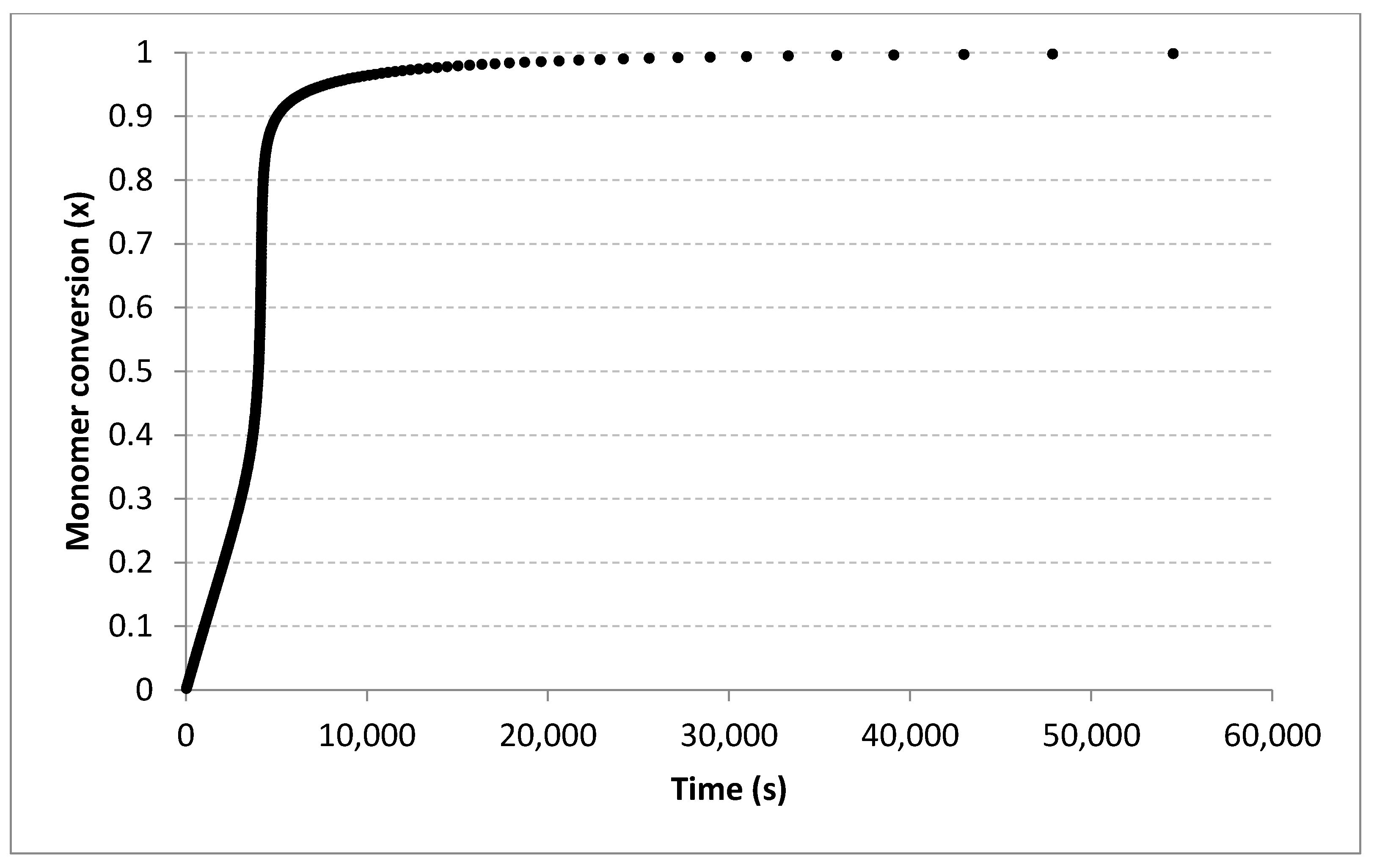
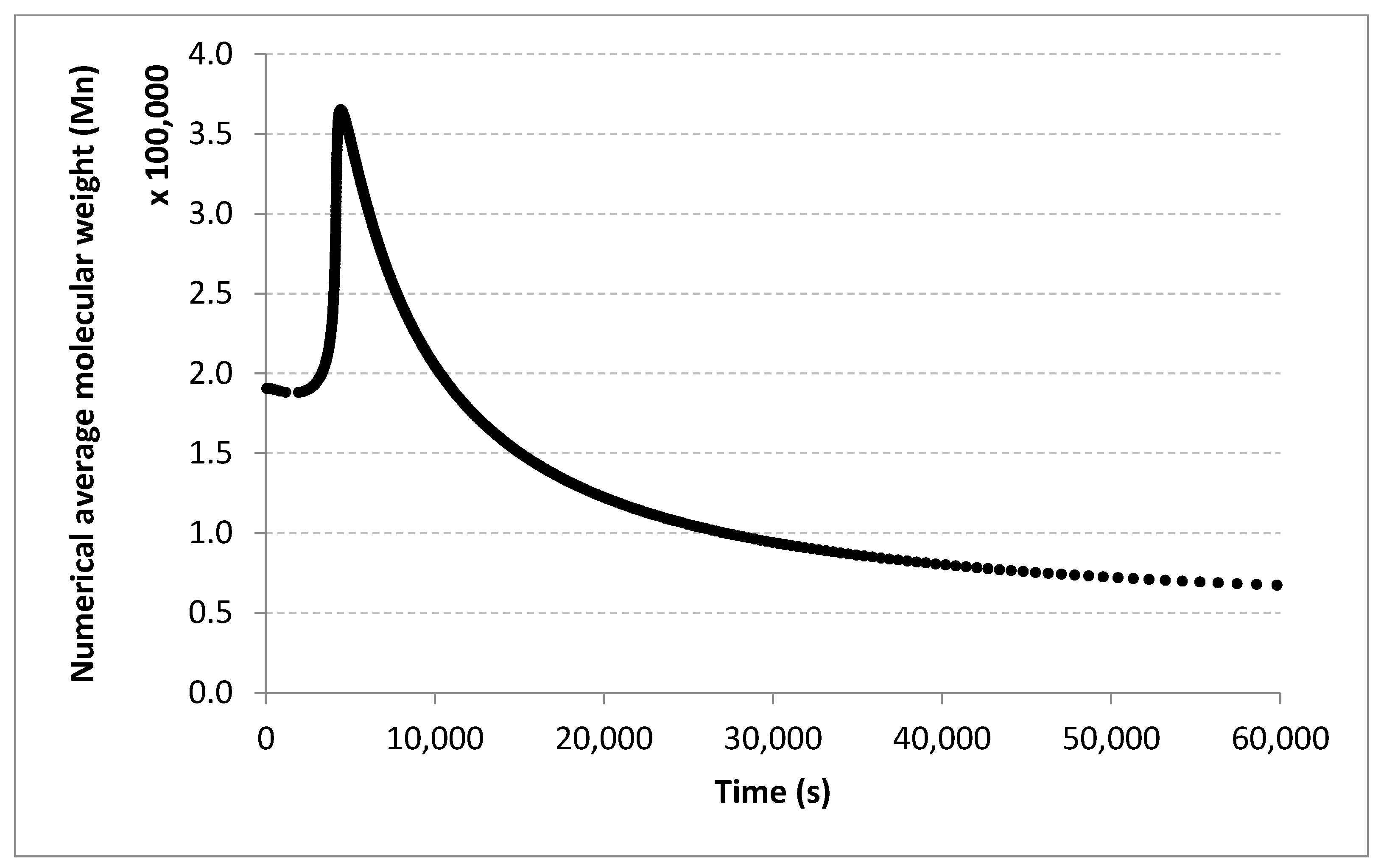
Empirical models based on sampled data can be useful for complex chemical engineering processes such as the free radical polymerization of methyl methacrylate achieved in a batch bulk process. In this case, the goal is to predict the monomer conversion, the numerical average molecular weight and the gravimetrical average molecular weight. This process is characterized by non-linear gel and glass effects caused by the sharp increase in the viscosity as the reaction progresses. To increase accuracy, one needs more samples in the areas with higher variation and this is achieved with adaptive sampling. An extensive comparative study is performed between three regression algorithms for this chemical process. The first two are based on the concept of a large margin, typical of support vector machines, but used for regression, in conjunction with an instance-based method. The learning of problem-specific distance metrics can be performed by means of either an evolutionary algorithm or an approximate differential approach. Having a set of prototypes with different distance metrics is especially useful when a large number of instances should be handled. Another original regression method is based on the idea of denoising autoencoders, i.e., the prototype weights and positions are set in such a way as to minimize the mean square error on a slightly corrupted version of the training set, where the instances inputs are slightly changed with a small random quantity. Several combinations of parameters and ways of splitting the data into training and testing sets are used in order to assess the performance of the algorithms in different scenarios.
Keywords: large margin nearest neighbor regression; distance metrics; prototypes; evolutionary algorithm; approximate differential optimization; multiple point hill climbing; adaptive sampling; free radical polymerization large margin nearest neighbor regression; distance metrics; prototypes; evolutionary algorithm; approximate differential optimization; multiple point hill climbing; adaptive sampling; free radical polymerization