Article

Path Analysis for Hybrid Rigid–Flexible Mechanisms
Department of Mechanical Engineering, University of the Basque Country UPV/EHU, 48013 Bilbao, Spain
*
Author to whom correspondence should be addressed.
Mathematics 2021, 9(16), 1869; https://doi.org/10.3390/math9161869
Submission received: 8 July 2021 / Revised: 28 July 2021 / Accepted: 2 August 2021 / Published: 6 August 2021
(This article belongs to the Special Issue Applied Mathematics to Mechanisms and Machines)

Abstract

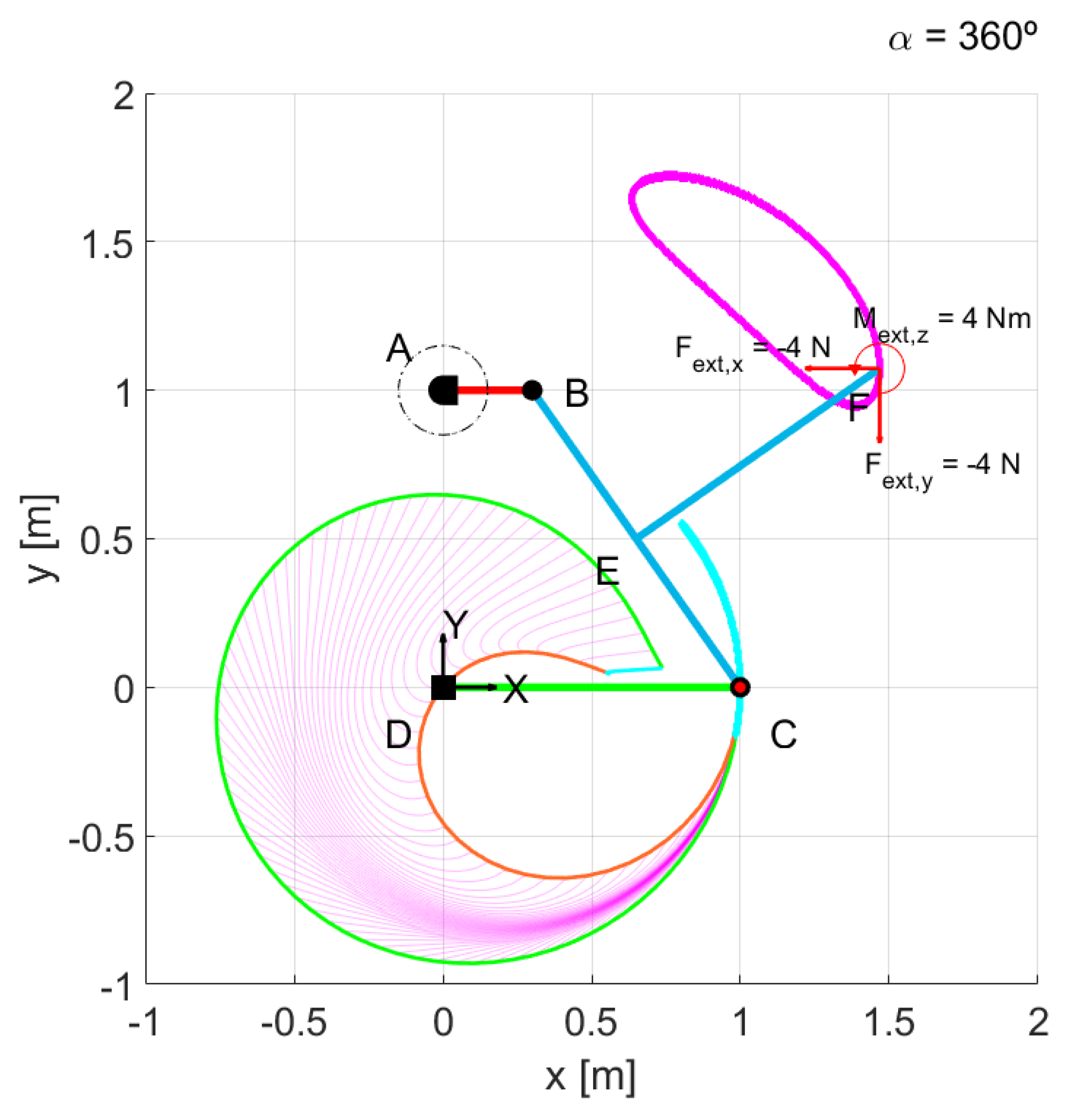
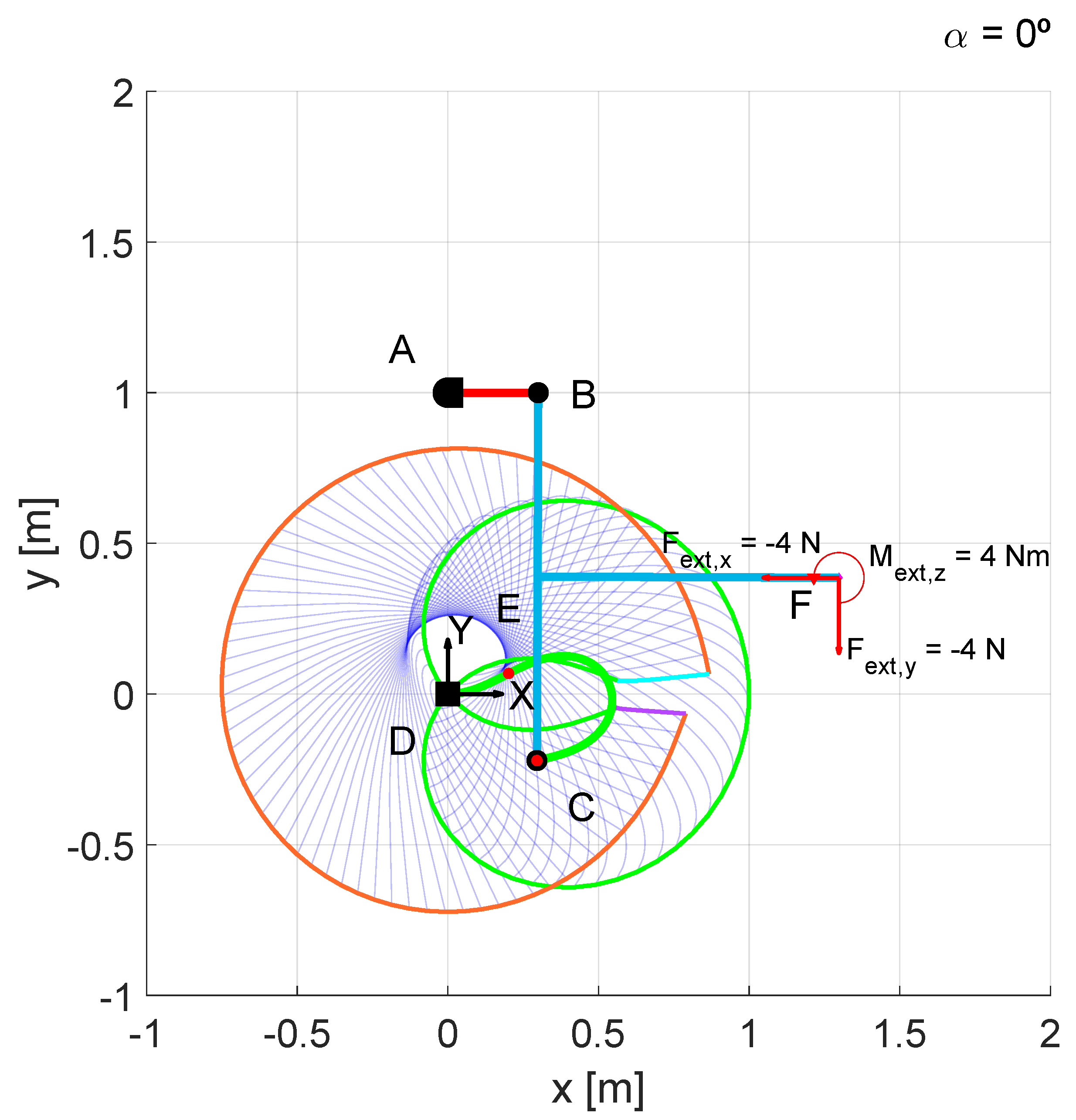
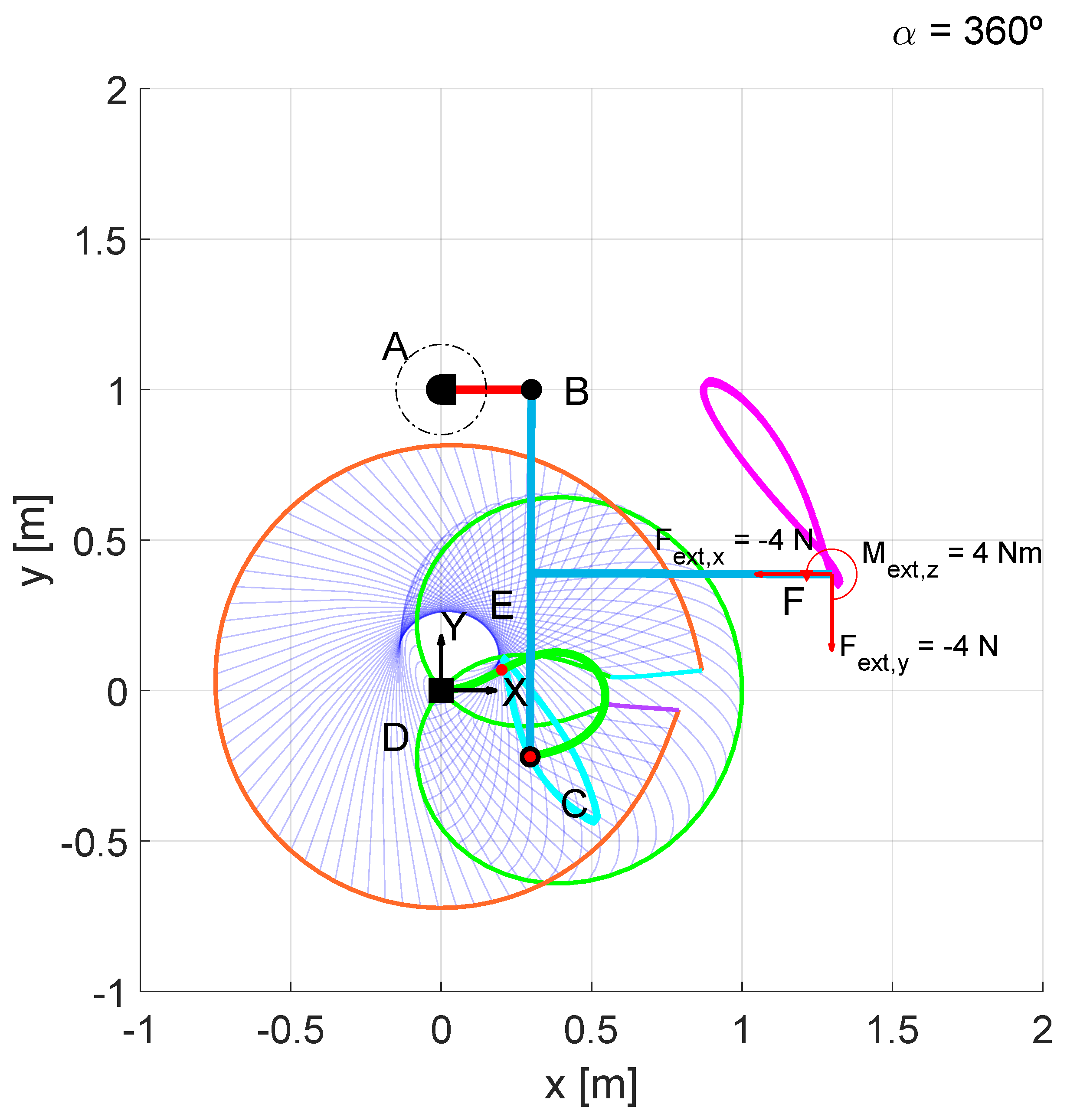
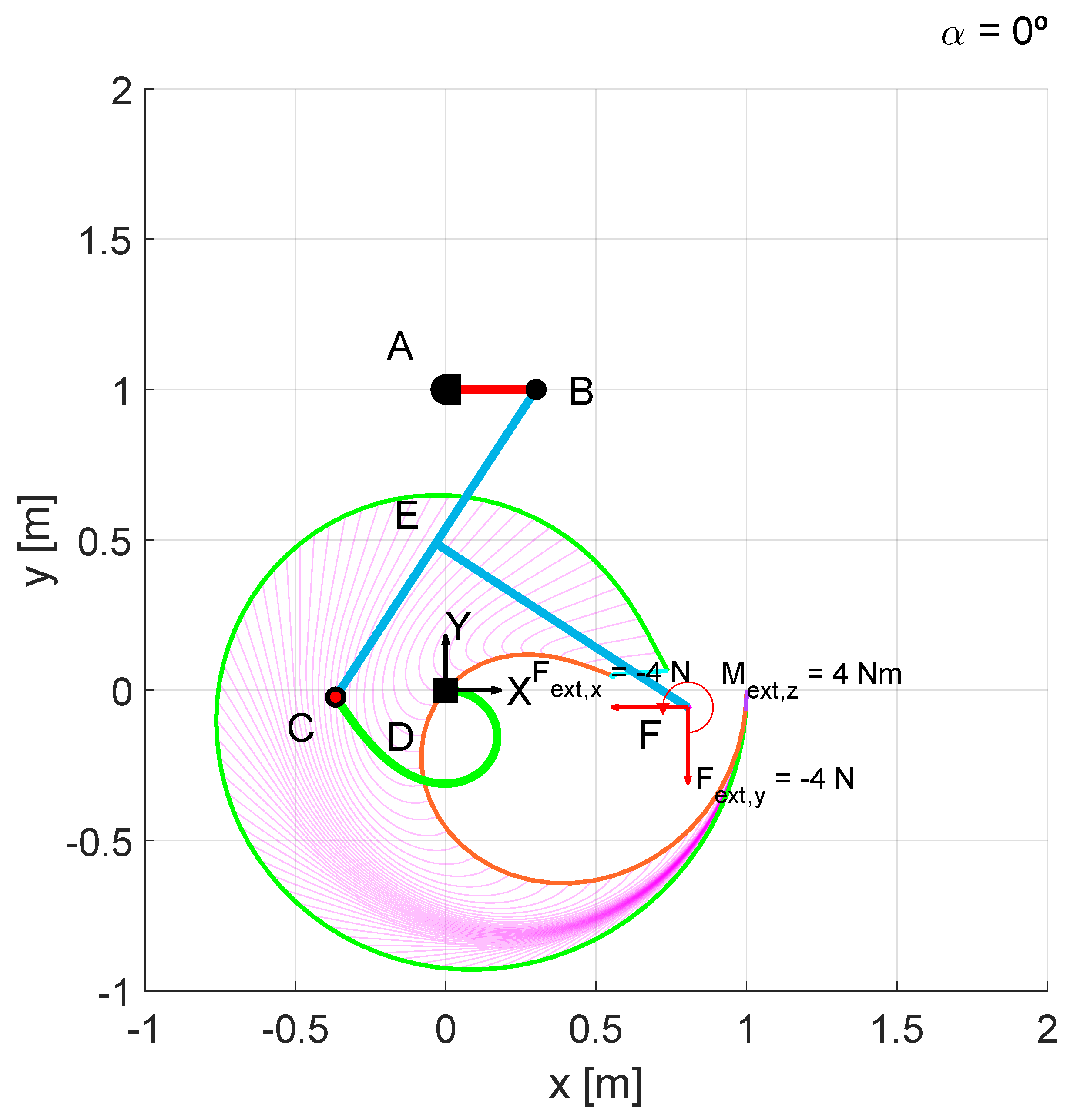
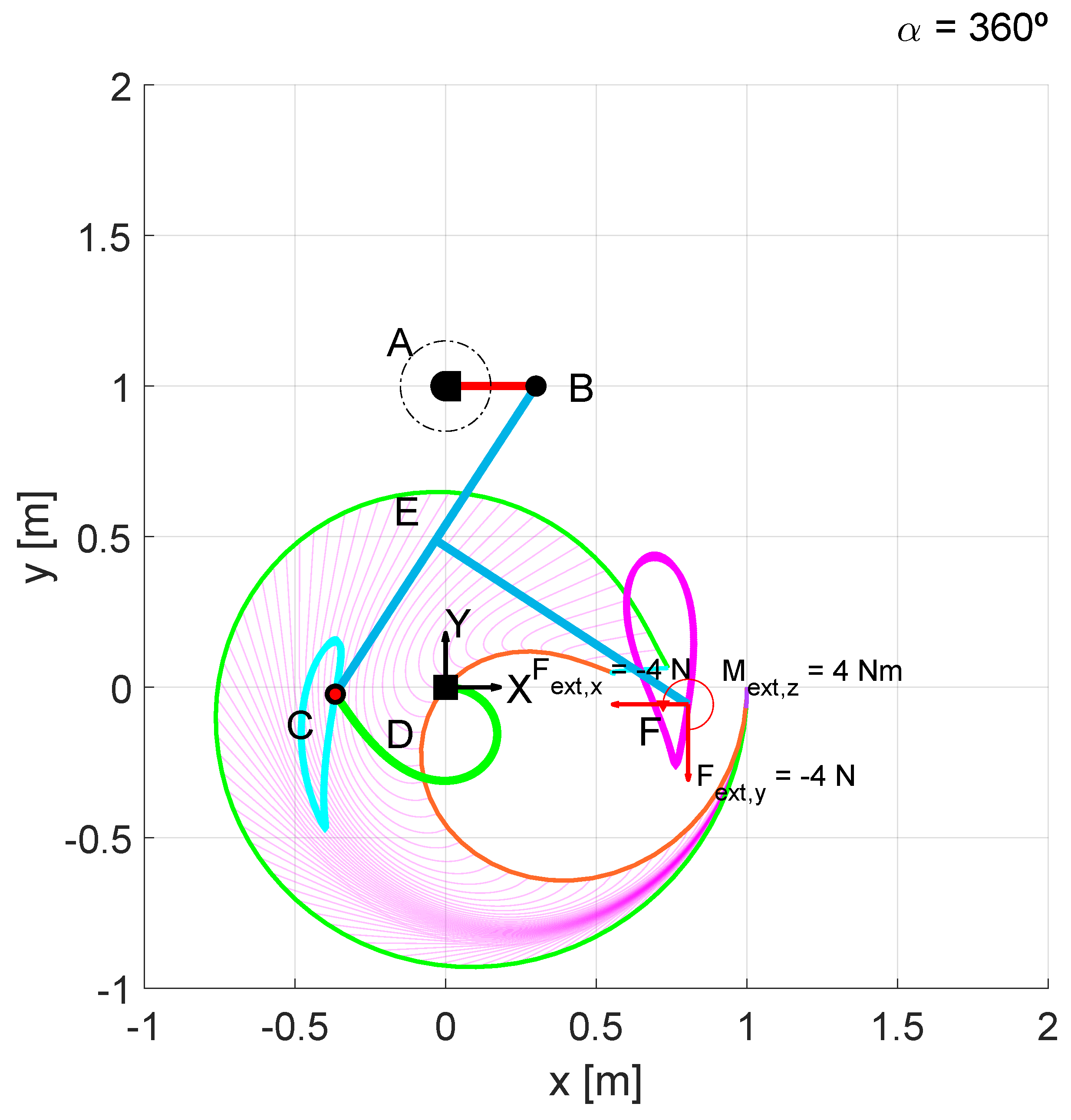
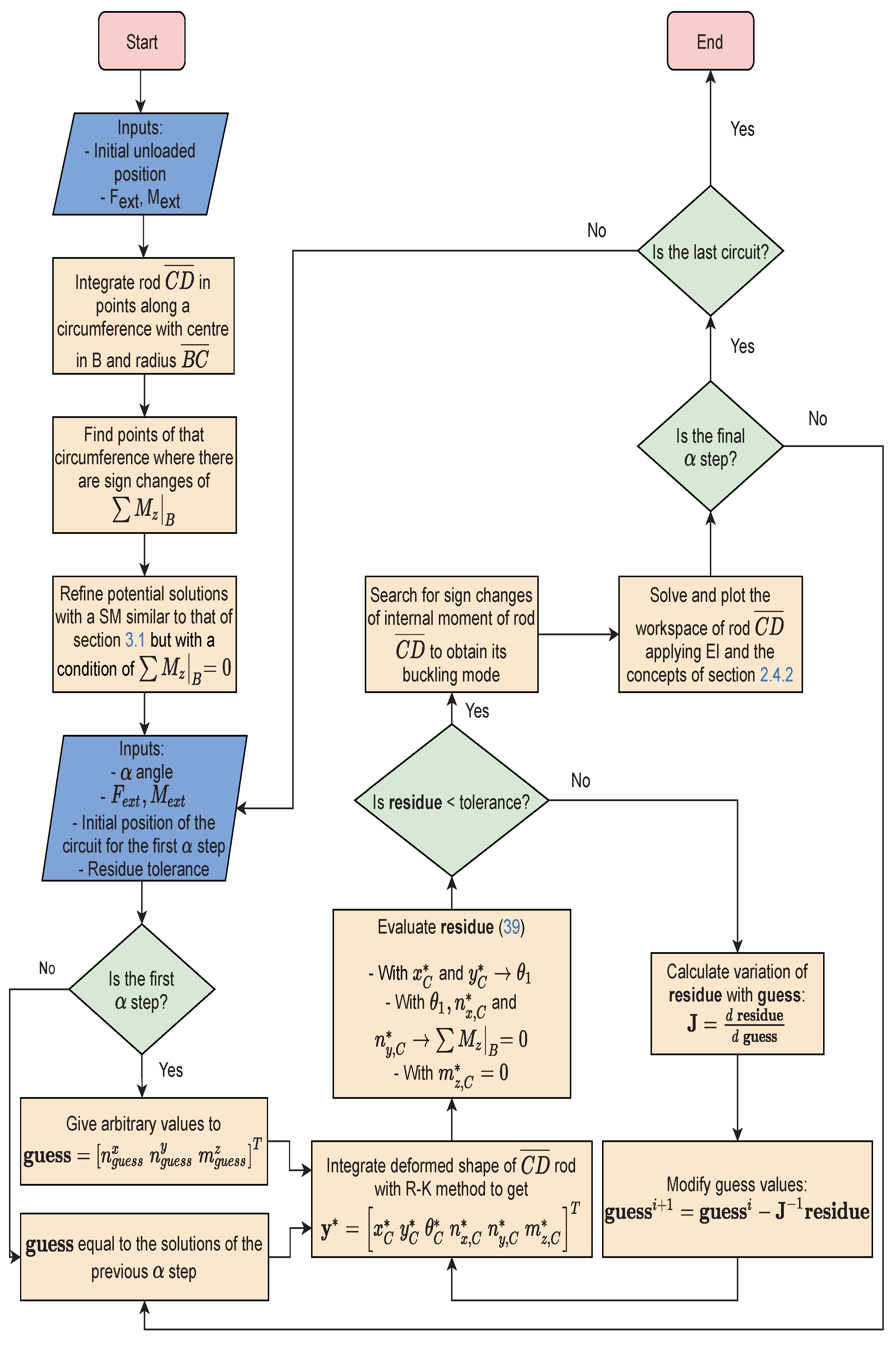
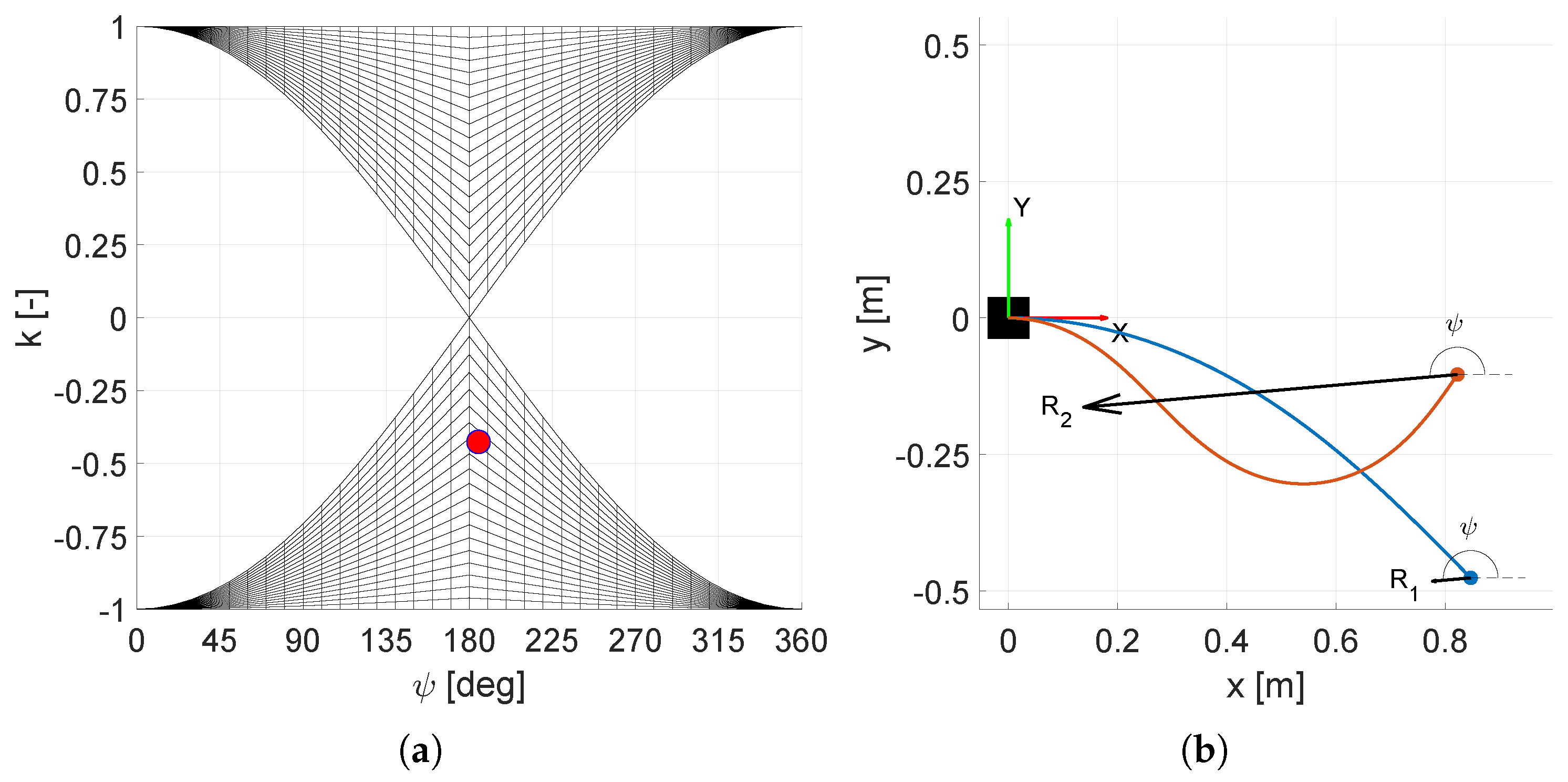
Hybrid rigid–flexible mechanisms are a type of compliant mechanism that combines rigid and flexible elements, being that their mobility is due to rigid-body joints and the relative flexibility of bendable rods. Two of the modeling methods of flexible rods are the Cosserat rod model and its simplification, the Kirchhoff rod model. Both of them present a system of differential equations that must be solved in conjunction with the boundary constraints of the rod, leading to a boundary value problem (BVP). In this work, two methods to solve this BVP are applied to analyze the influence of external loads in the movement of hybrid compliant mechanisms. First, a shooting method (SM) is used to integrate directly the shape of the flexible rod and the forces that appear in it. Then, an integration with elliptic integrals (EI) is carried out to solve the workspace of the compliant element, considering its buckling mode. Applying both methods, an algorithm that obtains the locus of all possible trajectories of the mechanism’s coupler point, and detects the buckling mode change, is developed. This algorithm also allows calculating all possible circuits of the mechanism. Thus, the performance of this method within the path analysis of mechanisms is demonstrated.
Keywords: hybrid compliant mechanisms; path analysis; numerical methods; elliptic integrals; kinematics hybrid compliant mechanisms; path analysis; numerical methods; elliptic integrals; kinematics