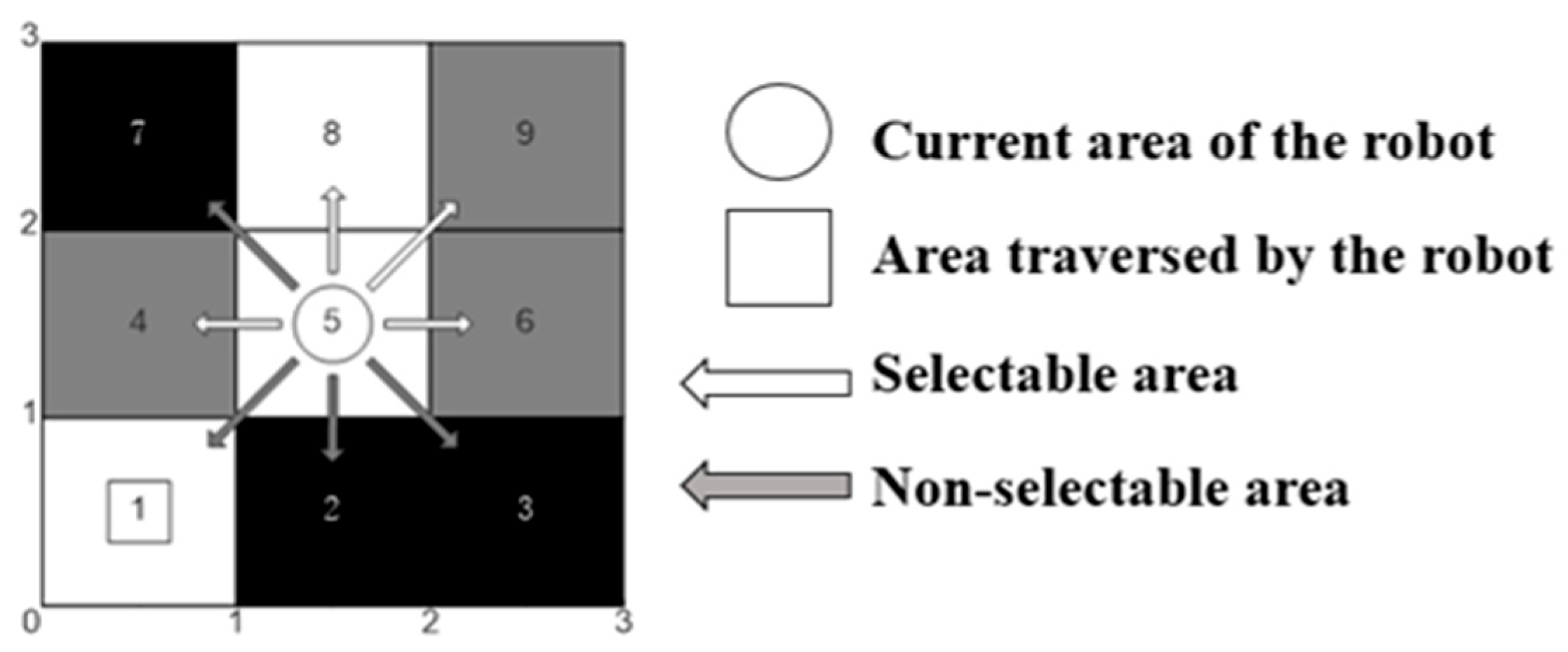
A Traversal-Aware Hybrid ACO Framework Integrating JPS and GA for Optimized Path Planning of Obstacle-Crossing Robots

Abstract
1. Introduction
- (1)
- Formulated a traversal-aware cost evaluation model that accurately quantifies the comprehensive traversal cost of complex obstacle-crossing maneuvers, encompassing both single- and double-sided traversals.
- (2)
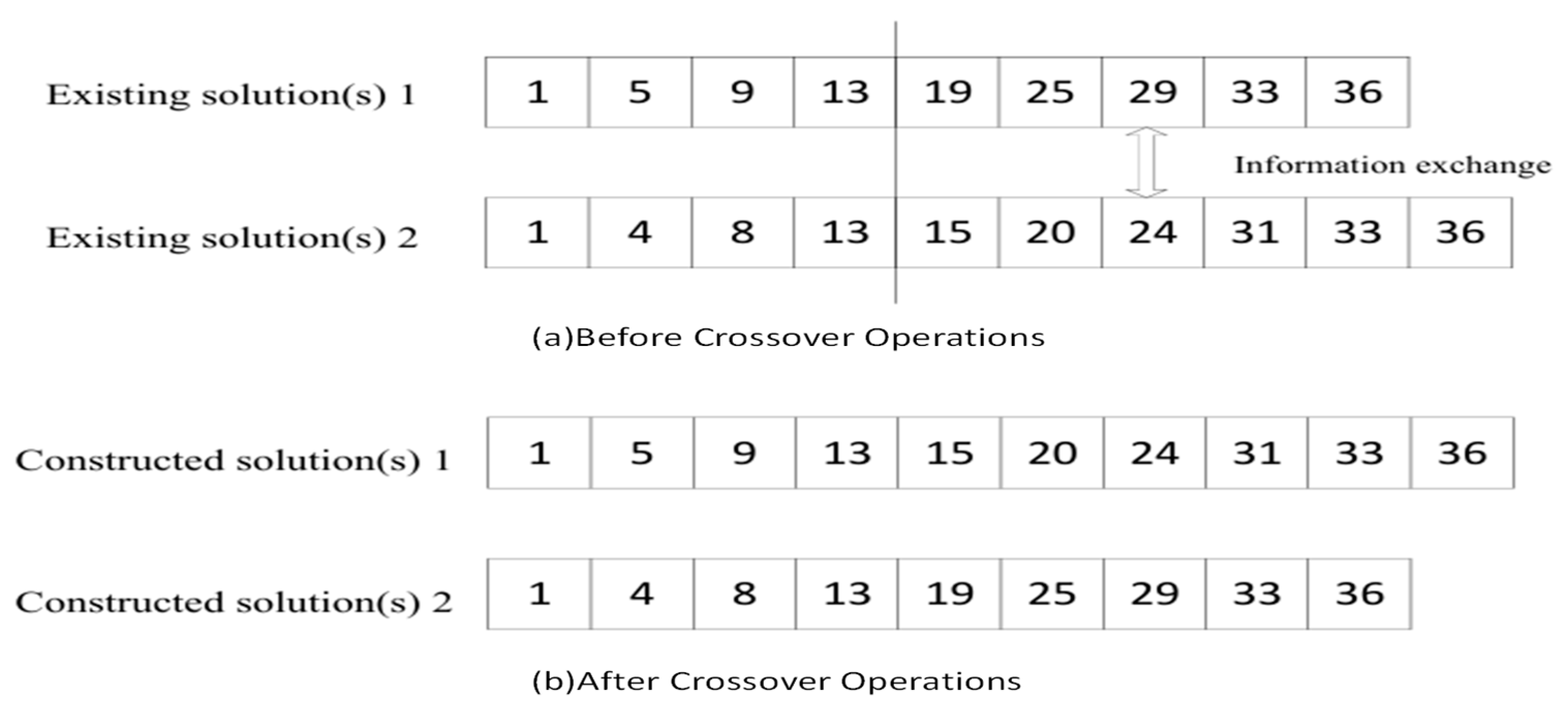
- Proposed an integrated hybrid optimization framework, OC-ACO, tailored to this cost model. The framework incorporates a JPS-inspired pruning strategy to refine the search space and embeds crossover and mutation operators from the Genetic Algorithm (GA) into the ACO iterative process. This integration dynamically sustains population diversity and effectively mitigates premature convergence.
- (3)
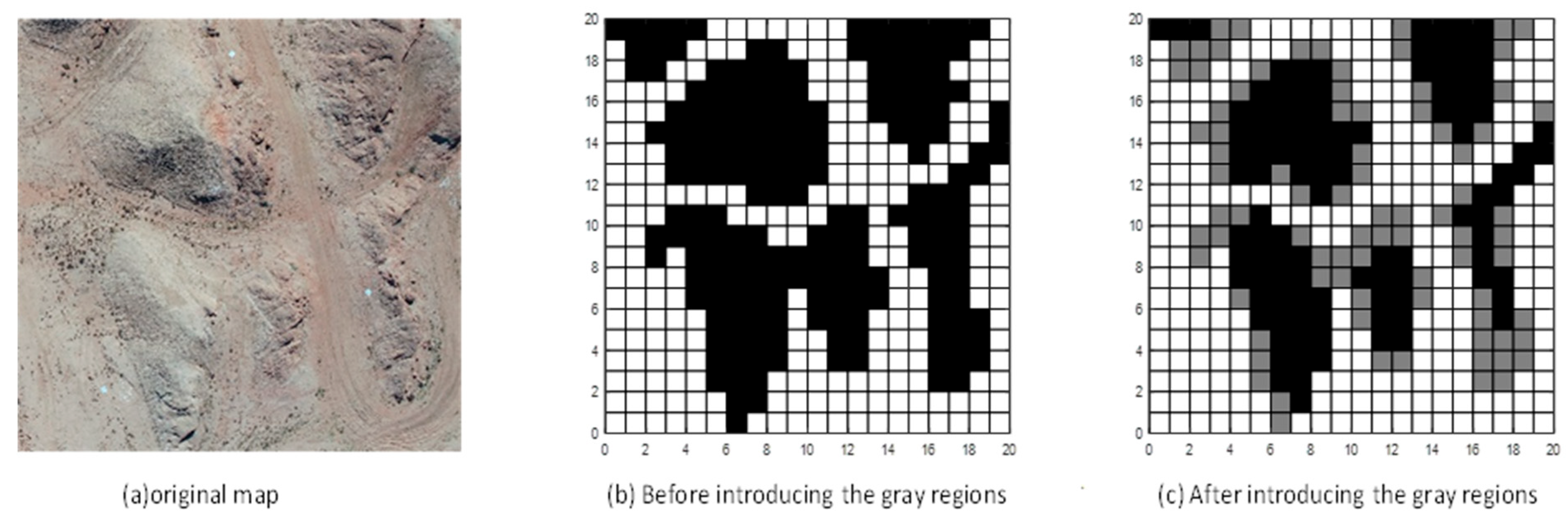
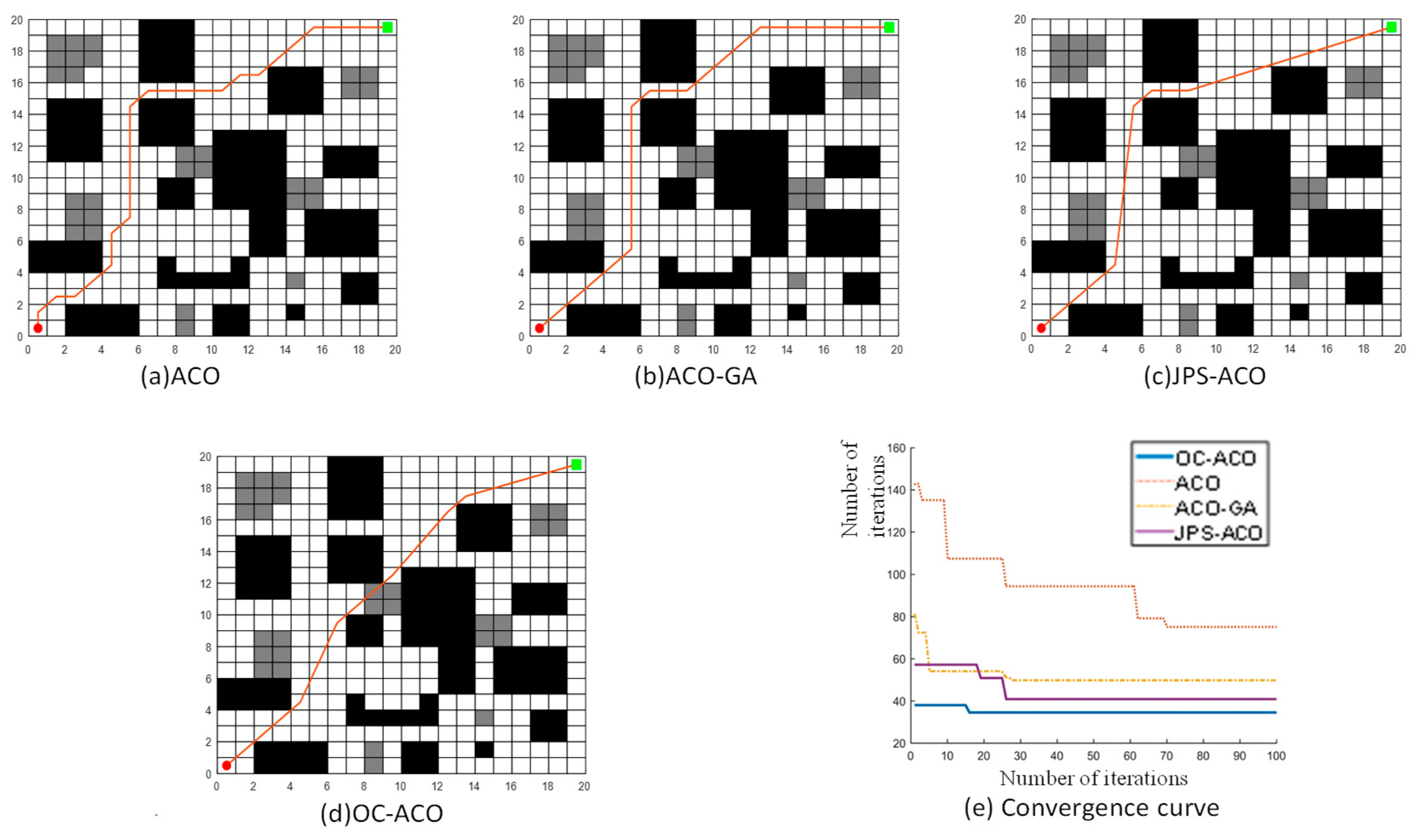
- Conducted extensive simulations across varying local perception scales. The results demonstrate that the proposed framework significantly reduces comprehensive traversal costs while maintaining stable computational performance and robustness in complex, unstructured environments.
2. Materials and Methods
2.1. Introduction to the Ant Colony Optimization
2.1.1. Problem Definition and Parameter Initialization
2.1.2. State Transition Rule
- (1)
- represents the set of adjacent nodes that ant is currently permitted to visit.
- (2)
- denotes the pheromone concentration on edge at time .
- (3)
- is the heuristic information factor, typically defined as the reciprocal of the distance, i.e., , representing the desirability of transitioning from node to node .
- (4)
- is the pheromone heuristic factor, reflecting the relative importance of the accumulated pheromones in guiding the path search. A larger value indicates a stronger tendency for ants to follow previously traversed paths, enhancing the algorithm’s local search capability, but increasing the susceptibility to falling into local optima.
- (5)
- is the expectation heuristic factor, reflecting the relative importance of objective heuristic information (e.g., distance) in path selection. A larger value renders the state transition probability closer to a greedy algorithm.
2.1.3. Pheromone Update Rule
- (1)
- is the pheromone evaporation rate, and represents the pheromone retention factor. determines the rate at which historical pheromones disappear.
- (2)
- is the sum of the pheromone increments deposited by all ants on edge during the current iteration.
- (3)
- is the amount of pheromone deposited by the ant on edge . According to the model proposed by Dorigo, its calculation formula is:
2.2. Improved Ant Colony Optimization
2.2.1. Search Method
- (1)
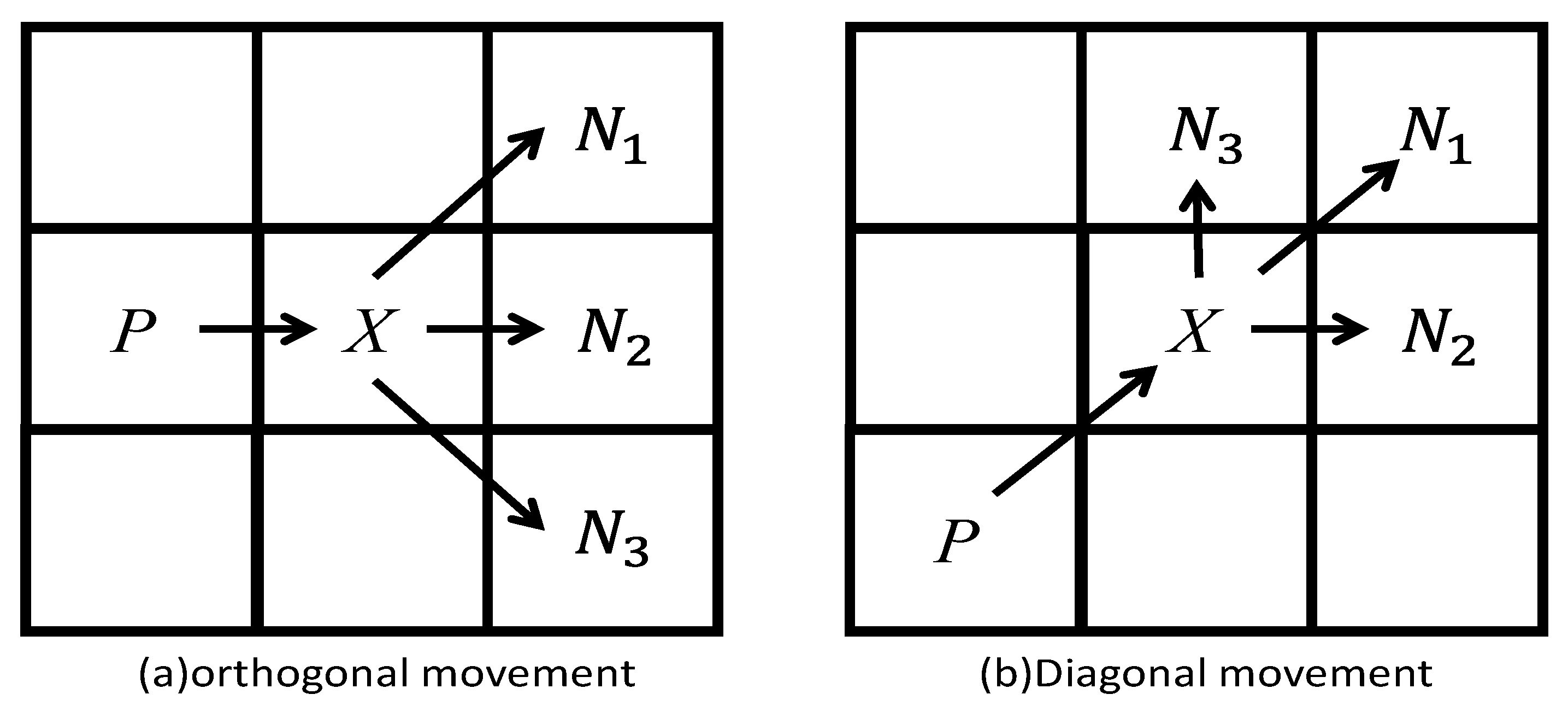
- Obstacle-free Regions (Figure 2): When there are no obstacles in the vicinity of , the algorithm applies natural neighbor pruning rules. If the transition is a straight move, only the three nodes located directly ahead and at the adjacent diagonals are retained as candidates (Figure 2a). If the transition is a diagonal move, the candidates are restricted to the nodes in the diagonal direction and its two adjacent cardinal directions (Figure 2b). This approach minimizes the branching factor by eliminating symmetrical redundant nodes.
- (2)
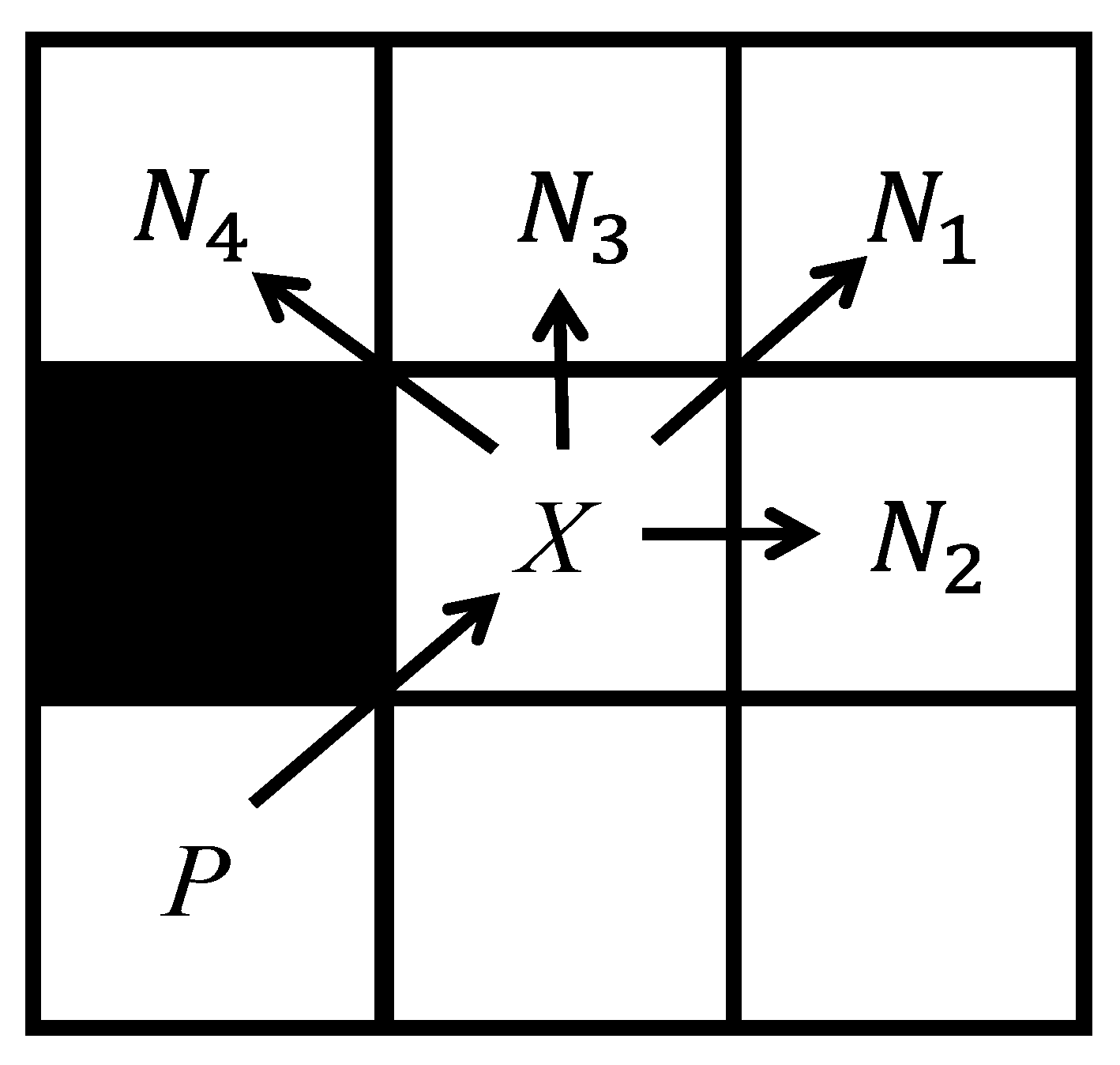
- Obstacle-occupied Regions (Figure 3): When obstacles are present adjacent to , the algorithm evaluates whether the forced neighbor rule is triggered. As illustrated in Figure 3, if an obstacle obstructs alternative bypass routes such that node can only be reached optimally through , is identified as a forced neighbor and added to the candidate set .
2.2.2. Crossover and Mutation Operations
2.2.3. Path Optimization
2.3. Obstacle-Crossing Adaptive Ant Colony Algorithm
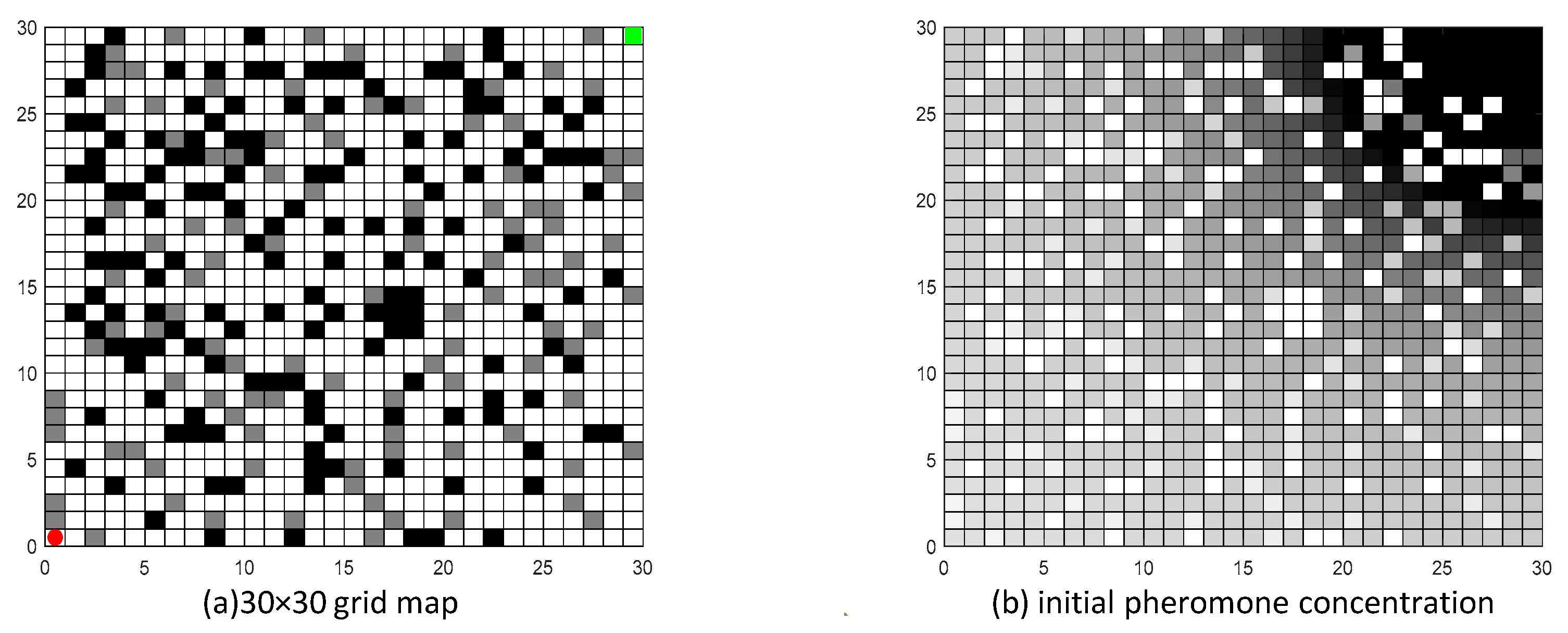
2.3.1. Non-Uniform Initialization of Pheromone Distribution
2.3.2. Improved State Transition Probability Function
2.3.3. Improved Path Selection Strategy
- (1)
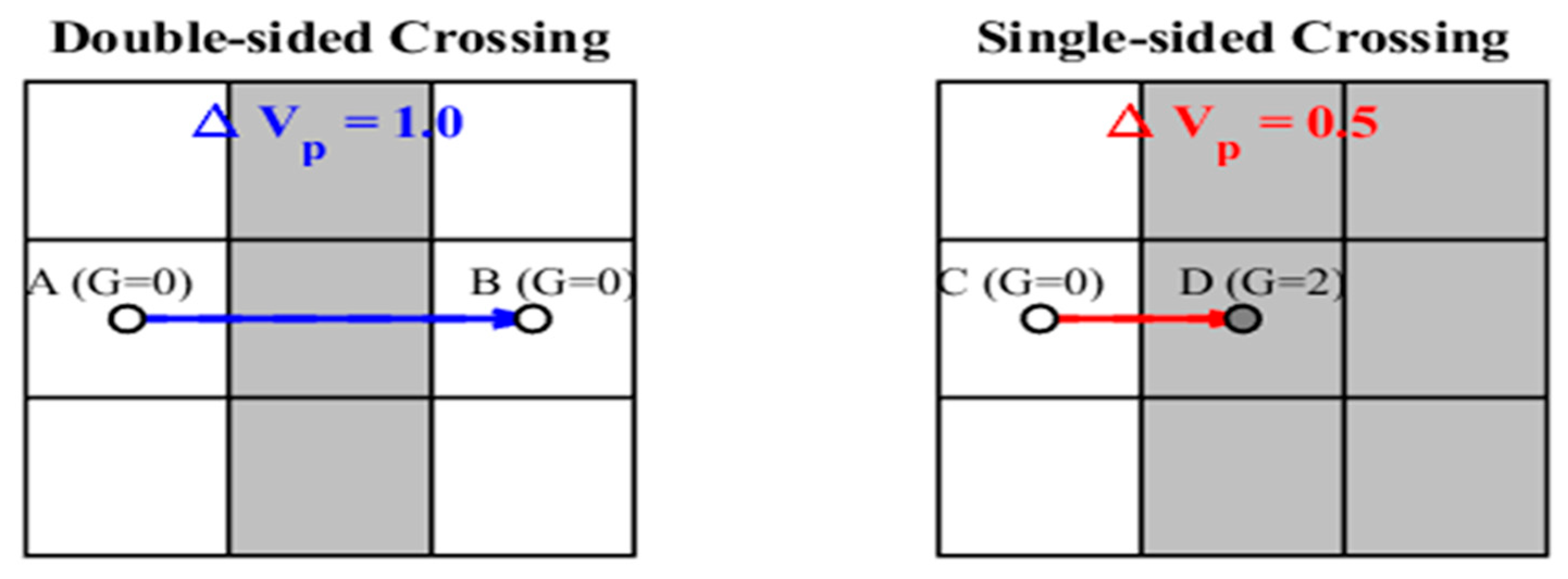
- Double-sided crossing (): Triggered when and , but the interpolated line segment intersects any grid where
- (2)
- Single-sided crossing (+0.5): Triggered when the segment boundary shifts, e.g., and , or vice versa.
2.3.4. Improved Pheromone Update Rule
2.3.5. Algorithm Procedure
2.4. Analysis of the Proposed Algorithm
- (1)
- JPS-ACO Search: Standard ACO evaluates up to 8 neighboring nodes per step. The JPS-inspired pruning strategy restricts candidate nodes to a smaller subset of size C [30]. While the asymptotic time complexity remains , this pruning mechanism significantly reduces the constant factor of the computational overhead.
- (2)
- GA Operations: Selecting elite individuals and applying crossover and mutation operators to their path encodings requires time, where .
- (3)
- Pheromone Update: The evaporation and reinforcement steps collectively require time, as global pheromone evaporation is applied to all edges proportional to the grid size .
3. Experimental Design
3.1. Experimental Subjects and Parameter Settings
3.2. Working Environment Model
4. Results and Analysis
4.1. Ablation Experiment
4.2. Comparative Experiment
- (1)
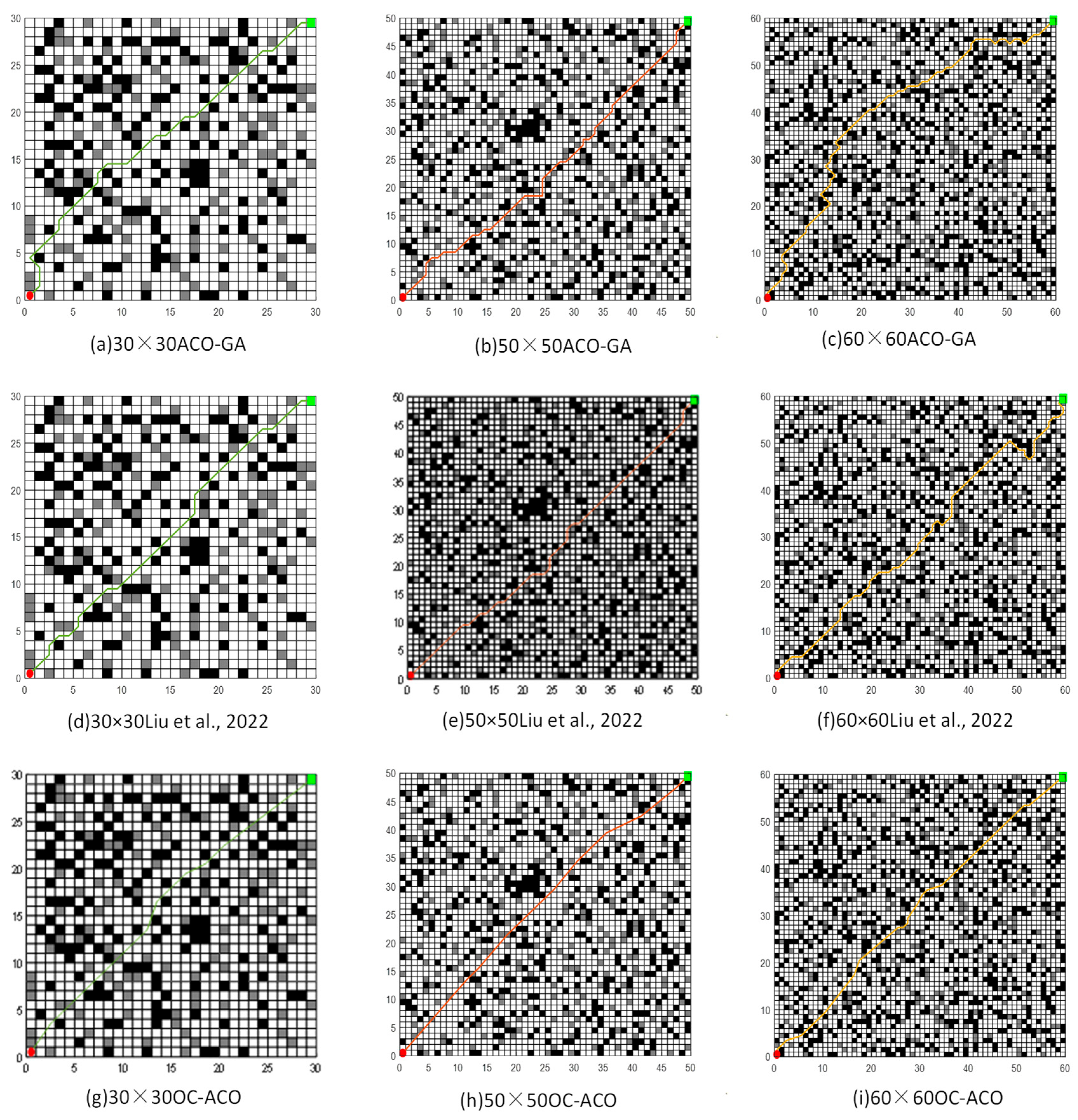
- On the 30 × 30 map, compared with the other two algorithms, the OC-ACO algorithm reduces the path length by 10.0% and 5.9%, respectively, and decreases the number of turning points by 62.5% and 53.8%, respectively.
- (2)
- On the 50 × 50 map, the OC-ACO algorithm achieves reductions of 7.1% and 4.1% in path length, and 66.7% and 50.0% in the number of turning points, respectively, compared with the other two algorithms.
- (3)
- On the 60 × 60 map, the OC-ACO algorithm reduces the path length by 16.2% and 13.6%, and the number of turning points by 67.4% and 57.1%, respectively, compared with the other two algorithms.
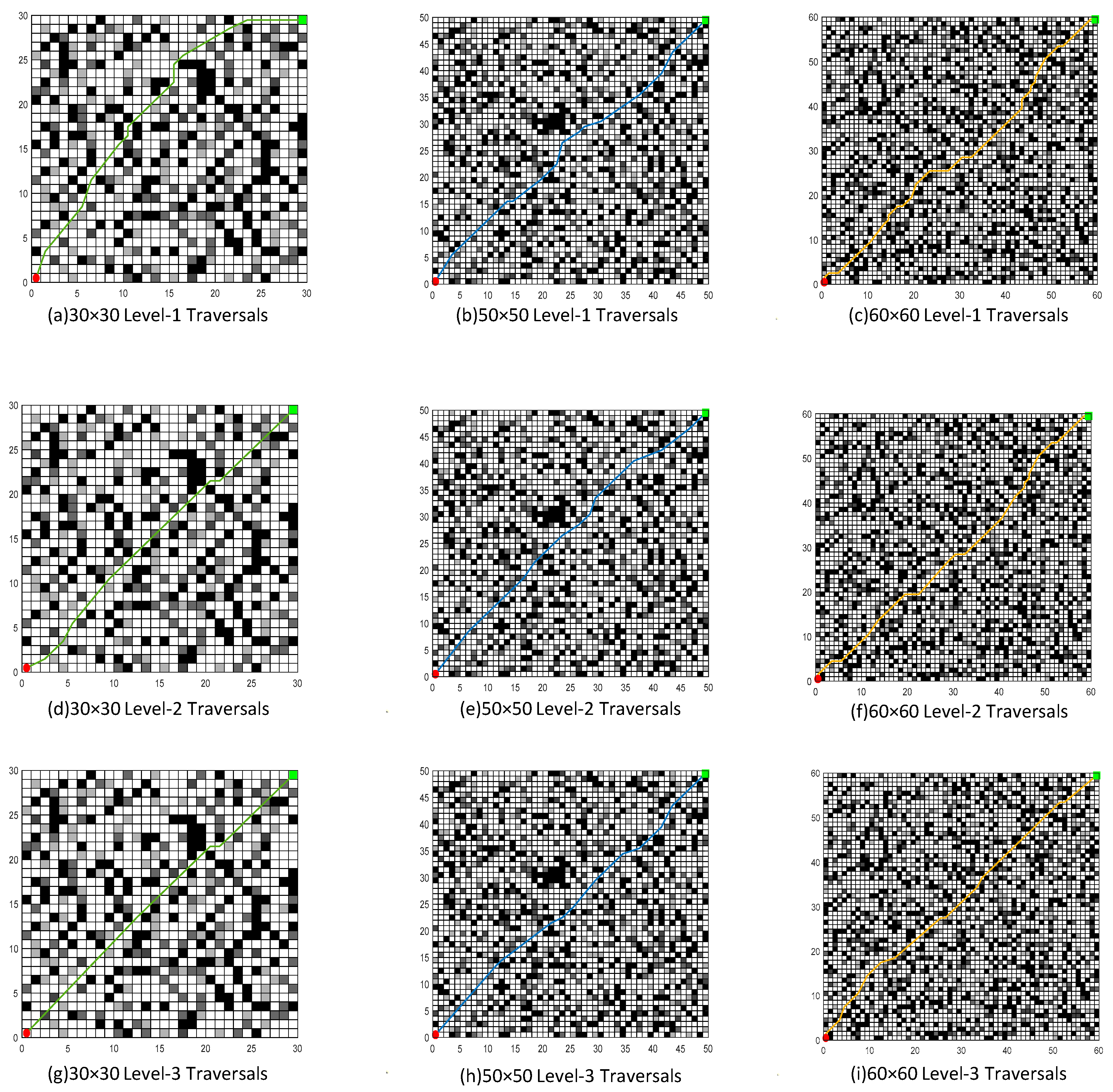
4.3. Graded Obstacle-Crossing Experiment
- (1)
- On the 30 × 30 map, the secondary and tertiary obstacle-crossing levels achieve reductions of 7.0% and 7.3% in path length, respectively, compared with the primary level, and reductions of 40.0% and 60.0% in the number of turning points, respectively.
- (2)
- On the 50 × 50 map, the secondary and tertiary levels reduce the path length by 1.1% and 1.4%, and the number of turning points by 9.1% and 18.2%, respectively, compared with the primary level.
- (3)
- On the 60 × 60 map, the secondary and tertiary levels achieve reductions of 1.8% and 6.4% in path length, and 24.0% and 48.0% in the number of turning points, respectively, compared with the primary level.
5. Conclusions
Author Contributions
Funding
Data Availability Statement
Conflicts of Interest
Abbreviations
| ACO | Ant Colony Optimization |
| JPS | Jump Point Search |
| GA | Genetic Algorithm |
| ACO-GA | Ant Colony Optimization with Genetic Algorithm |
| JPS-ACO | the improved Jump Point Search-based Ant Colony Optimization |
| OC-ACO | the obstacle-crossing adaptive Ant Colony Optimization |
References
- Dijkstra, E.W. A note on two problems in connexion with graphs. Numer. Math. 1959, 1, 269–271. [Google Scholar] [CrossRef]
- LaValle, S.M. Rapidly-Exploring Random Trees: A New Tool for Path Planning; Iowa State University: Ames, IA, USA, 1998. [Google Scholar]
- Karaman, S.; Frazzoli, E. Sampling-based algorithms for optimal motion planning. Int. J. Robot. Res. 2011, 30, 846–894. [Google Scholar] [CrossRef]
- Khatib, O. Real-Time Obstacle Avoidance for Manipulators and Mobile Robots. Int. J. Robot. Res. 1986, 5, 90–98. [Google Scholar] [CrossRef]
- Ge, S.S.; Cui, Y.J. Dynamic Motion Planning for Mobile Robots Using Potential Field Method. Auton. Robot. 2002, 13, 207–222. [Google Scholar] [CrossRef]
- Dorigo, M. Optimization, Learning and Natural Algorithms. Ph.D. Thesis, Politecnico di Milano, Milan, Italy, 1992. [Google Scholar]
- Liu, L.; Wang, X.; Yang, X.; Liu, H.; Li, J.; Wang, P. Path planning techniques for mobile robots: Review and prospect. Expert Syst. Appl. 2023, 227, 120254. [Google Scholar] [CrossRef]
- Hamad, I.I.; Hasan, M.S. A Review: On using ACO Based Hybrid Algorithms for Path Planning of Multi-Mobile Robotics. Int. J. Interact. Mob. Technol. 2020, 14, 145–156. [Google Scholar] [CrossRef]
- Blum, C. Ant colony optimization: A bibliometric review. Phys. Life Rev. 2024, 51, 87–95. [Google Scholar] [CrossRef]
- Dorigo, M.; Maniezzo, V.; Colorni, A. Ant system: Optimization by a colony of cooperating agents. IEEE Trans. Syst. Man Cybern. Part B 1996, 26, 29–41. [Google Scholar] [CrossRef] [PubMed]
- Socha, K.; Dorigo, M. Ant colony optimization for continuous domains. Eur. J. Oper. Res. 2008, 185, 1155–1173. [Google Scholar] [CrossRef]
- Dorigo, M.; Birattari, M.; Stutzle, T. Ant colony optimization. IEEE Comput. Intell. Mag. 2006, 1, 28–39. [Google Scholar] [CrossRef]
- Yang, X.S.; He, X. Firefly algorithm: Recent advances and applications. Int. J. Swarm Intell. 2013, 1, 36–50. [Google Scholar] [CrossRef]
- Dorigo, M.; Gambardella, L.M. Ant colony system: A cooperative learning approach to the traveling salesman problem. IEEE Trans. Evol. Comput. 1997, 1, 53–66. [Google Scholar] [CrossRef]
- Hu, J.; Wu, H.; Zhong, B.; Xiao, R. Swarm intelligence-based optimisation algorithms: An overview and future research issues. Int. J. Autom. Control 2020, 14, 656–693. [Google Scholar] [CrossRef]
- Tang, J.; Liu, G.; Pan, Q. A Review on Representative Swarm Intelligence Algorithms for Solving Optimization Problems: Applications and Trends. IEEE/CAA J. Autom. Sin. 2021, 8, 1627–1643. [Google Scholar] [CrossRef]
- Li, E.; Qi, K. Ant Colony Algorithm for Path Planning Based on Grid Feature Point Extraction. J. Shanghai Jiaotong Univ. (Sci.) 2023, 28, 86–99. [Google Scholar] [CrossRef]
- Shi, Y.; Zhang, H.; Li, Z.; Hao, K.; Liu, Y.; Zhao, L. Path planning for mobile robots in complex environments based on improved ant colony algorithm. Math. Biosci. Eng. 2023, 20, 15568–15602. [Google Scholar] [CrossRef]
- Zhao, D.; Liu, L.; Yu, F.; Heidari, A.A.; Wang, M.; Chen, H.; Muhammad, K. Opposition-based ant colony optimization with all-dimension neighborhood search for engineering design. J. Comput. Des. Eng. 2022, 9, 1007–1044. [Google Scholar] [CrossRef]
- Yang, Z.; Li, J.; Yang, L.; Chen, H.; Watanabe, K. A Smooth Jump Point Search Algorithm for Mobile Robots Path Planning Based on a Two-Dimensional Grid Model. J. Robot. 2022, 2022, 7682201. [Google Scholar] [CrossRef]
- Harabor, D.; Grastien, A. Online Graph Pruning for Pathfinding on Grid Maps. Proc. AAAI Conf. Artif. Intell. 2011, 25, 1114–1119. [Google Scholar] [CrossRef]
- Roshanzamir, M.; Palhang, M.; Mirzaei, A. Graph structure optimization of Genetic Network Programming with ant colony mechanism in deterministic and stochastic environments. Swarm Evol. Comput. 2019, 51, 100581. [Google Scholar] [CrossRef]
- Dai, L.; Jin, Z.; Zhao, X.; Du, X.; Ma, Z. Adaptive Genetic Algorithm Integrated with Ant Colony Optimization for Multi-Task Agricultural Machinery Scheduling. Agriculture 2025, 15, 2319. [Google Scholar] [CrossRef]
- Zhang, S.; Pu, J.; Si, Y. An Adaptive Improved Ant Colony System Based on Population Information Entropy for Path Planning of Mobile Robot. IEEE Access 2021, 9, 24933–24945. [Google Scholar] [CrossRef]
- Liang, S.; Jiao, T.; Du, W.; Qu, S. An improved ant colony optimization algorithm based on context for tourism route planning. PLoS ONE 2021, 16, e0257317. [Google Scholar] [CrossRef] [PubMed]
- Lin, B.-C.; Mei, Y.; Zhang, M. Automated design of state transition rules in ant colony optimization by genetic programming: A comprehensive investigation. Memetic Comput. 2025, 17, 2. [Google Scholar] [CrossRef]
- Zhang, Z.; Dou, Y.; Xu, X.; Ma, Y.; Jiang, J.; Tan, Y. Operational Requirements Analysis Method Based on Question Answering of WEKG. J. Syst. Eng. Electron. 2024, 35, 386–395. [Google Scholar] [CrossRef]
- Bai, X.; Liu, D.; Xu, X. A Review of Improved Methods for Ant Colony Optimization in Path Planning. J. Ship Res. 2024, 68, 77–92. [Google Scholar] [CrossRef]
- Stützle, T.; Hoos, H.H. Ant System. Future Gener. Comput. Syst. 2000, 16, 889–914. [Google Scholar] [CrossRef]
- Akka, K.; Khaber, F. Mobile robot path planning using an improved ant colony optimization. Int. J. Adv. Robot. Syst. 2018, 15, 1729881418774673. [Google Scholar] [CrossRef]
- Duan, H.; Wang, D.; Yu, X. Markov Chains and Martingale Theory Based Convergence Proof of Ant Colony Algorithm and Its Simulation Platform. In Proceedings of the 2006 6th World Congress on Intelligent Control and Automation, Dalian, China, 21–23 June 2006; pp. 3057–3061. [Google Scholar]
- Chen, T.; Chen, S.; Zhang, K.; Qiu, G.; Li, Q.; Chen, X. A jump point search improved ant colony hybrid optimization algorithm for path planning of mobile robot. Int. J. Adv. Robot. Syst. 2022, 19, 17298806221127953. [Google Scholar] [CrossRef]
- Garcia, M.A.P.; Montiel, O.; Castillo, O.; Sepúlveda, R.; Melin, P. Path planning for autonomous mobile robot navigation with ant colony optimization and fuzzy cost function evaluation. Appl. Soft Comput. 2009, 9, 1102–1110. [Google Scholar] [CrossRef]
- Deng, W.; Zhang, L.; Zhou, X.; Zhou, Y.; Sun, Y.; Zhu, W.; Chen, H.; Deng, W.; Chen, H.; Zhao, H. Multi-strategy particle swarm and ant colony hybrid optimization for airport taxiway planning problem. Inf. Sci. 2022, 612, 576–593. [Google Scholar] [CrossRef]
- Zhao, D.; Cai, G.; Wang, Y.; Li, X. Path Planning of Obstacle-Crossing Robot Based on Golden Sine Grey Wolf Optimizer. Appl. Sci. 2024, 14, 1129. [Google Scholar] [CrossRef]
- Liu, J.Q.; Wang, T.H.; Dong, Z. Path planning of mobile robot based on improved ant colony algorithm. Transducer Microsyst. Technol. 2022, 41, 140–143. [Google Scholar] [CrossRef]


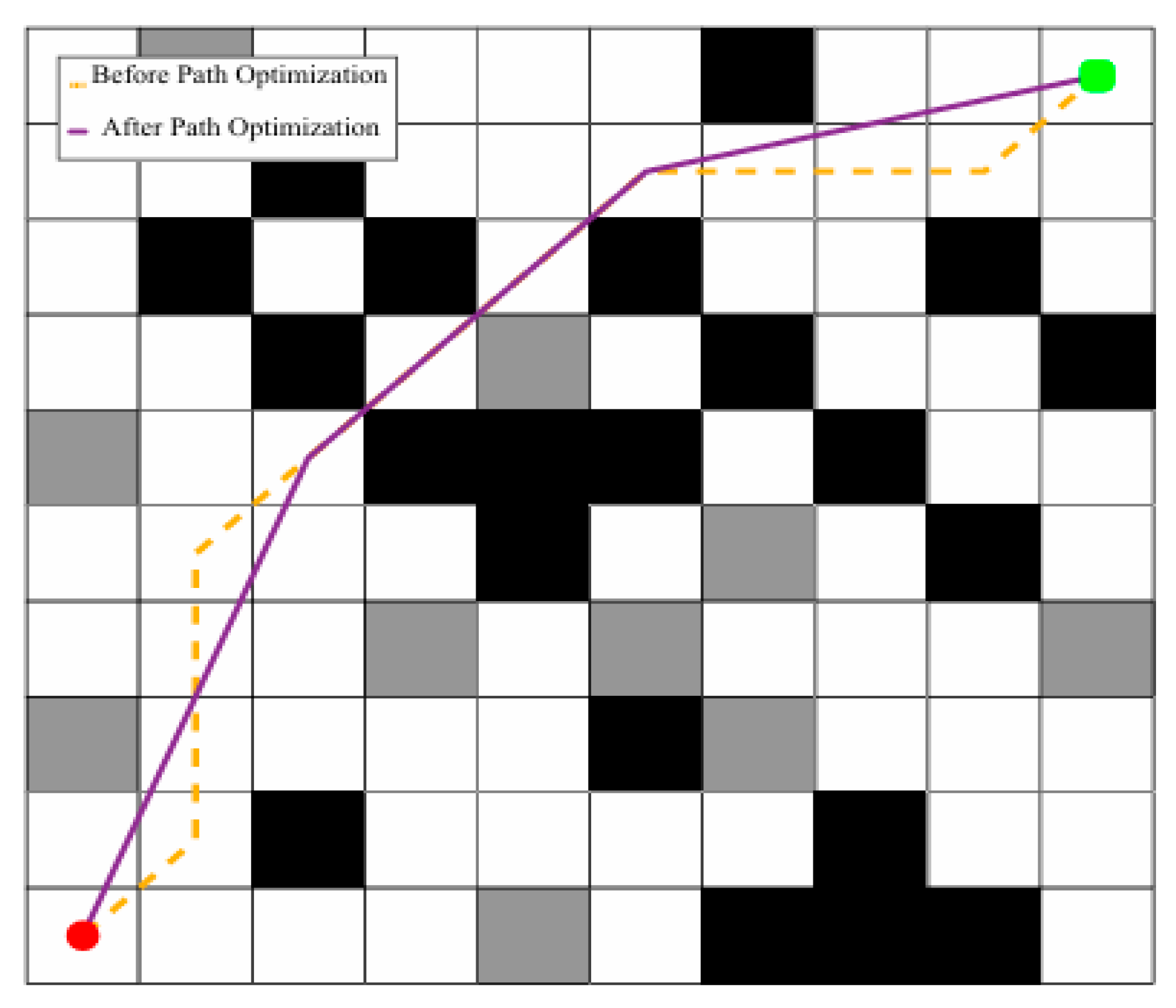



| Parameters | Before Optimization | After Optimization |
|---|---|---|
| Path length | 14.4853 | 13.7509 |
| Number of inflection points | 4 | 2 |
| Corner (ω) | Traversal Cost |
|---|---|
| ω ≤ | |
| < ω ≤ | |
| < ω ≤ | |
| ω > |
| Obstacle-Surmounting Capability | Parameter Settings |
|---|---|
| Maximum vertical obstacle height | 400 mm |
| Maximum climbing slope | 40% |
| Maximum trench crossing width | 500 × 200 mm |
| Lateral obstacle | 140 mm |
| Parameter Name | Value |
|---|---|
| Maximum number of iterations | 100 |
| Number of ants | 50 |
| Pheromone importance factor | 2 |
| Heuristic information weight | 6 |
| Terrain weight factor | 1 |
| Pheromone evaporation rate | 0.3 |
| Goal distance weight factor | 0.5 |
| Turning point weight coefficient | 1.5 |
| Obstacle-surmounting cost coefficient | 0.75 |
| Crossover Probability | 0.8 |
| Mutation Rate | 0.05 |
| Algorithm | Path Length | Number of Inflection Points | Number of Obstacle Crossings | Total Path Cost | Number of Iterations |
|---|---|---|---|---|---|
| ACO | 32.73 | 12 | 0 | 75.14 | 70 |
| ACO-GA | 31.89 | 5 | 0 | 48.56 | 28 |
| JPS-ACO | 30.83 | 4 | 0 | 41.05 | 26 |
| OC-ACO | 29.73 | 5 | 1 | 31.11 | 16 |
| Algorithm | Path Length | Number of Turning Points | Number of Obstacle Crossings | Total Path Cost | Number of Iterations |
|---|---|---|---|---|---|
| ACO-GA | 45.36 | 16 | 0 | 119.58 | 43 |
| Reference [35] | 43.36 | 13 | 0 | 89.30 | 24 |
| OC-ACO | 40.81 | 6 | 3 | 46.71 | 4 |
| Algorithm | Path Length | Number of Turning Points | Number of Obstacle Crossings | Total Path Cost | Number of Iterations |
|---|---|---|---|---|---|
| ACO-GA | 75.15 | 24 | 0 | 195.33 | 50 |
| Reference [35] | 72.81 | 16 | 0 | 129.36 | 12 |
| OC-ACO | 69.80 | 8 | 10 | 76.00 | 12 |
| Algorithm | Path Length | Number of Turning Points | Number of Obstacle Crossings | Total Path Cost | Number of Iterations |
|---|---|---|---|---|---|
| ACO-GA | 102.61 | 46 | 0 | 424.23 | 100 |
| Reference [35] | 99.53 | 35 | 0 | 328.68 | 34 |
| OC-ACO | 85.95 | 15 | 8 | 127.63 | 30 |
| Algorithm | Path Length | Number of Turning Points | Number of Obstacle Crossings | Total Path Cost | Number of Iterations |
|---|---|---|---|---|---|
| Dijkstra | 43.36 | 16 | 0 | 43.36 | 742 |
| A* | 43.36 | 14 | 0 | 43.36 | 154 |
| BFS | 42.77 | 11 | 4 | 62.08 | 741 |
| Algorithm | Path Length | Number of Turning Points | Number of Obstacle Crossings | Total Path Cost | Number of Iterations |
|---|---|---|---|---|---|
| Dijkstra | 72.81 | 13 | 0 | 72.81 | 2080 |
| A* | 72.81 | 18 | 0 | 72.81 | 419 |
| BFS | 71.05 | 11 | 4 | 93.68 | 2085 |
| Algorithm | Path Length | Number of Turning Points | Number of Obstacle Crossings | Total Path Cost | Number of Iterations |
|---|---|---|---|---|---|
| Dijkstra | 91.88 | 32 | 0 | 91.88 | 2680 |
| A* | 95.39 | 44 | 0 | 95.39 | 1256 |
| BFS | 89.78 | 21 | 15 | 169.66 | 2680 |
| Obstacle Level | Traversal Cost | Obstacle Color |
|---|---|---|
| Level-1 | 1 |  |
| Level-2 | 2 |  |
| Level-3 | 3 |  |
| Obstacle Traversal Level | Path Length | Number of Waypoints | Number of Obstacle Traversals | Total Path Cost | ||
|---|---|---|---|---|---|---|
| Level-1 | Level-2 | Level-3 | ||||
| Level-1 | 44.6942 | 10 | 4 | 0 | 0 | 70.3325 |
| Level-2 | 41.5737 | 6 | 2 | 3 | 0 | 60.5338 |
| Level-3 | 41.4224 | 4 | 2 | 4 | 2 | 57.0252 |
| Obstacle Traversal Level | Path Length | Number of Waypoints | Number of Obstacle Traversals | Total Path Cost | ||
|---|---|---|---|---|---|---|
| Level-1 | Level-2 | Level-3 | ||||
| Level-1 | 71.1406 | 11 | 8 | 0 | 0 | 91.1490 |
| Level-2 | 70.3454 | 10 | 9 | 5 | 0 | 84.4733 |
| Level-3 | 70.1606 | 9 | 9 | 4 | 1 | 83.9387 |
| Obstacle Traversal Level | Path Length | Number of Waypoints | Number of Obstacle Traversals | Total Path Cost | ||
|---|---|---|---|---|---|---|
| Level-1 | Level-2 | Level-3 | ||||
| Level-1 | 89.0314 | 25 | 9 | 0 | 0 | 196.8270 |
| Level-2 | 87.4541 | 19 | 6 | 2 | 0 | 166.1374 |
| Level-3 | 83.3750 | 13 | 10 | 4 | 4 | 124.7229 |
Disclaimer/Publisher’s Note: The statements, opinions and data contained in all publications are solely those of the individual author(s) and contributor(s) and not of MDPI and/or the editor(s). MDPI and/or the editor(s) disclaim responsibility for any injury to people or property resulting from any ideas, methods, instructions or products referred to in the content. |
© 2026 by the authors. Licensee MDPI, Basel, Switzerland. This article is an open access article distributed under the terms and conditions of the Creative Commons Attribution (CC BY) license.
Share and Cite
Zhao, D.; Huang, L.; Huang, X.; Xiao, T.; Wang, Y. A Traversal-Aware Hybrid ACO Framework Integrating JPS and GA for Optimized Path Planning of Obstacle-Crossing Robots. Mathematics 2026, 14, 1461. https://doi.org/10.3390/math14091461
Zhao D, Huang L, Huang X, Xiao T, Wang Y. A Traversal-Aware Hybrid ACO Framework Integrating JPS and GA for Optimized Path Planning of Obstacle-Crossing Robots. Mathematics. 2026; 14(9):1461. https://doi.org/10.3390/math14091461
Chicago/Turabian StyleZhao, Di, Liwen Huang, Xiaokang Huang, Tianyi Xiao, and Yuxing Wang. 2026. "A Traversal-Aware Hybrid ACO Framework Integrating JPS and GA for Optimized Path Planning of Obstacle-Crossing Robots" Mathematics 14, no. 9: 1461. https://doi.org/10.3390/math14091461
APA StyleZhao, D., Huang, L., Huang, X., Xiao, T., & Wang, Y. (2026). A Traversal-Aware Hybrid ACO Framework Integrating JPS and GA for Optimized Path Planning of Obstacle-Crossing Robots. Mathematics, 14(9), 1461. https://doi.org/10.3390/math14091461