1. Introduction
Oil-impregnated, paper-insulated, medium-voltage cables, despite their age, continue to serve reliably in numerous electrical distribution systems. However, long-term exposure to thermal, electrical, and environmental stresses gradually degrades the paper–oil insulation. Although PILC cables have largely been replaced by cross-linked polyethylene (XLPE) cables in new medium-voltage (MV) installations since the 1970s, they remain common in existing medium-voltage (MV) networks [
1,
2]. This aging process can lead to partial discharges, increased dielectric losses, and ultimately insulation failure if not detected in time. As a result, condition assessment techniques such as dielectric response analysis, tan δ measurements, and partial discharge testing are now essential tools for utilities [
3,
4,
5]. These diagnostic methods support predictive maintenance strategies and help optimize asset replacement planning for aging cable infrastructures.
In life cycle analysis and aging prediction, the “exact” remaining service life is generally not easy to determine precisely because failure is a stochastic event; therefore, the remaining service life is expressed through probability distributions and quantiles. The paper presents quantile-based life characteristics (10% and 63.2%) as standard risk-oriented outputs used in asset management.
The assessment of aging and the prediction of insulation failures in Paper-Insulated Lead-Covered (PILC) cables remain highly relevant research topics for at least two reasons. First, for older generations of PILC cables, it has been demonstrated that, under optimal operating conditions, their service life may significantly exceed the manufacturer’s specifications. From an economic perspective, however, the replacement of such cables with modern alternatives should follow a systematic strategy in cases where no failure has occurred yet. This study, therefore, guides prioritizing the selection and sequencing of PILC cables scheduled for replacement. The second contribution lies in the practical application of the proposed methodology, aimed at enabling a rapid estimation of the remaining lifetime of the electrical energy system equipment in general. The approach builds upon the theoretical foundations of the Weibull statistical distribution, from which a practical methodology is derived and explained in detail throughout this paper.
In addition to diagnostic testing, statistical methods like the Weibull distribution [
6] are widely applied for modeling the aging and failure probability of PILC cables [
7]. The Weibull distribution enables engineers to estimate the remaining useful life and predict insulation failure rates based on historical failure data. Its shape, time, and scale parameters give insight into whether failures are random, early-life, or aging-related. When applied to field data, the model helps identify the risk level associated with the cable condition and prioritize replacement. Thus, combining Weibull analysis with diagnostic assessments could form a robust framework for managing the reliability of aging PILC cable systems.
Oil-impregnated, paper-insulated MV cables are still widely used across many distribution networks. As previously mentioned, many of these cables were installed several decades ago. Therefore, assessing the condition of their insulation has become increasingly important [
8]. The typical replacement age for paper-insulated cables is approximately 50 years. However, this can vary significantly from 15 to 80 years, depending on the distribution system operator (DSO). Decisions to replace these cables are usually based on technical, economic, or strategic factors [
9], reflecting different maintenance approaches [
10]. The frequently cited lifespan of 40 years is based on operational experience, as manufacturers do not specify an exact expected service life [
11]. Some PILC cables can continue to operate safely beyond their expected lifespan, depending on conditions such as electrical load, mechanical and environmental stresses, and maintenance history [
12].
Beyond the state of the art, this paper extends existing insulation aging and lifetime assessment methodologies in several important directions. While most recent step-stress and Weibull-based studies focus predominantly on polymeric (XLPE) cable insulation, the proposed approach is systematically applied and experimentally validated on service-aged PILC cables, whose aging behavior is strongly influenced by moisture ingress, impregnation degradation, and cumulative operational stress. Furthermore, breakdown voltage and breakdown time are jointly analyzed as Weibull-distributed random variables, and a quantile-preserving relationship between them is established, enabling consistent life expectancy characterization across different stress representations. In contrast to conventional step-stress testing approaches, a cumulative damage-based reduction procedure is introduced to transform variable-stress breakdown data into equivalent constant-voltage lifetime characteristics, preserving the metrological interpretation of lifetime while significantly reducing the experimental duration. By expressing insulation endurance in terms of probability-based lifetime quantiles, the proposed framework directly supports risk-based asset management and replacement prioritization of aging PILC cable networks, bridging laboratory testing and practical power system decision-making.
2. Cable Construction
The construction of a power cable primarily depends on the voltage level, i.e., the rated voltage, and the installation conditions—whether it is installed as an overhead cable, underground, underwater, in aggressive environments, or indoors (on racks, in pipes, under plaster, etc.).
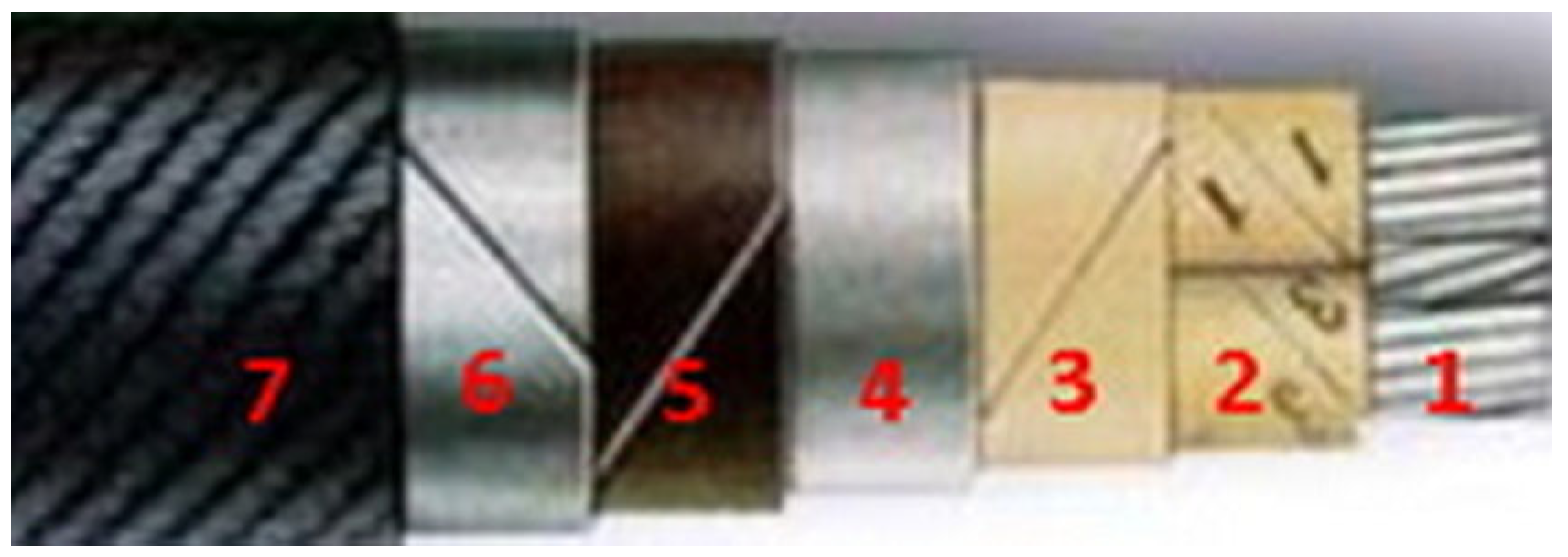
PILC cables have a multilayer structure composed of copper or aluminum conductors, oil-impregnated paper insulation, a lead sheath that provides both a grounded metallic barrier and protection against moisture ingress [
13], and additional outer protective layers such as bituminized paper, steel armor, and jute or PVC serving [
14]. The main structural parts of a PILC power cable are shown in
Figure 1. Conductors can be multi-core and made of copper or aluminum (part no. 1). The insulation is made by winding paper tape impregnated with oil, wax, and resin (parts no. 2 and no. 3). The lead shield (part no. 4) serves the ground purpose and prevents water ingress. The next layers are bituminized paper (part no. 5), steel armor tape or wires for mechanical protection (part no. 6), and bituminized jute (part no. 7). PVC can be used as a substitute for bituminized jute for better corrosion protection.
3. Defects and Failures
Defects or weak spots in the cable insulation system can originate during manufacturing or installation or may emerge throughout operation. In a broader sense, the cable defects can be divided into four categories:
Manufacturing defects:
Voids in the insulation, dielectric or metallic inclusions within the insulation, improper finishing of the metallic screen, semiconductive layers, etc.
Improper installation:
Incorrect laying of the cable (joints, terminations, and bending), exceeding the pulling force on the cable during installation, etc.
Improper application:
Miscalculation and incorrect calculation (lack of design and installation data). Wrong calculation of the following operating parameters: maximum current, short-circuit current calculation, voltage and overvoltage, load variations, ambient temperature, cable cooling conditions, etc.
External defects:
Mechanical and chemical damages, pest attacks, construction work, settlement of buildings or ground, etc.
Risk of abrupt failures in the late-life zone:
A significant portion of the PILC is in a regime where small changes in conditions (overloads, increased soil temperature, and higher moisture) can accelerate degradation and increase failure rates.
In a narrow sense, dominant aging mechanisms in PILC cables can be divided into the following categories:
Moisture ingress and degradation of the impregnation:
When moisture ingress occurs (lead sheath damage, corrosion, and poor sealing), paper insulation properties can change materially. Moisture transport and diffusion phenomena are especially critical because they directly affect dielectric strength and loss behavior.
Thermal aging (overloads and adverse thermal conditions):
Increased operating temperature accelerates the chemical degradation of cellulose (paper). Thermal aging is closely linked to load and local heat dissipation conditions.
Lead sheath degradation (corrosion and mechanical stress):
The lead sheath is an excellent moisture barrier, but it can corrode depending on soil chemistry and can be damaged mechanically, which increases the likelihood of moisture ingress and localized defects.
Electrical stress and partial discharges (PD):
For service-aged PILC cables, laboratory and field assessments commonly focus on PD patterns, the dissipation factor (tan δ), and dielectric strength as key degradation indicators.
Regardless of the aging mechanisms and how these defects occur, they all accelerate the degradation of the cable insulation system. The gradual formation of defects or the reduction in dielectric strength within the cable insulation system over time is referred to as aging. The aging process is influenced by various factors such as electrical, thermal, mechanical, and environmental stresses. Prolonged exposure to these stressors can lead to insulation degradation, increasing the likelihood of partial discharges, dielectric breakdown, or complete failure. Aging is a critical concern in the long-term reliability of power cables, making regular monitoring and condition assessment essential. The need for a comprehensive understanding of the aging mechanisms forces the development of predictive models for estimating the remaining useful life of cable insulation systems.
Modern 10 kV medium-voltage cables of the new generation are predominantly polymeric-insulated, screened cables, most commonly based on XLPE technology. XLPE medium-voltage cables are generally preferred over PILC because they are lighter and easier to install, are produced with a more standardized and consistent insulation system (including screen layers), and typically allow higher operating temperatures, which can support higher ampacity under suitable conditions. Unlike PILC, XLPE designs do not rely on paper impregnation and lead sheathing, reducing aging and maintenance issues.
4. Theoretical Considerations
The application of statistical models offers significant benefits in assessing the failure time and predicting the aging of power cables. Data-driven models enable the estimation of insulation degradation trends over time, even with limited failure data. The practical application of different distributions enables a more accurate probabilistic prediction of the remaining useful life. Statistical analysis improves risk-based maintenance planning, reducing unexpected outages and optimizing asset management. Additionally, these models help in identifying early signs of aging, allowing for timely interventions and improved cable system reliability.
4.1. From Constant-Voltage Endurance Tests to Step-Stress Life Prediction: Cumulative Damage Modeling for MV Cable Insulation
Constant-voltage (constant-stress) endurance testing has long been valued because it adheres to a core metrological principle: a stochastic quantity should be measured under a fixed, controlled stress so that the observed variability can be attributed primarily to the object under test rather than to changing test conditions. However, for medium-voltage cable insulation, this “gold standard” creates a practical contradiction—tests can last days (or longer), during which the specimen accumulates aging not only from its prior service history but also from the prolonged test duration itself, making the two effects difficult to separate in the final lifetime interpretation. As a result, researchers and engineers often adopt step-stress (step-up voltage) procedures as a pragmatic compromise that dramatically reduces the test time and cost while still producing statistically usable breakdown data for aging assessment and remaining-life estimation [
15,
16].
In a step-stress test, breakdown is expected and accepted as the terminal event, but the key methodological issue is that the applied voltage schedule actively shapes the cumulative damage process. Consequently, step-stress outcomes cannot be naively treated as if they were generated under constant voltage; the derived distribution functions (and their hazard properties) are not automatically interchangeable. This is precisely why step-stress testing must be paired with a theoretical reduction procedure—typically formulated as a cumulative exposure or cumulative damage model—to map the accelerated, voltage-ramped experiment back onto an equivalent constant-stress lifetime interpretation [
17,
18,
19,
20]. When the mapping is done correctly, the method preserves much of the decision value of constant-voltage testing (e.g., lifetime quantiles for risk-based decisions) while avoiding impractically long experiments [
17,
18,
19,
20].
Practical implementation of this concept requires careful selection of step-stress parameters (step heights, dwell times, and termination rules). If the voltage increments are too aggressive, the test becomes fast but may distort the inferred endurance relationship; if they are too conservative, time savings vanish. Parameter-selection methods have therefore been developed to enforce equivalence between step-stress and constant-stress results for key endurance descriptors, enabling the step-stress procedure to reproduce (within acceptable tolerance) the endurance behavior that would be observed under a constant-voltage test [
18]. In parallel, optimal step-stress planning under cumulative exposure modeling has been studied to support the accurate estimation of target lifetime percentiles without excessive waiting time, explicitly addressing the trade-off between statistical efficiency and practical test duration [
17]. For a broader accelerated degradation test design—where a degradation trajectory is observed and linked to lifetime quantiles—budget-constrained optimization frameworks further formalize how to choose sample sizes, measurement strategies, and stress schedules to minimize uncertainty in predicted lifetime metrics [
19].
When integrated into cable-condition assessment workflows, step-stress testing combined with cumulative damage reduction provides a realistic route to remaining-life estimation with a predefined probability quantile. Recent work demonstrates that such step-stress-based approaches can be coupled with physically motivated aging interpretations and statistical lifetime modeling to quantify how aging shifts breakdown behavior and reduces the expected life, particularly for polymeric (XLPE-type) insulation systems [
15,
16]. Overall, the combined methodology retains the conceptual rigor of constant-stress metrology at the modeling layer, while achieving the speed and cost advantages of step-up testing in the laboratory, making it suitable for practical insulation endurance assessment and aging prediction when constant-voltage testing is operationally infeasible [
15,
16,
17,
18,
19,
20].
4.2. Weibull Distribution—Theoretical Approach
The Weibull distribution [
21] is widely used in the lifetime modeling of power equipment. Therefore, it is convenient to predict aging and to assess the degradation of PILC cables [
22,
23,
24,
25]. It provides a flexible probabilistic framework for describing the time to failure of insulation systems. In the two-parameter form, the cumulative distribution function (CDF) of the time-to-failure variable t is given by (1):
where
is the scale parameter (characteristic life), and
is the shape parameter governing the failure rate behavior.
When there is a practical “threshold” before which failure is unlikely, that is, for insulation systems where failures are unlikely to occur near the beginning of the time axis, a threshold (location) parameter
can be introduced, leading to a Weibull distribution with three parameters (2):
If
, Equation (2) reduces to the two-parameter Weibull distribution defined by Equation (1). For practical parameter estimation, a linearized representation is commonly employed. Starting from Equation (2), the survival function is (3):
and taking the natural logarithm yields (4):
Multiplying by −1 and applying the logarithm once more gives the linear form used for Weibull plotting (5):
In many applications, the location parameter
is either assumed negligible compared to
, or it is not estimated explicitly when the available data do not support reliable identification. Under this common approximation, Equation (5) can be expressed in the simplified linear form (6):
where
and
.
The key benefit of Weibull analysis lies in its ability to provide reliable failure probability estimates, even when only sample sizes are available. For PILC cables, Weibull modeling enables the quantitative representation of insulation failure probability as a function of operating time based on observed breakdown data.
Compared with purely non-parametric approaches (e.g., Kaplan–Meier), Weibull offers a compact parametric form that supports extrapolation and PILC vs. XLPE comparisons; compared with purely physics-based aging laws (e.g., Arrhenius-only thermal models—when temperature is assumed to be the dominant aging driver) or black-box ML (deep neural network models), it provides a strong balance of interpretability, data efficiency, and actionable outputs.
4.3. The Analysis of Breakdown Time and Breakdown Voltage
The breakdown time of a cable insulation system is strongly dependent on the magnitude of the applied voltage. In some cases, insulation failure can progress so slowly that it takes decades to occur, a phenomenon known as aging [
26]. Consequently, based on the magnitude of the applied electric stress, cable isolation can be expected to provide a certain period of trouble-free operation. Research has shown that partial breakdown in dielectrics is not only time-dependent but also influenced by voltage and temperature [
27,
28]. The total breakdown time
tb varies with the applied voltage intensity increase (7)–(9). The so-called life expectancy characteristics are determined by plotting breakdown voltage against breakdown time
tb:
where
C is a constant dependent on insulation material (thickness) and electrode configuration, and
βt is the life expectancy characteristics exponent. According to the Weibull function (1), the distribution function of the breakdown voltage for constant breakdown time is given as follows (10):
If a constant-voltage test at voltage
up1 is considered and performed on
n test samples, then the
n values of the variable breakdown time are obtained (10). The empirical distribution function of the breakdown time obtained from the test can be described by a Weibull distribution (11):
As an analogy to Equation (1), the empirical distribution function of the breakdown voltage with a fixed breakdown time
tp1 can be determined. For the same breakdown probabilities, the equations are as follows Equations (12) and (13):
Assuming the exponent
r is valid for all quantiles (14):
where the ratio of the variables (15) is strictly correct if both variables, breakdown time and breakdown voltage, are Weibull-distributed:
The constant voltage test method presents a fundamental challenge: the experiment can last for days, during which the tested object ages twice, once due to normal operation and once due to the extended duration of the test itself. These two fundamentally different periods may have additive effects that are indistinguishable without abandoning the constant voltage test method. However, abandoning this method would also mean abandoning the “golden” rule of metrology: a measurable quantity, potentially containing stochastic effects, must be measured under constant stress, avoiding the mixing of two stochastic effects related to the measured quantity and the measurement method. To avoid this contradiction, the application of a step-voltage experimental procedure was adopted as a solution. Since all approximations and simplifications have been experimentally and stochastically validated, it is possible to estimate the remaining operation life with a predetermined probability quantile for the tested cable.
During testing with step-up voltage, electrical breakdown is an inevitable event. However, it should be emphasized that in such tests, the applied voltage influences the cumulative effects. Compared to constant-voltage testing, the step-up voltage method is faster and more cost-effective; nevertheless, the obtained results are dependent on the experimental parameters and cannot be directly applied for practical insulation characterization, i.e., for deriving lifetime distribution functions. Compared to constant voltage testing, the voltage increase method is faster and more cost-effective; however, the results obtained depend on the experimental parameters and cannot be directly applied for practical insulation condition assessment. The derivative functions obtained by constant voltage and increasing voltage have different properties, so they cannot be directly substituted for each other. As previously mentioned, the constant voltage test provides reliable data, but it is time-consuming, making it practically unusable in this specific case. Testing with increasing voltage is significantly more rational in terms of time and economy. Still, the obtained result can be partially inconsistent (since the test voltage affects the statistical distribution of the experiment). For this reason, a combined method is applied in practice, which involves carrying out the test with an increasing voltage and then reducing the obtained results to those that would be obtained by an experiment with a constant voltage using a theoretical–numerical procedure.
Deriving results from testing by applying a step-up voltage to the responding results obtained with a constant voltage is achieved by using the accumulation damage model. This approach significantly reduces testing time while still keeping the accuracy of the obtained results. Moreover, it provides a practical, improved method for assessing insulation endurance under accelerated conditions. In addition, the application of the accumulation damage model helps in estimating the expected lifetime of cables under real operational stresses.
The model is derived from the progressive and irreversible degradation of the solid dielectric structure and introduces the relative remaining life parameter
(16) for lifetime assessment. In the case of 10 kV PILC cables, insulation deterioration is typically cumulative, and accelerated testing is therefore commonly interpreted through cumulative damage concepts combined with inverse power-law voltage–time relationships. Such an approach provides a systematic basis for transforming breakdown data obtained under variable stress conditions (e.g., voltage increase testing) into equivalent constant-stress lifetime characteristics, thereby supporting residual life assessment and maintenance planning [
29]. Accordingly, the relative remaining life parameter is defined as (16):
where
denotes the duration of exposure to a given electrical stress level, and
represents the corresponding breakdown time under constant-voltage conditions at the same stress level (
). This formulation is consistent with cumulative aging concepts and probabilistic lifetime modeling approaches for insulation systems [
30].
Using the above definition, the breakdown time at a given stress level
can be expressed in terms of the relative remaining life parameter as (17):
where
is the lifetime exponent, and
is a constant determined by insulation material properties and system configuration [
30]. Based on this representation, an ordered pair
can be transformed to an equivalent pair
corresponding to a reference stress level
through (18):
This time-stress transformation provides the basis for reducing step-stress breakdown data to equivalent constant-stress lifetime characteristics [
31].
For a step-stress test in which the applied voltage is increased in a controlled manner, the breakdown time and breakdown voltage obtained under the variable-stress history can be converted into an equivalent constant-stress representation corresponding to the same probability quantile. In the case of a linear voltage increase starting from zero initial voltage, the equivalent constant-voltage breakdown time and breakdown voltage are given by Equations (19) and (20):
where
and
denote the stress level and the time to breakdown obtained from the voltage increase (step-stress) test, respectively. These expressions follow from cumulative damage formulations used in step-stress accelerated life testing and provide a practical basis for reducing variable-stress breakdown data to equivalent constant-stress lifetime characteristics [
31]. In situations where the test begins at a non-zero voltage level, the effective initial voltage associated with the consumed fraction of life may be expressed as (21):
The applicability of Equations (16)–(21) requires that the lifetime exponent
remains constant over the investigated stress range and that the dominant degradation mechanism does not change during the test. Under these assumptions, the step-stress results can be interpreted consistently within an inverse power-law voltage–time framework and combined with Weibull-based statistical evaluation for lifetime assessment [
30,
31].
5. Experiment
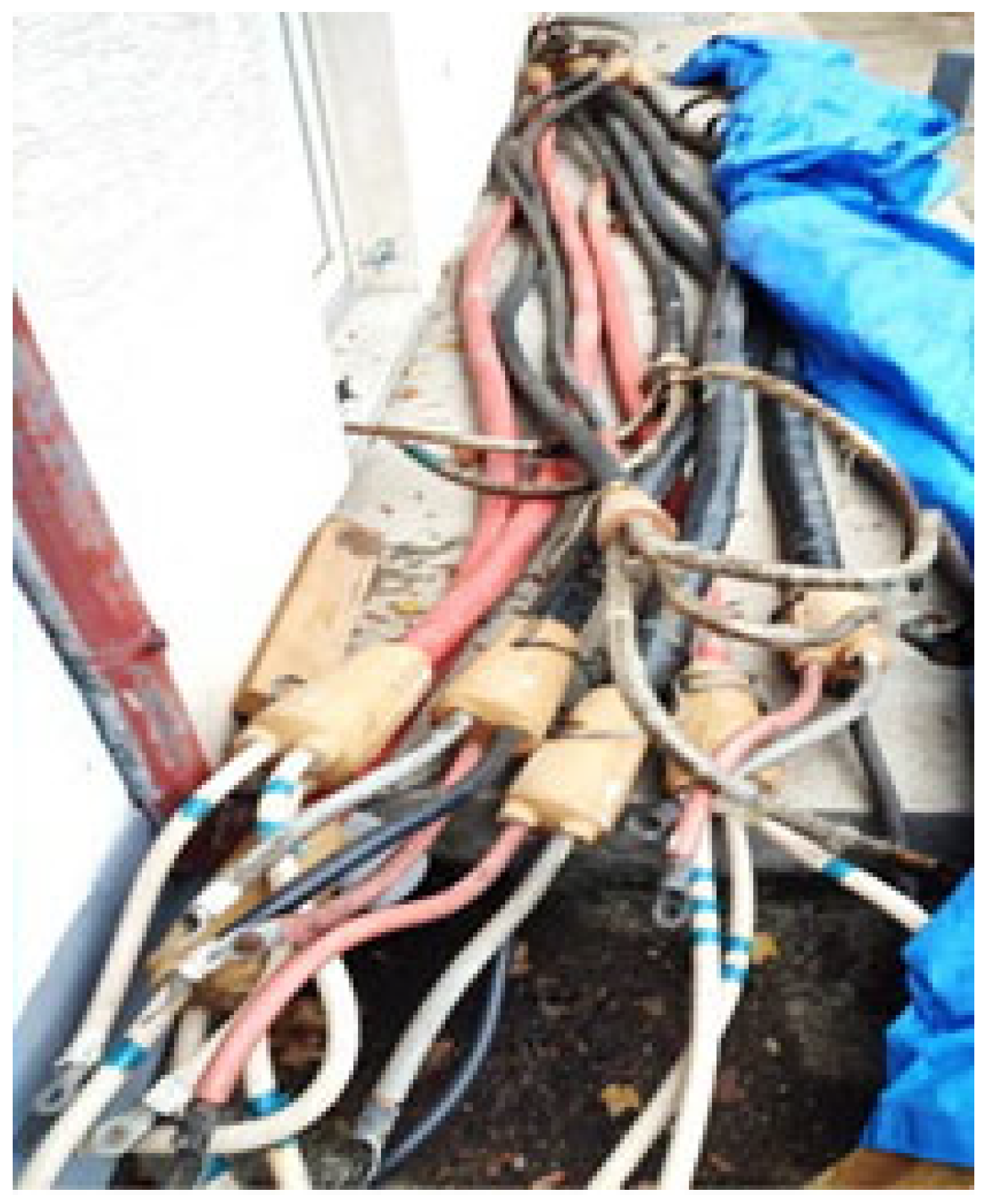
For the experiment, three-core HV cables with termination are used. Cable type is IPO 13 3 × 240 mm
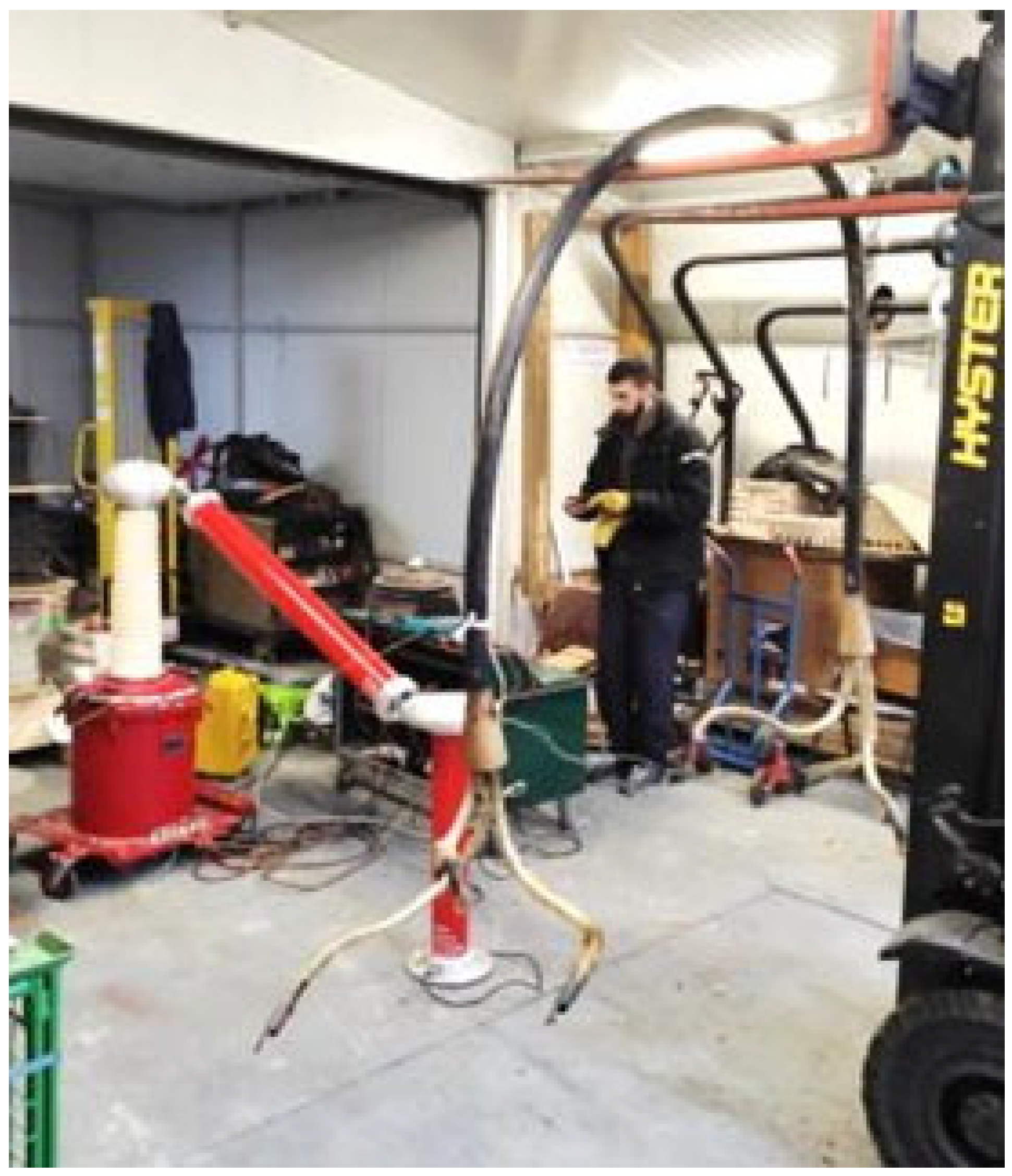
2, 10 kV. Testing was conducted on sets of used 3 × 12 long cables (20 years in use) and new 3 × 12 three-core cables, with one core energized while the other cores were grounded. Every sample was 3.5 m long with terminations on both ends (
Figure 2 and
Figure 3).
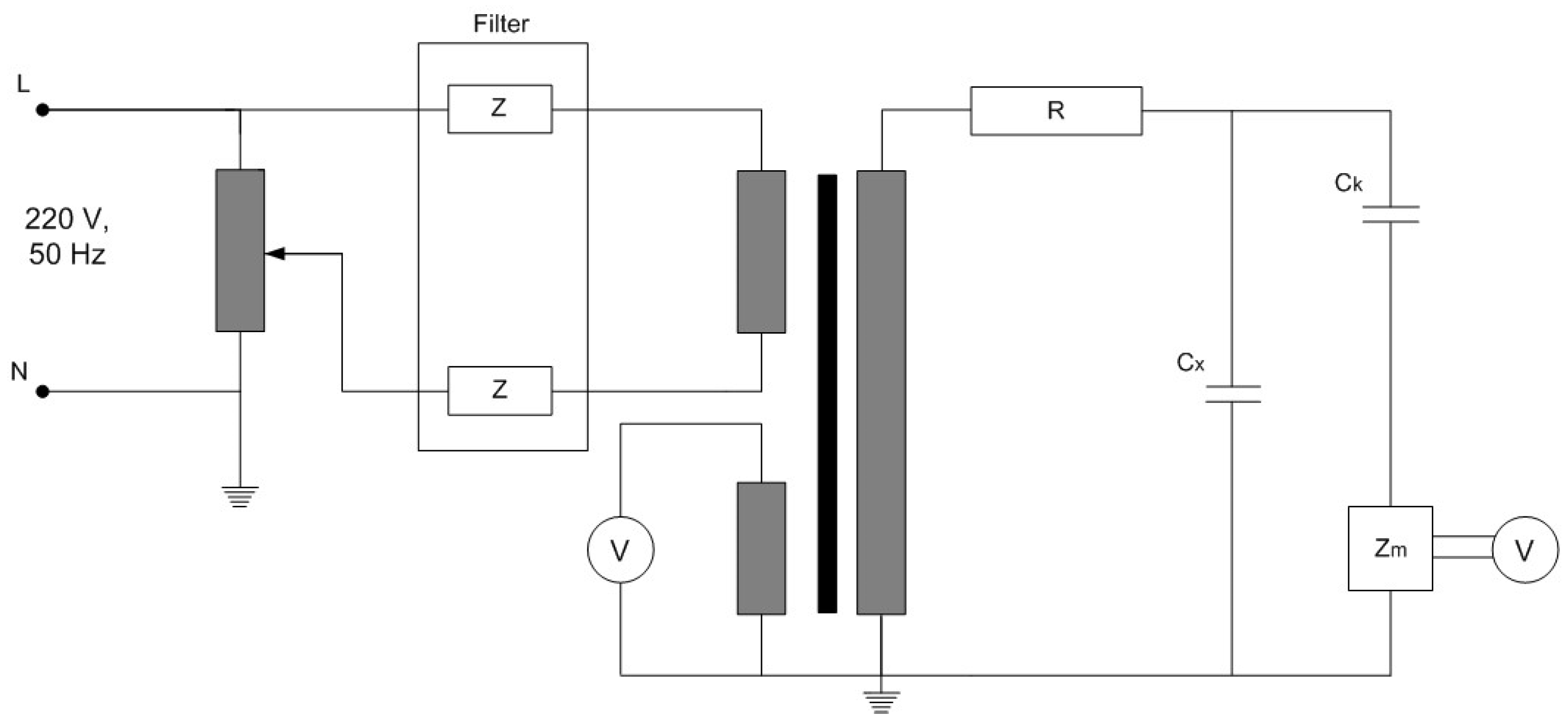
As mentioned above, both used and new samples are divided into three groups. The test duration of the first group lasted 5 min, the second lasted 15 min, and the third lasted 30 min. Starting voltage for used samples was 30 kV, and for new, 45 kV. Voltage ratio between two steps was q = 1.03 and the voltage increasing speed between two steps was 120 kV/min, which does not affect the cumulative testing time. The testing circuit diagram is shown in
Figure 4.
The test setup uses a low-voltage autotransformer rated at 0–400 V and 75 A, which, through a filter composed of inductors and resistors, supplies the secondary winding of the high-voltage transformer rated at 150 kV and 200 mA. The secondary winding steps up the voltage to the required test level for the cable under test, while the tertiary winding is used solely as a measurement winding. A protective resistor of 2 kΩ acts as a current limiter during testing. A coupling capacitor rated at 150 kV and 1 nF is incorporated to enable voltage measurement and to allow for possible partial discharge testing within the circuit.
To determine whether the used and new samples can be considered statistically identical, a U-test was conducted with an uncertainty level of 5% (
Table 1 and
Table 2).
The voltage reached immediately before breakdown represents the dielectric strength of the insulation system under given conditions, and the time to breakdown represents the “end of life” of the treated sample. A decrease in the dielectric strength of the cable insulation system below the required limit during service operation is considered the end of cable operating life. The experiment determines the dielectric strength at three different testing times, with the aim of extrapolating the results over a much longer period.
6. Results and Discussion
The presented method is a fusion of engineering and mathematical approaches. It is primarily designed for screening and risk-based asset decisions (e.g., replacement prioritization) using lifetime quantiles rather than a single deterministic value. In the narrow sense, the objective of this manuscript is not to build a full multi-factor “health index” model of insulation condition but to provide a probabilistic remaining-life characterization derived from accelerated breakdown testing and reduced to an equivalent constant-stress interpretation via cumulative-damage mapping.
To determine the statistical distribution to which the experimentally obtained random variables and the “breakdown voltage” belong, the samples were graphically tested for belonging to a normal distribution, three-parameter Weibull distribution, two-parameter Weibull distribution, and double exponential distribution, following standard lifetime analysis procedures [
20,
25,
31]. The initialization of random variables was determined by graphical test. The results of the graphical tests were verified by the chi-square test and the Kolmogorov test, which are used in insulation aging studies [
24,
30].
Based on the graphical evaluation, the breakdown voltage of both new and service-aged PILC cable samples, across all three test durations, is best described by a three-parameter Weibull distribution. Similar Weibull-based descriptions of breakdown behavior have been reported for cable insulation systems under electrical stress, both for PILC and polymeric insulation types [
1,
6,
15,
16]. In certain cases, a low-voltage additive component was observed, which may indicate localized insulation weaknesses and non-uniform aging, as previously discussed for pre-aged PILC samples in laboratory and field studies [
6,
11].
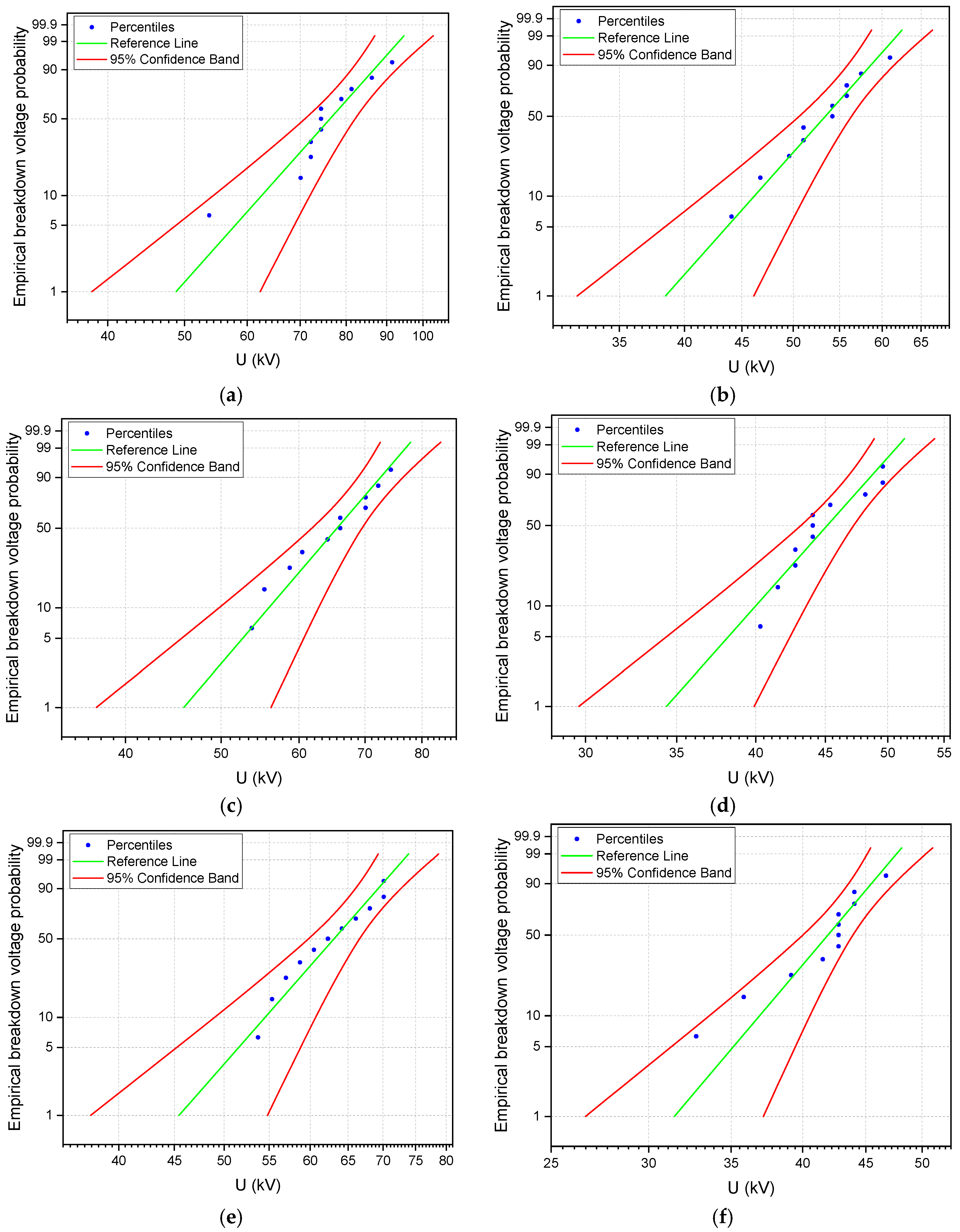
Figure 4 illustrates the Weibull distribution functions of breakdown voltage for all investigated test durations and aging conditions.
Figure 5a,
Figure 5c, and
Figure 5e correspond to new cable samples tested for 5, 15, and 30 min, respectively, while
Figure 5b,
Figure 5d, and
Figure 5f present the corresponding results for service-aged samples.
The observed linearity on Weibull probability paper confirms the applicability of the Weibull model for describing breakdown voltage behavior under step-stress conditions, in agreement with established lifetime modeling practice [
20,
25].
A three-parameter Weibull distribution was considered to account for the fact that the observed variable, representing the initial voltage, cannot take values below zero. Due to the small sample size, the model was fitted using a two-parameter Weibull distribution to obtain stable estimates of the shape β and scale η. The location parameter U0 was estimated graphically from the probability plot, reflecting the lower bound of the distribution.
The Weibull parameters were estimated using the Maximum Likelihood Estimation (MLE) method, while the validity of the fit was additionally evaluated using the least-squares sum criterion.
Table 3 presents the analysis of Weibull parameter estimates for all test durations for both used and new samples.
Table 4 shows the descriptive statistics for all test durations for both used and new samples.
Table 5 presents the goodness-of-fit tests, demonstrating that the experimental data for all samples and all test durations follow the Weibull distribution.
It is found that experimentally obtained statistical samples of the random variables breakdown voltage and breakdown time belong to the Weibull distribution (graphical view, using the modified Kolmogorov–Smirnov (K-S) test and Anderson–Darling (A-D) test).
The modified K-S test and the A-D test were chosen due to the small sample size (
n = 12 per group). Both are well-suited for limited datasets: the K-S modification accounts for parameter estimation from the sample, while the A-D test is particularly sensitive to the distribution tail. Despite the limited sample size, the consistent linearization of Weibull plots across different test durations and for both new and service-aged cable samples demonstrate sufficient statistical robustness for comparative lifetime assessment, which is the primary focus of this study [
18,
28].
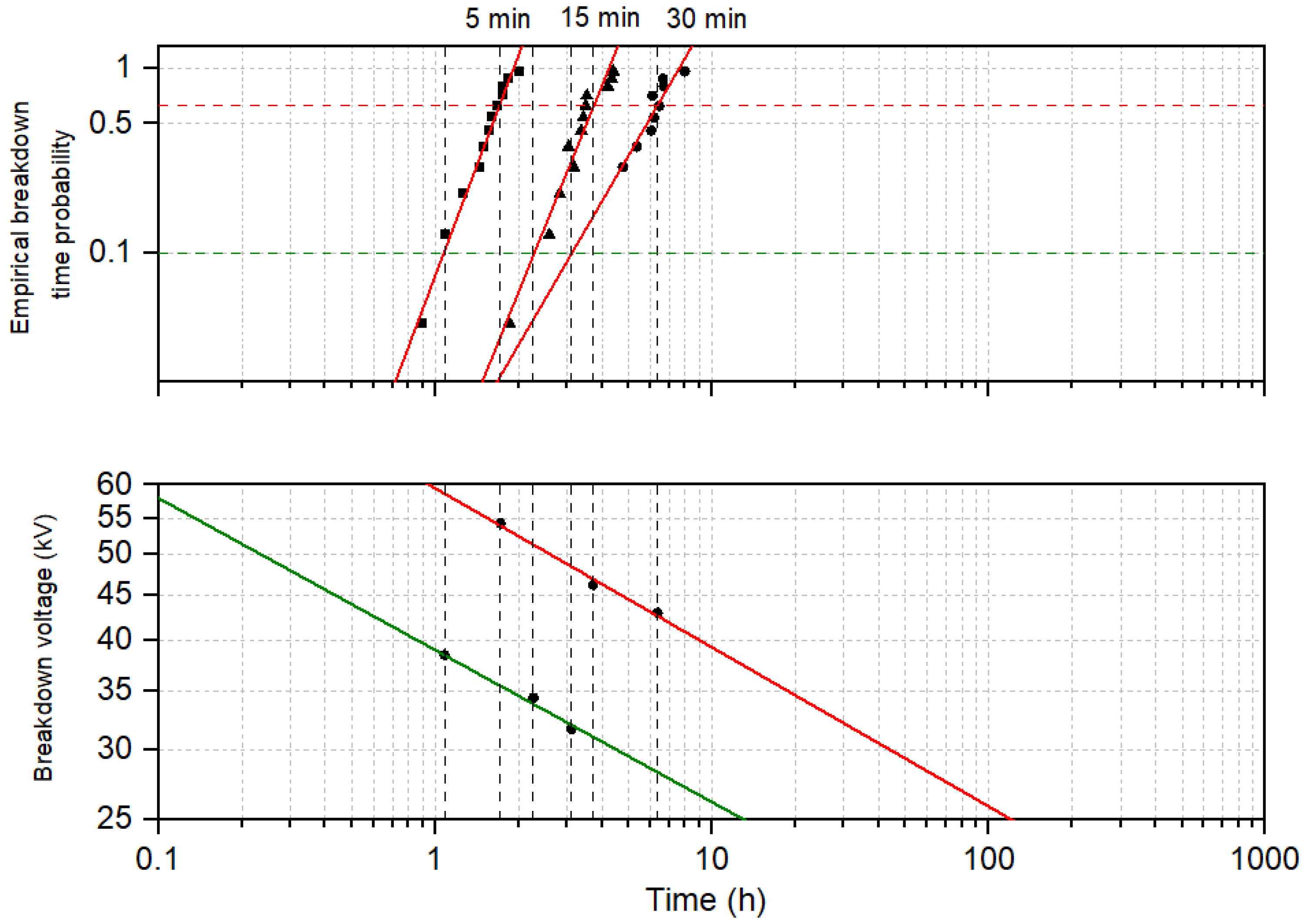
Figure 6 shows the distribution function of breakdown time (Weibull probability paper) and corresponding life characteristics for the 10% quantile (green dashed line) and 63.2% quantile (red dashed line) for the used samples.
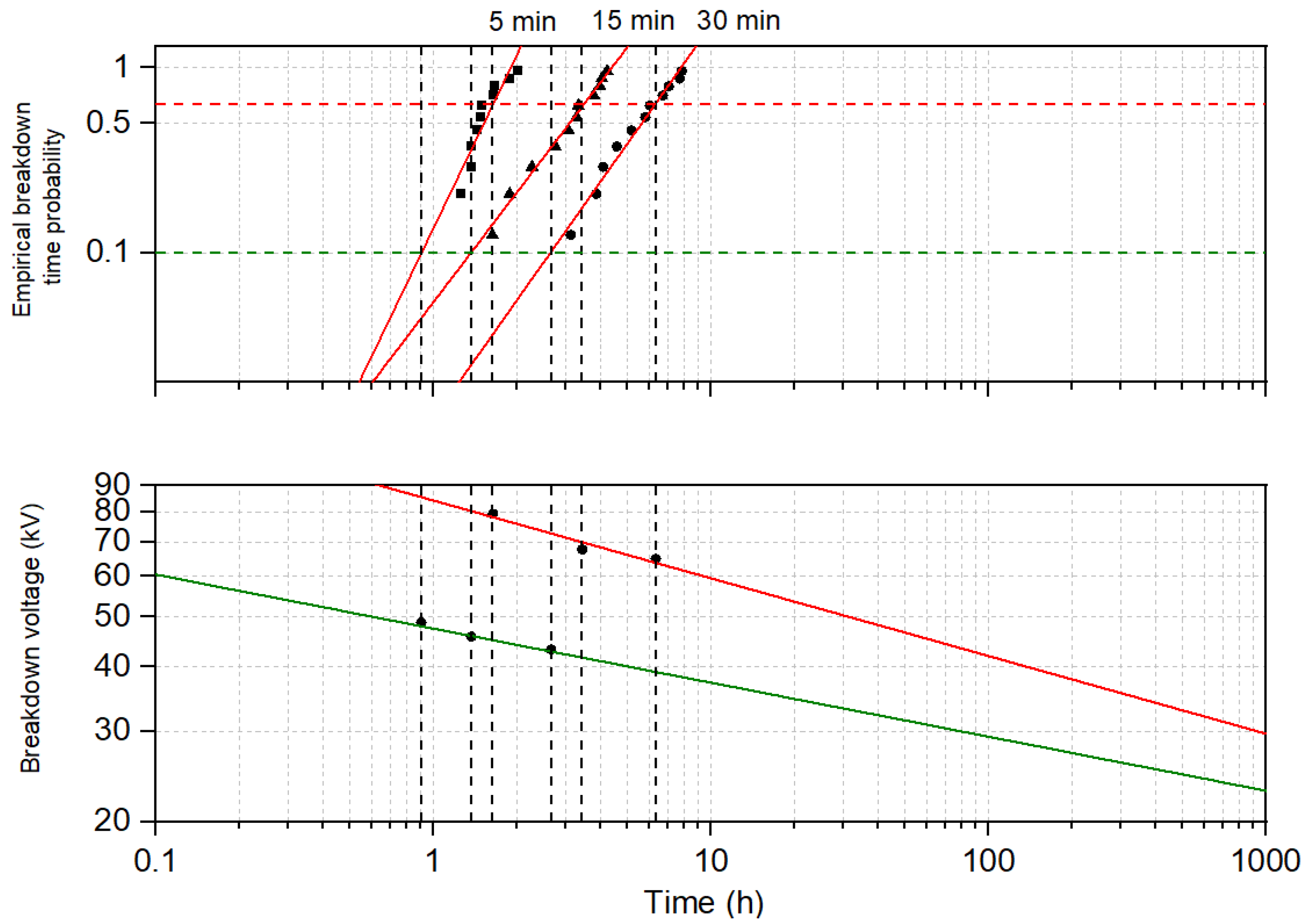
Figure 7 shows distribution function of breakdown time (Weibull probability paper) and corresponding life characteristics for the 10% quantile and 63.2% quantile for the new samples. The use of quantile-based life characteristics is consistent with risk-oriented lifetime assessment approaches, where lower quantiles are commonly used for conservative decision-making in asset management [
10,
12,
21].
The 10% quantile (often referred to as B10 life) is commonly used in reliability engineering as a conservative estimate of the product lifetime, representing the time by which 10% of the population is expected to fail. This provides a practical benchmark for warranty and maintenance planning. The 63.2% quantile corresponds to the characteristic life parameter of the Weibull distribution, which is the time at which approximately 63.2% of the population has failed. This quantile is fundamental in Weibull analysis, because it directly relates to the scale parameter of the distribution and serves as a central reference point for describing the overall lifetime behavior. Selecting these quantiles provides both a conservative lower-bound estimate (10%) and a statistically meaningful characteristic lifetime (63.2%), offering readers a comprehensive understanding of product reliability.
The lifetime exponents derived from the life characteristics shown in
Figure 6 and
Figure 7 are summarized in
Table 6. A clear distinction between new and service-aged PILC cable samples is observed, with systematically lower exponent values obtained for the aged cables. This reduction in the lifetime exponent reflects the cumulative impact of moisture ingress, impregnation degradation, and long-term operational stress, which are recognized as dominant aging mechanisms in PILC insulation systems [
1,
6,
11,
12]. Similar aging-induced reductions in endurance parameters have been reported in both the experimental and field-oriented studies of PILC cable networks [
1,
8,
12].
The proposed engineering methodology is simple to use, although it is based on complex mathematical calculations described in detail in the paper. This simplicity enables its effective application in basic testing and condition assessments of cable networks, providing a preliminary screening tool to identify which cables should be prioritized for replacement and which may safely remain in operation. Moreover, its practical value lies in its seamless integration with existing maintenance and asset management workflows [
10,
12], enabling power system operators to improve decision-making and extend the service life of critical infrastructure.
7. Conclusions
The outcomes of the present study enhance measurement methodologies and diagnostic techniques for high-voltage cable insulation systems, thereby advancing the accuracy of aging prediction and improving the reliability of condition assessment. This is particularly important when it comes to PILC cables, given that the current tendency is to replace them with newer PVC cables.
The application of the proposed step-up voltage testing methodology, combined with the transformation of voltage–time ordered pairs into their constant-voltage equivalents, enabled a substantial simplification of the experimental process. As a direct outcome, the method facilitated the derivation of statistically robust residual lifetime curves corresponding to specific probability quantiles within a realistic timeframe. This demonstrates that the approach not only preserves the reliability of the results but also makes the characterization of insulation aging more practical for real engineering applications. Furthermore, the reduced complexity and shortened testing duration underscore the suitability of this methodology for condition assessment and predictive diagnostics of high-voltage cable insulation systems, thereby enhancing its relevance in industrial practice, particularly in relation to old PILC cables and their need for replacement with new ones. The proposed methodology substantially simplifies the experimental procedure and shortens the testing time, while preserving the practical usefulness of the obtained lifetime estimates. With minor modifications, the proposed methodology can be further extended to other types of power equipment, including rotating machines, insulators, bushings, and related high-voltage components.
Author Contributions
Conceptualization, F.Z., S.D.M. and Đ.L.; Methodology, F.Z., S.D.M. and J.D.; Validation, F.Z., S.D.M., Đ.L. and J.D.; Formal analysis, F.Z., S.D.M., Đ.L. and J.D.; Investigation, F.Z., S.D.M., Đ.L. and J.D.; Resources, F.Z.; Data curation, F.Z.; Writing—original draft, F.Z.; Writing—review and editing, S.D.M., Đ.L. and J.D.; Visualization, F.Z., Đ.L. and J.D.; Supervision, S.D.M. and J.D.; Project administration, S.D.M. All authors have read and agreed to the published version of the manuscript.
Funding
This research received no external funding.
Data Availability Statement
The original contributions presented in this study are included in the article. Further inquiries can be directed to the corresponding author.
Acknowledgments
This work was supported in part by the Ministry of Science, Technological Development and Innovation of the Republic of Serbia under the Contract on the realization and financing of the scientific research work of Research and Innovation Organizations in 2025.
Conflicts of Interest
The authors declare that they have no known competing financial interests or personal relationships that could have appeared to influence the work reported in this paper.
References
- Zapf, M.; Blenk, T.; Müller, A.-C.; Pengg, H.; Mladenovic, I.; Weindl, C. Lifetime Assessment of PILC Cables with Regard to Thermal Aging Based on a Medium Voltage Distribution Network Benchmark and Representative Load Scenarios in the Course of the Expansion of Distributed Energy Resources. Energies 2021, 14, 494. [Google Scholar] [CrossRef]
- Tang, Y.; Li, S.; Lei, J.; Tang, M.; Wang, Y.; Tai, B. Reliability Evaluation of 10kV XLPE Cable Based on Fault Correlation Bayesian Network and Weibull Distribution Model. In Proceedings of the IEEE 4th International Conference on Electrical Materials and Power Equipment (ICEMPE) 2023, Shanghai, China, 7–10 May 2023. [Google Scholar] [CrossRef]
- Hernandey-Mejia, J.C.; Harley, R.; Hampton, N.; Hartlein, R. Characterization of Ageing for MV Power Cables Using Low Frequency Tan δ Diagnostic Measurements. IEEE Trans. Dielectr. Electr. Insul. 2009, 16, 3. [Google Scholar] [CrossRef]
- Hassan, W.; Shafiq, M.; Hussain, G.A.; Choudharz, M.; Palu, I. Investigating the progression of insulation degradation in power cable based on partial discharge measurements. Electr. Power Syst. Res. 2023, 221, 109452. [Google Scholar] [CrossRef]
- Yi, H.; Wang, X.; Suo, C.; Ghias, A.M.Y.M.; Gooi, H.B.; Wee, C.T. A Data Analytic Approach for Assessing XLPE Cable Insulation Condition via Resistance Measurements. IEEE Trans. Instrum. Meas. 2025, 74, 3528112. [Google Scholar] [CrossRef]
- Mladenovic, I.; Weindl, C. Determination of the environmental conditions for the accelerated ageing of MV-PILC cables. In Proceedings of the IEEE 9th International Conference on the Properties and Applications of Dielectric Materials, Harbin, China, 19–23 July 2009. [Google Scholar] [CrossRef]
- Verweij, R.; van Houwelingen, D.; Prein, A. Where to replace assets? Spatial analysis on differential ageing of low-voltage PILC cables. In Proceedings of the 24th International Conference & Exhibition on Electricity Distribution (CIRED), Session 5: Planning of Power Distribution Systems, Glasgow, UK, 12–15 June 2017. [Google Scholar] [CrossRef]
- Zarim, Z.A.A.; Anthony, T.M. Development of Remaining Life Estimation for MV PILC due to Electrical Stress Using Statistical Method. In Proceedings of the 2012 IEEE International Conference on Condition Monitoring and Diagnosis, Bali, Indonesia, 23–27 September 2012. [Google Scholar] [CrossRef]
- Müller, A.-C.; Weindl, C.; Linossier, J.P.; Schramm, J.; Benkert, L. Requirements of a system for the artificial ageing of paper insulated lead covered medium voltage cables. In Proceedings of the 2018 International Conference on Diagnostics in Electrical Engineering (Diagnostika), Pilsen, Czech Republic, 4–7 September 2018. [Google Scholar] [CrossRef]
- Balzer, G.; Schorn, C. Asset Management für Infrastrukturanlagen—Energie und Wasser, 3rd ed.; Springer Vieweg: Berlin, Germany, 2020. [Google Scholar] [CrossRef]
- Mladenovic, I.; Weindl, C. Development of the partial discharges inception voltage for different sets of pre-aged PILC cable samples. In Proceedings of the 2010 IEEE International Symposium on Electrical Insulation, San Diego, CA, USA, 6–9 June 2010. [Google Scholar] [CrossRef]
- Conseil International des Grands Réseaux Électriques. Remaining Life Management of Existing AC Underground Lines; Technical Brochures; CIGRÉ: Paris, Franch, 2008. [Google Scholar]
- Wang, M.; Rowland, S.M.; Clements, P.E. Moisture ingress into low voltage oil-impregnated-paper insulated distribution cables. IET Sci. Meas. Technol. 2007, 1, 276−283. [Google Scholar] [CrossRef]
- Zhou, C.; Yi, H.; Dong, X. Review of recent research towards power cable life cycle management. High Volt. 2017, 2, 179−187. [Google Scholar] [CrossRef]
- Shang, Y.; Qu, J.; Wang, J.; Chen, J.; Ma, J.; Xiong, J.; Li, Y.; Lv, Z. Estimation of Remaining Insulation Lifetime of Aged XLPE Cables with Step-Stress Method Based on Physical-Driven Model. Energies 2025, 18, 3179. [Google Scholar] [CrossRef]
- Li, Z.; Dong, Y.; Wu, Y.; Meng, Z.; Song, P.; Zhu, M.; Li, X.; Du, B. Breakdown Performance Evaluation and Lifetime Prediction of XLPE Insulation in HVAC Cables. Energies 2024, 17, 1337. [Google Scholar] [CrossRef]
- Alhadeed, A.A.; Yang, S.S. Optimal Simple Step-Stress Plan for Cumulative Exposure Model Using Log-Normal Distribution. IEEE Trans. Reliab. 2005, 54, 64–68. [Google Scholar] [CrossRef]
- Bian, H.-R.; Yang, L.-J.; Yao, R.-Y.; Ma, Z.-P.; Li, Z.-X.; Wang, X.-E.; Yuan, Y. Method of Selecting Step Stress Test Parameters for XLPE Insulation DC Voltage Endurance Coefficient. IEEE Trans. Dielectr. Electr. Insul. 2019, 26, 746–753. [Google Scholar] [CrossRef]
- Wang, H.; Wang, G.-J.; Duan, F.-J. Planning of Step-Stress Accelerated Degradation Test Based on the Inverse Gaussian Process. Reliab. Eng. Syst. Saf. 2016, 154, 97–105. [Google Scholar] [CrossRef]
- Mingotti, A.; Babaei, F.; Tinarelli, R.; Peretto, L. Medium-Voltage AC Cable Joints: A Review of Testing Methods, Standards, and Emerging Trends. Sens. Spec. Issue Diagn. Risk Anal. Electr. Syst. 2025, 25, 3843. [Google Scholar] [CrossRef] [PubMed]
- Nelson, W. Applied Life Data Analysis, Wiley Series in Probability and Statistics; Wiley: Hoboken, NJ, USA, 1982. [Google Scholar] [CrossRef]
- Peng, C.; Wang, Y.; Dai, S.; Yang, Q.; Liu, M.; Chen, H.; Wang, M.; Hu, Y. Insulation Characteristics of Dielectric Material for CD HTS Cable. IEEE Trans. Appl. Supercond. 2019, 29, 1–5. [Google Scholar] [CrossRef]
- Pi, W.; Yang, Q.; Wang, T.; Peng, C.; Wang, Y.; Shi, Q.; Dong, J. Insulation Design and Simulation for Three-phase Concentric High-temperature Superconducting Cable Under 10 kV Power System. IEEE Trans. Appl. Supercond. 2019, 29, 7700104. [Google Scholar] [CrossRef]
- Dong, M.; Nassif, A.B. Combining Modified Weibull Distribution Models for Power System Reliability Forecast. IEEE Trans. Power Syst. 2019, 34, 1610–1619. [Google Scholar] [CrossRef]
- Abernethy, R.B. The New Weibull Handbook, Reliability and Statistical Analysis for Predicting Life, Safety, Supportability, Risk, Cost and Warranty Claims, 5th ed.; Quanterion Solutions Incorporated: Utica, NY, USA, 2006; ISBN 0965306208. [Google Scholar]
- Huang, W.; Shao, C.; Dong, M.; Zhang, W.; Sun, Y.; Xie, K.; Li, W. Modeling the Aging-dependent Reliability of Transformers Considering the Individualized Aging Threshold and Lifetime. IEEE Trans. Power Deliv. 2022, 37, 4631–4645. [Google Scholar] [CrossRef]
- Massimo, M.; Giovanni, M. The Statistical Enlargement Law for HVDC Cable Lines Part 1: Theory and Application to the Enlargement in Length. IEEE Trans. Dielectr. Electr. Insul. 2015, 22, 192−201. [Google Scholar] [CrossRef]
- Arora, R.; Mosch, W. High Voltage and Electrical Insulation Engineering; John Wiley & Sons, Inc.: Hoboken, NJ, USA, 2011. [Google Scholar] [CrossRef]
- Dissado, L.A.; Fothergill, J.C. Electrical Degradation and Breakdown in Polymers; The Institution of Engineering and Technology: Hertfordshire, UK, 1992. [Google Scholar] [CrossRef]
- Montanari, G.C. Aging and Life Models for Insulation Systems Based on PD Detection. IEEE Trans. Dielectr. Electr. Insul. 1995, 2, 667–675. [Google Scholar] [CrossRef]
- Meeker, W.Q.; Escobar, L.A.; Pascual, F.G. Statistical Methods for Reliability Data, 2nd ed.; Wiley: Hoboken, NJ, USA, 2021; ISBN 978-1-118-11545-9. [Google Scholar]
| Disclaimer/Publisher’s Note: The statements, opinions and data contained in all publications are solely those of the individual author(s) and contributor(s) and not of MDPI and/or the editor(s). MDPI and/or the editor(s) disclaim responsibility for any injury to people or property resulting from any ideas, methods, instructions or products referred to in the content. |