1. Introduction
University mathematics courses, particularly calculus, are commonly taught at a uniform instructional pace. As class sizes increase, heterogeneous student backgrounds and learning progress become difficult to accommodate. Weaker students may fail to consolidate prerequisite concepts, while advanced learners receive insufficient challenge, gradually widening learning gaps. This issue is especially pronounced in calculus, where conceptual understanding is cumulative and interdependent. In large-class settings, instructors have difficulty examining students’ reasoning processes and providing timely, targeted guidance.
The central instructional difficulty is, therefore, not assigning scores but delivering formative feedback on open-ended solution processes. Classroom grading relies on verification of reasoning steps and identification of misconceptions, yet such process-oriented assessment is labor-intensive and difficult to implement consistently at scale.
From a technical perspective, two main challenges underlie this bottleneck.
Challenge 1: Balancing personalization and scalability in grading and feedback. Traditional automated grading systems rely on rule-based [
1], feature-based [
2], or similarity-based [
3] approaches. Although computationally efficient, these methods typically require extensive labeled data and mainly produce correctness judgments with limited diagnostic explanation [
4]. Large language models (LLMs) show potential for identifying misconceptions and generating explanations [
5,
6,
7], yet hallucinations and reasoning inconsistencies [
8] limit their reliability in instructional settings. Fluent explanations from a single LLM do not guarantee alignment with pedagogical grading criteria or stable reasoning verification.
Challenge 2: Disconnect between diagnostic assessment and instructional intervention. Existing recommendation methods, including rule-based [
9], collaborative filtering [
10], and deep learning approaches [
11,
12], often operate independently of grading diagnostics. As a result, automated assessment, feedback generation, and learning support are implemented as separate modules rather than as a coordinated instructional process. Existing systems, therefore, address only partial components of the instructional workflow. Grading systems provide scores but limited pedagogical explanation; tutoring or chatbot systems generate explanations but lack grading alignment; and recommendation systems suggest materials without grounding in diagnostic assessment. The absence of integration limits classroom usability, where instructors require coherent assessment–feedback–revision cycles.
To address these challenges, we present CalcTutor, a generative-AI-based instructional assessment support system. CalcTutor is organized around a formative feedback workflow integrating diagnostic grading, targeted instructional retrieval, and learner analytics. A multi-agent framework analyzes handwritten solution processes to identify conceptual difficulties rather than directly assigning scores. A Retrieval-Augmented Generation (RAG) pipeline links diagnosed difficulties to lecture notes, slides, and video materials. Real-time analytics dashboards support instructor interpretation and student self-reflection. The system is implemented using React Native and Django, integrates GPT-4o Mini for real-time processing, and has undergone end-to-end validation through authentic classroom pilot deployment. The system is designed for instructional support rather than instructor replacement, making reasoning-oriented feedback accessible in classes while preserving instructor judgement.
The main contributions of this work are as follows: (1) We propose a closed-loop formative feedback paradigm as an instructional support workflow, integrating grading, recommendation, and analytics into a coordinated assessment–feedback–revision process. (2) We design a multi-agent diagnostic grading mechanism and an RAG-based instructional linkage pipeline that organizes feedback around students’ solution processes rather than final answers alone. (3) We implement and validate a prototype system achieving 93.1% grading agreement on 1055 handwritten solutions and demonstrate its operational feasibility in real classroom use through pilot deployment and user feedback.
By structurally linking diagnosis, intervention, and feedback, CalcTutor establishes an operational instructional technology framework that can be incorporated into routine teaching practice. Undergraduate calculus is adopted as a representative instructional context to examine the operational feasibility of integrating assessment, feedback, and revision workflows in authentic classroom practice.
2. Related Work
2.1. Adaptive Learning and Automated Feedback
Adaptive learning platforms (ALPs) aim to provide personalized instructional support at scale and have demonstrated positive effects on engagement and learning outcomes across diverse educational contexts [
13,
14,
15,
16,
17]. However, most ALPs primarily adapt content sequencing or difficulty levels, while diagnostic feedback on open-ended problem solving remains limited in authentic classroom settings.
Automated grading systems (AGSs) provide the technical foundation for adaptive feedback [
18]. Classical AGSs rely on rule-based matching [
1], feature extraction [
2], or similarity scoring [
3]. Although efficient, these approaches often require large labeled datasets [
4,
19,
20,
21] and typically produce static correctness judgments rather than explanatory feedback.
Recent large language models (LLMs) enable analysis of open-ended solutions and generation of richer explanations [
5,
7,
22,
23,
24]. However, hallucinations and inconsistent reasoning [
8] limit their reliability in instructional grading. Multi-agent collaboration frameworks, such as AutoGen [
25], decompose reasoning tasks into coordinated roles, improving consistency and interpretability. Prior work, therefore, improves grading capability but typically treats grading as an isolated scoring or explanation module. In classroom instruction, grading must support diagnosis and subsequent intervention. CalcTutor adopts multi-agent diagnostic grading to enable this instructional function rather than to optimize scoring accuracy alone.
2.2. Personalized Recommendation and Instructional Retrieval
Personalized recommendation is another key component of adaptive learning. Rule-based systems offer transparency but limited adaptability [
9]. Collaborative filtering and deep sequence models [
10,
11,
12] improve personalization but suffer from cold-start and sparsity issues and are generally driven by historical interaction data rather than immediate learning needs.
Retrieval-Augmented Generation (RAG) grounds generated responses in external knowledge sources by retrieving relevant materials and conditioning generation on them [
26]. In educational settings, this enables support tied to instructional materials rather than generic explanations. Recent studies have also explored virtual student agents and learner modeling to simulate diverse learning behaviors [
27]. However, recommendation systems are typically independent of assessment systems and rely on predicted preferences or historical patterns rather than verified reasoning difficulties. CalcTutor links recommendation directly to diagnostic grading outcomes so that retrieved materials correspond to specific conceptual errors observed in students’ written solutions.
2.3. Learner Analytics and CalcTutor’s Positioning
Learner analytics dashboards visualize learning trajectories at the individual and cohort levels and support formative reflection. Existing dashboards emphasize monitoring and modular integration [
9], but they are often loosely coupled with grading and recommendation components, limiting their role in instructional adjustment. Beyond standard sequence models, graph-based encodings of temporal traces (e.g., visibility graphs) have been surveyed for time series prediction and classification and may be useful for modeling learner performance trajectories as part of future work [
28]. Across automated grading, recommendation, and analytics research, most prior systems study components independently. Grading evaluates correctness, recommendation selects materials, and analytics visualizes performance, whereas the instructional workflow connecting evaluation, feedback, and revision is rarely implemented as a unified process.
CalcTutor is positioned as an instructional support framework rather than a single intelligent module. By integrating multi-agent diagnostic grading, RAG-grounded recommendation, and learner analytics, the system forms a closed-loop assessment–feedback–revision cycle that supports student self-regulation and instructor instructional adjustment.
Table 1 summarizes representative approaches. Rather than introducing a new grading or recommendation algorithm alone, CalcTutor structurally combines these components to operationalize adaptive learning within routine classroom practice.
3. System Architecture
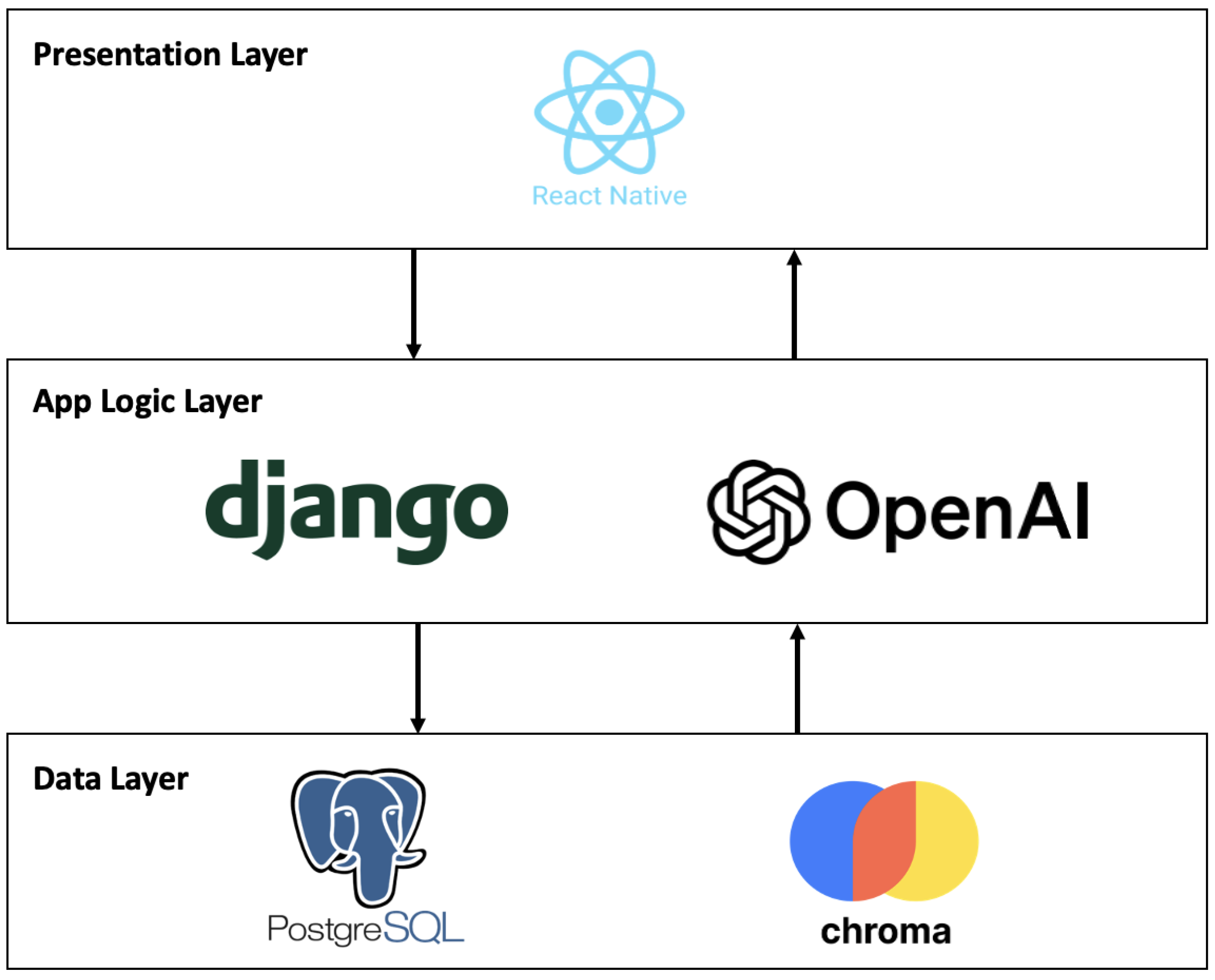
CalcTutor is implemented as an Android-based learning platform organized around a three-tier architecture comprising presentation, application logic, and data layers (
Figure 1). This structure follows the principle of separation of concerns [
29], improving modularity, maintainability, and scalability while enabling data flow across the grading, recommendation, and learner analytics components.
3.1. Presentation Layer
The presentation layer provides interfaces for students and instructors and is implemented with React Native to support cross-platform deployment and rapid updates. Students can access instructional materials, complete quizzes, and upload handwritten solutions via a built-in scanning function. The system is optimized for bandwidth-limited classroom environments to ensure timely feedback delivery.
In practice, students typically follow a “learn–attempt–diagnose–review” cycle: they study materials, submit responses, receive step-level feedback, and review recommended resources aligned with diagnosed difficulties. Students may also access a personal analytics page displaying their performance history and progress trends for self-monitoring.
The instructor interface supports course management and analytics. Instructors can organize teaching materials, monitor class performance, observe error distributions, and track learning progress. These summaries help identify common misconceptions and guide follow-up instruction (
Figure 2). Communication with backend services is handled through RESTful APIs, decoupling user interaction from processing modules.
3.2. Application Logic Layer
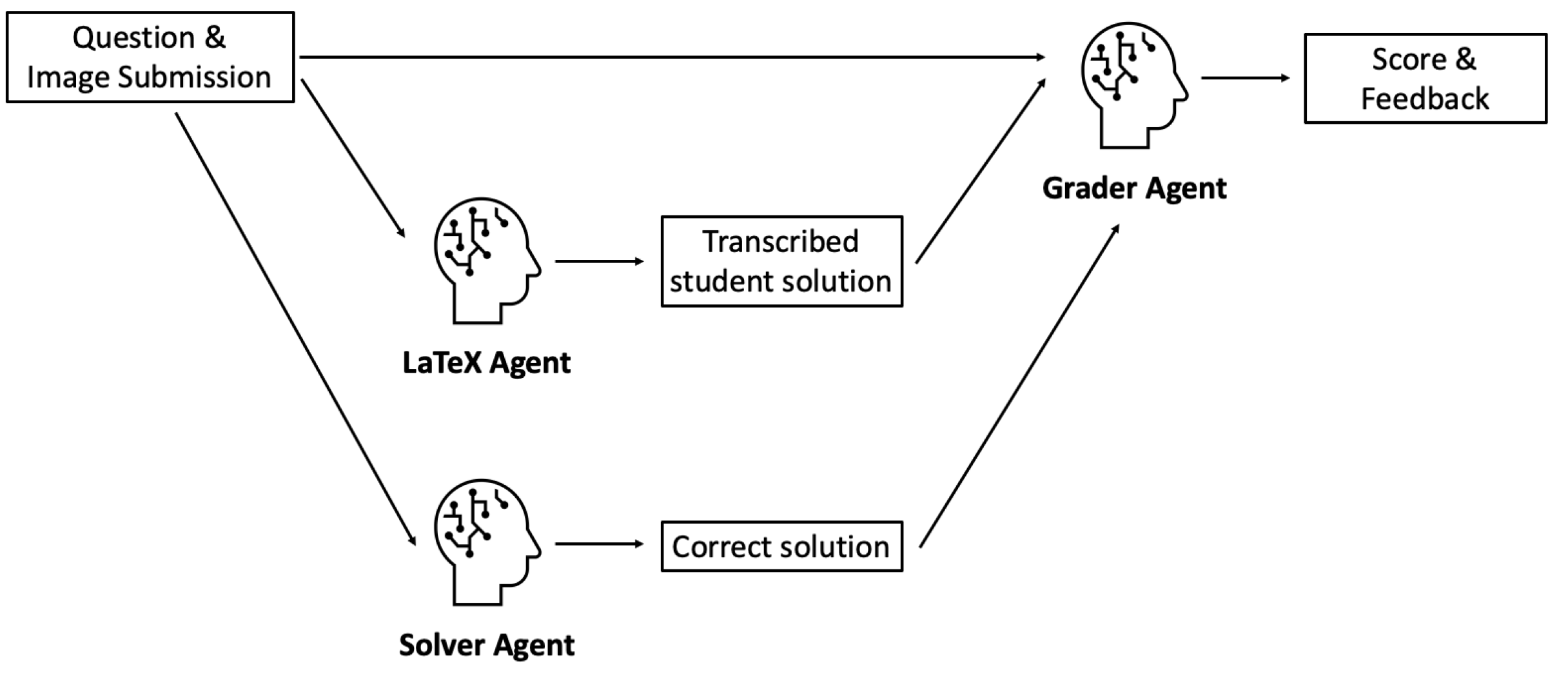
The application logic layer, implemented in Django (Python), serves as the system’s intelligent processing core. When a handwritten solution is submitted, a multi-agent grading pipeline built on AutoGen [
25] is triggered. The pipeline includes three stages: the LaTeX agent performs OCR transcription, the solver agent generates a step-by-step reference solution, and the grader agent compares the student solution with the reference under predefined rubrics to produce feedback. Agents are coordinated via a GroupChatManager to ensure consistent execution. GPT-4o Mini [
30] is used as the reasoning model for multimodal processing with a manageable computational cost.
By decomposing grading into expression interpretation, reasoning verification, and scoring decision stages, grading does not depend on a single generated response. Recognition or reasoning errors can be checked during subsequent comparison steps, improving reliability in instructional settings.
After grading, the system initiates a Retrieval-Augmented Generation (RAG) process that searches a curated knowledge base—including lecture notes, slides, and video transcripts—to generate targeted review recommendations. Interaction data, including grading outcomes and feedback histories, are aggregated and provided to instructor analytics dashboards. The modular design allows grading and recommendation components to be updated without restructuring the overall system.
3.3. Data Layer
The data layer manages both structured and unstructured data. User profiles, course metadata, and learning logs are stored in a PostgreSQL relational database to ensure consistency and transactional integrity. Instructional materials are embedded and stored in a Chroma vector database to support semantic retrieval for RAG recommendations [
31]. Separating transactional records from retrieval resources preserves persistent learner records while maintaining stable content retrieval.
3.4. Deployment and End-to-End Workflow
CalcTutor is deployed on Amazon Web Services (AWS). The backend runs on EC2 instances with autoscaling and monitoring via CloudWatch, while lecture media are delivered through S3 and CloudFront. Data transmissions use HTTPS encryption and anonymized access control for privacy protection.
The workflow proceeds as follows: students upload handwritten solutions through the interface, the backend performs multi-agent grading and diagnosis, the RAG pipeline retrieves relevant instructional materials and generates recommendations, and feedback is returned in real time. Meanwhile, interaction data are recorded and visualized for instructors, supporting instructional adjustment and follow-up exercises. Assessment outputs, therefore, serve both student revision and instructor decision-making, linking diagnosis, intervention, and follow-up assessment within a continuous instructional process.
4. GenAI Functionalities
To support scalable, interpretable, and pedagogically aligned personalization, CalcTutor integrates two complementary GenAI mechanisms: a multi-agent grading process and a Retrieval-Augmented Generation (RAG) pipeline for instructional guidance. Assessment is formulated as a staged workflow in which handwritten solutions are processed through notation interpretation, reasoning verification, and rubric-based feedback generation. The RAG module then links diagnostic outcomes to curriculum-aligned materials and returns actionable review guidance. These mechanisms support a closed-loop assessment–feedback–revision use pattern.
4.1. Multi-Agent Grading
CalcTutor adopts a multi-agent collaboration framework built on AutoGen [
25] to conduct rubric-based, process-oriented assessment of open-ended handwritten mathematical solutions rather than evaluating final answers alone. In mathematics instruction, grading primarily verifies reasoning processes and identifies misconceptions. A single LLM may generate fluent explanations, but it does not reliably adhere to step-based pedagogical grading criteria. Therefore, grading is modeled as a staged assessment workflow rather than a single inference step.
AutoGen enables structured multi-turn interaction among specialized agents [
32]. Accordingly, the grading procedure is implemented as a fixed evaluation pipeline (
Figure 3), improving stability and interpretability by separating perceptual interpretation, reasoning reference construction, and rubric-based judgement (full prompts in
Appendix A):
LaTeX Agent (interpretation stage). This agent uses GPT-4o Mini’s OCR to transcribe handwritten solutions into

and explicitly marks blanks and illegible symbols. Its role is restricted to expression interpretation, making perceptual uncertainty explicit rather than embedding it within grading decisions.
Solver Agent (reasoning reference stage). The agent generates a step-by-step reference solution for the given problem. This reference path serves as a semantic anchor so that grading is based on logical equivalence rather than surface symbol matching.
Grader Agent (evaluation and feedback stage). The agent applies a structured rubric to compare the student solution with the reference and produces personalized feedback. Scoring depends on the validity and completeness of reasoning steps; local transcription errors do not necessarily cause incorrect grading when the mathematical logic remains consistent.
All agents are orchestrated sequentially by a GroupChatManager, ensuring consistent information flow and reproducible outcomes. System reliability derives from the staged mechanism: grading decisions are grounded in reasoning consistency and rubric alignment rather than token-level recognition accuracy.
The data flow is formalized as:
where OCR performs transcription,
denotes the reasoning process for the input, and
represents rubric-based pedagogical evaluation.
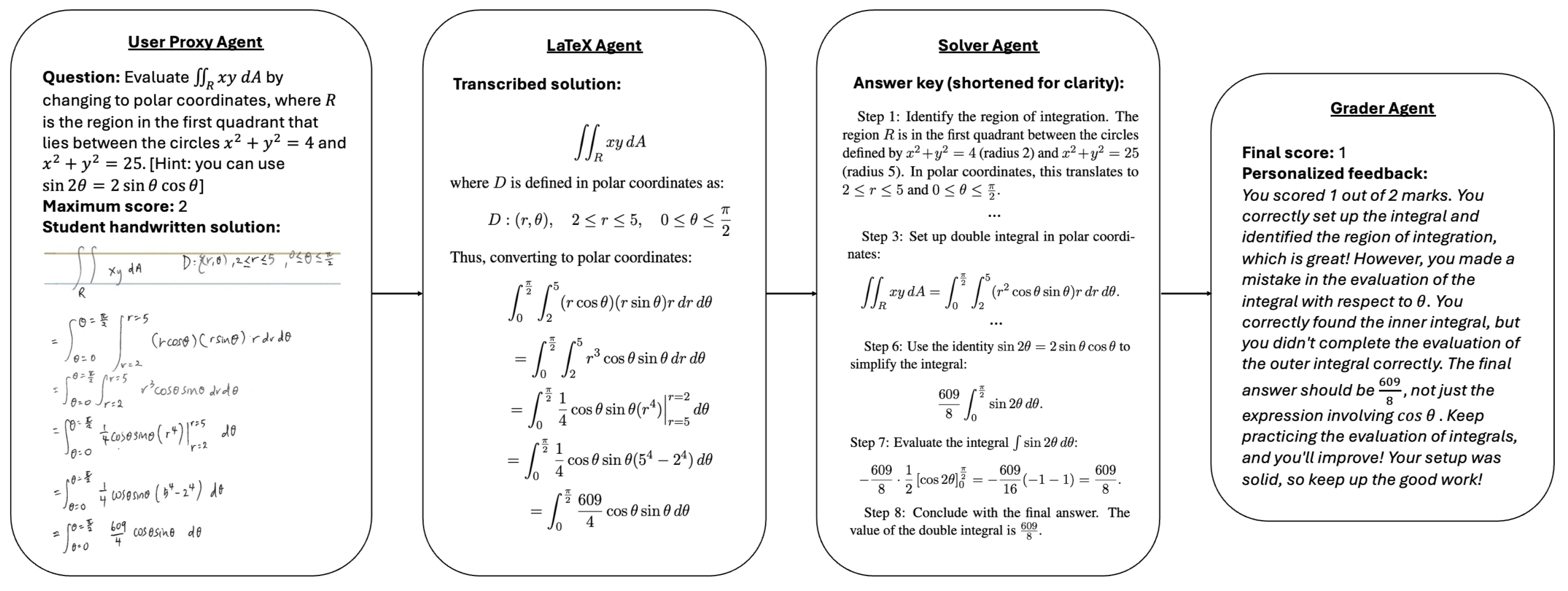
We adopt a process-oriented rubric consistent with classroom grading practice (
Figure 4). For
two-mark items, full credit requires both a correct method and a correct final answer; answer-only responses receive 0. Equivalent forms and alternative valid solution paths are accepted, and minor arithmetic slips are not penalized when reasoning is correct. For
one-mark items, full credit requires a correct answer accompanied by minimal working; answer-only responses receive 0.
Within the system, the rubric is embedded in the staged workflow: transcription structures expressions, the solver provides a reasoning reference, and the grader performs rubric-based judgement and feedback. Consequently, local symbol-recognition errors do not necessarily propagate into grading errors, as evaluation depends on logical consistency with the reference solution rather than surface token matching.
4.2. RAG-Based Personalized Learning Recommendations
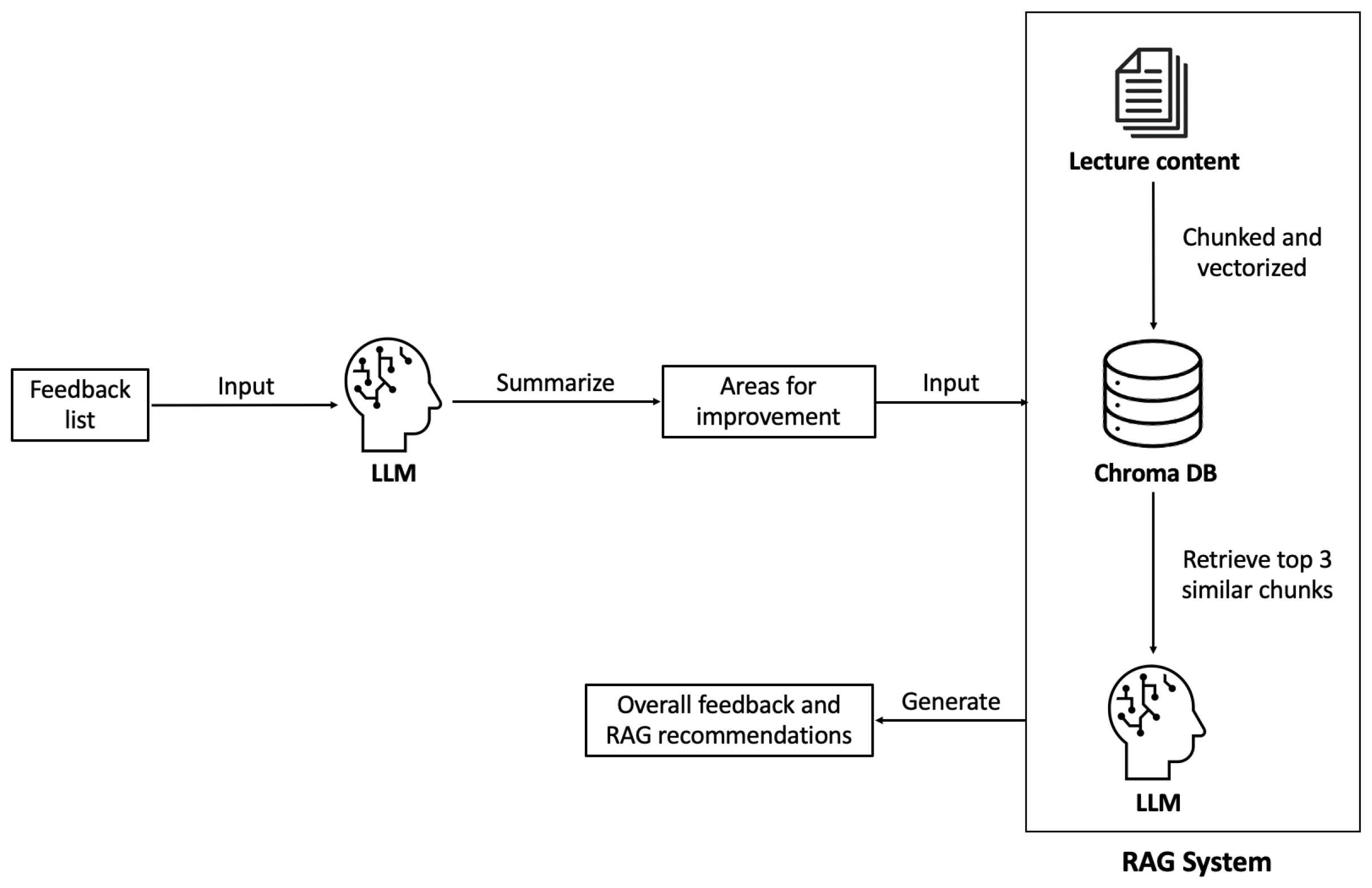
While automated grading can identify misconceptions, students often lack immediate access to instructional resources that address their specific weaknesses. The instructional challenge is, therefore, translating diagnostic results into actionable learning support. To bridge this diagnosis–intervention gap, CalcTutor employs Retrieval-Augmented Generation (RAG) to align grading feedback with course materials, generating diagnosis-driven review recommendations (
Figure 5).
The recommendation pipeline consists of three stages. First, the system aggregates grading feedback and uses an LLM to extract key weak areas, which are encoded as query vectors. Next, lecture notes, slides, and transcript texts (from video lectures) are segmented into semantically coherent chunks and embedded into a Chroma vector database. For each query vector
Q, cosine similarity is computed against document vectors
,
and the top
k most relevant chunks are retrieved. Finally, retrieved chunks and metadata (e.g., page numbers, slide indices, timestamps) are passed to an LLM, which generates a structured review summary and targeted revision guidance rather than general content recommendation.
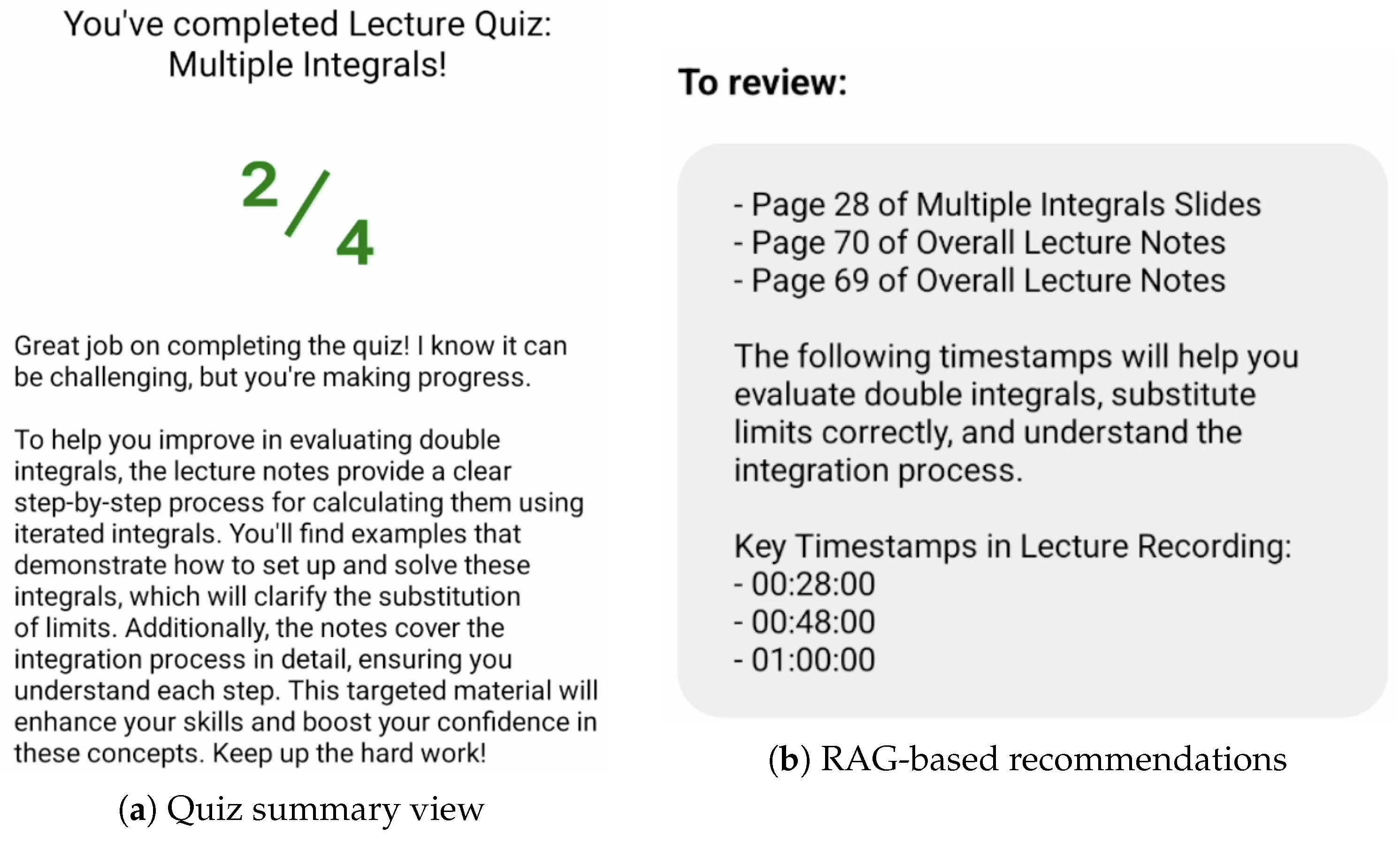
In classroom use, the system presents an overall performance summary and matched review resources after each quiz (
Figure 6). For example, for difficulties in double integrals, CalcTutor may recommend a lecture segment on Fubini’s Theorem, prerequisite note pages on single integrals, and pages introducing the framework for evaluating double integrals, diagnosing learners’ learning difficulties and directing them to the most relevant parts of the lecture slides and video lectures (for example), explaining why each part matters for their solution process.
By combining general-purpose LLMs with curated lecture content, CalcTutor supports a timely feedback–review loop that operationalizes an assessment–feedback–revision workflow. The RAG module is positioned as instructional support that enables learners to act on diagnostic feedback, rather than as direct evidence of improved learning outcomes.
5. Evaluation
To assess CalcTutor’s assessment reliability and instructional usability, we conducted two complementary studies: an offline evaluation using real handwritten student solutions and a pilot classroom deployment accompanied by user surveys. The offline study examines grading behavior by comparing system decisions with instructor grading on open-ended handwritten responses, whereas the pilot deployment evaluates whether feedback, recommendations, and analytics can be meaningfully interpreted and used in routine instructional activities.
Handwritten calculus solutions contain intermediate derivations and mathematical notation; accordingly, the task is framed as rubric-guided interpretive judgement rather than answer classification. Agreement with human grading is, therefore, adopted as the primary evaluation criterion, indicating whether the system follows reasoning-verification principles consistent with step-level classroom grading. The reported accuracy and F1-score represent decision consistency across diverse solution forms, notation variations, and handwriting noise, rather than classification performance.
The pilot deployment provides complementary instructional validation by examining whether students can revise their work based on feedback and whether instructors can monitor learning progress and adjust instruction through analytics. The two studies offer system-level validation: the offline evaluation verifies the reliability of the grading mechanism, and the classroom deployment demonstrates the operational feasibility of an assessment–feedback–revision workflow in authentic instructional settings.
5.1. Multi-Agent Grading Accuracy
5.1.1. Experimental Setup
We collected 1055 handwritten calculus solutions from actual university quizzes, covering 16 problems in partial differentiation, multiple integrals, and vector calculus. Each problem was labeled as a one-mark (
) or two-mark (
) item based on grading complexity. All responses were annotated by human instructors using the rubric defined in
Section 4.1, and subsequently graded by CalcTutor’s multi-agent pipeline.
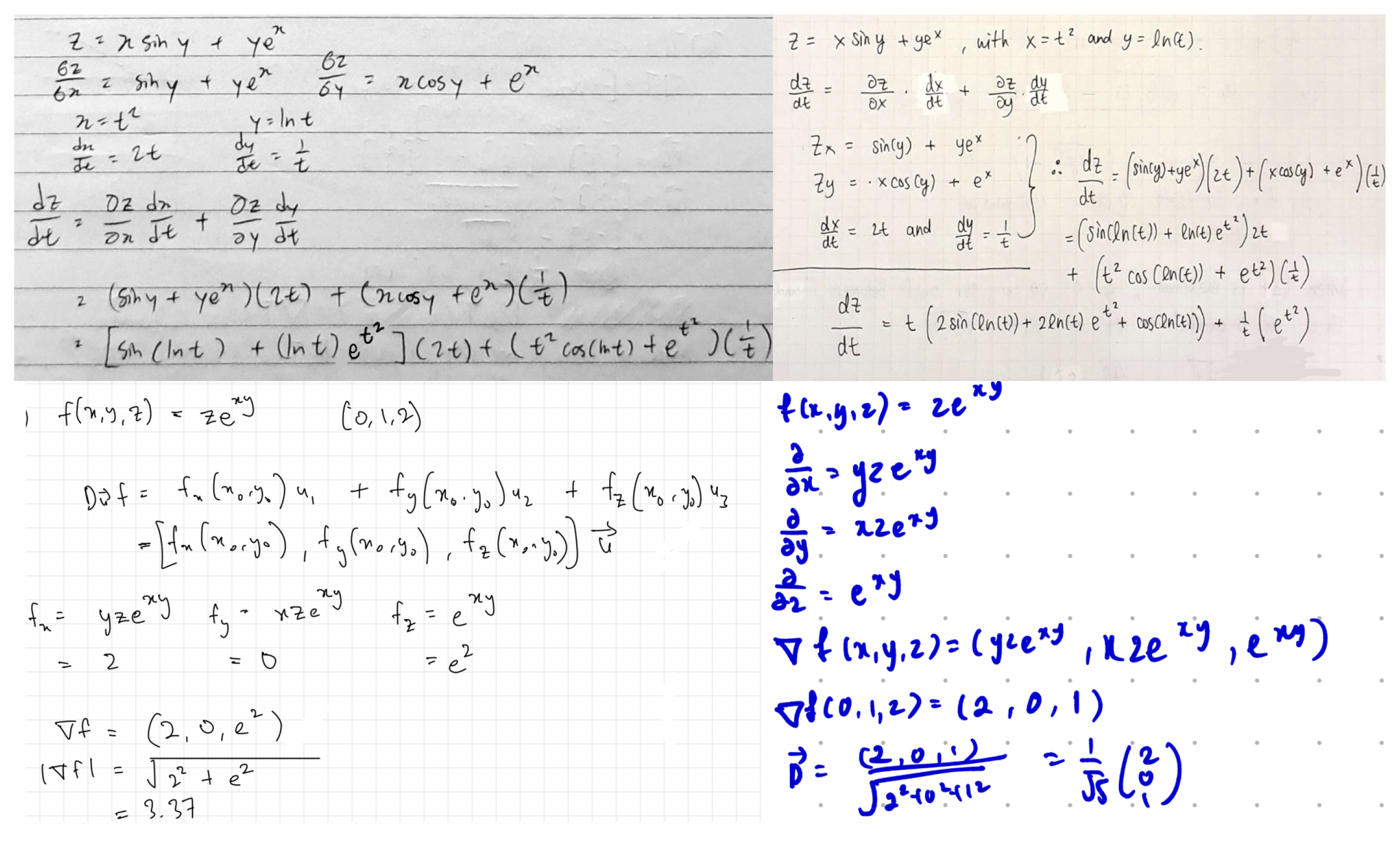
Figure 7 shows representative handwriting samples. Unlike standardized benchmarks, the dataset originates from routine classroom submissions and contains natural variation in layout, notation conventions, and image quality. This setting corresponds to the intended application scenario: open-ended handwritten solutions represent a common and challenging assessment form in mathematics teaching, requiring both visual interpretation and reasoning verification.
5.1.2. Overall Results
Table 2 reports grading outcomes compared with human annotations. CalcTutor achieved a weighted accuracy of
93.1% and a weighted F1-score of
93.4%. These values should be interpreted as agreement with instructor judgement rather than classification accuracy, indicating that the system reproduces step-based evaluation decisions across diverse handwritten solutions.
5.1.3. Category-Wise Analysis and Typical Errors
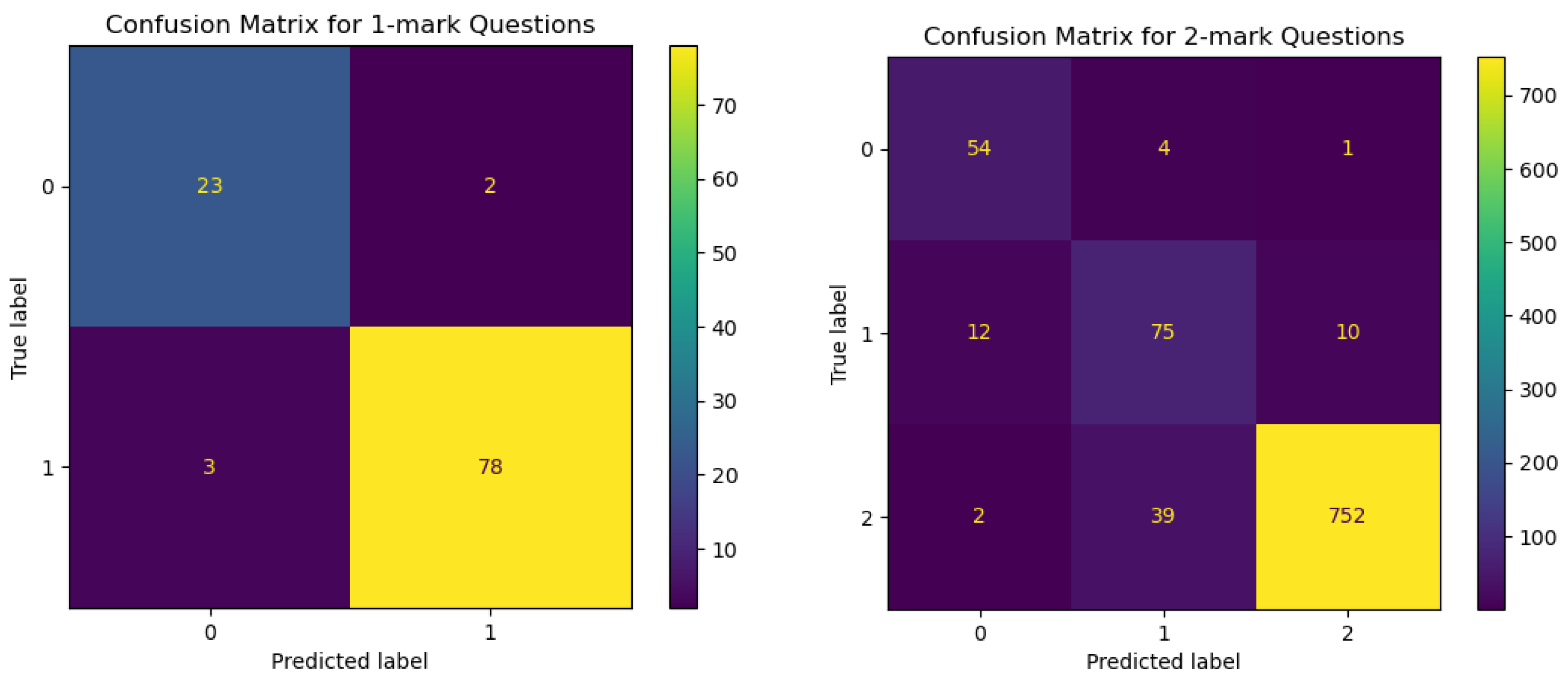
Figure 8 shows confusion matrices for one-mark and two-mark problems.
For one-mark problems, accuracy reached 0.953 with very few misclassifications. Most discrepancies occurred when students provided only a final answer without required working, where the system assigned full credit but the instructor label was 0. This behavior reflects reliance on observable solution evidence: in step-based grading, the presence of required reasoning steps is essential.
For two-mark problems, accuracy was 0.928 and F1-score 0.932. False negatives were more common than false positives, mainly due to (i) missing intermediate steps and (ii) OCR recognition errors (e.g., misread as ). When the submitted work did not support full reasoning verification, the system tended to deduct credit conservatively, reflecting a grading strategy based on reasoning-chain completeness rather than final-answer correctness alone.
5.1.4. Pedagogical Insights
Performance is more stable on one-mark problems, whereas two-mark items are more sensitive to missing steps and OCR errors. This reflects a property of open-ended mathematical assessment: grading depends on the verifiability of reasoning processes rather than solely on final answers. As scoring is determined by the validity and completeness of the observable reasoning chain, feedback can identify where a derivation becomes incomplete or inconsistent, supporting step-level diagnosis rather than correctness-only judgement. Future improvements will focus on enhancing mathematical OCR robustness and refining grader-agent prompting to reduce deductions caused by non-critical omissions while maintaining rigorous reasoning verification.
5.2. Pilot User Feedback
5.2.1. Deployment and Survey Setup
During CalcTutor’s closed beta testing on the Google Play Store, a pilot classroom deployment was conducted with 15 participants who had basic calculus knowledge. Participants freely explored system functions during normal use and evaluated usability and learning-support experience. Feedback was collected through a structured questionnaire (
Appendix B) adapted from the Technology Acceptance Model and the E-Learning Tool Evaluation rubric.
The questionnaire consisted of nine Likert-scale items (S1–S9). Items S1–S3 measured perceived usefulness in supporting the learning process, while S4–S9 evaluated operational experience, including grading behavior, feedback interpretability, learner analytics, and recommendation support (
Table 3).
5.2.2. Feedback Summary
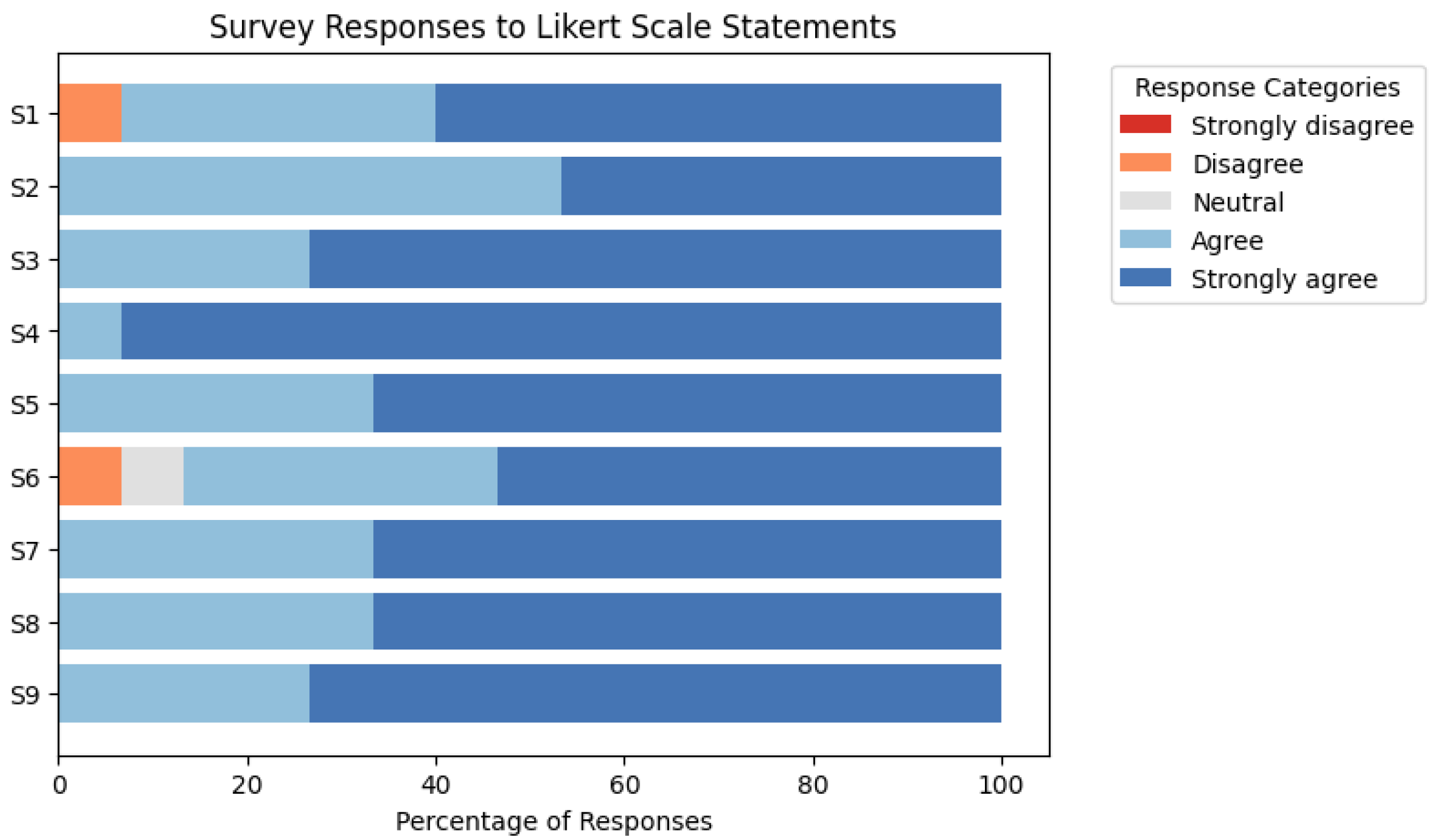
Multi-Agent Grading. As shown in
Figure 9, 93.3% of participants agreed that the grading results were consistent with their solution processes. Participants reported that step-level feedback helped them understand their reasoning. One user commented:
“I was genuinely impressed by how accurately the system assessed my work. The personalized feedback gave me real insight into my problem-solving process.”
A few cases involved symbol-recognition errors (e.g., a square root interpreted as ), leading to incorrect scores. This indicates that current limitations are primarily related to mathematical OCR rather than grading logic, and suggests directions for technical improvement.
RAG Recommendations. All participants reported that the recommendation module supported targeted review. Users noted that the system directly pointed them to relevant instructional materials, reducing time spent identifying mistakes.
“The targeted guidance reduced the time I spent figuring out my mistakes and directed me efficiently to the right content.”
Learner Analytics. In total, 86.7% of respondents agreed that analytics helped monitor progress. However, cohort-level statistics were interpreted differently across learners, with some perceiving pressure from comparison. This suggests that analytics should be framed as formative self-monitoring rather than ranking information.
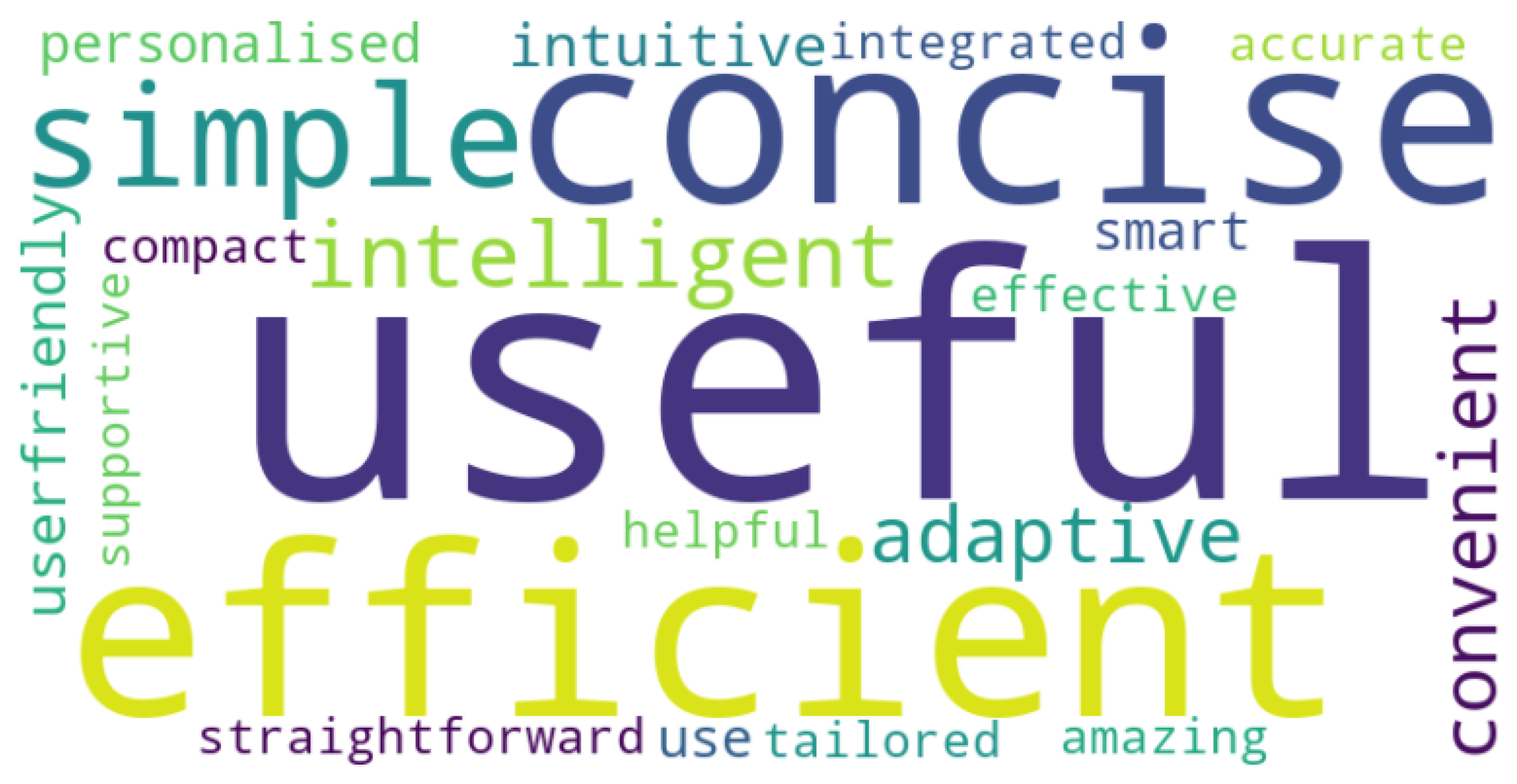
Overall Evaluation. Participants expressed generally positive attitudes toward the system and reported perceived improvement in understanding and confidence (self-reported perceptions rather than measured learning outcomes). In total, 93% found the interface user-friendly, and all participants indicated willingness to continue using the app. The word cloud in
Figure 10 highlights frequently mentioned attributes, such as clarity, usefulness, and efficiency. Suggested improvements included a handwriting canvas and clearer feedback presentation.
These results provide experience-level evidence: learners were generally able to interpret and use the feedback, while also identifying improvement directions including OCR robustness, feedback presentation, and analytics personalization. User responses further suggest an implication for analytics design. Learners used the dashboard primarily for monitoring their own progress, but cohort comparison was sometimes interpreted as social evaluation. In AI-assisted instruction, analytics is, therefore, more effective as metacognitive support rather than competitive ranking. Considered together with the offline grading agreement study, the observations reveal a functional instructional process: diagnostic grading identifies reasoning difficulties, recommendations support targeted review, and analytics supports progress monitoring and instructional adjustment. Therefore, the pilot evaluates classroom usability and operational feasibility rather than long-term learning outcome effects.
6. Conclusions
This paper presented CalcTutor, an adaptive learning platform for university calculus instruction that integrates multi-agent automated grading and retrieval-augmented recommendations into a coordinated assessment–feedback–revision workflow. Offline evaluation on 1055 real handwritten solutions achieved a grading agreement of 93.1% with human instructors, indicating that the system reproduces rubric-based human judgement rather than simple answer matching. The RAG module linked diagnostic outcomes to curated course materials to support targeted review during routine instructional use, and pilot observations showed that learners were able to interpret and act on the provided feedback. The primary contribution is, therefore, not a claim of improved learning outcomes, but the operational validation that a multi-agent LLM-based instructional pipeline can function in authentic classroom environments. The results demonstrate that automated assessment, interpretable feedback, and targeted review can be integrated into a deployable instructional support workflow. In addition, the platform serves as a research infrastructure for studying learning processes. Continuous recording of solution traces, diagnostic feedback, and interaction records makes instructional activities observable in authentic settings. Pre–post studies, controlled experiments, and longitudinal analyses of conceptual understanding and self-regulated learning will guide future work.
Author Contributions
Conceptualization, K.H.C.; methodology, L.Y.T., S.H., B.Z., A.M. and K.H.C.; software, L.Y.T., B.Z. and A.M.; validation, L.Y.T., B.Z., S.H., A.M., D.J.Y. and K.H.C.; formal analysis, L.Y.T., S.H., D.J.Y. and K.H.C.; investigation, L.Y.T., B.Z. and S.H.; resources, K.H.C.; data curation, L.Y.T., B.Z. and S.H.; writing—original draft preparation, L.Y.T., B.Z. and S.H.; writing—review and editing, L.Y.T., B.Z., S.H., A.M., D.J.Y. and K.H.C.; visualization, L.Y.T. and B.Z.; supervision, D.J.Y. and K.H.C.; project administration, K.H.C.; funding acquisition, K.H.C. All authors have read and agreed to the published version of the manuscript.
Funding
This research was funded by the Singapore Ministry of Education (MOE) Tertiary Education Research Fund (TRF) Grant No. MOE2022-TRF-029.
Institutional Review Board Statement
The study was approved by the Institutional Review Board (IRB) of Nanyang Technological University (protocol code IRB-2024-1001).
Informed Consent Statement
Informed consent was obtained from all subjects involved in the study.
Data Availability Statement
The original contributions presented in this study are included in the article. Further inquiries can be directed to the corresponding author.
Conflicts of Interest
The authors declare no conflicts of interest. The funders had no role in the design of the study; in the collection, analyses, or interpretation of data; in the writing of the manuscript; or in the decision to publish the results.
Appendix A. Details for Multi-Agent Workflow
| Parameters Defined for LaTeX Agent |
name = latex-transformer
agent_type = MultimodalConversableAgent
prompt = “‘You are an image-to-text transcription agent for math equations, specializing in transcribing student solutions into LaTeX. Your task is to faithfully and strictly transcribe *only* the student’s written solution into LaTeX, exactly as it appears in the image.
This includes all mathematical expressions, symbols, and any other text the student has included in their workings, even if the solution is incomplete, unconventional, or mathematically incorrect. Your goal is to create a precise LaTeX representation of the student’s work, not to evaluate or correct it.
Key guidelines:
Do not interpret, correct, or add any information beyond the transcription. Do not complete any missing steps, simplify or re-arrange the student’s work, or add any assumptions or context not explicitly written by the student. If any parts of the image are unreadable, represent them as “illegible”. Do not label it otherwise. If the student submitted a blank solution, represent it as “Student submitted a blank solution”. Even if the student’s solution seems wrong, or irrelevant to the question, just transcribe it as is. Use proper LaTeX syntax to transcribe the equations, ensuring mathematical expressions are well-formatted.
Your output must strictly follow this JSON format: {“student_solution”: “<transcribed_solution_in_LaTeX>”}”’ |
| Parameters Defined for Solver Agent |
name = solver
agent_type = AssistantAgent
prompt = “‘You are a meticulous expert at solving calculus problems. When given a calculus question, you must first analyze the problem thoroughly before giving a detailed, step-by-step solution using logical mathematical reasoning.
Make sure that your solution satisfies the question requirements fully. If the question requires you to prove a given result, ensure that your solution correctly lists out the steps to obtain the final derivation that matches the target expression exactly.
Guidelines for Formatting:
Use “Step 1:”, “Step 2:”, … to clearly outline each step. Explain each step concisely but thoroughly. Show intermediate calculations where necessary. Conclude with the final answer.
Your response should follow this structured JSON format strictly: {{“llm_solution”: “<step-by-step-solution>”}}.
Please replace <step-by-step-solution> with the full solution to the problem as a single string, with each step clearly numbered and described.
Your response MUST strictly conform to this format. Do not include any extra text outside the JSON structure.”’ |
| Parameters Defined for Grader Agent |
name = grader
agent_type = AssistantAgent
prompt = “‘You are a meticulous expert grader for calculus problems. Your task is to strictly evaluate a student’s solution (student_solution) based on a provided correct solution (llm_solution) for the specific calculus question. Your grading must adhere strictly to the following structured grading approach:Read and comprehend both the llm_solution and student_solution carefully. Before applying the rubric, perform a detailed comparison between the student_solution and the llm_solution.
Identify all steps taken by the student. Determine if each step is mathematically valid and leads logically toward the final answer found by llm_solution. Recognize that mathematically equivalent expressions, alternative solution methods, and different notation styles should not be penalized as long as they are correct. Note any true conceptual errors, calculation mistakes, or omissions that impact correctness. Summarize the key differences and similarities between the two solutions in your mind.
Apply the grading rubric to score the student_solution:
You will be given the maximum score for the question. If the maximum score is 2:
- –
(1 mark) Correct method: Award 1 mark if the student’s workings are roughly correct, regardless of minor mistakes. Alternative solution methods that are mathematically valid also earn this point. The student’s steps don’t need to precisely match the provided solution, as long as the underlying logic is correct. - –
(1 mark) Correct answer: Award 1 mark if the student’s final answer is mathematically equivalent to the correct solution’s final answer. Equivalence means the answers represent the same value, regardless of simplification. - –
In summary:
- *
If both the workings AND the final answer are correct, award 2 marks. - *
If both the workings and the final answer are incorrect, award 0 marks. - *
If the student simply states a solution without any working to substantiate it, award 0 marks. - *
If the student made a big conceptual error that indicates poor domain understanding, award 0 marks. - *
If the student made a small careless mistake that doesn’t affect the logic of his solution, don’t penalize him.
If the maximum score is 1:
- –
Award 1 mark if the student’s final answer matches the correct solution AND shows at least minimal working to substantiate his answer. Minor mistakes in calculations or notation can be overlooked. - –
Award 0 marks if either the student’s final answer is incorrect, or if the workings are wrong, or both.
Do not penalize or deduct marks for formatting mistakes. If there is any, then note them in the feedback but do not factor them into the final score. Do not comment on issues regarding LaTeX expressions or commands. Grade the student’s solution only based on the specific calculus question provided. Do not infer or grade based on unrelated content or assumptions beyond the scope of the given question.
Compare the student_solution with the llm_solution and generate concise feedback of up to 150 words:
Ensure the final response strictly follows this JSON format: {{“final_score”: <final_score>, “feedback”: <feedback>}}. Replace <final_score> with the numeric score (e.g., 2, 1, or 0). Replace <feedback> with the detailed and encouraging feedback text.
Your grading and feedback must always align with the specific question and the rubrics provided.”’ |
Appendix B. User Survey Questions
Data Collection
Usefulness
Please indicate your level of agreement with the statements below.
Using CalcTutor enhances the effectiveness of my calculus learning.
CalcTutor is advantageous to my learning.
Using CalcTutor improves my calculus performance.
Please give your reasoning for choosing the ratings above.
How well does CalcTutor help you engage with calculus problems that were previously difficult or complex?
It significantly enhances my ability to do so.
It has improved my ability to do so.
It feels like a direct substitute for other learning tools with no real change in engagement.
Does CalcTutor help you develop problem-solving and analytical skills (higher-order thinking skills) in calculus?
Yes, using CalcTutor easily facilitates me to think critically and apply such skills.
Somewhat, using CalcTutor may facilitate me to think critically.
No, using CalcTutor does not facilitate me to think critically and apply such skills.
Does CalcTutor help you track your learning progress and receive useful feedback?
Yes, I regularly receive feedback that helps me track performance and improvement.
Somewhat, I get feedback, but it is limited or infrequent.
No, I do not receive useful feedback to monitor my progress.
Ease of Use
System Performance
Intention to Use
Please indicate your level of agreement with the statements below.
Please enter two adjectives to describe CalcTutor (separated by a comma).
Do you have any suggestions or feedback to improve CalcTutor?
Note: The Likert-scale items reported in the main text (S1–S9) correspond to the statements listed under the “Usefulness” and “System Performance” sections below. Specifically, S1–S3 are derived from the usefulness statements evaluating learning effectiveness, and S4–S9 correspond to the system performance statements evaluating grading accuracy, feedback quality, learner analytics, and recommendation support.
References
- Štajduhar, I.; Mauša, G. Using string similarity metrics for automated grading of SQL statements. In Proceedings of the 2015 38th International Convention on Information and Communication Technology, Electronics and Microelectronics (MIPRO); IEEE: Piscataway, NJ, USA, 2015; pp. 1250–1255. [Google Scholar] [CrossRef] [Scilit]
- Rowtula, V.; Oota, S.R.; Jawahar, C.V. Towards Automated Evaluation of Handwritten Assessments. In Proceedings of the 2019 International Conference on Document Analysis and Recognition (ICDAR); IEEE: Piscataway, NJ, USA, 2019; pp. 426–433. [Google Scholar] [CrossRef] [Scilit]
- Baral, S.; Botelho, A.F.; Erickson, J.A.; Benachamardi, P.; Heffernan, N.T. Improving Automated Scoring of Student Open Responses in Mathematics. In Proceedings of the 14th International Conference on Educational Data Mining (EDM), Online, 2–29 July 2021. [Google Scholar]
- Lee, H.S.; Pallant, A.; Pryputniewicz, S.; Lord, T.; Mulholland, M.; Liu, O.L. Automated text scoring and real-time adjustable feedback: Supporting revision of scientific arguments involving uncertainty. Sci. Educ. 2019, 103, 590–622. [Google Scholar] [CrossRef] [Scilit]
- Qadir, J. Engineering Education in the Era of ChatGPT: Promise and Pitfalls of Generative AI for Education. In Proceedings of the 2023 IEEE Global Engineering Education Conference (EDUCON); IEEE: Piscataway, NJ, USA, 2023; pp. 1–9. [Google Scholar] [CrossRef] [Scilit]
- Ma, Y.; Li, X.; Hu, S.; Liu, S.; Cheong, K.H. Trustworthy AI in education: Framework, cases, and governance strategies. Innov. Emerg. Technol. 2025, 12, 2550026. [Google Scholar] [CrossRef] [Scilit]
- Poličar, P.G.; Špendl, M.; Curk, T.; Zupan, B. Automated Assignment Grading with Large Language Models: Insights from a Bioinformatics Course. arXiv 2025, arXiv:2501.14499. [Google Scholar] [CrossRef] [Scilit]
- Tobler, S. Smart grading: A generative AI-based tool for knowledge-grounded answer evaluation in educational assessments. MethodsX 2024, 12, 102531. [Google Scholar] [CrossRef] [Scilit]
- Troussas, C.; Krouska, A.; Sgouropoulou, C. A Novel Teaching Strategy Through Adaptive Learning Activities for Computer Programming. IEEE Trans. Educ. 2021, 64, 103–109. [Google Scholar] [CrossRef] [Scilit]
- Madani, Y.; Ezzikouri, H.; Erritali, M.; Hssina, B. Finding optimal pedagogical content in an adaptive e-learning platform using a new recommendation approach and reinforcement learning. J. Ambient. Intell. Humaniz. Comput. 2020, 11, 3921–3936. [Google Scholar] [CrossRef] [Scilit]
- Pardos, Z.A.; Tang, S.; Davis, D.; Le, C.V. Enabling Real-Time Adaptivity in MOOCs with a Personalized Next-Step Recommendation Framework. In Proceedings of the Fourth (2017) ACM Conference on Learning @ Scale, Cambridge, MA, USA, 20–21 April 2017; Association for Computing Machinery: New York, NY, USA, 2017; L@S ’17; pp. 23–32. [Google Scholar] [CrossRef] [Scilit]
- Saito, T.; Watanobe, Y. Learning Path Recommendation System for Programming Education Based on Neural Networks. Int. J. Distance Educ. Technol. 2020, 18, 36–64. [Google Scholar] [CrossRef] [Scilit]
- Tan, L.Y.; Hu, S.; Yeo, D.J.; Cheong, K.H. Artificial Intelligence-Enabled Adaptive Learning Platforms: A Review. Comput. Educ. Artif. Intell. 2025, 9, 100429. [Google Scholar] [CrossRef] [Scilit]
- Liu, M.; McKelroy, E.; Corliss, S.B.; Carrigan, J. Investigating the effect of an adaptive learning intervention on students’ learning. Educ. Technol. Res. Dev. 2017, 65, 1605–1625. [Google Scholar] [CrossRef] [Scilit]
- Xie, H.; Chu, H.C.; Hwang, G.J.; Wang, C.C. Trends and development in technology-enhanced adaptive/personalized learning: A systematic review of journal publications from 2007 to 2017. Comput. Educ. 2019, 140, 103599. [Google Scholar] [CrossRef] [Scilit]
- Orsi Koch Delgado, H.; de Azevedo Fay, A.; Sebastiany, M.J.; Cortina Silva, A.D. Artificial intelligence adaptive learning tools: The teaching of English in focus. Braz. Engl. Lang. Teach. J. 2020, 11, e38749. [Google Scholar] [CrossRef] [Scilit]
- Gligorea, I.; Cioca, M.; Oancea, R.; Gorski, A.T.; Gorski, H.; Tudorache, P. Adaptive Learning Using Artificial Intelligence in e-Learning: A Literature Review. Educ. Sci. 2023, 13, 1216. [Google Scholar] [CrossRef] [Scilit]
- Tan, L.Y.; Hu, S.; Yeo, D.J.; Cheong, K.H. A Comprehensive Review on Automated Grading Systems in STEM Using AI Techniques. Mathematics 2025, 13, 2828. [Google Scholar] [CrossRef] [Scilit]
- Valenti, S.; Neri, F.; Cucchiarelli, A. An Overview of Current Research on Automated Essay Grading. J. Inf. Technol. Educ. Res. 2003, 2, 319–330. [Google Scholar] [CrossRef] [Scilit]
- Anjum, G.; Choubey, J.; Kushwaha, S.; Patkar, V. AI in Education: Evaluating the Efficacy and Fairness of Automated Grading Systems. Int. J. Innov. Res. Sci. Eng. Technol. (IJIRSET) 2023, 12, 9043–9050. [Google Scholar] [CrossRef] [Scilit]
- Bond, M.; Khosravi, H.; De Laat, M.; Bergdahl, N.; Negrea, V.; Oxley, E.; Pham, P.; Chong, S.W.; Siemens, G. A meta systematic review of artificial intelligence in higher education: A call for increased ethics, collaboration, and rigour. Int. J. Educ. Technol. High. Educ. 2024, 21, 4. [Google Scholar] [CrossRef] [Scilit]
- Rawas, S. ChatGPT: Empowering lifelong learning in the digital age of higher education. Educ. Inf. Technol. 2024, 29, 6895–6908. [Google Scholar] [CrossRef] [Scilit]
- Wan, T.; Chen, Z. Exploring generative AI assisted feedback writing for students’ written responses to a physics conceptual question with prompt engineering and few-shot learning. Phys. Rev. Phys. Educ. Res. 2024, 20, 010152. [Google Scholar] [CrossRef] [Scilit]
- Baral, S.; Worden, E.; Lim, W.C.; Luo, Z.; Santorelli, C.; Gurung, A.; Heffernan, N. Automated Feedback in Math Education: A Comparative Analysis of LLMs for Open-Ended Responses. arXiv 2024, arXiv:2411.08910. [Google Scholar]
- Wu, Q.; Bansal, G.; Zhang, J.; Wu, Y.; Li, B.; Zhu, E.; Jiang, L.; Zhang, X.; Zhang, S.; Liu, J.; et al. AutoGen: Enabling Next-Gen LLM Applications via Multi-Agent Conversation. In Proceedings of the ICLR 2024 Workshop on Large Language Model (LLM) Agents, Vienna, Austria, 11 May 2024. [Google Scholar]
- Wu, S.; Xiong, Y.; Cui, Y.; Wu, H.; Chen, C.; Yuan, Y.; Huang, L.; Liu, X.; Kuo, T.W.; Guan, N.; et al. Retrieval-Augmented Generation for Natural Language Processing: A Survey. arXiv 2025, arXiv:2407.13193. [Google Scholar]
- Ma, Y.; Hu, S.; Li, X.; Wang, Y.; Chen, Y.; Liu, S.; Cheong, K.H. When LLMs Learn to be Students: The SOEI Framework for Modeling and Evaluating Virtual Student Agents in Educational Interaction. arXiv 2024, arXiv:2410.15701. [Google Scholar]
- Wen, T.; Chen, H.; Cheong, K.H. Visibility graph for time series prediction and image classification: A review. Nonlinear Dyn. 2022, 110, 2979–2999. [Google Scholar] [CrossRef] [Scilit] [PubMed]
- Richards, M. Software Architecture Patterns; O’Reilly Media, Inc.: Sebastopol, CA, USA, 2015. [Google Scholar]
- OpenAI. GPT-4o Mini: Advancing Cost-Efficient Intelligence. Available online: https://openai.com/index/gpt-4o-mini-advancing-cost-efficient-intelligence/ (accessed on 17 July 2024).
- Singh, P.N.; Talasila, S.; Banakar, S.V. Analyzing Embedding Models for Embedding Vectors in Vector Databases. In Proceedings of the 2023 IEEE International Conference on ICT in Business Industry & Government (ICTBIG); IEEE: Piscataway, NJ, USA, 2023; pp. 1–7. [Google Scholar] [CrossRef] [Scilit]
- Sun, Q.; Yin, Z.; Li, X.; Wu, Z.; Qiu, X.; Kong, L. Corex: Pushing the Boundaries of Complex Reasoning through Multi-Model Collaboration. arXiv 2024, arXiv:2310.00280. [Google Scholar] [CrossRef] [Scilit]
| Disclaimer/Publisher’s Note: The statements, opinions and data contained in all publications are solely those of the individual author(s) and contributor(s) and not of MDPI and/or the editor(s). MDPI and/or the editor(s) disclaim responsibility for any injury to people or property resulting from any ideas, methods, instructions or products referred to in the content. |




 ,
, 


 , solver, grader, and coordinator) collaborate via conversation programming to produce reliable scores and diagnostic feedback for handwritten solutions.