Article

An Integrated Numerical Model for a BBDB OWC Wave Energy Converter

1
College of Electromechanical Engineering, Qingdao University of Science and Technology, Qingdao 266061, China
2
School of Engineering, Computing and Mathematics, University of Plymouth, Plymouth PL4 8AA, UK
*
Author to whom correspondence should be addressed.
Mathematics 2026, 14(6), 959; https://doi.org/10.3390/math14060959
Submission received: 3 January 2026 / Revised: 2 March 2026 / Accepted: 9 March 2026 / Published: 12 March 2026
(This article belongs to the Special Issue Mathematical Modeling and Numerical Analysis in Fluid Dynamics)

Abstract

Examining the mechanism of two-way interaction between the air turbine and generator is essential for accurately predicting the performance of oscillating water column (OWC) devices. This study developed a fully integrated model for a back-bent duct buoy device, which incorporated the chamber, impulse turbine, permanent magnet synchronous generator, PI controller, and speed control strategies. The models of chamber–turbine and turbine-control systems were validated separately against wave-flume experimental results under regular and irregular wave conditions. In addition, a comparative study of two control strategies based on Best Efficiency Point Tracking was conducted by analysing key performance parameters at each energy conversion. The mechanism of two-way interaction between the turbine and the generator was elucidated. The integrated model demonstrated a great potential in predicting the conversion performance of wave energy to electrical energy under real sea conditions, as well as testing control strategies and algorithms before physical deployment.

1. Introduction

In recent years, countries all over the world have paid attention to the development and utilisation of marine renewable energy to deal with climate change and the land energy crisis. Among various technologies, the Oscillating Water Column (OWC) is currently the most widely applied and constructed device for wave energy conversion [1,2]. OWC devices are typically divided into shore-mounted fixed type and moored floating type. Several shore-mounted fixed devices have been constructed and tested, such as the LIMPET Plant in the United Kingdom, the Pico Plant in Portugal, the Mutriku Plant in Spain, and the Yongsoo Plant in South Korea [3,4]. By contrast, the moored floating type, which is less affected by geographical environment and can operate in deep water with sufficient flexibility and competitive economy, has become the most promising type for large-scale deployment of OWCs [5].
The OWC plant operates through a three-stage energy conversion process. Early studies have largely examined each stage as an independent component, overlooking the interactions between adjacent stages. Valuable achievements have been comprehensively summarised in several reviews of the literature [6,7,8]. With the progress towards engineering applications, breakthroughs are still required in conducting simultaneous studies on all components of the OWC plant to acquire real-time responses to actual wave conditions [9].
The concept of the three-stage energy conversion integrated model originated in the 1990s [10]. However, the early models were developed in a unidirectional energy transmission mode, limiting the accuracy in estimating electricity output. In recent years, various wave-to-wire models for the entire energy conversion process have been established for devices including shore-mounted fixed plants [11], buoy-type systems [12,13], and back-bent duct buoy (BBDB) devices [14]. These models typically employed stochastic process analysis to establish the relationship between wave spectra and average performance of OWC devices based on potential flow theory and turbine linear assumptions [15]. The chamber–turbine matching, turbine selection, turbine sizing, and turbine damping effects were investigated to maximise the overall efficiency of the power plant [16,17,18,19]. In addition, different turbine speed control strategies, based on Best Efficiency Point Tracking (BEPT), have been proposed and optimised, focusing on the determination of the reference rotational speed and the avoidance of stall phenomenon for Wells turbine [20,21,22,23]. A few studies addressed Maximum Power Pointing Tracking (MPPT) control strategies, such as reactive, latching, and model predictive control strategies [24,25,26]. Furthermore, advanced intelligent algorithms, such as Chebyshev Neural Network [27], Walrus optimisation algorithm [28], fuzzy control [29], and particle swarm optimisation algorithm [30], have also been successfully applied to overcome the limitations of traditional control methods when dealing with system nonlinearities and actuator disturbances.
Table A1 provided a review of the existing wave-to-wire OWC models. According to the limited review of the literature, current wave-to-wire models still face the problems of achieving actual communication between adjacent systems and a lack of lab-testing results of physical models or field-testing data of prototype plants for detailed validations. The primary contributions of this study can be summarised as follows: (1) a BBDB OWC wave-to-wire model was established for the purpose of exploring the two-way interaction mechanism between the turbine and the generator and evaluating the performance of a near-real-time BEPT control strategy; (2) lab test results were utilised to separately validate the chamber–turbine module and turbine–generator module; (3) a novel BETP-based speed control strategy was proposed utilising a pulse-type reference rotational speed to maximum the cycle-averaged turbine efficiency; and (4) time histories and statistical results of performance parameters for the three-stage conversion process were reported under regular and irregular wave conditions.

2. Numerical Model Set-Up

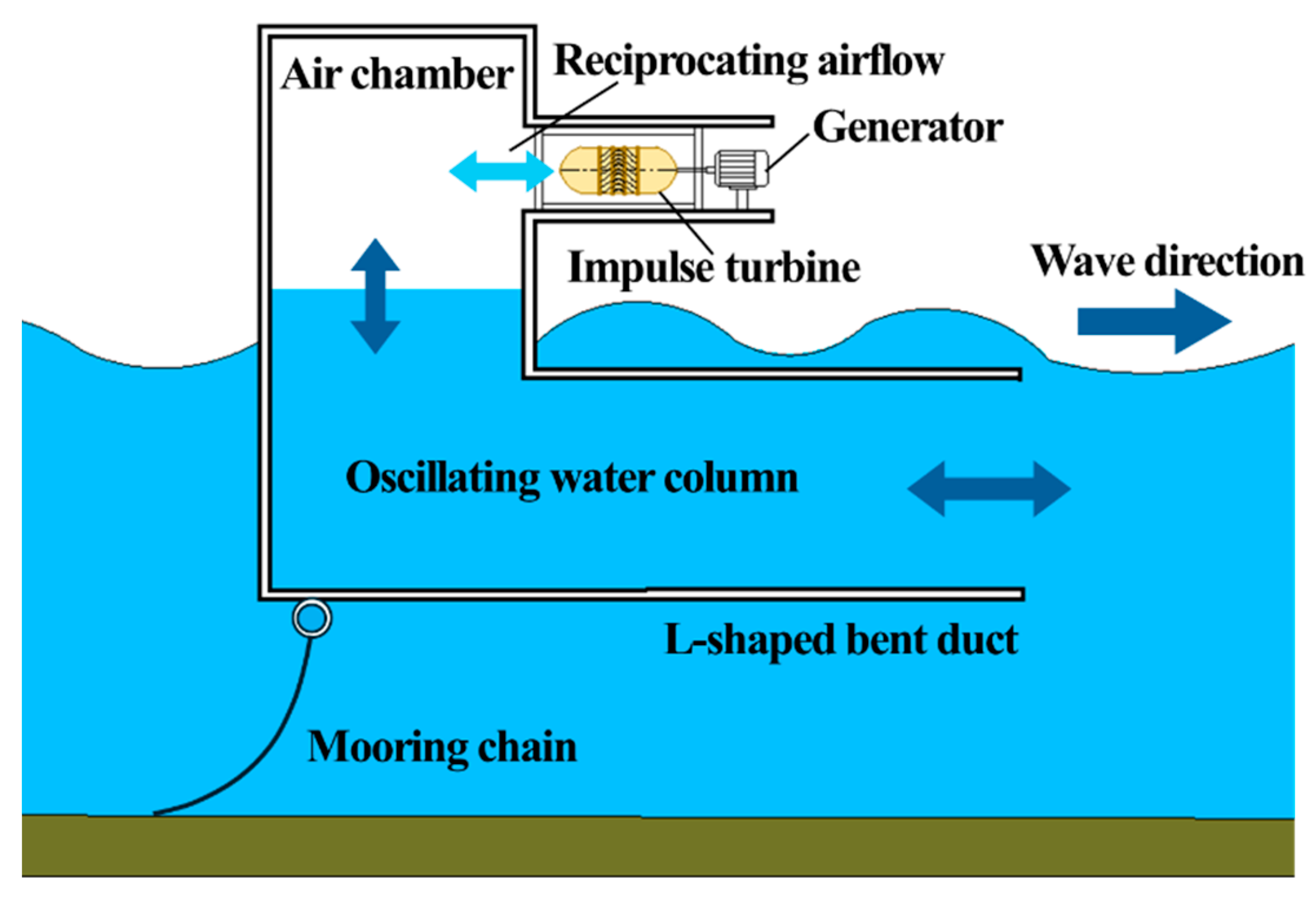
Figure 1 illustrates the principle of a BBDB OWC plant. It features a floating L-shaped bent duct, an air chamber, a self-rectifying air turbine, a generator, and a buoyancy module. The L-shaped bent duct is open to the sea beneath the water surface. The wave energy is captured by the surging, heaving, and pitching motion of the BBDB and the heaving motion of the water column inside the air chamber. Then, the air above the water’s free surface is driven to reciprocate through the air turbine. The turbine is then driven to rotate in the same direction, regardless of the airflow direction, converting pneumatic power into electrical power through a generator.
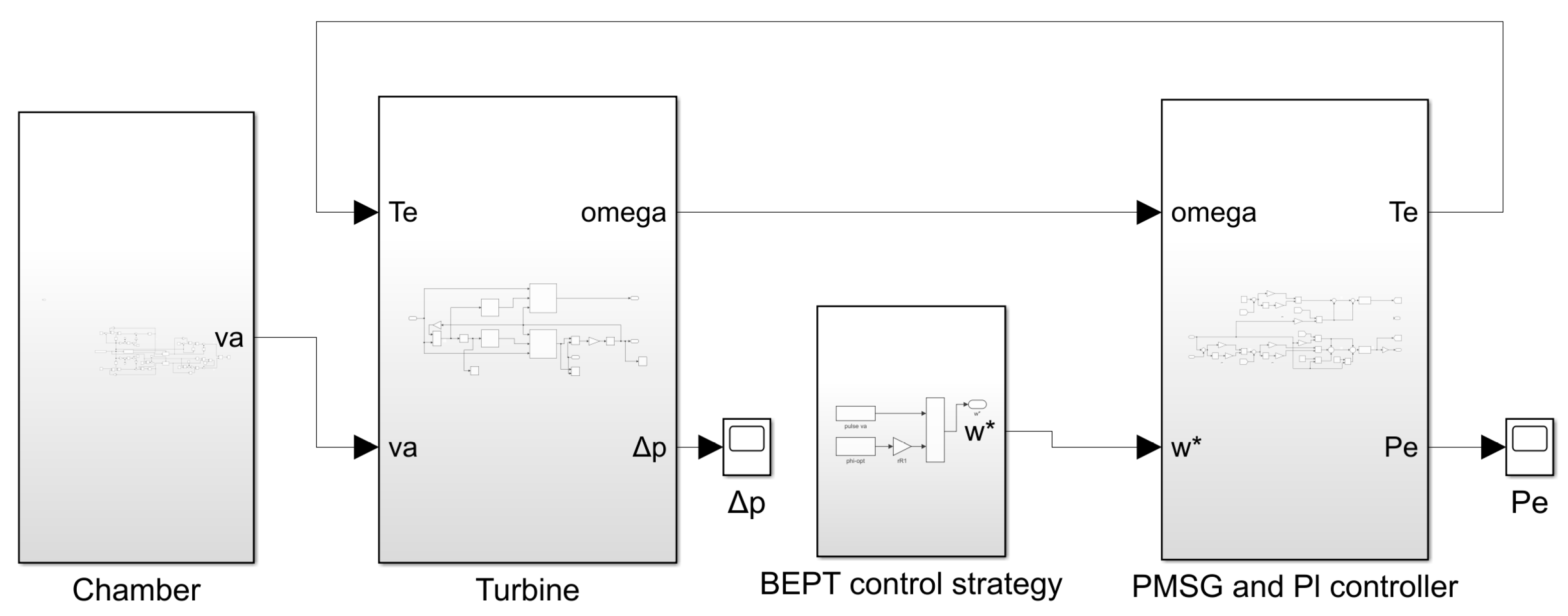
Following the above principles, a novel analytical model of the OWC plant was developed, incorporating the three-stage energy conversion process by finding the interdependent variables between adjacent stages. The flow chart of the model structure is depicted in Figure 2. First, wave conditions were determined using a sinusoidal formula for regular wave states and a wave spectrum for irregular wave states. Afterwards, a time-stepping procedure was employed to simultaneously solve the thermodynamics of the chamber, the aerodynamics of the turbine, and the dynamics of the generator. Additionally, the turbine performance curves were utilised for matching the airflow conditions generated by the chamber with the damping effect and the pneumatic torque imposed by the turbine in real time. Meanwhile, the control strategy determined the reference rotational speed to couple the turbine and generator under the principle of BEPT. It should be noted that the current integrated framework does not incorporate grid-side models, and the losses associated with the grid-side converter, filters, and grid connection have not yet been addressed.

2.1. Chamber Modelling

This study dealt with the modelling of the BBDB air chamber. The core of chamber modelling was to conduct hydrodynamic and thermodynamic analysis of the air chamber, establishing the relationship between the elevation of the wave surface, the elevation of the internal water surface (IWS), and the airflow rate through the turbine.
The chamber model in regular waves referred to the approach reported by Garrido et al. [31], which is briefly defined as follows:
Air   volume   of   air   chamber :   V = V c V w t ,
Airflow   velocity :   v a t = 8 A c b c π D 2 s i n ( π l c c T w ) c o s ( 2 π T w t ) ,
where V C and V w t are the air chamber volume and the water volume. l C , b C , and D are the chamber’s length, the inner width, and the diametre of the duct. A, T w , and c are the amplitude, the period, and the propagation speed of regular waves.
Additionally, the thermodynamic analysis of a BBDB OWC plant in irregular waves referred to the reports by Sheng et al. [32] and Kelly et al. [33]. The following thermodynamic expressions of airflow across the turbine Q p are separately given for the exhalation process ( p 0 ) and the inhalation process ( p < 0 ) with the consideration of air compressibility [32,33]:
Q p = d V d t V γ p 0 + p d p d t ,       p 0
Q p = 1 + p γ p 0 d V d t V γ p 0 d p d t ,       p < 0  
where γ is the specific heat ratio of the air ( γ = 1.4). p and p 0 are the chamber pressure and the atmospheric pressure. Moreover, according to our limited review of literature, most traditional hydrodynamic models of chambers ignored or treated the effects of turbine damping on IWS movement as constant. Here, to address the interaction between the chamber and the turbine, the following 2nd-order polynomial equations are used to approximate the damping effects of the non-linear impulse turbine for the exhalation and the inhalation, respectively:
p = k 1 Q P + k 2 Q p 2 ,       p 0
p = k 1 Q P k 2 Q p 2 ,       p < 0  
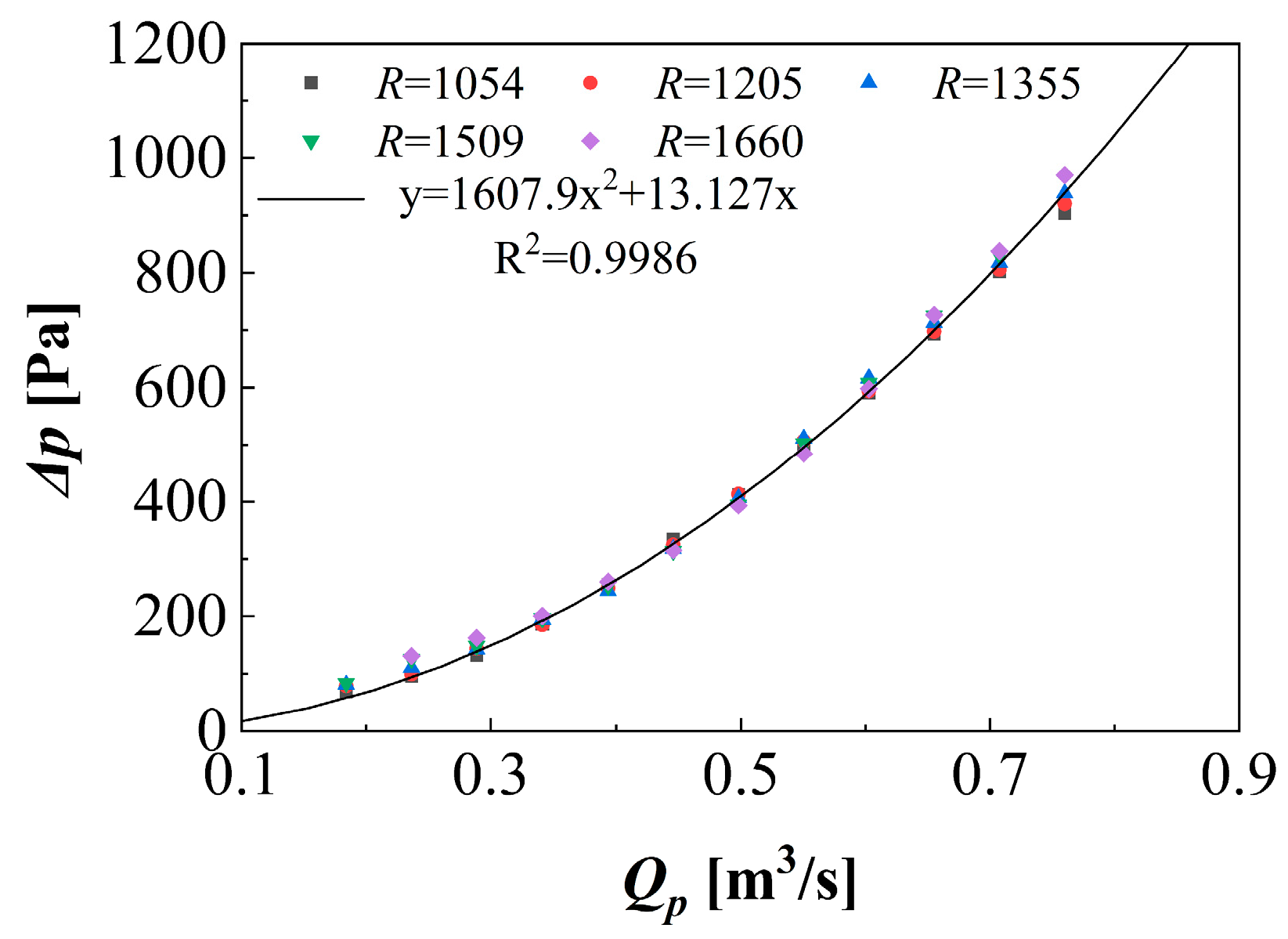
where p represents the total pressure drop across the impulse turbine. k 1 and k 2 are turbine damping coefficients, which can be derived by fitting the relation between p and Q P using the steady-state experimental results, as shown in Figure 3. Hence, in this study, the damping coefficients are k 1 = 13.1 and k 2 = 1607.9. It should be noted that the approximation of turbine damping effects simplifies the real chamber–turbine communication. However, because this effect is directly related to the rotational speed of the turbine, it is more important in the Wells turbine than in the impulse turbine [34]. Therefore, it is reasonable to apply this approximation approach in the present work.
Furthermore, combining Equations (3)–(6) gives the relationship between the chamber pressure and the air volume:
d V d t + V γ p 0 + p d p d t + k 1 + k 1 2 + 4 k 2 p 2 k 2 = 0 ,     p 0
1 + p γ p 0 d V d t + V γ p 0 d p d t + k 1 k 1 2 4 k 2 p 2 k 2 = 0 ,     p < 0
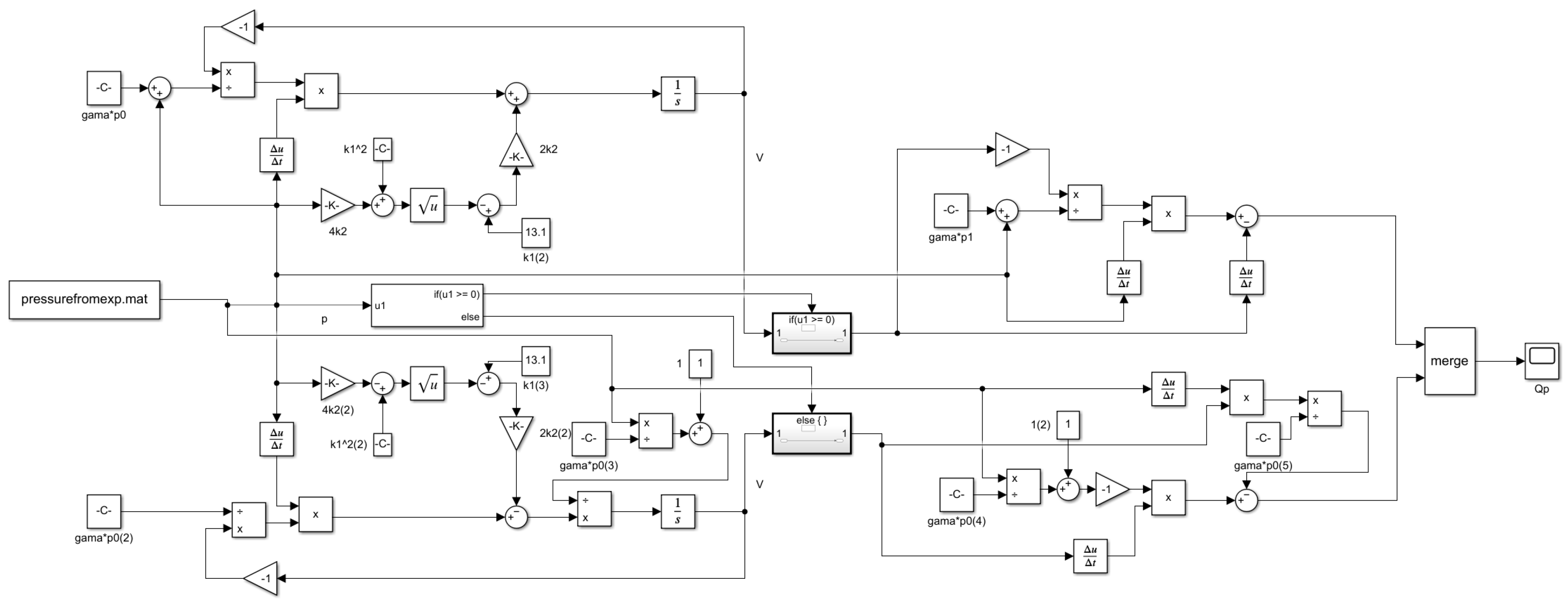
The air volume or the chamber pressure can be calculated when the chamber pressure or the air volume is known from wave-flume experiments. The chamber modelling under irregular wave conditions can be represented by the block diagram shown in Figure 4.

2.2. Impulse Turbine Modelling

For the turbine modelling in the present work, it was assumed that the aerodynamic friction losses caused by windage, the friction loss of the drive train and the losses incurred in the backend converter were neglected. Therefore, the mechanical dynamic equation of the turbine–generator system can be described as follows:
I d ω t d t = T D t T e
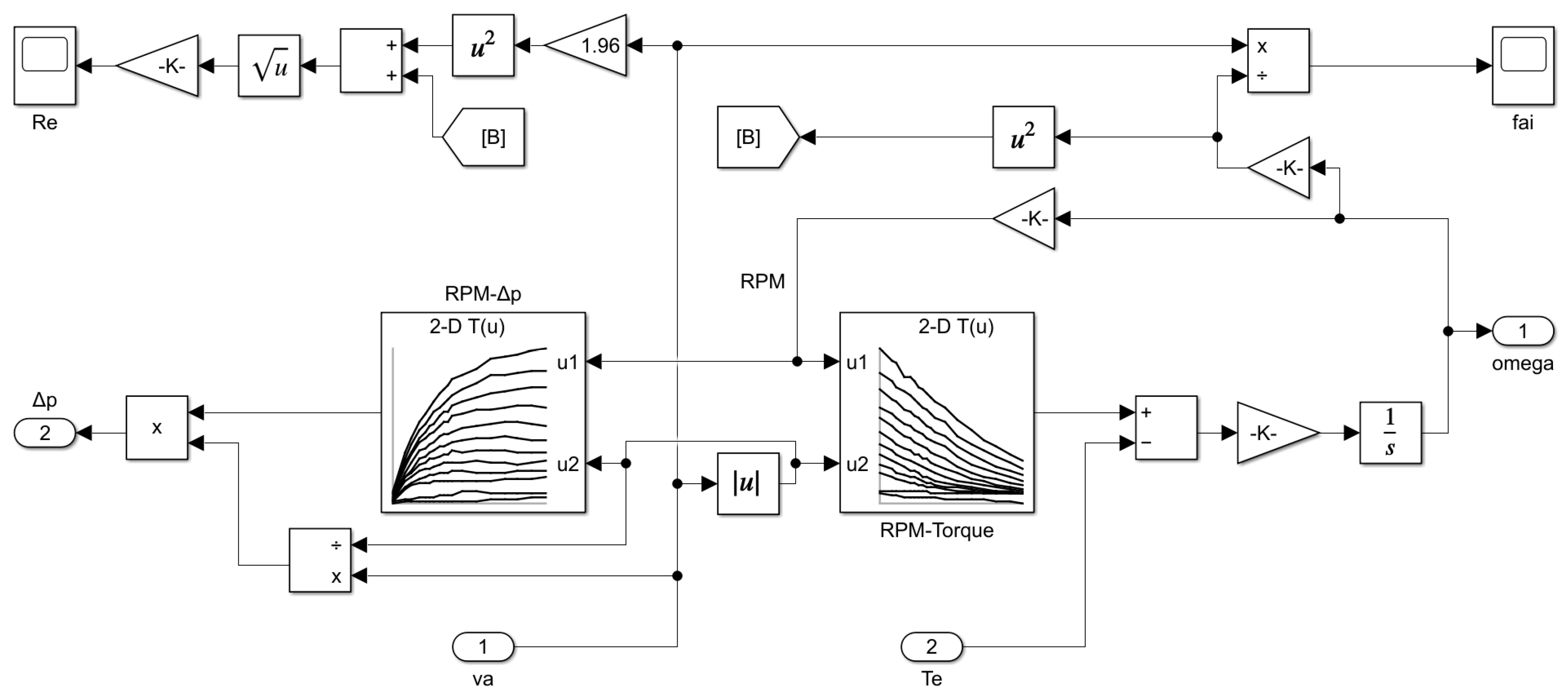
where I stands for the moment of inertia of the drive train. T e is the electromagnetic torque. The turbine modelling can be represented by the block diagram shown in Figure 5.
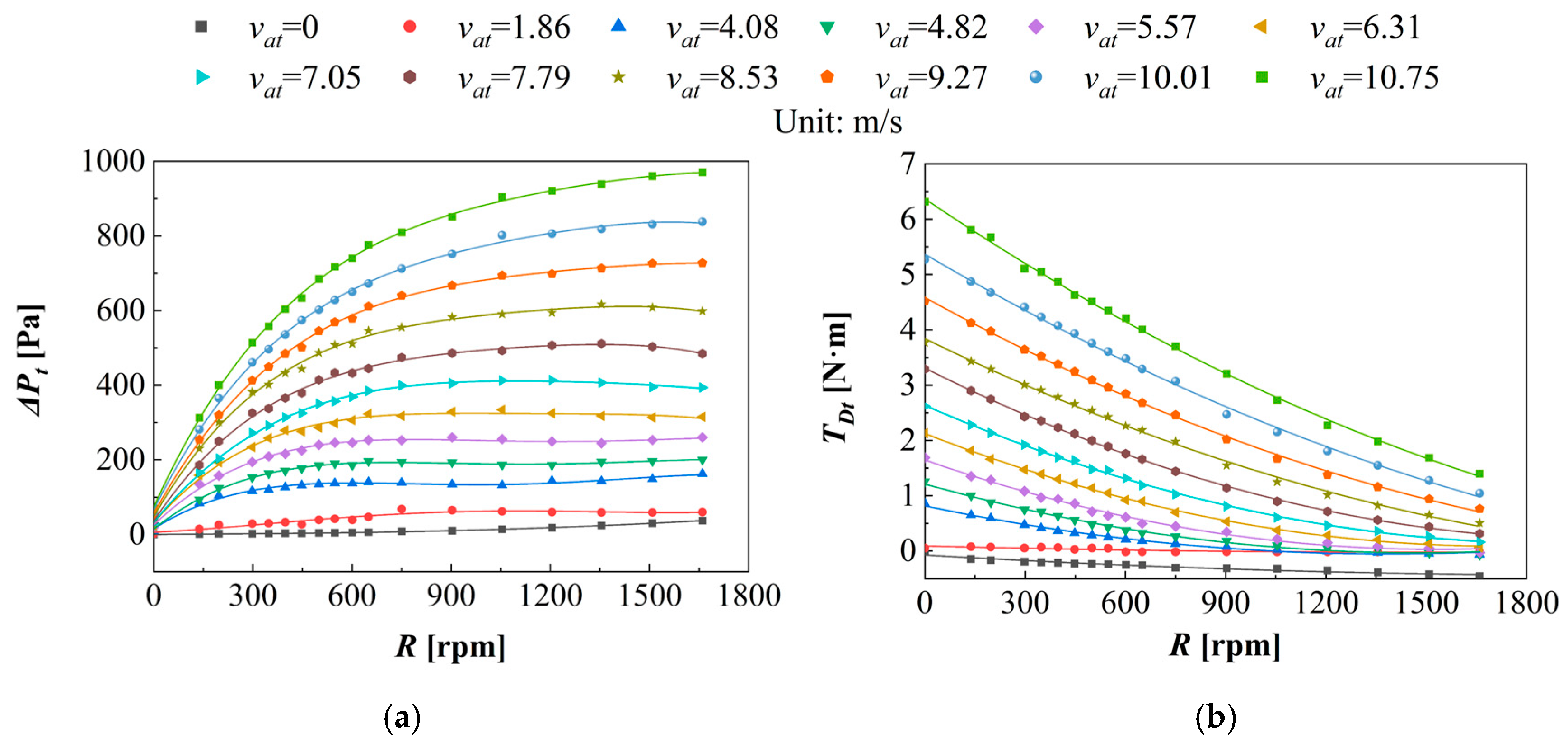
The key to the modelling is to determine the instantaneous turbine torque and pressure difference across rotor blades based on the transient rotational speed and airflow velocity. To achieve this, we referenced the steady-state experimental study detailed in our previous report [35]. A series of laboratory experiments was conducted in a unidirectional and constant wind tunnel where the impulse turbine was tested at various rotational speeds (0 < R < 1660 RPM) and airflow velocities (0 < v a t < 10.75 m/s). It should be noted that the test conditions were sufficient to cover all the operating conditions of the turbine under actual sea conditions. Figure 6 presents the steady-state experimental results of the impulse turbine in terms of turbine torque ( T D t ) and pressure difference across rotor blades ( p t ).
It can be observed that these two parameters could be regarded as polynomial functions of the airflow velocity and the rotational speed, which is expressed as follows:
p t = f p ( R , v a t ) ,
T D t = f T D ( R , v a t ) .
Consequently, the turbine torque and pressure difference across rotor blades can be obtained through interpolation when the instantaneous rotational speed and the airflow velocity are known.
In addition, the following non-dimensional parameters are used for describing the performance of any geometrically similar scaled-up version of the turbine: flow coefficient ϕ t and cycle-averaged efficiency η ¯ [34].
ϕ t = v a t U R t
η ¯ = 1 t s t 0 t 0 t s T D t ω t   d t 1 t s t 0 t 0 t s Δ p t Q t   d t
Here, U R t , ω t , and Q t are the circumferential velocity at mean radius, rotational speed in rad/s, and airflow rate, respectively. t0 and tS denote the initial and final time instants for the integral calculation.

2.3. BEPT Control Strategy

Maximising the turbine cycle-averaged efficiency is the main control goal in the present study. A constant reference speed ( ω ) is first defined by the following expression:
ω = v S r R ϕ o p t ,
where v S stands for the maximum amplitude of airflow velocity in regular or irregular conditions. ϕ o p t is the optimum flow coefficient that corresponds to the maximum turbine efficiency, which can be taken to fall within the range of [0.9, 1.25].
However, the responses of the turbine always exhibit a pulsating feature due to the reciprocating and oscillating characteristics of the airflows through the turbine. Adopting a constant reference rotational speed is not the optimal solution to maximise the turbine cycle-averaged efficiency and to realise real-time control. Therefore, by providing a pulse-type reference rotational speed ω t in accordance with variations in airflow velocity, it is expected that the flow coefficient could be controlled near its optimum value for each pulse bandwidth. The expression of ω t is given as follows:
ω t = v a t p u l s r R ϕ o p t ,
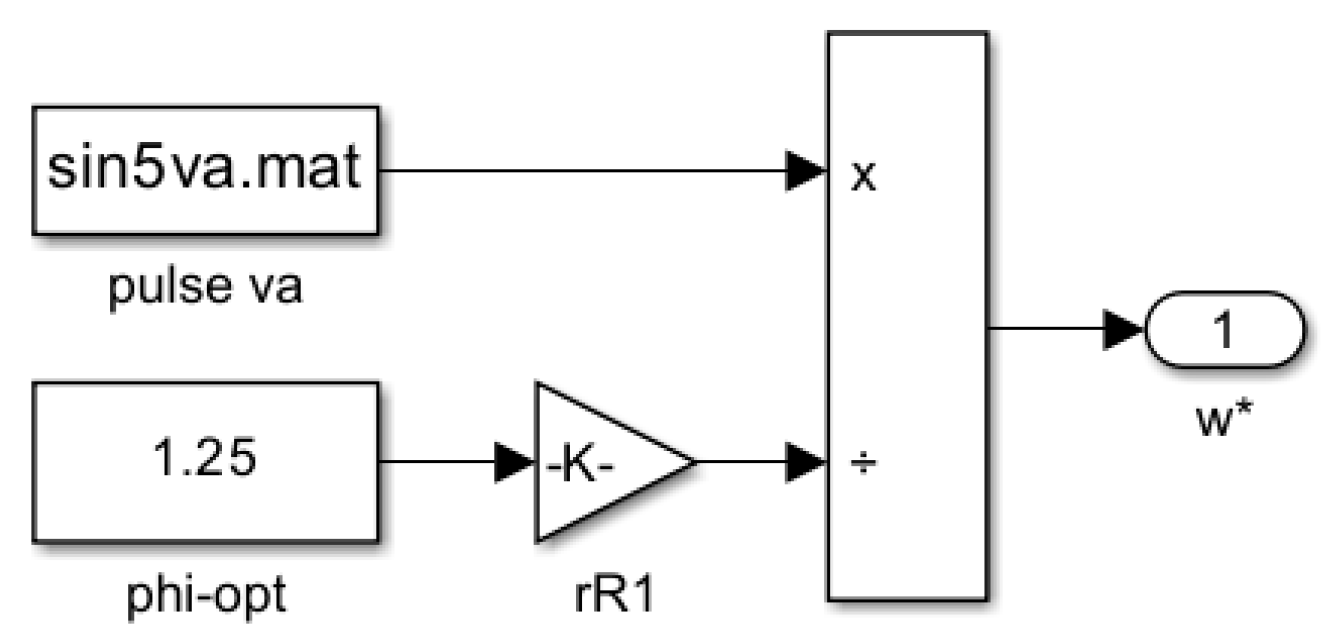
where v a t p u l s is the absolute value of the maximum airflow velocity within a pulse bandwidth. The control performance of the pulse-type strategy is dependent on the pulse bandwidth and the prediction of airflow velocity. Theoretically, a smaller pulse bandwidth is more favourable for tracking maximum turbine efficiency in a near-real-time manner. Preliminary study on the sensitivity of the pulse bandwidth indicated that the cycle-averaged turbine efficiency for values of 0.5 s, 1.0 s, and 2.0 s were 48.3%, 42.6%, and 42.2%, respectively. Hence, considering the response time of the PI controller and device-mounted sensors, this study selected a pulse bandwidth of 1 s. In addition, for all the simulations in the present study, the irregular wave condition was assumed to be known with a given wave spectrum and wave parameters, resulting in no lag in the prediction of airflow velocity. When deployed at sea, wave buoys can be located in front of the device for predicting forthcoming wave conditions, thereby mitigating the lag in predicting airflow velocity. The pulse-type BEPT control strategy can be represented by the block diagram shown in Figure 7.

2.4. Generator Modelling

A permanent magnet synchronous generator (PMSG) was employed in the present study due to the advantages of a gearless design, removal of the DC excitation system, full system controllability for maximum power extraction and grid integration, and easy fault ride-through and grid support [36,37].
Under the assumption that the q axis is synchronised with the magnetic flux, the electrical dynamic equations of a PMSG in the power-conservative stationary d-q reference frame are expressed as follows [38,39]:
v s d = R s i s d + L d d i s d d t ω e L q i s q ,
v s q = R s i s q + L q d i s q d t + ω e L d i s d + ω e ψ f ,
T e = 3 2 P n ψ f i q ,
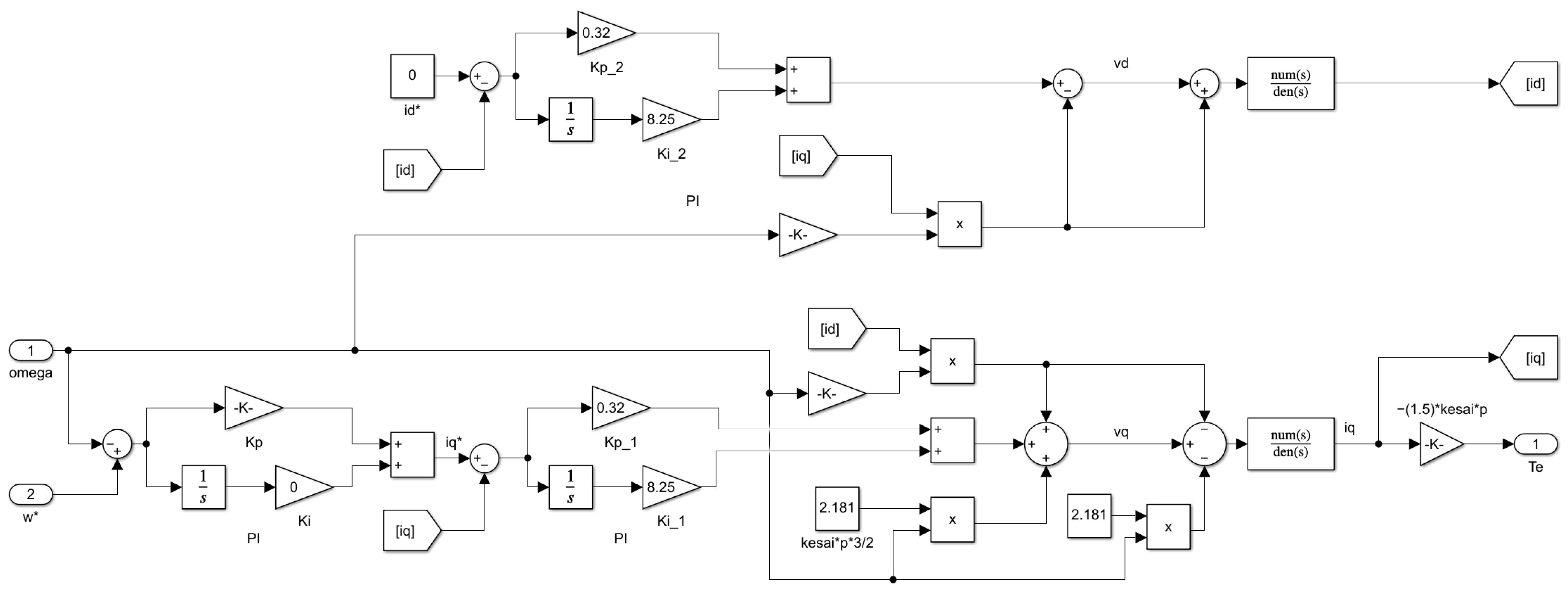
where R S and P n are the stator resistance and the number of pole pairs. v s d , v s q , i s d , and i s q are the d and q components of stator voltage and current, respectively. ω e is the electrical rotational speed ( ω e = P n ω t ). ψ f is the magnetic flux. L d and L q are the d and q components of stator inductances. Figure 8 presents the block diagram of the PMSG modelling and PI controller. 1 / ( L s + R ) represents the transfer function for the d or q current loop.
As shown in Figure 8, a field-oriented controller was used to regulate the controlled variables: an external PI controller for the rotational speed ω t and two internal PI controllers for i 1 d and i 1 q . The proportional–integral (PI) controller is a combination of both proportional and integral actions in order to cancel the static error [40]. The external ω t loop output a q-axis current reference i q , depending on the difference between the actual and reference rotational speed. The two internal current loops assured that the q and d components of the measured current reached the q- and d-axis current references, respectively.

2.5. Solver

All the modellings described above were integrated into a complete wave-to-wire model of an OWC plant and implemented in the time domain using the MATLAB R2023b®/SIMULINK platform. All the equations were solved using the ordinary differential equation solver ode45 with a fixed time step of 0.0001 s. Each simulation was executed on an i5-10500HQ laptop (brand: DELL, model: Inspiron 3881) with a 2.50 GHz CPU and 16.0 GB of memory. For typical irregular simulations lasting 70 s and 200 s, the time costs were approximately 3 and 7 min, respectively, and both ran smoothly.

3. Integrated Model Validations

3.1. Validation for Chamber–Turbine System

According to our limited literature review, nobody has established the laboratory model of the chamber–turbine–generator system so far. Therefore, we divided the entire wave-to-wire process into chamber–turbine and turbine-control systems and conducted separate validations for each.
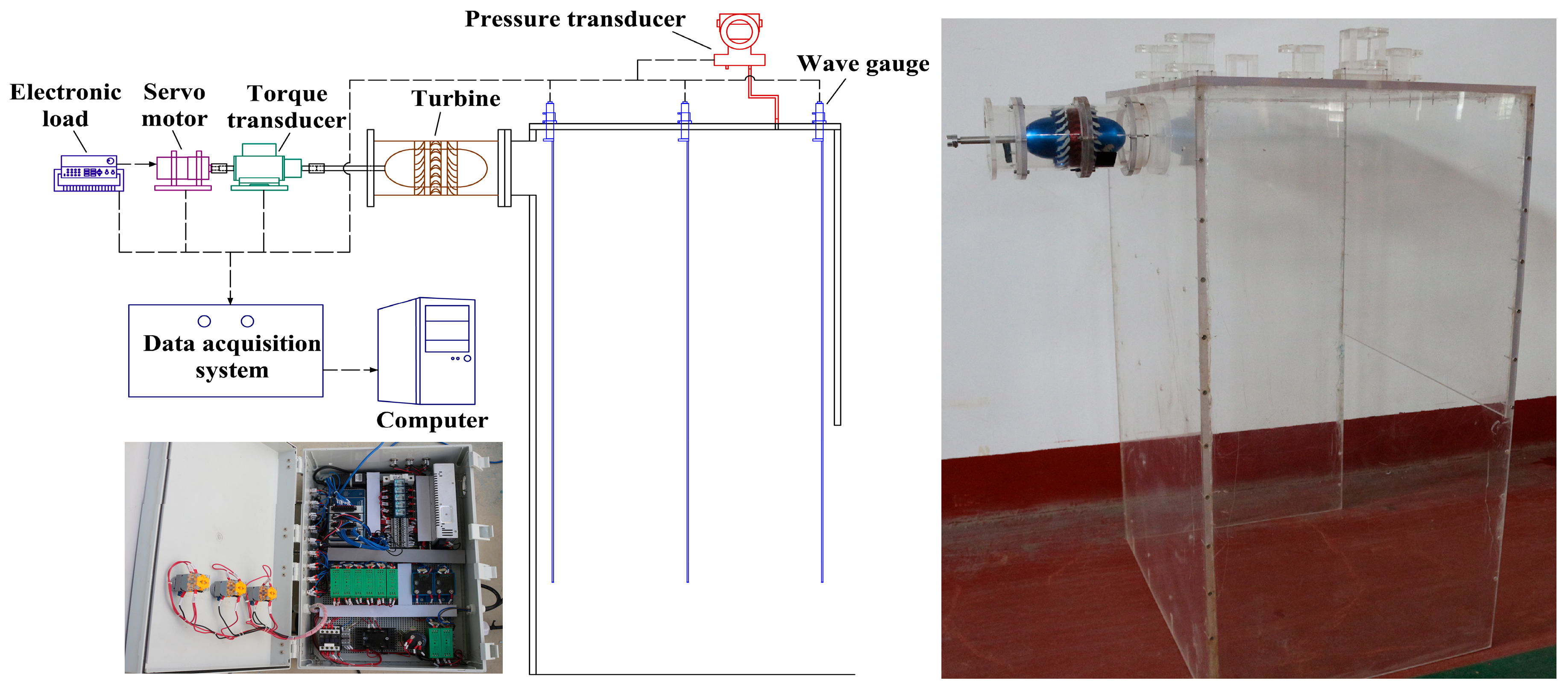
In this section, a benchmark case was carried out for model validation in which the turbine was operating in a free-spinning mode in irregular airflow (Tp = 1.75 s, HS = 0.15 m). The experimental set-up and physical photo are presented in Figure 9. The OWC model employed a generic cubic air chamber, which was made of acrylic plates. The length, width, and height of the chamber were 0.6 m, 0.8 m, and 1.2 m, respectively. The height of the skirt wall was 0.65 m. Measurement instruments included five wave gauges, a pressure transducer (full scale: ±5 kPa; accuracy: ±0.5%FS), and a torque transducer (full scale: 3000 RPM, 0.3 N·m; accuracy: 0.05%FS). The data acquisition, processing and recording were all carried out by a data acquisition (DAQ) system developed by the research team. More details can refer to ref. [41].
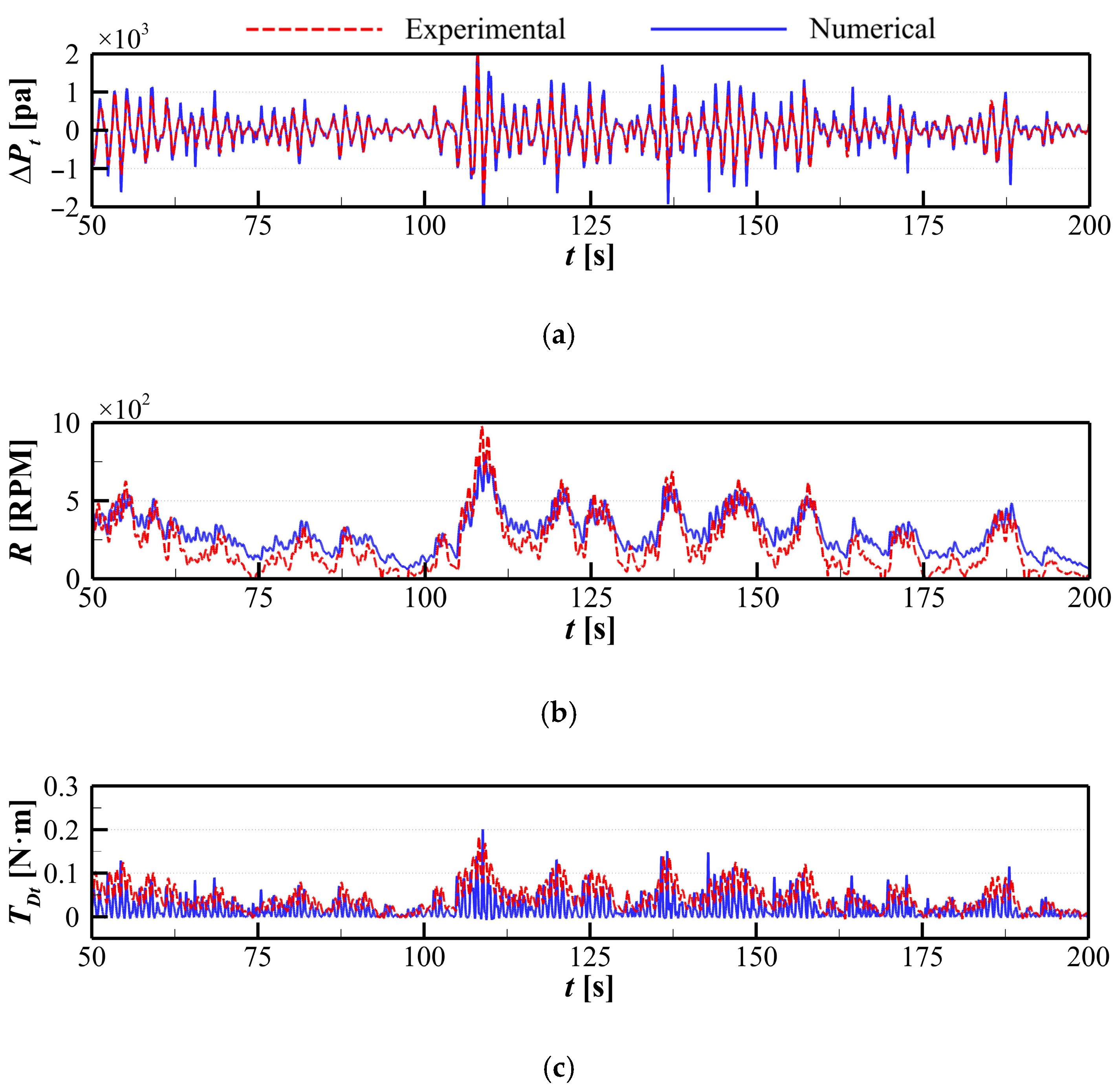
Figure 10 presents the comparison between the simulation results and experimental data in terms of the time histories of the total pressure drop across the turbine, the rotational speed, and the turbine torque. Overall, the simulation curves coincided with the experimental curves in the development tendency and peak values. As shown in Figure 10b, the simulation overestimated the trough values of the rotational speed compared to the experimental results. In addition, the discrepancy also appeared in the curves of turbine torque when the airflow changed its direction. This discrepancy may be attributed to the insufficient precision of the torque transducer when measuring small and high-frequency oscillating values.
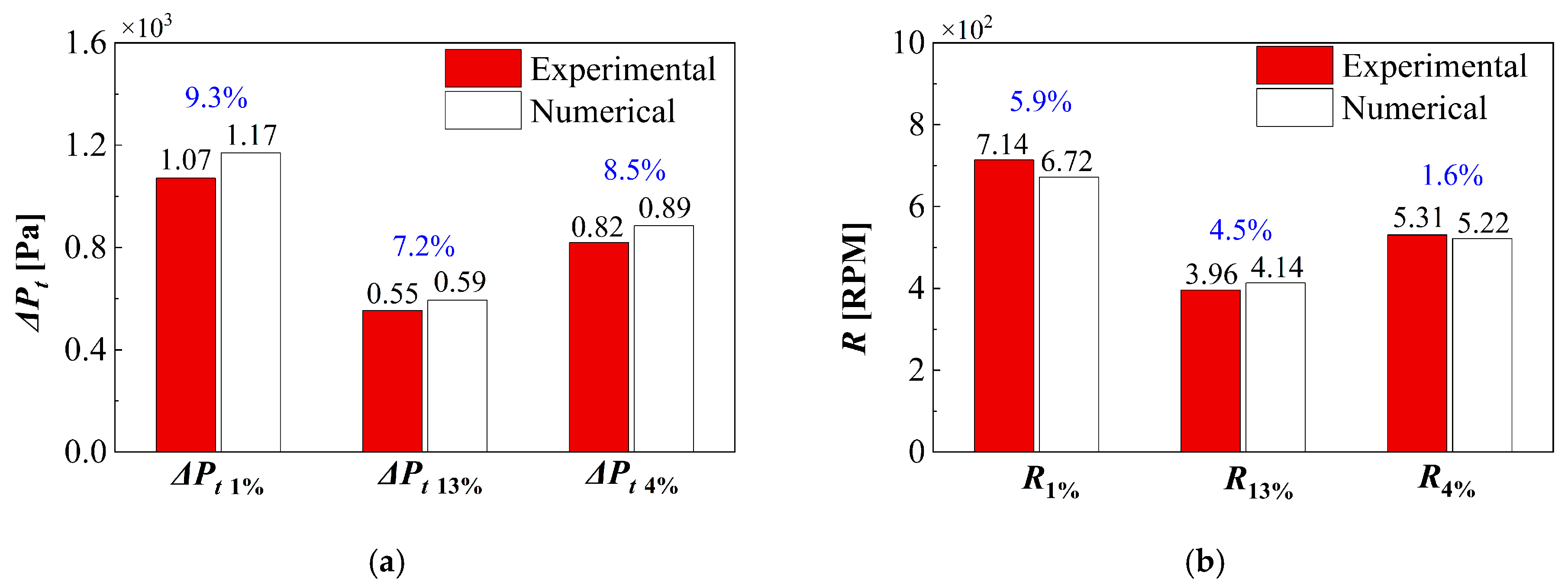
Figure 11 further presents the statistical comparison between experimental and numerical data in terms of the total pressure across the turbine and rotational speed variations. The numerical errors for R1%, R4%, and R13% were 5.9%, 4.5%, and 1.6%, respectively. Moreover, the numerical predictions on the maximum and average turbine torques are 0.201 N·m and 0.027 N·m, which have 6.9% and 15.6% difference with the experimental data (0.188 N·m and 0.032 N·m).

3.2. Validation for Turbine–Generator System

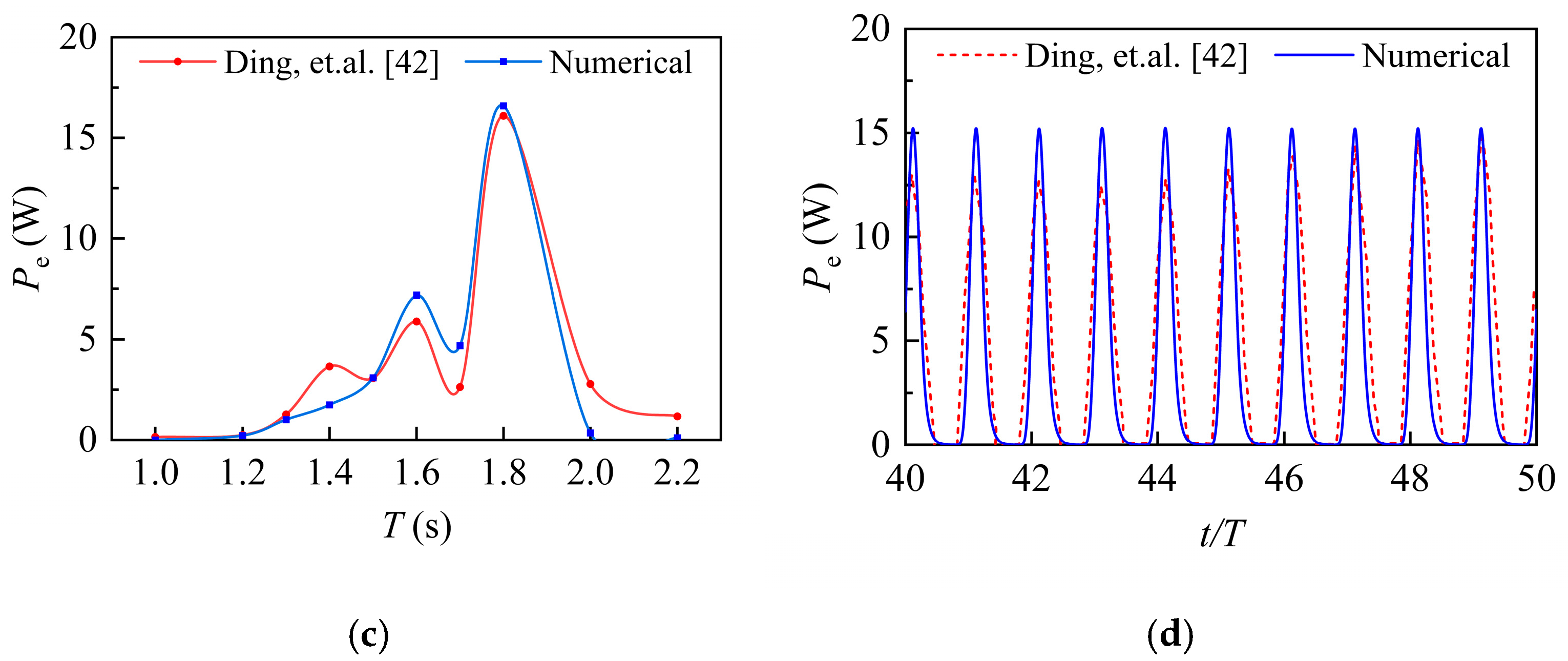
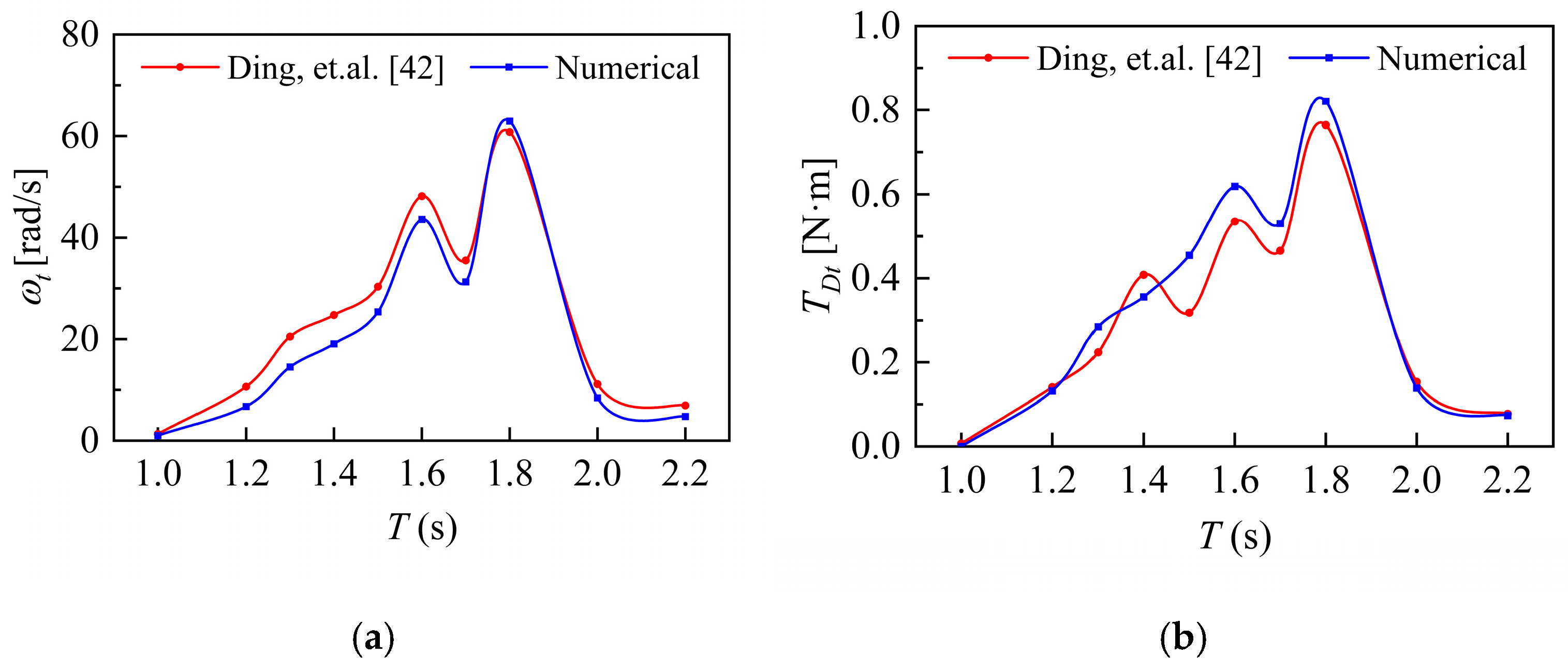
The validation for the turbine–generator system was provided by contrasting the simulation results with the experimental data obtained from Ding et al.’s study [42]. In these validation cases, the turbine was operating in free-spinning mode under different regular wave conditions. The wave period ranged from 1.0 s to 2.2 s, and the wave height was 0.05 m.
Figure 12a–c present the comparison between the simulation results and experimental data in terms of the rotational speed, the turbine torque, and the electromagnetic power of the generator as a function of the wave period. Figure 12d also presents the comparison of the time history of the electromagnetic power for the wave period of 1.8 s. It can be observed that the experimental and simulation results were in good agreement in terms of the curve trend, especially at the chamber resonant period of 1.8 s and shorter periods. The peak values of the time history curves in Figure 12d exhibited excellent agreement after 46T. Anyway, as a preliminary study, the present integrated model has demonstrated its capability in predicting the wave-to-wire performance of the OWC plant, which can be utilised for further investigations.

4. Results and Discussions

This section discusses the effects of wave conditions and control strategy on the wave-to-wire performance of the BBDB OWC plant. The simulation test conditions are listed in Appendix A, as well as the main modelling parameters of the impulse turbine, the PMSG, and the PI controller.

4.1. Performance Under Regular Wave Conditions

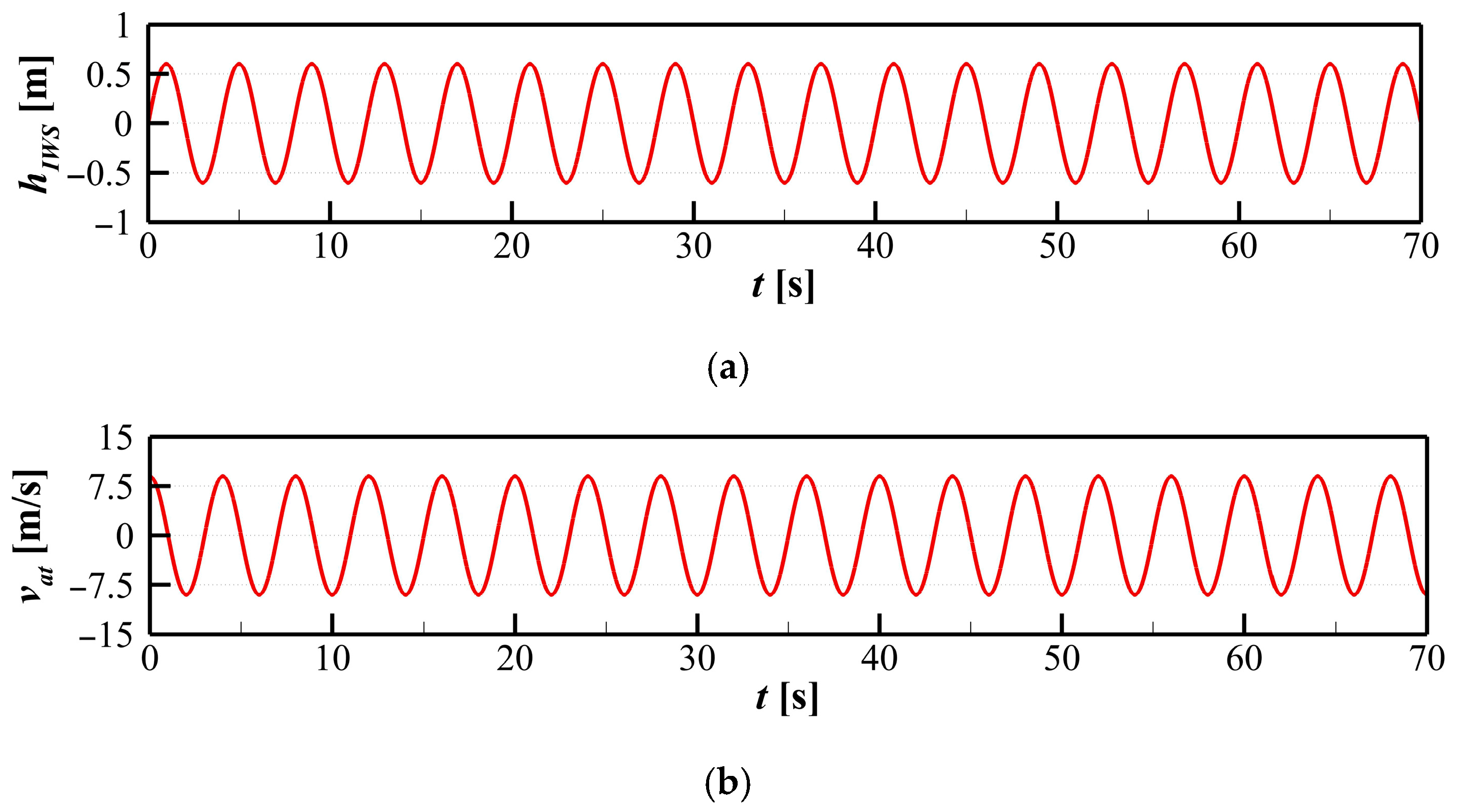
A regular wave condition with H = 0.85 m and T = 4 s was employed in this section. Time histories of key parameters of the chamber model are displayed in Figure 13. A phase difference of one-fourth period was observed between the elevation of IWS and airflow velocity in the turbine section.
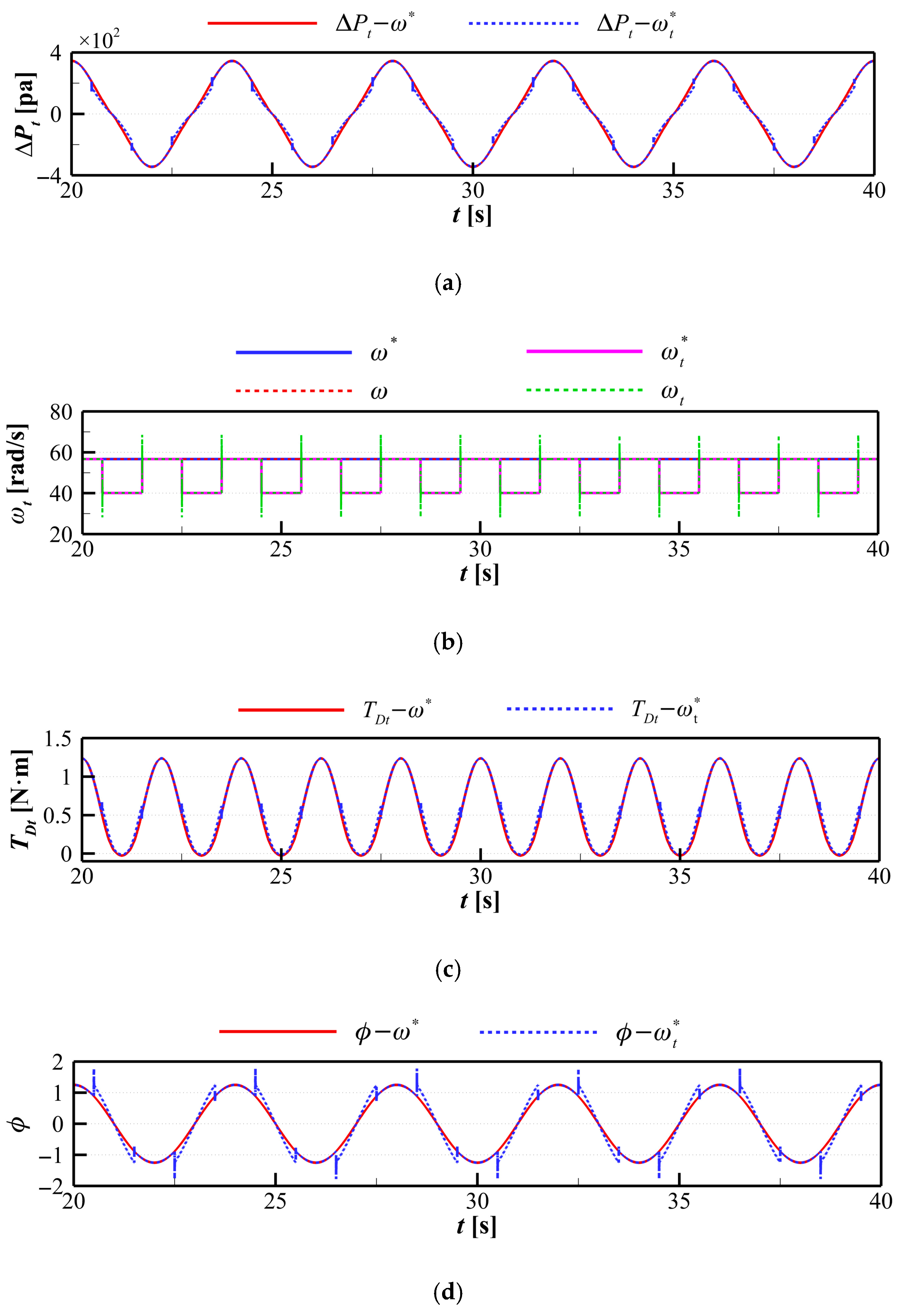
Given that all the variables fluctuate regularly, Figure 14, Figure 15 and Figure 16, which illustrate an interval of 20 s, present the time histories of the key performance parameters for the turbine and generator systems.
As shown in Figure 14b, the actual rotational speed of the turbine ( ω and ω t ) closely followed the reference value ( ω and ω t ) under both control strategies. When the reference speed ω t changed every 0.5 s, ω t experienced rapid fluctuations within a time interval of less than 0.01 s. Additionally, the difference in total pressure drop and turbine torque can be considered negligible under both control strategies. In Figure 14d, during non-peak airflow moments for both the exhalation and the inhalation, ω t was relatively lower than ω , leading to a larger flow coefficient; this indicated that the control strategy of pulse-type reference rotational speed extended the duration for the flow coefficient to fall within the optimal range of [0.9, 1.25].
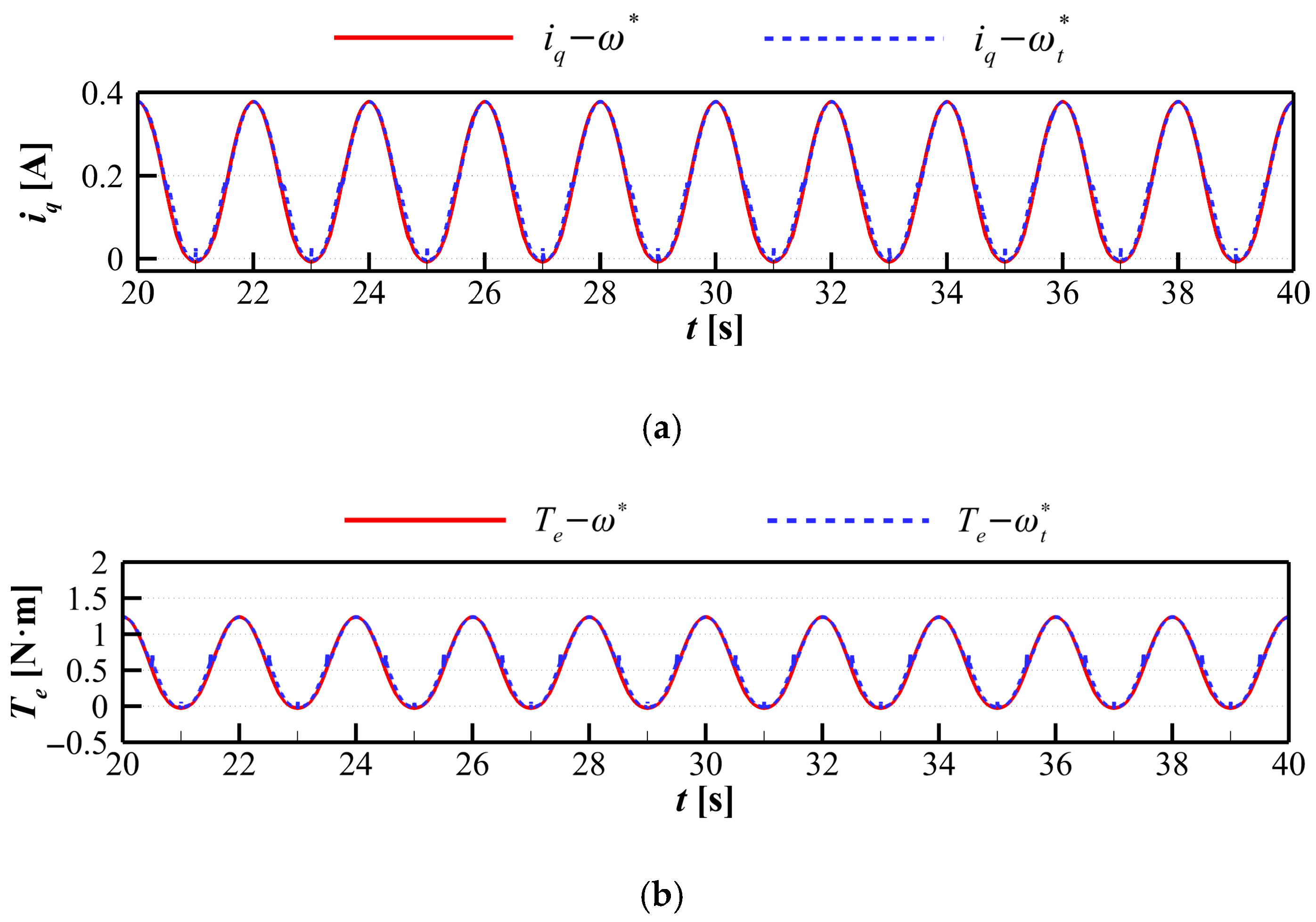
Figure 15 shows the stator q-axis current ( i q ) and the electromagnetic torque ( T e ) required to realise the control strategy. A minor difference can be observed in that an increase in i q led to a rise in T e , resulting in a decrease in the rotational speed of the turbine to approximately 40 rad/s under the pulse-type strategy (see Figure 14b).
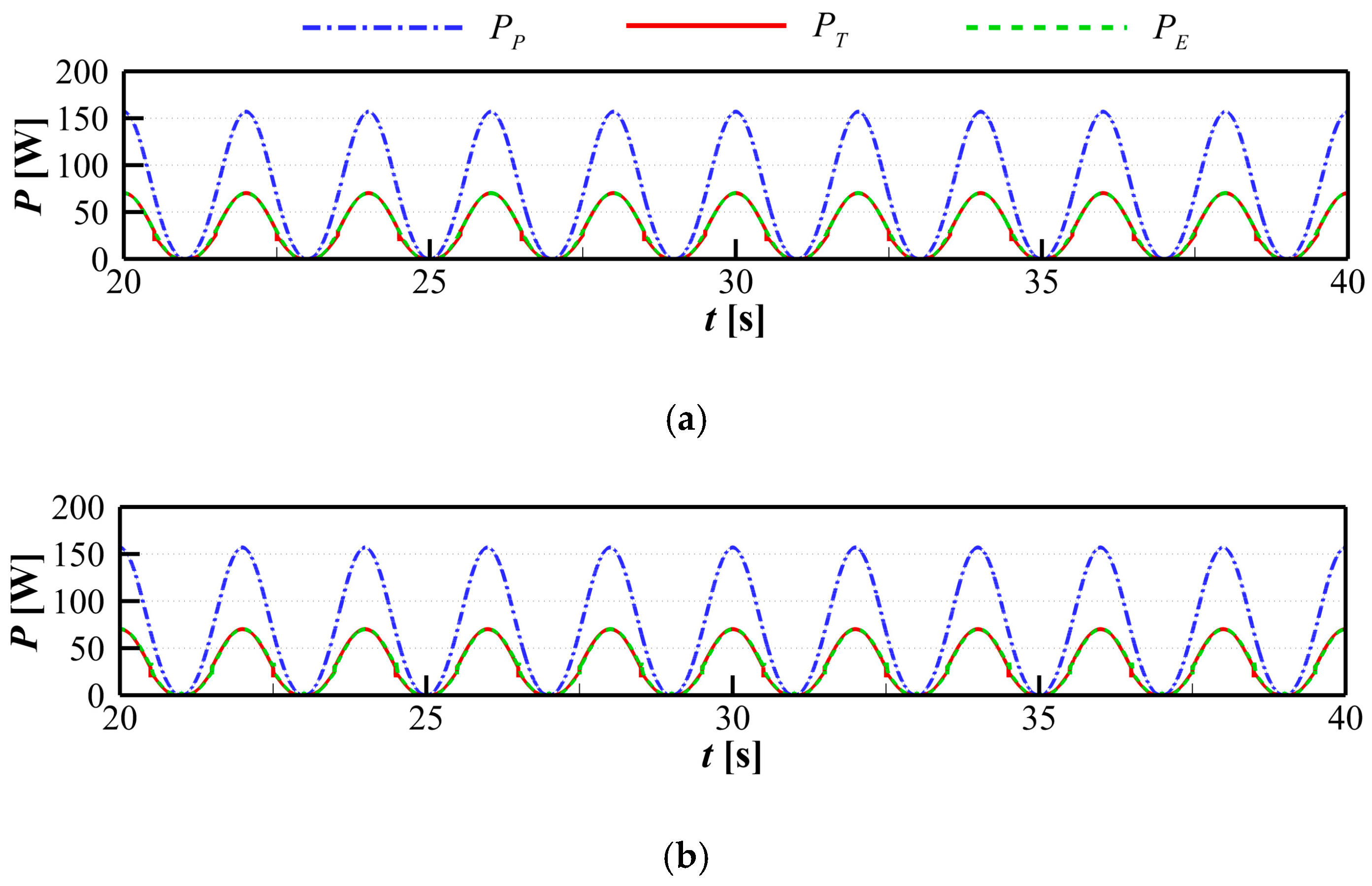
Figure 16 illustrates the time histories of the pneumatic power (PP), the turbine mechanical power (PT), and the electrical power of the generator (PE) for both control strategies. By comparing the development trend of PT and PE curves, it is evident that after the implementation of the control strategy, the system continually maintained a state of dynamic equilibrium. Furthermore, the cycle-averaged turbine efficiency was enhanced by approximately 3.3% when employing the strategy of pulse-type reference rotational speed.

4.2. Performance Under Irregular Wave Conditions

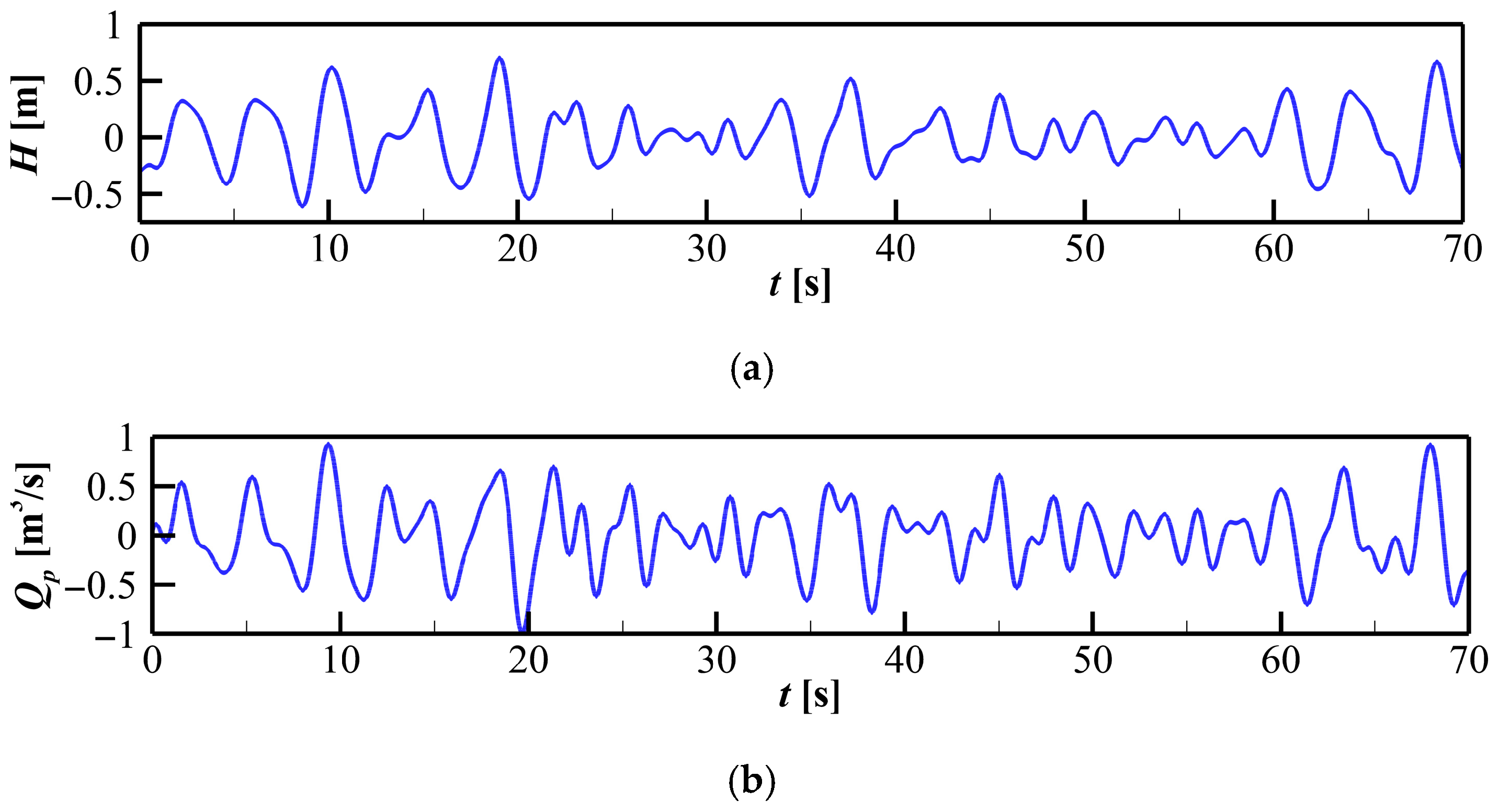
An irregular wave condition with Tp = 4.0 s and HS = 0.73 m was employed in this section. Time histories of key parameters of the chamber model are displayed in Figure 17, including the wave elevation and the airflow rate in the turbine section.
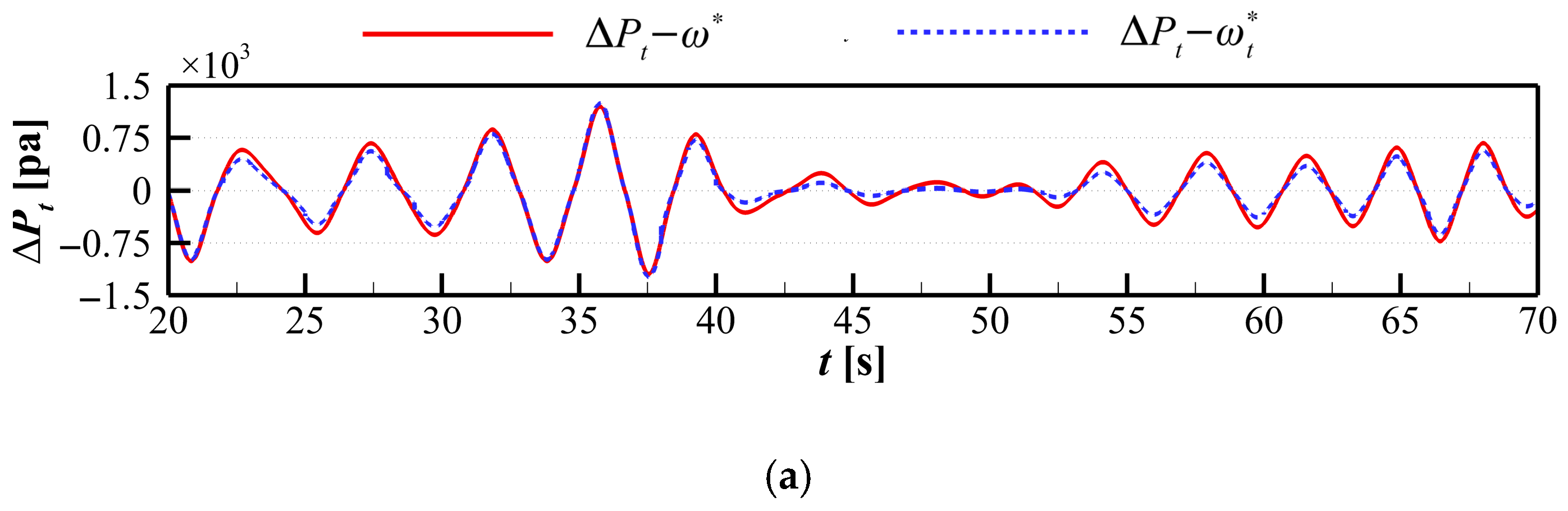
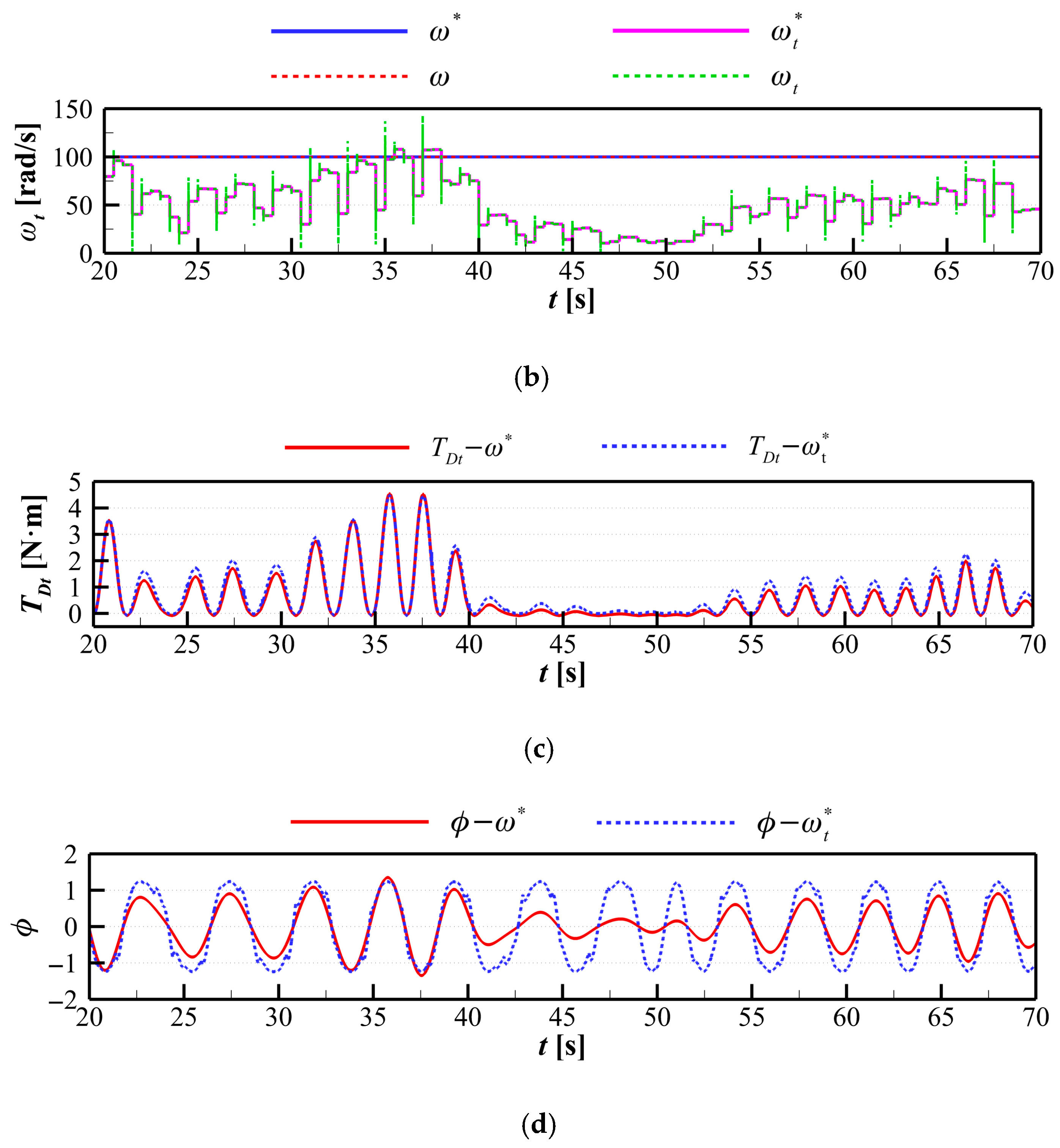
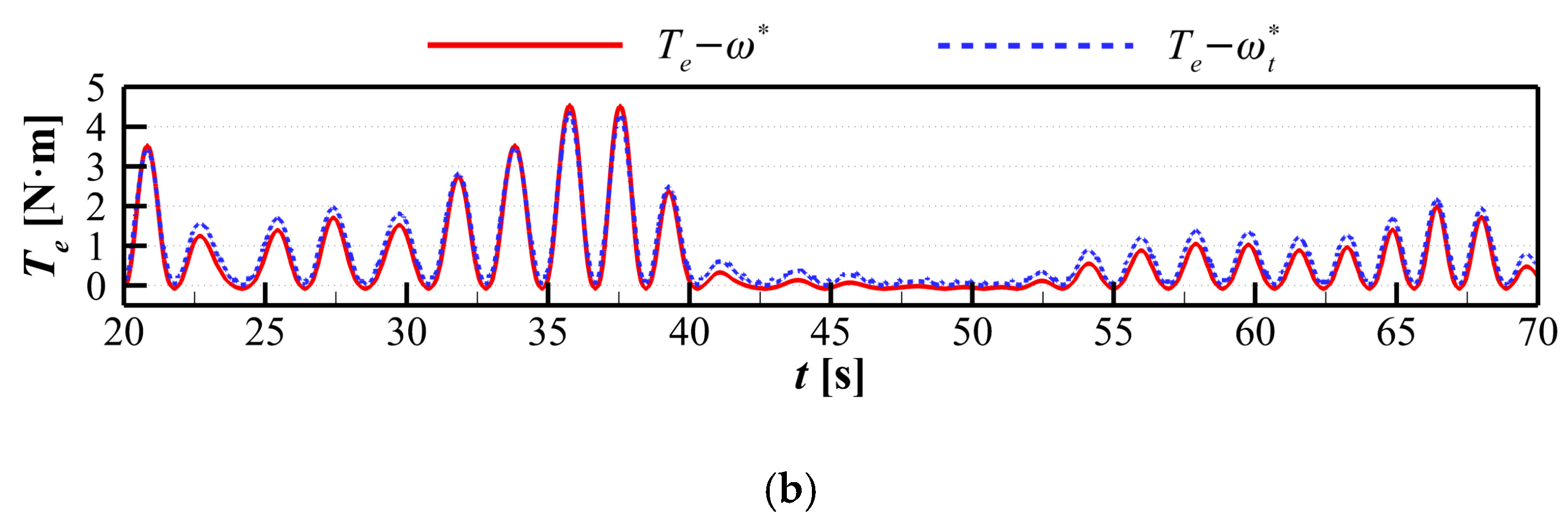
Given that all the variables of the OWC model exhibited pulsating features, Figure 18, Figure 19 and Figure 20 present the time histories of the key performance parameters for the turbine and generator systems within a time interval of 50 s.
Compared to regular conditions, there were evident differences in key performance parameters between the two control strategies under irregular conditions, as shown in Figure 18. In Figure 18b, despite the intense pulsation of the airflow velocity and the reference speed, the actual rotational speed of the turbine also closely tracked the reference value under both control strategies. Furthermore, when the airflow condition deteriorated during the interval of t ∈ [22.5 s, 30 s] and [40 s, 70 s], the pulse-type control strategy provided a lower reference rotational speed than the constant strategy. Consequently, the duration for the flow coefficient to oscillate around the optimal flow coefficient range was significantly extended (see Figure 18d), leading to relatively larger peak values in T D t , as shown in Figure 18c.
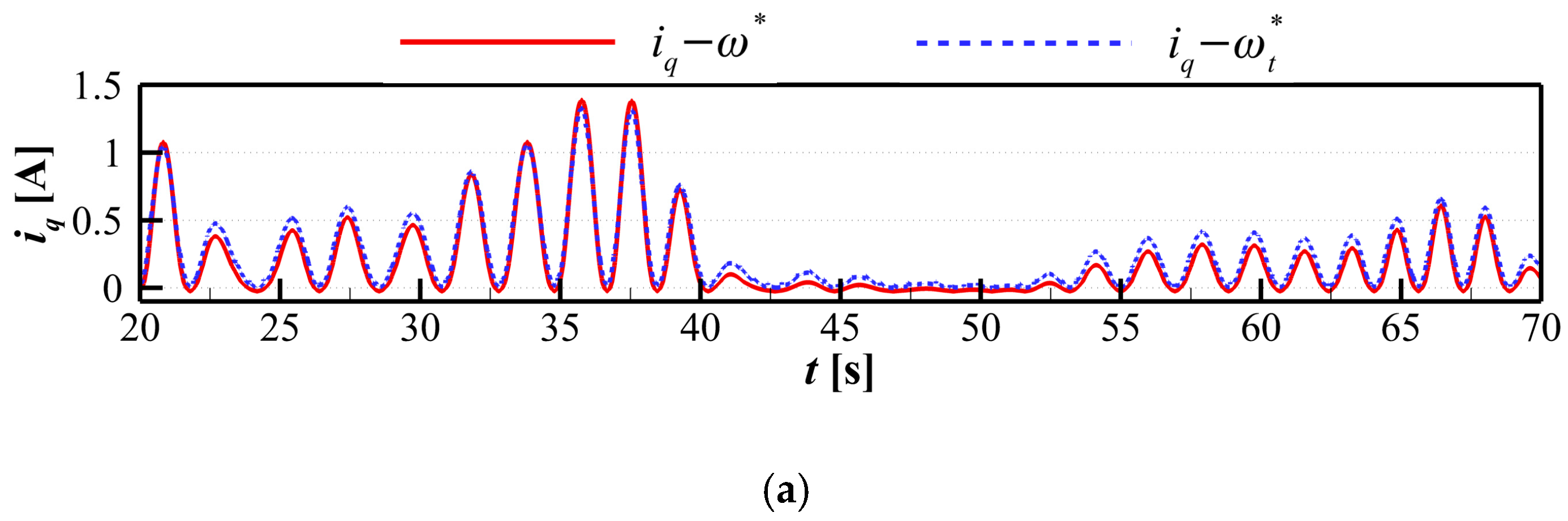
According to Figure 19, there are evident difference in the stator q-axis current ( i q ) and the electromagnetic torque ( T e ) between the two control strategies. To realise the pulse-type control strategy, specifically to allow the actual rotational speed ω t to follow a lower reference value during time periods of airflow deterioration, an increase in i q was necessary, resulting in a rise in T e .
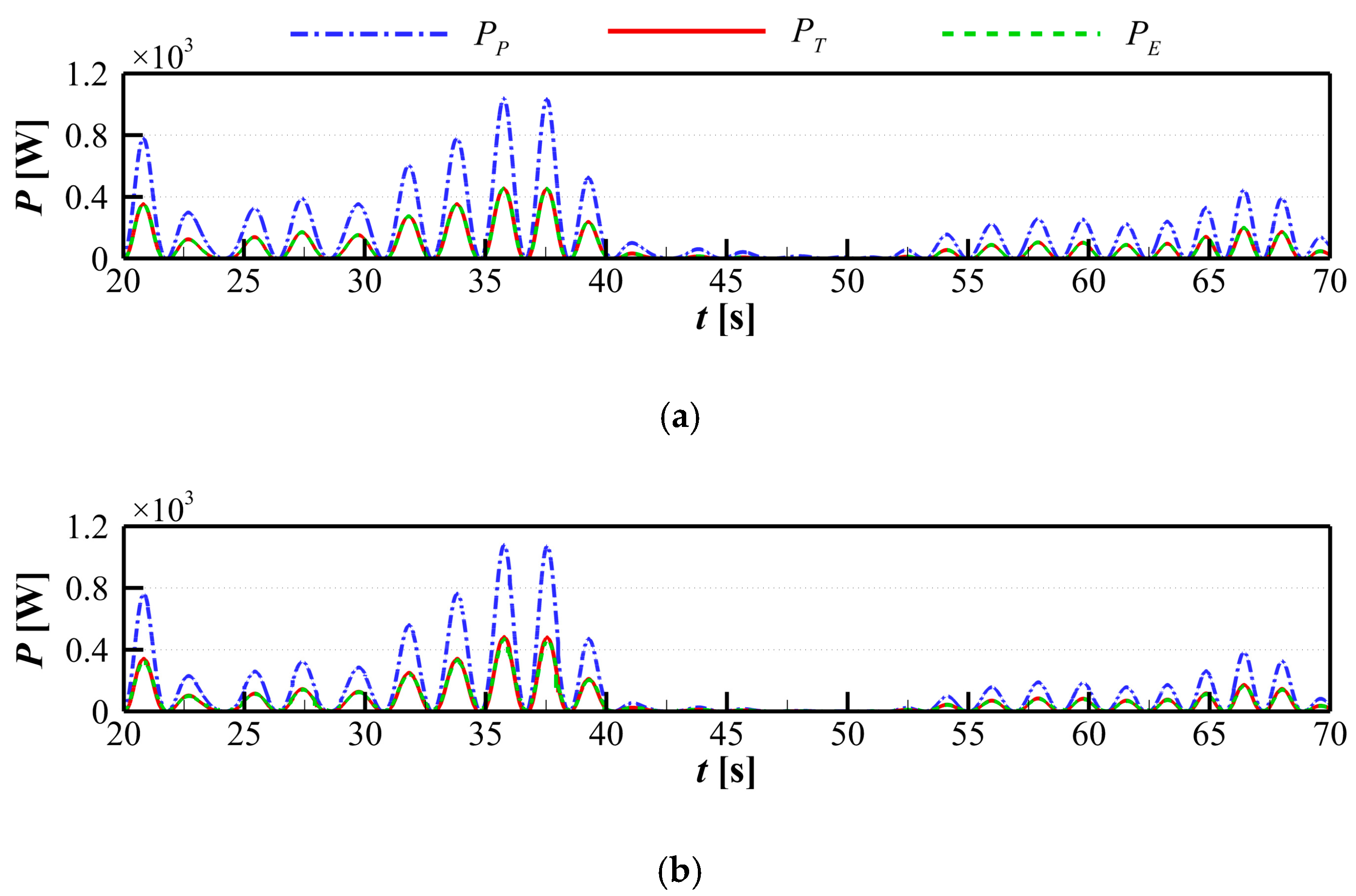
The time histories of the pneumatic power (PP), the turbine mechanical power (PT), and the electrical power of the generator (PE) for both control strategies are illustrated in Figure 20. Similar to regular conditions, the system demonstrated excellent dynamic equilibrium with the implementation of both control strategies under irregular conditions. In contrast, the cycle-averaged turbine efficiency was enhanced by approximately 16.1% when the pulse-type control strategy was employed.

5. Conclusions and Future Work

In this study, an integrated model, incorporating the chamber, impulse turbine, PMSG, PI controller, and BEPT-based control strategies, was established to predict the wave-to-wire performance of a BBDB OWC plant. This integrated model enables the two-way interaction between the turbine and the generator, serving as an effective tool for designing efficient OWC systems under real sea conditions.
The modelling of the chamber–turbine and turbine-control systems was validated separately against wave-flume experimental results. The integrated model demonstrated excellent accuracy in predicting the wave-to-wire performance under both regular and irregular wave conditions. In addition, the mechanism of two-way interaction between the turbine and the generator was elucidated; that is, an increase in i q led to a rise in T e , resulting in a decrease in the rotational speed of the turbine. Furthermore, compared to the constant-type speed control strategy, the pulse-type strategy can adjust the reference speed in near-real-time based on the airflow input and exhibited superior performance in extending the duration for the flow coefficient to fall within the optimal range and enhancing the cycle-averaged turbine efficiency.
The proposed wave-to-wire modelling provided a substitute for open sea deployment and experimentation to test the chamber, turbines, generator, controller, and overall device performance. In future work, other control strategies or intelligent algorithms and controllers will be deployed and tested. Grid-side models and corresponding losses will also be considered to enhance power generation stability and power quality.

Author Contributions

Conceptualisation, Y.C. (Ying Cui) and C.Z.; Methodology, F.Y., Y.C. (Ying Cui) and C.Z.; Software, R.F., Y.C. (Ying Cao) and H.S.; Validation, F.Y., R.F. and Y.C. (Ying Cao); Formal Analysis, R.F. and C.Z.; Investigation, F.Y., R.F., H.S. and Y.C. (Ying Cui); Resources, Y.C. (Ying Cui) and C.Z.; Writing—Original Draft, F.Y. and Y.C. (Ying Cui); Writing—Review and Editing, F.Y., R.F., Y.C. (Ying Cao), Y.C. (Ying Cui), H.S. and C.Z.; Supervision, Y.C. (Ying Cui) and C.Z. All authors have read and agreed to the published version of the manuscript.

Funding

This work was supported by the Natural Science Foundation of Shandong Province of China (ZR2025MS814) and the Science and Technology Support Plan for Youth Innovation of Colleges and Universities of Shandong Province of China.

Data Availability Statement

The data supporting the findings of this study are provided within the article, as detailed in the figure captions and their corresponding discussions.

Conflicts of Interest

The authors declare no conflicts of interest.

Nomenclature

SymbolDescription (Unit)SymbolDescription (Unit)
AWave amplitude (m)TpPeak spectral period (s)
bRotor blade heightTwWave period (s)
bcChamber inner width (m)URtCircumferential velocity at mean radius (m/s)
cWave propagation speed (m/s) v a t Airflow velocity in turbine section (m/s)
DDuct diametre (m) v s d , v s q Stator d- and q-axis voltage
HRegular wave height (m)VAir volume in chamber (m3)
HsSignificant wave height (m)VcTotal chamber volume (m3)
IMoment of inertia of drive train (kg·m2)VwtWater volume in chamber (m3)
id, iqStator d- and q-axis currents (A)ϕtFlow coefficient (–)
k1, k2Airflow damping coefficients (–) ω e Generator angular velocity
Ld, LqStator d- and q-axis inductances (H)ωtRotational speed (rad/s)
lcChamber length (m)ω*Constant reference rotational speed (rad/s)
lrChord length of rotor blades ω t Pulsating reference rotational speed (rad/s)
NBNumber of rotor blades (–)γSpecific heat ratio of air (–)
pChamber pressure (Pa)ψfMagnetic flux (Wb)
P0Atmospheric pressure (Pa) η ¯ Cycle-averaged turbine efficiency (–)
PnNumber of pole pairs (–)QpVolume flow rate through turbine (m3/s)
PPPneumatic power (W)KP, KISpeed regulator PI constants
PTTurbine mechanical power (W)QtAirflow rate (m3/s)
PEElectrical power of the generator (W)ΔptPressure difference across rotor blades (Pa)
RsStator resistance (Ω)TDtTurbine torque (N·m)
rRMean radius (m)μDynamic viscosity of air (Pa·s)
TeElectromagnetic torque (N·m)ϕoptOptimum flow coefficient (–)
t0, tsInitial and final time instants (s)ρatAir density (kg/m3)
TRegular wave period (s)id*, iq*Stator d- and q-axis reference currents (A)

Appendix A

Table A1. Review of wave-to-wire models for OWC devices.
Ref.Wave ConditionOWC TypeTurbine TypeGenerator TypeChamber–Turbine CouplingControl StrategyGrid-Side ModelControl AimValidation
[43]I.BuoyBiradialSquirrel cage motorOne-waySpeed control and PLC controlYesNoS. + LT
[39]I.BBDBWellsPMSGOne-waySpeed control and PLC controlYesEnhance power qualityS. + LT
[15]I.BBDBImpulseGeneratorOne-wayNoNoNoS.
[33]I.BBDBImpulseGeneratorTwo-waySpeed controlYesNoS. + E.
[44]I.Shore-mountedWellsPMSGOne-wayAdaptive back-stepping controlYesEnhance response speed and power qualityS.
[45]R. + I.BuoyWellsPMSGOne-waySpeed controlYesAvoid stallingS.
[42]R. + I.Shore-mountedImpulsePMSGOne-wayNoNoNoS.
[9]I.Shore-mountedImpulseGeneratorOne-waySpeed controlNoMaximise energy captureS.
[46]I.Shore-mountedWells and
Impulse
GeneratorOne-waySpeed controlNoMechanically couple turbine and generatorS.
[30]R.Shore-mountedWellsDFIGOne-wayAirflow control and speed controlYesAvoid stallingS.
Present workR. + I.BBDBImpulsePMSGOne-wayBEPT-based speed controlNoMaximise turbine cycle-averaged efficiencyS.
Note: I. means irregular wave, R. means regular wave. S. means simulation, LT means lab test, E. means experiment.
Table A2. Simulation test conditions.
Condition TypeCondition No.Wave TypeWave ConditionModel TypeSpeed Control StrategyGeneratorController
Model
validation
1Irregular wave with JONSWAP spectrumHS = 0.15 m, Tp = 1.75 sChamber–turbine systemNoNoNo
2Regular waveH = 0.05 m, T = 1.0–2.2 sTurbine–generator systemNoPMSGNo
Simulation
research
3Regular waveH = 0.85 m, T = 4 sIntegrated wave-to-wire modelConstant typePMSGPI
4Pulse type
5Irregular wave with JONSWAP spectrumHs = 0.73 m, TP = 4.0 sConstant type
6Pulse type
Table A3. Turbine parameters.
ParameterValue
Total moment of inertia (I)21.4 g·m2
Duct diametre (D)300 mm
Hub diametre210 mm
Tip clearance1.00 mm
Chord length of rotor blades (lr)54 mm
Number of rotor blades (NB)30
Mean radius (rR)127.5 mm
Rotor blade height (b)44 mm
Table A4. PMSG and PI controller.
ParameterValue
Magnetic flux ( ψ f )0.727 Wb
Pole pairs (Pn)3
Stator resistance (RS)8.25 mΩ
Stator inductance-d axis (Ld)0.32 mH
Stator inductance-q axis (Lq)0.32 mH
Speed regulator PI constantsKP = 252.02 KI = 0
Current regulator PI constantsKP = 0.32 KI = 8.25

References

  1. Arrosyid, W.A.; Sari, W.R.; Waskito, K.T.; Utama, I.K.A.P.; Soesanto, Q.M.B.; Bramantya, A.; Nugroho, B. Recent advancements in wave energy converter technologies: A comprehensive review on design and performance optimization. Ocean Eng. 2025, 340, 122328. [Google Scholar] [CrossRef]
  2. Jariwala, A.M.; Dash, S.K.; Sahu, U.K.; Mohan, H.M. Performance Optimization Techniques on Point Absorber and Oscillating Water Column Wave Energy Converter: A Comprehensive Review. IEEE Access 2025, 13, 14743–14759. [Google Scholar] [CrossRef]
  3. Carrelhas, A.A.D.; Gato, L.M.C.; Henriques, J.C.C. Peak shaving control in OWC wave energy converters: From concept to implementation in the Mutriku wave power plant. Renew. Sustain. Energy Rev. 2023, 180, 113299. [Google Scholar] [CrossRef]
  4. Trivedi, K.; Koley, S. Mathematical modeling of breakwater-integrated oscillating water column wave energy converter devices under irregular incident waves. Renew. Energy 2021, 178, 403–419. [Google Scholar] [CrossRef]
  5. Liu, Z.; Zhang, X.; Han, Z.; Ding, L.; Ni, H. Experimental study on critical performances of an innovative floating oscillating water column device. Ocean Eng. 2025, 323, 120531. [Google Scholar] [CrossRef]
  6. Shalby, M.; Dorrell, D.G.; Walker, P. Multi–chamber oscillating water column wave energy converters and air turbines: A review. Int. J. Energy Res. 2019, 43, 681–696. [Google Scholar] [CrossRef]
  7. Gayathri, R.; Chang, J.Y.; Tsai, C.C.; Hsu, T.W. Wave energy conversion through oscillating water columns: A review. J. Mar. Sci. Eng. 2024, 12, 342. [Google Scholar] [CrossRef]
  8. Wang, L.; Isberg, J.; Tedeschi, E. Review of control strategies for wave energy conversion systems and their validation: The wave-to-wire approach. Renew. Sustain. Energy Rev. 2018, 81, 366–379. [Google Scholar] [CrossRef]
  9. Ciappi, L.; Cheli, L.; Simonetti, I.; Bianchini, A.; Manfrida, G.; Cappietti, L. Wave-to-wire model of an oscillating-water-column wave energy converter and its application to mediterranean energy hot-spots. Energies 2020, 13, 5582. [Google Scholar] [CrossRef]
  10. Curran, R.; Whittaker, T.J.T.; Stewart, T.P. Aerodynamic conversion of ocean power from wave to wire. Energy Convers. Manag. 1998, 39, 1919–1929. [Google Scholar] [CrossRef]
  11. Wang, C.; Zhang, Y.; Xu, H. Fully coupled wave-to-electricity model for an oscillating water column wave energy converter employing an axial-flow impulse turbine integrated with a breakwater. Ocean Eng. 2025, 325, 120760. [Google Scholar] [CrossRef]
  12. Benreguig, P.; Kelly, J.; Pakrashi, V.; Murphy, J. Wave-to-wire model development and validation for two OWC type wave energy converters. Energies 2019, 12, 3977. [Google Scholar] [CrossRef]
  13. Henriques, J.C.C.; Gato, L.M.C.; Lemos, J.M.; Gomes, R.P.F.; Falcão, A.F.O. Peak-power control of a grid-integrated oscillating water column wave energy converter. Energy 2016, 109, 378–390. [Google Scholar] [CrossRef]
  14. Guo, P.; Zhang, Y.; Chen, W.; Wang, C. Fully coupled simulation of dynamic characteristics of a backward bent duct buoy oscillating water column wave energy converter. Energy 2024, 294, 130870. [Google Scholar] [CrossRef]
  15. Bailey, H.; Robertson, B.R.; Buckham, B.J. Wave-to-wire simulation of a floating oscillating water column wave energy converter. Ocean Eng. 2016, 125, 248–260. [Google Scholar] [CrossRef]
  16. Ciappi, L.; Cheli, L.; Simonetti, I.; Bianchini, A.; Talluri, L.; Cappietti, L.; Manfrida, G. Wave-to-wire models of wells and impulse turbines for oscillating water column wave energy converters operating in the Mediterranean Sea. Energy 2022, 238, 121585. [Google Scholar] [CrossRef]
  17. Scialò, A.; Henriques, J.C.C.; Malara, G.; Falcão, A.F.O.; Gato, L.M.C.; Arena, F. Power take-off selection for a fixed U-OWC wave power plant in the Mediterranean Sea: The case of Roccella Jonica. Energy 2021, 215, 119085. [Google Scholar] [CrossRef]
  18. Suchithra, R.; Ezhilsabareesh, K.; Samad, A. Development of a reduced order wave to wire model of an OWC wave energy converter for control system analysis. Ocean Eng. 2019, 172, 614–628. [Google Scholar] [CrossRef]
  19. Elhanafi, A.; Kim, C.J. Experimental and numerical investigation on wave height and power take–off damping effects on the hydrodynamic performance of an offshore–stationary OWC wave energy converter. Renew. Energy 2018, 125, 518–528. [Google Scholar] [CrossRef]
  20. Lekube, J.; Garrido, A.J.; Garrido, I.; Otaola, E.; Maseda, J. Flow control in wells turbines for harnessing maximum wave power. Sensors 2018, 18, 535. [Google Scholar] [CrossRef]
  21. Mishra, S.K.; Appasani, B.; Jha, A.V.; Garrido, I.; Garrido, A.J. Centralized airflow control to reduce output power variation in a complex OWC ocean energy network. Complexity 2020, 2020, 2625301. [Google Scholar] [CrossRef]
  22. Mishra, S.K.; Jha, A.V.; Appasani, B.; Bizon, N.; Thounthong, P.; Mungporn, P. Ocean wave energy control using aquila optimization technique. Energies 2023, 16, 4495. [Google Scholar] [CrossRef]
  23. M’zoughi, F.; Garrido, I.; Garrido, A.J.; De la Sen, M. Fuzzy gain scheduled-sliding mode rotational speed control of an oscillating water column. IEEE Access 2020, 8, 45853–45873. [Google Scholar] [CrossRef]
  24. M’zoughi, F.; Garrido, I.; Garrido, A.J.; De La Sen, M. Rotational speed control using ANN-based MPPT for OWC based on surface elevation measurements. Appl. Sci. 2020, 10, 8975. [Google Scholar] [CrossRef]
  25. Mishra, S.K.; Purwar, S.; Kishor, N. An optimal and non-linear speed control of oscillating water column wave energy plant with wells turbine and DFIG. Int. J. Renew. Energy Res 2016, 6, 995–1006. [Google Scholar]
  26. Henriques, J.C.C.; Gato, L.M.C.; Falcão, A.D.O.; Robles, E.; Faÿ, F.X. Latching control of a floating oscillating-water-column wave energy converter. Renew. Energy 2016, 90, 229–241. [Google Scholar] [CrossRef]
  27. Nath, P.; Mishra, S.K.; Jha, A.V.; Appasani, B.; Pati, A.K.; Verma, V.K.; Srinivasulu, A. Neural network backstepping control of OWC wave energy system. Sci. Rep. 2025, 15, 7983. [Google Scholar] [CrossRef] [PubMed]
  28. Eldemery, H.A.; Hasanien, H.M.; Alharbi, M.; Sun, C.; Zaky, D.A. Dynamic performance improvement of oscillating water column wave energy conversion system using optimal walrus optimization algorithm-based control strategy. Ain Shams Eng. J. 2024, 15, 103144. [Google Scholar] [CrossRef]
  29. Silva, J.M.; Vieira, S.M.; Valério, D.; Henriques, J.C. GA-optimized inverse fuzzy model control of OWC wave power plants. Renew. Energy 2023, 204, 556–568. [Google Scholar] [CrossRef]
  30. M’zoughi, F.; Bouallegue, S.; Garrido, A.J.; Garrido, I.; Ayadi, M. Stalling-free control strategies for oscillating-water-column-based wave power generation plants. IEEE Trans. Energy Convers. 2017, 33, 209–222. [Google Scholar] [CrossRef]
  31. Garrido, A.J.; Otaola, E.; Garrido, I.; Lekube, J.; Maseda, F.J.; Liria, P.; Mader, J. Mathematical Modeling of Oscillating Water Columns Wave-Structure Interaction in Ocean Energy Plants. Math. Probl. Eng. 2015, 2015, 727982. [Google Scholar] [CrossRef]
  32. Sheng, W.; Thiebaut, F.; Babuchon, M.; Brooks, J.; Lewis, A.; Alcorn, R. Investigation to air compressibility of oscillating water column wave energy converters. In International Conference on Offshore Mechanics and Arctic Engineering; American Society of Mechanical Engineers: New York, NY, USA, 2013; Volume 55423, p. V008T09A005. [Google Scholar]
  33. Kelly, J.F.; Wright, W.M.; Sheng, W.; O’Sullivan, K. Implementation and verification of a wave-to-wire model of an oscillating water column with impulse turbine. IEEE Trans. Sustain. Energy 2015, 7, 546–553. [Google Scholar] [CrossRef]
  34. Fenu, B.; Henriques, J.C.; Glorioso, M.; Gato, L.M.; Bonfanti, M. Real-time Wells turbine simulation on an oscillating-water-column wave energy converter physical model. Appl. Energy 2024, 376, 124121. [Google Scholar] [CrossRef]
  35. Liu, Z.; Cui, Y.; Li, M.; Shi, H. Steady state performance of an axial impulse turbine for oscillating water column wave energy converters. Energy 2017, 141, 1–10. [Google Scholar] [CrossRef]
  36. Yaramasu, V.; Dekka, A.; Durán, M.J.; Kouro, S.; Wu, B. PMSG-based wind energy conversion systems: Survey on power converters and controls. IET Electr. Power Appl. 2017, 11, 956–968. [Google Scholar] [CrossRef]
  37. Mayilsamy, G.; Palanimuthu, K.; Venkateswaran, R.; Antonysamy, R.P.; Lee, S.R.; Song, D.; Joo, Y.H. A review of state estimation techniques for Grid-Connected PMSG-Based wind turbine systems. Energies 2023, 16, 634. [Google Scholar] [CrossRef]
  38. Li, S.; Haskew, T.A.; Xu, L. Conventional and novel control designs for direct driven PMSG wind turbines. Electr. Power Syst. Res. 2010, 80, 328–338. [Google Scholar] [CrossRef]
  39. Ceballos, S.; Rea, J.; Lopez, I.; Pou, J.; Robles, E.; O’Sullivan, D.L. Efficiency optimization in low inertia wells turbine-oscillating water column devices. IEEE Trans. Energy Convers. 2013, 28, 553–564. [Google Scholar] [CrossRef]
  40. Barradi, Y.; Zazi, K.; Zazi, M.; Khaldi, N. Control of PMSG based variable speed wind energy conversion system connected to the grid with PI and ADRC approach. Int. J. Power Electron. Drive Syst. 2020, 11, 953. [Google Scholar] [CrossRef]
  41. Liu, Z.; Xu, C.; Kim, K.; Li, M. Experimental study on the overall performance of a model OWC system under the free-spinning mode in irregular waves. Energy 2022, 250, 123779. [Google Scholar] [CrossRef]
  42. Ding, Z.Y.; Ning, D.Z.; Mayon, R. Wave-to-wire model for an oscillating water column wave energy converter. Appl. Energy 2025, 377, 124663. [Google Scholar] [CrossRef]
  43. Henriques, J.C.C.; Gomes, R.P.F.; Gato, L.M.C.; Falcão, A.F.O.; Robles, E.; Ceballos, S. Testing and control of a power take-off system for an oscillating-water-column wave energy converter. Renew Energy 2016, 85, 714–724. [Google Scholar] [CrossRef]
  44. Noman, M.; Li, G.; Wang, K.; Han, B. Electrical control strategy for an ocean energy conversion system. Prot. Control Mod. Power Syst. 2021, 6, 1–8. [Google Scholar] [CrossRef]
  45. Liu, Y.; Zhang, C.; Wang, J.; Zhang, C. An Improved Variable-Speed Control Strategy for Air Turbine of Floating Oscillating Water Column Wave Energy Converter. Water 2025, 17, 3377. [Google Scholar] [CrossRef]
  46. Ciappi, L.; Simonetti, I.; Bianchini, A.; Cappietti, L.; Manfrida, G. Application of integrated wave-to-wire modelling for the preliminary design of oscillating water column systems for installations in moderate wave climates. Renew. Energy 2022, 194, 232–248. [Google Scholar] [CrossRef]
Figure 1. Illustration of a BBDB OWC plant.
Mathematics 14 00959 g001
Figure 2. Flow chart of the structure of the wave-to-wire model.
Mathematics 14 00959 g002
Figure 3. Calculations of turbine damping coefficients.
Mathematics 14 00959 g003
Figure 4. Chamber modelling.
Mathematics 14 00959 g004
Figure 5. Impulse turbine modelling.
Mathematics 14 00959 g005
Figure 6. Steady performance curves of the impulse turbine at various RPMs and airflow velocities: (a) pressure drop across the turbine; (b) turbine torque [35].
Mathematics 14 00959 g006
Figure 7. BEPT control strategy.
Mathematics 14 00959 g007
Figure 8. PMSG modelling and PI controller.
Mathematics 14 00959 g008
Figure 9. Experimental set-up.
Mathematics 14 00959 g009
Figure 10. Validation of chamber–turbine modelling under an irregular condition: (a) total pressure drop across the turbine; (b) rotational speed of the turbine; (c) turbine torque.
Mathematics 14 00959 g010
Figure 11. Statistics comparison for (a) total pressure across the turbine and (b) rotational speed.
Mathematics 14 00959 g011
Figure 12. Validation of turbine–generator modelling under regular conditions: (a) rotational speed of the turbine; (b) turbine torque; (c) electromagnetic power of the generator; (d) time history of electromagnetic torque.
Mathematics 14 00959 g012aMathematics 14 00959 g012b
Figure 13. Time histories of key parameters of chamber model: (a) elevation of IWS; (b) airflow velocity in turbine section.
Mathematics 14 00959 g013
Figure 14. Time histories of key parameters of turbine model: (a) total pressure drop; (b) rotational speed; (c) turbine torque; (d) flow coefficient.
Mathematics 14 00959 g014
Figure 15. Time histories of key parameters of generator model: (a) stator q-axis current; (b) electromagnetic torque.
Mathematics 14 00959 g015
Figure 16. Time histories of power parameters: (a) constant reference rotational speed; (b) pulse-type reference rotational speed.
Mathematics 14 00959 g016
Figure 17. Time histories of key parameters of chamber model: (a) elevation of free surface; (b) airflow velocity in turbine section.
Mathematics 14 00959 g017
Figure 18. Time histories of key parameters of turbine model: (a) total pressure drop; (b) rotational speed; (c) turbine torque; (d) flow coefficient.
Mathematics 14 00959 g018aMathematics 14 00959 g018b
Figure 19. Time histories of key parameters of generator model: (a) stator q-axis current; (b) electromagnetic torque.
Mathematics 14 00959 g019aMathematics 14 00959 g019b
Figure 20. Time histories of power parameters: (a) constant reference rotational speed; (b) pulse-type reference rotational speed.
Mathematics 14 00959 g020
Disclaimer/Publisher’s Note: The statements, opinions and data contained in all publications are solely those of the individual author(s) and contributor(s) and not of MDPI and/or the editor(s). MDPI and/or the editor(s) disclaim responsibility for any injury to people or property resulting from any ideas, methods, instructions or products referred to in the content.