1. Introduction
Port areas are crucial hubs of national logistics infrastructure and international trade gateways. Automated security management via intelligent video surveillance systems is essential as high-risk security zones characterized by massive cargo volumes and frequent vehicle traffic, especially given the physical limitations of personnel in managing extensive areas, such as bonded zones, entry gates, and container yards. Consequently, automatic license plate recognition (ALPR) technology, used to identify vehicles in real-time and track movement paths, plays a pivotal role in enhancing port operational efficiency and security [
1,
2].
Although ALPR technology has achieved high reliability in general environments due to advances in deep learning-based feature extraction algorithms, it faces substantial performance degradation when deployed in the field due to complex environmental factors unique to port areas [
3,
4]. Owing to their geographical characteristics, ports frequently experience sea fog. In addition, the 24 h nature of logistics means that a high proportion of images are acquired under low-light nighttime conditions. Further, the maneuvering of large freight vehicles and strong sea winds induce minute vibrations in camera housings, compromising image clarity. These environmental factors cause a combination of photometric and structural degradations, posing a core technical challenge to the stable operation of ALPR systems [
5].
Based on their characteristics, complex degradations in port areas can be categorized into two physical components: photometric and structural degradations. Photometric degradation refers to a state in which image contrasts and signal-to-noise ratios (SNRs) are extremely low due to light scattering by haze and insufficient illumination, thereby weakening the visual distinction between license plate characters and the background [
6,
7]. Structural degradation occurs when high-frequency details, such as character outlines, are distorted by motion blur due to vehicle movement or camera vibration [
8].
In complex degradation environments, conventional image restoration methods tend to treat these degradation components as a single quality issue or focus on only one specific factor, resulting in severe interference problems. Specifically, if the image contrast is forcibly expanded for photometric restoration, not only is low-light noise amplified but also inherent microblur components are exaggerated, resulting in irreversible information loss and intensified morphological distortion of characters. Conversely, performing structural restoration without prior photometric refinement causes the misinterpretation of pixel clusters blurred by haze or low light as valid structural information, creating artifacts that result in a domain mismatch in an ALPR model’s feature extraction. Therefore, robust vehicle identification in port areas requires a strategy that clearly separates the two degradation components according to their physical properties: securing a valid feature region through photometric refinement and then restoring structural details.
Based on the aforementioned background, we propose a stage-wise degradation-aware restoration network (SDR-Net). The proposed network connects a photometric restoration module (PRM) and a structural restoration module (SRM) in series to minimize interference between degradations and incrementally build an image domain optimized for ALPR. The PRM performs a prenormalization function, securing the necessary photometric contrast for subsequent stages by normalizing image histograms biased by haze and low light through dark channel prior (DCP)-based dehazing and brightness adjustment. The subsequent SRM is based on a generative adversarial network (GAN) [
9]. It extends the existing DeblurGAN [
10] by integrating an edge-centric structural refinement mechanism that enhances high-frequency information in character strokes. This stage-wise decoupling approach resolves the tradeoff between photometric distortion correction and structural morphological restoration, structurally ensuring vehicle identification accuracy and stability.
The major contributions of this study are as follows.
To address the mutual interference between visibility and morphology, a stage-wise decoupling architecture was developed based on a systematic categorization of port-side degradations into photometric and structural components. This framework reflects a rigorous analysis of real-world physical conditions, treating restoration as a sequence of dependent optimization problems to provide a clear structural differentiation from conventional parallel pipelines.
The PRM was implemented for global signal normalization to prevent the propagation and amplification of atmospheric noise. Through a combination of DCP-based dehazing and multiscale brightness adjustment, this module effectively stabilizes biased image histograms and ensures that subsequent high frequency refinement is conducted on a clean, normalized feature domain.
Recognition legibility in complex environments is maximized by the SRM that extends GAN-based deblurring to preserve character stroke continuity and boundary sharpness. The resulting SDR-Net provides a technically valid and computationally efficient solution, maintaining the single pass inference process required for real-time deployment without compromising identification accuracy.
2. Related Works
2.1. Photometric Degradation Restoration
Photometric degradation refers to the attenuation of image luminance and contrast due to insufficient light or light scattering by atmospheric particles, primarily occurring at night or in maritime haze environments [
11]. Various studies have been conducted to ensure visual visibility by overcoming low-light and hazy conditions unique to port areas. Som et al. [
12] improved ALPR accuracy in haze and low-light environments using a hybrid preprocessing technique combining DCP [
13], nonlocal means denoising [
14], and adaptive histogram equalization [
15]. Zhang et al. [
16] enhanced image quality in hazy environments using a multi-patch GAN. Saputra et al. [
17] restored the optical properties of low-light images using URetinex-Net based on the Retinex theory [
18]. Further, Dong et al. [
19] mitigated haze-induced blurring by integrating frequency domain information into a GAN discriminator. Xue et al. [
20] enhanced global brightness while suppressing structural detail loss by applying an attention mechanism to low-light attention enhancement-GAN. Although these studies are effective in improving optical profiles, they predominantly focus on luminance and contrast restoration. Consequently, they face fundamental limitations in recovering the sharpness of character outlines in complex port environments where structural damage, such as motion blur, is superimposed.
2.2. Structural Degradation Restoration
Structural degradation, such as motion blur induced by vehicle movement or external vibrations, distorts the geometric shape information of objects, thereby hindering recognition performance during the feature extraction stage [
21]. Deblurring research aimed at restoring object edges and removing blur kernels has been actively pursued to resolve this issue. Wang et al. [
22] restored object shapes by combining a knife-edge function with optimal window Wiener filtering. Kupyn et al. [
10] introduced DeblurGAN to restore image texture and structure through conditional GANs and perceptual loss-based end-to-end learning.
In the field of license plate recognition, Gong et al. [
23] proposed license plate deblurring-GAN to remove motion blur and secure clear character structures optimized for recognition. Hong et al. [
24] restored detailed structures using multilevel convolutional features and discriminator-based constraints. Zheng et al. [
25] mitigated structural distortion by integrating the extracted edge information into the deblurring process via an edge heuristic GAN [
26]. However, these structural restoration techniques exhibit vulnerability; when applied to images with inherent photometric degradation, such as low light or haze, they often mistake amplified noise for valid structural features, leading to the generation of artifacts and a rapid decline in restoration performance.
2.3. Research Gap and Motivation
Existing image enhancement studies have structural limitations by treating photometric distortion and structural damage in complex environments as a single qualitative degradation problem, thereby failing to effectively control the mutual interference between the degradation components. This leads to a domain mismatch in which improvements in simple visual metrics, such as peak SNR (PSNR) or structural similarity index measure (SSIM), do not directly translate to actual character identification performance enhancement in ALPR systems. Especially in port areas, where environmental variables change dynamically, restoration methods biased toward a specific degradation can trigger a tradeoff that worsens other degradation characteristics. To overcome these limitations, we propose a stage-wise restoration architecture (SDR-Net) that structurally separates the restoration process—considering the heterogeneous physical properties of the two types of degradation—and includes photometric prenormalization to provide a robust vehicle identification solution for complex degradations.
3. Materials and Methods
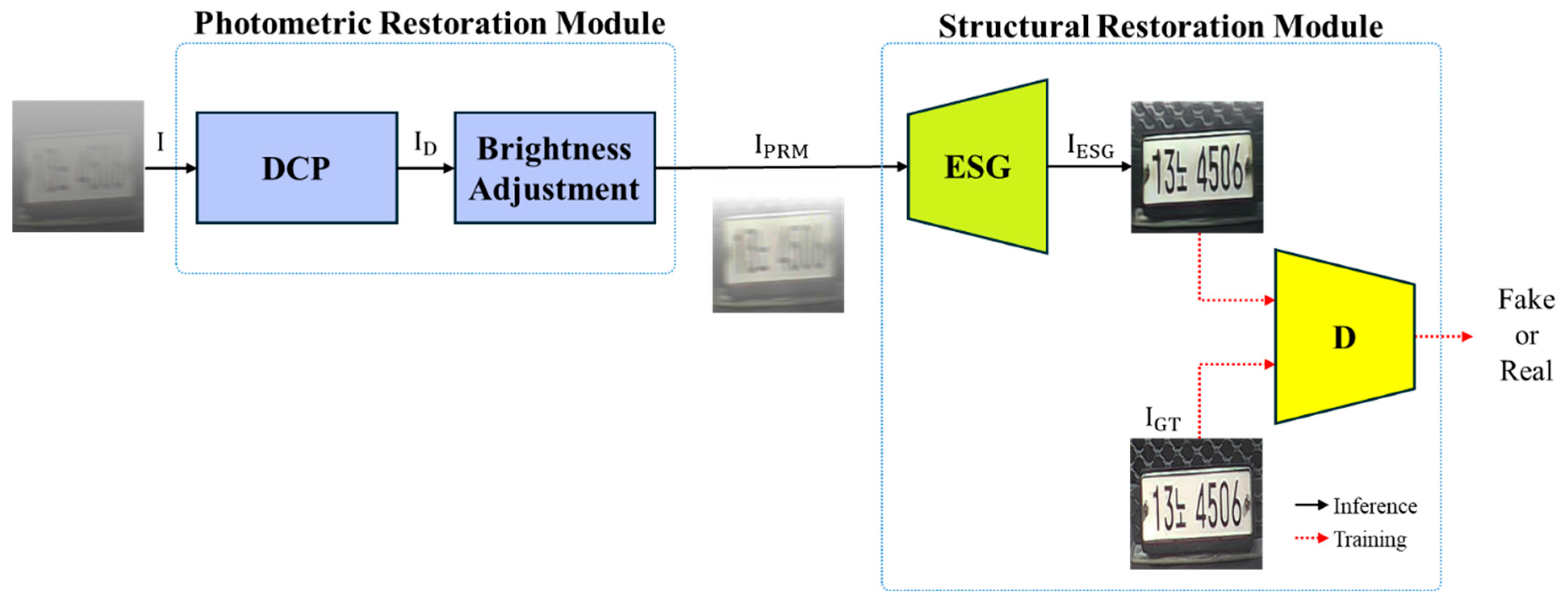
In this section, we describe the SDR-Net architecture and detailed components. The proposed framework is based on the observation that photometric and structural degradations possess heterogeneous physical characteristics and distinct restoration goals. Accordingly, the network is designed to decouple these two degradation components into independent optimization problems and process them sequentially. This stage-wise approach resolves the tradeoffs between degradation factors during the restoration process and incrementally secures the visual contrast and morphological structural information critical for ALPR.
3.1. Overview of the SDR-Net Architecture
SDR-Net adopts a two-stage serial architecture that prioritizes photometric correction of a degraded input image before proceeding with structural restoration based on the corrected result. This design addresses the optimization convergence difficulties that arise when a single network attempts to learn conflicting objective functions—namely, photometric compensation and structural recovery—simultaneously. By doing so, it incrementally constructs an optimal domain where the ALPR model can extract valid features.
The first module of the framework, the PRM, focuses on normalizing color contrast and luminance characteristics attenuated by low light and maritime haze. An input image undergoes a DCP-based dehazing and a multiscale brightness optimization process, which mitigates color distortion due to insufficient light and the blurring effects of atmospheric scattering. This module performs a prenormalization step that secures the dynamic range of the image and regularizes noise distribution, ensuring that character outlines and boundary information can be stably extracted in the subsequent structural restoration stage.
The second module, the SRM, is a GAN-based module designed to restore character outline loss and motion blur due to vehicle movement or camera vibration. The SRM aims to recover the structural consistency of character strokes and outlines from damaged images through adversarial learning between the edge structural generator (ESG) and discriminator (D). While inheriting the DeblurGAN backbone, the ESG integrates an edge-centric structural reinforcement and refinement mechanism that reflects the characteristics of objects with high structural sensitivity, such as license plate characters. This explicitly strengthens the high-frequency structural information corresponding to character strokes as well as ensures morphological stability and the continuity of outlines through a spatial attention mechanism. The discriminator evaluates the statistical distribution differences between the restored image and ground truth (GT), guiding the ESG to precisely reproduce the fine structures of the actual characters. This also effectively suppresses microartifacts that might otherwise be amplified during the photometric restoration stage.
This stage-wise restoration structure allows SDR-Net to structurally bypass the mutual interference issues that occur when simultaneously processing complex degradations. The uniform illumination and contrast information secured via the PRM enhance the SRM’s input quality, thereby accelerating the GAN-based model’s learning convergence. Meanwhile, the SRM’s edge-centric restoration process preserves the stroke and edge information essential for ALPR. Consequently, SDR-Net effectively resolves the tradeoff between photometric distortion correction and structural morphological recovery, technically guaranteeing vehicle identification robustness and system reliability.
Figure 1 shows an overview of the proposed framework.
3.2. PRM
The combination of maritime haze and low-light conditions severely degrades the contrast of vehicle license plate images in complex port environments [
6]. This phenomenon not only weakens the discriminative power between license plate characters and the background but also hinders the stable extraction of character outlines and fine stroke details during subsequent structural restoration. Therefore, we introduce the PRM to prenormalize the photometric characteristics of images before structural restoration, thereby securing overall visibility.
The PRM adopts a DCP-based dehazing technique as its core mechanism to correct visibility degradation due to atmospheric scattering. The DCP is based on the statistical observation that the minimum value of at least one color channel is close to zero in local patches of outdoor haze-free images. This provides a crucial clue for inverting the atmospheric scattering model. According to the standard atmospheric scattering model, the hazy input image
is expressed as follows [
13]:
where
is the haze-free scene radiance to be recovered,
is the transmission map representing the light portion that reaches the camera at pixel position
, and
is the global atmospheric light affecting the entire scene. Based on this, the inversion formula to calculate the visibility-enhanced image
is as follows:
Because the transmission map
is an unknown variable that cannot be measured directly by sensors, it is estimated by applying the DCP assumption as follows:
where
denotes the transmission map attenuation coefficient (
),
denotes a local window centered at pixel
, and
denotes the color channels of the input image. To mitigate noise and discontinuities near boundaries, the estimated transmission map
is regenerated into a refined transmission map
using guided filtering, which preserves the structural details of the image [
27].
Because Equation (2) contains
in the denominator, numerical instability may occur as the transmission rate approaches zero, leading to excessive brightness amplification or artifacts. A minimum transmission threshold
is set to prevent this and obtain stable restoration results, and the final restored image is calculated as follows:
Although DCP-based restoration excels at improving visibility under hazy conditions, it has limitations in fully addressing frequent extreme low-light problems in nighttime port photography [
28]. To supplement these physical constraints, we integrate an additional brightness adjustment process to optimize the global luminance distribution. The final corrected image is defined as follows:
where
denotes the contrast gain that adjusts the intensity difference between pixels, and
denotes the brightness bias parameter that controls the global image luminance. The illumination and contrast information secured through this stage provides the optimal input domain for the subsequent SRM, allowing the GAN-based model to accurately learn the characters’ geometric features and sharp edge information.
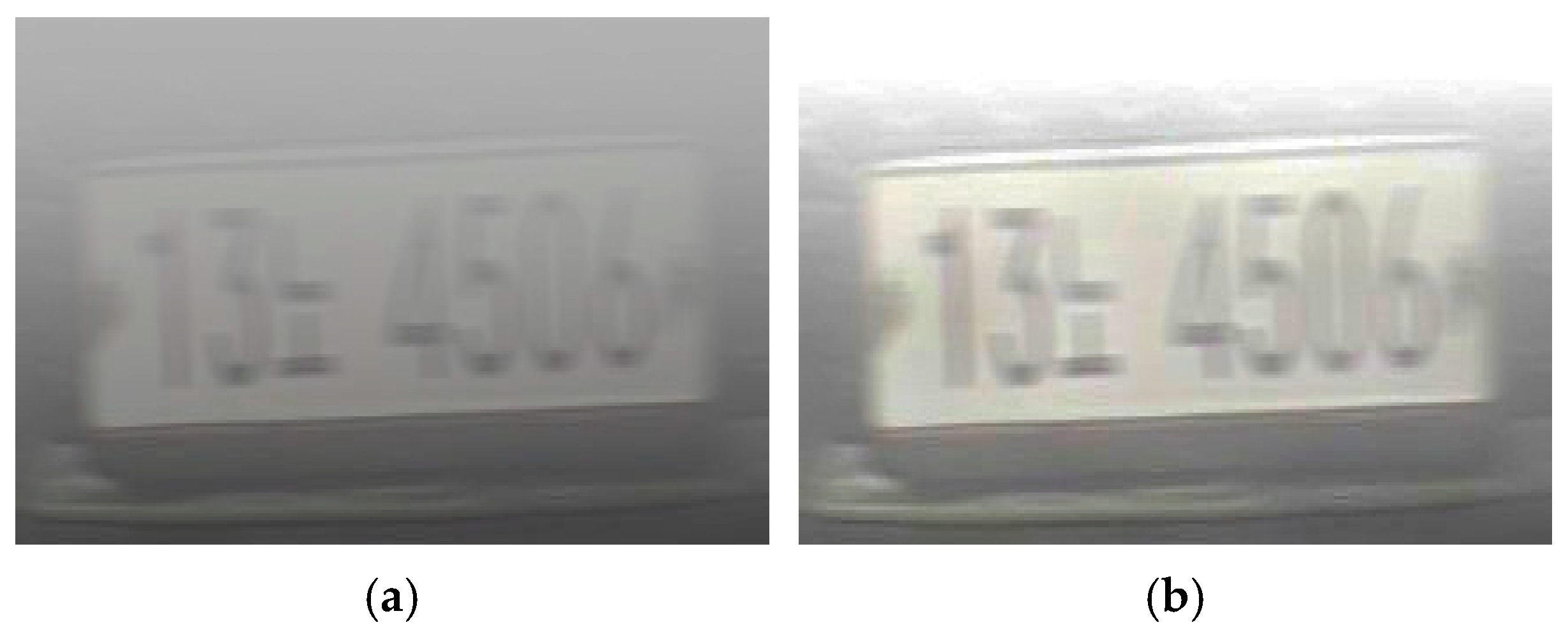
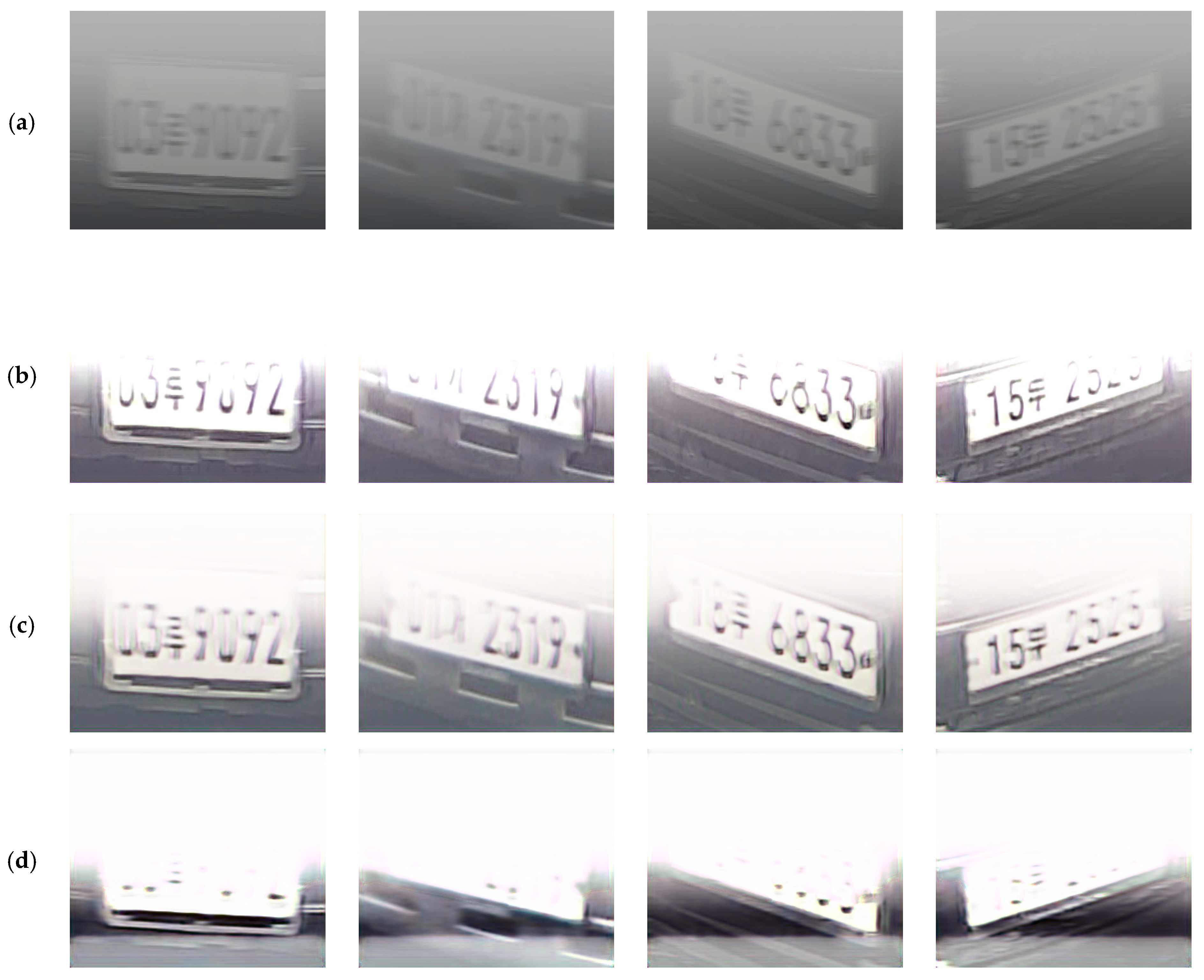
Figure 2 shows the step-by-step visual changes resulting from the PRM application.
3.3. SRM
Despite the photometric distortion correction and illumination imbalance via the PRM, motion blur—due to the movement of large vehicles and vibrations in the camera housing characteristic of port areas—remains in an image. This structural degradation hinders the continuity of license plate character strokes and blurs their boundaries, directly damaging the geometric features. Because ALPR systems are highly dependent on the fine outlines and structural consistency of characters, simple visibility enhancement alone cannot guarantee stable recognition performance. Therefore, we introduce a GAN-based SRM optimized for the restoration of lost high-frequency details and morphological preservation.
3.3.1. ESG
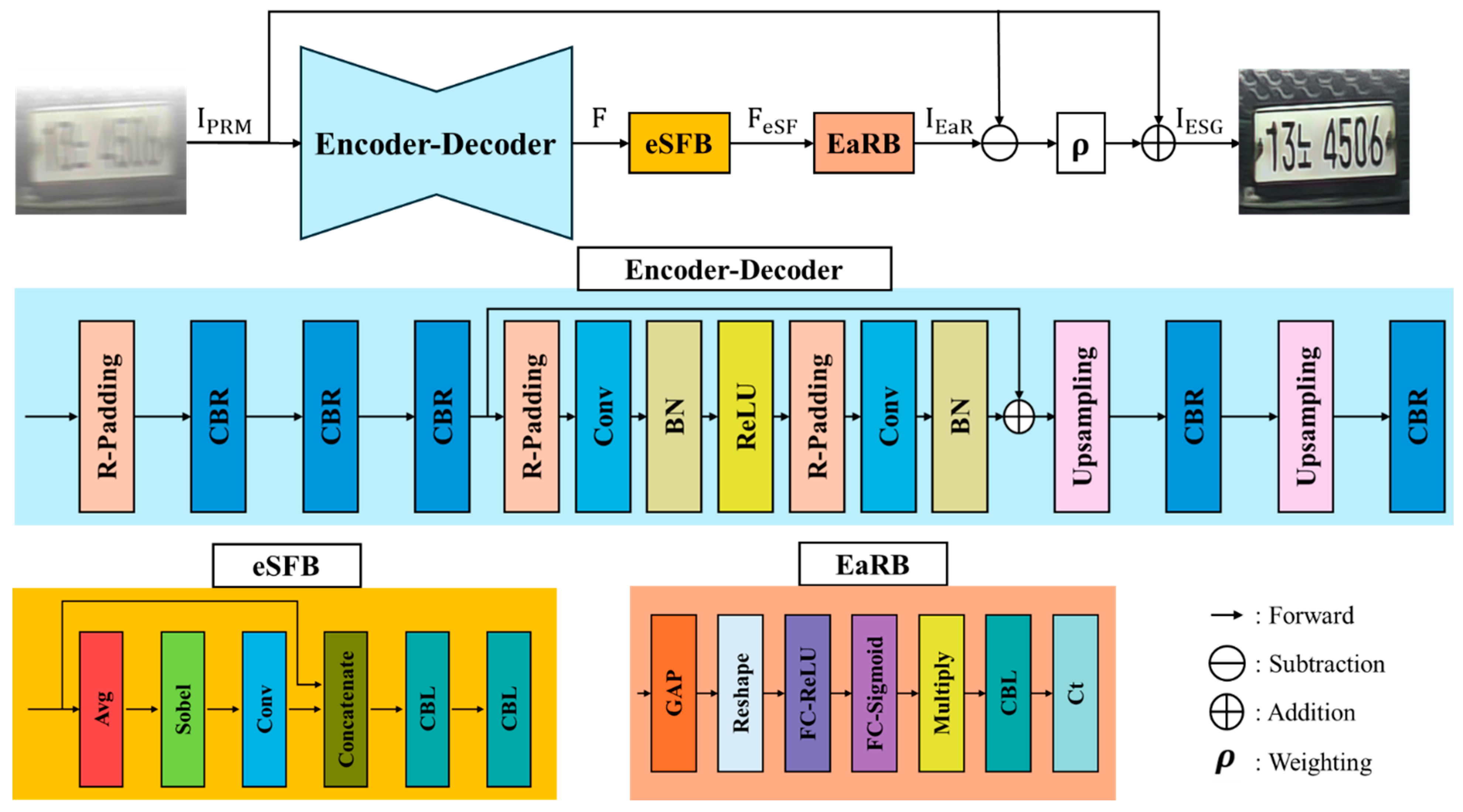
The ESG is designed to eliminate local blur, which is fatal to ALPR, while maintaining the image’s global context. Moving beyond a simple encoder–decoder structure, the proposed generator responds to the complex degradations of port areas through two key stages: explicit extraction of structural cues and adaptive feature refinement.
Figure 3 shows the overall architecture of the proposed ESG.
In the generator’s input stage, reflection padding is applied to maintain the continuity of character outlines even at image boundaries. The feature representation is stabilized through multistage Conv–Batch–ReLU (CBR) and residual blocks. Subsequently, the global restoration feature is derived via upsampling. However, because global restoration alone is insufficient to reproduce the high-frequency boundary components essential for ALPR, we introduce the eSFB to explicitly reinforce structural cues from .
The eSFB extracts high-frequency components through channel averaging and directional boundary operations and combines them with existing structural features to generate a feature representation with enhanced boundary information. First, a single-channel structural representation
is derived by applying a channel averaging operation to
:
where
denotes the
i-th channel of
, and
is the total number of channels. Second, the horizontal and vertical Sobel kernels (
) are applied to
to calculate the directional boundary components
and
:
These two components are combined into a gradient magnitude form to reflect the overall boundary intensity of the character outlines as follows:
where
is a small constant for numerical stability. The generated edge feature map
is expanded to the same number of channels as the original feature through
convolution and then concatenated. This combined feature passes through consecutive convolution–BN–LeakyReLU (CBL) blocks and is transformed into the feature
, which reinforces character stroke information across various spatial scales:
However, the reinforced feature
may have certain outlines excessively amplified or noise emphasized due to deviations in the channel-wise response intensity. To address this, we apply the EaRB, a channel-wise refinement module. Based on the squeeze-and-excitation mechanism, the EaRB reweights channel-wise importance to select only structural representations effective for recognition. First, a channel-wise summary vector
is generated through the following global average pooling:
This vector indicates how consistently each channel is activated across the entire space, serving as a criterion to distinguish boundary channels—which are structurally repetitive, such as character strokes—from channels activated by local noise. The vector then passes through two sequential fully connected (FC) layers to learn channel importance. The first FC–ReLU layer acts as a bottleneck to learn interchannel dependencies by reducing the channel dimension, whereas the second FC–Sigmoid layer transforms the channel importance into normalized weights
between 0 and 1, which are applied to the input features as follows:
The feature
with channel reweighting applied maintains components effective for recognition while suppressing channels showing noise or excessive response. Second, the restoration result
in the RGB domain is generated through consecutive CBL and convolution–tanh (Ct) blocks. The final output image
is formed through weighted linear interpolation with the input image
:
where
is a weighting coefficient that adjusts the contribution of the boundary restoration result. This ensures the restoration’s stability by preventing excessive reflection of local boundary information while maintaining global structural consistency.
3.3.2. Discriminator
The discriminator in the SRM identifies statistical distribution differences between the images restored by the generator and the GT, providing adversarial loss signals that guide the generator to reproduce more sophisticated, detailed structures. The discriminator is designed not only to evaluate the overall quality of an image but also to strictly determine how closely the local geometric features of character strokes and boundaries align with the actual data distribution.
Figure 4 shows the discriminator architecture.
In the discriminator’s input stage, initial spatial features are extracted using convolutions and the LeakyReLU activation function. The subsequent multistage CBL blocks progressively reduce spatial resolution through stride-based downsampling while simultaneously expanding the number of feature channels. This process enables the discriminator to hierarchically analyze an image, ranging from low-frequency contextual information to high-frequency fine-stroke components. This hierarchical feature extraction induces the discriminator to effectively recognize not only the overall shape of a license plate but also the sharp boundary components of characters where motion blur has been removed. The final extracted high-dimensional feature map undergoes a flattening process to be converted into a one-dimensional vector, which then passes through an FC layer to output a single scalar value. This output value represents the probability that the input image belongs to the actual data distribution, and the generator is trained to maximize this probability. Consequently, the discriminator acts as a robust constraint, forcing the generator to suppress residual noise that may occur in the PRM and ensuring that the character structures emphasized via the eSFB and EaRB possess the morphological characteristics of real characters rather than artifacts.
3.3.3. Loss Function
In this study, a multiobjective loss function is designed to train the generator to stably restore license plate character outlines and stroke structures distorted by complex degradation. The proposed loss function comprises a content loss, which maintains the perceptual consistency of a restored image, and a Wasserstein GAN (WGAN)-based adversarial loss [
29], which supplements the visual realism of an image, thereby securing both structural accuracy and textural authenticity.
First, a perceptual loss is introduced to minimize the high-level perceptual feature difference between a restored image and GT. This approach overcomes the limitations of simple pixel-wise distance measurements, which often fail to reflect actual changes in visual structure. Using the feature map
from a specific layer of the pretrained VGG16 network [
30], the loss function is defined as follows:
where
and
represent the spatial dimensions of the corresponding feature map. This loss term suppresses morphological distortion during the restoration process by controlling the global geometric arrangement of an image within the feature space.
The next core loss is the edge loss (
), which is directly linked to the clarity of the license plate characters. In alignment with the explicit extraction of boundary information by the eSFB module within the generator, this loss term enforces the consistency of boundary structures using a gradient magnitude calculated via the Sobel operator at the loss function stage.
where
denotes the gradient magnitude calculated by applying the Sobel operator to an input image, and
and
are the spatial resolutions. This loss term directly controls the character outlines and structural boundaries weakened by motion blur.
Further, we propose a dark-weighted edge loss (
), reflecting the low-light characteristics of port areas. In low-light images, the SNR of dark character regions is lower than that of bright backgrounds, making structural restoration challenging. To address this, a higher penalty is assigned to the boundary restoration of dark character regions by applying a weighting function
that is inversely proportional to the pixel luminance value
of the GT.
where
is a weighting function based on the grayscale value of the GT image
, defined to have larger values in darker regions. This weighting design induces the neural network to prioritize learning fine structures near character strokes, where restoration difficulty is high. The final content loss is constructed by combining weighting coefficients
to adjust the contribution of each term:
where
represents the weighting coefficients used to balance the relative contribution of each loss term.
Finally, a WGAN-based adversarial loss is integrated to supplement the visual sharpness of a generated image. The generator’s adversarial loss (
) encourages the discriminator to mistake a restored image for a real image and is defined as follows:
where
is the discriminator network’s output,
is the
n-th restored image in a minibatch, and
is the minibatch size. This loss term supplements the realistic reproduction of textures and fine structures difficult to control solely with restoration-based losses. The generator is ultimately trained to minimize
. The discriminator drives the generator’s performance through the loss function
, which maximizes the distribution difference between real and restored images:
The discriminator is trained to output higher values for the GT and lower values for restored images, and the resulting adversarial signal is reflected into the generator’s training. As a result, the generator learns to produce images that harmonize structural consistency and visual realism. The SRM can stably restore the detailed outlines and stroke structures of license plate characters even in complex degradation environments through this mutually reinforcing training structure.
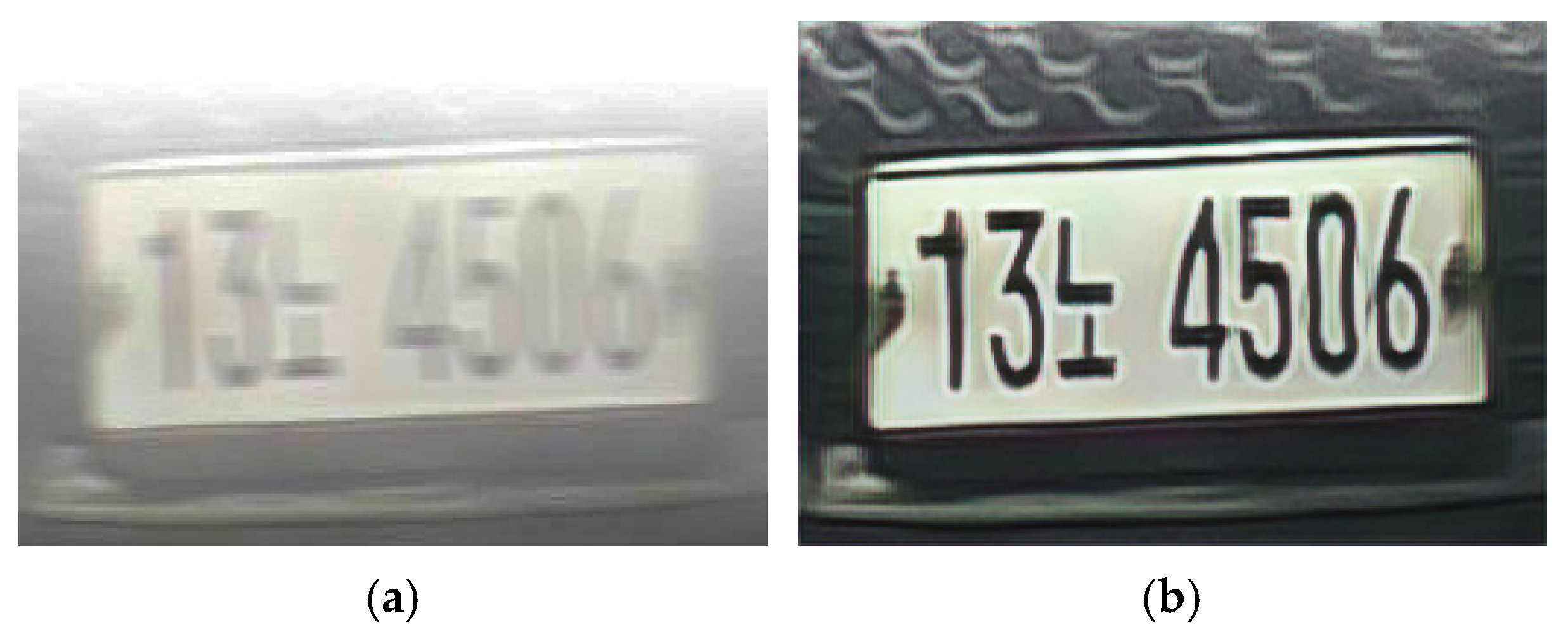
Figure 5 qualitatively demonstrates that the proposed structural restoration technique effectively recovers high-frequency information distorted by motion blur and reproduces visual features optimized for ALPR systems by comparing images before and after the application of SRM.
4. Results
In this section, we present a quantitative and qualitative evaluation of SDR-Net under complex degradation conditions typical of port areas. The effectiveness of the framework is validated primarily through license plate character recognition performance. To achieve this, the restoration results are integrated into an optical character recognition (OCR)-based ALPR pipeline to compare the final recognition accuracies. Experiments were conducted by synthetically applying low-light, haze, and motion blur—degradations frequently encountered in port areas—to real-world license plate images. For comparative analysis, we select state-of-the-art (SOTA) algorithms specialized in either photometric enhancement or structural restoration to verify the performance gap with the proposed framework.
4.1. Experimental Setup
Experiments were conducted on a system equipped with an NVIDIA GeForce GTX 1080 Ti GPU and an Intel Core i7-8700 CPU. The dataset was sourced from the Republic of Korea Vehicle License Plate OCR dataset provided by AI-Hub [
31], comprising 3999 and 418 images for training and testing, respectively. Unlike numeric only datasets, this collection includes diverse license plate configurations containing both numeric digits and complex Korean phonetic characters. This inclusion ensures that the restoration performance is validated across various stroke densities, providing a technically rigorous environment for evaluating character legibility. All input images were resized to
pixels to maintain dimensional consistency. Low-light, haze, and motion blur were synthetically applied during the preprocessing stage to simulate the specific complex degradations of a port environment.
For the low-light condition, a brightness coefficient of 0.4 was applied using a PIL-based adjustment [
32] to induce a global luminance drop. This reflects the typical illumination levels observed during nighttime port operations and serves as a baseline environment to independently analyze the model’s robustness against varying motion blur and haze intensities. Haze degradation was modeled using the atmospheric scattering equation presented in Equation (1). The transmission map
was defined with an attenuation coefficient
that was progressively increased to create various intensity levels. A spatial exponential mask
was applied to
, where haze becomes denser from the bottom to top of an image, physically approximating how maritime haze appears thicker toward the horizon and distant backgrounds in actual port environments. Motion blur was applied via a convolution operation between an input image and a linear kernel
of length
. The kernel
simulates directional motion blur, with each element normalized to
. The filter length
is the parameter for controlling the blur intensity; the range of directional blurring expands as
increases.
The use of these synthetic degradation models is a strategic choice necessitated by the extreme difficulty of acquiring paired datasets in restricted port security zones. Because obtaining perfectly aligned clean and degraded image pairs is physically impractical under fluctuating maritime weather conditions, we employed these rigorous physical models to simulate the core challenges of port environments. This approach ensures a controlled experimental framework for evaluating the multi stage restoration performance of SDR-Net, providing a technically valid substitute for authentic field data where ground truth is unavailable.
Table 1 lists the key parameters set for degradation correction and model training. For the DCP-based dehazing process in the PRM, we used a transmission map attenuation coefficient
, a local window size
, and a transmission map lower bound
. For brightness adjustment, the contrast gain
and brightness offset
were used, and the linear interpolation coefficient
for integrating structural restoration results at the final output was set to 0.7. During training, the learning rate was set to
. These parameters were determined through preliminary experiments to achieve the optimal balance between the restoration performance and training stability.
4.2. Evaluation Metric
Before evaluating OCR-based recognition performance, we used the multiscale SSIM (MS-SSIM) to quantitatively verify the structural quality of restored images. Conventional metrics, such as PSNR and single-scale SSIM, are based on pixel-wise errors or global structural similarity, which limits their ability to precisely reflect the preservation of fine-character curvatures and high-frequency boundary components, which are both critical for license plate recognition. Meanwhile, MS-SSIM hierarchically evaluates luminance, contrast, and structural information across multiple scales, making it more suitable for measuring restoration performance in license plate images, where the continuity of character boundaries and the preservation of detailed structures are paramount. MS-SSIM extends single-scale SSIM by weight-combining similarity terms calculated at various resolutions as follows:
where
denotes the luminance similarity at the final scale
, and
and
denote the contrast and structural similarity at scale
, respectively. The exponential parameters
,
, and
are weights that adjust each component’s relative contribution.
Following the structural integrity evaluation, we analyzed recognition performance using OCR to verify the impact of SDR-Net on actual vehicle identification capabilities. Considering the realistic effects of complex port degradations on recognition, we introduced tolerant accuracy (TA) as the final evaluation metric. TA counts a prediction as correct not only when the predicted string
perfectly matches the GT
but also when a single-character error occurs within the same string length. TA for the entire evaluation dataset is defined as follows:
where
is an indicator function that returns 1 if the predicted value is within the tolerance range,
denotes the Levenshtein distance [
33] between two strings, and
is the total number of images used for evaluation. This evaluation method is a practical metric because port security control systems allow for fuzzy matching via database lookups to identify vehicles even when single characters are misidentified. Further, it allows for a more objective assessment of how much a restoration model contributes to the practical robustness of an ALPR system in complex degradation environments.
Because TA is calculated based on OCR outputs, the choice of the OCR model can influence its results. Consequently, we preselected a baseline OCR model, considering representative models used for ALPR: PaddleOCR [
34], MMOCR [
35], and Deep-text-recognition-benchmark [
36]. To compare the basic recognition performance among these models, we used clean license plate images captured in normal environments without any degradation factors.
Table 2 shows the comparison of ALPR performance for each OCR model based on TA.
As shown in the table, all three OCR models exhibited high recognition performance on normal license plate images; however, the Deep-text-recognition-benchmark recorded the highest TA. Therefore, we used the Deep-text-recognition-benchmark as the fixed baseline OCR model for all subsequent OCR-based performance evaluations.
4.3. Ablation Study
To quantitatively analyze the contribution of each module within the proposed restoration framework, an ablation study was conducted under a complex degradation setting of haze intensity
and motion blur
. The experimental conditions were configured by individually removing components: DCP and Brightness Adjustment from the PRM, and eSFB and EaRB from the SRM. Changes in MS-SSIM and TA were measured for each configuration.
Table 3 summarizes the performance comparison results based on the combination of modules.
The loss of color contrast and transparency due to haze and low light was not sufficiently corrected before entering the restoration network when DCP was removed from the PRM, resulting in an MS-SSIM of 0.50 and a TA of 17.7%. DCP is an essential prerequisite for securing basic visual cues for character outline and boundary recognition before structural restoration occurs. Meanwhile, removing Brightness Adjustment resulted in the collapse of the overall contrast, causing the performance to drop sharply to an MS-SSIM of 0.35 and a TA of 1.67%. These results imply that securing a baseline luminance level is necessary for the dark-weighted edge loss’s effective functioning. Thus, Brightness Adjustment plays a pivotal role in ensuring actual character legibility.
In the SRM, removing only the eSFB decreased MS-SSIM and TA to 0.69% and 61.72%, respectively, as high-frequency boundary components damaged in the license plate outlines were not sufficiently recovered. This demonstrates that character recognition performance is more dependent on local geometric information than on global structural information, such as stroke thickness and boundary sharpness. Similarly, removing only the EaRB resulted in an MS-SSIM of 0.69 and a TA of 59.57%. This indicates that the EaRB plays a pivotal role beyond mere edge enhancement; it suppresses unnecessary noise generated during the restoration process through channel-wise importance reweighting and organizes the result into a stable, recognizable structure.
The proposed framework—including all modules—achieved the highest performance with an MS-SSIM of 0.85 and a TA of 97.13%, as the PRM and SRM worked synergistically. These results technically prove that each module is not merely an independent auxiliary element but functions complementarily within a stage-wise restoration pipeline—progressing from visual cue acquisition to structural restoration, boundary refinement, and morphological stabilization—to ensure the entire system’s robustness.
4.4. Quantitative Performance Analysis
In this section, we quantitatively analyze the robustness of the proposed stage-wise restoration framework against variations in haze and blur intensity in complex degradation environments. To this end, the restoration performance was measured by incrementally increasing the haze intensity and motion blur kernel size. We evaluated whether the proposed framework maintains stable performance compared with existing restoration techniques. We selected LPDGAN [
23] from the structural restoration category and MPGAN [
16] and URetinex-Net [
17] from the photometric restoration category for the comparative models.
4.4.1. Analysis of Performance Across Haze Intensities
Table 4 presents the comparison of MS-SSIM performance as the haze intensity
increases. LPDGAN showed an MS-SSIM of 0.84 at
, but the performance dropped to 0.6 at
. While effective in structural restoration for motion blur, LPDGAN reaches its limits in environments where luminance and contrast degradation accumulate due to haze. MPGAN, which is specialized for dehazing, also recorded relatively low values (0.77 at
, 0.46 at
). This occurs because the model mistakes haze particles for valid structural information when photometric noise is not removed before structural refinement, leading to artifacts. URetinex-Net recorded a high value of 0.88 at
due to its low-light enhancement effect. However, as the haze intensity increased, the combination of scattering components and global brightness enhancement caused character outlines to rapidly disappear, resulting in a sharp decline to 0.35 at
. Meanwhile, SDR-Net maintained the highest MS-SSIM across all intervals, recording a score of 0.67 even at the highest intensity (
), proving its ability to stably preserve the global structure and contrast of an image.
Table 5 shows the recognition accuracy (TA) according to haze intensity. All comparison models experienced marked performance drops, particularly after
. The baseline OCR without restoration achieved only 55.74% TA at
and became virtually unusable as the haze intensity increased. Other models maintained over 94% TA up to
but collapsed at higher levels. Meanwhile, SDR-Net maintained overwhelming performance, recording 97.85% at
and 91.63% even at
. This success is attributed to the strategy of prioritizing global photometric mitigation before precisely restoring character boundary information.
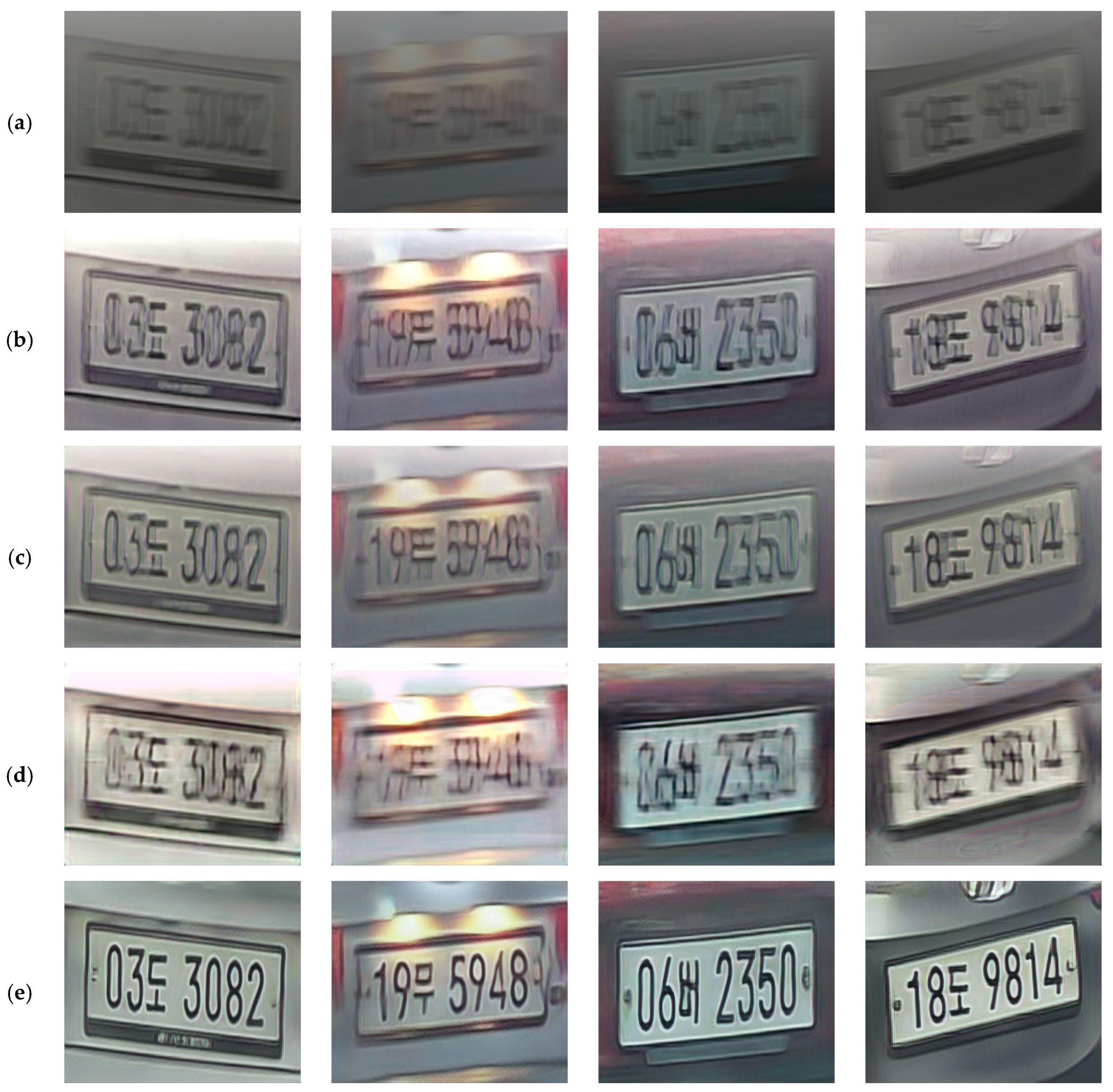
Figure 6 shows the qualitative performance comparison in an extremely complex degradation environment (Level 5,
). In the original image (
Figure 6a), character boundaries are extremely unclear due to overlapping haze, blur, and low light. LPDGAN (
Figure 6b) failed to overcome the contrast drop, resulting in overexposed areas and loss of discriminative power. MPGAN (
Figure 6c) recovered some contrast but failed to mitigate blur, limiting legibility. URetinex-Net (
Figure 6d) showed character outlines being buried in the background due to excessive brightness correction. Meanwhile, SDR-Net (
Figure 6e) maintained a stable contrast between character strokes and the background, ensuring superior legibility even in dense haze.
4.4.2. Analysis of Performance Across Blur Intensities
Table 6 presents the comparison of MS-SSIM performance as the motion blur kernel length L increases. LPDGAN showed a sharp decline in MS-SSIM, dropping from 0.84 at
to 0.62 at
. Although LPDGAN is specialized for motion blur removal, it does not account for the photometric degradations due to low light and haze; thus, luminance and contrast distortions limit its structural restoration effectiveness. MPGAN, which focuses on dehazing, recorded the lowest overall scores (0.56 at
) due to its architectural inability to recover high-frequency information, such as blurred character outlines. Although URetinex-Net maintained a relatively high MS-SSIM of 0.68 at
due to its brightness correction capabilities in low-light environments, this reflects improvement primarily in the luminance term rather than a sufficient recovery of the characters’ structural details. Meanwhile, SDR-Net recorded the highest values across all intervals, maintaining an MS-SSIM of 0.80 even under the extreme condition of
, validating its stage-wise design’s superiority.
The robustness of SDR-Net is further highlighted in the TA results summarized in
Table 7. The baseline OCR without restoration recorded a TA of 55.74% at L
and converged to nearly 0% from L
onward, confirming that character recognition is impossible in strong blur environments. LPDGAN performed well at low blur intensities (over 95%) but plummeted below 50% at L
. MPGAN and URetinex-Net similarly experienced a collapse in recognition performance as blur intensity increased. Meanwhile, SDR-Net maintained the highest performance, with 97.85% at L
and 63.64% even at L
. These results demonstrate that a structural restoration strategy—directly preserving and reinforcing character strokes and boundaries—is essential for vehicle identification in complex degradation environments.
Figure 7 qualitatively compares the performance of each model at
. In the original image (
Figure 7a), the character outlines are nearly lost due to the combination of strong motion blur and low light. LPDGAN (
Figure 7b) restores some outlines, but legibility remains poor due to low contrast. MPGAN (
Figure 7c) improves global brightness, but the character strokes remain clumped together. URetinex-Net (
Figure 7d) exhibits artifacts where stroke thickness becomes uneven due to excessive illumination correction. Meanwhile, SDR-Net (
Figure 7e) achieves the best legibility by clearly restoring character strokes and outlines based on stable brightness and contrast. This qualitatively proves that the proposed method—separating photometric and structural degradations for stage-wise processing—is most effective in real-world port surveillance scenarios.
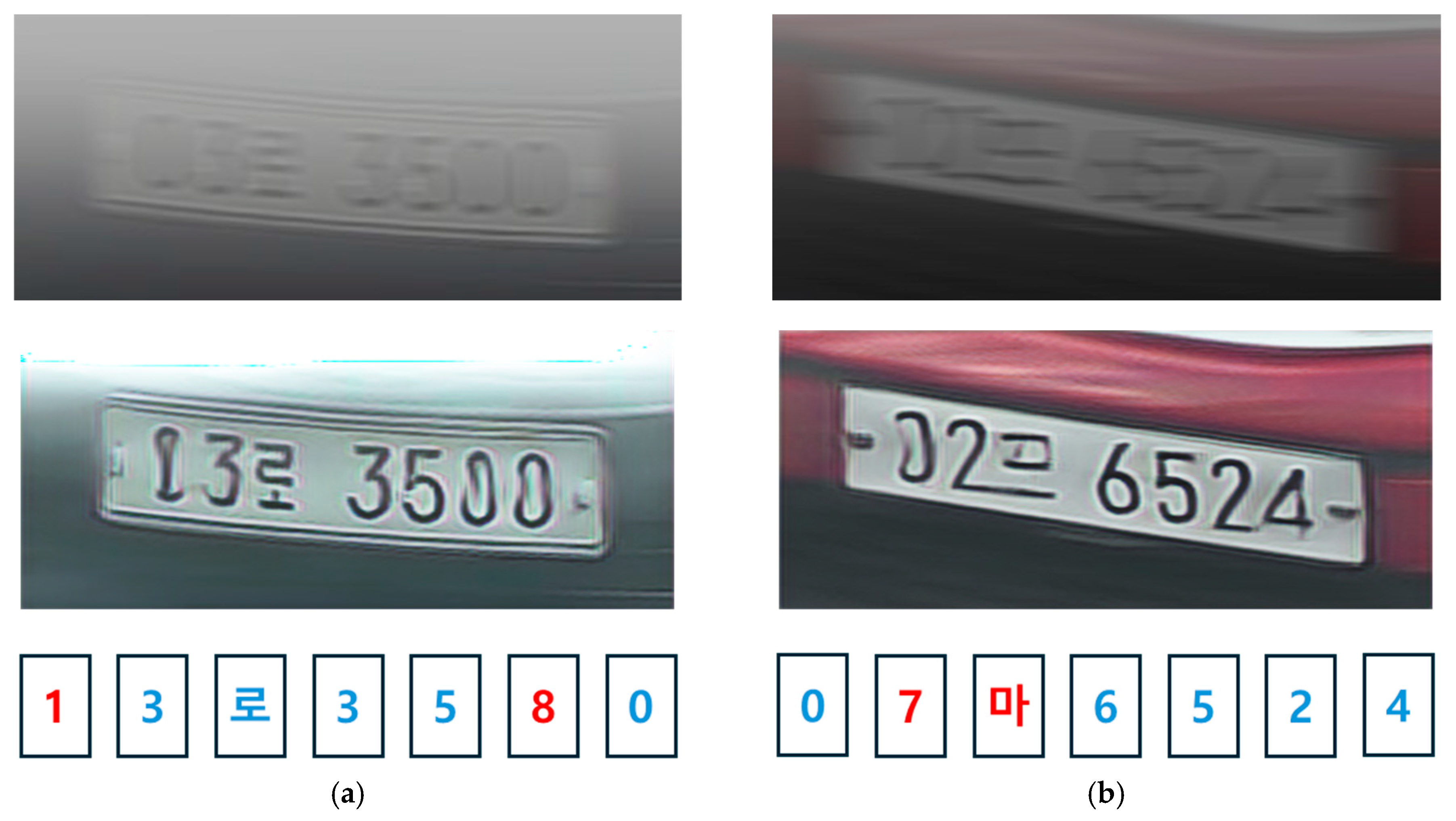
Figure 8 illustrates representative qualitative failure cases observed under extreme environmental conditions. In scenarios with exceptionally high haze density, the light scattering is so severe that the distinction between character strokes and the background remains insufficient even after photometric refinement. This leads to residual contrast loss, causing the OCR engine to misidentify characters with similar circular structures, such as misrecognizing ‘0’ as ‘1’ or ‘8’. Under conditions of intense camera vibration or high vehicle speed, the structural integrity of the strokes is severely compromised. The resulting morphological distortion leads to the merging of adjacent stroke components, causing errors such as misidentifying ‘2’ as ‘7’ or ‘모’ as ‘마’ due to the collapse of character connectivity. These qualitative findings are consistent with the quantitative performance drops observed in the high-intensity degradation zones of
Table 5 and
Table 7.
In conclusion, although existing methods, such as LPDGAN, MPGAN, and URetinex-Net, exhibit strengths in correcting specific degradation types, they show a distinct decline in performance under complex, overlapping degradation conditions. Meanwhile, SDR-Net maintained high MS-SSIM and TA across all tested degradation intensities by decoupling photometric and structural degradations for stage-wise restoration. The results quantitatively support the technical validity and effectiveness of the proposed restoration strategy in securing ALPR reliability in actual port surveillance environments.
5. Discussion
The experimental results suggest that improvements in image quality metrics, particularly MS-SSIM, do not necessarily translate directly to enhanced OCR performance. This is because ALPR accuracy depends heavily on the preservation of local high-frequency structural information—specifically, the strokes and boundaries of characters—rather than just global structural similarity or general restoration of luminance and contrast. Consequently, we confirmed that even if visual quality appears improved, a lack of sufficient morphological detail restoration for character structures prevents considerable gains in actual recognition performance.
The experimental evaluation of SDR-Net was conducted using a dataset specifically designed to simulate the complex multi physical degradations of port environments. By utilizing synthetically generated haze and motion blur, we were able to maintain rigorous control over the degradation intensity, which is essential for obtaining precise ground truth comparisons and identifying the specific contributions of each restoration module. While these controlled settings provide a robust baseline for benchmarking, it is important to note that they may not fully capture the stochastic nature of real-world maritime environments, such as non-uniform atmospheric scattering or sensor specific noise patterns. Therefore, the performance gains observed in this study validate the functional effectiveness of the stage-wise restoration strategy under complex yet structured degradation conditions.
Existing comparison models showed effective restoration for specific degradation types but revealed common limitations in environments where photometric and structural degradations co-exist. Restoring brightness and contrast under low-light and hazy conditions is insufficient to guarantee the structural continuity of character strokes. Meanwhile, focusing solely on motion blur removal is hindered if photometric degradation is not corrected first, as the feature extraction performance—the very foundation of structural restoration—remains limited. These findings experimentally validate the mutual interference problem raised in
Section 2.3, suggesting that strategies optimized for a single degradation type struggle to ensure effective performance for ALPR systems in complex environments. These results imply that although general image quality metrics, such as MS-SSIM can indirectly explain ALPR performance, they do not fully represent the restoration of local structural information critical for character recognition. Elements such as stroke sharpness, boundary continuity, and local contrast between characters and the background are difficult to capture through global quality metrics alone. Therefore, an integrated analytical perspective that considers both photometric and structural factors is essential for accurately evaluating ALPR performance in complex degradation environments.
To overcome these limitations, SDR-Net adopts an architecture that clearly decouples photometric and structural degradations for sequential restoration. By first securing the visual conditions necessary for character perception through dehazing and brightness correction and then precisely restoring character strokes and outlines via structural restoration and boundary refinement modules, SDR-Net maintained stable OCR performance even under complex degradation conditions. To ensure the practical relevance of this methodology, the architecture was optimized for single pass inference within a sequential pipeline. This design choice allows the system to operate without the need for iterative optimization, ensuring that the computational cost remains suitable for real-time deployment in high traffic logistics hubs. This demonstrates that a stage-wise restoration strategy is advantageous for reducing mutual interference between degradation factors and effectively preserving character legibility.
This study clarifies the limitations of existing restoration methods specialized for single degradation types and proves that an integrated photometric–structural restoration design is essential when developing practical ALPR systems. These discussions not only suggest a direction for designing preprocessing modules in future vehicle ALPR systems but also provide a technical foundation for developing new image quality evaluation metrics directly linked to character legibility and recognition performance. While the current validation was primarily conducted on a simulated testing set due to the lack of publicly available maritime benchmarks, the robustness of the decoupling logic was verified across a broad spectrum of superimposed degradation scenarios. Future research will aim to incorporate authentic field data from diverse logistics hubs to further validate the cross domain applicability of the proposed framework once the accessibility and security constraints of port facilities are resolved.
6. Conclusions
We proposed SDR-Net, a framework designed to maximize vehicle ALPR performance in environments where photometric and structural degradations occur simultaneously, such as in port areas. By clearly distinguishing between photometric damage (induced by low light and haze) and structural degradation (such as motion blur and character stroke loss) as well as serializing these into a PRM and an SRM, the proposed framework resolves the training convergence instabilities observed in traditional end-to-end methods under complex conditions. The design strategy allows for the preliminary establishment of visual conditions necessary for character perception, followed by a structural refinement process to recover high-frequency boundary components, enabling stable restoration of license plate information even under extreme conditions.
Experimental results demonstrated that SDR-Net consistently maintains higher character recognition accuracy than SOTA restoration models across scenarios with varying combined degradations. Notably, the performance gap between SDR-Net and comparison models widened as the intensity of degradation increased, indicating its robustness. Further, by analytically proving that global image quality metrics such as MS-SSIM do not simply correlate with actual OCR performance, we clearly identified that the precise restoration of structural details—such as character strokes and edges—is the decisive factor for improving ALPR, far beyond mere global visual enhancement.
Despite these contributions, this study has certain limitations. The current validation was primarily conducted on a simulated testing set due to the high security and accessibility constraints of actual port facilities, which may not fully reflect the stochastic noise patterns of real-world maritime environments. Furthermore, we observed that the restoration effectiveness can be constrained under extreme conditions, such as near-zero visibility haze or excessive motion blur, where the structural information of character strokes is lost below a physically recoverable threshold.
Future research will focus on building large-scale datasets that more accurately reflect the dynamic changes of actual port environments, alongside model light-weighting and inference speed optimization for real-time surveillance applications. SDR-Net can serve as a core technology for enhancing the security of 24 h port logistics systems and holds strong potential for expansion into various outdoor visual recognition solutions, such as autonomous driving and smart city monitoring.