Article

Parameter Study and Structural Optimization of Liquid Cooling Plates with Internal Spiral Rib for High–Capacity Lithium Batteries


1
School of Power Engineering, Naval University of Engineering, Wuhan 430033, China
2
School of Energy, Mechanical & Electronic Engineering, Hunan University of Humanities, Science and Technology, Loudi 417000, China
*
Authors to whom correspondence should be addressed.
Mathematics 2026, 14(6), 1002; https://doi.org/10.3390/math14061002
Submission received: 13 February 2026 / Revised: 12 March 2026 / Accepted: 14 March 2026 / Published: 16 March 2026
(This article belongs to the Section E4: Mathematical Physics)

Abstract

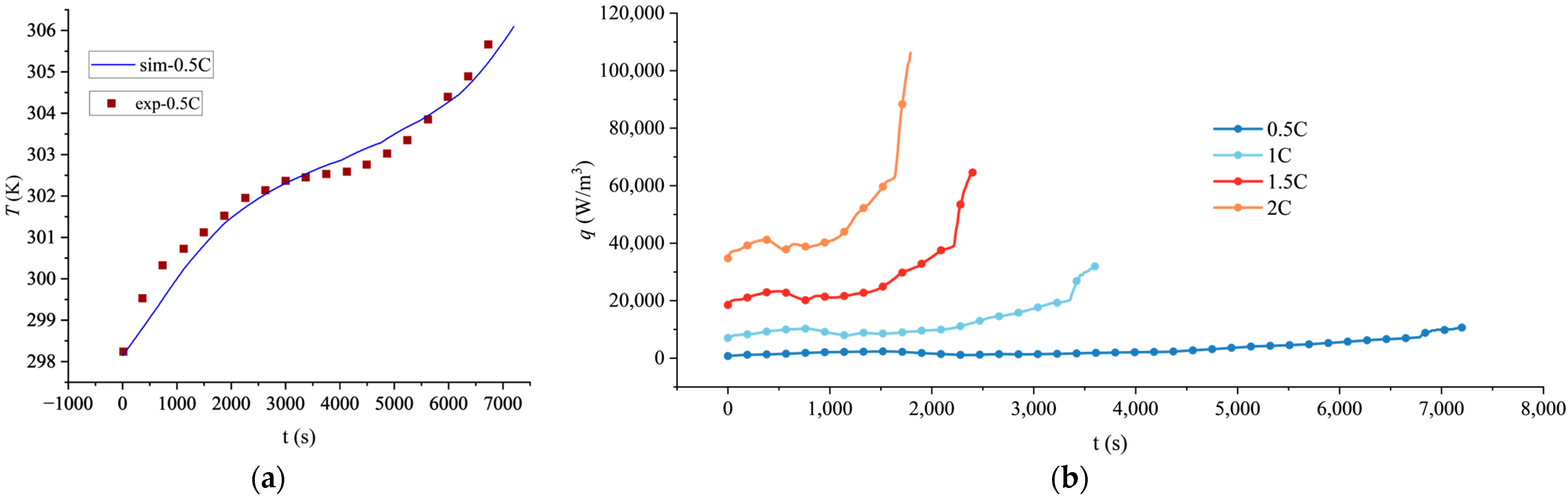
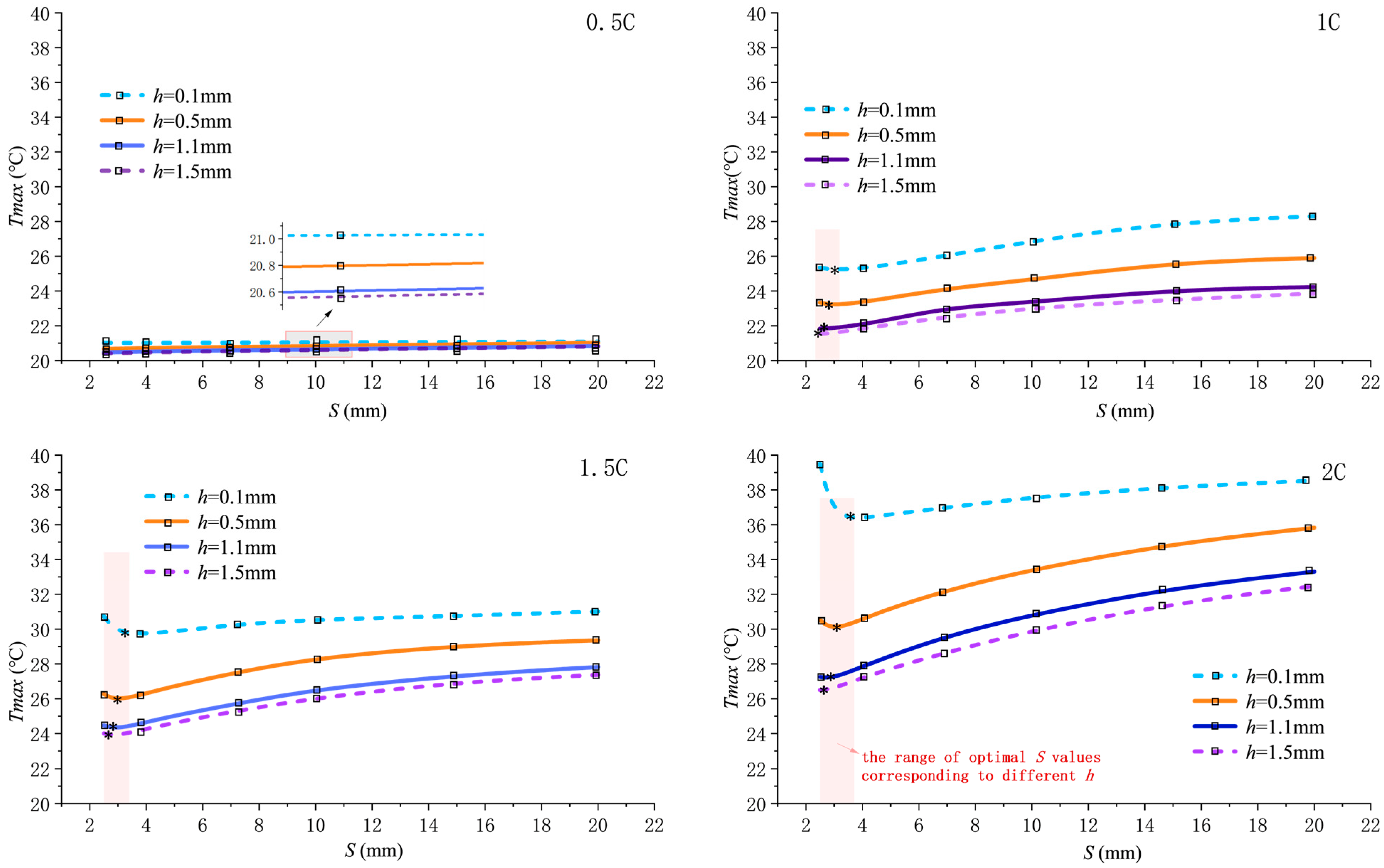
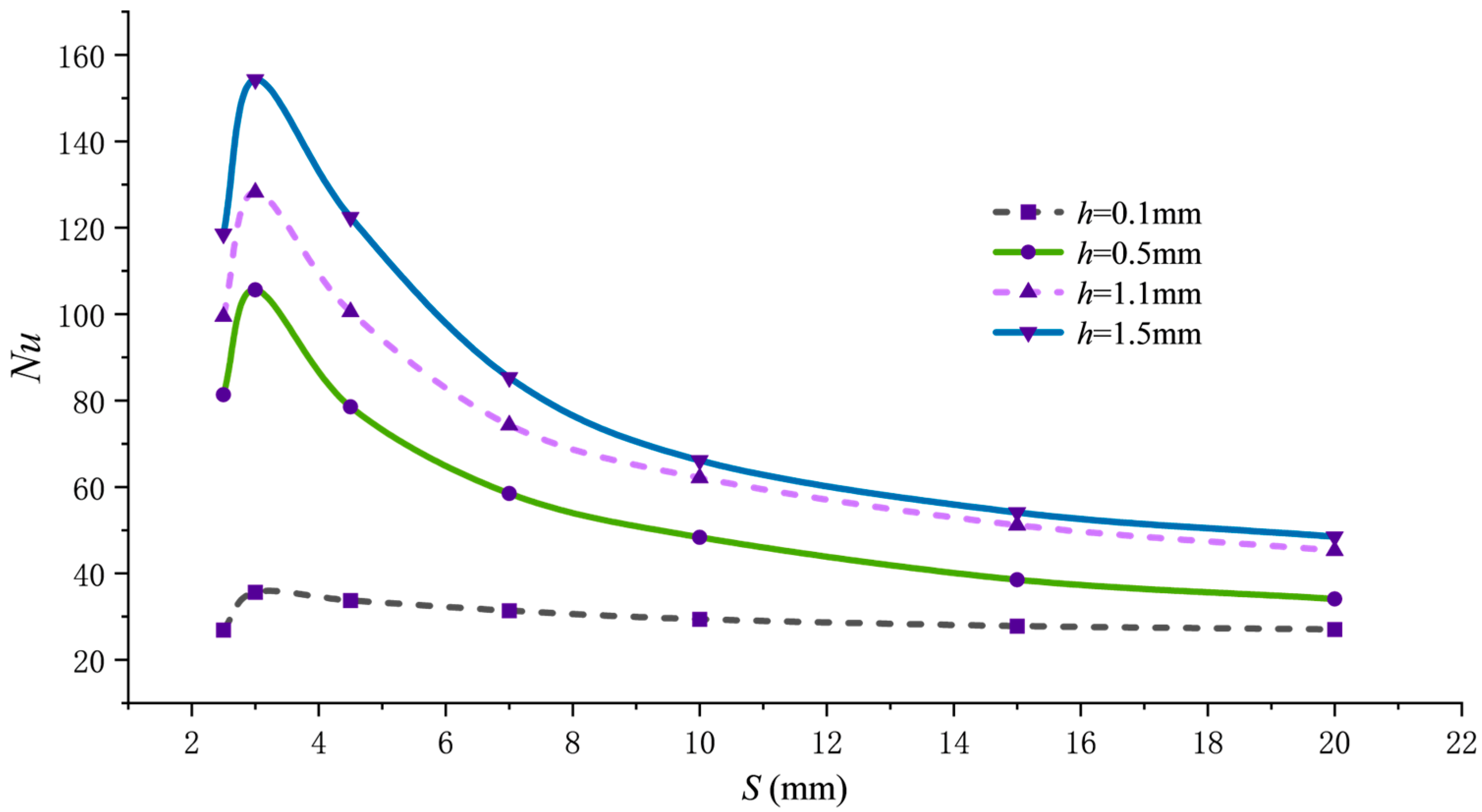
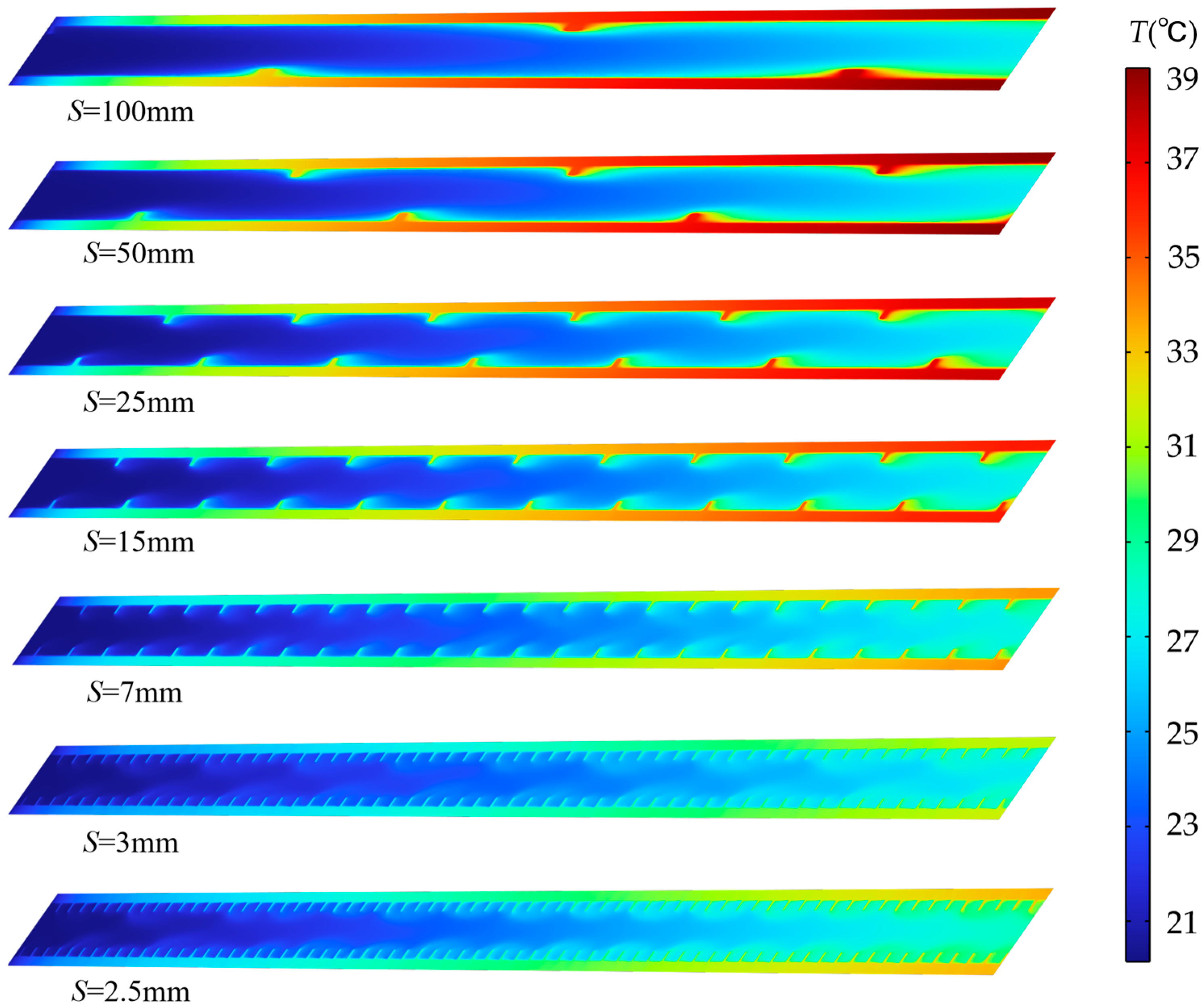
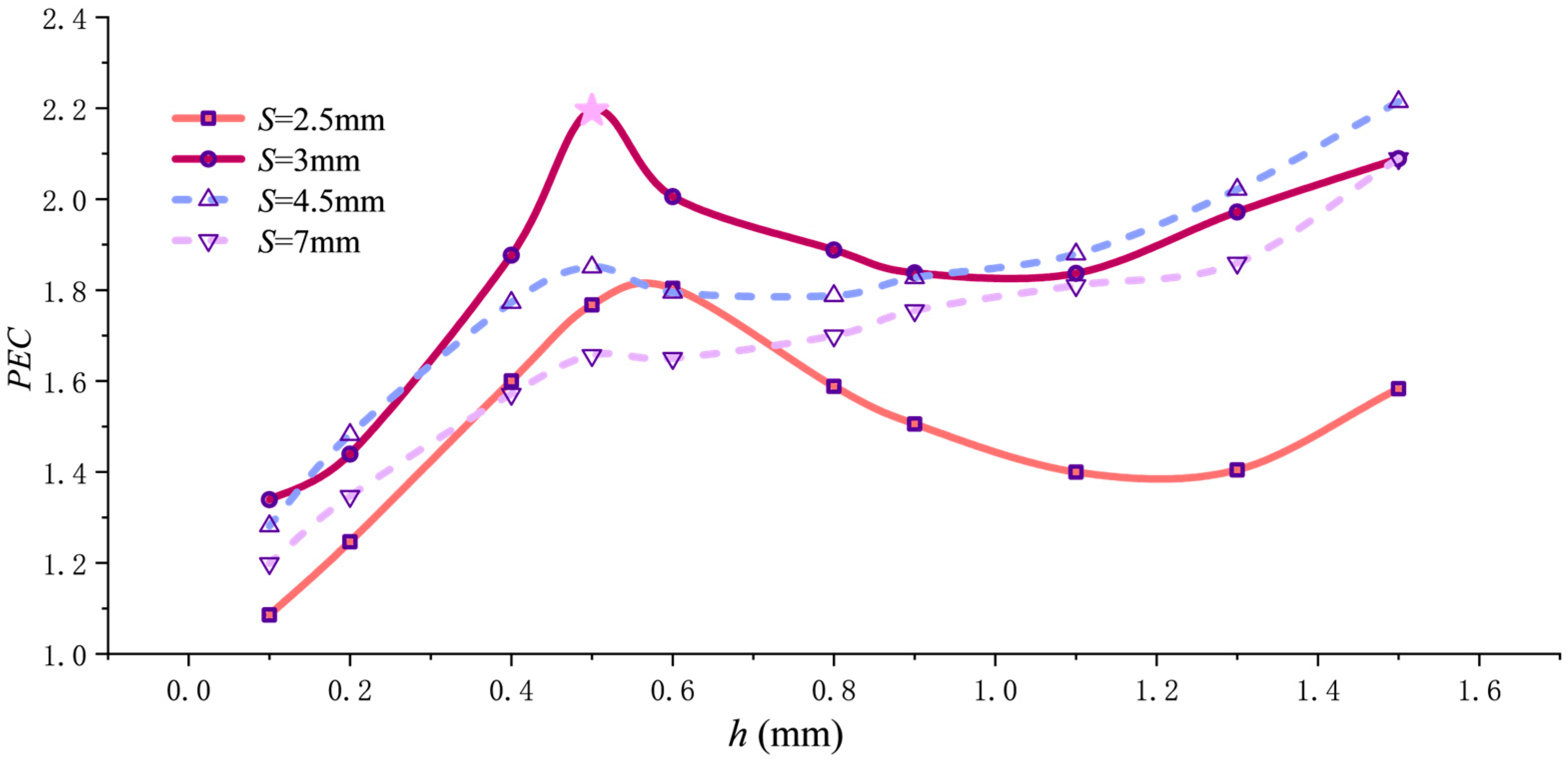
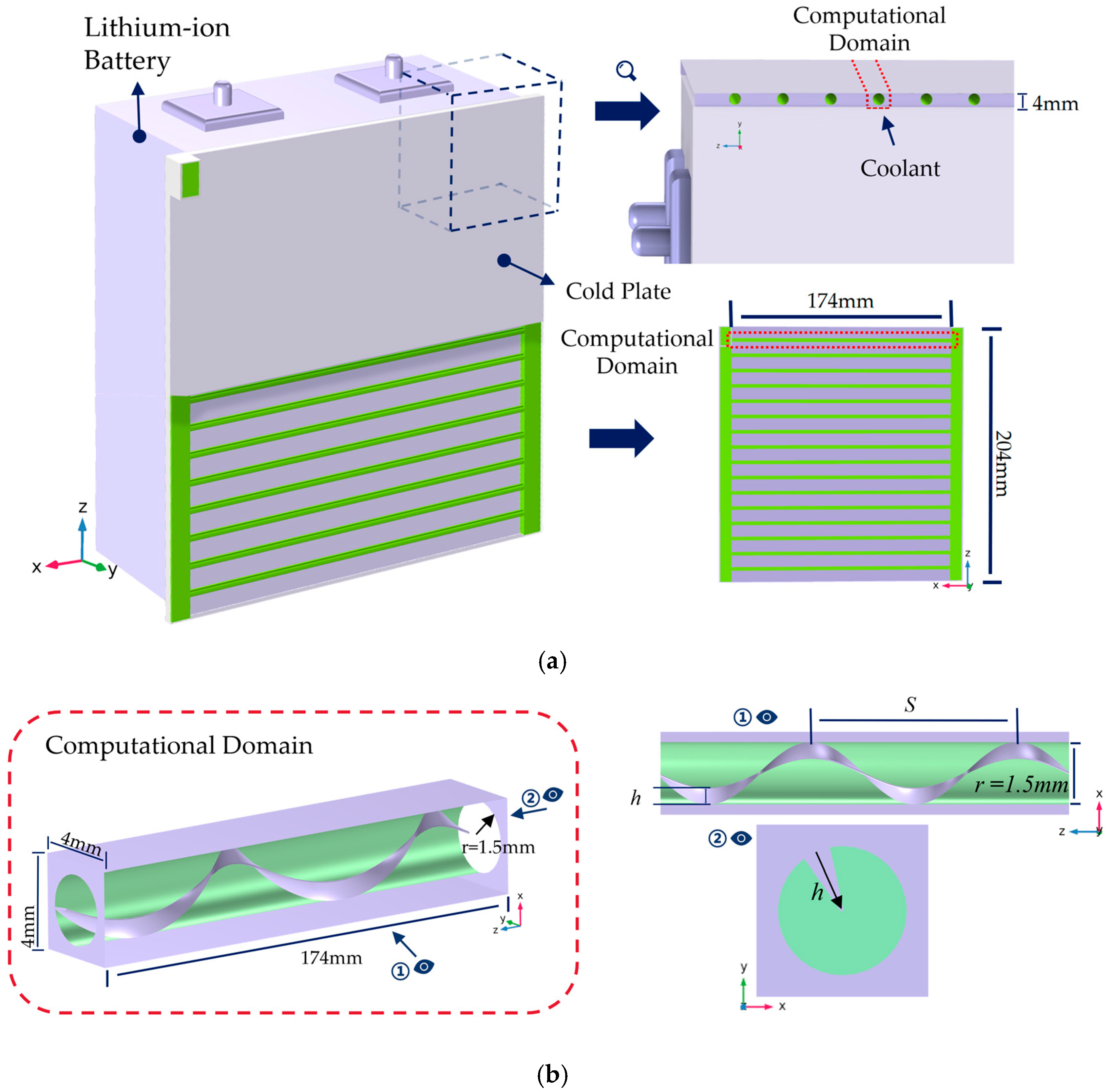
Thermal runaway accidents in lithium batteries necessitate effective thermal management. This study proposes a liquid cooling plate with internal spiral-array fins and investigates its performance under electrochemically coupled temperature-dependent heat generation conditions. A pseudo-two-dimensional (P2D) electrochemical model simulates battery discharge at 0.5C–2C rates to obtain heat generation characteristics, which serve as inputs for a fluid–solid coupled heat transfer model. The effects of spiral fin parameters—pitch (S) and height (h)—are systematically analyzed. Three main contributions are presented: spiral fins induce secondary flow that disrupts thermal boundary layer development and enhances fluid mixing, with smaller pitch extending the flow path and increasing radial velocity; a performance evaluation criterion (PEC)-based analysis identifies the optimal parameter range that balances heat transfer enhancement and pressure drop penalty; and increasing the fin height raises the finned area proportion and swirl intensity, suppressing bypass flow and strengthening heat transfer, with effects more pronounced at higher discharge rates. Key quantitative findings show that at 2C discharge, the optimized configuration (S = 3 mm, h = 0.5 mm) achieves a comprehensive performance index of 2.19 and reduces the maximum temperature by 25.32% compared to smooth channels. This work integrates electrochemical and thermal models to provide a new approach for optimizing spiral fin microchannels tailored to lithium battery operation.
Keywords: lithium battery; heat generation characteristics; thermal management; electrochemical model; microchannel liquid cooling plate lithium battery; heat generation characteristics; thermal management; electrochemical model; microchannel liquid cooling plate