Article

Wide-Angle Beam-Scanning Antenna Array for Extending the Lateral Detection Range of GPR
1
School of Geophysics and Information Technology, China University of Geosciences, Beijing 100083, China
2
State Key Laboratory of Deep Earth Exploration and Imaging, China University of Geosciences, Beijing 100083, China
*
Author to whom correspondence should be addressed.
Mathematics 2026, 14(5), 824; https://doi.org/10.3390/math14050824
Submission received: 11 December 2025 / Revised: 19 February 2026 / Accepted: 27 February 2026 / Published: 28 February 2026
(This article belongs to the Special Issue Advances in Control Systems and Automatic Control, 2nd Edition)

Abstract

This study presents a novel beam-scanning ground-penetrating radar (BS-GPR) system based on a wide-angle beam-scanning antenna array, aimed at extending the lateral detection range and improving the imaging fidelity without increasing the size of the transceiver antennas. The BS-GPR comprises a signal transceiver, a wide-angle beam-scanning antenna array for transmission and a bowtie antenna for reception. Unlike conventional commercial ground-penetrating radar (GPR), the transmitting signal of the wide-angle beam-scanning antenna array designed in this study can cover a fan-shaped region of ±90°, enabling the detection of abnormal targets outside the rectangular region directly below it. In field tests on air and sand, the BS-GPR proposed in this study can detect anomalous targets in the 55° and 30° directions, respectively. In brief, this study confirms the effectiveness of the wide-angle beam-scanning antenna array for extending the lateral detection range of GPR.

1. Introduction

Ground-penetrating radar (GPR) is a non-destructive subsurface exploration technology that has been widely applied in geological surveying, environmental monitoring, archeology, roadway inspection, and underground utility detection [1,2,3,4,5]. Its fundamental principle is transmitting high-frequency electromagnetic waves and analyzing the reflected signals to identify the properties, shapes, and positions of subsurface targets [6,7].
Single-channel GPR systems feature simple architecture and high portability. However, they can acquire only a single measurement line per scan, which limits their capability for wide-area and rapid lateral detection [8]. To address this limitation, multi-channel GPR systems incorporate multiple transmit–receive antenna pairs to collect data in parallel, thereby extending the lateral detection range [9,10,11]. Nevertheless, the detection range of such systems scales with the number of antenna pairs and increasing the number of channels inevitably enlarges the overall antenna array size, which compromises system portability and restricts its field applicability. How to further extend the lateral range of a single detection without increasing the number of antennas or the array aperture size has become a key issue that urgently needs to be addressed. In addition, due to limitations in hardware structure and antenna quantity, the lateral imaging capability of multi-channel GPR is affected by the number of channels and interpolation methods [12,13], resulting in limited target information provided. Therefore, how to effectively provide more lateral information on underground targets and further improve imaging fidelity has become another challenge in optimizing GPR imaging performance.
Phased-array technology, owing to its flexible beam-scanning and electromagnetic focusing capabilities, has been widely adopted in communication and radar systems [14,15,16,17,18]. In recent years, research efforts related to wide-angle beam scanning can be broadly categorized into three routes. The first route focuses on phased-array architecture and wide-scan beamforming theory, where scan-range extension and side-lobe control are addressed through array design methodologies [19,20]. The second route investigates platform-based or mechanically scanned GPR systems (e.g., UAV-borne configurations) to enlarge the observation footprint, which improves coverage but may introduce constraints on scanning speed, structural stability, and system complexity [21,22]. The third route emphasizes real-time digital control and high-throughput radar processing enabled by FPGA, making compact electronically steerable radar front-ends increasingly feasible in practical systems [23]. However, for portable GPR imaging, achieving a substantially enlarged instantaneous view field without increasing the antenna count/aperture or relying on mechanical motion remains challenging.
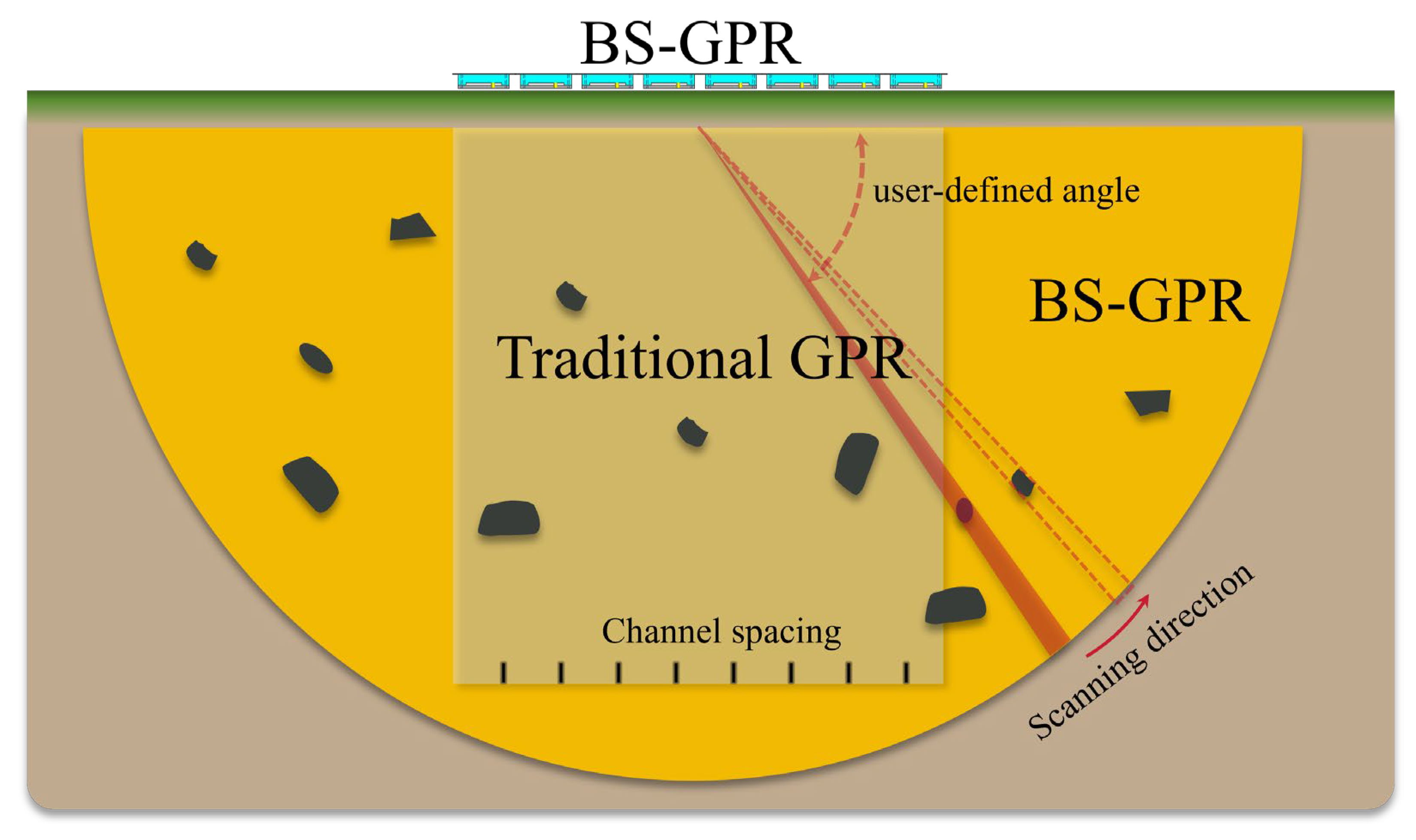
Therefore, this paper proposes a wide-angle beam-scanning GPR (BS-GPR) system based on phased-array technology, which is controlled by a field-programmable gate array (FPGA) [24,25,26], and the comparison of its view field with commercial multi-channel GPR is shown in Figure 1. Among them, the rectangular area represents the detection horizon of commercial multi-channel GPR, which can only detect the area directly below the transceiver antenna, and the actual number of lines detected in a single detection is equal to the number of channels of the GPR antenna, resulting in a smaller and lower-fidelity area for underground imaging. The fan-shaped area is the detection horizon of the BS-GPR system designed in this article, which can detect targets in the ±90° sector area below the antenna array. In addition, due to the precise electrical adjustability of the BS-GPR system, the actual number of measurement lines can be dynamically adjusted according to the situation, significantly improving the lateral detection capability and imaging fidelity of the GPR. To verify its feasibility, this paper conducted simulations and field tests on the proposed GPR system, obtaining a complete image of the underground space beyond the commercial GPR’s view field. The main contributions of this paper are summarized as follows:
  • A BS-GPR concept and compact system architecture are proposed to extend the lateral detection range without increasing the antenna number or array aperture.
  • An FPGA-controlled phased-array implementation with coordinated control is developed to realize flexible beam steering and programmable multi-line acquisition.
  • A practical acquisition and imaging workflow is established and validated through simulations and experiments, demonstrating the reliable detection of targets located at different ranges and off-broadside angles, including regions beyond the view field of conventional GPR.

2. Operating Principle of the BS-GPR System

This section presents the fundamental operating principle of the proposed BS-GPR system. The overall architecture, signal control flow, and underlying beamforming mechanism are described in detail.

2.1. Design of the BS-GPR System

This study proposes an innovative BS-GPR system based on phased-array technology that comprises an antenna system, a signal transceiver device, and an automated control system. Unlike traditional GPR systems, the proposed antenna system achieves a scanning coverage of ±90° beneath the array, which is realized by dynamically adjusting the excitation phase of individual transmitting elements. The signal transceiver device is responsible for generating, receiving, and storing high-frequency electromagnetic signals, ensuring signal stability and data integrity throughout the beam-scanning process. To enable fully automated operation, two custom-designed computer control systems (CCSs) are developed. One for managing the signal transceiver, and the other for controlling the phase-shifting network of the antenna system.
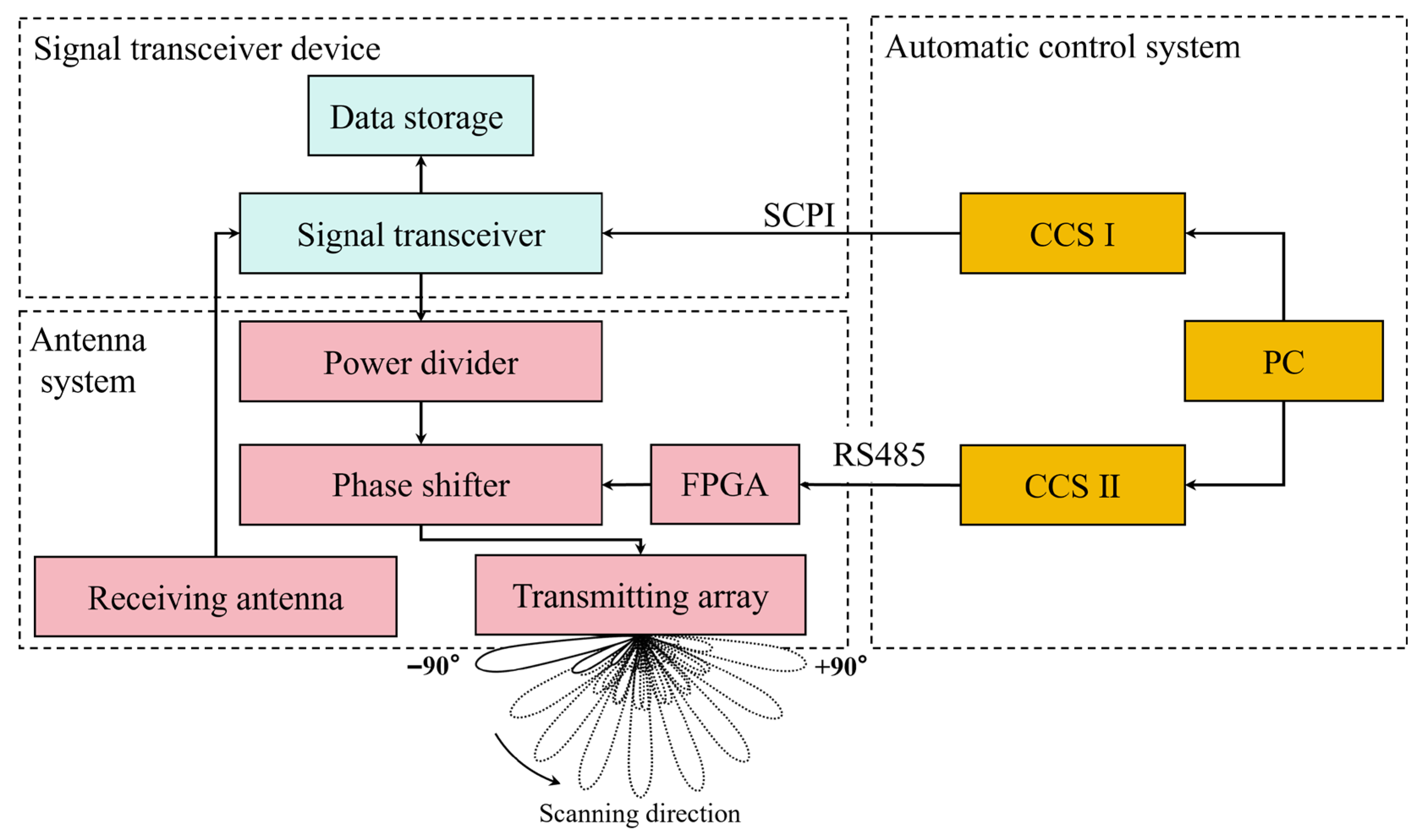
The operational workflow of the BS-GPR system is illustrated in Figure 2. First, the desired beam-scanning range and angular step size are configured in the host CCS I, which is used to initialize the signal transceiver by setting parameters such as the frequency, power level, and sampling points. Simultaneously, CCS II controls the main field-programmable gate array (FPGA) chip of the phase-shifting network in the antenna system, outputting the corresponding phase-shift values for the initial scan angle (i.e., −90°). The signal generated by the transceiver passes through the power-dividing and phase-shifting networks to excite the transmitting antenna elements with an equal amplitude and a different phase, forming a beam directed toward the specified initial angle. The emitted electromagnetic wave propagates through the subsurface and is reflected by the underground targets. Then, the received echo is automatically stored by the transceiver. Finally, this process is repeated across successive scanning angles, enabling sectorial beam scanning over a ±90° angular range. For clarity, Table 1 summarizes the roles and interfaces of the CCS I/CCS II/FPGA and the transceiver.

2.2. Principle of the Wide-Angle BS-GPR

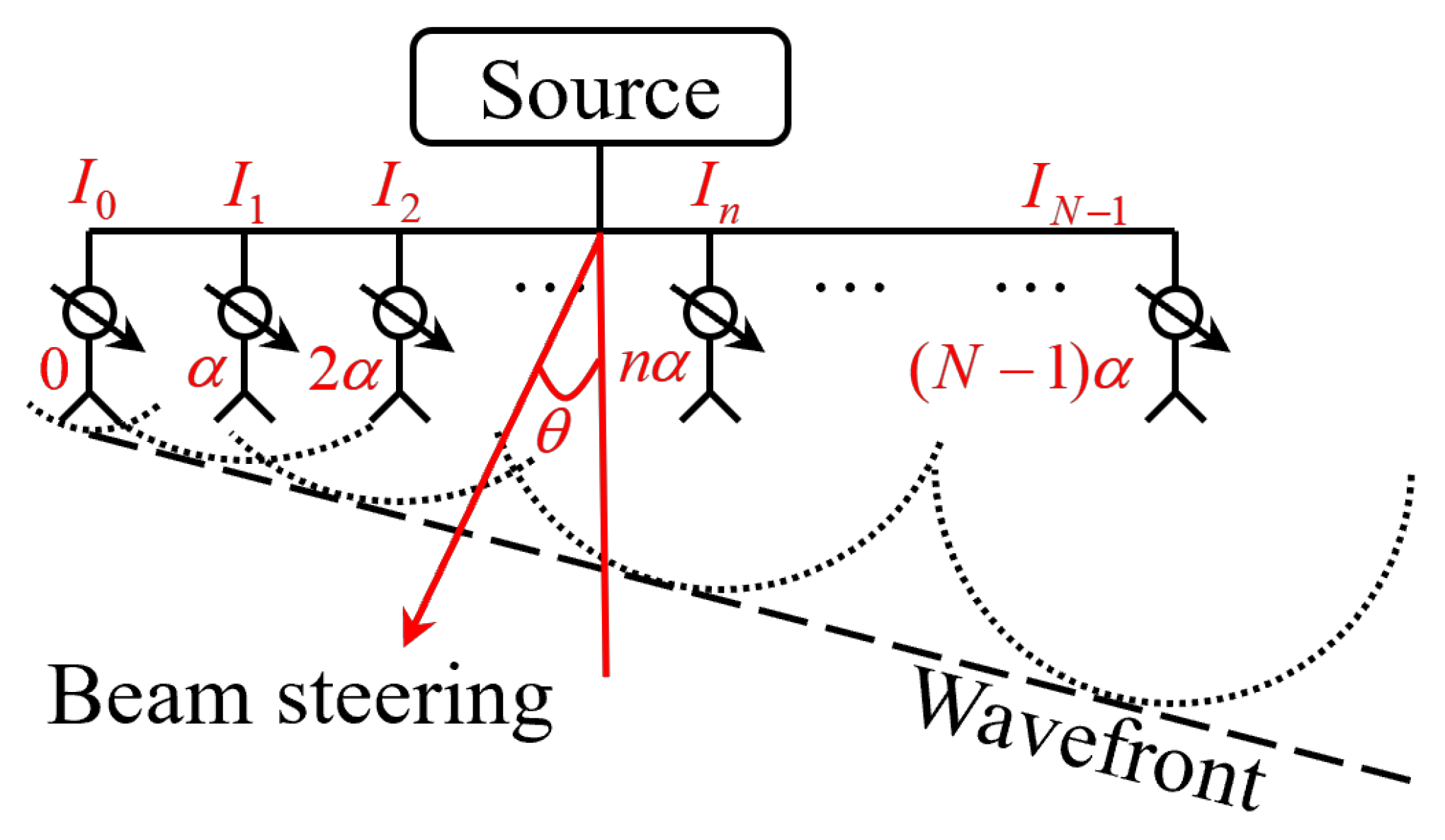
To enable flexible beam steering and wide-angle scanning, a linear antenna array based on the phase control principle is designed, as illustrated schematically in Figure 3. The array consists of N uniformly spaced elements with an inter-element spacing of d, each connected to a dedicated phase shifter and power divider. An 8-way equal-power divider is employed to ensure uniform amplitude excitation across all elements. The phase shifters introduce phase delays denoted by 0 ,   α ,   2 α ,   3 α ,   ,   ( N 1 ) α for each element. By adjusting the values of α , the excitation phase of each element can be precisely controlled, thereby steering the beam toward a desired angle θ .
The beam-steering capability can be characterized by the far-field radiation pattern E , which is given by
E = C e j k r r f θ , ϕ n = 0 N 1 I n e j n u
where C is a constant used to control the overall amplitude or to normalize the array factor, e j k r represents the phase term associated with electromagnetic wave propagation, k denotes the wavenumber, and r is the distance from the antenna array to the observation point. In addition, f θ , ϕ denotes the element radiation pattern.
In the array factor, I n represents the amplitude weight of the nth antenna element, accounting for its contribution to the overall pattern, while e j n u denotes the excitation phase of the nth element. To characterize the phase relationship between array geometry and beam-steering direction, a spatial phase term u is introduced, which is defined as
u = k d sin θ + α = k d sin θ sin θ 0
here, θ 0 denotes the angle between beam-steering direction and the broadside (normal) direction of the antenna array.
Let u = 0 to eliminate the influence of phase term. When the phase delay α between elements satisfies Equation (3), the electromagnetic energy constructively interferes at θ 0 , resulting in beam steering toward the desired direction θ 0 .
α = k d sin θ 0 = 2 π d sin θ 0 λ
According to Equation (3), the excitation phase for linear arrays of different sizes can be derived. Moreover, assuming the maximum beam-scanning angle of the array is θ m , the element spacing d should satisfy the following condition to suppress grating lobes and their associated imaging artifacts
d < λ 1 + sin θ m
To enable the BS-GPR system to cover a ±90° sectorial detection area, the maximum beam-steering angle should be no less than ±60°, considering the influence of the half-power beamwidth (HPBW) of the electromagnetic wave. Substituting into Equation (4) yields the required condition, d < λ 1.85 . However, excessively small element spacing may lead to strong mutual coupling between array elements. Therefore, in the array design, the selection of element spacing must balance the suppression of electromagnetic coupling and the avoidance of grating lobes. Accordingly, the element spacing is set to λ 2.48 in this research (Section 3.1).

3. Design and Analysis of the BS-GPR System

3.1. Antenna Elements and Array Configuration

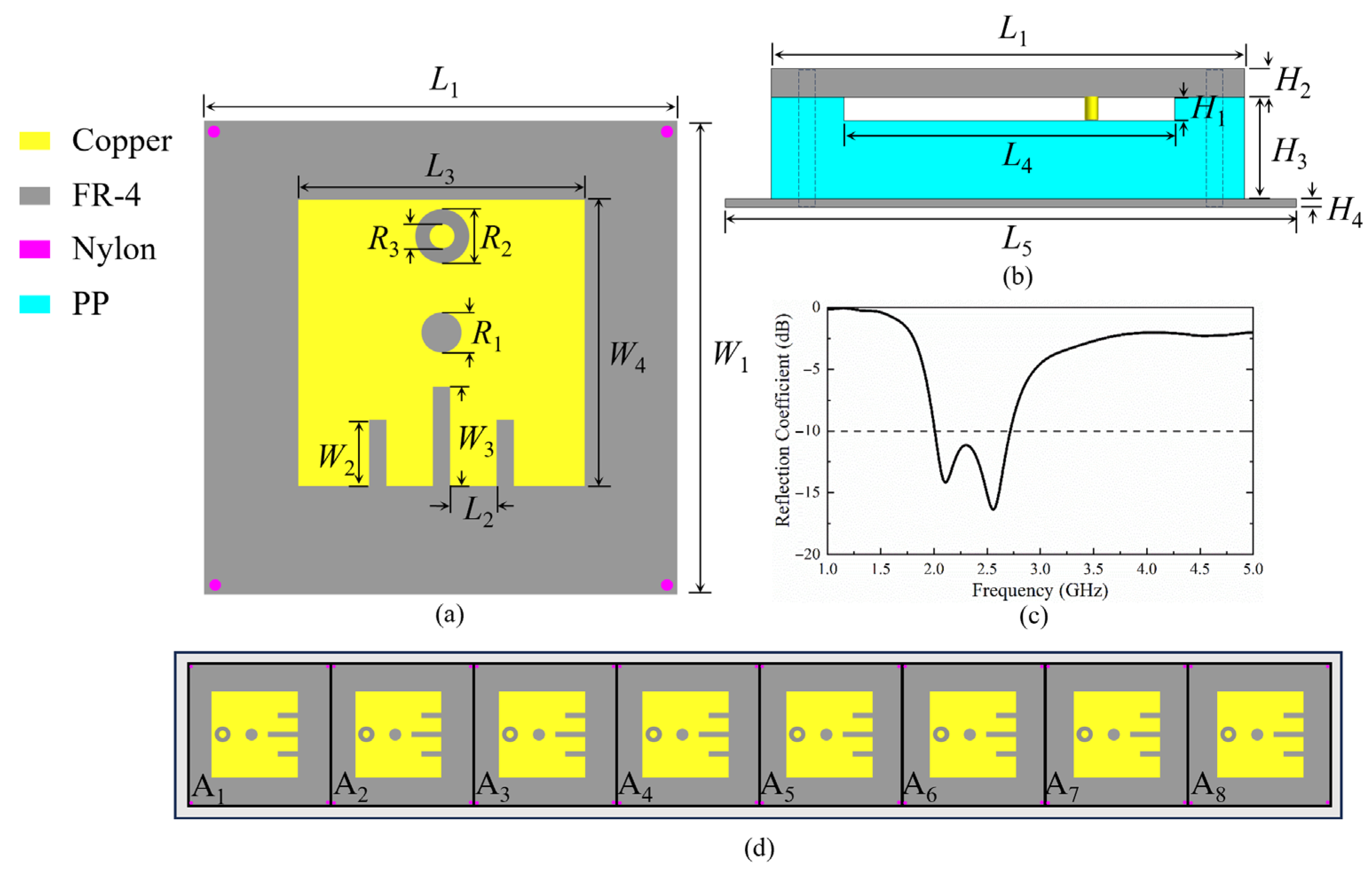
To balance structural robustness and radiation performance, the antenna element adopts a three-layer structure consisting of a radiating patch layer, a cavity layer, and a ground layer, as illustrated in Figure 4. Figure 4a shows the top view of the radiating patch, where a matching ring with an inner radius R1 is placed at the center, and three rectangular slots are etched to optimize impedance matching and broaden the bandwidth. Figure 4b presents the side view of the antenna structure. The cavity layer is made of polypropylene material ( ε r = 2.2, tan δ = 0.0002) with a total thickness of H3, and includes an air gap of width L4 and height H1 to improve radiation characteristics and reduce dielectric loss. The ground layer consists of a metal sheet bonded in an FR-4 dielectric substrate ( ε r = 4.3, tan δ = 0.02) with a thickness of H4, and an overall length L5 slightly larger than the antenna element length to mitigate ground effects on performance. The detailed structural parameters of the antenna element are listed in Table 2.
To evaluate the radiation performance of the antenna element, full-wave electromagnetic simulations are conducted using CST Studio Suite. The simulated reflection coefficient as a function of frequency is shown in Figure 4c. The results indicate that the reflection coefficient remains below −10 dB within the 2.0–2.6 GHz frequency band, demonstrating good impedance matching and meeting the design specifications.
According to the condition in Equation (4), and to ensure effective wide-angle scanning while minimizing electromagnetic coupling, the element spacing is set to 52.5 mm ( λ 2.48 corresponding to the center frequency). The top view of the array layout is shown in Figure 4d, where the elements are labeled sequentially from A1 to A8 for subsequent analysis of their radiation characteristics.
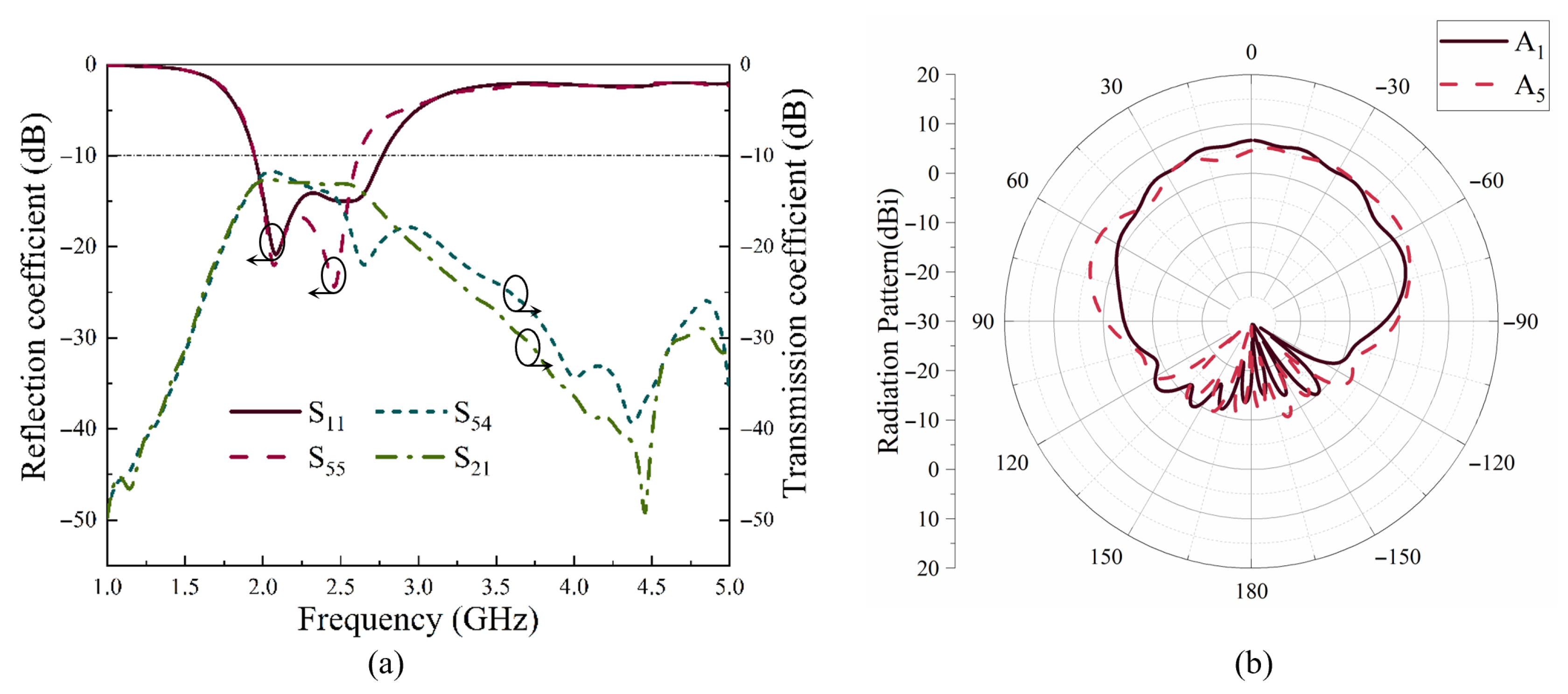
To investigate the impact of mutual coupling on the radiation performance of the antenna elements within the array, this study compares the edge element A1 and the center element A5 to analyze radiation differences. Figure 5a shows the reflection and coupling coefficients of A1 and A5. It can be observed that both elements exhibit reflection coefficients consistent with that of the standalone antenna element, and the coupling coefficients with their adjacent elements are all below −10 dB, indicating that the array environment has a minimal influence on individual element radiation.
Figure 5b presents the radiation patterns of elements A1 and A5 at 2.3 GHz, illustrating the performance variation across positions within the array. As A5 is located at the center, its radiation pattern shows good symmetry and a stable main lobe. In contrast, the edge element A1 exhibits slight distortion due to edge effects. Overall, all elements maintain wide beam coverage, confirming that the array is suitable for wide-angle beam-scanning applications [21].
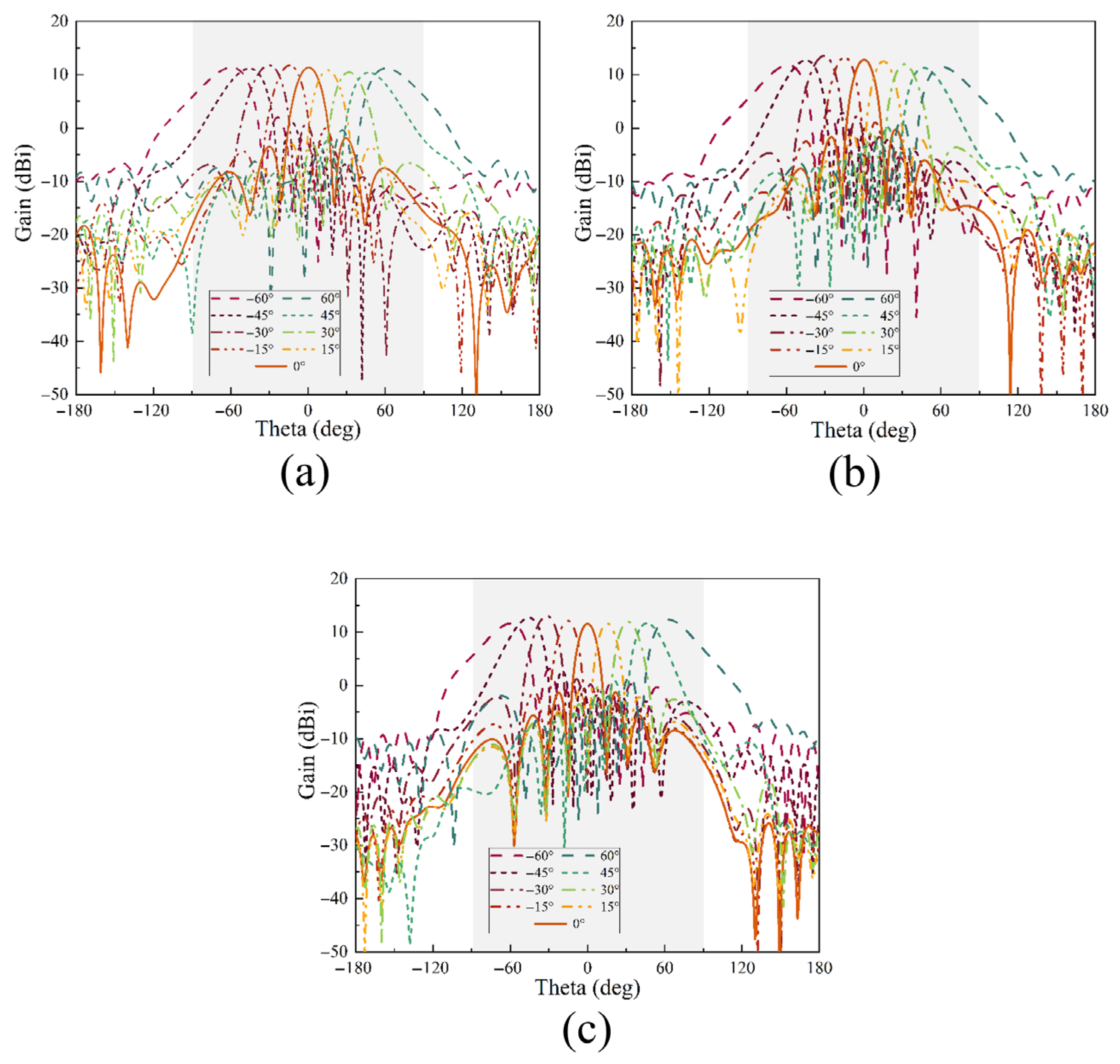
In order to analyze the beam-scanning performance of the antenna array over a wide frequency range and wide angular span, three representative frequencies (i.e., 2.0 GHz, 2.3 GHz, and 2.6 GHz) are selected to evaluate the E-plane scanning characteristics. The simulation results are shown in Figure 6a–c. It can be observed that within the ±60° scanning range, the array maintains stable main lobe gain exceeding 10 dBi. The gain fluctuation across frequencies is less than 2 dB, indicating weak mutual coupling between elements and consistent directional radiation performance. The −3 dB beamwidth covers up to ±90° (indicated by the black region), confirming the array’s capability for subsurface detection over a ±90° sector.
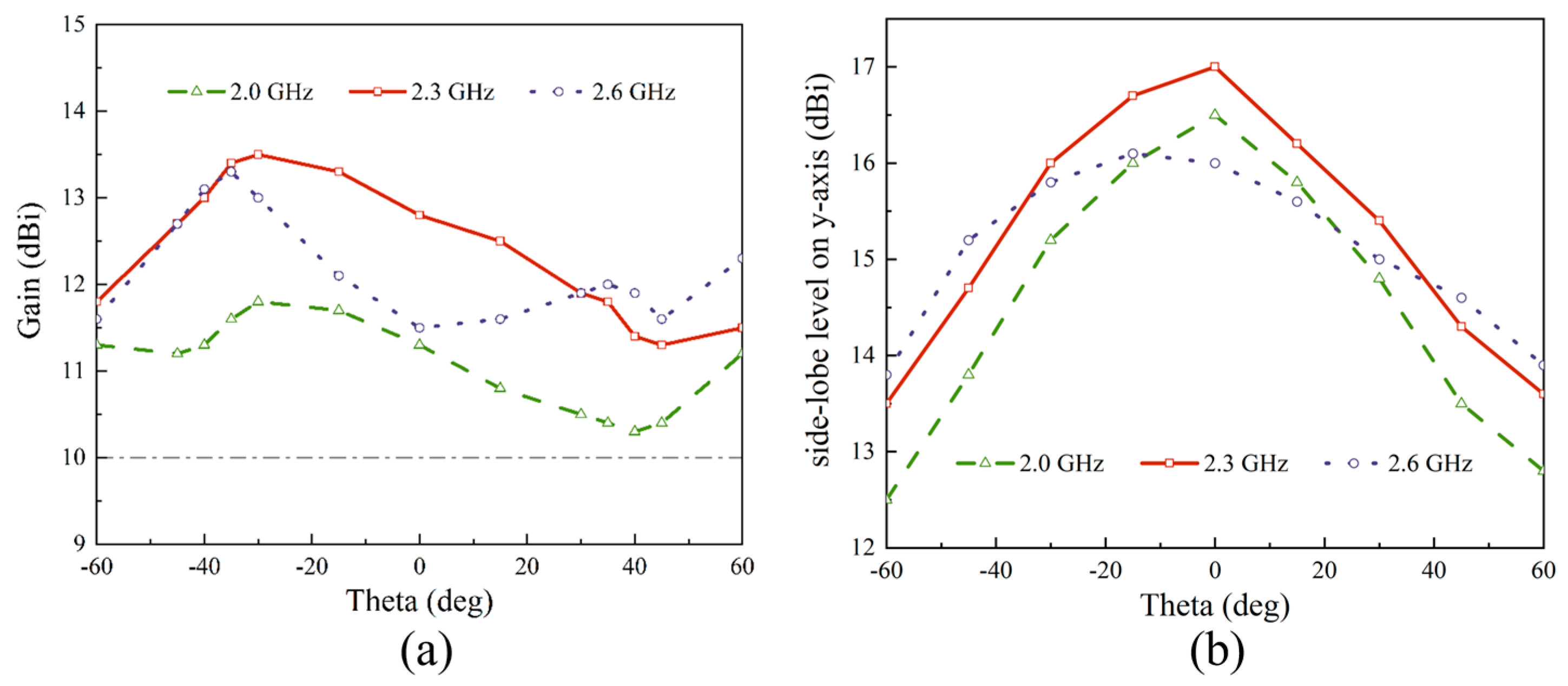
In addition, to investigate the radiation characteristics and performance variations in the array under different scan angles, Figure 7 presents the variations in main-lobe gain and side-lobe suppression. As shown in Figure 7a, within the ±60° scanning range, the main-lobe gain at all frequencies exceeds 10 dBi, with a peak value of 13.74 dBi at 2.3 GHz. The gain variation across the full scanning range remains within approximately 2 dBi. Figure 7b shows the corresponding side-lobe suppression (defined as the difference between the main-lobe peak gain and the maximum side-lobe peak), which is typically about 12–17 dBi across the scanning angles. Notably, the strongest suppression is achieved when the beam is directed near broadside (around 0°), reaching approximately 16–17 dBi. These results indicate that the designed antenna array maintains stable main-lobe gain and effective side-lobe suppression under wideband and wide-angle scanning conditions, supporting clutter and artifact mitigation in GPR imaging.
To quantify the beam radiation characteristics of the array at various scan angles and frequencies, Table 3 summarizes the HPBW of the main lobe across different operating conditions. The results show that although the HPBW increases with larger scan angles, the maximum value remains limited to 33°, which is within the acceptable range for practical applications. Combined with the previously discussed gain stability and side-lobe suppression, these findings confirm that the array offers wide-angle scanning capability, stable main-lobe performance, and low mutual coupling, demonstrating its suitability for BS-GPR systems.

3.2. Phase-Shifting Network

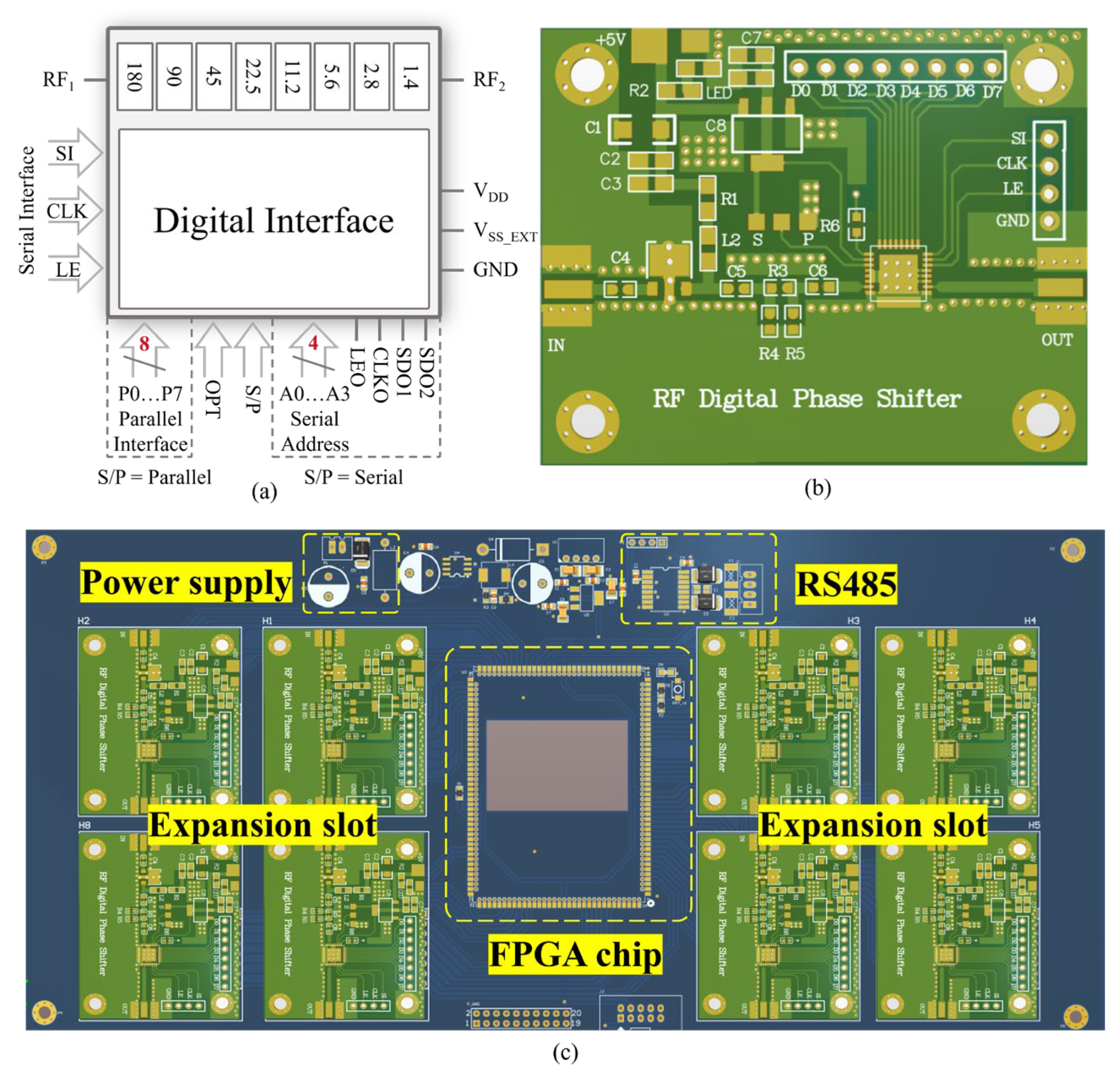
To achieve precise control of the excitation phase for the transmitting antenna array, a phase-shifting network is developed, consisting of digital phase-shifters, amplifiers, and an FPGA control board. Due to the eight elements in the proposed antenna array, the network employs eight PE44820 phase-shifter chips (pSemi Corporation, San Diego, CA, USA), which provide a phase resolution of 1.4° and a total phase range of 360°, as shown in Figure 8a. To minimize insertion loss and ensure signal integrity, an SBB-5089 amplifier (Sirenza Microdevices Inc., Broomfield, CO, USA) with a 20 dB gain and a frequency range of DC–6.0 GHz is integrated at the RF input, meeting the operational bandwidth requirements of the GPR system. The overall layout of the phase-shifter circuit board is shown in Figure 8b, including the phase-shifter chip, I/O ports, and power circuitry, with eight reserved pin headers for voltage control. All I/O ports are designed with 50 ohm impedance matching.
In order to achieve automatic phase control, the FPGA control board uses an EP4CE10 chip to simultaneously and independently control eight phase-shifter units. With 130 I/O pins, it supports up to 64 (8 × 8) output channels. As shown in Figure 8c, the system is powered by a 24 V supply, and four expansion slots are reserved on each side of the main control chip to interface with phase shifters and transmit phase commands. Additionally, the control board communicates in real time with the custom CCS II software via the RS485 protocol.

4. Test of the BS-GPR System

This section presents the test validation of the key hardware modules of the proposed BS-GPR system, including the phase-shifting network and antenna.

4.1. Phase-Shifting Network Test

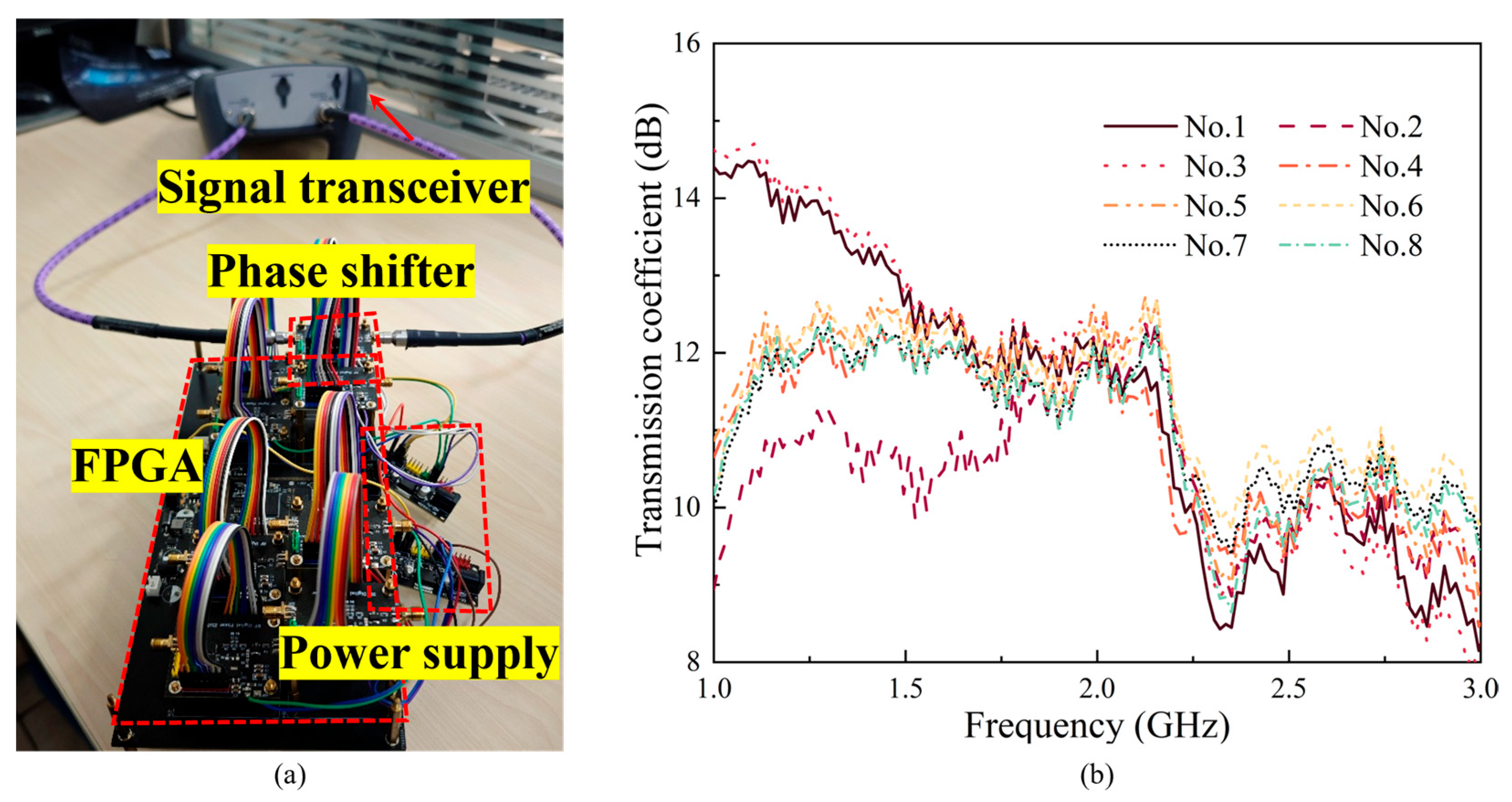
To validate the performance of the designed phase shifter, classical RF circuit testing methods are employed to evaluate its power amplification and phase stability. The test setup and equipment are shown in Figure 9a, where a ZVH8 vector network analyzer is used as the signal transceiver. Figure 9b presents the transmission coefficient of the phase shifter across the 1.0–3.0 GHz frequency range, which remains above 7.5 dB, indicating good power amplification capability. Additionally, phase stability tests are conducted at three representative frequencies (i.e., 2.0 GHz, 2.3 GHz, and 2.6 GHz) using a phase step size of 30°. The results are summarized in Table 4, where each measured value represents the arithmetic mean across the three frequencies. As shown, the phase error increases slightly with the target phase value, but remains within a maximum deviation of 4°, demonstrating that the designed phase shifter enables precise phase control of the transmitting elements.
It should be noted that the measured phase inaccuracies may introduce a deviation in the beam-steering angle. According to the steering relationship given in Equation (3), a phase error in the excitation phase leads to a corresponding pointing error of the steered beam. Based on the phase stability results in Table 4, the maximum measured phase deviation is approximately 4°. For the designed element spacing, this phase error corresponds to an estimated pointing deviation of about 1.3° near broadside and up to approximately 2.7° at the maximum steering angle (±60°). Compared with the measured HPBW of the proposed array, which ranges from about 13° to 33° across the operating band and scanning range, this pointing deviation remains relatively small. Therefore, the phase inaccuracies are expected to cause only a slight lateral shift in the illuminated region rather than a significant degradation of target detectability or imaging resolution in practical GPR applications.

4.2. Antenna Element and Array Testing

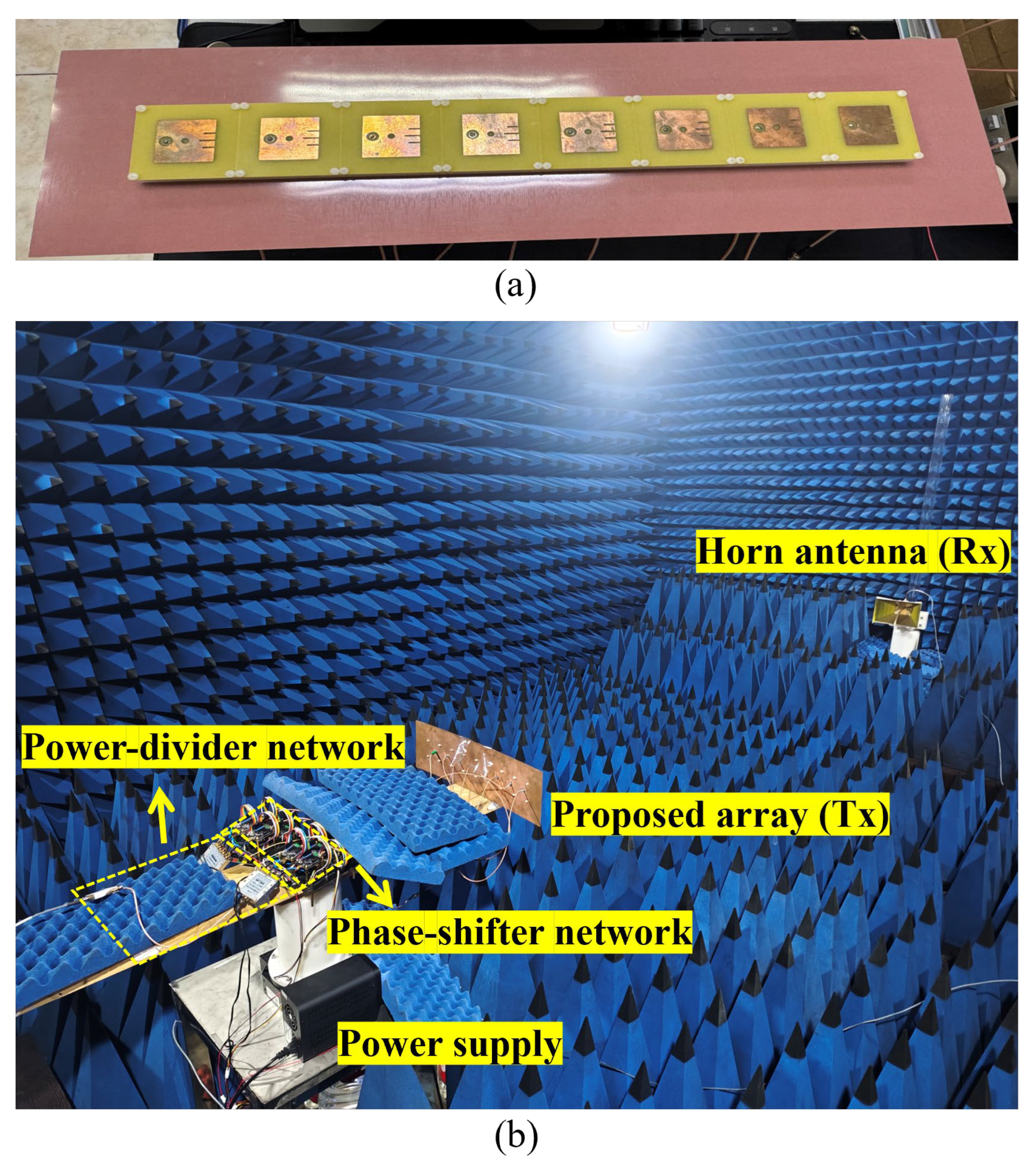
Figure 10 presents the fabricated antenna array and the corresponding radiation pattern test environment. As shown in Figure 10a, all elements of the proposed transmitting array are uniformly mounted on a large ground plane and secured using nylon fasteners, so that the physical configuration remains consistent with the simulated layout. This implementation helps maintain array geometrical fidelity and reduces potential parasitic effects introduced by assembly nonuniformity, thereby improving the interpretability of measurement-to-simulation comparisons.
The radiation pattern measurement setup is illustrated in Figure 10b. It consists of the proposed transmitting array, a receiving antenna, and the associated power-divider and phase-shifter networks. The receiving antenna is a broadband horn operating from 1.0 to 18.0 GHz, enabling far-field sampling of array radiation over a wide frequency range. The measurement is conducted in a microwave anechoic chamber to suppress environmental reflections and multipath interference. To satisfy far-field conditions, the separation between the transmitting array and the receiving horn is set to 3 m. With this setup, the phase states of the array can be configured through the power-dividing and phase-shifting networks, allowing systematic characterization of element/array radiation behaviors.
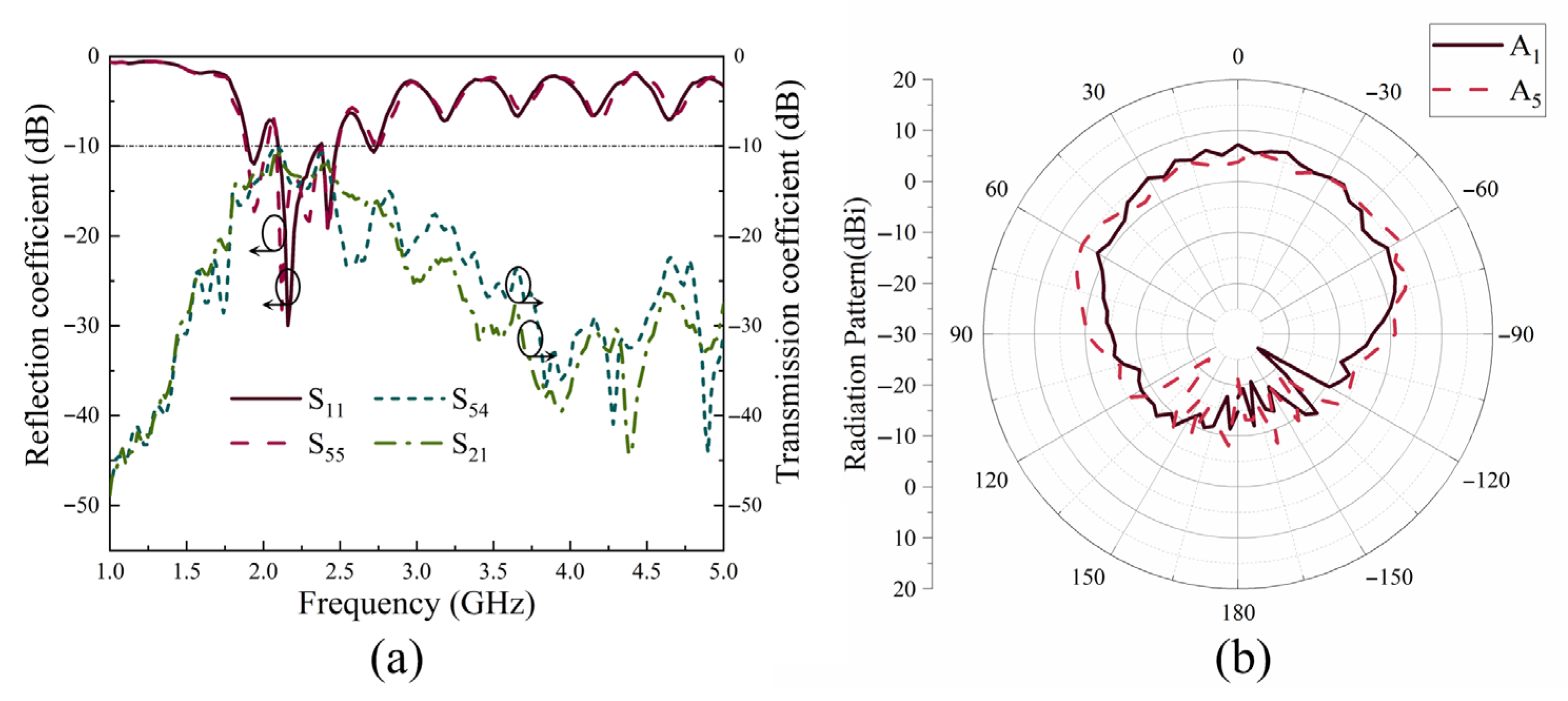
Figure 11 presents the measured antenna parameters and radiation patterns of the array. Figure 11a shows the reflection coefficients (S11, S55) and mutual coupling coefficients (S21, S54) for elements A1 and A5. Across the 2.0–2.6 GHz frequency band, both the reflection and coupling coefficients are below −10 dB, indicating good impedance matching and low mutual coupling, with high element isolation. Compared to the simulation results, the measured bandwidth closely matches theoretical expectations, with only slight deviations at higher frequencies, which is caused by PCB fabrication tolerances, dielectric inhomogeneity in the cavity, and connector soldering variations. Figure 11b shows the E-plane radiation patterns of elements A1 and A5 at 2.3 GHz. Both exhibit broad main lobes and low back-radiation, closely aligning with the simulation results, thereby confirming the stability and consistency of element radiation.
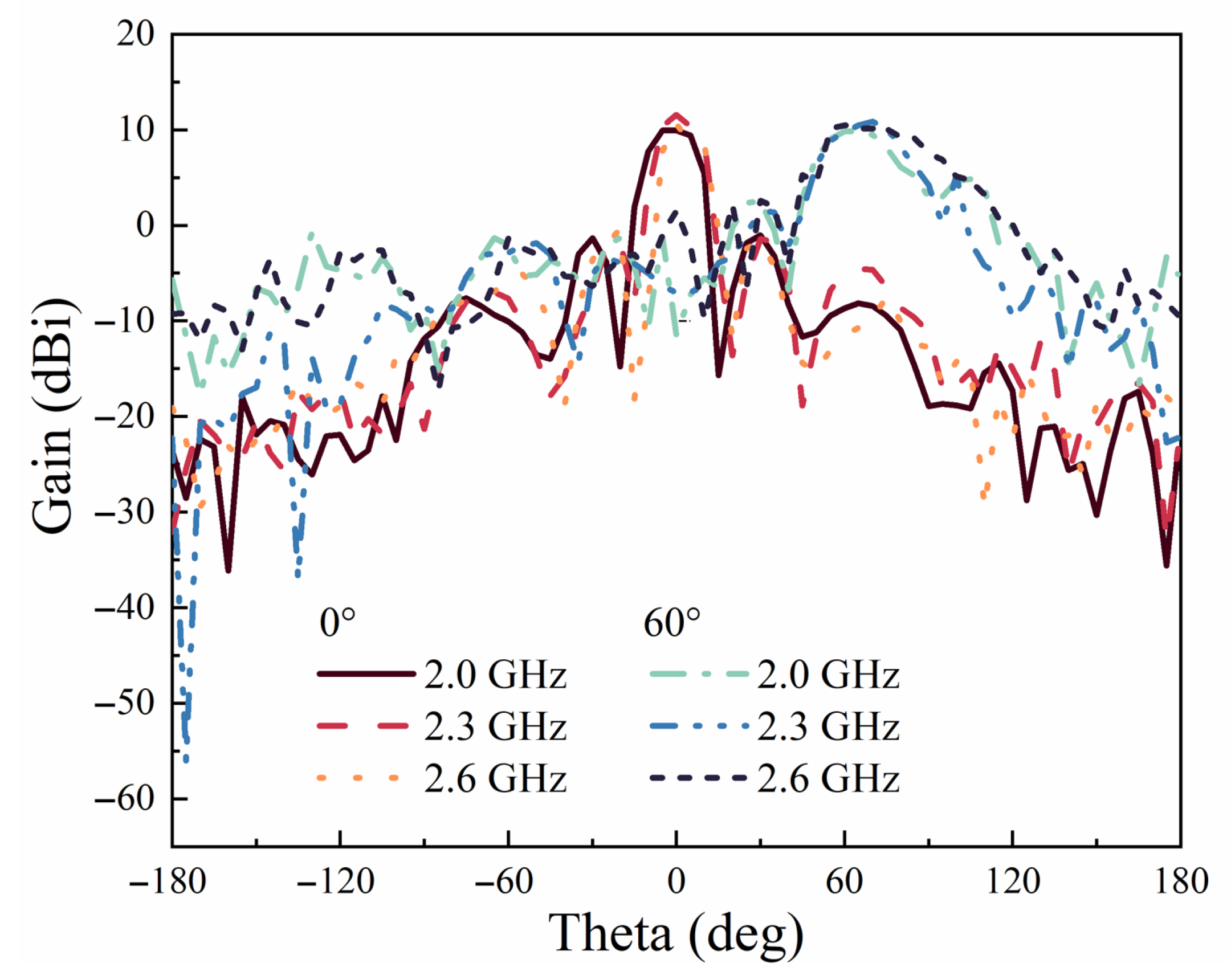
Figure 12 displays the measured radiation patterns at 0° and 60° scan angles for 2.0 GHz, 2.3 GHz, and 2.6 GHz. The main beam directions accurately align with the intended scan angles. When the beam is steered to 0°, all frequencies exhibit main-lobe gains around 10–11 dBi. The dominant side-lobe suppression, defined as the difference between the main-lobe peak and the highest side-lobe peak, is approximately 15–16 dBi. When the beam steers to 60°, the main-lobe gain remains close to 10 dBi, while the side-lobe suppression slightly decreases to about 10 dBi due to wide-angle scanning effects. These results demonstrate that the array maintains stable beam control capability and acceptable side-lobe performance under wide-angle beam steering, meeting the operational requirements of beam-scanning GPR systems. The measurements agree well with the simulated trends, with minor discrepancies mainly attributed to fabrication tolerances, connector alignment, and material variations.

5. Target Detection Experiments of the BS-GPR System

5.1. Free-Space Detection

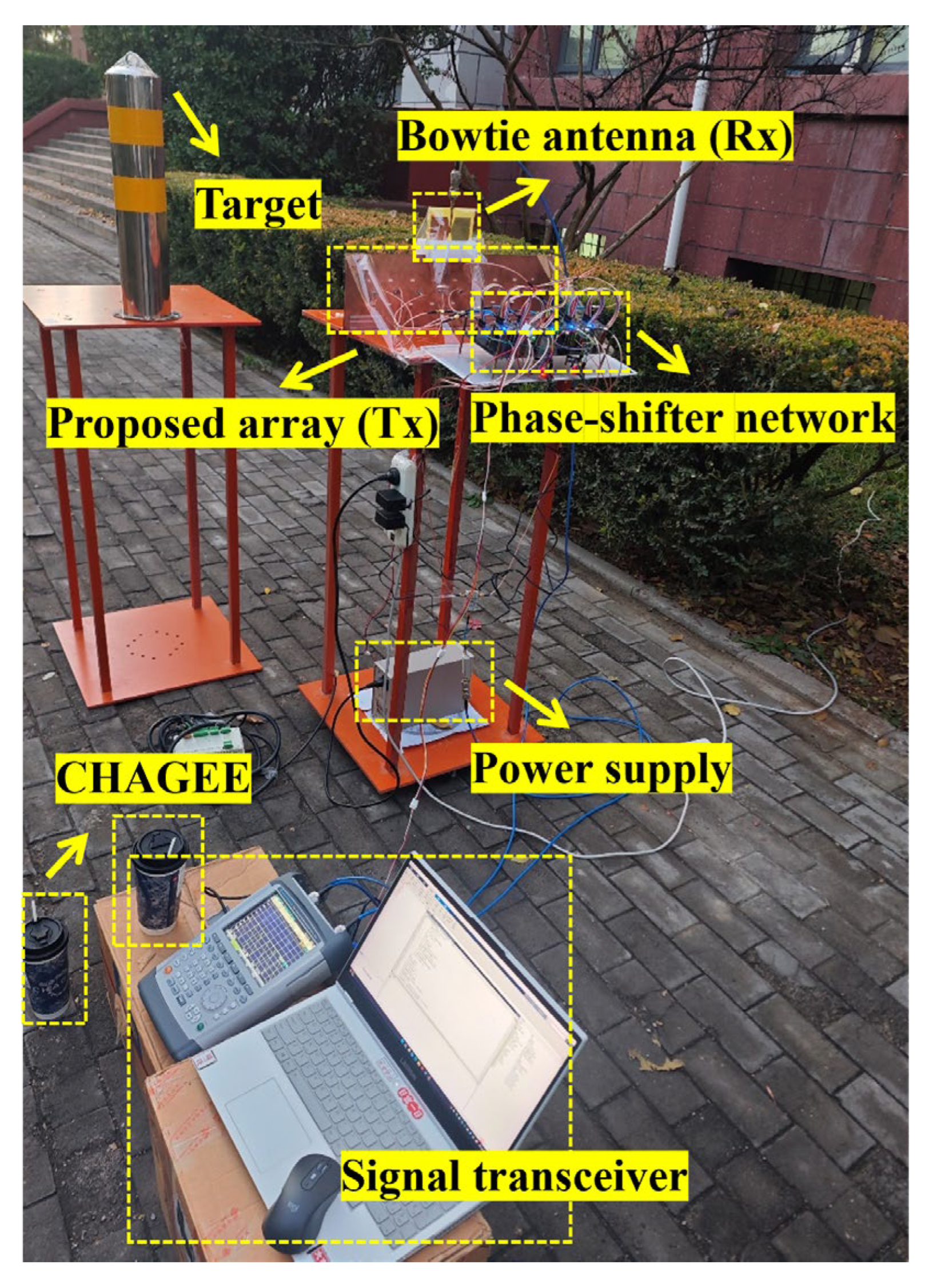
To verify the target detection capability of the BS-GPR system, a measurement setup is constructed as shown in Figure 13. The setup consists of a signal transceiver unit, the beam-scanning antenna array, a power-dividing and phase-shifting network, and the target under test. The signal transceiver is a ZVH8 vector network analyzer, with CCS I employed for automatic data storage control. The antenna array is fed with equal amplitude via the power divider, while CCS II automatically calculates the input phase of the electromagnetic waves and sends phase control command to the phase shifters, enabling the transmit beam to scan across the −60° to 60° range.
The target is a cylindrical steel structure with a height of 0.55 m, a diameter of 0.11 m, and a wall thickness of 1.2 mm, positioned 0.75 m away from the transceiver. Both the antennas and the target are mounted on wooden stands to elevate them above the ground, thereby minimizing environmental interference with the signal propagation.
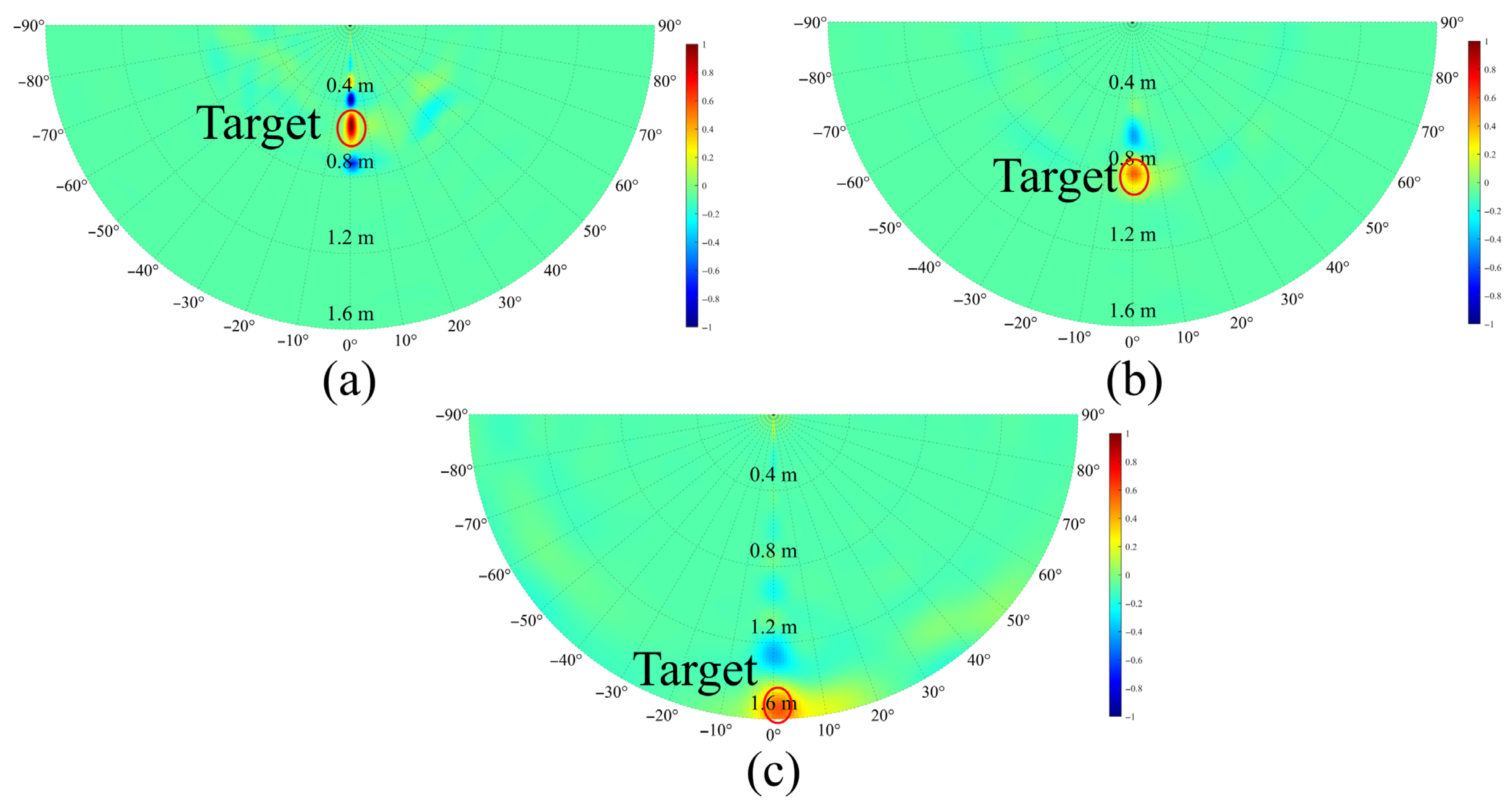
To experiment with the detection capability of the proposed array for targets in different distances at 0°, the spacing between the target and the phase center of the proposed array is adjusted to 0.5 m, 0.75 m, and 1.5 m, respectively. It is worth noting that the selected focal distances (0.5 m, 0.75 m, and 1.5 m) are representative cases within the experimental tank depth and do not limit the achievable focusing range of the proposed BS-GPR system.
Figure 14a–c presents the corresponding B-scan images for each distance. All images are normalized (to a global maximum across all scans of the same experiment) to enhance the visibility of strong reflections from the target.
As shown in Figure 14a, the signal energy is highly concentrated within a small region at z = 0.5 m, resulting in a narrow main lobe and focused radiation. As the distance between the target and the BS-GPR increases, the propagation path of the electromagnetic waves becomes longer and the energy gradually diffuses, resulting in weaker echo intensity, and thus the color of the target in Figure 14a–c gradually becomes lighter. However, all three distances meet the requirements of target detection. Therefore, while balancing detection distance and accuracy, the detection experiment with the BS-GPR is conducted at z = 0.75 m.
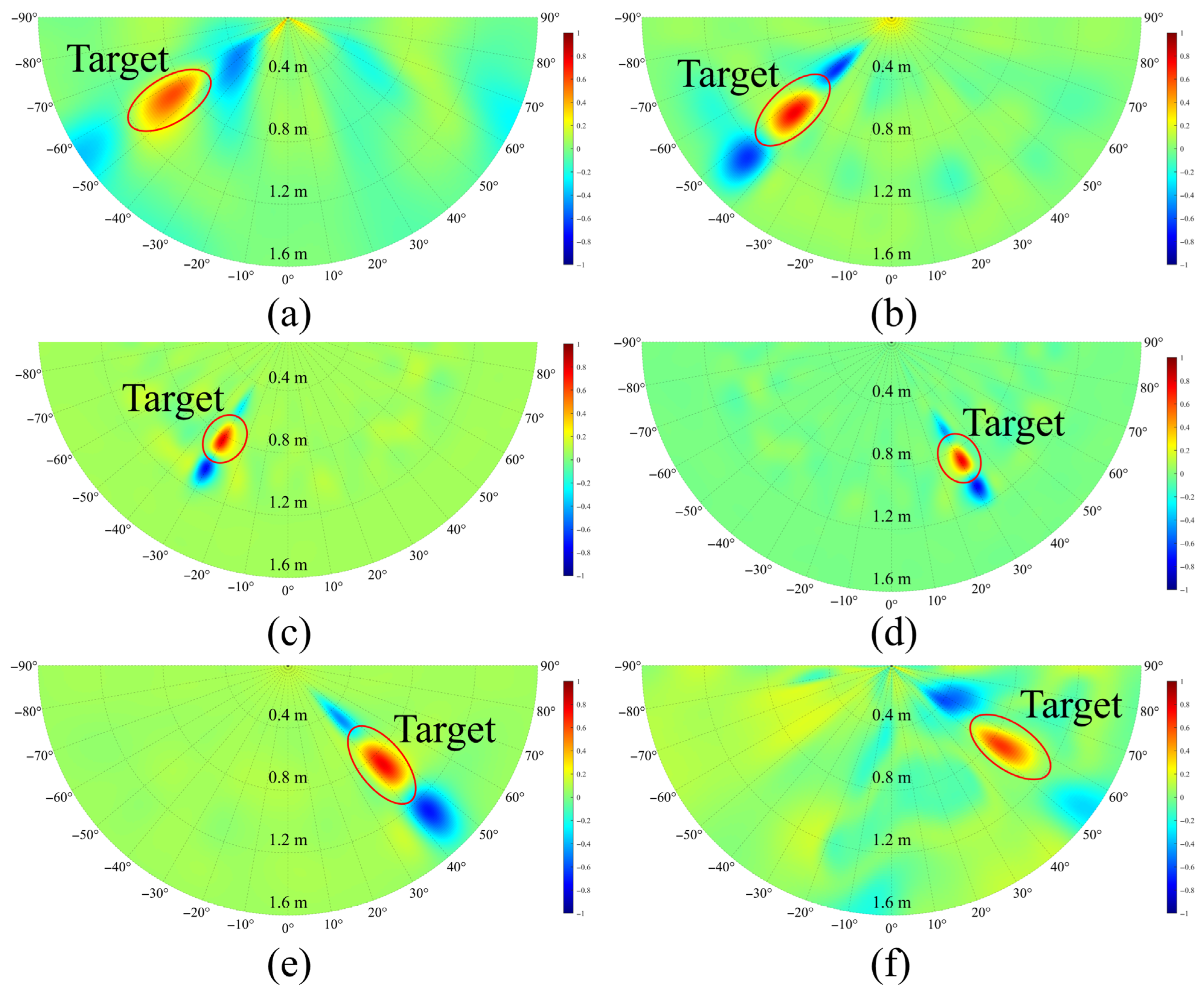
Figure 15 shows the measurement results of the antenna array at a fixed distance of z = 0.75 m with different beam-scanning angles. Since the reflected signal weakens at larger scan angles, all images are normalized (to a global maximum across all scans of the same experiment) to highlight the positions of strong echoes. Figure 15a–f corresponds to detection results at scan angles ranging from −55° to 55°. When the scanning angles are smaller, the main-lobe gain is higher, producing strong echoes from the target and enabling accurate localization with well-confined radiation. In contrast, while the target remains detectable, the radiation becomes more dispersed, enlarging the imaging area. This is due to reduced gain and directionality of the beam, where part of the energy is scattered into side lobes rather than being concentrated in the main lobe. These observations indicate that while wide-angle coverage is achieved, there is a slight trade-off in radiation intensity and beam focusing capability, consistent with the simulation results in Section 3. Nevertheless, the antenna array demonstrates reliable beam control across a wide angular range, maintaining stable radiation performance throughout the scanning process.

5.2. Sand-Tank Detection

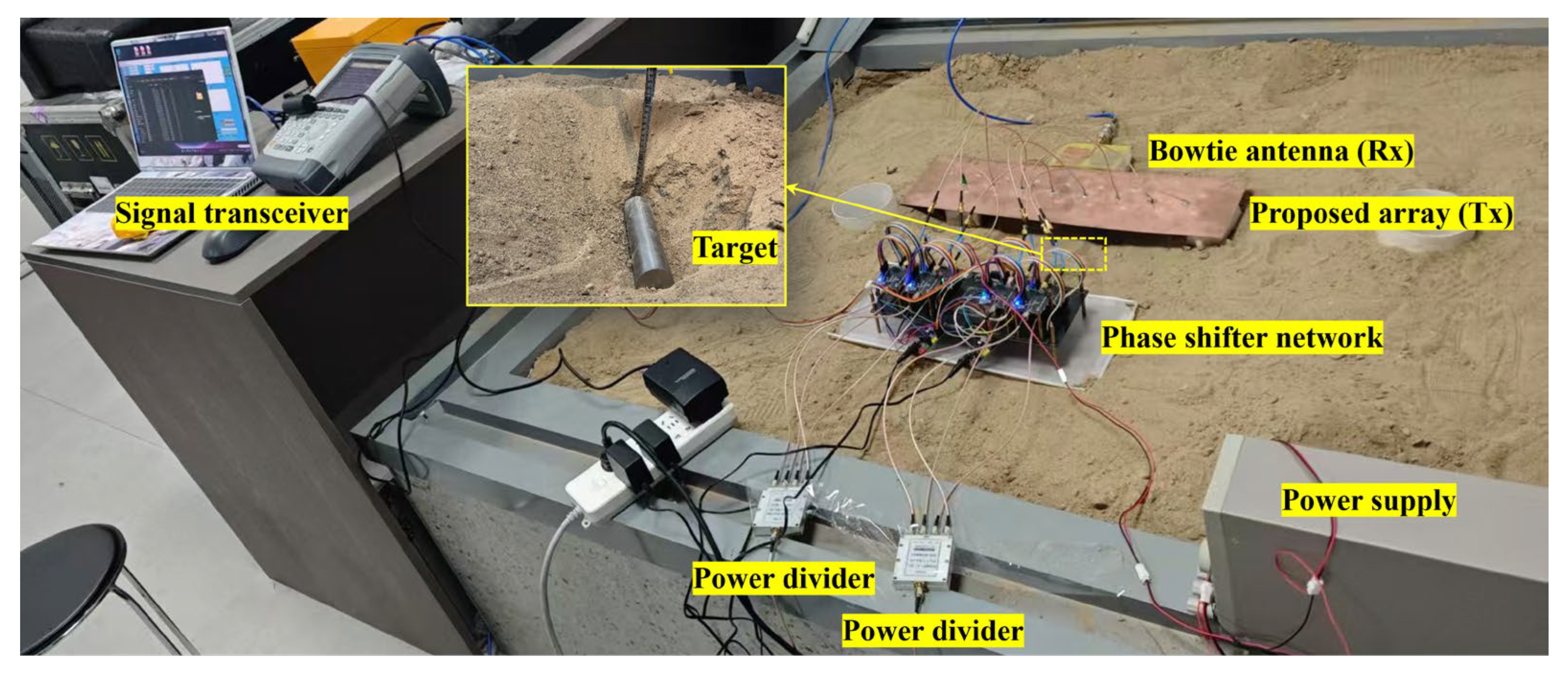
As shown in Figure 16, a sand-tank platform was constructed to further validate the subsurface detection capability of the proposed BS-GPR system under a controlled and repeatable environment. The tank has an inner size of 1.5 m × 1.0 m × 1.0 m and was filled with dry fine-grain sand. The relative permittivity and loss tangent of the medium were set as ε r = 4 and tan δ = 0.01, which are representative values for dry sand and provide a stable baseline for evaluating beam-scanning performance without the uncertainty introduced by moisture variations. To ensure experimental repeatability, the sand was stored in sealed containers, backfilled in layers, and lightly compacted to reduce large voids and maintain a consistent bulk density across repeated trials.
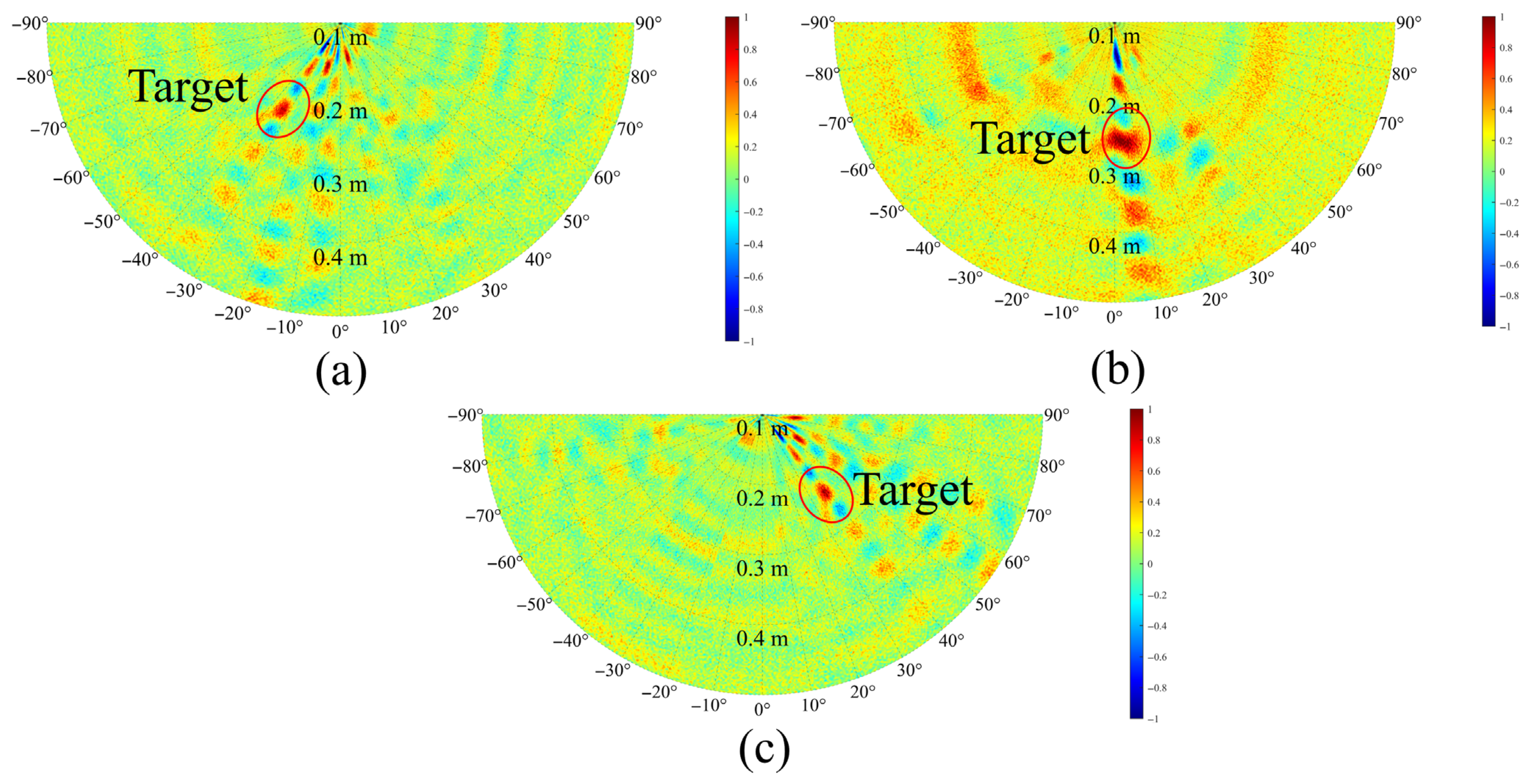
Due to the higher attenuation of electromagnetic waves in sand compared with free-space conditions, a 20 dB RF power amplifier (HT004A) was connected at the output of the transceiver to enhance the transmitted energy and guarantee sufficient dynamic range of the received echoes. The underground target was a solid metal cylinder with a height of 20 cm and a diameter of 5 cm, buried at a depth of 15 cm from the sand surface. The target location was defined with respect to the normal direction of the transmitting array, where 0° indicates that the target is aligned with the array centerline, and ±30° denotes lateral placements symmetrically offset from the broadside direction. The burial depth and lateral position were controlled using a marked ruler, leading to an estimated placement tolerance of approximately ±5 mm.
The beam-scanning procedure followed the same control logic as described in Section 5.1. Specifically, the host controller (CCS I) configured the transceiver parameters and managed automatic data storage, while CCS II computed the required phase distribution and issued commands to the phase shifters through the FPGA-controlled network. The transmitting beam was steered to cover the required angular sector and the corresponding echo data were recorded for subsequent imaging. The measured frequency-domain responses were converted into time–domain signals via IFFT, and background subtraction was applied to enhance the contrast of target reflections. All images in Figure 17 were normalized (to a global maximum across all scans of the same experiment) for a fair comparison of target visibility under different angular placements.
As shown in Figure 17, when the target is positioned at 0°, the main lobe of the beam directly illuminates the object, resulting in the strongest echo response and the most confined focusing region. For the ±30° cases, the echo amplitude decreases moderately due to the reduced effective main-lobe gain at larger steering angles; nevertheless, the target remains clearly identifiable in both positions. These results indicate that the proposed wide-angle scanning array maintains effective directional radiation and robust target response in a lossy underground environment, validating its advantage in extending lateral detection without increasing antenna number or array aperture.

6. Conclusions

This paper built and tested a beam-scanning ground-penetrating radar (BS-GPR) system that uses an eight-element phased-array transmitting antenna and a bowtie receiving antenna. By electronically steering the transmit beam within the 2.0–2.6 GHz band, the system can cover a fan-shaped sector of about ±90° beneath the array, instead of only probing the narrow strip directly under the antennas as in conventional multi-channel GPR.
The antenna element and array measurements show that the proposed array keeps a stable main-beam gain of around 10 dBi over a wide range of scan angles and frequencies, while maintaining low side-lobe levels and weak mutual coupling. These results confirm that the designed phased array can provide reliable wide-angle beam steering for GPR applications.
Free-space and sand-tank experiments further demonstrate the practical performance of the BS-GPR system. The system can accurately steer the beam toward the desired direction and clearly detect metal targets located at different distances and off-broadside angles, including lateral positions that lie outside the view field of a traditional GPR. Unlike traditional GPR systems that rely on physical scanning and are limited by manual measurement spacing, the proposed BS-GPR allows dynamically adjustable measurement lines within the ±90° sector, providing more continuous spatial information for off-broadside targets and improving target delineation.
Overall, the proposed BS-GPR extends the lateral detection range and improves image clarity without increasing the number of antennas or the physical aperture of the array, which is beneficial for wide-area surveys and portable field deployment.
The data that support the findings of this study are available from the corresponding author upon reasonable request.

Author Contributions

Conceptualization, Q.Z., Z.Z., J.W., Y.W. and L.G.; methodology, Q.Z., Z.Z., J.W., Y.W. and L.G.; software, Q.Z.; investigation, Q.Z., Z.Z., J.W. and L.G.; writing—original draft, Q.Z. and L.G.; writing—review and editing, Q.Z. and Y.W. All authors have read and agreed to the published version of the manuscript.

Funding

This work was supported by the National Key Research and Development Program of China under Grant 2024YFC2813700, the National Natural Science Foundation of China under Grant 42274189 and the National Science and Technology Major Project for Deep Earth Probe and Mineral Resources Exploration under Grant 2024ZD1002700. And The APC was funded by the National Key Research and Development Program of China under Grant 2024YFC2813700.

Data Availability Statement

The original contributions presented in this study are included in the article. Further inquiries can be directed to the corresponding author.

Acknowledgments

This work was supported by the National Key Research and Development Program of China under Grant 2024YFC2813700, the National Natural Science Foundation of China under Grant 42274189 and the National Science and Technology Major Project for Deep Earth Probe and Mineral Resources Exploration under Grant 2024ZD1002700.

Conflicts of Interest

The authors declare no conflict of interest.

References

  1. Alani, M.; Lantini, L. Recent advances in tree root mapping and assessment using non-destructive testing methods: A focus on ground penetrating radar. Surv. Geophys. 2020, 41, 605–646. [Google Scholar] [CrossRef]
  2. Álvarez López, Y.; García-Fernández, M.; Álvarez-Narciandi, G.; Las-Heras Andrés, F. Unmanned aerial vehicle-based ground-penetrating radar systems: A review. IEEE Geosci. Remote Sens. Mag. 2022, 10, 66–91. [Google Scholar] [CrossRef]
  3. Pathirana, S.; Lambot, S.; Krishnapillai, M.; Cheema, M.; Smeaton, C.; Galagedara, L. Ground-Penetrating Radar and Electromagnetic Induction: Challenges and Opportunities in Agriculture. Remote Sens. 2023, 15, 2932. [Google Scholar] [CrossRef]
  4. Rieß, A.; Dietrich, P. Investigation of hydrogeological structures in carbonate rock with ground penetrating radar. Environ. Earth Sci. 2025, 84, 202. [Google Scholar] [CrossRef]
  5. Dong, Z.; Feng, X.; Zhou, H.; Liu, C.; Sato, M. Effects of induced field rotation from rough surface on H-alpha decomposition of full-polarimetric GPR. IEEE Trans. Geosci. Remote Sens. 2021, 59, 9192–9204. [Google Scholar] [CrossRef]
  6. Solla, M.; Pérez-Gracia, V.; Fontul, S. A review of GPR application on transport infrastructures: Troubleshooting and best practices. Remote Sens. 2021, 13, 672. [Google Scholar] [CrossRef]
  7. Shen, H.; Li, X.; Duan, R.; Zhao, Y.; Zhao, J.; Che, H.; Liu, G.; Xue, Z.; Yan, C.; Liu, J.; et al. Quality evaluation of ground improvement by deep cement mixing piles via ground-penetrating radar. Nat. Commun. 2023, 14, 3448. [Google Scholar] [CrossRef]
  8. Dong, Z.; Xue, B.; Lei, J.; Zhao, X.; Gao, J. Study on propagation characteristics of ground penetrating radar wave in dikes and dams with polymer grouting repair using finite-difference time-domain with perfectly matched layer boundary condition. Sustainability 2022, 14, 10293. [Google Scholar] [CrossRef]
  9. Yuan, W.; Liu, S.; Zhao, Q.; Deng, L.; Lu, Q.; Pan, L.; Li, Z. Application of Ground-Penetrating Radar with the Logging Data Constraint in the Detection of Fractured Rock Mass in Dazu Rock Carvings, Chongqing, China. Remote Sens. 2023, 15, 4452. [Google Scholar] [CrossRef]
  10. Xu, X.; Peng, S.; Xia, Y.; Ji, W. The development of a multi-channel GPR system for roadbed damage detection. Microelectron. J. 2014, 45, 1542–1555. [Google Scholar] [CrossRef]
  11. Pan, X.; Wollschläger, U.; Gerhards, H.; Roth, K. Optimization of multi-channel ground-penetrating radar for quantifying field-scale soil water dynamics. J. Appl. Geophys. 2012, 82, 101–109. [Google Scholar] [CrossRef]
  12. Chen, Y.; Chen, X.; Wang, Y.; Zu, S. The interpolation of sparse geophysical data. Surv. Geophys. 2018, 39, 877–910. [Google Scholar] [CrossRef]
  13. García-Fernández, M.; Álvarez López, Y.; Las-Heras Andrés, F. Airborne multi-channel ground penetrating radar for improvised explosive devices and landmine detection. IEEE Access 2016, 8, 165927–165943. [Google Scholar] [CrossRef]
  14. Rocca, P.; Oliveri, G.; Mailloux, R.J.; Massa, A. Unconventional phased array architectures and design methodologies—A review. Proc. IEEE 2016, 104, 544–561. [Google Scholar] [CrossRef]
  15. Yin, L.; Yang, P.; Dong, T.; Nie, Z. A compact independent dual-polarized 2-bit phased-array antenna. IEEE Antennas Wirel. Propag. Lett. 2025, 24, 923–927. [Google Scholar] [CrossRef]
  16. Mackay, A.J.; Eleftheriades, G.V. Mixer-fed antenna array with full scanning and sidelobe control. IEEE Trans. Antennas Propag. 2025, 73, 941–954. [Google Scholar] [CrossRef]
  17. Zhao, G.; Huang, H.; Yu, Y.; Zhao, K.; Yang, Z.; Chen, G.; Zhang, Y. Study on the quantitative precipitation estimation of X-band dual-polarization phased array radar from specific differential phase. Remote Sens. 2023, 15, 359. [Google Scholar] [CrossRef]
  18. Ren, G.; Sun, Y.; Sun, H.; Dong, Y.; Yang, Y.; Xiao, H. A case study on two differential reflectivity columns in a convective cell: Phased-array radar observation and cloud model simulation. Remote Sens. 2024, 16, 460. [Google Scholar] [CrossRef]
  19. Zhao, L.; He, Y.; Zhao, G.; Chen, X.; Huang, G.; Lin, W. Scanning angle extension of a millimeter-wave antenna array using electromagnetic band gap ground. IEEE Trans. Antennas Propag. 2022, 70, 7264–7269. [Google Scholar] [CrossRef]
  20. Li, M.; Chen, S.-L.; Liu, Y.; Guo, Y.J. Wide-angle beam-scanning phased-array antennas: A review. IEEE Open J. Antennas Propag. 2023, 4, 695–712. [Google Scholar] [CrossRef]
  21. Wu, S.; Zhang, Y.; Liu, H.; Wang, T.; Li, X. UAV-mounted ground-penetrating radar for object detection based on cross-correlation background subtraction method. Remote Sens. 2022, 14, 5132. [Google Scholar] [CrossRef]
  22. García-Fernández, M.; Álvarez-Narciandi, G.; Álvarez López, Y.; Las-Heras Andrés, F. Improvements in GPR-SAR imaging focusing and detection capabilities of UAV-mounted GPR systems. ISPRS J. Photogramm. Remote Sens. 2022, 189, 128–142. [Google Scholar] [CrossRef]
  23. Pitcher, A.D.; Georgiev, M.; Nikolova, N.K.; Nicolici, N. Parallelized field-programmable gate array data processing for high-throughput pulsed-radar systems. Sensors 2025, 25, 239. [Google Scholar] [CrossRef]
  24. Yang, M.; Yang, J.; Hou, Y.; Jin, C. Implementation architecture of signal processing in pulse Doppler radar system based on FPGA. J. Eng. 2019, 2019, 7335–7338. [Google Scholar] [CrossRef]
  25. Zhao, S.; Gao, S.; Wang, R.; Wang, Y.; Zhou, F.; Guo, N. Acceleration and implementation of convolutional neural networks based on FPGA. Digit. Signal Process. 2023, 141, 104188. [Google Scholar] [CrossRef]
  26. Iqbal, Z.; Pour, M. Addressing grating lobes in linear scanning phased arrays with self-nulling elements and optimized amplitude distributions. Prog. Electromagn. Res. M 2021, 100, 151–161. [Google Scholar] [CrossRef]
Figure 1. Conceptual comparison of lateral detection view fields between the proposed BS-GPR system and a conventional multi-channel GPR.
Mathematics 14 00824 g001
Figure 2. Overall architecture of the proposed BS-GPR platform including phased-array antenna, FPGA control unit, and data acquisition modules.
Mathematics 14 00824 g002
Figure 3. Structure of the phased-array antenna and illustration of the electronic beam-steering mechanism.
Mathematics 14 00824 g003
Figure 4. Geometry and design parameters of the phased-array antenna used in the BS-GPR system. (a) Top view of the radiating patch layer. (b) Side view of the antenna element structure. (c) Simulated reflection coefficient of the antenna element. (d) Top view of the antenna array layout.
Mathematics 14 00824 g004
Figure 5. Simulation results of typical elements in the array. (a) Reflection and mutual coupling coefficients. (b) Radiation patterns.
Mathematics 14 00824 g005
Figure 6. Radiation patterns of the phase array at different frequencies. (a) 2.0 GHz. (b) 2.3 GHz. (c) 2.6 GHz.
Mathematics 14 00824 g006
Figure 7. Radiation performance of the antenna array under different scan angles. (a) Main-lobe gain. (b) Side-lobe level.
Mathematics 14 00824 g007
Figure 8. The schematic of the phase-shift network. (a) Phase-shifter chip. (b) Phase-shifter circuit board layout. (c) FPGA control board.
Mathematics 14 00824 g008
Figure 9. Phase shifter testing setup and results. (a) Test setup. (b) Transmission coefficient.
Mathematics 14 00824 g009
Figure 10. Fabricated antenna and test setup. (a) Top view of the proposed array. (b) Radiation pattern test setup.
Mathematics 14 00824 g010
Figure 11. Measured antenna parameters and radiation patterns. (a) Reflection and mutual coupling coefficients of antenna elements. (b) Radiation patterns of individual elements.
Mathematics 14 00824 g011
Figure 12. Measured beam-steering radiation patterns of the phased-array antenna at different scan angles and frequencies.
Mathematics 14 00824 g012
Figure 13. Experimental setup for BS-GPR free-space target detection.
Mathematics 14 00824 g013
Figure 14. Target detection results of the antenna array with different distances. (a) z = 0.5 m. (b) z = 0.75 m. (c) z = 1.5 m.
Mathematics 14 00824 g014
Figure 15. Target detection results at z = 0.75 m under different beam-scanning angles. (a) −55°. (b) −45°. (c) −30°. (d) 30°. (e) 45°. (f) 55°.
Mathematics 14 00824 g015
Figure 16. Experimental setup for BS-GPR sand-tank target detection.
Mathematics 14 00824 g016
Figure 17. Sand-tank target imaging results under different lateral beam-steering angles. (a) −30°. (b) 0°. (c) 30°.
Mathematics 14 00824 g017
Table 1. Stepwise data and command flow of coordinated control during angle scanning.
ModuleMain FunctionInputsOutputsCommunication
CCS IConfigure scan parameters; initialize transceiver; perform trigger acquisition; manage automatic storageScan range θ min , θ max , step Δ θ ; transceiver settings (frequency band, power level, sweep points); storage path/namingAngle list θ ; acquisition trigger; stored dataset indexed by θ Control link to transceiver (instrument interface); local file system
CCS IICompute required phase distribution per angle; quantize to discrete phase states; send commands to FPGA θ , array geometry (N, d); beam-steering law (Formula 3); phase resolutionQuantized phase commands for each element α n ( θ ) RS485 to FPGA controller
FPGA control boardReceive phase commands; program phase shifters in parallel; update phase state synchronouslyPhase command words from CCS IIDigital control signals to phase shifters; updated phase stateGPIO/digital control lines to phase shifters; RS485 from CCS II
Phase shiftersApply phase delays to each Tx channel to steer the beamDigital phase stateRadio frequency (RF) outputs with specified phase α n RF path; digital control from FPGA
Signal transceiverGenerate RF sweep; receive echo via Rx chain; output measured frequency-domain responseAcquisition trigger; sweep configurationMeasured responsesInstrument interface to CCS I
Table 2. Design parameters of the antenna element (unit: mm).
H1H2H3H4L1L2L3L4
32.4120.652.553045
L5R1R2R3W1W2W3W4
7547352.56830
Table 3. HPBW of the main lobe at different scanning angles.
2.0 GHzAngle (°)015304560
HPBW(°)17.517.719.827.133
2.3 GHzAngle (°)015304560
HPBW (°)14.815.317.723.830.4
2.6 GHzAngle (°)015304560
HPBW (°)13.213.715.820.228.8
Table 4. Phase stability test results (UNIT: °).
DesiredMeasuredErrorDesiredMeasuredError
3029.030.97210211.231.23
6058.801.20240239.220.78
9086.863.14270268.871.13
120118.311.69300299.850.15
150146.004.00330330.780.78
180180.940.94360362.002.00
Disclaimer/Publisher’s Note: The statements, opinions and data contained in all publications are solely those of the individual author(s) and contributor(s) and not of MDPI and/or the editor(s). MDPI and/or the editor(s) disclaim responsibility for any injury to people or property resulting from any ideas, methods, instructions or products referred to in the content.