1. Introduction
In ecosystems where the interplay of predator–prey dynamics is pivotal for maintaining balance and biodiversity, the intricate nature of these interactions has a significant impact on mathematical biology [
1,
2]. To effectively delve into these biological phenomena, mathematical modeling proves invaluable for understanding complex interactions and predicting ecosystem dynamics [
3,
4]. Malthus introduced an early demographic principle at the end of the eighteenth century, arguing that human population tends to grow faster than food supply, leading to resource limitation and population checks [
5]. According to this theory, populations would theoretically expand (or contract) exponentially, although this model does not precisely mirror real-world dynamics. Verhulst proposed the logistic growth model [
6], which incorporates intra-species competition in proportion to the current population size, along with a constant per-capita population growth rate. In this framework, the population size adjusts relative to its initial size and ultimately stabilizes around the ecosystem’s carrying capacity, whether it surpasses or falls short of that threshold. Biology and ecology researchers examine the intricate characteristics of natural occurrences, necessitating the use of specialized approaches for description and abstraction. Most studies on predator–prey systems only look at the direct devouring of prey by the predator because predation is easy to observe in nature [
7]. One of the two-species food chain building block models is the predator–prey interaction model. Despite extensive research into or development of predator–prey interaction models, numerous ecological and modeling issues remain unresolved. A modification that has been made is the addition of a new prey or predator. To comprehend the environment’s coexistence circumstances, species extinction, the presence of stable periodic solutions, or prey–predator cycle, several researchers have presented mathematical models that represent the interaction between two prey and one predator [
8,
9].
One of the fundamental interspecific relationships in biology and ecology is the predator–prey relationship. It also serves as the building block for complex food chains, food webs, and biochemical network structures [
8,
10]. Since the groundbreaking study by Aiello and Freedman [
11], a discrete time delay is used to create a single-species growth model with a stage structure made up of immature and mature phases. It is demonstrated that a globally asymptotically stable positive equilibrium exists given appropriate conditions. There are some intriguing findings about the dynamics of predator–prey systems in [
12]. The dynamical characteristics of a three-species ratio-dependent food-chain model were examined in [
13]. For a three-species food-chain system, Cui et al. [
14] studied the stability and bifurcation of periodic solutions. Pei et al [
15]’s delay three-species ecosystem with Holling functional response was set up, and the system’s dynamical behaviors were investigated. Mbava et al. examined a food-chain model incorporating disease dynamics in species’ interactions in [
16]. The majority of the literature currently available on theoretical investigations of "prey-predator-top-predator" systems focuses on situations without stage structure.
Ecological systems are constantly influenced by wind, which can have a wide range of strong consequences. Understanding how wind affects pollination [
17], dispersal [
18], and its destructive power on the landscape [
19] has been the subject of much research. On the other hand, the direct effects of wind on the relationships between creatures within a community have received less attention. This is especially important, as noted by Pryor et al. [
20] and McVicar et al. [
21], since wind patterns and speeds have changed significantly in recent decades, and the effects of these changes on ecosystems remain unknown. Although there are places where wind speeds have increased—particularly in maritime environments—this phenomenon is frequently referred to as “global stilling” [
22]. Wind speeds have dropped by 5 to 15% over the past 30 years in the contiguous United States [
20] and globally [
22]. It is generally anticipated that these declines will continue into the 21st century. Although it is not hard to envision that shifting winds could impact how animals interact, there is currently no overarching theory or synthesis explaining how wind influences predator–prey relationships. The survival of species is significantly impacted by global warming. The impact of global warming as a mathematical model has been the subject of very few studies. There has not been any prior research on how global warming affects the carrying capacity of predators and prey. In the literature, many findings about “prey-predator-top-predator”-type food-chain models have been described [
23,
24].
In this paper, we incorporate the wind flow effect in prey–predator species and examine its impact on the dynamic behavior of the model.
Section 2 discusses the model.
Section 3 discusses theoretical studies that describe the existence of positive solutions and boundedness. The equilibrium and its stability analysis have been studied in
Section 4. Local bifurcation analysis was conducted, in which saddle-node, transcritical, and Hopf bifurcations have been studied, in
Section 5. In
Section 6, we performed a numerical simulation to validate the analytical results. Finally, the results and discussion are included in
Section 7.
2. Model Formulation
The plant dynamics in Equation (
1) are based on standard ecological modeling principles. Logistic growth,
, represents density-dependent limitation of plant biomass. Herbivory is modeled using a Holling type II functional response,
, to capture saturating consumption due to handling and digestive constraints of ungulates. The wind-effect function,
, acts as a bounded, decreasing modifier reducing grazing efficiency under adverse wind conditions. This formulation ensures biological realism, boundedness, and analytical tractability. To construct a
mathematical model representing the dynamics of plants (
p), ungulates (
u), and wolves (
y), we begin by describing the interactions among these classes while incorporating the effect of wind (
w) on the system (
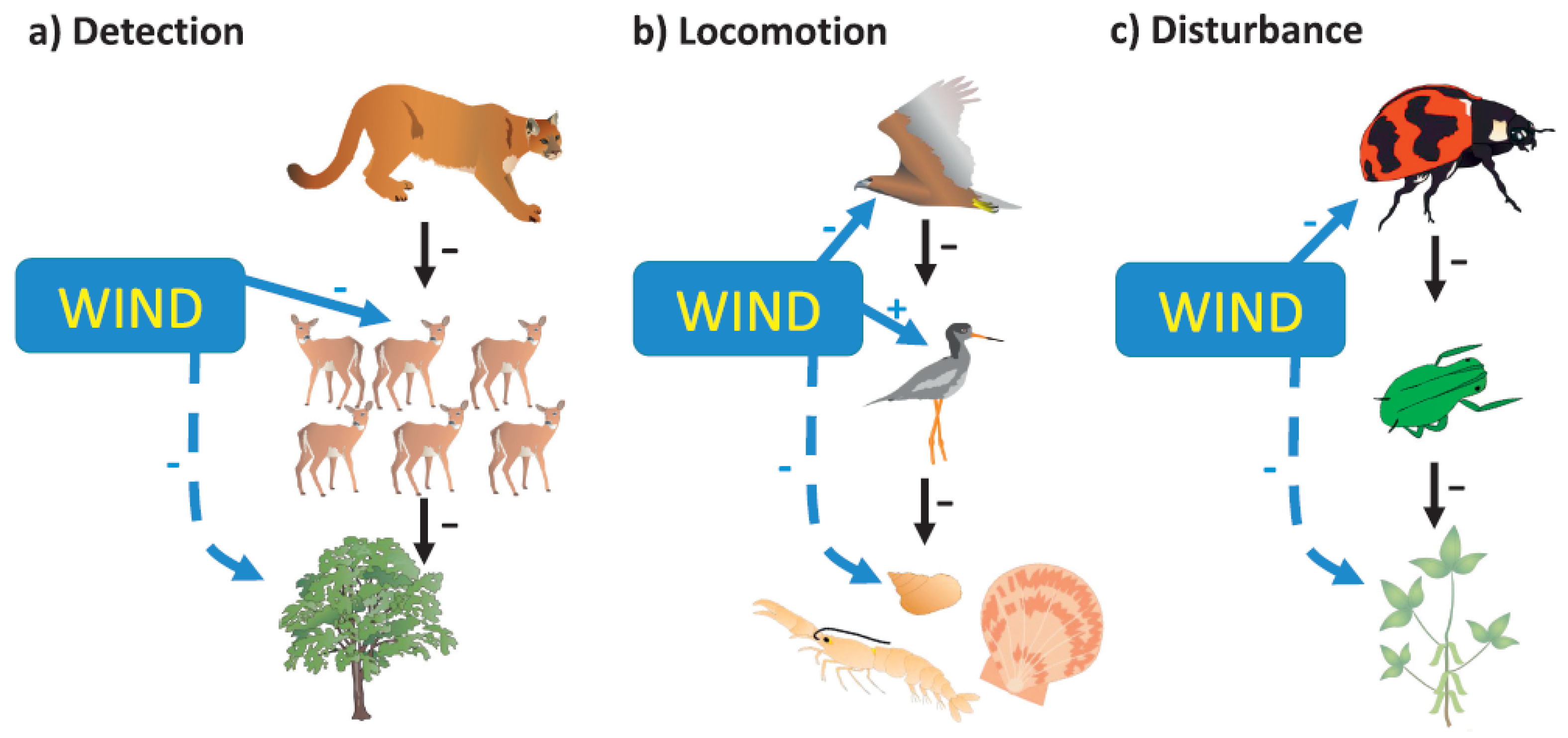
Figure 1). The ecological processes include the logistic growth of plants, herbivory by ungulates, and predation by wolves, which are modeled through nonlinear functional responses.
2.1. Plant Population Equation
The plant–ungulate–wolf model represents a frequently employed ecological paradigm, commonly utilized to elucidate the interactions among three trophic levels within an ecosystem: plants (producers), ungulates (herbivores), and wolves (predators). This model commonly originates from the tenets of food web dynamics and the Lotka–Volterra equations, which delineate predator–prey and resource–consumer interactions. The plant population follows the logistic growth model influenced by herbivory:
Here, the first term represents logistic growth of the plant biomass with intrinsic growth rate r and carrying capacity k. The second term models the consumption of plant resources by ungulates, incorporating a Holling type II functional response.
is the rate at which ungulates consume plants.
is a parameter related to the handling time or saturation level.
The factor reflects the wind-modulated difficulty in plant consumption.
The half-saturation constant for ungulates is , and it becomes dependent on wind due to its appearance in the denominator.
2.2. Wind-Effect Function
The effect of wind on plant consumption and predator–prey interactions is modeled through the function , defined as , which satisfies the following assumptions:
- 1.
: in the absence of wind, the factor becomes unity, restoring the original attack rates.
- 2.
: increasing wind reduces effective consumption rates by increasing the difficulty of foraging and predation.
2.3. Ungulate Population Equation
The dynamics of the ungulate population are given by:
This equation consists of three key terms:
The first term represents biomass gain from plant consumption with conversion efficiency .
The second term denotes predation by wolves using a Holling type II response, where:
- –
is the base predation rate by wolves,
- –
m denotes cooperation among wolves,
- –
is a saturation constant.
The third term accounts for natural mortality in ungulates.
The half-saturation constant here is given by , again showing wind dependence.
2.4. Wolf Population Equation
The wolf population is modeled by:
This equation includes:
Biomass gain from consuming ungulates, scaled by conversion efficiency .
Natural mortality term .
The predation rate includes the cooperative effect of wolves (), the wind factor , and saturation due to prey availability.
2.5. Complete Mathematical Model
By collecting the equations described above, the complete system becomes:
2.6. Initial Conditions
The model is equipped with the following positive initial conditions:
2.7. Parameter Assumptions
All parameters involved in the system are assumed to be nonnegative. Their biological roles and meanings are explained clearly in
Table 1.
3. Well-Posedness of the Model (4)
3.1. Positivity
Theorem 1. With initial condition (5), every solution of model (4) exists in and is still positive . Proof. As the density of populations at any time
t cannot be negative, we must ensure that the positivity property is met by the model system we have suggested (4). The solution of the system (4) with the starting condition (
5) exists and is unique on
where
. The right-hand side of the system (4) is continuous and locally Lipschitz in the first quadrant
. (4) and (
5) give us
As a result, at any time t, the solutions of the system (4) stay positive in the first quadrant. □
3.2. Boundedness
Theorem 2. The solutions of the PUY system with nonnegative initial solutions are bounded.
Proof. To verify the preceding assertion, we initially select a function .
Using the maximum plant carrying capacity
k yields the following:
where
. Then, the following is obtained by applying Gronwall’s inequality:
hence,
Thus, , , and will stay bounded. This means that the population densities of the species involved remain nonnegative and finite at all times. Ecologically, this implies that none of the populations undergo unrealistically large growth due to resource limitations, environmental constraints, and interspecific interactions incorporated in the model. Thus, the system evolves within an ecologically feasible region of the state space. □
4. Existence of Equilibrium Points and Their Stability
The current section is dedicated to examining the equilibrium points that can be derived from our model (4). The system (4) was unable to attain its solutions due to its nonlinearity. However, the equilibrium points and their stability can be used to predict the system’s behavior. In the ecological context, equilibrium points represent possible long-term states of the system. The trivial equilibrium corresponds to the extinction of all populations. Boundary equilibria represent partial extinction or dominance, where one or more species persist while others vanish. The interior equilibrium denotes the coexistence of all populations at positive densities. Stability of an equilibrium implies ecological resilience, meaning that small perturbations in population sizes dissipate over time and the system returns to its original ecological state. In contrast, instability indicates that small disturbances may lead to extinction, dominance by one species, or sustained oscillations in population size.
4.1. Existence of Equilibria
The model (4) admits four equilibrium points, as follows:
- 1.
.
- 2.
- 3.
, for
and
to be positive, the following condition must be satisfied:
- 4.
Coexistence equilibrium point
. One can find it with the following procedures. From the third equation of system (4) we find
which is positive under the following condition
and
. Substituting
in the first and second equations of model (4), we have
. Substituting
into the first and second equations yielded the following isoclines:
Note that from
, one can get that
is a root of second degree polynomial
which has a unique root provided that
and
Also, we take for granted that the next two requirements are met:
Therefore, the slope of is negative. The isoclines and intersect at a point in the positive -plane. As a result, the interior equilibrium point is real and defined as . The following result is obtained:
Theorem 3. Model (4) has a unique interior equilibrium point provided that the conditions (9)–(13) hold. 4.2. Stability of Equilibria
- 1.
The Jacobian matrix at
, is given by:
Then, the characteristic equation of matrix (
14) is given by:
The eigenvalues of the preceding Equation (
15) can be represented as follows:
, , . Therefore, is a saddle point.
- 2.
The Jacobian matrix at
is given by:
Then, the characteristic equation of matrix (
16) is given by:
The eigenvalues of the preceding Equation (
17) can be represented as follows:
, , . Thus, the equilibrium point is (LSA) locally asymptotically stable.
- 3.
The Jacobian matrix for
is presented:
where
Then, the characteristic equation of
is given by:
The eigenvalues of the preceding equation can be represented as follows:
Clearly,
demonstrates local asymptotic stability if and only if the following requirements are met:
- 4.
The Jacobian matrix at the
is given:
where
Then, the characteristic equation of
is given by:
where
Now, according to the Routh–Hurwitz criteria,
is a LAS point, provided that
5. Local Bifurcation
In bifurcation theory, small changes in system parameters can cause major changes in behavior. In ecological models, this means that slight variations in biological factors can shift population dynamics, for example, from stable coexistence to oscillations or extinction. In mathematics, it is most frequently employed to investigate systems that undergo variations over time. Local bifurcations occur when parameters exceed critical thresholds, resulting in modifications to the local stability of equilibria [
25]. This section evaluates the likelihood of local bifurcation. To achieve this, we revise the PUY model as follows:
For any non-zero vector
, we set
where
where
,
,
,
,
,
,
,
,
.
Theorem 4. For , the system (4) at the equilibrium point has
- (1)
saddle-node bifurcation if
- (2)
a transcritical bifurcation if condition (25) is violated and condition (26) is satisfied along with
Proof. At
, where the critical value of
could be evaluated from the following equation:
has a zero eigenvalue, say
. Therefore,
at
becomes
where
Now, let be an eigenvector corresponding to . Thus, , which gives .
Let
be an eigenvector corresponding to
. Thus,
, which gives
.
under condition (
25). Therefore, the first condition of saddle-node bifurcation is met. Subsequently,
Next, suppose that condition (
26) applies, i.e.,
Therefore, condition (
25) ensures that the second requirement of saddle-node bifurcation is met. The PUY model exhibits saddle-node bifurcation with parameter
.
On the other side, if condition (
25) is not satisfied, then the following is obtained.
As a result, the first requirement for transcritical bifurcation is met, whereas saddle-node bifurcation cannot occur. Subsequently,
where
represents the derivative of
with respect to
.
That means the second condition occurs if condition (
27) is satisfied. Then, the system (4) presents a transcritical bifurcation near
at
. □
Theorem 5. For , where is given the proof of this theorem, the system (4) at the equilibrium point has
(1) a saddle-node bifurcation if (2) a transcritical bifurcation if condition (30) is violated and condition (29) is satisfied along with Proof. From the Jacobian matrix
given by (
21) of the model (4),
has a zero eigenvalue, say
, at
where
and the Jacobian matrix
, becomes:
where
Let be an eigenvector corresponding to . Thus, , which gives .
Let
be an eigenvector corresponding to
. Thus,
, which gives
.
Under condition (
29). Therefore, the first condition of saddle-node bifurcation is met. Next, suppose that condition (
30) satisfied, i.e.,
Therefore, condition (
29) ensures that the second requirement of saddle-node bifurcation is met. Thus, the model (4) exhibits saddle-node bifurcation with the parameter
.
On the other side, if condition (
29) is not satisfied, then the following is obtained.
So, according to Sotomayor’s theorem, the first condition of transcritical bifurcation is satisfied. Now,
where
where
,
, and
represent the derivatives of
with respect to
. Furthermore,
Hence, condition (
31) guarantees that the third condition of transcritical bifurcation is satisfied. Therefore, the conditions for transcritical bifurcation hold. □
Hopf Bifurcation
Theorem 6. Assume that condition (20c) is satisfied along with the following condition The theorem’s proof defines . The PUY model shows a Hopf bifurcation at .
Proof. From Equation (
19) we have;
The criteria for the Hopf bifurcation are listed below.
- (a)
,
- (b)
,
- (c)
.
Condition (a) has been satisfied at .
Clearly,
if condition (
33) holds. At
, the characteristic equation given by (
34) is rewritten as
which has two roots
. Under condition (20c), it is evident that
has two entirely imaginary eigenvalues,
and
, which are complex conjugates. Additionally, the generic roots of Equation (
34) in the vicinity of
are written as
This indicates that the third condition (c) has been confirmed, guaranteeing that for , the PUY model presents a Hopf bifurcation. □
Theorem 7. Then, the PUY model around presents a Hopf bifurcation at .
Proof. The bifurcation parameter value can be determined by setting
instead in Formula (
22). This gives:
Clearly,
if condition (
38) holds. Now, at
, Equation (
22) can be written as
The aforementioned equation has three roots, according to condition (
36): two fully imaginary roots
and a negative root
. In a neighborhood of
, the roots have the following forms:
Clearly,
indicates that the first condition for Hopf bifurcation has been met at
. Now, to confirm the transversality condition, we substitute
into Equation (
22) and then compute its derivative with respect to
,
, where the form of
,
,
, and
, are
Now, at
, substituting
= 0 and
into Equation (
22), the following is obtained:
where
Hence, condition (
37) gives
That means the Hopf bifurcation has occurred at . □
Remark 1. The sizes of plant populations, herbivores, and predators fluctuate in a recurring, regular pattern over time due to periodic oscillations. Each population experiences cycles—booms followed by declines—at roughly predetermined periods rather than reaching steady values. This tendency is specifically described mathematically by a limit cycle. It describes a stable, closed loop in the system’s dynamics: the trajectories of the populations gradually approach and follow the same repeating cycle, regardless of where they begin (within a tolerable range). From an ecological perspective, this indicates that the ecosystem has a natural rhythm that endures even in the face of minor disruptions.
Remark 2. Table 2 describes the environmental effects of Hopf dendritices and transcribed dendritices (e.g., coexistence, exclusion, oscillatory dynamics). 6. Numerical Simulation
In this section, we discuss the dynamical behavior of model (
4) numerically. For the numerical simulation of model (
4), we have to set a fixed set of parameters for the whole simulation. The fixed set of parameters is as follows:
The parameter units are described in
Table 1. For the numerical simulation, we employed the Runge–Kutta 4th-order (RK-4) technique to generate the phase portrait and time series plot using MATLAB version R2018b. Additionally, we utilized the Matcont toolbox to generate the bifurcation diagram.
6.1. Effect of Wind Flow (w) on the Model (4)
This subsection examined the effect of wind flow on the model (
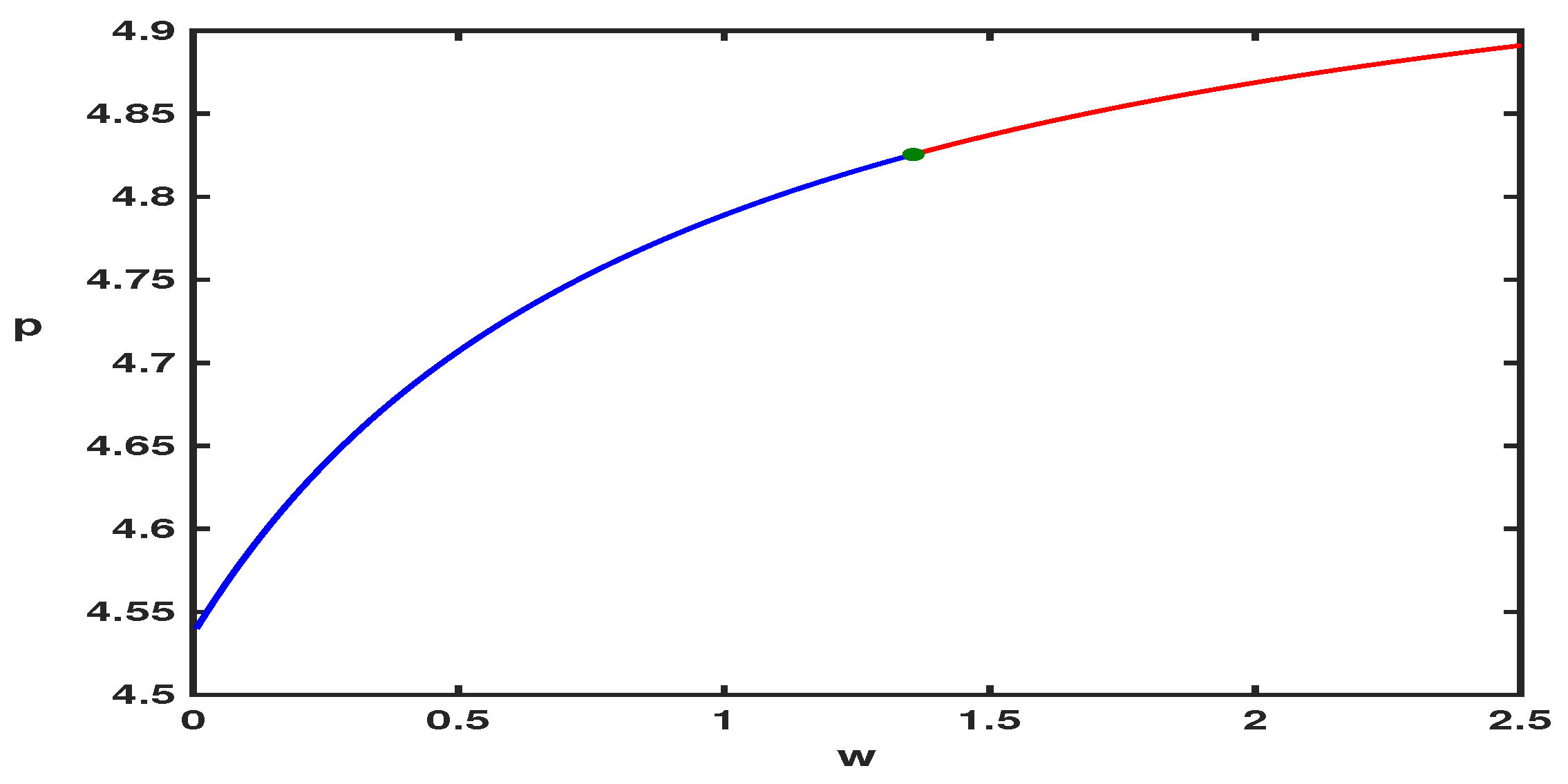
4), revealing that the model becomes stable, unstable, or oscillatory as the wind flow effect is increased. The bifurcation diagram about the parameter wind flow (w) shown in
Figure 2 shows that Hopf bifurcation arises at point
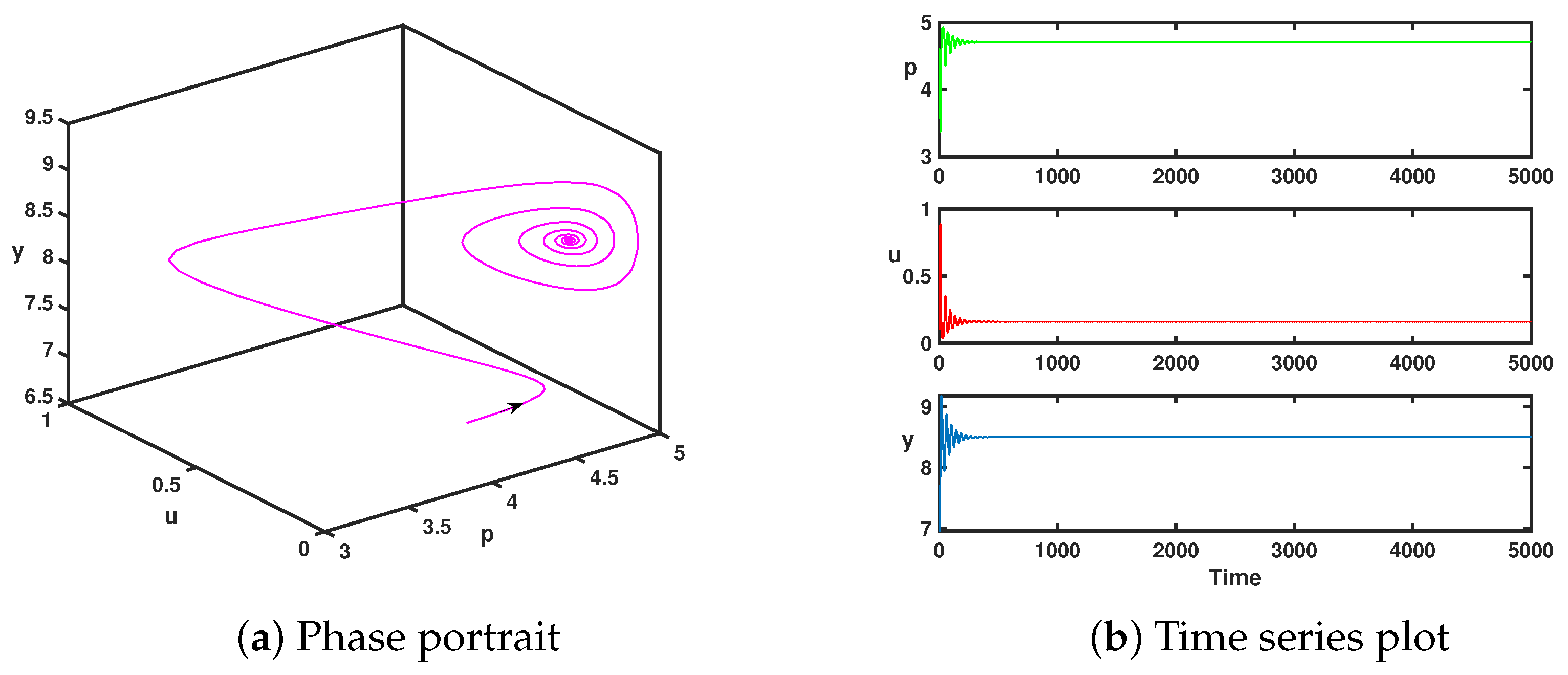
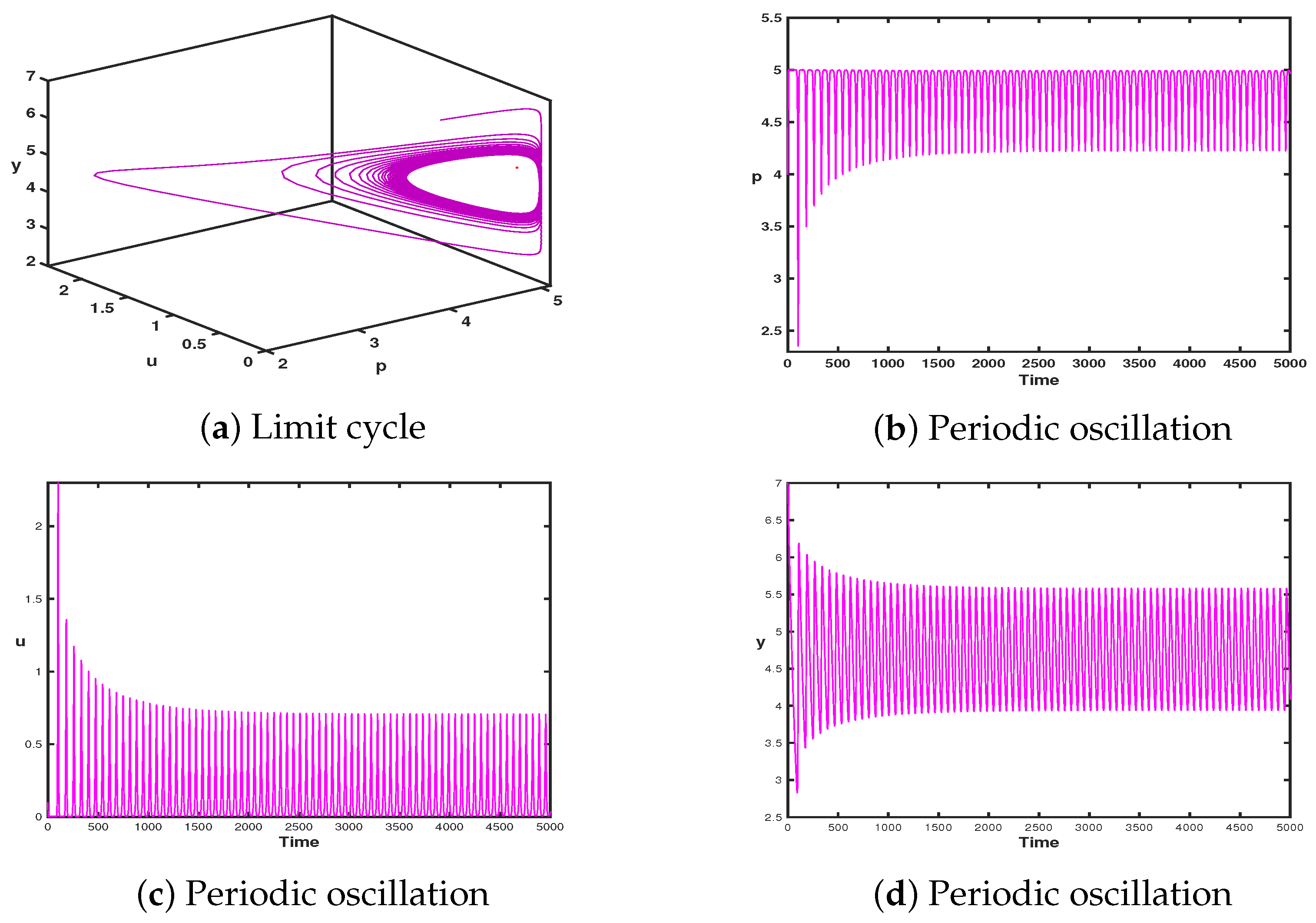
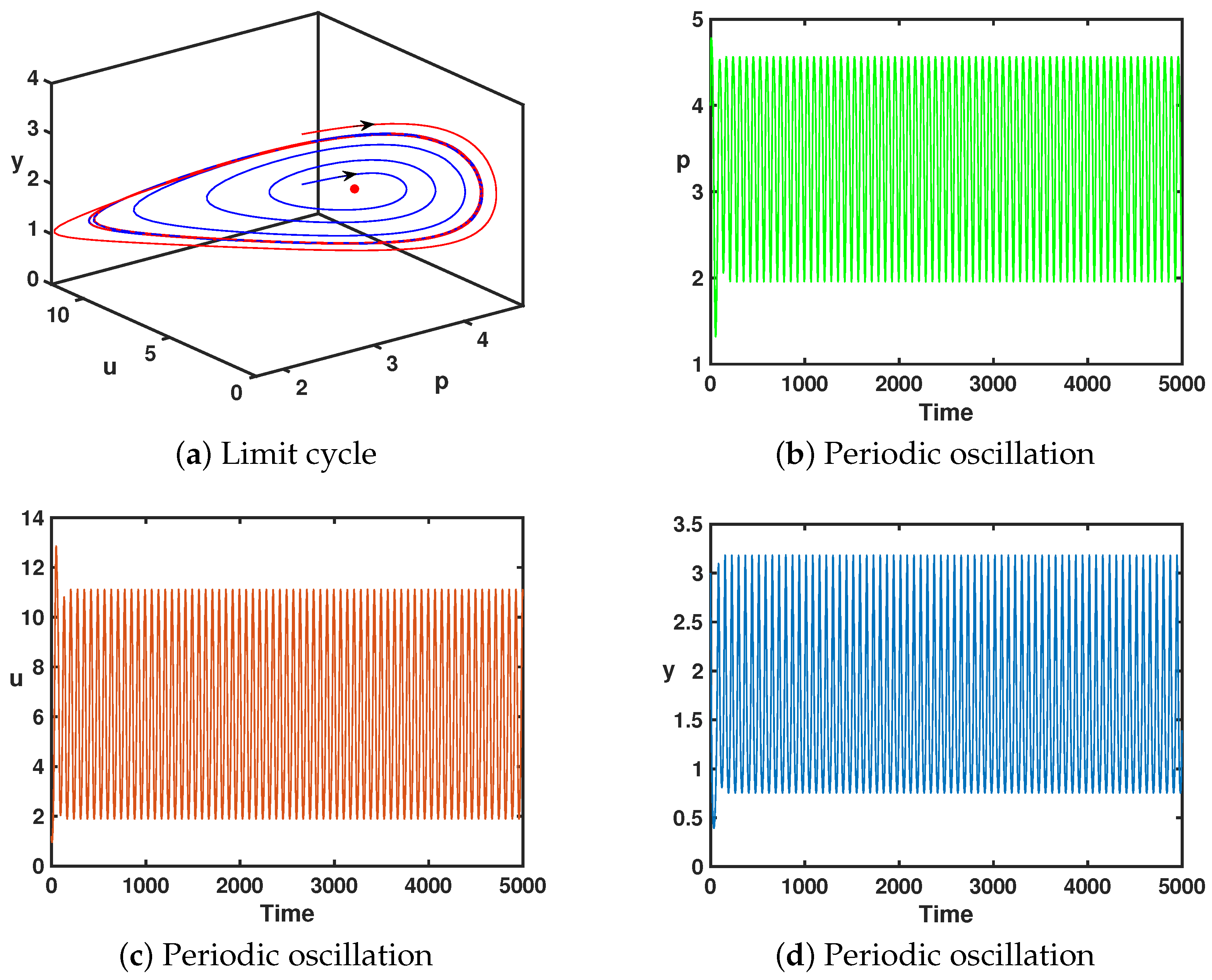
; before that point, the interior equilibrium is stable, and after that, periodic oscillation behavior is obtained. The stable and periodic oscillation for both regions is described through phase portraits and time series plots. The phase portrait and time series for the stable interior equilibrium point are shown in
Figure 3. The effect of wild flow is illustrated through the phase portrait and time series plot, where we observe that the wind flow effect induces oscillatory behavior in the model’s interior equilibrium, as shown in
Figure 4. As wind flow increases, model dynamics change from stable to oscillatory.
Figure 3a shows that the interior equilibrium is a stable spiral, and the corresponding time series in
Figure 3b shows that there is no oscillation in the population or converges near the interior equilibrium, which means it is stable over time.
6.2. Effect of Parameter on Model (4)
For the fixed set of parameters as mentioned in Equation (
39), we have demonstrated the effect of parameter
on model (
4). In this section, we find that the stable equilibrium point becomes unstable and shows periodic, periodic doubling, and chaotic behavior about the interior equilibrium.
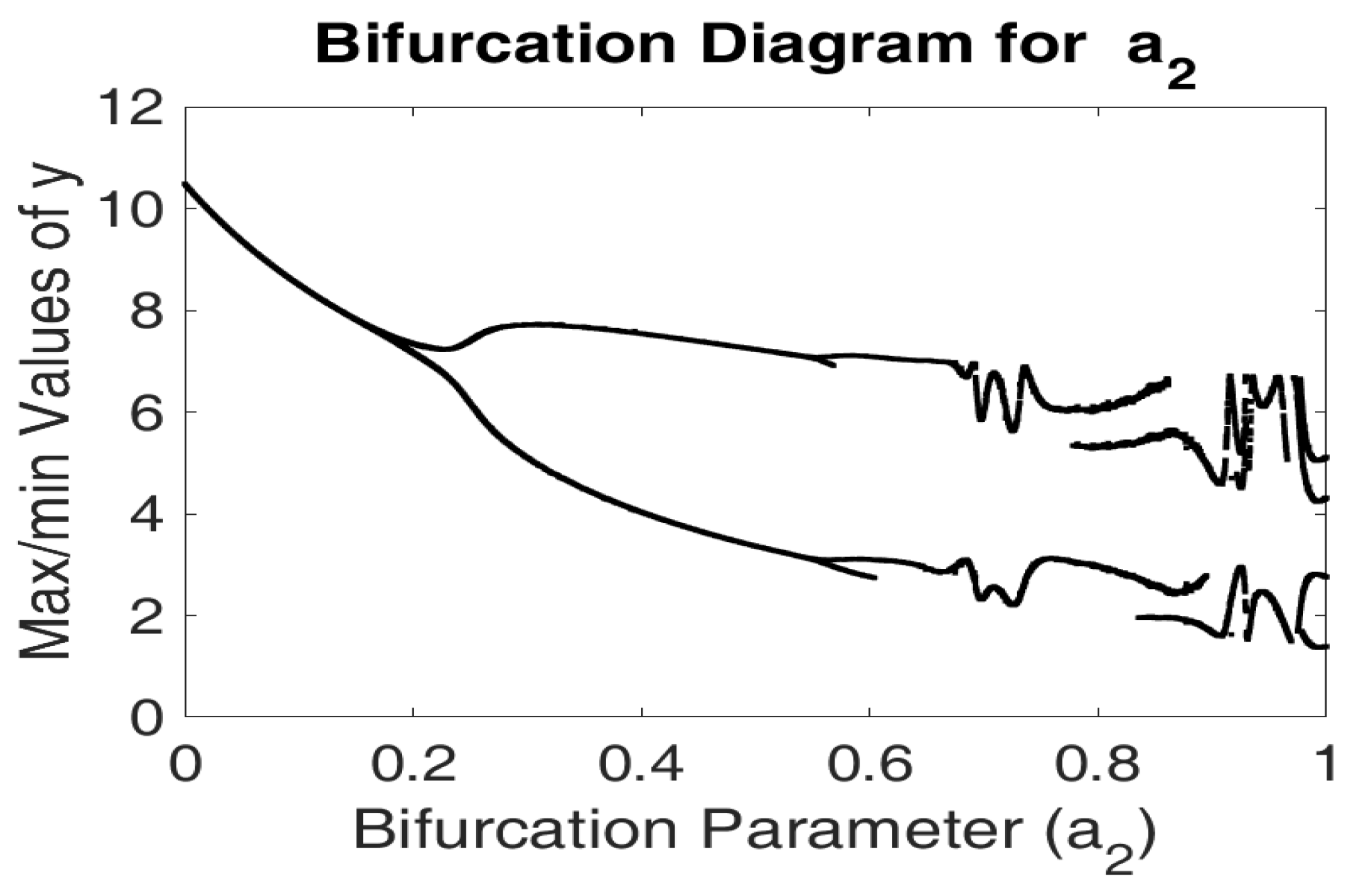
Figure 5 shows that increasing the handling-time parameter
, which represents grazing saturation in ungulates, destabilizes the coexistence equilibrium through a Hopf bifurcation. Beyond this critical value, the plant–ungulate–wolf system exhibits stable population oscillations. As
increases further, the system undergoes a sequence of period-doubling bifurcations and eventually enters a chaotic regime, leading to increasingly irregular and unpredictable population fluctuations. For example, instead of repeating regular annual cycles, plant biomass may peak every two or four seasons, while ungulate and wolf populations respond with noticeable delays and uneven amplitudes. In the chaotic regime, even small changes in initial plant density or grazing pressure can result in very different population trajectories, making long-term prediction of plant, ungulate, and wolf abundances difficult.
Phase Portraits and Time Series Corresponding to Bifurcation Diagram Figure 5
The periodic, period-doubling oscillations, and chaotic behavior of model (
4) with respect to the parameter
occur as obtained in the bifurcation
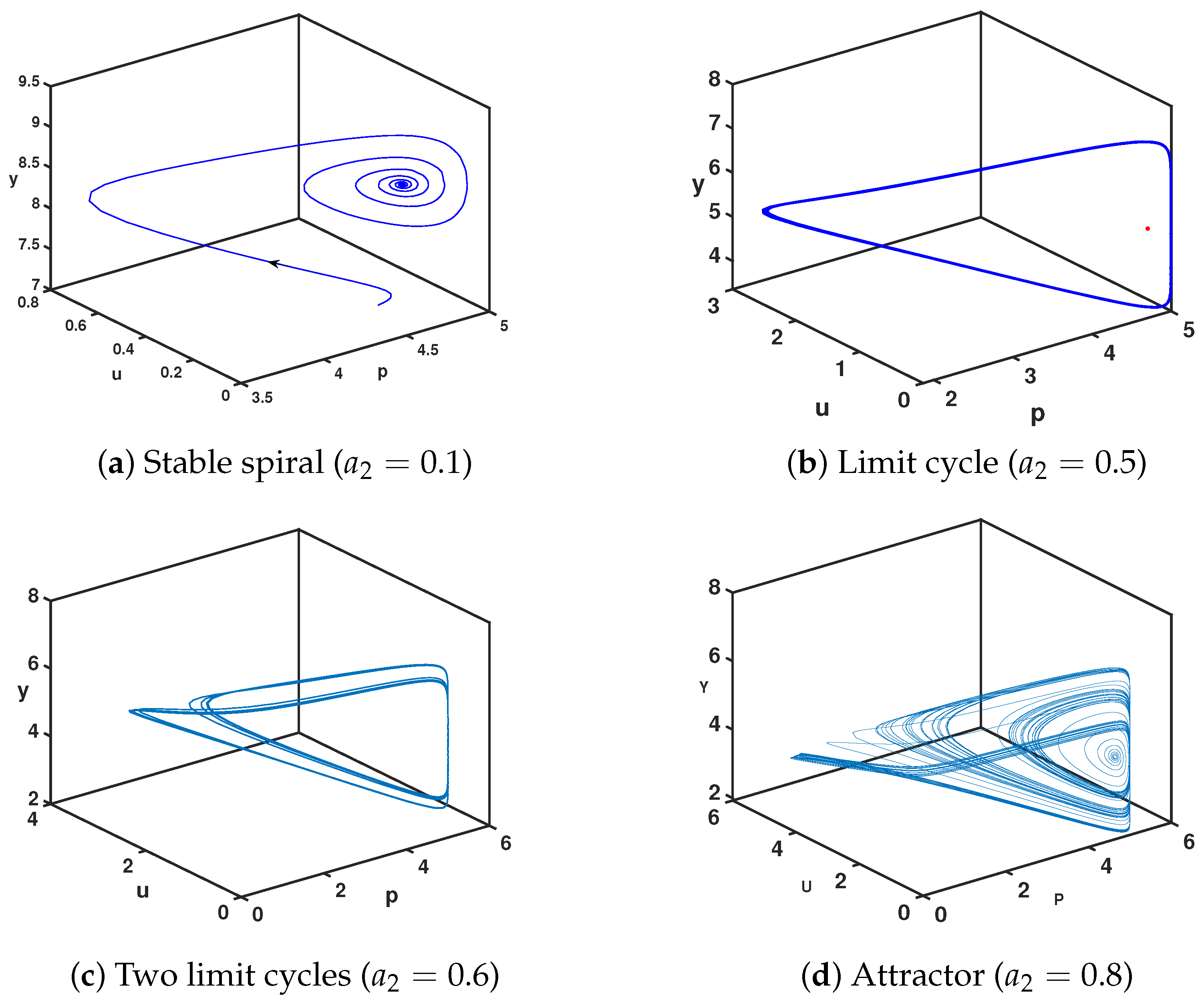
Figure 5 region. To further illustrate these dynamics, we have plotted the corresponding phase portraits and time series for specific values of
within the bifurcation.
Figure 6a shows a stable spiral at the interior equilibrium,
Figure 6b exhibits limit cycle behavior around the unstable equilibrium,
Figure 6c displays a periodic double limit cycle, and
Figure 6d illustrates a chaotic attractor.
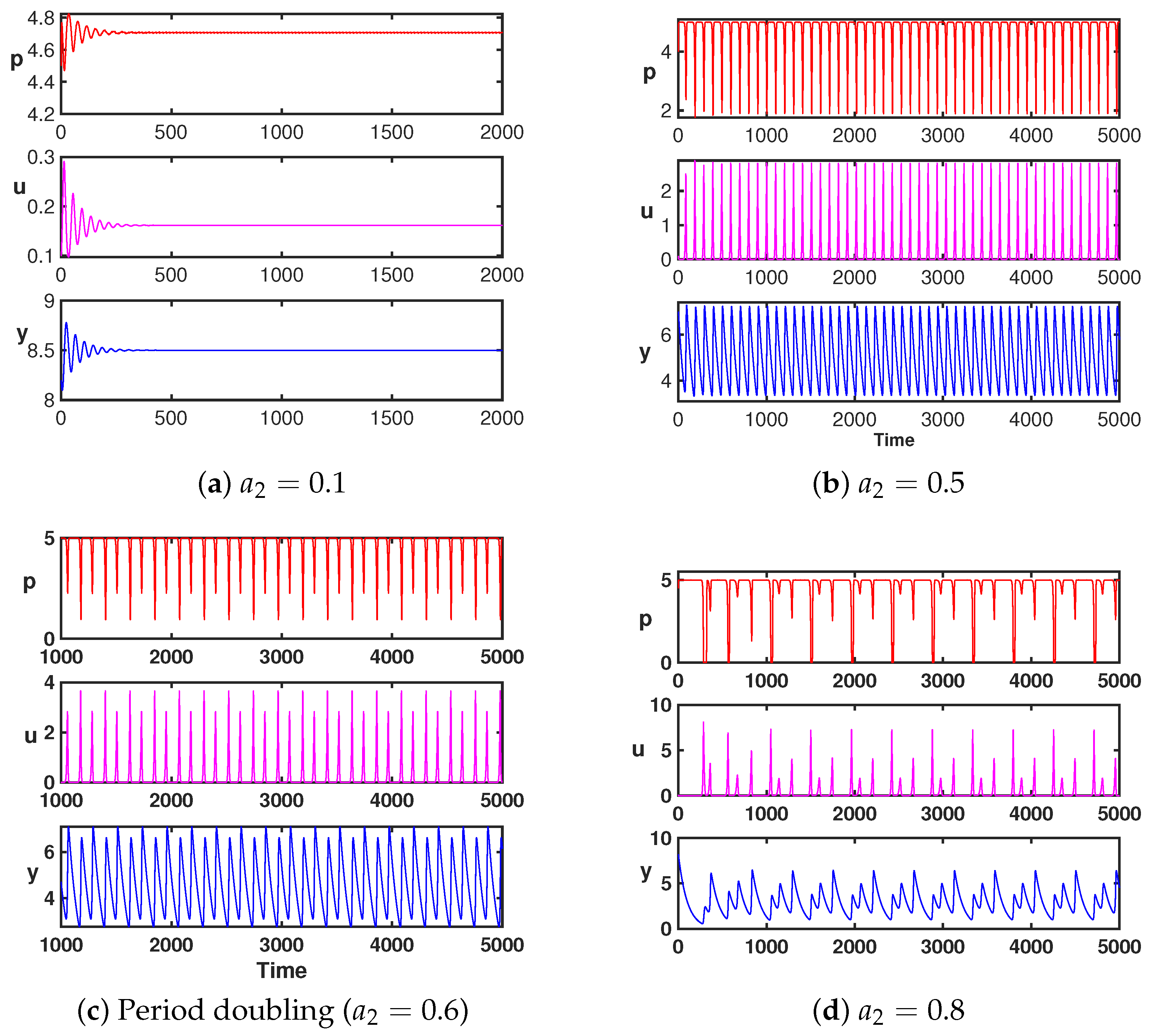
The time series corresponding to the
Figure 6 have been plotted in
Figure 7 which clearly described the stable, periodic and chaotic behaviour about the parameter
.
6.3. Bifurcation Diagram and Corresponding for the Parameter
The bifurcation diagram (
Figure 8) was plotted for a fixed set of parameters with
.
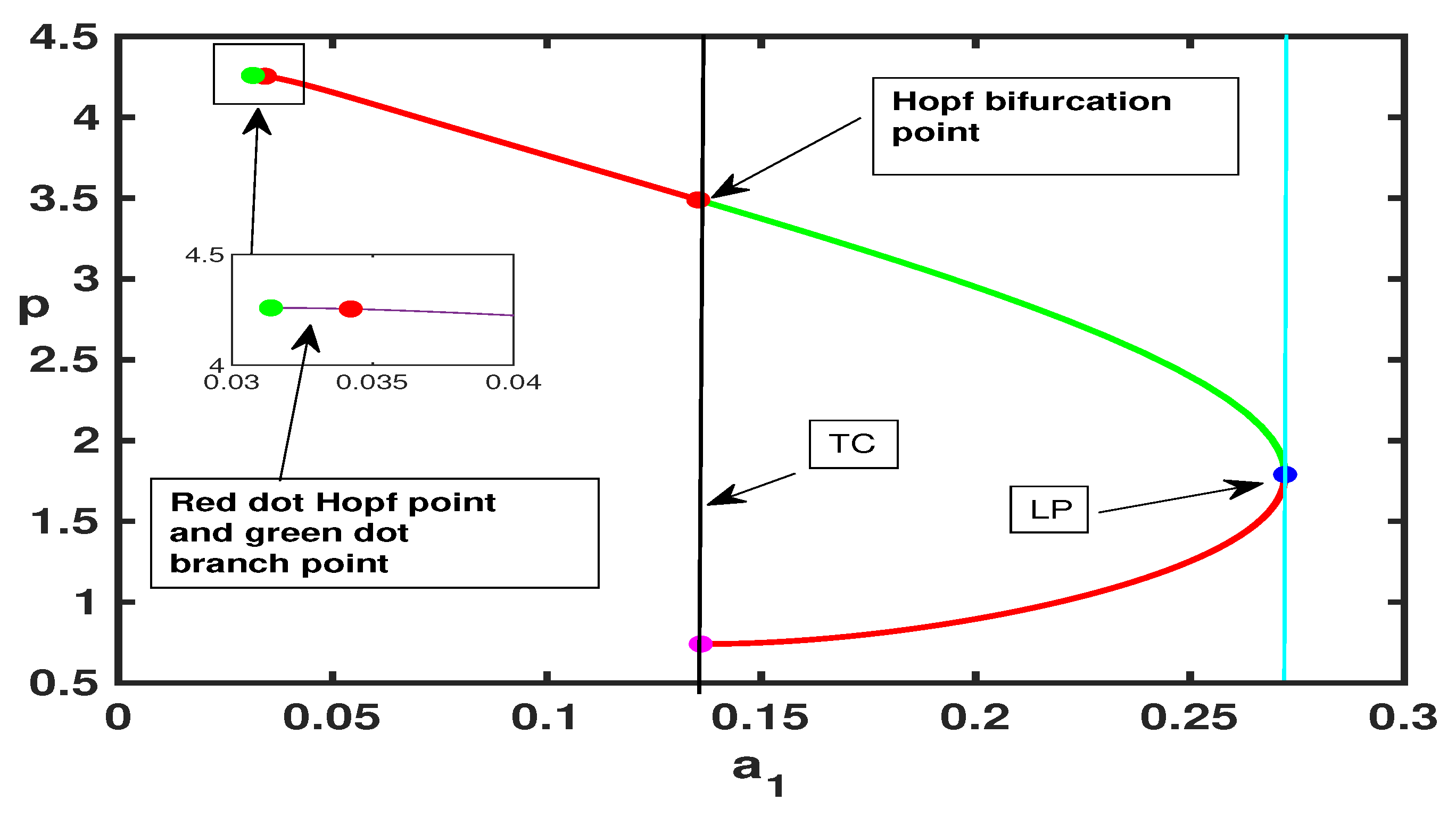
Figure 8 shows that a Hopf bifurcation occurs at the interior equilibrium points
and
. A transcritical bifurcation is observed at
, denoted by a black line. Branch points are located at
and
. Additionally, model (
4) exhibits a saddle-node bifurcation at
, where the number of equilibrium points changes from two to one to zero (see
Figure 8). In
Figure 8, the red curve indicates that the equilibrium is unstable, while the green curve shows the stable equilibrium, as also demonstrated in
Figure 9 and
Figure 10. The two interior equilibria exist after the TC point shown in
Figure 8, where one is a stable equilibrium, and the other is an unstable equilibrium. The phase portraits are plotted for the bifurcation diagram (
Figure 8) for all possible regions of
.
Figure 9 shows the phase portrait and time series for the unstable region before Hopf points
.
Figure 9a shows the stable limit cycle around the unstable equilibrium point, with trajectories converging to the limit cycle.
Figure 9b–d are time series plots that demonstrate all species persist and fluctuate periodically over a long time.
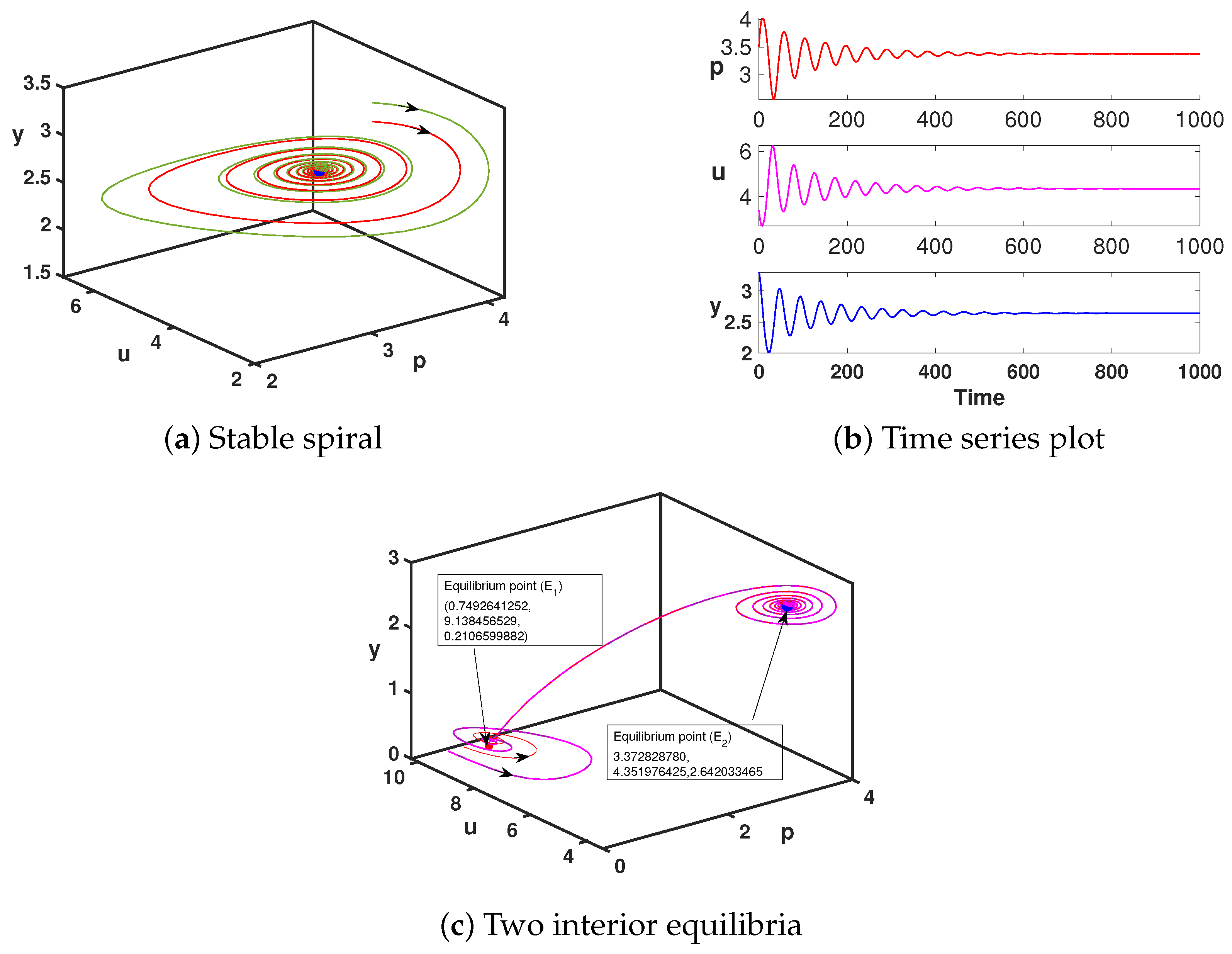
Figure 10a indicates that the interior equilibrium point is a stable spiral, and the corresponding time series for the stable spiral is shown in
Figure 10b.
Figure 10c shows the existence of two interior equilibrium points: one is a stable spiral equilibrium denoted as
, while the other is an unstable equilibrium denoted as
.
Figure 10c clearly shows that the two trajectories taken around
pass through it and converge to the equilibrium point
.
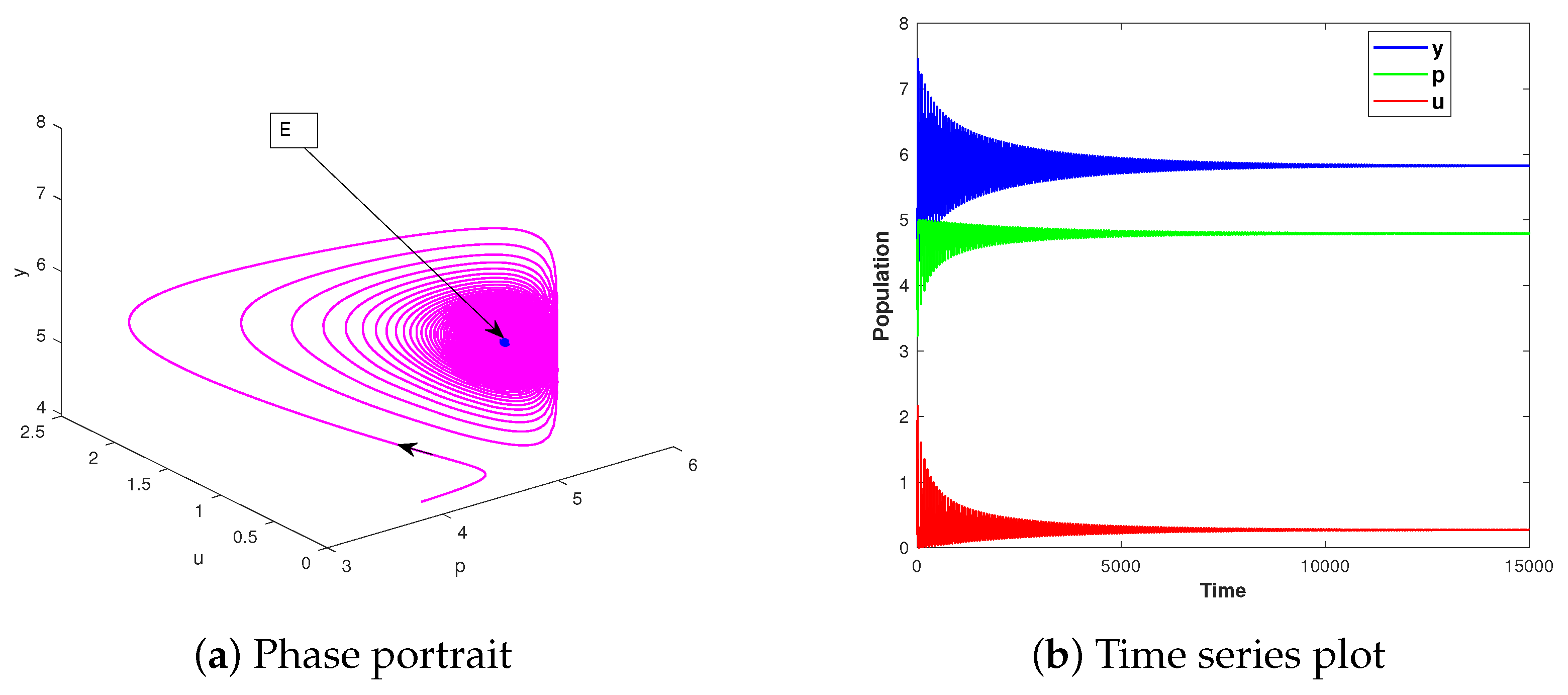
Figure 11 shows a phase portrait, a stable spiral, and a time series for the saddle node bifurcation point to ensure the validation of the bifurcation plot
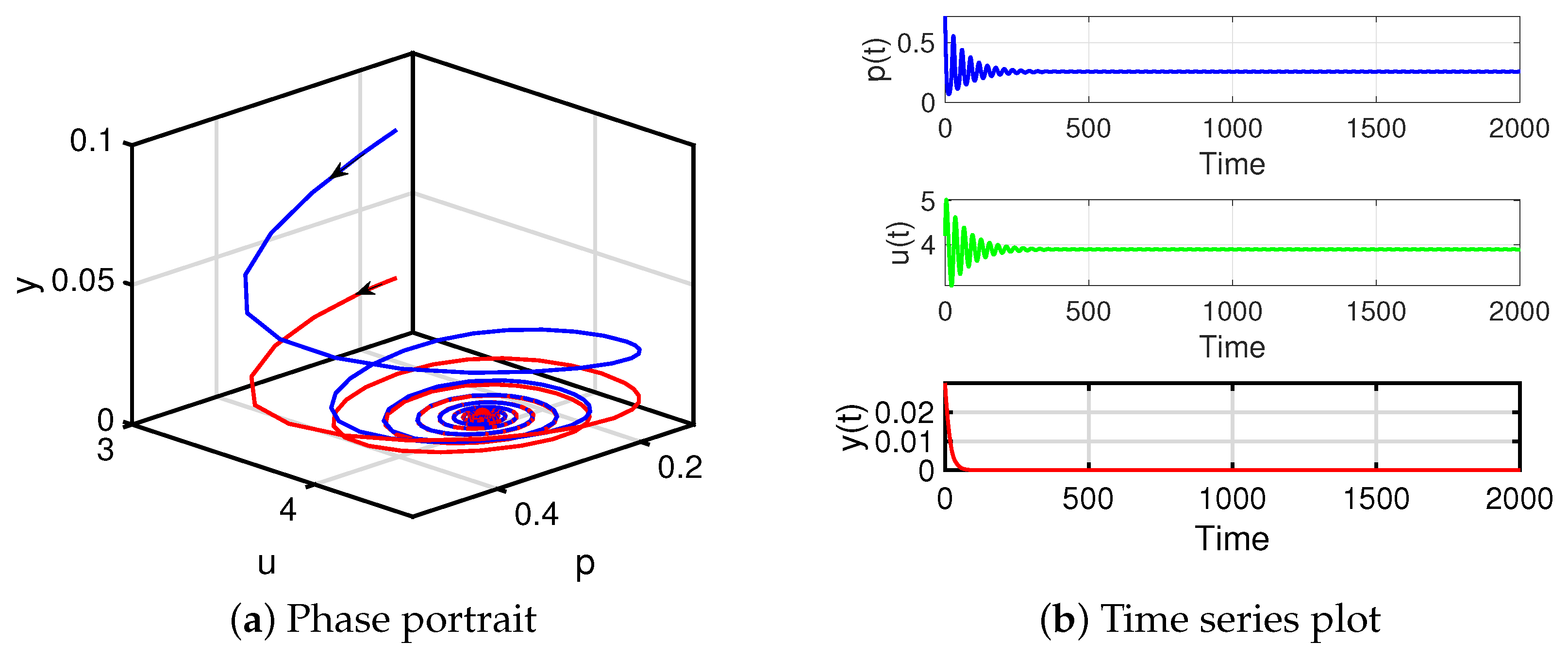
Figure 7. Also, we have plotted the phase portrait and time series in
Figure 12 for the boundary equilibrium point to show the dynamics of the system.
6.4. Numerical Result for the Boundary Equilibrium
Advantages and Limitations of the Model
The proposed model incorporates several ecologically realistic mechanisms, including wind flow effects, grazing saturation, and cooperative hunting, which allow for a more comprehensive understanding of plant–ungulate–wolf interactions. The analytical and numerical investigation of saddle-node, transcritical, and Hopf bifurcations provides valuable insight into stability transitions, oscillatory behavior, and potential ecological collapse. These features make the model useful for exploring complex population dynamics under varying environmental and biological conditions. However, the model also has certain limitations. It assumes homogeneous mixing of populations and constant parameter values, which may not fully capture spatial heterogeneity, seasonal variations, or stochastic environmental effects present in real ecosystems. Additionally, factors such as age structure, migration, and adaptive behavior are not taken into account. Despite these limitations, the model provides a meaningful framework for understanding the key mechanisms driving prey–predator dynamics and can be extended in future work to incorporate spatial structure and environmental variability.
7. Results and Discussions
This article investigates the impacts of wind flow on the prey–predator model. The wind flow causes the destabilization of the model, as discussed through analytical methods and validated using numerical methods with the aid of a bifurcation diagram, phase portrait, and time series. The theoretical part’s outcome can be summed up as follows:
While the plant equilibrium point
is always stable, the trivial equilibrium point
is always saddle. It is evident that
demonstrates local asymptotic stability provided that requirements ((
20a)–(20c)) are met. Additionally, the condition (4) ensures the local stability of the interior equilibrium point.
The system (4) exhibits saddle-node bifurcation at
with
as long as (
25) and (
26) are met. If condition (
25) is broken and condition (
26) is met together with (
27), the system (4) has a transcritical bifurcation. However, provided that (
29) and (
30) are satisfied, the system (4) displays saddle-node bifurcation at
with
. The system (4) exhibits a transcritical bifurcation if condition (
29) is broken and condition (
30) is met along with (
31).
The Hopf bifurcation phenomena may occur around
at
provided that ((
36)–(
38)).
This article numerically examines the saddle-node bifurcation and the Hopf bifurcation.
Figure 2 is a bifurcation diagram regarding the parameter wind flow (w), which shows that the stability of model (4) changes from a stable interior to an unstable state, and a limit cycle emerges after the Hopf point. Phase portraits and time series corresponding to the bifurcation diagram (2) are shown in
Figure 3 and
Figure 4.
Figure 3b shows that all populations, including plants, unregulated species, and wolves, coexist and remain stable over a long period.
Figure 4a shows the behavior of the limit cycle, and the corresponding time series are shown in
Figure 4b–d, which illustrates that all species exist periodically over time.
7.1. Impact of Parameter Hindrance Rate in Plant Capture for Ungulate Species
Figure 5 shows the impact of parameter hindrance rate in plant
as a stable system about the interior equilibrium destabilizes and causes the periodic doubling and chaos as
increases. The time series and phase portrait ensure the stability, periodic doubling, and chaotic behavior of the system, as seen in
Figure 6 and
Figure 7.
7.2. Impact of Plant Consumption Rate by Ungulate Species
In this model, the plant consumption rate plays a key role in shaping the system dynamics. Changes in give rise to different types of bifurcations with clear ecological interpretations.
A Hopf bifurcation occurs when the stable interior equilibrium loses stability and periodic oscillations emerge. Ecologically, this represents cyclic fluctuations in plant and ungulate populations, caused by a feedback loop between grazing pressure and plant regrowth. Overgrazing reduces plant biomass, followed by recovery phases.
A transcritical bifurcation corresponds to an exchange of stability between a coexistence equilibrium and a boundary equilibrium. In ecological terms, it marks a threshold between species coexistence and exclusion, indicating that either plants or ungulates can no longer persist together when grazing pressure becomes too strong.
A
saddle-node bifurcation occurs when two equilibria (one stable and one unstable) collide and disappear. Ecologically, this implies a sudden loss of viable population states, meaning that small increases in grazing rate can abruptly eliminate sustainable plant–ungulate coexistence. Together, these bifurcations demonstrate that moderate grazing supports stable coexistence, whereas excessive plant consumption destabilizes the system, leading to oscillations, loss of equilibria, and potential ecological collapse, as illustrated in
Figure 7,
Figure 8,
Figure 9 and
Figure 10.
8. Conclusions
This study examined the impact of wind flow and grazing-related parameters on the dynamics of a prey–predator ecological model using both analytical and numerical methods. The stability analysis revealed that the trivial equilibrium is always a saddle point, while the plant-only equilibrium remains stable. The interior coexistence equilibrium is locally asymptotically stable under suitable parameter conditions, indicating balanced coexistence among plants, ungulates, and predators.
The influence of wind flow was shown to play a destabilizing role in the system. As the wind intensity parameter w increases, the stable interior equilibrium loses stability through a Hopf bifurcation, leading to the emergence of stable limit cycles. This transition is characterized by periodic oscillations in plant, ungulate, and predator populations, as confirmed by bifurcation diagrams, phase portraits, and time series. These results highlight that environmental forces, such as wind, can significantly alter predator–prey interactions and long-term population behavior.
The hindrance rate in plant capture by ungulates () further enriches the system dynamics. Increasing destabilizes the interior equilibrium, giving rise to period-doubling bifurcations and chaotic dynamics, which indicate increasingly irregular and unpredictable population fluctuations. This suggests that grazing inefficiency can strongly amplify nonlinear feedback mechanisms within the ecosystem.
Moreover, the plant consumption rate was found to be a key driver of ecological transitions. Variations in lead to Hopf, transcritical, and saddle-node bifurcations, each with clear ecological implications. Moderate grazing promotes stable coexistence, whereas excessive plant consumption destabilizes the system, causing oscillations, loss of coexistence equilibria, and potential ecological collapse.
Overall, the results demonstrate that both environmental factors (wind flow) and biological interactions (grazing intensity and capture hindrance) critically shape ecosystem stability. The combined analytical and numerical findings provide valuable insights into how external disturbances and grazing pressure can drive complex dynamics, including oscillations and chaos, in plant–ungulate–predator systems.
Author Contributions
Conceptualization, A.A.T.; Methodology, A.A.T.; Software, A.A.T.; Validation, M.J.; Formal analysis, M.J.; Investigation, M.J.; Resources, S.J.; Data curation, S.J.; Writing—original draft, S.J.; Writing—review and editing, B.K.; Visualization, B.K. and M.A.A.; Supervision, B.K. and M.A.A.; Project administration, M.A.A.; Funding acquisition, M.A.A. All authors have read and agreed to the published version of the manuscript.
Funding
This work was supported by the Deanship of Scientific Research, Vice Presidency for Graduate Studies and Scientific Research, King Faisal University, Saudi Arabia [Grant No.KFU260375].
Data Availability Statement
The original contributions presented in this study are included in the article. Further inquiries can be directed to the corresponding authors.
Conflicts of Interest
The authors declare no conflict of interest.
References
- Nátr, L. Murray, J.D.: Mathematical Biology. I. An Introduction.3rd Ed. Photosynthetica 2002, 40, 414. [Google Scholar] [CrossRef]
- Diz-Pita, É.; Otero-Espinar, M.V. Predator–Prey Models: A review of some recent advances. Mathematics 2021, 9, 1783. [Google Scholar] [CrossRef]
- Holmes, E.E.; Lewis, M.A.; Banks, J.E.; Veit, R.R. Partial Differential Equations in Ecology: Spatial Interactions and Population Dynamics. Ecology 1994, 75, 17–29. [Google Scholar] [CrossRef]
- Murray, J.D. Mathematical Biology II. Spatial Models and Biological Applications; Springer: New York, NY, USA, 2003. [Google Scholar]
- Malthus, T.R. An Essay on the Principle of Population, as It Affects the Future Imporvement of Society, with Remarks on the Speculations of Mr. Godwin, M. Condorcet, and Other Writers; The Lawbook Exchange, Ltd.: Clark, NJ, USA, 2007. [Google Scholar]
- Verhulst, P. Notice sur la loi que la population suit dans son accroissement. Corresp. Math. Phys. 1838, 10, 113–126. [Google Scholar]
- Creel, S.; Christianson, D. Relationships between direct predation and risk effects. Trends Ecol. Evol. 2008, 23, 194–201. [Google Scholar] [CrossRef]
- Tripathi, J.P.; Abbas, S.; Thakur, M. Local and global stability analysis of a two prey one predator model with help. Commun. Nonlinear Sci. Numer. Simul. 2014, 19, 3284–3297. [Google Scholar] [CrossRef]
- Deka, B.D.; Patra, A.; Tushar, J.; Dubey, B. Stability and Hopf-bifurcation in a general Gauss type two-prey and one-predator system. Appl. Math. Model. 2016, 40, 5793–5818. [Google Scholar] [CrossRef]
- Fang, J.; Gourley, S.; Lou, Y. Stage-structured models of intra- and inter-specific competition within age classes. J. Differ. Equ. 2016, 260, 1918–1953. [Google Scholar] [CrossRef]
- Aiello, W.; Freedman, H. A time delay model of single-species growth with stage structure. Math. Biosci. 1990, 101, 139–153. [Google Scholar] [CrossRef] [PubMed]
- Xu, C.; Yuan, S.; Zhang, T. Global dynamics of a predator–prey model with defense mechanism for prey. Appl. Math. Lett. 2016, 62, 42–48. [Google Scholar] [CrossRef]
- Shen, C.; You, M. Permanence and extinction of a three-species ratio-dependent food chain model with delay and prey diffusion. Appl. Math. Comput. 2010, 217, 1825–1830. [Google Scholar] [CrossRef]
- Cui, G.; Yan, X. Stability and bifurcation analysis on a three-species food chain system with two delays. Commun. Nonlinear Sci. Numer. Simul. 2011, 16, 3704–3720. [Google Scholar] [CrossRef]
- Pei, Y.; Guo, M.; Li, C. A delay digestion process with application in a three-species ecosystem. Commun. Nonlinear Sci. Numer. Simul. 2011, 16, 4365–4378. [Google Scholar] [CrossRef]
- Mbava, W.; Mugisha, J.; Gonsalves, J. Prey, predator and super-predator model with disease in the super-predator. Appl. Math. Comput. 2017, 297, 92–114. [Google Scholar] [CrossRef]
- Grubb, T.C., Jr.; Greenwald, L. Sparrows and a brushpile: Foraging responses to different combinations of predation risk and energy cost. Anim. Behav. 1982, 30, 637–640. [Google Scholar] [CrossRef]
- Gatehouse, A.G. Behavior and ecological genetics of wind-borne migration by insects. Annu. Rev. Entomol. 1997, 42, 475–502. [Google Scholar] [CrossRef]
- Everham, E.M.; Brokaw, N.V. Forest damage and recovery from catastrophic wind. Bot. Rev. 1996, 62, 113–185. [Google Scholar] [CrossRef]
- Bowyer, R.T.; Kie, J.G. Thermal landscapes and resource selection by black-tailed deer: Implications for large herbivores. Calif. Fish Game 2009, 95, 128–139. [Google Scholar]
- McVicar, T.R.; Roderick, M.L.; Donohue, R.J.; Li, L.T.; Van Niel, T.G.; Thomas, A.; Dinpashoh, Y. Global review and synthesis of trends in observed terrestrial near-surface wind speeds: Implications for evaporation. J. Hydrol. 2012, 416, 182–205. [Google Scholar] [CrossRef]
- Vautard, R.; Cattiaux, J.; Yiou, P.; Thépaut, J.N.; Ciais, P. Northern Hemisphere atmospheric stilling partly attributed to an increase in surface roughness. Nat. Geosci. 2010, 3, 756–761. [Google Scholar] [CrossRef]
- Hastings, A.; Powell, T. Chaos in a three-species food chain. Ecology 1991, 72, 896–903. [Google Scholar] [CrossRef]
- Kumar, B.; Sinha, R.K. Dynamics of an eco-epidemic model with Allee effect in prey and disease in predator. Comput. Math. Biophys. 2023, 11, 20230108. [Google Scholar] [CrossRef]
- Hu, G.; Li, X. Stability and Hopf bifurcation for a delayed predator–prey model with dsease in the prey. Chaos Solitons Fractals 2012, 45, 229–237. [Google Scholar] [CrossRef]
| Disclaimer/Publisher’s Note: The statements, opinions and data contained in all publications are solely those of the individual author(s) and contributor(s) and not of MDPI and/or the editor(s). MDPI and/or the editor(s) disclaim responsibility for any injury to people or property resulting from any ideas, methods, instructions or products referred to in the content. |



 ,
,