Article

Fused Unbalanced Gromov–Wasserstein-Based Network Distributional Resilience Analysis for Critical Infrastructure Assessment


by
Iman Seyedi
1,*,
Antonio Candelieri
2,* and
Francesco Archetti
1
1
Department of Computer Science Systems and Communication, University of Milano-Bicocca, 20126 Milan, Italy
2
Department of Economics Management and Statistics, University of Milano-Bicocca, 20126 Milan, Italy
*
Authors to whom correspondence should be addressed.
Mathematics 2026, 14(3), 417; https://doi.org/10.3390/math14030417
Submission received: 4 December 2025 / Revised: 12 January 2026 / Accepted: 19 January 2026 / Published: 25 January 2026

Abstract

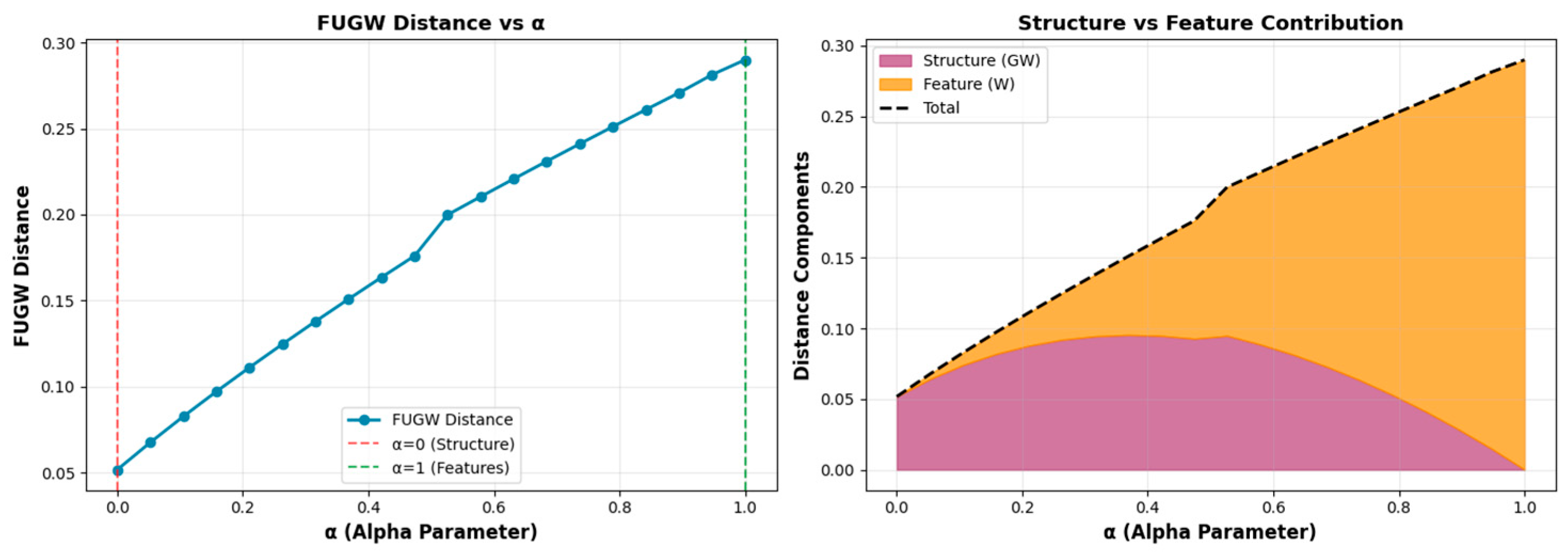
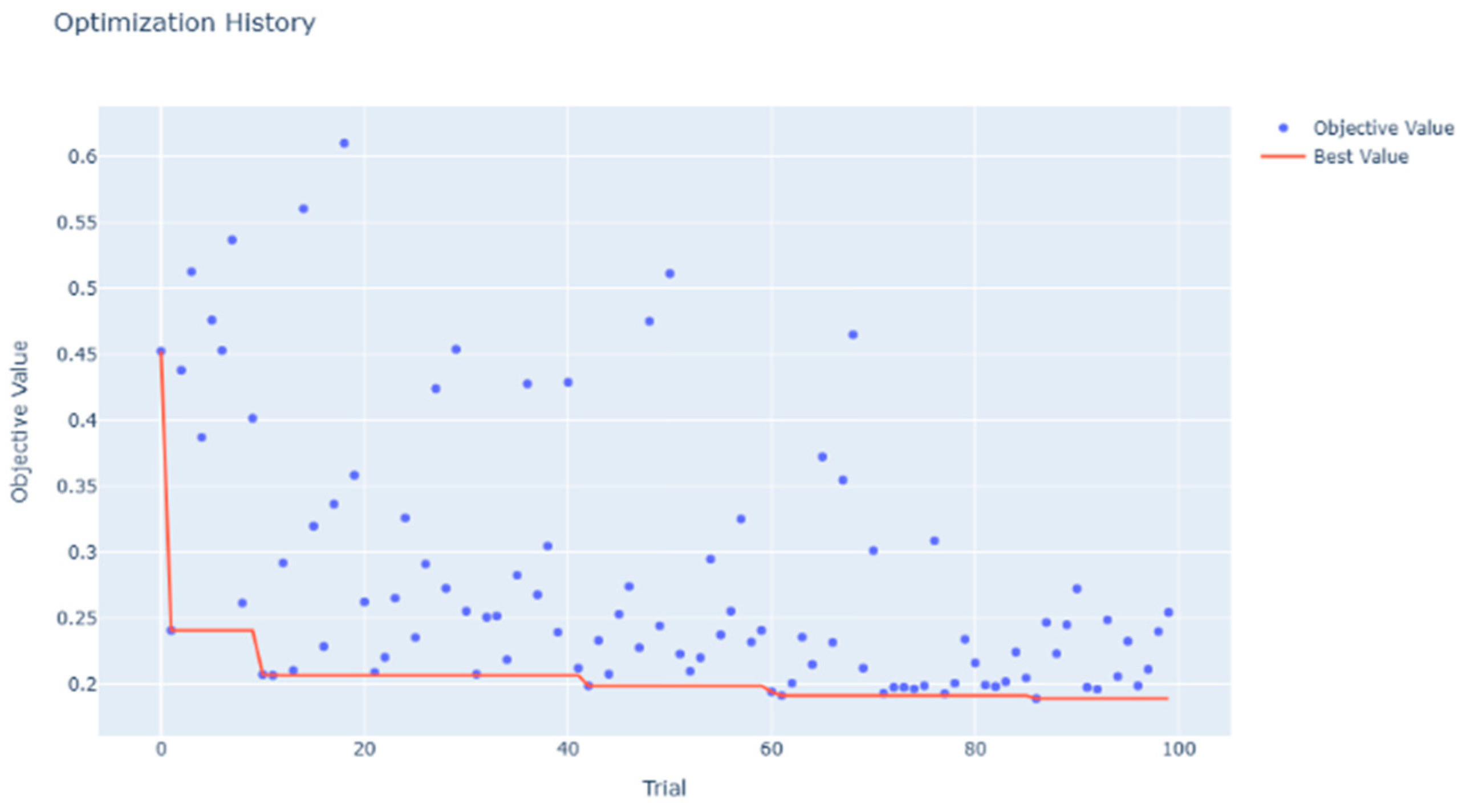
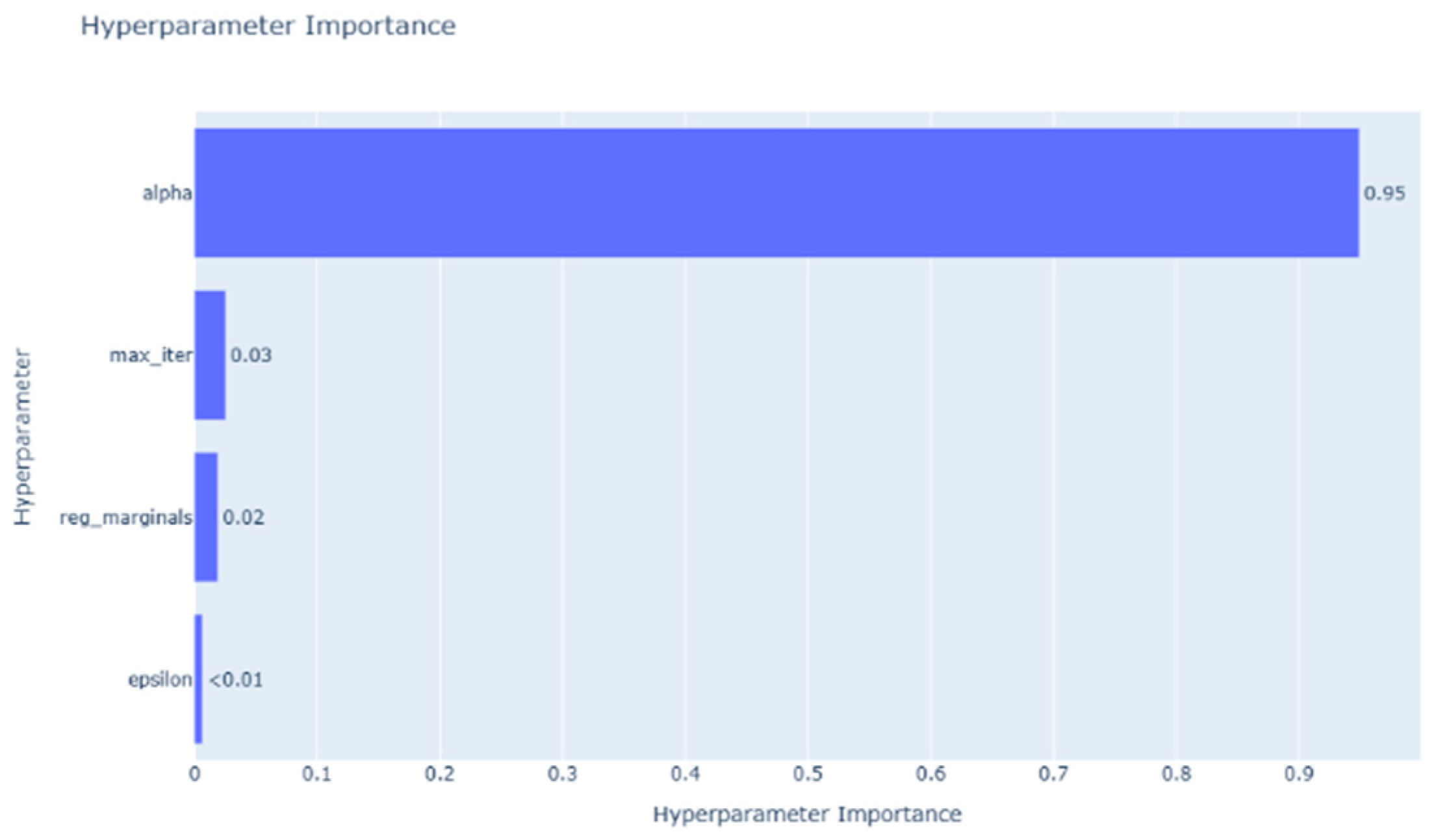
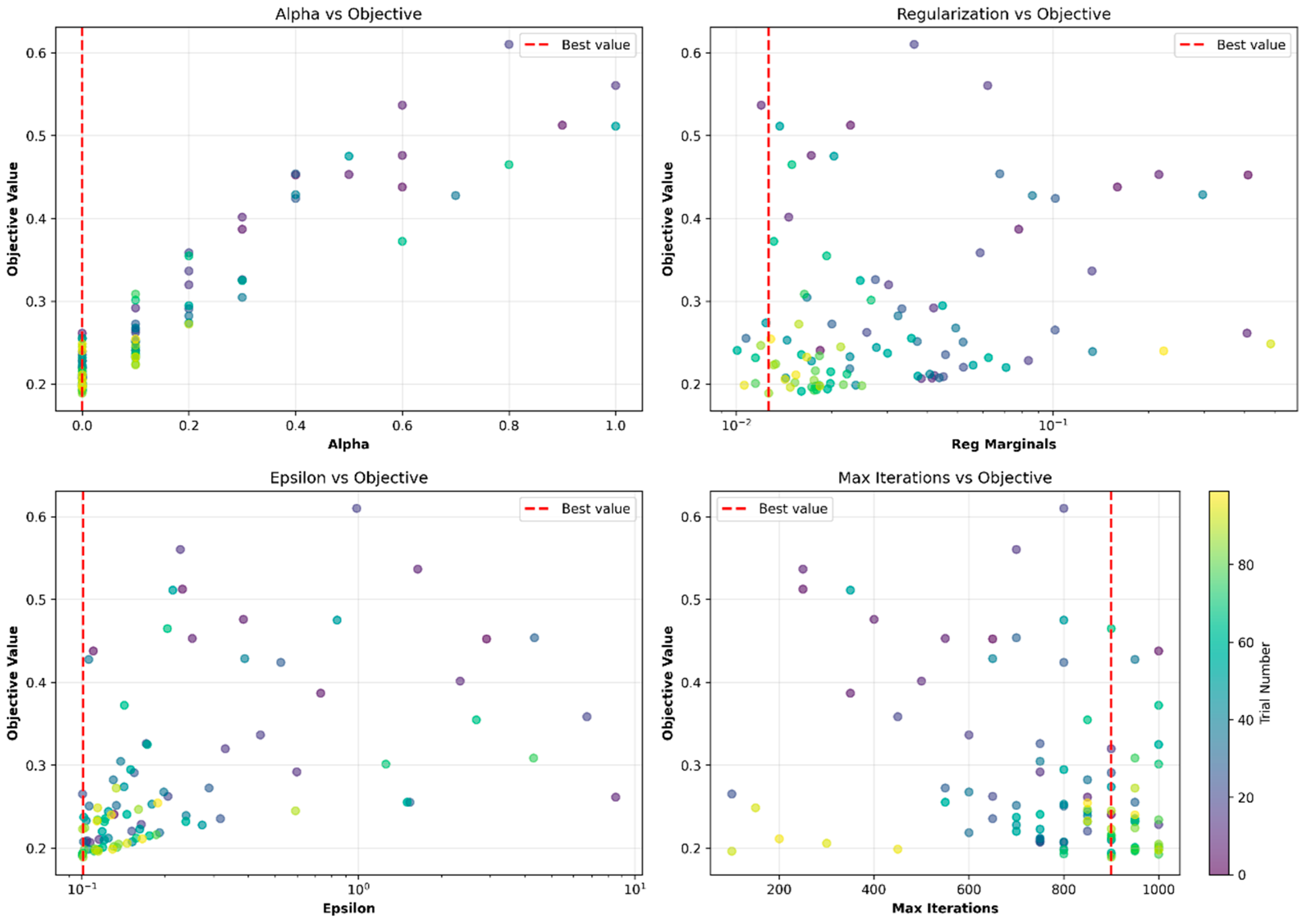
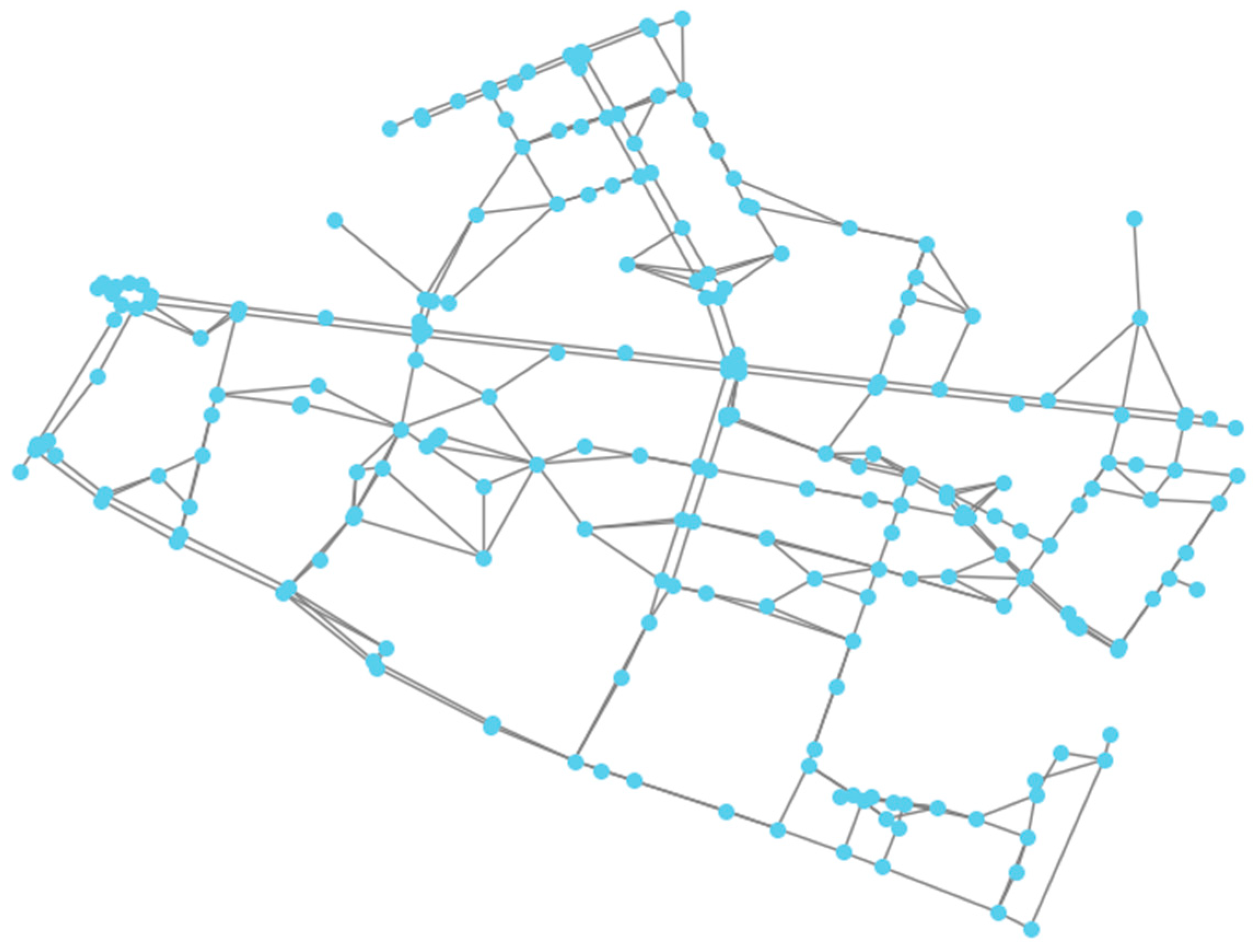
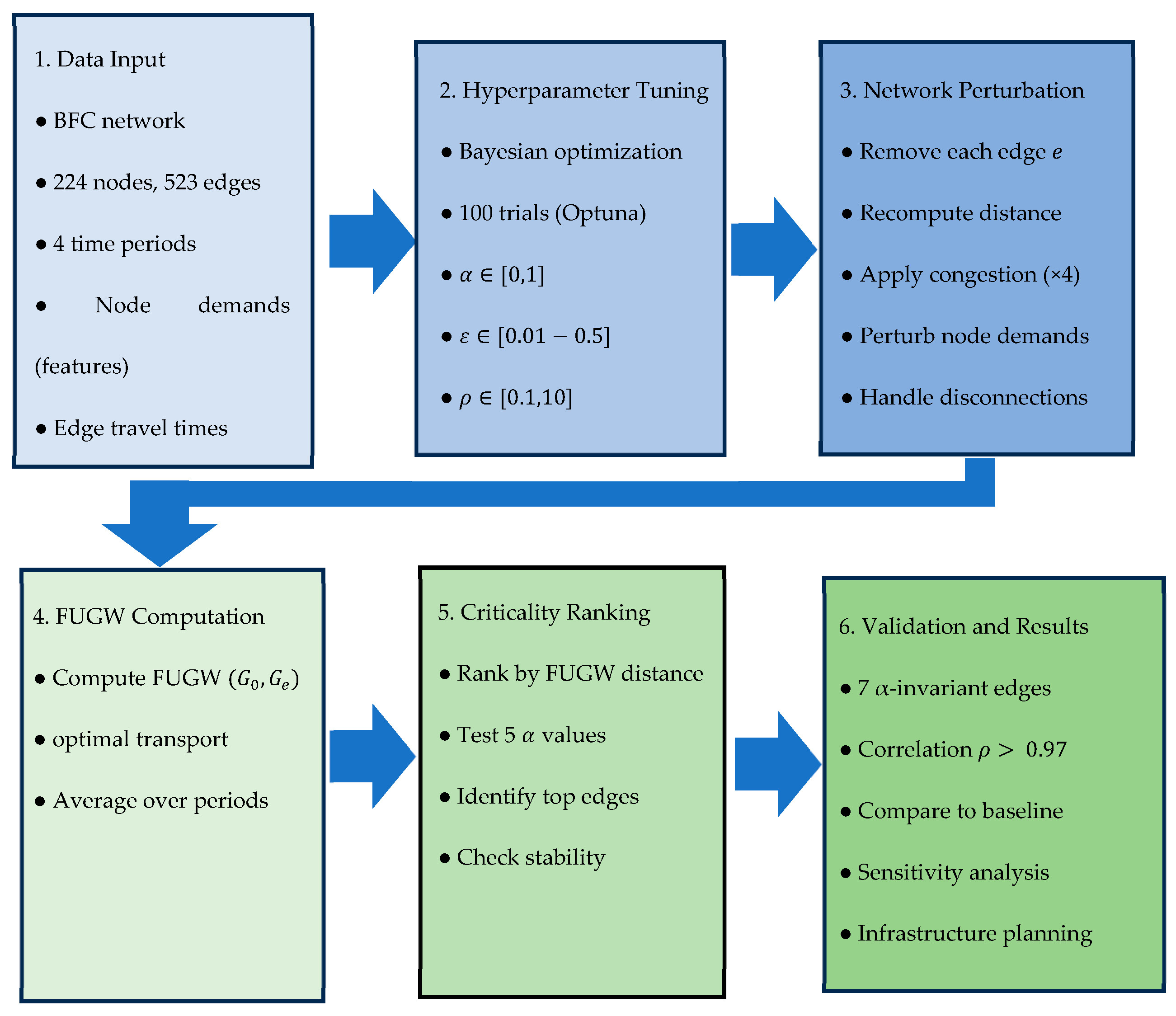
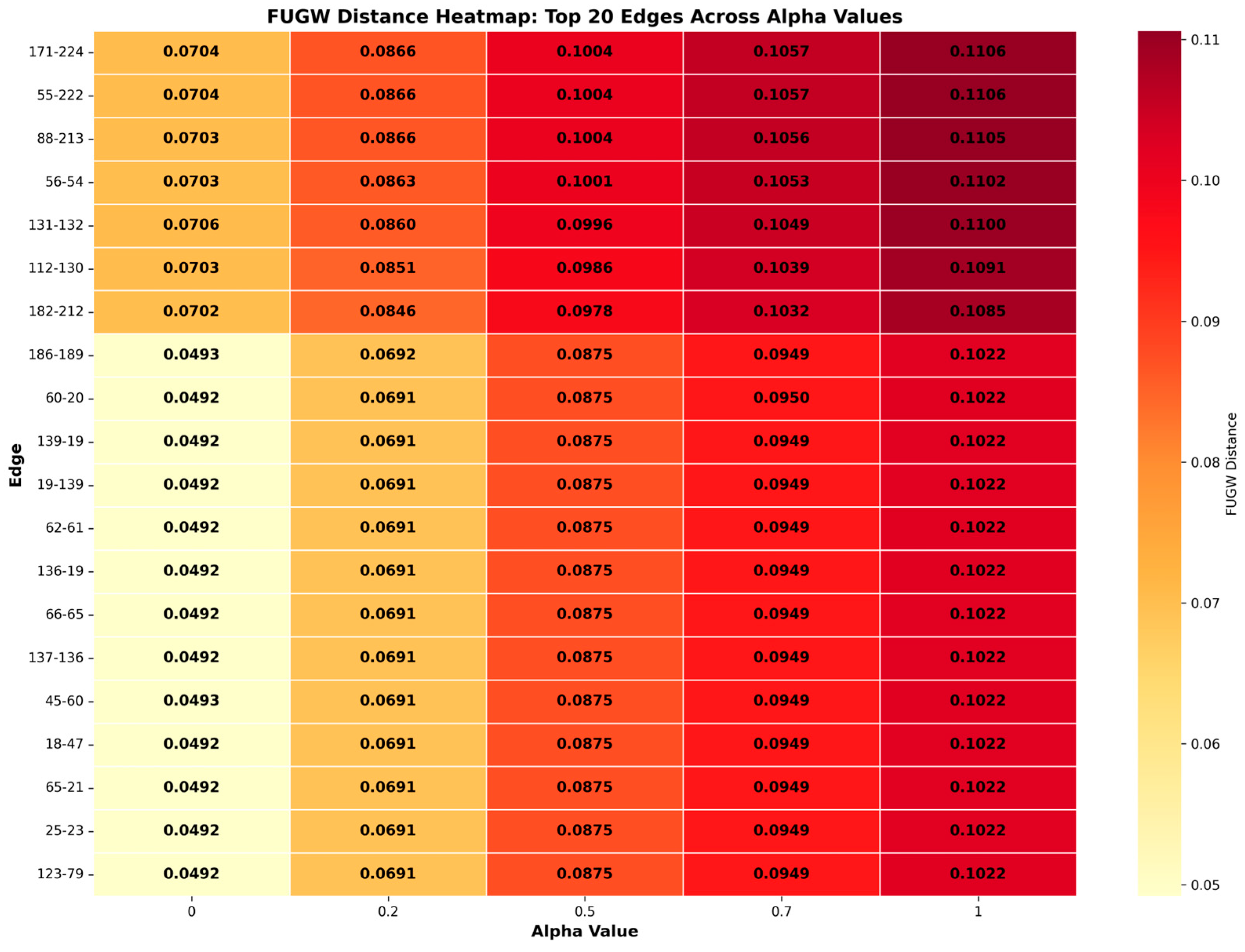
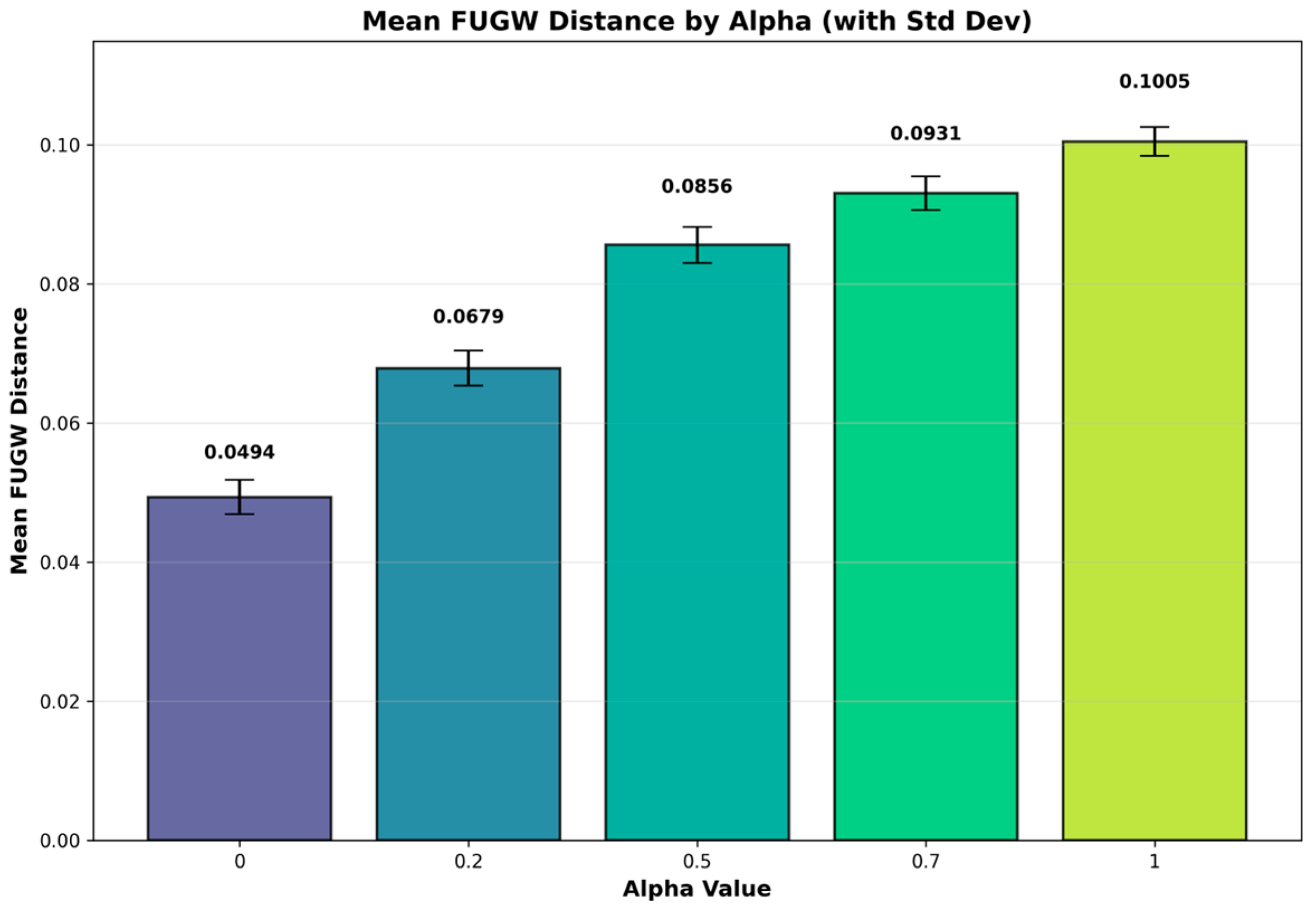
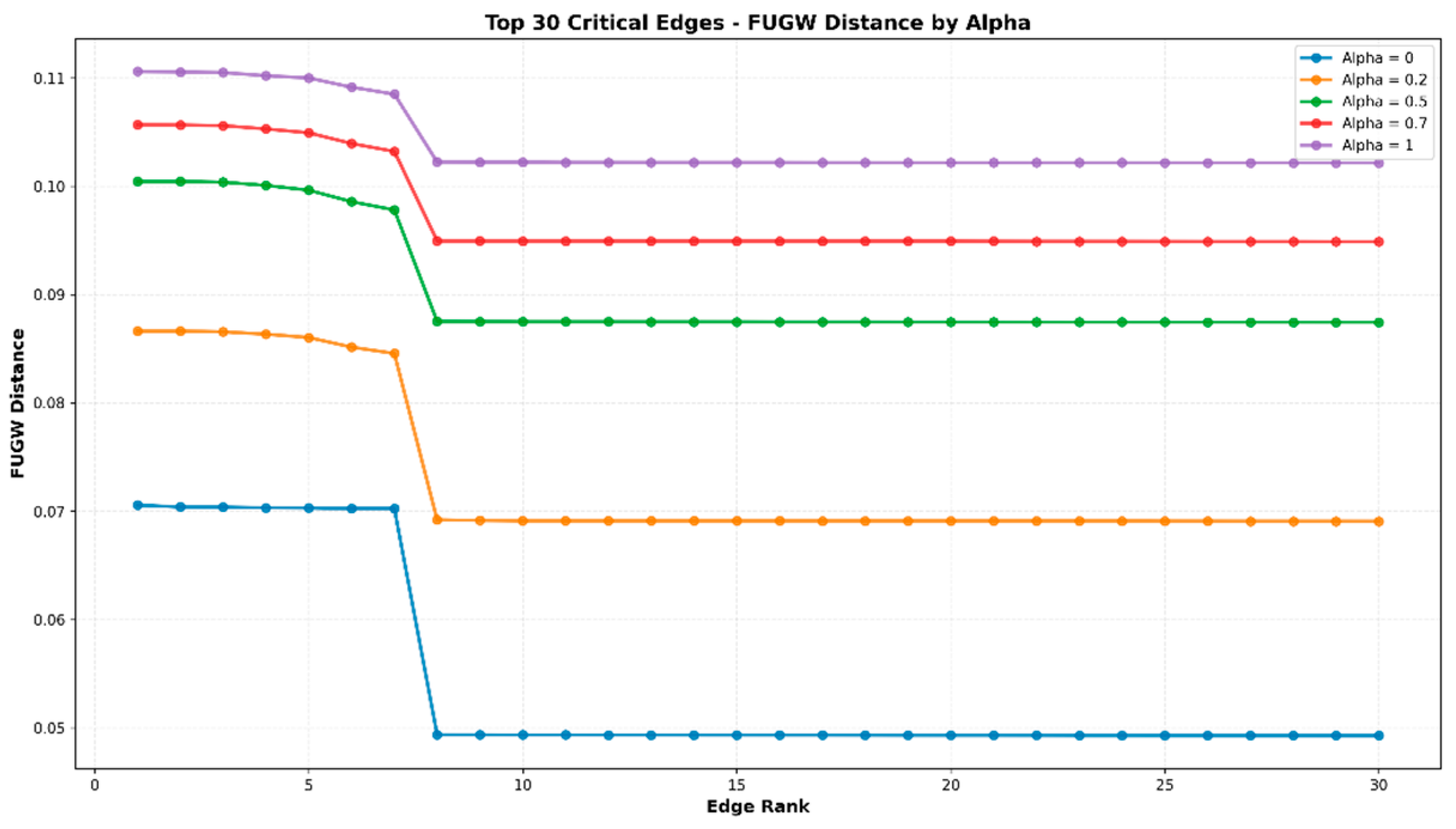
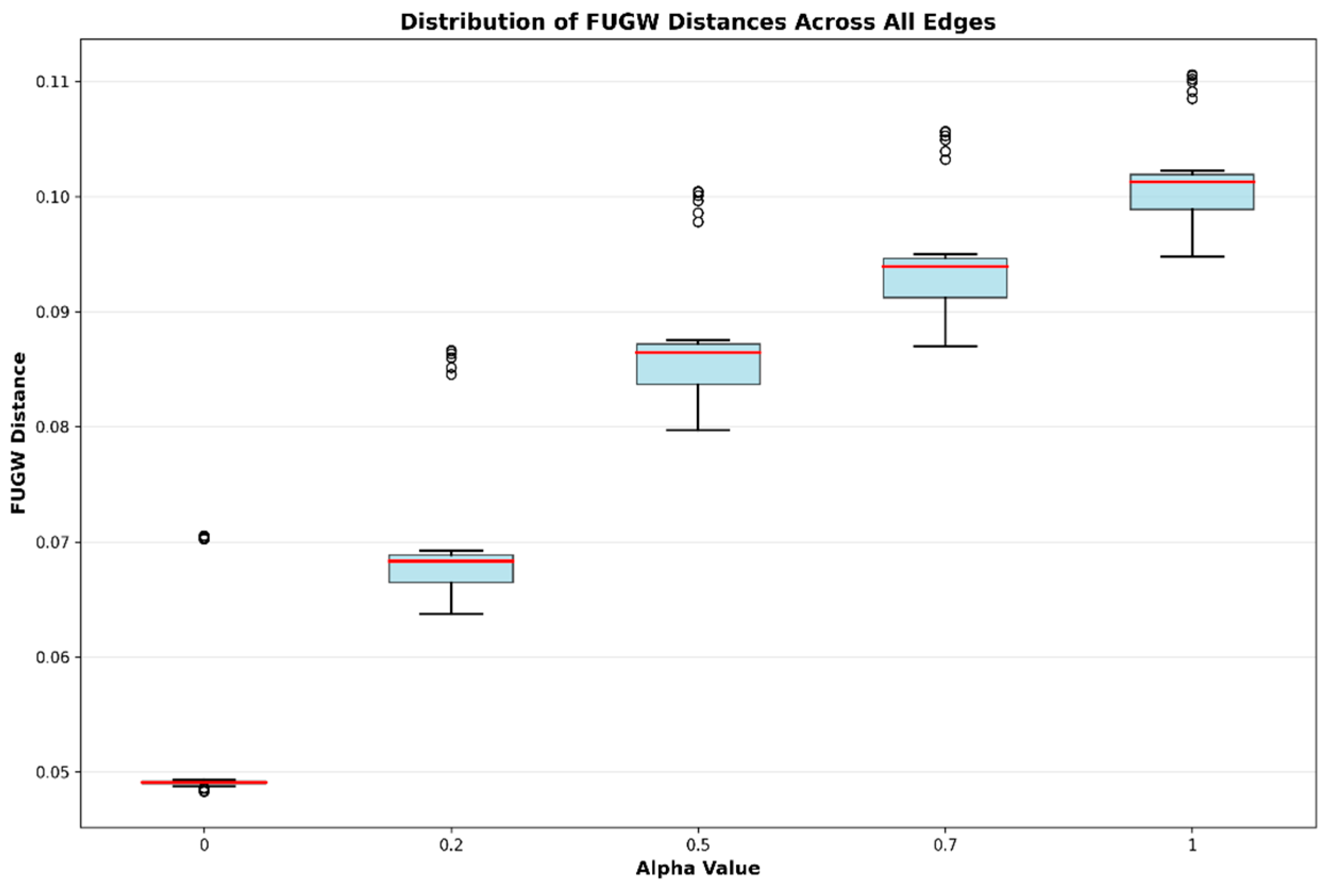
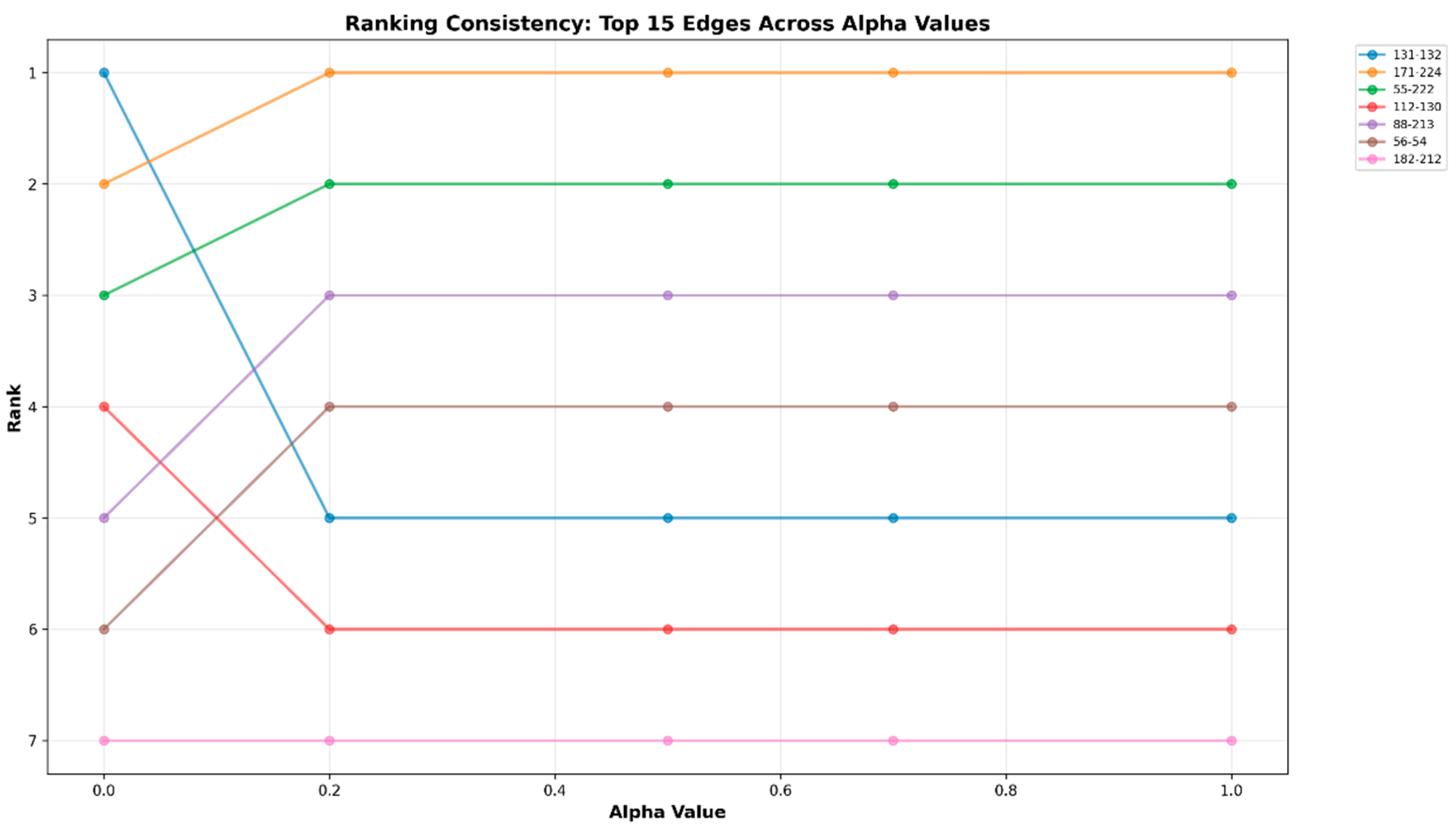
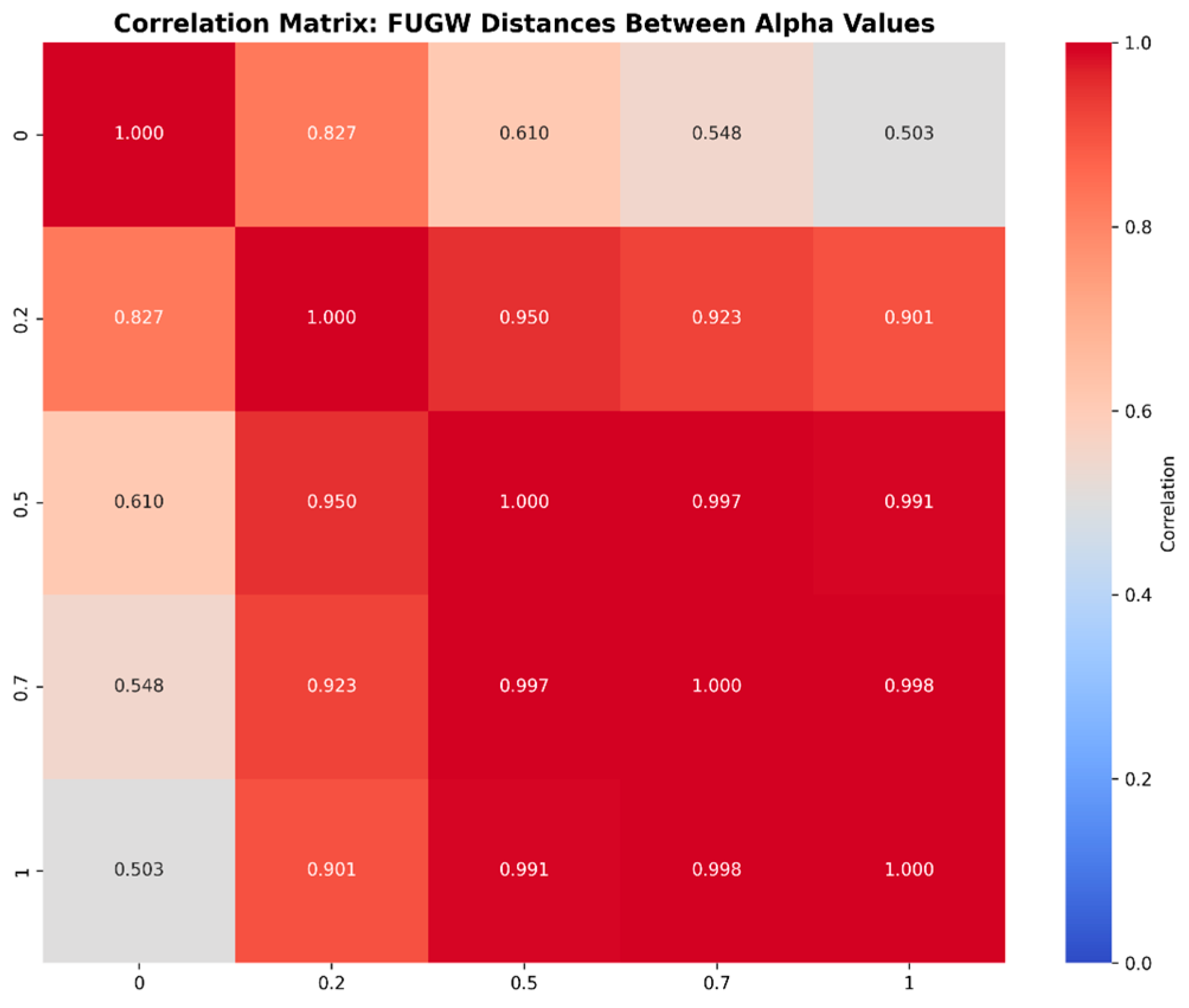
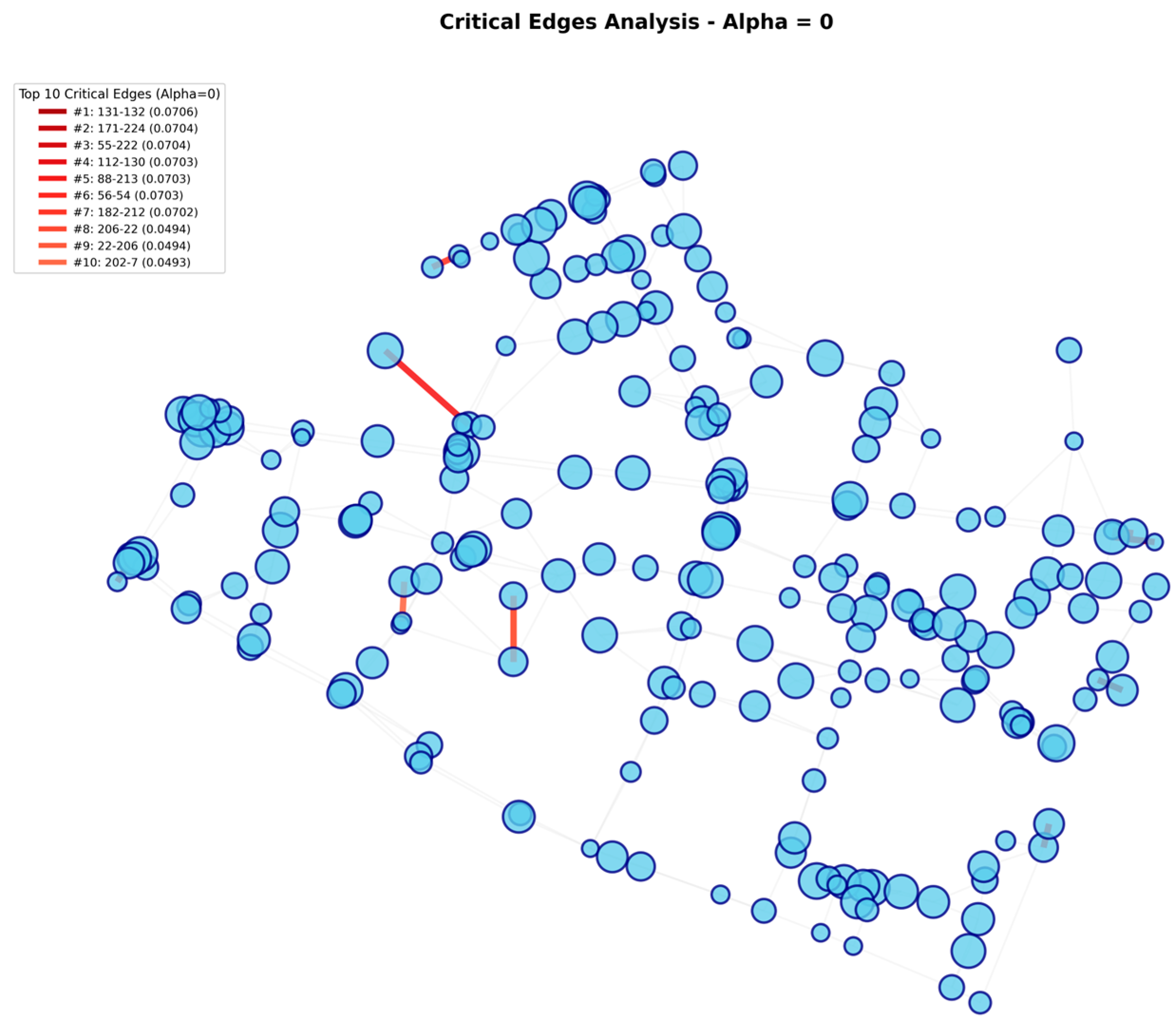
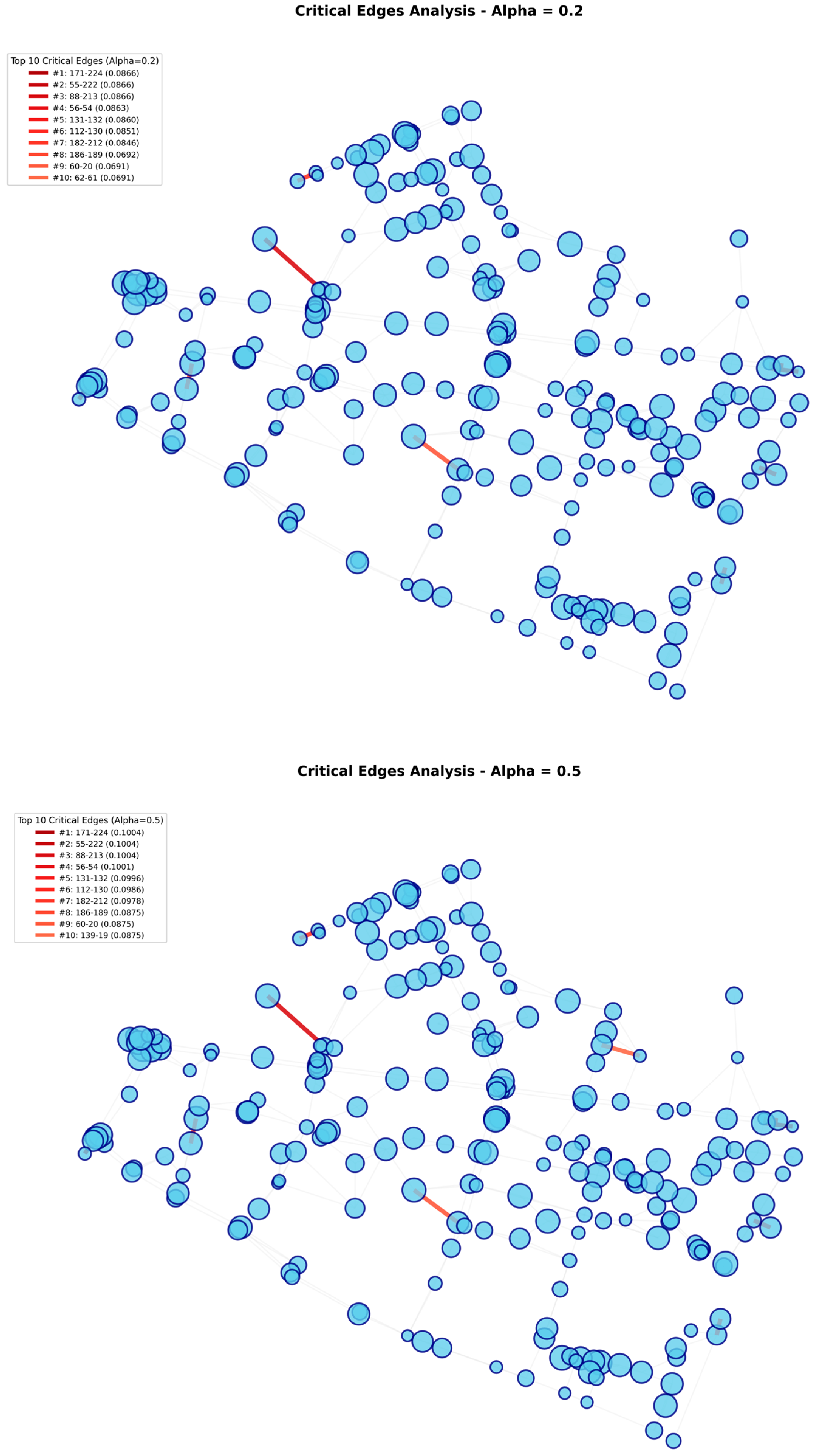
Identifying critical infrastructure in transportation networks requires metrics that can capture both the topological structure and how demand is redistributed during disruptions. Conventional graph-theoretic approaches fail to jointly quantify these vulnerabilities. This study presents a computational framework for edge-criticality assessment based on the Fused Unbalanced Gromov–Wasserstein (FUGW) distance, incorporating both structural similarity and demand characteristics of network nodes in an optimal transport tool. The three hyperparameters that influence FUGW accuracy—fusion weight, entropic regularization, and marginal penalties—were tuned using Bayesian optimization. This ensures the rankings remain accurate, stable, and reproducible under temporal variability and demand shifts. We apply the framework to a benchmark transportation network evaluated across four diurnal periods, capturing dynamic congestion and shifting demand patterns. Systematic variation in the fusion parameter shows seven consistently critical edges whose rankings remain stable across analytical configurations. It can be concluded from the results that monotonic scaling with increasing feature emphasis, strong cross-hyperparameter correlation, and low temporal variability confirm the robustness of the inferred criticality hierarchy. These edges represent both structural bridges and demand concentration points, offering α indicators of network vulnerability. These findings demonstrate that FUGW provides a solid and scalable method of assessing transportation vulnerabilities. It helps support clear decisions on maintenance planning, redundancy, and resilience investments.
Keywords: Fused Unbalanced Gromov–Wasserstein distance; network vulnerability; optimal transport; critical infrastructure; hyperparameter optimization Fused Unbalanced Gromov–Wasserstein distance; network vulnerability; optimal transport; critical infrastructure; hyperparameter optimization