1. Introduction
The stability of capital markets is the cornerstone of macroeconomic resilience; however, the global financial landscape has become increasingly volatile in recent years. Factors such as escalating geopolitical tensions and disruptive technological changes have collectively amplified systemic risks [
1]. Against this backdrop, the Chinese A-share market—the primary financing platform for the world’s second-largest economy—has seen a significant rise in financial distress events. Market regulatory data shows that hundreds of listed companies are subject to special treatment each year due to consecutive losses or audit irregularities, resulting in a significant decline in shareholder wealth and triggering a chain reaction within the financial system. Therefore, establishing an accurate, timely, and robust financial early-warning mechanism for listed companies has become more important than ever. Such mechanisms serve not only as tools for investors to hedge against downside risks but also as key means for regulators to monitor systemic vulnerabilities and take proactive measures before potential liquidity crises escalate [
2].
Current research in this field faces three core challenges: (1) the nonlinear and complex nature of financial risks, (2) multicollinearity and noise within high-dimensional indicators, and (3) the insufficient generalization capability and robustness of early warning models. To address these challenges, this study aims to construct a high-precision, strongly generalized financial early warning model. Traditional econometric models struggle to adequately address these challenges due to their limitations in handling nonlinear relationships, high-dimensional features, and complex interaction effects. Consequently, research on financial early warning models worldwide has progressively shifted its focus from traditional econometric approaches to machine learning models [
3,
4,
5]. Traditional econometric models mainly include the univariate model, multivariate discriminant model, and logistic model. The univariate model is simple and intuitive to construct, with lower requirements on data volume and arithmetic power, and the results are easier to interpret, but it has obvious limitations because it relies on only a single indicator, which cannot comprehensively reflect the financial status of the enterprise [
6,
7]. The advantage of the multivariate discriminant model is that it integrates the multidimensional information, and it can effectively identify systematic differences between different categories, but it relies on the static financial indicators and a strict multivariate positive discrimination model. However, it relies more on static financial indicators and strict multivariate normal distribution assumptions, lacks consideration of industry differences and changes in the economic environment, and is difficult to capture complex nonlinear risk relationships with linear discriminant methods [
8,
9]. Compared to Z-score models, logistic models offer greater applicability as they do not require strict normal distribution assumptions and can output probabilistic risk results [
10,
11]. However, they still struggle to adequately capture the complex nonlinear relationships between financial indicators and risk and remain sensitive to multicollinearity.
As scholars’ research deepens, BP neural networks in machine learning have gradually replaced traditional econometric models in financial early warning [
12]. BP neural networks are far superior to traditional econometric models in terms of nonlinear modelling ability, high-dimensional data processing ability, dynamic learning, and adaptive optimization [
13,
14], but the single BP neural network still possesses inherent flaws that remain unresolved. Its performance is highly dependent on the initial weight and threshold settings. The traditional gradient descent method is prone to getting stuck in local optima, converges slowly, and is sensitive to parameter initialization. These limitations severely constrain its predictive accuracy and stability when applied to complex financial data. Although previous studies have attempted to optimize BP neural network initial parameters using genetic algorithms (GA) [
15], particle swarm optimization (PSO) [
16], and the whale optimization algorithm (WOA) [
17], these optimization algorithms themselves suffer from issues such as premature convergence and insufficient search efficiency, resulting in limited improvements in model performance
Table 1 [
18,
19].
Therefore, a core research gap is the need for a more efficient and robust optimization algorithm to overcome the inherent limitations of BP neural networks. Such an algorithm would fundamentally enhance the accuracy and generalization capability of financial early warning models. To address this, our study innovatively introduces an Enhanced Beluga Whale Optimization (EBWO) algorithm to optimize the BP neural network, constructing a hybrid EBWO-BP model. The primary rationale for selecting EBWO lies in its unique algorithmic mechanism, which precisely addresses the shortcomings of BP networks and the characteristics of financial data. The parameter space of financial indicators often contains multiple local optima, requiring optimization algorithms to possess both extensive global exploration and refined local exploitation. By employing a quasi-backpropagation learning strategy, EBWO systematically expands the search range, significantly enhances population diversity, and effectively avoids the problem of slow convergence in the later stages often encountered by optimization algorithms such as GA and PSO when optimizing BP neural networks. Its whirlwind foraging strategy simulates an efficient spiral search, guiding the population to rapidly converge toward potential optimal regions. This balanced mechanism of “global exploration and local exploitation” enables EBWO to outperform traditional optimization algorithms such as GA and PSO in finding the optimal initial parameters for BP networks.
Financial indicators provide a basic and verifiable objective basis for financial early warning by quantifying the historical financial performance, but the lag and manipulability limit their early warning effectiveness; non-financial indicators provide forward-looking signals by capturing industry risks, management decision-making bias, and external shocks, effectively making up for the static defects of financial data. At present, most scholars only consider financial indicators, ignoring the impact of non-financial indicators on the prediction results of the corporate financial early warning model [
23,
24]. Therefore, in this paper, the selection of financial early warning indicators, not only selected 23 traditional financial indicators, but also selected the proportion of shares held by the first major shareholder of the enterprise, whether the internal control is defective two non-financial indicators, the two synergistically build a dynamic early warning system, taking into account short-term thresholds and long-term drivers, to enhance the timeliness and robustness of the early warning.
For the dimensionality reduction of high-dimensional financial early warning indicator data, the current research mostly adopts the mainstream principal component analysis [
25,
26], factor analysis [
27], and linear discriminant analysis [
28,
29], which are highly efficient in dealing with the linear relationship, but are unable to deal with the nonlinear relationship between the indicators, and are more sensitive to outliers. In this paper, the T-SNE algorithm is adopted for the dimensionality reduction of the data, and its visualisation advantages can not only assist in the identification of potential risk clustering features, provide data support for the dynamic adjustment of warning thresholds, but also retain the local structure, which effectively solves the limitations of the traditional linear dimensionality reduction methods that are difficult to deal with non-linear relationships [
30,
31], while reducing the computational complexity of the model, which is of high value in the financial early warning applications.
This paper employs an enhanced Beluga Whale Optimization Algorithm to optimize a BP neural network, constructing an EBWO-BP financial early warning model. Early warning indicators from both financial and non-financial metrics are selected and subjected to dimensionality reduction via the T-SNE algorithm. The objective is to achieve a significant improvement in financial risk prediction performance, providing new methodological support and practical reference for intelligent financial risk monitoring.
The primary innovative contributions of this study are reflected in the following three aspects. First, at the core model algorithm level, addressing the inherent limitations of traditional BP neural networks-such as sensitivity to initial parameters, susceptibility to local optima, slow convergence speed-and existing optimization algorithms (e.g., GA, PSO)-such as premature convergence and insufficient global exploration capabilities-this paper innovatively designed the EBWO-BP hybrid model. This effectively enhances parameter optimization efficiency and global optimization capabilities. Second, at the technical pathway level, an integrated innovative framework was constructed. This framework combines multidimensional non-financial indicators, T-SNE nonlinear dimensionality reduction, and intelligent algorithm optimization to systematically process high-dimensional, nonlinear early-warning data from listed companies. Finally, at the application value level, rigorous robustness testing confirmed the model’s outstanding generalization performance. Its specific application value is threefold. First, it provides regulatory authorities with a tool for real-time, dynamic monitoring of financial risks among A-share-listed companies. Second, it offers institutional investors quantitative decision support to identify potential ST companies and mitigate investment risks. Third, it provides enterprises with intelligent diagnostic insights to optimize financial structures and enhance risk governance. This contributes practical methodological innovation and a practical model for building an intelligent financial risk prevention and control system aligned with the development requirements of new-quality productive forces.
3. Construction of EBWO-BP Neural Network Financial Early Warning Model
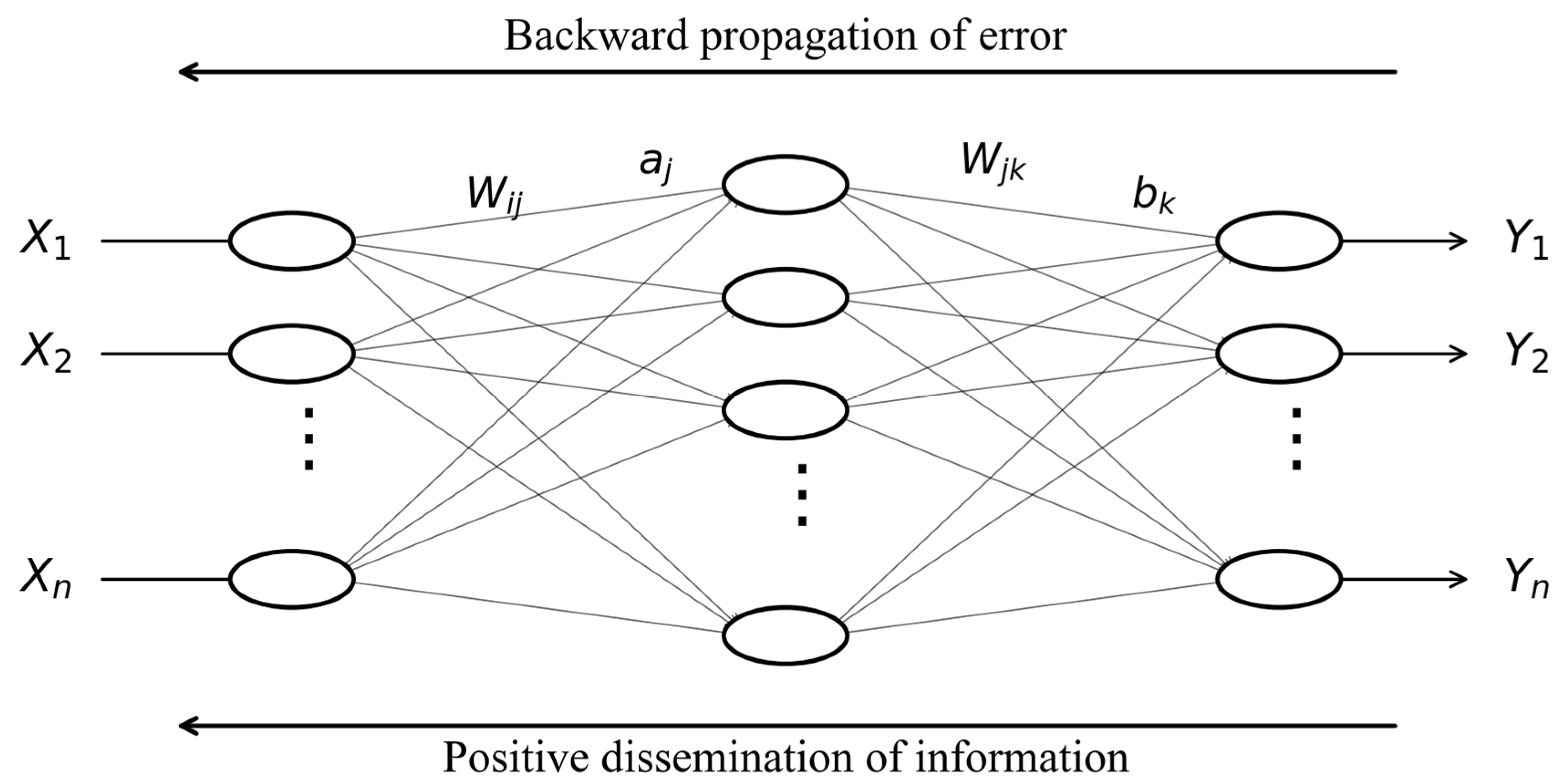
The operation mechanism of BP neural network is forward propagation of information and backward propagation of error, and the model can be trained to achieve a predetermined error target by transferring the error in the reverse direction [
33]. His basic structure is shown
Figure 1:
In this paper, the improved beluga optimization model is used to optimize the BP neural network so as to improve its prediction effect in financial early warning. Parameter settings: Population size (N) is 50, maximum number of iterations (A) is 100, equilibrium factor threshold () is 0.5, whale fall probability threshold () is calculated dynamically, solution space bounds () [−1, 1], 10 neurons in the hidden layer, Tanh activation function in the hidden layer, Sigmoid activation function in the output layer, learning rate 0.01, maximum number of training epochs (Epochs) 1000, Target error (Goal) is 0.001, training algorithm is Levenberg–Marquardt backpropagation, and the random seed is 42.
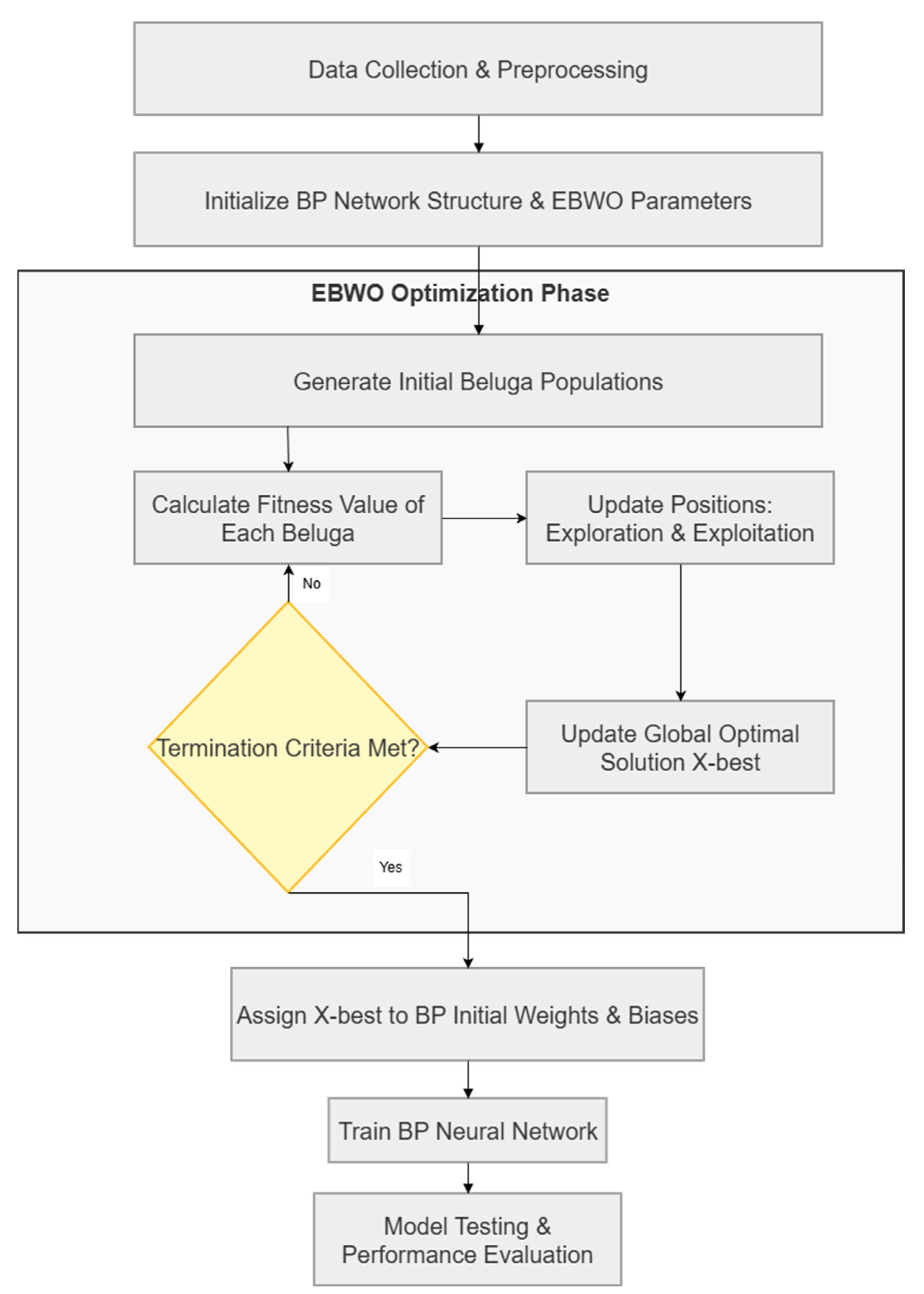
The construction process of the EBWO-BP neural network model can be summarised in the following three core stages:
- (1)
Firstly, the standard BP neural network framework is established, and the number of neurons in the input layer, the topology of the hidden layer and the computational units in the output layer are specified based on the dimensions of the feature space and the demand of the prediction target.
- (2)
Introduce the improved beluga optimization algorithm, which seeks the optimal initial weight matrix and activation thresholds in the solution space by introducing an adaptive weight adjustment mechanism and dynamic search strategy.
- (3)
Input the standardized training set data into the optimized network for forward propagation computation. When the number of successive iterations with validation set error reaching the preset accuracy threshold, terminate the training and output the network parameters; if the error does not satisfy the convergence conditions, start the back-propagation mechanism to correct the network parameters and perform forward computation again.
The specific flow of the model run is shown in
Figure 2:
4. Research Design
4.1. Sample Selection and Data Sources
Based on the definitional criteria generally adopted by existing studies, special treatment (ST) enterprises are used as the basis for determining financially distressed companies in this study, while non-ST enterprises are categorized as the reference sample with normal financial status [
34]. The data are selected from China’s A-share listed companies from 2022 to 2024. Existing literature shows that corporate financial crises usually have significant prospective early warning characteristics, and empirical analyses show that about 80% of the cases of financial distress present identifiable abnormal financial indicator fluctuations 24–36 months before the outbreak of the crisis. This lagged effect has led to the widespread adoption of inter-period forecast modelling in academia, where financial ratios from the T-2 to T-3 accounting periods are used as input variables.
In this paper, financial data from year T-2 are used to predict the financial status of year T, with the corresponding year interval being 2020–2022. A total of 140 ST companies are obtained, and in accordance with the actual situation that there are fewer ST companies than non-ST companies in the stock market, the sample screening in this study follows a 1:2 matching ratio to match ST companies with non-ST. To ensure that the model does not favor the majority class (non-ST companies) during training due to differences in sample size, we further implemented loss function weighting (the weighting method) at the algorithmic level, which is the most direct and effective approach for embedding algorithms. In the cross-entropy loss function of the BP neural network, we assigned a higher penalty weight to samples from the minority class (ST companies). The weights are calculated based on the inverse of the class frequency in the training set, specifically set as: minority class weight = total number of samples/(number of classes × number of samples in the minority class). This causes the model, during optimization, to incur a greater loss when misclassifying minority-class samples (ST companies as normal), thereby forcing it to focus on and learn the key features of companies in financial distress. The control group of companies is screened through the same year, and industry classification criteria are used, based on the principle of asset size similarity, and finally, 420 groups of valid paired samples are obtained. Before building the model, the raw financial data underwent rigorous preprocessing. For financial indicators with missing values, the median values for the same year and industry were used to impute the missing data. Samples that could not be imputed using reasonable methods or that had critical data missing were excluded. To mitigate the impact of outliers on model training, all continuous financial indicators were trimmed to the top and bottom 1% percentiles. To eliminate the influence of unit differences and accelerate neural network convergence, all input features were Z-score standardized to have a mean of 0 and a standard deviation of 1. Following the aforementioned cleaning and transformation, a standardized dataset was ultimately obtained for modeling. ST companies are assigned a value of 1, and matched non-ST companies are assigned a value of 2 as a normal control group, which serves as the categorical dependent variable in the risk early warning model. The financial data used in this study are all from the Cathay Pacific Economic and Financial Research Database, and are extracted in strict compliance with industry standards and the principle of time consistency.
4.2. Financial Early Warning Indicators
At present, scholars have not reached a unanimous conclusion on the determination of key indicators affecting ST companies in the financial risk early warning of ST-listed companies, which is a unique problem in the Chinese capital market [
35]. Existing empirical studies on the early warning of corporate financial risk are generally based on a multi-dimensional financial ratio indicator system, which can effectively identify and predict the enterprise’s financial health and its ability to sustain operations. Based on the theoretical framework of financial analysis, this study screens financial indicators from five key dimensions of core business activities: solvency, operational capacity, profitability, development capacity, and cash flow, as shown in
Table 2.
4.3. Non-Financial Early Warning Indicators
In addition to the financial indicators that will obviously have an impact on the financial situation of the enterprise, non-financial indicators have a non-negligible role in financial early warning in listed companies [
36,
37]. In constructing the financial early warning model, this study fully recognizes the incremental value of non-financial indicators in revealing corporate governance issues and agency conflicts, thereby effectively addressing the lag and operational limitations of traditional financial data. To avoid introducing noise and overfitting due to indicator generalization, this study adheres to the principles of “theory-driven, literature-supported, data-accessible, and significantly correlated,” focusing on the core signals with the broadest early warning capabilities. Ultimately, the shareholding ratio of the largest shareholder and the presence of internal control deficiencies were selected as non-financial early warning indicators
Table 3. Theoretically, these two indicators originate from agency theory and signaling theory, respectively, serving as direct proxy variables for equity structure risk and the effectiveness of internal controls. Their predictive efficacy has been widely supported by empirical evidence in the literature. Other potential variables, such as management background and ESG scores, were not included primarily based on three considerations: first, equity structure and internal controls are fundamental governance elements subject to mandatory disclosure and uniformly defined for all listed companies, ensuring data comparability; Second, many corporate governance characteristics (such as board structure and audit opinions) are highly correlated with internal control quality; selecting representative indicators maximizes information contribution while managing model complexity; third, to ensure comparability across the entire 2020–2024 sample, the selected indicators must have consistent disclosure standards throughout the study period; some emerging indicators have insufficient early coverage, and their inclusion would result in sample loss or introduce interpolation bias.
This study selects 23 financial indicators across five dimensions-solvency, operational efficiency, profitability, growth potential, and cash flow-and incorporates two non-financial indicators: the largest shareholder’s ownership ratio and the presence of internal control deficiencies. Together, these form a 25-dimensional feature space to comprehensively characterize the multidimensional and nonlinear nature of financial risk in A-share listed companies. However, the high-dimensional data itself introduces multiple issues of multicollinearity and computational complexity, necessitating effective feature reduction and fusion.
4.4. Feature Fusion Based on T-SNE
In the above paper, 23 financial indicators as well as two non-financial indicators are selected to form a 25-dimensional feature space. However, high-dimensional data suffers from multicollinearity issues, which not only prolongs model training time but also reduces predictive accuracy. To address the high-dimensionality and nonlinearity of financial risk indicators for A-share listed companies, this study abandons traditional methods based on linear assumptions, such as principal component analysis, and innovatively employs the T-SNE algorithm for dimensionality reduction.
T-SNE has inherent advantages in handling nonlinear relationships. The correlations among various financial risk indicators often exhibit complex nonlinear patterns, whereas linear methods such as principal component analysis (PCA), which reduce dimensionality by preserving global variance, struggle to capture these structures effectively. T-SNE, however, learns the intrinsic manifold of the data by optimizing the conditional probability similarity between high-dimensional and low-dimensional spaces. Since it does not require linear assumptions, it can more accurately reveal the underlying nonlinear clusters and risk patterns within high-dimensional financial data. Second, regarding the optimization of classification objectives, T-SNE’s strategy is more direct and effective. Compared to other nonlinear manifold learning algorithms (such as Local Linear Embedding, LLE), T-SNE’s core optimization objective is to strongly emphasize the preservation of the data’s local neighborhood structure—that is, to ensure that similar sample points in the high-dimensional space are closely adjacent to one another in the low-dimensional space. This is crucial for the financial early warning classification task, as it directly aggregates samples within the same risk category into tight clusters in the low-dimensional space, thereby significantly optimizing the decision boundary of subsequent classifiers. Furthermore, T-SNE’s exceptional visualization capabilities provide an intuitive basis for this study to objectively determine the optimal dimension for dimensionality reduction.
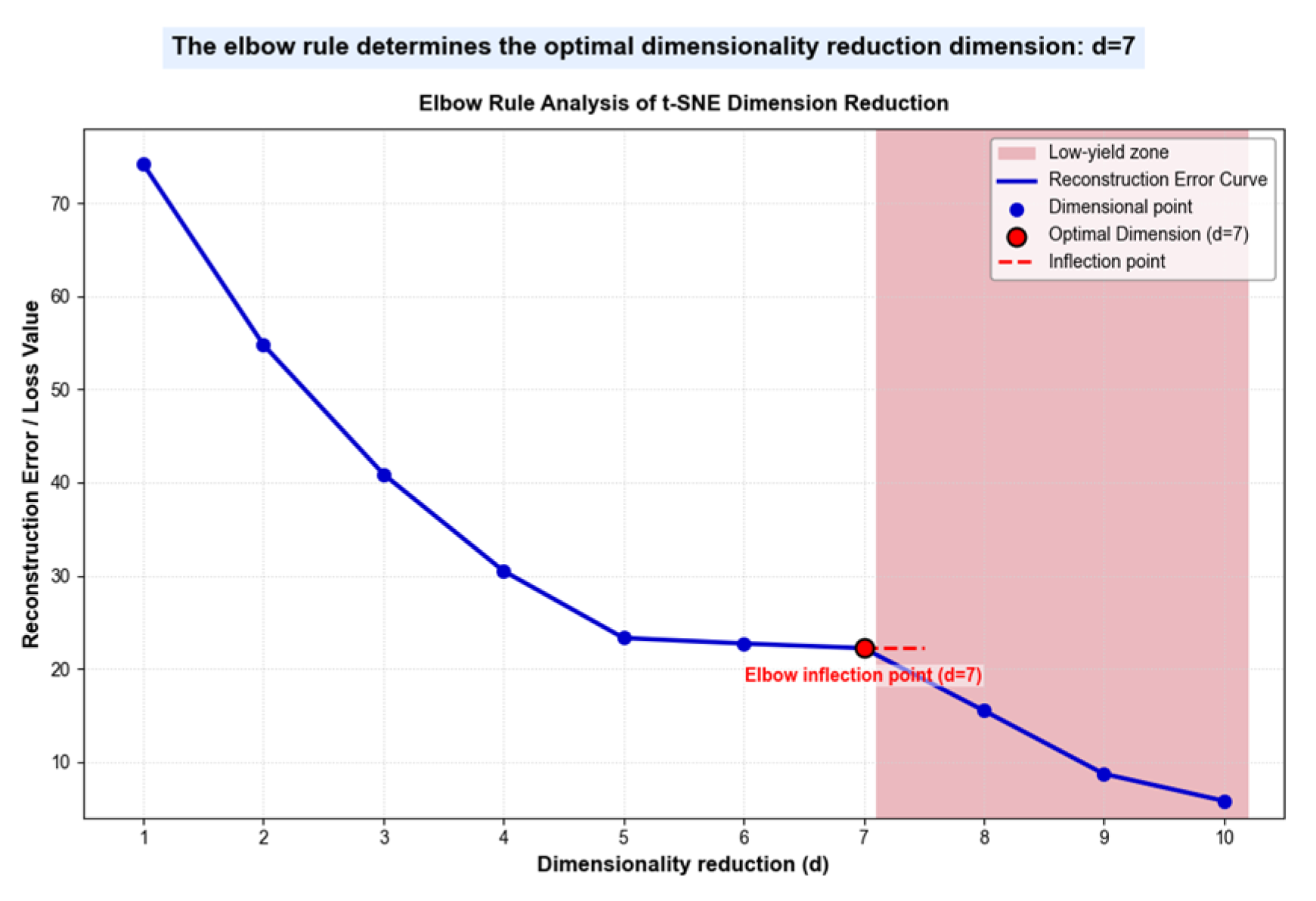
T-SNE feature fusion was performed across 25 indicators with parameters set to a confusion rate of 50% and 1000 iterations. To scientifically determine the optimal dimension (d) after dimensionality reduction and avoid arbitrary subjective selection, this study adopted an objective evaluation method based on minimizing reconstruction error. The core principle is that an ideal low-dimensional embedding should maximize the preservation of structural information from the original high-dimensional data. Its effectiveness can be quantified by calculating the discrepancy between the low-dimensional representation and the high-dimensional data (i.e., reconstruction error). Specifically, we computed a weighted composite score of Trustworthiness and Continuity between the T-SNE-reduced features and the original data across different target dimensions (d ranging from 2 to 10). Trustworthiness measures the extent to which points that are close in the low-dimensional space also remain close in the original high-dimensional space. Continuity, conversely, measures the extent to which points that are close in the original space maintain proximity in the low-dimensional space. Together, they assess the quality of dimensionality reduction. The calculation can be briefly expressed as:
Here, α and β are weighting coefficients, typically set to 0.5 each to achieve balance. We plotted the composite score curves for different dimensions d and used the Elbow Method to determine the optimal dimension. This method identifies the “inflection point” where the rate of score growth undergoes a significant change; beyond this point, the information gain (marginal benefit) from increasing the dimension declines sharply. We calculated the Kullback–Leibler divergence between the original distribution and the dimension-reduced distribution, and visually inspected the cluster separation of ST and non-ST samples in the two-dimensional projection.
Applying this method, we obtained the curve shown in
Figure 3. It can be observed that a distinct “elbow” appears when d = 7, indicating this dimension achieves the optimal balance between information retention and model complexity. Choosing d > 7 may slightly improve scores but unnecessarily increases model complexity and computational burden. Therefore, selecting seven features as inputs for the BP neural network represents an objective, data-driven optimal solution.
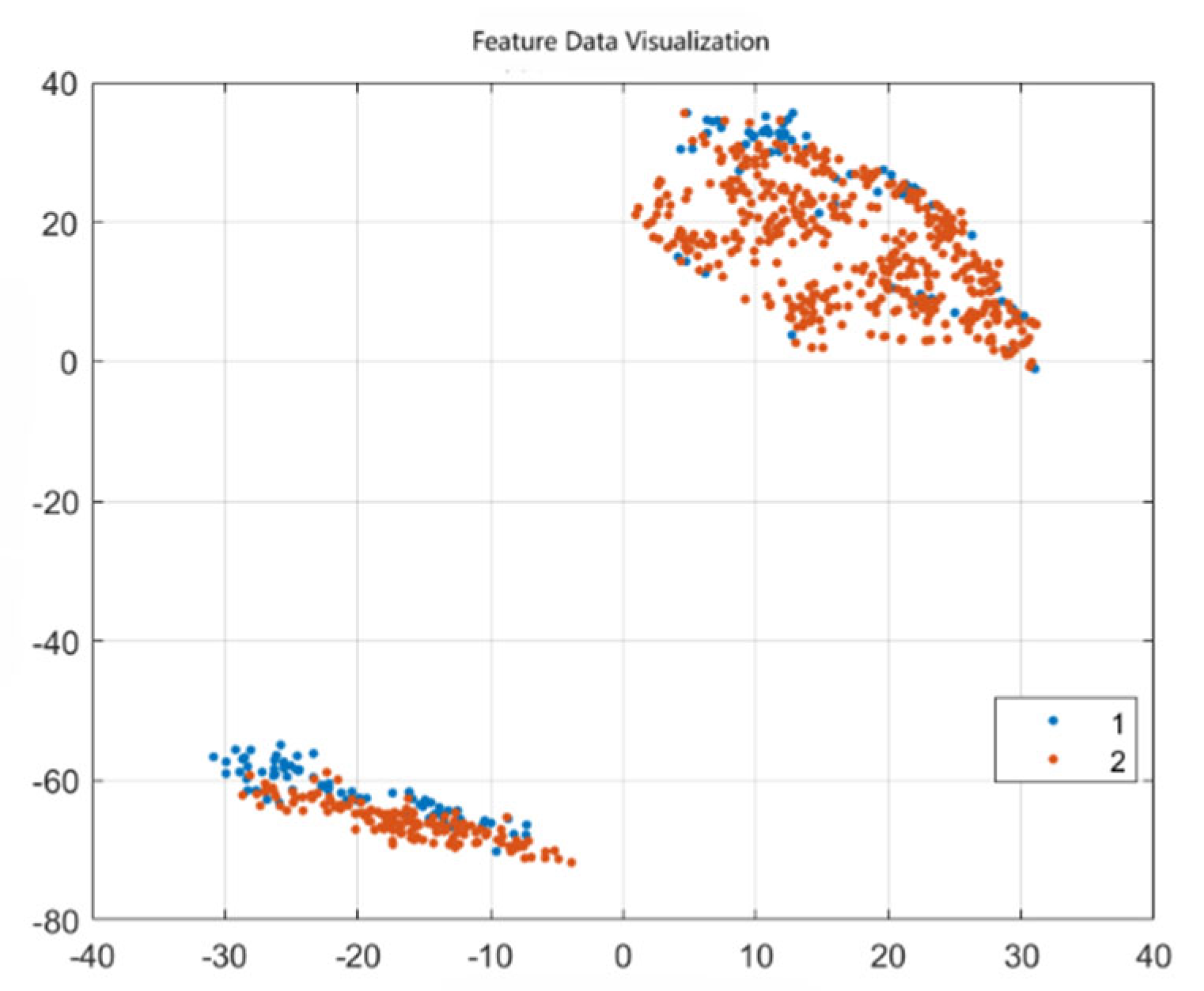
The results show that the samples form two well-separated clusters in two-dimensional space that are significantly spaced apart while partially overlapping
Figure 4, suggesting the presence of potential subgroup structure. The sample category labels better match the cluster distribution. This distribution pattern indicates that in the original high-dimensional feature space, the intrinsic feature structures of the two sample classes exhibit systematic differences, which the t-SNE algorithm effectively captures and visualizes. To prevent data leakage and ensure the model’s generalization ability, the T-SNE dimension reduction process is strictly conducted within a training-testing separation framework. The specific workflow is as follows: First, the data is split. Using stratified sampling, the original dataset is divided into a training set and a test set. Next, only the training set is fitted; the T-SNE model is trained exclusively on the training set data. This step is entirely based on the distribution characteristics of the training data, learning the nonlinear manifold structure and mapping function from a 25-dimensional space to a seven-dimensional space. Finally, the dataset was simultaneously transformed, and the learned mapping function was applied to both the training and test sets to map them into a seven-dimensional feature space.
4.5. Early Warning Study on Financial Risks
The study employed a stratified random allocation strategy to distribute data across a sample of 420 listed companies. Considering the imbalance in the actual market between ST companies and non-ST companies among A-share listed firms (ST companies being far fewer than non-ST companies), the overall sample was divided into a training set (n = 294) and a test set (n = 126) at a ratio of 7:3. This division method mitigates potential model bias from class imbalance while effectively avoiding sampling bias caused by industry cyclicality and geographical distribution.
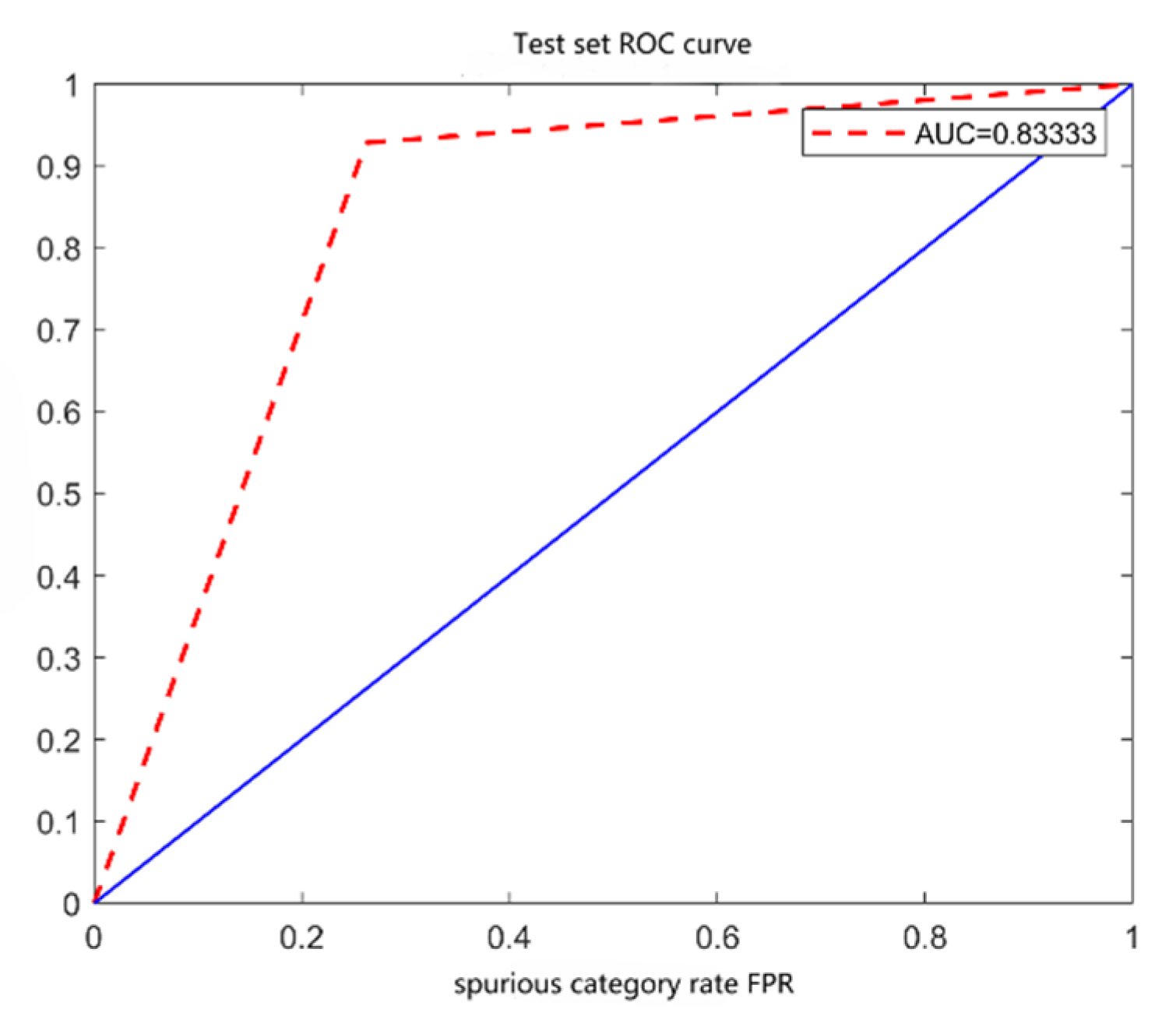
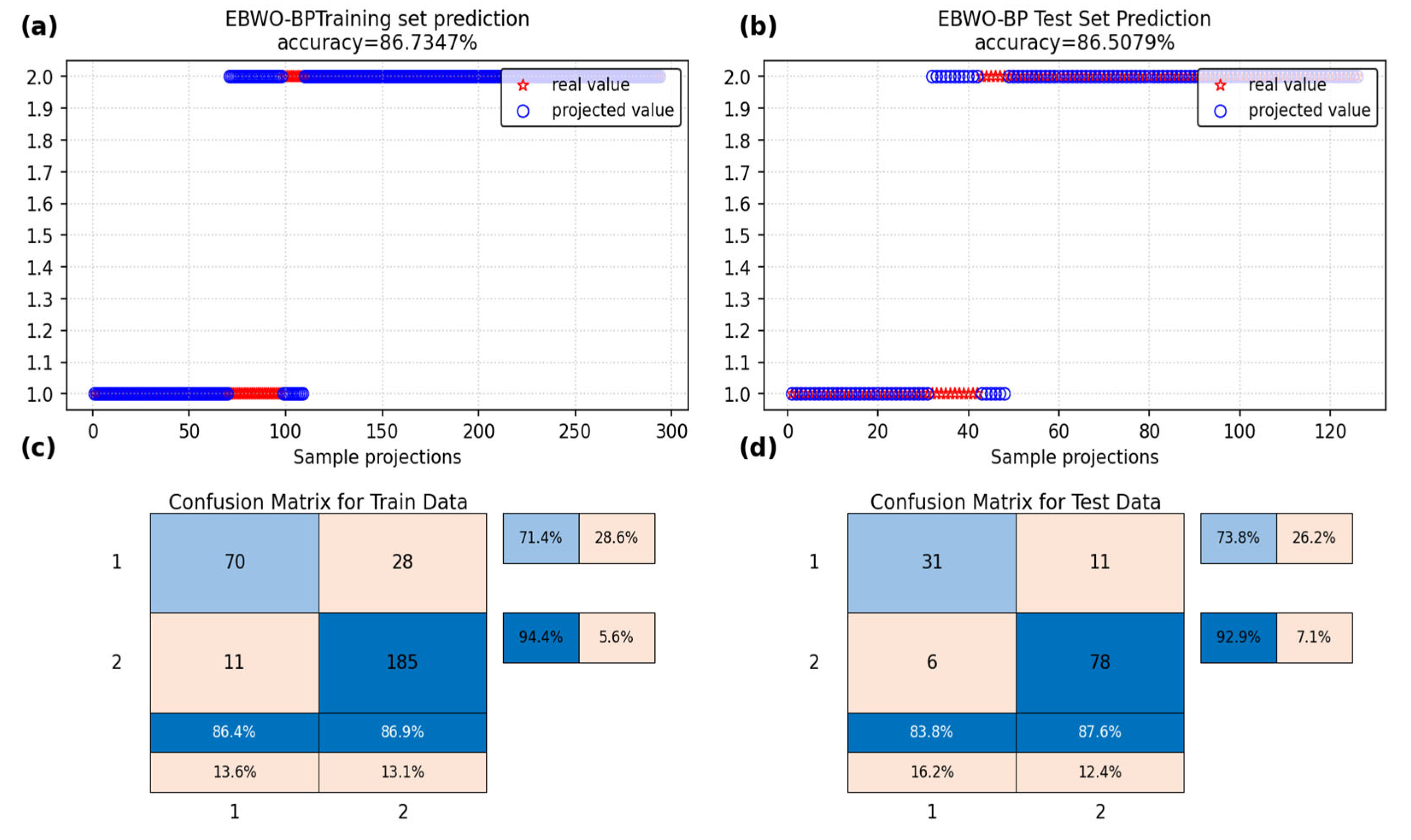
To ensure a comprehensive and robust evaluation of the EBWO-BP model’s performance, this study employs ROC curves, accuracy, and confusion matrices as evaluation metrics. The receiver operating characteristic (ROC) curve and its corresponding area under the curve (AUC) value measure the model’s overall discrimination capability across all classification thresholds, which is particularly crucial in the A-share market where the number of ST and non-ST companies is imbalanced. The ROC curve visualizes the trade-off between true positive rate and false positive rate, revealing the model’s sensitivity and specificity. Accuracy serves as an intuitive metric reflecting the proportion of correct predictions, while the confusion matrix provides a detailed breakdown of classification results to validate precision and recall for each category. Collectively, these metrics compensate for the limitations of single-metric evaluations. Subsequently, the constructed EBWO-BP model is trained and tested, and the test results shown in
Figure 5.
When the Area Under the ROC Curve (AUC) approaches 1, it indicates that the model’s ability to distinguish between positive and negative samples is nearing perfection, with significantly enhanced discriminative efficacy. In this study, the model achieved an AUC of 0.83, substantially higher than the 0.5 benchmark for random classification. This directly confirms that the constructed financial crisis early warning model possesses significant discriminative power. Furthermore, the high AUC value of 0.83 not only signifies the model’s overall excellent ranking capability but also reflects an ideal balance between recall and false positive rate. This equilibrium is crucial when evaluating a model’s practicality in handling early warning tasks with highly imbalanced positive and negative sample distributions. This outcome not only statistically validates the model’s effectiveness but also demonstrates its robust discriminative performance in addressing category-imbalanced financial risk scenarios.
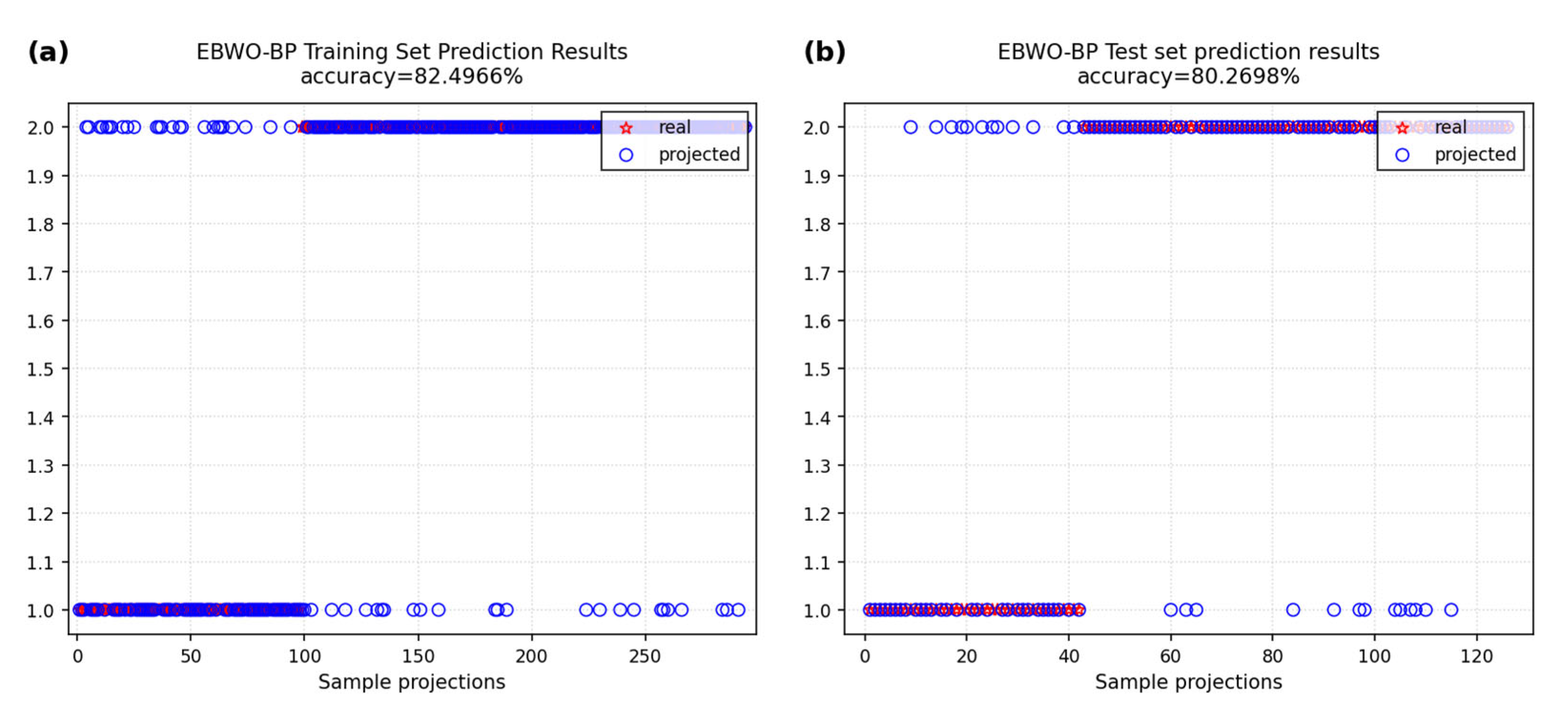
The EBWO-BP financial early warning model demonstrates excellent performance in an empirical study of financial early warning for 420 listed companies in the A-share market during 2022–2024. The empirical data show that the classification accuracy of the model reaches 86.73% in the training set, and the prediction efficacy of the model maintains a high of 86.51% on the test set
Figure 6, with a weak decay of only 0.22 percentage points, which strongly verifies its overfitting suppression ability
Table 4. The model successfully builds a cross-cycle risk identification framework by deeply exploring the financial and non-financial differences between normal (non-ST) and risk-marked (ST) enterprises.
6. Stability Test Under Varying Sample Scales
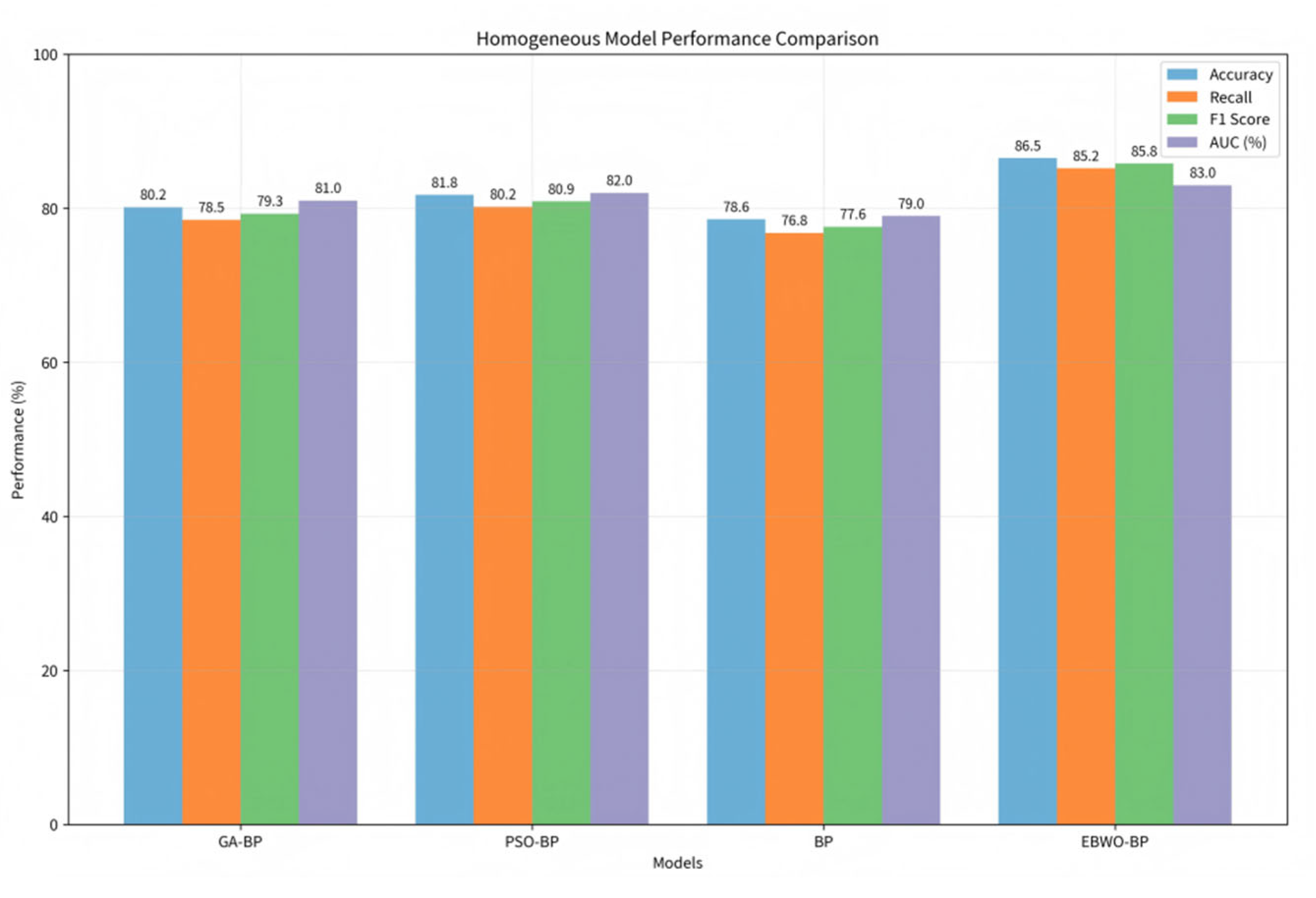
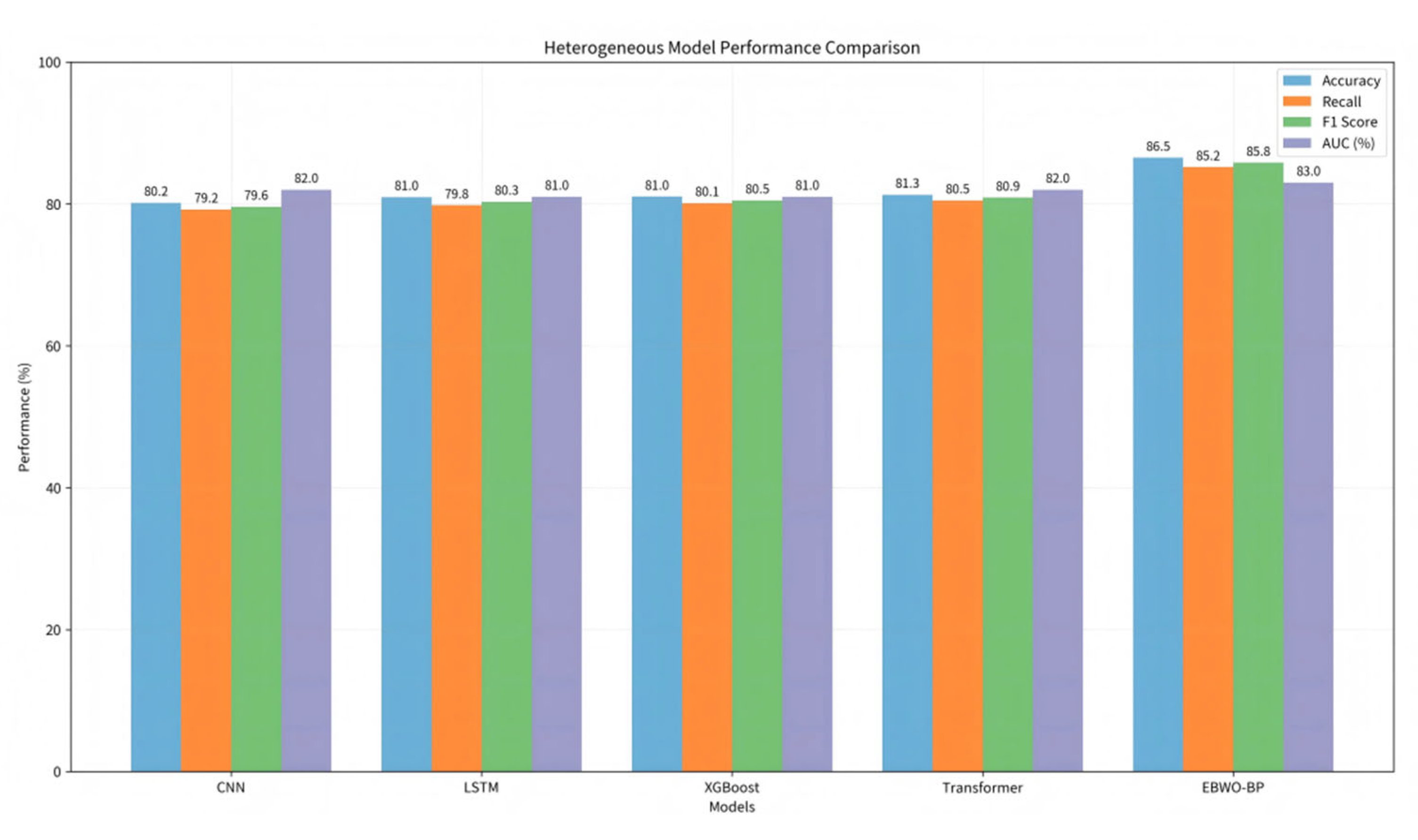
Based on the analysis of the model architecture in the previous study, the EBWO-BP financial early warning system demonstrates significant predictive efficacy. Compared with homogeneous and heterogeneous classification models, the model has significant advantages in feature nonlinear mapping and risk gradient identification. To assess the model’s sensitivity to sample size and class imbalance, this study conducted stability tests using an expanded dataset. The objective was to determine whether the model maintains its performance when the number of non-ST samples increases within the same time frame.
In terms of the sample construction strategy, ST-type listed companies in China’s A-share market from 2022 to 2024 are selected as the risk sample (
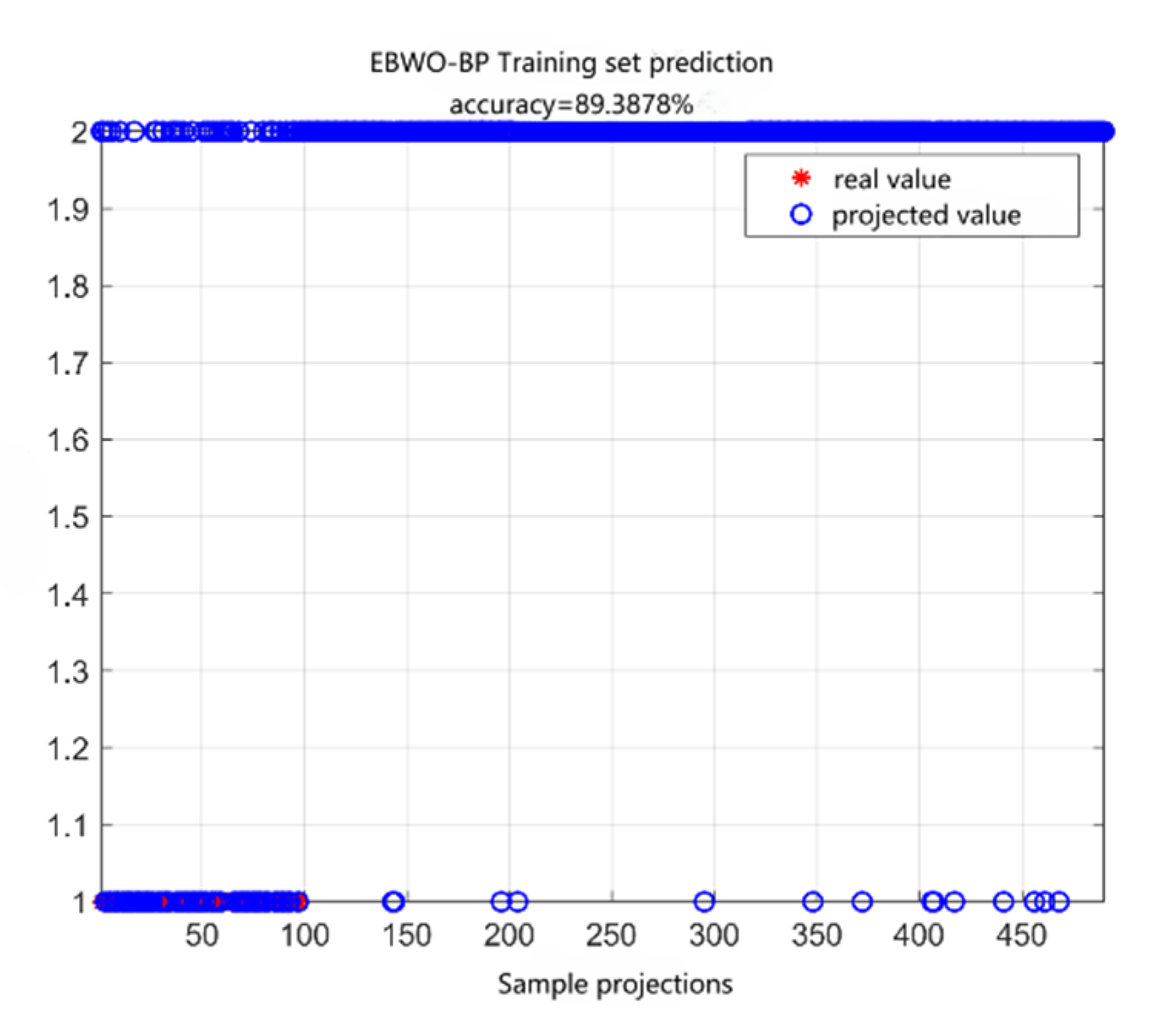
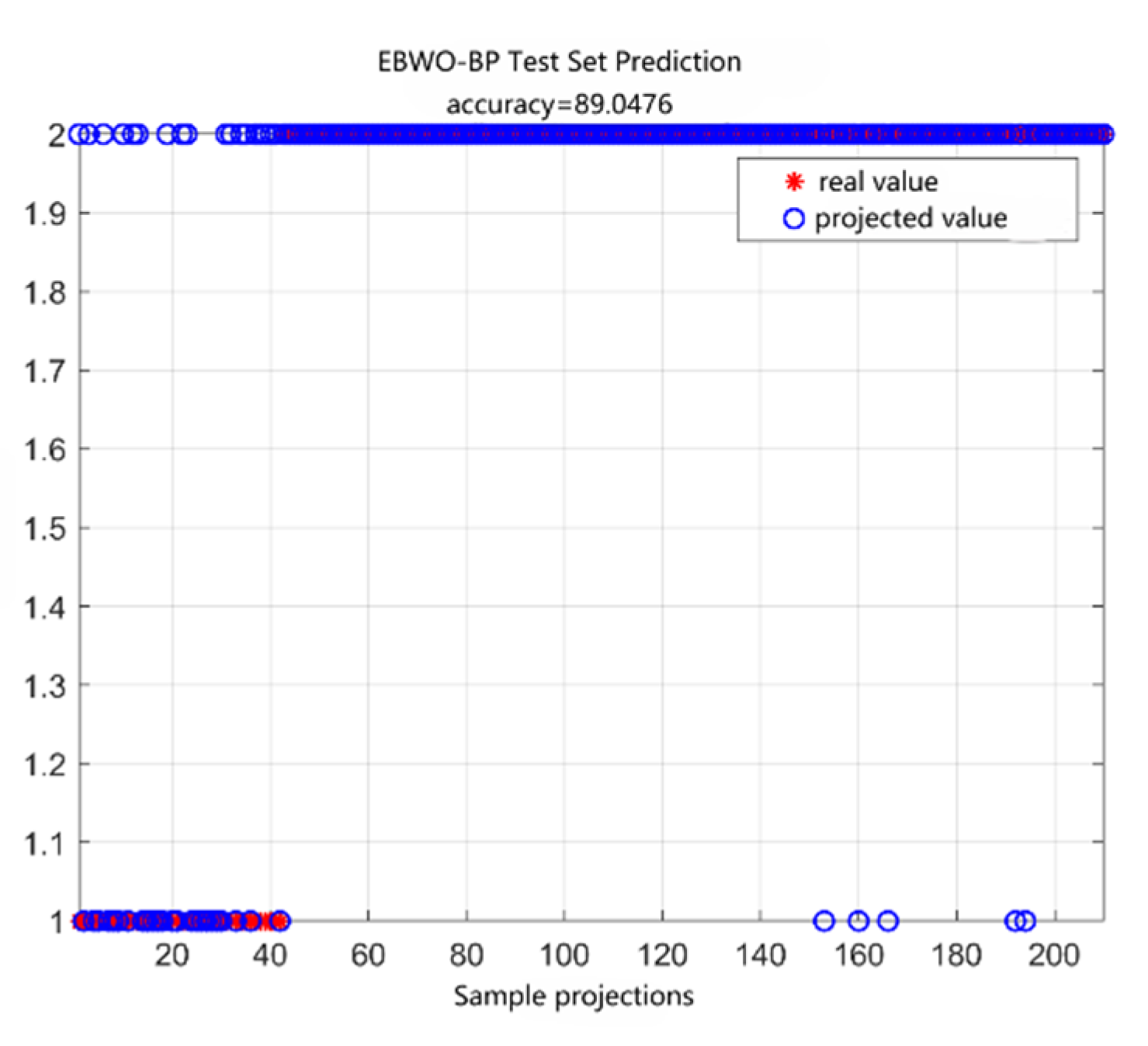
n = 140), and matched non-ST companies are used as the control sample. In order to achieve the full expression of risk exposure characteristics, the original ST:non-ST matching ratio is expanded from 1:2 to 1:4, and the non-ST sample size is increased to 560 groups, resulting in a balanced dataset containing 700 observations. The data time window was set to 2020–2022 to ensure that the financial indicators have a three-year risk warning front. In particular, it should be noted that by expanding the sample size of non-ST companies to 560 groups, the potential interference of category imbalance on model training is effectively mitigated, and the test results shown in
Figure 10 and
Figure 11.
As shown in
Table 10, when the sample size of the EBWO-BP financial early warning model is expanded from 420 to 700, the model performance presents a significant improvement. Specifically, the accuracy of the training set increases from 86.73% to 89.39%, while the accuracy of the test set increases from 86.51% to 89.05%, with a 2.6% increase in the overall accuracy. This empirical result shows that the increase in sample size is positively associated with the improvement in model prediction performance, and the accuracy improvement trend remains synchronous in both the training and test sets, which effectively avoids the risk of model overfitting to specific data samples.
Further analysis reveals that the model maintains a stable ability to discriminate financial status across different data sizes, and the generality of its predictive validity is confirmed by cross-sample validation. This property reflects the good generalization ability of the model parameter settings, rather than only generating adaptations to specific data distributions. Particularly noteworthy is that the sustained improvement of 2.54% in the accuracy of the test set forms a reasonable gradient with the optimization of 2.66% in the training set, confirming that the model improvement stems from effective feature extraction rather than purely memory effects.
Based on the above experimental results, it can be argued that the EBWO-BP model exhibits significant scale effects and robustness characteristics in the field of financial early warning. The performance improvement does not depend on the local features of a specific dataset, but is achieved by enhancing the learning depth of the model on the financial risk characterization factors. This feature makes the model valuable for practical application in financial risk prediction in complex business environments. It provides a new methodological support for financial institutions and regulators to build dynamic early warning systems. The study not only verifies the validity of the model architecture but also establishes a quantifiable empirical framework for the stability assessment of financial early warning models.
7. Research Findings and Outlook
7.1. Research Findings
This study systematically explored financial early warning for A-share listed companies by constructing an EBWO-BP hybrid model. Empirical results demonstrate that through algorithmic fusion and feature engineering innovation, this model exhibits significant advantages in prediction accuracy, robustness, and generalization capability, specifically as follows:
First, the construction of a multidimensional indicator system is proven to be a key foundation for enhancing early warning effectiveness. Experimental results show that incorporating two non-financial indicators—“largest shareholder ownership ratio” and “internal control deficiencies”—significantly increased the model’s test set accuracy from 80.27% to 86.51%. This fully demonstrates the irreplaceable incremental informational value of non-financial indicators in capturing governance risks and potential crisis signals beyond financial data, thereby addressing the static limitations of traditional single-financial-indicator models.
Second, the innovative application of the T-SNE nonlinear dimensionality reduction method effectively addressed data noise and computational complexity issues in high-dimensional feature spaces. By objectively determining the optimal seven feature dimensions using the elbow rule, the approach maximally preserves the original data structure while establishing an efficient data foundation for subsequent neural network training. Visualization of the dimensionality reduction effect further demonstrates that risk samples and normal samples exhibit excellent clustering separability in the low-dimensional space, providing a methodological innovation for nonlinear risk modeling.
Third, the synergistic optimization mechanism between the EBWO algorithm and the BP neural network is central to achieving breakthrough model performance. The data indicate that the EBWO-BP model achieves an accuracy of 86.51% on the test set, with an Area Under the Curve (AUC) of 0.83. This significantly outperforms optimization algorithm models such as GA-BP and PSO-BP, as well as deep learning models like CNN and LSTM. This validates the EBWO algorithm’s exceptional capability in overcoming local minima in BP neural networks and enhancing convergence efficiency, achieving performance gains through algorithmic fusion.
Fourth, the model’s robustness and generalization capability passed rigorous testing. Robustness tests indicate that when the sample size was expanded from 420 to 700 groups, the overall model accuracy further increased to 89.22%, with minimal performance degradation between the training and testing sets. This result strongly demonstrates the robust adaptability and reliability of the EBWO-BP model across varying data distributions, providing empirical evidence for its application in China’s capital markets, characterized by diverse industry distributions and complex financial structures.
7.2. Research Limitations
Despite achieving anticipated outcomes, this study retains limitations in the following aspects:
First, potential overfitting risk, although T-SNE dimensionality reduction and cross-validation techniques were employed, the “black-box” nature of neural networks inherently carries the risk of overfitting to specific macroeconomic conditions during the 2020–2024 window. Therefore, the model’s stability in the face of sudden shifts in market dynamics or long-term time drifts requires further validation.
Second, sample size constraint, although the dataset of 420 samples meets the standards of mainstream literature, it remains relatively small compared to the vast scale of China’s A-share market (which comprises over 5000 companies). This limited scale may restrict the model’s ability to capture heterogeneity across industries, potentially limiting its generalizability when applied to specific industries outside the training distribution.
Third, the breadth of non-financial indicators. Coverage primarily focused on equity structure and internal controls. Future work could incorporate broader non-financial signals—such as management background, ESG performance, and media sentiment—to construct more comprehensive risk profiles.
7.3. Research Outlook
Building upon the findings and limitations of this study, future work may deepen in the following directions:
First, exploration of dynamic early warning mechanisms. Introducing time series models to transition from static cross-sectional prediction to dynamic continuous tracking, enhancing the timeliness of warnings.
Second, multimodal data fusion. Integrating unstructured data such as annual report texts, analyst reports, and online sentiment, this approach utilizes natural language processing to uncover deeper risk signals, constructing a more sophisticated hybrid early warning system.
Third, the current comparison does not include certain state-of-the-art models specifically designed for tabular data, such as gradient boosters (e.g., CatBoost, LightGBM) and TabNet. These models have demonstrated exceptional capabilities in handling structured financial data. Therefore, extending the comparative analysis to include these advanced tabular models represents an important direction for future work aimed at further evaluating EBWO-BP’s performance.
Fourth, although this study has demonstrated the high accuracy of the EBWO-BP model, the “black-box” nature of neural networks limits their interpretability in high-risk financial applications. Future research will integrate explainable AI techniques to quantitatively decompose the model’s outputs and reveal the marginal contributions of each financial and non-financial indicator.