Article

Optimization of a Hybrid EKF-ANN Model via Double-Criterion Early Stop Pruning for Enhanced Wind Speed Forecasting

by
Athanasios Donas
1,2,*,
George Galanis
2,
Ioannis Pytharoulis
3 and
Ioannis Th. Famelis
1
1
microSENSES Laboratory, Department of Electrical and Electronics Engineering, Polytechnic School, University of West Attica, Ancient Olive Grove Campus, 250, Thivon Ave., Egaleo, 12241 Athens, Greece
2
Mathematical Modeling and Applications Laboratory, Hellenic Naval Academy, Hatzikiriakion, 18539 Piraeus, Greece
3
Department of Meteorology and Climatology, School of Geology, Aristotle University of Thessaloniki, 54124 Thessaloniki, Greece
*
Author to whom correspondence should be addressed.
Mathematics 2026, 14(10), 1650; https://doi.org/10.3390/math14101650
Submission received: 19 April 2026 / Revised: 5 May 2026 / Accepted: 10 May 2026 / Published: 13 May 2026
(This article belongs to the Special Issue Advanced Filtering and Control Methods for Stochastic Systems)

Abstract

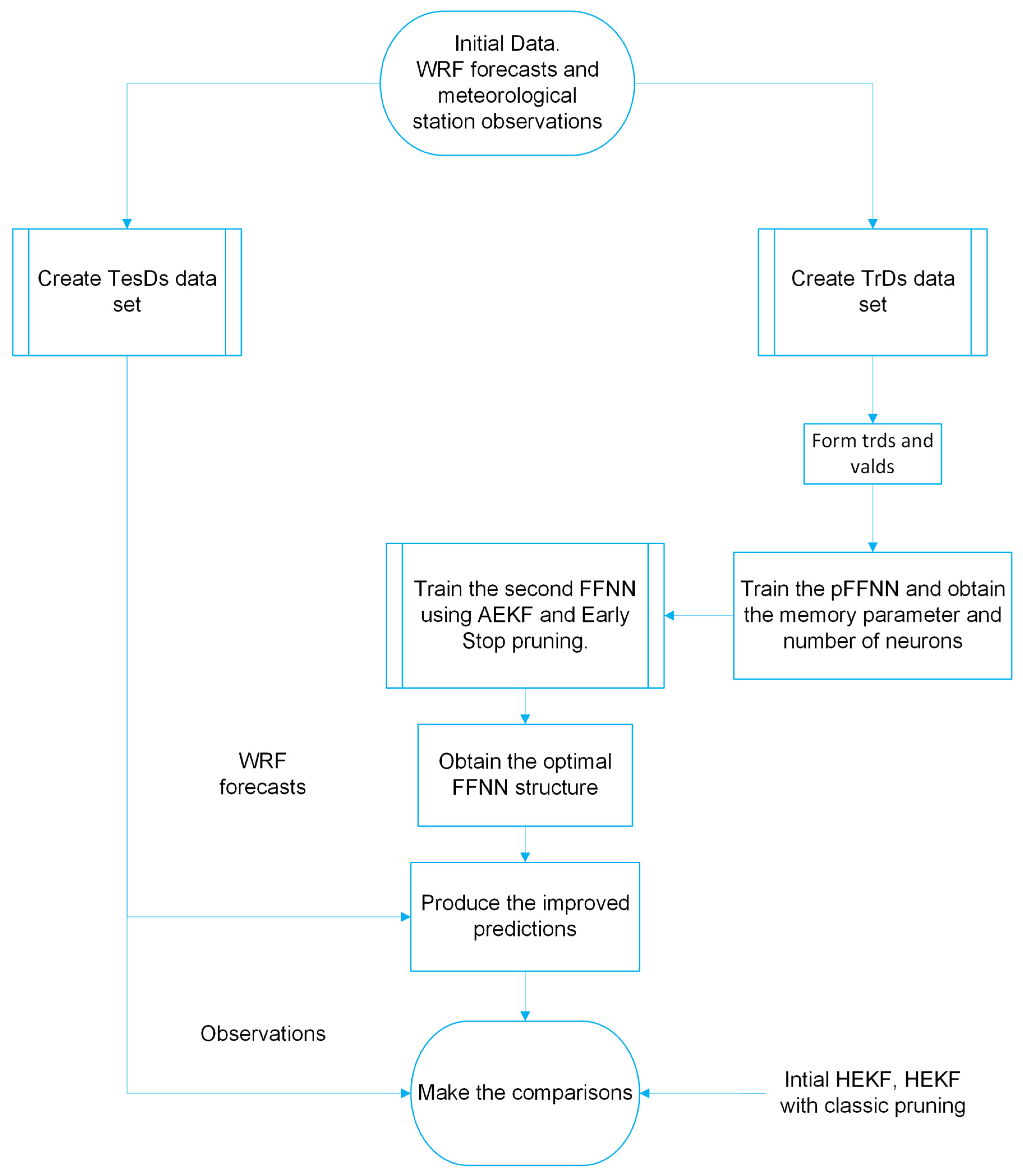
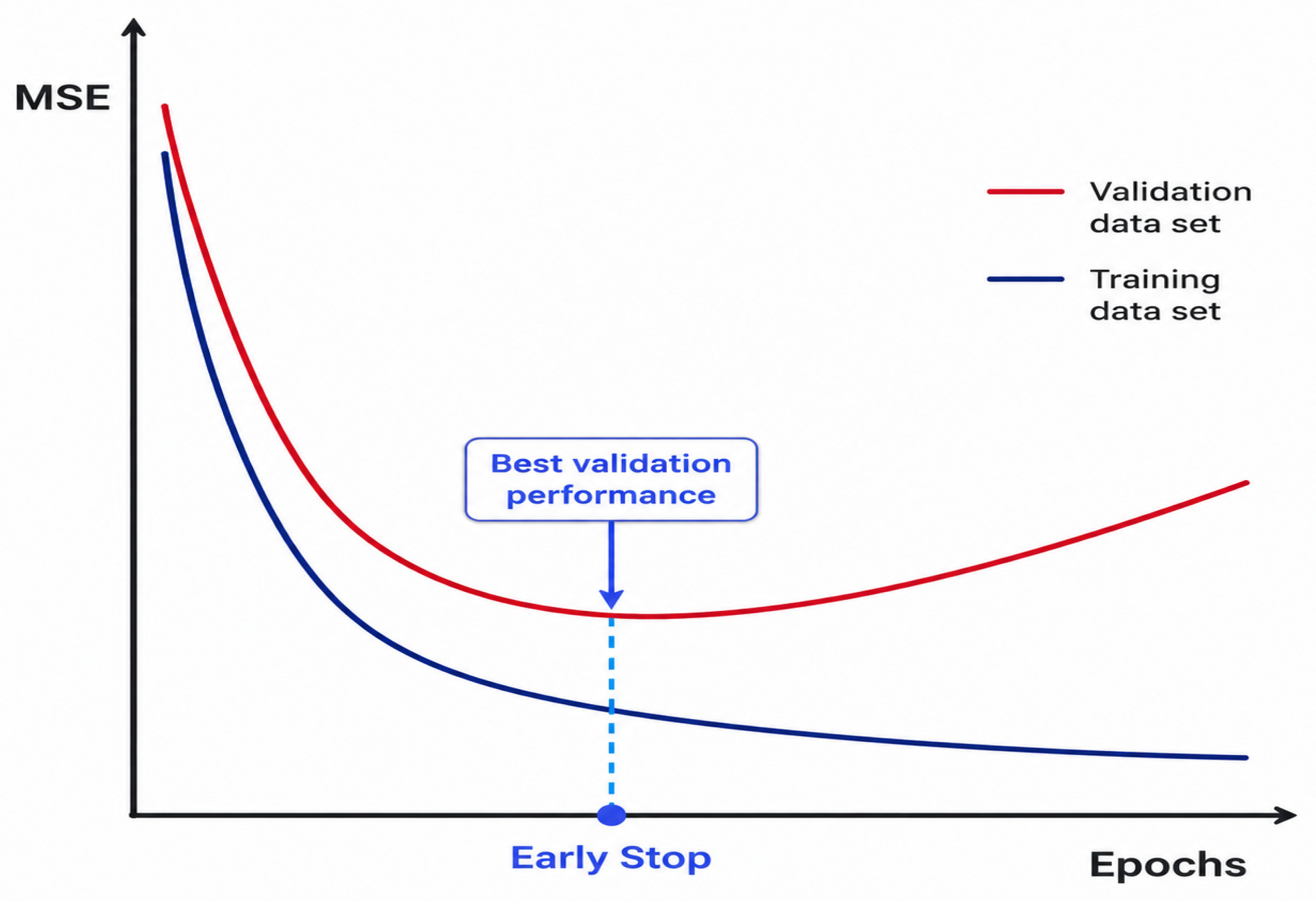
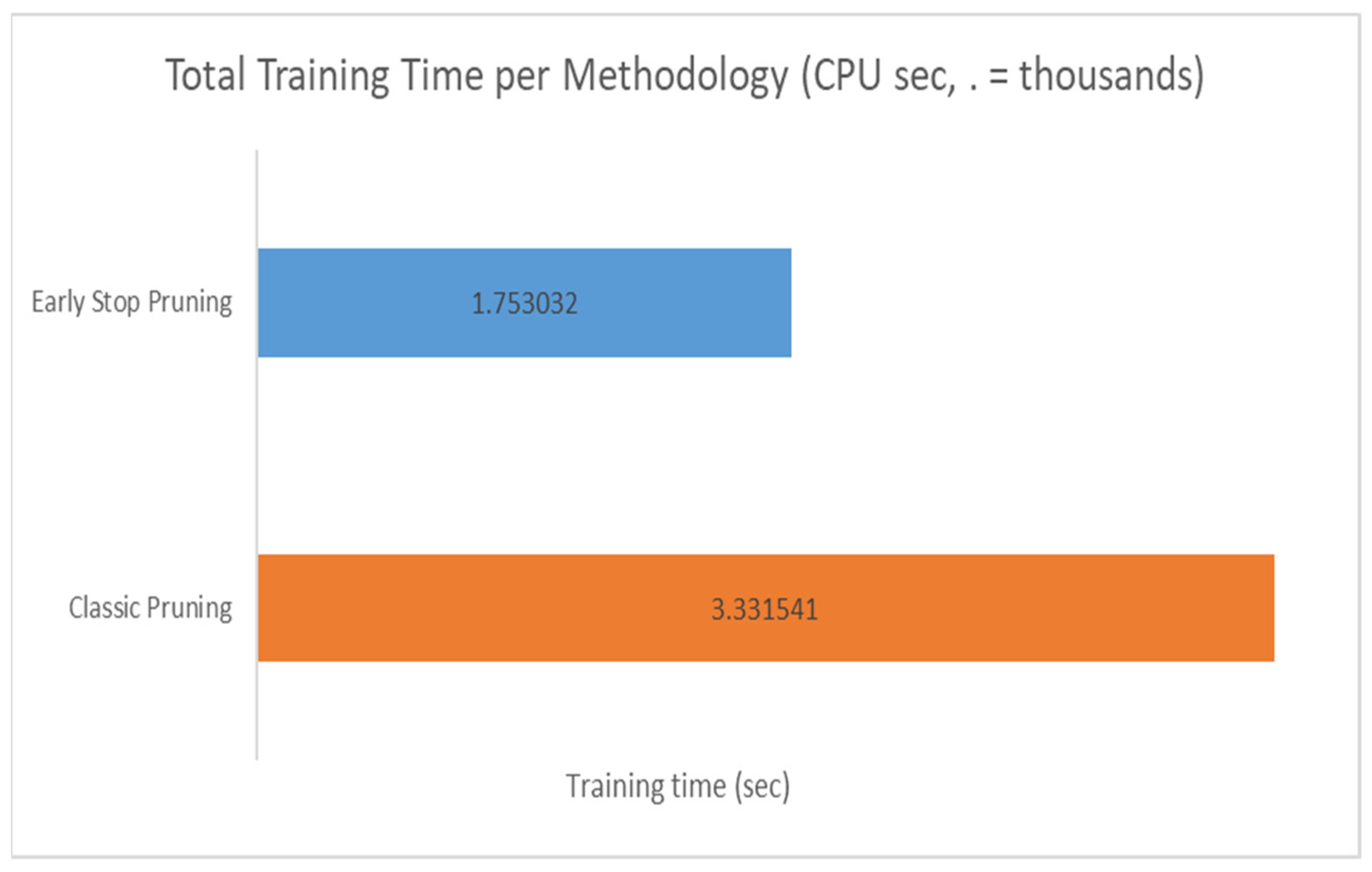
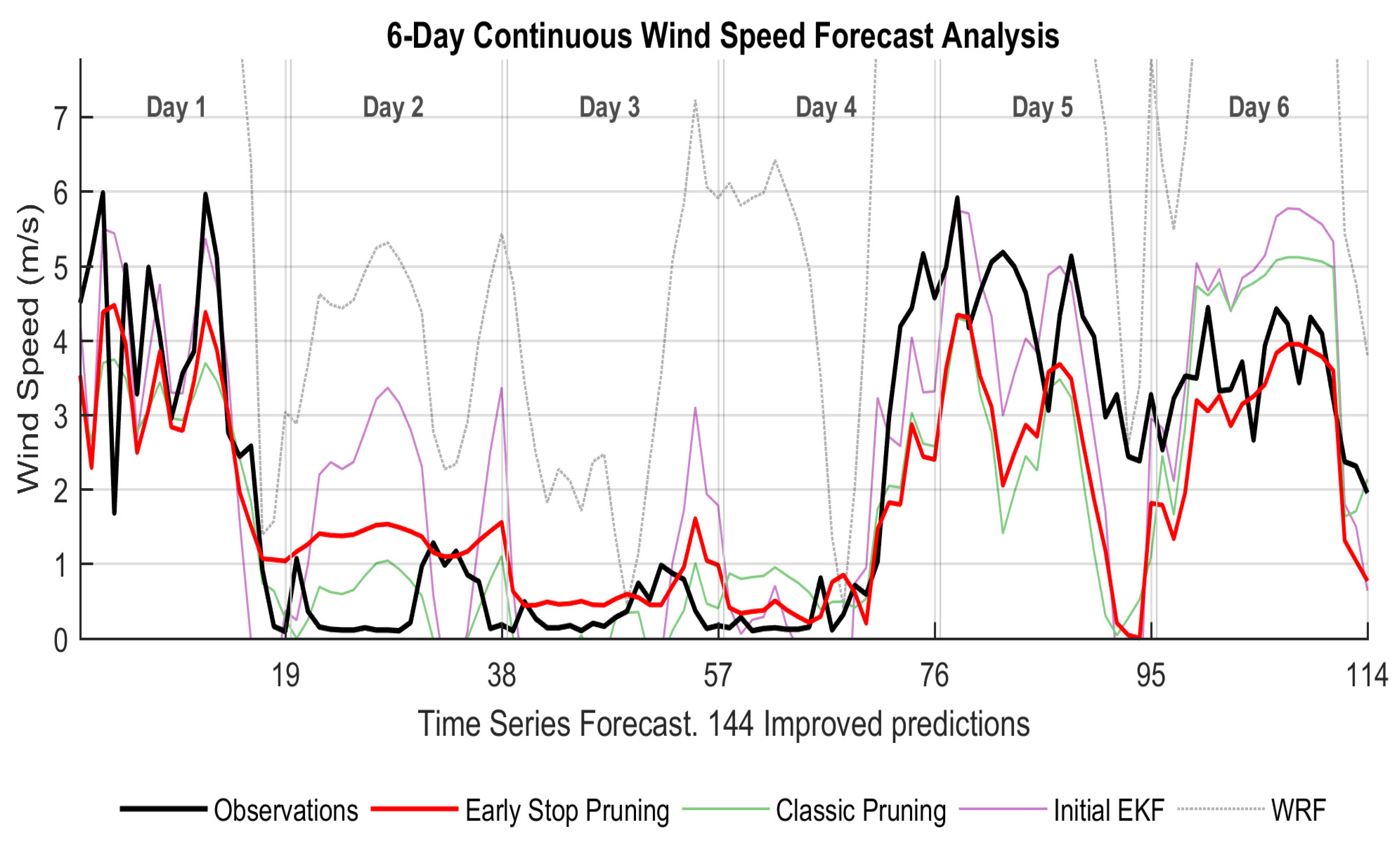
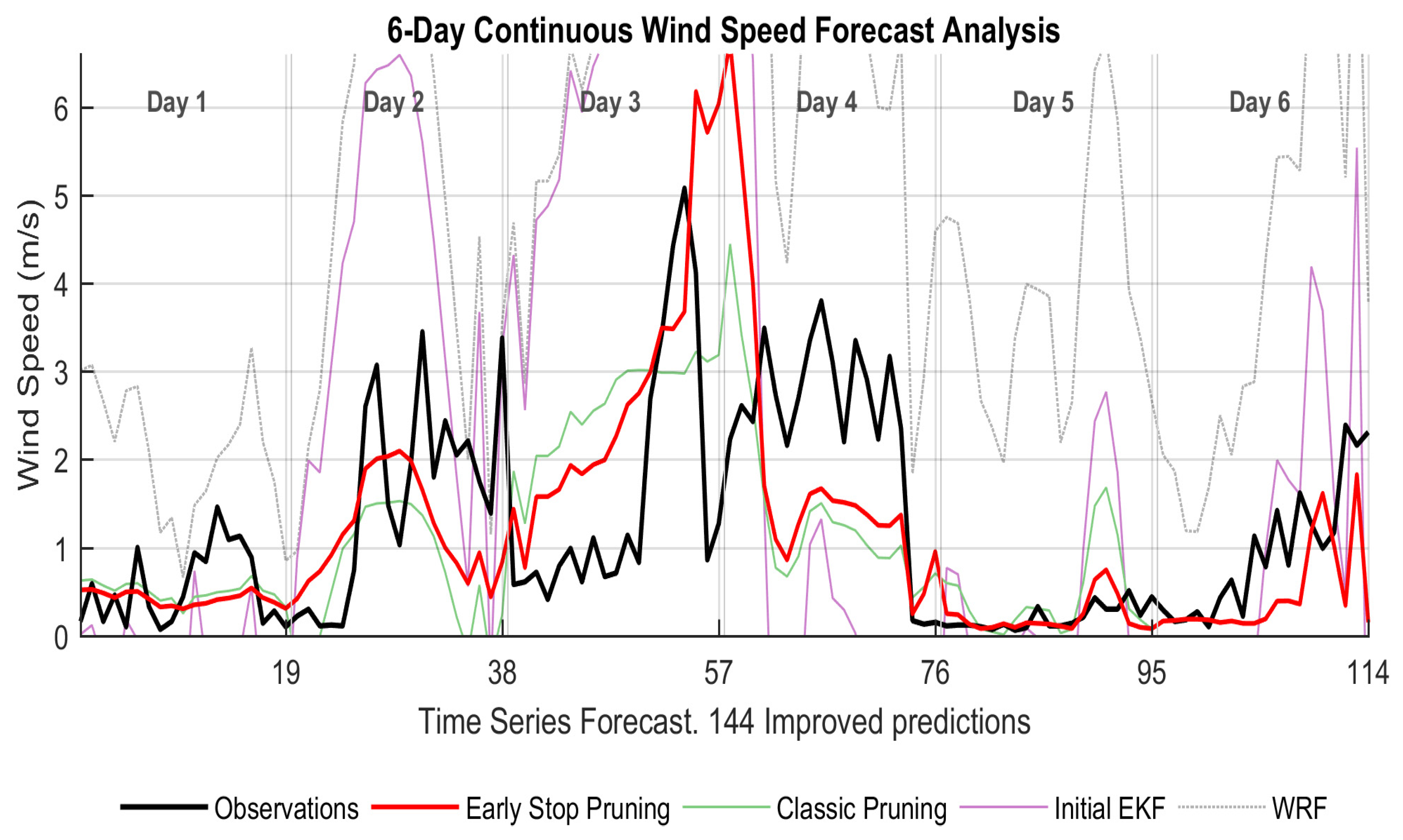
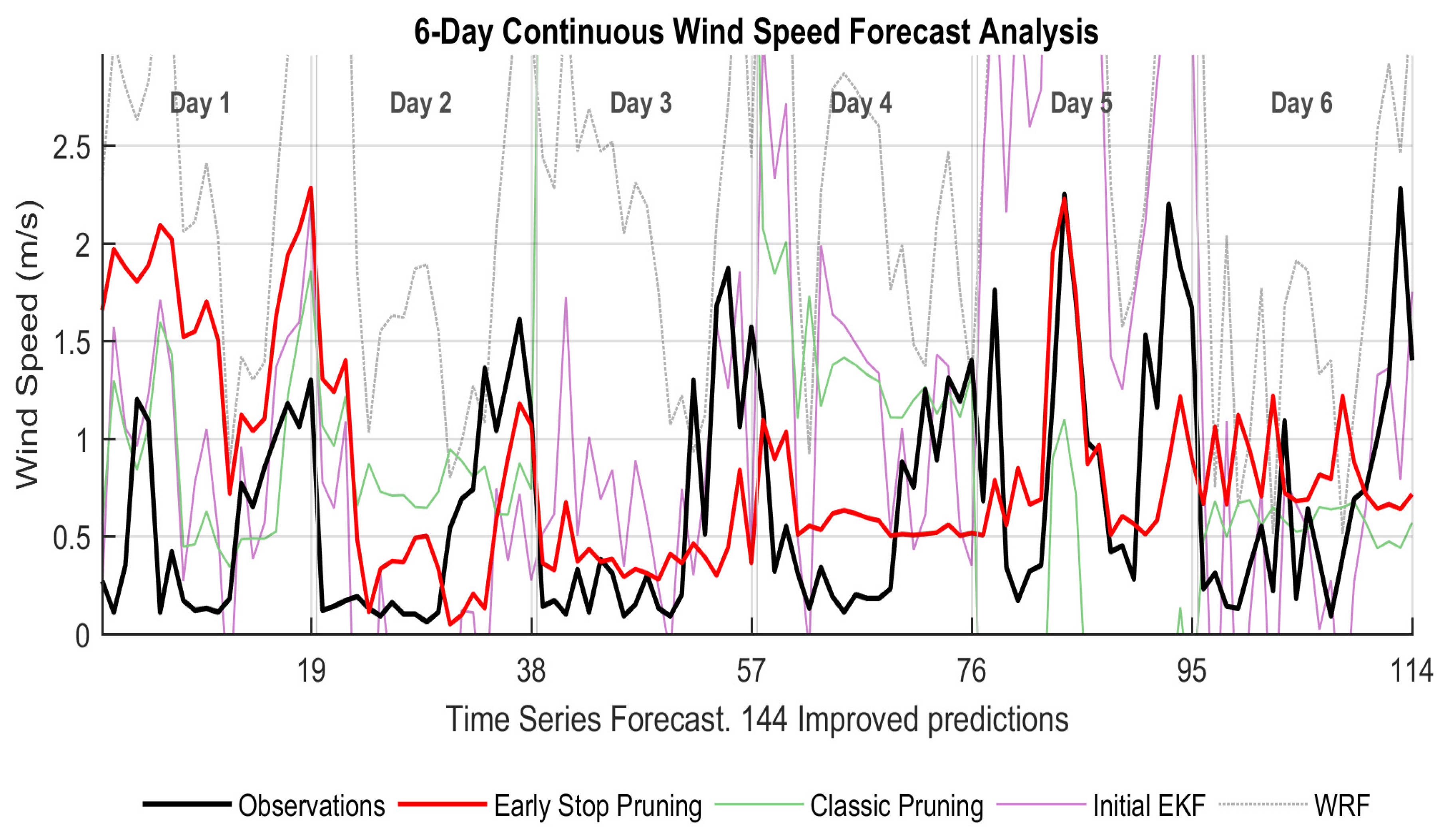
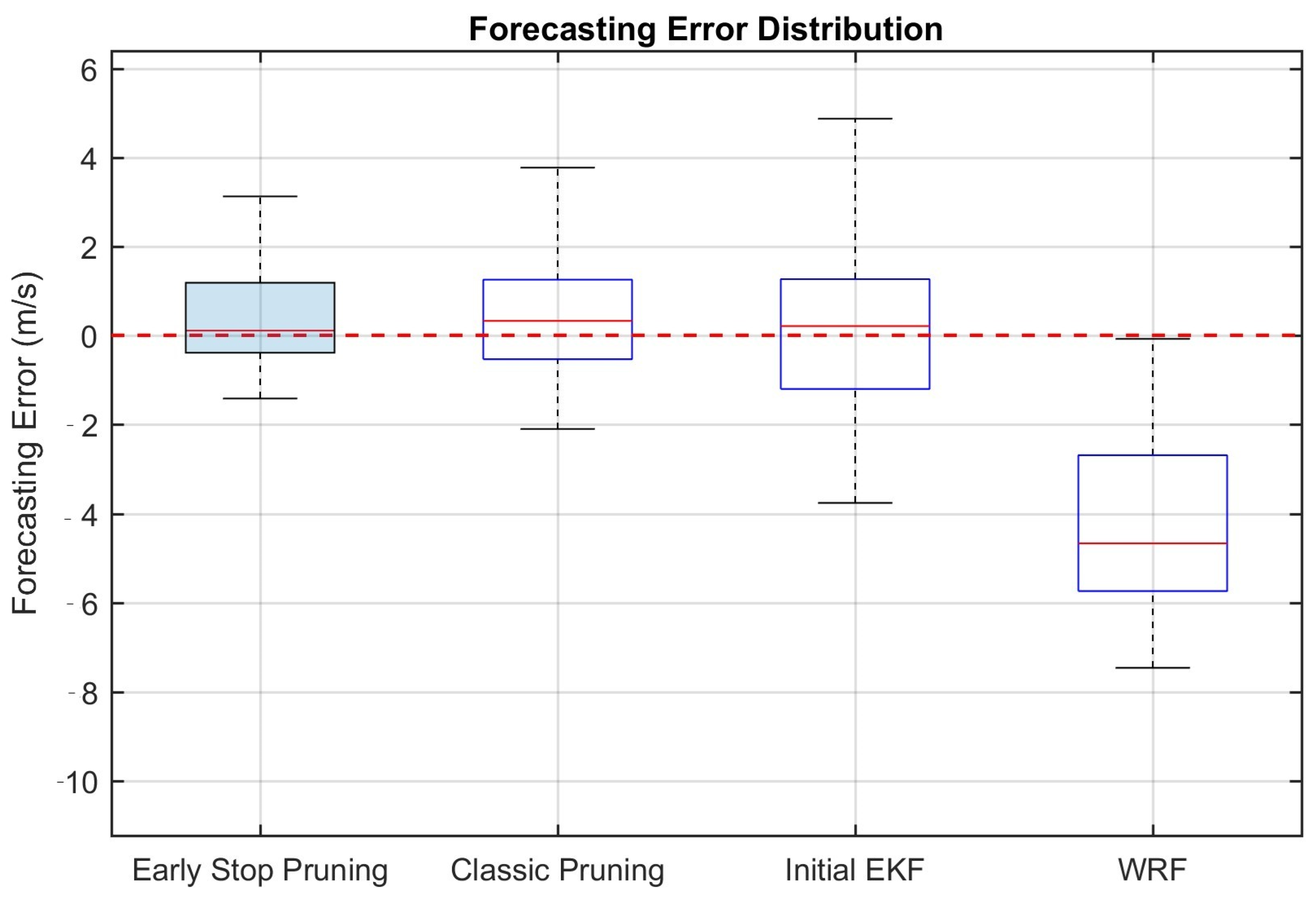
A novel double-criterion early stopping pruning strategy is introduced in this study. The proposed approach enables the structural optimization of a hybrid filtering framework that integrates FeedForward Neural Networks with an adaptive Extended Kalman Filter, by simultaneously monitoring the validation error and the trace of the error covariance matrix. Unlike classical pruning methods, which are applied after the completion of the training process and aggressively remove network neurons, the proposed scheme exploits the learning procedure, achieving a more selective reduction of 2% to 13%, balancing effectively between strong generalization performance and computationally efficient training. The proposed framework is evaluated on wind speed forecasts obtained from a numerical weather prediction model, within a time-varying window scheme, demonstrating promising improvements. Key statistical indices, such as the Mean Absolute Error and the Root Mean Square Error, were significantly reduced, with reductions ranging from approximately 65% to 80% and 60% to 78%, respectively. These findings suggest that the proposed methodology offers a robust and accurate framework for time series forecasting in operational settings.
Keywords: Extended Kalman Filters; FeedForward Neural Networks; hybrid algorithms; overfitting; pruning Extended Kalman Filters; FeedForward Neural Networks; hybrid algorithms; overfitting; pruning