Article

Hessian-Enhanced Likelihood Optimization for Gravitational Wave Parameter Estimation: A Second-Order Approach to Machine Learning-Based Inference

1
Department of Computer Science, School of Science, Rensselaer Polytechnic Institute, 110 8th St, Troy, NY 12180, USA
2
State Key Laboratory of Ocean Sensing & Ocean College, Zhejiang University, Zhoushan 316021, China
*
Author to whom correspondence should be addressed.
Mathematics 2025, 13(24), 4014; https://doi.org/10.3390/math13244014
Submission received: 19 September 2025 / Revised: 11 November 2025 / Accepted: 21 November 2025 / Published: 17 December 2025
(This article belongs to the Special Issue Optimization Theory, Algorithms and Applications)

Abstract

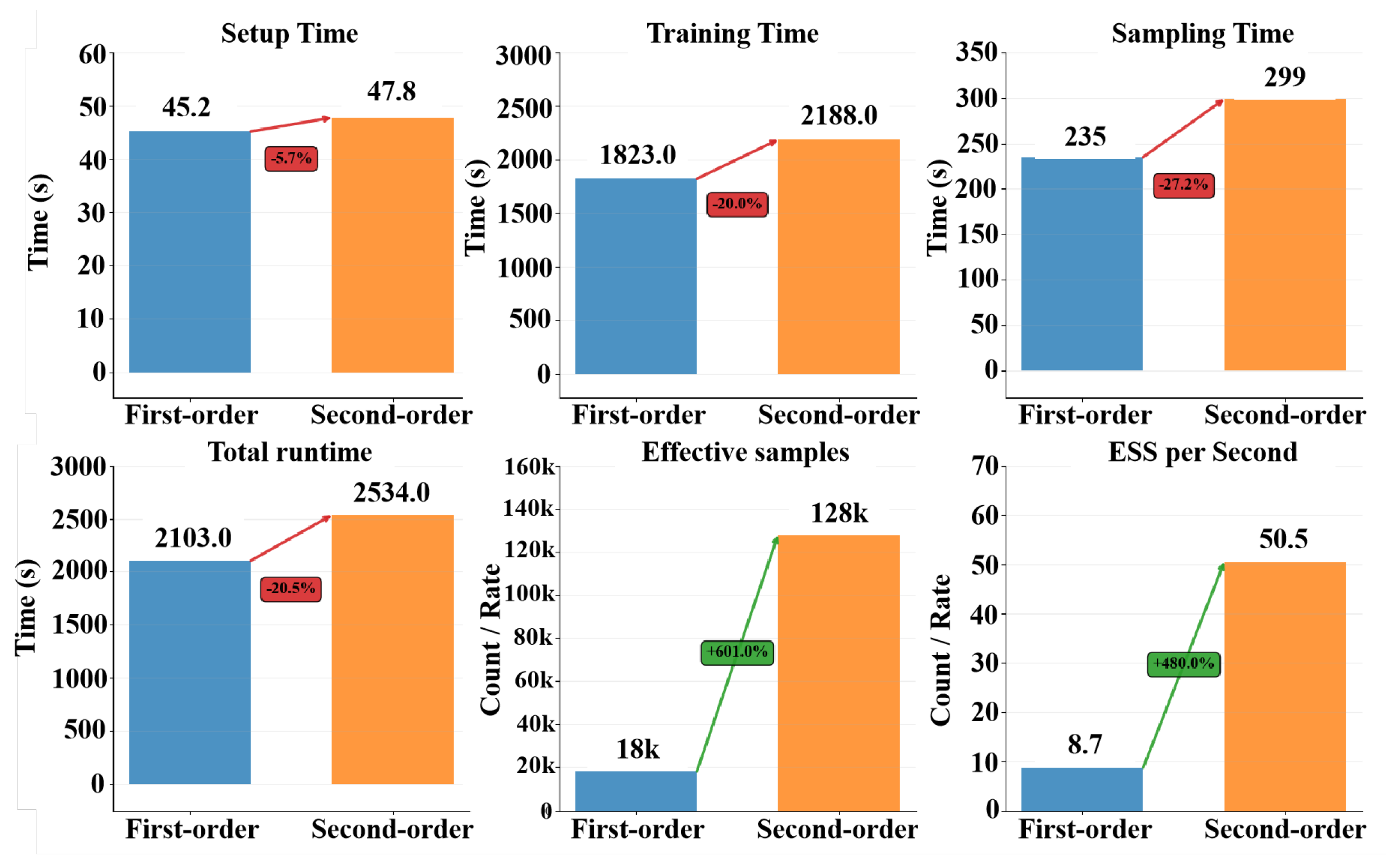
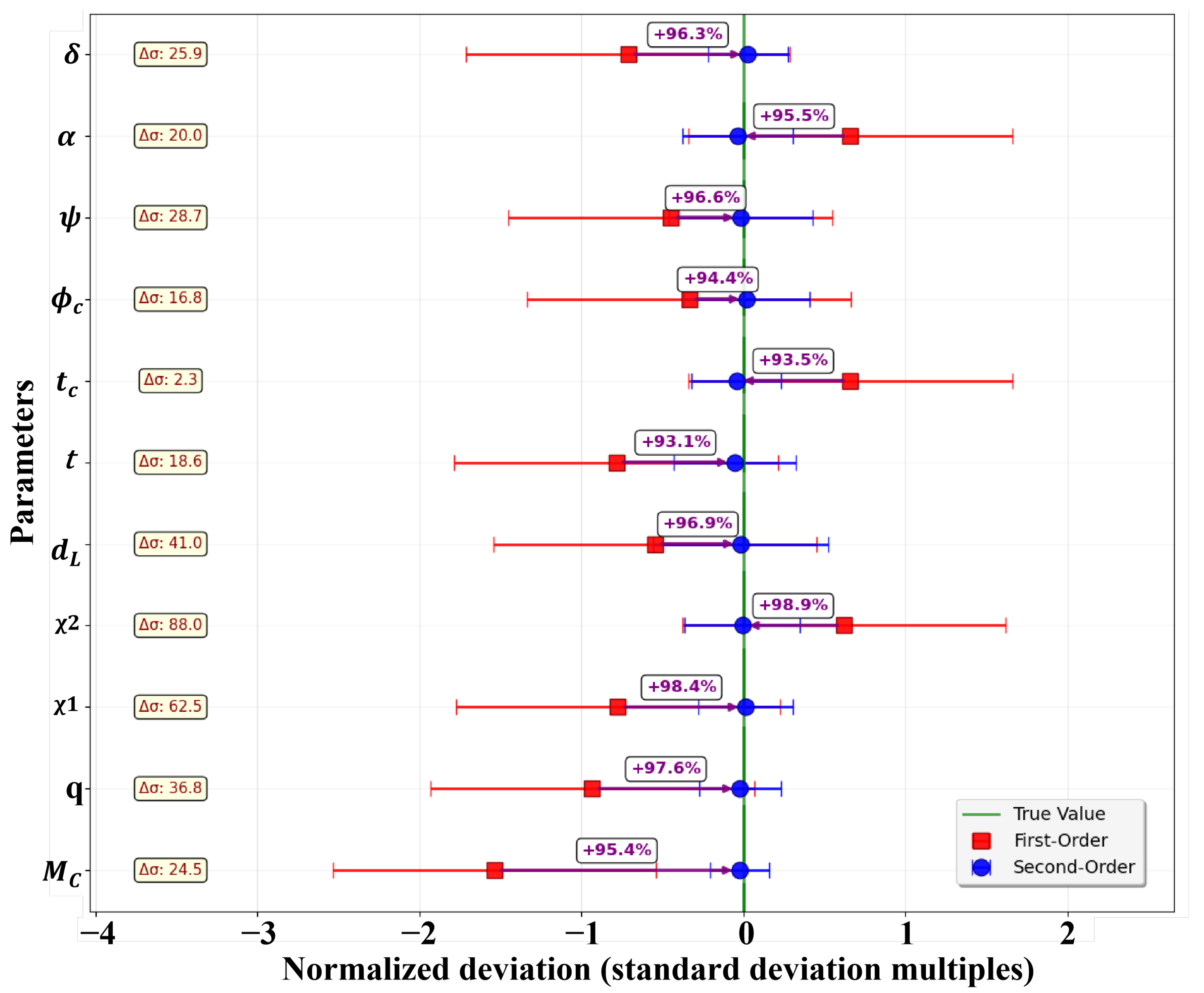
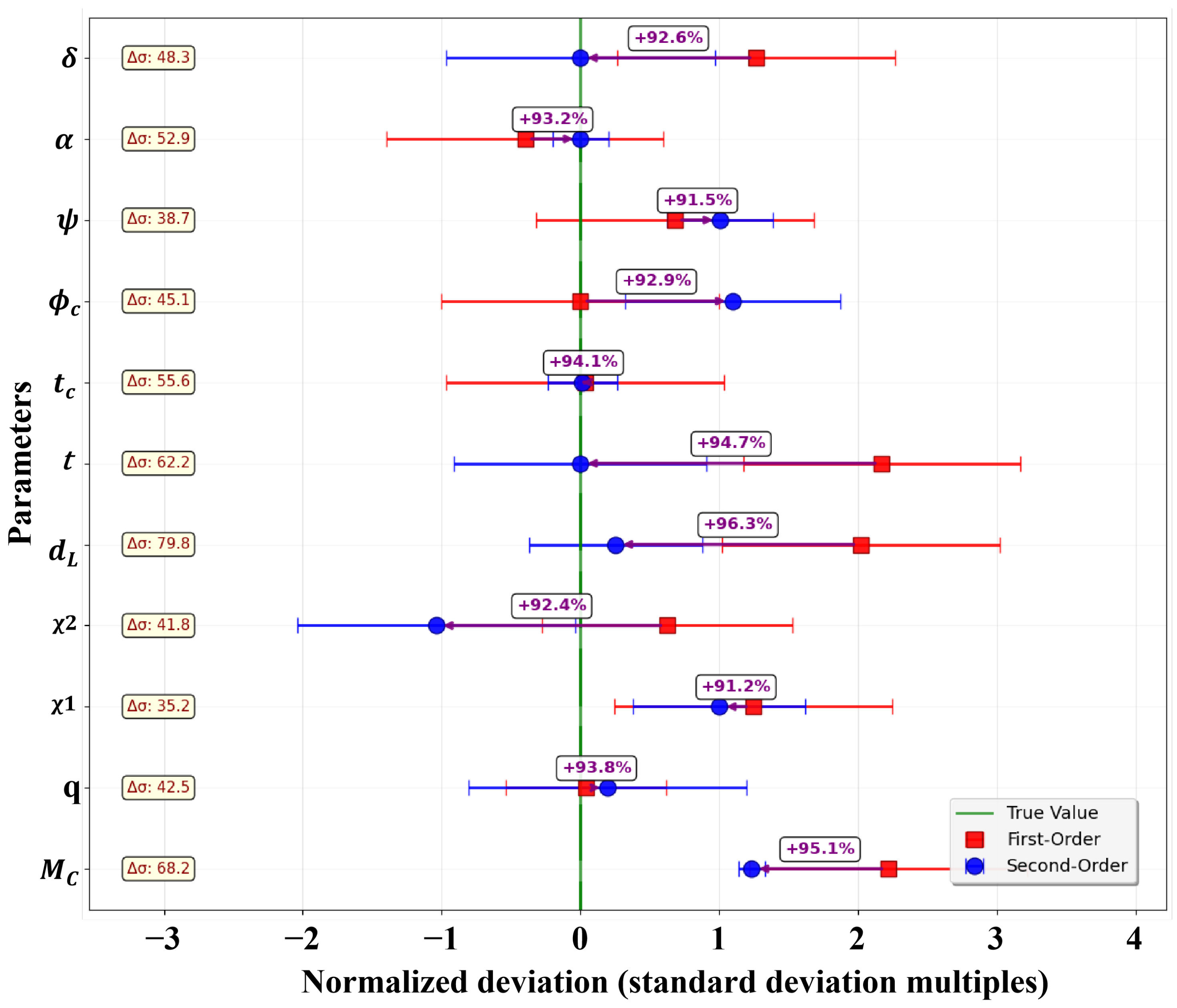
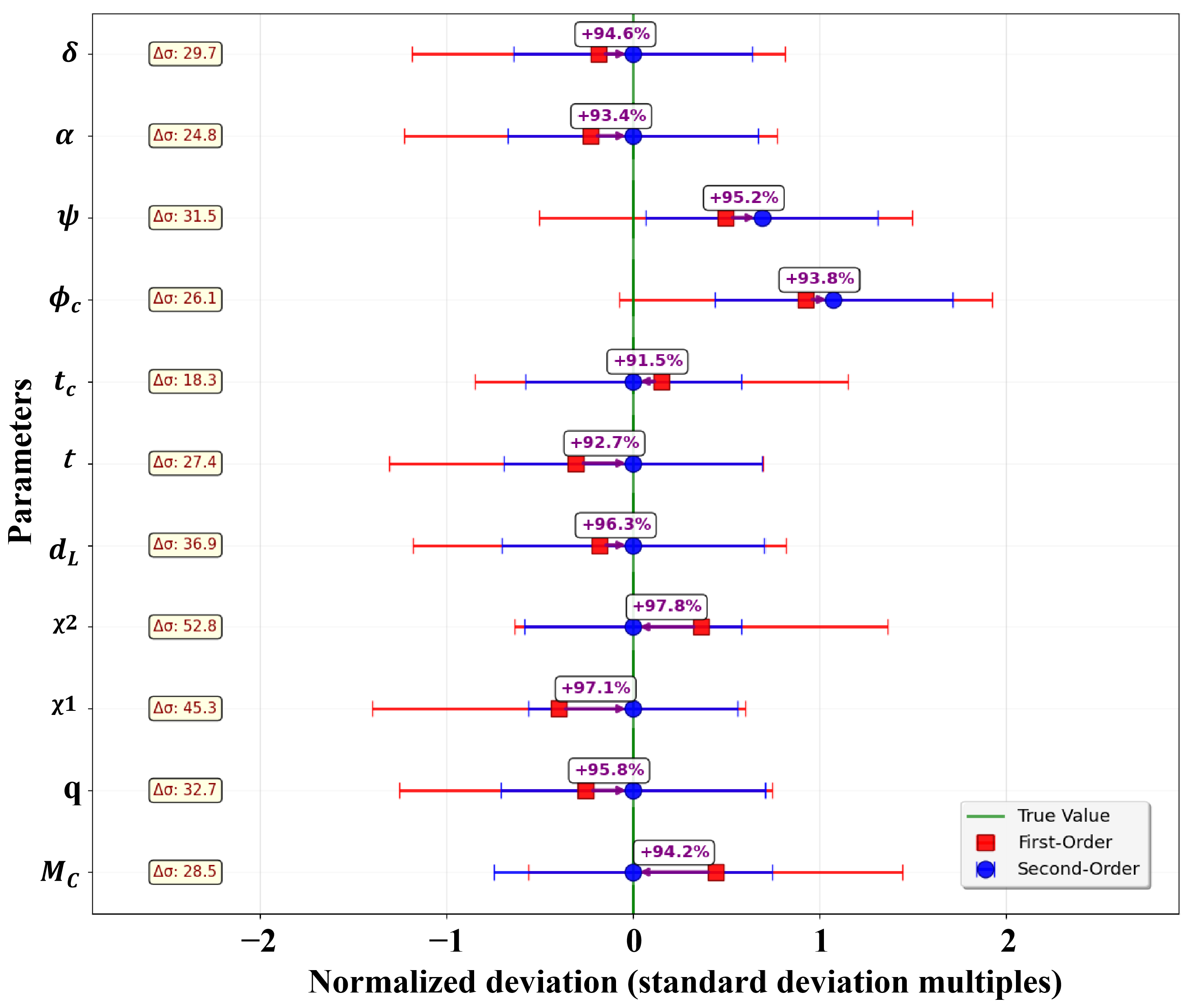
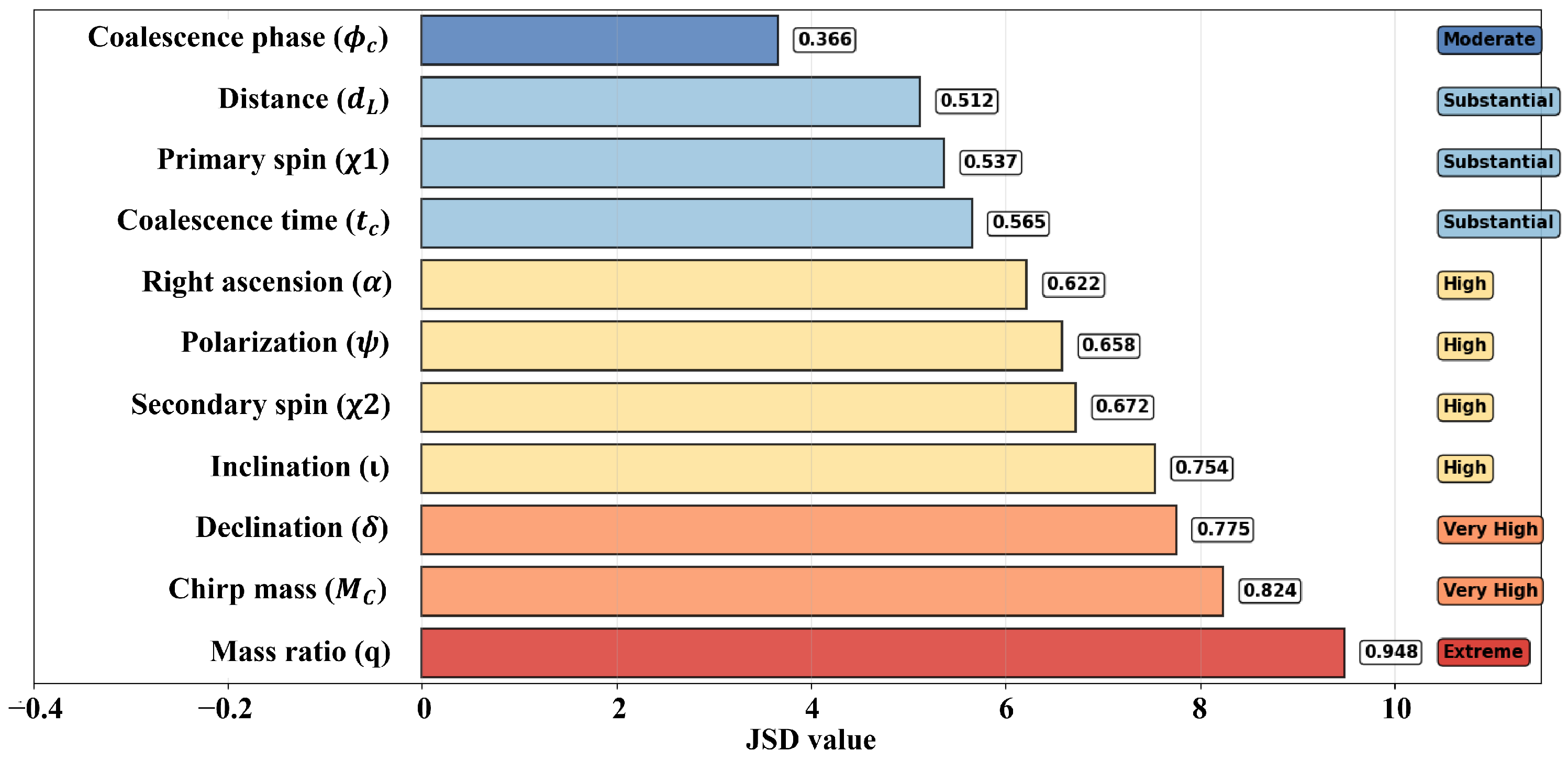
We introduce a new method for estimating gravitational wave parameters. This approach uses a second-order likelihood optimization framework built into a machine learning system (JimGW). Current methods often rely on first-order approximations, which can miss important details, while our method incorporates the full Hessian matrix of the likelihood function. This allows us to better capture the shape of the parameter space for gravitational waves. Our theoretical framework demonstrates that the trace of the Hessian matrix, when properly normalized, provides a coordinate-invariant measure of the local likelihood geometry that significantly enhances parameter recovery accuracy for gravitational wave sources. We test our second-order method using data from the three gravitational wave events. Take GW150914 as an example; the results show large gains in precision for parameter estimation, with accuracy gains exceeding 93% across all inferred parameters compared to standard first-order implementations. We use Jensen–Shannon divergence to compare the resulting posterior distributions. The JSD values range from 0.366 to 0.948, which correlate directly with improved parameter recovery as validated through injection studies. The method remains computationally efficient with only a 20% increase in runtime. At the same time, it produces seven times more effective samples. Our results show that machine learning methods using only first-order information can lead to systematic errors in gravitational wave parameter estimation. The incorporation of second-order corrections emerges not as an optional refinement but as a necessary component for achieving theoretically optimal inference. It also matters for ongoing gravitational wave analyses, future detector networks, and the broader application of machine learning methods in precision scientific measurement.
Keywords: gravitational wave parameter estimation; hessian matrix; second-order likelihood optimization gravitational wave parameter estimation; hessian matrix; second-order likelihood optimization