Article

Hybrid Entropy-Based Metrics for k-Hop Environment Analysis in Complex Networks

1
Faculty of Informatics, Eszterházy Károly Catholic University, 3300 Eger, Hungary
2
Faculty of Informatics, Eötvös Loránd University, 1117 Budapest, Hungary
Mathematics 2025, 13(17), 2902; https://doi.org/10.3390/math13172902
Submission received: 9 August 2025 / Revised: 29 August 2025 / Accepted: 5 September 2025 / Published: 8 September 2025
(This article belongs to the Special Issue Graph Theory and Applications, 3rd Edition)

Abstract

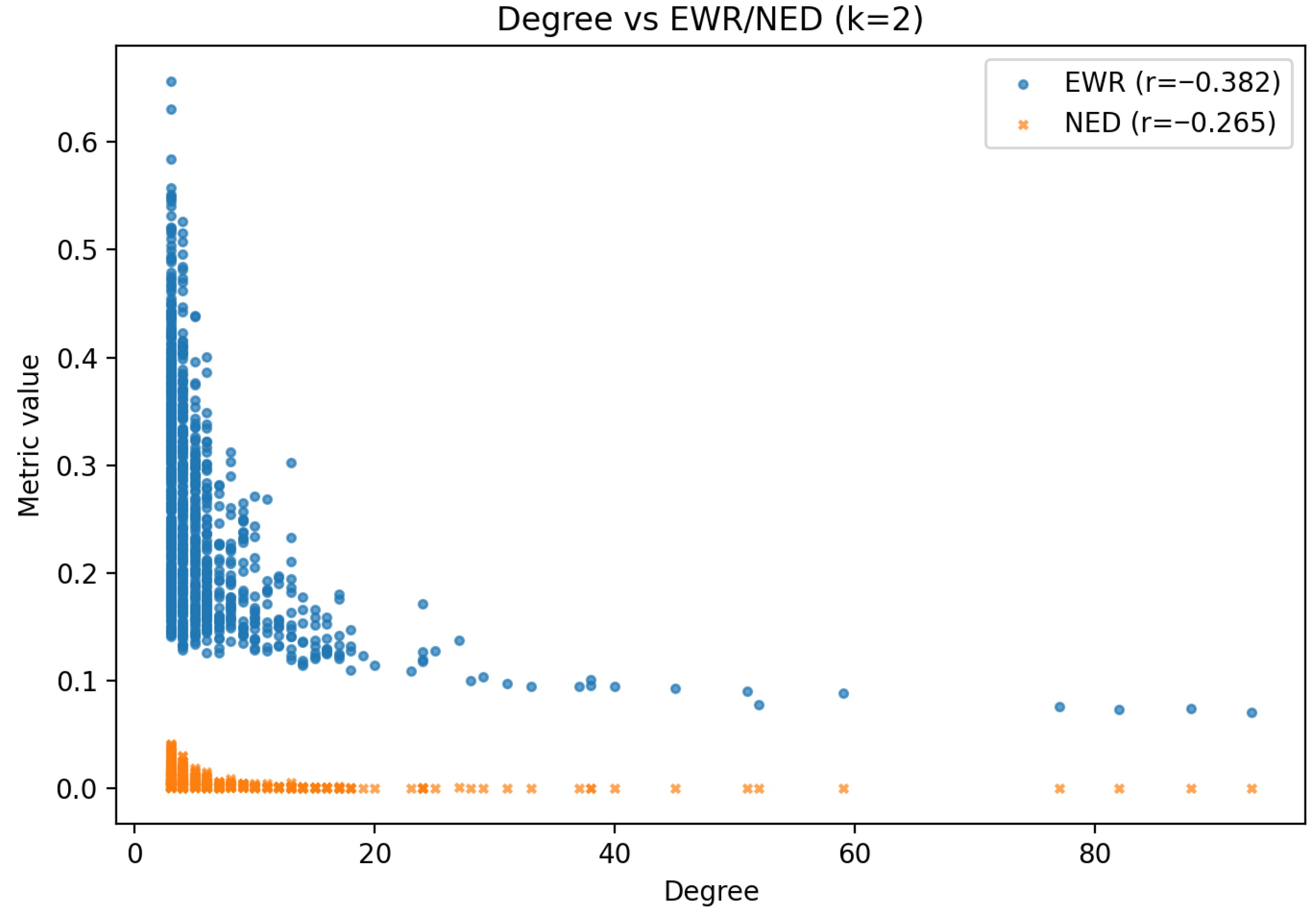
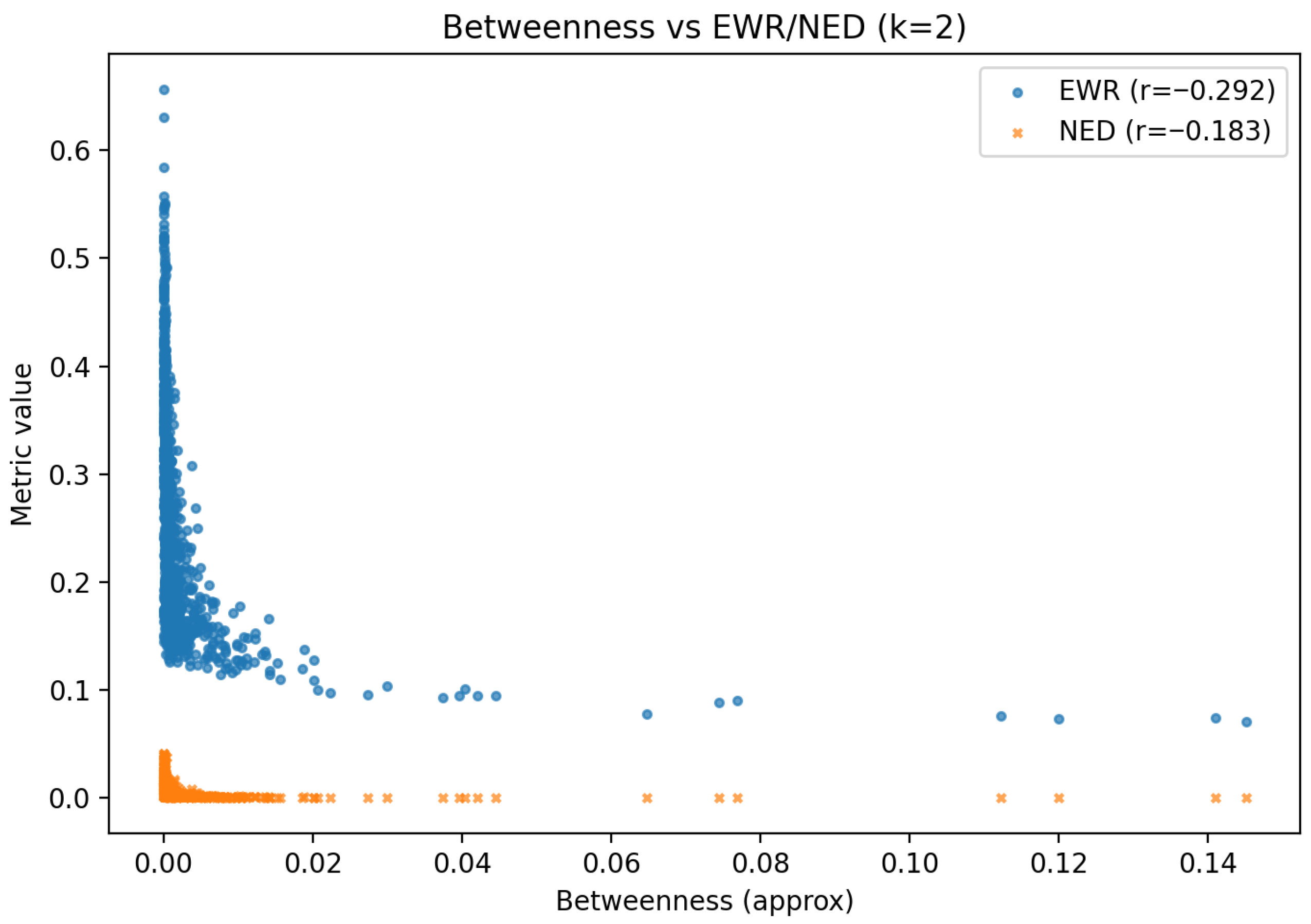
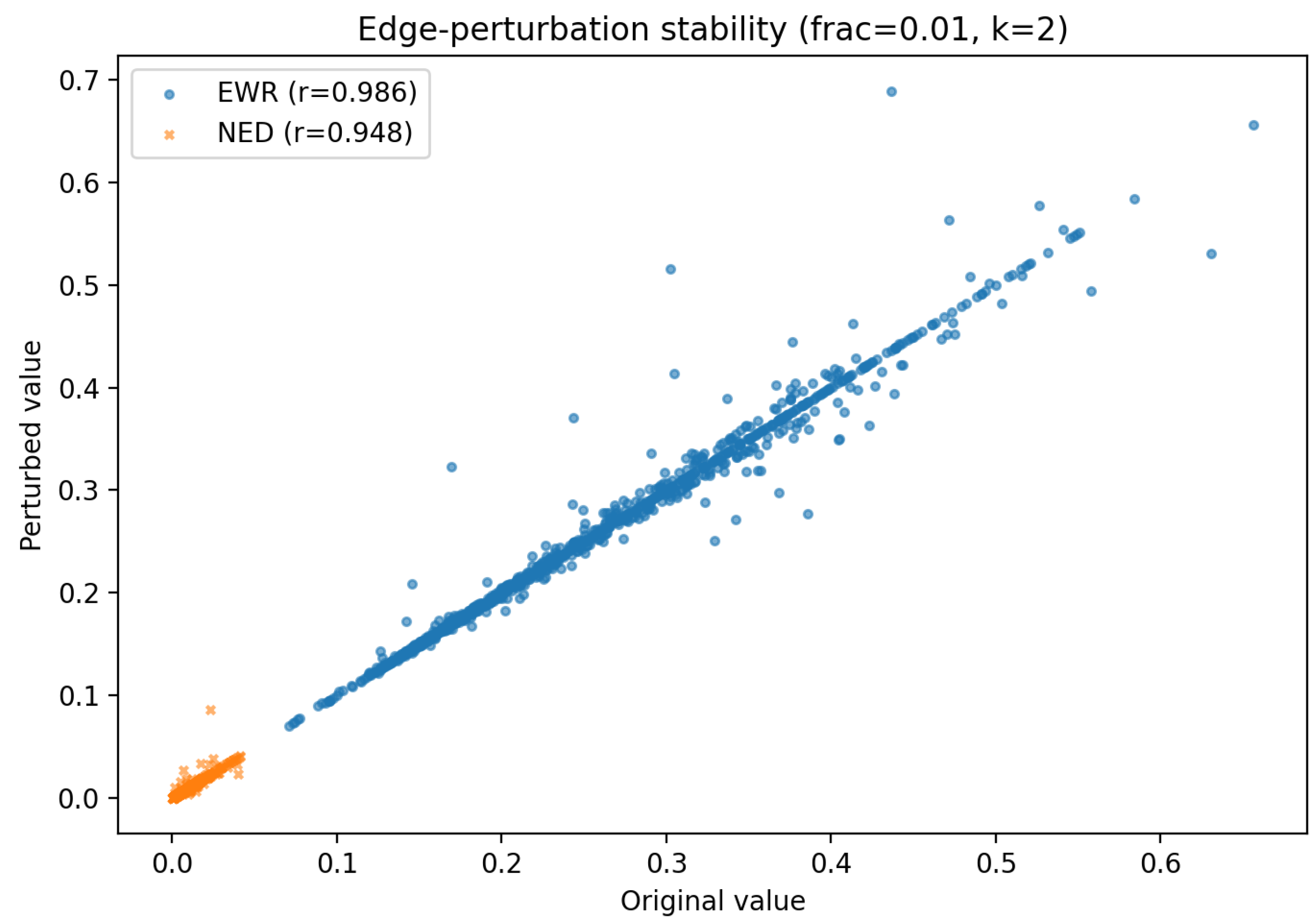
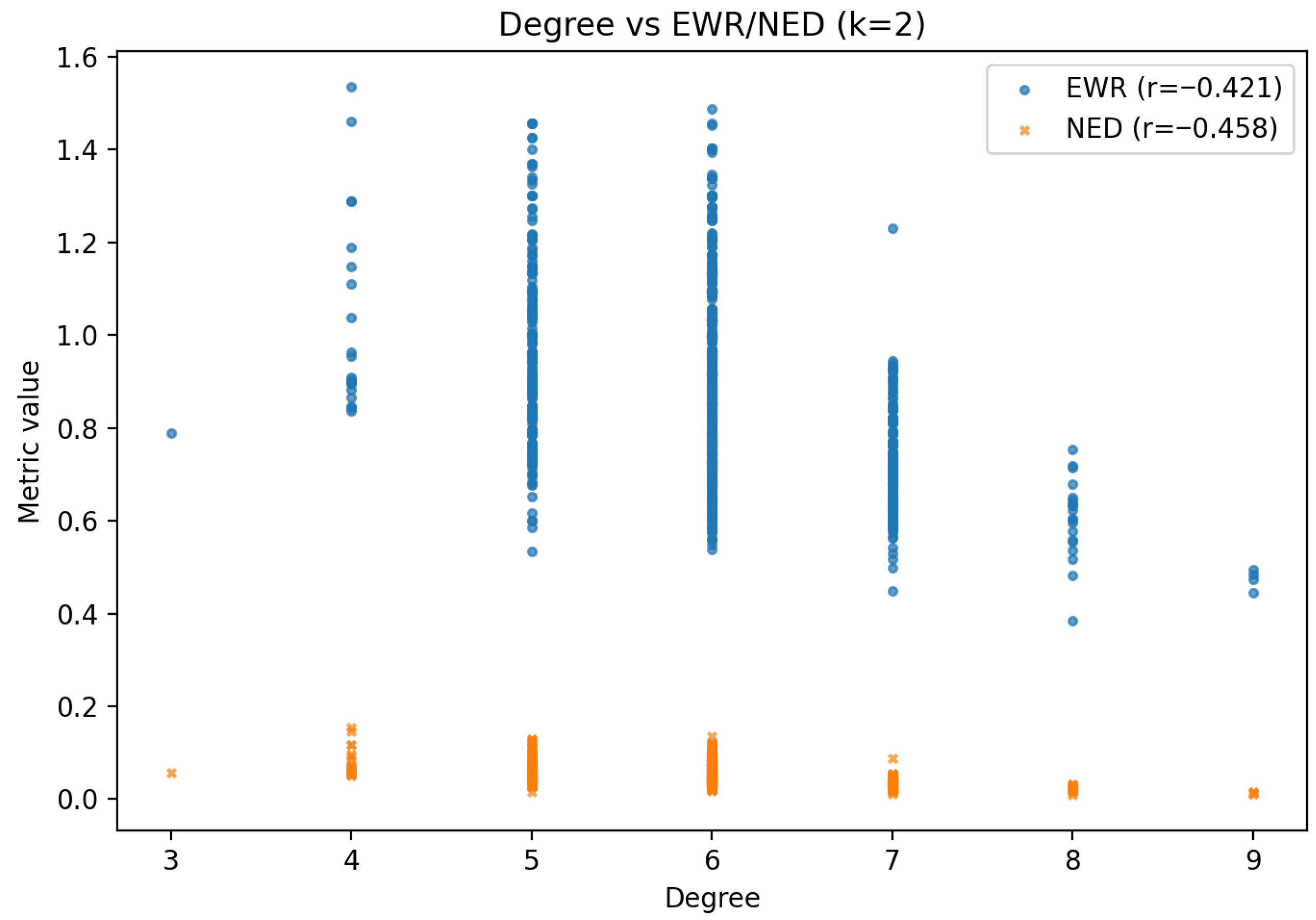
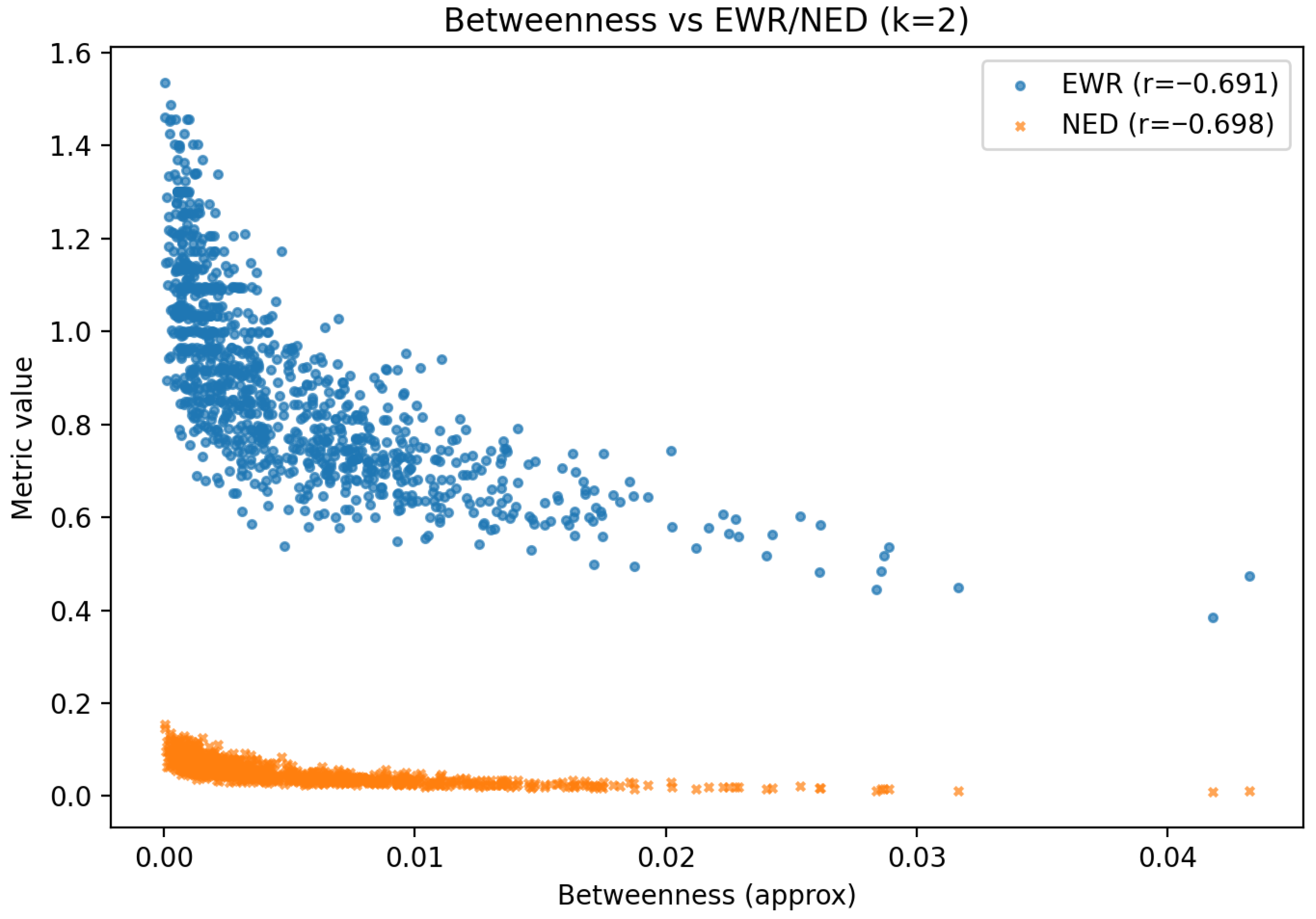
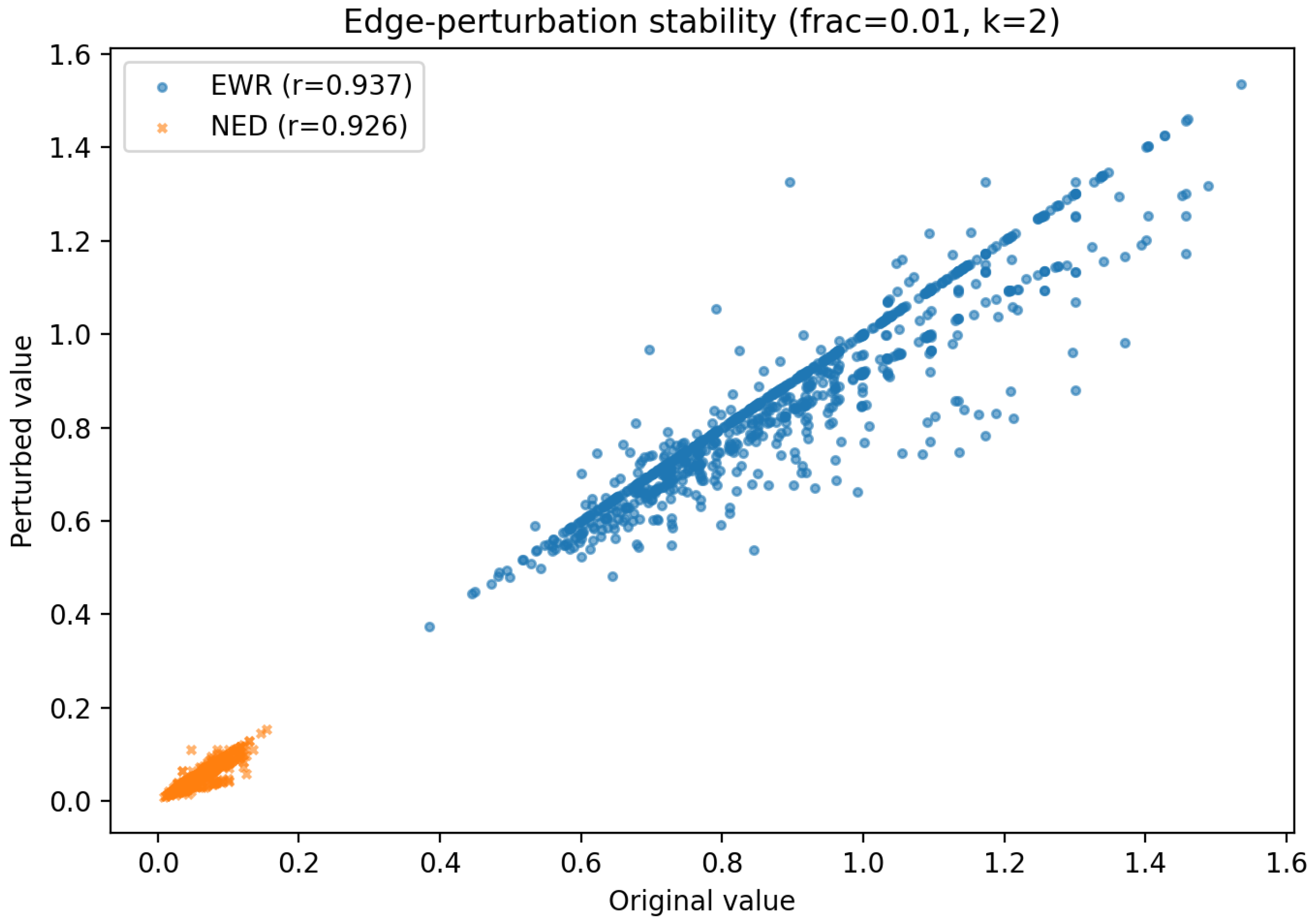
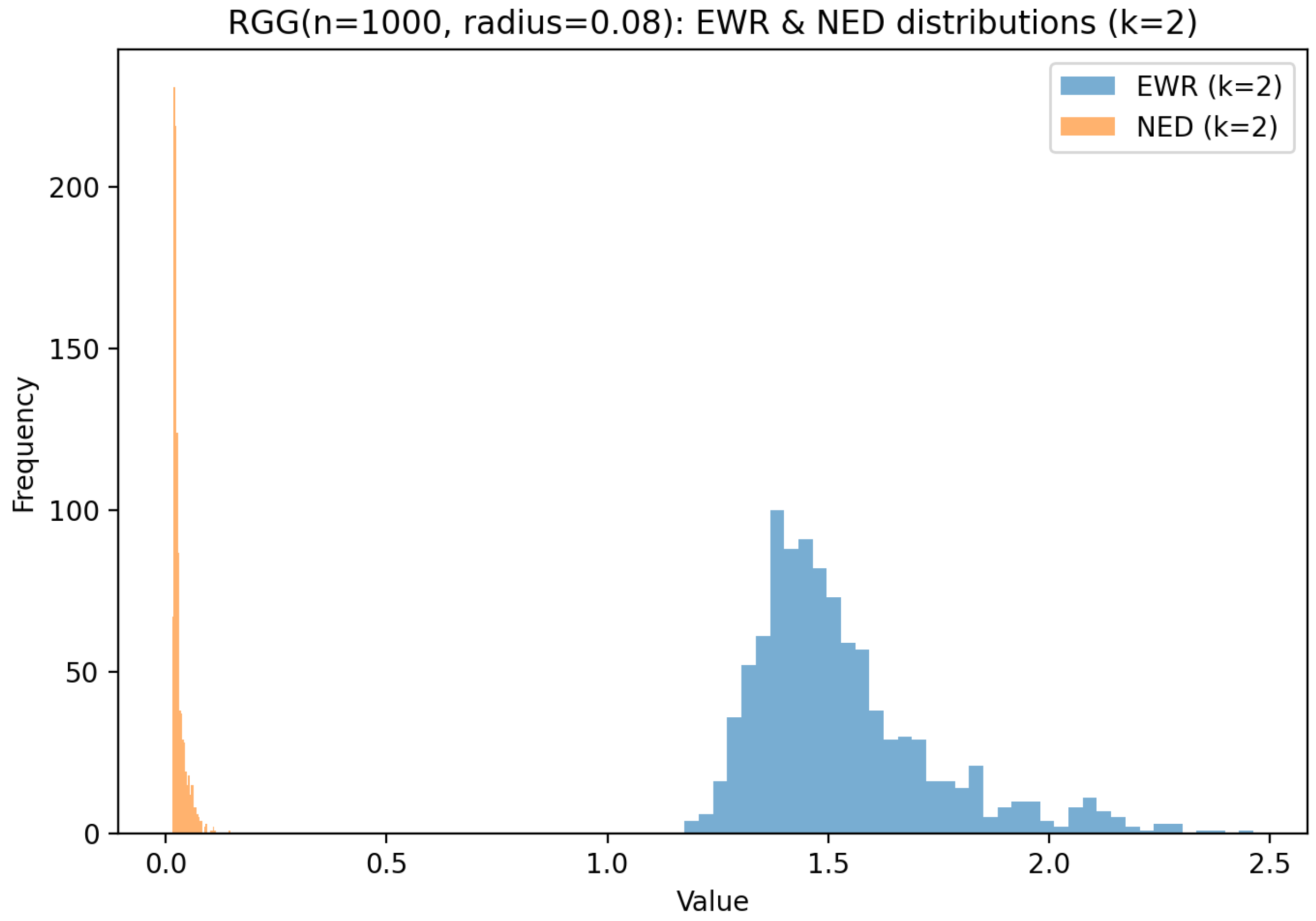
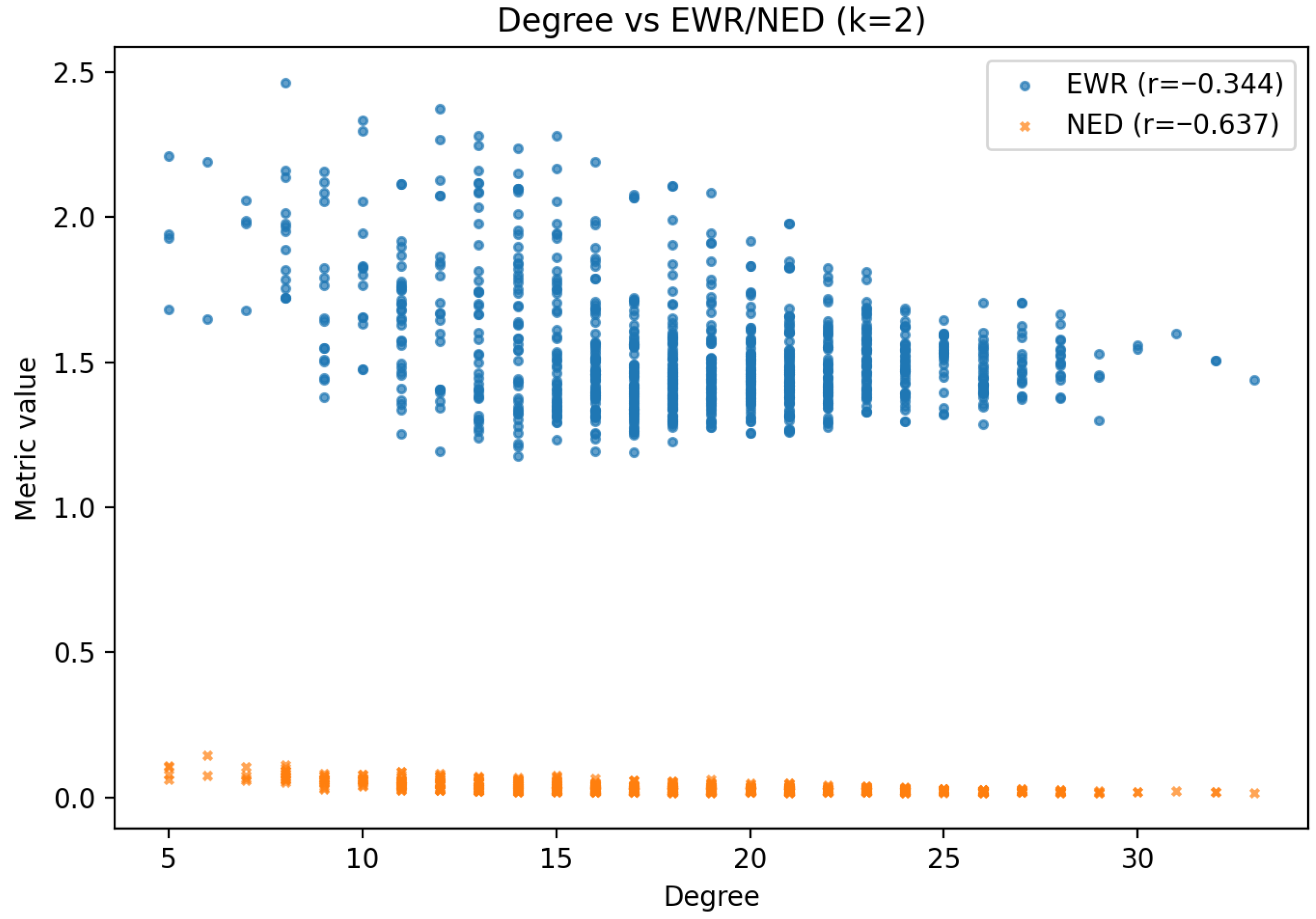
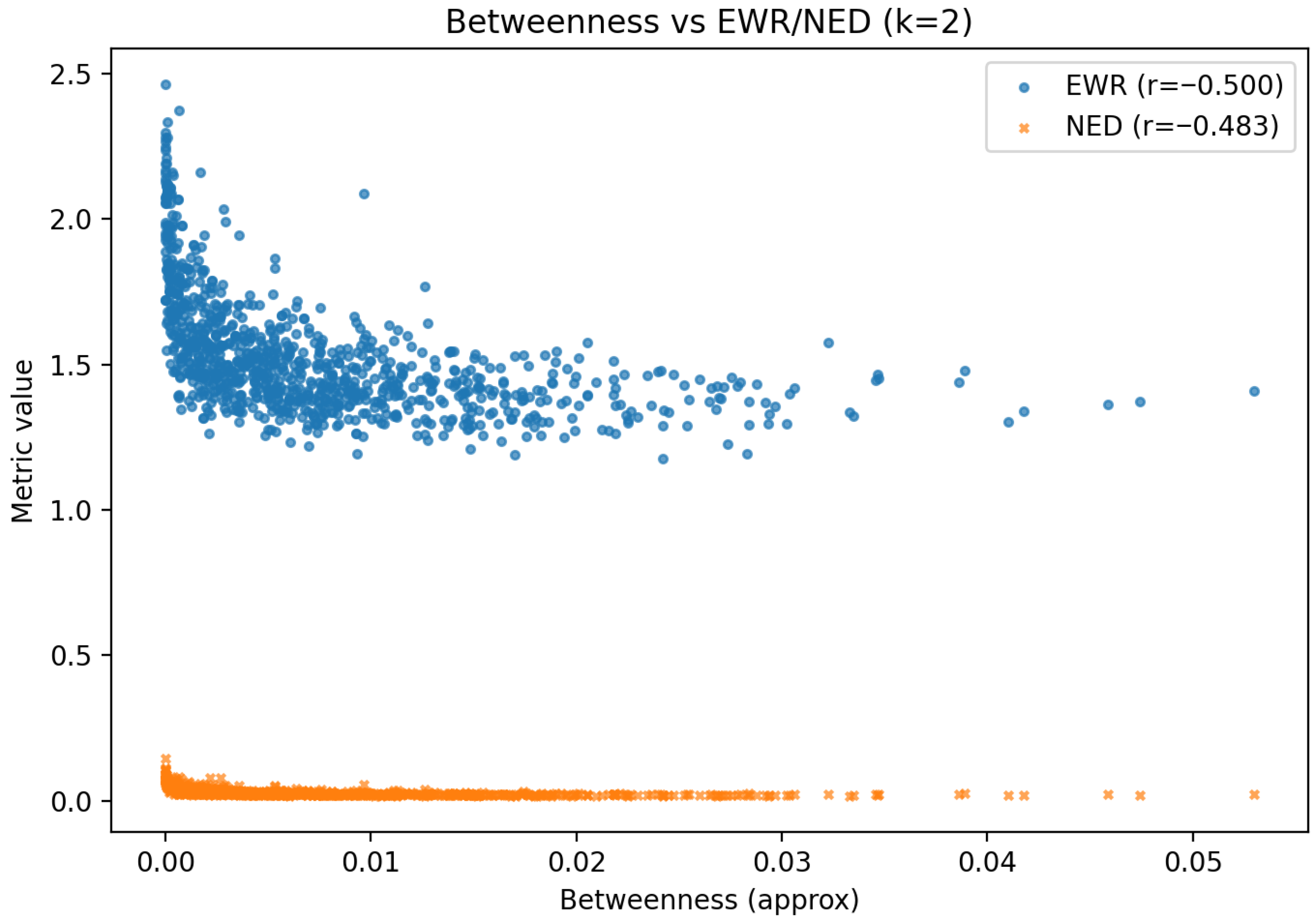
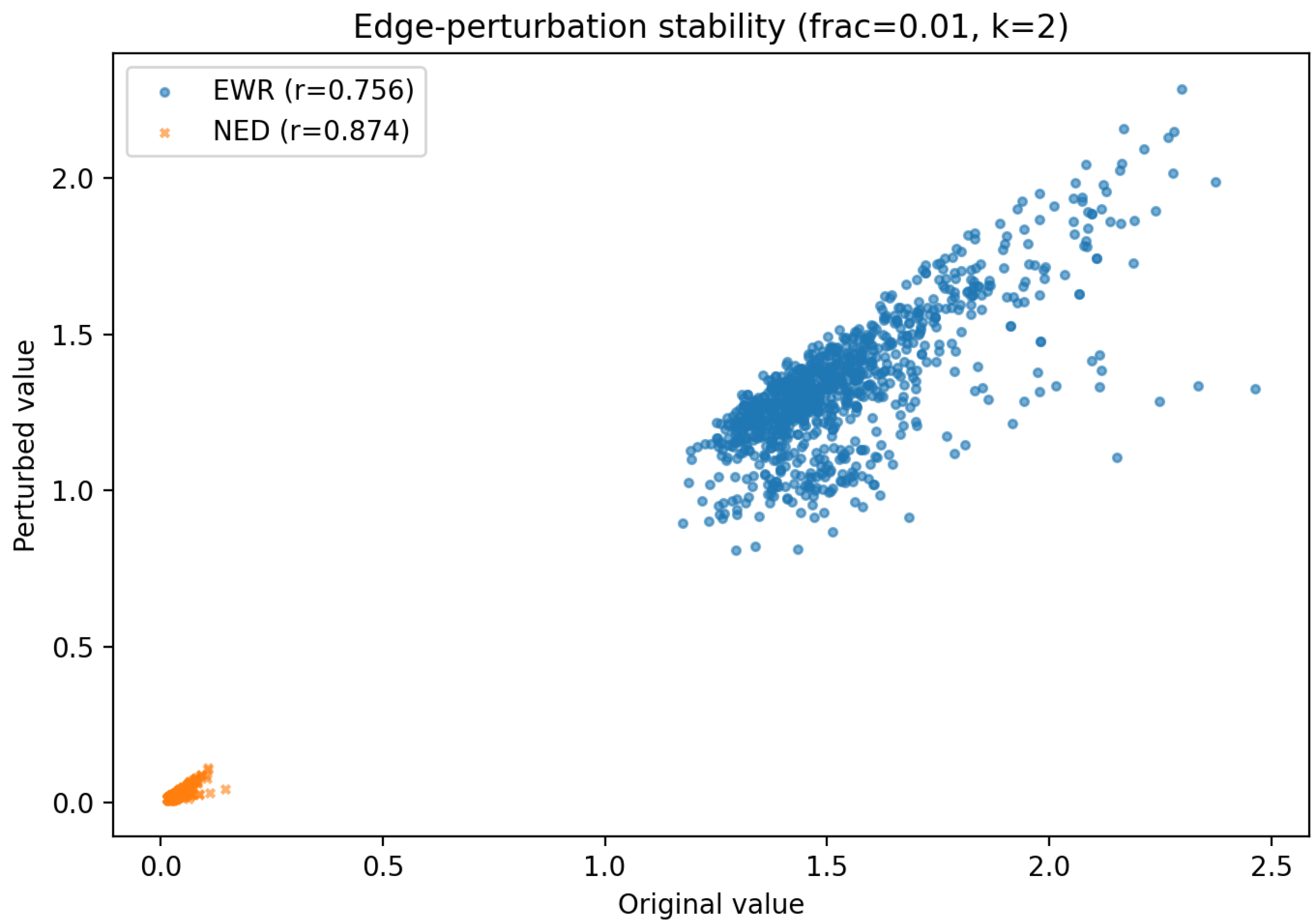
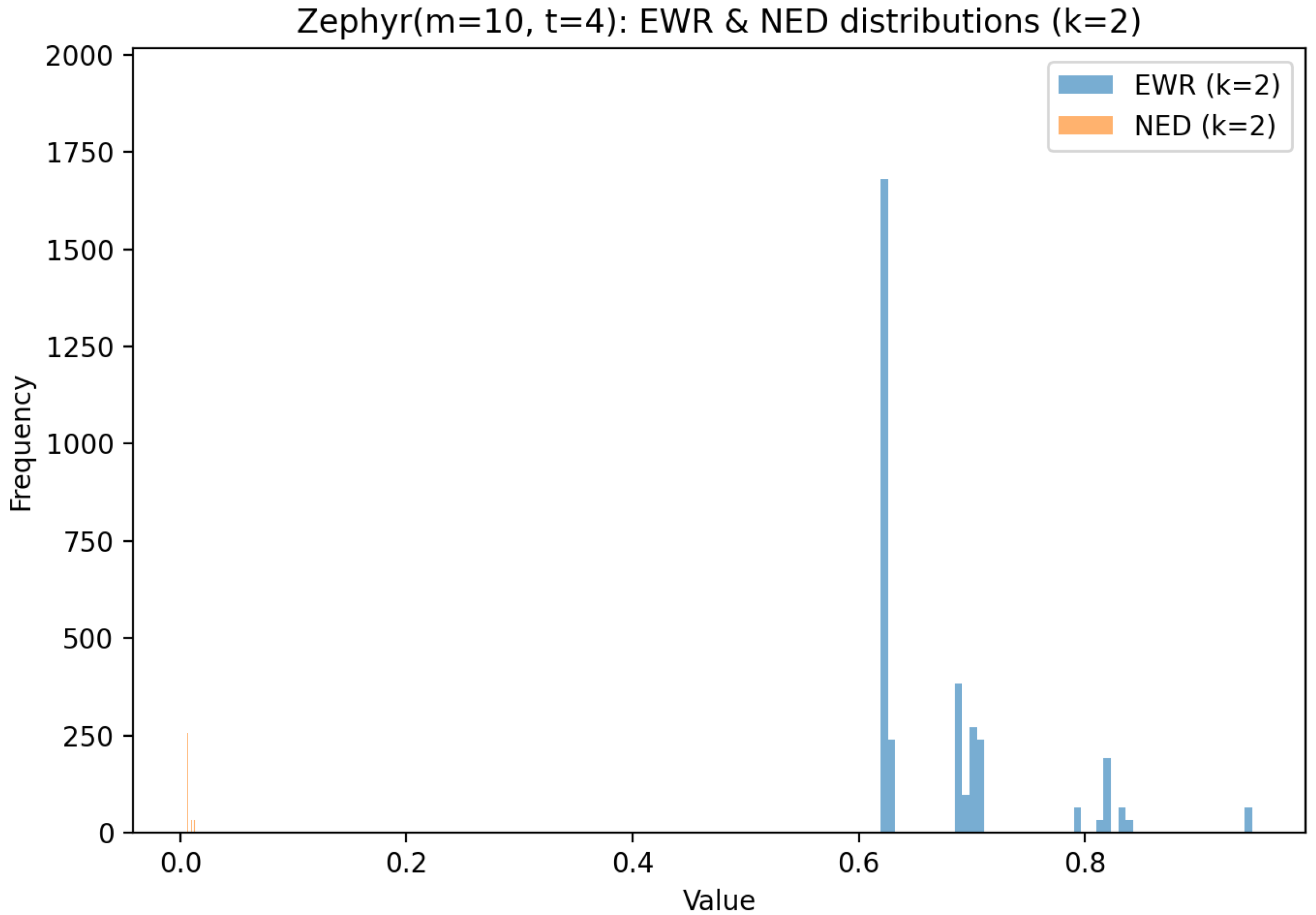
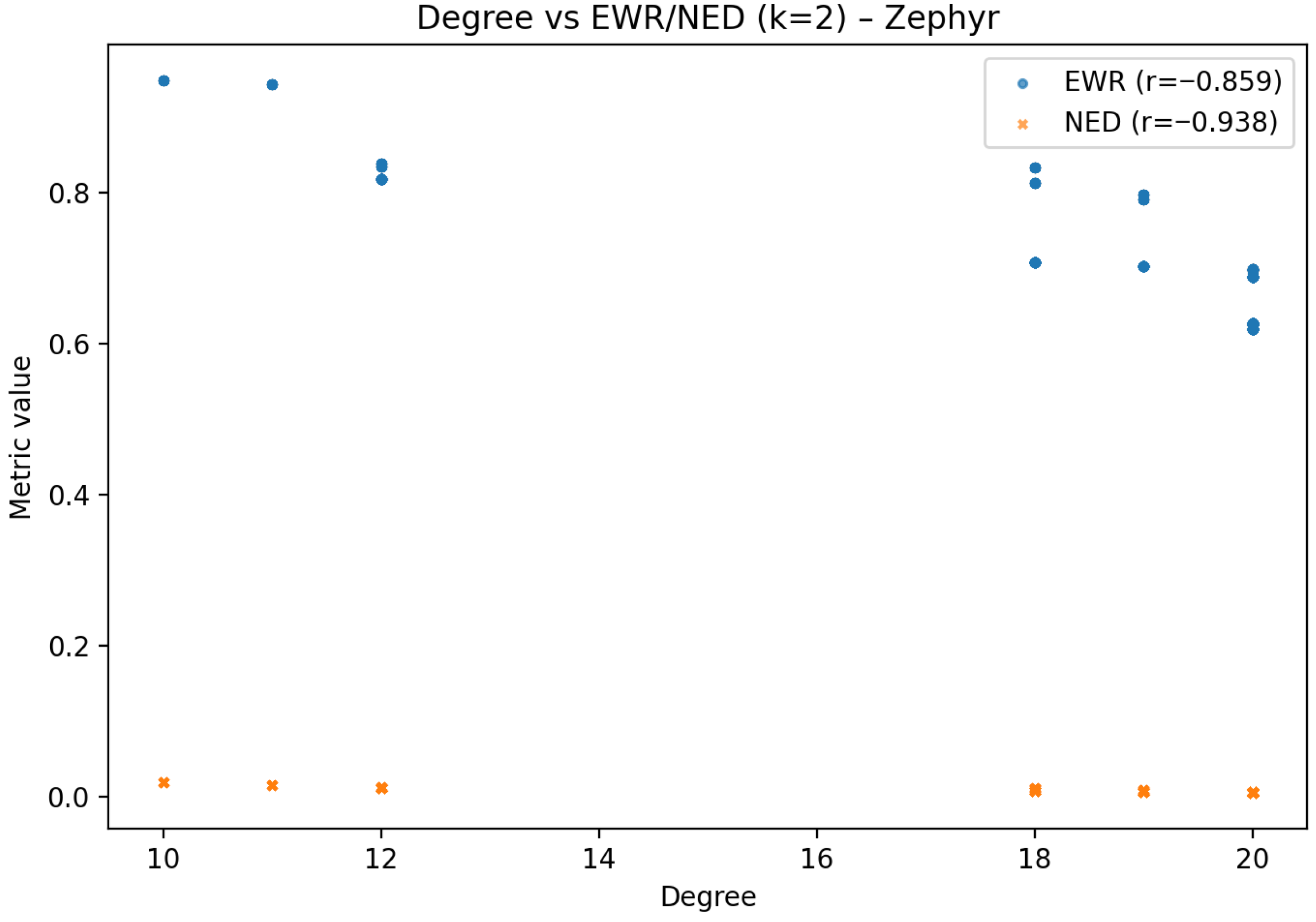
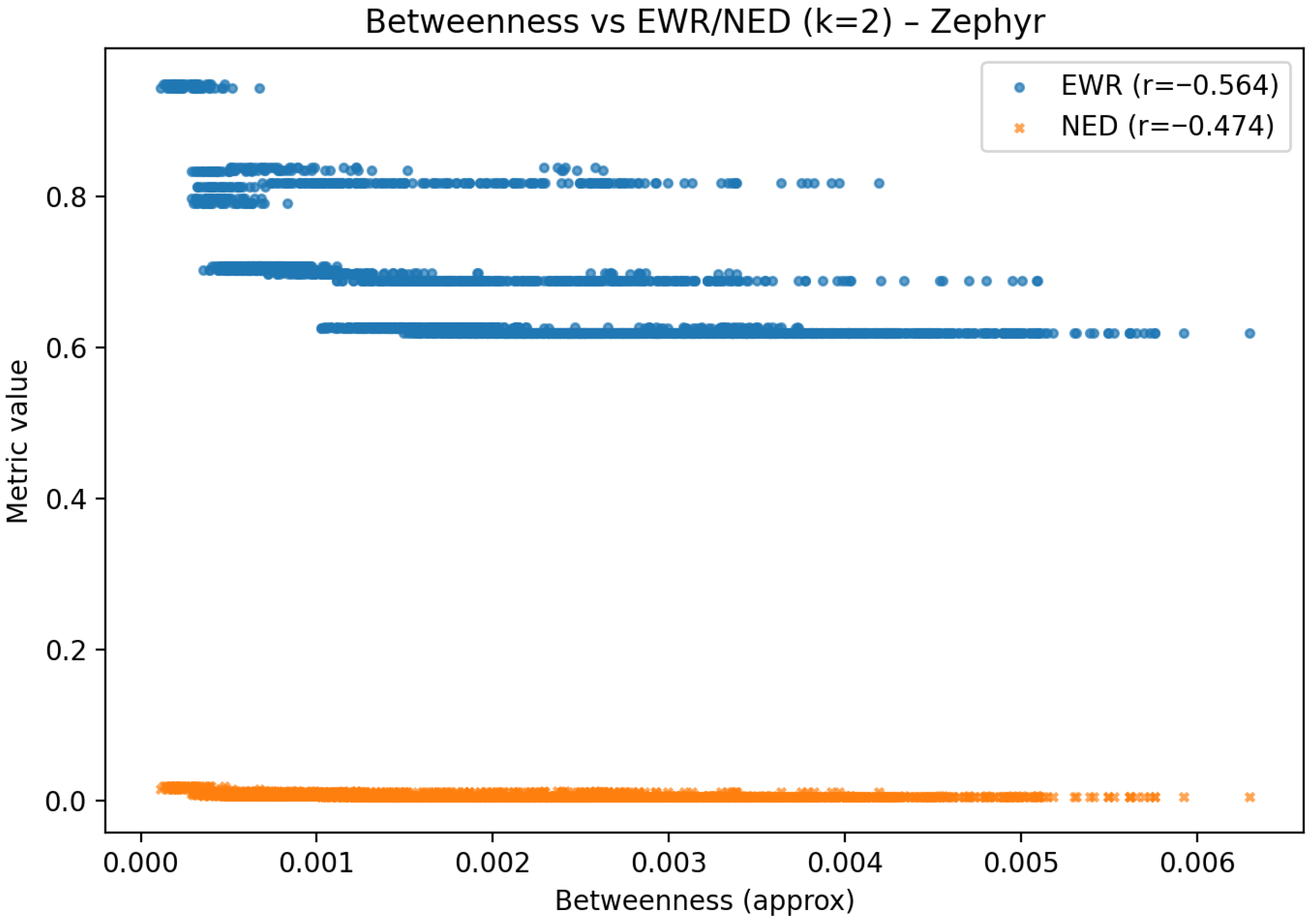
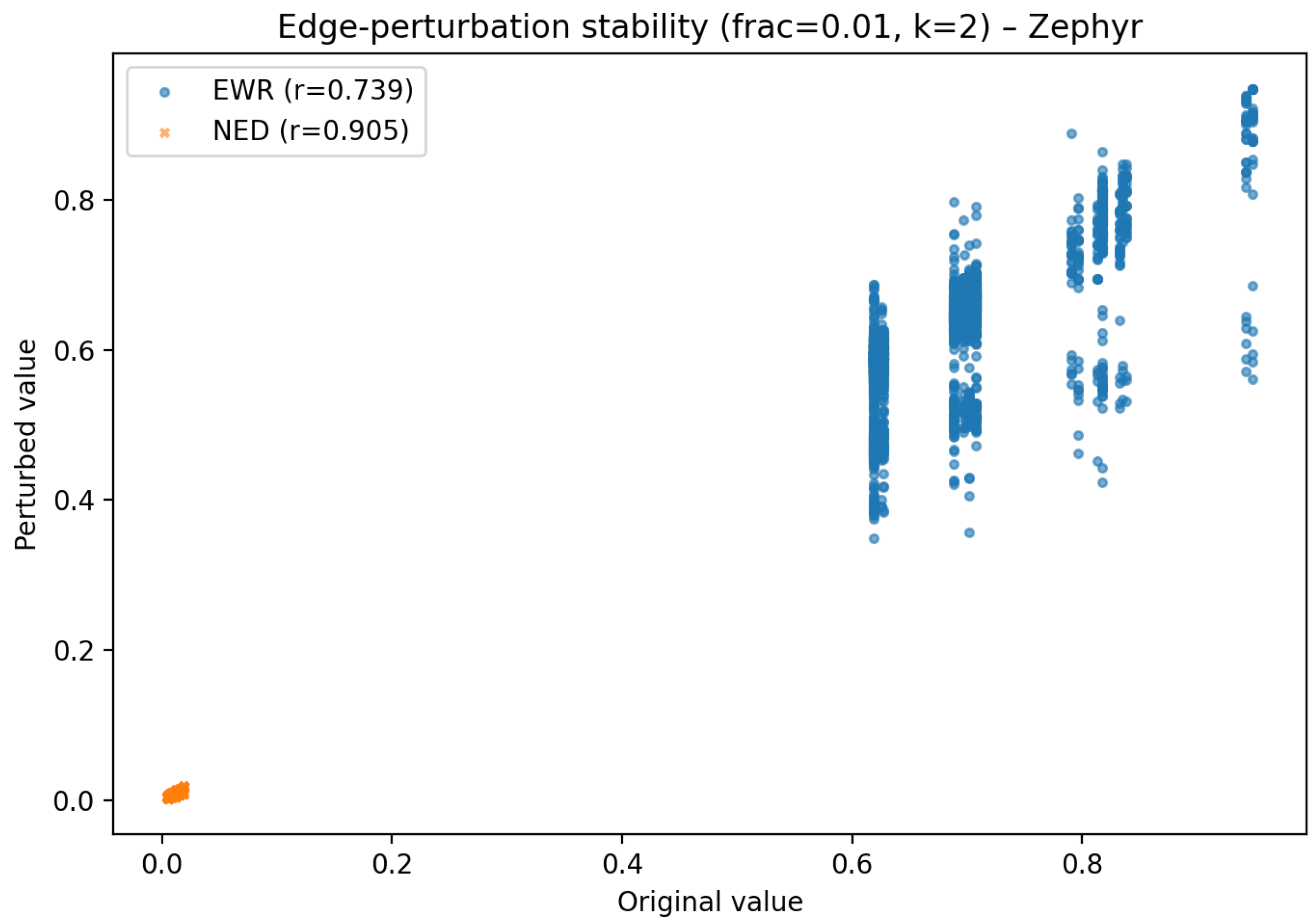
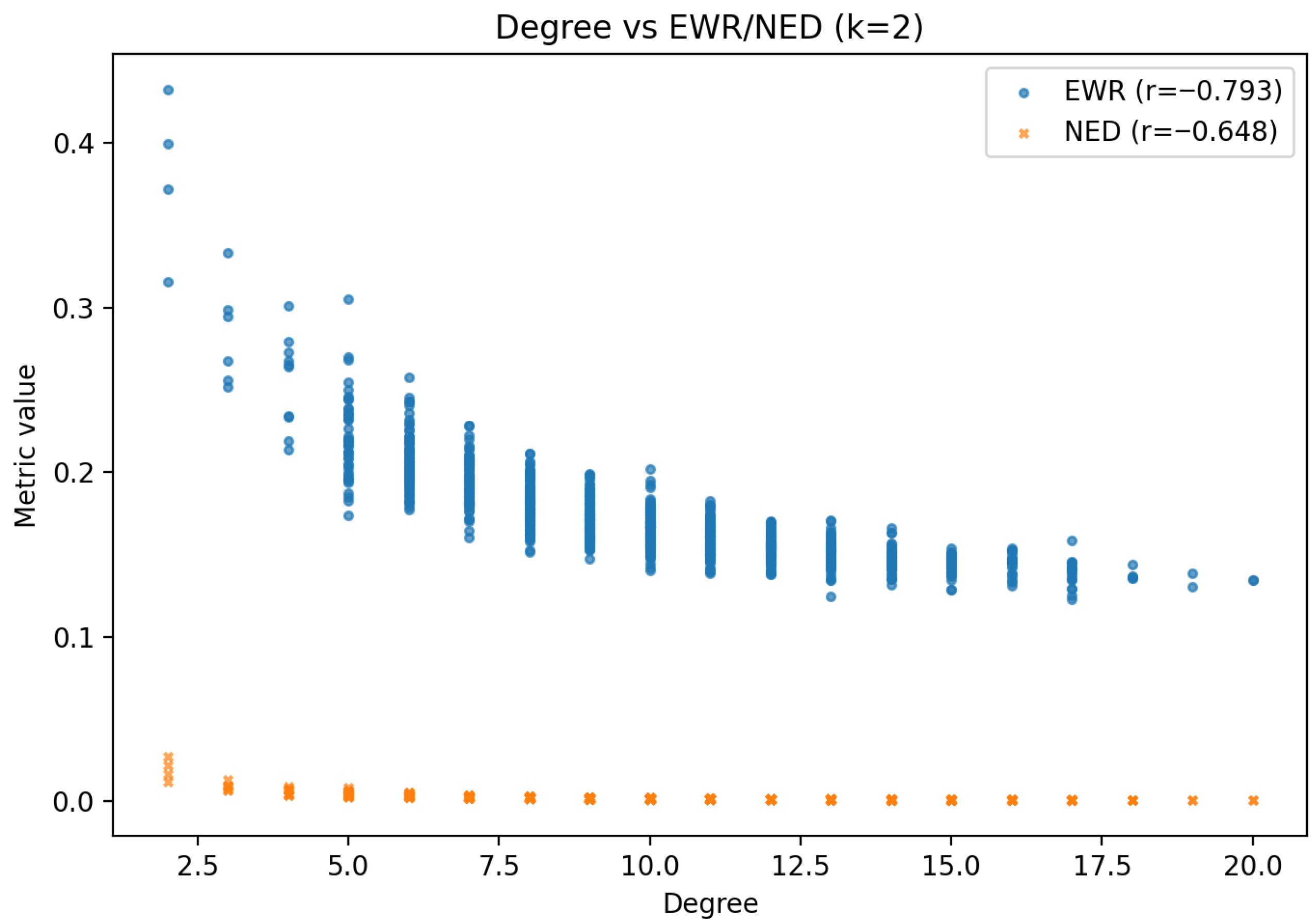
Two hybrid, entropy-guided node metrics are proposed for the k-hop environment: Entropy-Weighted Redundancy (EWR) and Normalized Entropy Density (NED). The central idea is to couple local Shannon entropy with neighborhood density/redundancy so that structural heterogeneity around a vertex is captured even when classical indices (e.g., degree or clustering) are similar. The metrics are formally defined and shown to be bounded, isomorphism-invariant, and stable under small edge edits. Their behavior is assessed on representative topologies (Erdős–Rényi, Barabási–Albert, Watts–Strogatz, random geometric graphs, and the Zephyr quantum architecture). Across these settings, EWR and NED display predominantly negative correlation with degree and provide information largely orthogonal to standard centralities; vertices with identical degree can differ by factors of two to three in the proposed scores, revealing bridges and heterogeneous regions. These properties indicate utility for vulnerability assessment, topology-aware optimization, and layout heuristics in engineered and quantum networks.
Keywords: graph theory; complex networks; entropy; k-hop neighborhood; structural heterogeneity; network metrics; redundancy; density; bridge detection; extremal graph theory graph theory; complex networks; entropy; k-hop neighborhood; structural heterogeneity; network metrics; redundancy; density; bridge detection; extremal graph theory