Article

Contextual Peano Scan and Fast Image Segmentation Using Hidden and Evidential Markov Chains †

by
Clément Fernandes
1,2 and
Wojciech Pieczynski
2,*
1
Department Automobiles, Segula Matra Automotive, Zone d’Activité Pissaloup, 8 Av. Jean d’Alembert, 78190 Trappes, France
2
SAMOVAR, Télécom SudParis, Institut Polytechnique de Paris, 91120 Palaiseau, France
*
Author to whom correspondence should be addressed.
This paper is an extended version of our paper published in 2021 in Proceeding of the IEEE 29th European Signal Processing Conference (EUSIPCO), Dublin, Ireland, 23–27 August 2021; pp. 626–630.
Mathematics 2025, 13(10), 1589; https://doi.org/10.3390/math13101589
Submission received: 30 March 2025 / Revised: 2 May 2025 / Accepted: 9 May 2025 / Published: 12 May 2025
(This article belongs to the Special Issue Bayesian Statistics and Causal Inference)

Abstract

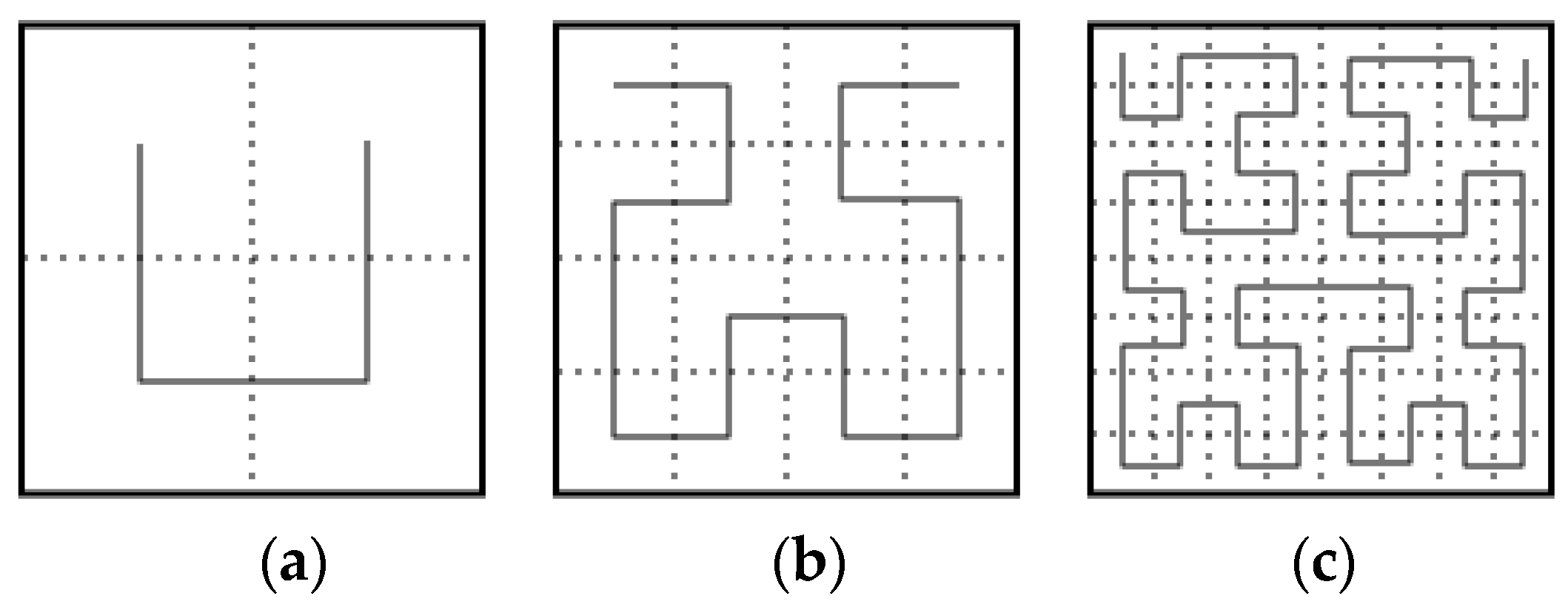
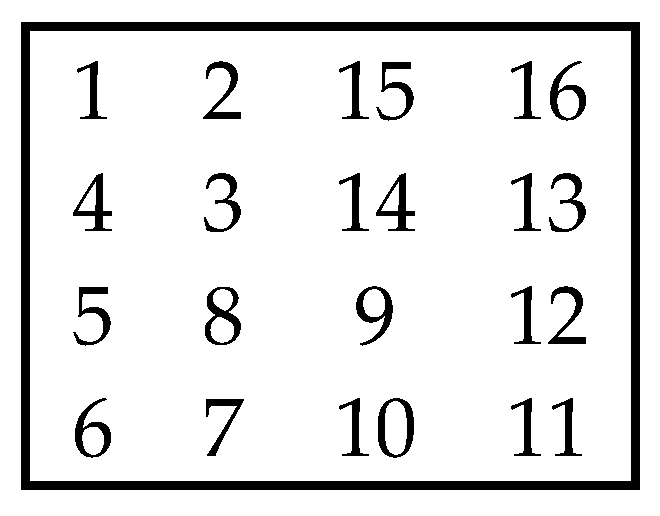
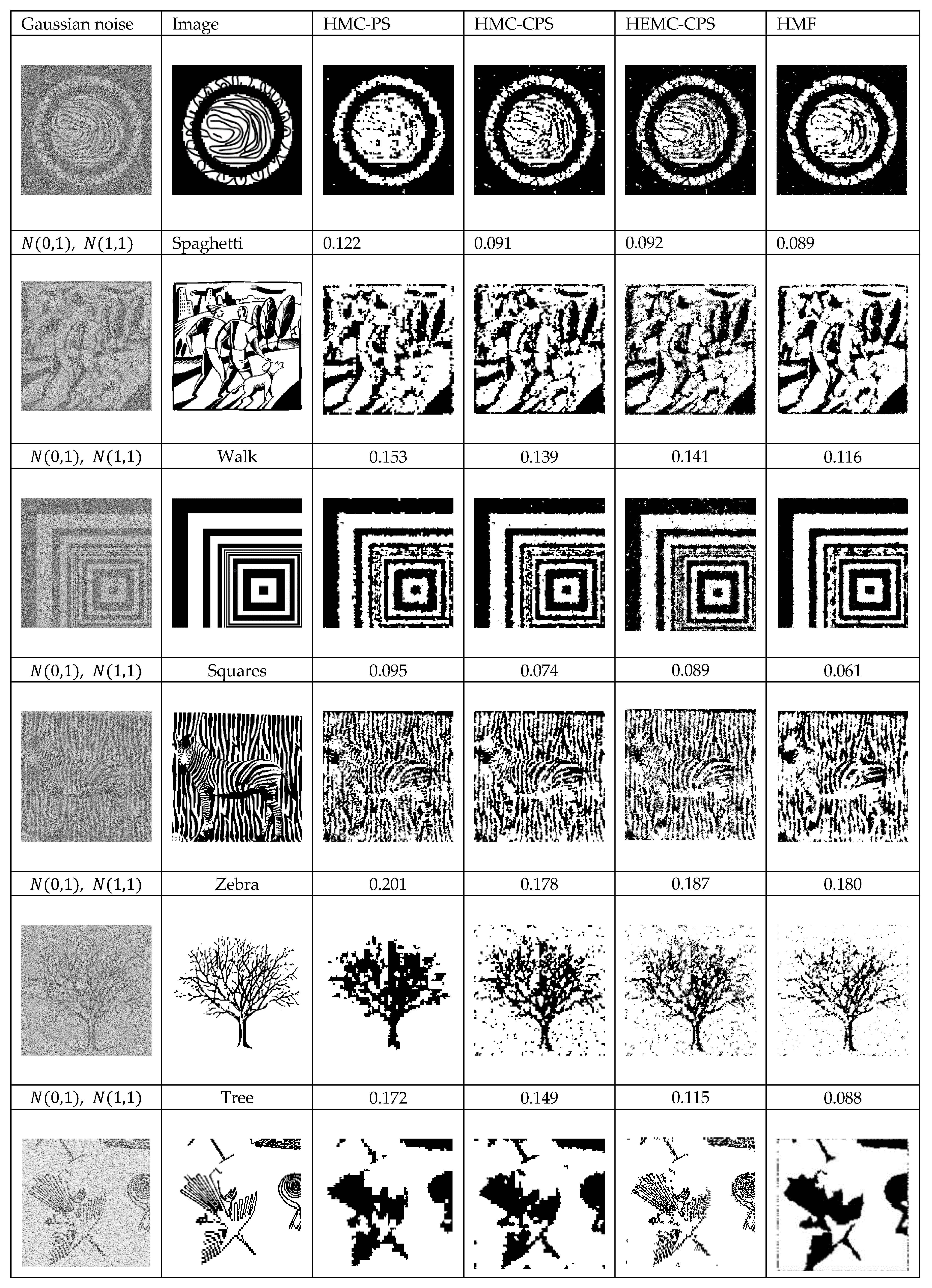
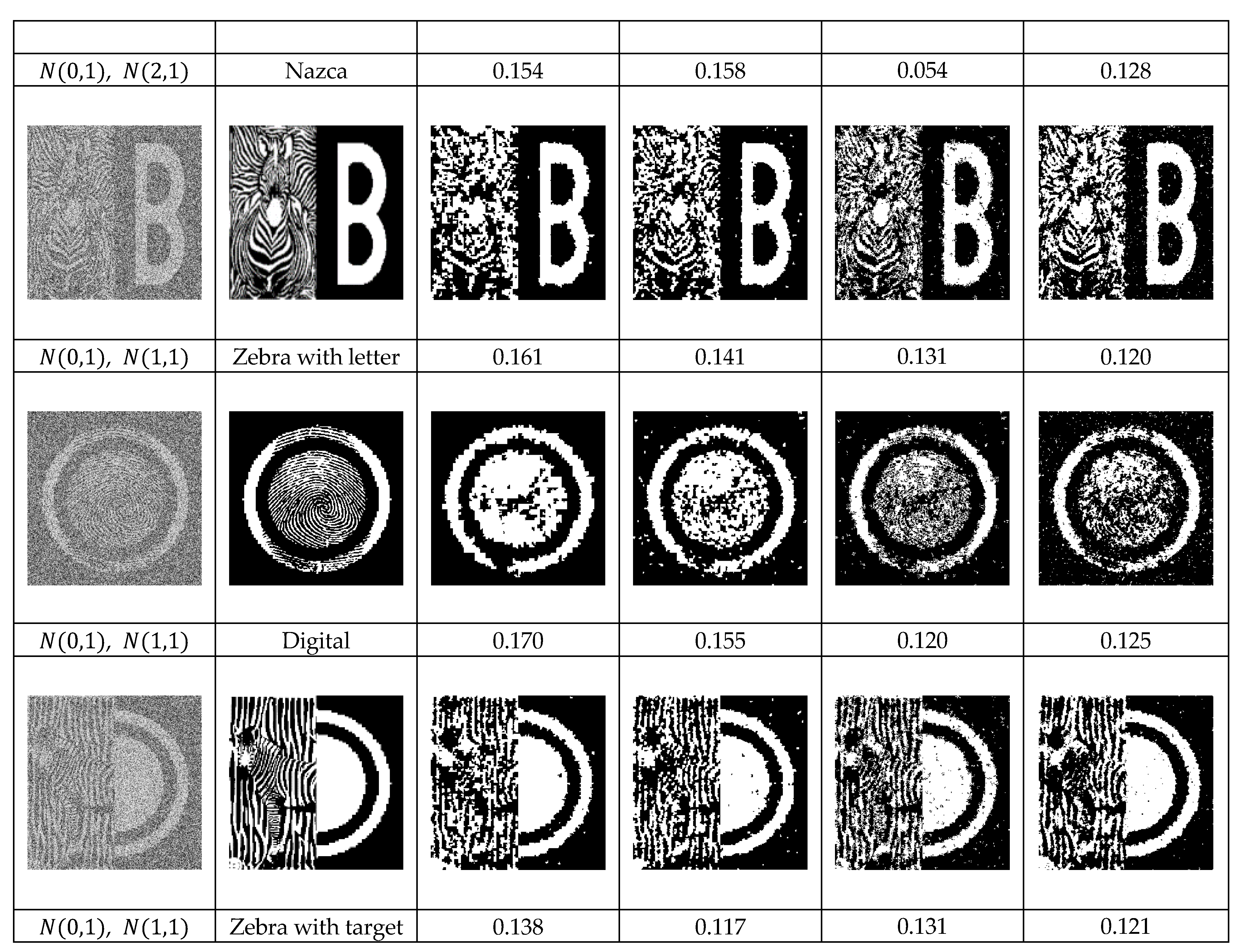
Transforming bi-dimensional sets of image pixels into mono-dimensional sequences with a Peano scan (PS) is an established technique enabling the use of hidden Markov chains (HMCs) for unsupervised image segmentation. Related Bayesian segmentation methods can compete with hidden Markov fields (HMFs)-based ones and are much faster. PS has recently been extended to the contextual PS, and some initial experiments have shown the value of the associated HMC model, denoted as HMC-CPS, in image segmentation. Moreover, HMCs have been extended to hidden evidential Markov chains (HEMCs), which are capable of improving HMC-based Bayesian segmentation. In this study, we introduce a new HEMC-CPS model by simultaneously considering contextual PS and evidential HMC. We show its effectiveness for Bayesian maximum posterior mode (MPM) segmentation using synthetic and real images. Segmentation is performed in an unsupervised manner, with parameters being estimated using the stochastic expectation–maximization (SEM) method. The new HEMC-CPS model presents potential for the modeling and segmentation of more complex images, such as three-dimensional or multi-sensor multi-resolution images. Finally, the HMC-CPS and HEMC-CPS models are not limited to image segmentation and could be used for any kind of spatially correlated data.
Keywords: hidden Markov chains; evidential Markov chains; contextual Peano scan; stochastic expectation–maximization; unsupervised image segmentation hidden Markov chains; evidential Markov chains; contextual Peano scan; stochastic expectation–maximization; unsupervised image segmentation