Article

Design of Optimal Intervention Based on a Generative Structural Causal Model

College of Systems Engineering, National University of Defense Technology, Changsha 410003, China
*
Author to whom correspondence should be addressed.
Mathematics 2024, 12(20), 3172; https://doi.org/10.3390/math12203172
Submission received: 5 September 2024 / Revised: 26 September 2024 / Accepted: 8 October 2024 / Published: 10 October 2024

Abstract

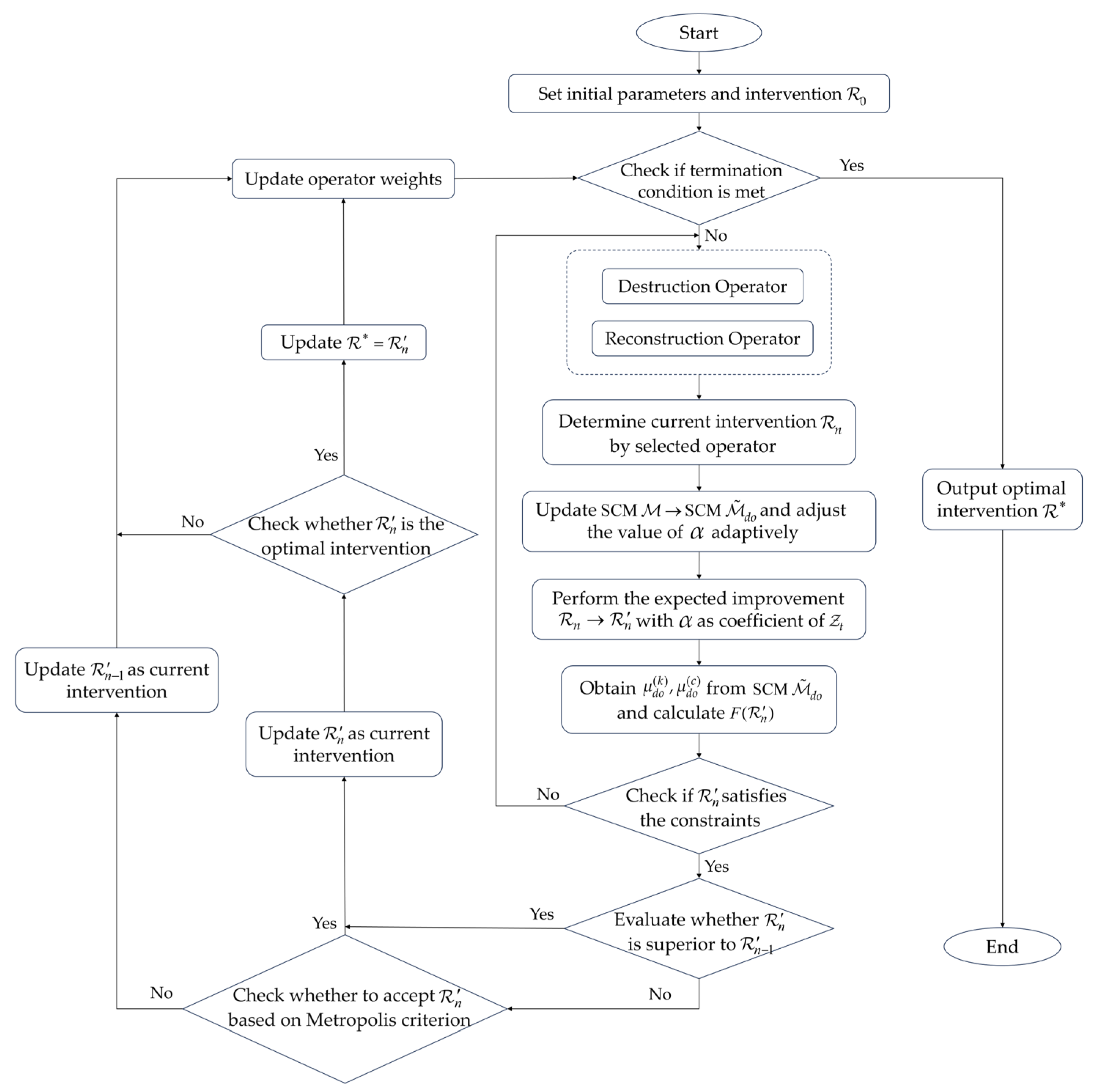
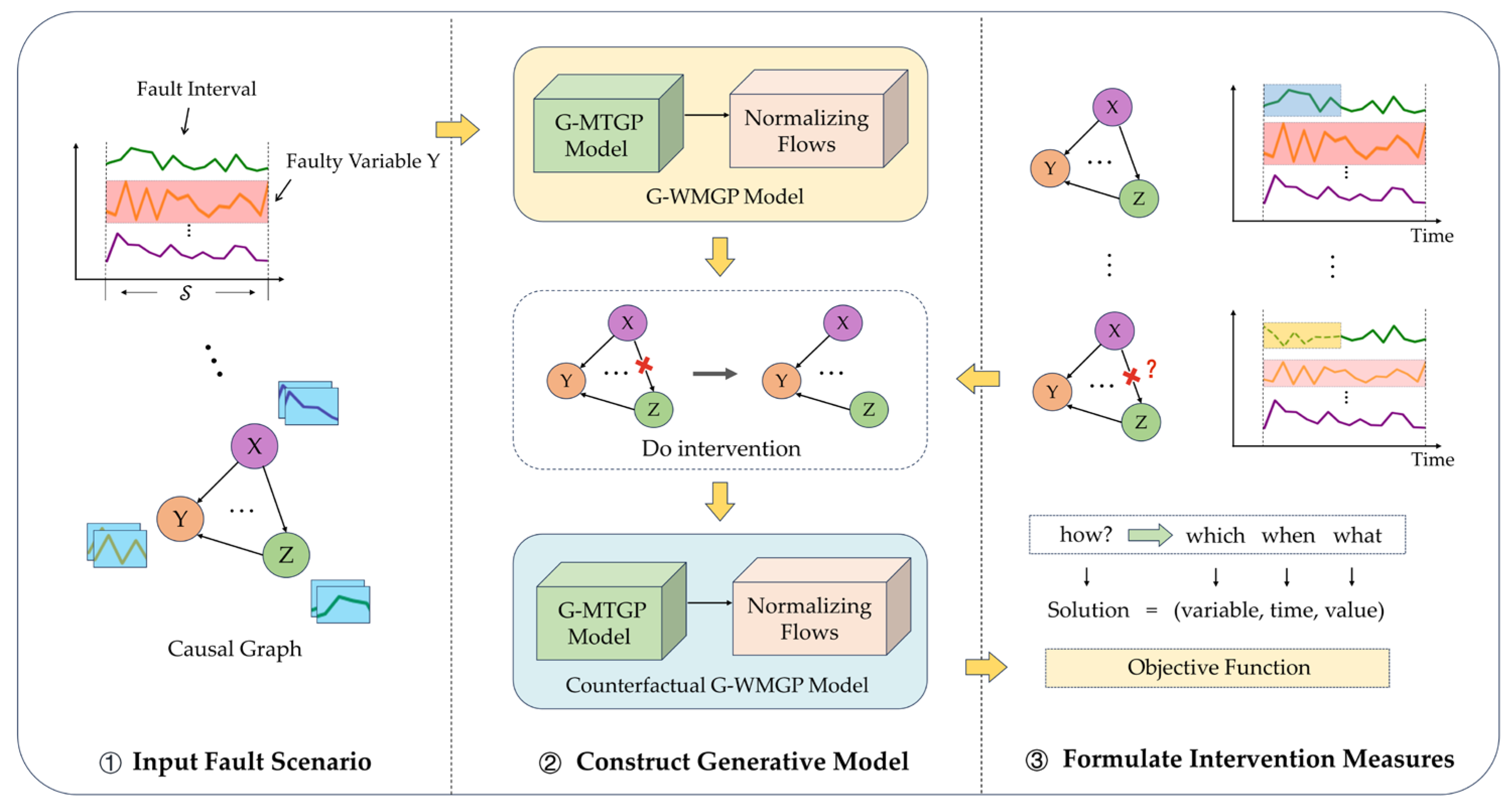
In the industrial sector, malfunctions of equipment that occur during the production and operation process typically necessitate human intervention to restore normal functionality. However, the question that follows is how to design and optimize the intervention measures based on the modeling of actual intervention scenarios, thereby effectively resolving the faults. In order to address the aforementioned issue, we propose an improved heuristic method based on a causal generative model for the design of optimal intervention, aiming to determine the best intervention measure by analyzing the causal effects among variables. We first construct a dual-layer mapping model grounded in the causal relationships among interrelated variables to generate counterfactual data and assess the effectiveness of intervention measures. Subsequently, given the developed fault intervention scenarios, an adaptive large neighborhood search (ALNS) algorithm employing the expected improvement strategy is utilized to optimize the interventions. This method provides guidance for decision-making during equipment operation and maintenance, and the effectiveness of the proposed model and search strategy have been validated through tests on the synthetic datasets and satellite attitude control system dataset.
Keywords: fault intervention; causal generative model; adaptive large neighborhood search algorithm; expected improvement strategy fault intervention; causal generative model; adaptive large neighborhood search algorithm; expected improvement strategy