Article

Light-Fueled Self-Propulsion of Liquid Crystal Elastomer-Engined Automobiles in Zero-Energy Modes

by
Zongsong Yuan
1,
Yuntong Dai
1,
Junxiu Liu
1,2,* and
Kai Li
1,2,*
1
College of Civil Engineering, Anhui Jianzhu University, Hefei 230601, China
2
Anhui Province Key Laboratory of Building Structure and Underground Engineering, Anhui Jianzhu University, Hefei 230601, China
*
Authors to whom correspondence should be addressed.
Mathematics 2024, 12(13), 2109; https://doi.org/10.3390/math12132109
Submission received: 4 May 2024 / Revised: 15 June 2024 / Accepted: 2 July 2024 / Published: 4 July 2024

Abstract

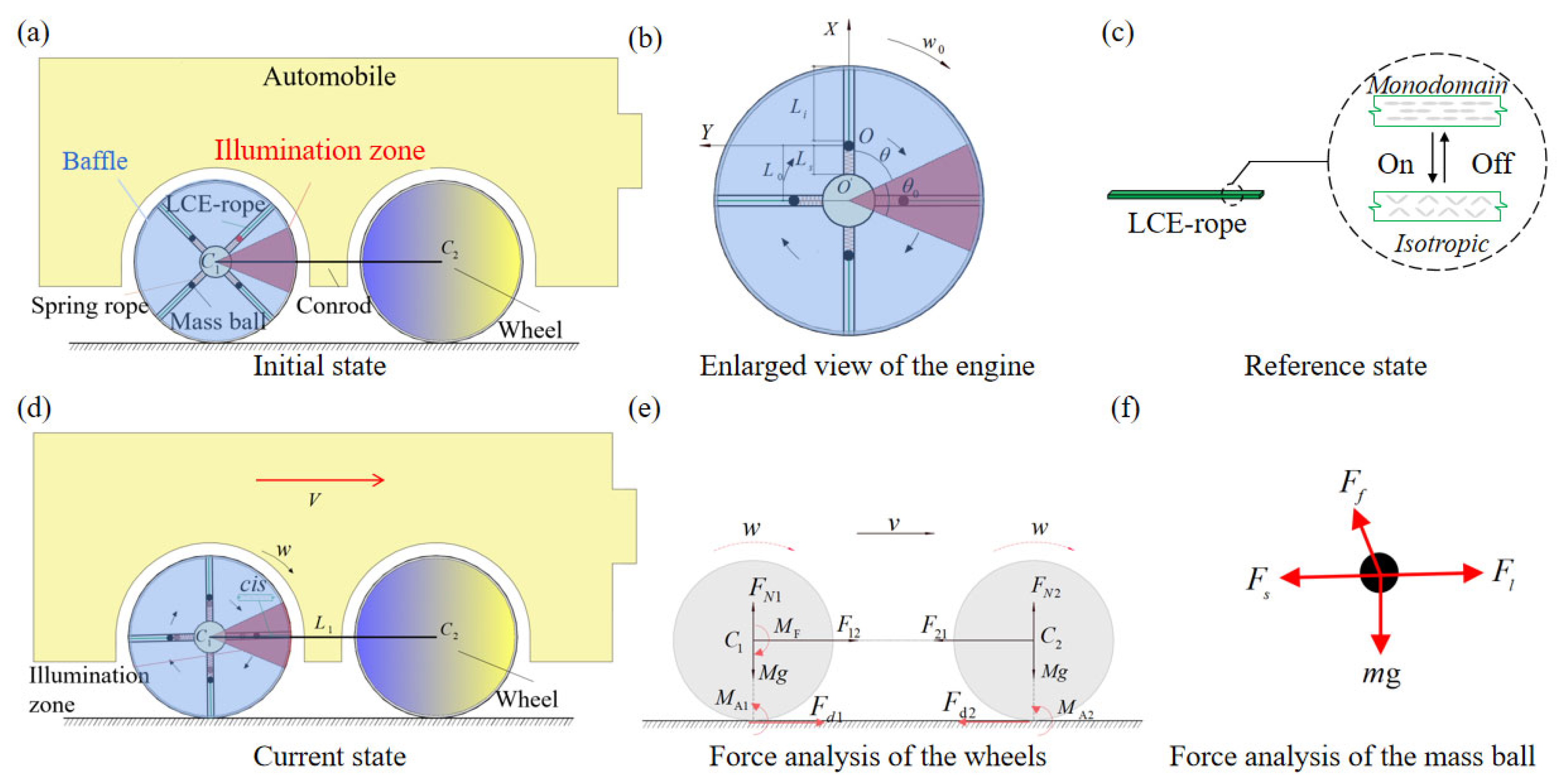
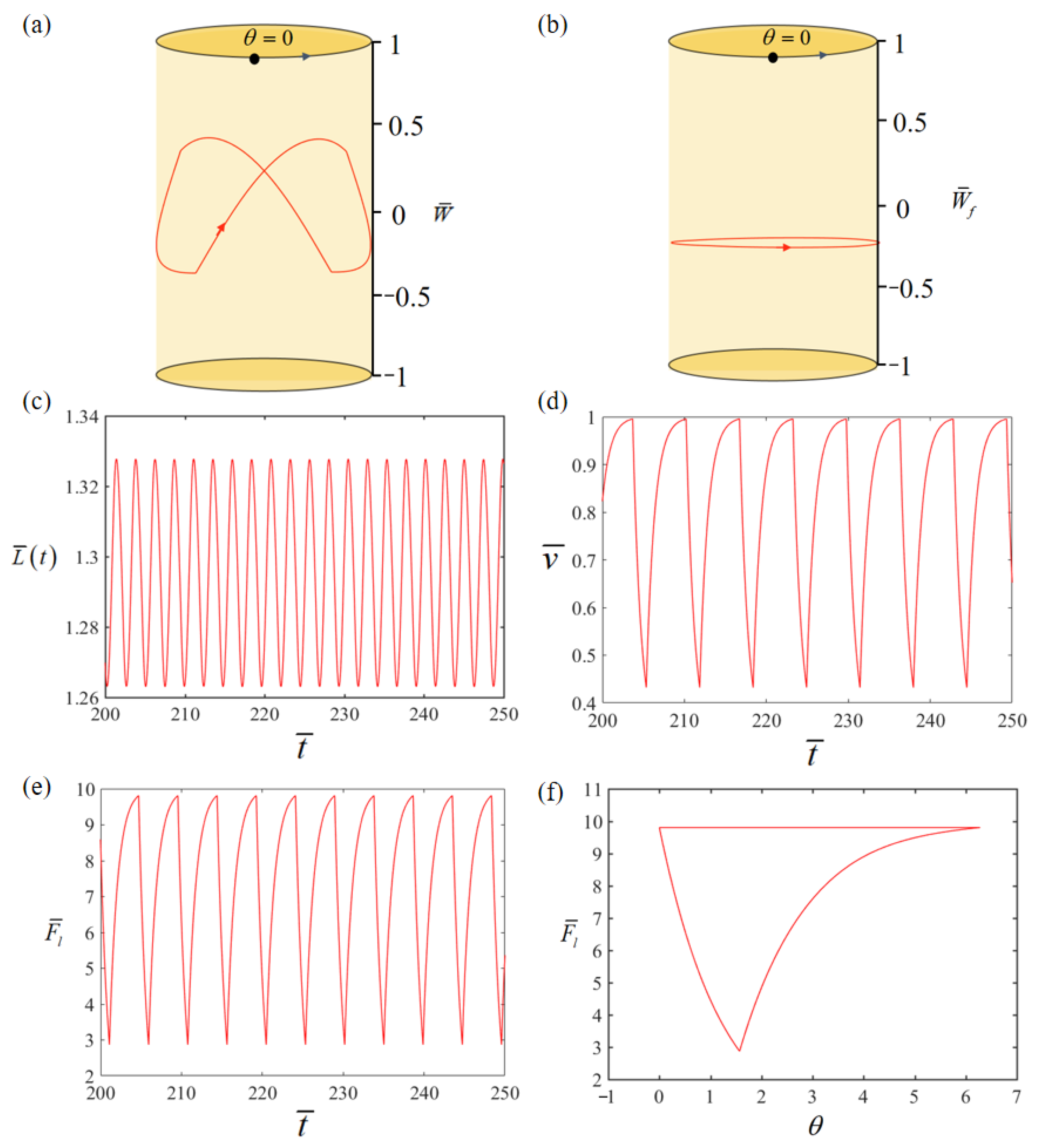
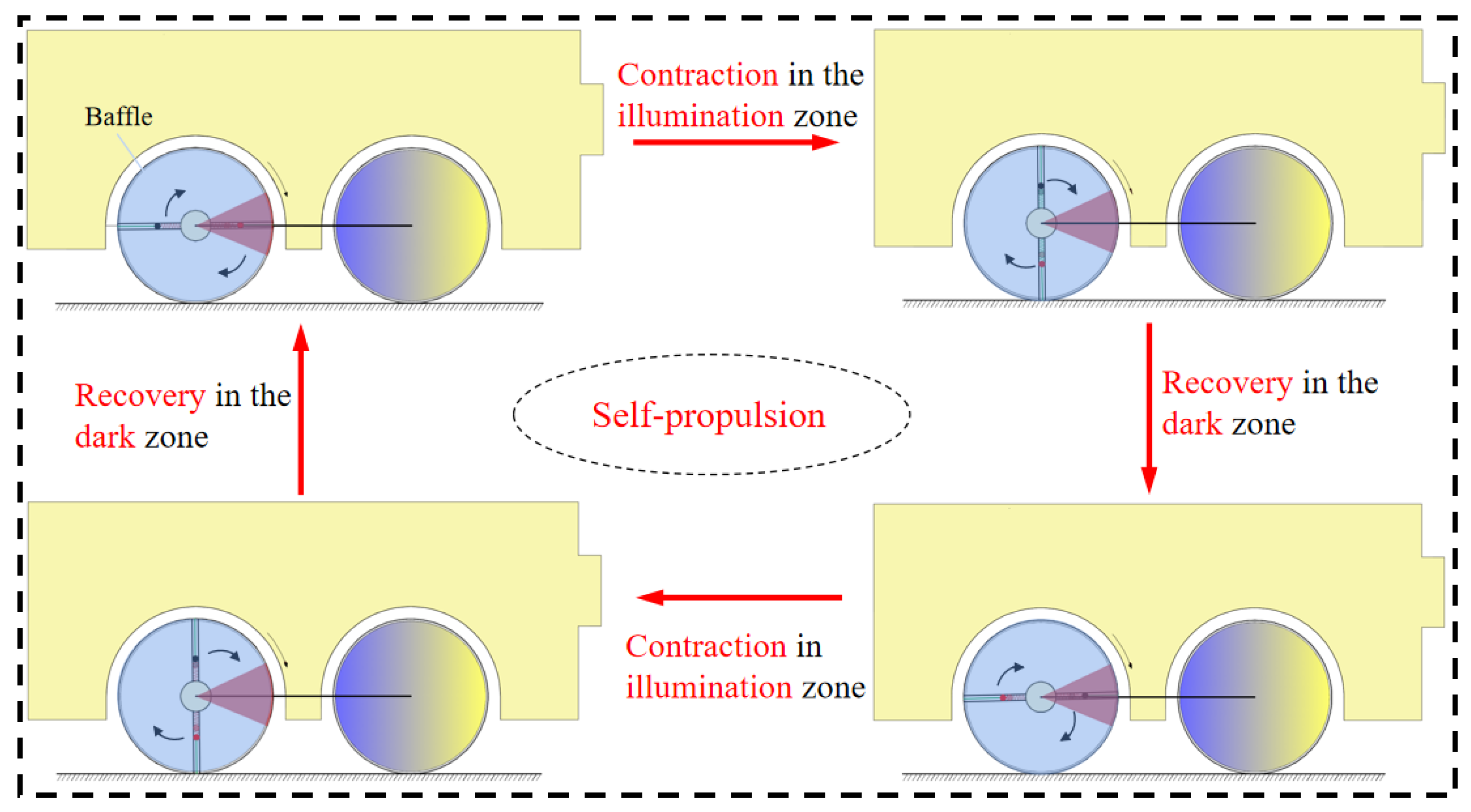
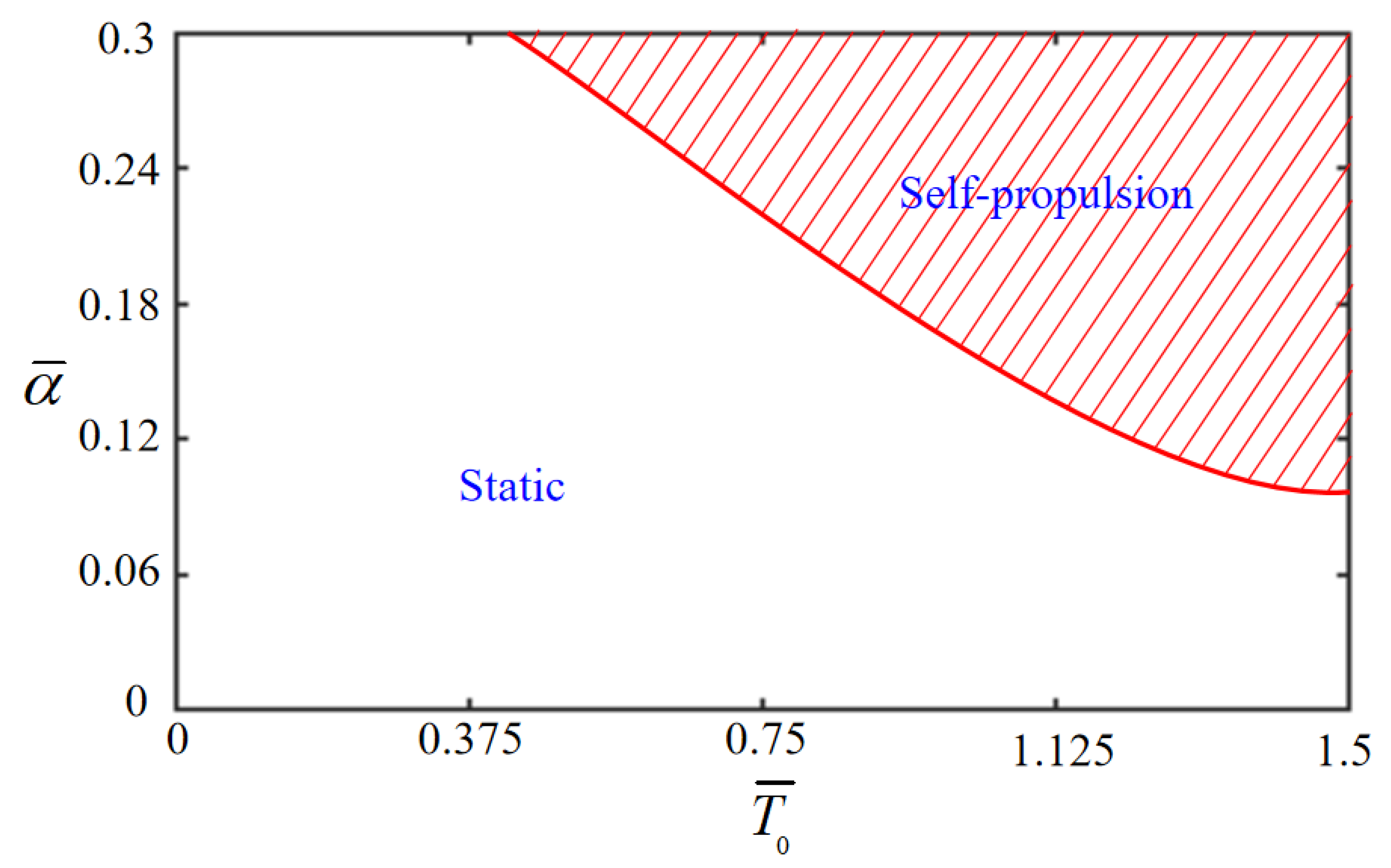
The defining attribute of self-excited motion is its capability to extract energy from a stable environment and regulate it autonomously, making it an extremely promising innovation for microdevices, autonomous robotics, sensor technologies, and energy generation. Based on the concept of an automobile, we propose a light-fueled self-propulsion of liquid crystal elastomer-engined automobiles in zero-energy mode. This system utilizes a wheel comprising a liquid crystal elastomer (LCE) turntable as an engine, a wheel with conventional material and a linkage. The dynamic behavior of the self-propulsion automobile under steady illumination is analyzed by integrating a nonlinear theoretical model with an established photothermally responsive LCE model. We performed the analysis using the fourth-order Runge–Kutta method. The numerical findings demonstrate the presence of two separate motion patterns in the automobile system: a static pattern and a self-propulsion pattern. The correlation between the energy input and energy dissipation from damping is essential to sustain the repetitive motion of the system. This study delves deeper into the crucial requirements for initiating self-propulsion and examines the effect of critical system parameters on the motion of the system. The proposed system with zero-energy mode motions has the advantage of a simple structural design, easy control, low friction and stable kinematics, and it is very promising for many future uses, including energy harvesting, monitoring, soft robotics, medical devices, and micro- and nano-devices.
Keywords: automobiles; self-excited motion; self-propulsion; liquid crystal elastomers; zero-energy mode automobiles; self-excited motion; self-propulsion; liquid crystal elastomers; zero-energy mode