Article

Modal Discontinuous Galerkin Simulations of Richtmyer–Meshkov Instability at Backward-Triangular Bubbles: Insights and Analysis

by
Salman Saud Alsaeed
1 and
Satyvir Singh
2,*
1
Department of Mathematics, College of Science, Jouf University, Sakaka P.O. Box 2014, Saudi Arabia
2
Applied and Computational Mathematics, RWTH Aachen University, 52062 Aachen, Germany
*
Author to whom correspondence should be addressed.
Mathematics 2024, 12(13), 2005; https://doi.org/10.3390/math12132005
Submission received: 26 May 2024 / Revised: 20 June 2024 / Accepted: 25 June 2024 / Published: 28 June 2024
(This article belongs to the Special Issue Numerical Solution of Differential Equations and Their Applications)

Abstract

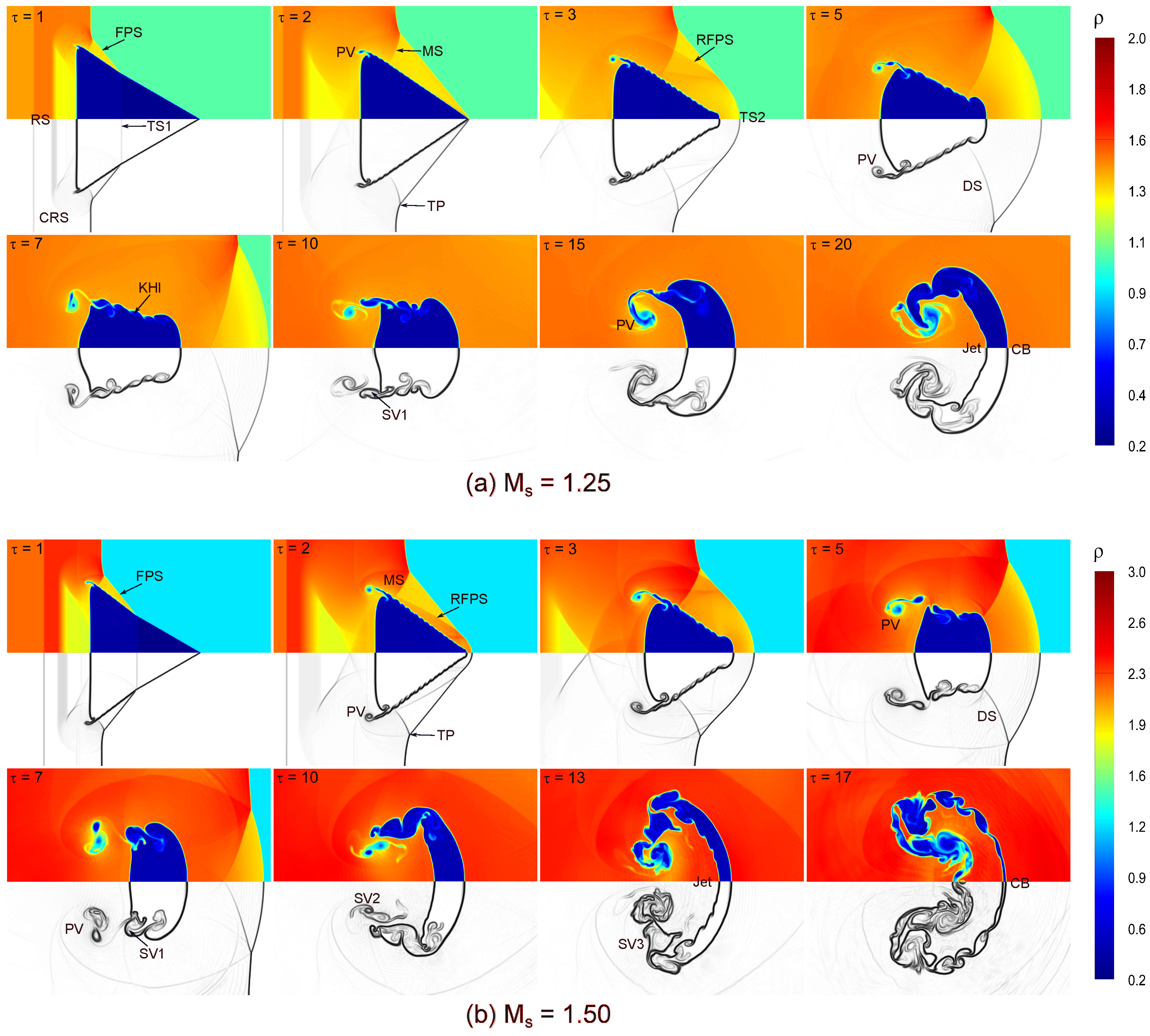
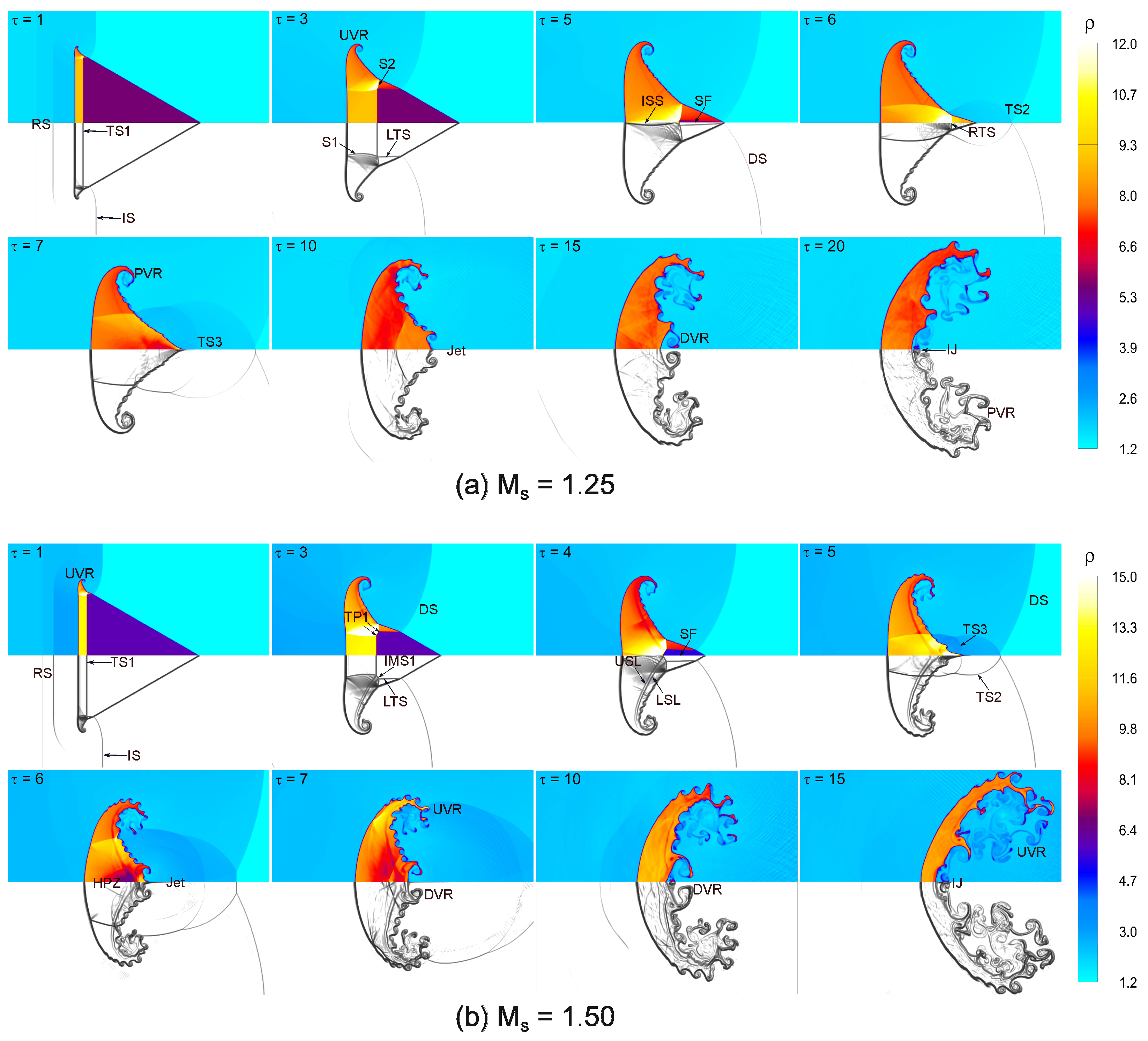
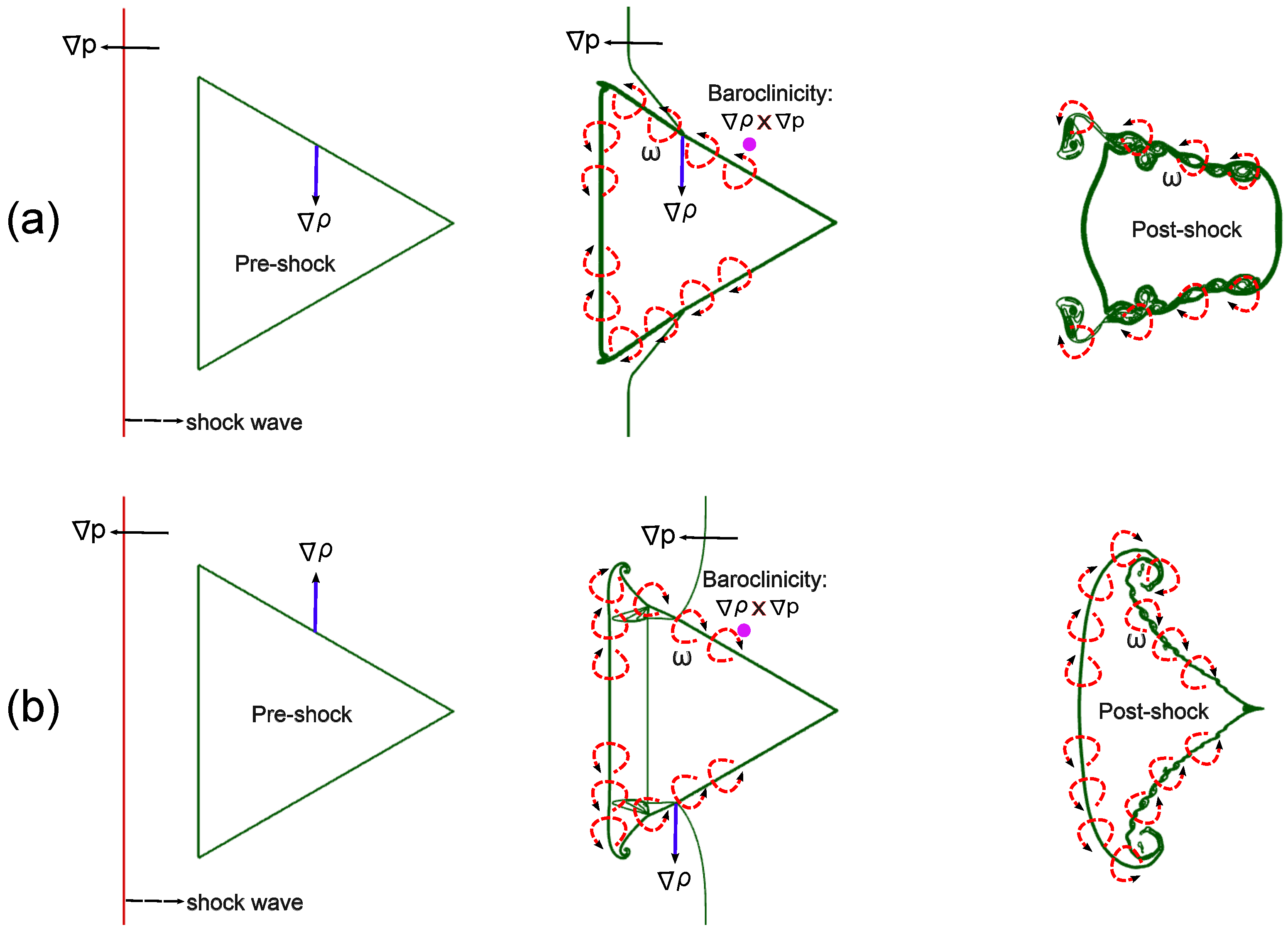
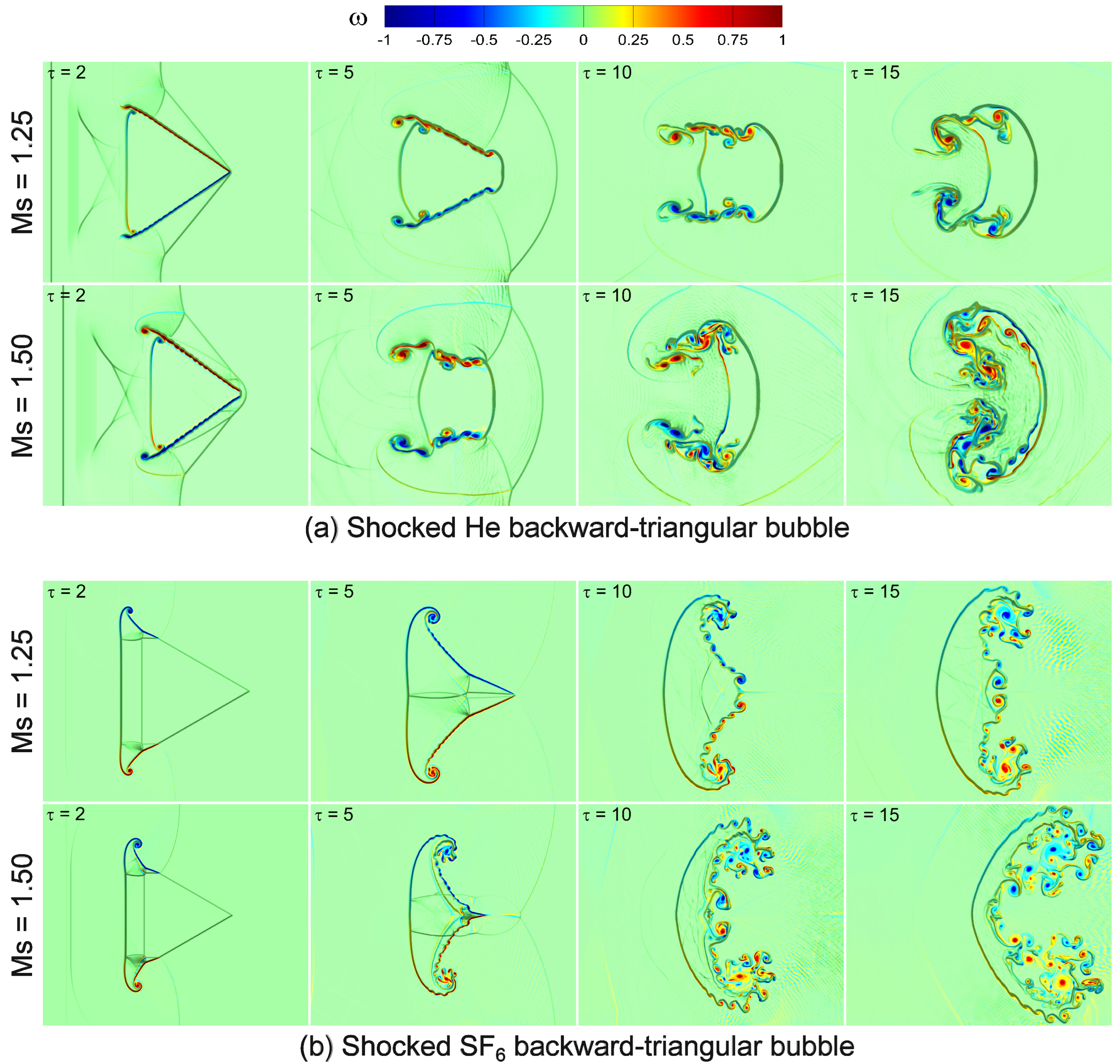
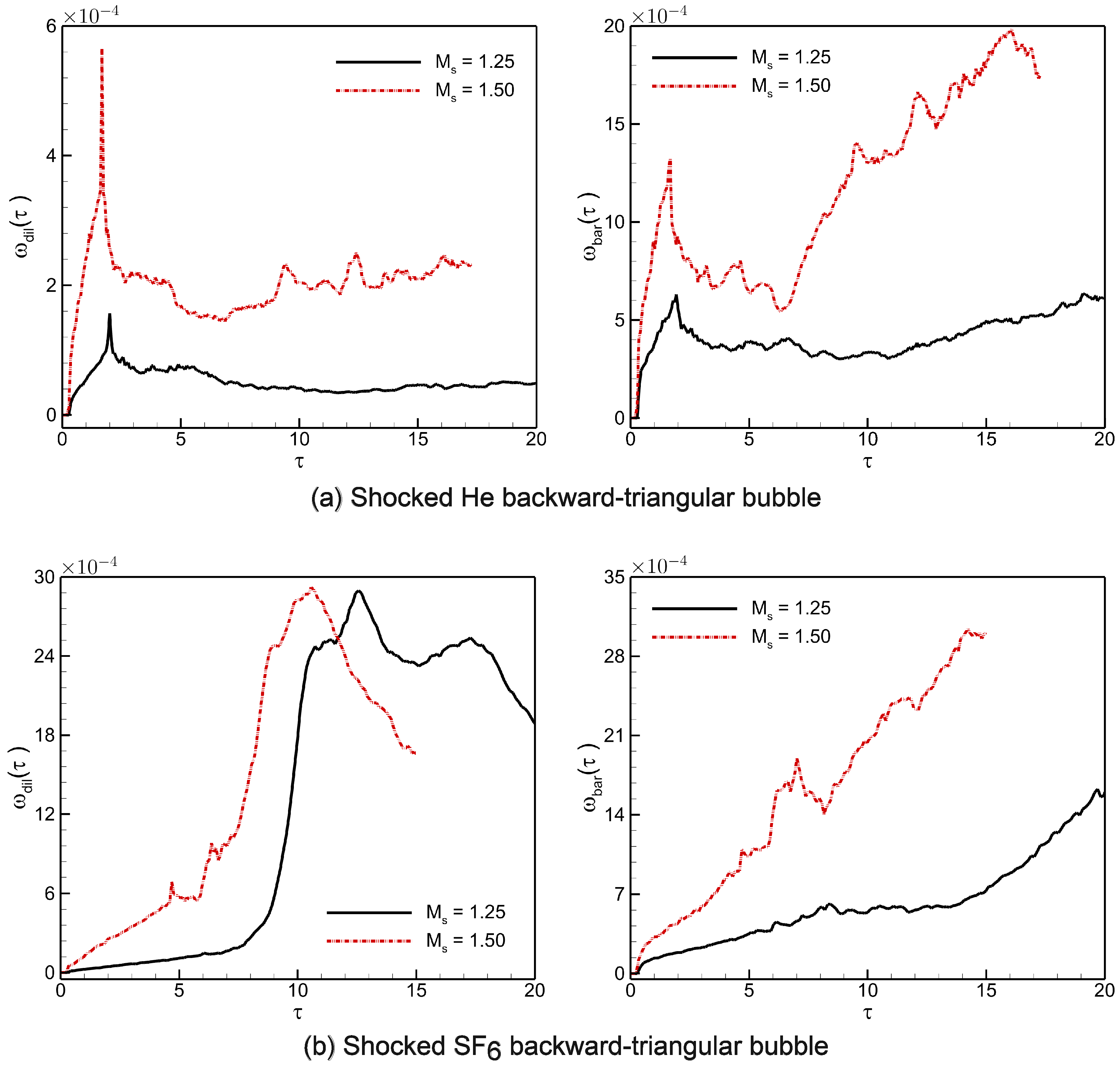
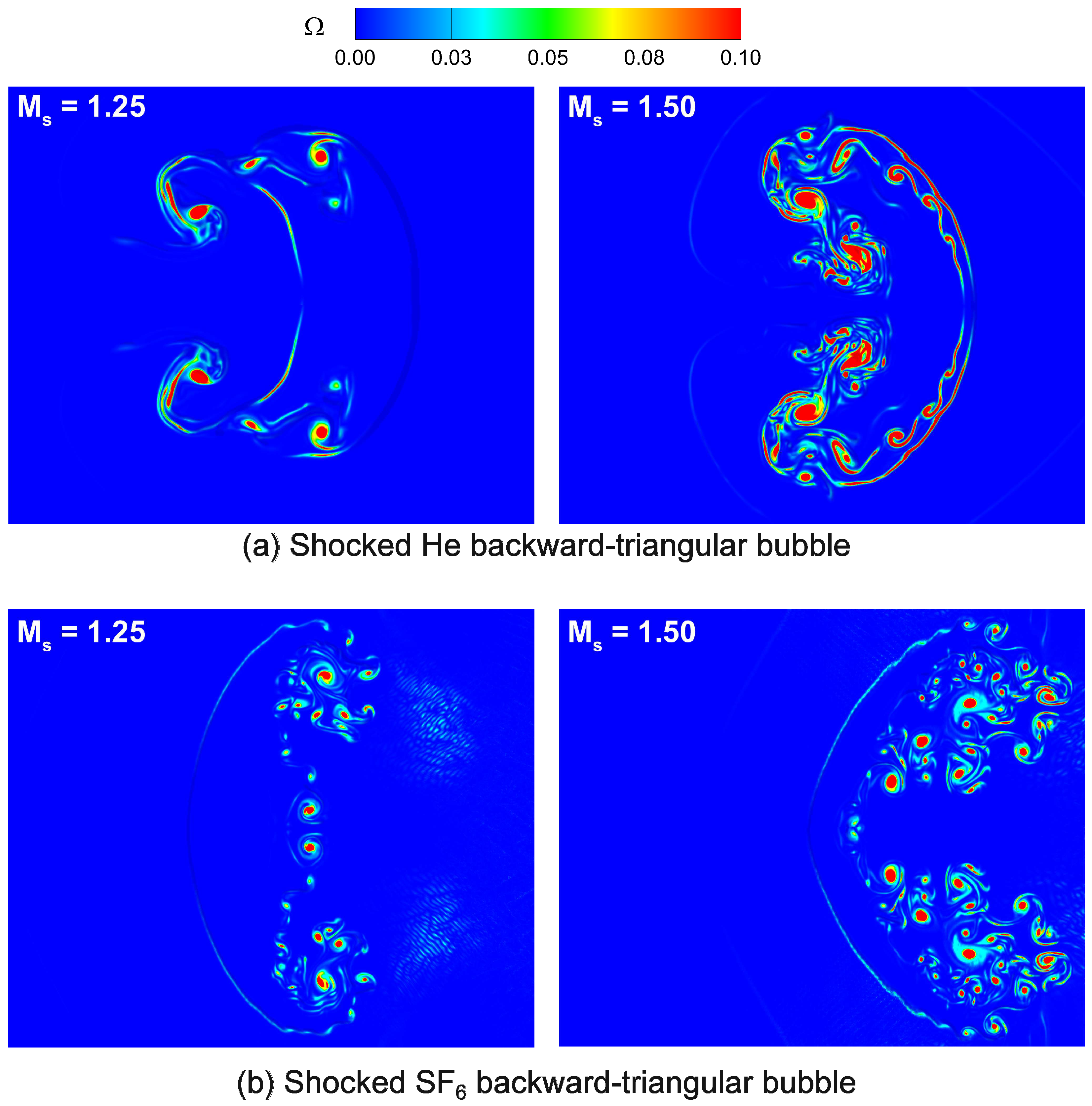
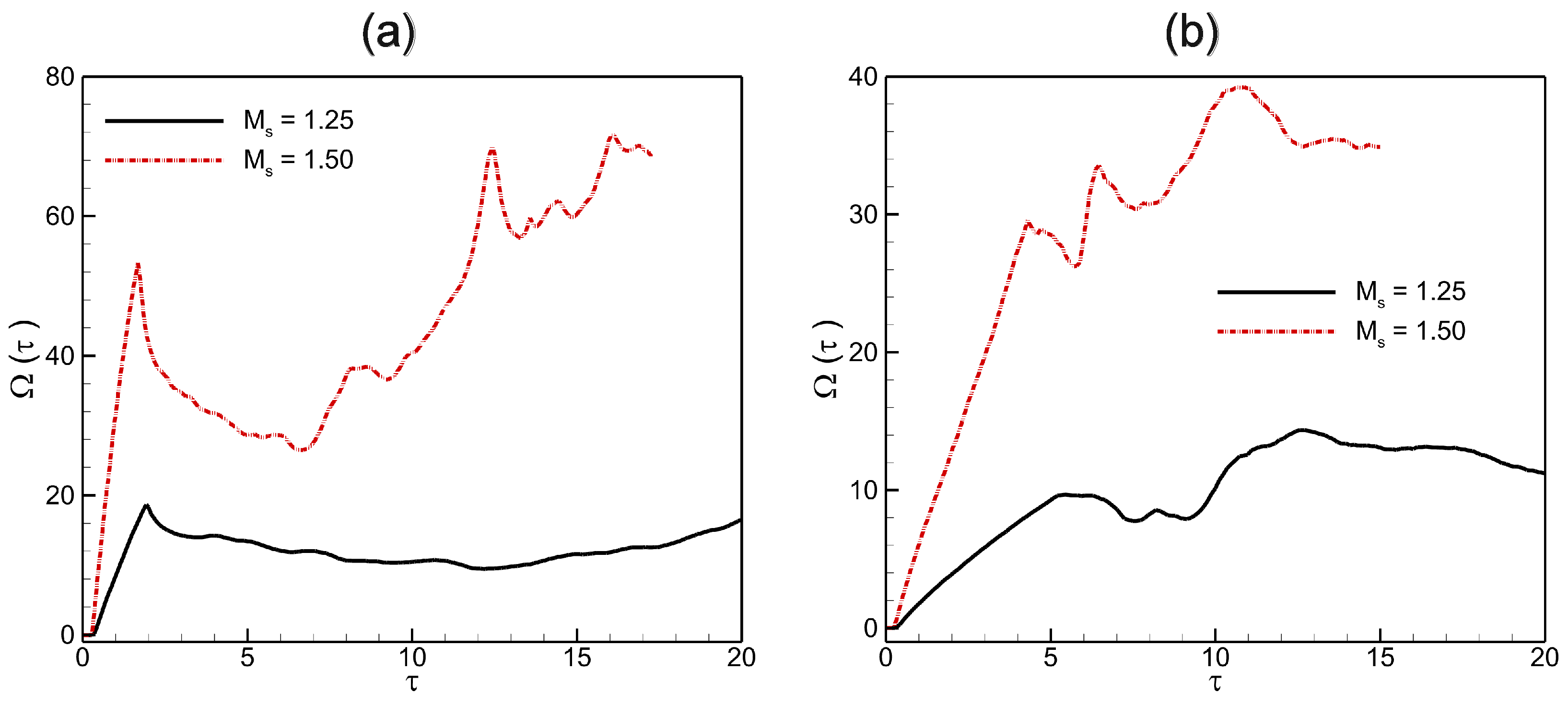
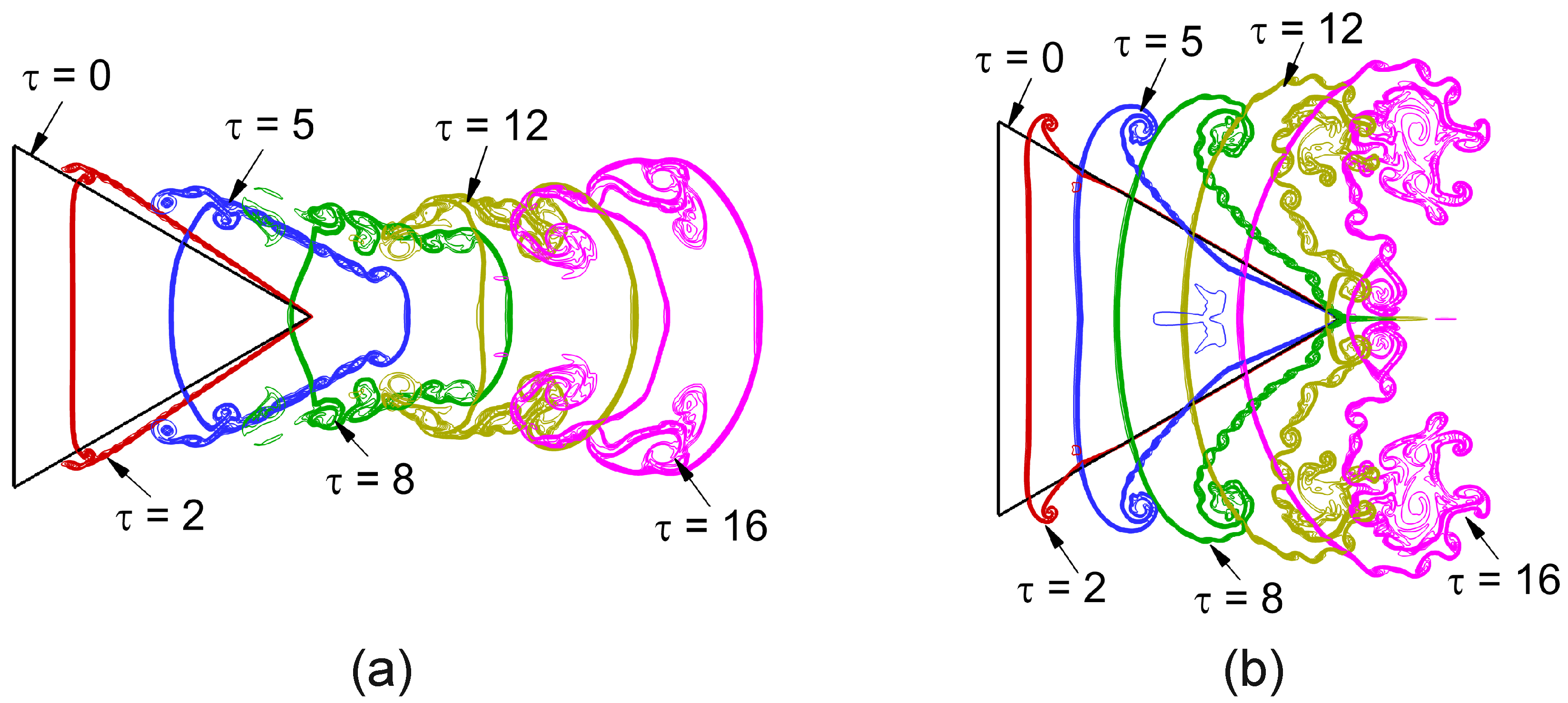
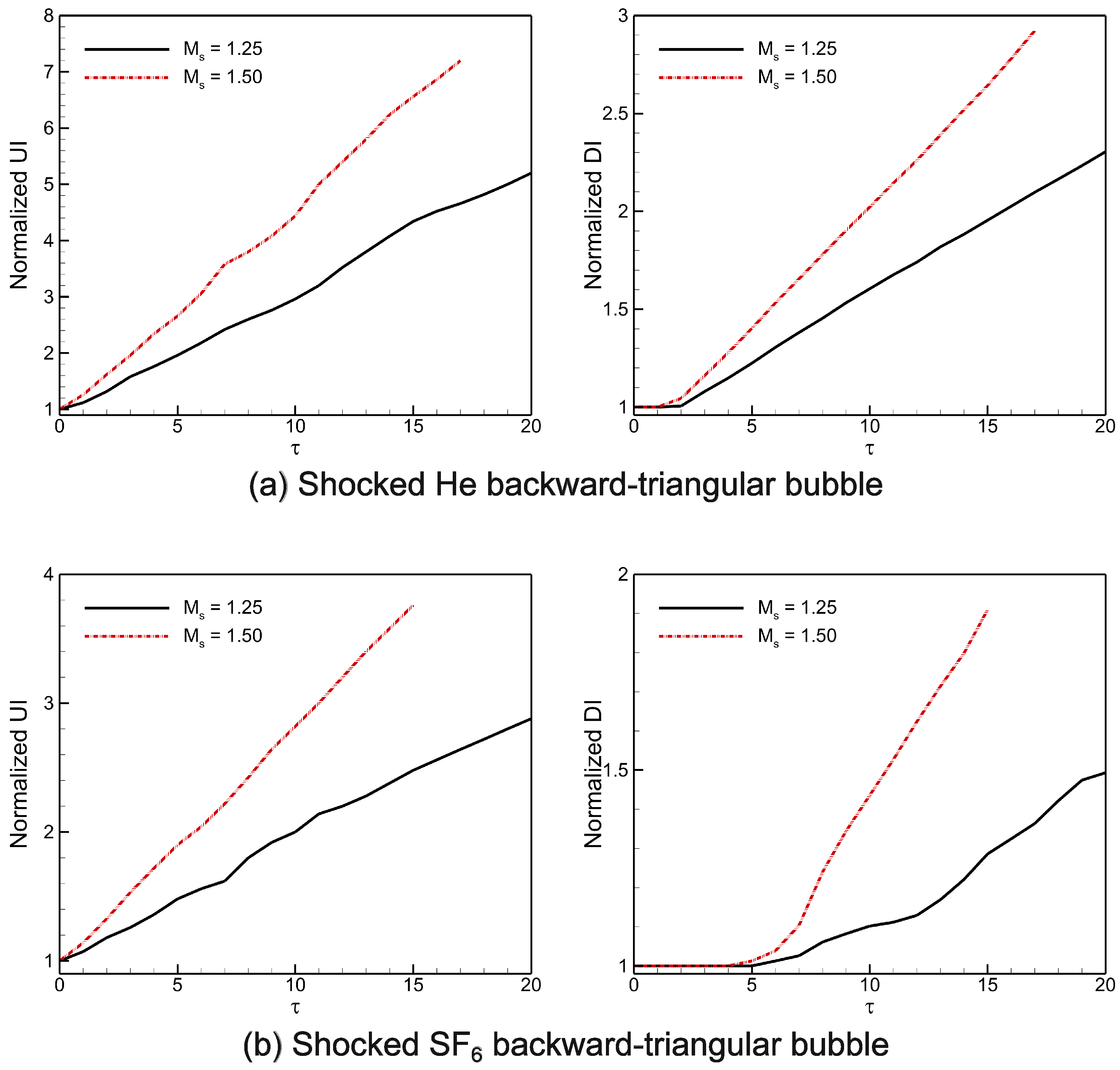
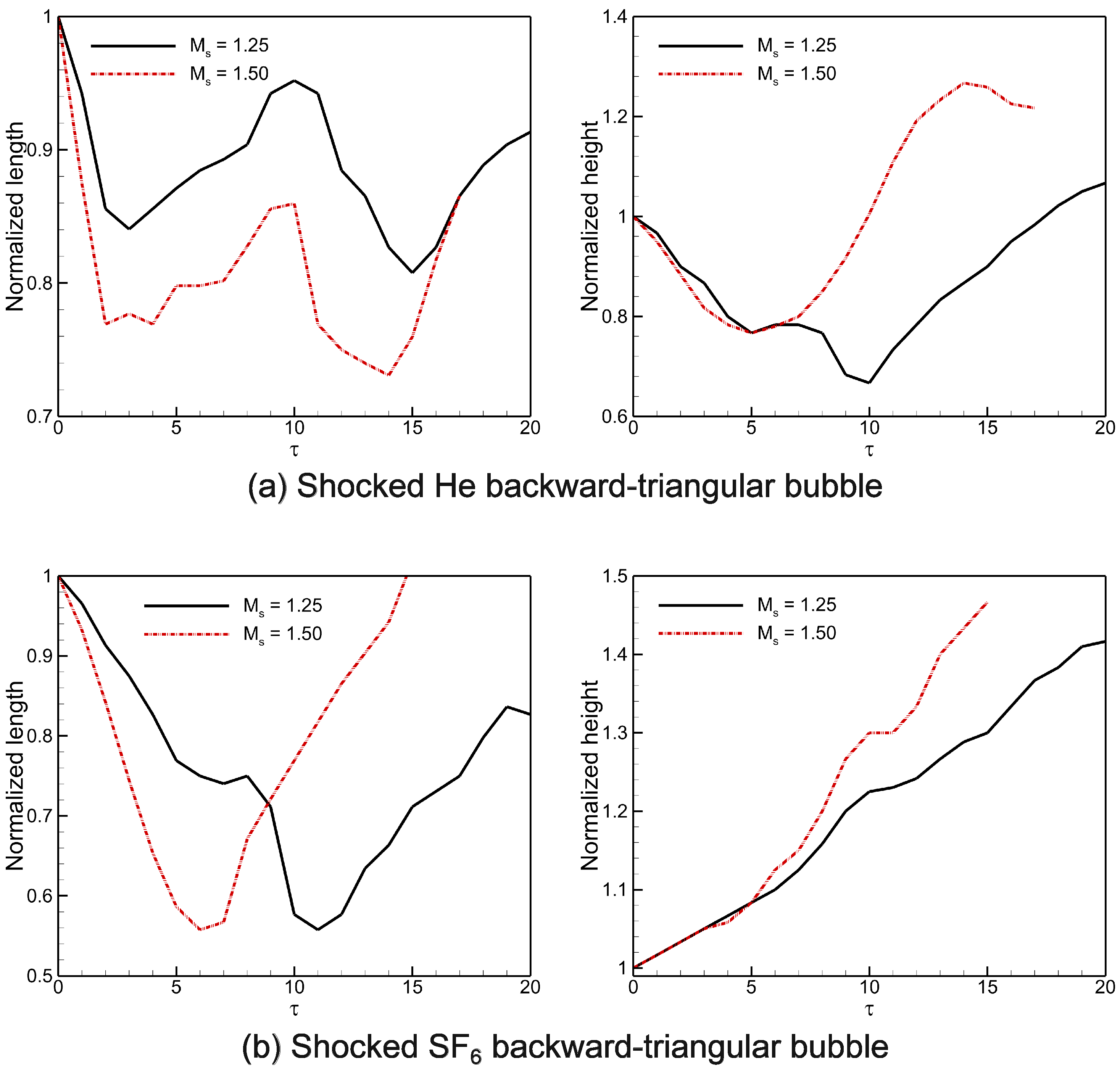
This paper investigates the dynamics of Richtmyer–Meshkov instability (RMI) in shocked backward-triangular bubbles through numerical simulations. Two distinct gases, He and SF6, are used within the backward-triangular bubble, surrounded by N2 gas. Simulations are conducted at two distinct strengths of incident shock wave, including Ms=1.25 and 1.50. A third-order modal discontinuous Galerkin (DG) scheme is applied to simulate a physical conservation laws of two-component gas flows in compressible inviscid framework. Hierarchical Legendre modal polynomials are employed for spatial discretization in the DG platform. This scheme reduces the conservation laws into a semi-discrete set of ODEs in time, which is then solved using an explicit 3rd-order SSP Runge–Kutta scheme. The results reveal significant effects of bubble density and Mach numbers on the growth of RMI in the shocked backward-triangular bubble, a phenomenon not previously reported. These effects greatly influence flow patterns, leading to intricate wave formations, shock focusing, jet generation, and interface distortion. Additionally, a detailed analysis elucidates the mechanisms driving vorticity formation during the interaction process. The study also thoroughly examines these effects on the flow fields based on various integral quantities and interface characteristics.
Keywords: Richtmyer–Meshkov instability; modal discontinuous Galerkin; shock wave; backward-triangular bubble Richtmyer–Meshkov instability; modal discontinuous Galerkin; shock wave; backward-triangular bubble