Article

Improved Beluga Whale Optimization for Solving the Simulation Optimization Problems with Stochastic Constraints


by
Shih-Cheng Horng
1,* and
Shieh-Shing Lin
2
1
Department of Computer Science & Information Engineering, Chaoyang University of Technology, Taichung 413310, Taiwan
2
Department of Electrical Engineering, St. John’s University, New Taipei City 251303, Taiwan
*
Author to whom correspondence should be addressed.
Mathematics 2023, 11(8), 1854; https://doi.org/10.3390/math11081854
Submission received: 21 March 2023 / Revised: 11 April 2023 / Accepted: 11 April 2023 / Published: 13 April 2023
(This article belongs to the Special Issue Nature Inspired Computing and Optimisation)

Abstract

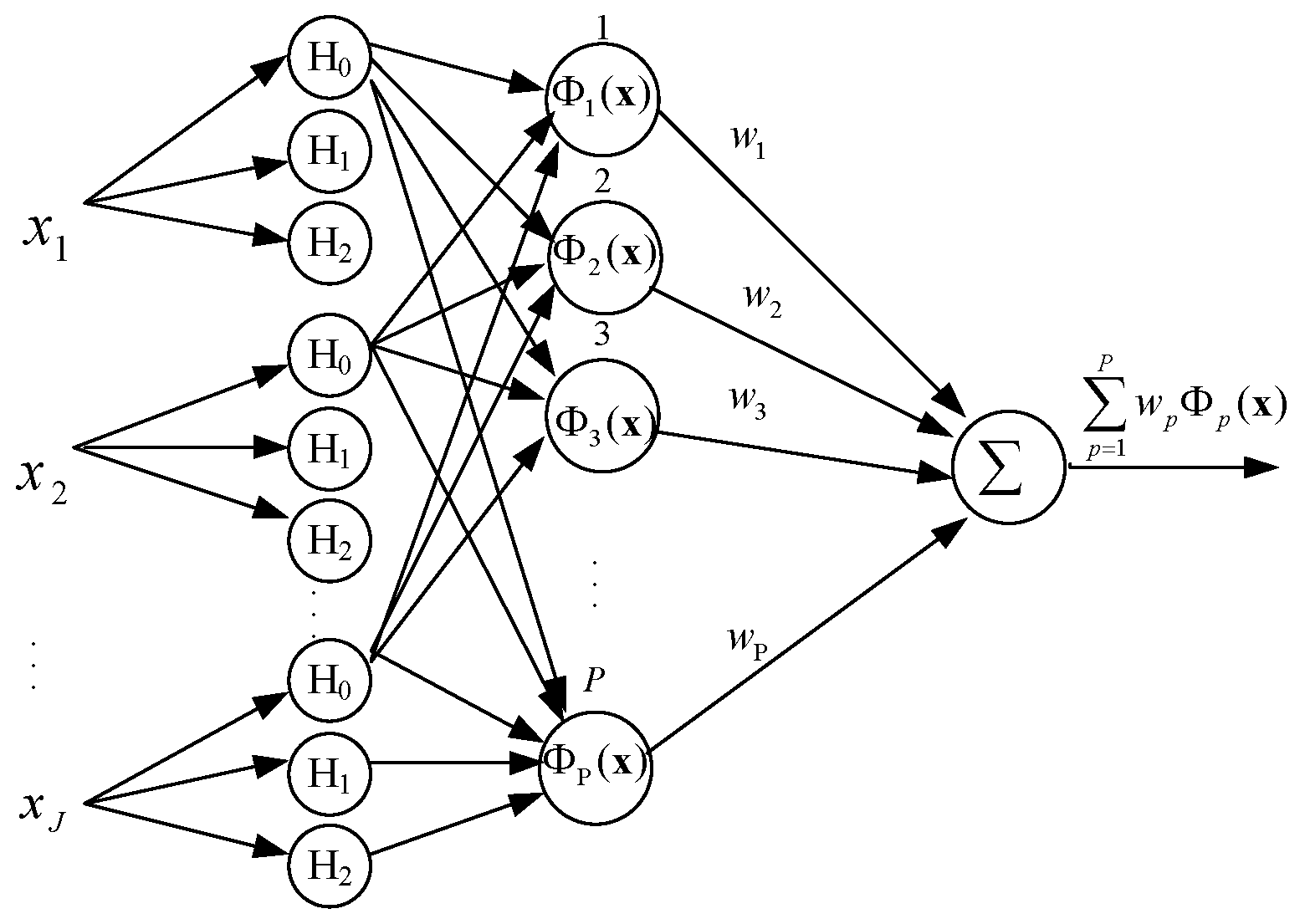
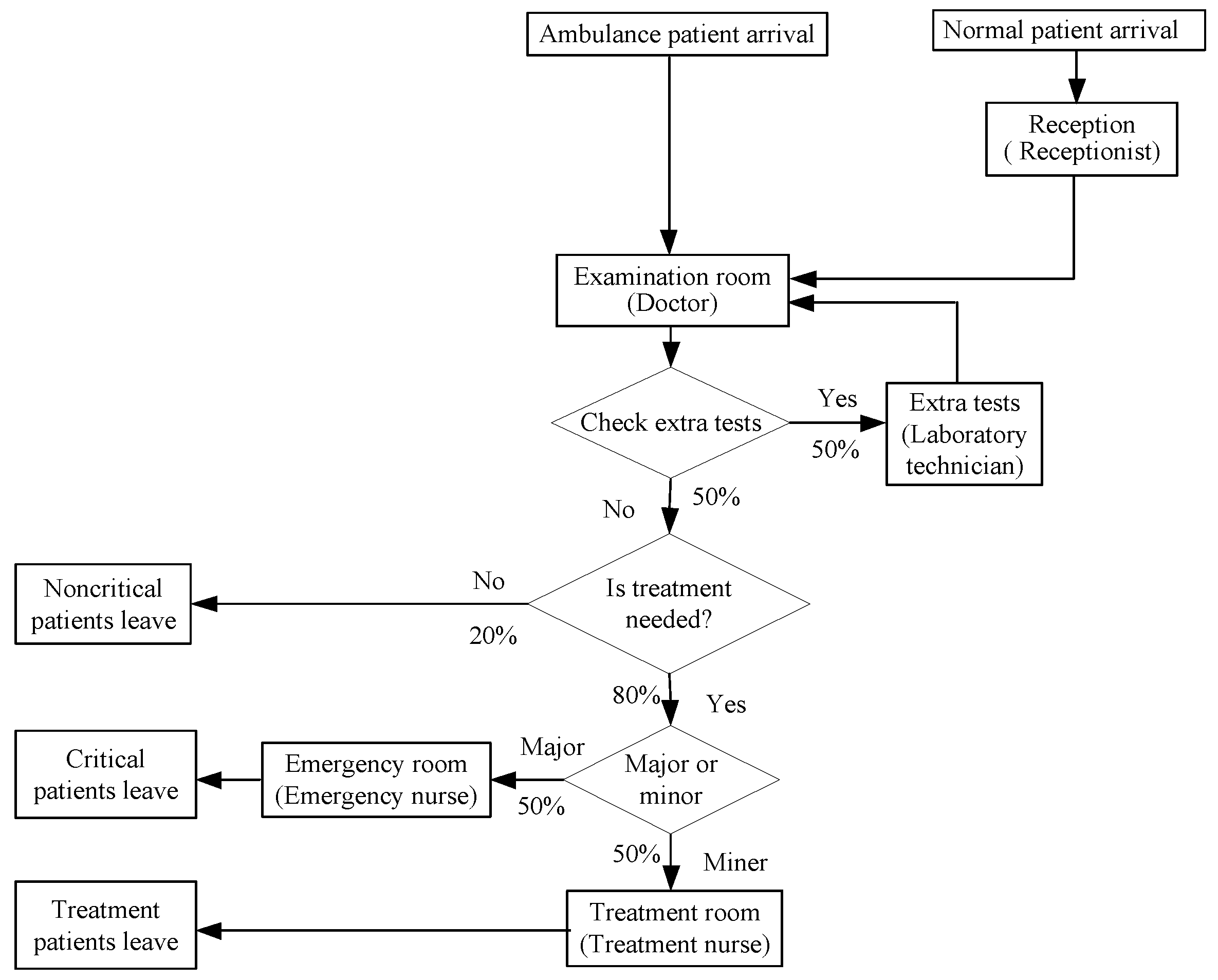
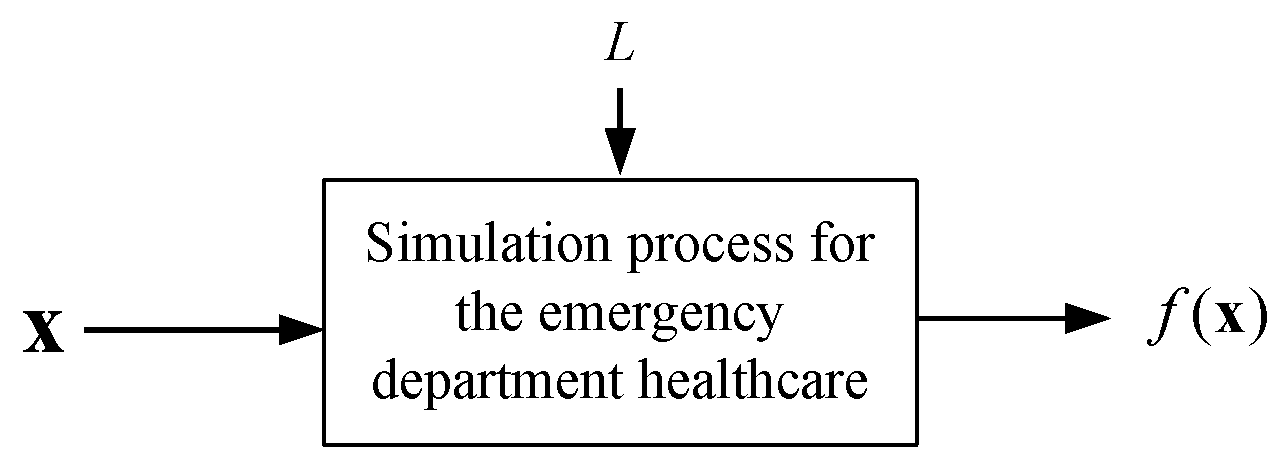
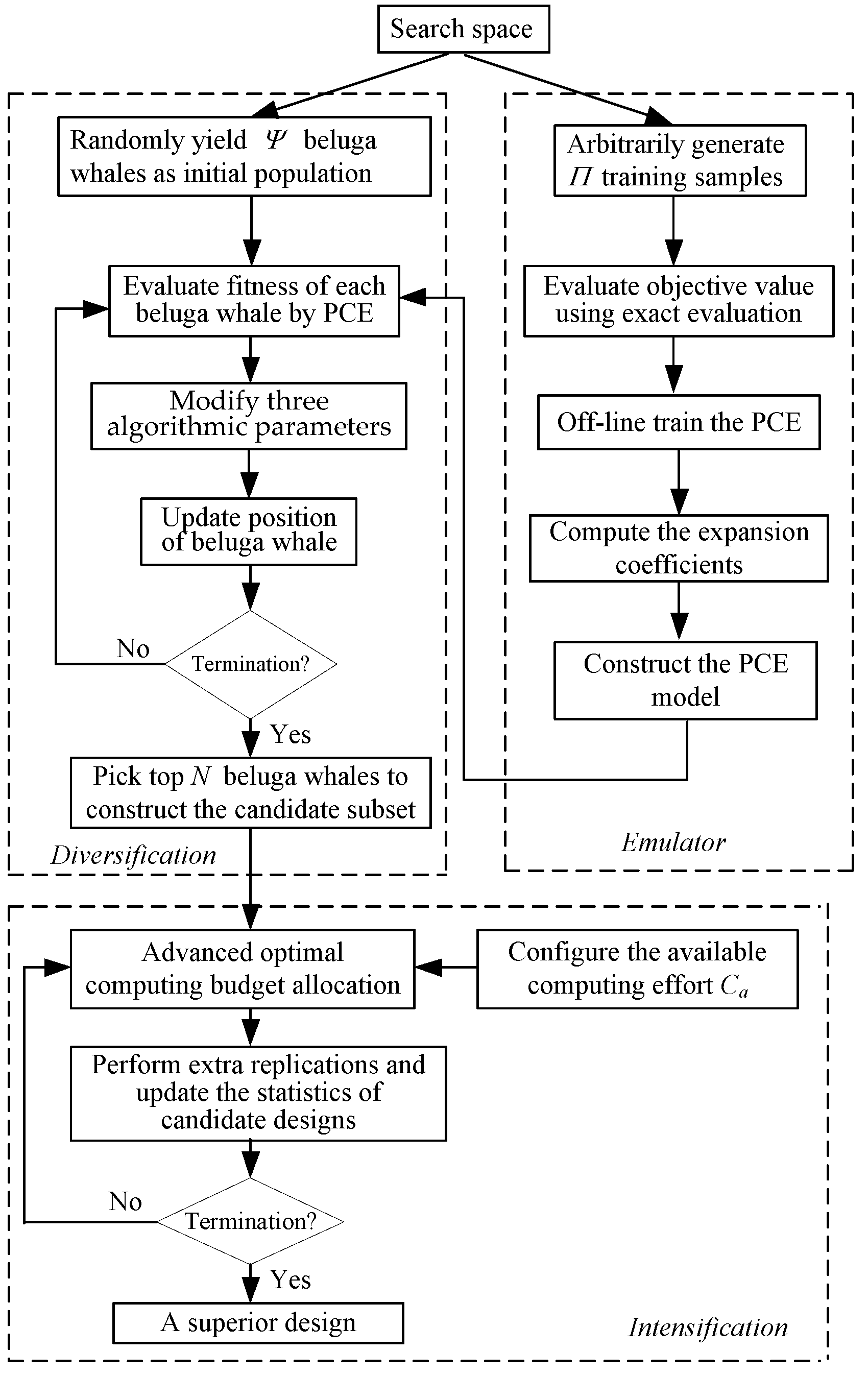
Simulation optimization problems with stochastic constraints are optimization problems with deterministic cost functions subject to stochastic constraints. Solving the considered problem by traditional optimization approaches is time-consuming if the search space is large. In this work, an approach integration of beluga whale optimization and ordinal optimization is presented to resolve the considered problem in a relatively short time frame. The proposed approach is composed of three levels: emulator, diversification, and intensification. Firstly, the polynomial chaos expansion is treated as an emulator to evaluate a design. Secondly, the improved beluga whale optimization is proposed to seek N candidates from the whole search space. Eventually, the advanced optimal computational effort allocation is adopted to determine a superior design from the N candidates. The proposed approach is utilized to seek the optimal number of service providers for minimizing staffing costs while delivering a specific level of care in emergency department healthcare. A practical example of an emergency department with six cases is used to verify the proposed approach. The CPU time consumes less than one minute for six cases, which demonstrates that the proposed approach can meet the requirement of real-time application. In addition, the proposed approach is compared to five heuristic methods. Empirical tests indicate the efficiency and robustness of the proposed approach.
Keywords: beluga whale optimization; ordinal optimization; polynomial chaos expansion; optimal computational effort allocation; emergency department healthcare; average waiting time beluga whale optimization; ordinal optimization; polynomial chaos expansion; optimal computational effort allocation; emergency department healthcare; average waiting time