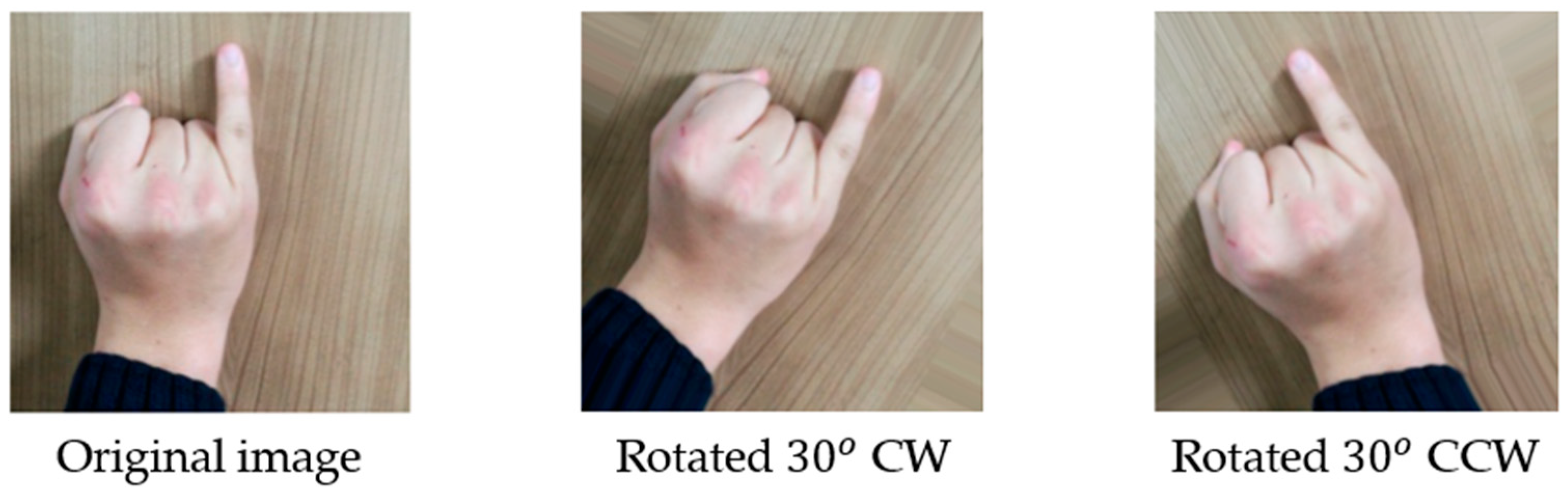
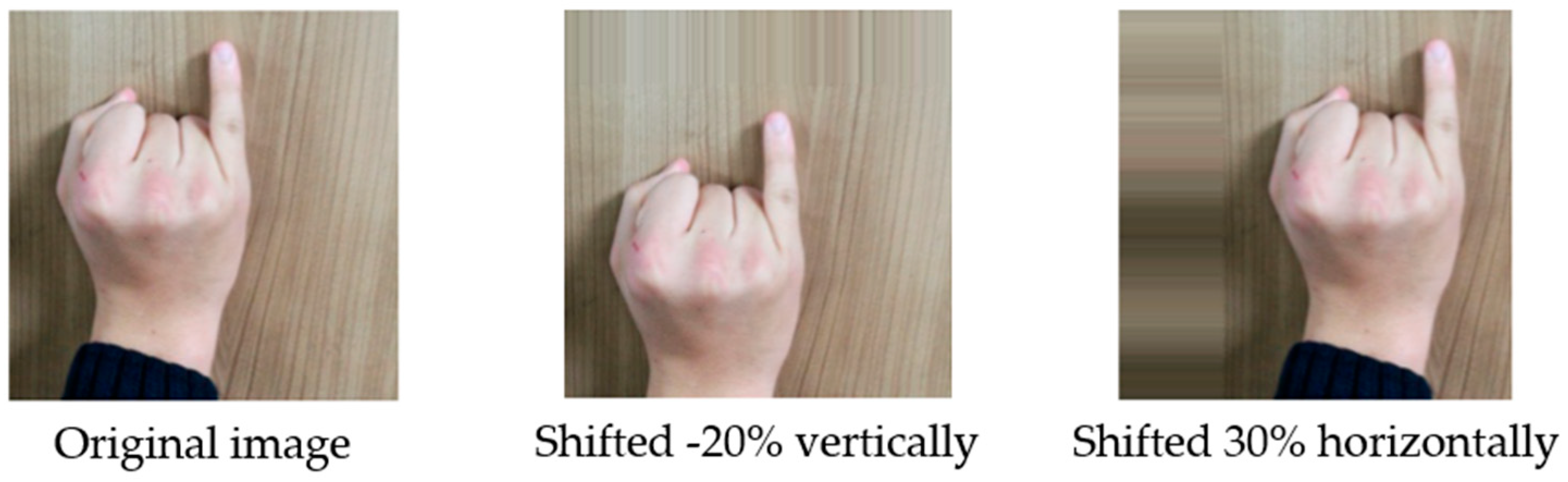
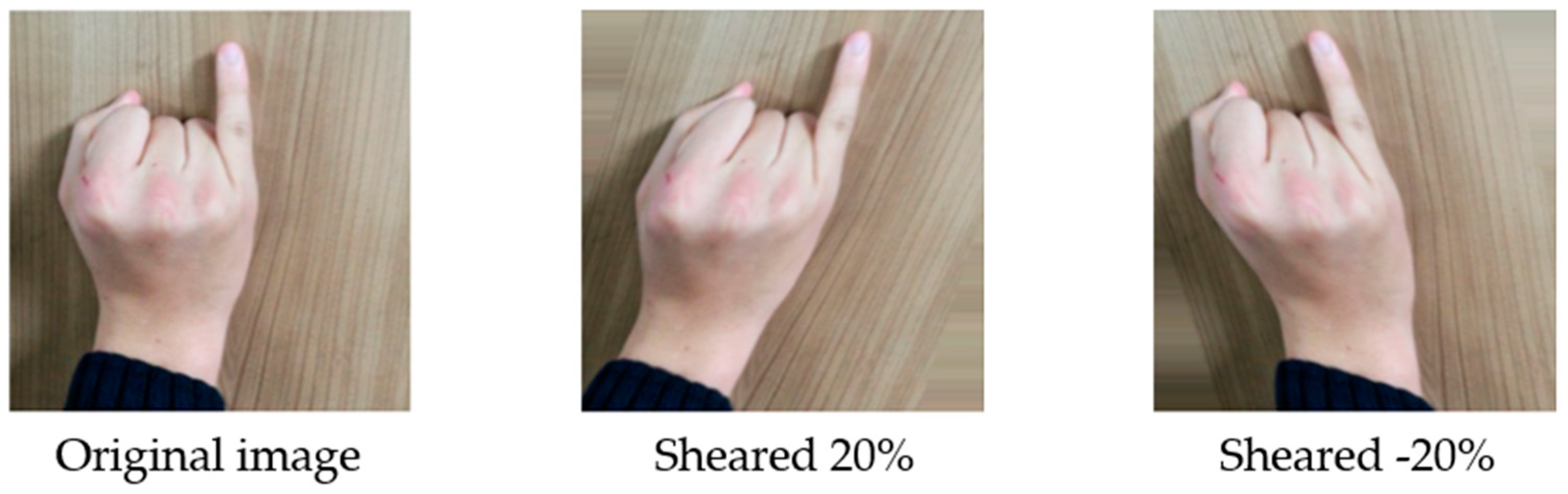
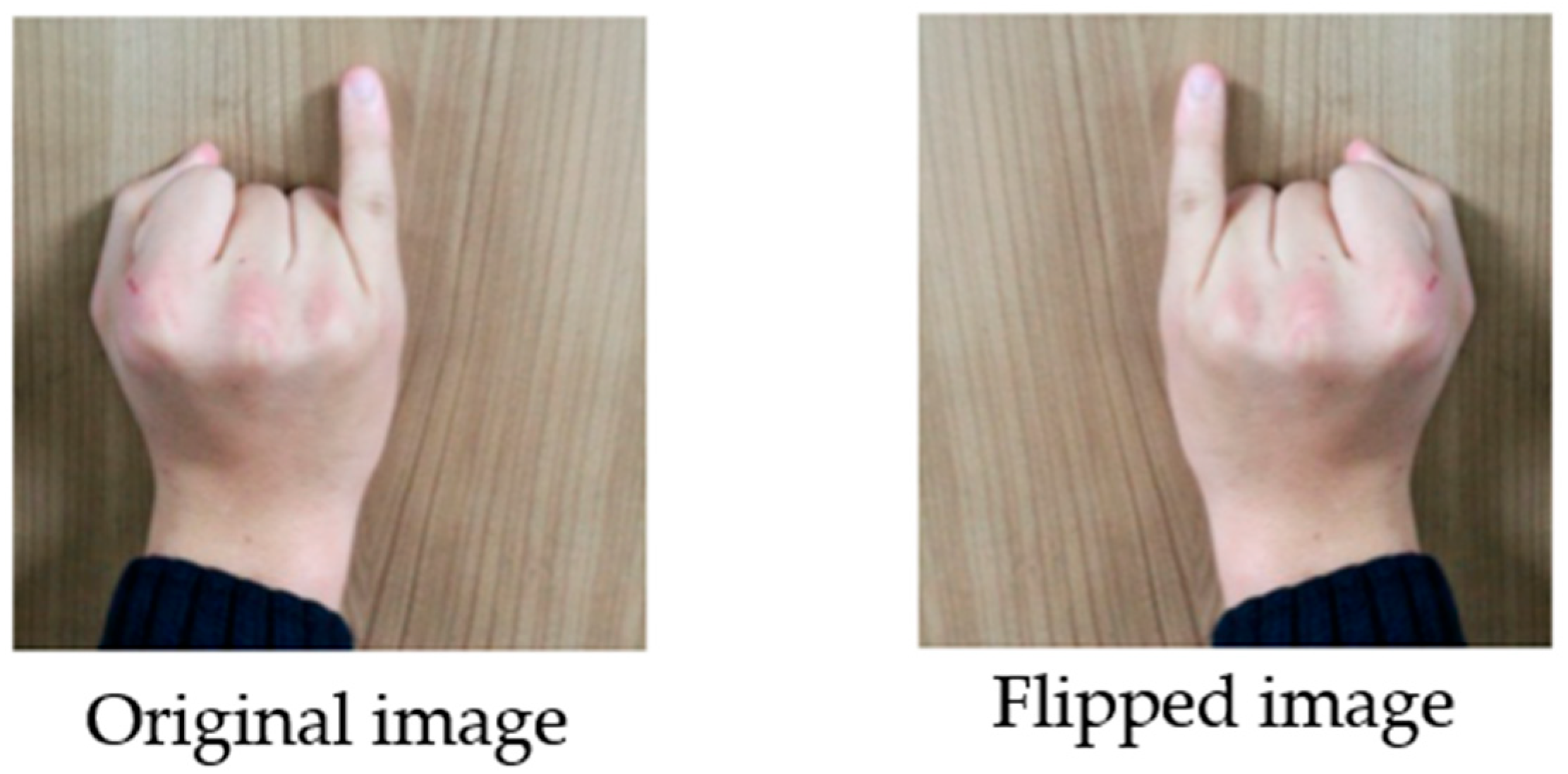
Investigating Effective Geometric Transformation for Image Augmentation to Improve Static Hand Gestures with a Pre-Trained Convolutional Neural Network


Abstract
Share and Cite
Awaluddin, B.-A.; Chao, C.-T.; Chiou, J.-S. Investigating Effective Geometric Transformation for Image Augmentation to Improve Static Hand Gestures with a Pre-Trained Convolutional Neural Network. Mathematics 2023, 11, 4783. https://doi.org/10.3390/math11234783
Awaluddin B-A, Chao C-T, Chiou J-S. Investigating Effective Geometric Transformation for Image Augmentation to Improve Static Hand Gestures with a Pre-Trained Convolutional Neural Network. Mathematics. 2023; 11(23):4783. https://doi.org/10.3390/math11234783
Chicago/Turabian StyleAwaluddin, Baiti-Ahmad, Chun-Tang Chao, and Juing-Shian Chiou. 2023. "Investigating Effective Geometric Transformation for Image Augmentation to Improve Static Hand Gestures with a Pre-Trained Convolutional Neural Network" Mathematics 11, no. 23: 4783. https://doi.org/10.3390/math11234783
APA StyleAwaluddin, B.-A., Chao, C.-T., & Chiou, J.-S. (2023). Investigating Effective Geometric Transformation for Image Augmentation to Improve Static Hand Gestures with a Pre-Trained Convolutional Neural Network. Mathematics, 11(23), 4783. https://doi.org/10.3390/math11234783