Article

High-Performance Time Series Anomaly Discovery on Graphics Processors

Department of System Programming, South Ural State University, 76, Lenin Prospekt, 454080 Chelyabinsk, Russia
*
Authors to whom correspondence should be addressed.
These authors contributed equally to this work.
Mathematics 2023, 11(14), 3193; https://doi.org/10.3390/math11143193
Submission received: 28 June 2023 / Revised: 16 July 2023 / Accepted: 19 July 2023 / Published: 20 July 2023
(This article belongs to the Special Issue Parallel Computing and Applications)

Abstract

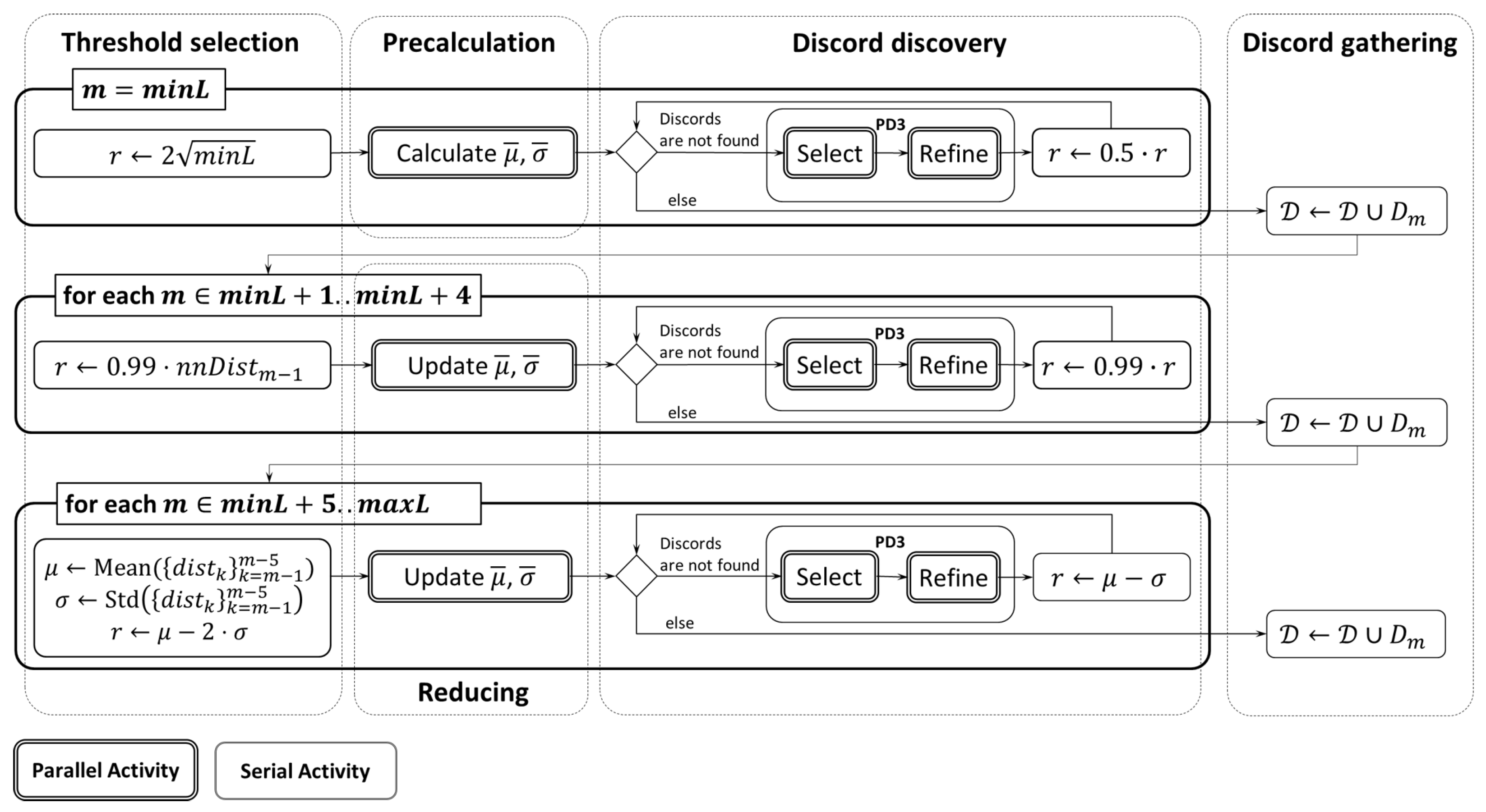
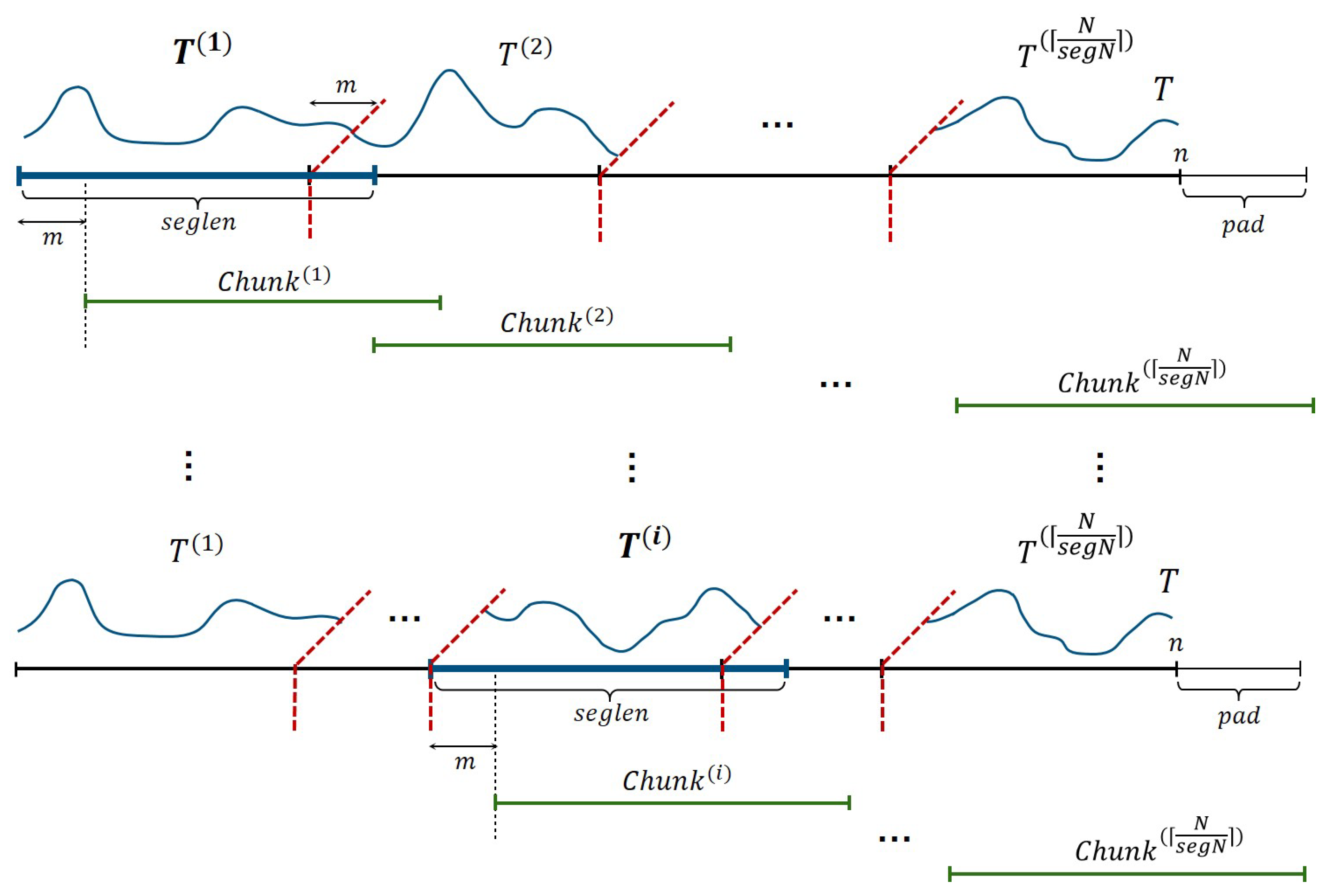
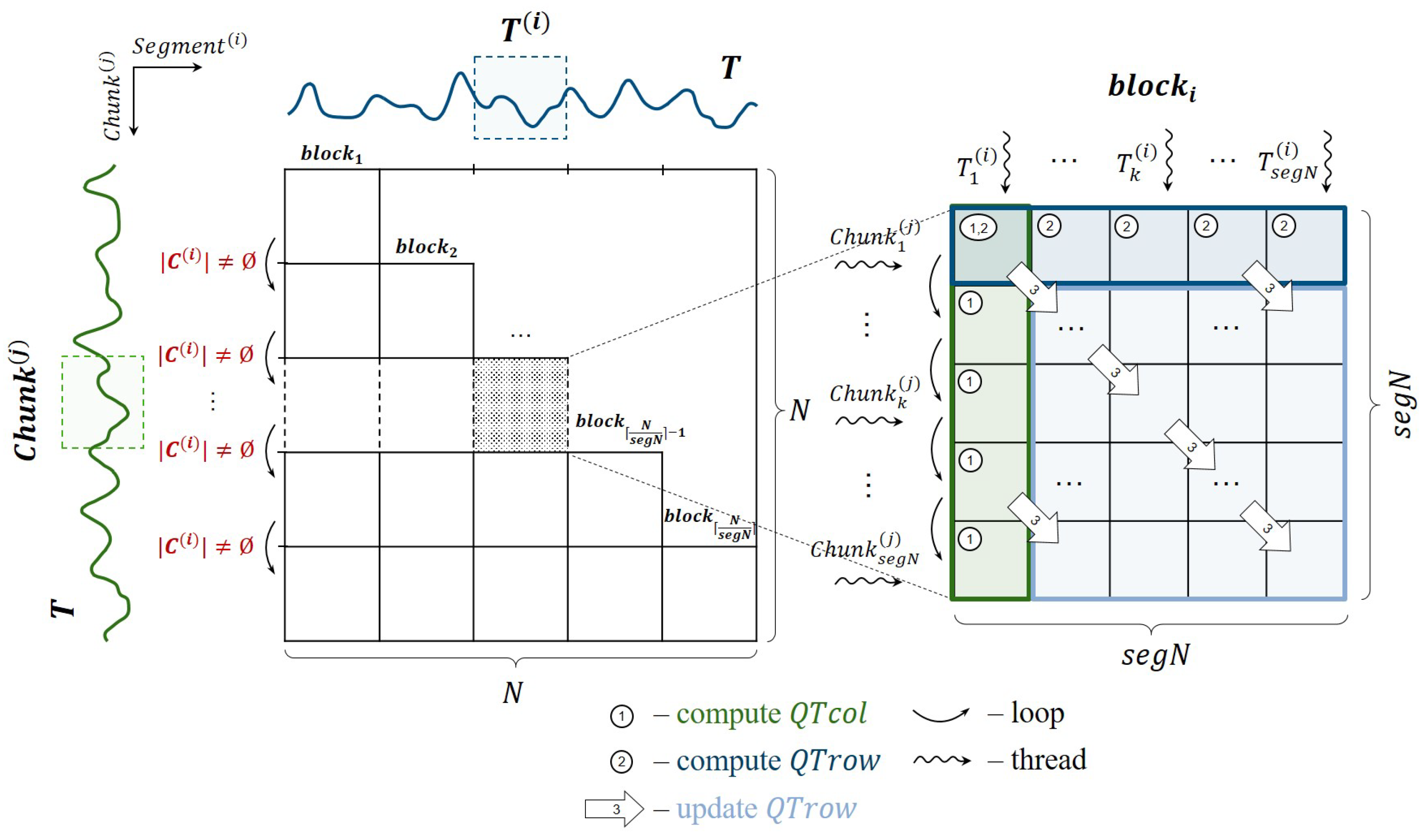
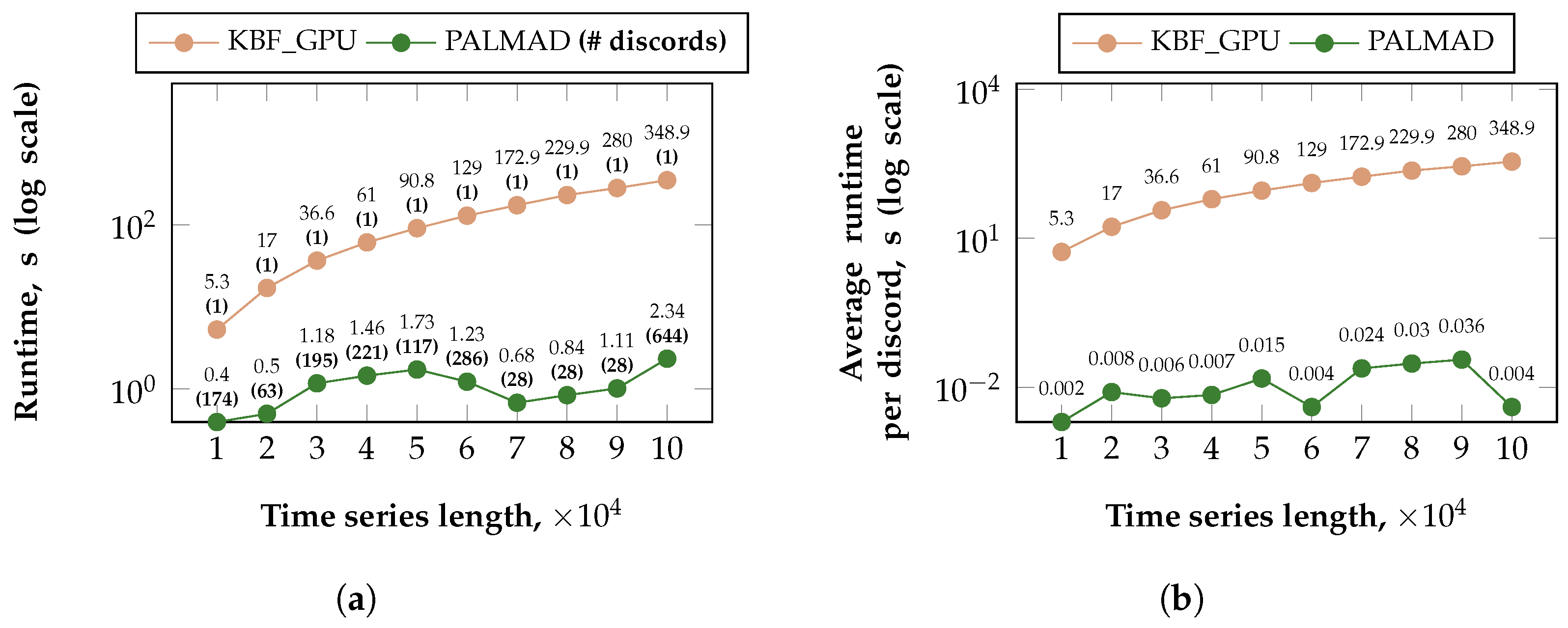
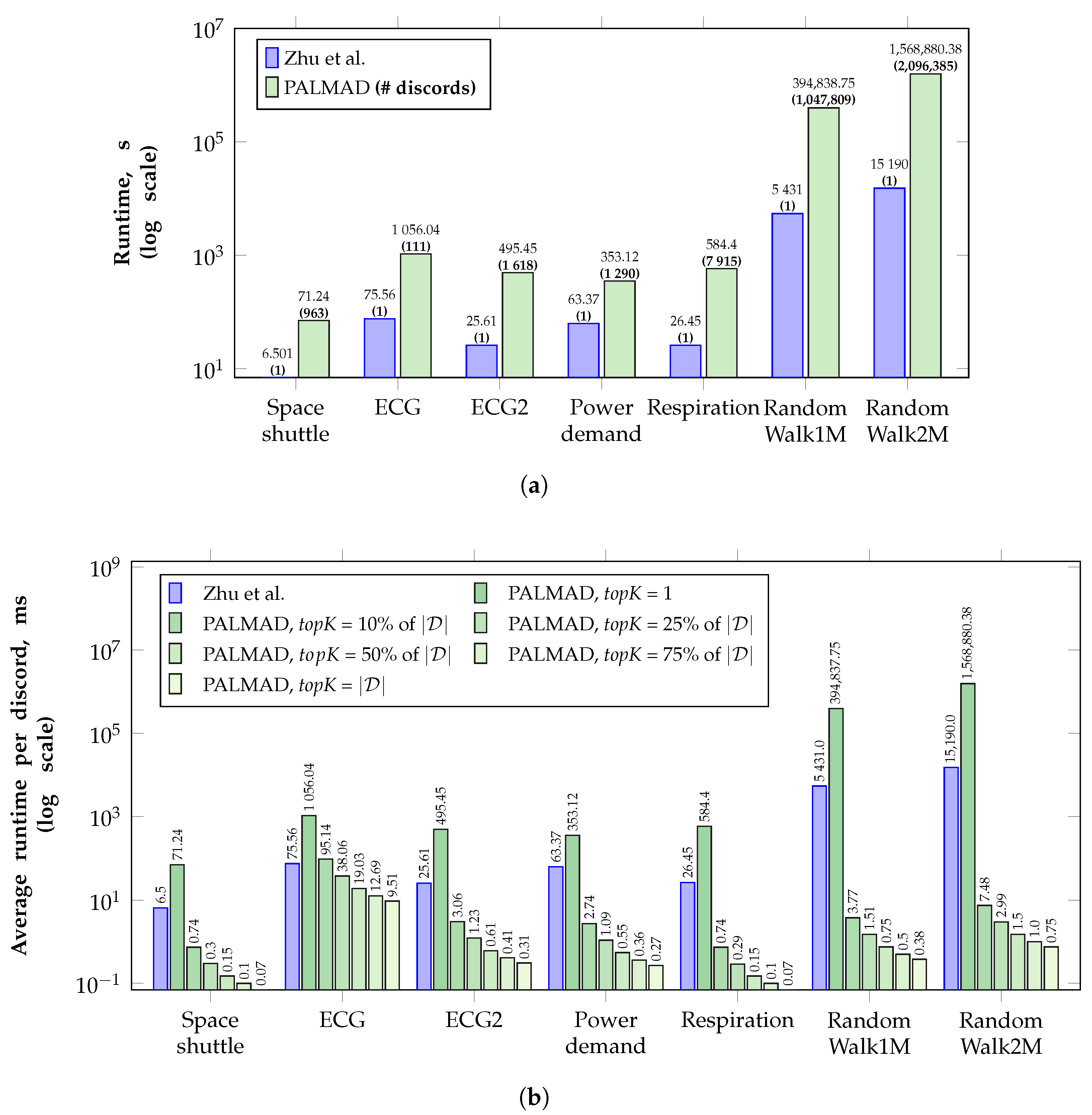
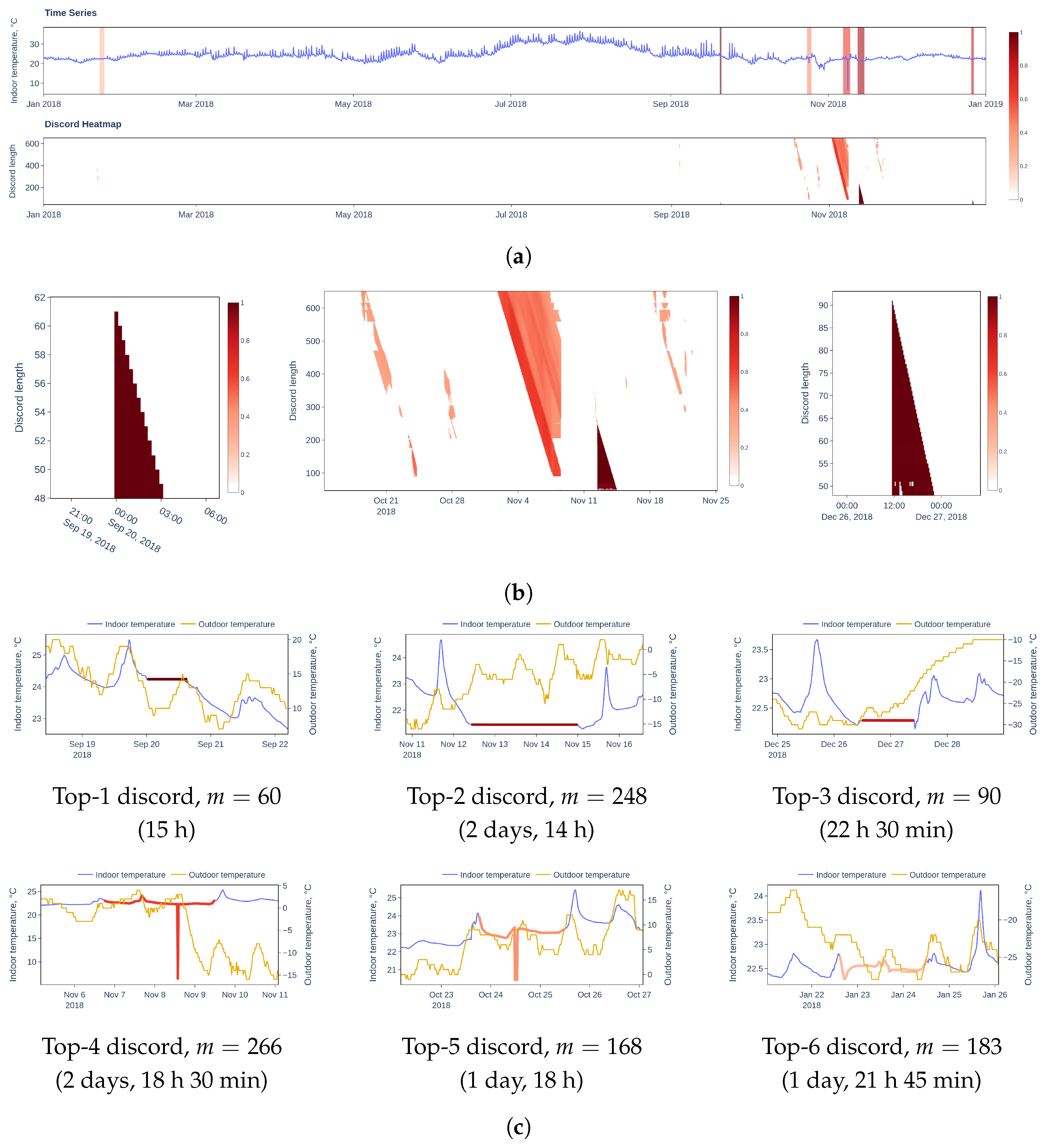
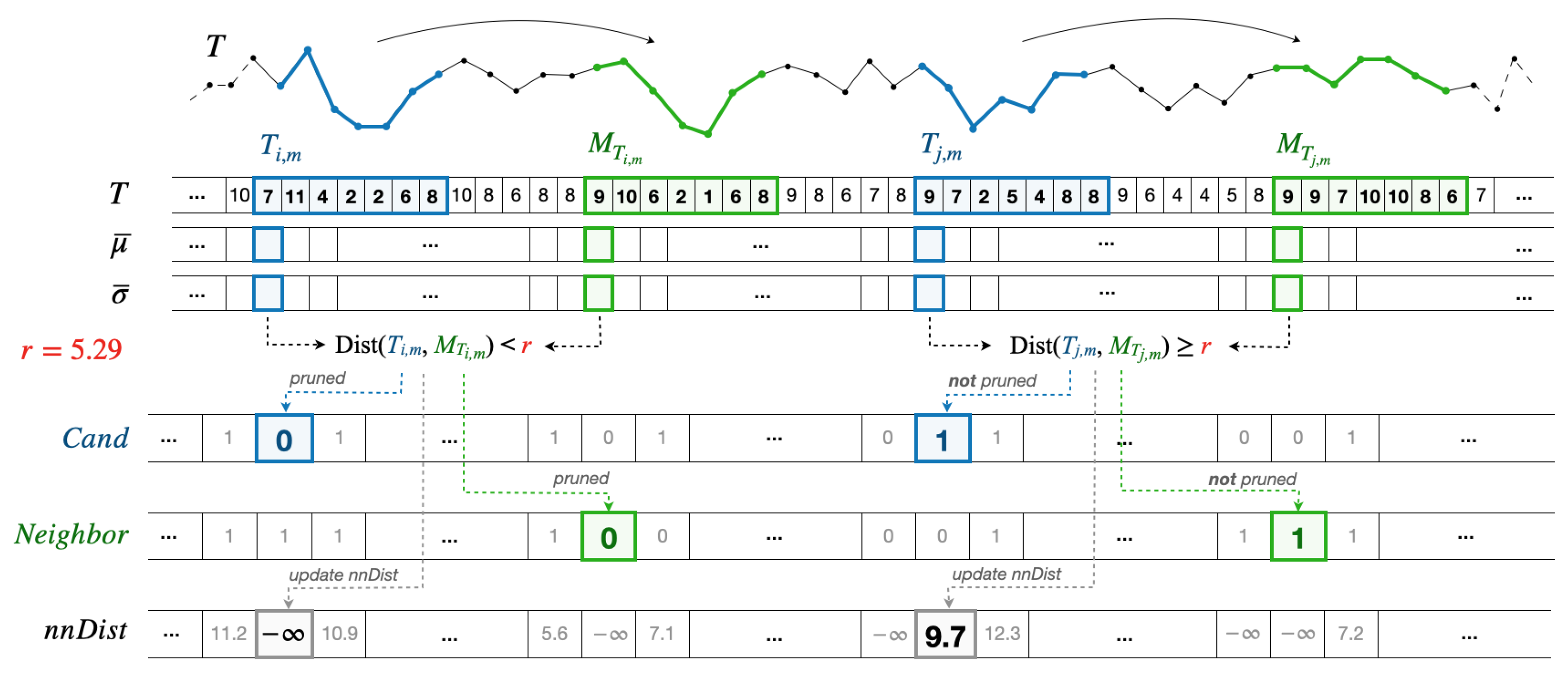
Currently, discovering subsequence anomalies in time series remains one of the most topical research problems. A subsequence anomaly refers to successive points in time that are collectively abnormal, although each point is not necessarily an outlier. Among numerous approaches to discovering subsequence anomalies, the discord concept is considered one of the best. A time series discord is intuitively defined as a subsequence of a given length that is maximally far away from its non-overlapping nearest neighbor. Recently introduced, the MERLIN algorithm discovers time series discords of every possible length in a specified range, thereby eliminating the need to set even that sole parameter to discover discords in a time series. However, MERLIN is serial, and its parallelization could increase the performance of discord discovery. In this article, we introduce a novel parallelization scheme for GPUs called PALMAD, parallel arbitrary length MERLIN-based anomaly discovery. As opposed to its serial predecessor, PALMAD employs recurrent formulas we have derived to avoid redundant calculations, and advanced data structures for the efficient implementation of parallel processing. Experimental evaluation over real-world and synthetic time series shows that our algorithm outperforms parallel analogs. We also apply PALMAD to discover anomalies in a real-world time series, employing our proposed discord heatmap technique to illustrate the results.
Keywords: time series; anomaly detection; discord; MERLIN; DRAG; parallel algorithm; GPU; CUDA time series; anomaly detection; discord; MERLIN; DRAG; parallel algorithm; GPU; CUDA