Article

Multi-View Learning-Based Fast Edge Embedding for Heterogeneous Graphs

1
School of Computer Science and Engineering, Hunan University of Science and Technology, Xiangtan 411201, China
2
Hunan Key Laboratory for Service Computing and Novel Software Technology, Xiangtan 411201, China
3
School of Information and Electrical Engineering, Hunan University of Science and Technology, Xiangtan 411201, China
*
Author to whom correspondence should be addressed.
Mathematics 2023, 11(13), 2974; https://doi.org/10.3390/math11132974
Submission received: 17 May 2023 / Revised: 26 June 2023 / Accepted: 30 June 2023 / Published: 3 July 2023
(This article belongs to the Special Issue Advances in Graph Theory: Algorithms and Applications)

Abstract

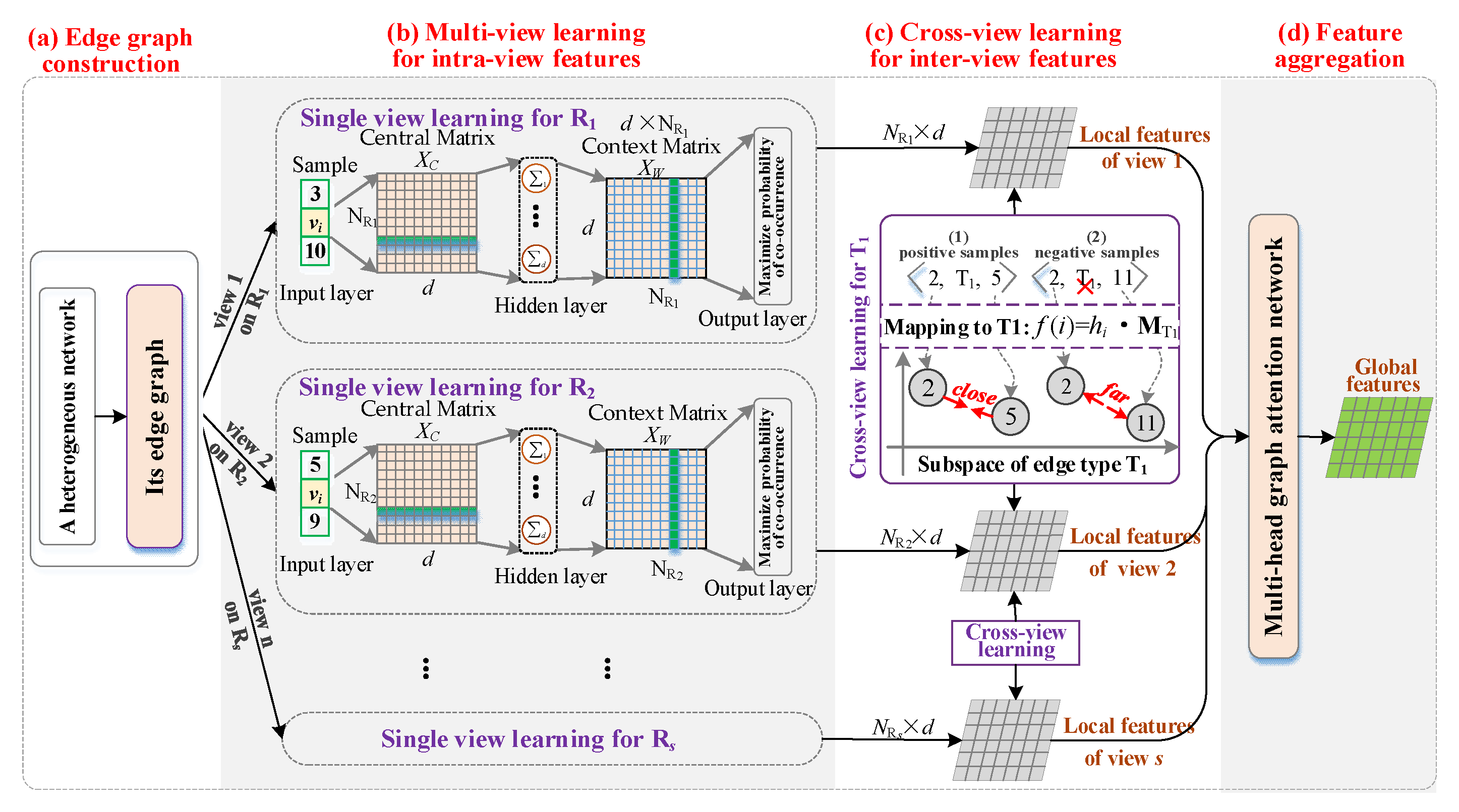
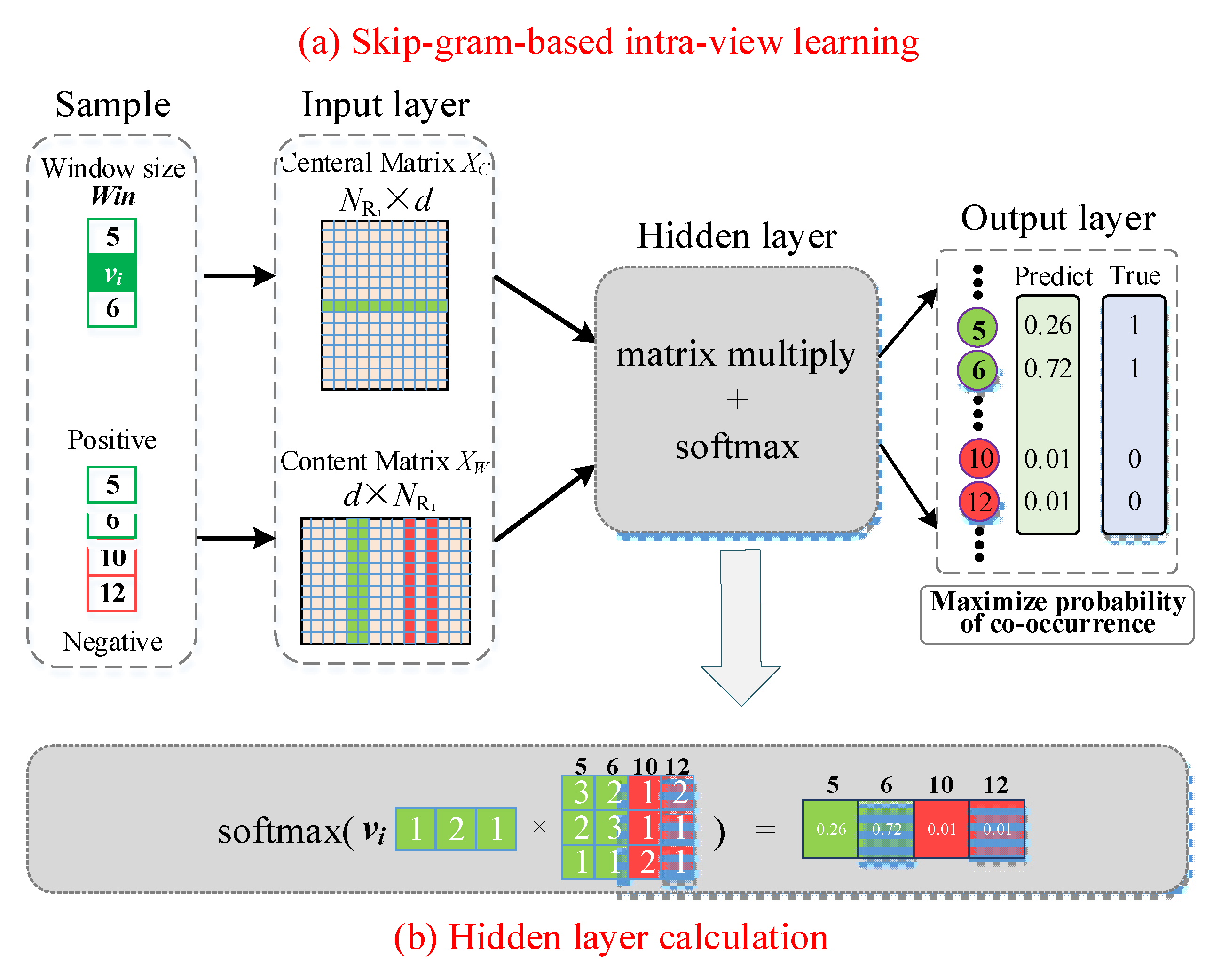
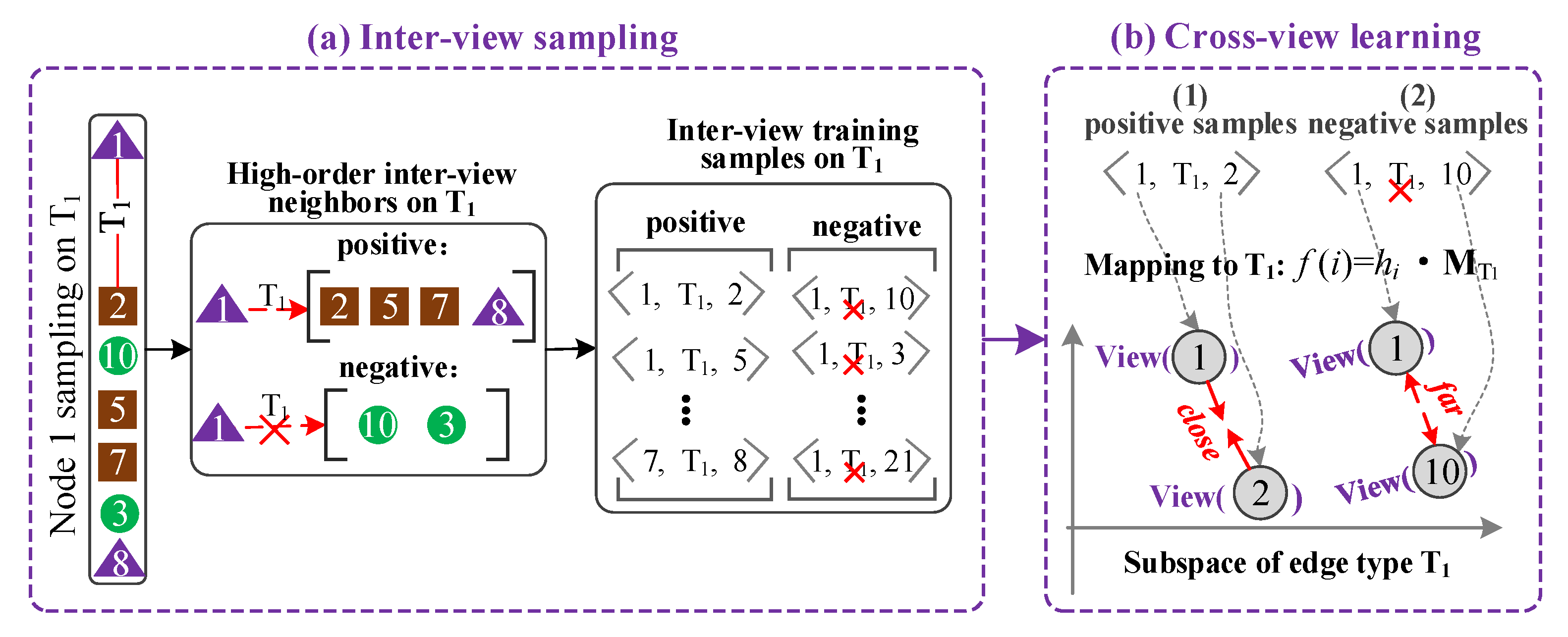
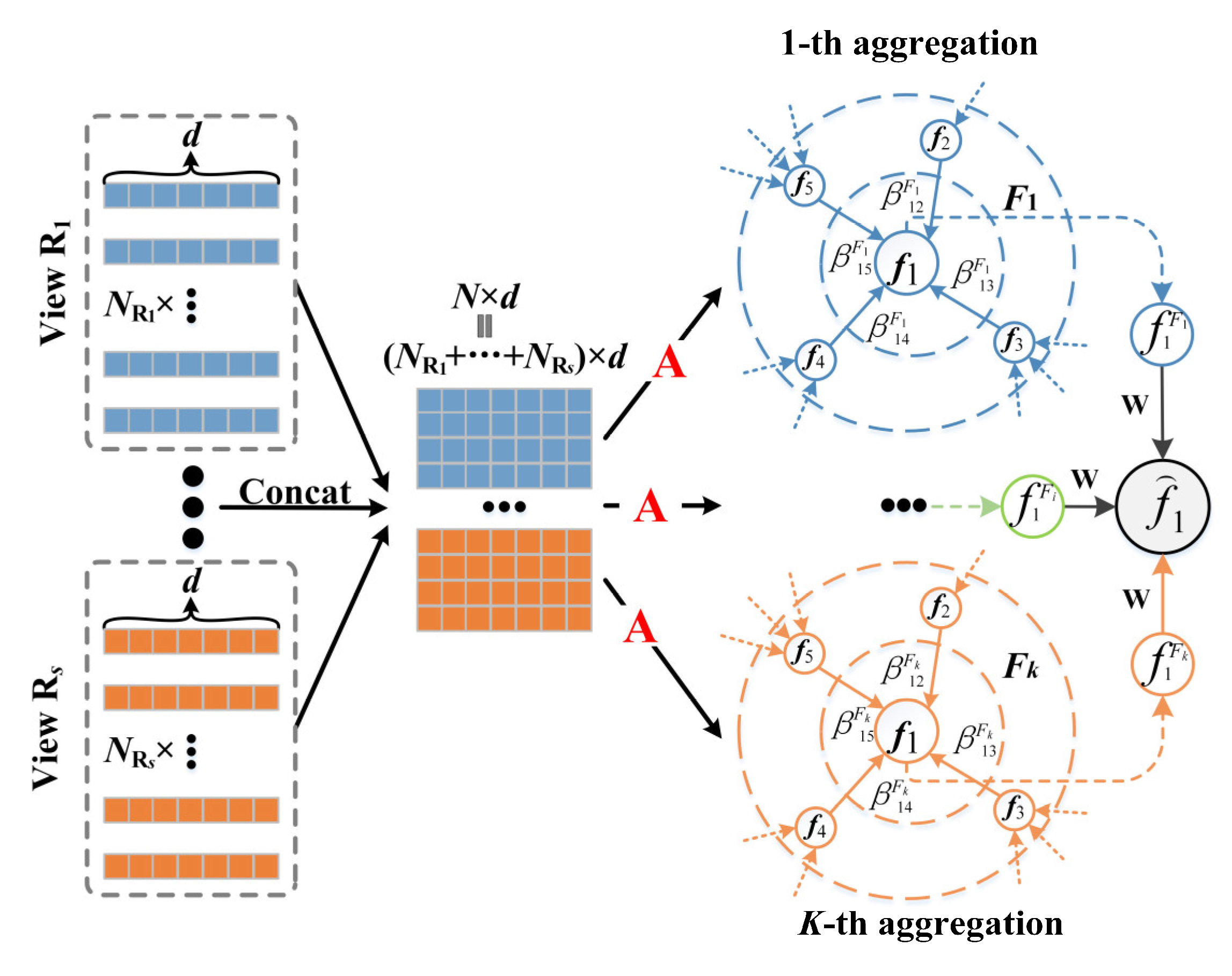
Edge embedding is a technique for constructing low-dimensional feature vectors of edges in heterogeneous graphs, which are also called heterogeneous information networks (HINs). However, edge embedding research is still in its early stages, and few well-developed models exist. Moreover, existing models often learn features on the edge graph, which is much larger than the original network, resulting in slower speed and inaccurate performance. To address these issues, a multi-view learning-based fast edge embedding model is developed for HINs in this paper, called MVFEE. Based on the “divide and conquer” strategy, our model divides the global feature learning into multiple separate local intra-view features learning and inter-view features learning processes. More specifically, each vertex type in the edge graph (each edge type in HIN) is first treated as a view, and a private skip-gram model is used to rapidly learn the intra-view features. Then, a cross-view learning strategy is designed to further learn the inter-view features between two views. Finally, a multi-head attention mechanism is used to aggregate these local features to generate accurate global features of each edge. Extensive experiments on four datasets and three network analysis tasks show the advantages of our model.
Keywords: divide and conquer; edge embedding; edge graph; heterogeneous graph; multi-view learning divide and conquer; edge embedding; edge graph; heterogeneous graph; multi-view learning