Article

How Connected Is China’s Systemic Financial Risk Contagion Network?—A Dynamic Network Perspective Analysis

School of Economics and Management, Beijing University of Posts and Telecommunications, Beijing 100876, China
*
Author to whom correspondence should be addressed.
Mathematics 2023, 11(10), 2267; https://doi.org/10.3390/math11102267
Submission received: 13 April 2023 / Revised: 9 May 2023 / Accepted: 10 May 2023 / Published: 12 May 2023
(This article belongs to the Special Issue Feature Papers in Complex Networks and Their Applications)

Abstract

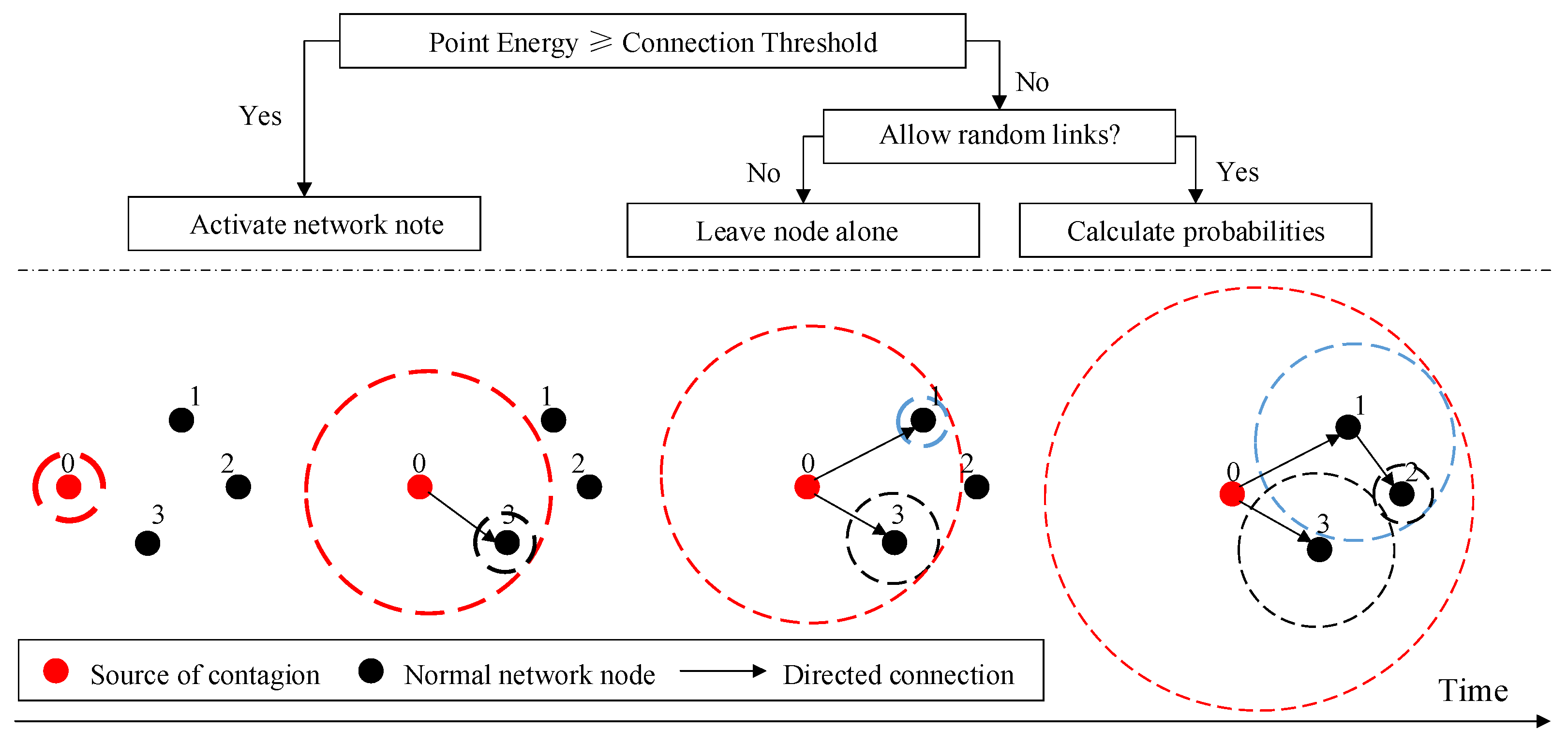
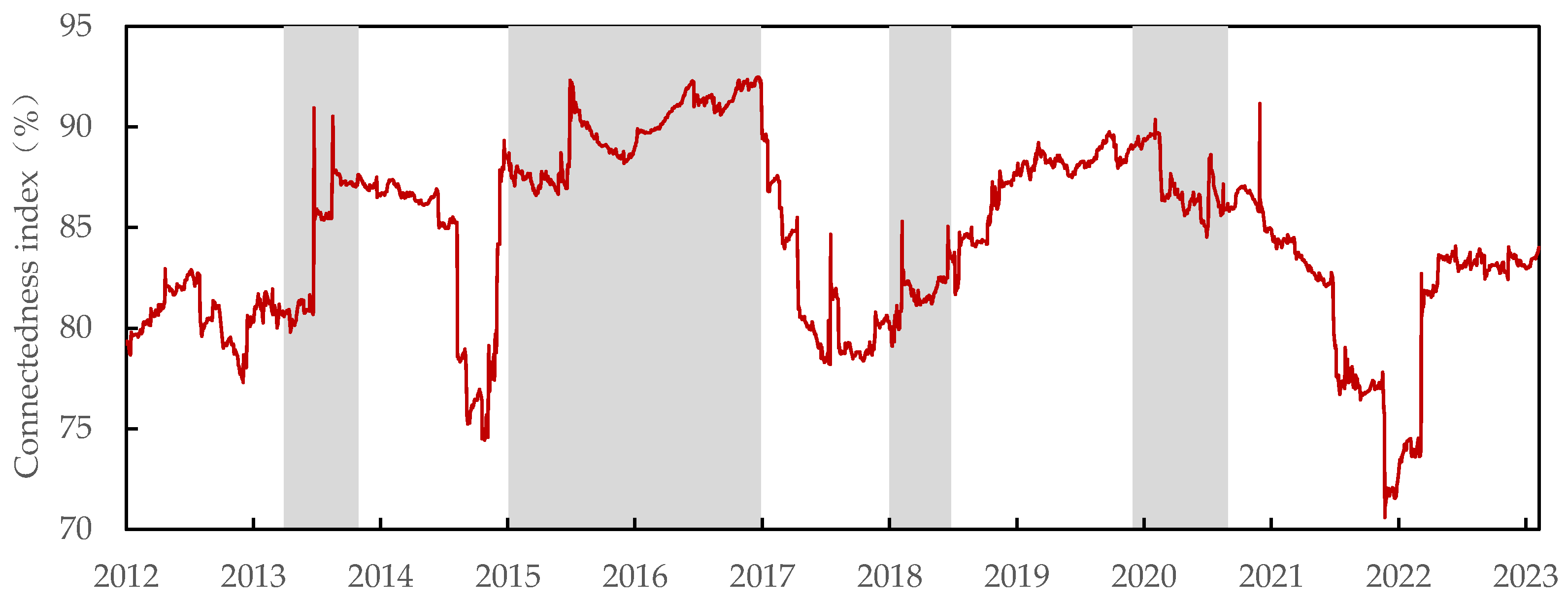
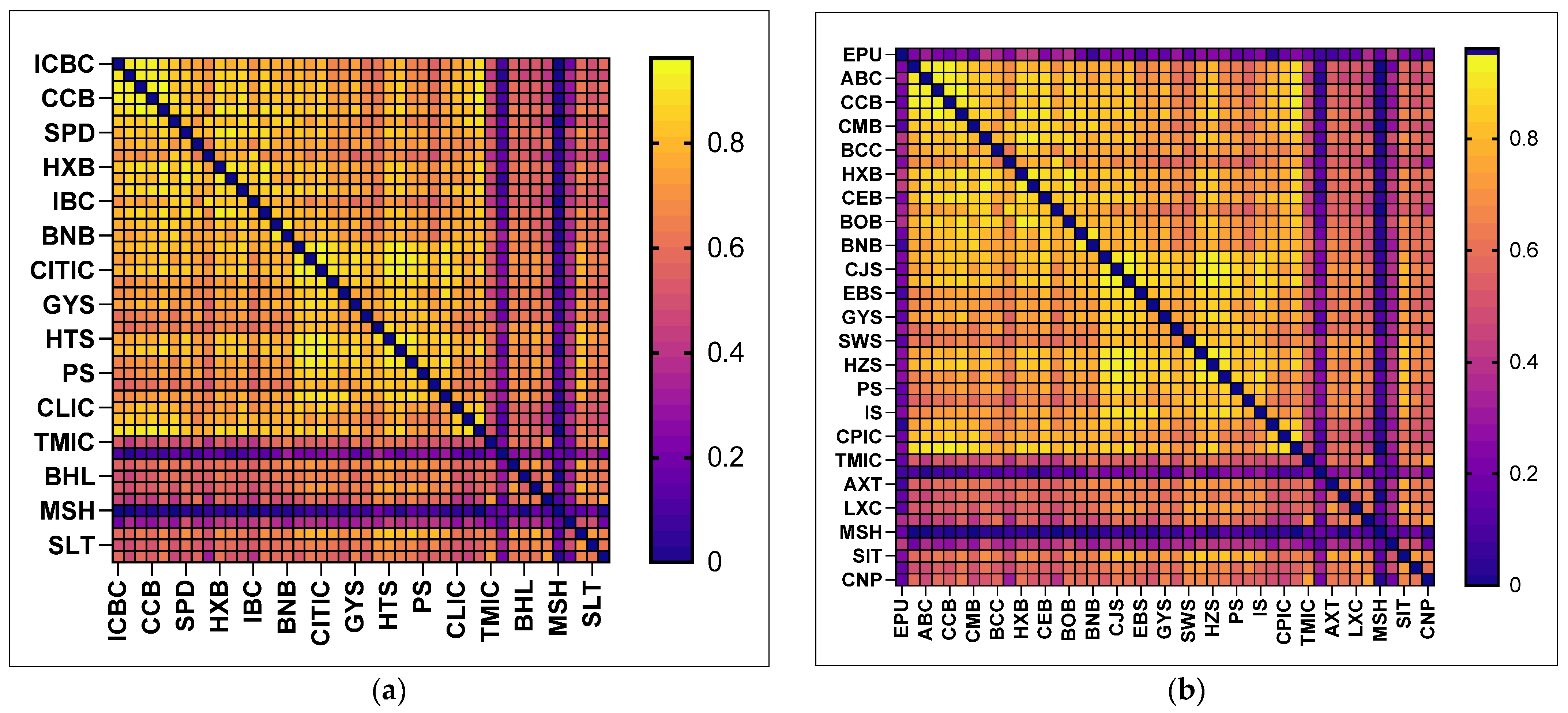
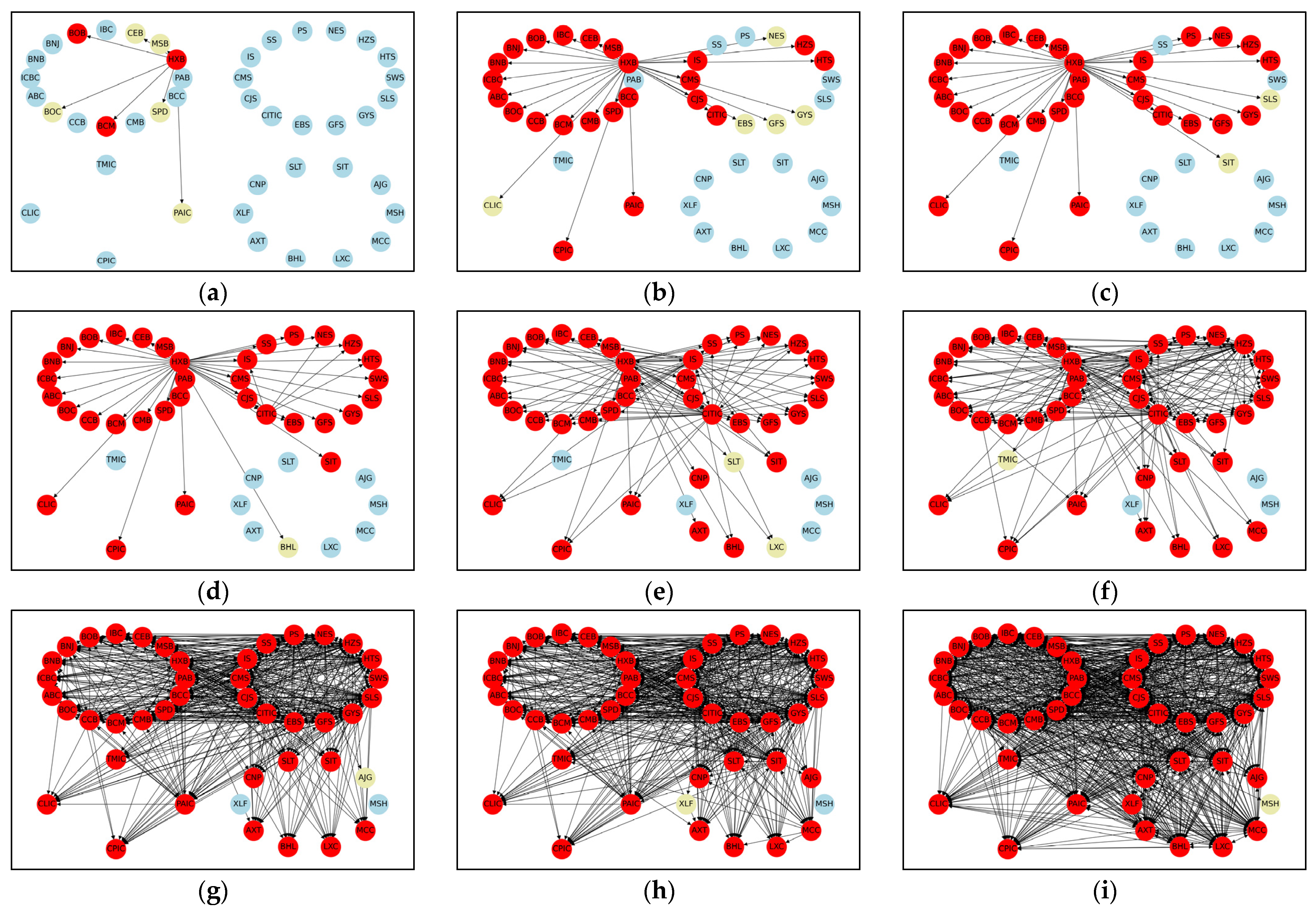
Modeling the effects and paths of systemic financial risk contagion is significant for financial stability. This paper focuses on China’s systemic financial risk from the perspective of dynamic networks. First, we construct a high-dimensional dynamic financial network model to capture risk contagion effects. Second, considering the ripple effect of financial risk contagion, we introduce and improve the basic model of the ripple-spreading network. Finally, small- and medium-sized banks and economic policy uncertainty are selected as the internal and external contagion source, respectively, to simulate the risk of ripple-spreading paths. The results show that financial contagion is more likely to occur within the same industry. The contagion triggered by internal shock first spreads within the same industry, and then to other industries. The contagion triggered by external shock first spreads to banks, then to diversified financial institutions, securities and insurance institutions, successively. Moreover, some small- and medium-sized commercial banks show strong abilities to spread risk ripples. The securities industry is the intermediary layer of the ripple network and plays a leading role in the ripple-spreading process. Therefore, systemic financial risk regulation should focus not only on large financial institutions but also on financial institutions with strong ripple effects. During major risk events, isolating risk intermediary nodes can cut off the paths of risk contagion and mitigate the impact on the whole financial system effectively.
Keywords: systemic financial risk; financial contagion; high-dimensional risk contagion network; ripple-spreading network; external shock systemic financial risk; financial contagion; high-dimensional risk contagion network; ripple-spreading network; external shock