Article

Description of the Distribution Law and Non-Linear Dynamics of Growth of Comments Number in News and Blogs Based on the Fokker-Planck Equation
1
Institute of Cybersecurity and Digital Technologies, MIREA-Russian Technological University, 78 Vernadsky Avenue, 119454 Moscow, Russia
2
Institute of Radio Electronics and Computer Science, MIREA-Russian Technological University, 78 Vernadsky Avenue, 119454 Moscow, Russia
*
Author to whom correspondence should be addressed.
Mathematics 2022, 10(6), 989; https://doi.org/10.3390/math10060989
Submission received: 12 January 2022 / Revised: 14 March 2022 / Accepted: 16 March 2022 / Published: 19 March 2022
(This article belongs to the Special Issue Applied and Computational Mathematics for Digital Environments)

Abstract

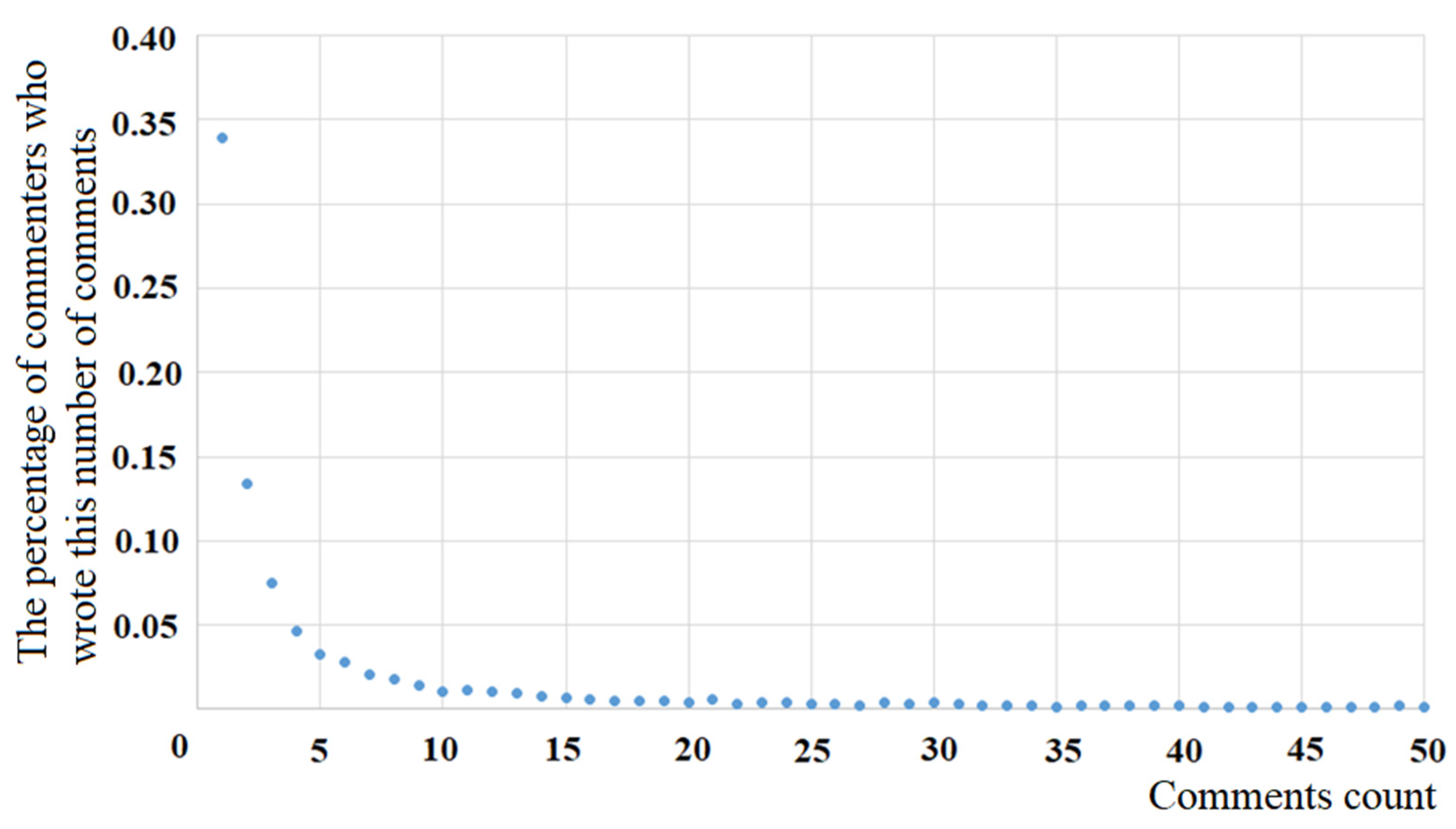
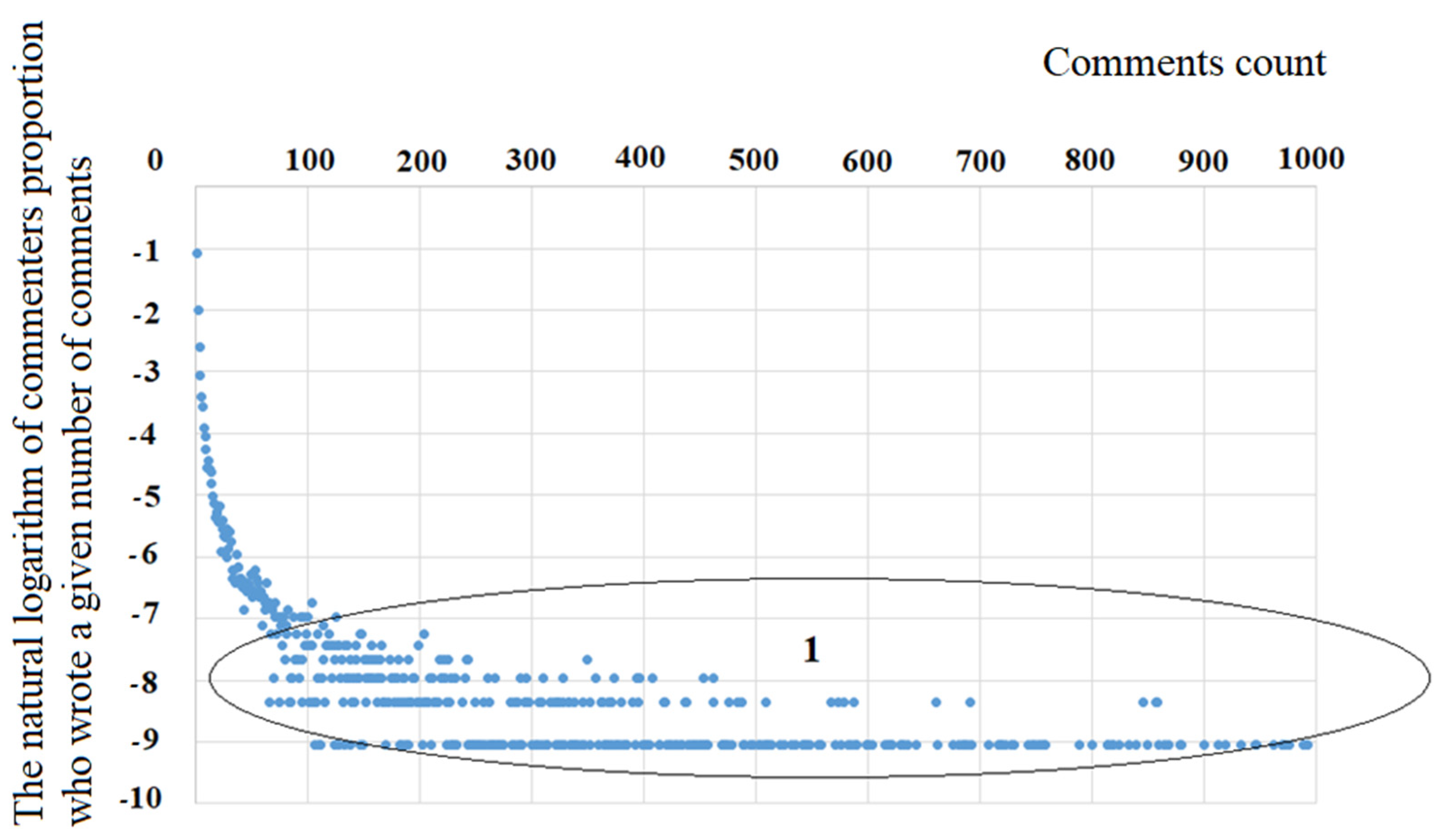
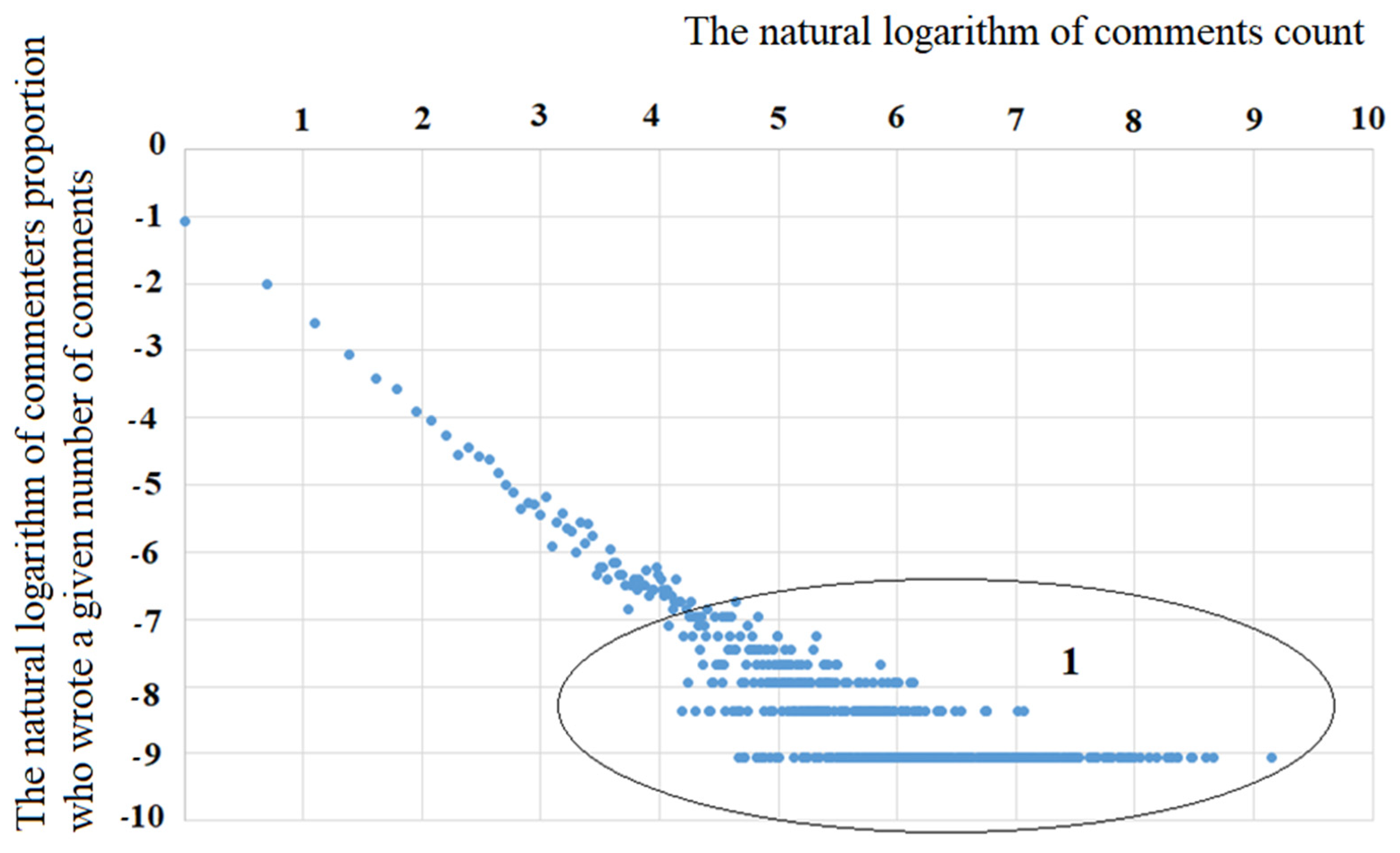
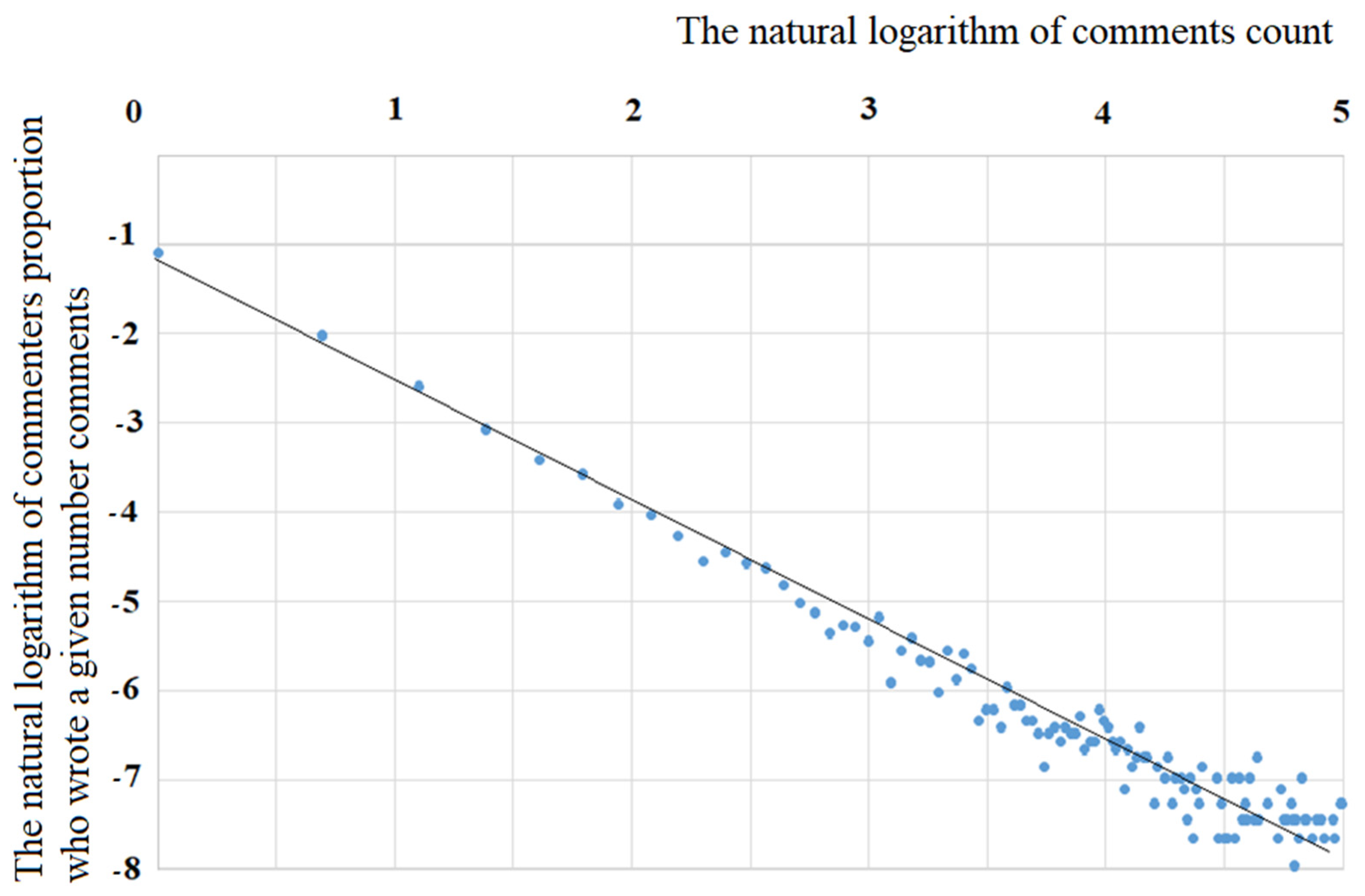
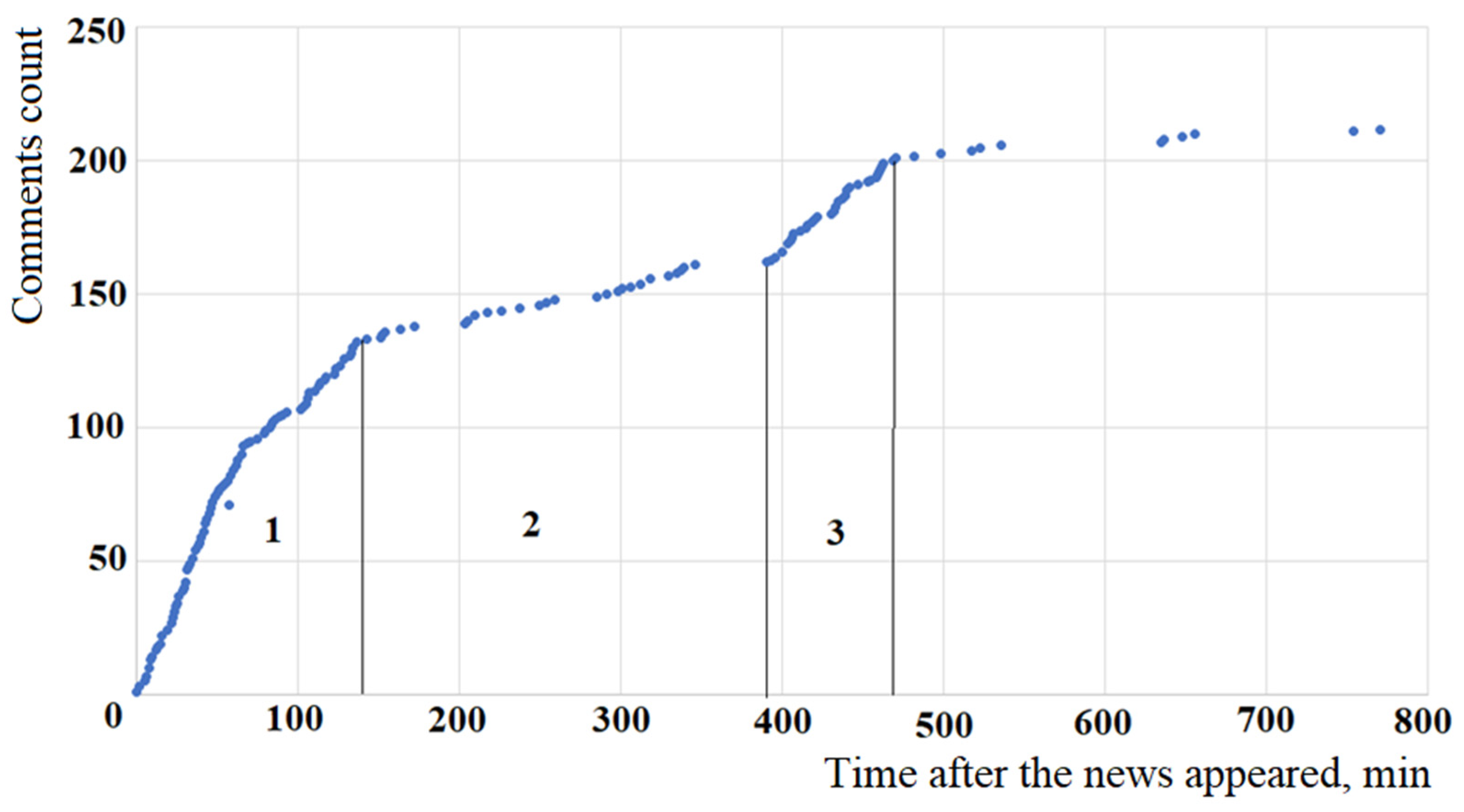
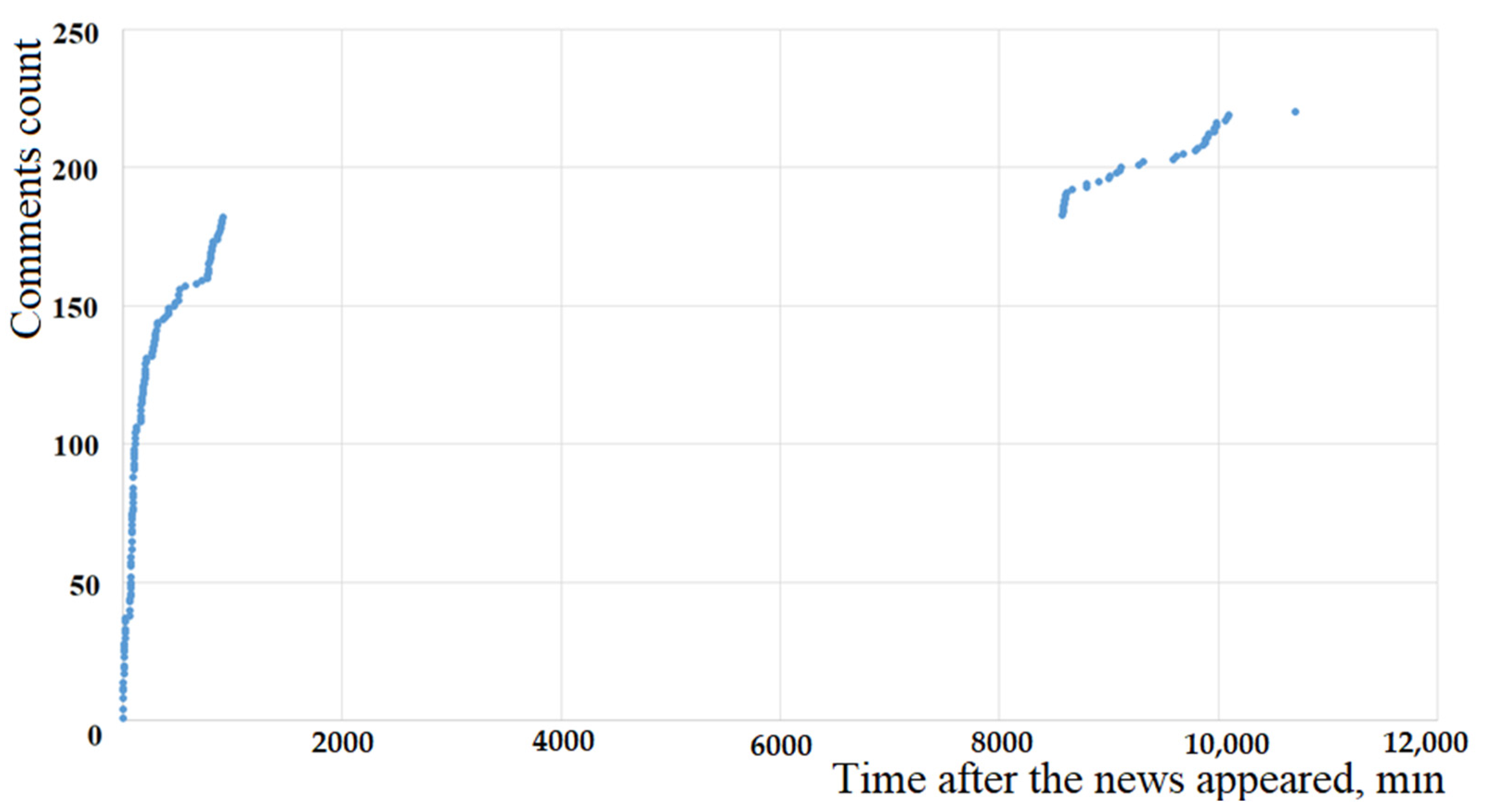
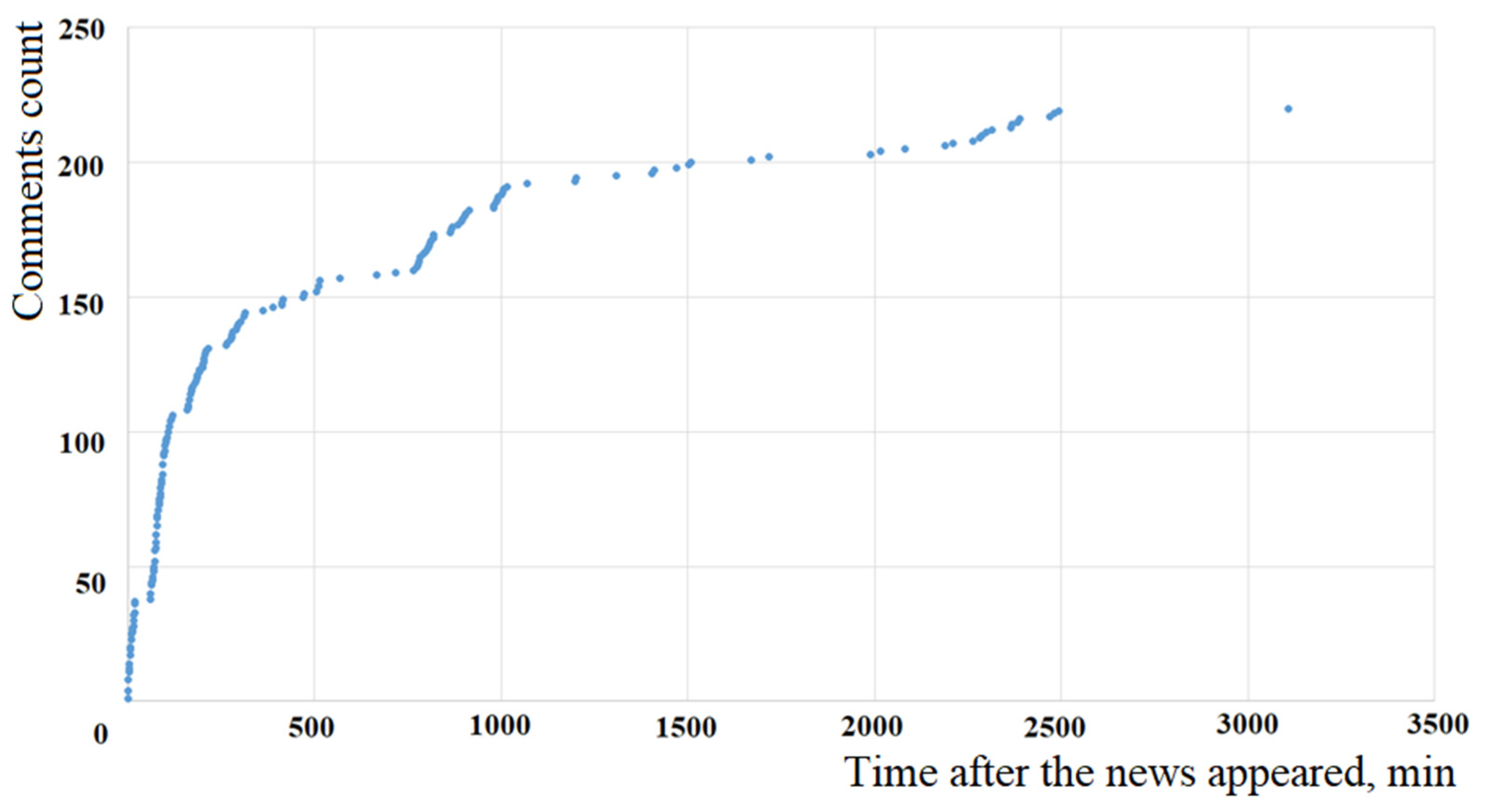
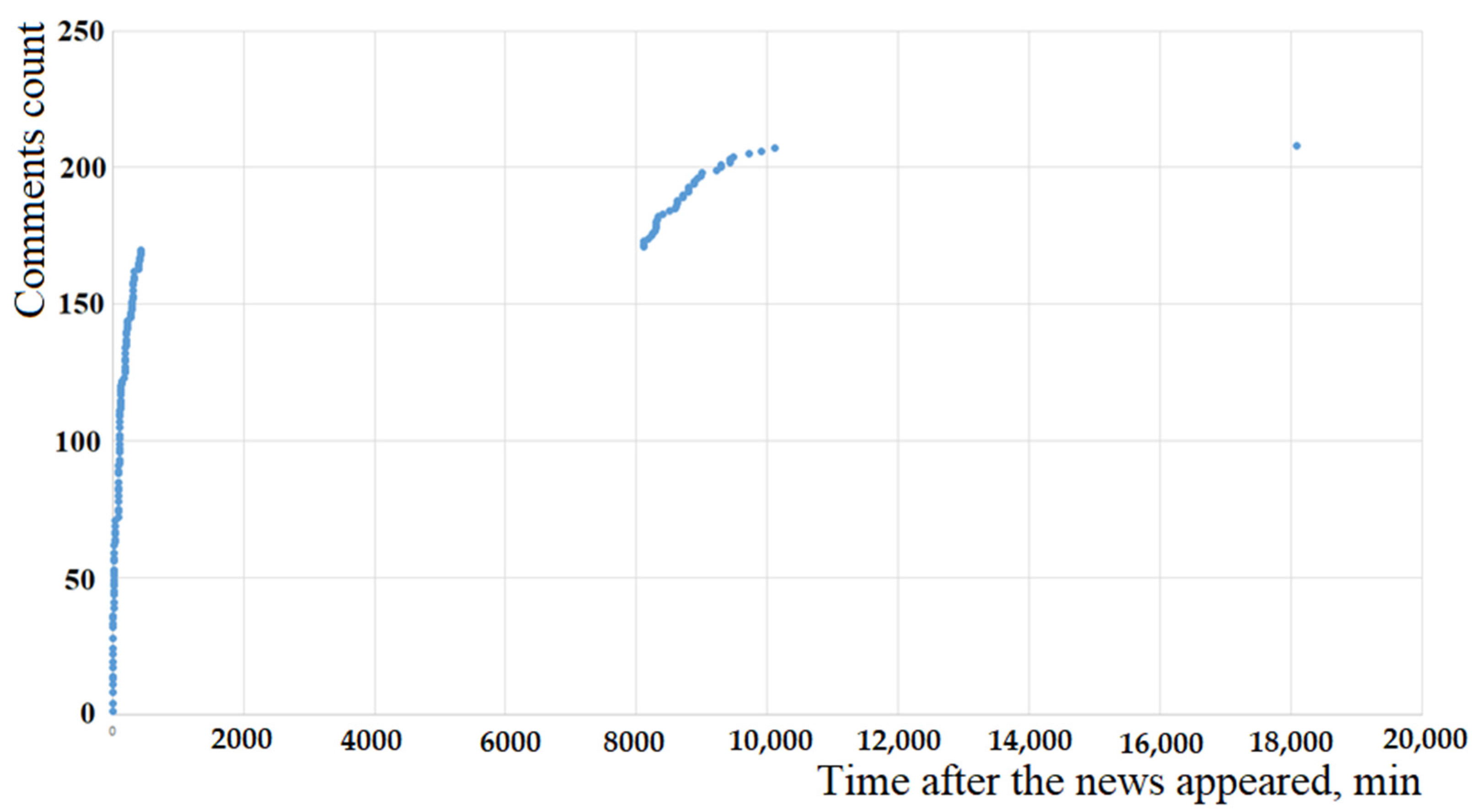
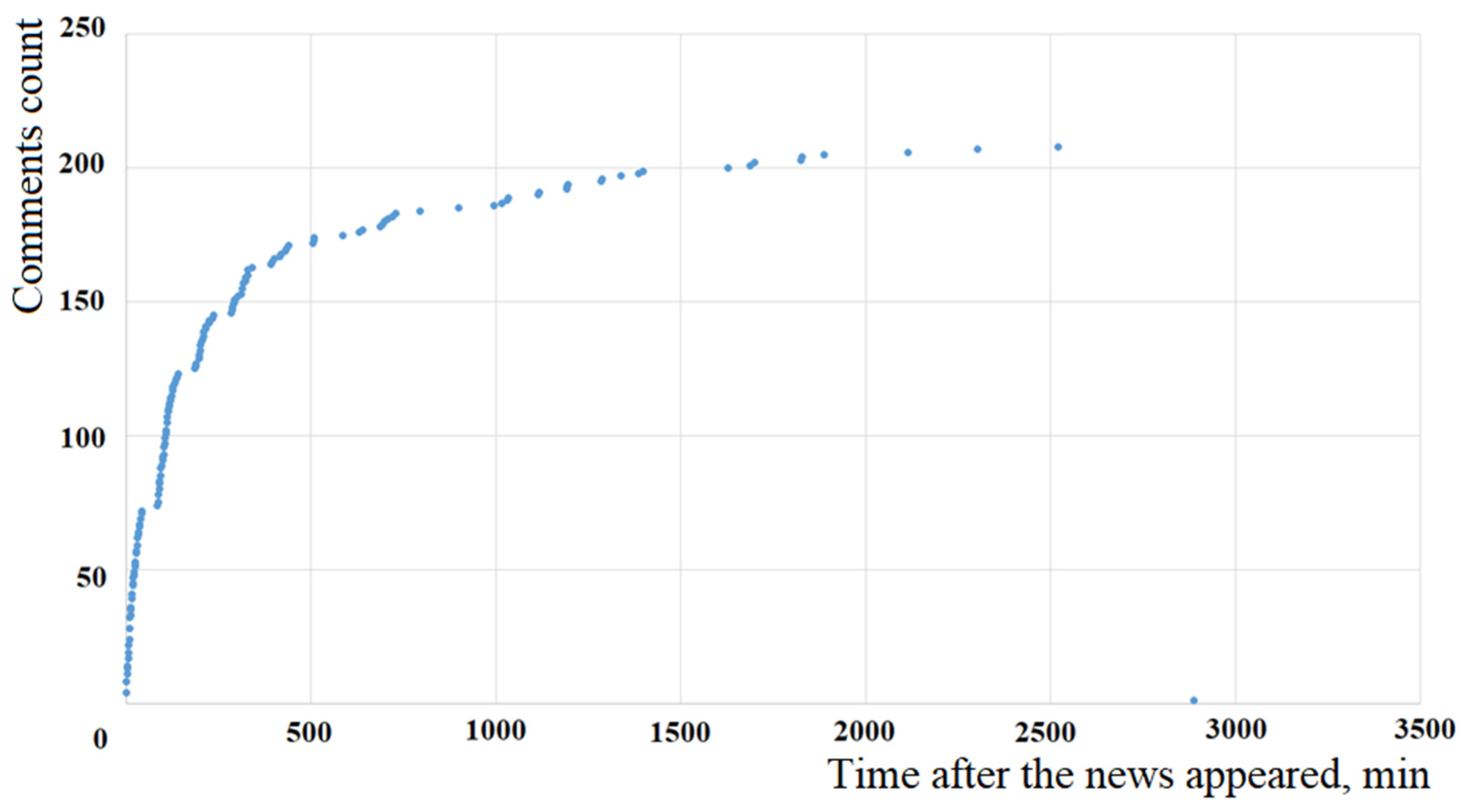
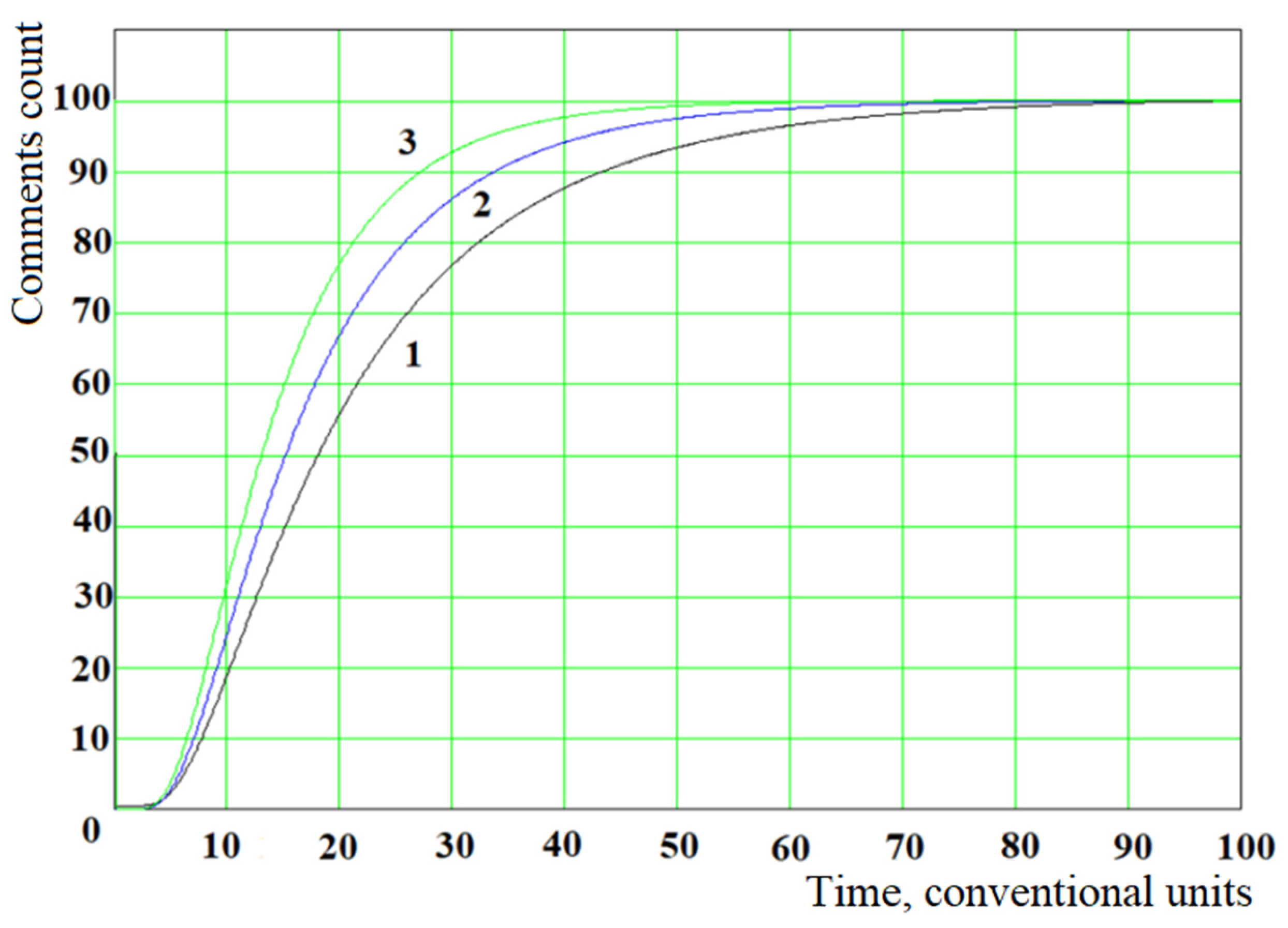
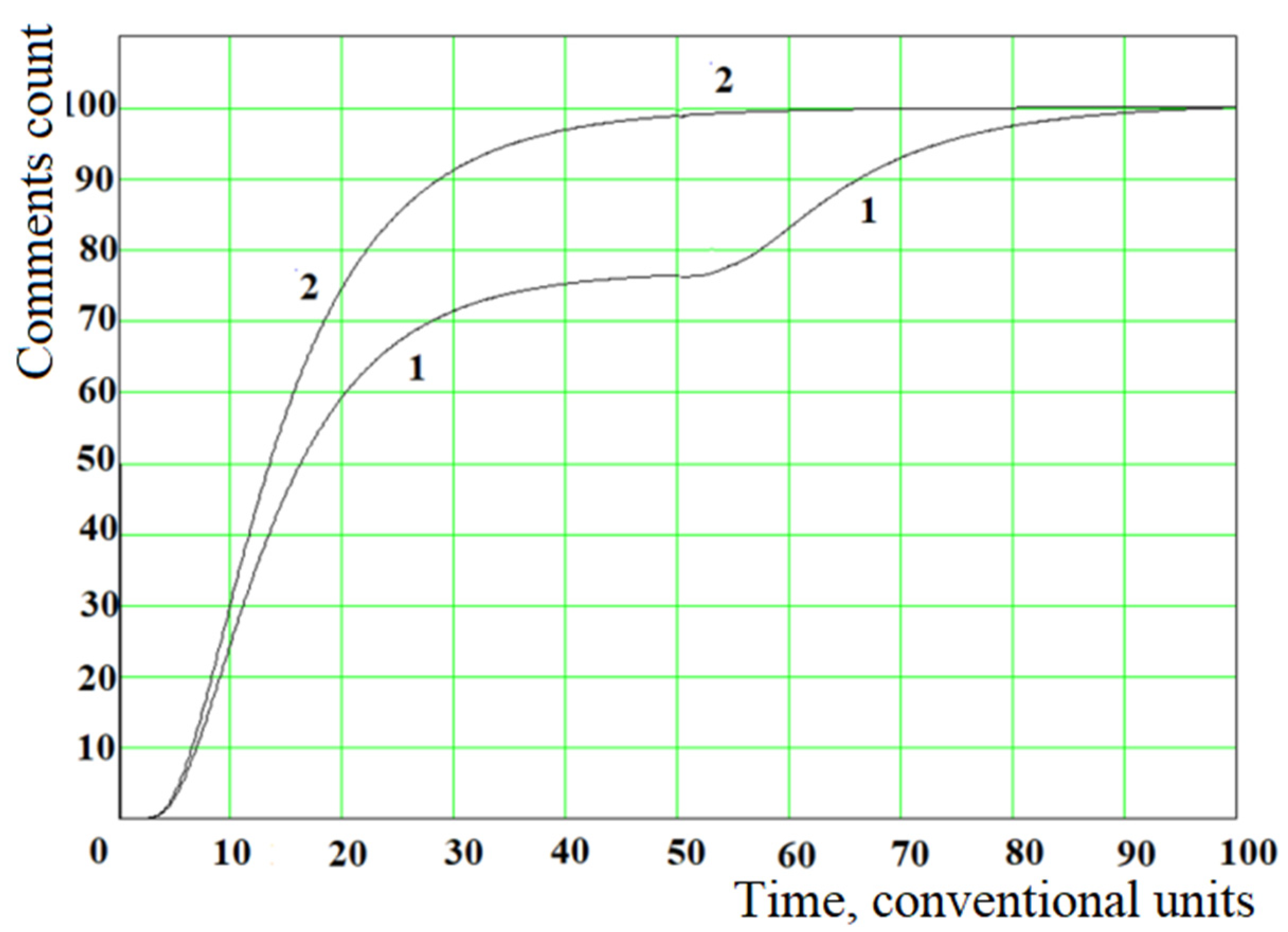
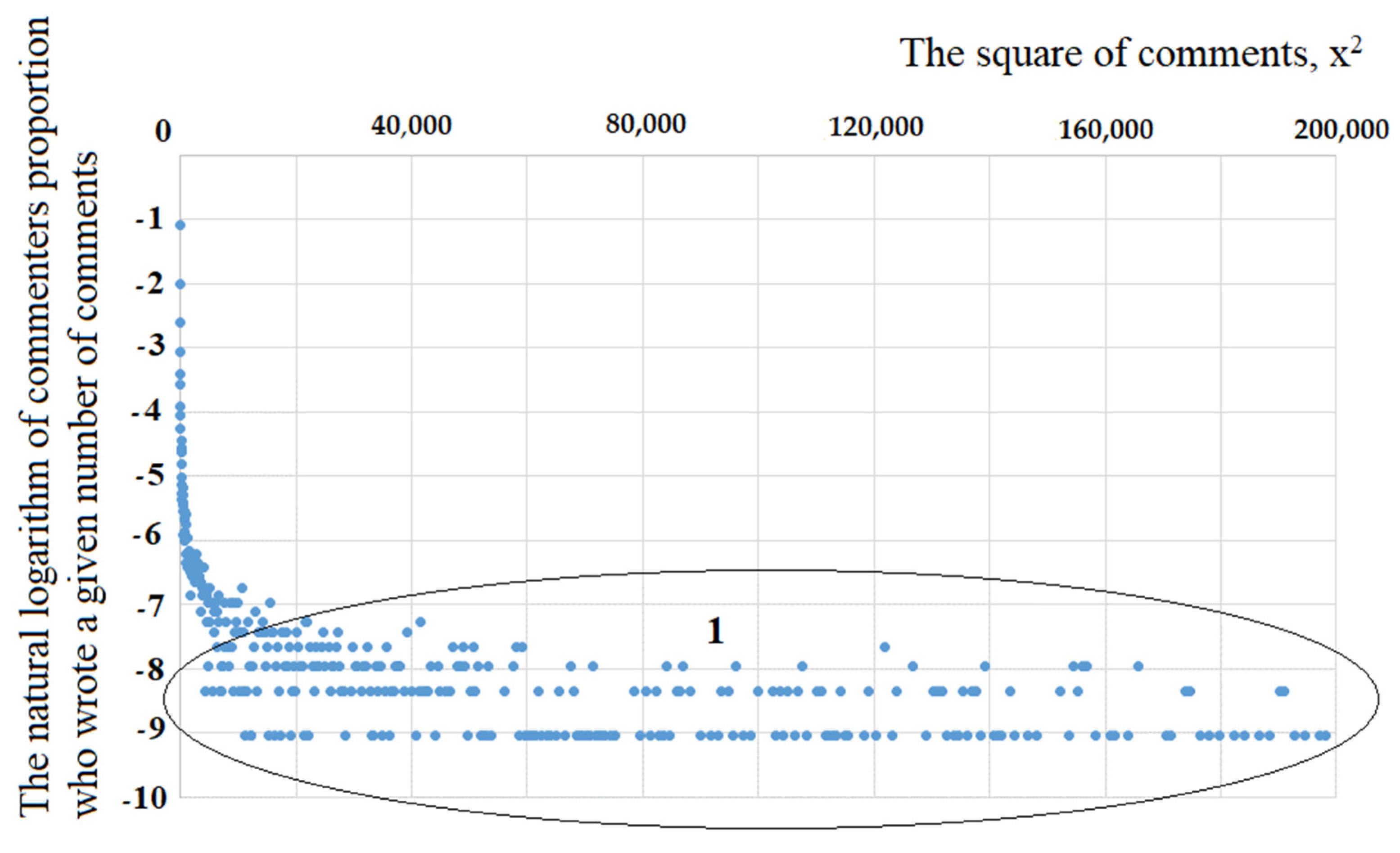
The article considers stationary and dynamic distributions of news by the number of comments. The processing of the observed data showed that static distribution of news by the number of comments relating to that news obeys a power law, and the dynamic distribution (the change in number of comments over time) in some cases has an S-shaped character, and in some cases a more complex two-stage character. This depends on the time interval between the appearance of a comment at the first level and a comment attached to that comment. The power law for the stationary probability density of news distribution by the number of comments can be obtained from the solution of the stationary Fokker-Planck equation, if a number of assumptions are made in its derivation. In particular, we assume that the drift coefficient μ(x) responsible in the Fokker-Planck equation for a purposeful change in the state of system x (x is the current number of comments on that piece of news) linearly depends on the state x, and the diffusion coefficient D(x) responsible for a random change depends quadratically on x. The solution of the unsteady Fokker-Planck differential equation with these assumptions made it possible to obtain an analytical equation for the probability density of transitions between the states of the system per unit of time, which is in good agreement with the observed data, considering the effect of the delay time between the appearance of the first-level comment and the comment on that comment.
Keywords: nonlinear dynamics; processes in social systems; Fokker-Planck equation; power law; monitoring; management nonlinear dynamics; processes in social systems; Fokker-Planck equation; power law; monitoring; management