Article

Effect of a Novel Tooth Pitting Model on Mesh Stiffness and Vibration Response of Spur Gears

1
School of Mechanical, Electronic and Control Engineering, Beijing Jiaotong University, Beijing 100044, China
2
State Key Laboratory of Mechanical Behavior and System Safety of Traffic Engineering Structures, Shijiazhuang Tiedao University, Shijiazhuang 050043, China
3
School of Mechanical Engineering, Shijiazhuang Tiedao University, Shijiazhuang 050043, China
*
Author to whom correspondence should be addressed.
Mathematics 2022, 10(3), 471; https://doi.org/10.3390/math10030471
Submission received: 15 December 2021 / Revised: 22 January 2022 / Accepted: 28 January 2022 / Published: 31 January 2022
(This article belongs to the Special Issue Mathematical Method and Application of Machine Learning)

Abstract

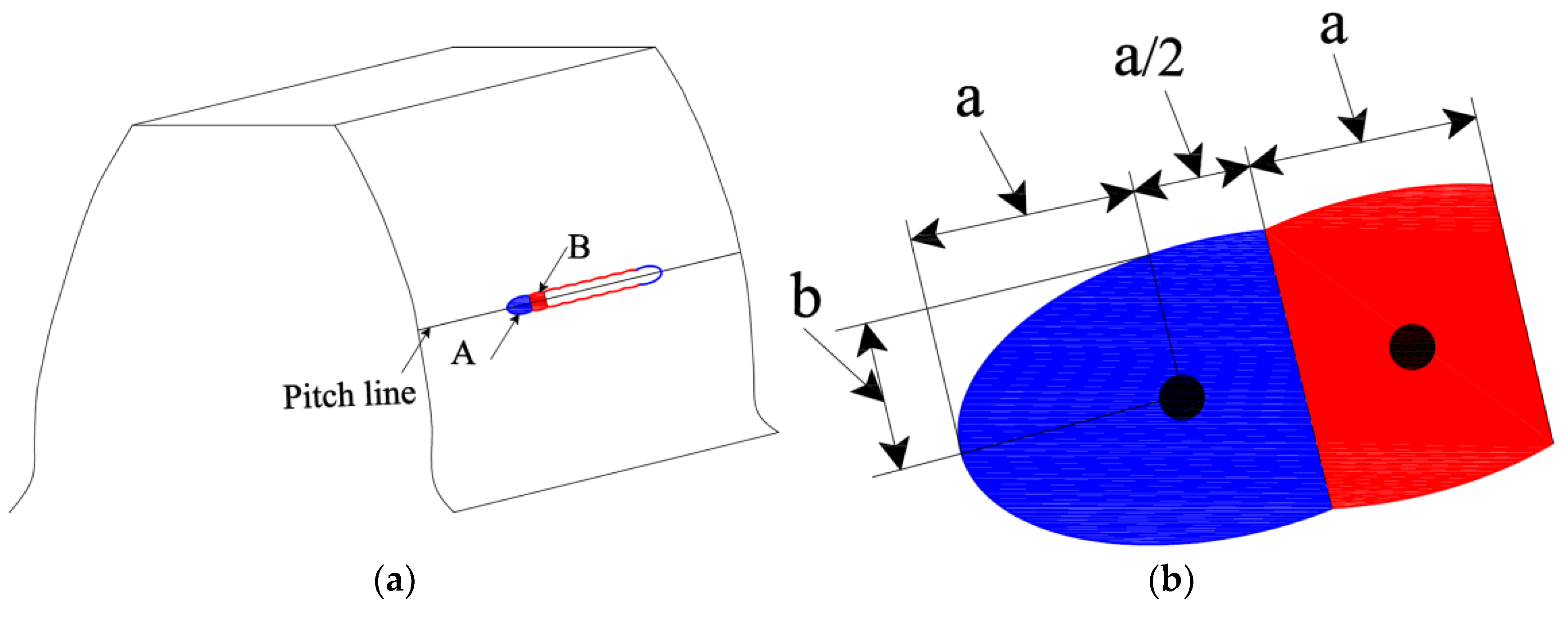
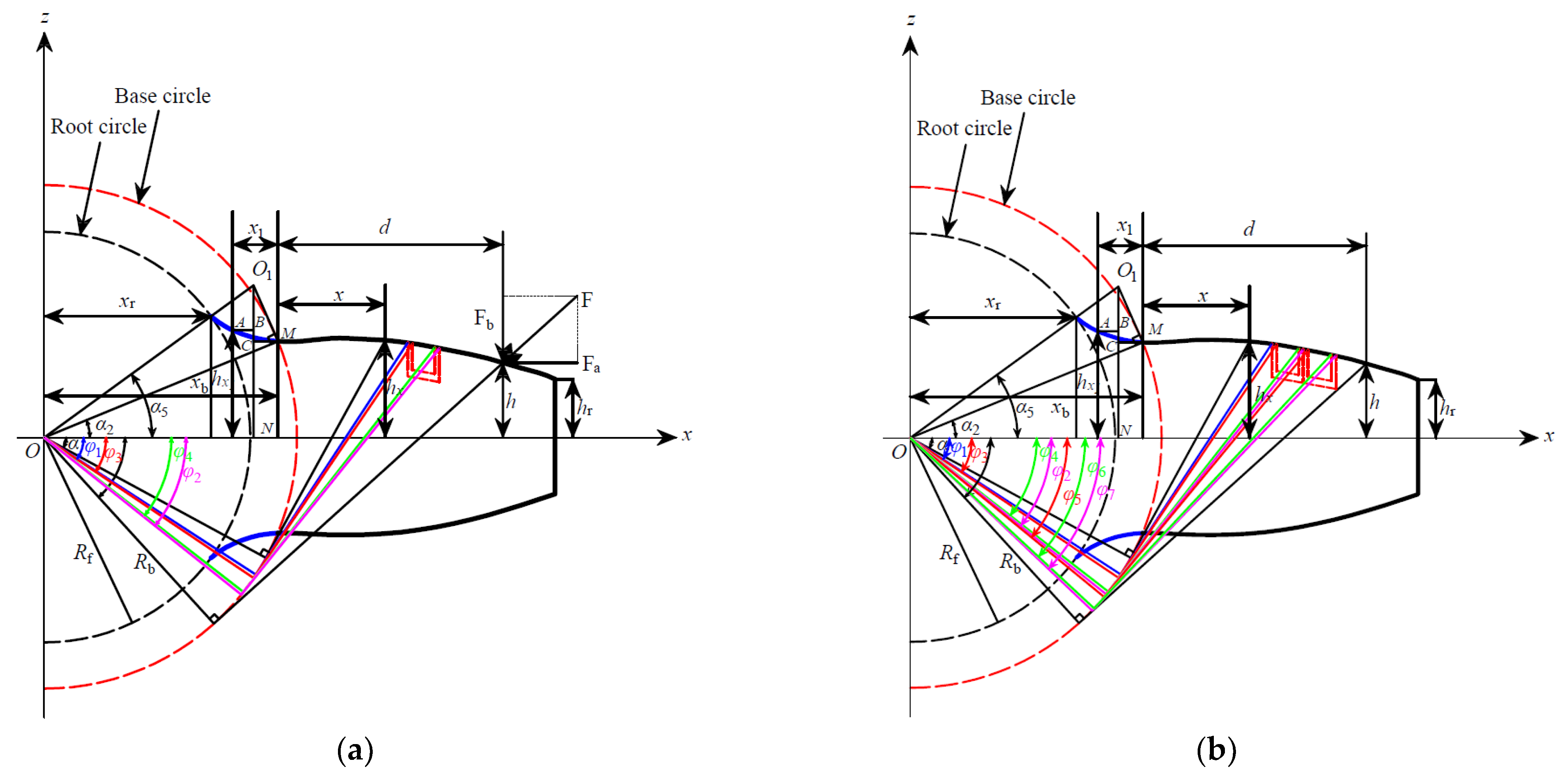
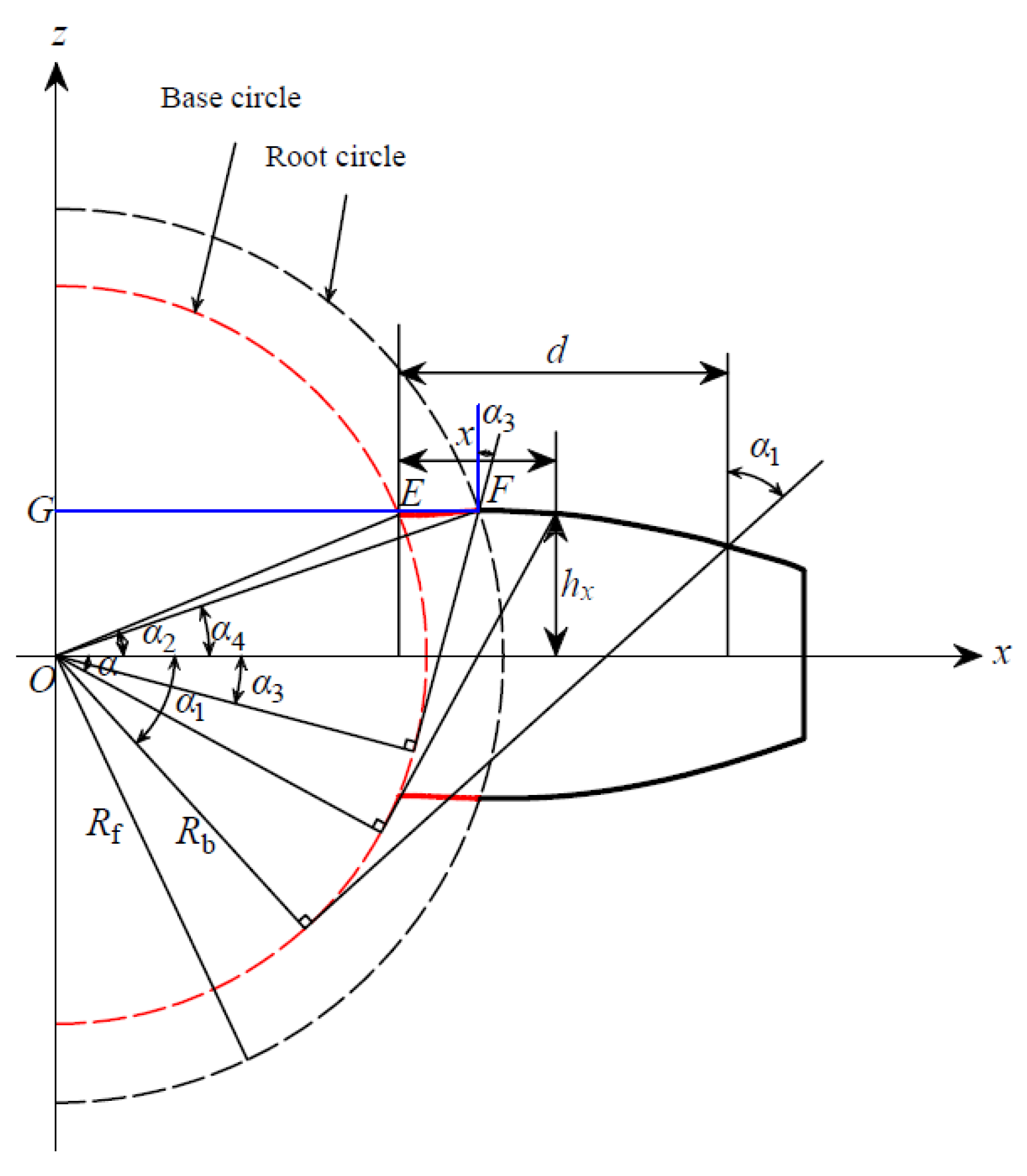
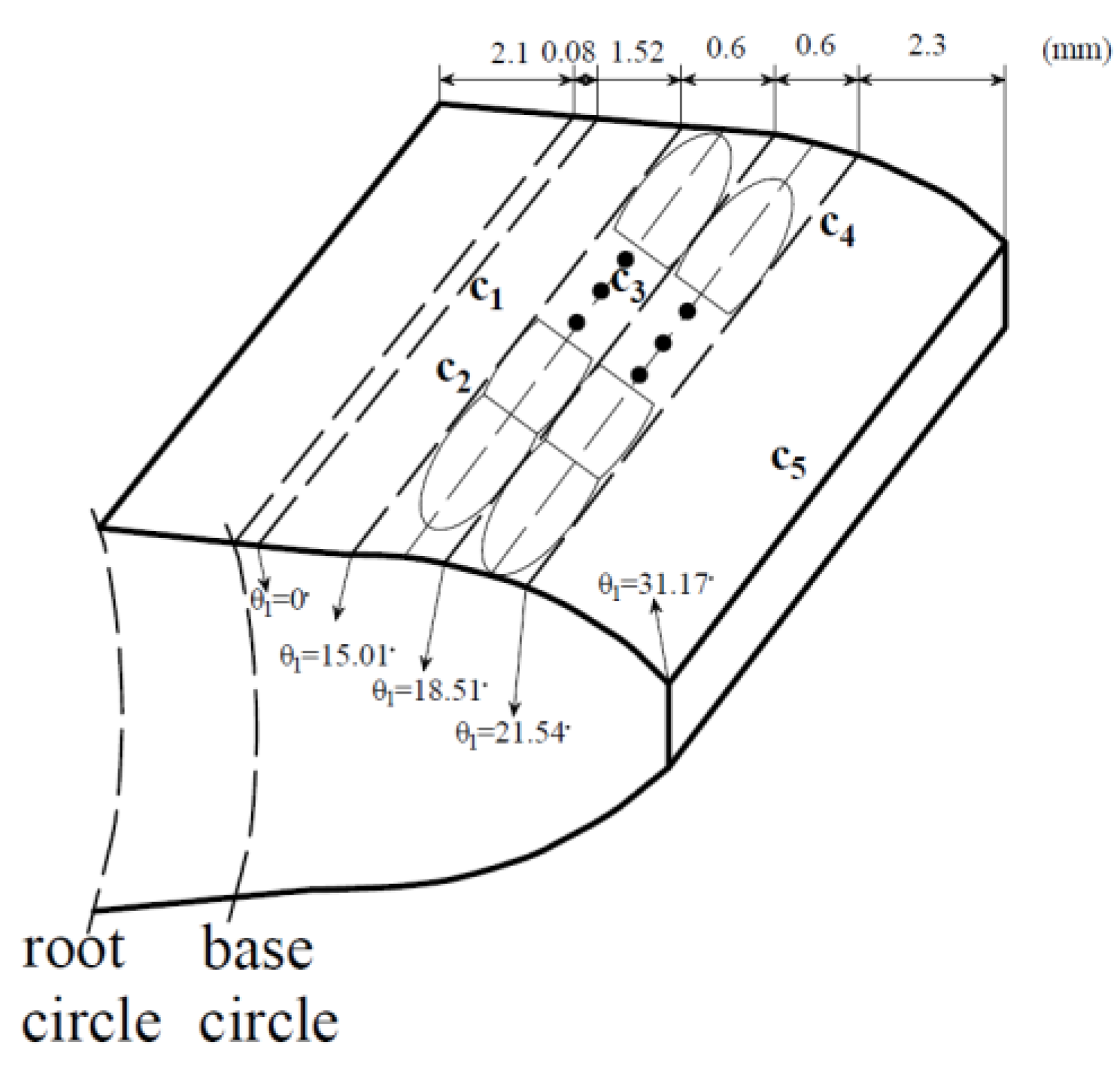
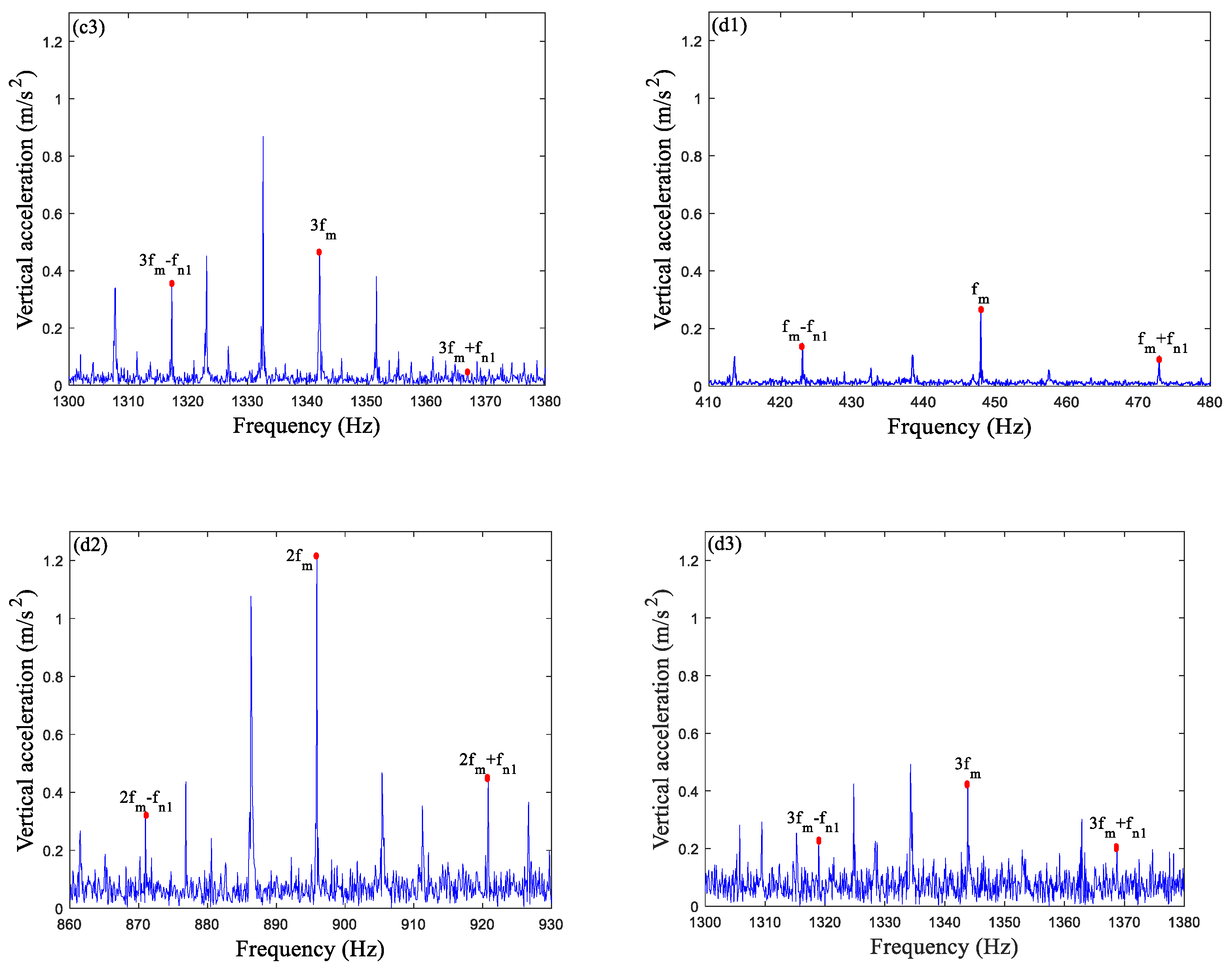
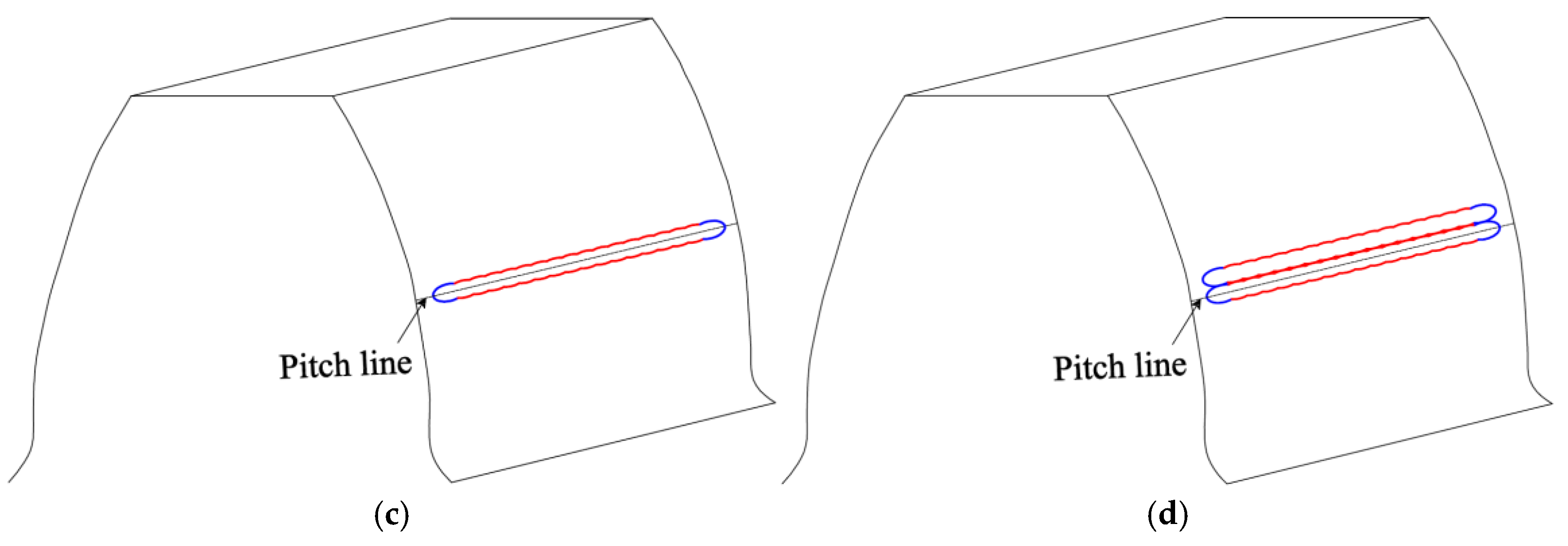
The existence of pitting failure has a direct influence on the time-varying mesh stiffness (TVMS) and thus changes the vibration properties of the gears. The shape of pitting on the tooth surface is characterized by randomness and geometric complexity. The overlapping pitting shape has rarely been investigated, especially when the misalignment of gear base circle and root circle was considered. In this paper, the pitting shape is considered as approximately the union of several ellipse cylinders, in which the gear tooth is treated as a cantilever beam starting from the root circle. Then, the TVMS of perfect gear and that of gear with different pitting severity levels are solved by the potential energy method. The effect of pitting size on TVMS is discussed in detail. In addition, the vibration response in the frequency domain for the gear system is analyzed, and the effectiveness is qualitatively verified by comparing with the vibration signals of the experimental gearbox. The results indicate that the new pitting model overcomes the problem of ignoring the overlap between different pits and is more consistent with the actual situation. The presence of tooth pitting reduces the TVMS, and the complex sidebands appear around the gear mesh frequency and its harmonics. The proposed model can be used to predict the fluctuation of gear mesh stiffness when tooth pitting occurs, and the corresponding dynamic characteristics can provide the theoretical basis for gear condition monitoring and fault diagnosis.
Keywords: spur gear; tooth pitting; time-varying mesh stiffness; frequency spectrum; Drivetrain Dynamics Simulator (DDS) spur gear; tooth pitting; time-varying mesh stiffness; frequency spectrum; Drivetrain Dynamics Simulator (DDS)