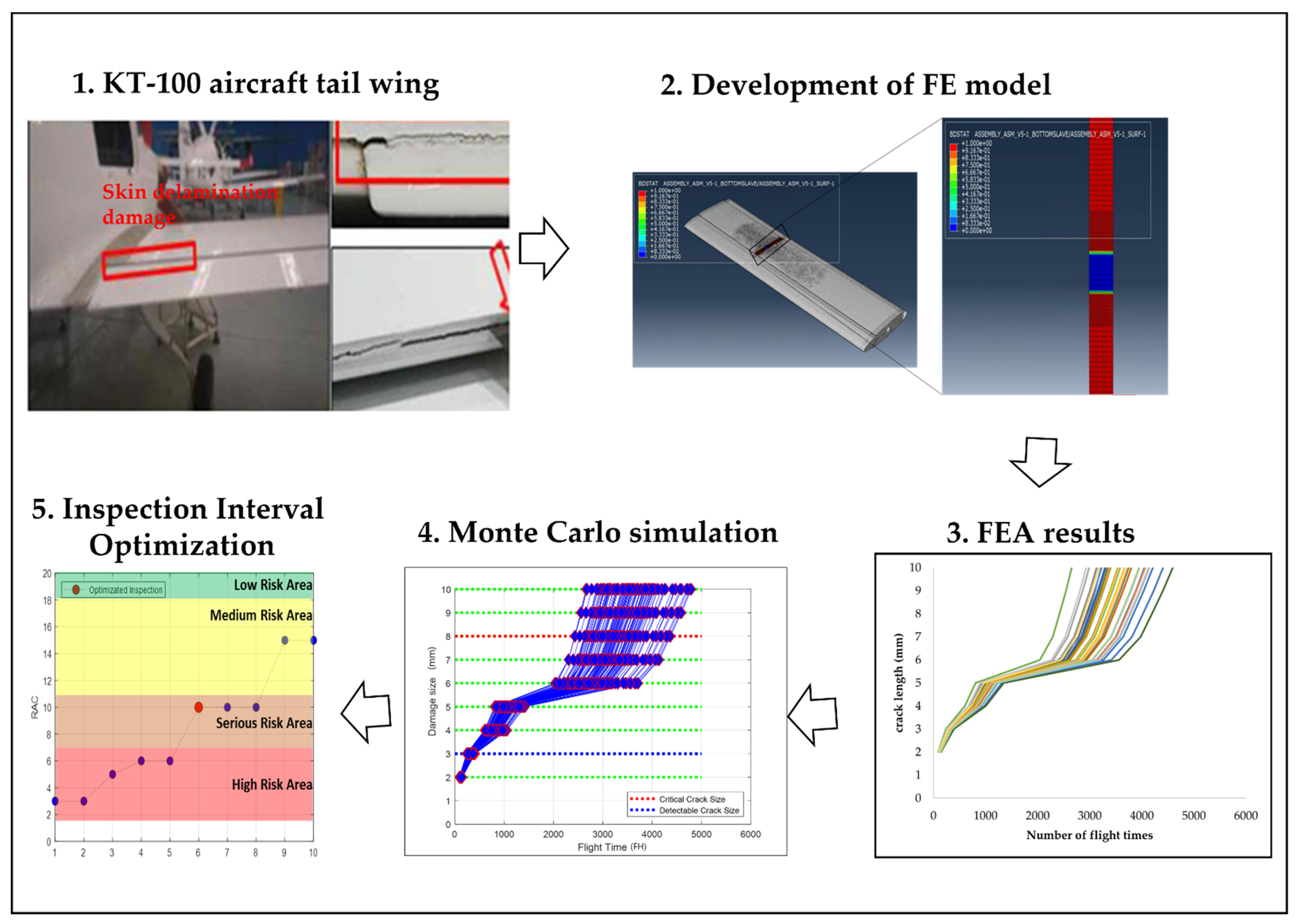
Inspection Interval Optimization for Aircraft Composite Tail Wing Structure Using Numerical-Analysis-Based Approach


Abstract
Share and Cite
Khalid, S.; Kim, H.-S.; Kim, H.S.; Choi, J.-H. Inspection Interval Optimization for Aircraft Composite Tail Wing Structure Using Numerical-Analysis-Based Approach. Mathematics 2022, 10, 3836. https://doi.org/10.3390/math10203836
Khalid S, Kim H-S, Kim HS, Choi J-H. Inspection Interval Optimization for Aircraft Composite Tail Wing Structure Using Numerical-Analysis-Based Approach. Mathematics. 2022; 10(20):3836. https://doi.org/10.3390/math10203836
Chicago/Turabian StyleKhalid, Salman, Hee-Seong Kim, Heung Soo Kim, and Joo-Ho Choi. 2022. "Inspection Interval Optimization for Aircraft Composite Tail Wing Structure Using Numerical-Analysis-Based Approach" Mathematics 10, no. 20: 3836. https://doi.org/10.3390/math10203836
APA StyleKhalid, S., Kim, H.-S., Kim, H. S., & Choi, J.-H. (2022). Inspection Interval Optimization for Aircraft Composite Tail Wing Structure Using Numerical-Analysis-Based Approach. Mathematics, 10(20), 3836. https://doi.org/10.3390/math10203836