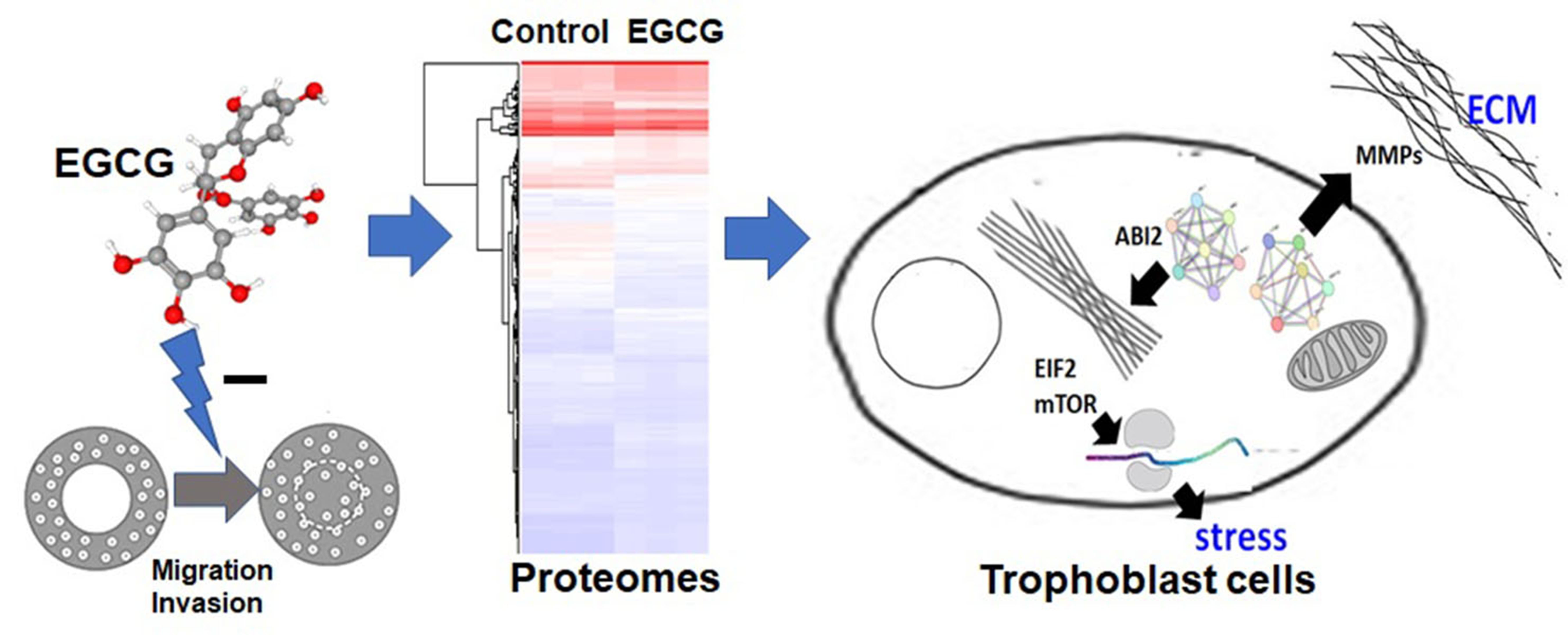


A Proteomics-Based Identification of the Biological Networks Mediating the Impact of Epigallocatechin-3-Gallate on Trophoblast Cell Migration and Invasion, with Potential Implications for Maternal and Fetal Health

 , ,
, , Abstract
Share and Cite
Chen, Y.-C.; Liao, C.-C.; Shui, H.-A.; Huang, P.-H.; Shih, L.-J. A Proteomics-Based Identification of the Biological Networks Mediating the Impact of Epigallocatechin-3-Gallate on Trophoblast Cell Migration and Invasion, with Potential Implications for Maternal and Fetal Health. Proteomes 2023, 11, 31. https://doi.org/10.3390/proteomes11040031
Chen Y-C, Liao C-C, Shui H-A, Huang P-H, Shih L-J. A Proteomics-Based Identification of the Biological Networks Mediating the Impact of Epigallocatechin-3-Gallate on Trophoblast Cell Migration and Invasion, with Potential Implications for Maternal and Fetal Health. Proteomes. 2023; 11(4):31. https://doi.org/10.3390/proteomes11040031
Chicago/Turabian StyleChen, Yueh-Chung, Chen-Chung Liao, Hao-Ai Shui, Pei-Hsuan Huang, and Li-Jane Shih. 2023. "A Proteomics-Based Identification of the Biological Networks Mediating the Impact of Epigallocatechin-3-Gallate on Trophoblast Cell Migration and Invasion, with Potential Implications for Maternal and Fetal Health" Proteomes 11, no. 4: 31. https://doi.org/10.3390/proteomes11040031
APA StyleChen, Y.-C., Liao, C.-C., Shui, H.-A., Huang, P.-H., & Shih, L.-J. (2023). A Proteomics-Based Identification of the Biological Networks Mediating the Impact of Epigallocatechin-3-Gallate on Trophoblast Cell Migration and Invasion, with Potential Implications for Maternal and Fetal Health. Proteomes, 11(4), 31. https://doi.org/10.3390/proteomes11040031