Systematic Review

Beyond Entertainment: A Systematic Review of the Evidence on Video Game-Based Learning
by
Javier Sánchez-Trejo
,
Manuel Montanero
* and
María-Jesús Fernández-Sánchez
Faculty of Education and Psychology, University of Extremadura, 06006 Badajoz, Spain
*
Author to whom correspondence should be addressed.
Educ. Sci. 2026, 16(9), 1496; https://doi.org/10.3390/educsci16091496
Submission received: 10 June 2026 / Revised: 18 August 2026 / Accepted: 9 September 2026 / Published: 12 September 2026
(This article belongs to the Special Issue Game-Based Learning: Strategies, Outcomes and Challenges)

Abstract

This paper presents a systematic review of empirical research articles published between January 2016 and June 2025 on the use of educational video games as teaching and learning resources in primary and secondary education. A total of 57 publications were selected from an initial sample of 2602 documents, following the PRISMA guidelines. The findings reveal the growing interest that this line of research has generated within the scientific community. The intervention profile identified in most studies is based on the classroom implementation of a short serious game, designed for individual play on a computer or mobile device, and aimed at developing STEM competencies. Quantitative and mixed-methods studies predominate, mainly employing quasi-experimental group designs or survey-based approaches. These studies typically use objective or semi-objective learning assessments, together with opinion questionnaires based on Likert-type scales. The content analysis also identifies the most common limitations of the existing research, as well as several research gaps that should be addressed in future studies.

1. Introduction

Over the past two decades, the video game market has experienced remarkable growth, becoming one of the most profitable industries worldwide (AEVI, 2024; Newzoo, 2025). At the same time, educators and researchers have recognised the potential of video games as educational resources and as tools for the gamification of learning, that is, the use of game design elements in non-game contexts (Deterding et al., 2011), making use of play as a valuable means of learning (Dimitra et al., 2020). Gamification involves game-based mechanics, aesthetics and game thinking to engage people, motivate action, promote learning, and solve problems (Kapp, 2012).

1.1. Conceptual Delimitation

In general, the literature does not clearly or consistently distinguish between the concepts of digital games and video games, as the two terms are often used interchangeably. Conversely, many authors assume that there are differences between commercial, serious and educational video games.
Although commercial video games were originally designed for entertainment purposes, they can be incorporated into formal and informal learning settings to facilitate the development of competencies, particularly transversal skills (Charsky & Ressler, 2011; García-Álvarez & Acevedo-Borrega, 2025; García et al., 2026).
Alongside the educational use of commercial video games, a growing number of digital games have been designed specifically for instructional purposes. Djaouti et al. (2011) define serious video games as those designed for a purpose beyond entertainment. The term ‘serious game’ is usually associated with digital games, but this is not always the case, as Plass et al. (2015) point out. However, they do not elaborate on the reasons for this distinction.
Within this broad category, educational games are specifically created to promote learning within formal or curricular settings. Consequently, while all educational games can be considered serious games, not all serious games are educational, as their objectives may extend beyond education, such as professional training.
These distinctions are reflected in various educational approaches that incorporate games. Game-based learning (GBL) refers to the use of games as instructional tools to achieve specific learning objectives. In educational literature, digital game-based learning (DGBL) is a broad term that encompasses everything from commercial video games to educational trivia apps (such as Kahoot! and Quizizz) and digitised traditional board games. However, video game-based learning (VGBL) is a more restrictive concept, referring exclusively to the use of video games. Depending on the learning objectives and instructional design, VGBL may involve either commercial entertainment video games or serious video games specifically developed to foster knowledge acquisition and the development of specific competencies through playful learning experiences (Cornellá et al., 2020; Rodríguez-Hoyos & Gomes, 2013).
Finally, two gamification strategies could be identified in the design of VGBL: reward-based gamification and meaningful gamification. Reward-based gamification primarily relies on extrinsic motivational mechanisms, such as points, badges and leaderboards, to encourage specific behaviours and increase engagement (Deterding et al., 2011).
In contrast, meaningful gamification focuses on integrating user-centred game elements, such as narrative, autonomy and reflection, to help users develop personal connections with the context and foster more sustained forms of engagement (Nicholson, 2015). Although these approaches can be conceptually distinguished according to the motivational mechanisms and game elements they emphasise, they are not necessarily mutually exclusive, and a gamified environment may incorporate elements associated with both. Specifically, meaningful gamification is based on design elements intended to support fundamental psychological needs and promote immersion, emotional engagement and active cognitive processing (Rigby & Ryan, 2011). The use of narrative frameworks is a typical way to enhance meaningful gamification in many video games. When learning tasks are embedded within a compelling narrative involving progressively challenging objectives, they foster a sense of progress and autonomy in learners. Furthermore, task gamification strategies such as competitions, battles and timers, as well as the unlocking of new scenarios and resources, can further strengthen this motivational effect (Benanane & Ouahioune, 2024; Richter & Kickmeier-Rust, 2025).

1.2. Research on Educational Videogames

Early research conducted at the beginning of the century did not produce conclusive evidence regarding the positive effects of educational video games on academic achievement (Mitchell & Savill-Smith, 2005). More recent studies, however, have highlighted their potential as effective educational tools for promoting not only student motivation but also problem-solving skills, creativity, critical thinking, communication, and collaboration (Cicchino, 2015; Cole et al., 2024; Ragni et al., 2023; Riopel et al., 2019; Sun et al., 2021; Tokac et al., 2019). More specifically, Van Eck (2015) found that a well-designed video game can generate learning outcomes between 7% and 40% higher than those achieved through traditional teacher-led instruction. According to Ahrens (2015), serious games also provide a challenge-based learning alternative that is particularly effective in fostering self-regulated learning through a balance between guided instruction and learner autonomy. To achieve this, it is essential that the challenges faced by players are structured around clear yet demanding goals that allow them to perceive their progress as the result of their own effort (Perrotta et al., 2013).
Video game-based learning has consequently become one of the most prolific areas of educational research in recent years. This is evidenced by the large number of meta-syntheses and meta-analyses that have systematically reviewed studies published between 2000 and 2020 (Byun & Joung, 2018; Cole et al., 2024; Connolly et al., 2012; Guerra-Antequera & Revuelta-Domínguez, 2022; Riopel et al., 2019; Sun et al., 2021; Tokac et al., 2019; Wouters et al., 2013).
Overall, in addition to documenting an exponential increase in scientific output in this field since the beginning of the century, these reviews support the positive effects of serious games on student motivation and the learning of specific curricular content. However, the reviews conducted by Byun and Joung (2018) and Tokac et al. (2019) concluded that the observed effect sizes were relatively modest and, in some studies, not statistically significant. Given the concentration of research within STEM disciplines (Cole et al., 2024; Sun et al., 2021), evidence regarding the educational potential of video games in other subject areas also remains limited.
From a methodological perspective, existing reviews reveal a clear predominance of quantitative approaches, mainly based on quasi-experimental and survey designs, which do not examine in depth the pedagogical processes underlying the educational use of video games (Byun & Joung, 2018; Connolly et al., 2012; Guerra-Antequera & Revuelta-Domínguez, 2022). Among the main limitations identified is the insufficient description of the materials employed and the classroom implementation procedures, which hinders study replication and restricts opportunities for cross-study comparison (Connolly et al., 2012; Cole et al., 2024; Tokac et al., 2019). Furthermore, the lack of public availability of many of the video games used in the reviewed studies, together with the scarcity of replication studies employing the same resources, further constrains the generalisability of findings (Cole et al., 2024).
Taken together, these findings indicate that, although previous reviews have established the educational potential of video games, the available evidence remains fragmented in several relevant respects, including the contexts and methodological approaches in which video game-based learning has been investigated, the characteristics of the materials and interventions employed, the learning outcomes reported, and the challenges associated with classroom implementation. Moreover, existing reviews have primarily synthesised studies published up to 2020, and therefore do not provide a comprehensive overview of the sustained growth in research output in recent years. This is particularly relevant given the concentration of research in specific educational contexts and disciplines and the methodological limitations identified in previous reviews.
In summary, the existing literature provides substantial evidence of the potential of video games as educational resources, but it does not yet offer an up-to-date and comprehensive picture of how video game-based learning has been studied in recent years, how educational video game interventions have been designed and implemented, what learning outcomes have been reported, and which challenges and research gaps remain. Addressing these limitations is particularly relevant in primary and secondary education, where there is a growing need to explore innovative teaching methodologies that engage and motivate pupils.
Furthermore, there is a growing emphasis in education on developing 21st-century skills such as critical thinking, creativity, collaboration, communication and digital literacy (OECD, 2019), all of which may be fostered through educational video games. Investigating the current state of video game-based learning in primary and secondary education could provide valuable insights for researchers, educators and curriculum designers seeking to develop evidence-based teaching practices that respond to pupils’ evolving educational needs. Against this background, the present meta-synthesis seeks to provide an updated and comprehensive overview of recent research and to identify the main characteristics, outcomes, methodological approaches, implementation challenges, and remaining research gaps in the field.

1.3. Research Questions

In order to address the limitations that have just been highlighted and provide an updated synthesis of the available evidence, the present study seeks to answer the following research questions:
  • RQ1: How has scientific output evolved in recent years? What contexts and methodological approaches predominate in the existing research?
  • RQ2: What specific characteristics define educational video game materials and interventions (e.g., content, types of tasks, digital platforms, gamification elements employed, duration, and related features)?
  • RQ3: What learning outcomes have been documented? What challenges have been identified regarding the implementation of educational video games as teaching resources in classroom settings?
  • RQ4: What specific research gaps emerge from the reported findings and methodological limitations of the existing studies?

2. Method

The methodology adopted in this study is based on the latest version of the PRISMA protocol (2020), which provides a set of guidelines for conducting the identification, selection, and analysis of relevant scientific literature in an objective and systematic manner, thereby ensuring the reproducibility and methodological rigour of the review process.

2.1. Search and Selection Procedure

The literature review focused on studies addressing the use of video games as educational tools in primary and secondary education, published between 1 January 2016 and 28 June 2025.
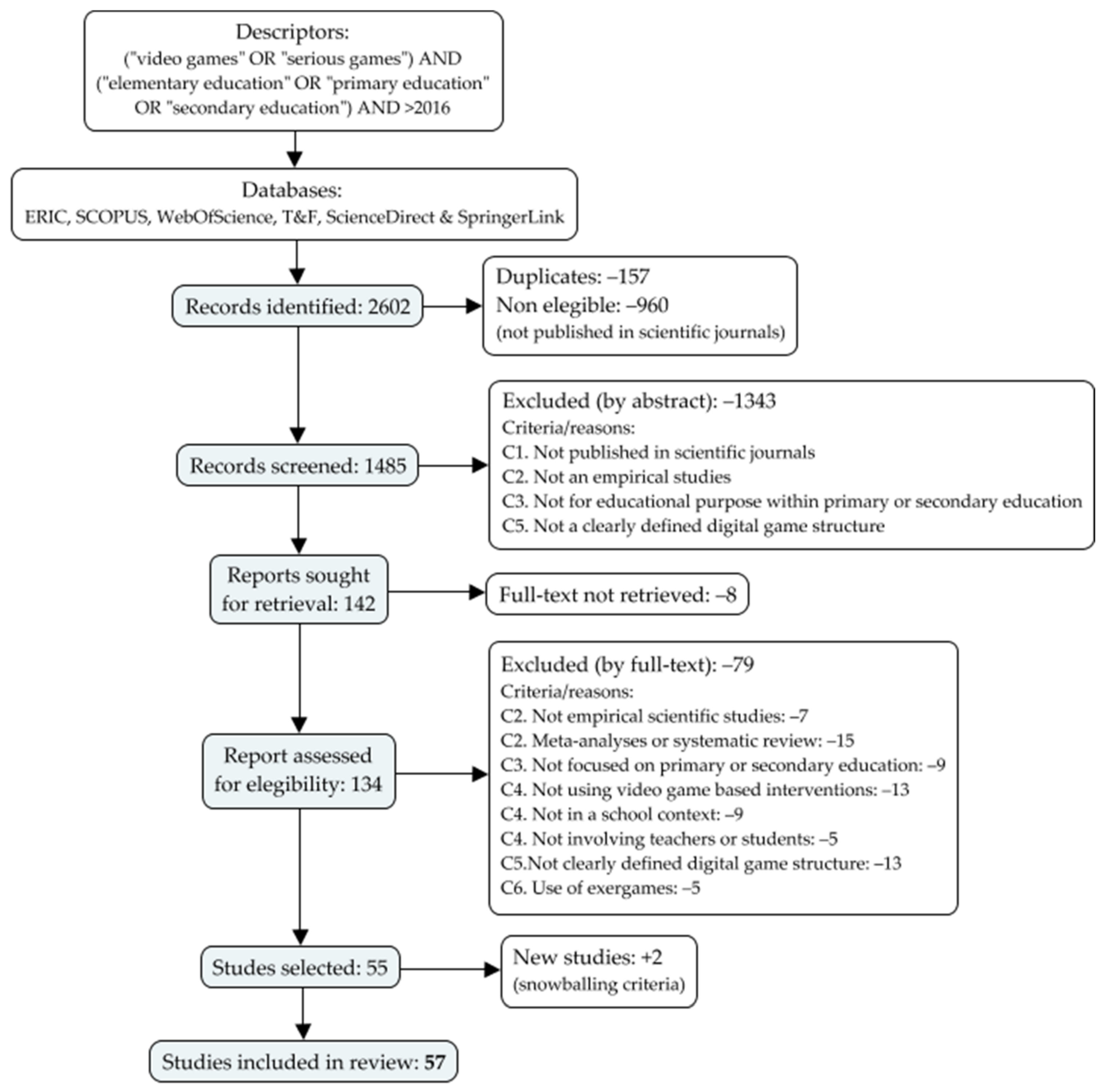
The search was conducted in the ERIC, Science Direct, Scopus, Springer Link, Web of Science, and Taylor & Francis databases using the following keywords: “serious games”, “Video Games”, “Primary Education”, “Elementary Education”, and “Secondary Education”. During the search process, additional descriptors were also tested (including “methodology”, “serious video games”, “education”, “learning”, “digital games”, “game-based learning”, “digital game-based learning”, and “collaborative learning”), combined using the Boolean operators AND, OR, and AND NOT. The final search algorithm used across all databases is presented in Figure 1. The built-in filters available in each database were applied to the publication year (2016–2025) and document type (article). All searches were conducted on 28 June 2025.
In addition, the following exclusion criteria were applied during the screening process to identify the most relevant studies:
  • Selected documents had to be articles published in scientific journals. Books, book chapters, conference proceedings, and publications reporting non-original data were excluded.
  • Selected documents had to report on scientific empirical research into the educational use of video games. Purely theoretical articles, literature reviews, and meta-analyses were excluded.
  • Selected documents had to be exclusively situated within primary or secondary education. Studies also involving early childhood education, higher education, vocational training, or other educational levels were excluded.
  • Selected studies had to investigate the educational use of video games within classroom settings. Documents focusing primarily on entertainment purposes or conducted in non-school contexts (e.g., museums, libraries) were excluded.
  • Studies had to focus on digital video games with a clearly defined digital game structure or on research involving their use (such as interviews, questionnaires or other study design requiring participants to engage with video games). Research involving augmented reality technologies was excluded only when the primary game environment was the physical world or when digital elements merely served as visual support rather than being an integral part of the gaming experience. Educational programming applications (e.g., Scratch, Code.org) were also excluded.
  • Selected studies could not focus on the use of video games as exergames or as tools for promoting physical activity.

2.2. Classification and Synthesis Procedure

To facilitate the analysis and description of the studies retained after the screening process, both bibliometric and content analyses were conducted.
Firstly, a quantitative bibliometric analysis was carried out to examine the impact of the publications, their semantic space (based on keyword frequency), and their geographical and database distribution (according to both the databases from which the studies were retrieved and the countries in which the research was conducted).
Secondly, a mixed-methods content analysis, combining quantitative and qualitative approaches, was performed to classify the selected studies. The category system was initially informed by frameworks employed in previous literature reviews and was subsequently refined in accordance with the research questions guiding the present study. The final category system comprised the following dimensions:
  • Context and participants: Participants (students, teachers); educational level (primary education, secondary education); sample size (0–40, 41–80, 81–120, 121–160, 161–200, 201–240, more than 240); curricular area (mathematics, science, first language [L1], second language [L2], social sciences, transversal competencies and content, integrated curricula).
  • Methodological design: Quasi-experimental, survey-based, interview-based, descriptive, and ethnographic studies.
  • Assessment procedures and instruments: Objective tests, questionnaires, interviews, logs, recordings, and rating scales.
  • Intervention procedures and materials: Type of video game (serious game, commercial educational entertainment game, mini-game); mode of play (individual or collaborative); platform (computer, video game console, mobile device, web-based, virtual reality); duration of the intervention (less than two weeks, 2–3 weeks, 4–5 weeks, 6–7 weeks, more than 7 weeks).
  • Outcomes: Positive (significant benefits related to curricular learning, attention, motivation, emotions, or participant satisfaction); negative (significant drawbacks related to curricular learning, attention, motivation, emotions, or participant satisfaction); non-conclusive (non-statistically significant or effects that could not be assessed).
Two researchers separately analysed all of the selected articles. Any discrepancies were resolved through discussion.

3. Results

Following the search of the selected databases using the search algorithm described in the previous section, a total of 2602 records were identified. Of these, 960 were excluded because they were not journal articles, in accordance with the exclusion criteria. Among the remaining 1642 records, 157 were removed as duplicates found across different databases.
The abstracts of the remaining 1485 records were subsequently screened, resulting in the exclusion of 1343 articles. The main reasons for exclusion were that the studies did not genuinely match the search descriptors (primarily because they were not empirical investigations or did not examine the educational use of video games within primary or secondary education) or because they did not involve interventions featuring a clearly defined digital game structure.
The remaining 142 articles underwent full-text review. As a result, a further 87 documents were excluded for the following reasons: 8 full texts could not be retrieved; 5 studies focused on exergames; 15 were meta-analyses or systematic reviews; 9 were conducted outside primary or secondary education; 13 did not investigate video game-based interventions; 16 did not meet the criterion of a clearly defined digital game structure (mainly Scratch-based programming activities or augmented reality experiences); 9 examined video games outside formal school settings; 5 did not involve students or teachers as participants; 7 were not empirical studies or failed to meet minimum standards of scientific rigour, as they did not report sample size and provided insufficient information about the video game employed.
Using the snowballing technique, publications that had not been retrieved during the initial database searches were also included. Publications were included if they were cited in more than two of the selected articles following the screening stage and closely aligned with the objectives of this study. Consequently, a total of 57 scientific publications were ultimately selected for bibliometric and content analysis. The entire process is summarised in Figure 1.

3.1. Bibliometric Analysis

Table 1 presents the 57 selected publications ranked according to their scholarly impact. Impact was assessed using citation counts from Google Scholar together with the Scimago Journal Rank (SJR) quartile of the journal within the “education” category in the year of publication. Google Scholar was used to obtain a standardised measure of the citation impact of the included studies. As not all the retrieved articles are indexed in Scopus or Web of Science (WoS), using citation counts from these platforms would have resulted in an incomplete and potentially biased comparison. Of the journals represented, 15 were ranked in the first quartile (Q1), 5 in the second quartile (Q2), 8 in the third quartile (Q3), and 1 in the fourth quartile (Q4). Among the remaining 14 journals, 12 were indexed in various quartiles under other subject categories, while only 2 were not indexed in SJR.
As shown in Table 1, four studies stand out for having received over one hundred citations. The study by Ruíz-Ariza et al. (2018) examined the effects of Pokemon Go on the development of a range of skills, including selective attention, concentration, motivation, mathematical calculation, and sociability among secondary school students aged 12–15 years. The authors concluded that the use of Pokemon Go, combined with increased physical activity, contributed to improved academic performance. del Moral Pérez et al. (2018), in turn, evaluated a digital mini-game-based learning approach and its impact over an eight-month period on the mathematical, linguistic, and naturalistic intelligence of primary school pupils. Srisawasdi and Panjaburee (2019) compared two inquiry-based learning approaches in secondary education (age 16), one supported by a video game and the other not. Although both groups improved their understanding of chemistry concepts related to the properties of liquids, the video game group demonstrated greater gains in conceptual understanding and motivation. Finally, Akman and Çakır (2023) compared the effectiveness of a virtual reality (VR) mathematics learning game with both non-VR educational games and traditional textbook-based activities. Although all groups improved, no statistically significant differences were found between them. While this study has accumulated fewer citations than the others to date, it should be noted that it was published relatively recently. Indeed, among the 17 studies that have received fewer than ten citations, 11 were published in 2024 or later.
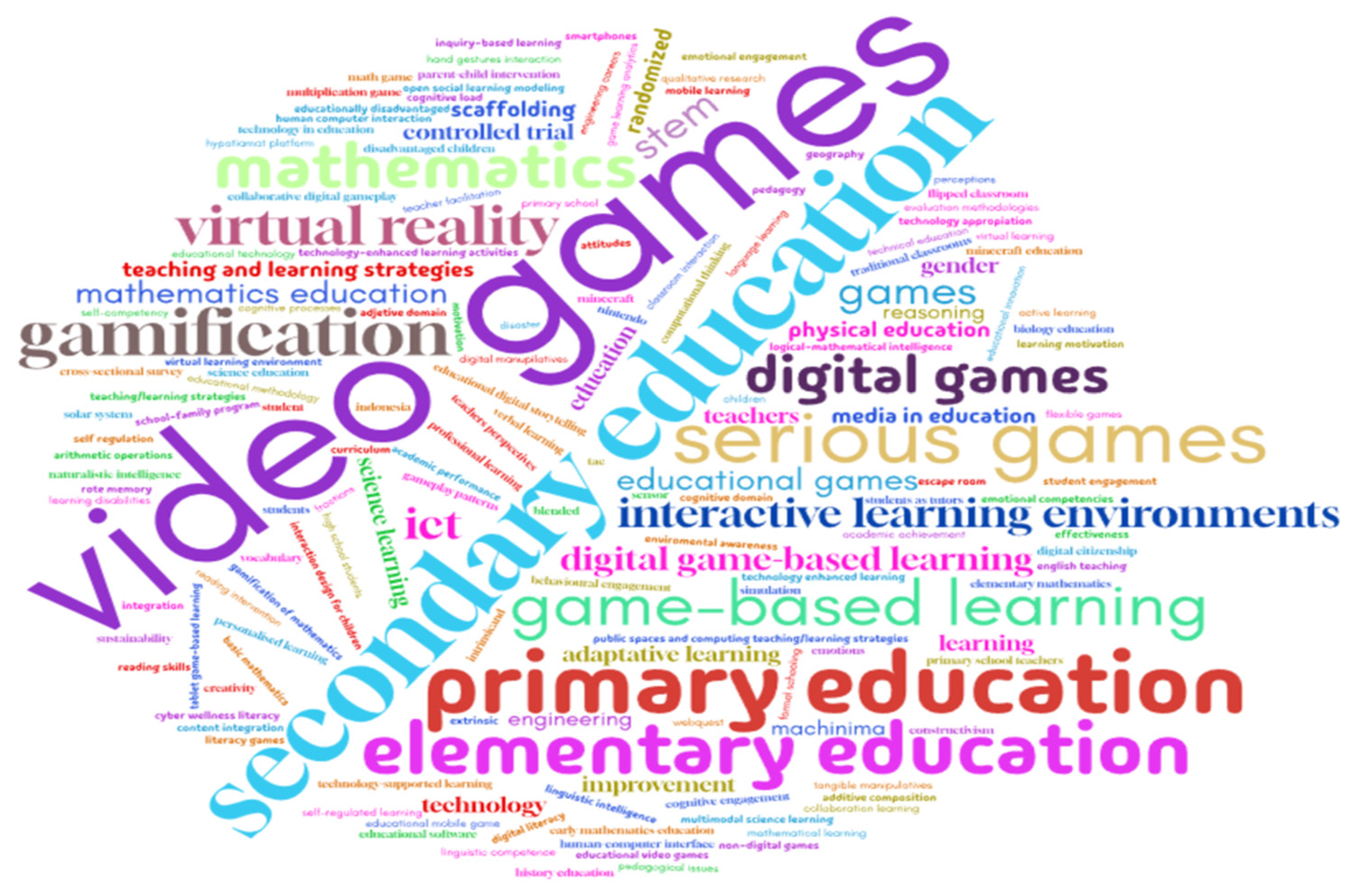
Across the 57 articles, a total of 292 keywords were identified, corresponding to 173 unique descriptors. The most frequently occurring terms were “video games” (18 occurrences), “secondary education” (13), “primary education” (11), “game-based learning” (11), “serious games” (9), “elementary education” (7), “gamification” (7), “mathematics” (6), “virtual reality” (5), “digital games” (5), “interactive learning environments” (5), “STEM” (4), “ICT” (4), “games” (4), “digital game-based learning” (4), “educational games” (3), and “mathematics education” (3). The frequency distribution of these keywords is illustrated in Figure 2.
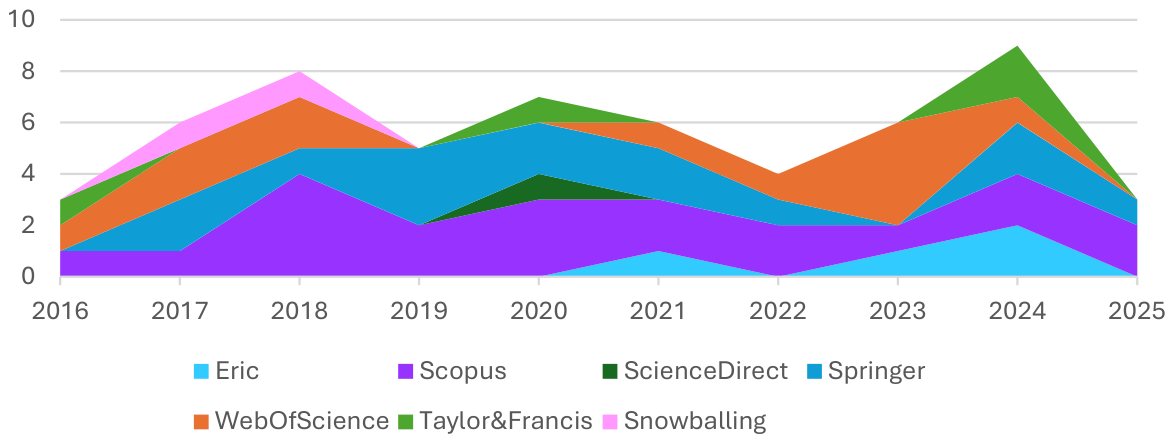
Figure 3 shows the number of selected publications retrieved from each database. Scopus yielded the largest number of studies (20 records), followed by Springer Link (14), Web of Science (12), Taylor & Francis (4), ERIC (4) and Science Direct (1). In addition, two studies were identified through the snowballing procedure. Figure 3 also illustrates the temporal distribution of publications. As can be observed, 2024 was the most productive year, with nine publications, followed by 2018 with eight.
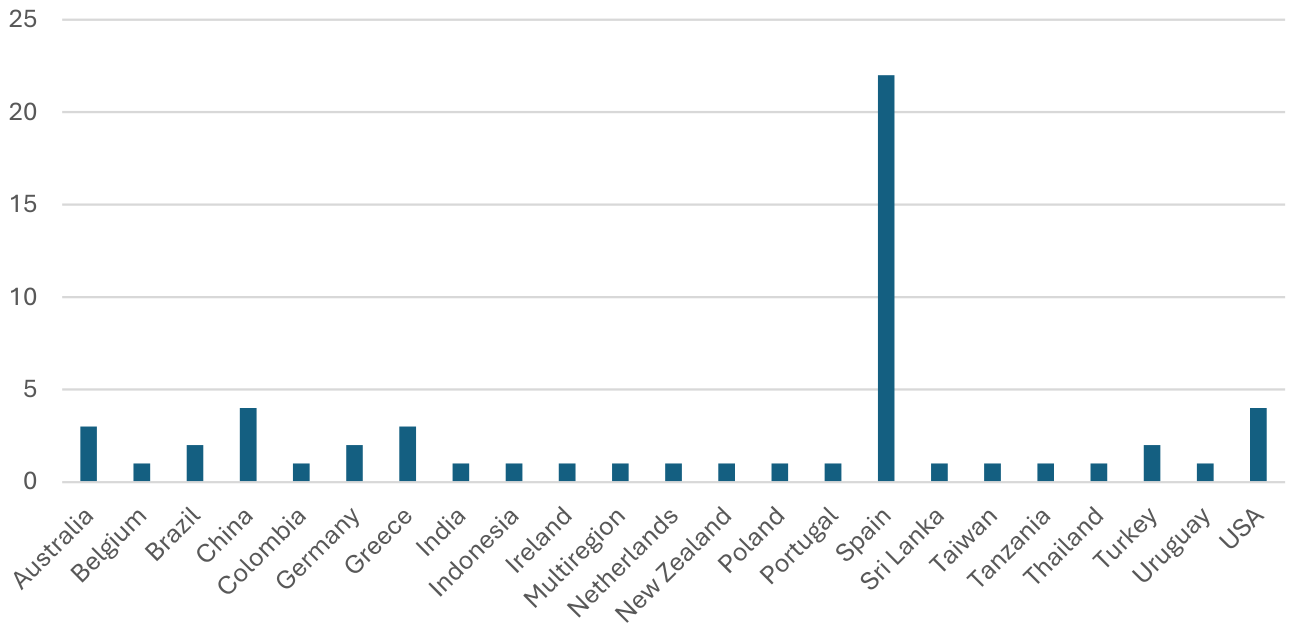
As shown in Figure 4, Spain was the country in which the largest number of studies were conducted (22 studies), followed by the United States and China, each with four publications.

3.2. Content Analysis

A detailed classification of the studies included in the final sample, based on the category system described above, is provided in Table S1, which is available as Supplementary Materials. The main findings are summarised below.

3.2.1. Content and Participants

Students were by far the primary participants in the studies reviewed, featuring in 54 of the 57 articles analysed (93%). However, in the studies by Filella et al. (2016), Gampell et al. (2020), Halloluwa et al. (2018), and Zaina et al. (2019), teachers were also included as participants. Only the studies by Gutiérrez et al. (2023), Pflaumer et al. (2021), Russo et al. (2024), and Stieler-Hunt and Jones (2017) focused specifically on examining teachers’ practices and perceptions.
The educational stages represented in the studies were relatively balanced, with a slight predominance of primary education: 32 studies (56%) were conducted exclusively in primary education, compared with 23 studies focused solely on secondary education; 2 studies (4%) were situated across both educational stages.
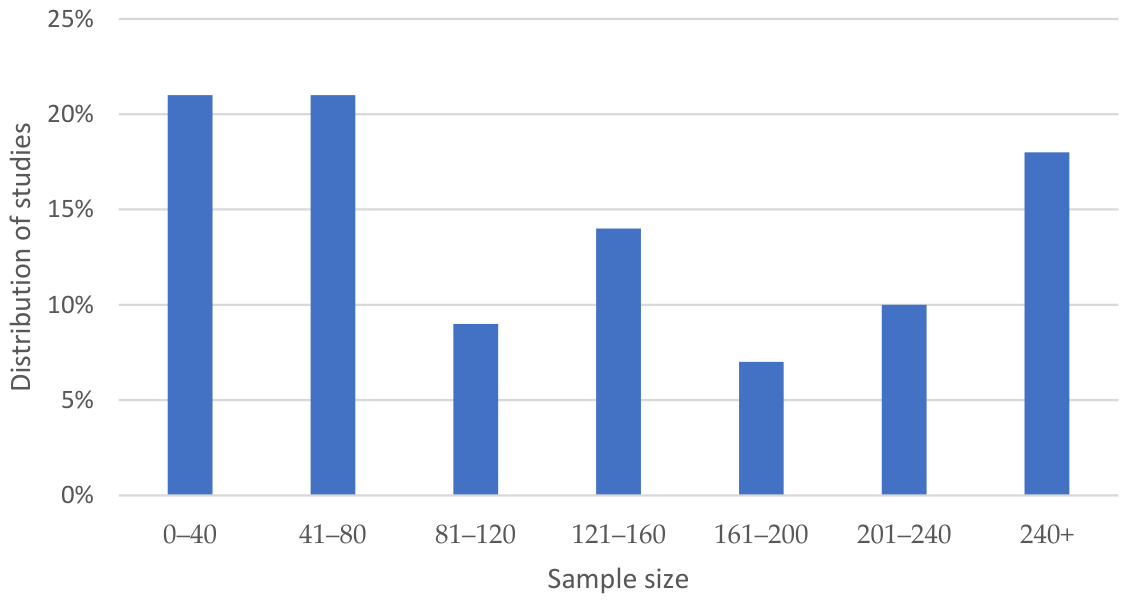
Sample size, by contrast, was highly heterogeneous (Figure 5). Particularly noteworthy were the exceptionally large samples employed by de Carvalho et al. (2018), who assessed 871 primary and secondary school students, and Syal and Nietfeld (2020), whose study involved 775 primary school pupils. Other studies with notably large samples included Filella et al. (2016), with 574 primary school students; Irwanto et al. (2024), with 480 secondary school students; Wardaszko et al. (2016), with 349 secondary school students; and Fraga-Varela et al. (2021a, 2021b), with 284 participants.
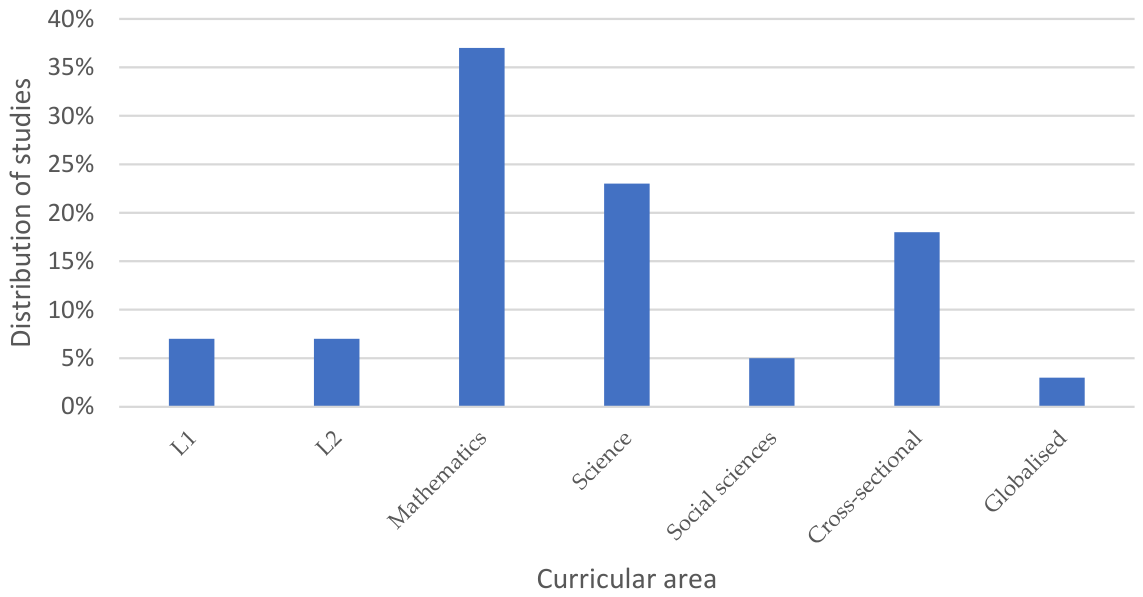
Figure 6 classifies the studies according to the curricular area in which they were situated.
As shown in Figure 6, mathematics was by far the most frequently represented curricular area, accounting for 21 of the 57 studies analysed, followed by science, with 13 studies. Together, these two subject areas comprise 62% of the reviewed literature. A second group consisted of 12 studies adopting a more transversal approach, focusing on key skills and competencies or on the integrated teaching of content drawn from multiple subject areas. By contrast, studies situated within the social sciences and humanities were clearly underrepresented. Specifically, four studies focused on first-language (L1) learning, four on second-language (L2) learning, one on geography (Jong et al., 2017), and one on history (Martínez-Soto et al., 2018).

3.2.2. Methodological Design

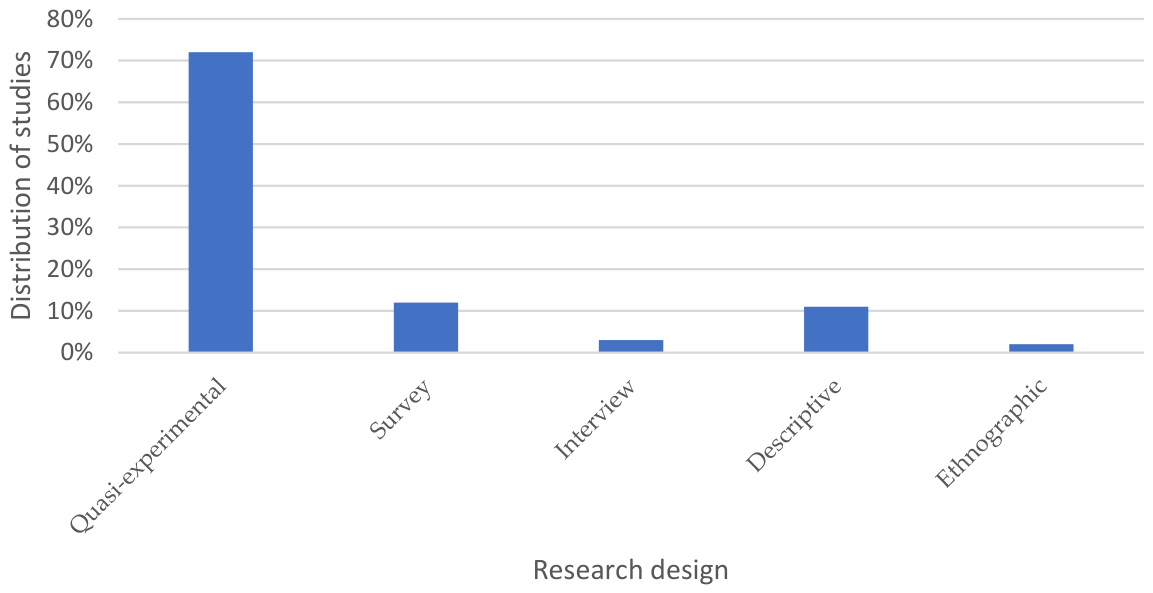
The research designs employed in the reviewed studies are summarised in Figure 7. A clear predominance of quantitative quasi-experimental and survey-based designs can be observed, generally involving relatively large samples (mean sample size = 186 participants).
Among the main methodological limitations of the quasi-experimental studies, the most notable concerns relate to randomisation procedures. In the vast majority of cases, samples were selected through convenience sampling and involved naturally occurring groups, although only a small number of studies explicitly acknowledged this limitation (Christopoulos et al., 2023; Hieftje et al., 2017). Moreover, none of the reviewed studies reported the random allocation of interventions across groups.
Regarding assessment procedures, El Mawas et al. (2020), Es-Sajjade and Paas (2020), Jong et al. (2017), and Leonardou et al. (2022) did not administer pre-tests; 15 studies lacked a control group; and only two studies (Christopoulos et al., 2023; Ruíz-Ariza et al., 2018) reported conducting retests or any form of follow-up assessment.
Similarly, relatively few studies described specific procedures for controlling extraneous variables. Akman and Çakır (2023) reported introducing video games into the classroom prior to the intervention in order to minimise novelty effects. Ester et al. (2022) standardised environmental conditions to control for potential performance differences associated with the time of day. In studies employing pre-test/post-test group designs, no balancing procedures for assessment instruments were reported. Christopoulos et al. (2023) and Qiao et al. (2024) indicated that they administered the same test at both pre-test and post-test stages, altering only the order of the questions. Only one study (Akman & Çakır, 2023) compared learning outcomes obtained through a video game with those achieved using one of the most common classroom resources (the textbook), although the equivalence of the learning tasks completed under each condition was not fully established.
Likewise, most studies based on opinion or satisfaction surveys regarding the use of serious games did not provide evidence concerning the validity or reliability of the instruments employed, and response rates were often relatively low.
Only three studies adopted a qualitative approach, each involving a relatively small number of participants (typically no more than 15). Monjelat et al. (2016) reported an ethnographic study examining peer tutoring interactions using the commercial video game SimCity Creator. Similarly, Pflaumer et al. (2021) and Stieler-Hunt and Jones (2017) conducted content analyses of semi-structured interviews to explore teachers’ perceptions of the educational use of video games.
The remaining studies employed mixed descriptive approaches, combining quantitative and qualitative analyses, although the qualitative component generally played a less prominent role in the conclusions drawn.

3.2.3. Assessment Procedures and Instruments

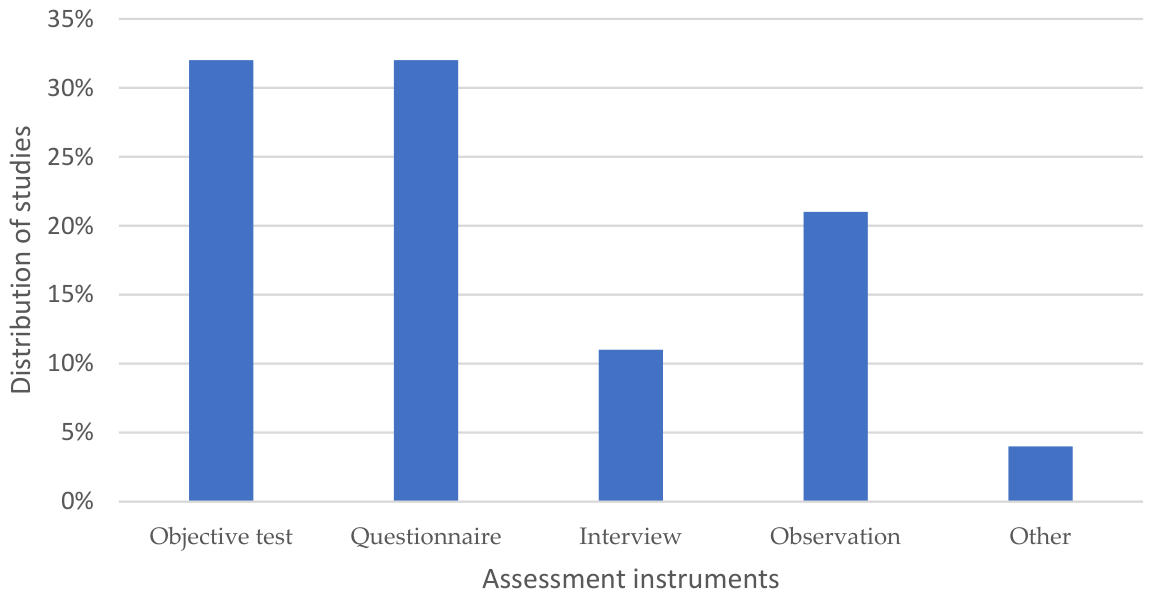
As shown in Figure 8, the most frequently used assessment instruments were written learning assessments and self-report questionnaires, which appeared in a total of 34 studies. Objective and semi-objective learning tests predominated, together with Likert-type rating scales. Two studies are particularly noteworthy in this regard. Ye et al. (2018) assessed student learning through graphical tasks (specifically concept maps) administered after the video game intervention, whereas del Moral Pérez et al. (2018) employed a scale designed to assess the specific intelligences targeted by the intervention.
Observation-based techniques using audio or video recordings were employed in nine studies. Particularly notable was the use of data generated directly by the video games themselves (i.e., machinima), including logs that recorded the duration and frequency of players’ actions, such as the number of attempts at a task, the frequency of tool use, or the time required to complete a given activity (Fraga-Varela et al., 2021a, 2021b; Lee & Choi, 2020; Syal & Nietfeld, 2020; Rosenheck et al., 2021; Vandercruysse et al., 2017). Other studies relied on the observation of behaviours and attitudes, either through direct observation during gameplay (Cortes & Carreño-Bolivar, 2024; Halloluwa et al., 2018), narrative records collected in observation diaries (Akman & Çakır, 2023; Capell et al., 2017; Monjelat et al., 2016), or anecdotal records documenting behaviours outside gameplay sessions (Filella et al., 2016).
Most qualitative and mixed-methods studies employed self-report techniques based on semi-structured interviews (12 studies). In one case, de Carvalho et al. (2018) used a focus group discussion as the primary data collection method.

3.2.4. Intervention Procedure and Materials

The review of the selected studies clearly reveals the predominance of serious games, which account for 35 of the 57 studies analysed. These are educational video games specifically designed for learning purposes rather than entertainment. Second place goes to commercial entertainment games, which are the focus of nine studies. Seven studies use short-duration serious games, usually in the form of minigames, which do not necessarily incorporate a narrative framework to support learning activities. Seven other studies declare the use of serious video games, but the specific name was not identified. Finally, six studies did not involve the use of video games at all; instead, they sought to explore the opinions of teachers or students regarding the educational use of video games in general. The specific video games used in each investigation, along with the main educational goal of the video games used, can be found in Table 2.
Most of the video games were played individually (60%). Only 10 studies (16%) employed collaborative gameplay. For instance, in Checa-Romero and Pascual-Gómez (2018), students collaborated both in building a structure within the video game and in producing a subsequent video. In Castro et al. (2018), de Carvalho et al. (2018), Freitas et al. (2025), Halloluwa et al. (2018), Mouronte-López et al. (2021), Piñero et al. (2025), Sun et al. (2022), and Wardaszko et al. (2016), students played in groups of varying sizes, typically three or four learners. The study by Monjelat et al. (2016) is particularly notable, as it established a collaborative peer-tutoring structure.
We also identified eight studies that adopted a mixed approach to gameplay modality. In Jong et al. (2017) and Özdener and Demirci (2019), students played individually but competitive mechanics were incorporated to foster interaction. In Cortes and Carreño-Bolivar (2024), Gampell et al. (2020), Mavridis et al. (2017), Priego-Ojeda et al. (2024), and Filella et al. (2016), gameplay was individual, although peer support and collaborative assistance were encouraged. Capell et al. (2017) implemented a hybrid design combining individual gameplay phases with group-based activities involving up to three students.
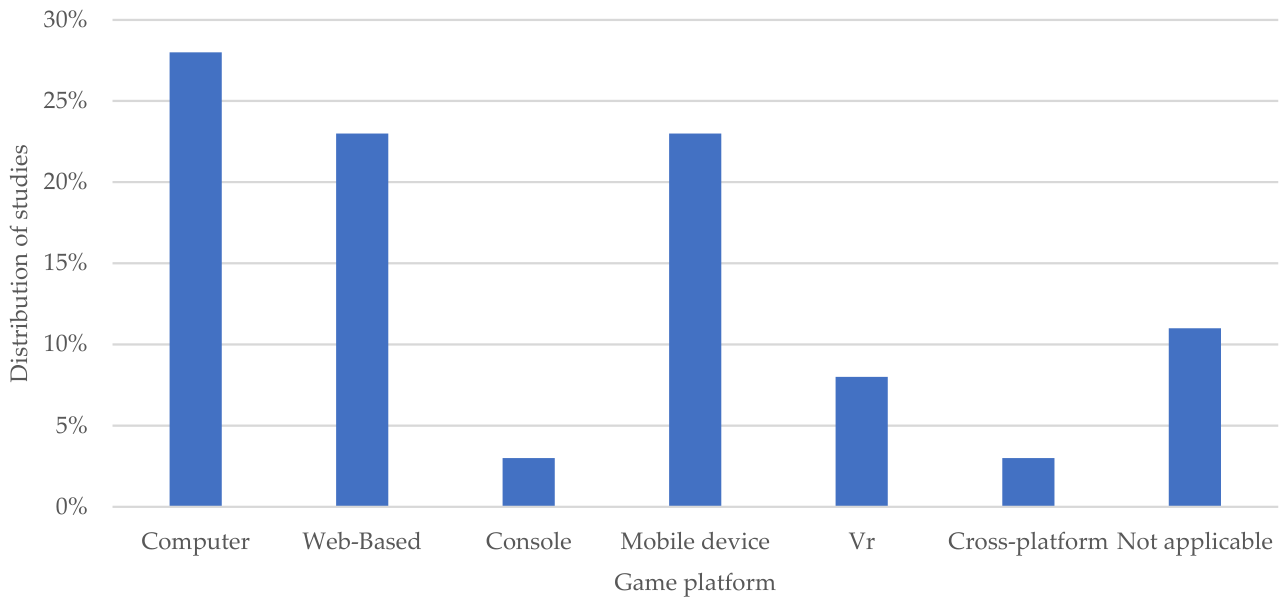
Regarding the platforms used to run the video games (Figure 9), a relatively balanced distribution can be observed across computers (16 studies), mobile devices (13 studies), and web-based platforms (13 studies).
In the studies by Merino-Campos et al. (2023, 2024), the video game NBA 2K16 was available across multiple platforms (computer, console, and mobile devices), although the specific platform used in the intervention was not reported; it was therefore classified as cross-platform.
Among the five studies using virtual reality (VR) platforms, considerable heterogeneity was observed. Akman and Çakır (2023) used cardboard VR headsets to convert mobile devices into VR systems. Christopoulos et al. (2023) employed Amazon Web Services (AWS) to host their VR game, enabling access across multiple devices. Ding et al. (2024) used VR headsets connected to a computer, as did Martínez-Soto et al. (2018). Mouronte-López et al. (2021), in turn, used a PlayStation 4 console connected to VR headsets.
The least frequently used platform was, by a considerable margin, video game consoles. Monjelat et al. (2016) used the Nintendo Wii console to run the commercial game SimCity Creator, while Castro et al. (2018) used the Nintendo 3DS to run Professor Layton and the Curious Village.
Finally, 21% of the interventions involving video game implementation were relatively short (2–4 weeks), and 33% were very short (less than two weeks). However, in approximately one third of the studies (34%), the interventions were considerably extended (more than 6 weeks). Notably, del Moral Pérez et al. (2018) reported an 8-month intervention, while Ester et al. (2022) conducted a 7-month implementation.

3.2.5. Learning Outcomes

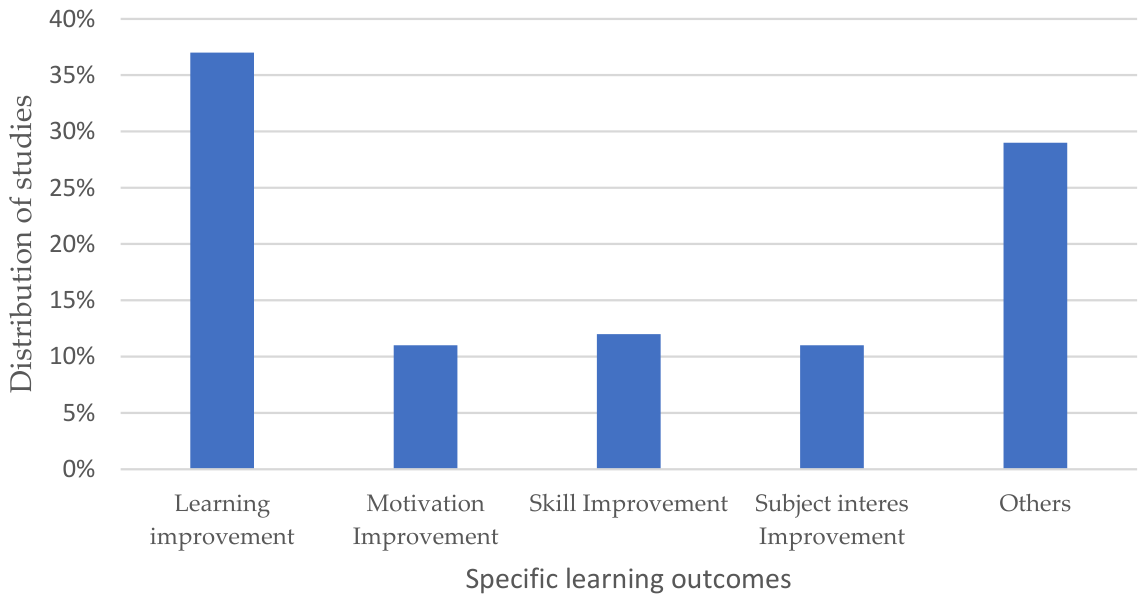
A total of 72% of the studies (41 articles) reported significant positive learning outcomes associated with the use of educational video games. In contrast, 5% of the studies (3 articles) reported negative outcomes based on the teachers’ perceptions, and 23% (11 articles) found no significant effects or reported inconclusive findings.
Most of these (31 articles) identified improvements in curricular learning outcomes, primarily in STEM domains, either as a direct result of video game use or in combination with other instructional resources during the intervention (Figure 10). For example, Jong et al. (2017) found that students using a serious game achieved better learning outcomes than those receiving traditional instruction based on lectures and textbooks. Similarly, Piñero et al. (2025) reported that learning fraction operations through Minecraft: Education Edition was significantly more effective than a control condition in which the same content was taught using traditional classroom methods.
Another group of 10 studies reported improvements in transversal learning outcomes related to key competencies or cognitive and socio-emotional skills. More specifically, improvements were documented in attention (Castro et al., 2018; Ruíz-Ariza et al., 2018) and self-regulation (Cortes & Carreño-Bolivar, 2024); creativity (Checa-Romero & Pascual-Gómez, 2018); linguistic, mathematical, and naturalistic intelligences (del Moral Pérez et al., 2018); spatial reasoning skills (Merino-Campos et al., 2023, 2024); and socio-emotional competencies (Filella et al., 2016; Monjelat et al., 2016; Priego-Ojeda et al., 2024).
In 16% of the studies, however, findings were less conclusive. This was due to effects not being sustained over time (Christopoulos et al., 2023); improvements not being observed across all measured variables (Es-Sajjade & Paas, 2020; Gampell et al., 2020; Heß et al., 2024; Lee & Choi, 2020); or the absence of statistically significant differences compared with alternative instructional approaches (Pires et al., 2019; Qiao et al., 2024).
Regarding attitudinal and motivational variables, nine studies focused on motivation to learn (Ding et al., 2024; Domingues et al., 2021; El Mawas et al., 2020; Es-Sajjade & Paas, 2020; Leonardou et al., 2022; Mouronte-López et al., 2021; Srisawasdi & Panjaburee, 2019; Wang et al., 2023), while another nine examined interest in the specific subject matter (Akman & Çakır, 2023; de Carvalho et al., 2018; Es-Sajjade & Paas, 2020; Mavridis et al., 2017; Srisawasdi & Panjaburee, 2019; Sun et al., 2022; Wang et al., 2023; Wardaszko et al., 2016; Ye et al., 2018). Although results were generally positive, they were not entirely consistent. For example, Es-Sajjade and Paas (2020) reported significant learning gains in mathematics but no corresponding increase in interest in the subject. Other studies highlighted increases in achievement motivation, although this was sometimes strongly linked to competitiveness (Özdener & Demirci, 2019). A further 16 studies addressed research questions indirectly related to learning outcomes, particularly focusing on potential barriers to the classroom use of video games as educational tools.
On the one hand, eight studies explored teachers’ perceptions and experiences regarding the use and usefulness of video games (Gutiérrez et al., 2023; Irwanto et al., 2024; Marín-Díaz et al., 2019, 2020; Martínez-Soto et al., 2018; Özdener & Demirci, 2019; Russo et al., 2024; Stieler-Hunt & Jones, 2017). Three studies conducted in Australia are particularly noteworthy. Gutiérrez et al. (2023) found that willingness to use video games in the classroom decreases with age and that curricular alignment difficulties constitute one of the main barriers. Stieler-Hunt and Jones (2017) identified several teacher conceptions that hinder implementation, including lack of resources, difficulties integrating video games into the curriculum, and perceived negative attitudes from colleagues. Russo et al. (2024) reported concerns among primary school mathematics teachers regarding potential socio-emotional effects of excessive use, classroom management challenges, and uncertainty about the actual learning impact.
On the other hand, 10 studies examined gender-based differences in learning outcomes or attitudes (de Carvalho et al., 2018; del Moral Pérez et al., 2018; Domingues et al., 2021; Fraga-Varela et al., 2021b; Irwanto et al., 2024; Mavridis et al., 2017; Merino-Campos et al., 2023, 2024; Mouronte-López et al., 2021; Wang et al., 2023). Irwanto et al. (2024) is particularly notable, as it identified a gender gap favouring boys, who showed significantly more positive attitudes towards digital games.
Lastly, other studies investigated the influence of in-game behaviours (Domingues et al., 2021), emotions (Martínez-Borreguero et al., 2020, 2023), player profiles (Rosenheck et al., 2021), or teacher-related factors (Pflaumer et al., 2021).

4. Discussion

This study presents a systematic review of empirical research published between January 2016 and June 2025 on the use of educational video games as instructional tools in primary and secondary education. A total of 57 empirical articles were selected from an initial corpus of 2602 studies. Overall, the findings provide a detailed picture of the current state of video game-based learning in school contexts and reveal both areas of consolidation and important limitations in the way this field is being investigated and implemented.
With regard to first research question, there is no doubt about the substantial interest this topic has generated among researchers, as evidenced not only by the extensive scientific output but also by the fact that most of the analysed studies were published in high-impact journals and have accumulated a considerable number of citations in a relatively short period of time.
More than 60% of the articles were published in the last five years (a period not covered by previous systematic reviews), suggesting that scientific interest in this field continues to grow. This recent increase in publications is particularly relevant, as it shows that research on educational video games is not a marginal or declining area, but an expanding area of educational research. At the same time, the concentration of studies in Spain suggests that this growth is not evenly distributed across contexts. Rather, the development of the field appears to be strongly influenced by specific national research environments, which may contribute to an uneven geographical distribution of evidence.
An examination of the keyword cloud (Figure 2) reveals a broad semantic field surrounding the use of video games as educational tools, characterised by considerable terminological diversity. This conceptual breadth may lead to ambiguity and blurred conceptual boundaries. For instance, terms such as “games” and “game-based learning” are sometimes used to refer to the use of video games in research studies, rather than more specific terms such as “video games”, “digital games”, or “digital game-based learning”. This lack of terminological consistency is not merely a linguistic issue. It has methodological consequences, as heterogeneous terminology makes it more difficult to identify and delimit the population of studies belonging to the field and may contribute to relevant research being dispersed across different search terms. Consequently, the apparent expansion of the field should also be considered in relation to the conceptual fragmentation observed in the terminology used to describe it.
Regarding the publication profile, the content analysis confirms a predominance of quantitative or mixed-methods studies, mainly based on quasi-experimental group designs, often with pre-test/post-test assessments but without control groups, or survey-based approaches, with relatively large student samples. These studies primarily rely on objective or semi-objective learning assessments and Likert-type questionnaires. The most common research focus is the impact of video games on learning outcomes in Science and Mathematics, although a substantial number of studies also examine motivational and satisfaction-related variables associated with the use of educational video games more generally. This methodological profile suggests that the field has primarily sought to determine whether educational video games produce measurable changes in learning and motivation. Although this approach provides valuable evidence regarding outcomes, it offers less insight into the processes through which those outcomes emerge and the conditions under which video games are most effectively integrated into classroom practice.
With respect to the second research question, the typical intervention profile identified across most studies involves the classroom implementation of a short serious game, designed for individual play on a computer via web platforms or mobile devices, and focused on STEM competencies. This relatively homogeneous intervention profile is important, as it shows that the concept of video game-based learning encompasses a narrower range of practices in actual educational research than its broad theoretical definition might suggest. In practice, the reviewed interventions tend to converge around short, individualised and content-specific experiences rather than more extensive forms of gameplay integrated into broader teaching sequences. These characteristics may facilitate classroom integration, particularly when resources are limited or when teachers need activities that can be implemented within a limited period of time (Bell & Gresalfi, 2017; Etxeberría, 2008; Millán et al., 2018). However, they also indicate that certain forms of educational game use remain comparatively underrepresented, particularly those involving longer interventions, cooperative gameplay or broader curricular integration.
In relation to the third research question, consistent with recent literature reviews, there is a general convergence in evidence pointing to positive effects of educational video games on student motivation and learning outcomes in primary and secondary education. Only three of the reviewed studies report negative outcomes; however, these are not based on objective data but rather on teacher perceptions within the Australian educational context (Gutiérrez et al., 2023; Russo et al., 2024; Stieler-Hunt & Jones, 2017).
These findings should nevertheless not be interpreted as evidence that implementation is universally straightforward. Teacher attitudes constitute an important condition for classroom integration, and negative perceptions may be associated with difficulties in aligning video game content with curricular requirements (Connolly et al., 2012; Etxeberría, 2008), the time demands of implementation (Dimitra et al., 2020), and the lack of technological resources in schools (Kaimara et al., 2021; Mercader & Gairín, 2020; Van Eck, 2006). Thus, the educational potential of video games appears to depend not only on the characteristics of the game itself, but also on the extent to which the intervention can be coherently integrated into the pedagogical and organisational conditions of the classroom.
The positive results observed across most studies should therefore be interpreted in conjunction with the characteristics of the interventions and methodologies identified in the review. The predominance of short interventions, individual gameplay and easily measurable learning outcomes suggests that the current evidence base may be particularly well suited to detecting immediate or relatively short-term changes. This raises an important issue concerning what is currently being captured by research in this field. The evidence provides substantial information about whether a particular intervention is associated with changes in learning or motivation, but considerably less information about how these effects develop over time, how they are maintained, or how educational video games function as part of regular classroom practice. The scarcity of longitudinal interventions is particularly relevant in this respect, given the potential decline in motivation once the novelty effect of the digital tool fades.
Finally, regarding the fourth research question, this systematic review has identified several conceptual and methodological limitations, as well as emerging research gaps in the field of video game-based learning. Firstly, a broad semantic inconsistency was observed around the concept of video game-based learning, highlighting the need for greater conceptual consensus and a more precise, unambiguous shared terminology among researchers. This lack of standardisation may have led to the exclusion of relevant studies due to the search strategy employed. It was also observed that terms such as “video games” or “serious games” are not always used consistently, while others such as “game-based learning” are sometimes applied to refer to digital gamification applications rather than video games per se (Poy & García, 2019). In this regard, terms such as “digital games” or “digital game-based learning” remain relatively underused. Overall, there is a clear need to refine the nomenclature related to educational video games and to establish clear criteria defining what should be considered a video game in educational research.
Secondly, a lack of methodological transparency and rigour persists in a substantial proportion of the reviewed studies, a limitation previously noted by Connolly et al. (2012), Byun and Joung (2018), and Tokac et al. (2019), and which remains largely unresolved. This review also confirms, in line with Riopel et al. (2019), that most quasi-experimental studies still fail to adequately address threats from extraneous variables, particularly those related to randomisation, prior knowledge equivalence between groups, re-learning effects, task content and time-on-task, novelty effects, and potential biases in the assessment of learning and motivation. With regard to this issue, the review found that 24% of the articles analysed did not explicitly report the limitations of their own research, since methodological transparency is essential not only for evaluating the strength of individual findings, but also for determining the extent to which results can be interpreted, compared, and replicated across studies.
Longitudinal interventions remain relatively scarce, despite their importance for assessing one of the key risks of this approach: the potential decline in motivation once the novelty effect of the digital tool fades. In this regard, Sierra and Fernández-Sánchez (2017) found that students with greater experience with commercial video games reported lower motivation towards educational video games than less experienced peers. Similarly, Riopel et al. (2019) identified an inverse relationship between intervention duration and effectiveness in their meta-analysis. Halloluwa et al. (2018) also highlighted the novelty effect as a key motivational factor, reinforcing the need for longitudinal studies capable of tracking motivational changes over time. These findings suggest that the duration of an intervention is not simply a technical feature of study design, but a potentially influential factor for understanding the sustainability of educational effects.
In addition, there is a notable scarcity of replication studies using the same video games. In fact, among the 68 distinct video games identified in this review (excluding unnamed games), only six appeared in more than one study: NBA 2K16, Happy 8–12, Minecraft, Leobien, Walinwa, and Math Reflex. This limited recurrence of the same resources makes it difficult to determine whether observed effects are attributable to characteristics that can be generalised across educational video games or to the particular features of individual games. It also limits the possibility of accumulating evidence on specific resources and progressively improving their implementation through repeated empirical investigation.
Thirdly, most studies are situated within STEM subjects and focus on individual gameplay, likely because learning outcomes in these domains are more easily measured. Consequently, the findings cannot be readily generalised to other types of school learning, particularly in the social sciences and humanities. There is also a clear lack of studies examining the integration of video games into the broader curriculum, including barriers and strategies for embedding them in everyday classroom practice, as well as their potential for promoting cooperative and inclusive learning, including for students with special educational needs.
Taken together, the findings reveal a field that is expanding rapidly but remains relatively concentrated in a limited set of methodological, curricular and intervention contexts. The current evidence base is characterised by a strong emphasis on measurable outcomes, short-term interventions, individual gameplay and STEM-related content, whereas more complex dimensions of educational implementation remain comparatively unexplored. At the same time, conceptual inconsistency, limited methodological transparency, scarce longitudinal research and the low rate of replication constrain the accumulation of robust and transferable knowledge.

5. Conclusions and Implications for Future Research

This systematic review suggests a positive trend in the use of video games for educational purposes. However, these results should be interpreted with caution due to the considerable heterogeneity among the analysed studies. As noted earlier, the reviewed studies differ in terms of relevant methodological aspects such as study design, sample size and characteristics, the duration of interventions, the assessment tools used and the outcome variables examined. This diversity makes direct comparisons between studies difficult and limits the ability to draw generalisable conclusions about the effectiveness of educational video games across all contexts. Thus, the observed convergence should be understood as a promising trend rather than as conclusive evidence applicable to all educational stages, curriculum areas or types of video game.
It is also important to note that although the results appear promising, the lack of medium- or long-term follow-up data and replication studies makes it difficult to determine whether the observed benefits persist over time or can be generalised to the wider population. Moreover, the scarcity of longitudinal studies makes it difficult to determine whether the effectiveness of video games as an educational tool diminishes once the novelty effect wears off.
Another significant limitation of the reviewed research lies in the inherent complexity of VGBL. Educational video games usually embody multiple meaningful gamification components, such as narrative, as well as reward-based elements, such as points and badges. In this regard, it is difficult to determine which components actually affect the dependent variables in a quasi-experimental study. Future research could benefit from designing different versions of the same video game scenario in which specific gamification components are manipulated to compare their effects on motivation and learning.
Furthermore, the strength of the evidence varies across the different analysed outcomes. Although objective ability tests administered in experimental settings provide an adequate level of empirical support, the possibility of bias arising from the use of questionnaires or self-report measures must be considered. Participants’ tendency to provide responses they consider to be expected or socially acceptable may compromise the validity of the results. This is an especially relevant consideration given that the sample consisted of primary and secondary school students, for whom age and context may encourage this type of response. Therefore, findings derived from these measures should be interpreted with caution.
In addition, it should be noted that most of the research falls within the science or mathematics curriculum areas, and that the majority of studies involve short-duration video game interventions and individual play. While the results demonstrate the effectiveness of using video games as educational tools within a specific intervention model, this makes it difficult to extrapolate the findings to other curriculum areas or game formats.
The methodological limitations identified in the review emphasise the need to enhance the quality of research in this area. While the results suggest that educational video games have significant potential to promote learning and motivation, the consolidation of this field requires more rigorous methodologies, standardised evaluation criteria, and research designs that allow for the comparison of results across contexts and the accumulation of a more robust and transferable evidence base.
Based on the discussion, the following areas require further research. Firstly, longitudinal studies are needed, including follow-up assessments and replication studies, to verify the findings and rule out a possible decline in the effectiveness of video games as educational tools. Similarly, studies should be conducted using different versions of the same video game, in which the main gamification components can be manipulated independently to determine their effects on student learning and motivation more reliably.
More research is also needed, in line with the work of Stieler-Hunt and Jones (2017), Gutiérrez et al. (2023) and Russo et al. (2024), to document teachers’ perceptions and needs regarding the use of video games for educational purposes in the classroom. This aim is particularly relevant, since teachers’ attitudes and beliefs regarding educational video games constitute one of the main barriers to their integration into classroom practice. It is also worth noting that the three aforementioned studies were conducted in Australia. Given the strong influence of cultural and institutional contexts, it is also necessary to consider the extent to which findings from other educational systems are transferable to different contexts. Future research should therefore explore teachers’ perceptions and needs within specific educational systems, as well as strategies to overcome barriers to the effective classroom implementation of educational video games. Additionally, the recent emergence of video games incorporating virtual reality technologies has so far had limited impact on research, likely due to the limited availability of the necessary infrastructure in schools (Dimitra et al., 2020), although this is expected to change in the near future.
To conclude, the current study examines how the use of educational video games affects student learning and motivation. However, one of the main barriers to integrating them into the classroom is time constraints. In this respect, little research has examined whether video games require more time to implement than other teaching methodologies, and whether the results obtained justify the additional time investment.

Supplementary Materials

The following supporting information can be downloaded at https://www.mdpi.com/article/10.3390/educsci16091496/s1. Table S1: Content analysis of selected articles in the metasynthesis.

Author Contributions

Conceptualization, J.S.-T. and M.M.; methodology, J.S.-T. and M.M.; software, J.S.-T.; validation, J.S.-T. and M.M.; formal analysis, J.S.-T., M.M. and M.-J.F.-S.; investigation, J.S.-T. and M.M.; resources, J.S.-T.; data curation, J.S.-T.; writing-original draft preparation, J.S.-T.; writing-review and editing, J.S.-T., M.M. and M.-J.F.-S.; visualization, J.S.-T.; supervision, J.S.-T., M.M. and M.-J.F.-S.; project administration, J.S.-T.; funding acquisition, M.-J.F.-S. All authors have read and agreed to the published version of the manuscript.

Funding

The authors acknowledge the 85% co-funding provided by the European Union through the European Regional Development Fund (ERDF) and the Regional Government of Extremadura. Managing Authority: Ministry of Finance. Project IB24155.

Institutional Review Board Statement

Not applicable.

Informed Consent Statement

Not applicable.

Data Availability Statement

The data supporting the findings of this study are available in the Supplementary Materials of this article (Table S1).

Conflicts of Interest

The authors declare no conflicts of interest.

Abbreviations

The following abbreviations are used in this manuscript:
PRISMAPreferred Reporting Items for Systematic Reviews and Meta-Analyses
RQResearch Question
ERICEducation Resources Information Center
SJRScimago Journal Rank
L1First Language
L2Second Language
STEMScience, Technology, Engineering and Mathematics
VRVirtual Reality
AWSAmazon Web Services
MMOGMassively Multiplayer Online Game
ADHDAttention Deficit Hyperactivity Disorder
ICTInformation and Communication Technologies
GBLGame-based learning
DBGLDigital game-based learning
VGBLVideo game-based learning

References

  1. Ahrens, D. (2015). Serious games—A new perspective on workbased learning. Procedia-Social and Behavioral Sciences, 204, 277–281. [Google Scholar] [CrossRef] [Scilit]
  2. Akman, E., & Çakır, R. (2023). The effect of educational virtual reality game on primary school students’ achievement and engagement in mathematics. Interactive Learning Environments, 31(3), 1467–1484. [Google Scholar] [CrossRef] [Scilit]
  3. Asociación Española de Videojuegos (AEVI). (2024). La industria del videojuego en España: Anuario 2024. AEVI. Available online: https://www.aevi.org.es/wp-content/uploads/2025/05/VDIGITAL-ANUARIO2024-comprimido.pdf (accessed on 3 March 2026).
  4. Bell, A., & Gresalfi, M. (2017). Teaching with videogames: How experience impacts classroom integration. Technology, Knowledge and Learning, 22(3), 513–526. [Google Scholar] [CrossRef] [Scilit]
  5. Benanane, A. Y., & Ouahioune, A. (2024). Analysis of the impact of serious games on the development of writing skills in intermediate-level students learning French as a foreign language. International Journal of Serious Games, 11(4), 21–40. [Google Scholar] [CrossRef] [Scilit]
  6. Byun, J., & Joung, E. (2018). Digital game-based learning for K-12 mathematics education: A meta-analysis. School Science and Mathematics, 118(3–4), 113–126. [Google Scholar] [CrossRef] [Scilit]
  7. Capell, N. M., Fernández, J. T., & Bosco, A. (2017). Los videojuegos como medio de aprendizaje: Un estudio de caso en matemáticas en Educación Primaria. Pixel-Bit. Revista de Medios y Educación, (51), 133–150. [Google Scholar] [CrossRef] [Scilit]
  8. Castro, Á. P., Raposo-Rivas, M., & Martínez-Figueira, M. (2018). ¿Mejorar la atención con videojuegos? Un estudio de caso. REOP-Revista Española de Orientación y Psicopedagogía, 29(3), 94–109. [Google Scholar] [CrossRef] [Scilit]
  9. Charsky, D., & Ressler, W. (2011). “Games are made for fun”: Lessons on the effects of concept maps in the classroom use of computer games. Computers & Education, 56(3), 604–615. [Google Scholar] [CrossRef] [Scilit]
  10. Checa-Romero, M., & Pascual-Gómez, I. (2018). Minecraft and machinima in action: Development of creativity in the classroom. Technology, Pedagogy and Education, 27(5), 625–637. [Google Scholar] [CrossRef] [Scilit]
  11. Christopoulos, A., Mystakidis, S., Cachafeiro, E., & Laakso, M. J. (2023). Escaping the cell: Virtual reality escape rooms in biology education. Behaviour & Information Technology, 42(9), 1434–1451. [Google Scholar] [CrossRef] [Scilit]
  12. Cicchino, M. I. (2015). Using game-based learning to foster critical thinking in student discourse. Interdisciplinary Journal of Problem-Based Learning, 9(2). [Google Scholar] [CrossRef] [Scilit]
  13. Cole, C., Parada, R. H., & Mackenzie, E. (2024). A scoping review of video games and learning in secondary classrooms. Journal of Research on Technology in Education, 56(5), 544–577. [Google Scholar] [CrossRef] [Scilit]
  14. Connolly, T. M., Boyle, E. A., MacArthur, E., Hainey, T., & Boyle, J. M. (2012). A systematic literature review of empirical evidence on computer games and serious games. Computers & Education, 59(2), 661–686. [Google Scholar] [CrossRef] [Scilit]
  15. Cornellá, P., Estebanell, M., & Brusi, D. (2020). Gamificación y aprendizaje basado en juegos. Enseñanza de las Ciencias de la Tierra, 28(1), 5–19. [Google Scholar]
  16. Cortes, M. A. N., & Carreño-Bolivar, L. (2024). Virtual game-based learning environments to promote self-regulated learning skills in foreign language learners. F1000Research, 13, 1541. [Google Scholar] [CrossRef] [Scilit] [PubMed]
  17. de Carvalho, C. V., Caeiro-Rodriguez, M., Nistal, M. L., Hromin, M., Bianchi, A., Heidmann, O., & Metin, A. (2018). Using video games to promote engineering careers. International Journal of Engineering Education, 34(2), 388–399. [Google Scholar]
  18. del Moral Pérez, M. E., Guzmán Duque, A. P., & Fernández García, L. C. (2018). Game-based learning: Increasing the logical-mathematical, naturalistic, and linguistic learning levels of primary school students. Journal of New Approaches in Educational Research, 7(1), 31–39. [Google Scholar] [CrossRef] [Scilit]
  19. Deterding, S., Dixon, D., Khaled, R., & Nacke, L. (2011). From game design elements to gamefulness: Defining “gamification”. In Proceedings of the 15th international academic MindTrek conference: Envisioning future media environments (pp. 9–15). Association for Computing Machinery (ACM). [Google Scholar] [CrossRef] [Scilit]
  20. Dimitra, K., Konstantinos, K., Christina, Z., & Katerina, T. (2020). Types of game-based learning in education: A brief state of the art and the implementation in Greece. European Educational Researcher, 3(2), 87–100. [Google Scholar] [CrossRef] [Scilit]
  21. Ding, A. C. E., Huang, K. T. T., DuBois, J., & Fu, H. (2024). Integrating immersive virtual reality technology in scaffolded game-based learning to enhance low motivation students’ multimodal science learning. Educational Technology Research and Development, 72(4), 2083–2102. [Google Scholar] [CrossRef] [Scilit]
  22. Djaouti, D., Alvarez, J., Jessel, J. P., & Rampnoux, O. (2011). Origins of serious games. In Serious games and edutainment applications. Springer. [Google Scholar] [CrossRef] [Scilit]
  23. Domingues, A. M., da Silva, A. P., Martini, S. C., Scardovelli, T. A., de Castro, M. V., & Bissaco, M. A. S. (2021). Impact of a virtual zoo on the learning and effectiveness motivation of children with reading difficulties in the initial phase of literacy. Humanidades & Inovação, 8(67), 314–337. [Google Scholar]
  24. El Mawas, N., Tal, I., Moldovan, A. N., Bogusevschi, D., Andrews, J., Muntean, G. M., & Muntean, C. H. (2020). Investigating the impact of an adventure-based 3D solar system game on primary school learning process. Knowledge Management & E-Learning, 12(2), 165–190. [Google Scholar] [CrossRef] [Scilit]
  25. Es-Sajjade, A., & Paas, F. (2020). Educational theories and computer game design: Lessons from an experiment in elementary mathematics education. Educational Technology Research and Development, 68(5), 2685–2703. [Google Scholar] [CrossRef] [Scilit]
  26. Ester, P., Herrero, L., Ruiz, B., & Purón, A. (2022). Aprender matemáticas jugando: Desarrollo de competencias matemáticas a través de los videojuegos. Revista Ibérica de Sistemas e Tecnologias de Informação, (E50), 1–12. [Google Scholar]
  27. Etxeberría, F. (2008). Videojuegos, consumo y educación. Revista Electrónica Teoría de la Educación, 9(3), 11–28. [Google Scholar] [CrossRef] [Scilit]
  28. Filella, G., Cabello, E., Pérez-Escoda, N., & Ros-Morente, A. (2016). Evaluation of the emotional education program “happy 8–12” for the assertive resolution of conflicts among peers. Electronic Journal of Research in Educational Psychology, 14(3), 582–601. [Google Scholar] [CrossRef] [Scilit]
  29. Fraga-Varela, F., Vila-Couñago, E., & Martínez Piñeiro, E. (2021a). Impacto de los juegos serios en la fluidez matemática: Un estudio en educación primaria. Comunicar, 69, 125–135. [Google Scholar] [CrossRef] [Scilit]
  30. Fraga-Varela, F., Vila-Couñago, E., & Rodríguez-Groba, A. (2021b). Serious games and mathematical fluency: A study from the gender perspective in primary education. Sustainability, 13(12), 6586. [Google Scholar] [CrossRef] [Scilit]
  31. Freitas, Y., Guiomar, B., Gonçalves, S., Pinto, R., Pinto, E., Rato, V., & Martins, F. (2025). Using serious games with exploratory teaching to develop mental arithmetic in primary education. Educational Process: International Journal, 15, e2025151. [Google Scholar] [CrossRef] [Scilit]
  32. Gampell, A., Gaillard, J. C., Parsons, M., & Le Dé, L. (2020). ‘Serious’ disaster video games: An innovative approach to teaching and learning about disasters and disaster risk reduction. Journal of Geography, 119(5), 159–170. [Google Scholar] [CrossRef] [Scilit]
  33. García, M. J. M., Prieto, D. G., Serrano, M. C., & García, M. P. M. (2026). Videojuegos comerciales para la enseñanza de ciencias sociales en educación primaria. Análisis comparativo de cuatro sagas históricas. RELATEC: Revista Latinoamericana de Tecnología Educativa, 25(1), 41–57. [Google Scholar] [CrossRef] [Scilit]
  34. García-Álvarez, J., & Acevedo-Borrega, J. (2025). Minecraft as a pedagogical tool: A systematic literature review (2014–2024). Games and Culture, 0(0). [Google Scholar] [CrossRef] [Scilit]
  35. Guerra-Antequera, J., & Revuelta-Domínguez, F. I. (2022). Investigación con videojuegos en educación. Una revisión sistemática de la literatura de 2015 a 2020. Revista Colombiana de Educación, (85), 236. [Google Scholar] [CrossRef] [Scilit]
  36. Gutiérrez, A., Mills, K., Scholes, L., Rowe, L., & Pink, E. (2023). What do secondary teachers think about digital games for learning: Stupid fixation or the future of education? Teaching and Teacher Education, 133, 104278. [Google Scholar] [CrossRef] [Scilit]
  37. Halloluwa, T., Vyas, D., Usoof, H., & Hewagamage, K. P. (2018). Gamification for development: A case of collaborative learning in Sri Lankan primary schools. Personal and Ubiquitous Computing, 22(2), 391–407. [Google Scholar] [CrossRef] [Scilit]
  38. Heß, J., Karageorgos, P., Müller, B., Riedmann, A., Schaper, P., Lugrin, B., & Richter, T. (2024). Improving word reading skills of low-skilled readers: An intervention combining a syllable-based approach with digital game-based features. Journal of Computer Assisted Learning, 40(5), 2306–2324. [Google Scholar] [CrossRef] [Scilit]
  39. Hieftje, K., Pendergrass, T., Kyriakides, T. C., Gilliam, W., & Fiellin, L. (2017). An evaluation of an educational video game on mathematics achievement in first grade students. Technologies, 5(2), 30. [Google Scholar] [CrossRef] [Scilit]
  40. Irwanto, I., Cahyana, U., Ayuni, N. P. S., & Wijayako, R. S. (2024). Exploring high school students’ attitudes towards digital game-based learning: A perspective from Indonesia. Journal of Education and E-Learning Research, 11(1), 1–7. [Google Scholar] [CrossRef] [Scilit]
  41. Jong, M. S. Y., Dong, A., & Luk, E. (2017). Design-based research on teacher facilitation practices for serious gaming in formal schooling. Research and Practice in Technology Enhanced Learning, 12(1), 19. [Google Scholar] [CrossRef] [Scilit] [PubMed]
  42. Kaimara, P., Fokides, E., Oikonomou, A., & Deliyannis, I. (2021). Potential barriers to the implementation of digital game-based learning in the classroom: Pre-service teachers’ views. Technology, Knowledge and Learning, 26(4), 825–844. [Google Scholar] [CrossRef] [Scilit]
  43. Kapp, K. M. (2012). The gamification of learning and instruction: Game-based methods and strategies for training and education. John Wiley & Sons. [Google Scholar]
  44. Lee, H. K., & Choi, A. (2020). Enhancing early numeracy skills with a tablet-based math game intervention: A study in Tanzania. Educational Technology Research and Development, 68(6), 3567–3585. [Google Scholar] [CrossRef] [Scilit]
  45. Leonardou, A., Rigou, M., Panagiotarou, A., & Garofalakis, J. (2022). Effect of OSLM features and gamification motivators on motivation in DGBL: Pupils’ viewpoint. Smart Learning Environments, 9(1), 14. [Google Scholar] [CrossRef] [Scilit] [PubMed]
  46. Marín-Díaz, V., Sampedro-Requena, B. E., & López-Pérez, M. (2020). Students’ perceptions about the use the videogames in secondary education. Education and Information Technologies, 25(4), 3251–3273. [Google Scholar] [CrossRef] [Scilit]
  47. Marín-Díaz, V., Sampedro-Requena, B. E., & Mac Fadden, I. (2019). Perceived utility of video games in the learning process in secondary education—Case studies. Sustainability, 11(23), 6744. [Google Scholar] [CrossRef] [Scilit]
  48. Martínez-Borreguero, G., Cortés, T. C., Núñez, M. M., & Correa, F. L. N. (2023). Implicaciones cognitivas y emocionales de la implementación de un videojuego para el aprendizaje de contenidos de ciencias en Primaria. Revista Eureka Sobre Enseñanza y Divulgación de las Ciencias, 20(1), 1202. [Google Scholar] [CrossRef] [Scilit]
  49. Martínez-Borreguero, G., Perera-Villalba, J. J., Mateos-Núñez, M., & Naranjo-Correa, F. L. (2020). Development of ICT-based didactic interventions for learning sustainability content: Cognitive and affective analysis. Sustainability, 12(9), 3644. [Google Scholar] [CrossRef] [Scilit]
  50. Martínez-Soto, J. M., Vivancos, A. E., & Ferrer, L. A. (2018). Evaluación de un videojuego educativo de contenido histórico. La opinión de los estudiantes [Assessment of a history educational video game. The student’s opinión]. RELATEC. Revista Latinoamericana de Tecnología Educativa, 17(1), 62–75. [Google Scholar] [CrossRef] [Scilit]
  51. Mavridis, A., Katmada, A., & Tsiatsos, T. (2017). Impact of online flexible games on students’ attitude towards mathematics. Educational Technology Research and Development, 65(6), 1451–1470. [Google Scholar] [CrossRef] [Scilit]
  52. Mercader, C., & Gairín, J. (2020). University teachers’ perception of barriers to the use of digital technologies: The importance of the academic discipline. International Journal of Educational Technology in Higher Education, 17(1), 4. [Google Scholar] [CrossRef] [Scilit]
  53. Merino-Campos, C., del-Castillo, H., & Pascual-Gómez, I. (2023). Enhancing adolescent reasoning skills through a video game program. Education and Information Technologies, 28(10), 12737–12756. [Google Scholar] [CrossRef] [Scilit]
  54. Merino-Campos, C., del-Castillo, H., & Pascual-Gómez, I. (2024). Exploring the efficacy of video game training in developing adolescent reasoning abilities. Behaviour & Information Technology, 43(4), 651–662. [Google Scholar] [CrossRef] [Scilit]
  55. Millán, A. I. B., González, J. M. M., & de Castro, C. C. (2018). Aprendiendo léxico y ortografía francesa en la universidad mediante el videojuego SCRIBBLENAUTS. Edmetic, 7(2), 18–36. [Google Scholar] [CrossRef] [Scilit]
  56. Mitchell, A., & Savill-Smith, C. (2005). The use of computer and video for learning—A review of the literature. Learning and Skills Development Agency. [Google Scholar]
  57. Monjelat, N., Méndez, L., & Lacasa, P. (2016). Becoming a tutor: Student scaffolding in a game-based classroom. Technology, Pedagogy and Education, 26(3), 265–282. [Google Scholar] [CrossRef] [Scilit]
  58. Mouronte-López, M. L., García, A., Bautista, S., & Cortés, C. (2021). Analyzing the gender influence on the interest in engineering and technical subjects. International Journal of Technology and Design Education, 31(4), 723–739. [Google Scholar] [CrossRef] [Scilit]
  59. Newzoo. (2025). Global games market report 2025. Newzoo. Available online: https://newzoo.com/resources/trend-reports/newzoo-global-games-market-report-2025 (accessed on 3 March 2026).
  60. Nicholson, S. (2015). A recipe for meaningful gamification. In T. Reiners, & L. Wood (Eds.), Gamification in education and business (pp. 1–20). Springer. [Google Scholar] [CrossRef] [Scilit]
  61. OECD. (2019). OECD learning compass 2030. OECD Publishing. Available online: https://www.oecd.org/education/2030-project/ (accessed on 26 July 2026).
  62. Özdener, N., & Demirci, F. (2019). Determining students’ views about an educational game-based mobile application supported with sensors. Technology, Knowledge and Learning, 24(1), 143–159. [Google Scholar] [CrossRef] [Scilit]
  63. Pathania, M., Singh, C. P., Kaur, D. P., & Mantri, A. (2025). Effects of self-adaptive approach of iterative game based learning on performance and satisfaction of elementary school students in mathematics: An action research field experiment. SN Computer Science, 6, 518. [Google Scholar] [CrossRef] [Scilit]
  64. Perrotta, C., Featherstone, G., Aston, H., & Houghton, E. (2013). Game-based learning: Latest evidence and future directions (NFER Research Programme: Innovation in Education). NFER. [Google Scholar]
  65. Pflaumer, N., Knorr, N., & Berkling, K. (2021). Appropriation of adaptive literacy games into the German elementary school classroom. British Journal of Educational Technology, 52(5), 1917–1934. [Google Scholar] [CrossRef] [Scilit]
  66. Piñero, J. C., Lucena, F. J. H., Rodríguez, J. M. R., & Victoria-Maldonado, J. J. (2025). Minecraft education for improving academic perfomance: A comparative study in primary education. Revista Conhecimento Online, 1. [Google Scholar] [CrossRef]
  67. Pires, A. C., González Perilli, F., Bakała, E., Fleisher, B., Sansone, G., & Marichal, S. (2019). Building blocks of mathematical learning: Virtual and tangible manipulatives lead to different strategies in number composition. Frontiers in Education, 4, 81. [Google Scholar] [CrossRef] [Scilit]
  68. Plass, J. L., Homer, B. D., & Kinzer, C. K. (2015). Foundations of game-based learning. Educational Psychologist, 50(4), 258–283. [Google Scholar] [CrossRef] [Scilit]
  69. Poy, R., & García, M. (2019). Wizards, elves and orcs going to high school: How role-playing video games can improve academic performance through visual learning techniques. Education for Information, 35(3), 305–318. [Google Scholar] [CrossRef] [Scilit]
  70. Priego-Ojeda, M., Ros-Morente, A., & Filella-Guiu, G. (2024). Better together: Involving parents to improve the impact of a video game program to promote primary school students’ emotional competencies. Journal of Computers in Education, 12(3), 1027–1051. [Google Scholar] [CrossRef] [Scilit]
  71. Qiao, J., Woodward, J. R., & Alam, A. S. (2024). Effectiveness of educational video games in English vocabulary acquisition: One case in China classroom context. Cogent Education, 11(1), 2346038. [Google Scholar] [CrossRef] [Scilit]
  72. Ragni, B., Toto, G. A., di Furia, M., Lavanga, A., & Limone, P. (2023). The use of digital game-based learning (DGBL) in teachers’ training: A scoping review. Frontiers in Education, 8, 1092022. [Google Scholar] [CrossRef] [Scilit]
  73. Richter, K., & Kickmeier-Rust, M. (2025). Gamification in physics education: Play your way to better learning. International Journal of Serious Games, 12(1), 59–81. [Google Scholar] [CrossRef] [Scilit]
  74. Rigby, S., & Ryan, R. M. (2011). Glued to games: How video games draw us in and hold us spellbound. ABC-CLIO. [Google Scholar]
  75. Riopel, M., Nenciovici, L., Potvin, P., Chastenay, P., Charland, P., Sarrasin, J. B., & Masson, S. (2019). Impact of serious games on science learning achievement compared with more conventional instruction: An overview and a meta-analysis. Studies in Science Education, 55(2), 169–214. [Google Scholar] [CrossRef] [Scilit]
  76. Rodríguez-Hoyos, C., & Gomes, M. J. (2013). Videojuegos y educación: Una visión panorámica de las investigaciones desarrolladas a nivel internacional. Profesorado. Revista de Currículum y Formación de Profesorado, 17(2), 479–494. [Google Scholar]
  77. Rosenheck, L., Cheng, M. T., Lin, C. Y., & Klopfer, E. (2021). Approaches to illuminate content-specific gameplay decisions using open-ended game data. Educational Technology Research and Development, 69(2), 1135–1154. [Google Scholar] [CrossRef] [Scilit]
  78. Ruíz-Ariza, A., Casuso, R. A., Suarez-Manzano, S., & Martínez-López, E. J. (2018). Effect of augmented reality game Pokémon GO on cognitive performance and emotional intelligence in adolescent young. Computers & Education, 116, 49–63. [Google Scholar] [CrossRef] [Scilit]
  79. Russo, J. A., Roche, A., Russo, T., & Kalogeropoulos, P. (2024). Examining primary school educators’ preferences for using digital versus non-digital games to support mathematics instruction. International Journal of Mathematical Education in Science and Technology, 56(9), 1778–1803. [Google Scholar] [CrossRef] [Scilit]
  80. Sánchez-Castro, S., Pascual Sevillano, M. Á., & Fombona Cadavieco, J. (2023). Serious games: Efectos en la competencia lingüística a partir de las diferencias socioeducativas del alumnado. Revista Complutense de Educación, 34(4), 769–781. [Google Scholar] [CrossRef] [Scilit]
  81. Sánchez-Castro, S., Pascual Sevillano, M. Á., & Fombona Cadavieco, J. (2024). Learning analytics in serious games as predictors of linguistic competence in students at risk. Technology, Knowledge and Learning, 29(3), 1551–1577. [Google Scholar] [CrossRef] [Scilit]
  82. Sierra, C., & Fernández-Sánchez, M. R. (2017). Percepción de los videojuegos en educación social: Una visión de género. International Journal of Educational Research and Innovation, 7, 135–148. [Google Scholar]
  83. Srisawasdi, N., & Panjaburee, P. (2019). Implementation of game-transformed inquiry-based learning to promote the understanding of and motivation to learn chemistry. Journal of Science Education and Technology, 28(2), 152–164. [Google Scholar] [CrossRef] [Scilit]
  84. Stieler-Hunt, C. J., & Jones, C. M. (2017). Feeling alienated–teachers using immersive digital games in classrooms. Technology, Pedagogy and Education, 26(4), 457–470. [Google Scholar] [CrossRef] [Scilit]
  85. Sun, L., Chen, X., & Ruokamo, H. (2021). Digital game-based pedagogical activities in primary education: A review of ten years’ studies. International Journal of Technology in Teaching and Learning, 16(2), 78–92. [Google Scholar] [CrossRef] [Scilit]
  86. Sun, L., Ruokamo, H., Kangas, M., & Siklander, P. (2022). Effects of collaborative digital gameplay on students’ three dimensions of engagement in mathematics. International Journal of Game-Based Learning (IJGBL), 12(1), 1–16. [Google Scholar] [CrossRef] [Scilit]
  87. Syal, S., & Nietfeld, J. L. (2020). The impact of trace data and motivational self-reports in a game-based learning environment. Computers & Education, 157, 103978. [Google Scholar] [CrossRef] [Scilit]
  88. Tokac, U., Novak, E., & Thompson, C. G. (2019). Effects of game-based learning on students’ mathematics achievement: A meta-analysis. Journal of Computer Assisted Learning, 35(3), 407–420. [Google Scholar] [CrossRef] [Scilit]
  89. Vandercruysse, S., Ter Vrugte, J., de Jong, T., Wouters, P., van Oostendorp, H., Verschaffel, L., & Elen, J. (2017). Content integration as a factor in math-game effectiveness. Educational Technology Research and Development, 65(5), 1345–1368. [Google Scholar] [CrossRef] [Scilit]
  90. Van Eck, R. (2006). Digital game-based learning: It’s not just the digital natives who are restless. EDUCAUSE Review, 41(2), 16. [Google Scholar]
  91. Van Eck, R. (2015). Digital game-based learning: Still restless, after all these years. EDUCAUSE Review, 50(6), 13. [Google Scholar]
  92. Wang, K., Liu, P., Zhang, J., Zhong, J., Luo, X., Huang, J., & Zheng, Y. (2023). Effects of digital game-based learning on students’ cyber wellness literacy, learning motivations, and engagement. Sustainability, 15(7), 5716. [Google Scholar] [CrossRef] [Scilit]
  93. Wardaszko, M., Wittenzellner, H., Holzmann, P., & Winniczuk, A. (2016). Influencing attitudes towards entrepreneurship with digital game-based educational experience in secondary education. Developments in Business Simulation and Experiential Learning, 43, 240–248. [Google Scholar]
  94. Wouters, P., Van Nimwegen, C., Van Oostendorp, H., & Van Der Spek, E. D. (2013). A meta-analysis of the cognitive and motivational effects of serious games. Journal of Educational Psychology, 105(2), 249. [Google Scholar] [CrossRef] [Scilit]
  95. Ye, S. H., Hsiao, T. Y., & Sun, C. T. (2018). Using commercial video games in flipped classrooms to support physical concept construction. Journal of Computer Assisted Learning, 34(5), 602–614. [Google Scholar] [CrossRef] [Scilit]
  96. Zaina, L., Castro, E., Martinelli, S., & Sakata, T. (2019). Educational games and the new forms of interactions: Exploring the use of hand gestures in a computational thinking game. Smart Learning Environments, 6(1), 22. [Google Scholar] [CrossRef] [Scilit]
Figure 1. Flow chart of the publication search and selection process.
Education 16 01496 g001
Figure 2. Graphical representation of keywords.
Education 16 01496 g002
Figure 3. Documents retrieved from each scientific database by year of publication.
Education 16 01496 g003
Figure 4. Studies by country of publication.
Education 16 01496 g004
Figure 5. Distribution of studies by sample size.
Education 16 01496 g005
Figure 6. Distribution by curricular area.
Education 16 01496 g006
Figure 7. Distribution of research designs.
Education 16 01496 g007
Figure 8. Assessment instruments.
Education 16 01496 g008
Figure 9. Distribution by game platform.
Education 16 01496 g009
Figure 10. Distribution by specific learning outcomes.
Education 16 01496 g010
Table 1. Ranking of selected publications.
ReferenceCitationsSJRReferenceCitationsSJR
Ruíz-Ariza et al. (2018)265Q1Pflaumer et al. (2021)20Q1
del Moral Pérez et al. (2018)172Q3Monjelat et al. (2016)19Q1
Srisawasdi and Panjaburee (2019)149Q1Fraga-Varela et al. (2021b)18-
Akman and Çakır (2023)139Q1Jong et al. (2017)18-
Christopoulos et al. (2023)91-Zaina et al. (2019)17-
Capell et al. (2017)91-Sun et al. (2022)16Q3
Mavridis et al. (2017)86Q1Martínez-Borreguero et al. (2023)13Q3
Es-Sajjade and Paas (2020)76Q1Russo et al. (2024)12Q1
Halloluwa et al. (2018)71-Marín-Díaz et al. (2020)11Q1
Checa-Romero and Pascual-Gómez (2018)67Q1Rosenheck et al. (2021)10Q1
Gampell et al. (2020)67-Mouronte-López et al. (2021)10Q1
Ye et al. (2018)57Q1Merino-Campos et al. (2023)9Q1
Hieftje et al. (2017)55-Marín-Díaz et al. (2019)9-
Pires et al. (2019)54Q3Ding et al. (2024)7Q1
Lee and Choi (2020)51Q1Ester et al. (2022)6-
Fraga-Varela et al. (2021a)49Q1Heß et al. (2024)6Q1
Martínez-Soto et al. (2018)49-Qiao et al. (2024)4Q2
Stieler-Hunt and Jones (2017)48Q1Wardaszko et al. (2016)3-
Gutiérrez et al. (2023)42Q1Irwanto et al. (2024)3Q3
Filella et al. (2016)41Q3Merino-Campos et al. (2024)3-
El Mawas et al. (2020)41Q2Sánchez-Castro et al. (2024)2Q1
Syal and Nietfeld (2020)38Q1Sánchez-Castro et al. (2023)2Q3
de Carvalho et al. (2018)32Q2Pathania et al. (2025)1-
Wang et al. (2023)31-Freitas et al. (2025)0Q2
Castro et al. (2018)29Q3Piñero et al. (2025)0Q4
Vandercruysse et al. (2017)27Q1Cortes and Carreño-Bolivar (2024)0-
Martínez-Borreguero et al. (2020)25-Priego-Ojeda et al. (2024)0Q1
Özdener and Demirci (2019)22Q2Domingues et al. (2021)0-
Leonardou et al. (2022)21Q1
Table 2. Video games used in each article.
Video GameAimReference
Keşfet Kurtul; match the Fraction; Oh No Fractions!; Fractions LiteMathematics learningAkman and Çakır (2023)
HearthstoneMathematics learningCapell et al. (2017)
Professor Layton and the Curious VillageImprove attention (ADHD)Castro et al. (2018)
MinecraftImprove creativityCheca-Romero and Pascual-Gómez (2018)
[Not specified]Science LearningChristopoulos et al. (2023)
[Not specified]Self-regulated learningCortes and Carreño-Bolivar (2024)
EcityFostering engineering careersde Carvalho et al. (2018)
15 different minigamesImpact in specific intelligencesdel Moral Pérez et al. (2018)
Help Einstein ScapeScientific concepts learningDing et al. (2024)
[Not specified]L2 learningDomingues et al. (2021)
The Final FrontierScience learningEl Mawas et al. (2020)
MatherialMathematics learningEs-Sajjade and Paas (2020)
Tak Tak TakMathematics learningEster et al. (2022)
Happy 8–12; Happy for familiesEmotional competencesFilella et al. (2016)
MathReflexMathematics learningFraga-Varela et al. (2021a, 2021b)
HypatiamatMathematics learningFreitas et al. (2025)
Earth Girl 2; Sai Fah, the flood fighter; Stop Disasters!Natural disasters learningGampell et al. (2020)
[Video games were not used]-Gutiérrez et al. (2023)
[Not specified]Mathematics learningHalloluwa et al. (2018)
[Not specified]L1 learningHeß et al. (2024)
Knowledge BattleMathematics learningHieftje et al. (2017)
[Video games were not used]-Irwanto et al. (2024)
FarmtasiaGeographic learningJong et al. (2017)
Todo Math (9 minigames)Mathematics learningLee and Choi (2020)
Multiplication gameMathematics learningLeonardou et al. (2022)
[Video games were not used]-Marín-Díaz et al. (2019, 2020)
My Green Energy PlanetNatural Sciences learningMartínez-Borreguero et al. (2020)
MinecraftScience learningMartínez-Borreguero et al. (2023)
[Not specified]Student’s opinionMartínez-Soto et al. (2018)
Volcanic RiddlesMathematics learningMavridis et al. (2017)
NBA 2k16Mathematics learningMerino-Campos et al. (2023, 2024)
Simcity CreatorPeer tutoringMonjelat et al. (2016)
VR + STEM = you make it realFostering engineering careersMouronte-López et al. (2021)
Sponge Game; Matematik-Çarpım TablosuMathematics learningÖzdener and Demirci (2019)
Ideation for elementary mathematicsMathematics learningPathania et al. (2025)
NavigoReading comprehensionPflaumer et al. (2021)
MinecraftMathematics learningPiñero et al. (2025)
BrUNOMathematics learningPires et al. (2019)
Happy 8–12; Happy for familiesEmotional competencesPriego-Ojeda et al. (2024)
Snake GameL2 learningQiao et al. (2024)
The Radix EndeavorSTEM contentsRosenheck et al. (2021)
Pokemon GoIncrease in cognitive skillsRuíz-Ariza et al. (2018)
[Video games were not used]-Russo et al. (2024)
Leobien; WalinwaL1 learningSánchez-Castro et al. (2023, 2024)
Factory GameScience learningSrisawasdi and Panjaburee (2019)
[Video games were not used]-Stieler-Hunt and Jones (2017)
Wuzzit TroubleMathematics learningSun et al. (2022)
Crystal Island—Uncharted DiscoveryInstrumental comparisonSyal and Nietfeld (2020)
ZeldenrustMathematics learningVandercruysse et al. (2017)
[Not specified]Digital well-being educationWang et al. (2023)
Hotel StarsFostering business careers interestWardaszko et al. (2016)
Balance; Angry BirdsScience learningYe et al. (2018)
[Not specified]Mathematics learningZaina et al. (2019)
Disclaimer/Publisher’s Note: The statements, opinions and data contained in all publications are solely those of the individual author(s) and contributor(s) and not of MDPI and/or the editor(s). MDPI and/or the editor(s) disclaim responsibility for any injury to people or property resulting from any ideas, methods, instructions or products referred to in the content.