1. Introduction
Generative artificial intelligence (GenAI) is rapidly transforming teaching, learning, research, and institutional decision-making across higher education. Universities increasingly employ AI-enabled systems to support educational delivery, academic administration, assessment, and organisational innovation, thereby creating new opportunities to improve educational quality and operational efficiency (
Dwivedi et al., 2023;
Salem, 2026). As AI becomes embedded in routine academic practice, successful implementation depends not only on technological availability but also on users’ competencies, behavioural readiness, and ethical judgement.
AI competency extends beyond technical proficiency. It includes the ability to evaluate AI-generated outputs, recognise algorithmic bias and hallucinations, understand system limitations, and apply ethical judgement when using AI in professional contexts (
Ng et al., 2025;
Tian et al., 2024;
Chan & Lee, 2023). Consequently, effective AI adoption requires both functional competence and responsible use. These complementary dimensions have become increasingly important as higher education institutions seek to integrate AI in ways that enhance educational performance while maintaining academic integrity, transparency, and accountability (
Granić, 2025;
Sabag-Ben Porat, 2025).
Technology adoption research has traditionally been explained through models such as the Technology Acceptance Model (TAM) (
Davis, 1989) and the Unified Theory of Acceptance and Use of Technology (UTAUT) (
Venkatesh et al., 2003). These models suggest that perceived usefulness, perceived ease of use, social influence, and facilitating conditions influence behavioural intentions and technology use. However, generative AI introduces additional considerations that extend beyond conventional technology acceptance. Users must evaluate AI-generated information, exercise critical judgement, manage ethical risks, and develop confidence in using AI responsibly. These requirements suggest that AI competency, ethical awareness, and self-efficacy have become increasingly important determinants of AI adoption in educational environments (
Qi et al., 2025;
Kumar, 2024).
Previous studies have also reported differences in technology-related behaviours across generations. Generation Z is often characterised by greater familiarity with digital technologies and numerically larger engagement with AI-enabled environments, whereas Generation Y may place greater emphasis on governance, organisational responsibility, and ethical considerations during technology adoption (
Costanza et al., 2012;
Dai et al., 2025;
Van Staveren & Müller-Zimmermann, 2025). Nevertheless, these patterns should not be interpreted as fixed generational characteristics because technology-related behaviour is also influenced by institutional context, professional experience, organisational culture, and access to training opportunities (
Kabashkin, 2025;
Fullan, 2020).
Despite the rapid growth of AI research in education, important gaps remain. Existing studies have largely examined AI adoption, AI literacy, technology acceptance, or ethical AI as separate research streams (
Granić, 2025;
Ng et al., 2025;
Sabag-Ben Porat, 2025). While these studies have advanced understanding of individual aspects of AI adoption, comparatively few have integrated AI competency, AI utilisation behaviour, ethical awareness, Responsible AI Utilisation Behaviour, self-efficacy, and generational differences within a single analytical framework. Moreover, limited empirical evidence is available regarding how these constructs jointly influence academic engagement, perceived performance outcomes, and AI adoption intention among higher education professionals.
To address this gap, the present study develops an integrated conceptual model that combines the functional, behavioural, and ethical dimensions of AI adoption. The proposed structural hypotheses are derived primarily from established empirical literature on technology adoption, AI competency, self-efficacy, behavioural engagement, and responsible AI use (
Bandura, 1977;
Davis, 1989;
Venkatesh et al., 2003;
Ng et al., 2025). Adaptive Structuration Theory (AST) (
DeSanctis & Poole, 1994) and Dual-Process Theory (DPT) (
Evans & Stanovich, 2013) are incorporated as complementary interpretive perspectives rather than as theories for generating or directly testing the hypothesised structural relationships.
Accordingly, neither theory is empirically validated or confirmed through the present structural model. Instead, AST provides a broader organisational perspective on how institutional structures, professional roles, and organisational adaptation may influence AI appropriation. In contrast, DPT offers a cognitive perspective on how individuals balance efficient AI utilisation with reflective ethical reasoning. Together, these theories provide an interpretive context for the empirical findings rather than causal explanations of the observed relationships.
Specifically, AST provides an organisational perspective by explaining how institutional structures, professional roles, governance arrangements, and organisational practices may shape the appropriation and integration of AI within higher education. In contrast, DPT offers a cognitive perspective by explaining how individuals may balance efficient, intuitive AI-supported decision-making with reflective ethical reasoning when evaluating and using AI technologies. Together, these theories provide conceptual lenses for interpreting the empirical findings rather than mechanisms for predicting the structural relationships tested in the model.
Against this background, the present study investigates the relationships among AI Competency Capability (AICC), AI Utilisation Behaviour (AIUB), Perceived Usability (PU), Perceived Strategic Value (PSV), AI Ethical Awareness (AIEA), AI Self-Efficacy (AISE), Responsible AI Utilisation Behaviour (RAIUB), Academic Engagement (AE), Perceived Performance Outcomes (PPO), and AI Adoption Intention (AAI). Data were collected from 870 higher education professionals employed at Saudi Arabian universities and analysed using Partial Least Squares Structural Equation Modelling (PLS-SEM), Partial Least Squares Multi-Group Analysis (PLS-MGA), and the Measurement Invariance of Composite Models (MICOM) procedure.
Accordingly, this study addresses the following research questions:
RQ1: What differences are observed between Gen Y and Gen Z in AICC, AIUB, EAI A, and AAI?
RQ2: How is AICC associated with AIUB and AAI across generational groups?
RQ3: How are PU and PSV associated with the intention to adopt AI among Gen Y and Gen Z?
RQ4: How is AIUB associated with AE and PPO?
RQ5: How is AIEA associated with responsible AIUB?
RQ6: Are there significant structural differences between Gen Y and Gen Z in the proposed model?
RQ7: How do organisational adaptation and cognitive decision-making perspectives help explain the observed differences in AIC, EA, and AAI across generational groups?
By integrating behavioural, cognitive, ethical, and organisational perspectives within a unified empirical framework, this study contributes to the growing literature on AI adoption in higher education. It extends existing technology adoption research by jointly examining AI competency, AI utilisation behaviour, ethical awareness, responsible AI utilisation, and AI self-efficacy while statistically distinguishing between-group differences from sample-specific behavioural patterns. Importantly, the study does not seek to empirically validate AST or DPT. Rather, these theories are employed to provide complementary organisational and cognitive interpretations of the observed findings. The results therefore contribute empirical evidence regarding AI adoption among higher education professionals while informing context-sensitive AI implementation, responsible AI governance, and future theoretical development in AI-enabled higher education environments.
2. Literature Review
2.1. AI Competency Capability and AI Adoption in Higher Education
Generative artificial intelligence (GenAI) has become an important component of higher education, influencing teaching, research, academic administration, and institutional decision-making. As universities increasingly integrate AI-supported systems into educational practice, successful implementation depends not only on technological availability but also on users’ competencies, behavioural readiness, and ethical judgement (
Dwivedi et al., 2023;
Salem, 2026;
Venkatesh et al., 2003). Consequently, AI adoption has evolved from a purely technological issue into a multidimensional organisational and educational challenge.
Technology adoption has traditionally been explained using the Technology Acceptance Model (TAM) and the Unified Theory of Acceptance and Use of Technology (UTAUT), which emphasise perceived usefulness, perceived ease of use, social influence, and facilitating conditions as primary determinants of behavioural intention (
Davis, 1989;
Venkatesh et al., 2003). Although these theories remain highly relevant, the emergence of generative AI introduces additional requirements that extend beyond conventional technology acceptance. Unlike earlier digital technologies, generative AI requires users to critically evaluate AI-generated outputs, identify hallucinations and algorithmic bias, understand system limitations, and exercise ethical judgement during professional use (
Chan & Lee, 2023;
Ng et al., 2025;
Tian et al., 2024).
Accordingly, recent AI adoption research increasingly recognises AI Competency Capability (AICC) as a multidimensional construct combining technical knowledge, critical evaluation skills, ethical reasoning, and responsible decision-making. Studies consistently report that individuals with higher AI competency suggest greater confidence in using AI systems, numerically larger behavioural engagement, and higher intentions to integrate AI into their professional activities (
Ng et al., 2025;
Qi et al., 2025;
Tian et al., 2024). Similarly, AI self-efficacy has emerged as an important behavioural mechanism by which competence translates into actual AI utilisation, suggesting that competence alone may be insufficient unless accompanied by confidence in applying AI effectively (
Bandura, 1977;
Qi et al., 2025).
Perceptions of AI systems also influence adoption decisions. Drawing upon TAM and UTAUT, Perceived Usability (PU) and Perceived Strategic Value (PSV) represent complementary evaluations of AI technologies. PU reflects the extent to which AI systems are considered easy to learn and operate, whereas PSV reflects beliefs regarding their ability to improve professional performance, institutional effectiveness, and educational innovation (
Davis, 1989;
Falebita et al., 2025;
Nayak et al., 2026). Previous empirical studies consistently suggest positive associations between these perceptions and AAI, although the relative importance of each factor varies across organisational contexts (
Qu et al., 2024;
Yordudom et al., 2026).
Importantly, AI adoption also extends beyond operational efficiency. Universities increasingly emphasise responsible AI governance, transparency, accountability, and ethical decision-making as integral components of sustainable AI implementation (
Granić, 2025;
Kumar, 2024;
Sabag-Ben Porat, 2025). Consequently, AI ethical awareness and responsible AI utilisation behaviour should not be viewed as peripheral considerations but rather as essential components of AI adoption within higher education. Collectively, this body of literature supports the proposition that AI competency, self-efficacy, PU, PSV, and ethical awareness jointly contribute to AIUB and AAI.
2.2. Generational Differences in AI Adoption
Generational differences represent another important dimension of AI adoption research. Previous investigations have frequently compared Generation Y (Gen Y) and Generation Z (Gen Z) with respect to digital literacy, technology acceptance, and online behaviour (
Costanza et al., 2012;
Kabashkin, 2025). These studies generally suggest that individuals in Gen Z report greater familiarity with digital technologies and numerically larger engagement with emerging digital environments, whereas Gen Y often suggests a greater emphasis on organisational governance, professional responsibility, and ethical use of technology (
Dai et al., 2025;
Van Staveren & Müller-Zimmermann, 2025).
However, the existing evidence should be interpreted cautiously. Much of the generational literature focuses on general digital technologies rather than generative AI specifically, and many reported differences may reflect organisational context, professional experience, institutional culture, and access to AI training rather than immutable generational characteristics (
Costanza et al., 2012;
Kabashkin, 2025). Consequently, observed differences should be regarded as context-dependent behavioural patterns rather than fixed attributes of age cohorts.
More importantly, prior research has typically examined AI adoption, AI literacy, ethical AI, or technology acceptance as separate research streams. Studies investigating AI competency frequently focus on knowledge and technical capability (
Ng et al., 2025;
Tian et al., 2024), whereas research on responsible AI primarily examines ethical awareness and governance (
Chan & Lee, 2023;
Sabag-Ben Porat, 2025). Other studies concentrate on perceived usefulness, usability, or behavioural intention using traditional technology acceptance frameworks (
Davis, 1989;
Venkatesh et al., 2003). While these studies have substantially advanced understanding of AI adoption, comparatively few have integrated AI competency, ethical awareness, Responsible AI Utilisation Behaviour, self-efficacy, educational engagement, and generational differences within a single analytical framework.
This limitation is particularly important because generative AI simultaneously requires technical competence, behavioural engagement, and ethical judgement. Treating these dimensions independently may overlook important interactions among competency development, AI utilisation behaviour, ethical awareness, and organisational adaptation. Likewise, relatively few empirical studies have investigated whether the structural relationships among these constructs differ across generational groups within higher education professionals.
Accordingly, the present study develops an integrated empirical model in which the structural hypotheses are derived primarily from established literature on technology adoption, AI competency, self-efficacy, behavioural engagement, responsible AI, and generational technology adoption (
Bandura, 1977;
Davis, 1989;
Venkatesh et al., 2003). Adaptive Structuration Theory (AST) (
DeSanctis & Poole, 1994) and Dual-Process Theory (DPT) (
Evans & Stanovich, 2013) are incorporated after the empirical model to provide complementary interpretive perspectives rather than direct causal explanations for the hypothesised structural relationships.
Specifically, AST contributes an organisational perspective by explaining how institutional structures, professional roles, governance arrangements, and organisational practices may influence the appropriation and integration of AI within higher education. DPT contributes a cognitive perspective by explaining how professionals may balance efficient AI-supported decision-making with reflective ethical reasoning when engaging with AI technologies. Neither theory is directly tested within the structural model; instead, both provide conceptual lenses for interpreting the observed empirical findings following the PLS-SEM and PLS-MGA analyses.
Accordingly, this study investigates whether the relationships among AI Competency Capability (AICC), AI Utilisation Behaviour (AIUB), Perceived Usability (PU), Perceived Strategic Value (PSV), AI Ethical Awareness (AIEA), AI Self-Efficacy (AISE), Responsible AI Utilisation Behaviour (RAIUB), Academic Engagement (AE), Perceived Performance Outcomes (PPO), and AI Adoption Intention (AAI) differ between sampled Gen Y and Gen Z higher education professionals. By integrating previously fragmented research streams into a unified empirical framework while distinguishing empirical hypothesis testing from theoretical interpretation, the study advances understanding of responsible AI adoption and organisational AI integration in higher education. (See
Table 1).
Accordingly, this study investigates whether the relationships among AICC, AIUB, PU, PSV, AIEA, AISE, RAIUB, AE, PPO, and AIAI differ between Gen Y and Gen Z professionals. By integrating these previously fragmented research streams into a unified empirical framework, the study seeks to advance current understanding of responsible and sustainable AI adoption in higher education while providing a more comprehensive explanation of intergenerational differences in AI-related behaviour.
3. Methods and Materials
3.1. Population and Research Sample
This study employed a quantitative cross-sectional survey design to examine the relationships among AI Competency Capability (AICC), AI Utilisation Behaviour (AIUB), Perceived Usability (PU), Perceived Strategic Value (PSV), AI Ethical Awareness (AIEA), AI Self-Efficacy (AISE), Responsible AI Utilisation Behaviour (RAIUB), Academic Engagement (AE), Perceived Performance Outcomes (PPO), and AI Adoption Intention (AAI) among higher education professionals. In addition, the study investigated whether the structural relationships differed between sampled participants classified as Generation Y (Gen Y) and Generation Z (Gen Z). Because the study employed a cross-sectional design, the findings represent statistical associations and should not be interpreted as evidence of causal relationships.
Participants were recruited from public and private universities across the Kingdom of Saudi Arabia, where generative artificial intelligence (GenAI) has become increasingly integrated into teaching, learning, research, academic administration, and institutional decision-making. Saudi universities, therefore, provide an appropriate context for investigating AI adoption because AI-supported educational environments have become an integral component of higher education, increasing the importance of AI competency, ethical awareness, and responsible AI utilisation among university personnel (
Dwivedi et al., 2023;
Salem, 2026).
The target population comprised higher education professionals from Generation Y (born 1981–1996) and Generation Z (born 1997–2012) who were actively employed at Saudi Arabian higher education institutions during the data collection period. To ensure consistency with the study context, only adults who satisfied institutional employment requirements were eligible to participate. Consequently, although Generation Z is conventionally defined as individuals born between 1997 and 2012, the observed Gen Z sample consisted exclusively of employed professionals born between 1997 and 2002. No participant younger than the legal or institutional employment age was included.
Following data screening and quality checks, the final sample comprised 870 valid responses, including 437 Gen Y participants (50.2%) and 433 Gen Z participants (49.8%). The overall observed age range was 24–45 years. Participants classified as Gen Y ranged from 30 to 45 years (mean age = 37.5 years), whereas the sampled Gen Z participants ranged from 24 to 29 years (mean age = 26.5 years). These observed age distributions reflect the employment profile of higher education professionals during the study period rather than the complete birth-year ranges commonly associated with each generation. The age characteristics of both groups are summarised in
Table 2.
The participants represented a broad range of academic, leadership, and administrative positions, including academic staff, programme directors, department chairs, acting department heads, academic coordinators, vice-deans, deans, institutional directors, educational technology specialists, administrative managers, and other university employees involved in academic or institutional processes. To improve transparency and more accurately reflect organisational responsibilities, participants were classified into three institutional role categories: formal leadership roles, academic leadership positions, and administrative positions (
Table 3).
To provide additional context for interpreting the subsequent multi-group analyses, demographic differences between the two predefined generational groups were examined prior to estimating the structural model. As expected from the operational definition of the generational categories, an independent-samples
t-test confirmed a significant age difference between the sampled Gen Y and Gen Z participants (
p < 0.001). Pearson’s chi-square tests further indicated a significant difference in institutional role distribution (
p < 0.001), with sampled Gen Y participants more frequently occupying formal leadership positions and sampled Gen Z participants more frequently occupying administrative positions. By contrast, no statistically significant differences were observed in gender or nationality distributions (
p > 0.05). The results of these demographic comparisons are summarised in
Table 4.
Because chronological age forms part of the operational definition of the generational categories, it was not treated as an independent control variable in the structural model. Likewise, the principal objective of the study was to compare the predefined generational groups using Partial Least Squares Multi-Group Analysis (PLS-MGA) rather than to estimate the independent effects of demographic variables. Accordingly, age, career stage, institutional role, and professional experience were considered contextual characteristics when interpreting the findings. The observed between-group differences should therefore be interpreted as sample-specific associations that may reflect the combined influence of these overlapping demographic and organisational characteristics rather than generational membership alone.
A non-probability voluntary-response sampling strategy was adopted because institutional policies restricted direct access to university personnel databases, making probability sampling impractical. Accordingly, the questionnaire was distributed through official university communication channels, including institutional email lists, faculty development units, academic departments, and administrative offices. Participation was voluntary, anonymous, and based on informed consent. This approach enabled broad institutional representation while complying with organisational access restrictions and ethical requirements.
Data were collected over six months (April–October 2025). Each participant completed the questionnaire once, producing a cross-sectional dataset. After excluding incomplete questionnaires and responses containing substantial missing or inconsistent data, 870 valid questionnaires were retained for analysis. Because Saudi universities employ professionals from diverse national backgrounds, the final sample included respondents from Saudi Arabia, Egypt, Jordan, Yemen, Syria, India, the Philippines, Pakistan, and Bangladesh, thereby enhancing the study’s contextual diversity. The demographic distribution by nationality and gender is presented in
Table 5.
The final sample substantially exceeded current recommendations for Partial Least Squares Structural Equation Modelling (PLS-SEM).
Sarstedt et al. (
2022) emphasised that an adequate sample size is essential for obtaining stable parameter estimates and conducting reliable multi-group comparisons. In contrast,
Kock and Hadaya (
2018) recommended relatively large samples for prediction-oriented analyses, measurement invariance assessment, and multi-group modelling. Accordingly, the final sample of 870 participants was considered adequate for estimating the proposed structural model, assessing measurement quality, conducting MICOM measurement invariance testing, and performing Partial Least Squares Multi-Group Analysis (PLS-MGA). Nevertheless, because the sampled Gen Y and Gen Z participants differed significantly in chronological age and in the distribution of institutional roles, the cross-sectional design cannot disentangle the effects of generational membership from those associated with age, career stage, institutional role, professional experience, or prior AI exposure. Consequently, the observed between-group patterns should be interpreted as sample-specific associations rather than effects attributable exclusively to generational membership.
3.2. Data Collection and Measurement Instrument
Data were collected using a structured online questionnaire specifically designed to examine AI-related competencies, behaviours, ethical awareness, educational engagement, and AI adoption among higher education professionals. Participation was voluntary and anonymous, and all respondents provided informed consent before completing the survey. The instrument was administered once to each participant during the data collection period, consistent with the cross-sectional research design.
The questionnaire consisted of three sections—the first section collected demographic information, including generational group, gender, nationality, and institutional role. The second section presented the informed consent statement and information regarding voluntary participation, confidentiality, and ethical approval. The third section contained the measurement items representing the study’s latent constructs. All items were measured using a five-point Likert scale ranging from 1 (strongly disagree) to 5 (strongly agree).
To preserve content validity, all measurement items were adapted from previously validated instruments, with only minor wording modifications introduced to align the scales with generative AI applications in higher education. These modifications were limited to contextual terminology and did not alter the conceptual meaning of the original constructs. Consequently, the instrument maintained conceptual consistency with previous studies while improving its relevance to contemporary AI-supported educational environments.
Prior to large-scale administration, the questionnaire underwent expert review by specialists in educational technology, artificial intelligence, higher education, and quantitative research methods. The reviewers evaluated item clarity, conceptual relevance, linguistic accuracy, and content validity. Subsequently, a pilot study involving a small group of higher education professionals was conducted to assess readability, questionnaire completion time, and response clarity. A forward–backward translation procedure was employed to ensure semantic equivalence between the Arabic and English versions. Feedback from the expert review and pilot study resulted only in minor linguistic refinements, while the measurement structure remained unchanged.
The study employed Partial Least Squares Structural Equation Modelling (PLS-SEM) because the primary objective was to predict and explain complex relationships among multiple latent constructs rather than to confirm an established covariance structure. PLS-SEM is particularly appropriate for research involving prediction-oriented models, mediation analysis, and multi-group comparisons, while imposing fewer distributional assumptions than covariance-based SEM (
Sarstedt et al., 2022). Furthermore, the study incorporated the Measurement Invariance of Composite Models (MICOM) procedure, followed by Partial Least Squares Multi-Group Analysis (PLS-MGA). These analytical procedures are well established within the PLS-SEM framework.
All analyses were conducted using SmartPLS 4 (SmartPLS GmbH, Oststeinbek, Germany). The path-weighting scheme was employed, and statistical significance was evaluated using a non-parametric bootstrapping procedure with 5000 bootstrap subsamples, bias-corrected and accelerated (BCa) confidence intervals, two-tailed significance testing, and a significance level of
p < 0.05. The algorithm used the default convergence criterion of 10
−7 with a maximum of 300 iterations, following current methodological recommendations (
Sarstedt et al., 2022).
Before model estimation, the dataset underwent systematic screening. Responses containing substantial missing data, duplicate submissions, straight-lining response patterns, implausibly short completion times, or logically inconsistent response patterns were removed prior to analysis. The remaining questionnaires contained only negligible item-level missing values, which did not require statistical imputation. Consequently, 870 complete and valid questionnaires were retained for the final analyses.
All constructs were specified as reflective latent variables. The measurement model was evaluated using indicator loadings, Cronbach’s alpha, Composite Reliability (CR), Average Variance Extracted (AVE), cross-loadings, the Fornell–Larcker criterion, and the Heterotrait–Monotrait ratio (HTMT), following current recommendations for evaluating reflective measurement models in PLS-SEM (
Sarstedt et al., 2022). Measurement invariance between Gen Y and Gen Z was subsequently assessed using the MICOM procedure prior to conducting PLS Multi-Group Analysis.
Because the study relied on self-reported cross-sectional survey data, potential common method bias (CMB) was addressed using both procedural and statistical approaches. Procedurally, anonymity and confidentiality were assured, participation was voluntary, and measurement items were adapted from multiple validated sources to minimise evaluation apprehension and response consistency bias (
Podsakoff et al., 2003). Statistically, Harman’s single-factor test suggested that the first unrotated factor explained less than 50% of the total variance. In addition, the procedural and statistical assessments did not suggest substantial evidence of common method bias. Nevertheless, as with all self-reported cross-sectional survey research, the possibility that some degree of common method variance remains cannot be entirely ruled out (
Kock, 2015).
4. Results
As described in the Methods section, potential common method bias was evaluated using Harman’s single-factor test together with the full-collinearity variance inflation factor (VIF) approach. The procedural and statistical diagnostics did not suggest substantial common method bias. However, these diagnostic procedures cannot rule out residual common method variance, and the findings should therefore be interpreted in conjunction with the study’s cross-sectional, self-reported design (
Kock, 2015;
Podsakoff et al., 2003).
The measurement model was evaluated separately for the sampled Generation Y (Gen Y) and Generation Z (Gen Z) participants using the standard PLS-SEM criteria of indicator loadings, Average Variance Extracted (AVE), Composite Reliability (CR), and Cronbach’s alpha (α), following the recommendations of
Henseler et al. (
2016) and
Sarstedt et al. (
2022).
Table 6 presents the complete measurement model results for both groups.
The measurement model suggested satisfactory psychometric properties across both groups. All indicator loadings exceeded the recommended threshold of 0.70, indicating adequate indicator reliability. Likewise, the AVE values for every construct were above the recommended minimum value of 0.50, confirming satisfactory convergent validity. Internal consistency reliability was also supported, as both Composite Reliability and Cronbach’s alpha exceeded the commonly accepted threshold of 0.70 for all constructs (
Henseler et al., 2016;
Sarstedt et al., 2022).
Overall, these findings confirm that the measurement model suggests satisfactory reliability and convergent validity for both Gen Y and Gen Z participants, providing a robust foundation for the subsequent assessment of discriminant validity and structural relationships.
Although higher numerical values for indicator loadings, AVE, Composite Reliability, and Cronbach’s alpha were observed for several constructs in the Gen Z sample, these differences are presented for descriptive purposes only. They should not be interpreted as evidence that one group’s measurement model is inherently numerically larger than the other’s. As suggested later through the Measurement Invariance of Composite Models (MICOM) procedure, only partial measurement invariance was established. Consequently, direct comparisons of measurement quality indices between the two groups are not statistically warranted. Instead, these indices are reported separately to suggest that each measurement model meets accepted psychometric standards before cross-group comparisons of the structural model are conducted.
The satisfactory measurement properties observed in both groups suggest that the latent constructs were measured consistently and reliably within each sample. Establishing adequate reliability and convergent validity at this stage is essential because it ensures that any subsequent differences identified through the multi-group structural analysis are more likely to reflect differences in the relationships among constructs rather than deficiencies in the measurement instrument itself (
Henseler et al., 2016;
Sarstedt et al., 2022).
To further evaluate construct distinctiveness, discriminant validity was subsequently examined using three complementary procedures. First, complete item-by-construct cross-loading matrices were inspected to verify that each indicator loaded more strongly on its intended construct than on competing constructs. Second, discriminant validity was evaluated using the Fornell–Larcker criterion. Finally, the Heterotrait–Monotrait ratio (HTMT) was examined to provide a more stringent assessment of construct separation (
Henseler et al., 2016). The results of these complementary analyses are presented in the following section.
To further evaluate the distinctiveness of the latent constructs, discriminant validity was assessed using three complementary procedures: item-by-construct cross-loadings, the Fornell–Larcker criterion, and the Heterotrait–Monotrait ratio (HTMT), following current recommendations for PLS-SEM measurement assessment (
Henseler et al., 2016;
Sarstedt et al., 2022). Employing multiple complementary criteria provides a more comprehensive evaluation of construct distinctiveness than relying on a single diagnostic.
The complete cross-loading matrices presented in
Table 7 suggest satisfactory item-level discriminant validity for both the Gen Y and Gen Z samples. Across all constructs, every indicator loaded more strongly on its assigned construct than on any competing construct, indicating that the measurement items consistently represented their intended latent variables. No indicator exhibited a problematic cross-loading pattern, suggesting construct redundancy or indicator misclassification.
Although several cross-loadings were numerically higher in the Gen Z sample, the overall loading pattern remained consistent across both groups. Importantly, the primary loading for every indicator exceeded its cross-loadings with alternative constructs, supporting appropriate construct specification. These findings suggest that the observed relationships among constructs are unlikely to be attributable to item-level measurement overlap and therefore provide a robust foundation for subsequent structural model estimation. Overall, the cross-loading analysis confirms satisfactory item-level discriminant validity in both groups and supports the appropriateness of the measurement model for subsequent multi-group comparison.
The Fornell–Larcker results further support discriminant validity across both generational groups. For every construct, the square root of the Average Variance Extracted (AVE), shown on the diagonal of
Table 8, exceeded the corresponding inter-construct correlations. This pattern suggests that each construct shared greater variance with its own indicators than with other latent constructs, satisfying the recommended criterion for construct distinctiveness (
Henseler et al., 2016).
Although several inter-construct correlations were numerically larger within the Gen Z sample, particularly among AIC, AIUB, PU, PSV, and AAI, the Fornell–Larcker criterion remained satisfied for all constructs. Because only partial measurement invariance was established through the MICOM procedure, these numerical differences are presented descriptively and are not interpreted as evidence of superior measurement quality in either group.
Collectively, the Fornell–Larcker analysis confirms that the constructs remain empirically distinguishable within both samples, providing additional evidence supporting the validity of the measurement model.
The HTMT criterion provides a more rigorous assessment of discriminant validity by evaluating the similarity between theoretically distinct constructs (
Podsakoff et al., 2003). As presented in
Table 9, all HTMT values for the Gen Y sample remained below the commonly recommended thresholds, indicating satisfactory construct distinctiveness. Within the sampled Gen Z participants, comparatively higher HTMT values were observed for the construct pairs PSV–AAI (0.90), PU–AAI (0.89), AIUB–AAI (0.86), AIUB–AE (0.85), and PSV–AIUB (0.85), suggesting numerically larger conceptual associations among several AI-related constructs.
To determine whether these elevated HTMT values reflected construct overlap, bootstrapped HTMT inference was performed. As reported in
Table 10, the 95% bootstrap confidence intervals for all critical construct pairs remained below 1.00, satisfying the HTMT inference criterion recommended by
Henseler et al. (
2016). Accordingly, the relatively high HTMT values do not suggest a lack of discriminant validity but rather reflect the close conceptual relationships among AIC, PU, strategic value, utilisation behaviour, and adoption intention within the sampled Gen Z participants.
These findings were interpreted together with the cross-loading analysis and the Fornell–Larcker criterion. The cross-loading matrices confirmed that every indicator loaded highest on its intended construct, while the Fornell–Larcker criterion suggested satisfactory construct separation across all latent variables. The convergence of evidence from these three complementary procedures supports the conclusion that the constructs remain empirically distinguishable despite their strong conceptual relatedness.
Overall, the discriminant validity assessment suggests satisfactory construct distinctiveness for both generational groups. Although several HTMT values in the Gen Z sample approached the more liberal threshold, the combined evidence from the cross-loading analysis, the Fornell–Larcker criterion, and the bootstrapped HTMT inference supports retaining all constructs in the proposed measurement model for the subsequent structural and multi-group analyses. (See
Table 11 and
Table 12).
The structural model revealed several common patterns across the sampled Gen Y and Gen Z participants. AI Competency Capability (AICC) was positively associated with both AI Utilisation Behaviour (AIUB) and AI Adoption Intention (AAI) within each group, supporting H1 and H2. Likewise, Perceived Strategic Value (PSV) and Perceived Usability (PU) were positively associated with AI Adoption Intention (AAI), supporting H3 and H4 in both groups. AI Utilisation Behaviour (AIUB) was positively associated with Academic Engagement (AE), supporting H5. In contrast, the relationship between AIUB and Perceived Performance Outcomes (PPO) was statistically significant only in the sampled Gen Z participants, providing partial support for H6. Similarly, AI Ethical Awareness (AIEA) was positively associated with Responsible AI Utilisation Behaviour (RAIUB) in both groups, supporting H7. The mediation analyses further suggested that AI Self-Efficacy (AISE) significantly mediated the relationship between AICC and AIUB in both groups (H8). In contrast, the indirect association between AIUB and PPO through AE was significant only within the sampled Gen Z participants, providing partial support for H9.
Formal between-group comparisons were conducted only for the hypotheses explicitly evaluated using Partial Least Squares Multi-Group Analysis (PLS-MGA). The PLS-MGA results confirmed a statistically significant difference for the relationship between AICC and AIUB (H10, p = 0.004), indicating that this association differed between the two sampled groups. In addition, the relationship between AI Ethical Awareness and Responsible AI Utilisation Behaviour differed significantly between groups (H12, p = 0.012). By contrast, no statistically significant between-group difference was identified for the relationship between Perceived Strategic Value and AI Adoption Intention (H11, p = 0.186).
Because formal PLS-MGA comparisons were not conducted for the remaining structural or mediated relationships, differences in the magnitude of the corresponding path coefficients should not be interpreted as evidence of numerically larger or weaker relationships between the sampled Gen Y and Gen Z participants. These coefficients are reported to describe the structural models estimated separately within each group. Furthermore, given the cross-sectional design and the observed differences in age, career stage, institutional role, and professional experience, the findings should be interpreted as sample-specific associations rather than fixed generational characteristics.
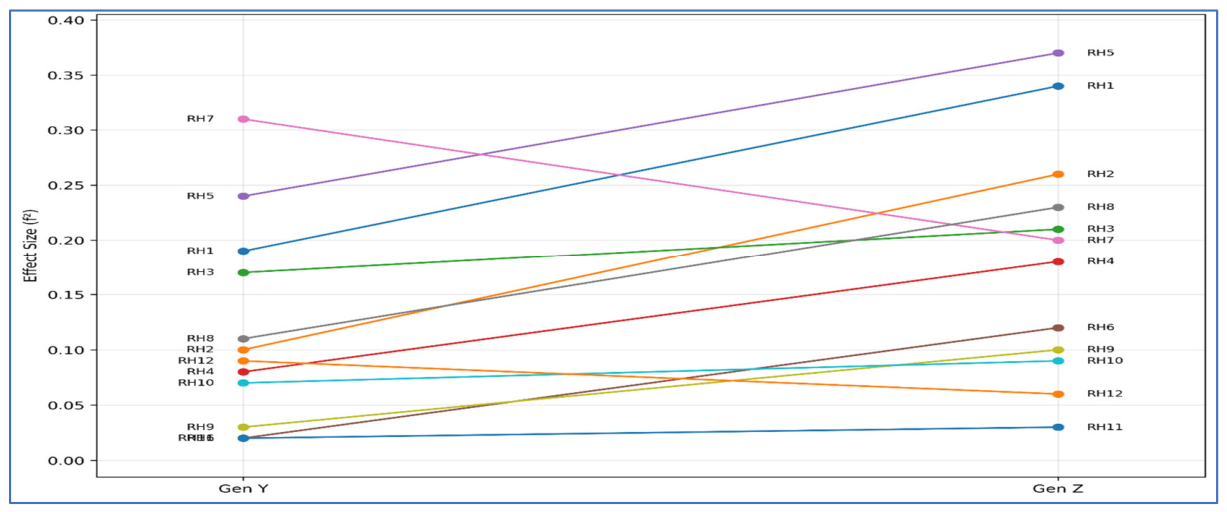
Figure 1 presents the effect size estimates (f
2) for the structural relationships within the Gen Y and Gen Z samples. Whereas the path coefficients suggest the strength and statistical significance of the observed associations, the effect size estimates provide additional information regarding the practical contribution of each predictor to explaining the endogenous constructs (
Sarstedt et al., 2022).
The largest effect sizes were observed for the relationships between AI Competency Capability (AICC) and AI Utilisation Behaviour (AIUB) and between AI Utilisation Behaviour (AIUB) and Academic Engagement (AE), particularly among the sampled Gen Z participants. These findings suggest that AI competency and subsequent AI utilisation contribute substantially to explaining behavioural engagement with AI-supported academic activities within this group. From a practical perspective, the results suggest that strengthening AI competency may be particularly important for encouraging active AI utilisation and sustained engagement among younger higher education professionals.
For the sampled Gen Y participants, the largest practical contribution was observed for the relationship between AI Ethical Awareness (AIEA) and Responsible AI Utilisation Behaviour (RAIUB). This finding complements the structural model results by indicating that ethical awareness plays a comparatively greater role in explaining Responsible AI Utilisation Behaviour (RAIUB) within this group. From an institutional perspective, this suggests that governance initiatives, ethical AI guidelines, and professional development activities may be particularly relevant for reinforcing responsible AI practices among experienced higher education professionals.
Overall, the effect size analysis suggests that the two groups exhibit different practical patterns of AI adoption. The sampled Gen Z participants suggested larger practical contributions from competency- and behaviour-related constructs, whereas the sampled Gen Y participants exhibited relatively numerically larger practical contributions from ethical awareness. These findings complement the structural model results by illustrating that the functional and ethical dimensions of AI adoption contribute differently across the two groups.
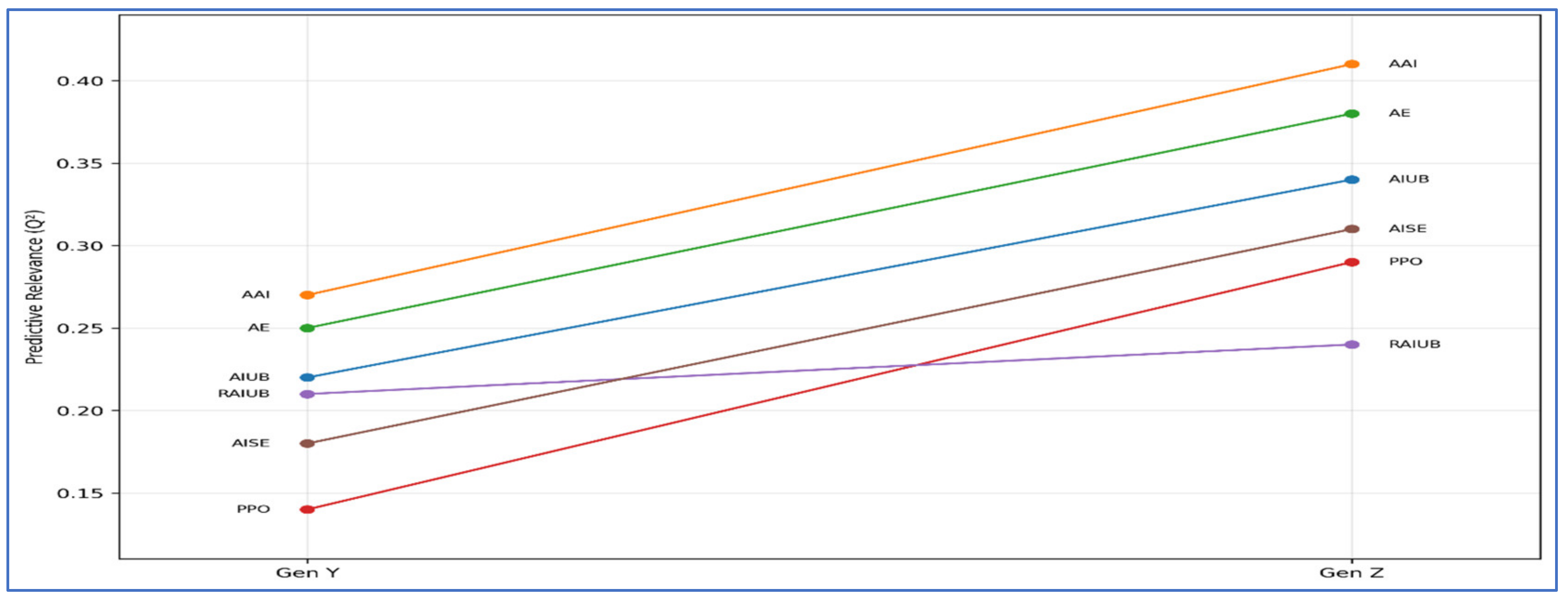
Predictive relevance was evaluated using the Stone–Geisser Q
2 statistic to determine the model’s ability to predict the endogenous constructs. As illustrated in
Figure 2, all Q
2 values exceeded zero for both groups, indicating satisfactory predictive relevance for AI Utilisation Behaviour (AIUB), AI Adoption Intention (AAI), Academic Engagement (AE), Perceived Performance Outcomes (PPO), Responsible AI Utilisation Behaviour (RAIUB), and AI Self-Efficacy (AISE). These findings suggest that the proposed model exhibits acceptable predictive relevance for the endogenous constructs within the present sample (
Sarstedt et al., 2022).
Although the Q2 values were consistently higher for the sampled Gen Z participants across all endogenous constructs, these differences should be interpreted with caution because only partial measurement invariance was established using the MICOM procedure. Accordingly, the observed differences are presented as sample-specific predictive patterns rather than evidence that the model is universally more predictive for one generational group than the other.
From an applied perspective, the higher predictive relevance observed in the Gen Z sample suggests that AIC, AIUB, PU, and strategic value collectively explain a greater proportion of AI-related behavioural outcomes among younger higher-education professionals. In contrast, the satisfactory Q2 values observed in the Gen Y sample suggest meaningful predictive relevance for more experienced professionals in the present sample. However, the relative contribution of ethical awareness appears more prominent in this group.
Taken together, the effect size and predictive relevance analyses reinforce the structural model findings. Within the present sample, the Gen Z group exhibited higher Q2 values for several endogenous constructs, suggesting comparatively greater predictive relevance. However, these differences should not be interpreted as evidence that the model is inherently more predictive for younger professionals.
Measurement invariance was evaluated prior to multi-group comparisons using the MICOM procedure, following the recommendations of
Henseler et al. (
2016). Establishing measurement invariance is an important prerequisite for meaningful comparisons of structural relationships, as it determines whether constructs are measured consistently across groups before differences in path coefficients are interpreted.
The MICOM analysis was conducted in three sequential steps. Step 1 confirmed configural invariance, indicating that both the Gen Y and Gen Z samples shared the same measurement model specification, indicator configuration, estimation procedures, and data treatment. Establishing configural invariance suggests that the constructs were operationalised consistently across both groups and therefore provides the foundation for subsequent invariance testing (
Henseler et al., 2016).
Step 2 examined compositional invariance by comparing the composite scores generated for each latent construct. As presented in
Table 13, all correlation (c) values were very close to 1.00 and fell within their corresponding 95% confidence intervals. These findings confirm that compositional invariance was established for every construct, indicating that the composites represented the same underlying conceptual variables in both groups despite potential differences in group-specific responses.
Step 3 evaluated the equality of composite means and variances using permutation tests. For several constructs, including AI Competency Capability (AICC), AI Utilisation Behaviour (AIUB), Perceived Usability (PU), Perceived Strategic Value (PSV), and AI Ethical Awareness (AIEA), statistically significant differences were observed in either composite means or variances. Consequently, full measurement invariance was not established, and the overall MICOM assessment supports partial measurement invariance.
From a methodological perspective, these findings have important implications for interpreting the subsequent multi-group analysis. Because configural invariance and compositional invariance were successfully established, the level of invariance achieved is sufficient to permit meaningful comparisons of the structural path coefficients using PLS Multi-Group Analysis (PLS-MGA) (
Henseler et al., 2016;
Sarstedt et al., 2022). However, the absence of full equality in composite means and variances suggests that comparisons should focus on differences in the structural relationships among constructs rather than direct comparisons of measurement quality indices or latent variable scores across groups.
Accordingly, the higher indicator loadings, Average Variance Extracted (AVE), Composite Reliability, and Cronbach’s alpha values observed descriptively within the Gen Z sample should not be interpreted as evidence of a numerically larger measurement model. Instead, these statistics suggest that both groups independently satisfied accepted psychometric standards before structural comparisons were undertaken. Likewise, the observed difference in latent construct means and variances is interpreted as sample-specific perceptual and behavioural differences rather than as evidence of fixed or universal generational characteristics.
Overall, the MICOM results provide an appropriate methodological foundation for the subsequent PLS-MGA. The establishment of partial measurement invariance supports valid comparisons of the structural relationships reported in
Table 7. It encourages cautious interpretation of descriptive differences in measurement properties between the two generational groups.
5. Discussion
The discussion is organised around the proposed hypotheses to maintain consistency among the empirical model, research questions, and study objectives. Overall, H1, H2, H3, H4, H5, H7, H8, H10, and H12 were supported, whereas H6 and H9 received partial empirical support because the corresponding relationships were statistically significant only within the sampled Gen Z participants. H11 was not supported. Importantly, statistically significant group differences were confirmed only for H10 and H12 through the PLS Multi-Group Analysis (PLS-MGA). Consequently, interpretations of the remaining relationships are restricted to within-group findings or sample-specific numerical differences rather than statistically confirmed between-group differences. Furthermore, because the sampled Gen Y and Gen Z professionals also differed in chronological age, career stage, institutional role, and potentially accumulated AI experience, these characteristics represent plausible alternative explanations for the observed patterns and should be considered alongside generational classification.
The findings suggest that AI Competency Capability (AICC) was positively associated with both AI Utilisation Behaviour (AIUB) and AI Adoption Intention (AAI), supporting H1 and H2. These findings are consistent with previous studies indicating that AI competency facilitates both AI utilisation and willingness to adopt AI technologies (
Alnajdi et al., 2025;
Salem, 2026;
Zhang et al., 2025). Although both coefficients were numerically larger among the sampled Gen Z participants, the PLS-MGA identified a statistically significant between-group difference only for the AICC → AIUB relationship (H10). The larger coefficient observed for AICC → AAI therefore represents a numerical difference rather than evidence of a numerically significantly larger relationship. Within this sample, younger professionals exhibited numerically larger competency–utilisation associations. However, these participants were also more frequently represented in administrative and early-career positions. In contrast, Gen Y participants more commonly occupied formal leadership roles; the observed pattern may equally reflect differences in organisational responsibilities, career stage, accumulated professional experience, or AI exposure.
The positive associations between Perceived Strategic Value (PSV), Perceived Usability (PU), and AI Adoption Intention (AAI) support H3 and H4 and are consistent with the Technology Acceptance Model (TAM) and the Unified Theory of Acceptance and Use of Technology (UTAUT), which identify perceived usefulness and usability as important determinants of technology adoption (
Davis, 1989;
Venkatesh et al., 2003). Although these relationships were numerically larger within the sampled Gen Z participants, no statistically significant between-group differences were identified. Likewise, the non-significant PLS-MGA result for H11 suggests that the relationship between PSV and AAI remained statistically comparable across groups. Accordingly, perceived usability and strategic value appear to represent robust determinants of AI adoption irrespective of group membership. In contrast, the observed numerical differences may reflect contextual variation rather than generational effects.
The measurement model further supports the validity of these interpretations. Although several HTMT values within the sampled Gen Z participants approached more liberal thresholds, the bootstrapped HTMT confidence intervals remained below 1.00. At the same time, the cross-loading analysis and Fornell–Larcker criterion also confirmed satisfactory discriminant validity. Collectively, these results suggest that the relatively high correlations among competency-, usability-, and adoption-related constructs reflect their close conceptual relationships rather than deficiencies in construct measurement, thereby strengthening confidence in the structural findings.
The positive association between AI Utilisation Behaviour and Academic Engagement supports H5 and aligns with previous evidence that active AI use is associated with greater engagement in digitally supported educational environments (
Shahzad et al., 2025;
Tian et al., 2024). Although this relationship was numerically larger among the sampled Gen Z participants, no statistically significant between-group difference was suggested. H6 received partial support because AI Utilisation Behaviour was positively associated with Perceived Performance Outcomes only within the sampled Gen Z participants. Nevertheless, because no statistically significant difference between the two coefficients was established, this finding should be interpreted as a group-specific pattern rather than evidence that the relationship is numerically larger in one generation. Differences in job responsibilities, AI usage intensity, career stage, or institutional context may equally contribute to this observation.
Regarding responsible AI use, H7 was supported, demonstrating a positive association between AI Ethical Awareness (AIEA) and Responsible AI Utilisation Behaviour (RAIUB). Unlike most other relationships, the PLS-MGA confirmed a statistically significant between-group difference (H12), with the association being numerically larger among the sampled Gen Y participants. This finding is consistent with previous work emphasising the importance of ethical awareness, governance, and accountability in responsible AI adoption (
Floridi, 2019;
Kumar, 2024). However, this result should not be interpreted as indicating that ethical awareness is inherently greater among Gen Y professionals. Rather, the numerically larger association may reflect the greater prevalence of leadership responsibilities, organisational accountability, professional seniority, and accumulated institutional experience within this group.
The mediation analyses further highlight the role of AI Self-Efficacy. H8 was supported in both groups, indicating that AI Self-Efficacy mediated the relationship between AI Competency Capability and AI Utilisation Behaviour, consistent with self-efficacy theory and previous AI adoption research (
Bandura, 1977;
Qi et al., 2025;
Salem & Khalil, 2026). Although the indirect effect was numerically larger within the sampled Gen Z participants, no statistically significant between-group comparison was established. Likewise, H9 received partial support because the indirect relationship between AI Utilisation Behaviour and Perceived Performance Outcomes through Academic Engagement was statistically significant only within the sampled Gen Z participants. These mediation findings therefore represent within-group behavioural patterns rather than confirmed differences between generations.
Taken together, the PLS-MGA results identified statistically significant between-group differences only for the AICC → AIUB and AIEA → RAIUB relationships. The remaining relationships did not differ significantly between groups despite differences in coefficient magnitude. These findings suggest that competency-related and ethics-related dimensions of AI adoption may be associated differently across the sampled professionals. However, because generational classification was closely intertwined with chronological age, career stage, institutional role, and professional experience—and because these variables were not incorporated as statistical controls or sensitivity analyses—the independent contribution of generation cannot be isolated. Consequently, the observed differences should be interpreted as reflecting multiple overlapping demographic and organisational influences operating within the present sample.
The effect size (f2) and predictive relevance (Q2) analyses provide additional support for this interpretation. Larger effect sizes and predictive relevance values were generally observed among the sampled Gen Z participants, particularly for competency-related constructs. Nevertheless, these findings suggest higher predictive relevance only within the present sample and should not be interpreted as evidence that the proposed model is inherently more predictive across generations. Differences in AI exposure, organisational responsibilities, and institutional context remain plausible alternative explanations.
The MICOM procedure established partial measurement invariance, supporting the use of PLS-MGA for comparing structural relationships (
Henseler et al., 2016;
Sarstedt et al., 2022). At the same time, significant differences in selected composite means and variances suggest that several AI-related constructs were perceived differently across the two sampled groups. Consequently, the findings should be interpreted as differences in observed behavioural patterns rather than evidence of fixed generational traits.
From an organisational perspective, the findings suggest that higher education institutions may benefit from differentiated AI capacity-building strategies. Within this sample, younger professionals suggested numerically larger competency–utilisation associations, whereas more experienced professionals suggested numerically larger relationships between ethical awareness and responsible AI utilisation. Because these characteristics overlap substantially with career stage, institutional responsibilities, and organisational position, AI development initiatives may be more effective if tailored to professional roles, experience, and organisational responsibilities rather than to generational categories alone. Such approaches may simultaneously strengthen technical AI competency and responsible AI governance across diverse university workforces.
These practical implications can be interpreted through the complementary perspectives of Adaptive Structuration Theory (AST) and Dual-Process Theory (DPT). Importantly, neither theory was empirically tested in the present study nor used to derive the structural hypotheses. Instead, AST provides an organisational lens for understanding how institutional structures, governance arrangements, and professional roles may influence the appropriation of AI within higher education. In contrast, DPT offers a cognitive perspective for interpreting how professionals balance efficient AI-supported decision-making with reflective ethical reasoning. Accordingly, the present findings should be viewed as illustrating the usefulness of these theories for interpreting observed organisational and cognitive patterns rather than as empirical confirmation of either theoretical framework.
Overall, the findings identify complementary patterns of AI adoption within the sampled higher education professionals rather than fixed generational characteristics. Statistically significant between-group differences were confirmed only for the relationships between AI Competency Capability and AI Utilisation Behaviour and between AI Ethical Awareness and Responsible AI Utilisation Behaviour. All remaining differences represent numerical variations or within-group behavioural patterns. Given the cross-sectional design and the overlap between generational membership, chronological age, career stage, institutional role, professional experience, and prior AI exposure, the independent effects of these characteristics cannot be separated. Consequently, the study contributes evidence regarding the functional and ethical dimensions of AI adoption among higher education professionals while avoiding deterministic interpretations of generational behaviour.
6. Conclusions
This study examined the relationships among AI Competency Capability (AICC), AI Utilisation Behaviour (AIUB), AI Adoption Intention (AAI), Academic Engagement (AE), Perceived Performance Outcomes (PPO), AI Ethical Awareness (AIEA), Responsible AI Utilisation Behaviour (RAIUB), and AI Self-Efficacy (AISE) among sampled Generation Y (Gen Y) and Generation Z (Gen Z) higher education professionals. Rather than conceptualising an AI generation gap as a deficit-based distinction, the findings suggest that AI adoption reflects complementary functional and ethical dimensions, including AI competency, behavioural engagement, responsible AI utilisation, and ethical awareness, within the present sample.
The PLS Multi-Group Analysis (PLS-MGA) confirmed statistically significant between-group differences only for the relationships between AI Competency Capability and AI Utilisation Behaviour (AICC → AIUB) and between AI Ethical Awareness and Responsible AI Utilisation Behaviour (AIEA → RAIUB). Specifically, the association between AI Competency Capability and AI Utilisation Behaviour was significantly larger in magnitude among the sampled Gen Z participants. In contrast, the association between AI Ethical Awareness and Responsible AI Utilisation Behaviour was significantly larger in magnitude among the sampled Gen Y participants. For all remaining structural relationships, differences in standardised path coefficients should be interpreted as sample-specific numerical variations or within-group behavioural patterns rather than statistically confirmed between-group differences.
The measurement model demonstrated satisfactory reliability, convergent validity, and discriminant validity. At the same time, the MICOM procedure established partial measurement invariance, thereby supporting appropriate comparisons of structural relationships between the two sampled groups. Collectively, the structural model, effect size estimates, and predictive relevance analyses identified meaningful associations among the study constructs within the present sample. However, because the sampled Gen Y and Gen Z participants also differed in chronological age, career stage, institutional role, and potentially professional experience, the observed between-group differences cannot be attributed exclusively to generational membership. Instead, they should be interpreted as sample-specific associations that may jointly reflect generational classification, as well as organisational, demographic, and professional characteristics. Consequently, the cross-sectional design does not permit the independent effects of generation, age, career stage, institutional role, professional experience, or prior AI exposure to be disentangled.
From a practical perspective, the findings suggest that higher education institutions may benefit from balanced AI development strategies that integrate technical AI competency development with ethical AI awareness, responsible AI governance, and organisational support for AI implementation. Rather than adopting uniform approaches based solely on generational categories, universities may achieve more effective AI integration by considering employees’ professional responsibilities, career stages, organisational roles, and previous AI experience when designing AI-related training and governance initiatives.
Finally, this study proposes the Gen-AI Dual Competency Alignment Framework (GADCAF) as a conceptual and interpretive framework for understanding how AI competency and ethical AI awareness may jointly support responsible AI integration in higher education. GADCAF is not presented as a validated theoretical model, predictive framework, or empirical explanation of causal relationships. Instead, it serves as a conceptual foundation for future empirical research, organisational reflection, and theory development concerning AI adoption, responsible AI utilisation, and professional development in AI-enabled higher education. Future longitudinal and multi-context studies incorporating demographic and organisational control variables are needed to further evaluate and refine the framework while distinguishing the respective contributions of generation, age, career stage, institutional role, professional experience, and AI exposure.
7. Literature Contributions (Theoretical and Practical)
These findings contribute to the growing literature on AI adoption, AI competency, and responsible AI use in higher education by examining behavioural, cognitive, and ethical dimensions of AI engagement among sampled Gen Y and Gen Z professionals. Unlike many previous studies that focus primarily on technology adoption intention, the present study incorporates AI Competency Capability (AICC), AI utilisation behaviour, AI ethical awareness (AIEA), AI self-efficacy, responsible AI utilisation behaviour, Academic Engagement (AE), and Perceived Performance Outcomes (PPO) within a single framework. In doing so, it provides a more comprehensive understanding of AI-related engagement in higher education environments.
The study also contributes to research on generational differences in AI-supported educational settings. The findings suggest that the sampled Gen Z participants exhibited numerically larger associations among AICC, AIUB, AE, and AAI. However, statistically significant between-group differences were confirmed only for the AICC → AIUB relationship. In contrast, the sampled Gen Y participants suggested numerically larger associations between AIEA and responsible AI utilisation behaviour. These findings suggest complementary patterns of AI engagement rather than generational deficiencies and support a more balanced interpretation of the AI generation gap.
From a theoretical perspective, the hypothesised structural relationships were primarily informed by technology adoption, behavioural engagement, self-efficacy, and AI competency literature, consistent with the Technology Acceptance Model (TAM) and Unified Theory of Acceptance and Use of Technology (UTAUT) traditions. In contrast, Adaptive Structuration Theory (AST) and Dual-Process Theory (DPT) served as broader interpretive frameworks rather than direct hypothesis-generating theories. AST provided an organisational perspective for understanding how institutional practices and adaptation processes may shape AI integration. At the same time, DPT helped interpret the balance between operational AI engagement and reflective ethical reasoning.
From a practical perspective, the findings suggest that higher education institutions may benefit from balanced AI development strategies that simultaneously strengthen technical AI competencies, ethical awareness, responsible AI use, and intergenerational collaboration. These implications should be viewed as organisational considerations arising from the observed findings rather than as empirically validated leadership mechanisms.
8. Opportunities, Limitations, and Future Research
The present study identifies opportunities for supporting responsible AI integration in higher education by combining technical AI competency with ethical awareness, organisational governance, and continuous professional development. The findings suggest that universities may benefit from creating AI-enabled learning environments that promote responsible AI utilisation alongside functional AI skills. However, these implications should be interpreted as organisational considerations informed by the present findings rather than empirically validated intervention strategies.
Several limitations should be considered. First, the study relied on self-reported measures, which capture participants’ perceptions rather than objectively verified behaviours or performance outcomes. Second, the cross-sectional design precludes causal inference and cannot determine changes in AI-related behaviours over time. Third, although predefined Generation Y and Generation Z groups were compared, the observed between-group patterns cannot be attributed solely to generational membership because generation was inherently associated with chronological age, career stage, institutional role, professional experience, and prior AI exposure. Although these characteristics were reported descriptively, they were not incorporated as control variables or examined through formal sensitivity analyses. Consequently, the reported differences should be interpreted as sample-specific associations rather than universal generational characteristics. Finally, the study was conducted within Saudi Arabian universities and focused on selected AI-related constructs, which may limit generalisability to other educational contexts.
Future research should employ longitudinal, mixed-method, experimental, and cross-cultural designs to better distinguish generational effects from age, career stage, institutional role, and AI experience. Studies should incorporate demographic and organisational variables as controls or moderators, conduct sensitivity analyses, and utilise objective behavioural indicators such as AI usage logs and institutional performance measures. Future work should also evaluate and refine the proposed Gen-AI Dual Competency Alignment Framework (GADCAF) as a provisional conceptual and interpretive framework, rather than a validated explanatory model, across diverse educational and organisational contexts.
9. GADCAF
The Gen-AI Dual Competency Alignment Framework (GADCAF) is introduced as a provisional conceptual and interpretive framework derived from the observed empirical patterns identified in the present study. It is not presented as an empirically validated theoretical model, predictive framework, or causal explanation of AI adoption.
The framework was developed as an interpretive synthesis of the observed structural relationships identified through the PLS-SEM and PLS-MGA analyses. The sampled Gen Z participants reported numerically stronger associations among AI Competency Capability (AICC), AI utilisation behaviour, Academic Engagement (AE), and AI Adoption Intention (AAI), indicating greater operational engagement with AI-enabled educational systems. In contrast, the sampled Gen Y participants suggested numerically larger associations between AIEA and responsible AI utilisation behaviour, suggesting greater alignment between ethical reflection and responsible AI use within this sample.
Adaptive Structuration Theory (AST) and Dual-Process Theory (DPT) provide the principal interpretive perspectives for understanding GADCAF. The framework does not test these theories directly, nor does it provide empirical confirmation of them. Instead, the theories assist in interpreting how organisational context and cognitive decision-making may help explain the observed associations. AST provides an organisational perspective by emphasising that AI integration is shaped by institutional practices, organisational adaptation, governance structures, and collaborative learning processes. DPT complements this view by highlighting the balance between operational AI engagement and reflective ethical reasoning.
Accordingly, GADCAF provides a conceptual lens through which future studies may examine how AI competency and ethical awareness jointly support responsible AI integration. These propositions should be regarded as theoretical interpretations that require further empirical investigation rather than as empirically established mechanisms. Future research should evaluate, refine, and, where appropriate, revise the proposed framework using longitudinal, cross-cultural, and intervention-based research designs before broader theoretical or practical conclusions are drawn.