1. Introduction
Simulations have become a promising tool with the potential to revolutionise instructional practises in teacher education. Incorporating mixed reality or virtual simulations into math education could close the gap between theoretical knowledge and real-world practice. These mixed reality contexts provide preservice teachers the chance to hone their teaching skills in a safe three-dimensional learning environment without putting students at risk (
Dieker et al., 2014;
Ledger et al., 2019;
Ersozlu et al., 2021). As virtual environments become increasingly sophisticated, the potential for creating more dynamic, adaptive, inclusive and successful classrooms to respond to individual learner needs is possible. The learning process becomes more visible as a skill when practicing within a virtual environment (
Fowler, 2015;
van Es et al., 2017). Understanding the variety and efficacy of pedagogical practices used within virtual reality environment is essential. Exploring the pedagogical approaches used in virtual simulations can also shed light on current research and their effectiveness.
Despite the growing adoption of simulation technologies in teacher education, limited attention has been devoted to understanding how pedagogical constructs such as discourse, noticing, questioning, mathematical reasoning, and reflective decision-making are operationalized within simulation environments. Consequently, the pedagogical foundations of many simulation-based interventions remain insufficiently articulated.
Simulations have been argued to function not merely as technical tools, but as pedagogical spaces where teachers can rehearse complex teaching moves (
Ledger & Fischetti, 2020) and phases of learning (
Fowler, 2015). Research on learning in 3D virtual learning environments highlights the importance of considering the pedagogical affordances of immersion, interaction, and presence, rather than focusing solely on technological sophistication (
Fowler, 2015;
Dalgarno & Lee, 2010). Fowler’s model (
Fowler, 2015) prioritises pedagogical factors over technological ones, unlike other models that tend to emphasise technical aspects without determining how they improve learning.
Mayes and Fowler (
1999) divide learning complexity into three basic phases: conceptualisation, construction, and dialogue. These stages of learning involve both pedagogical and technological aspects, and they correspond to various types of ‘courseware’ (cite). “Primary courseware” entails introducing fresh ideas to students and may even involve fully immersing them in the subject matter. The emphasis of “secondary courseware” is on manipulative or exploratory exercises that foster deeper comprehension. “Tertiary courseware” prioritises conversation and social interaction, usually with tutorial help. These differing ‘coursewares’ phases offer opportunity for preservice teachers to practice each aspect.
The methodology of Mayes and Fowler suggests pedagogical “affordances” to create technology that maximises learning outcomes. Similarly, the ‘presence’ pedagogy model links task-based and social immersion with opportunities for mathematical reasoning, questioning, and collaborative meaning-making (
Dalgarno & Lee, 2010;
van Es et al., 2017). From this perspective, simulations have the potential to create dynamic and inclusive learning environments that respond to learners’ diverse needs when their pedagogical design is intentional and theoretically grounded. Different levels of interaction and representation in the virtual world are required for each type of immersion, maybe facilitated by the usage of avatars within these virtual worlds. Kebritchi and Hirumi’s pedagogical framework (
Kebritchi & Hirumi, 2008) analyses the teaching strategies and pedagogical foundations used in designing educational games for game-based learning. Various approaches are described, including direct instruction, experiential learning, guided experiential learning, case method teaching, experiential and inquiry-based learning, discovery learning theory, situated cognition, cognitive apprenticeship, constructivism and unclassified approaches. Their framework allows analysis to capture broad pedagogical practices.
Pedagogical approaches serve as the foundational framework for designing and implementing effective learning experiences. Although virtual simulations are now widely recognised as useful tools for teacher preparation, limited research has examined how pedagogies are used and applied in these settings. The majority of literature emphasises the benefits of simulation technology (
Lai & Cheong, 2022;
Su et al., 2022;
Walkington et al., 2021;
Wildgans-Lang et al., 2020;
Davis et al., 2022). However, it is necessary to shift the focus to the complex interactions among pedagogies in these virtual settings. Previous research found that the pedagogical underpinnings of VR applications are not clearly articulated (
Johnston et al., 2018). While
Johnston et al. (
2018) acknowledged the lack of clearly articulated pedagogical foundations in VR applications, it is important to note that this study captured only 2014–2016. Furthermore, most existing reviews have primarily focused on technological affordances, implementation challenges, or user perceptions, leaving the pedagogical architecture of simulation environments relatively underexplored. Given the rapidly evolving nature of educational technology, more recent work is needed to assess and understand the current landscape of pedagogical frameworks in VR applications.
While simulation technologies have been extensively investigated for usability and perceived effectiveness, considerably less attention has been paid to the pedagogical mechanisms through which simulations support teacher learning and instructional decision-making.
Despite the increasing use of simulation-based instruction, many studies in mathematics teacher education still prioritise usability, convenience, and perceived gains in confidence over pedagogical depth (
Lai & Cheong, 2022;
Walkington et al., 2021;
Wildgans-Lang et al., 2020). Prior reviews have noted that the pedagogical underpinnings of VR environments are often insufficiently articulated (
Johnston et al., 2018), and given the rapid evolution of educational technologies, revisiting this question in contemporary literature is essential.
Although simulation-based learning environments are increasingly incorporated into mathematics teacher education, there remains limited evidence regarding which pedagogical constructs are explicitly embedded within these environments, how they are operationalized, and whether they align with established mathematics education theories. Addressing this gap is essential for advancing simulation design beyond technological functionality toward pedagogically meaningful learning experiences.
This scoping research aims to discuss the broader implications of using virtual simulations in math teaching. This scoping review serves as the foundation for future research on math pedagogies. It explores the potential benefits, opportunities, and limitations of virtual reality environments in the context of pedagogies used in maths teaching. It sheds light on the existing state of research on virtual simulations for mathematics teaching and recommends future research directions.
Kebritchi and Hirumi’s (
2008) pedagogical framework provides a structured lens for analysing the teaching strategies embedded within educational simulations. Their taxonomy distinguishes among direct instruction, experiential learning, inquiry, cognitive apprenticeship, and constructivist approaches, among others. Adopting such a framework enables researchers to examine not only whether simulations are effective, but how they embody instructional principles and learning theories.
Thus, understanding the pedagogical structures that guide the design and implementation of virtual simulations in mathematics education remains an important research priority. Exploring how simulations support discourse, noticing, problem-solving, and reasoning is necessary to move beyond technology-led adoption toward pedagogically grounded integration. To address this need, this scoping review examines the pedagogical structure of simulation-based mathematics teacher education from 2020 to 2025. This period captures the post-pandemic expansion of virtual learning environments, during which simulation tools became more widely adopted across teacher education contexts. We introduce a mixed method systematic mapping and interpretive synthesis as a structured lens for analysing teaching strategies used in virtual simulations, building on the foundational work by
Kebritchi and Hirumi (
2008). To address this gap, the present study introduces the Mixed-Methods Mapping and Interpretive Synthesis (MIX-SYN) Review Framework. Unlike conventional scoping reviews that primarily summarise publication characteristics and research trends, MIX-SYN combines quantitative mapping, co-occurrence analysis, and qualitative interpretive synthesis to simultaneously examine structural patterns and conceptual relationships within the literature.
Accordingly, this review was guided by the following research questions:
RQ1. What population groups are represented in simulation-based mathematics teacher education studies?
RQ2. What pedagogical constructs and instructional approaches are emphasised within simulation environments?
RQ3. How are pedagogical themes distributed across different teacher populations?
RQ4. What conceptual and methodological gaps remain within the current research landscape?
2. Methodology
The purpose of this scoping review is to thoroughly map, summarise and analyse the body of knowledge on mathematics pedagogies used in virtual simulations. We aimed to provide a comprehensive overview of how simulation-based approaches have been investigated in mathematics teacher education published between 2020 and 2025. To guide the review process, we developed the MIX-SYN Review Framework (Mixed-Methods Systematic Mapping and Interpretive Synthesis), grounded in PRISMA-ScR guidelines (
Tricco et al., 2018). The MIX-SYN Framework integrates systematic quantitative mapping of participant groups, methodological approaches, and pedagogical themes with qualitative interpretive synthesis of theoretical framing and conceptual intent. This approach enables both structural mapping and interpretive depth, providing a comprehensive account of how simulation-based mathematics teacher education has evolved and where further research is needed.
Unlike conventional scoping reviews, which primarily describe publication trends and study characteristics, the MIX-SYN Review Framework integrates systematic quantitative mapping, binary thematic coding, co-occurrence analysis, and qualitative interpretive synthesis into a unified analytical workflow. This integration enables simultaneous examination of both structural patterns and conceptual relationships within the literature.
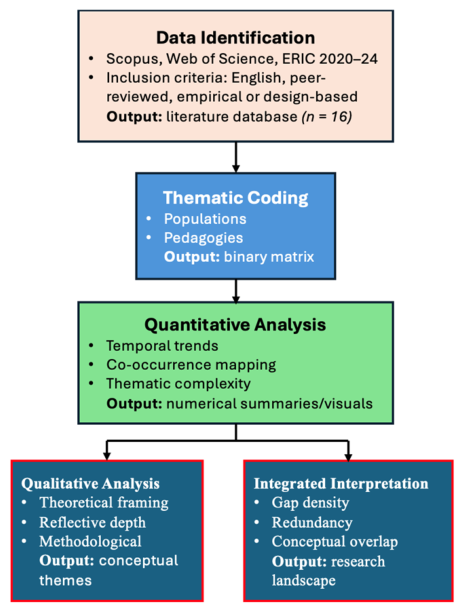
Our process follows a sequential and multi-phase workflow, as illustrated in
Figure 1, encompassing data identification, thematic coding, analytical processing, and interpretive integration. We first used quantitative analyses to map trends and patterns across studies, followed by qualitative synthesis to interpret theoretical and methodological depth. To make sense of the findings in more depth, we also relate each publication’s pedagogical approaches to their purposes, samples they used and key findings they concluded from their research. This design allowed us to ensure both empirical precision and conceptual depth to bridge quantitative findings with qualitative understanding. To analyse the data, we used MATLAB R2025b to provide descriptive statistics, co-occurrence matrices, and temporal visualisations. Qualitative synthesis complemented this by examining conceptual redundancy, reflective depth, and methodological rigour within the reviewed literature. While developed for this review, the MIX-SYN Review Framework offers a transferable approach for researchers conducting mixed-method evidence synthesis where both scope-mapping and conceptual interpretation are required.
The literature search was conducted in January 2026 using Scopus, Web of Science, and ERIC databases. Search terms were adapted to the indexing structure of each database. The review process followed PRISMA-ScR guidelines to ensure methodological transparency and reproducibility.
Figure 1 illustrates the sequential methodological process employed in the study, integrating both quantitative and qualitative analytical phases (MIX-SYN). During the Data Identification stage, the literature was sourced from Scopus, Web of Science, and ERIC (2026–2025) and systematically screened according to inclusion criteria that emphasised peer-reviewed, empirical, or design-based studies. A combination of keywords, including “mathematics,” “virtual simulation,” and “teacher education,” was used, and we limited the search to educational research to narrow it to mathematics education. Our search yielded 35 publications initially. We screened the titles and abstracts of retrieved publications to determine their relevance to our research questions. Limiting the search to the 2020–2025 period returned 24 publications. All of these publications were dated 2024 or earlier, with no publications found in 2025. Removing two publications which were in a language other than English, six publications which were not in the domain of mathematics, 16 publications remained for full-text analysis. The complete search strategy, database-specific queries, and eligibility criteria are summarised in
Table 1.
Table 1 provides a transparent summary of the literature search procedure, database coverage, search parameters, eligibility criteria, and screening outcomes adopted in this review. Consistent with PRISMA-ScR recommendations, the search process was designed to maximise methodological transparency and reproducibility by clearly documenting the data sources, publication period, inclusion and exclusion criteria, and study selection outcomes. This structured approach ensured a systematic identification of relevant studies and supported the subsequent application of the MIX-SYN Review Framework.
During the Thematic Coding stage, studies were classified into populations and pedagogical dimensions, yielding a structured binary dataset. In the Quantitative Analysis phase, we examined temporal trends, co-occurrence patterns, and thematic complexity, providing numerical summaries and visualisations. We used Qualitative Analysis to explore theoretical framing, reflective depth, and methodological design to identify conceptual themes. We finalised the process during the Integrated Interpretation stage by synthesising the two analytical layers to identify research gaps and conceptual overlaps. The application of the MIX-SYN approach culminated in a comprehensive representation of the field’s research landscape.
3. Data Sources and Selection Criteria
The data collection phase, we targeted three major databases, Scopus, Web of Science, and ERIC, to ensure broad coverage of peer-reviewed studies. We conducted searches using combinations of the keywords: simulation, virtual simulation, virtual reality, mathematics teacher education, teacher preparation and teacher education. Studies were included if they were: empirical or design-based, peer-reviewed, published between 2020 and 2025, and focused on mathematics teacher preparation or professional development. Editorials, purely theoretical papers, and duplicate records were excluded. Following title screening, abstract review, eligibility assessment, and de-duplication procedures, a final corpus of 16 studies was retained for full-text analysis.
Table 2 summarises the database coverage, search parameters, and inclusion–exclusion logic to ensure transparency and replicability, aligning with MIX-SYN Review Framework. The final corpus formed the basis for subsequent thematic and quantitative analyses. This information provides an auditable record of the review process and supports methodological transparency and reproducibility.
Study Selection Process
The study selection process consisted of four sequential stages: identification, screening, eligibility assessment, and inclusion. Studies were first screened by title and abstract, followed by full-text evaluation against predefined inclusion and exclusion criteria.
4. Analytical Procedure and Methodological Rigour
This section operationalizes the MIX-SYN Review Framework by explicitly linking each analytical phase to its objectives, analytical focus, and expected outputs. This section elaborated on the analytical logic that guided the study’s sequential integration of quantitative and qualitative evidence. The analysis was designed to flow through data organisation to conceptual synthesis, ensuring that each phase contributed distinctively to understanding how simulation-based mathematics education has evolved during 2020–2024.
The process began with a structured literature matrix, in which studies were cross-referenced by publication year, research design, and thematic focus. This matrix served not only as a dataset but also as a bridge between empirical frequency mapping and interpretive coding.
A dual-layer analysis was implemented thereafter. The quantitative layer captured the structural characteristics of the research field, such as temporal shifts, population focus, and thematic clustering, through MATLAB-based numerical modelling. These outputs generated the visual representations in
Figure 2,
Figure 3,
Figure 4,
Figure 5,
Figure 6,
Figure 7 and
Figure 8, which collectively describe the density, diversity, and evolution of simulation-related research.
The qualitative layer provided the conceptual scaffolding that numerical data alone could not reveal. Through iterative reading and interpretive coding, studies were examined for theoretical framing, reflective depth, and methodological sophistication. This phase enabled the identification of conceptual redundancies and underexplored pedagogical constructs.
Finally, both analytic strands converged in an integrated interpretation phase. Here, cross-mapping between quantitative outcomes (frequency, percentage, co-occurrence) and qualitative insights (e.g., reflective depth, theoretical positioning) allowed for a multi-perspective synthesis. The resulting interpretation not only outlined the empirical distribution of research but also revealed its conceptual coherence and remaining gaps, forming the foundation for the discussion and conclusion sections that follow.
The analytical stages, objectives, and outputs associated with the MIX-SYN framework are summarised in
Table 3.
Table 3 illustrates the full analytical workflow and the corresponding outputs of each stage. It highlights the iterative structure of the review, moving from data acquisition to coding, numerical evaluation, and conceptual interpretation. This design provides both methodological transparency and interpretive coherence. Explicit documentation of analytical stages and outputs enhances methodological transparency and supports the reproducibility of the review process.
Integrating quantitative mapping with qualitative synthesis strengthened both breadth and depth of interpretation. Quantitative analyses offered empirical clarity about what has been studied, while qualitative insights explain why certain themes dominate or remain underexplored. The combination of these approaches ensures a multi-dimensional perspective that captures the complexity of simulation-based mathematics teacher education.
This methodological design thus establishes a replicable, evidence-informed foundation for future systematic reviews and meta-analyses in education research.
5. Results
This section presents the integrated findings from implementing the MIX-SYN methodology, encompassing both quantitative and qualitative analyses. The results collectively illustrate how simulation-based mathematics teacher education has evolved in scope, focus, and pedagogical orientation between 2020 and 2025. The results are presented according to the analytical phases of the MIX-SYN framework, integrating quantitative mapping, thematic coding, co-occurrence analysis, and interpretive synthesis to provide both structural and conceptual insights into the reviewed literature.
6. Temporal Distribution and Growth Trend Analysis
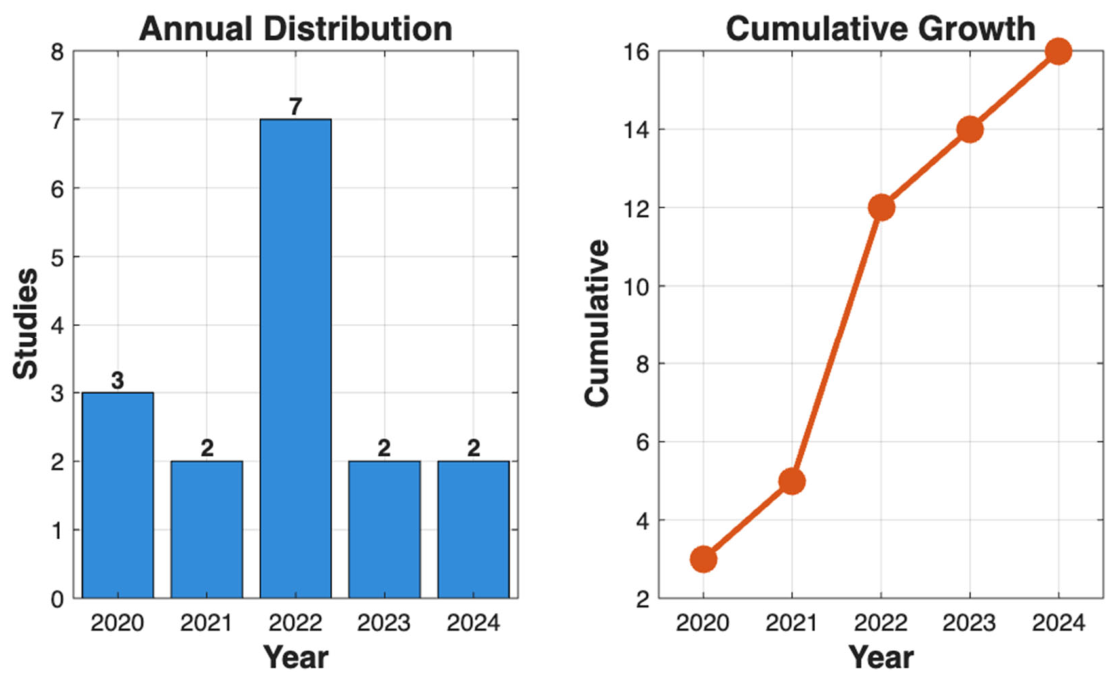
Figure 2 illustrates the annual and cumulative publication trends of simulation-based mathematics teacher education studies from 2020 to 2024, since no publications were found for 2025 at the time the literature search was conducted. The left panel (Annual Distribution) presents the yearly frequency of published studies, showing a noticeable spike in 2022 (n = 7), the peak year for research activity post COVID. This rise corresponds with the intensified global focus on remote and digital learning environments following the pandemic. The right panel (Cumulative Growth) visualises the progressive accumulation of studies, highlighting a consistent upward trend reaching 16 total publications by 2024. The curve demonstrates steady knowledge growth, suggesting increasing academic interest and sustained engagement with simulation-based pedagogies in mathematics teacher education.
Together, these visuals reveal both temporal concentration and long-term growth in research, underscoring how simulation-based methods grounded in mathematics have evolved from a niche topic to a progressively established research direction. The results are presented according to the analytical phases of the MIX-SYN framework, integrating quantitative mapping, thematic coding, co-occurrence analysis, and interpretive synthesis to provide both structural and conceptual insights into the reviewed literature.
Figure 2.
Annual and Cumulative Distribution of Simulation-Based Mathematics Education Studies.
Figure 2.
Annual and Cumulative Distribution of Simulation-Based Mathematics Education Studies.
7. Quantitative Mapping: Structural Trends and Co-Occurrence Patterns
7.1. Target Populations
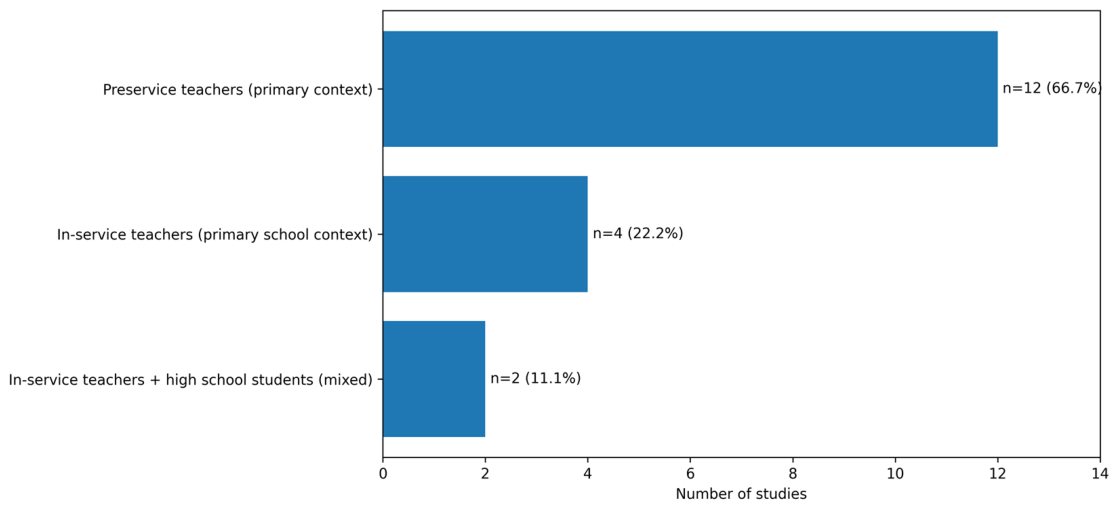
Preservice primary teachers accounted for 66.7% of the studies, while in-service teachers accounted for 33.3%. High school students mixed with in service teachers appeared infrequently, reflecting minimal research beyond teacher preparation contexts.
Figure 3 illustrates the frequency and percentage distribution of target populations examined in simulation-based mathematics teacher education studies. The majority of research focused on preservice teachers (n = 10, 66.7%), reflecting a strong emphasis on teacher preparation contexts. In-service teachers in the primary school context appeared in a smaller subset of studies (n = 4, 22.2%), while high school contexts were rarely addressed (n = 2, 11.1%). This distribution suggests that research on simulation-based mathematics education remains heavily focused on preservice teachers and the primary school context. The results are presented according to the analytical phases of the MIX-SYN framework, integrating quantitative mapping, thematic coding, co-occurrence analysis, and interpretive synthesis to provide both structural and conceptual insights into the reviewed literature.
Figure 3.
Distribution of Target Populations Across the Reviewed Studies.
Figure 3.
Distribution of Target Populations Across the Reviewed Studies.
7.2. Pedagogical Approaches
Table 4 shows how the “Values (Population and Pedagogies)” themes appear across the included empirical studies (Papers #1 through #16), highlighting which papers address each theme and the overall frequency of each.
Table 4 presents the binary coding matrix used in the thematic analysis. A value of “1” indicates the presence of a specific coded category within a study, whereas an empty cell indicates the absence of that category.
The coding matrix provides a transparent representation of how pedagogical constructs were distributed across the reviewed studies and serves as the analytical foundation for the frequency, co-occurrence, and thematic pattern analyses presented in subsequent figures. By documenting the presence or absence of coded themes across individual studies, the matrix supports both methodological transparency and reproducibility.
An examination of empirical articles suggests that many studies give limited attention to the pedagogical aspects of simulation in ITE (theme 5,
Table 4). This gap is of concern since effective teaching in mathematics depends not only on subject-matter expertise but also on the capacity to convey ideas in a simple but engaging way which relates to effective pedagogies. The analysis of the research landscape on virtual simulations for teaching of mathematics revealed a predominate focus on preservice primary teacher training (theme 1). The majority of studies focused on providing preservice primary school teachers with skills in classroom management, conducting parent-teacher interviews, and preparing and using lesson plans during simulations. No specific focus on pedagogical approaches was evident. One notable finding was the widespread reliance on self-report measures to evaluate the efficacy of virtual simulations (theme 10). Numerous studies on the efficacy of simulations concluded that they were highly effective for improving teacher preparation. Participants frequently shared positive impressions and expressed confidence in the effectiveness of virtual simulations as an additional training tool. Across the analysed studies, a consistent and encouraging trend emerged: virtual simulations were associated with improvements in teaching skills, even without a clear picture of the pedagogical approaches used (theme 13). This implies that the application of simulation has inherent worth and benefit. However, the educational impact of simulation environments may be enhanced through more explicit alignment between simulation design and pedagogical objectives. Explicit attention to pedagogy within simulation could improve the training of aspiring mathematics teachers and ultimately impact future students.
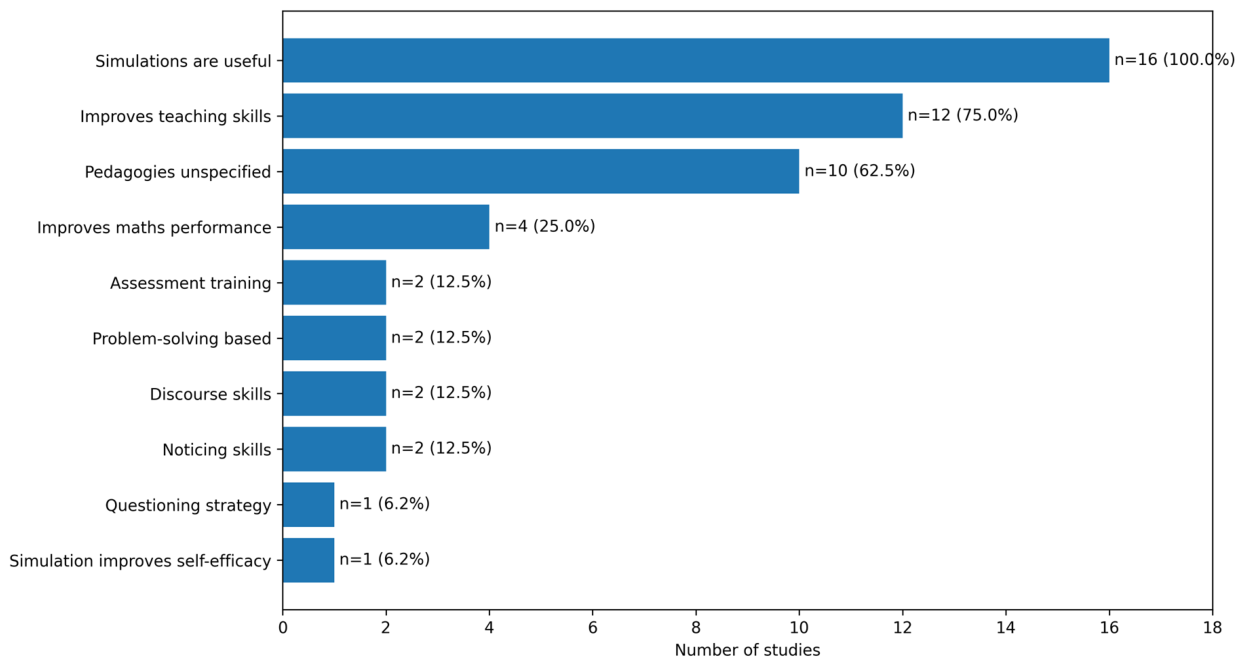
Figure 4 presents the frequency distribution of pedagogical approaches identified in the analysed studies. Each bar represents the number and percentage of studies addressing a specific pedagogical focus. The most dominant theme, “simulations are useful” (n = 16, 100%), indicates a strong research emphasis on the perceived usefulness of simulations. The dominance of usefulness-related findings reflects the early developmental stage of this research field, in which studies primarily evaluate feasibility, acceptance, and perceived effectiveness rather than examine deeper pedagogical mechanisms. This is followed by “improves teaching skills” (n = 12, 75%) and “improves mathematics performance of students” (n = 4, 25%). Other areas such as problem-solving, discourse skills, noticing skills, and assessment training appear less frequently (each n = 2, 12.5%), while mathematical questioning strategy and self-efficacy are the least explored (each n = 1, 6.2%). These findings highlight a concentration of research on simulation effectiveness and teacher skill development, with comparatively limited attention to inquiry-based and reflective pedagogical dimensions.
Figure 4.
Frequency Distribution of Pedagogical Approaches Across the Reviewed Studies.
Figure 4.
Frequency Distribution of Pedagogical Approaches Across the Reviewed Studies.
7.3. Interpretation of Pedagogical Themes
Across the reviewed studies, pedagogical themes related to usefulness and teaching skill development were substantially more prevalent than reflective, inquiry-based, or discourse-oriented pedagogies. This imbalance suggests that simulation-based mathematics teacher education remains primarily focused on effectiveness evaluation rather than explicit pedagogical design.
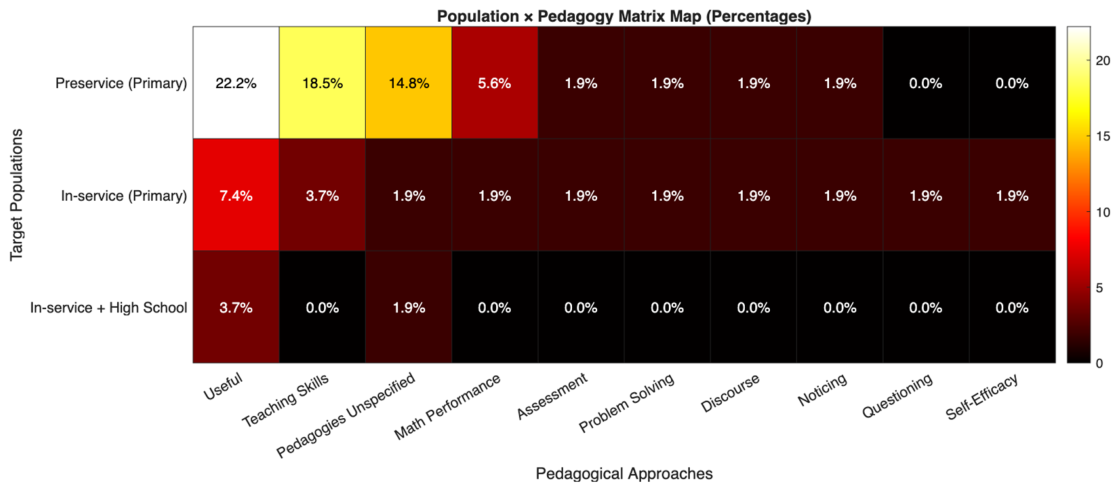
Figure 5 presents the distribution of pedagogical themes across different population groups as percentage distributions, revealing the relative weight of each theme within each population. It is clear that simulation research is heavily concentrated in preservice primary ITE contexts (69% of coded instances). Within this group, studies most commonly framed simulations as useful (22.2%) and linked them to improved teaching skills (18.5%), while a substantial proportion did not specify the pedagogical approach underpinning simulation use (14.8%). In contrast, in-service primary studies were less common overall (26.3%) and were more evenly spread across outcomes and pedagogical emphases, with no single focus dominating (such as usefulness 7.4%; teaching skills 3.7%; other categories 1.9% each). In relation to in-service high school contexts, the evidence was minimal (5.6%), appearing only in isolated instances (such as usefulness 3.7%; pedagogies unspecified 1.9%). Across all populations, explicit attention to specific pedagogical practices, such as questioning, noticing, discourse, problem-solving, assessment training, and self-efficacy, was comparatively limited. Percentages shown in the heatmap were normalised using the total frequency of coded instances across all studies, allowing relative comparison between population groups and pedagogical constructs.
Figure 5.
Population–Pedagogy Co-Occurrence Matrix (Percentages).
Figure 5.
Population–Pedagogy Co-Occurrence Matrix (Percentages).
7.4. Temporal Evolution of Top Themes
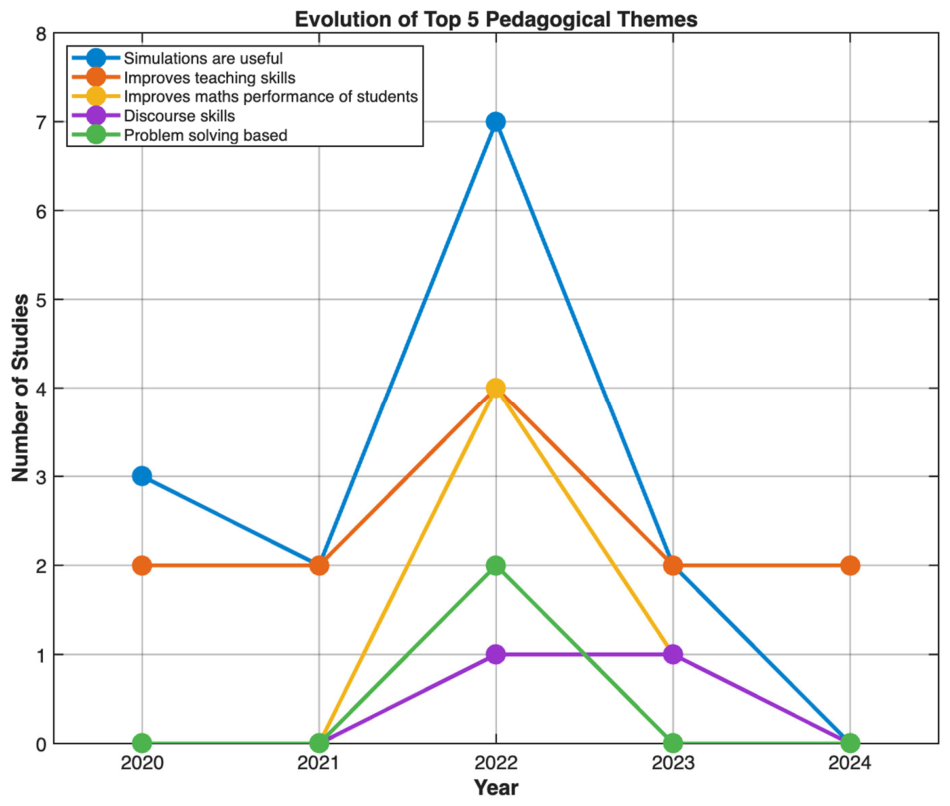
Figure 6 presents the temporal evolution of the five most prominent pedagogical themes identified in simulation-based mathematics teacher education studies between 2020 and 2025. The line graph traces the yearly frequency of research on key themes: simulation usefulness (blue), teaching skills improvement (orange), mathematics performance enhancement (yellow), discourse skills (purple), and problem-solving-based learning (green).
Figure 6.
Temporal Evolution of the Top Five Pedagogical Themes.
Figure 6.
Temporal Evolution of the Top Five Pedagogical Themes.
The analysis reveals a sharp peak in 2022, particularly for simulation usefulness (n = 7) and teaching-related outcomes (n = 4), coinciding with the post-pandemic surge in virtual and simulation-assisted pedagogical research. Following 2022, the number of publications declined, indicating a stabilisation of research attention rather than continued growth.
These temporal patterns indicate that initial simulation research was largely motivated by emergency-driven and technology-driven adoption during and immediately after the pandemic. More recent studies increasingly emphasise pedagogical outcomes, suggesting the field’s gradual maturation.
7.5. Thematic Complexity
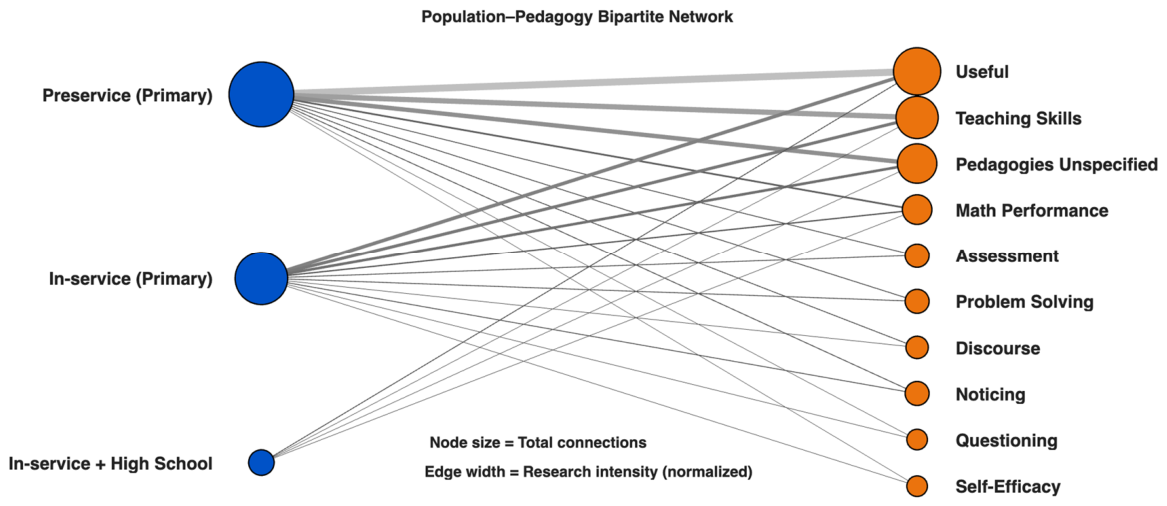
Figure 7 presents a population–pedagogy bipartite network that summarises the connections between the three teacher populations and the pedagogical themes. The thickness of the links represents the relative research intensity of each population, theme pairing (normalised), while node size reflects the total number of connections associated with each category. Together, the network makes it easy to see where the literature is concentrated and where it is thin, highlighting both thematic clustering and structural gaps across populations. In particular, the stronger representation of some pedagogical themes within specific populations and pairings that are rarely examined suggests to clear imbalances in the evidence base and helps identify priorities for future research. Node size represents the relative frequency of each population or pedagogical category, whereas edge thickness corresponds to the normalised co-occurrence frequency between connected categories.
Figure 7.
Population–Pedagogy Bipartite Network.
Figure 7.
Population–Pedagogy Bipartite Network.
7.6. Descriptive Analysis of Target Populations and Pedagogical Approaches
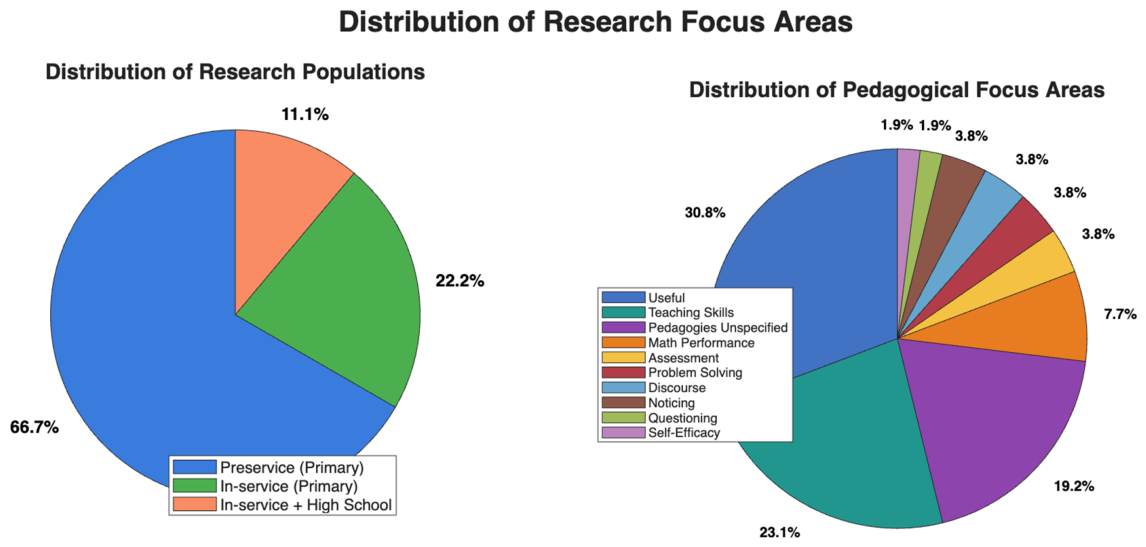
Figure 8 presents, within a holistic framework, both the teacher populations in which the studies examined are concentrated and the pedagogical themes on which they focus. This figure directly addresses the core problem of our study, enabling us to simultaneously assess structural imbalances, areas of concentration, and relatively underexplored areas in the literature. The population distribution reveals which teacher groups the studies clustered around, while the pedagogical theme distribution technically maps which learning outcomes and teaching approaches simulation-based studies emphasised. This two-way distribution strengthens the study’s methodological rationale by showing which population theme combinations are well covered in the literature and which ones need more attention in future research. Unlike the co-occurrence analyses presented previously,
Figure 8 provides a descriptive proportional overview of the reviewed literature and serves as a complementary visualisation of overall research distribution. This broader perspective confirms the concentration of research on preservice teacher populations and effectiveness-oriented outcomes, while simultaneously highlighting the relative scarcity of studies addressing discourse, questioning, reflective practice, and other higher-order pedagogical constructs. Consequently,
Figure 8 reinforces the central conclusion of this review that simulation-based mathematics teacher education has expanded in scope and adoption yet remains unevenly developed across pedagogical dimensions.
Figure 8.
Distribution of Research Focus Areas.
Figure 8.
Distribution of Research Focus Areas.
8. Qualitative Synthesis: Theoretical Framing and Pedagogical Depth
This section complements the quantitative findings by offering an interpretive understanding of how simulation-based practices are conceptualised and applied within mathematics teacher education. Through thematic examination of the reviewed studies, it identifies recurring conceptual patterns, pedagogical limitations, and methodological tendencies that shape the depth and diversity of existing research. The qualitative synthesis not only contextualises numerical trends but also clarifies the theoretical and reflective dimensions that quantitative data alone cannot capture, providing a balanced view of the field’s evolution and remaining challenges. This interpretive phase represents the qualitative synthesis component of the MIX-SYN framework, enabling conceptual examination beyond frequency-based patterns and revealing deeper pedagogical and methodological implications.
8.1. Conceptual Overlaps and Redundancy
The qualitative synthesis reveals a recurring conceptual overlap among studies emphasising the usefulness and effectiveness of simulations in mathematics teacher education. While this focus reflects the field’s growing interest in digital tools for pedagogical improvement, it also exposes a lack of theoretical diversity. Many studies evaluate “effectiveness” primarily through self-report surveys or perception-based instruments, limiting the capacity to capture authentic behavioural or instructional change. Consequently, although positive attitudes toward simulations are consistently reported, few studies link these perceptions to observable classroom practices or long-term pedagogical transformations. This redundancy suggests saturation with similar constructs, without advancing a broader understanding of why and how simulations enhance teaching and learning. This observation is consistent with the quantitative findings presented in
Figure 4,
Figure 5 and
Figure 6, which show that usefulness and teaching-skill development themes substantially outnumbered reflective, discourse-oriented, and inquiry-based pedagogical constructs.
In addition, the repeated emphasis on perceived utility overshadows potentially richer theoretical perspectives such as sociocultural learning, constructivism, or cognitive apprenticeship models. These frameworks could provide deeper explanations for how simulations mediate professional learning processes. The absence of theoretical pluralism therefore narrows the interpretive scope of the literature, positioning simulation-based interventions primarily as functional tools rather than as catalysts for conceptual or epistemological change in teacher development. The limited representation of these frameworks suggests that simulation research in mathematics teacher education remains predominantly outcome-oriented rather than theory-driven.
8.2. Pedagogical Depth and Reflection
Analysis of the reviewed studies indicates a limited exploration of reflective or metacognitive dimensions within simulation-based learning. Only a few works incorporate frameworks that examine teachers’ self-regulation, critical reflection, or adaptive reasoning during simulation activities. Most studies instead assess immediate instructional outcomes or satisfaction levels, providing a snapshot of effectiveness without addressing the reflective depth necessary for professional growth. This highlights a gap between technical proficiency, knowing how to use simulations, and pedagogical mastery, understanding how to learn from and through simulation experiences. This distinction reflects a broader challenge in teacher education, where technical competence and pedagogical reasoning do not necessarily develop in parallel.
Furthermore, the lack of structured reflection processes, such as guided debriefing or dialogic analysis, limits the transformative potential of simulation environments. Without reflection, simulations risk becoming isolated training tasks rather than spaces for sustained inquiry and self-evaluation. Consequently, future simulation designs should explicitly incorporate reflective prompts, guided debriefing activities, and structured pedagogical discussions to support deeper professional learning. Embedding reflective frameworks could help educators internalise feedback, connect simulated scenarios to classroom realities, and develop higher-order teaching competencies. Thus, enhancing pedagogical depth requires a deliberate integration of reflection-oriented strategies that align simulation outcomes with enduring professional learning objectives.
8.3. Methodological Patterns
The methodological review shows that most studies employ descriptive or quasi-experimental designs, typically focusing on short-term outcomes such as performance gains or perceived confidence. While these approaches offer initial validation of simulation benefits, they fall short in explaining long-term or context-dependent effects. Fully mixed-methods designs remain scarce, and longitudinal investigations are almost absent, constraining the field’s ability to assess sustained cognitive and pedagogical change over time. As a result, the current evidence base remains stronger in demonstrating short-term effectiveness than in explaining sustained pedagogical transformation over time.
Moreover, the predominance of convenience sampling and small participant groups limits external validity. The absence of triangulated data sources, such as classroom observations, performance analytics, or discourse transcripts, reduces the interpretive depth of findings. This methodological limitation may partially explain the dominance of perception-based outcomes identified throughout the reviewed literature. To advance methodological rigour, future studies should adopt design-based research or mixed-method frameworks that combine quantitative precision with qualitative insight. Such designs would not only validate simulation outcomes but also illuminate the mechanisms through which teachers engage, reflect, and evolve within simulation-enhanced learning environments.
Overall, the qualitative synthesis indicates that simulation-based mathematics teacher education has achieved considerable progress in demonstrating perceived usefulness and instructional benefits. However, the field remains limited by theoretical concentration, insufficient reflective depth, and a lack of longitudinal evidence. These findings suggest that future research should move beyond effectiveness-focused evaluations toward theoretically grounded investigations of how simulation environments shape pedagogical reasoning, professional reflection, and instructional decision-making.
9. Discussion Integrated Interpretation: Conceptual Overlaps and the Research Landscape
This study reveals a structurally imbalanced research landscape in simulation-based mathematics teacher education. Quantitative results demonstrate a dominant focus on preservice teachers and a limited set of pedagogical constructs, while qualitative synthesis exposes conceptual redundancy and shallow theoretical grounding. The integration of both strands reflects the value of mixed-method synthesis in the literature reviews, consistent with approaches that combine descriptive mapping and interpretive depth (
Tricco et al., 2018;
Arksey & O’Malley, 2005;
Levac et al., 2010;
Dixon-Woods et al., 2005). Together, these findings underscore the field’s progression toward technological adoption without parallel pedagogical diversification. This imbalance was consistently observed across the quantitative mapping, thematic coding, and qualitative synthesis phases of the MIX-SYN framework, strengthening confidence in the robustness of the identified research patterns.
The overrepresentation of preservice primary teachers in the literature aligns with broader simulation research in teacher education, where platforms such as TeachLivE and LessonSketch have primarily been used as training tools rather than pedagogical laboratories (
Dieker et al., 2014;
Herbst et al., 2013;
Ledger et al., 2019). This trend narrows the scope of interpretation in research, as the experiences of in-service teachers, K-12 students, and university learners remain largely undocumented. Such asymmetry limits transferability, particularly regarding how simulation-based experiences impact real classroom practice and long-term pedagogical reasoning. Moreover, a focus on preservice populations may unintentionally obscure how simulation-based pedagogies function in authentic classroom environments, where contextual constraints, instructional complexity, and learner diversity are substantially greater.
Although most studies demonstrate measurable gains in teaching competence or perceived usefulness, they rarely examine higher-order constructs such as mathematical discourse, problem-solving, or questioning strategies. which are central to robust mathematics pedagogy (
Sfard, 2008;
Hiebert & Grouws, 2007;
Lampert et al., 2013). The limited attention to reflective and metacognitive development suggests that many simulations are implemented as procedural rehearsal exercises rather than explorative learning environments (
Schön, 1992;
Flavell, 1979). Future research should therefore prioritise pedagogical depth by integrating simulation with dialogic, reflective, and metacognitive teaching frameworks to expand its educational utility and to better support adaptive instructional decision-making. This shift would move the field beyond effectiveness-oriented evaluation and toward understanding the mechanisms through which simulations influence pedagogical reasoning and instructional decision-making.
This pedagogical imbalance is also reflected in how virtual simulations are commonly designed and evaluated. While many studies appropriately emphasise mathematical content knowledge and technological proficiency (
Lai & Cheong, 2022;
Su et al., 2022;
Walkington et al., 2021;
Wildgans-Lang et al., 2020;
Davis et al., 2022), such a focus risks reducing simulations to performance-oriented tasks rather than opportunities for developing deeper instructional reasoning. Teaching mathematics extends beyond demonstrating procedural fluency or tool competency; it requires responsive interaction, attention to student thinking, and the facilitation of mathematical discourse and inquiry. Therefore, advancing simulation-based teacher education demands greater pedagogical intentionality, with simulation environments that foreground questioning strategies, dialogic engagement, and reflective decision-making rather than simply replicating technical or content-delivery routines.
A further factor contributing to this imbalance is the field’s reliance on self-reported measures of effectiveness. Because human perception may overestimate their perceived performance during simulations, self-report data can unintentionally encourage researchers and developers to prioritise technical fluency and tool usability over pedagogical depth. While simulations can undoubtedly support skill development, their impact depends on how well technological functionality is integrated with sound pedagogical design. The findings of this review show broad acceptance of virtual simulations as effective for improving general teaching competence; however, many studies provide limited insight into the pedagogical frameworks underpinning these environments. Consequently, future investigations should combine self-report measures with observational, performance-based, and discourse-oriented evidence sources to strengthen construct validity.
Building on
Kebritchi and Hirumi’s (
2008) pedagogical framework offers a constructive pathway forward, enabling systematic examination not only of whether simulations are effective but also of how they embody instructional strategies, teacher–student interaction, and opportunities for conceptual reasoning. Effective mathematics teaching requires more than content expertise; teachers must orchestrate classroom discourse, support reasoning, and adapt to learner diversity. The findings of the present review indicate that such pedagogical dimensions remain comparatively underrepresented despite their central role in contemporary mathematics education. Without a robust pedagogical foundation, simulations risk developing only general teaching behaviours, rather than mathematics-specific instructional skills. Moreover, principles of inclusion and differentiation are central to responsive pedagogies (
Robertson et al., 2016;
van Es et al., 2017). Therefore, simulation environments should be designed to mirror the complexity and diversity of real classrooms, providing teachers opportunities to practise adaptive decision-making that is sensitive to varied learner needs.
10. Conclusions and Future Directions
This study’s findings provide a comprehensive empirical overview of simulation-based mathematics teacher education between 2020 and 2025. By integrating frequency and percentage-based analyses with thematic and interpretive synthesis, the study maps how simulations have been utilised to enhance pedagogical skills, teacher cognition, and instructional design. The findings reveal a strong concentration of research on preservice primary teachers and perceived usefulness; however, a narrow focus on outcomes such as pedagogical competence. While these studies demonstrate measurable benefits for professional learning, they also expose an imbalance across pedagogical dimensions. Higher-order themes, such as discourse, mathematical reasoning, and reflective practice, remain underexplored, signalling the need for a more diversified research agenda. This pattern suggests that the field has matured technologically faster than pedagogically, creating opportunities for future research to address deeper instructional and theoretical questions.
To support the dual aims of descriptive mapping and conceptual interpretation, this review introduced the MIX-SYN Review Framework. MIX-SYN guided the integration of quantitative pattern analysis with qualitative thematic synthesis, offering a structured, replicable approach for mixed-methods evidence reviews in teacher education. The framework demonstrated its value by revealing not only publication trends but also conceptual redundancies, pedagogical gaps, and methodological limitations that would have been difficult to identify through descriptive mapping alone. The adoption of MIX-SYN contributes a methodological advancement that can be applied in future analyses seeking both empirical scope and interpretive depth.
Future research should pursue longitudinal and design-based studies that integrate simulations with metacognitive and collaborative learning frameworks. Expanding the scope to include diverse mathematical contexts and populations will also strengthen the generalisability of findings.
The small dataset and binary coding simplify complex pedagogical relationships. Some intersections may appear underrepresented due to overlapping definitions or inconsistent terminology across studies. As simulations continue to evolve and their implementation in initial teacher education increases, researchers are encouraged to explore the identified research gaps through design-based experiments, multi-population studies, and meta-analytical extensions that integrate bibliometric analytics data. By doing so, simulation-based mathematics teacher education can evolve from a primarily technical intervention to a transformative pedagogical environment that supports adaptive teaching, critical inquiry, and sustained professional growth. This review contributes both a methodological foundation via the MIX-SYN Review Framework and a strategic roadmap for advancing research in this emerging field. Furthermore, the review was limited to English-language peer-reviewed publications indexed in the selected databases, potentially excluding relevant studies published in other languages or in other dissemination formats.