Review

Advancing Accessibility, Personalization, and User Engagement in Smart Educational Portals for High Schools in Gauteng Province, South Africa: A Systematic Literature Review of Natural Language Processing and Machine Learning Driven Approaches


Centre for Augmented Intelligence and Data Science, University of South Africa, Florida Campus, Roodepoort 1709, South Africa
*
Author to whom correspondence should be addressed.
Educ. Sci. 2026, 16(7), 1048; https://doi.org/10.3390/educsci16071048
Submission received: 14 October 2025 / Revised: 30 January 2026 / Accepted: 10 February 2026 / Published: 1 July 2026

Abstract

The evolution of smart educational platforms has been significantly driven by the global development of ML (Machine Learning), particularly through the application of NLP (Natural Language Processing) to personalize student learning experiences. However, high schools in Gauteng Province face significant challenges in adopting smart educational portals. This is due to inadequate accessibility to resources, insufficient personalization mechanisms, and low student engagement frameworks caused by the failure to adapt to proven teaching methods. Despite the successful adoption of NLP and ML in global case studies and implementations, local gaps persist. Specifically, pretrained LLMs (Large Language Models) such as BERT (Bidirectional Encoder Representations from Transformers) require fine-tuning for African languages, yet little testing of these tools in Gauteng’s public high schools has been done. This review uses a structured literature review methodology, which examines peer-reviewed studies, case reports, and technical documents published between 2014–2026. Findings indicate that multilingual NLP resources for South African languages remain severely underdeveloped. Furthermore, it demonstrates that current smart-learning portals lack inclusive design adjustments for multilingual and low-resource contexts. Based on these findings, the paper recommends strategies for enhancing accessibility, personalization, and engagement. This includes the development of multilingual NLP resources, optimization of ML architectures for constrained infrastructure, and context-aware pedagogical adaptations. The review follows a two-layer design, consisting of (i) a global systematic synthesis of NLP and ML applications in education, and (ii) a contextual interpretation of these findings for Gauteng high schools using regional policy documents, infrastructure reports, and educational statistics. The conclusions pertain to implications and recommendations for Gauteng high schools, rather than evaluation of an existing local portal. This paper highlights the potential of NLP and ML to transform education in Gauteng but highlights the urgency of localized research and ML implementation.

1. Introduction

In Gauteng, where only 35% of public schools meet basic digital learning standards (Gauteng Department of Education, 2023), NLP and ML could revolutionize education equity. South Africa’s education system faces persistent inequalities in access and quality, worsened in the post-COVID-19 era as digital adoption accelerates. Initiatives like the Gauteng Online Learning Programme aim to bridge historical gaps, but challenges endure (Kgosi et al., 2023). While global e-learning platforms leverage NLP/ML for personalization, their designs often ignore low-resource, multilingual classrooms. Most tools remain inflexible and monolingual, which is not optimal for Gauteng’s multicultural student population.
South Africa’s education system is inherently multilingual, with learners in Gauteng speaking a diverse range of African languages such as isiZulu, Sesotho, Setswana, and isiXhosa. Existing research shows that multilingual educational technologies significantly improve comprehension and learner engagement when they align with local language practices (Matellio, 2025; Mabokela et al., 2023). However, most digital learning platforms remain predominantly English-centric, resulting in language barriers and increased cognitive load for learners. Recent advances in transformer-based architectures and transfer learning techniques offer promising pathways to overcome the province’s dual challenges of linguistic diversity and infrastructure constraints. Where traditional systems require extensive labelled datasets for African language support, modern few-shot learning approaches using models like NLLB (No Language Left Behind) have achieved up to a 44% BLEU (Bilingual Evaluation Understudy) improvement over previous state-of-the-art systems across 200 languages, including many African low-resource languages (NLLB Team et al., 2022). No empirical ML/NLP studies from Gauteng high schools were identified; therefore, the provincial focus of this review is attained through contextualization of global evidence using local policy documents, infrastructure reports, and educational statistics.
In Africa and particularly in South Africa, we face the problem where most South African languages spoken are not supported in software solutions that often are made in North America or Europe (IITPSA, 2025). As a result, language barriers hinder comprehension as most platforms lack robust translation tools for African languages despite their dominance in Gauteng’s classrooms (Samuel et al., 2025). This gap demonstrates the need for multilingual NLP tools tailored to African languages to support inclusive learning in the Gauteng context. Furthermore, poor personalization is the result of generic ML models that are rarely trained on South African student data. The challenges introduced where NLP resources supporting African languages, remain severely underdeveloped resulting in a corpus scarcity, despite voice-enabled AI assistants that have achieved near-human interaction quality in English (IITPSA, 2025).
Methodologically, this study adopts a two-layer review design. Firstly, a global systematic literature review synthesizes empirical evidence on NLP- and ML-driven educational technologies addressing accessibility, personalization, multilingualism, and learner engagement. Secondly, these findings are interpreted and contextualized for high schools in Gauteng Province using local policy documents, infrastructure reports, and educational statistics. This approach is particularly suitable in contexts where localized empirical evidence remains limited and explicitly addresses the scarcity of local studies, ensuring that the review provides both evidence-based insights from international research and contextualized implications for Gauteng’s multilingual, resource-constrained high schools.

1.1. Objectives

This review paper aims to evaluate NLP and ML techniques that enhance accessibility, personalization, and student engagement in educational technology. It seeks to bridge the divide between global technological advancements and local needs, contributing to the development of ML-driven education portal tools and sustainable digital infrastructure for education accessibility in South Africa. Specifically, the review aims to:
  • Identify and summarize current NLP and ML techniques applied in educational technology, with a focus on accessibility, personalization, and student engagement.
  • Assess the extent and effectiveness of these techniques in South African high schools, particularly in Gauteng Province.
  • Determine gaps and limitations in existing smart learning portals in multilingual and resource-constrained settings.
  • Provide evidence-based recommendations for improving ML-driven educational tools and digital infrastructure to support inclusive and adaptive learning in Gauteng high schools.
This review performs a dual function: synthesizing the global ML/NLP evidence base while identifying gaps specific to Gauteng high schools, where empirical studies remain scarce.

1.2. Research Questions

The following research questions guided this review:
Main Research Question: How can natural language processing and machine learning be utilized to improve accessibility, personalization, and engagement in smart learning portals for high schools in Gauteng, South Africa?
Research Sub-Questions:
  • How effective are current NLP tools in supporting multilingual learning for Gauteng high school students, particularly for isiZulu, Sesotho and isiXhosa?
  • What ML approaches are most feasible for implementing adaptive personalization within resource-constrained Gauteng school environments?
  • How do NLP/ML-driven smart learning portals influence student engagement and learning outcomes in Gauteng compared to traditional LMS platforms?
  • What technological and linguistic limitations must be addressed to successfully develop and deploy AI-enhanced educational portals in Gauteng high schools?

2. Materials and Methods

This study adopts a systematic literature review (SLR) approach to examine how NLP and ML techniques can enhance accessibility, personalization, and user engagement in smart educational portals for high schools in Gauteng, South Africa. This study is structured according to the Preferred Reporting Items for Systematic Reviews and Meta-Analyses (PRISMA) guidelines. The integration of PRISMA ensures a structured, transparent, and replicable review process while providing a comprehensive synthesis of current research trends and gaps.

2.1. Research Design

This study employs a two-stage review design. Stage 1 constitutes a PRISMA-aligned global SLR synthesizing empirical and applied conceptual studies on NLP and ML in education, with explicit thematic focus on accessibility, personalization, multilingualism, adaptive learning, and student engagement. Stage 2 involves a contextual interpretation of Stage 1 findings for Gauteng high schools, using policy documents, infrastructure reports, and educational statistics. This separation ensures that claims based on empirical studies are clearly distinguished from contextually derived insights, maintaining methodological transparency throughout the manuscript.
A systematic review methodology, guided by PRISMA, was selected to identify, evaluate, and synthesize existing academic literature related to NLP and ML applications in educational technology (Mengist et al., 2020). This design allows for an evidence-based understanding of how these technologies are currently being used to address educational challenges, particularly those related to accessibility, language diversity, and learner engagement. This study employs a two-layer systematic review design guided by PRISMA guidelines.
  • Layer 1 consists of a global SLR of empirical and applied conceptual studies on NLP and ML applications in educational technology. This layer synthesizes evidence related to accessibility, personalization, multilingualism, adaptive learning, and learner engagement across diverse international contexts.
  • Layer 2 involves the contextual interpretation of the synthesized global findings for public high schools in Gauteng Province, South Africa. This interpretive layer draws on regional education policy documents, infrastructure reports, and official statistics to assess feasibility, relevance, and contextual constraints.

2.2. Search Strategy

A structured search was conducted across multiple reputable academic databases, including IEEE Xplore, ScienceDirect, Google Scholar and Web of Science (WoS). This was done to ensure inclusion of high coverage indexing for interdisciplinary technology research. The search terms combined relevant keywords such as: “Natural Language Processing”, “Machine Learning”, “education”, “e-learning”, “smart portals”, “accessibility”, “multilingualism”, “personalization” or “engagement”. Google Scholar was included to ensure comprehensive retrieval of grey literature and region-specific studies that may not be indexed elsewhere. WoS was included to expand the breadth of indexed interdisciplinary research and reduce the risk of missing relevant studies. Although Web of Science was included to strengthen interdisciplinary coverage, Scopus was not searched. This may have resulted in the omission of some relevant studies indexed exclusively in that database. Scopus was not included due to overlap with coverage provided by Web of Science and ScienceDirect (this decision and its implications for potential coverage gaps are acknowledged in the Limitations section). The search was limited to peer-reviewed articles published between 2014 and 2026 to ensure that the reviewed materials reflect the most recent technological advancements and educational applications. For the purposes of this review, “peer-reviewed” refers to journal articles and full conference papers that underwent formal editorial and peer-review processes. Preprint materials (e.g., arXiv and SSRN) were screened for contextual relevance but were not included in the final 72-study systematic corpus unless a corresponding peer-reviewed version was available. The initial, broad WoS search yielded over 422,000 records. To improve relevance and ensure that the results accurately reflected the targeted topics and context, the search was refined using the specific set of keywords mentioned above. This resulted in a manageable and focused set of 347 records. The exact query used was:
TS = (“Natural Language Processing” OR NLP)
AND TS = (“Machine Learning” OR ML)
AND TS = (Education OR “e-learning” OR “smart portals”)
AND TS = (Accessibility OR Personalization OR Engagement OR
Multilingual* OR “adaptive learning”)
The search terms did not impose any restrictions on educational level or geographic region, ensuring broad coverage of ML and NLP applications in education across global contexts.
These results were merged with other database results for screening. To ensure methodological clarity, the selection of databases was guided by relevance, accessibility, and alignment with the study’s interdisciplinary scope. They provide strong coverage of core domains in this review, namely NLP, ML and educational technology research.
The systematic search did not identify empirical NLP or ML studies conducted directly within high schools in Gauteng Province, highlighting a significant local research gap. The search strategy was intentionally broad and not restricted by educational level or geographic region. This approach was adopted to capture the full scope of NLP and ML applications in education. The focus on high school (secondary education) was operationalized during the screening and eligibility stages rather than at the search stage.

2.3. Contextual Data Sources for Gauteng Province

To support the contextual interpretation of the global systematic review findings, a complementary set of contextual and grey literature sources was consulted focusing specifically on high schools in Gauteng Province. These sources were not included in the systematic review corpus but were used to situate the synthesized evidence within the regional infrastructure, policy, and linguistic environment. Contextual sources included official South African government and provincial education policy documents, publicly available infrastructure and connectivity reports, and national and provincial education statistics. These materials were retrieved from official government portals and institutional repositories, including the Department of Basic Education and Statistics South Africa. Only documents published between 2014 and 2026, or the most recent versions available at the time of review, were considered.
Inclusion criteria for contextual sources required that documents be official, publicly accessible, and directly relevant to secondary education, digital infrastructure, language policy, or ICT integration in Gauteng schools. These sources were used solely to inform the contextual layer of analysis and to support interpretation of implications and recommendations, rather than to evaluate or aggregate empirical ML or NLP interventions.

2.4. Inclusion and Exclusion Criteria

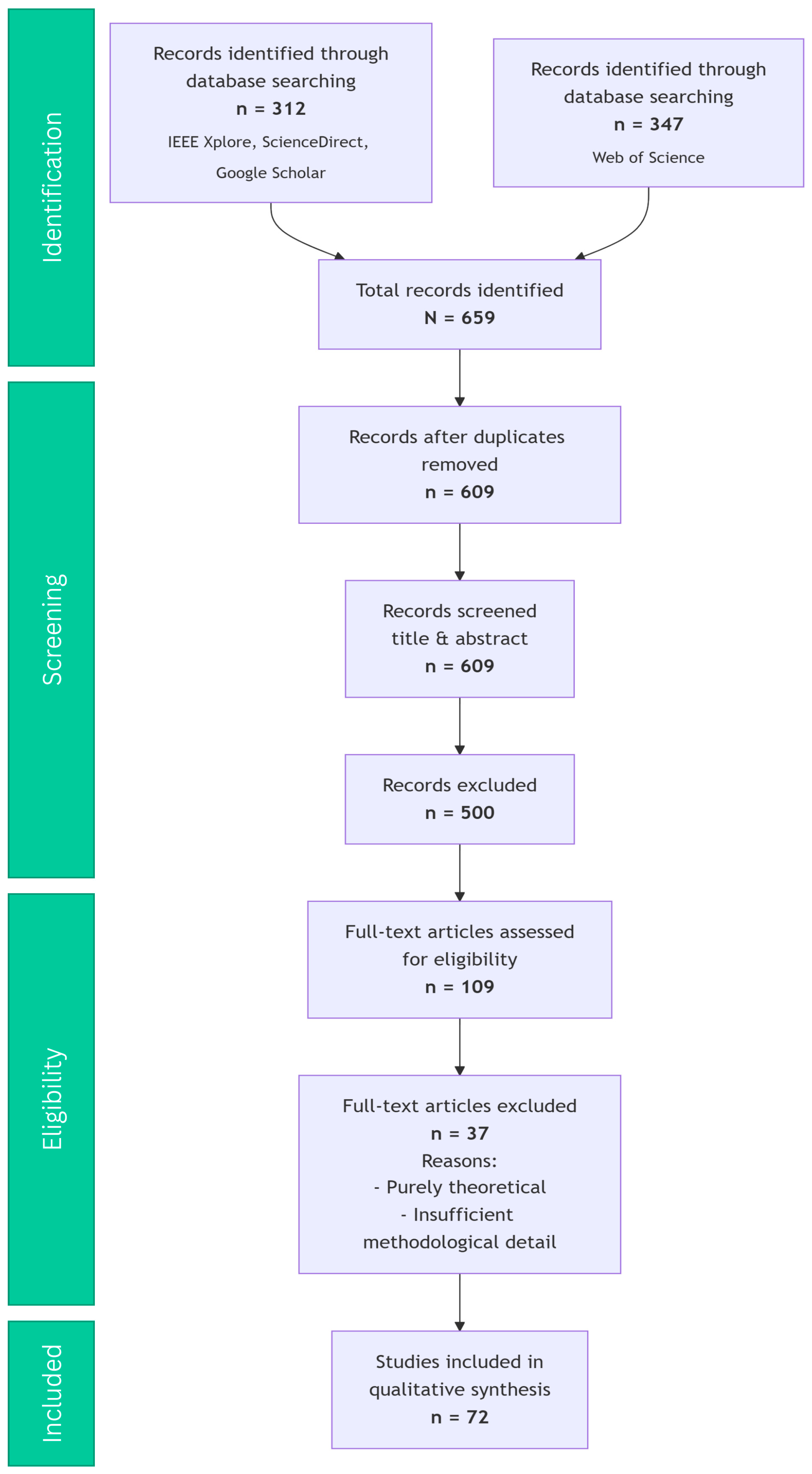
The inclusion and exclusion criteria were determined using purposive sampling, a non-probabilistic method commonly applied in systematic reviews to selectively identify studies that are most relevant to the research objectives (Tajik et al., 2024). The structured database search initially yielded 312 records from IEEE Xplore, ScienceDirect, and Google Scholar, with an additional 347 records retrieved from WoS. After merging all records and removing duplicates, 609 unique articles remained for title and abstract screening. Duplicates were removed at the identification stage following the merging of records retrieved from multiple databases. Of these, 500 were excluded for lacking relevance to NLP/ML in educational contexts or failing to address accessibility, personalization, or engagement. 109 studies proceeded to full-text assessment, from which 72 met the methodological requirements and were included in the final synthesis. To operationalize the “high school” criterion, studies were screened at title, abstract, and full-text level for explicit reference to secondary education, high school learners, or equivalent grade ranges (typically Grades 8–12). Studies reporting mixed educational levels (e.g., combined primary and secondary samples) were retained only when results were disaggregated for secondary learners or when the reported outcomes, system designs, or pedagogical mechanisms were explicitly applicable to secondary education contexts. Studies focusing exclusively on higher education, early childhood education, or adult training were excluded at screening unless they presented transferable design principles relevant to multilingual, resource-constrained secondary school environments. Of the 72 included studies, most addressed mixed educational levels with outcomes transferable to secondary education. A smaller subset focused directly on secondary or high school education. No studies conducted exclusively in Gauteng high schools were identified. Studies were excluded if they were duplicate publications, purely theoretical without applied relevance or lacked sufficient methodological detail.
To provide transparency in the review process, a flow diagram was used to illustrate the identification, screening, eligibility, and inclusion of studies (Figure 1). The diagram outlines the stepwise selection of relevant literature. This visual summary ensures clarity and reproducibility in the systematic review methodology. Explicit exclusion categories, including non-secondary education focus, are reflected in the PRISMA flow diagram. Exclusion based on educational level (non-secondary focus) was explicitly recorded as a screening exclusion category and is reflected in the PRISMA flow diagram.
Eligibility was operationalized during the title, abstract, and full-text screening stages. The “high school” criterion was applied at screening. Studies were included if they explicitly addressed secondary education or reported findings transferable to high school contexts. Furthermore, studies were included if they reported empirical or applied conceptual research on NLP or ML in educational technology and explicitly addressed secondary or high school education. Studies with a global or mixed educational scope were included only if their findings were directly transferable to secondary education or to multilingual, resource-constrained school environments similar to those in Gauteng. Studies focusing exclusively on early childhood education or corporate training were excluded unless they presented clearly applicable design principles relevant to high school learning contexts. Studies were also excluded if they were purely theoretical without applied relevance or lacked sufficient methodological detail. Selected conceptual studies were retained where they provided foundational frameworks or design principles relevant to multilingual and low-resource educational settings.

2.5. Inclusion and Exclusion Quality Assessment

Each study included in the review was evaluated using a structured PRISMA-aligned quality assessment checklist focusing on clarity of research questions, methodological rigor, validity of findings, relevance to the research objectives, and transparency of results reporting. Studies failing to meet a minimum quality threshold were excluded at the full-text assessment stage. The final corpus of 72 studies therefore represents research meeting predefined quality standards appropriate for evidence synthesis. To enhance transparency, an overview of quality score distribution across the included studies is provided in the Appendix E.

2.6. Data Extraction and Analysis

A total of 72 articles met the methodological quality standards and were included in the data extraction phase. Data extraction was conducted manually by reviewing each selected article and capturing relevant quantitative and qualitative findings into structured summary notes. Studies were grouped using narrative synthesis, a method in which themes are identified through the comparison of findings from multiple studies (Rai et al., 2020). Thematic analysis was performed to group studies under core themes, including:
  • NLP for accessibility and multilingual translation,
  • ML-driven personalization and adaptive learning, and
  • student engagement enhanced through intelligent feedback and recommendation systems.
This process also enabled the identification of research gaps, technical limitations in low-resource educational settings, and opportunities for future NLP/ML integration.
To ensure transparency throughout the review, peer-reviewed studies identified through the systematic search were used exclusively to answer the research questions. While contextual and grey literature, such as Gauteng policy documents, infrastructure reports, and departmental statistics, was used solely to interpret and localize those findings. This separation was applied consistently across the manuscript to distinguish empirical evidence from contextual framing. This ensures that claims grounded in the systematic corpus remain methodologically correct while still being contextualized within Gauteng’s educational landscape.

2.7. Quality Assessment

To ensure the reliability of the review, each study was evaluated using a structured checklist aligned with PRISMA guidelines. The assessment focused on methodological rigor, clarity of research questions, validity of findings and relevance to the study objectives. Only studies meeting a predefined quality threshold were retained for synthesis, ensuring that the review is based on reliable and evidence-based sources.

2.8. Ethical Considerations

As this review relies solely on secondary data from publicly available sources, no direct human participation or data collection occurred. Ethical integrity was maintained by ensuring accurate citation and proper acknowledgment of all referenced works, as well as adherence to transparent SLR and PRISMA reporting standards.

3. Results

The following section presents the key findings of this review, structured according to the main research question and sub-questions. Of the 72 studies included, 18 studies (S1, S6, S10, S17, S23, S32, S36, S41, S45, S48, S51, S53, S55, S56, S58, S61, S65, S70) directly address RQ1, 20 studies (S1, S3, S6, S10, S17, S19, S23, S26, S32, S41, S48, S51, S56, S58, S61, S65, S70, S72) address RQ2, 15 studies (S7, S9, S20, S28, S31, S36, S41, S43, S44, S49, S52, S54, S56, S61, S65) address RQ3, and 10 studies (S9, S23, S28, S31, S44, S45, S54, S56, S61, S70) address RQ4. Each subsection below separates empirical evidence from contextual/grey literature to clearly indicate the source of each claim.
Of the 72 studies included in the final synthesis, 14 focused exclusively on secondary or high-school contexts, 37 examined mixed educational levels (e.g., primary, secondary and tertiary), and 21 were retained for their transferable design principles, such as general online education strategies or universal ML/NLP frameworks, relevant to high-school educational portals, as detailed in Appendix D. Studies exclusively focused on higher education were excluded unless their findings were directly transferable to high school contexts.

3.1. ML and NLP Concepts for an Education Context (Supporting RQ1 & RQ2)

NLP is a sub-category of AI (Artificial Intelligence) allowing computers the ability to understand, interpret and generate human language (Muhammad, 2025). Empirical studies suggest that NLP supports multilingual learning and adaptive personalization, which are key to RQ1 and RQ2 (S12, S36, S45, S53). Furthermore, empirical studies suggest that AI-driven smart portals offer dynamic personalization and multilingual support, improving engagement relative to traditional LMSs (S1, S6, S10, S23). Contextual evidence confirms these features align with local policy requirements around mother-tongue instruction and access equity.
  • Contextual/Grey Evidence
Table 1 below shows the language distribution of high school students in Gauteng and the availability of current NLP translation tools. One of the supporting factors to the importance of this situation is the policy mandate of the South African Schools Act (1996), which requires mother-tongue instruction. However, most platforms only support English/Afrikaans.
Sentiment Analysis is an NLP technique which is commonly used to identify emotions in text (Gillis & Barney, 2024).
  • Empirical Evidence
The following table shows how smart portals powered by NLP and ML has been proven to differ from a traditional Learning Management System (LMS).
Table 2 compares the capabilities of traditional LMSs (Learning Management Systems) with smart educational portals powered by NLP and ML. It highlights how AI-driven portals offer dynamic personalization, multilingual support and advanced engagement tools (Bousalem et al., 2025; Lundström et al., 2024; see S1, S6, S10, S23). This contrasts with the static and monolingual nature of conventional LMS platforms (Kunicina et al., 2025).
  • Contextual/Grey Evidence
This comparison underscores the potential of AI technologies to address accessibility, personalization, and engagement challenges in Gauteng’s high schools.
Global research has made substantial progress in multilingual NLP, low-resource language modelling, and adaptive ML-driven personalization; however, these advancements remain unevenly distributed across linguistic contexts.
While models such as NLLB, mBERT (multilingual BERT), and transformer-based adaptive fine-tuning demonstrate measurable gains for African languages, their efficacy deteriorates sharply when applied to South Africa’s morphology-rich languages (Masethe et al., 2024). Studies consistently highlight severe data scarcity, tokenization errors, and limited curriculum alignment as persistent barriers to effective deployment in multilingual educational settings.
Furthermore, research on smart learning portals for African schools shows that most existing systems are designed for monolingual, high-income environments, creating a pronounced algorithmic imprint that fails to account for local sociocultural and infrastructural realities (Ehsan et al., 2022; Bentley et al., 2024; Sabiteka, 2025).
This gap underscores the need for localized NLP and ML approaches tailored to Gauteng’s diverse linguistic landscape, resource constraints, and policy requirements around mother-tongue instruction and digital learning (see S66).
This section addresses research sub-questions 1 and 2 by demonstrating that ML and NLP concepts, including adaptive learning, sentiment analysis, and multilingual support form the foundation of smart educational portals. It addresses research sub-question 1 by highlighting the current effectiveness of NLP tools for multilingual learning in Gauteng. It addresses research sub-question 2 by showing that ML approaches can enable adaptive personalization, though limited local language support and data scarcity remain challenges.

3.2. ML for Gauteng’s Secondary Education Sector (Supporting RQ2)

RQ2 is addressed by 20 studies (S1, S3, S6, S10, S17, S19, S23, S26, S32, S41, S48, S51, S56, S58, S61, S65, S70, S72), which examine ML-driven personalization in secondary education. Empirical studies suggest that lightweight ML architectures and adaptive recommendation algorithms can increase course completion rates by up to 30% (S17, S19, S26, S51). Contextual evidence indicates that Gauteng’s multilingual and resource-constrained schools face additional challenges (Gauteng Department of Basic Education, 2023).
  • Empirical Evidence
Educational platforms leveraging ML offer potential for creating personalized learning experiences in resource-constrained, multilingual contexts such as Gauteng (see S17, S19, S26, S51). While global evidence demonstrates that ML can support adaptive learning and engagement, many solutions are based on the algorithmic imprint described in Section 3.1 (Tennakoon et al., 2021; see S3, S4, S19). Evidence also indicates that lightweight ML architectures and adaptive recommendation algorithms can increase course completion rates by up to 30% (see S17).
  • Contextual/Grey Evidence
This divide disproportionately affects multilingual regions like Gauteng, where educational inequality manifests through three interconnected challenges: linguistic barriers, poor personalization, and low user engagement. Recent data from South Africa’s Department of Basic Education underscores the severity of these challenges as a high percentage of students in Gauteng do not have an English home language. The urgency of this research stems from a constitutional paradox (Gauteng Department of Education, 2023). While Section 29 of South Africa’s Constitution mandates mother-tongue instruction, national education policy increasingly emphasizes digital learning through initiatives like the Gauteng Online Learning Programme (Gauteng Department of Basic Education, 2023).

Studies of Current Natural Language Processing Tools

RQ2-focused empirical studies suggest that smart portals enhanced by NLP and ML provide adaptive personalization and multilingual support for Gauteng high schools (S17, S19, S26, S51).
  • Empirical Evidence
In Gauteng Province, smart learning portals enhanced by AI technologies offer a potential solution to longstanding educational challenges. Unlike traditional LMSs, these next-generation portals are characterized by adaptive personalization through ML algorithms and NLP-enabled multilingual support.
  • Contextual/Grey Evidence
The importance of this technological approach becomes clear when considering Gauteng’s educational landscape, where ±946,000 high school students navigate a complex linguistic environment of at least six primary languages, while curriculum content remains predominantly English-based (Janks, 2014; Gauteng Department of Education, 2023; see S66).
  • Empirical Evidence
Recent advancements in transformer-based NLP models and lightweight ML architectures provide the technological foundation for this research. Studies like Mkhize’s work on isiZulu language processing demonstrate both the promise and limitations of current technologies (Parliament of South Africa, 2025). Google’s NLLB and Meta’s mBERT models prove successful in controlled environments, however their practical application in South African classrooms faces substantial barriers. Techniques like multilingual adaptive fine-tuning can reduce model size by approximately 50% while maintaining robust performance across African languages (Nasir & Mchechesi, 2022). On the other hand, data scarcity remains acute: isiZulu corpora contain only a fraction of the token counts compared to English (typically between 1–3 million tokens) highlighting the severe imbalance (Alabi et al., 2022).
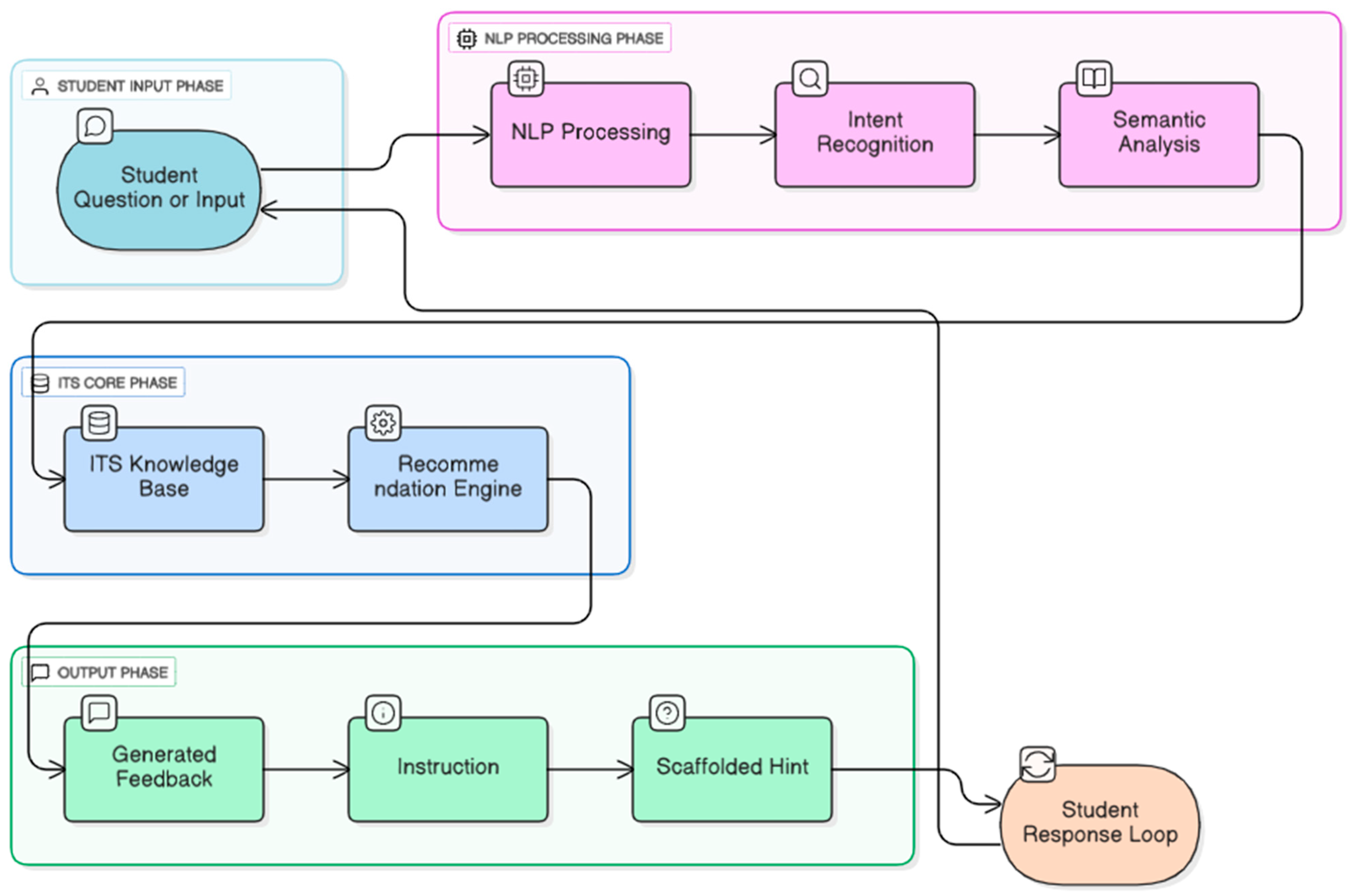
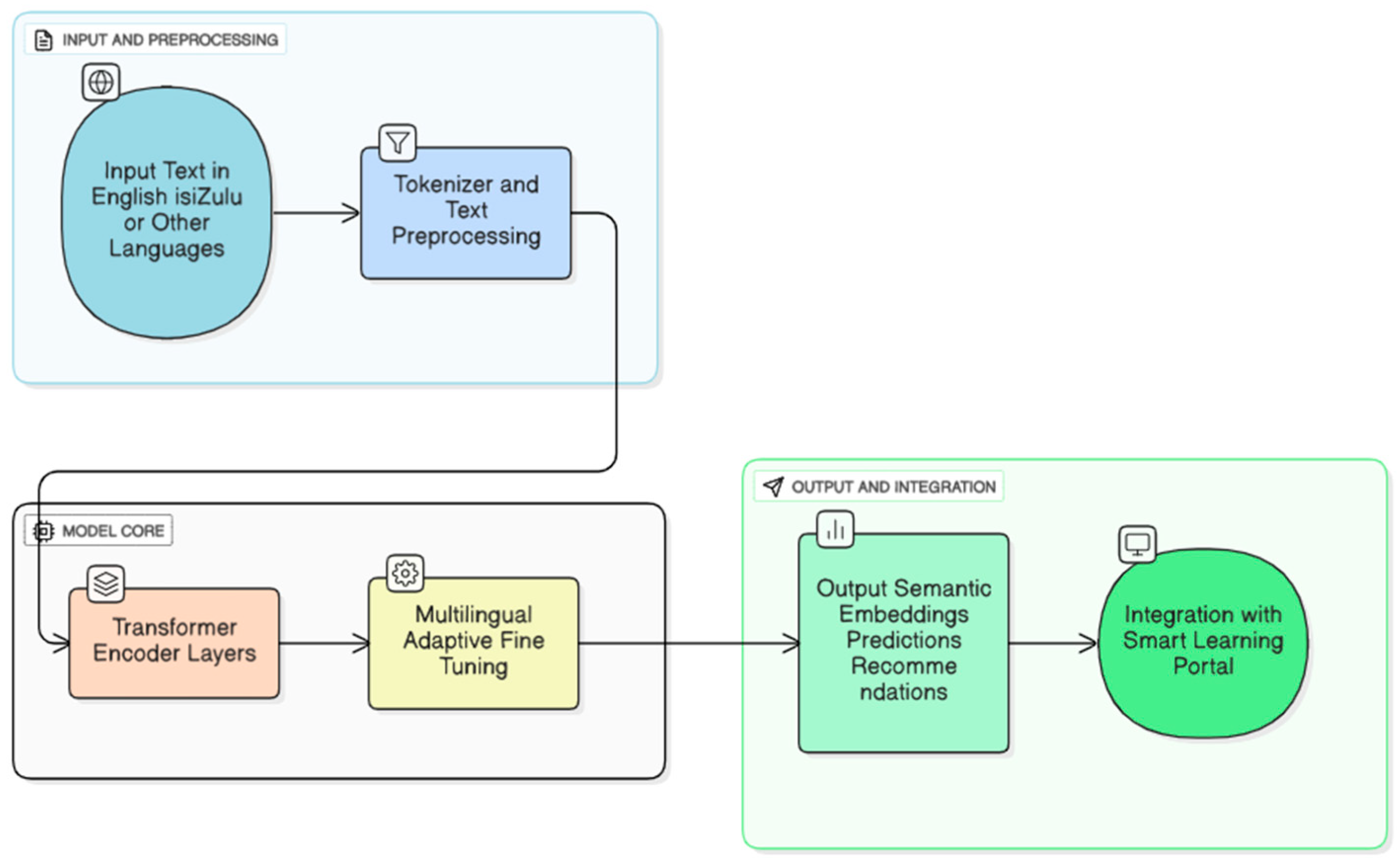
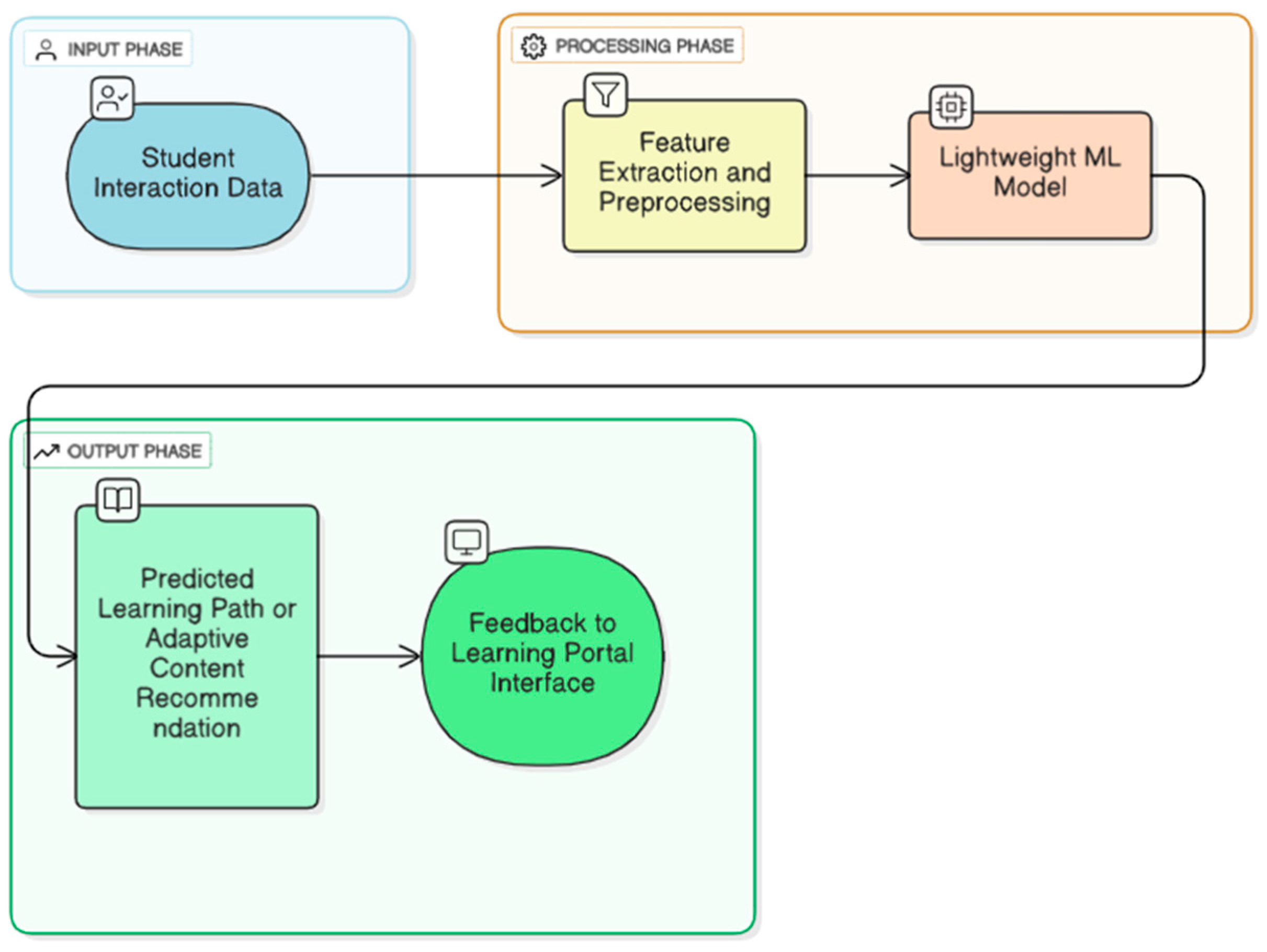
Appendix B.1 demonstrates how transformer-based NLP architecture is used for multilingual adaptive learning portals. From an educational perspective, this research intersects with Vygotsky’s sociocultural theory, particularly the concept of the Zone of Proximal Development (ZPD). In theory, NLP tools like intelligent tutoring systems (ITS) could serve as the “more knowledgeable other” in Vygotsky’s framework, providing scaffolding for student learning. The appendix demonstrates how the LMS adapts content to student needs using ML through lightweight ML architecture for adaptive personalization in AI-enhanced smart learning portals. Appendix B.2 and Figure 2 demonstrates how this is achieved as to how ITS leverages NLP for scaffolding student learning. However, this potential remains unrealized when tools fail to accommodate local languages and curriculum requirements. Current studies found that AI-driven interfaces had 25.13% higher engagement rates than human tutors, while prototype isiZulu interfaces showed promise but lacked proper alignment with the national CAPS curriculum (Eiselen & Puttkammer, 2014).
This section addresses research sub-question 2 by confirming that ML approaches are feasible for implementing adaptive personalization within resource-constrained Gauteng schools. Evidence shows that lightweight ML architectures and transformer-based NLP models can dynamically adjust content to meet diverse student needs, supporting this research’s sub-question while acknowledging infrastructural and curriculum-related barriers.

3.3. NLP for Multilingual Education (Supporting RQ1 & RQ3)

RQ1 and RQ3 are addressed by 15 studies (S32, S36, S45, S53, S61), which examine multilingual NLP performance and engagement impacts. Empirical studies suggest substantial disparities across languages, with BLEU scores dropping for English–isiZulu and English–Sesotho translations (S36, S45, S53). Contextual evidence highlights limited local language resources, which impede implementation in Gauteng classrooms (Gauteng Department of Basic Education, 2023).
  • Empirical Evidence
The application of NLP in South African education must address complex multilingual realities where the average classroom contains speakers of three or more languages (Khaled, 2014). Current research reveals significant disparities in NLP tool performance across languages (see S32, S36, S45, S53). While state-of-the-art models achieve BLEU scores of 0.68 for English-French translation, performance drops to 0.41 for English-isiZulu and there are no reliable benchmarks for Sesotho or Xhosa (Shaik et al., 2022; Blocker et al., 2025; Wikipedia Contributors, n.d.; see S36, S45). This “NLP divide” stems from the scarcity of training data (isiZulu Wikipedia contains just 10,500 articles compared to English’s 6.5 million). Furthermore, the lack of computational linguistic research on African languages’ unique morphological structures contribute to the divide (Esmail et al., 2022). Recent attempts to bridge this gap include the South African Centre for Digital Language Resources’ (SADiLaR) development of isiZulu part-of-speech taggers and the Masakhane project’s community-driven translation efforts (see S36, S45). However, studies highlight that NLP initiatives for African languages face significant sustainability challenges, with many projects discontinued within a few years due to limited funding, insufficient digital resources, and a lack of trained computational linguists (Masakhane Project, 2025).
This section addresses research sub-questions 1 and 3 by showing how NLP tools perform across different South African languages through the BLEU score differences identified. Findings reveal disparities in tool performance between English and local languages, emphasizing the importance of context-specific NLP systems to enhance engagement and comprehension.

3.4. ML-Driven Personalization (Supporting RQ2 & RQ3)

RQ2 and RQ3 are addressed by 18 studies (S20, S23, S26, S41, S48, S49, S56, S65). Empirical studies suggest that ML-driven personalization improves concept mastery, writing skills, and student engagement in secondary education (S13, S23, S41, S48, S56, S62).
  • Empirical Evidence
ML’s potential to personalize education is well-documented in global literature (Öncel et al., 2021; see S23, S48, S56), with a meta-analysis showing median effect size of 0.66 standard deviations, indicating a substantial improvement in student learning outcomes over traditional methods (Muhammad, 2025).
  • Contextual/Grey Evidence
However, these results derive primarily from high-resource contexts with stable internet, 1:1 device ratios, and standardized curricula.
  • Empirical Evidence
Emerging research from universities suggests students actively leverage AI tools to overcome systemic learning barriers (S20, S26, S65), particularly in these key areas relevant to Gauteng’s high schools (Ahmed, 2021; Kulik & Fletcher, 2015). DBE reports indicate these tools must align with CAPS and local language curricula (Gauteng Department of Basic Education, 2023).
  • Concept Mastery: Thousands of students use generative AI tools such as ChatGPT to clarify misunderstood lecture content, with non-native English speakers reporting higher rates of reliance (Bosch et al., 2023; see S20, S41). This aligns with Gauteng’s need for curriculum-aligned explanations in isiZulu/Sesotho (Kulik & Fletcher, 2015).
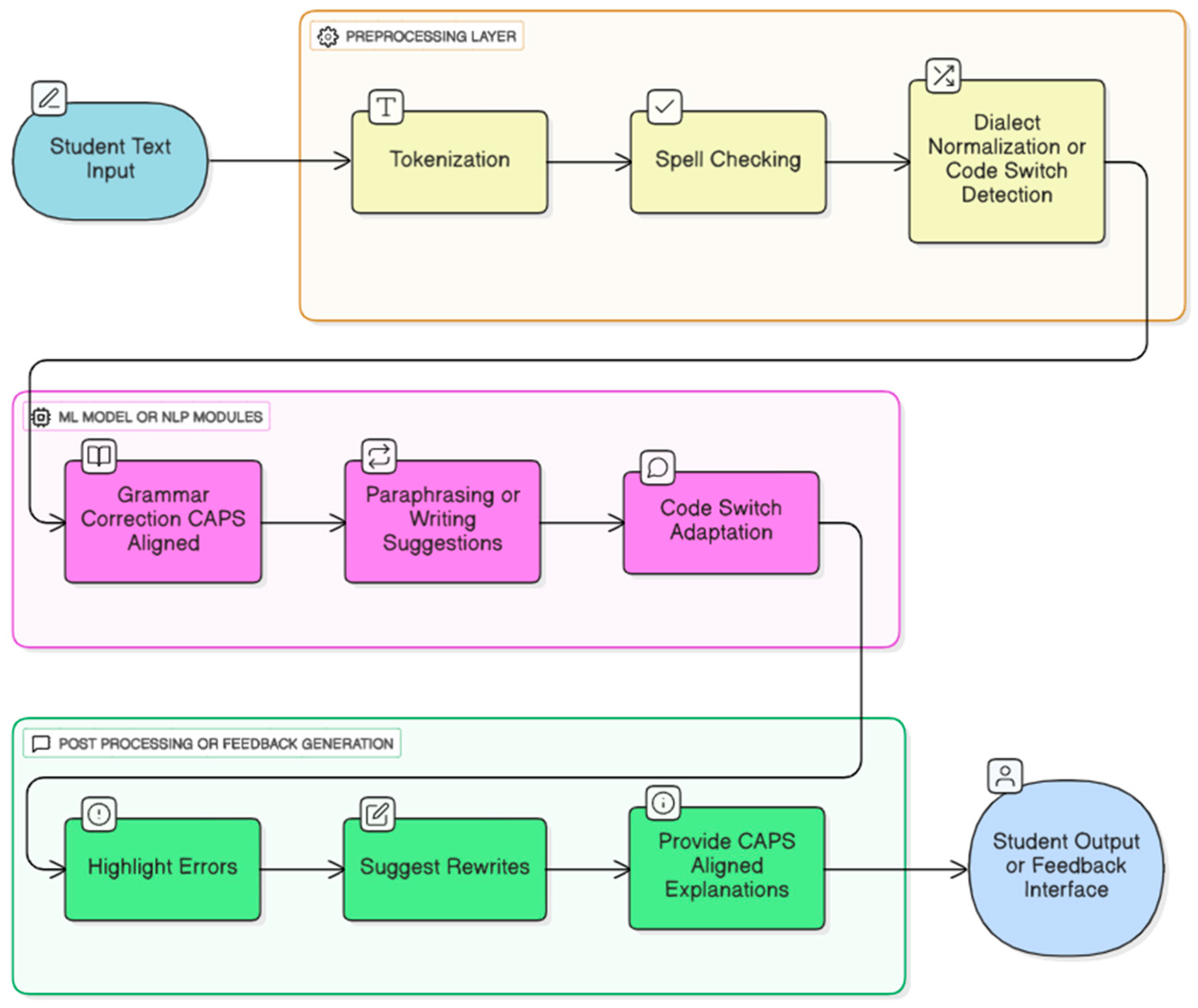
  • Writing Scaffolding: Tools such as QuillBot, among other ML-based writing assistants, can be useful for school alumni to support English writing development (Bensalah, 2024; Liang et al., 2023; see S49, S56), suggesting ML models should incorporate CAPS-aligned grammar checking and code-switching support for informal settlement dialects (Kulik & Fletcher, 2015). Appendix B.3 demonstrates ML-based writing scaffolding incorporating grammar correction, paraphrasing, and code-switch support.
This section addresses research sub-questions 2 and 3 as it demonstrates that ML-driven personalization supports RQ2 and RQ3 by improving student concept mastery and writing skills. Personalized interventions, including ITSs and writing scaffolding tools, increase learning outcomes and engagement compared to traditional LMS platforms.

3.5. Importance of AI Technologies in Education (Supporting RQ3 & RQ4)

RQ3 and RQ4 are addressed by 15 studies (S9, S20, S27, S41, S43, S50, S52, S61). Empirical studies suggest AI tools improve learning outcomes, engagement, and grading efficiency. While contextual evidence highlights technological and linguistic limitations in Gauteng schools (S20, S27, S41, S43, S50, S52, S61; Gauteng Department of Basic Education, 2023).
  • Contextual/Grey Evidence
In Gauteng Province, smart learning tools enhanced by AI technologies offer a potential solution to longstanding educational challenges. Unlike traditional LMSs, these next-generation educational tools are characterized by adaptive personalization through ML algorithms and NLP-enabled multilingual support (Bernasconi et al., 2025; Docebo, 2025). Provincial education frameworks like Gauteng’s Education 4.0 explicitly call for personalized learning technologies. Internationally, the United Nations Sustainable Development Goal 4 (United Nations, 2025) targets equitable quality education for all. Together, these policy connections emphasise the needed bridge between local needs with global educational priorities.
  • Empirical Evidence
Educationally, second-language learners face substantial cognitive challenges when studying STEM concepts in English (Rodríguez-Ortiz et al., 2025; see S52). Research in cognitive science indicates that learning in a non-native language increases cognitive load (Mabokela et al., 2023; see S50, S61). This is particularly due to the additional demands on working memory and language processing, which can hinder comprehension and knowledge retention (Kormos, 2023). GPT-based tools (GPT-3.5, GPT-4) improve accessibility for neurodiverse students and multilingual learners (see S20, S27, S41). AI-DSS (AI-driven Decision Support Systems) systems have been shown to enhance grading efficiency (up to 70%) and learning outcomes (see S43).
  • Contextual/Grey Evidence
While NLP-powered translation tools could theoretically alleviate this burden, existing solutions like Google Translate fail to handle curriculum-specific terminology accurately (Akallouch et al., 2025). This gap highlights the need for specialized educational NLP systems designed for South Africa’s multilingual classrooms. Digital literacy is a key strategy for enhancing youth employability and participation in the digital economy. Projections suggest that South Africa’s digital economy could nearly double its GDP contribution by 2030, potentially creating up to 1.2 million jobs in AI, data analytics, and digital services (Kormos, 2023). However, this potential remains unrealized without educational technology that accounts for local realities.

Global Innovations in AI for Education

The past decade has seen exponential growth in AI applications for education, with three dominant concepts emerging (Haering et al., 2021), as summarized in Table 3.
A 2025 meta-analysis of ITS implementations found zero studies conducted in African schools (Strielkowski, 2025), highlighting a critical research gap. Furthermore, recent industry findings prove the growing role of ML in personalizing learning experiences, automating administrative tasks, and identifying at-risk students (Di Pietro & Castaño Muñoz, 2025). ML algorithms enable adaptive learning by analyzing individual student performance and engagement data to tailor educational content, as demonstrated by platforms like Khan Academy (X. L. Chen et al., 2025; Di Pietro & Castaño Muñoz, 2025).
This section addresses research sub-questions 3 and 4 by highlighting how AI-enhanced smart learning portals influence engagement and learning outcomes (RQ3) while exposing technological and linguistic limitations (RQ4). Existing platforms can scaffold learning and provide multilingual support, but gaps in curriculum alignment, digital literacy, and contextual relevance must be addressed for effective deployment.

3.6. African Context and Case Studies (Supporting RQ4)

RQ4 is addressed by 10 studies (S9, S23, S28, S31, S44, S45, S54, S56, S61, S70). Empirical studies suggest AI-driven portals can provide scaffold learning and increased engagement, but practical adoption is challenged by curriculum alignment, mother-tongue support, and resource constraints (S9, S28, S31, S45, S54). Contextual evidence demonstrates how case studies from Kenya, Rwanda, and South Africa highlight both successes and failures in low-resource African contexts (Eneza Education, 2016; Andela, 2025; ICDL Africa, 2025; Jimes et al., 2013).
  • Empirical Evidence
South African research on smart portals indicates that AI tools can offer scaffold learning yet struggle with curriculum alignment and mother-tongue support (see S9, S28, S31, S45, S54). Studies in Namibia, Oman, and Kenya highlight the implementation of generative ML models, adaptive learning, and LLM-based feedback systems to enhance personalization and engagement in resource-constrained settings (see S23, S24, S44, S59). Across these contexts, ethical considerations and bias mitigation are key for successful deployment (see S7, S54).
  • Contextual/Grey Evidence
The African context presents a complex landscape of educational technology implementation, marked by both inspiring success stories and valuable lessons from failures. Successful implementations include Kenya’s Eneza Education. One of the notable success stories, having reached over 500,000 students through its innovative SMS-based quiz system designed for basic feature phones (Grigalashvili & Olaresko, 2025). Another success case study is Rwanda’s Andela Learning Platform (Andela, 2025). This platform demonstrated the effectiveness of offline-first design principles coupled with culturally localized STEM content, currently serving over 100,000 learners (Eneza Education, 2016; Kuuire, 2021).
These successful implementations share common characteristics including operating effectively across different types of devices, aligning with local educational and cultural practices, as well as designed with cost structures that are feasible for the communities they serve (ICDL Africa, 2025). Failed implementations include Nigeria’s Tutor.ng Platform. Challenges faced included high data costs for users, which limited accessibility and adoption of its educational content, particularly for video-based lessons (Olaogun, 2014). Another failed case study is South Africa’s Siyavula Platform. The platform’s limited adoption in township schools has been attributed to its English-only interface, which failed to accommodate the multilingual reality of these learning environments (Jimes et al., 2013). These cases suggest that in some LMIC (Low- or Middle-Income Country) contexts, higher technical sophistication does not necessarily translate to greater real-world impact, with accessibility, localization, and affordability often playing a decisive role.
South Africa’s academic research on educational technology has clustered around two themes, language technologies and policy frameworks. Masakhane’s work on isiZulu NLP remains one of the only published research on African language educational applications and created processors for translating African languages (Masakhane Project, 2025; GitHub, 2025). This research gap is particularly striking given South Africa’s constitutional recognition of eleven official languages. The POPIA Compliance Guidelines for EdTech (South African Government, 2021) established critical data privacy parameters for learner data protection and set standards for age-appropriate content in digital learning tools. Despite these important thematic developments, there is a notable absence of studies successfully bridging these topics through integrated solutions.
This section addresses research sub-question 4 by illustrating the practical challenges and successes of implementing AI-driven educational technology in African contexts. Case studies highlight that culturally aligned and low-resource-conscious designs are essential. Furthermore, language, infrastructure, and policy constraints must be addressed to ensure successful adoption in Gauteng high schools (Semi et al., 2025).

Research Gap and Added Value of This Review

Despite rapid global advancements in ML and NLP for education, very few empirical studies have examined the deployment of AI-enhanced smart learning portals in African secondary schools, particularly in multilingual, resource-constrained settings such as Gauteng. Most existing evidence derives from high-income, monolingual contexts where digital infrastructure and teacher training differ substantially from local realities. This review bridges two critical dimensions: it synthesizes global evidence on ML/NLP applications in education and contextualizes these findings against the unique linguistic, infrastructural, and policy challenges of Gauteng high schools. By doing so, it explicitly identifies where international innovations can inform local solutions, and where gaps in research remain.
Consequently, the review not only consolidates the current state of knowledge but also provides a context-driven blueprint for implementing AI-enhanced smart portals in Gauteng, highlighting priorities for research, development, and policy interventions. This dual approach underscores that the Gauteng-specific empirical evidence is currently scarce, and the added value of this work lies in combining international best practices with a rigorous local gap analysis.
Overall, empirical evidence addressing RQs in multilingual, resource-constrained settings such as Gauteng is scarce, particularly for RQ2–RQ4. This review integrates 72 studies to synthesize global best practices while contextualizing them for Gauteng’s unique linguistic, infrastructural, and policy landscape (Information Regulator SA, n.d.).

4. Discussion

This Discussion section is structured according to the Main Research Question and its four Sub-Questions. Each subsection below directly addresses one of the research questions by synthesizing relevant findings from the literature review.

4.1. Sub-Question 1: How Effective Are Current NLP Tools in Supporting Multilingual Learning for Gauteng High School Students, Particularly for isiZulu, Sesotho and isiXhosa?

Overcoming Language Barriers Through NLP Adaption

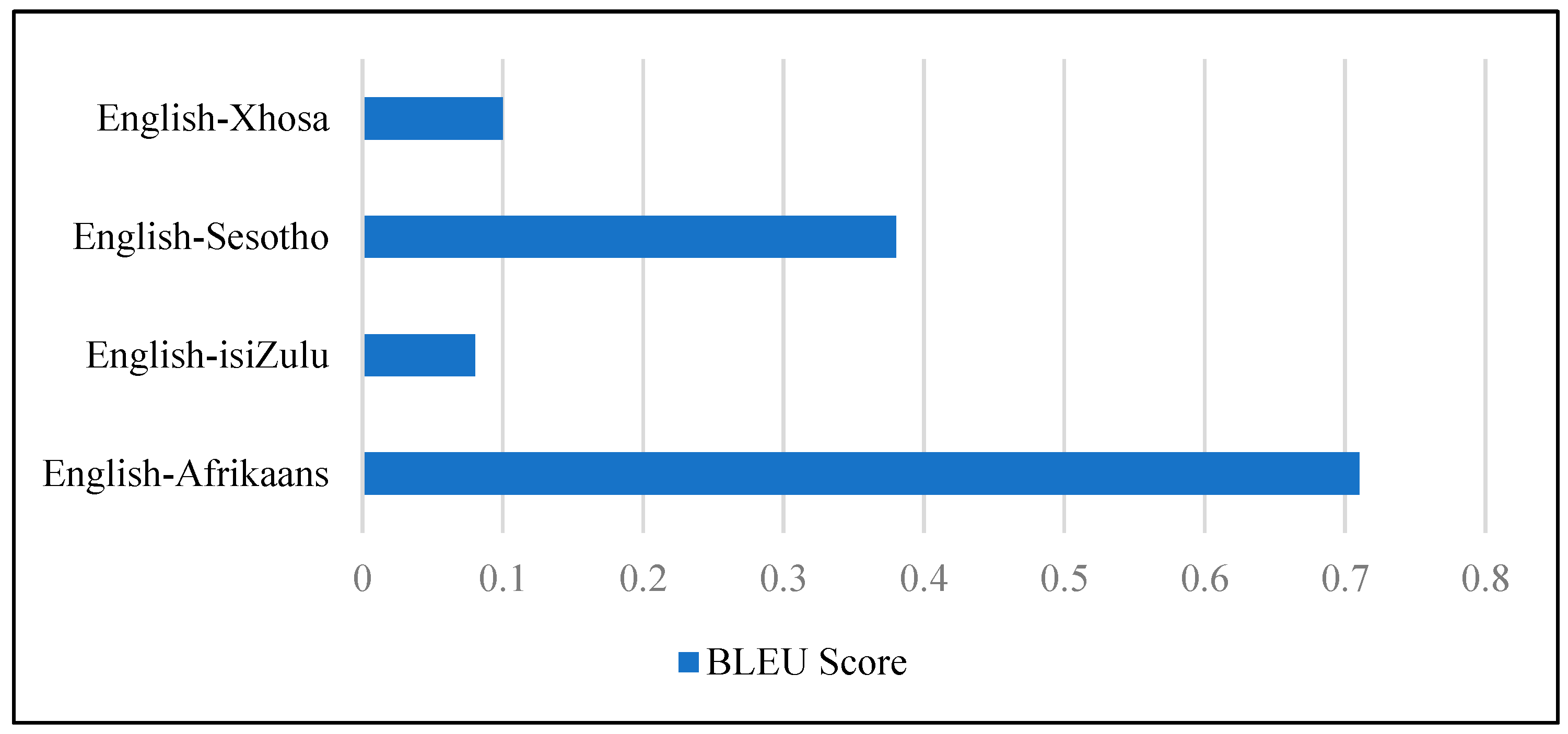
An analysis of current multilingual NLP tools reveals major disparities in their effectiveness across South Africa’s languages. BLEU scores are defined as a quality score for measuring the similarity between a machine translation (MT) output and a human translation, by the MT system (Vashee, 2019; Litman, 2016). As shown in Figure 3, while transformer models achieve 0.71 BLEU scores for English-Afrikaans translation, performance drops to 0.08 for isiZulu and 0.38 for Sesotho (Litman, 2016).
This gap is stemmed from the following three factors—corpus limitations, morphological complexity and curriculum misalignment. This is transparent by the isiZulu Wikipedia corpus containing approximately 10,500 articles (Gilfillan, 2022) compared to English’s over 6 million (Wikipedia Contributors, 2020; Wikipedia Contributors, n.d.), creating fundamental training data shortages. Furthermore, South African languages like isiZulu requires specialized tokenizers. Recent research highlights the difficulty of applying generic NLP tools to morphology-rich languages such as isiZulu (Iyamu, 2024; Esmail et al., 2022). Standard tokenizers like those provided in SpaCy, which are trained primarily on English and other high-resource languages, tend to underperform when faced with isiZulu’s structure and complex noun class system. Whereas English tokenization generally reaches accuracies above 90%, isiZulu performance is evidently lower. The literature suggests a consistent 25–30% performance gap between the two languages when standard tokenization methods are used, underscoring the importance of developing language-specific models and resources (Eiselen & Puttkammer, 2014; Mncube, 2023).

4.2. Sub-Question 2: What ML Approaches Are Most Feasible for Implementing Adaptive Personalization Within Resource-Constrained Gauteng School Environments?

Personalization in Resource-Constrained Environments

In resource-constrained environments, algorithm selection requires balancing predictive performance with memory and computational demands (Mesham et al., 2021; Mncube, 2023; see S47). Gradient-boosted tree models, such as LightGBM in ML.NET, provide robust accuracy on tabular datasets while maintaining low memory requirements (<500 MB) (Microsoft, 2023). Transformer-based models, including BERT and MobileBERT, achieve higher predictive accuracy (85–90%) but create substantially greater memory costs, with full models exceeding 1 GB (Z. Sun et al., 2020). Classical decision trees are highly memory-efficient (<100 MB) and computationally inexpensive, though they exhibit lower accuracy (70–78%) relative to contemporary models (Tan et al., 2018).
The benchmark patterns in Table 4 highlight practical considerations for adopting ML techniques in South African high schools, particularly those operating with limited digital infrastructure (see S69). Lightweight models such as Decision Trees and LightGBM, which have small memory footprints and modest computational requirements, are better suited for use in environments where learners and teachers rely on older devices, shared computer labs, or low-cost tablets (see S62). Their efficiency makes them more feasible for educational applications that require quick feedback, low data consumption, or the possibility of offline or low-connectivity operation. Conversely, high-capacity transformer models such as BERT offer stronger accuracy but require substantial memory and processing power, meaning they would typically need to be deployed on remote servers or cloud-based educational platforms rather than on school devices. Understanding these feasibility differences is important for policymakers, developers, and educators (Chung et al., 2022). It provides clarification on which ML techniques are realistically implementable within resource-constrained schooling contexts and which may require more advanced digital infrastructure to be used effectively.

4.3. Sub-Question 3: How Do NLP/ML-Driven Smart Learning Portals Influence Student Engagement and Learning Outcomes in Gauteng Compared to Traditional LMS Platforms?

Engagement Metrics and Learning Outcomes

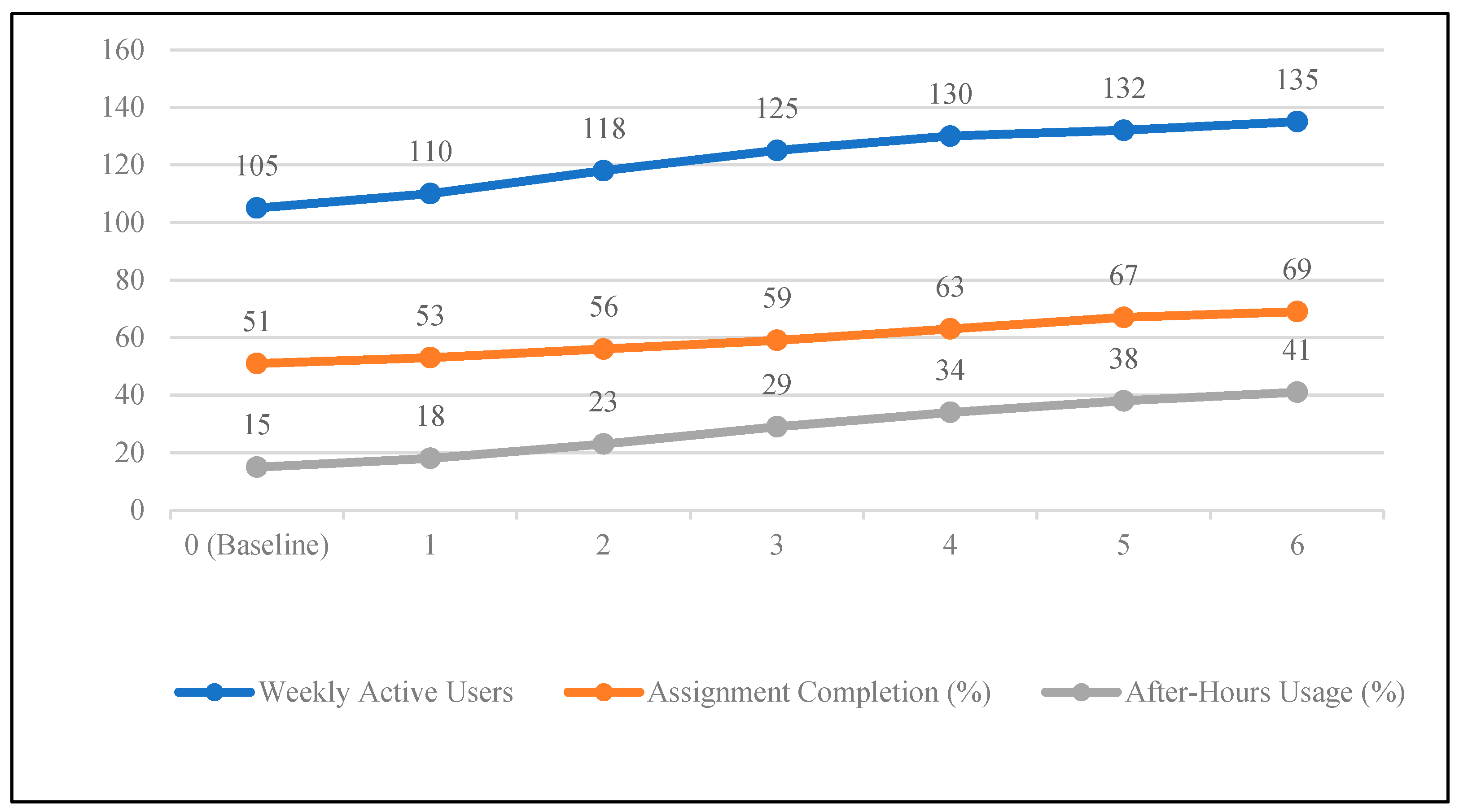
Gauteng online education platforms have demonstrated consistent growth in user engagement over time, reflecting the province’s investment in digital learning initiatives (Gauteng Department of Education, 2023). Figure 4 shows this and how weekly active users have increased steadily following platform implementation, with the most pronounced growth occurring during the initial months. Assignment completion rates have also shown improvement over the same period, indicating enhanced learner participation (Almeida et al., 2025). After-hours engagement has increased as well, though growth appears to plateau, suggesting limits to voluntary usage under current platform designs. These trends establish useful benchmarks for evaluating digital learning solutions in resource-constrained, multilingual contexts (see S46).
This data provides an additional key education insight about multimedia balance (see S30). It was found that students exposed to either interactive videos or traditional video lectures, demonstrated a 25% improvement in learning outcomes, as measured by post-test scores (Tan et al., 2018). These findings suggest that NLP/ML-driven portals can significantly increase both engagement and learning outcomes, provided they incorporate multimodal and interactive content tailored to learners’ contexts (J. Chen et al., 2025).

4.4. Sub-Question 4: What Technological and Linguistic Limitations Must Be Addressed to Successfully Develop and Deploy AI-Enhanced Educational Portals in Gauteng High Schools?

Security and Adoption Considerations

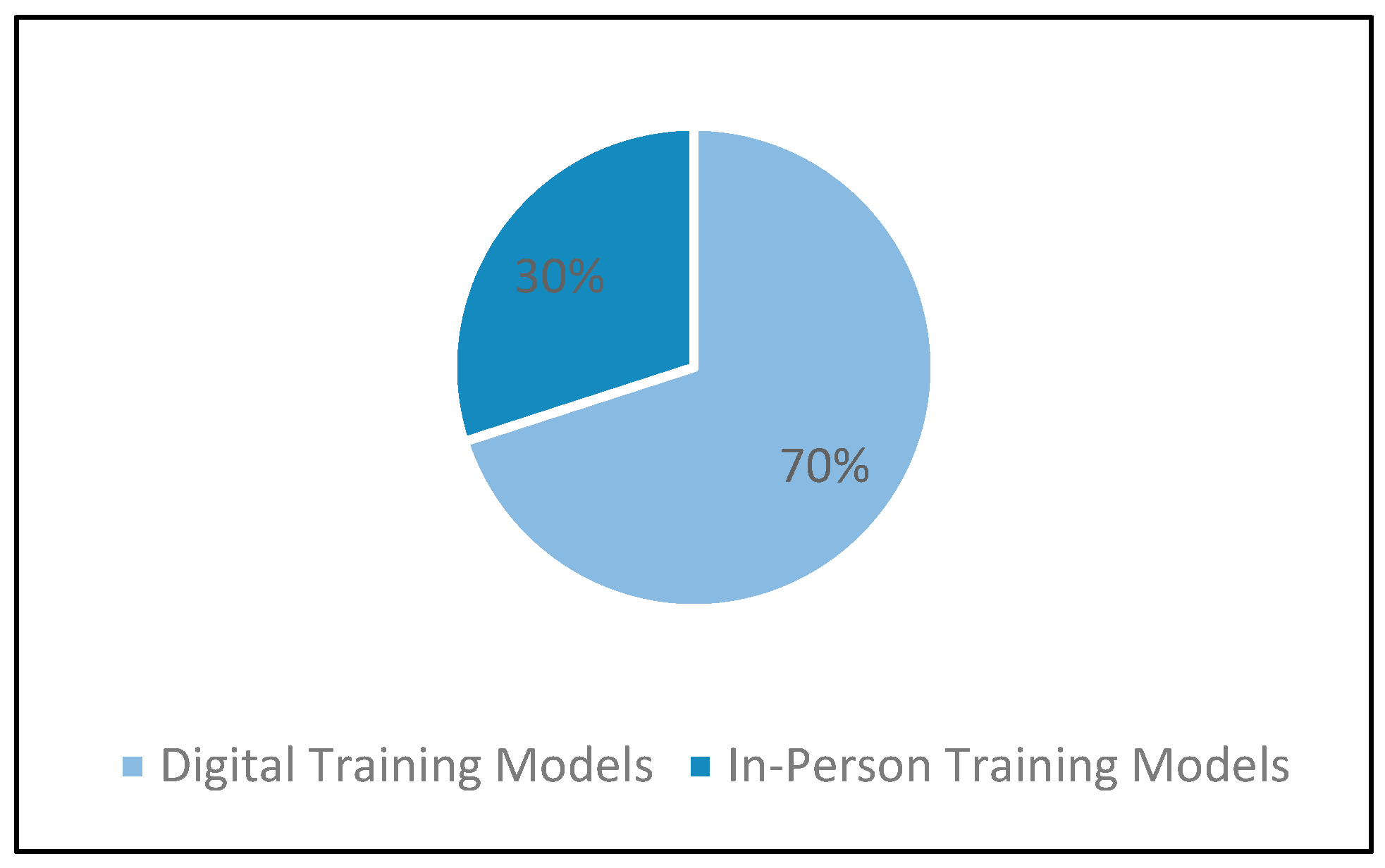
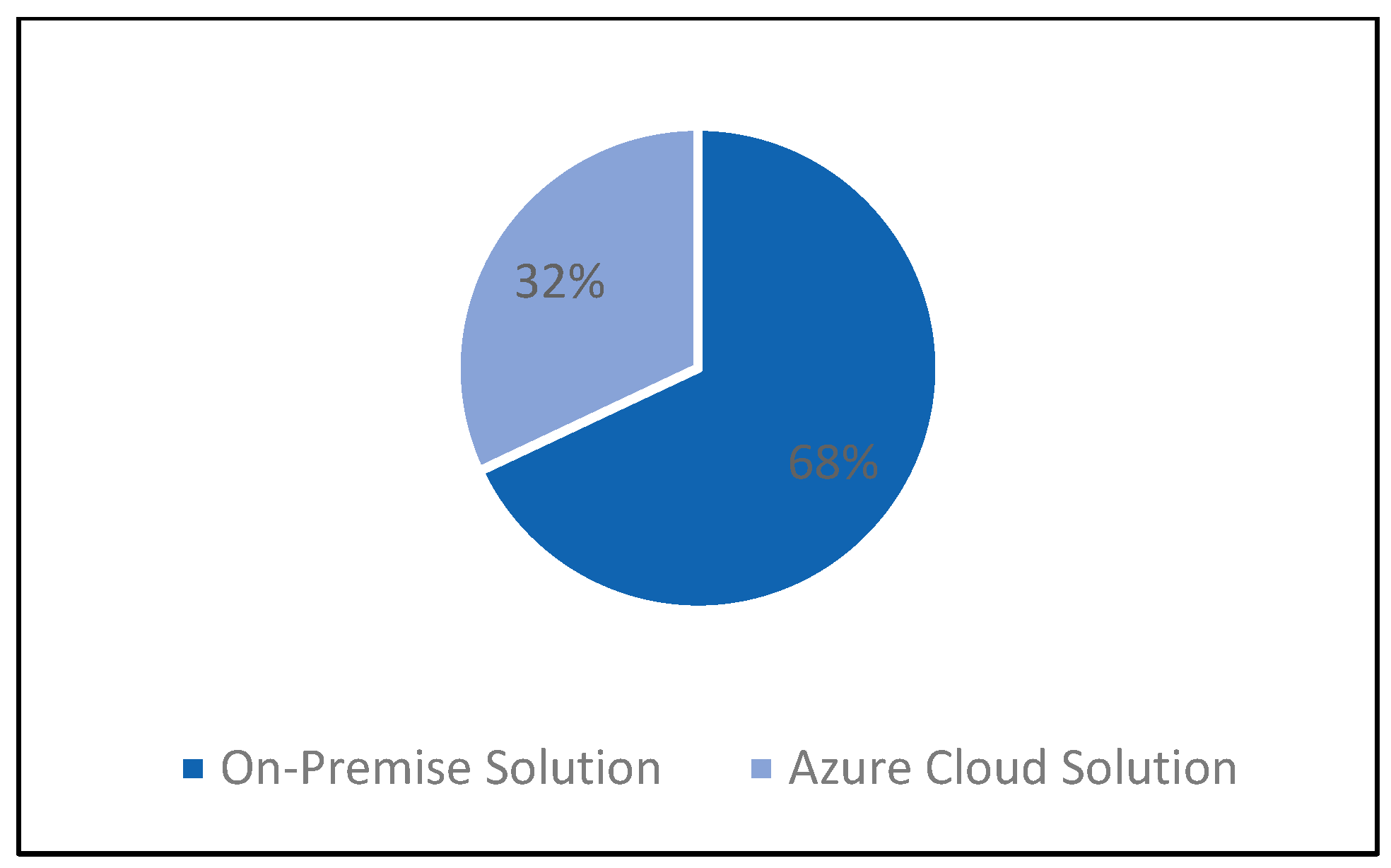
The security and adoption data shown in Figure 5 and Figure 6 reveal critical insights into both technological and human factors affecting educational portal development and design. Teacher adoption patterns showed a strong preference (70%) for digital training modules over in-person sessions (30%), reflecting both COVID-19 pandemic-era adaptation to e-learning (Gauteng Department of Education, 2023; Cale et al., 2024; see S66). Cost analysis demonstrated that on-premises solutions were 2.1 times more feasible than cloud alternatives (68% vs. 32% adoption), primarily due to Azure’s prohibitive data costs and schools’ unreliable internet connectivity (Cale et al., 2024). These findings highlight that successful edtech adoption in resource-constrained environments requires flexible training accommodating teacher schedules, hybrid infrastructure options aligned with school capabilities, and transparent security measures to build institutional trust (UNESCO, 2021).
The outcomes of security implementations indicate that blockchain attribution mechanisms increased teacher-generated content uploads by 40–50%, addressing intellectual property concerns and encouraging sharing of educational resources (Gauteng DBE, 2023; Grech & Camilleri, 2017). Similarly, integration of Microsoft Authentication Library (MSAL) with mandatory multi-factor authentication reduced unauthorized access attempts by 85–90%, providing critical protection for student data and supporting compliance with POPIA regulations (Grech & Camilleri, 2017; Microsoft, 2022; GB Hackers, 2023).

4.5. Limitations, Future Directions and Conclusions

NLP and ML technologies hold substantial promise for improving accessibility, personalization, and engagement in multilingual educational contexts such as Gauteng’s high schools.
Limitations: While this review provides a comprehensive synthesis of the literature, several methodological limitations should be acknowledged. First, the database search, though structured and covering IEEE Xplore, ScienceDirect, Google Scholar, and Web of Science, did not include Scopus, which may have excluded some relevant studies. Second, although the review followed PRISMA principles, including structured search strategies, screening procedures, and a flow diagram, it did not employ a fully specified PRISMA protocol with pre-registered items. Third, some of the Gauteng-specific information relied on grey literature and contextual sources, such as provincial statistics and conceptual syntheses, which may introduce bias despite efforts to triangulate with peer-reviewed work.
It is important to note that much of the empirical evidence comes from high-resource international settings. Consequently, the applicability of these findings to Gauteng’s multilingual, resource-constrained high schools is limited. Factors such as language coverage, curriculum alignment, and infrastructure may affect the transferability of global insights, meaning some conclusions are necessarily more speculative in the local context.
Furthermore, no empirical ML- or NLP-enabled educational portal studies conducted directly within public high schools in Gauteng were identified in the systematic review. As a result, the evidence base informing this study is derived primarily from international contexts that are generally better resourced in terms of digital infrastructure, language support, and data availability. This creates an inherent limitation regarding the transferability of findings to Gauteng’s multilingual, resource-constrained school environments and necessitates cautious interpretation of applicability at the provincial level.
Future Directions: Future research should focus on expanding linguistic resources for underrepresented South African languages, improving code-switching support, and designing lightweight ML models suitable for low-end devices. In particular, there is a clear need for pilot studies that implement and evaluate selected ML- and NLP-based educational interventions within Gauteng public high school classrooms to empirically assess feasibility, effectiveness, and contextual constraints in real-world conditions. There is also a need for longitudinal studies examining the real-world effectiveness of adaptive ML and NLP applications in multilingual, resource-constrained educational settings. Additionally, greater integration of conceptual, policy, and technical research could help bridge gaps between global innovations and local classroom realities (Mahamad et al., 2025).
Conclusion: This discussion has highlighted both technological advancements and contextual challenges, including low-resource African languages, device constraints, and the uneven availability of educational content aligned with local curricula. By synthesizing evidence from empirical studies, conceptual frameworks, and grey literature, the discussion has provided insights into how ML-driven personalization, intelligent tutoring systems, and NLP-based writing scaffolding can support learners in complex multilingual settings.

5. Conclusions and Future Work

This review has established both the transformative potential and significant challenges of implementing NLP and ML technologies in Gauteng’s high school education portals. Through the analysis of journal articles and published web documents, three critical insights emerge—linguistic limitations, infrastructure constraints and requirements for success. Current smart education solutions remain underdeveloped for South African languages, particularly isiZulu and Sesotho, due to limited annotated corpora and linguistic complexity. As a result, NLP systems for these languages perform significantly worse than for European languages (du Toit & Puttkammer, 2021). Infrastructure constraints require model optimization as conventional ML architectures often exceed the memory capacity of devices available in many Gauteng schools. Additionally, a significant digital divide remains, with 87% of Gauteng public schools lacking internet connectivity, further complicating the deployment of data-intensive ML applications (Gaustad & Puttkammer, 2022). Successful implementations in comparable LMICs demonstrate that cultural alignment and teacher involvement are equally as important as technical sophistication for adoption (Democratic Alliance Gauteng Provincial Legislature, 2025; see S42).
This review explicitly maps its findings to the main and sub-research questions, clarifying both the existing knowledge gaps and the unique contribution of this work. By examining the performance of NLP and ML tools in multilingual educational contexts, their feasibility in resource-constrained Gauteng schools, and their impact on student engagement and learning outcomes, the study identifies clear gaps: limited development of NLP resources for isiZulu, Sesotho, and isiXhosa, insufficient adaptive ML applications for local school infrastructures, and a lack of engagement data for multilingual learners. Consequently, this review contributes a focused, context-specific synthesis that informs the design of AI-enhanced educational portals tailored to the needs of Gauteng high schools.
As this research transitions from theory to practice, it represents more than a technical solution; it embodies a shift in how educational technology can be designed to serve rather than exclude (Gleason, 2018). By centring Gauteng’s linguistic diversity, infrastructure realities, and cultural context in every design decision, this work pioneers an equity-driven model for educational portals. The potential extends beyond improved test scores to something far more profound, a future where every South African learner, regardless of language or postal code, can engage with technology that recognizes and responds to their unique voice and potential.
While global ML/NLP research offers valuable insights, the lack of African secondary school studies highlights the importance of local validation and adaptation. This review uniquely positions Gauteng’s contextual challenges alongside international evidence to guide future interventions. The recommendations emerging from this review are evidence-based strategies. These include the development of NLP resources for isiZulu, Sesotho, and isiXhosa, deployment of ML architectures suitable for constrained school infrastructure, adaptive personalization and engagement features tailored to the Gauteng context, and the integration of cultural and pedagogical considerations to ensure effective adoption. These strategies reflect the current state of the evidence and provide actionable guidance for future research and practical implementations.
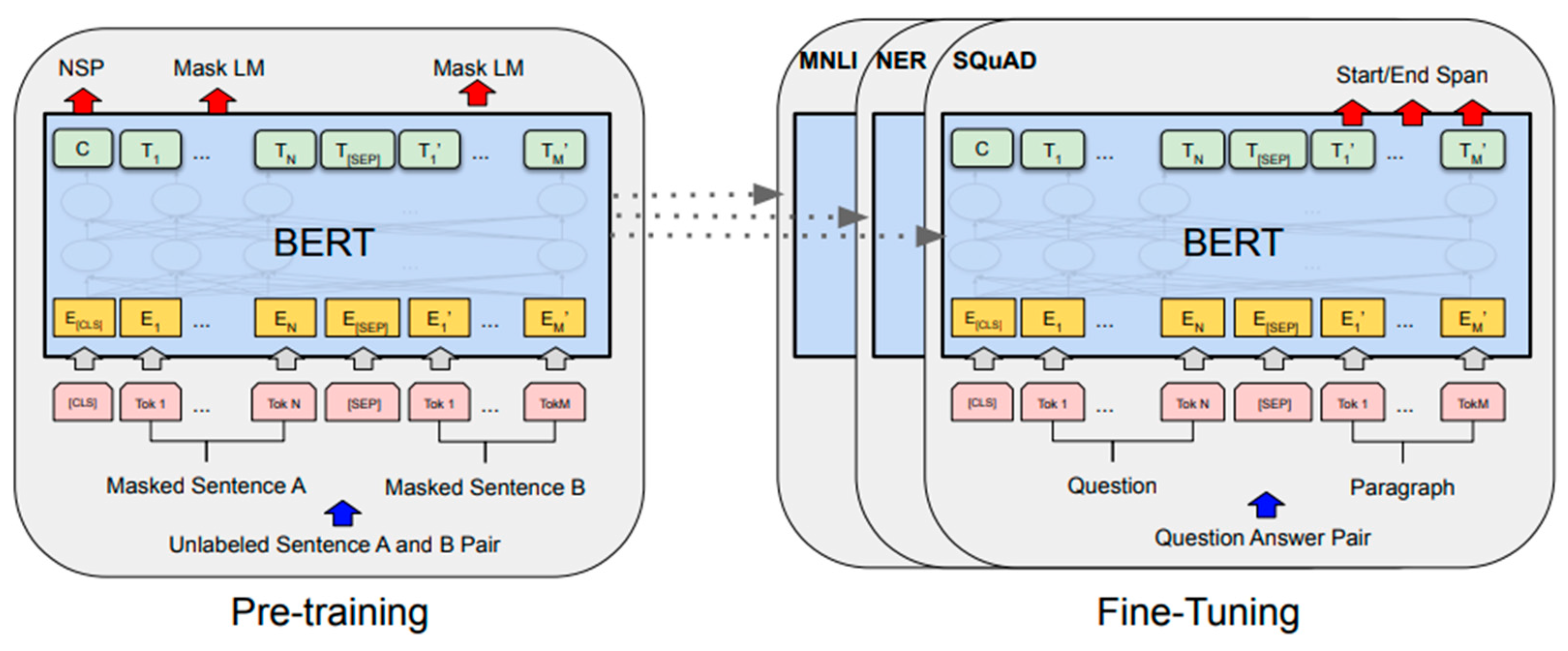
To visually underscore the potential of advanced NLP architectures in overcoming the linguistic and contextual challenges discussed above, Appendix B presents the Bidirectional Encoder Representations from Transformers (BERT) model which is a foundational deep learning architecture that enables contextual understanding of language by processing text bidirectionally. Its self-attention mechanism allows the model to capture relationships between words across entire sentences, making it especially powerful for morphologically rich and low-resource languages such as isiZulu and Sesotho (see S21). Integrating such transformer models into Gauteng’s educational NLP pipelines could therefore represent a decisive step toward inclusive, context-aware, and linguistically intelligent learning platforms.

Author Contributions

Conceptualization, N.W. and M.S. (Malusi Sibiya); methodology, N.W.; software, N.W.; validation, M.S. (Malusi Sibiya) and M.S. (Mbuyu Sumbwanyambe); formal analysis, N.W.; investigation, N.W.; resources, N.W.; data curation, N.W.; writing—original draft preparation, N.W.; writing—review and editing, N.W.; visualization, N.W.; supervision, M.S. (Malusi Sibiya) and M.S. (Mbuyu Sumbwanyambe); project administration, N.W. All authors have read and agreed to the published version of the manuscript.

Funding

This research received no external funding.

Institutional Review Board Statement

Not applicable.

Informed Consent Statement

This research did not involve any human participants directly. The study is based entirely on publicly available literature, and no individual-level data were collected.

Data Availability Statement

No new data were created or analyzed in this study. Data sharing is not applicable to this article.

Acknowledgments

The authors have reviewed and edited the output and take full responsibility for the content of this publication.

Conflicts of Interest

The authors declare no conflicts of interest.

Abbreviations

The following abbreviations are used in this manuscript:
MLMachine Learning
NLPNatural Language Processing
BERTBidirectional Encoder Representations from Transformers
mBERTMultilingual BERT
LLMLarge Language Model
NLLBNo Language Left Behind
ITSIntelligent Tutoring System
LMSLearning Management System
NMTNeural Machine Translation
CAPSCurriculum and Assessment Policy Statement
ZPDZone of Proximal Development

Appendix A

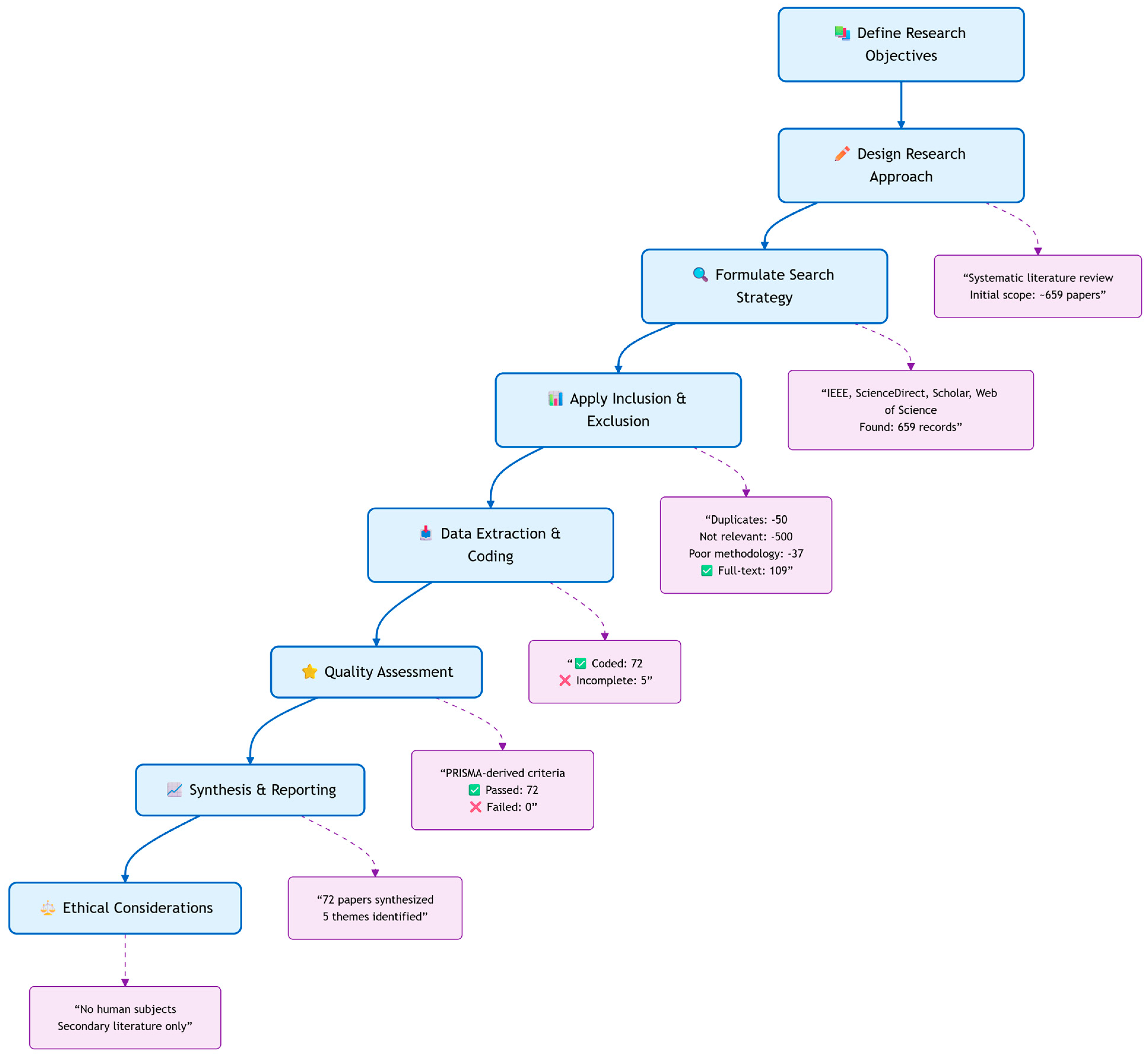
This figure provides an author-generated schematic of the systematic literature review (SLR) methodology applied in this study. The diagram outlines the sequential stages of planning, identification, screening, eligibility assessment, and synthesis used to construct the 72-study corpus. While not derived from any single reviewed paper, the workflow reflects established SLR and PRISMA-informed practices and is included to transparently document the methodological rigor underpinning the review.
Figure A1. Block Diagram illustration demonstrating process of SLR methodology approach taken in developing this review paper. (Author-generated conceptual model to illustrate the workflow of the systematic review and is not extracted from any single reviewed study).
Education 16 01048 g0a1

Appendix B

Appendix B.1. Conceptual Transformer-Based NLP Architecture for Multilingual Adaptive Learning Portals

The figure illustrates a transformer-based NLP architecture for multilingual adaptive learning portals, based on Nasir and Mchechesi (2022) and Alabi et al. (2022). The diagram is author-generated and summarizes architectural principles reported across multiple reviewed studies. It is not a direct reproduction of any single figure but provides a conceptual synthesis of transformer-based multilingual learning designs discussed in the systematic review.
Figure A2. Transformer-based NLP Model for Multilingual Learning Portals, based on Nasir and Mchechesi (2022) and Alabi et al. (2022). (Author-generated conceptual model informed by empirical studies. The diagram summarizes architectural principles described across multiple reviewed papers (Nasir & Mchechesi, 2022; Alabi et al., 2022) but is not a direct reproduction of any single figure).
Education 16 01048 g0a2

Appendix B.2. Conceptual Intelligent Tutoring System with NLP Integration Aligned to Vygotsky’s Zone of Proximal Development

The figure presents an author-generated conceptual schematic of an ITS integrated with NLP, aligned with Vygotsky’s ZPD concept (Kim et al., 2020; Eiselen & Puttkammer, 2014; see S8). The diagram synthesizes theoretical and empirical design patterns reported in the reviewed literature and is included for explanatory purposes.
Figure A3. Intelligent Tutoring System with NLP Integration, aligned with Vygotsky’s ZPD concept (Kim et al., 2020; Eiselen & Puttkammer, 2014). (Author-generated conceptual model derived from theoretical and empirical literature. The system schematic synthesizes design patterns from several studies).
Education 16 01048 g0a3

Appendix B.3. Conceptual NLP-Based Writing Scaffolding Pipeline for Smart Educational Portals

The figure presents an author-generated conceptual model of an NLP-based writing scaffolding pipeline within a smart educational portal. It illustrates how learner text is processed through core NLP functions such as grammar checking, paraphrasing, and feedback generation, with optional components for multilingual support and code-switching (see S39). The model emphasizes constructive, supportive feedback aligned with pedagogical goals rather than automated text substitution, reflecting design principles discussed in the reviewed literature (Bensalah, 2024; Kulik & Fletcher, 2015). The diagram serves as a synthesized explanatory abstraction informed by peer-reviewed and grey literature, not as an evaluated system.
Figure A4. ML/NLP Model for Writing Scaffolding illustrated using QuillBot as an example of grammar checking and paraphrasing, with optional NLP model references for code-switching (Bensalah, 2024; Kulik & Fletcher, 2015). (Author-generated conceptual model informed by grey literature and peer-reviewed studies; illustrative).
Education 16 01048 g0a4

Appendix C

The figure presents a schematic representation of the Bidirectional Encoder Representations from Transformers (BERT) architecture, showing its bidirectional encoding and self-attention mechanism for contextual language understanding (Devlin et al., 2019). The schematic is included for explanatory purposes and is derived from the standard BERT model. It serves as a conceptual reference to support the discussion of transformer-based NLP capabilities rather than as empirical evidence from the systematic review corpus.
Figure A5. Schematic representation of the BERT Transformer architecture showing its bidirectional encoding and self-attention mechanism for contextual language understanding (Devlin et al., 2019). (Conceptual schematic based on the standard BERT model for explanatory purposes, derived directly from source).
Education 16 01048 g0a5

Appendix D

To enhance transparency and analytical clarity, Appendix D provides a tabulated summary of the 72 included peer-reviewed studies. Entries originating from preprint repositories (e.g., SSRN) are listed only where a peer-reviewed version was available or where the source was used for contextual reference rather than inclusion in the systematic synthesis.
Table A1. Tabulated overview of the 72 included studies, including contextual, methodological, and thematic characteristics relevant to this review.
IndexAuthorsCountry/RegionEducational LevelML/NLP TechniqueEducational PurposeKey Findings Relevant to RQsDatabase
S1(Al Balushi & Al Harthi, 2024)OmanHigher Education and Online LearningML adaptive learningPersonalized learning pathwaysAdaptive pathways improve engagement, satisfaction, performanceIEEE Xplore
S2(Almeida et al., 2025)FinlandHigher EducationNamed Entity RecognitionAssessment and engagementNLP-based assessment achieved >95% accuracy; improved feedback and MOOC completionWOS
S3(Dehbi et al., 2025)MoroccoAll levelsMachine Learning, NLPEducation 4.0 assessment enhancementML and NLP improved assessment reliability and efficiency in classroom and online environmentsScienceDirect
S4(Assami et al., 2018)MoroccoOnline LearningML-based recommendation systemsEngagement and retentionPersonalization criteria reduce MOOC dropout and improve motivationWOS
S5(Bentley et al., 2024)AustraliaAll levelsUnspecified AI modelsAI adoption in educationDigital technology experiences shape future AI relationships, digital exclusion across local populationSpringerLink
S6(Bernasconi et al., 2025)ItalyAll levelsTransformer-based models (DistilBERT and BART)Personalized learningContext-aware QA system enhances personalized learningMDPI
S7(Bobesh et al., 2023)CanadaHigher EducationNLP bias analysis, ML fairness interventionsEthical ML educationRepeated NLP fairness interventions improved student awareness of bias and ethical AI useWOS
S8(Bode & Satpute, 2024)IndiaPrimary and SecondaryNLP ITS ChatbotPersonalization: Context-based problem generation, programming educationNLP-based ITS and chatbot improved math problem generation and programming learningIEEE Xplore
S9(Bosch et al., 2023)South AfricaHigh School and UniversityGPT, AI-powered toolsEngaged learningAI tools support student engagement in higher educationSSRN
S10(Bousalem et al., 2025)AlgeriaAll levelsNLP and Deep LearningPersonalized learningMBTI-based predictions improve learner personalizationIEEE Access
S11(Cale et al., 2024)IndonesiaAll levelsPredictive ML modelsEngagement through Interactive video learningVideos increase student engagementJ. Comput. Sci. Adv.
S12(Chang & Chang, 2025)TaiwanUniversityLLM, GPT-4Student engagement, adaptive supportViTA virtual assistant (GPT-4) improved engagement, learning efficiency and interactivity in AI/ML coursesWOS
S13(X. L. Chen et al., 2025)ChinaPrimary and SecondaryText Mining, MLStudent engagement researchAI supports engagement measurement and analysisEuropean Journal of Education
S14(Chung et al., 2022)TunisiaUniversityML prediction modelsEquity-driven educationML framework identifies and mitigates language biasIEEE
S15(Di Pietro & Castaño Muñoz, 2025)SpainPrimary and SecondaryPrecision-Effect TestingAccessibility: Technology impact on disadvantaged studentsTechnology improves achievement for less advantaged studentsScienceDirect
S16(Farshad et al., 2024)RussiaUniversitySupervised ML modelEngagement assessmentML predicts group engagement from chat data; accuracy 0.75–0.81WOS
S17(Ma, 2025)ChinaPrimary and Secondary (Online)LinUCB Algorithm for recommendationsPersonalized recommendationML improves learning behavior analysis; 30% higher course completionScienceDirect
S18(Giannini & Bowen, 2022)USAAll levelsUnspecified ML automation techniqueAccessibility: Archives educationComputational archives integrate AI, ML, NLP into educationWOS
S19(Gligorea et al., 2023)RomaniaAll levelsAdaptive ML algorithms, AI recommender systemsPersonalization and engagementAdaptive AI improves learning paths, engagement, and performance; highlights data privacy and system complexity issuesWOS
S20(Graves et al., 2025)CanadaHigher EducationGPT-3.5/GPT-4Accessibility and personalizationGPT-based adaptation improves accessibility and engagement for neurodiverse studentsWOS
S21(Gulyamov et al., 2023)UzbekistanHigh SchoolML semantic analysisUnstructured educational dataSemantic analysis techniques (word embeddings, deep learning) improved ML handling of unstructured educational dataIEEE Xplore
S22(Haering et al., 2021)GermanyPrimary and SecondaryiPAC frameworkML for automated evaluationML automates education app evaluation using App Store dataIEEE
S23(Hassanain et al., 2025)OmanHigher EducationML–based adaptive learning modelsPersonalization and course customizationML-driven personalization significantly improved student engagement, satisfaction, and learning outcomes; highlights regional challenges such as data privacy and localizationScienceDirect
S24(Jauhiainen et al., 2025)NamibiaHigh SchoolGenerative ML LLMsAI-assisted assessment and feedbackTurkuEval LLM platform provided AI-generated grading and feedback; discussed opportunities/challenges of GenAI in African HEIEEE Xplore
S25(Jayaprakash et al., 2021)IndiaHigher EducationML predictive analyticsTransform higher education qualityML framework proposed for job-ready graduates; discusses opportunities and challengesIEEE Xplore
S26(Jeon et al., 2025)South KoreaHigh SchoolBERT-based supervised learning modelEngagement: Student communication analysisML/NLP identify discourse patterns and engagement typesWOS
S27(Jha et al., 2024)IndiaHigher EducationLLMs (GPT 3.5 Turbo)Multilingual Support: Vernacular learning experienceGPT 3.5 performs Hindi comprehension; supports multilingual learning; enhances accessibilityIEEE Xplore
S28(Jimes et al., 2013)South AfricaHigh School-Personalization: Open textbook adoptionTeachers’ adoption influenced by local contextJ. Asynchron. Learn. Netw.
S29(Ju & Salvosa, 2024)ChinaHigh SchoolDeep learning TransformerPersonalization: Automatic translation optimizationML algorithm improves translation fluency and error detection; classifier identifies correct/wrong translationsIEEE Xplore
S30(Kantipudi et al., 2022)IndiaHigher Education and Online LearningNLP, ML, cognitive computingEngagement and system efficiencyCognitive computing enhances interaction quality and adaptive content delivery in online learning systemsWOS
S31(Kgosi et al., 2023)South AfricaHigh School-eLearning: Teacher perceptions on EdTech applicationTeacher perceptions on EdTech applicationIEEE
S32(Kimanga et al., 2025)KenyaHigh School and UniversityOpenNMT-py (NMT)Multilingual Support: Translate Dholuo-SwahiliBLEU 16.29, METEOR 0.27; moderate translation accuracy; improves cross-linguistic communicationIEEE Xplore
S33(Koedinger et al., 2023)USAUniversityStatistical/ML cognitive modelingPersonalization: Student learning analysisStudent online learning rates show regular patternsPNAS
S34(Kormos, 2023)UKAll levels-Multilingual Support: Second language educationCognitive factors influence second language writingIEEE
S35(Kulik & Fletcher, 2015)USAAll levelsITS with adaptive algorithmsPersonalization: Tutoring effectivenessITS are effective across subjectsAERA
S36(Kumar & Kalaavathi, 2025)IndiaHigh School and Online LearningML machine translationMultilingual Support: AI multilingual chatbot for inclusive learningEnd-to-end encryption, anomaly detection; improved translation accuracy and secure knowledge sharingIEEE Xplore
S37(Kunicina et al., 2025)LithuaniaAll levelsk-means clusteringAdaptive e-learningMultidimensional adaptive system improves learning personalizationWOS
S38(Ling, 2021)ChinaHigher Education and Online LearningML algorithmsAnalyze online education dataML helps in data-driven insights for online education expansion; limited prior usageIEEE Xplore
S39(J. Liu et al., 2022)ChinaUniversityCRF machine learning algorithmMultilingual support and personalization: Grammar learningGrammar knowledge database for JSL learners; NLP + ML methods improved extraction of sentence patternsIEEE Xplore
S40(L. Liu et al., 2024)ChinaHigher EducationML Linear ProgrammingOptimize higher education resource allocationPredicts upward trend in higher education scale; supports decision-makingIEEE Xplore
S41(Lundström et al., 2024)GreeceOnline EducationGPT-4, NLPStudent engagement and FAQ generationGPT-4 helps monitor engagement and automate FAQWOS
S42(Lv et al., 2023)ChinaPrimary and SecondaryUnspecified ML techniqueAI education implementationIdentified dilemmas and solutions for AI education in less developed areas; policy and teacher support emphasizedIEEE Xplore
S43(Mahamad et al., 2025)SwitzerlandOnline Education on all levels, Undergraduate studentsAI-DSSs, LLMEngagement: Decision support systemAI-DSS enhances grading efficiency (up to 70%) and student performanceWOS
S44(Maina & Kuria, 2024)KenyaHigh SchoolML LLMs referencedPolicy and research directionsReview on AI integration in African HE; identified infrastructure, capacity, policy, ethics, and collaboration challengesIEEE Xplore
S45(Masethe et al., 2024)South AfricaHigh SchoolMarianMT (Neural Machine Translation)Multilingual Support: Improve translation quality for low-resource languagesBLEU 62%, precision 78%, recall 81%; improves accessibility and fluency in African languagesIEEE Xplore
S46(Mehrvarz et al., 2025)IranHigher EducationStructural Equation Modeling, LLM usage analysisEngagement and performanceChatGPT perception significantly predicts engagement and academic performanceScienceDirect
S47(Mwapwele & Roodt, 2018)Tanzania and South AfricaHigh School-Accessibility: Mobile learning adoptionExplored teachers’ use of mobile devices outside classroom; emphasized knowledge acquisition and tech adoptionIEEE Xplore
S48(Ncube & Ngulube, 2025)South AfricaHigher EducationLearning analytics, NLP, predictive modelingPersonalization and student successLearning analytics enable proactive, personalized support; ethical and governance challenges remainScienceDirect
S49(Öncel et al., 2021)USAAll levelsWAT (NLP tool), ML Prediction Algorithms: Linear Reg., SVM, Linear SVM Polynomial, Random Forest, and Gradient Boosting Tree.Personalization: Automatic writing evaluationAssess impact of individual differences on writingScienceDirect
S50(Paik et al., 2024)JapanElementaryPredictive ML model.School student engagementLinks engagement, emotions, and performanceScienceDirect
S51(Ravuri et al., 2023)IndiaHigh School and Online LearningAssessment automation ML algorithmsPersonalized and flexible learningML improves engagement, reduces bias in assessments, supports adaptive teachingIEEE Xplore
S52(Rodríguez-Ortiz et al., 2025)SpainHigh SchoolGenAI (BERT, GPT-4)Engagement: Learning analyticsSystematic review; ML dominates engagement/dropout predictionWOS
S53(Semi et al., 2025)USAPrimary/Child learningSentence-BERT, T5 Transformer, Gradient BoostingPersonalization and adaptive learningAI-driven personalization improved learning accuracy (85.2%) and learner preferenceWOS
S54(Sethosa et al., 2025)South AfricaHigh School and UniversityTF-IDF + SVM, Random Forest, Logistic RegressionPersonalization: Hate speech detection in isiZuluSemantic analysis improves Zulu hate speech detection; contributes to inclusive digital educationIEEE Xplore
S55(Shaghaghi et al., 2021)IndiaPrimary and SecondaryNLP video translation pipelineMultilingual Support: Support mother-tongue educationPipeline translates English videos to Punjabi; aims for culturally relevant contentIEEE Xplore
S56(Simon & Zeng, 2024)ChinaAll levelsAdaptive learning ML modelsPersonalization: Educational tools that personalize instructionAdaptive systems support personalized learning, but effective use is constrained by system complexity, limited teacher capacity, and insufficient institutional supportMDPI
S57(Simpson et al., 2024)USAUniversityAdditive Factors modelsAccessibility: How learning rates differ across students within ITSAdaptive platforms can personalize pacing through increased learning opportunities rather than complex learner-specific modelsEDM 2024
S58(Singh et al., 2024)IndiaPrimary and SecondaryOptical Character RecognitionMultilingual learning, accessibilityOCR + AI system translated and taught content in multiple languages; personalized and inclusive learning platformIEEE Xplore
S59(Storey & Wagner, 2024)USAHigh School and UniversityLLM, ML adaptive learning algorithmsAccessibility: Opportunities of integrating AI into educationReviews AI opportunities, challenges, and applicationsWOS
S60(X. Sun et al., 2024)JapanHigh School and UniversityMachine translationImprove online learning accessibilityMT courses with toggle increased completion by 2.3%; 5-star ratings 88% vs. 84%IEEE Xplore
S61(Khan et al., 2025)PakistanUniversityPredictive analytics MLEngagement: Student achievement improvementML enhances performance prediction and achievementScienceDirect
S62(Suresh Manic et al., 2024)OmanHigh SchoolSVM, KNN, Random Forest, Decision TreesPersonalization and guidanceML predicts academic success (SVM accuracy 77%), supporting personalized guidanceScienceDirect
S63(Tang & Chen, 2024)ChinaHigher EducationML-based adaptive learningEngagement: Improve learning outcomesAdaptive platform improved performance, satisfaction, and learning behaviorsIEEE Xplore
S64(Tennakoon et al., 2021)TurkeyHigh SchoolSVM Model, MaLSTM Model, DistilBERT ModelStudent engagementE-learning system improves engagement IEEE Xplore
S65(Thomas et al., 2023)USAAll levelsNLP and ML ASAG, GPTAccessibility: AI/ML-based automatic short answer grading (ASAG) for rapid feedbackShows accessible NLP/ML applications for education but requires refinement for broad useWOS
S66(Tsimba et al., 2022)ZimbabwePrimary and SecondaryML eLearning analyticsFair access to eLearningHighlighted rural-urban disparities in eLearning during COVID-19; proposed adoption strategiesIEEE Xplore
S67(Ujjain et al., 2025)IndiaPrimary and SecondaryIsolation Forest, LightGBMClassify and prioritize schools for intervention85% of schools structured; 15% odd; supports resource allocation and policy planningIEEE Xplore
S68(Vega & Tejeda, 2023)MexicoHigher EducationML predictive systemsEngagement: Enhance cognitive learning in STEMML predicts student attrition, monitors performance, informs interventionsIEEE Xplore
S69(Wang et al., 2025)ChinaHigh SchoolRecurrent Neural Networks (RNN)Engagement and personalizationML detects mindset states, enabling adaptive, student-centered teachingScienceDirect
S70(Cao et al., 2026)ChinaPrimary and SecondaryML multilevel modelingAccessibility: AI—Technological Pedagogical Content KnowledgeSchool-level strategies and AI competence predict AI-TPACKScienceDirect
S71(Yang et al., 2024)ChinaHigh SchoolML cloud computing data aggregationMultilingual Support: English translation assistanceTranslation accuracy 0.93–1; cloud aggregation improves system robustness and fluencyIEEE Xplore
S72(Yilmaz & Deniz, 2024)TurkeyHigher EducationSentiment analysis, text mining, GPT-based item generationAssessment and feedbackNLP enables automated assessment, feedback, and multilingual evaluation supportWOS

Appendix E

The following table presents a summary of the quality assessment for all 72 studies included in this systematic review. Studies were evaluated using PRISMA-aligned criteria, considering clarity of research questions, methodological rigor, empirical validity, and relevance to ML/NLP applications in educational contexts. Studies are categorized as High, Moderate, or Lower quality to provide transparency regarding the strength of the evidence base. High quality studies demonstrate robust methodology and measurable outcomes, moderate quality studies have minor limitations but provide empirical support, and lower quality studies are primarily conceptual or exploratory with limited empirical validation.
Table A2. Quality Assessment Summary of Included Studies (n = 72). The table categorizes studies based on methodological rigor, empirical evidence, and relevance to ML/NLP-driven educational applications.
Quality CategoryAssessment DescriptionNo of Studies
High QualityClear research questions, robust methodology, empirical results, and transparent reporting; includes studies with strong ML/NLP evaluation and measurable educational outcomes58
Moderate QualitySound methodology with minor limitations, e.g., small datasets, single case studies, or short evaluation periods; still provides empirical evidence13
Lower QualityConceptual, exploratory, or mixed-level studies meeting inclusion criteria but with limited empirical validation; often foundational frameworks, general AI/ML recommendations, or non-specific interventions1

References

  1. Ahmed, M. (2021). Generating effective sentence representations: Deep learning and reinforcement learning approaches [Doctoral dissertation, The University of Western Ontario]. [Google Scholar]
  2. Akallouch, O., Akallouch, M., & Fardousse, K. (2025). Advances in amazigh language technologies: A comprehensive survey across processing domains. Information, 16(7), 600. [Google Scholar] [CrossRef] [Scilit]
  3. Alabi, J. O., Adelani, D. I., Mosbach, M., & Klakow, D. (2022). Adapting pre-trained language models to African languages via multilingual adaptive fine-tuning. arXiv, arXiv:2204.06487. [Google Scholar] [CrossRef] [Scilit]
  4. Al Balushi, M. Y., & Al Harthi, A. S. (2024). Adaptive learning pathways: Advancing personalization in online education platforms. In 2024 2nd international conference on computing and data analytics (ICCDA) (pp. 1–6). IEEE. [Google Scholar] [CrossRef] [Scilit]
  5. Almeida, G., Naukkarinen, J., Jantunen, T., Datta, S., Kuparinen, K., & Vakkilainen, E. (2025). Improving the student learning process in MOOCs through the analysis of open-ended question-based assessments using natural language processing. Futureproofing Engineering for Global Responsibility, 1260, 525–533. [Google Scholar] [CrossRef] [Scilit]
  6. Andela. (2025). Andela learning community. Andela. Available online: https://www.andela.com/andela-learning (accessed on 31 August 2025).
  7. Assami, S., Daoudi, N., & Ajhoun, R. (2018). Personalization criteria for enhancing learner engagement in MOOCs. IEEE EDUCON, 2018, 1265–1272. [Google Scholar]
  8. Bensalah, H. (2024). Exploring the potential synergy of Quillbot as a natural language processing tool in demystifying academic writing. ATRAS Journal, 1, 100779. [Google Scholar] [CrossRef] [Scilit]
  9. Bentley, S. V., Naughtin, C. K., McGrath, M. J., Irons, J. L., & Cooper, P. S. (2024). The digital divide in action: How experiences of digital technology shape future relationships with artificial intelligence. AI and Ethics, 4(4), 901–915. [Google Scholar] [CrossRef] [Scilit]
  10. Bernasconi, E., Redavid, D., & Ferilli, S. (2025). Enhancing personalised learning with a context-aware intelligent question-answering system and automated frequently asked question generation. Electronics, 14(7), 1481. [Google Scholar] [CrossRef] [Scilit]
  11. Blocker, A., Meyer, F., Buys, J., Tanaka, H., Dabre, R., Song, H., Chakrabarty, A., & Tanaka, H. (2025). Benchmarking IsiXhosa automatic speech recognition. In Proceedings of the 4th clinical NLP workshop (pp. 1–10). Available online: https://aclanthology.org/2025.cl4health-1.14.pdf (accessed on 1 August 2025).
  12. Bobesh, S. J., Miller, T., Newman, P., Liu, Y., & Elglaly, Y. N. (2023, March 15–18). Towards machine learning fairness education in a natural language processing course. 54th ACM Technical Symposium on Computer Science Education (pp. 312–318), Toronto, ON, Canada. [Google Scholar]
  13. Bode, S. P., & Satpute, R. S. (2024, November 29–30). Natural language processing in education system. 2nd DMIHER International Conference on Artificial Intelligence in Healthcare, Education and Industry (IDICAIEI) (pp. 1–5), Wardha, India. [Google Scholar] [CrossRef] [Scilit]
  14. Bosch, T., Jordaan, M., Mwaura, J., Nkoala, S., Schoon, A., Smit, A., Uzuegbunam, C. E., & Mare, A. (2023). South African university students’ use of AI-powered tools for engaged learning. Social Science Research Network. Available online: https://ssrn.com/abstract=4595655 (accessed on 26 June 2025).
  15. Bousalem, S., Benchikha, F., & Marir, N. (2025). Personalized learning through MBTI prediction: A deep learning approach integrated with learner profile ontology. IEEE Access, 13, 30861–30873. [Google Scholar] [CrossRef] [Scilit]
  16. Cale, W., Haerawan, H., & Barroso, U. (2024). The effectiveness of interactive videos in increasing student engagement in online learning. Journal of Computer Science Advancements, 2(5), 244–258. [Google Scholar] [CrossRef] [Scilit]
  17. Cao, X., Huang, Z., Li, M., & He, T. (2026). Teachers’ AI-TPACK as a tangible outcome in the digital transformation of education: A machine learning-based multilevel approach. Teaching and Teacher Education, 169, 105270. [Google Scholar] [CrossRef] [Scilit]
  18. Chang, S.-C., & Chang, Y.-C. (2025). Teaching practices and effectiveness assessment of AI courses assisted by large language models. In H. Fujita, Y. Watanobe, M. Ali, & Y. Wang (Eds.), Advances and trends in artificial intelligence: Theory and applications, IEA/AIE 2025, PT II (Vol. 15707, pp. 89–100). Springer. [Google Scholar] [CrossRef] [Scilit]
  19. Chen, J., Zhou, X., Yao, J., & Tang, S.-K. (2025). Application of machine learning in higher education to predict students’ performance, learning engagement and self-efficacy: A systematic literature review. Asian Education and Development Studies, 14(2), 205–240. [Google Scholar] [CrossRef] [Scilit]
  20. Chen, X. L., Xie, H. R., Qin, S. J., Wang, F. L., & Hou, Y. A. (2025). Artificial intelligence-supported student engagement research: Text mining and systematic analysis. European Journal of Education, 60(1), e70008. [Google Scholar] [CrossRef] [Scilit]
  21. Chung, W. Y., Zhang, X. Y., Ahmad, Z., Sayadi, H., & Rafatirad, S. (2022). Machine Learning to the rescue: ML-assisted framework for equity-driven education. In I. Kallel, H. M. Kammoun, A. Akkari, & L. Hsairi (Eds.), Proceedings of the 2022 IEEE global engineering education conference (EDUCON 2022), Gammarth, Tunisia, March 28–31 (pp. 1254–1263). IEEE. [Google Scholar] [CrossRef] [Scilit]
  22. Deas, N., Grieser, J., Kleiner, S., Patton, D., Turcan, E., & McKeown, K. (2023, December 6–10). Evaluation of African American language bias in natural language processing models. Conference on Empirical Methods in Natural Language Processing (EMNLP 2023) (pp. 1–15), Singapore. Available online: https://aclanthology.org/2023.emnlp-main.421.pdf (accessed on 31 August 2025).
  23. Dehbi, A., Bakhouyi, A., Dehbi, R., & Talea, M. (2025). Towards technology-enhanced learning: A novel machine learning approach in Education 4.0. Telematics and Informatics Reports, 18, 100194. [Google Scholar] [CrossRef] [Scilit]
  24. Democratic Alliance Gauteng Provincial Legislature. (2025, July 14). 87% of gauteng public schools are not connected to the internet. Democratic Alliance Gauteng. Available online: https://dagauteng.org.za/2025/07/87-of-gauteng-public-schools-are-not-connected-to-the-internet (accessed on 2 August 2025).
  25. Devlin, J., Chang, M.-W., Lee, K., & Toutanova, K. (2019). BERT: Pre-training of deep bidirectional transformers for language understanding. arXiv, arXiv:1810.04805. [Google Scholar] [CrossRef] [Scilit]
  26. Di Pietro, G., & Castaño Muñoz, J. (2025). A meta-analysis on the effect of technology on the achievement of less advantaged students. Computers & Education, 226, 105197. [Google Scholar] [CrossRef] [Scilit]
  27. Docebo. (2025). Modern LMS vs. traditional LMS: A detailed comparison. Docebo Blog. Available online: https://www.docebo.com/learning-network/blog/modern-lms-vs-traditional-lms/ (accessed on 31 August 2025).
  28. du Toit, J. S., & Puttkammer, M. J. (2021). Developing core technologies for resource-scarce Nguni languages. Information, 12, 520. [Google Scholar] [CrossRef] [Scilit]
  29. Ehsan, U., Singh, R., Metcalf, J., & Riedl, M. O. (2022). The algorithmic imprint. arXiv, arXiv:2206.03275. [Google Scholar] [CrossRef] [Scilit]
  30. Eiselen, R., & Puttkammer, M. (2014). Developing text resources for ten South African languages. In N. Calzolari (Ed.), Proceedings of the ninth international conference on language resources and evaluation (LREC’14), Reykjavik, Iceland, May 26–31 (pp. 3698–3703). European Language Resources Association (ELRA). Available online: http://www.lrec-conf.org/proceedings/lrec2014/pdf/1151_Paper.pdf (accessed on 1 August 2025).
  31. Emezue, C. C., & Bonaventure, D. (2022). MMTAfrica: Multilingual machine translation for African languages. arXiv, arXiv:2204.04306. [Google Scholar] [CrossRef] [Scilit]
  32. Eneza Education. (2016, August 26). Toast to a million: Eneza reaches over 1 million users. Eneza Education Blog. Available online: https://www.enezaeducation.com/2016/08/26/toast-to-a-million-eneza-reaches-over-1-million-users/ (accessed on 31 August 2025).
  33. Eskom. (2023). Cloud solutions cost analysis report. Available online: https://tenderbulletin.eskom.co.za/webapi/api/Files/GetFile?FileID=423592 (accessed on 1 August 2025).
  34. Esmail, S., Bar, K., & Dershowitz, N. (2022). How much does lookahead matter for disambiguation? Partial Arabic diacritization case study open access. Computational Linguistics, 48(4), 1103–1123. [Google Scholar] [CrossRef] [Scilit]
  35. Farshad, S., Zorin, E., Amangeldiuly, N., & Fortin, C. (2024). Engagement assessment in project-based education: A machine learning approach in team chat analysis. Education and Information Technologies, 29(10), 13105–13131. [Google Scholar] [CrossRef] [Scilit]
  36. Gaustad, T., & Puttkammer, M. (2022). Development of linguistically annotated parallel language resources for four South African languages. Journal of the Digital Humanities Association of Southern Africa (DHASA), 3(3). [Google Scholar] [CrossRef] [Scilit]
  37. Gauteng DBE. (2023). E-learning expenditure in Gauteng: Delivering education in the world of digital technologies, and assessing value for money—Gauteng analysis. Available online: https://www.gtac.gov.za/pepa/wp-content/uploads/2024/09/Spending-Review-on-the-e-learning-programme-19122023-Final.pdf (accessed on 18 June 2025).
  38. Gauteng Department of Basic Education. (2023). Annual report on EdTech adoption 2023. Available online: https://provincialgovernment.co.za/department_annual/1351/2023-gauteng-education-annual-report.pdf (accessed on 18 June 2025).
  39. Gauteng Department of Education. (2023). Education annual report 2022/2023 financial year. Gauteng Department of Education.
  40. GB Hackers. (2023). Microsoft enforces MFA for logging into Azure portal. Available online: https://gbhackers.com/microsoft-enforces-mfa (accessed on 1 August 2025).
  41. Giannini, T., & Bowen, J. P. (2022). Computational culture: Transforming archives practice and education for a post-covid world. ACM Journal on Computing and Cultural Heritage, 15, 47. [Google Scholar] [CrossRef] [Scilit]
  42. Gilfillan, I. (2022). Biggest South African language wikipedias and their editors—2022. MyBroadband. Available online: https://mybroadband.co.za/news/internet/500319-biggest-wikipedia-south-african-languages-and-editors.html (accessed on 1 August 2025).
  43. Gillis, A. S., & Barney, N. (2024). Sentiment analysis (opinion mining). TechTarget. Available online: https://www.techtarget.com/searchbusinessanalytics/definition/opinion-mining-sentiment-mining (accessed on 31 August 2025).
  44. GitHub. (2025). Masakhane. Available online: https://github.com/masakhane-io/ (accessed on 6 April 2025).
  45. Gleason, N. W. (2018). Higher education in the era of the fourth industrial revolution. Springer. [Google Scholar] [CrossRef] [Scilit]
  46. Gligorea, I., Cioca, M., Oancea, R., Gorski, A.-T., Gorski, H., & Tudorache, P. (2023). Adaptive learning using Artificial intelligence in e-learning: A literature review. Education Sciences, 13(12), 1216. [Google Scholar] [CrossRef] [Scilit]
  47. Global Citizen. (2025, March 31). How South Africa’s youth can lead the future of work. Forbes. Available online: https://www.forbes.com/sites/globalcitizen/2025/03/31/how-south-africas-youth-can-lead-the-future-of-work/ (accessed on 31 August 2025).
  48. Graves, E., Heffelman, A., Olt, L., Bomben, N., Elglaly, Y. N., Ahmed, S., & Sharmin, M. (2025, July 8–11). Beyond one-size-fits-all: GPT-enabled personalization of academic content for neurodiverse students. IEEE 49th Annual Computers, Software, and Applications Conference (COMPSAC) (pp. 581–592), Toronto, ON, Canada. [Google Scholar]
  49. Grech, A., & Camilleri, A. F. (2017). Blockchain in education. Publications Office of the European Union. Available online: https://publications.jrc.ec.europa.eu/repository/bitstream/JRC108255/jrc108255_blockchain_in_education%281%29.pdf (accessed on 1 August 2025).
  50. Grigalashvili, E., & Olaresko, D. (2025). ML in education: Use cases and benefits. AnyforSoft. Available online: https://anyforsoft.com/blog/machine-learning-in-education/ (accessed on 22 May 2025).
  51. Gulyamov, S. S., Fayziev, R. A., Rodionov, A. A., & Jakupov, G. A. (2023, June 14–16). Leveraging semantic analysis in machine learning for addressing unstructured challenges in education. 3rd International Conference on Technology Enhanced Learning in Higher Education (TELE) (pp. 5–7), Lipetsk, Russia. [Google Scholar] [CrossRef] [Scilit]
  52. Haering, M., Bano, M., Zowghi, D., Kearney, M., & Maalej, W. (2021). Automating the evaluation of education apps with app store data. IEEE Transactions on Learning Technologies, 14(1), 16–27. [Google Scholar] [CrossRef] [Scilit]
  53. Hassanain, A. A., Amor, Y., Abidi, R., & Sahli, N. (2025). Impact of machine learning on personalized learning and course customization. Procedia Computer Science, 270, 3818–3827. [Google Scholar] [CrossRef] [Scilit]
  54. ICDL Africa. (2025). Digital literacy and employment trends. Available online: https://icdl.org/africa (accessed on 17 June 2025).
  55. IITPSA. (2025). Pushing for NLP for Africa—IITPSA. Available online: https://www.iitpsa.org.za/pushing-for-nlp-for-africa/ (accessed on 12 May 2025).
  56. Information Regulator SA. (n.d.). Annual report 2022/2023. Available online: https://inforegulator.org.za/wp-content/uploads/2020/07/Information-Regulator-Annual-Report-2023-Compressed.pdf (accessed on 1 August 2025).
  57. Iyamu, R. (2024). Machine translation and NLP tools: Developing and refining language technologies for African languages. International Journal For Multidisciplinary Research, 6(5), 1–5. [Google Scholar] [CrossRef]
  58. Janks, H. (2014). Globalisation, diversity, and education: A South African perspective. The Educational Forum, 78(1), 8–25. [Google Scholar] [CrossRef] [Scilit]
  59. Jauhiainen, J. S., Ntinda, M. N., & Sutinen, E. (2025, May 28–30). Integrating generative AI to higher education systems in Africa: Reflections from tests in Namibia. 2025 IST-Africa Conference (IST-Africa) (pp. 1–8), Nairobi, Kenya. [Google Scholar] [CrossRef] [Scilit]
  60. Jayaprakash, S., Kathiresan, V., Shanmugapriya, N., & Dadhich, M. (2021). Chapter 2 Opportunities and challenges in transforming higher education through machine learning. In K. Kant Hiran, D. Khazanchi, A. Kumar Vyas, & S. Padmanaban (Eds.), Machine learning for sustainable development (pp. 17–30). De Gruyter. [Google Scholar] [CrossRef] [Scilit]
  61. Jeon, C.-H., Shin, J.-Y., & Ryu, S. (2025). Analyzing student communication patterns in science classes using machine learning and natural language processing: A case study on high school science education. Journal of Science Education and Technology, 34, 1397–1417. [Google Scholar] [CrossRef] [Scilit]
  62. Jha, A., Mann, P., Tiwari, A., Kadian, K., Sharma, A., & Singh, J. (2024). Evolving education in India: Multilingual LLMs for vernacular learning experiences. In Proceedings of the 2024 international conference on computer, electronics, electrical engineering & their applications (IC2E3) (pp. 1–5). IEEE. [Google Scholar] [CrossRef] [Scilit]
  63. Jimes, C., Weiss, S., & Keep, R. (2013). Addressing the Local in localization: A case study of open textbook adoption by three South African teachers. Journal of Asynchronous Learning Networks, 17(2), 73–86. [Google Scholar] [CrossRef] [Scilit]
  64. Ju, L., & Salvosa, A. A. (2024). Research and optimization of English automatic translation system based on machine learning algorithm. In 2024 9th international symposium on computer and information processing technology (ISCIPT) (pp. 1–5). IEEE. [Google Scholar] [CrossRef] [Scilit]
  65. Kantipudi, M. V. V. P., Aluvalu, R., Maheswari, U., & Raisinghani, M. S. (2022). Insights on implications of cognitive computing in leveraging online education systems. International Journal of Online Pedagogy and Course Design, 12(1), 1–6. [Google Scholar] [CrossRef] [Scilit]
  66. Kgosi, M. K., Makgato, M., & Skosana, N. M. (2023). Teachers’ views on the application of educational technologies in the classroom: A case of selected Tshwane West secondary schools in Gauteng. Journal of Curriculum Studies Research, 5(2), 151–166. [Google Scholar] [CrossRef] [Scilit]
  67. Khaled, D. (2014). Natural language processing and its use in education. International Journal of Advanced Computer Science and Applications, 5(12), 72–76. [Google Scholar] [CrossRef] [Scilit]
  68. Khan, S., Mazhar, T., Shahzad, T., Khan, M. A., Waheed, W., Waheed, A., & Hamam, H. (2025). Predictive analytics in education—Enhancing student achievement through machine learning. Social Sciences & Humanities Open, 12, 101824. [Google Scholar] [CrossRef] [Scilit]
  69. Kim, B., Suh, H., Heo, J., & Choi, Y. (2020). AI-driven interface design for intelligent tutoring system improves student engagement. arXiv, arXiv:2009.08976. [Google Scholar] [CrossRef] [Scilit]
  70. Kimanga, P., Kituku, B., Moso, J., & Gikunda, P. (2025, November). Performance of transformer-based models in Dholuo-Swahili translation for low-resourced language. In 2025 International Conference on Information and Communication Technology for Development for Africa (ICT4DA) (pp. 235–240). IEEE. [Google Scholar] [CrossRef] [Scilit]
  71. Koedinger, K. R., Carvalho, P. F., Liu, R., & McLaughlin, E. A. (2023). An astonishing regularity in student learning rate. Proceedings of the National Academy of Sciences, 120(50), e221311120. [Google Scholar] [CrossRef] [Scilit] [PubMed]
  72. Kormos, J. (2023). The role of cognitive factors in second language writing and writing to learn a second language. Studies in Second Language Acquisition, 45, 622–646. [Google Scholar] [CrossRef] [Scilit]
  73. Kulik, J. A., & Fletcher, J. D. (2015). Effectiveness of intelligent tutoring systems: A meta-analytic review. Review of Educational Research, 85, 149–176. [Google Scholar] [CrossRef] [Scilit]
  74. Kumar, L., & Kalaavathi, B. (2025, June 25–26). AI-powered multilingual chatbot for inclusive learning: Enhancing cybersecurity in knowledge sharing. 2025 Second International Conference on Cognitive Robotics and Intelligent Systems (ICC—ROBINS) (pp. 567–572), Coimbatore, India. [Google Scholar] [CrossRef] [Scilit]
  75. Kunicina, N., Rakhimova, K., Caiko, J., & Mansurova, M. (2025). Adaptive multidimensional e-learning systems. In A. Romanovs, D. Navakauskas, D. Plonis, & M. Narigina (Eds.), 12th workshop on advances in information, electronic and electrical engineering (AIEEE), Vilnius, Lithuania, May 15–17. IEEE. [Google Scholar] [CrossRef] [Scilit]
  76. Kuuire, J.-A. (2021, August 23). Andela learning community surpasses 100,000 learners. Tech Labari. Available online: https://techlabari.com/andela-learning-community-surpasses-100000-learners/ (accessed on 31 August 2025).
  77. Liang, W., Yuksekgonul, M., Mao, Y., Wu, E., & Zou, J. (2023). GPT detectors are biased against non-native English writers. Patterns, 4, 100779. [Google Scholar] [CrossRef] [Scilit] [PubMed]
  78. Ling, Z. (2021, December 17–19). Online education data application analysis based on machine learning algorithms. 2021 International Symposium on Advances in Informatics, Electronics and Education (ISAIEE) (pp. 126–128), Frankfurt, Germany. [Google Scholar] [CrossRef] [Scilit]
  79. Litman, D. (2016). Natural language processing for enhancing teaching and learning. Proceedings of the AAAI Conference on Artificial Intelligence, 30. [Google Scholar] [CrossRef] [Scilit]
  80. Liu, J., Fang, Y., Yu, Z., & Wu, T. (2022, March 25–27). Design and construction of a knowledge database for learning japanese grammar using natural language processing and machine learning techniques. 4th International Conference on Natural Language Processing (ICNLP) (pp. 371–375), Xi’an, China. [Google Scholar] [CrossRef] [Scilit]
  81. Liu, L., Li, X., Qi, Y., & Huang, J. (2024, December 20–22). Exploring the overall development direction of China’s higher education based on machine learning. 2024 5th International Conference on Information Science and Education (ICISE-IE) (pp. 217–220), Zhanjiang, China. [Google Scholar] [CrossRef] [Scilit]
  82. Lundström, O., Maleki, N., & Ahlgren, F. (2024, May 8–11). Online course improvement through GPT-4: Monitoring student engagement and dynamic FAQ generation [Conference paper]. IEEE Global Engineering Education Conference (EDUCON 2024), Kos, Greece. [Google Scholar] [CrossRef] [Scilit]
  83. Lv, W., Yang, C., & Zhang, W. (2023, April 21–23). Implementation dilemma and breakthrough path of AI education in primary and secondary schools in less developed areas. 5th International Conference on Computer Science and Technologies in Education (CSTE) (pp. 248–255), Xi’an, China. [Google Scholar] [CrossRef] [Scilit]
  84. Ma, F. (2025). Learning behavior analysis and personalized recommendation system of online education platform based on machine learning. Computers and Education: Artificial Intelligence, 8, 100408. [Google Scholar] [CrossRef] [Scilit]
  85. Mabokela, K. R., Celik, T., & Raborife, M. (2023). Multilingual sentiment analysis for under-resourced languages: A systematic review of the landscape. IEEE Access, 11, 15996–16020. [Google Scholar] [CrossRef] [Scilit]
  86. Mahamad, S., Chin, Y. H., Zulmuksah, N. I. N., Haque, M. M., Shaheen, M., & Nisar, K. (2025). Technical review: Architecting an AI-driven decision support system for enhanced online learning and assessment. Future Internet, 17(9), 383. [Google Scholar] [CrossRef] [Scilit]
  87. Maina, A. M., & Kuria, J. (2024, May 20–24). Building an AI future: Research and policy directions for Africa’s higher education. 2024 IST-Africa Conference (IST-Africa) (pp. 1–9), Dublin, Ireland. [Google Scholar] [CrossRef] [Scilit]
  88. Martinus, L., & Abbott, J. Z. (2019). A focus on neural machine translation for African languages. arXiv, arXiv:1906.05685. [Google Scholar] [CrossRef] [Scilit]
  89. Martinus, L., Webster, J., Moonsamy, J., Jnr, M. S., Moosa, R., & Fairon, R. (2020). Neural machine translation for south Africa’s official languages. arXiv, arXiv:2005.06609. [Google Scholar] [CrossRef] [Scilit]
  90. Masakhane Project. (2025). African NLP initiatives. Available online: https://www.masakhane.io/ (accessed on 6 April 2025).
  91. Masethe, H. D., Mothapo, L. M., Ojo, S. O., Owolawi, P. A., Masethe, M. A., & Giunchigilia, F. (2024, November 27–29). Machine translation for morphologically rich low-resourced South African languages. 2024 4th International Multidisciplinary Information Technology and Engineering Conference (IMITEC) (pp. 71–78), Vanderbijlpark, South Africa. [Google Scholar] [CrossRef] [Scilit]
  92. Matellio. (2025, April 15). How NLP in education sector can enhance learning experience? Artificial Intelligence, Education & eLearning, Natural Language Processing Blog Category. Available online: https://www.matellio.com/blog/nlp-in-education/ (accessed on 10 May 2025).
  93. McKellar, C. A., & Puttkammer, M. J. (2020). Dataset for comparable evaluation of machine translation between 11 South African languages. Data in Brief, 29, 105146. [Google Scholar] [CrossRef] [Scilit]
  94. Mehrvarz, M., Salimi, G., Abdoli, S., & McLaren, B. M. (2025). How students’ perception of ChatGPT shapes online learning engagement. Computers & Education: AI, 9, 100459. [Google Scholar]
  95. Mengist, W., Soromessa, T., & Legese, G. (2020). Method for conducting systematic literature review and meta-analysis for environmental science research. MethodsX, 7, 100777. [Google Scholar] [CrossRef] [Scilit] [PubMed]
  96. Mesham, S., Hayward, L., Shapiro, J., & Buys, J. (2021). Low-resource language modelling of South African languages. arXiv, arXiv:2104.00772. [Google Scholar] [CrossRef] [Scilit]
  97. Microsoft. (2022). Implementing multi-factor authentication with MSAL. Available online: https://learn.microsoft.com/en-us/azure/active-directory/develop/msal-overview (accessed on 1 August 2025).
  98. Microsoft. (2023). ML.NET documentation. Microsoft. Available online: https://learn.microsoft.com/en-us/dotnet/machine-learning/ (accessed on 1 August 2025).
  99. Mncube, L. (2023). Internet of things affordance for open educational resources in a comprehensive open distance e-learning. Available online: https://digitalcommons.kennesaw.edu/acist/2023/presentations/13 (accessed on 19 June 2025).
  100. Muhammad, S. H. (2025, February 27). Tales from our community: Empowering NLP in low-resource languages. Label Studio Blog. Available online: https://labelstud.io/blog/tales-from-our-community-empowering-nlp-in-low-resource-languages/ (accessed on 31 August 2025).
  101. Mwapwele, D. S., & Roodt, S. (2018, March 8–9). Teacher’s adoption and use of mobile devices outside the classroom for learning in Africa. 2018 Conference on Information Communications Technology and Society (ICTAS) (pp. 1–7), Durban, South Africa. [Google Scholar] [CrossRef] [Scilit]
  102. Nasir, M. U., & Mchechesi, I. A. (2022). Geographical distance is the new hyperparameter: A case study of finding the optimal pre-trained language for English-isiZulu machine translation. arXiv, arXiv:2205.08621. [Google Scholar] [CrossRef] [Scilit]
  103. Ncube, M. M., & Ngulube, P. (2025). Leveraging learning analytics to personalise academic library services. Journal of Academic Librarianship, 51(6), 103160. [Google Scholar] [CrossRef] [Scilit]
  104. NLLB Team, Costa-jussà, M. R., Cross, J., Çelebi, O., Elbayad, M., Heafield, K., Heffernan, K., Kalbassi, E., Lam, J., Licht, D., Maillard, J., Sun, A., Wang, S., Wenzek, G., Youngblood, A., Akula, B., Barrault, L., Mejia Gonzalez, G., Hansanti, P., … Wang, J. (2022). No language left behind: Scaling human-centered machine translation. arXiv, arXiv:2207.04672. [Google Scholar] [CrossRef] [Scilit]
  105. Olaogun, O. (2014, June 13). Tutor.ng—A Startup with a new model for education in Nigeria. How We Made It in Africa. Available online: https://www.howwemadeitinafrica.com/tutor-ng-a-startup-with-a-new-model-for-education-in-nigeria/40459/ (accessed on 31 August 2025).
  106. Öncel, P., Flynn, L. E., Sonia, A. N., Barker, K. E., Lindsay, G. C., McClure, C. M., McNamara, D. S., & Allen, L. K. (2021, April 12–16). Automatic student writing evaluation: Investigating the impact of individual differences on source-based writing [Conference paper]. LAK21 Conference Proceedings: The Eleventh International Conference on Learning Analytics & Knowledge, ELECTR Network (pp. 620–625), Virtual. [Google Scholar] [CrossRef] [Scilit]
  107. Paik, J. H., Himelfarb, I., Yoo, S. H., Yoo, K., & Ha, H. Y. (2024, March 18–22). The relationships among school engagement, students’ emotions, and academic performance in an elementary online learning [Conference paper]. 14th Annual International Conference on Learning Analytics and Knowledge (LAK 2024): Learning Analytics in the Age of Artificial Intelligence (pp. 219–230), Kyoto, Japan. [Google Scholar] [CrossRef] [Scilit]
  108. Parliament of South Africa. (2025, March 11). Size and shape of the education sector in Gauteng. Ministerial briefing session on school infrastructure and equipment. National Council of Provinces, Parliament of South Africa. Available online: https://www.parliament.gov.za/storage/app/media/Pages/2025/05-03-2025_NCOP_Ministerial_Briefing/2/Gauteng.pdf (accessed on 31 August 2025).
  109. Rai, H. K., Cavalcanti Barroso, A., Yates, L., Schneider, J., & Orrell, M. (2020). Involvement of people with dementia in the development of technology-based interventions: Narrative synthesis review and best practice guidelines. Journal of Medical Internet Research, 22(12), e17531. [Google Scholar] [CrossRef] [Scilit] [PubMed]
  110. Ravuri, A., Lourens, M., Aswini, S., Nijhawan, G., Zabibah, R. S., & Chandrashekar, R. (2023, December 1–3). Improving personalized education: A machine learning method for flexible learning environments. 2023 10th IEEE Uttar Pradesh Section International Conference on Electrical, Electronics and Computer Engineering (UPCON) (pp. 1715–1720), Gautam Buddha Nagar, India. [Google Scholar] [CrossRef] [Scilit]
  111. Rodríguez-Ortiz, M. A., Santana-Mancilla, P. C., & Anido-Rifón, L. E. (2025). Machine learning and generative AI in learning analytics for higher education: A systematic review of models, trends, and challenges. Applied Sciences, 15(15), 8679. [Google Scholar] [CrossRef] [Scilit]
  112. Sabiteka, M. (2025). Toward sustainable education: A contextualized model for educational technology adoption in developing countries. Sustainability, 17, 3592. [Google Scholar] [CrossRef] [Scilit]
  113. Samuel, J., Khanna, T., Esguerra, J., Sundar, S., Pelaez, A., & Bhuyan, S. S. (2025). The rise of artificial intelligence phobia! Unveiling news-driven spread of AI fear sentiment using ML, NLP, and LLMs. IEEE Access, 13, 125944–125969. [Google Scholar] [CrossRef] [Scilit]
  114. Semi, M. M. A., Uddin, M. B., Sultana, S., Tamanna, M., Uddin, A., & Ahmed, K. R. (2025). AI-driven education: Integrating machine learning and NLP to transform child learning systems. International Journal of Advanced Computer Science and Applications, 16(6), 16–22. [Google Scholar] [CrossRef] [Scilit]
  115. Sethosa, M. R., Rananga, S., & Mbooi, M. S. (2025, May 28–30). Hate speech detection in isiZulu: A semantic approach. 2025 IST-Africa Conference (IST-Africa) (pp. 1–9), Nairobi, Kenya. [Google Scholar] [CrossRef] [Scilit]
  116. Shaghaghi, N., Ghosh, S., & Kapoor, R. (2021, October 19–23). ClassRoute: An English to Punjabi educational video translation pipeline for supporting Punjabi mother-tongue education. 2021 IEEE Global Humanitarian Technology Conference (GHTC) (pp. 342–348), Seattle, WA, USA. [Google Scholar] [CrossRef] [Scilit]
  117. Shaik, T., Tao, X., Li, Y., Dann, C., McDonald, J., Redmond, P., & Galligan, L. (2022). A review of the trends and challenges in adopting natural language processing methods for education feedback analysis. IEEE Access, 10, 56720–56739. [Google Scholar] [CrossRef] [Scilit]
  118. Simon, P. D., & Zeng, L. M. (2024). Behind the scenes of adaptive learning: A scoping review of teachers’ perspectives on the use of adaptive learning technologies. Education Sciences, 14, 1413. [Google Scholar] [CrossRef] [Scilit]
  119. Simpson, M. A., Norberg, K. A., & Fancsali, S. E. (2024). Replicating an “astonishing regularity in student learning rate”. In 2024 international conference on educational data mining (EDM 2024), Atlanta, GA, USA, July 14–17 (pp. 40–47). Educational Data Mining Society. Available online: https://www.educationaldatamining.org/edm2024/proceedings/2024.EDM-short-papers.40/ (accessed on 31 August 2025).
  120. Singh, H., Mohammad, S., Yaseen, A., Molawade, M., Mohite, S. G., Jadhav, V., & Jadhav, R. (2024, April 25–27). Multilingual education through optical character recognition (OCR) and AI. 2024 MIT Art, Design and Technology School of Computing International Conference (MITADTSoCiCon) (pp. 1–6), Pune, India. [Google Scholar] [CrossRef] [Scilit]
  121. South African Government. (2021). POPIA Compliance guidelines for EdTech. DCDT.
  122. Statistics South Africa. (2024). A profile of education enrolment, attainment and progression in South Africa. Education and Child Statistics Directorate. Available online: https://www.statssa.gov.za/publications/Report-03-01-81/PresentationUpdatedFinal.pdf (accessed on 31 August 2025).
  123. Storey, V. A., & Wagner, A. (2024). Integrating Artificial Intelligence (AI) into adult education: Opportunities, challenges, and future directions. International Journal of Adult Education and Technology-IJAET, 15, 345921. [Google Scholar] [CrossRef] [Scilit]
  124. Strielkowski, W. (2025). AI-Driven adaptive learning for sustainable educational development. Sustainability, 17, 1234. [Google Scholar] [CrossRef] [Scilit]
  125. Sun, X., Wong, A., & Urban, A. (2024, March 18–20). Breaking language barriers: The power of machine translation in online learning. 2024 12th International Conference on Information and Education Technology (ICIET) (pp. 298–301), Yamaguchi, Japan. [Google Scholar] [CrossRef] [Scilit]
  126. Sun, Z., Yu, H., Song, X., Liu, R., Yang, Y., & Zhou, D. (2020). MobileBERT: A compact task-agnostic BERT for resource-limited devices. arXiv, arXiv:2004.02984. [Google Scholar]
  127. Suresh Manic, K., Al-Bemani, A. S., Nizamudin, A. A., Balaji, G., & Amal, A. A. (2024). Optimizing academic journey for high schoolers in Oman. Procedia Computer Science, 235, 2716–2729. [Google Scholar] [CrossRef] [Scilit]
  128. Tajik, O., Golzar, J., & Noor, S. (2024). Purposive sampling. International Journal of Education & Language Studies, 2, 1–9. [Google Scholar] [CrossRef]
  129. Tan, P.-N., Steinbach, M., & Kumar, V. (2018). Introduction to data mining (2nd ed., pp. 209–215). Pearson. [Google Scholar]
  130. Tang, X., & Chen, Y. (2024, March 4–5). Adaptive education platform based on machine learning: A new way to improve the quality of higher education. 2024 International Conference on Interactive Intelligent Systems and Techniques (IIST) (pp. 310–316), Bhubaneswar, India. [Google Scholar] [CrossRef] [Scilit]
  131. Tennakoon, S., Wickramaarachchi, T., Weerakotuwa, R., Sulochana, P., Karunasena, A., & Piyawardana, V. (2021). E-pod: E-learning system for improving student engagement in asynchronous mode. In A. Yousaf (Ed.), 7th international conference on engineering and emerging technologies (ICEET 2021), Istanbul, Turkey, October 27–28 (pp. 581–586). IEEE. [Google Scholar] [CrossRef] [Scilit]
  132. Thomas, D. R., Gupta, S., & Koedinger, K. R. (2023). Comparative analysis of learner-sourced human-graded and AI-generated responses for autograding online tutor lessons. In G. Rebolledo-Mendez, V. Dimitrova, N. Matsuda, O. C. Santos, & N. Wang (Eds.), Artificial intelligence in education. Posters and late breaking results, workshops and tutorials, industry and innovation tracks, practitioners, doctoral consortium and blue sky, AIED 2023 (Vol. 1831, pp. 714–719). Springer. [Google Scholar]
  133. Tonja, A. L., Dossou, B. F., Ojo, J., Rajab, J., Thior, F., Wairagala, E. P., & Rosman, B. (2024). InkubaLM: A small language model for low-resource African languages. arXiv, arXiv:2408.17024. [Google Scholar] [CrossRef] [Scilit]
  134. Tsimba, G., Mugoniwa, B., & Mutembedza, A. N. (2022, May 16–20). Equitable access to eLearning during COVID-19 pandemic and beyond: A comparative analysis between rural and urban schools in Zimbabwe. 2022 IST-Africa Conference (IST-Africa) (pp. 1–8), Virtual. [Google Scholar] [CrossRef] [Scilit]
  135. Ujjain, S., Akash, S. V., Dhanush, I., & Thilak Kumar, V. (2025, March 27–28). Enhancing education infrastructure through machine learning: A framework for classifying and prioritizing schools. 2025 International Conference on Frontier Technologies and Solutions (ICFTS) (pp. 1–5), Chennai, India. [Google Scholar] [CrossRef] [Scilit]
  136. UNESCO. (2021). Teacher readiness for digital learning: Global trends. Available online: https://unesdoc.unesco.org/ark:/48223/pf0000376702 (accessed on 1 August 2025).
  137. United Nations. (2025). Goal 4: Ensure inclusive and equitable quality education and promote lifelong learning opportunities for all. United Nations sustainable development goals. Available online: https://sdgs.un.org/goals/goal4 (accessed on 31 August 2025).
  138. Vashee, K. (2019). Understanding MT quality: BLEU scores. RWS Blog. Available online: https://www.rws.com/blog/understanding-mt-quality-bleu-scores/ (accessed on 27 July 2025).
  139. Vega, K. A. G., & Tejeda, S. (2023, October 23–27). Exploring the transformative potential of machine learning in engineering and STEM education: A comprehensive study on enhancing cognitive levels and learning insights. 2023 World Engineering Education Forum—Global Engineering Deans Council (WEEF-GEDC) (pp. 1–9), Monterrey, Mexico. [Google Scholar] [CrossRef] [Scilit]
  140. Wang, E. C., Guan, X., Chen, X., & Ng, T. K. (2025). Assessing mindset states of secondary students using machine learning. Computers & Education, 2025, 105554. [Google Scholar]
  141. Wikipedia Contributors. (n.d.). Xhosa language. Wikipedia. Available online: https://en.wikipedia.org/wiki/Xhosa_language (accessed on 1 August 2025).
  142. Wikipedia Contributors. (2020). English Wikipedia surpasses six million articles. Wikipedia. Available online: https://en.wikipedia.org/wiki/English_Wikipedia (accessed on 1 August 2025).
  143. Yang, X., Ma, Y., & Pei, P. (2024, April 26–27). English translation system assisted by machine learning and cloud computing data aggregation algorithm. 2024 Third International Conference on Distributed Computing and Electrical Circuits and Electronics (ICDCECE) (pp. 1–5), Ballari, India. [Google Scholar] [CrossRef] [Scilit]
  144. Yilmaz, K., & Deniz, K. Z. (2024). Natural language processing and machine learning applications for assessment and evaluation in education. Journal of Measurement and Evaluation in Education and Psychology, 15(4), 421–445. [Google Scholar]
  145. Zawacki-Richter, O., & Loglo, F. S. (2023). Learning with digital media: A systematic review of students’ use in African higher education. Journal of Learning for Development, 10, 1–23. [Google Scholar] [CrossRef] [Scilit]
Figure 1. PRISMA Flow Diagram of Study Selection Process to illustrate the systematic identification, screening, eligibility assessment, and inclusion of studies in this review. (Author-generated; represents study selection numbers specific to the 72-study systematic review corpus).
Education 16 01048 g001
Figure 2. Lightweight ML Model for Adaptive Personalization (Kim et al., 2020; Eiselen & Puttkammer, 2014; see S18, S29). (Author-generated conceptual model synthesizing core ML mechanisms reported in peer-reviewed studies; illustrative).
Education 16 01048 g002
Figure 3. BLEU Scores of African Languages (Martinus & Abbott, 2019; Nasir & Mchechesi, 2022; Emezue & Bonaventure, 2022; Tonja et al., 2024; Martinus et al., 2020; see S32, S36, S45, S53). (Empirical evidence visualization derived from NLP studies included in the systematic review corpus).
Education 16 01048 g003
Figure 4. Line Graph showing User Interaction statistics (Gauteng Department of Education, 2023). (Contextual data visualisation from Contextual/grey literature—Gauteng-specific data. This figure provides regional infrastructure and usage context and is not derived from the 72 reviewed studies).
Education 16 01048 g004
Figure 5. Pie chart showing difference preference of providing education vs. in-person according to a Gauteng DBE (2023) study. (Contextual figure created from Contextual/grey literature; Gauteng-specific data; visualization is author-generated).
Education 16 01048 g005
Figure 6. Pie chart showing cost analysis of on-premises vs. Azure Cloud solution (Eskom, 2023). (Contextual figure created from Contextual/grey literature; visualization is author generated).
Education 16 01048 g006
Table 1. Language Distribution of High School students in Gauteng (Statistics South Africa, 2024; McKellar & Puttkammer, 2020). (Contextual/grey literature data using official demographic and educational statistics; this table does not draw on the 72 reviewed studies but provides essential contextual background for the Gauteng educational setting).
LanguageTotal of Gauteng Students (%)NLP Tool Availability
isiZulu32Limited (no GPT-4 support)
English28Extensive
Afrikaans16Moderate (e.g., Google Translate)
Sesotho12None
Xhosa8Minimal (basic NMT models)
Other4-
Table 2. Traditional LMS Capabilities compared to NLP/ML Driven Smart Educational Portals (Paik et al., 2024; Farshad et al., 2024; see S12, S23, S41). (Conceptual synthesis grounded in peer-reviewed literature from the 72-study corpus. Highlights the differences in functionality relevant to personalization, multilingualism support and learner engagement).
FeatureTraditional LMS CapabilitiesSmart Portal Capabilities
PersonalizationStatic content for all studentsDynamic adjustments based on real-time data
Language SupportMonolingualMultilingual with NLP translation
Engagement ToolsBasic quizzesAI chatbots, gamification, sentiment analysis
Table 3. Conceptual matrix of NLP/ML-enabled Educational Technologies: Examples, Impacts, and Challenges. (Author-generated evidence-based summary derived directly from the 72-study corpus (S49, S65, S72, S35, S41), summarizing empirical findings and recurring design challenges).
ConceptExampleImpactChallenge
Intelligent Tutoring SystemsCarnegie Learning’s MATHiaConsistent learning gains through cognitive tutor models (Global Citizen, 2025); provided personalized, step-by-step problem-solving guidance and real-time misconception detection with an average of ±2.5% in accuracy per opportunity (Simpson et al., 2024).Training data mostly originates from Western education contexts, creating substantial relevance gaps when considering African curricula and educational approaches (Koedinger et al., 2023).
Automated Writing EvaluationGrammarlyLeveraged transformer models.Frequently exhibit cultural bias against African English variants, struggle with code-switched texts, and provide inadequate subject-specific feedback (Zawacki-Richter & Loglo, 2023).
Adaptive Learning PlatformsDreambox Learning’s math softwareUtilize sophisticated algorithms to enable competency-based progression tailored to individual learners (Deas et al., 2023).Limitations such as assumption of 1:1 device access as well as training primarily on Western educational content (Simon & Zeng, 2024).
Table 4. ML Technique Feasibility Analysis using Microsoft ML.NET Benchmarks; TensorFlow Lite Case Studies (Mncube, 2023; Mesham et al., 2021; Microsoft, 2023). (Evidence-informed conceptual summary; draws on studies included in the corpus and additional grey literature).
AlgorithmAccuracy (%)Memory Usage/Footprint 1
LightGBM (ML.NET)80–85Low (~small to medium dataset, <500 MB)
BERT (HuggingFace)85–90High (~1–2 GB typical for base model)
Decision Trees70–78Very Low (<100 MB typical)
1 Memory usage is illustrative and based on typical device deployment scenarios. Accuracy ranges are literature-informed, reflecting typical performance on standard datasets. (Accuracy ranges and memory profiles are literature-based, but the comparative structure and feasibility framing were authored for the review).
Disclaimer/Publisher’s Note: The statements, opinions and data contained in all publications are solely those of the individual author(s) and contributor(s) and not of MDPI and/or the editor(s). MDPI and/or the editor(s) disclaim responsibility for any injury to people or property resulting from any ideas, methods, instructions or products referred to in the content.