1. Introduction
Calls to improve undergraduate biology education span more than a decade (e.g.,
American Association for the Advancement of Science, 2010;
AAMC-HHMI Committee, 2009;
Bialek & Botstein, 2004), especially to improve quantitative education for biology and pre-medical students at the national level. There are several ideas that may explain why quantitative skills have not been emphasized in biology education. Although degrees in life sciences often require at least one semester of calculus and one of statistics, students may lack motivation in these courses in part because of their lack of understanding of the importance of mathematics in biology, a situation which can be ameliorated by integrating math and biology into the same courses (
Aikens et al., 2021;
Zhao & Schuchardt, 2021). Such courses also increase biology students’ quantitative skills (e.g.,
Aikens et al., 2021;
Depelteau et al., 2010;
Thompson et al., 2013). Barriers to the inclusion of math in biology courses include (a) poor student preparation in mathematics (
ACT, 2019;
Atuahene & Russell, 2016) despite the exponential increase in students taking calculus in high school (
Jungck et al., 2020), (b) the potential loss of biology-specific content, (c) student or faculty unfamiliarity with the use of modeling specifically (
Dauer et al., 2021), (d) student anxiety about mathematics, or even (e) faculty concerns (sometimes unfounded) that students dislike or fear mathematics (
Thompson et al., 2013). Nevertheless, strong quantitative skills are needed for professionals in biology and medical careers, and thus should be developed and emphasized in educational programs.
Successfully transforming the undergraduate biology curriculum to include additional emphasis on quantitative reasoning skills requires collaboration between 2- and 4-year institutions, since community college students make up about 40–41% of the undergraduate population in the US (
Ramachandran, 2026). Students who attend community colleges are already less likely to succeed and persist in STEM majors after transferring than students who start at those institutions (
National Academies of Sciences, Engineering, and Medicine, 2016;
Wang, 2020); nationally, roughly 80% of community college STEM students had not attained a STEM credential six years after their initial enrollment (
Van Noy & Zeidenberg, 2014). Community college (CC) students are disproportionately likely to be from economically disadvantaged families and to be working while enrolled, and are almost twice as likely to be first-generation college students (
Van Noy & Zeidenberg, 2014). Finally, although CC students are often assigned to more developmental math courses to attain readiness for college mathematics, these additional courses impose a major time and cost burden on students, and completion of an assigned sequence of courses is relatively rare (
Bailey et al., 2010). Furthermore, the effect of such courses on future student success is not always clear, depending on complex factors including the number of courses taken and level of initial preparation (
Boatman & Long, 2018).
Chen (
2009) noted that students in populations less likely to need developmental mathematics courses are more likely to enter a STEM field: “the percentage of students entering STEM fields was higher among students who took trigonometry, precalculus, or calculus in high school; earned a grade point average (GPA) of B or higher; had college entrance exam scores in the highest quarter; and expected to attain a graduate degree in the future than among students without these characteristics” (p. 7).
In 2017, an HHMI-funded multi-institutional initiative―the National Experiment in Undergraduate Biology Education―led to the development of quantitative modules for introductory biology courses (
Hoffman et al., 2017). In that study, Hoffman et al. reported that students exposed to the modules improved their quantitative skills overall. However, when the data were analyzed by demographic groups, the only demographic predictor of student gains on the modules was transfer status; specifically, transfer students (students transferring from a CC to a four-year institution) had much lower improvement and, in some cases, no improvement, compared with students who had begun their higher education at the four-year institution (“direct entry students”). In addition, those modules were only implemented at a four-year institution: students who transferred to the four-year institution later―and about 21% of biology majors at the four-year institution in this period transferred from local community colleges―did not participate in the modules, creating possible disadvantages in that study for students from community colleges transferring into the four-year institution (i.e., construct confounds in the study).
To build on this work of incorporating quantitative reasoning in biological education and to address the performance gap between direct entry and transfer students identified by
Hoffman et al. (
2017), we formed a multi-institutional partnership among four community colleges and a medium-sized public research university. The consortium aimed to work across institutions to develop and assess quantitative reasoning skills in a variety of biological sciences courses. Additionally, it aimed to promote transfer student success within the curriculum, with an emphasis on building student competency in quantitative reasoning (QR), modeled after the prior work (
Hoffman et al., 2017). The NEXUS Institute for Quantitative Biology (NIQB) Consortium, supported through a National Science Foundation (NSF) Improving Undergraduate STEM Education (IUSE) grant (see Project number in “funding”), includes a four-year institution and its four top sending community colleges (two-year institutions) and established appropriate logistical arrangements, theoretical framework, and overall assessment strategies.
The multi-institutional partnership among four community colleges and a public research university focused on transforming undergraduate biology education through four core courses: Introduction to Biology I (focused on molecular and cellular biology), Introduction to Biology 2 (focused on ecology and evolution), Genetics, and Cell Biology courses. The present study focuses only on the Cell Biology course, typically the fourth and final course in the core undergraduate biology curriculum.
1.1. Purpose and Research Questions
The purpose of the present study was to determine whether the implementation of quantitative modules improves quantitative reasoning (QR) skills of students in biological sciences across two-year and four-year institutes of higher education. Three research questions guided the study.
Does exposure to QR-focused modules embedded in a cell biology curriculum increase students’ QR performance?
Does exposure to QR modules have a stronger relationship with cell biology course success for direct entry versus transfer students?
Does the introduction of QR-focused modules in a cell biology class improve the students’ attitudes toward quantitative reasoning?
To address these research questions, a team of faculty from both two-year and four-year institutions developed the QR-focused modules for a cell biology course. Each module consisted of a theme topic, pre-test, key QR components, pre-work, class activities, and a post-test. These modules, along with a student attitude survey, were then implemented in cell biology courses at both two-year and four-year institutions.
1.2. Direct Entry and Transfer Students
Central to our analysis was differentiating between direct entry students and transfer students. A transfer student was defined as a student who was previously enrolled at one of the four Consortium collaborating community colleges (two-year institutions) before attending the four-year institution. A direct entry student is one who began their higher education at a four-year institution.
1.3. Conceptual Framework
QRCs were further broken down into quantitative reasoning goals (QRG) that correspond to achieving that competency. Following best practices (
Aikens, 2020;
National Academy of Engineering & National Research Council, 2014), the consortium first built a curriculum map to help visualize and assess how each QRC was implemented across the four-course biology sequence offered at the participating institutions, and to align QRC use across these institutions. With support from multiple NIQB Consortium structures, participants developed 21 quantitative reasoning modules for use across core biology courses (Introductory Biology 1 and 2, Genetics, and Cell Biology) at the participating institutions. Each module addressed one or more of the QRGs (
Table 1) and was reviewed by both mathematics instructors (the “Math Team”) and faculty development professionals (the “Faculty Development Team”). Modules were then piloted, assessed, revised, implemented, and assessed again.
2. Methods
The present study follows a longitudinal pre-post design with multiple QR outcome measures. Module development began with a curriculum alignment across institutions. This procedure identified common topics in the cell biology curriculum that were amenable to assessing QR. Questions from the biology department global assessment were identified as related to QRCs, and these questions were used to assess longitudinal growth. Pre-post assessment instruments were developed along with each of the six modules (
Table 2). The module assessments and global assessment were used to address the first two research questions. The third research question pertaining to student attitudes was addressed by a researcher-developed student attitude survey.
2.1. Module Development Process
The module development process consisted of two parts: curriculum alignment mapping (
Jewett & LaCourse, 2017), followed by the design of the modules based on the curriculum alignment. Consideration of the contexts across institutions was especially important through both the curriculum alignment and module design processes.
2.1.1. Curriculum Alignment Mapping
The first step of this project was for members of each college/university to meet as a Curriculum Alignment Team to discuss how the course was being implemented across the different institutions and identify common topics that could incorporate quantitative skills. Of the four community colleges participating in the project, only two consistently offer an upper-level Cell Biology course. One important consideration during the curriculum alignment process prior to module design was identifying the prerequisites of each institution’s course. While most institutions required pre-calculus as a prerequisite for taking Cell Biology, some institutions had a prerequisite of Introductory Biology 1, which only required the ability to register for college-level math. As a result of the curriculum alignment process, discussions at these institutions resulted in changes to the math prerequisites for their Cell Biology courses. During this project, one institution changed its requirements to make Genetics a pre- or co-requisite course for Cell Biology, instead of only having Introductory Biology, making the curriculum across institutions more similar overall. Thus, the formation of this consortium and the curriculum alignment process were important to identify inconsistencies in prerequisite courses that might impact student success.
Following this curriculum alignment process, the team identified six key topics covered in Cell Biology courses (
Table 2). Within these topics, we selected focal areas for module development, and then two to four QRGs to be targeted within this module and assessed, as shown in
Table 2.
The key topics selected for module design allowed for evenly spaced QR skill building throughout the course when multiple modules were implemented in one semester. The use of modules in this course is particularly relevant because traditionally, Cell Biology has been considered to be more descriptive and less quantitative (
Wick & Kane, 2011) than some other disciplines within biology, although this perspective is beginning to change (
Mogilner, 2017). Further, the use of QR modules has been more common in introductory-level biology courses, so there is a particularly pressing need for quantitative tools in intermediate-level Cell Biology courses.
2.1.2. Competency Mapping and Module Implementation
The current work focuses on six modules that were developed for the fourth biology course in a sequence, a sophomore- or junior-level Cell Biology course that students take after successfully completing the three previous courses, as well as their chemistry and math prerequisites.
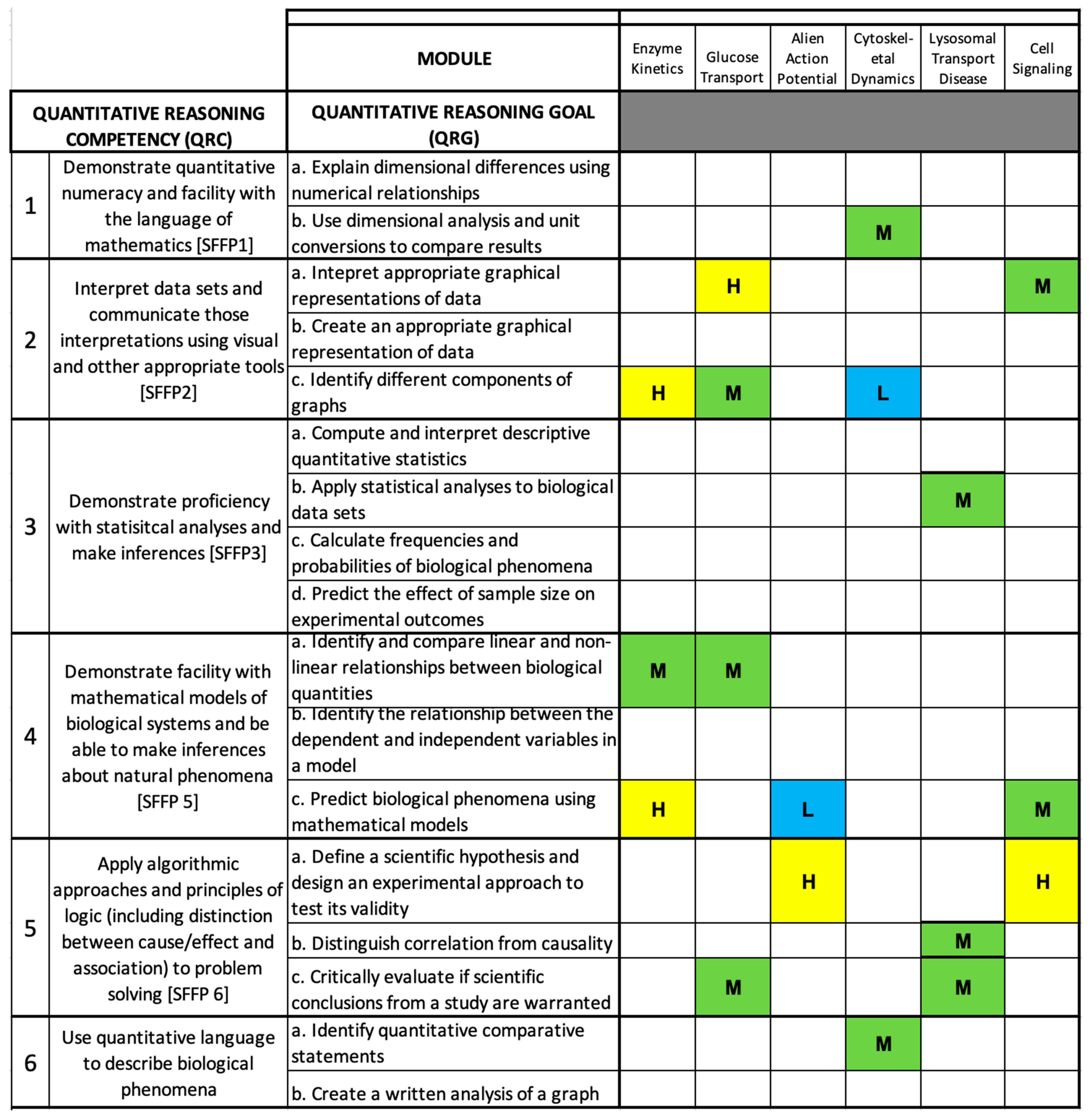
Figure 1 illustrates the alignment of each module to the QRC-QRG framework.
Six modules were created for the Cell Biology course covering a wide range of topics and quantitative reasoning competencies (QRCs; see
Table 1 and
Table 2). The first five QRCs were selected from the Scientific Foundations for Future Physicians (SFFP;
AAMC-HHMI Committee, 2009) and the sixth was adapted from
Ruscetti et al. (
2018). These QRCs were chosen because biology courses are foundational for medical and other STEM careers, and these courses tend to have less emphasis on quantitative reasoning. The rows in
Figure 1 list the QRCs, along with the associated quantitative goals (QRGs). The columns in the figure list each module developed for the course. Boxes at the intersection of a module and a QRG are colored by the level of difficulty as assessed by the math faculty team. Boxes that are not colored were not assessed in the module, or were addressed in optional qualitative questions. Although not described here, modules were also developed for the other introductory biology and genetics courses that covered other competencies and at different levels of difficulty, with scaffolding from the first course onward. Since the cell biology course is taught as the last course of the sequence of core biology courses, we chose more challenging QRCs for these modules and asked more challenging questions within the QRCs than in other courses. QRGs 2C and 4C are addressed in multiple Cell Biology modules.
2.1.3. Module Design
Each module-writing team consisted of (a) biology faculty members from participating institutions that offered Cell Biology; (b) a mathematics faculty member to aid in the preparation and validation of the QR components of each module; and (c) a member from the Faculty Development Team to facilitate module development according to the best practices of evidence-based teaching. For each module topic discussed above, two or more group members collaborated to write the module and then discussed their work with the full team over several weeks or months, depending on the module. Additionally, after the content was completed, each module was reviewed by the Math Team to determine the relative difficulty level of each quantitative assessment question.
The modules across the four core biology courses were prepared using the same base outline format for consistency. This outline consists of the following sections: a module overview description, table of contents, list of QRCs and QRGs and their associated biological learning objectives, details on the target student population, details on module characteristics (e.g., math skills covered, module components included, quantitative skills required), the module itself with solutions to each question, pre-work exercises with solutions, pre-post-assessment questions with solutions, a list of module developers, acknowledgements, and references.
Each module was designed to be implemented in a 50 min session with students working in small groups. The pre-work for each module, to be assigned in advance of the session, was designed in collaboration with the mathematics faculty team member to ensure students reviewed key math skills covered within the module and was tailored to the math prerequisites of each institution. The pre-work also contained multiple biological concept review questions to prepare students for the module. Students were required to complete the pre-work individually prior to the module implementation.
Each module addressed either two or three different QRCs. Among the QRCs addressed in that module, we assessed two to four QRGs to measure different aspects of the overall competencies. All competencies were assessed in at least one module in one of the four courses of the larger project, but not all competencies were assessed in the modules designed by the Cell Biology team.
2.2. Instrumentation
The study developed two sets of instruments to measure outcomes: module assessments and an end-of-course survey. Additionally, to measure long-term success, cell biology course grades and questions from the biology department global assessment were mapped to QRCs.
Module assessments consisted of pre/post-assessment questions. Two separate multiple-choice questions were written for each QRG being assessed in each module. All assessment questions were reviewed by the mathematics faculty team prior to implementation. Students completed the pre-assessment individually, either at the beginning of the semester or in the class/discussion section before the module was implemented. Students then completed the post-assessment individually during the class/discussion section following the module implementation. Links to selected modules can be found in
Supplementary Materials.
To assess student attitudes toward the QR modules, students were also provided a post-module survey (“Student Assessment Feedback”), that included ratings on a scale of “not at all effective” to “extremely effective” when asked to assess (1) how effective the module was helping them to develop quantitative/analytical skills to address biological phenomena, (2) how effective the module was in improving their ability to use quantitative/analytical skills to address biological phenomena, and (3) how effective the pre-work was in preparing them for the quantitative/analytical work done during the module. Students were also asked open-ended questions about the most effective and least effective aspects of the module, as well as to share any recommendations they would make to improve the module.
After the first semester in which a module was piloted, the team members reviewed the data and student feedback provided to determine the success of the module and if any changes needed to be made to improve the success. The gains in student scores on each question for each goal from pre- to post-assessment were examined, as well as the pre- to post-gains between the two questions assessing each QRG to evaluate reliability and validity between both questions. If poor gains and/or poor reliability/validity were identified, modifications were made in either the module itself to better cover a QRG or the assessment questions to more clearly address the goal. The modified modules/questions were then re-examined after the next implementation to identify if improvements occurred.
To capture longitudinal growth, students in the study took a global assessment at the start of their first introductory biology course and again in a senior-level course. The assessment incorporates both overarching departmental learning goals, including the ability to use QR to solve biological problems, as well as concepts from the core Biology courses. In this study, students at all four participating community colleges and direct entries to the four-year institution took the assessment at the start of their first introductory Biology course during the length of this project. Only students who completed at least one of a subset of small, 400-level biology classes at the four-year institution took the final assessment.
2.3. Implementation
At the community college (CC) that regularly offered Cell Biology, all modules were implemented by the same instructor. Except for Fall 2020 and Spring 2021, the modules were implemented at that CC during a 50 min face-to-face lecture class period. Due to the limitations in place during the COVID-19 pandemic, the modules conducted at that CC during Fall 2020 and Spring 2021 were implemented as online group projects where time spent on the module was limited by the deadline of submission. At the four-year institution, the modules were implemented during 50 min in-person discussion periods taught by teaching assistants (TAs). All TAs were trained and provided implementation instructions by an instructor. Assessments were completed electronically on students’ laptops while being proctored.
Module implementation and data collection occurred primarily at one community college and the four-year medium-sized public research University from Spring 2021 to Spring 2023. At both institutions, Cell Biology was primarily taken by sophomores or first-semester juniors, and those students were required to have completed pre-calculus prior to taking the course, providing a basis of baseline equivalence in quantitative skills for students in our study. Each module was implemented in two to five separate semesters, depending on when the module development was completed. The Enzyme Kinetics module was piloted at a second community college during the Fall 2019 and Spring 2020 semesters. After the Spring 2020 semester, the second community college did not consistently offer the Cell Biology course, so they did not participate in the implementation of these modules after this time.
2.4. Participants
Participants were recruited from Cell Biology courses at each institution by presenting an IRB-approved informed (default) consent letter that offered students the opportunity to actively decline involvement. The total number of students varied by semester and institution; community college sections of Cell Biology contained 5 to 24 students, and the four-year institution sections contained 204 to 301 students. While all students present in class participated in each module, students could opt out of having their data included in the research study, although this was rare. Students who completed modules worked in groups of three to six, depending on class size.
Due to the class size differences between institutions, the majority of students who completed Cell Biology modules were students at the four-year institution. However, between 20 and 30% of Biology majors at the four-year institution entered the program as transfer students. Students were classified as either direct entry or transfer students for comparative data analyses. A total of 154 transfer students completed at least one module at the four-year institution. The gender demographics of the study population were 63% female, 33% male, and 4% other. Students’ race representation was the following: 34% Asian, 26% Black, 23% White, 10% Hispanic, 6% Two or More Races, and <1% American Indian. The vast majority of student participants (95%) earned a passing final grade in their Cell Biology course; the other 5% of participants earned a D, F, or W (withdrawal). Most students (84%) were born in the year 2000 or later, placing them in the demographic range of traditionally aged college students. At the end of their Cell Biology course term, 76% of study participants had a cumulative GPA of 3.0 or higher, 22% of participants’ GPAs fell in the range of 2.0–2.99, and 2% of students finished the term with a cumulative GPA less than 2.0.
This project was completed under IRB Y19WL26157 issued by the IRB committee at the four-year institution. As part of the project, a Memorandum of Understanding between the four-year institution and the community colleges was developed to facilitate data sharing.
2.5. Analysis of Measures
Item Response Theory (IRT) analyses were conducted using the two-parameter logistic (2PL) model to determine the degree to which the discrimination and difficulty parameters for each item were consistent with a latent ability interpretation (
Embretson & Reise, 2000). Preliminary analyses indicated instability in the estimation of the guessing parameter, consistent with findings regarding the three-parameter logistic model (
de Ayala, 2009). Given the sample sizes and focus on item discrimination and instructional sensitivity, the two-parameter model was deemed preferable.
Confirmatory factor analysis (CFA) was used to evaluate the internal structure of the assessment. Standardized factor loadings were interpreted as indicators of the strength of the relationship between items and the latent ability construct, providing evidence regarding the coherence of the measurement model (
Kline, 2016). Model fit was analyzed with the Root Mean Square Error of Approximation (RMSEA), and the structural integrity of the latent factor was assessed with the proportion of variance explained. Because data were dichotomous, the Kuder-Richardson Formula 20 (KR-20) was used to measure internal consistency.
2.6. Analytic Methods
Prior to analyses, data entries were deleted for those students who declined study participation or who were under the age of 18 at the time of in-class assessment. In cases of duplicated responses, only students’ first complete responses were included. Student learning assessment data were converted to ones and zeros for correct and incorrect responses, respectively. The data sets contain response entries from the Fall 2021 through Spring 2023 semesters. First, summary data were assessed for normal distribution. Nearly all data sets did not meet the criteria for normal Gaussian distribution according to both the Shapiro–Wilk and Kolmogorov–Smirnov tests; therefore, non-parametric tests were applied for analytic techniques that assume normality. The independent samples Kruskal–Wallis test was used to examine differences across gender and ethnicity groups. Spearman’s rho was used to examine correlations.
Descriptive statistics (mean, SD) were computed for each module quantitative reasoning goal (QRG). Hedges’ g was used to estimate the standardized mean difference effect size in QRG between direct entry and transfer students. For the student feedback survey, the percentage of favorable and poor ratings was compared for each question across each of the six cell biology modules.
Data from three student assessment feedback questions were converted to a 5-point Likert scale such that: 1 = Not at All Effective, 2 = Slightly Effective, 3 = Moderately Effective, 4 = Very Effective, 5 = Extremely Effective. A multivariate analysis of variance (MANOVA) was conducted to determine differences in student feedback between the six modules.
3. Results
The study addressed three research questions regarding the inclusion of quantitative reasoning modules in an undergraduate cell biology course. The results provide an analysis of QR ability through module-specific outcomes (RQ1), relationships between cell biology course grade and QRG outcomes for direct entry and transfer students (RQ2), and student attitudes toward QR through end-of-course survey results (RQ3).
3.1. IRT and CFA Analyses
The IRT 2PL model estimated the discrimination and difficulty for each item. Following common conventions, discrimination was interpreted as moderate if the parameter was between 0.7 and 1.5, and high if greater than 1.5. Difficulty was interpreted relative to the latent ability scale and was considered easy if the parameter was negative, average if centered near 0, and difficult if positive. The CFA analyses estimated standardized factor loadings for each item on a single latent ability factor. Loadings of at least 0.3 were considered minimal but interpretable, moderate between 0.3 and 0.5, and strong if greater than 0.5.
Each module assessment was designed to measure specific cell biology content knowledge, and items within each measure focused on a particular QRG (see
Table 2). Content knowledge and QRGs are inherently intertwined. As a result, some items reflected both content-specific ability and reasoning-related variance. The analyses indicated a dominant latent factor within each content-based measure, supporting the use of unidimensional models, while acknowledging the presence of a secondary structure associated with quantitative reasoning goals. The absolute fit index, Root Mean Square Error of Approximation (RMSEA) and the proportion of variance explained were used to support the interpretation of a dominant latent factor with a secondary reasoning structure (
Table 3). The proportion of variance explained by the single latent (dominant content) factor ranged from 0.24 to 0.36. In brief, for dichotomously scored scales such as these assessments, these values strongly support the presence of a dominant latent trait. Because these items were intentionally designed to integrate QRGs, the remaining variance was interpreted as appropriately reflecting this secondary reasoning structure rather than random measurement error. This interpretation is further supported by the RMSEA values, all of which were below the 0.08 threshold, indicating excellent structural fit to a single latent factor.
KR-20 is a measure of internal consistency for scales consisting of dichotomous variables. While the KR-20 values shown in
Table 3 are on the lower side for a strictly unidimensional scale, this outcome is common to subscales that are brief and multifaceted, such as the module assessments in the present study (
Cortina, 1993;
Schmitt, 1996).
For example, the Glucose Transport module assessment had eight items in total. Seven of the items demonstrated moderate or strong discrimination and factor loadings. Difficulty for these seven items ranged from −2.2 to 2.6, demonstrating fairly broad coverage of ability levels. Only one item showed weak discrimination and a low factor loading. This item had a negative difficulty parameter (very easy). Because of the intentional incorporation of QRGs within the assessment, this pattern was interpreted as consistent with a dominant latent factor for the content-based measure in the presence of the secondary structure associated with the QRGs.
Similar patterns were observed for the other five modules. For Enzyme Kinetics, five of the six items demonstrated moderate or strong discrimination, and all six items’ factor loadings were moderate or strong. For Action Potential, three of the four items demonstrated moderate or strong discrimination and factor loadings. For Cytoskeletal Dynamics, four of the six items in each measure showed moderate or strong discrimination, and five items showed moderate or strong factor loadings. For Lysosomal Transport and Cell Signaling, three of the six items in each measure had moderate or strong discrimination, and four items had at least moderate factor loadings.
3.2. Module Assessment Outcomes
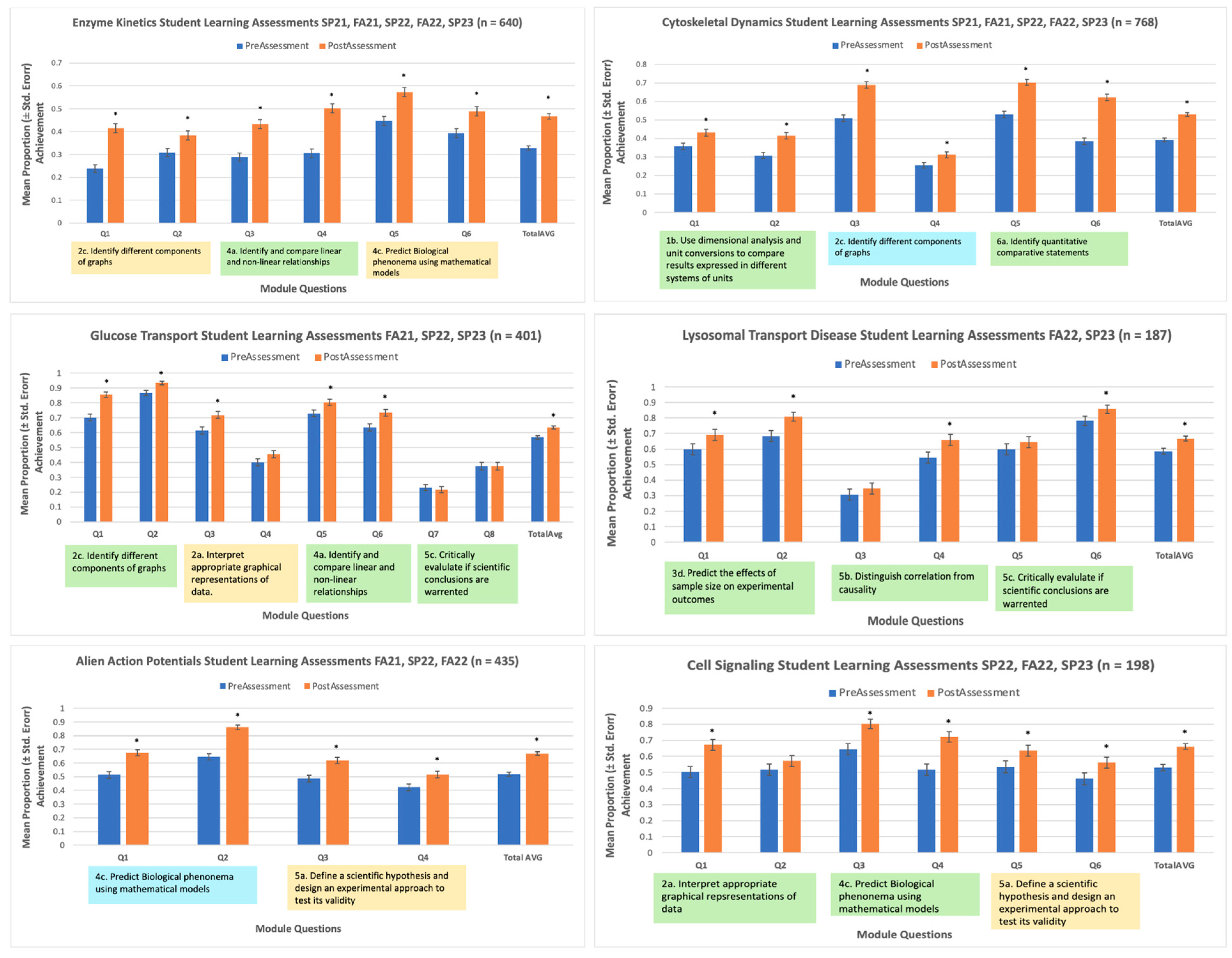
To address Research Question 1, whether exposure to QR modules embedded in cell biology content increases student achievement,
Table 4 provides descriptive statistics for each module assessment. The earlier-developed modules, like the Enzyme Kinetics and Cytoskeleton modules, had larger sample sizes because they were able to be assessed over more semesters. Students demonstrated statistically significant total growth on all modules with small and medium effect sizes, as demonstrated by Hedges’ g. Taken together with the careful design of the assessments to align with the module content, the significant growth from pre to post was interpreted as demonstrating instructional sensitivity (
Naumann et al., 2016).
3.3. Biology Global Assessment Outcomes
In addition to the module-specific assessment tests, students also took a global assessment test at the beginning of their first introductory Biology course, either at the community college or the 4-year institution, and again in a senior-level course at the 4-year institution to capture longitudinal growth in, among other topics, their quantitative reasoning skills. Specifically, many of the QRGs from within this project are assessed on this instrument. Thus, to some degree, this assessment can be used to compare the quantitative skills of students from the beginning until the end of their college biology careers, as well as across direct entry and transfer students. Neither gender nor ethnicity differences significantly predicted students’ final Cell Biology course grade (Independent-Samples Kruskal–Wallis tests: gender p = 0.259, ethnicity p = 0.205), end-of-term cumulative GPA (gender p = 0.713, ethnicity p = 0.121), or outgoing (end-of-degree) Global Assessment Score (gender p = 0.233, ethnicity p = 0.065).
Using the number of modules taken as a whole in any of the four core biology courses with quantitative modules developed within the scope of this project, students exposed to more modules had a higher outgoing global assessment score (ρ = 0.550, p = 0.018, n = 18). This was not the case for direct entry students, for which there was no statistically significant effect of “dose” of module exposure on global assessment score (ρ = −0.262, p = 0.264, n = 20).
3.4. Quantitative Reasoning Goal Outcomes
As part of Research Question 1, growth in items specific to each QRG was analyzed (
Figure 2). QRGs 2C and 4C are each included in three of the six Cell Biology modules; QRG 2C is covered in Enzyme Kinetics, Glucose Transport and Cytoskeletal Dynamics, and QRG 4C is covered in Enzyme Kinetics, Cell Signaling and Alien Action Potentials.
Figure 2 shows that students showed significant gains from pre- to post-assessment in most items.
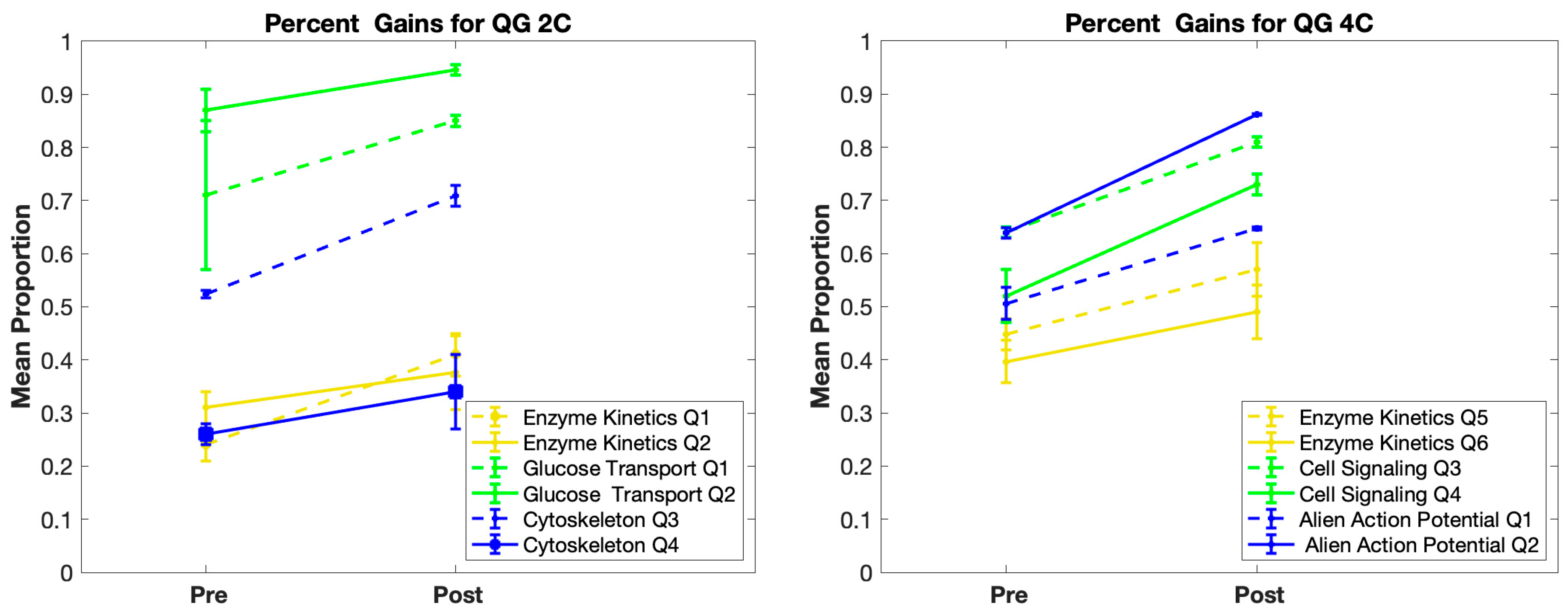
Figure 3 provides two QRG examples of student pre-post change across modules by QRG difficulty level. This figure shows that across modules, QRGs increased from pre- to post-assessment.
3.5. Transfer Versus Direct Entry Student Performance
To address Research Question 2, students who transferred from a community college to a four-year institution were identified. These transfer students’ scores on QRG items, the outgoing global assessment, and cell biology course grade were compared to the scores of direct entry students (
Table 5).
No significant differences were found between direct entry and transfer students on the overall QRG score. While direct entry students scored better on QRG 1B and QRG 5A, there were no significant differences for any other QRG. The Outgoing Global Assessment and Cell Biology course grades are two distal measures of achievement. Direct entry students outperformed transfer students on each of these, showing a significant moderate effect size (
Table 5).
To explore the differences between direct entry and transfer students more deeply, a comparison group was created of direct entry and transfer students who took the Cell Biology course without the quantitative reasoning modules. The treatment semesters were Spring 2021, Fall 2021, Spring 2022, Fall 2022, and Spring 2023. The comparison group consisted of three semesters: one before the treatment, Fall 2020 and two after the treatment, Fall 2023 and Spring 2024. To determine comparability, three placement scores used by the four-year institution were analyzed: SAT Mathematics, SAT Reading-Writing, and ALEKS Placement, Preparation, and Learning (PPL) Mathematics Assessment. The ALEKS Mathematics Exam scores are reported on a 5-point ordinal scale. The distributions were not significantly different between the treatment and comparison semesters,
χ2 (df = 4) = 7.500,
p = 0.112. SAT Mathematics scores were reported in 50-point ranges from 400 to 800, and the distribution of scores was not significantly different,
χ2 (df = 7) = 4.388,
p = 0.734. SAT Reading-Writing scores ranged from 350 to 800, and the distribution of scores was also not significant,
χ2 (df = 8) = 7.660,
p = 0.467. In addition to placement exams, course grades were compared among direct entry students and transfer students, who both were or were not exposed to the modules. For both of these comparisons, the standardized mean difference effect size was non-significant (
Table 6). The two groups were therefore considered to be a reasonable comparison of course grades between direct entry and transfer students.
In the comparison group, transfer student course grades were significantly different from those for direct entry students, Hedges’
g = −0.469, nearly half a standard deviation lower (
Table 6). A nearly identical relationship was found in the treatment group, where transfer student course grades were nearly half a standard deviation lower than direct entry student grades (Hedges’
g = −0.474,
Table 6). The comparability of these two effect sizes shows that module exposure in Cell Biology did not have a significant effect on course grade.
Notably, for both transfer (Spearman’s rho test, ρ = 0.233, p = 0.004, n = 148) and direct entry (ρ = 0.208, p = 0.005, n = 178) students, the total number of quantitative modules that these students were exposed to was significantly, positively correlated with end-of-term cumulative GPA. Likewise, the results of a linear regression indicated that the predictor (number of modules exposed to) explained 3% of the variation in cumulative GPA (F(1, 146) = 4.584, p = 0.034) among transfer students, and explained 4.4% the variation in that of direct entry students (F(1, 176) = 8.1342, p = 0.005).
In conclusion, transfer students scored comparably with direct entry students on all but two QRGs in the module assessments (
Table 5). This result showed improvement from a previous study, in which transfer students scored significantly lower than direct entry students on all QRGs in the module assessments (
Hoffman et al., 2017). Taken together, the results indicate that the addition of QRG modules to the community college courses had a small but noticeable effect on some measures.
3.6. Student Attitudes Feedback Survey
Research Question 3 was addressed by the Student Assessment Feedback survey. After each module, students were given a survey that included rating modules for effectiveness on a scale of “not at all effective” to “extremely effective” in helping them to develop, improve or apply quantitative/analytical skills to address biological phenomena. Students also rated how effective the pre-work was in preparing them for the quantitative/analytical work done during the module. Since the modules were designed and implemented over varied timelines, the present analysis focuses on student feedback from the most recent implementation (semester) of each respective module. The purpose of such an approach was to capture students’ impressions of the current, working version of each module, as many modules underwent design iterations over the span of the project.
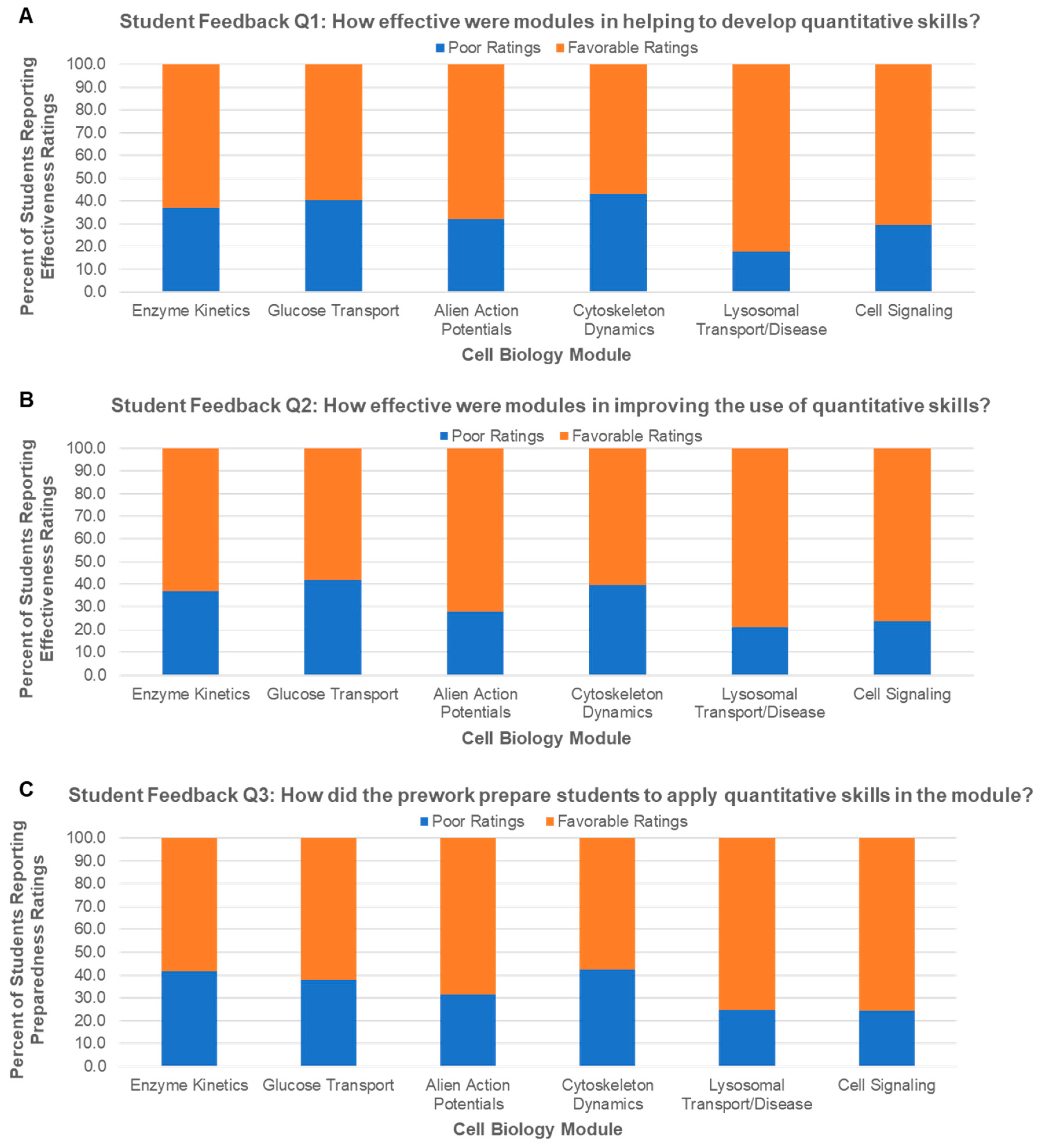
The majority of students selected the “positive” rating categories (the sum of Moderately, Very, and Extremely Effective) on the three multiple-choice feedback questions for all six modules (56.8–82.1%) (
Figure 4). A greater percentage of student respondents selected positive ratings on the Cell Signaling (70.6–76.3%) and Lysosomal Transport Disease (75.4–82.1%) modules, in comparison to the other four modules (56.8–72.3%); this pattern was consistent across all three feedback items. Cell Signaling and Lysosomal Transport Disease were also the most recently developed modules in the set. Similar rating results were seen for both direct entry and transfer students for all three questions.
Table 7 provides descriptive statistics for each SF question across all semesters. A MANOVA was conducted to assess differences in student perceptions of module effectiveness.
Box’s Test of Equality of Covariance Matrices was significant (
M = 70.7,
p < 0.001). Pillai’s Trace (
V) was used as the multivariate statistic because it is considered the most robust against Type I error inflation when statistical assumptions are violated, such as nonnormality or homogeneity of covariance matrices (
Olson, 1976). Multivariate differences were found between modules on the three student feedback questions,
V = 0.039,
F(15, 7512) = 6.523,
p < 0.001.
The test of between-subjects effects showed significant differences between modules for all three variables: SF1, F(5, 2504) = 11.839, p < 0.001; SF2, F(5, 2504) = 12.685, p < 0.001; and SF3, F(5, 2504) = 15.911, p < 0.001.
Levene’s Test was conducted for each of the three dependent variables to test for violations of the assumption of homogeneity of variance. All three variables were significant (
p < 0.001 for all three variables), indicating that equal variances cannot be assumed. Post Hoc pairwise comparisons between modules were therefore conducted using the Games-Howell procedure (
Games & Howell, 1976), shown in
Table 8.
Enzyme Kinetics, the earliest module developed and the first one implemented each semester, was rated by students consistently lower than the other modules for all three questions. Conversely, Lysosomes, the latest module developed, was rated by students higher than Glucose Transport, Cytoskeleton, Enzyme Kinetics, and Alien Action Potentials for SF3 and higher than Cytoskeleton for SF1.
4. Discussion
The present study investigated the effects of quantitative reasoning (QR) modules in a Cell Biology course on student outcomes. The three research questions focused on the effects of these modules on quantitative reasoning skills, on the effect of introducing QR modules at a community college for transfer students, and on student attitudes toward quantitative reasoning.
4.1. Overall Growth on Quantitative Reasoning Competencies
Regarding Research Question 1, our results show that QR modules in a Cell Biology course can increase students’ QR proficiency. This is addressed by considering the pre-post assessment results for each module and across modules. Students showed gains across each of the six modules created and showed significant total growth in QRCs assessed in all modules (
Figure 2), as well as on the majority of individual assessment questions. Three of the modules demonstrated statistically significant pre-post gains for each assessment question. Because the modules and their validated assessment questions are based on the quantitative competencies outlined by the AAMC-HHMI SFFP (
AAMC-HHMI Committee, 2009), we can say that the modules help our students achieve these SFFP quantitative competencies.
Across and within modules, assessment question difficulty varied, a feature that we recommend to others who use or adapt our modules or create similar ones. The range of difficulty allows for a wider distribution of student performance, and more difficult questions, in particular, have value in leaving more room for gain, that is, avoiding the ceiling effect. Including a more- and less-challenging question within the same QRC seems to have particular value. For example, in the Cell Signaling module, question 4 is more challenging than its “partner” question, question 3; the same is true of question 1 in the Alien Action Potentials module relative to question 2, which tests the same competency. Having two questions per competency allows the assessment to “sample” different levels of the skill distribution, and may also allow a well-written question to detect an effect that cannot be seen with a poorly written one (and perhaps point to the need to revise the second question of the set). We anticipated that several competencies would be inherently challenging, such as distinguishing between causation and correlation (5B) and evaluating if conclusions from a data set are warranted (5C). The students’ lack of proficiency in these areas was therefore not surprising, given that they only practiced these skills in two of the modules.
4.2. Assessing Competencies Across Modules
One of our goals in this process across the entire four-course project was to follow the idea of the “learning spiral,” asking students about some of the same competencies at a higher level in this Cell Biology course compared to the earlier three courses. In some cases, specific quantitative goals were able to be addressed by multiple modules. Although the current work includes only data from Cell Biology modules, a range of difficulty levels for each QRC was still achieved even within the modules for this course (
Figure 3). However, this range of difficulty does not fully match the predicted difficulty level of the questions. Interestingly, the blue lines in
Figure 3, which correspond to questions that faculty assessed to be the least difficult, appeared both above and below lines corresponding to questions with moderate to high levels of difficulty, potentially indicating a degree of expert blind spot in evaluating the questions for difficulty level.
We saw similar gains on all the questions assessed for these QRGs (
Figure 3), showing that there remained room for growth on these competencies even in the fourth course of the sequence. Additionally, the questions appeared to be appropriately matched to the range of student skills, being neither so difficult that they could not demonstrate improvement on that competency as a result of module exposure nor so easy that they could demonstrate competency before completing the module. We credit this “just right” level of questioning with a robust process of question writing, which included training for all consortium members on good question writing, embedding of a faculty development expert within each module-writing team, and evaluation of all modules and assessment questions by the consortium’s Math Team before implementation. As noted above, we were also willing and able to revise and improve assessment questions with poor initial discrimination or validity.
4.3. Direct Entry Versus Transfer Students
Research Question 2 asked: Does implementation of QR modules improve transfer student success? The overall pre-post gain for direct entry and transfer students was not significantly different (
Table 4), though both pre- and post-test scores were higher for direct entry students. This is a positive result compared to that seen in
Hoffman et al. (
2017), in which transfer students did not show gains on the modules. One potential explanation for this difference is that the prior work examined students in a freshman-level course, and here we assessed more academically mature students in the fourth course of the core sequence, who may have been exposed to quantitative modules multiple times over their course progression.
Exposure to modules did not result in a higher grade in the Cell Biology course regardless of direct or transfer student status (
Table 5). However, very little of the course grade was determined directly by the modules, so such an impact was not expected. Although there has been some resistance to adding quantitative modules in a biology course, as it can take away from time for learning content, the results of this study suggest otherwise. A comparison to students who were not exposed to the modules showed no significant differences in course grade, whether direct entry or transfer, indicating that the inclusion of quantitative reasoning modules did not detract from learning cell biology.
Because “leveling the playing field” for transfer students was a major target of this intervention due to the results seen in the previous work (
Hoffman et al., 2017), this result represents a potential success of the modules in giving the transfer students the experiences they needed to achieve the quantitative standard of a Biology course at the four-year institution. Putting this work in a broader context, we might say that, like every other active-learning intervention from clickers to flipped classrooms, the students who benefit the most from our modules are those who have had less opportunity for robust preparation in the skills assessed.
4.4. A Dose Effect?
Both direct entry students and transfer students (those who had at least one semester at a community college before attending the four-year institution) who were exposed to more QR modules had a higher end-of-term cumulative GPA. Interestingly, transfer students who were exposed to more QR modules had a higher outgoing global assessment score. Although there are many possible co-varying factors that may have contributed to these results, it is not immediately obvious why any of them would have specifically co-varied with module exposure, leaving quantitative module exposure as a plausible contributor to increased academic performance. Any intervention that increases transfer student performance has the potential to promote equity in higher education, due to the disparities that exist in transfer versus direct entry student populations (e.g.,
Long & Kurlaender, 2009).
4.5. Positive Student Attitudes
To address student attitudes toward quantitative reasoning (Research Question 3), we analyzed the results from the Student Assessment Feedback survey. Students rated all six of our modules positively on average, indicating that they felt they were effective overall in improving and developing their QRCs, feelings that were supported by the performance data. We also know that activities that require students to actively think and work in class produce more learning and better overall class performance in general (e.g.,
Freeman et al., 2014), even when the student perception is opposite (
Deslauriers et al., 2019), and especially when, as was done here, they are required to prepare for class (e.g.,
Gross et al., 2015,
Moravec et al., 2010). An important consideration in student acceptance of modules, or any academic materials, is continuous improvement; here, we saw that the modules developed later in the process produced higher ratings than the earlier ones, suggesting that module constructors can improve over time. Faculty members in biology are often concerned that students fear or dislike quantitative work. The results from the present study suggest, however, that student perceptions are quite positive toward quantitative reasoning.
5. Conclusions
Our results demonstrate that quantitative reasoning (QR) modules embedded in an undergraduate Cell Biology course produce significant learning gains for both direct entry and transfer students. These findings extend the body of evidence that integrating mathematics and biology within the same course improves students’ quantitative skills (
Depelteau et al., 2010;
Thompson et al., 2013;
Aikens et al., 2021). Importantly, student attitudes toward the modules were also consistently positive, suggesting that fears about student resistance to quantitative work in biology (
Thompson et al., 2013) may be overstated, particularly when modules are carefully designed and iteratively improved.
A central goal of this work was to address the transfer student performance gap identified by
Hoffman et al. (
2017), in which transfer students showed significantly lower gains than direct entry students on quantitative modules. In the present study, transfer students achieved comparable overall gains to direct entry students. We attribute this in part to the multi-institutional design of our consortium, which made modules available to students at community colleges prior to transfer, thereby addressing a construct confound present in the earlier work. Our findings address prior characterizations of the challenges facing community college transfer students in STEM (
National Academies of Sciences, Engineering, and Medicine, 2016;
Wang, 2020;
Van Noy & Zeidenberg, 2014) by demonstrating one concrete, replicable intervention that can help narrow the gap. Additionally, both transfer and direct entry students exposed to a greater number of QR modules across the four-course core sequence had higher end-of-term cumulative GPAs, and for transfer students, more module exposure was also associated with higher outgoing global assessment scores, a dose–response relationship that suggests cumulative quantitative skill-building may confer lasting academic benefit.
Future work should examine whether extending QR module implementation to additional, especially upper-division, biology courses amplifies this dose effect; evaluate the implementation of QR modules in contexts and with populations that differ from those in the present study; and explore the potential longer-term effects of positive student attitudes toward quantitative reasoning on students’ subsequent course choices and professional trajectories.





 ,
,