1. Introduction
In contemporary European secondary education contexts, English language teaching (ELT) has increasingly consolidated its role as a lingua franca, shaping educational systems and curricular frameworks across diverse contexts. Therefore, contemporary language education faces a seemingly paradoxical reality: on the one hand, it is of particular importance in an increasingly globalised world; on the other hand, it is precisely within this context that it is expected to respond to concrete, situated realities. This tension between the global and the local, often conceptualised as glocalisation (
Robertson, 1995), shapes one of the central paradigms of language education in the coming decades: addressing the heterogeneity of contexts and valuing their singularities through pedagogical discourse that promotes inclusion and equity in a coherent and structured manner on a global scale. There is, consequently, a pressing need for a pedagogy that is aligned with local idiosyncrasies while simultaneously taking into account global realities and challenges.
Within secondary education, this tension between global relevance and local meaningfulness has been increasingly highlighted in educational research, particularly within discussions surrounding contextualised learning and student engagement (
Hiver et al., 2021). Traditional classroom-based EFL instructions, while effective in developing certain linguistic competencies, may limit opportunities for authentic language use and reduce learners’ ability to connect language with real-world situations. As a result, there is a growing need to explore pedagogical approaches that bridge formal curricular requirements with locally grounded learning experiences (
Ellis, 2003).
In the Portuguese upper-secondary context, English functions as a compulsory foreign language subject strongly shaped by national curricular goals and assessment requirements. While these frameworks promote communicative competence and intercultural awareness, classroom practices often remain constrained by textbook-centred instruction and examination-oriented approaches. This context creates a pedagogical tension between standardised curricular demands and the need for more situated, meaningful, and learner-centred language experiences.
The thematic and curricular alignment underpinning this study was designed to meet specific criteria, chief among which was its intersection with the concept of glocalisation, effectively synthesising the previously discussed realities. The selection of an ecological theme was grounded in two fundamental premises. On the one hand, it reflects a robust local commitment to environmental policy and sustainability, as evidenced by the proliferation of over a dozen dedicated associations, including an entity specifically focused on promoting environmental education and developing non-formal learning modules. On the other hand, ecology remains a pillar of the English language curricula in Portugal, explicitly addressed across multiple educational levels. Consequently, this theme functions as a bridge between macro and micro scenarios and, as a consequence, presents several challenges.
In this regard, Experiential Learning Theory (
Kolb, 1984) offers a valuable framework for addressing this challenge by emphasising learning as a process grounded in experience, reflection, and active engagement. It positions experience as the dynamo and driving force of the learning process, an essential catalyst for the cognitive mechanisms that enable knowledge construction. Complementing this perspective, the Critical Pedagogy of Place (
Gruenewald, 2004) advocates for educational practices that reconnect learners with their local environments, integrating ecological awareness and sociocultural context into the learning process. Together, these frameworks provide a foundation for rethinking EFL instruction beyond the traditional classroom, highlighting the potential of place-based and experiential approaches to foster more meaningful learning.
In parallel, research on outdoor and non-formal education has demonstrated the pedagogical value of learning environments that extend beyond school walls. It was on this understanding that the present study sought to immerse students in a scenario capable of providing concrete experience, where local issues were framed and enriched by global perspectives. This form of learning is therefore characterised by a degree of informality, since, according to the criteria of
Johnson and Majewska (
2022), it constitutes an educational process that is institutionalised while promoting indirect teaching practices. Although it can take place within institutional settings, its relevance lies in its capacity to complement the formal curriculum by centring learning around the learner’s needs and interests.
A key contribution to the structuring of outdoor learning experiences is provided by
Orion’s (
1993) model, which highlights the importance of a coherent sequence comprising preparatory work, guided field experience, and reflective consolidation. This structured approach helps ensure that outdoor learning is pedagogically meaningful rather than merely experiential, supporting both cognitive and affective dimensions of learning.
Against this background, a significant gap emerges in the literature: while experiential and place-based learning have been widely explored in environmental and interdisciplinary education, their systematic application within EFL curricular design (especially those aligned with national educational frameworks) remains underdeveloped. This gap is particularly relevant in contexts where curriculum standardisation may constrain pedagogical innovation, reducing opportunities to connect language learning with local realities.
Addressing this gap, the present study addresses how a place-based and experiential approach can contribute to reframing the secondary EFL curriculum through the integration of outdoor and community-based practices. Specifically, the study aims to: (a) explore the pedagogical potential of an interdisciplinary and non-formal approach to EFL instruction; (b) design and implement a locally grounded curricular module aligned with national requirements; and (c) analyse how experiential outdoor practices can enrich the formal English curriculum.
Table 1 details all the objectives regarding this didactic intervention.
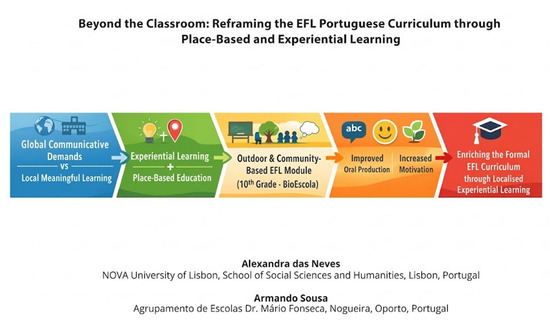
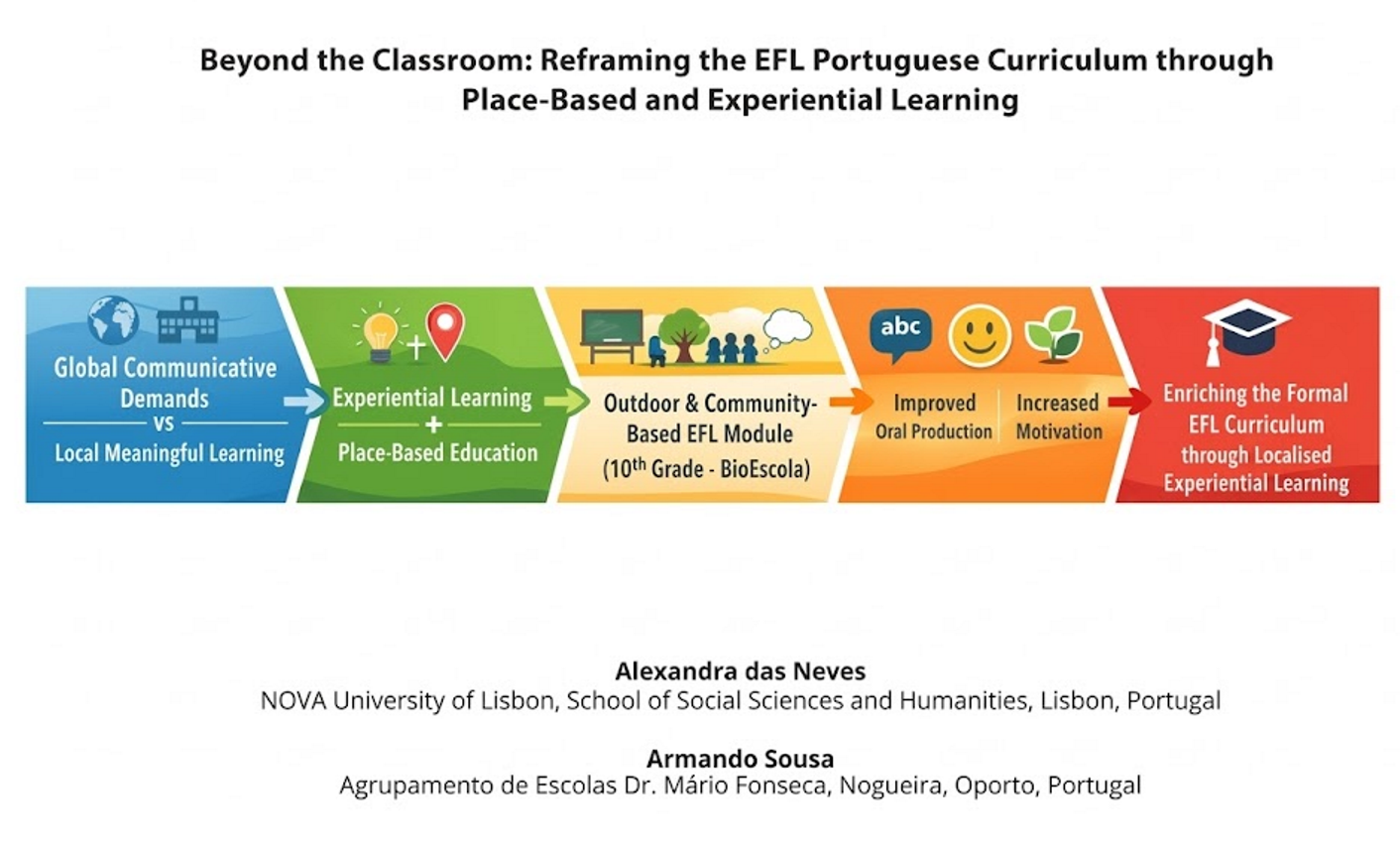
By focusing on a qualitative intervention conducted with 10th-grade students in collaboration with a local environmental education initiative, this study seeks to contribute to ongoing discussions on curriculum innovation, student engagement, and the role of context in language learning. Ultimately, it argues that integrating experiential and place-based practices into EFL education can help bridge the gap between global communicative demands and locally meaningful learning.
2. Materials and Methods
2.1. Research Design
This study adopts a qualitative, exploratory design aimed at examining how a place-based and experiential approach can inform EFL teaching practices in a secondary education context. The qualitative orientation reflects the study’s focus on understanding students’ experiences, interactions, and perceptions within a situated learning environment. In addition, the investigation incorporates descriptive quantitative elements derived from questionnaire data to provide an overview of students’ engagement and responses to the intervention. These quantitative data serve a complementary role and are not intended for inferential analysis. Considering its specifical features, integrating outdoor education and place-based pedagogies within secondary English Language Teaching, this study is fundamentally exploratory (
Stebbins, 2001), aiming to provide baseline insights for subsequent inquiries. Concurrently, the research incorporates explanatory dimensions (
Creswell, 2014) by investigating the causal intersections between the pedagogical framework and the students’ linguistic, socio-emotional, and ecological growth.
An interpretative lens was adopted (
Denzin & Lincoln, 2018), facilitating a granular analysis of participants’ interactions within a situated educational environment. Aligned with its critical and ecological orientation, the study is further grounded in critical pedagogy (
Freire, 1987), which views education as a socially embedded practice possessing transformative agency.
2.2. Context and Participants
The research was conducted in a Portuguese public secondary school, involving a cohort of 20 students (aged 15–16) enrolled in a 10th-grade Science and Technology track. The intervention was integrated into the regular English language curriculum, following the national educational guidelines for upper secondary education. A central feature of this study was the synergy between formal schooling and BioEscola, a municipal environmental education programme specialising in non-formal learning modules. This partnership facilitated the integration of outdoor and community-based learning into the academic framework, aligning language acquisition with sustainability themes and authentic, real-world contexts grounded in the local environment.
The pedagogical and research team adopted a collaborative structure, comprising the primary English teacher, a trainee teacher responsible for project coordination, and two additional trainee teachers who supported the outdoor sessions. Furthermore, a multidisciplinary team from BioEscola played a pivotal role in the intervention. These monitors were actively engaged in the design and execution of the pedagogical activities, as well as in the systematic collection of data through structured observation, ensuring a multifaceted approach to the study’s implementation.
Ethical procedures were followed throughout the study. Participation was voluntary, and informed consent was obtained from students and their legal guardians prior to data collection. Participants were informed about the aims of the study, the use of anonymised data, and their right to withdraw at any stage. All data were treated confidentially and used exclusively for research purposes. The study was conducted with the approval of the school administration and in collaboration with the BioEscola educational team.
2.3. Data Collection
Data were collected through a multi-method approach, including questionnaires, semi-structured interviews, and field notes. This triangulation of instruments aimed to enhance internal consistency and interpretative depth, thereby compensating for the inherent limitations of individual data sources (
Patten, 2007) and strengthening the overall validity of the findings. These tools allowed for a comprehensive understanding of both observable outcomes and the subjective experiences associated with the pedagogical intervention.
The questionnaires were administered to all students and consisted of twenty Likert-scale items and five semi-open questions. It focused on students’ perceptions of language use, collaboration, motivation, and environmental awareness. Given the exploratory nature of the study and the limited sample size, questionnaire data were analysed descriptively, while qualitative responses were used to support insights.
The questionnaire items were designed specifically for the intervention and aligned with the study’s three analytical dimensions: linguistic outcomes, socio-emotional engagement, and ecological awareness. Likert-scale items aimed to capture students’ self-perceptions regarding participation, confidence, collaboration, and contextualised language use.
The semi-structured interviews sought to gain deeper insights into the students’ experiences. These interviews were conducted with four participants. These individuals were purposively selected based on participation profiles identified in the field notes to ensure a diversity of engagement patterns. The selection reflected distinct profiles ranging from high engagement with active oral use of English to lower engagement with minimal linguistic interaction. This sampling strategy aimed to capture a broad spectrum of student perspectives regarding the pedagogical intervention.
The field notes and observation framework were systematically recorded by the teacher-researcher, trainee teachers, and BioEscola monitors throughout both classroom and outdoor activities. To ensure consistency, a specific observation framework was developed and shared with the pedagogical team one month prior to the intervention. This framework utilised two complementary grids: the teachers’ grid, focused on micro-level pedagogical aspects, including group interaction, problem-solving strategies, and specific language use; and the BioEscola monitors’ Grid, provided a macro-level assessment of organisational dynamics, students’ engagement in the ecological features of the intervention, and the overall coherence of the experience, utilising a five-point Likert scale for evaluation.
2.4. Data Analysis
Quantitative questionnaire data were analysed descriptively through mean scores and response tendencies, considering the exploratory nature of the study and the limited sample size. No inferential statistical analysis was conducted.
Qualitative data obtained from semi-structured interviews, open-ended questionnaire responses, and field notes were analysed through thematic analysis (
Braun & Clarke, 2006). Initial coding focused on recurring patterns related to linguistic engagement, collaboration, motivation, and ecological awareness. These codes were subsequently grouped into broader thematic categories aligned with the study’s research objectives.
To strengthen interpretative consistency, observational records from teachers and BioEscola monitors were compared and triangulated with questionnaire and interview data. The analysis prioritised convergence across data sources rather than statistical generalisation.
2.5. Pedagogical Intervention and Design
The intervention was developed through a structured collaboration with BioEscola, a municipal environmental education programme dedicated to fostering scientific literacy and ecological consciousness. This partnership enabled the integration of outdoor, experiential, and gamified elements into a structured pedagogical framework, complementing the formal English curriculum.
The intervention was conceived as a curricular reconfiguration of the 10th-grade unit, Preparing for the Future, maintaining its linguistic objectives, particularly the functional use of contrast clauses, while redefining its thematic and pedagogical orientation. Instead of focusing on individual career paths, the redesigned unit foregrounded collective responsibility and sustainability, positioning language use within socially and ecologically meaningful contexts.
From a design perspective, the intervention was guided by three complementary principles: (1) experiential grounding (
Kolb, 1984): learning tasks were structured around concrete experience, reflection, and active experimentation; (2) place-based relevance (
Gruenewald, 2004): activities were anchored in the local environment, promoting connections between language learning and ecological awareness; (3) cognitive structuring of outdoor learning (
Orion, 1993): the sequence followed a three-phase model (preparation, field experience, reflection) to ensure pedagogical coherence and reduce cognitive overload.
Operationally, the intervention unfolded in three stages:
Preparatory classroom session, where students were introduced to the narrative framework, linguistic focus, and assessment criteria;
Outdoor gamified learning experience, organised as a station-based educational train in a local urban park;
Post-activity reflection session, in which students consolidated their learning through narrative synthesis and metalinguistic reflection.
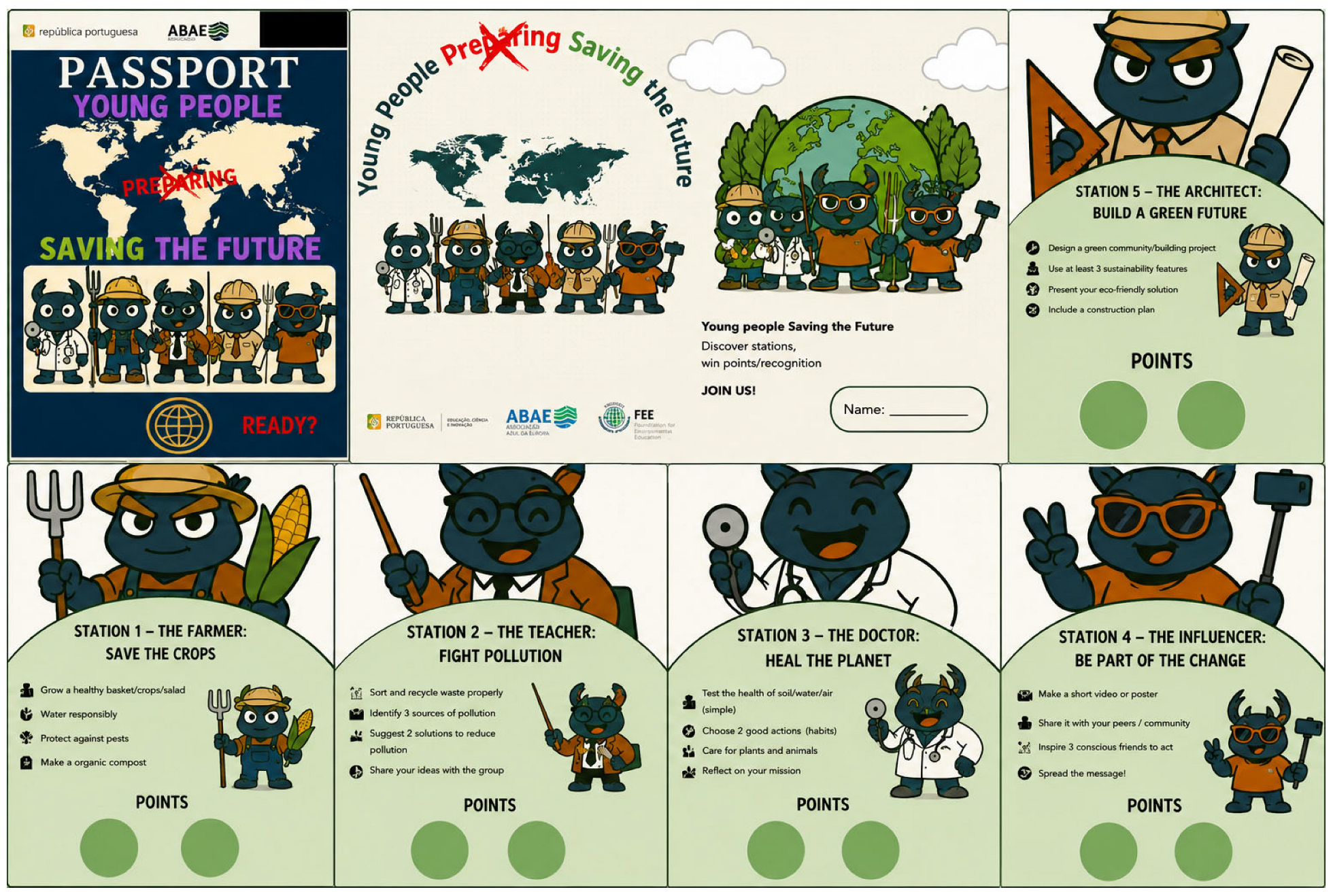
The outdoor component was framed within a dystopian 2045 scenario, in which students assumed the role of agents tasked with addressing biodiversity loss. The activity was organised into five profession-based stations (teacher, doctor, influencer, farmer, architect), each functioning as problem-solving task integrating ecological content with targeted production. Tasks were designed to elicit meaningful language use through goal-oriented interaction, requiring students to negotiate meaning, co-construct responses, and apply linguistic structures in context. Gamification elements, including scoring systems, role-play, and narrative progression, were incorporated not as motivational add-ons, but as structural components guiding engagement and task completion.
Table 1 summarises the structure of the stations, associated tasks, and evaluation criteria.
Overall, the intervention sought to create a pedagogical environment in which language functioned as a mediating tool for action, reflection, and collaboration, thereby aligning experiential learning processes with formal curricular objectives.
Immediate feedback was a central component of the intervention and was operationalised through a combination of visual and verbal mechanisms. Each group received a score (1–3 points, plus possible bonus points) at each station, based on linguistic accuracy, task completion, and ecological relevance. Visual feedback was provided through score stickers and progress tracking (see
Figure 1), enabling students to monitor their performance across tasks. This was complemented by multimodal feedback, including real-time guidance from teachers and BioEscola monitors, supporting both linguistic development and task engagement.
To ensure transparency and continuity, each group used a “group passport” (see
Figure 2), containing instructions, space for responses, and feedback records, which also functioned as a mediating artefact between tasks and reflection.
2.6. Gamification and Engagement in EFL Learning
In experiential and non-formal learning environments, sustaining students’ engagement and participation becomes particularly relevant, especially when traditional assessment structures are reduced or temporarily displaced. Within this context, gamification emerges as a pedagogical strategy capable of structuring learning experiences through the integration of game design elements such as goals, challenges, rules, progression systems and immediate feedback (
Busarello, 2016;
Vianna et al., 2013).
Unlike game-based learning, which relies on the use of complete games, gamification operates at a structural level, incorporating playful mechanics into real-world educational contexts while maintaining alignment with curricular objectives (
Simões et al., 2013;
Christians, 2018). In foreign language education, recent research suggests that gamified environments may contribute to increased motivation, collaboration and communicative participation, particularly in oral interaction tasks (
Huseinović, 2023;
Szabó & Kopinska, 2023).
Elements such as meaningful challenges, collaborative missions, visible progression and continuous feedback may help reduce linguistic anxiety while promoting more spontaneous language use and learner participation. Within outdoor and place-based learning contexts, gamification can also function as an organisational framework that supports experiential engagement and sustained interaction with both linguistic and ecological content. In this sense, gamification is understood not merely as a motivational add-on but as a pedagogical structure capable of connecting experiential learning, collaboration and contextualised language use.
2.7. Environment, Structure, and Assessment
Rather than constituting a neutral backdrop, the outdoor environment functioned as a structuring and mediating component of the pedagogical design; its spatial configuration enabled the organisation of the intervention as a sequenced learning route, supporting cognitive regulation, task continuity, and sustained learner engagement. In line with the
Orion’s (
1993) Method, the progression across stations was calibrated to balance task complexity, interactional demands, and environmental affordances.
From a didactic perspective, this structuring transformed the environment into a space for situated language use: the rotation between stations created repeated opportunities for meaningful oral production under varying conditions, while maintaining coherence through a shared narrative and task logic. As a result, language was mobilised as a functional resource for problem-solving, negotiation, and collaborative decision-making.
As far as assessment and feedback are concerned, they were fully embedded within the task structure, operating as integral components of the learning process instead of external evaluative mechanisms. In fact, the combination of immediate scoring and real-time feedback fulfilled both formative and regulatory functions, guiding learners’ performance while sustaining engagement. In addition, the use of mediating artefacts, particularly the passport, reinforced the connection between action and reflection: by documenting instructions, responses and feedback, this tool supported the development of metalinguistic awareness and, simultaneously, enabled learners to consolidate their experience beyond the immediate activity.
Overall, the interplay between environment, task structure, and feedback mechanisms resulted in a coherent didactic intervention, in which experiential, place-based, and language-focused dimensions were effectively integrated.
3. Results
The analysis of results was grounded in the triangulation of three complementary data sources: (i) a quantitative questionnaire administered to the 20 participating students, comprising Likert-scale items (1–5) and semi-open questions; (ii) four individual semi-structured interviews with students purposively selected to represent diverse participation profiles identified via pedagogical field notes; and (iii) systematic field notes recorded by teachers and BioEscola monitors throughout the outdoor intervention. This multi-methodological approach facilitated a comprehensive and contextualised understanding of the linguistic, motivational, and ecological dimensions of the activity.
Quantitative results were interpreted descriptively through mean scores and response tendencies, while qualitative evidence was used to contextualise and triangulate students’ perceptions and observed behaviours. The interpretation of findings prioritised convergence across data sources rather than statistical generalisation.
3.1. Linguistic Outcomes
Linguistic proficiency and engagement were evaluated through questionnaire metrics focusing on English language use, fluency, communicative strategies, and peer collaboration, further corroborated by observational data and qualitative interview excerpts. Quantitative analysis revealed a robust mean score for the application of English in authentic contexts (M = 3.92) and the deployment of communication strategies (M = 3.60). Notably, oral communication within groups registered the highest mean (M = 4.24), indicating that peer interaction served as a primary catalyst for language production.
Field notes substantiated these self-reported perceptions, documenting frequent episodes of spontaneous foreign language use during negotiation, collaborative task construction, and the presentation of solutions. Observers noted that students consistently utilised English to organise workflows, clarify conceptual ideas, and negotiate meaning, often without explicit pedagogical request. Interview data further reinforced these findings; students characterised as less participative in formal classroom settings reported enhanced naturalness and fluency during the outdoor activity. This shift was attributed to reduced evaluative pressure and the organic nature of the interactions (e.g., “we were able to communicate very well, and it was easy”). 60% of participants reported perceived improvements in oral participation, spontaneous use of contrast clauses, and confidence during communicative tasks.
3.2. Motivation and Socio-Emotional Outcomes
The motivational and socio-emotional dimensions emerged as highly significant across the dataset. Questionnaire results indicated elevated mean scores for active participation (M = 4.48) and peer collaboration (M = 4.24), suggesting a high degree of student investment. Field observations identified specific behaviours indicative of group cohesion and commitment, such as the strategic division of labour within stations, collective negotiation of responses prior to monitor validation, and the mutual encouragement of English use during challenges.
Furthermore, observers noted a marked increase in assertiveness and shared responsibility, aligning with the socio-emotional competencies outlined in the curriculum. Interview responses verified these observations, with participants frequently citing feelings of inclusion, engagement, and self-efficacy. Several students emphasised that the collaborative and gamified structure of the intervention enabled meaningful contribution from all learners, including those with lower confidence in the use of English (e.g., “I think that even those who have more difficulties were able to participate”). These accounts suggest the environment effectively boosted participation across heterogeneous learner profiles.
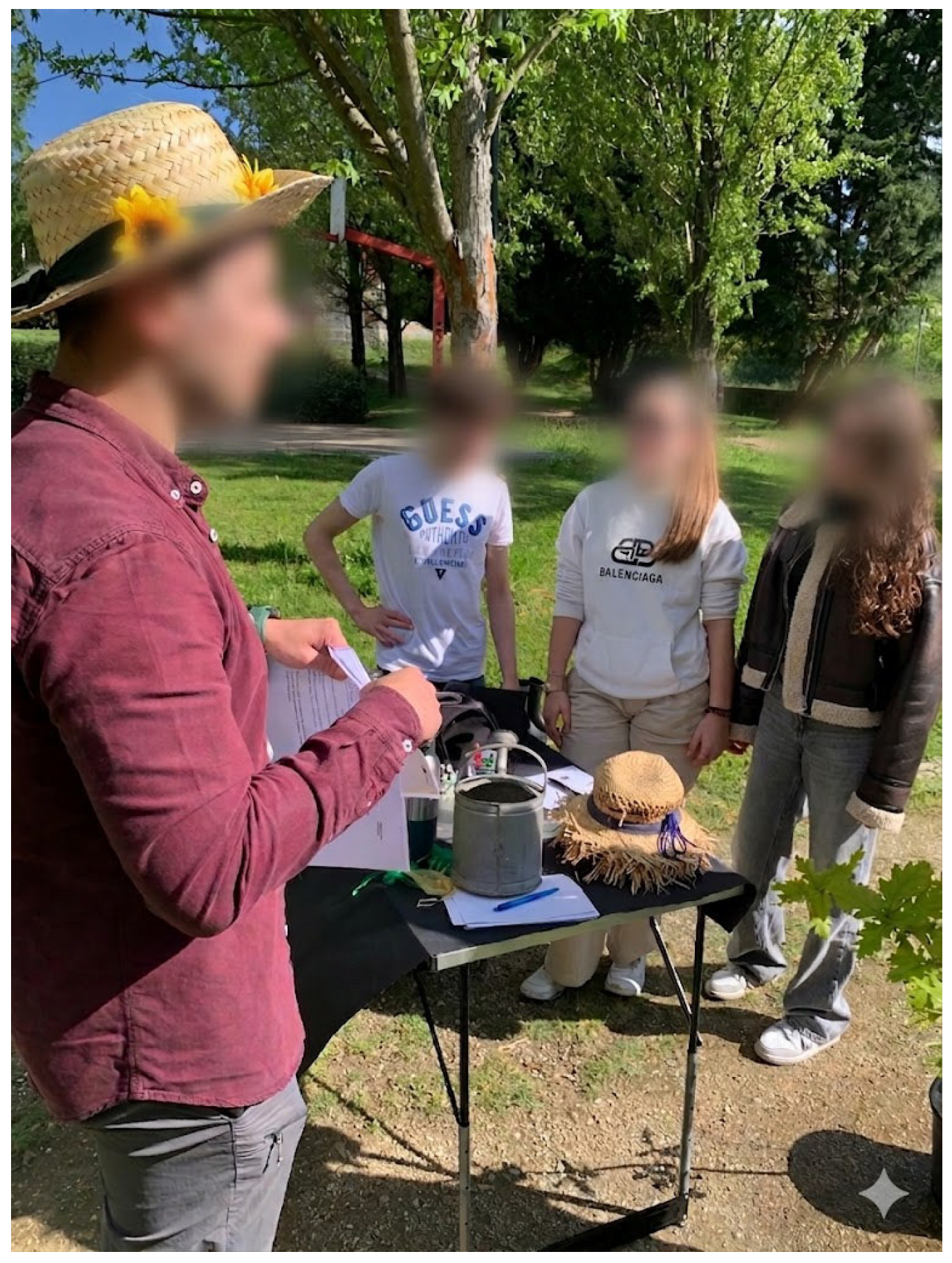
Figure 3 illustrates student engagement during the “Farmer” station task.
3.3. Ecological Outcomes
Ecological outcomes were assessed via questionnaire items addressing environmental knowledge acquisition, practical application, and the perceived relevance of the activity to the local territory. This dimension provided a positive overall mean score (M = 3.6), representing a slightly lower valuation compared to the linguistic and motivational domains.
Qualitative interview data indicated that the intervention fostered a more reflexive relationship with the local environment, with students reporting the acquisition of new knowledge or the reactivation of latent information (e.g., “I discovered things about my own town”; “It reminded me of their existence”). The situated nature of the stations and direct interaction with natural elements appeared to facilitate deeper engagement with environmental issues. The moderate average score may be attributed to variability in station design, as some tasks emphasised ecological reflection more explicitly while others prioritised linguistic output. Nevertheless, 75% of participants reported a more informed and critical awareness of their local environment, particularly when linguistic tasks were intrinsically linked to ecological themes.
4. Discussion
The findings of this study contribute to the current scholarly discourse on experiential and non-formal approaches to foreign language education by illustrating how linguistic acquisition can emerge from situated, meaningful, and socially mediated activity. Across the three analytical dimensions (linguistic, motivational/socio-emotional, and ecological), the results suggest that the integration of outdoor, place-based, and gamified elements establishes conditions conducive to authentic language use and sustained learner engagement.
From a linguistic perspective, the results align with
Kolb’s (
1984) premise that learning arises through the transformation of experience rather than the mere reproduction of predefined forms. Although the study did not include formal pre- and post-intervention language assessment, observational and self-reported data suggest that the intervention may have contributed to increased communicative engagement and willingness to use English in situated contexts. This fact supports
Dewey’s (
1916) conceptualisation of learning as a process of acting upon the world and reflecting on that action. In this intervention, language functioned not as an end in itself but as a mediating tool for problem-solving, collaboration, and meaning-making within a concrete ecological context.
The observation that students who were typically less participative in formal classroom settings reported more natural and fluent communication suggests that the reduction in evaluative pressure, coupled with a shift toward collaborative, goal-oriented tasks, may facilitate oral production. This finding resonates with contemporary research highlighting the potential of gamified and collaborative environments to mitigate linguistic anxiety and promote engagement in foreign language learning (
Umamah & Saukah, 2022).
The motivational and socio-emotional outcomes reinforce the pedagogical value of gamification as a structural strategy rather than a superficial motivational add-on. The high levels of reported participation and collaboration are consistent with the characterisation of effective gamification by
Christians (
2018) and
Vianna et al. (
2013), which relies on clear objectives, meaningful challenges, and continuous feedback. In the present study, elements such as the dystopian narrative, the graded scoring system, and the station-based challenges provided a coherent framework that sustained engagement while fostering collective responsibility. These results echo the argument by
Szabó and Kopinska (
2023), that motivation in language learning is intrinsically linked to social interaction, shared goals, and a sense of purpose.
These findings also align with recent studies on gamified language learning environments, which highlight the role of collaborative challenges, immediate feedback and shared goals in promoting participation and communicative engagement in EFL contexts (
Huseinović, 2023;
Szabó & Kopinska, 2023).
Furthermore, the socio-emotional dimension emerges as a critical outcome. As noted by
Huseinović (
2023), gamified collaborative environments can function as inclusive spaces that improve linguistic confidence and social skills. The emphasis on group-based problem-solving appeared to democratise participation across diverse learner profiles, allowing students with lower confidence to contribute meaningfully. This suggests that the gamified, non-formal setting may mitigate traditional hierarchical classroom dynamics and promote more equitable learner involvement.
The ecological dimension adds a significant layer to the discussion. Students’ reported development of a heightened awareness of their local environment supports the principles of place-based education, which emphasise learning rooted in the ecological and sociocultural specificities of a given location (
Smith, 2002;
Gruenewald, 2004). Although ecological outcomes were slightly less pronounced than linguistic and motivational ones, the findings indicate that direct engagement with local environments can foster reflective connections between language use and sustainability issues. This aligns with
Bowers’ (
2001) assertion that experiential engagement with local ecological contexts deepens the understanding of the relationship between human practices and natural systems.
Crucially, the study highlights the role of pedagogical design in mediating these outcomes. The application of the
Orion’s (
1993) Method proved instrumental in structuring the outdoor activity to reduce cognitive overload and maintain focus on essential learning objectives. This pedagogical structuring appears to have supported spontaneous oral production within problem-solving contexts, while simultaneously strengthening ecological understanding by anchoring scientific concepts in the direct, situated observation of the territory. Furthermore, by reducing linguistic anxiety and enhancing learner agency, the method contributed to the observed socio-emotional gains, demonstrating that rigorous planning is an essential foundation for experiential learning.
5. Conclusions
This study aimed to investigate the extent to which an outdoor and place-based pedagogical intervention could enhance secondary-level English Language Teaching by integrating experiential and non-formal learning methodologies within the formal curriculum. Using a qualitative, exploratory design, the findings suggest that the synergy between outdoor experiential learning and local ecological contexts establishes favourable conditions for authentic language production, sustained learner engagement, and collaborative participation.
At the linguistic level, the intervention repositioned English as a mediating tool for problem-solving, with reported gains observed in oral interaction and fluency. Rather than being treated as an isolated object of study, the language emerged organically from communicative exigencies embedded in purposeful tasks, reinforcing the pedagogical value of experiential and task-based approaches.
From a motivational and socio-emotional perspective, the gamified structure acted as a framework supporting high levels of participation, cooperation, and inclusion. This framework enabled students with heterogeneous proficiency and confidence profiles to engage meaningfully, mitigating traditional barriers to participation in the language classroom. Furthermore, the ecological dimension successfully appeared to situate language learning within the students’ lived environments, fostering reflective connections between local environmental specificities and broader global sustainability challenges.
Beyond discrete learning outcomes, the primary contribution of this research lies in its pedagogical design. The intervention illustrates how informal scenarios aligned with gamification can function as an integrative framework that structures informal, outdoor learning experiences while maintaining rigorous alignment with formal curricular objectives. By synthesising place-based education, experiential learning, and the Orion Method’s focus on cognitive management, the study offers a transferable model for designing learner-centred, context-sensitive, and socially grounded language learning environments.
This study also presents limitations that should be acknowledged. First, the intervention involved a relatively small sample (20 students) from a single educational context, which limits the transferability of the findings. Second, the absence of pre- and post-intervention linguistic assessment prevents objective measurement of language development, meaning that conclusions regarding communicative improvement rely primarily on self-reported perceptions and observational data. Finally, the exploratory nature of the study means that the findings should be interpreted as indicative rather than generalisable. Future research could incorporate longitudinal designs, comparison groups, and more systematic language assessment tools.
These findings reinforce the potential of gamified, place-based approaches to bridge the gap between formal curricula and real-world contexts, ultimately positioning foreign language education as a multifaceted space for linguistic development, civic engagement, and ecological responsibility.
Author Contributions
Conceptualization, A.D.S. and A.F.D.N.; methodology, A.D.S.; validation, A.F.D.N.; formal analysis, A.D.S.; investigation, A.D.S.; resources, A.F.D.N.; data curation, A.D.S.; writing—original draft preparation, A.D.S.; writing—review and editing, A.F.D.N.; supervision, A.F.D.N.; project administration, A.D.S. and A.F.D.N.; funding acquisition, not applicable. All authors have read and agreed to the published version of the manuscript.
Institutional Review Board Statement
Ethical review and approval were waived for this study. This study was conducted within the scope of a curricular internship project developed as part of a Master’s programme in teacher education. According to the institutional guidelines of the host university, research conducted within this framework, and subject to predefined curricular timelines, does not require formal review or approval by an ethics committee. Nevertheless, all ethical principles governing educational research were strictly observed. Anonymity and confidentiality were ensured throughout the data collection, analysis, and reporting processes. All procedures complied with relevant data protection regulations and institutional standards for research integrity.
Informed Consent Statement
Participation was voluntary, and informed consent was obtained from all participants (and, where applicable, from their legal guardians).
Data Availability Statement
The original contributions presented in this study are included in the article. Further inquiries can be directed to the corresponding author.
Conflicts of Interest
The authors declare no conflicts of interest.
References
- Bowers, C. A. (2001). Educating for eco-justice and community. University of Georgia Press. [Google Scholar]
- Braun, V., & Clarke, V. (2006). Using thematic analysis in psychology. Qualitative Research in Psychology, 3(2), 77–101. [Google Scholar] [CrossRef]
- Busarello, R. I. (2016). Gamification: Princípios e estratégias. Pimenta Comunicação e Projetos Culturais Ltd. [Google Scholar]
- Christians, G. (2018). The origins and future of gamification [Bachelor’s thesis, University of South Carolina]. [Google Scholar]
- Creswell, J. W. (2014). Research design: Qualitative, quantitative, and mixed methods approaches (4th ed.). Sage. [Google Scholar]
- Denzin, N. K., & Lincoln, Y. S. (2018). The SAGE handbook of qualitative research (5th ed.). Sage. [Google Scholar]
- Dewey, J. (1916). Democracy and education: An introduction to the philosophy of education. Macmillan. [Google Scholar]
- Ellis, R. (2003). Task-based language learning and teaching. Oxford University Press. [Google Scholar]
- Freire, P. (1987). Pedagogia do oprimido (17th ed.). Paz e Terra. [Google Scholar]
- Gruenewald, D. A. (2004). The best of both worlds: A critical pedagogy of place. Educational Researcher, 32(4), 3–12. [Google Scholar] [CrossRef]
- Hiver, P., Al-Hoorie, A. H., & Mercer, S. (Eds.). (2021). Student engagement in the language classroom. Multilingual Matters. [Google Scholar]
- Huseinović, L. (2023). The effects of gamification on student motivation and achievement in learning English as a foreign language in higher education. MAP Education and Humanities, 4, 10–36. [Google Scholar] [CrossRef]
- Johnson, M., & Majewska, D. (2022). Formal, non-formal and informal learning: What are they, and how can we research them? Cambridge Assessment Research. Available online: https://www.cambridgeassessment.org.uk (accessed on 5 May 2022).
- Kolb, D. A. (1984). Experiential learning: Experience as the source of learning and development. Prentice Hall. [Google Scholar]
- Orion, N. (1993). A model for the development and implementation of field trips as an integral part of the science curriculum. School Science and Mathematics, 93(6), 325–331. [Google Scholar] [CrossRef]
- Patten, M. L. (2007). Understanding research methods: An overview of the essentials (6th ed.). Pyrczak Publishing. [Google Scholar]
- Robertson, R. (1995). Glocalization: Time-space and homogeneity-heterogeneity. In M. Featherstone, S. Lash, & R. Robertson (Eds.), Global modernities (pp. 25–44). Sage Publications. [Google Scholar]
- Simões, J., Redondo, R. D., & Vilas, A. F. (2013). A social gamification framework for a K–6 learning platform. Computers in Human Behavior, 29(2), 345–353. [Google Scholar] [CrossRef]
- Smith, G. A. (2002). Place-based education: Learning to be where we are. Phi Delta Kappan, 83(8), 584–594. [Google Scholar] [CrossRef]
- Stebbins, R. A. (2001). Exploratory research in the social sciences. Sage. [Google Scholar]
- Szabó, F., & Kopinska, M. (2023). Gamification in foreign language teaching: A conceptual introduction. Hungarian Educational Research Journal, 13(3), 418–428. [Google Scholar] [CrossRef]
- Umamah, A., & Saukah, A. (2022). Digital game-based learning (DGBL): The voice of EFL university students and teachers. PASAA Journal, 63, 279–314. [Google Scholar] [CrossRef]
- Vianna, Y., Vianna, M., Medina, B., & Tanaka, S. (2013). Gamificação, Inc.: Como reinventar empresas a partir de jogos. MJV Press. [Google Scholar]
| Disclaimer/Publisher’s Note: The statements, opinions and data contained in all publications are solely those of the individual author(s) and contributor(s) and not of MDPI and/or the editor(s). MDPI and/or the editor(s) disclaim responsibility for any injury to people or property resulting from any ideas, methods, instructions or products referred to in the content. |