1. Introduction
Teaching electromagnetism is always a challenging task, from the fundamentals physics learned in high school and early college courses to more advanced applied concepts seen in optics, antenna theory, and radiocommunication courses (
Puerto et al., 2022;
Sadiku, 1986;
Suárez et al., 2024;
Wu, 2016). This is due less to difficulty in understanding the main physical concepts in electromagnetism and more to the complexity of the mathematics involved (
Bollen et al., 2015;
Pepper et al., 2012). The situation becomes particularly problematic as the degree progresses, making it essential for the student to be able to handle advanced mathematical topics—such as vector algebra, multivariable calculus, and differential equations—and fully understand Maxwell’s equations and their engineering applications. Frequently, this situation leads to the student becoming frustrated and unable to keep up with the class, which is reflected in the high number of students who typically fail these courses (
Leppävirta, 2011). In this context, recent studies have highlighted the importance of considering students’ psychological and cognitive states when addressing learning difficulties, proposing methods to better identify and support those facing such challenges (
Shaikh et al., 2024a,
2024b).
In fact, it is a common practice across many educational institutions that basic and more advanced electromagnetism courses are often delivered in a highly theoretical and traditional manner. While this approach has historical merit, it presents a significant challenge in today’s academic landscape. The current generation of students—particularly those belonging to Generation Z and the emerging Generation Alpha—have grown up immersed in a hyper-digitalized environment (
Ali Alruthaya & Lokuge, 2021;
Ameen, 2023;
Swargiary, 2024). Constant exposure to screens through smartphones, tablets, laptops, and other digital devices has profoundly influenced their cognitive development, particularly in terms of attention span, information processing, and memory retention (
Onyeaka et al., 2022;
Panjeti-Madan & Ranganathan, 2023). As a result, these students often struggle to engage deeply with abstract and conceptually dense material, such as that encountered in (applied) electromagnetism courses. Their ability to maintain sustained concentration and perform in-depth, focused study is increasingly compromised, especially within rigid, lecture-heavy educational settings that do not accommodate their evolving cognitive and learning preferences (
Farley et al., 2013;
Jordan et al., 2019;
Lodge & Harrison, 2019;
Risko et al., 2013).
It is precisely for the aforementioned reasons that innovative learning schemes, processes, and activities are needed to engage and motivate students in the challenging domain of (applied) electromagnetism. Following on from what was discussed earlier, the implementation of computer-based activities can significantly enhance students’ ability to visualize and interpret electromagnetic (EM) fields, waves, and light–matter interactions in complex media (
Bait-Suwailam et al., 2023;
Cheng et al., 2003;
Notaroš et al., 2019). These activities can be complemented in turn with hands-on assignments and laboratories that directly put into practice the knowledge acquired by the student during the present and past courses (
Aliakbarian et al., 2014;
Gómez-Tornero et al., 2011;
Rodríguez-Osorio & Ramírez, 2012). These activities improves conceptual understanding and development of practical skills, which is of great usefulness for the student with regard to finding a future job either in industry or academia.
While computer-based activities and hands-on laboratories represent a significant step forward from purely theoretical instruction, and can be highly interactive when thoughtfully designed, they may in some contexts emphasize more individual or task-focused engagement. This can differ from the type of dynamic interaction fostered by contemporary, student-centered strategies such as serious games and gamified learning activities (
Buenadicha-Mateos et al., 2025;
Li et al., 2023;
Sailer & Homner, 2020;
Szilágyi et al., 2025;
Zhao et al., 2022). In particular, these approaches often incorporate features such as immediate feedback, adaptive progression, structured reward systems, and opportunities for collaborative engagement, which can be especially effective in sustaining student motivation and encouraging active participation. As such, game-based approaches can serve as a valuable complement to conventional methods, offering students a more dynamic and motivating environment in which to explore complex electromagnetic concepts in radio, optics, and photonics sciences (
Gaurina et al., 2025;
Pérez-Herrera et al., 2021;
Richardson et al., 2018;
Vrignat et al., 2025).
Several studies have examined the effectiveness of gamified activities in higher and engineering education. Systematic reviews confirm a positive influence of gamification on student motivation, noting that game elements such as competition, points, and rankings are widely used to engage students (
Ratinho & Martins, 2023). At a broader level, a comprehensive meta-analysis of 22 experimental studies conducted between 2008 and 2023 reported a moderately positive effect of gamification on academic performance (Hedges’s g = 0.782, where g is a bias-corrected standardized effect size; Cohen’s benchmarks: small, g ≈ 0.2; medium, g ≈ 0.5; large, g ≈ 0.8), confirming the robustness of these benefits across educational contexts (
Zeng et al., 2024). In the specific domain of question-based and quiz-style gamified formats (
Zainuddin et al., 2020), it was demonstrated that quiz competitions after lectures motivate students to compete and engage more deeply with course content, identifying competition as a key driver of positive learning behaviors. Despite this growing body of evidence, gamification in technically demanding engineering subjects, particularly those requiring cross-curricular conceptual integration across multiple related courses, remains comparatively underexplored.
With the aim of engaging students into the undergraduate 3rd-year course entitled “Radiocommunications”—commonly referred to as Antenna Theory & Propagation in other institutions—taught at Universidad San Pablo-CEU (Madrid, Spain), we have created a non-profit gamified learning activity inspired from the popular Trivial Pursuit game. The activity is designed to reinforce the key concepts taught during the course. It directly aligns with the course syllabus, which covers five main instructional units: (1) review of electromagnetic fields and waves, (2) basic antenna parameters, (3) propagation, (4) wire antennas, and (5) apertures and arrays. These units serve as the foundation for the game’s question categories, ensuring complete integration between the instructional content and the learning tool.
In this context, the present work aims to address the following research questions: (i) Can a gamified, trivia-style learning activity enhance student engagement and perceived learning in a radiocommunications course? (ii) Do statistically significant differences exist between the academic performance of students who participated in the activity and those who did not?
In the following sections, we will detail the context of the gamified activity and all the materials that were specifically created for it, including the game board, questions cards and wildcards, and special gifts. For reference and reuse, the reader will have access in the
Supplementary Material to the full list 270 custom-made question cards. Finally, we will share our experience and learnings across the three editions of the activity that have taken place, including the results from an anonymous student survey conducted at the conclusion of each edition, as well as a statistical analysis on the grades of the students who participated and did not participate in the game.
2. Materials and Methods
As introduced above, the proposed activity represents a gamification-based educational approach, complemented by active learning, collaborative learning, and retrieval-based practice, specifically tailored to the context of radiocommunications and applied electromagnetics. Its objective is to transform a traditionally instruction-heavy learning environment, which includes a dense mathematical component, into a more engaging and student-centered experience. The board game format fosters a relaxed yet intellectually stimulating setting in which students actively recall, discuss, and apply key concepts, including antenna radiation mechanisms, electromagnetic wave propagation, and the interaction of electromagnetic fields in real-world telecommunications systems. The activity is implemented in small groups, promoting peer instruction, discussion, and collective problem-solving, which is particularly beneficial when addressing more challenging questions and supporting deeper conceptual understanding.
The gamified activity has been carried out over three editions, with a duration of two hours, held during the fall semesters of 2023, 2024 and 2025. It was strategically scheduled at the end of the semester, before final exams, aligned with the Ugly Sweater Day—the third Friday of December. This timing helped create a festive, informal, and relaxed atmosphere that contrasted with usual academic routine, although a different date could be selected without affecting the effectiveness of the activity.
As a general outline, the activity operates as an interactive board game in which participating teams must collect six colored pieces, each corresponding to one of six thematic categories aligned with the Radiocommunications course syllabus
Universidad San Pablo CEU (
2025). Each board space is associated with a specific category, and teams draw a randomly selected question card of the same color. The activity requires teams to respond within approximately 15 seconds per turn. If a team answers correctly, they roll the die again; otherwise, the turn passes to the next team. Among all board spaces, only six award the colored pieces, which all teams aim to collect, with the first team obtaining all six declared the winner.
The gamified activity is built upon a set of 270 questions designed and validated by the authors, experts in applied electromagnetics and radiocommunications, and derived from standard reference textbooks to ensure academic rigor and alignment with the intended learning outcomes.
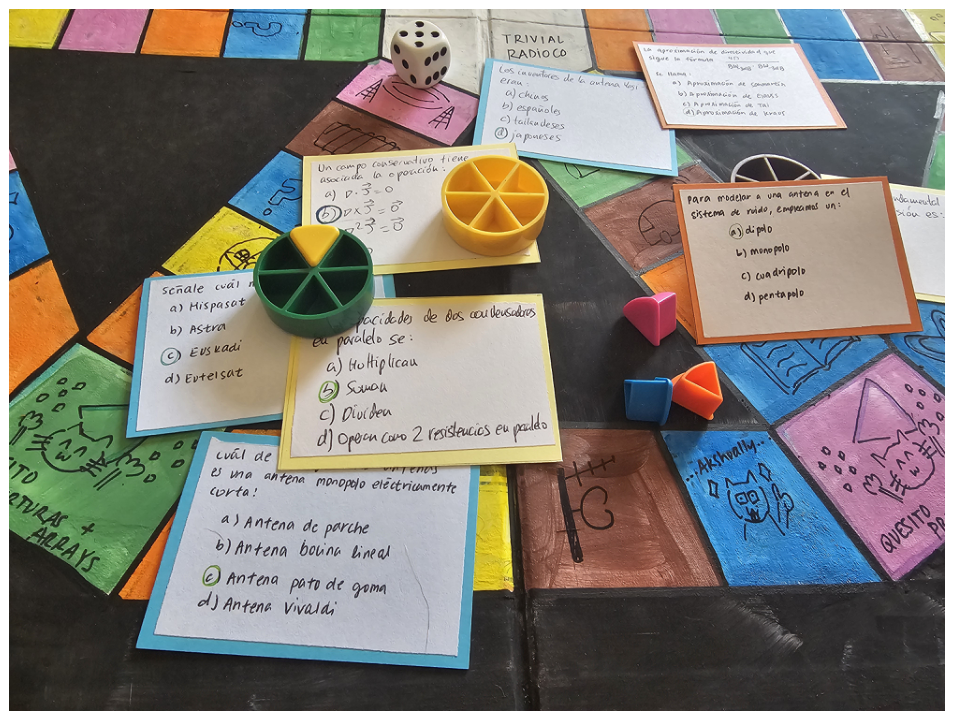
Figure 1 illustrates the handmade game board and some of the question cards created by the authors and specifically tailored for the activity. As can be seen, the handmade cards, which follow the color code described below, were originally created in Spanish, since Spanish is the language in which the course “Radiocommunications” is taught at Universidad San Pablo-CEU.
2.1. Handmade Question Cards
All questions were derived exclusively from course materials, ensuring academic rigor and alignment with the intended learning outcomes. In total, 270 handmade question cards—following the color code below—were created and distributed into six categories. The questions span a range of difficulty levels, from fundamental concepts to more advanced applications. Some are intentionally challenging to promote critical thinking and encourage discussion among students. At the same time, the overall set of questions is calibrated to be consistent with the students’ expected level of knowledge, ensuring that they can be addressed appropriately. The six categories and cards are grouped as follows:
47 for Review of EM Fields and Waves (yellow  )
): This represents the first unit of the “Radiocommunications” course. In this unit, the students review the fundamentals of electromagnetics seen in previous courses, such as electrostatics, Maxwell’s equations, electric and magnetic fields, conduction and displacement currents, boundary conditions, polarization, plane wave propagation, transmission lines, and waveguides. An example of handmade question card from this category is
“Two point charges and separated a distance r suffer a force proportional to: (a) , (b) , (c) , (d) ”. 48 for Basic Antenna Parameters (orange  )
): This category covers the second unit of the course, where fundamental antenna parameters such as directivity, gain, radiation resistance, near-field and far-field regions, and antenna efficiency are defined. An example of handmade question card from this category is “
The power radiated per unit of solid angle is called: (a) Directivity, (b) Flux density, (c) Radiation intensity, (d) Radiation resistance.”
48 for Propagation (pink  )
): This category covers the third unit of the course, where the influence of the terrestrial environment on wave propagation is identified and appropriately modeled, such as differentiation and formulation of the propagation mechanisms of surface waves, ionospheric waves and space waves in radio links. An example of handmade question card from this category is “
In multi-path fading, if a dominant component is not present, the following statistical distribution is typically used: (a) Rice, (b) Binomial, (c) Normal, (d) Rayleigh.”
47 for Wire Antennas (brown  )
): This category covers the fourth unit of the course, where the radiation characteristics of linear wire antennas such as the infinitesimal/short/half-wavelength dipoles, the quarter-wave monopole on a ground plane, and loops are analyzed. An example of handmade question card from this category is “
The antennas placed over a conductor plane are analyzed through the: (a) Method of reflections, (b) Method of reflectivity, (c) Maxwell’s method, (d) Method of images.”
28 for Aperture Antennas and Arrays (green  )
): This covers the fifth and last unit of the course, where the principle of equivalent currents is applied to the analysis of aperture and horn antennas. Moreover, reflector antennas and arrays are also discussed. An example of handmade question card from this category is “
Increasing the size of the aperture antenna also increases its: (a) Directivity, (b) Efficiency, (c) Cutoff frequency, (d) Our patience.”
52 for Science Curiosities (blue  )
): We consider of interest to add a sixth category named “Science Curiosities” to the five previous categories based on the five instructional units of the course. This category incorporates anecdotes, historical facts, and informal comments shared by professors during lectures. An example of handmade question card from this category is “
The inventors of the Yagi-Uda antenna were: (a) Chinese, (b) Spanish, (c) Thai, (d) Japanese.”
The reader is referred to the
Supplementary Material to see the full list of 270 questions used in the activity, translated from Spanish to English.
The gamified activity was in turn designed to align with the learning objectives and outcomes specified in the Radiocommunications Course Teaching Guide
Universidad San Pablo CEU (
2025). Several question categories directly reinforce students’ understanding of key technical concepts such as antenna fundamentals, wave propagation, and radiation parameters, thereby supporting the learning outcome RA13:
the ability to understand the mechanisms of propagation and transmission of electromagnetic and acoustic waves, as well as their corresponding devices. Other aspects of the activity, including conceptual, numerical, and exploratory questions, are designed to foster independent engagement with the material, reasoning, and consolidation of prior knowledge, in line with RA6:
the ability to acquire new knowledge and skills autonomously in the context of telecommunications systems and services.In addition, the last of the six question categories, “Science Curiosities,” was created to motivate students to explore the personal lives, motivations, and achievements of scientists and engineers in the field. This encourages engagement beyond lectures, stimulates curiosity, and promotes independent exploration of related information, while reinforcing RA6. Overall, the activity is structured to strengthen both domain-specific knowledge and transferable learning skills, providing a clear link between the pedagogical design and the intended course outcomes.
In addition to the question cards,
wildcards were introduced, thus creating a new strategic component to the game and sustaining a high level of engagement. A total of 12 handmade wildcards were designed, separated into two categories: special wildcards (multiple occurrences) and simple wildcards (only one occurrence) as summarized in
Table 1. The design of these wildcard features was inspired by commonly known question-support mechanisms used in television quiz shows, which contributed to their intuitive use and immediate recognition among participants from diverse backgrounds.
In terms of amusing anecdotes related to the use of wildcards, two particularly memorable moments stand out. In the first, a student from the inaugural edition of the game used the “Phone-a-Friend” wildcard to call his brother—a fourth-year student who had passed the course the previous year. At the time, his brother was on an Erasmus exchange in Italy. He answered the call but, unfortunately, failed to answer the question correctly. In the second anecdote, one of the students teams initially got a question wrong and decided to use the “Error-Nullifying” wildcard, which allowed them to attempt the question again. However, just before they could re-answer, the professor’s team activated the “Question-Stealing” wildcard, taking over the question and answering it themselves. These anecdotes highlight how wildcards bring a fun and strategic twist to the game.
2.2. Teams and Participants
In the three editions of the activity, teams were organized into groups of four students. Teams of this size ensure that all members participate actively and, at the same time, there are not too many teams, which would slow down the game flow. The main professor of the course “Radiocommunications”, Ana S. Domenech, always acted as the moderator/presenter during the activity, not being part of any team.
To the student teams, we thought interesting to add an extra team of three professors, professors that were closely related to the topics seen in the course. This format significantly increases healthy competitiveness, as students are highly motivated to outperform their instructors. In the first edition, we included the professors Antonio Alex-Amor (he taught the 2nd-year course “Field and Waves”), Pablo Pérez-Tirador (he currently teaches the 4th-year course “Radiocommunications Systems”), and Pedro de la Torre Luque (he taught the 1st-year course “Waves, Electrostatics & Thermodynamics”). In the second edition, we counted again on the professors Antonio Alex-Amor and Pablo Pérez-Tirador, and professor Rodrigo Rodríguez-Merino (he currently teaches the 2nd-year course “Field and Waves”). In the third edition, we included the professors Pablo Pérez-Tirador and Rodrigo Rodríguez-Merino, plus Javier Olivares Herrador (he currently teaches the 2nd-year course “Electromagnetism and Optics”), who joined the activity.
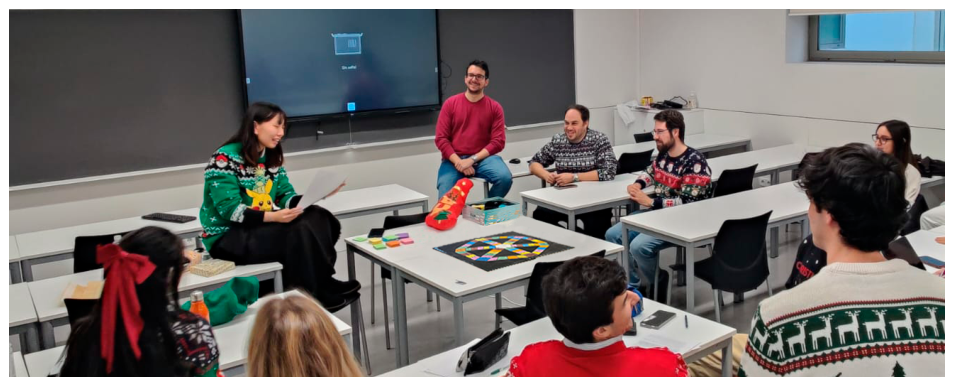
Figure 2 shows a picture of some of the participants (students and professors) of the second edition playing the game, gathered in the usual room where the Radiocommunications course is taught.
2.3. Rewards
Participation in the gamified activity is entirely optional, allowing students to choose whether or not to engage based on their individual preferences and schedules. Given that the activity takes place in December—coinciding with the lead-up to the final examination period—some students opted to prioritize studying over participation. Recognizing this, the course instructor makes a point of clearly communicating the indirect academic benefits associated with taking part in the activity. These include the opportunity to review and reinforce key course concepts, organize and consolidate ideas in preparation for the final exam, and engage in a more relaxed and informal learning environment during what is typically a high-stress time for students.
To further encourage participation, the activity incorporates a system of academic incentives. Specifically, extra credit is awarded to the winning team, providing a tangible and motivating benefit. In the context of the Spanish grading system, this translates into an additional point on the final grade for the laboratory classes, which is scored on a scale from 0 to 10. This added incentive not only rewards high-performing participants but also underscores the academic relevance of the activity. The reward system itself is flexible and was adapted across different editions of the activity, allowing it to be tailored to the specific characteristics of each course or institutional context. However, it was intentionally designed to remain aligned with the subject matter, as this alignment helps strengthen students’ sense of engagement and reinforces the connection between the activity and the course content.
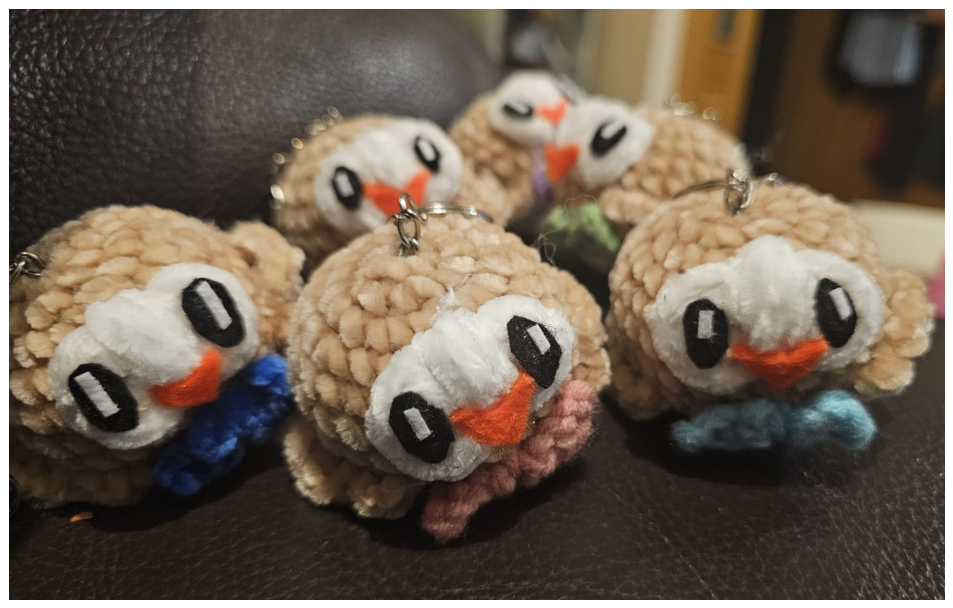
In addition to the academic rewards, the activity includes small gestures aimed at enhancing student morale and fostering a sense of community. All participants were offered sweets during the game. Moreover, the winning team received small handmade gifts by the main instructor of the course (see
Figure 3). These elements contribute to a positive and inclusive atmosphere, reinforcing the idea that the activity is not only academically valuable but also enjoyable and socially rewarding.
3. Results
The evaluation of students’ attitudes towards the activity demonstrated a positive impact on the learning experience. In the three editions, students have consistently described the activity as pleasant and dynamic, showing active participation throughout the session. Beyond the recreational dimension, the activity is perceived as a tool for strengthening knowledge, helping students review and consolidate concepts that later appeared in the final exam. Furthermore, the playful format fostered healthy competitiveness, which acted as a motivating factor that improved engagement and collaboration. The results are organized into two subsections: (i) student perceptions collected through a survey and (ii) a statistical analysis of academic performance.
3.1. Student Survey
In addition to these observations, an anonymous survey composed of thirteen questions was distributed to objectively assess student perceptions. The survey was completed by 5, 9, and 10 students in the first (Fall 2023), second (Fall 2024), and third (Fall 2025) editions, respectively, corresponding to response rates of 29%, 43%, and 45% of enrolled students in each cohort. While these response rates are moderate, they have improved over the years, and are within the typical ranges for voluntary educational surveys. Thus, they still provide meaningful insight into student perceptions. Of these questions, eleven were Likert-scale items (ranging from ‘1’ = lowest to ‘5’ = highest) designed to capture different aspects of the experience. As shown in
Table 2, the student’s evaluations of the gamified activity are positive. All items scored above 4.21 (5.00 is the maximum), with particularly high agreement on the activity’s ability to increase enjoyment of the related courses (items 1 and 9, average = 4.96 and 4.92, respectively) and its overall quality (item 11, average = 4.88). Items concerning integration with prior courses (item 5) and adequacy of time (item 10) received comparatively lower, though still strong, evaluations. These results suggest that the activity was both engaging and pedagogically valuable. They also indicate that, for a possible fourth edition in the future, it may be worth considering an extension of the activity’s duration.
Questions 12 and 13, not shown in
Table 2, are open-ended questions: Q12.
“What did you like the most about the activity and how you would improve it?”; Q13.
“Do you have any other suggestion or comment?”. The qualitative responses revealed several recurring themes. Students highlighted the enjoyable and engaging nature of the activity, often highlighting the motivational role of competition in fostering deeper understanding of the subject matter (e.g.,
“It was an enjoyable activity that we all appreciated as a class, where the element of competition motivated us to make an effort to really understand the content”). Some participants suggested allocating more time to the activity, emphasizing that the dedicated time was insufficient (
“I would only improve it by dedicating a little more time.”). Additional student comments pointed to the pedagogical value of the activity as a comprehensive review tool (
“It is a fun, engaging activity that helps review the entire subject, with questions that go beyond what would typically be asked in an exam”), as well as appreciation for its innovative and enjoyable format (
“It is very didactic and lively since we can even compete against our own professors”; “Learning in a different way”). Finally, students recommended incorporating more activities of this type and even making it a permanent component of the course (
“There should be more activities like this one”; “I would make it a permanent activity in the course; it was really cool”).
3.2. Statistical Analysis
Although the qualitative benefits of the activity on students’ engagement and development throughout the course have been observed, a relevant question arises at this point: does the gamified activity have a measurable positive impact on students’ grades? Specifically, are the average grades of the students who participated in the activity, , higher than those of the students who did not participate, ? While grades do not fully capture all aspects of the learning process—such as engagement, motivation, or the development of transversal skills—they remain an important measurable indicator of students’ academic performance.
To address this question, we formally define the null and alternative hypotheses as follows:
This corresponds to a one-tailed hypothesis test, since we are specifically interested in whether participation yields a positive effect on academic performance.
To test these hypotheses, an appropriate statistical test must be selected. The two groups are independent, as the grades of students who participated do not influence the grades of students who did not. The sample sizes are different too. Moreover, the population variances of the two groups may differ, making Welch’s
t-test for two independent samples particularly appropriate in this scenario
Walpole et al. (
2016). The readers are referred to the
Supplementary Material to find an extended discussion on independence and normality of the raw data.
We analyzed a record of 60 students over three academic years who were registered for the activity. Of these,
students participated, while
did not. The average grade and standard deviation for participants were
and
, respectively. For non-participants, the average and standard deviation were
and
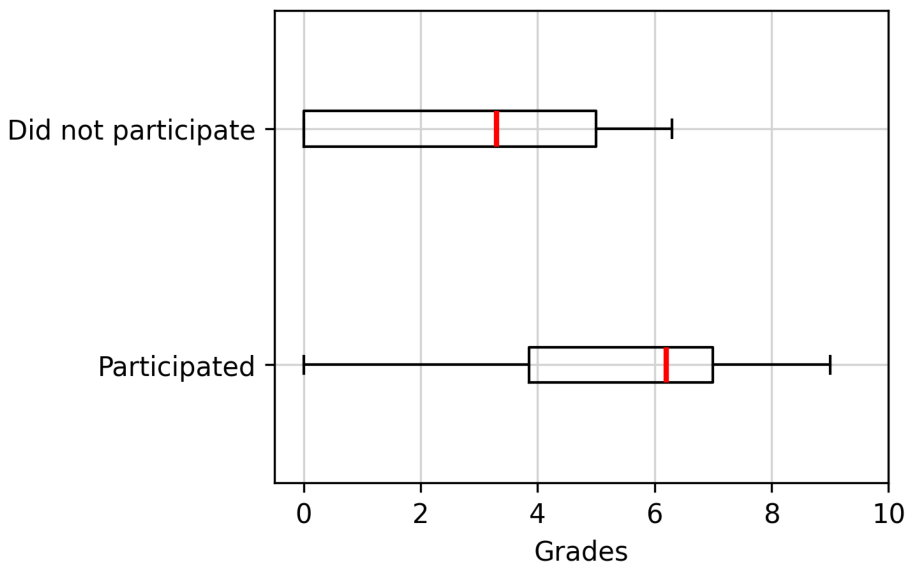
. Grades are evaluated on a scale from 0 (minimum) to 10 (honors), with a passing grade of 5. Students who do not take the exam automatically received a zero. The boxplot in
Figure 4 provides a visual summary of the grades.
Using the data described above, Welch’s t-test was applied to evaluate against with a significance level of yielding a p-value of . The corresponding test statistic, degrees of freedom, critical value, and Cohen’s factor were , , , and , respectively. Since (and ), we reject the null hypothesis in favor of , concluding that there is strong (and practically meaningful) statistical evidence that students who participated in the activity achieved higher grades than those who did not.
For reference, similar conclusions are obtained when students who did not take the exam are excluded from the analysis. In this case, the sample sizes are reduced to and , and the prime notation is used to indicate that this is a distinct statistic. The mean and standard deviation for participants are and , while for non-participants they are and . The resulting p-value is , and the Cohen’s d factor is , indicating a large effect size. The null hypotheses is therefore also rejected in this reduced sample, further supporting .
There is strong and practically meaningful statistical evidence that students who participated in the proposed gamified activity achieved higher grades than those who did not. While these results demonstrate a significant difference between groups, they should be interpreted with caution, as they do not necessarily imply a direct causal effect of the activity. In particular, the analysis does not control for potential confounding variables such as prior academic performance, baseline student motivation, or self-selection into participation. For instance, higher-performing or more motivated students may be more likely to engage in such activities, which could partially explain the observed differences. At the same time, it is also plausible that the activity itself contributed to improved understanding of the subject or reinforced students’ knowledge prior to the exam. Therefore, the observed effect is likely the result of a combination of these factors. Overall, the findings provide compelling evidence of a positive association between participation in the activity and academic performance. Nonetheless, a causal relationship cannot be conclusively established.
4. Conclusions
In this paper, we present our experience with a gamified learning activity inspired by the popular board game Trivial Pursuit, designed to engage and motivate students in the 3rd-year course “Radiocommunications”. The primary objective of this initiative is to foster a relaxed, student-friendly environment that encourages the review of key concepts from Radiocommunications and related electromagnetism courses such as Antenna Theory.
The activity has been implemented during three consecutive fall semesters (2023, 2024 and 2025) and is closely aligned with the course syllabus, covering topics such as: (1) electromagnetic fields and waves, (2) fundamental antenna parameters, (3) radio wave propagation, (4) wire antennas, and (5) aperture antennas and arrays. All materials used in the game—including the board, question cards, wildcards, and small incentive gifts—are handmade and specifically tailored for the activity. A total of 270 custom-designed questions are available as
Supplementary Material for reference and reuse.
Student feedback across the three editions has consistently highlighted a positive learning experience, with participants describing the activity as enjoyable and dynamic. Responses to an anonymous voluntary survey indicated improvements in conceptual understanding, the ability to connect ideas across related subjects, and overall motivation. In addition, statistical analysis on the acquired data provides strong evidence that students who participated in the activity obtained higher final grades in the Radiocommunications course than those who did not. These results underscore the potential of game-based strategies to enhance engineering education, particularly in a digital era where interactive and learner-centered approaches are increasingly important.
The gamified activity also promotes collaboration and strengthens the connection between theory and practical applications through its thematic question structure. Importantly, instructors have benefited from observing student responses and interactions during the game, gaining insights into common misconceptions on the content of the course. The activity provides a framework for educational research in STEM gamification and could be adapted to other technical courses. Nonetheless, it should be taken into account that the current format is tailored to the Radiocommunications course and the background of Telecommunications and Biomedical Engineering students, so extending it to other courses or institutions would require careful adaptation of content and difficulty. Scalability may be limited by the need for instructor preparation, supervision, and facilitation, as well as class size and laboratory facilities. Moreover, the activity is designed for small groups, and accommodating more students may require splitting participants into multiple sessions, which could affect logistics and learning experience.
Future work will focus on extending the dataset through new editions of the activity and refining the assessment instruments to better capture students’ perceptions and their impact on academic performance. In this regard, the survey will be expanded to include additional questions aimed at providing a more comprehensive evaluation of the learning experience, including students’ performance in course assessments and exams after participating in the activity. Furthermore, the scalability of the approach to other university courses—and potentially to pre-university education—will be explored. Based on student feedback, adjustments to the activity structure, such as distributing it across multiple sessions, will also be considered. Finally, the partial digitalization of the game—through the integration of formula displays and dynamic visualizations—is envisioned to enhance accessibility while enabling the use of learning analytics to better understand and support player learning.