1. Introduction
Mathematical problem-solving ability is among the key competencies that students must master at the secondary education level. The National Council of Teachers of Mathematics emphasizes that problem solving is not only a primary goal of mathematics education but also an essential means of developing students’ reasoning and critical thinking skills (
NCTM, 2000). However, various studies indicate that junior high school students still experience difficulties in solving mathematical problems, particularly in algebra topics that require symbolic representation, manipulation, and logical reasoning (
Stacey & MacGregor, 1999;
Xin, 2019). Algebra is a logical focus, as it is—alongside natural language—one of the first abstract symbolic systems that individuals learn, preceding other abstract symbolic languages such as programming languages and chemical equations (
Koedinger et al., 2008). In addition, difficulties in problem solving are often exacerbated by inappropriate strategy selection and limited working memory capacity (
Malin, 1979). Problem solving itself is a fundamental competency in mathematics learning that requires students to integrate conceptual, procedural, and strategic knowledge (
Pólya, 2004;
Schoenfeld, 2016a).
Furthermore, the pressure to obtain correct answers can hinder students’ ability to fully explore and understand the problems presented, leading them to overlook important aspects necessary for effective solutions. Teachers are also often influenced by achievement-oriented educational cultures, which may limit opportunities for students to engage more deeply with the richness of mathematical problem solving (
Bradshaw & Hazell, 2017). In addition,
Cañas et al. (
2017) found that the most persistent errors in students’ work with symbolic algebra are related to weaknesses in their arithmetic knowledge. Therefore, the root of students’ difficulties may lie in the development of their mathematical thinking within the context of arithmetic (
Polotskaia et al., 2022). Moreover,
Koedinger and Nathan (
2004) reported that students were more successful in solving word problems than equivalent algebraic equations.
In addition, students also face difficulties in mathematical processes, such as inadequate language comprehension when translating verbal statements into mathematical symbols (
Mabuse et al., 2024). A systematic review also indicates that visualization is still rarely used in algebra problem-solving at the secondary school level (
Hadi & Csíkos, 2025).
Students’ difficulties in problem solving are often associated with low metacognitive awareness. Metacognitive awareness plays an important role in guiding students to plan, monitor, and evaluate the strategies they use when solving problems (
Flavell, 1979;
Schraw & Dennison, 1994). Students with high metacognitive awareness tend to select more appropriate strategies and reflect on their mistakes, resulting in more optimal learning outcomes (
Palha et al., 2013). Therefore, enhancing metacognitive awareness is an important aspect of mathematics learning. Previous studies have shown a significant relationship between metacognitive awareness, cognitive knowledge, cognitive regulation, and mathematics achievement (
Abidin, 2026).
There are different levels of metacognitive awareness in problem solving. According to
Santoso et al. (
2019), secondary school students in Indonesia with high problem-solving ability tend to operate at the level of metacognitive strategy use; students with moderate ability tend to demonstrate metacognitive awareness; and students with low problem-solving ability tend to rely on tacit metacognition. Therefore, it is important to enhance both students’ metacognitive awareness and their algebraic problem-solving skills. One way to achieve this is through innovative instructional design that supports both aspects.
One learning strategy that has been proven effective in supporting understanding and problem solving is the use of worked examples. Worked examples help students by presenting sample problems along with solution steps, thereby reducing cognitive load when learning new concepts (
Renkl, 2017;
Sweller et al., 2019). When combined with visualization, worked examples not only facilitate procedural understanding but also help students construct clearer mental representations (
Stylianou, 2010). Visualization enables students to connect symbols, images, and abstract algebraic concepts. It also allows students to represent information in the form of graphs, diagrams, images, and mathematical models, thereby clarifying problem structures and facilitating reasoning (
Arcavi, 2003;
Presmeg, 2006). However, the effectiveness of worked examples in realistic contexts may also be influenced by students’ learning dispositions (
Tempelaar et al., 2019).
Furthermore, visualization-based worked examples can be integrated with a deep learning approach. In the educational context, deep learning does not refer to artificial intelligence, but rather to an approach that emphasizes deep conceptual understanding, knowledge transfer, and connections between concepts (
Hardy et al., 2021). By combining visualization-based worked examples with a deep learning approach, students are guided not only to follow procedures but also to understand underlying concepts, develop metacognitive awareness, and improve problem-solving skills.
The current curriculum in Indonesia, known as the “Merdeka Curriculum,” incorporates a deep learning approach. This curriculum is regulated under Permendikbudristek No. 12 of 2024, which applies to early childhood education, elementary schools, junior high schools, and senior high schools. During the transition period, schools may implement either the Merdeka Curriculum or the 2013 Curriculum. The Merdeka Curriculum emphasizes student-centered learning, simplified and essential content, and projects aimed at strengthening the Pancasila Student Profile (P5). It also provides teachers with greater flexibility in selecting instructional methods and assessment strategies, including projects and portfolios in addition to examinations. Subsequently, the policy evolved to explicitly emphasize a deep learning approach through Permendikdasmen No. 13 of 2025, which is scheduled for implementation in the 2025/2026 academic year.
The deep learning approach, newly implemented in Indonesia in 2025, is supported by three main principles: meaningful learning, mindful learning, and joyful learning. Meaningful learning, as proposed by Ausubel, emphasizes connecting new knowledge with prior knowledge. Mindful learning is closely related to metacognition, encouraging students to be aware of their own learning processes. This includes awareness of prior knowledge, gaps in understanding, the importance of mastering current competencies, the learning strategies being used, progress achieved through reflection, and opportunities for further exploration. Through this process, students are guided to become active and responsible learners.
Based on Permendikdasmen No. 13 of 2025, deep learning experiences are developed through the processes of understanding, applying, and reflecting. This approach encourages students to learn deeply rather than through rote memorization, to understand core concepts, to connect learning with real-life contexts, and to engage in discussion, exploration, and reflection. Joyful learning emphasizes the creation of a positive learning environment in which students can enjoy the learning process, for example, through games or interactive activities that increase engagement.
The implementation of deep learning in Indonesia aims not only to enhance students’ knowledge but also to develop essential 21st-century skills. According to the World Economic Forum, these skills include foundational literacies, competencies, and character qualities. Foundational literacies enable students to apply core knowledge in everyday life, including literacy, numeracy, scientific literacy, ICT literacy, financial literacy, and cultural and civic literacy. Competencies include critical thinking, problem-solving, creativity, communication, and collaboration. Character qualities include curiosity, initiative, persistence, adaptability, leadership, and social and cultural awareness. The deep learning approach supports the development of these skills by encouraging deeper and more analytical engagement with learning.
Conceptually, the intervention in this study operates through a phased mechanism that begins with the use of visualization in worked examples to support the formation of students’ mental representations of problems. These representations then facilitate the deep learning process, particularly in connecting concepts and understanding the structure of problems more deeply. A better understanding at this initial stage subsequently contributes to the improvement of problem-solving abilities, particularly in the indicators of understanding the problem, and can further enhance students’ metacognitive awareness up to the looking back solution stage.
In the context of this study, visualization-based worked examples support students in understanding example problems and applying their knowledge through teacher-designed worksheets. This process also fosters metacognitive awareness by encouraging students to reflect on their strengths, weaknesses, challenges, and areas for improvement. Based on this background, this study focuses on improving junior high school students’ algebra problem-solving skills and metacognitive awareness through the use of visualization-based worked examples within a deep learning approach.
Based on the introduction above, the research questions are as follows:
RQ1. Is there a difference in the improvement of problem-solving skills and metacognitive awareness after the intervention?
RQ2. Does the treatment group demonstrate higher problem-solving ability than the control group after controlling for pretest scores?
RQ3. Does students’ metacognitive awareness influence their problem-solving ability after the intervention, while controlling for pretest scores? To what extent?
RQ4. Is the improvement in problem-solving ability for each indicator in the experimental group higher than in the control group? What is the magnitude of this improvement?
3. Results
3.1. Overall Descriptive Statistical Analysis
The data collected from 51 respondents, comprising an experimental group (
n = 27) and a control group (
n = 24), are summarized in
Table 1, which presents the descriptive statistics.
Table 1, regarding problem-solving abilities, reveals that the average pretest score for the experimental group (M = 21.33, SD = 8.97) is lower than that of the control group (M = 29.67, SD = 10.33), indicating an initial imbalance in problem-solving abilities between the two groups. This difference can be attributed to the use of purposive sampling and whole-class assignment, which are common in quasi-experimental designs and do not guarantee baseline equivalence.
Pre-existing differences can introduce potential bias in estimating treatment effects. Therefore, to address this imbalance, pre-test scores are included as covariates in the analysis using ANCOVA. This approach allows for statistical adjustment of initial group differences and provides a more accurate estimate of the intervention effects. However, it is acknowledged that statistical control cannot completely eliminate the bias arising from non-random group assignment, and therefore the results should be interpreted with caution.
The posttest revealed a substantial disparity in average scores, with the experimental group (M = 22.74, SD = 13.71) outperforming the control group (M = 19.50, SD = 6.58). The experimental group exhibited an N-Gain value of 0.01, signifying an enhancement, whereas the control group demonstrated an N-Gain value of −0.19, reflecting a decline in performance over time. This pattern suggests that, although the magnitude of improvement in the experimental group is minimal, the intervention may have contributed to maintaining or slightly enhancing students’ performance compared to the control group, which experienced a decrease.
However, the very small N-Gain value in the experimental group indicates that the practical impact of the intervention is limited. The observed difference between groups may also be influenced by the initial imbalance in pretest scores and the quasi-experimental design, which did not involve random assignment. Therefore, while the results provide some indication of a positive effect of the intervention, they should be interpreted with caution, particularly in terms of practical significance.
Regarding metacognitive awareness, prior to the intervention, the experimental group had a higher mean score (M = 160.96, SD = 15.41) than the control group (M = 157.79, SD = 18.18). After the intervention, the experimental group had a mean of 148.59 (SD = 17.25), while the control group had a mean of 141.79 (SD = 20.69), indicating that the experimental group retains a comparative advantage. The N-Gain value decreased by 0.41 in the experimental group and by 0.67 in the control group, indicating that metacognitive awareness declined in both groups over the course of the study. This pattern suggests that the intervention was not effective in enhancing students’ metacognitive awareness.
However, the smaller decline observed in the experimental group compared to the control group may indicate that the intervention helped mitigate the reduction in metacognitive awareness, even though it did not lead to an actual improvement. In this sense, the intervention may have had a limited protective effect rather than a developmental one.
Nevertheless, these findings should be interpreted with caution. The reliance on self-report measures of metacognitive awareness may introduce response bias, and the quasi-experimental design without random assignment may also influence the observed changes. Additionally, the duration or intensity of the intervention may not have been sufficient to produce measurable improvements in metacognitive awareness.
Overall, algebra problem-solving ability improved from pretest to posttest in both groups, with the experimental group showing a more substantial increase, as reflected by higher median and gain values. Descriptively, the experimental group achieved better outcomes than the control group in both problem-solving ability and metacognitive awareness. However, the average N-Gain values suggest that the overall effectiveness of the educational intervention remains in the low range.
3.2. Normality and Homogeneity Prerequisite Tests for the Experimental and Control Classes
Before conducting further statistical analyses, it is essential to ensure that the data from both the experimental and control groups meet the basic assumptions of normality and homogeneity. The normality test assesses whether the data in each group are approximately normally distributed, which is a key requirement for many parametric tests. The homogeneity test evaluates whether the variances between groups are relatively equal, ensuring that comparisons between the experimental and control groups are valid. Meeting these two assumptions is a critical first step toward obtaining accurate and reliable research results. The results of the normality tests for all variables are presented in
Table 2.
The pretest and posttest data for problem-solving ability in both classes were not normally distributed; therefore, the Mann–Whitney test, a nonparametric alternative, was used for analysis. For N-Gain scores, a homogeneity test was conducted because the data from both groups were normally distributed. Regarding metacognitive awareness, the pretest, posttest, and N-Gain data in the experimental group were normally distributed, whereas in the control group, only the posttest data were normally distributed. Consequently, an independent samples t-test was applied where assumptions were met, and the non-normally distributed metacognitive awareness data were analyzed using the Mann–Whitney nonparametric test.
Based on
Table 3, the variance in problem-solving ability for the pretest and posttest differs significantly between the experimental and control groups, indicating non-homogeneity, whereas the variance for the gain scores is uniform, indicating homogeneity. In contrast, the variance in metacognitive awareness for the pre-questionnaire and post-questionnaire is relatively consistent between groups (homogeneous), but the variance in gain scores differs significantly (non-homogeneous).
For algebra problem-solving ability, only the gain scores meet the homogeneity assumption, while the pretest and posttest scores do not. Therefore, comparisons between classes at these stages may require nonparametric tests or data transformation. For metacognitive awareness, the pretest and posttest scores are homogeneous, but the gain scores are not, necessitating special consideration when comparing changes between groups. The combined results of normality and homogeneity tests indicate that some data in the control group are non-normal and that certain stages exhibit heterogeneity; consequently, some parametric analyses may need to be adjusted, or nonparametric tests may be preferred.
3.3. There Was a Significant Difference in the Improvement of Problem-Solving Ability Between the Experimental and Control Groups
RQ1. Is there a difference in the improvement of problem-solving skills and metacognitive awareness after the intervention?
The hypotheses corresponding to this research question are:
Ha1. There is a difference in the improvement of students’ problem-solving abilities after the treatment.
Ha2. There is a difference in the improvement of students’ metacognitive awareness after the treatment.
To test Ha1, statistical analysis was conducted. Based on the previous normality and homogeneity tests, the N-Gain data for problem-solving ability is normally and homogeneously distributed, so an independent samples t-test is used. The results showed a significant difference between the experimental and control groups, t(49) = 4.36, p < .001. The experimental group exhibited a higher mean gain (M = 0.02, SD = 0.18) compared to the control group (M = −0.19, SD = 0.16). The calculation of Cohen’s d on N-Gain resulted in d = 1.23, which can be converted to r ≈ 0.52, indicating a fairly strong relationship between the treatment and the increase in N-Gain, supporting the ANCOVA findings that the differences between groups are statistically significant, confirming a statistically consistent difference. However, the absolute increase in the experimental group remains small, so the practical effect of the intervention is limited.
For Ha2, metacognitive awareness N-gain data were non-normally distributed and non-homogeneous, necessitating a nonparametric Mann–Whitney test. The results (U = 313.000, p = 0.84 > 0.05) indicated no significant improvement difference between the experimental (M = −0.42, SD = 0.65) and control groups (M = −0.67, SD = 1.20). Thus, the null hypothesis (Ho) was accepted, indicating that the intervention did not produce a significant improvement in students’ metacognitive awareness. Post-intervention, both groups demonstrated similar levels of metacognitive awareness as measured by N-Gain scores.
3.4. Significant Intervention in Problem-Solving Ability Between the Experimental and Control Groups After Being Controlled for Pretest Scores
RQ2. Does the group that received the treatment exhibit higher problem-solving abilities compared to the control group when controlling for pretest scores?
The hypothesis for this research question is:
Ha3. Students who received the treatment will have higher problem-solving ability than the control group after controlling for pretest scores.
To determine whether posttest scores are influenced by pretest performance, an analysis of covariance (ANCOVA) was conducted. This analysis was used to evaluate the effectiveness of the visualization-based worked examples with a deep learning approach, with pretest scores included as a covariate. The results of the ANCOVA analysis are presented in
Table 4.
ANCOVA analysis showed a significant difference between the experimental and control groups after controlling for pretest scores (F(1,48) = 8.281,
p = 0.006, η
2 = 0.147), which indicates that approximately 14.7% of the variance in the problem-solving ability can be explained by the treatment. Pretest scores significantly influenced posttest scores (η
2 = 0.32). This means that students’ initial abilities explained most of the variation in results. According to
J. Cohen (
1988), an η
2 value of 0.147 can be categorized as a large effect. These results confirm that the intervention had a significant impact on problem-solving abilities, although students’ initial abilities remained the primary determining factor. So the practical effect of the intervention needs to be interpreted with caution. However, the assumption test results indicate that the data do not fully meet the assumptions of normality and homogeneity of variance.
Considering the assumption violations and the imbalance of initial scores between groups, these results need to be interpreted with caution and should not be directly regarded as strong evidence of the intervention’s effectiveness. As an additional analysis, a non-parametric approach (Quade’s ANCOVA) was used to validate the results. This method ranks residuals after adjusting for the covariate and is considered robust under non-normal data conditions (
Quade, 1967;
Conover, 1999;
Field, 2013).
Additional analysis using a non-parametric approach (Quade’s ANCOVA) showed a significant difference between the experimental and control groups in problem-solving ability after controlling for pretest scores (Mann–Whitney U = 217.50, Z = −2.012, p = .044). These results reinforce the findings of the parametric ANCOVA, indicating that although statistical analysis showed a significant effect of the intervention, the mean N-Gain value of 0.02 indicated a very small absolute increase in problem-solving ability. This confirms that the practical effects of the intervention are limited, so claims about the treatment’s efficacy should be made with caution.
3.5. The Influence of Metacognitive Awareness and Problem-Solving
RQ3. Does students’ metacognitive awareness affect problem-solving ability after the intervention while controlling for pretest problem-solving scores? To what extent does it exert influence?
The hypothesis corresponding to this research question is:
Ha4. Pretest problem-solving scores and post-intervention metacognitive awareness significantly predict posttest problem-solving ability.
To test this hypothesis, multiple linear regression analysis was conducted to examine the influence of these predictor variables on posttest problem-solving ability scores. The predictor variables included in the model are presented in
Table 5.
Multiple linear regression was conducted to examine whether pretest problem-solving scores, pre-questionnaire metacognitive awareness, and post-questionnaire metacognitive awareness predict posttest problem-solving ability. Results showed that only pretest problem-solving scores significantly predicted posttest problem-solving ability (B = 0.24, β = 0.45, t = 3.54, p < .001), whereas pre-questionnaire and post-questionnaire metacognitive awareness did not have significant effects (p > .05). These findings indicate that students’ initial problem-solving ability (pretest) is the strongest predictor of posttest problem-solving skills and that metacognitive awareness after intervention did not significantly contribute to influence in problem-solving skills.
3.6. Improvement in Each Indicator of Problem-Solving Ability in the Experimental Class and the Control Class
Based on Research Question 2, the results indicate a significant improvement in algebra problem-solving ability in the experimental group compared to the control group. Next, the analysis focuses on the specific indicators of problem-solving ability that demonstrated significant improvement. The descriptive statistics for each indicator of algebra problem-solving ability are presented in
Table 6.
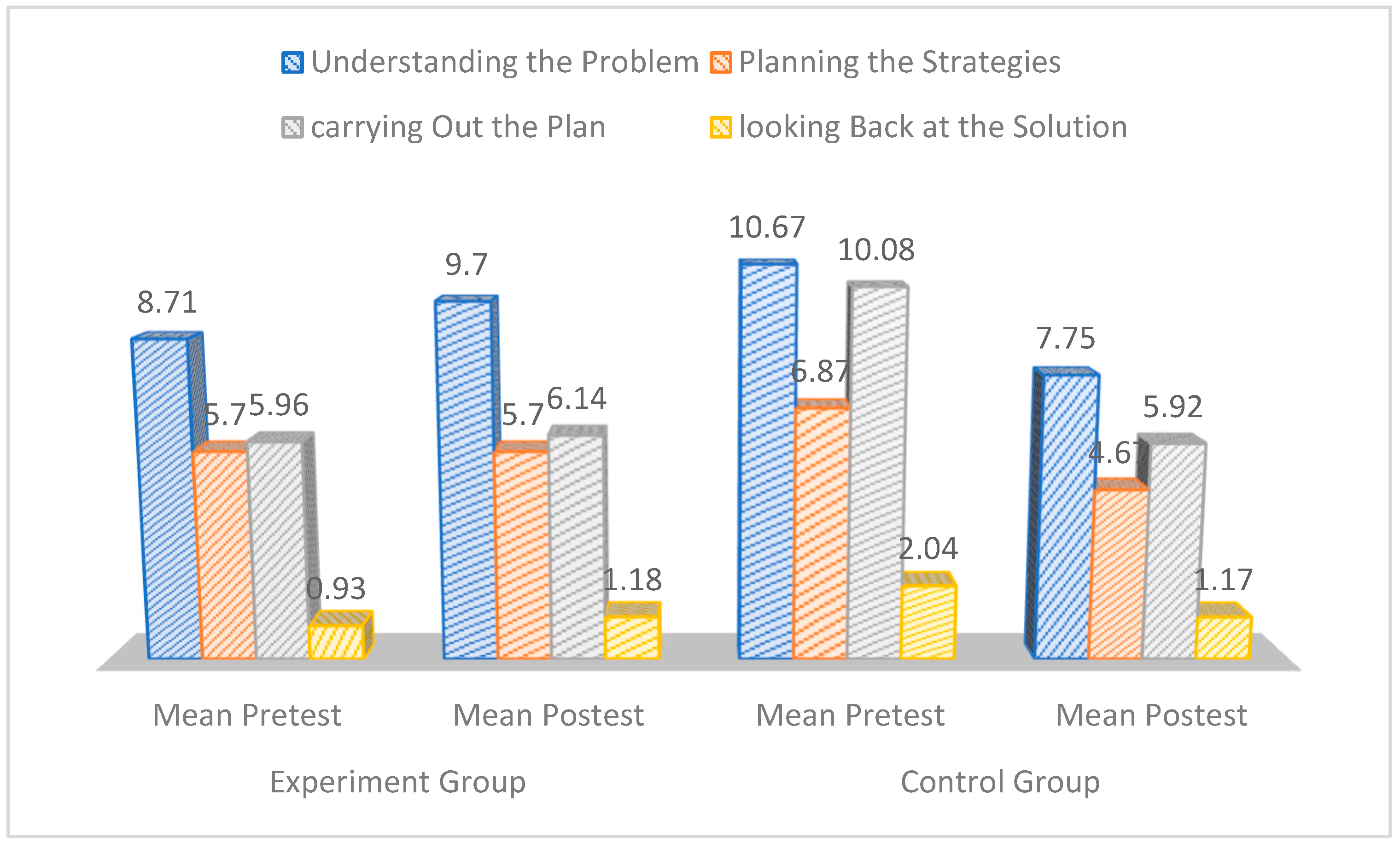
Table 6 presents a comparison of scores for each indicator of algebra problem-solving ability. In the experimental group, the largest increase from pretest to posttest occurred in the indicator of understanding the problem (0.96 points), followed by looking at the strategies (0.25 points) and carrying out the plan (0.18 points). The indicator planning the strategies showed no increase across all indicators.
In contrast, the control group experienced a decrease in every indicator. The largest decrease was observed in carrying out the plan (4.16 points), followed by understanding the problem (2.92 points), and then planning the strategies (2.20 points), and the smallest decrease was in looking back at the solution (0.87 points) (see
Figure 1).
Overall, the experimental group, which used visualization-based worked examples with a deep learning approach, demonstrated greater improvements across all indicators of algebra problem-solving ability compared to the control group, which followed conventional instruction. For detailed improvements in each indicator, refer to
Table 7.
Table 7 presents the improvement in each indicator for the experimental group, highlighting that the largest increase occurred in the understanding the problem indicator, while the smallest increase was observed in the planning the strategies indicator. In contrast, the control group showed decreases across all problem-solving ability indicators, resulting in higher gains in the experimental group. To determine whether these improvements were statistically significant, both parametric and non-parametric tests were conducted, along with tests for normality and homogeneity of variance.
To examine whether students experienced true improvements in problem-solving indicators, the following hypotheses were formulated:
RQ4. Is the improvement in problem-solving ability for each indicator in the experimental group higher than in the control group? To what extent is the impact of that increase?
Ha5. The improvement in understanding the problem is greater in the experimental group than in the control group.
Ha6. The improvement in planning strategies is greater in the experimental group than in the control group.
Ha7. The improvement in carrying out the plan is greater in the experimental group than in the control group.
Ha8. The improvement in looking at the solution is greater in the experimental group than in the control group.
A preliminary analysis was conducted to test the normality and variance homogeneity of each indicator.
For the understanding the problem indicator, the experimental group showed a non-normal distribution (p = .013 < 0.05), while the control group was normally distributed (p = .122 > 0.05). Variance homogeneity was confirmed for all indicators (p = .099 > .05). Because the data were not fully normal, the non-parametric Mann–Whitney U test was used. The results showed a significant difference between the groups (U = 171.00, Z = −2.925, p = .003, d = 0.42), which indicates a small-medium effect compared to the control group. It means that the treatment provides a moderate improvement in problem-solving ability compared to the control, but the absolute increase is relatively small.
For the planning at strategies indicator, the experimental group also had a non-normal distribution (p = .016), whereas the control group was normally distributed (p = .107). Since the data were not fully normal, the Mann–Whitney U test was applied, yielding a significant difference, U = 184.50, Z = −2.651, p = .008; the effect is small (d = 0.34), showing that the treatment provides a slight improvement in strategic planning ability compared to the control, but the practical impact is limited.
For the carrying out the plan indicator, both normality (p > .05) and homogeneity assumptions were met (Levene’s F(1, 49) = 0.531, p = .470). Therefore, a parametric independent-samples t-test was conducted, showing a significant difference between groups, t(49) = 4.38, p < .001. The effect is very small or almost nonexistent (d = 0.053), meaning the treatment almost does not affect the ability to implement the plan compared to the control group.
For the looking back at the solution indicator, both groups’ data were not fully normal (p < 0.05), although variance was homogeneous (p = .147). The Mann–Whitney U test revealed a significant difference, U = 171.00, Z = −2.947, p = .003, and no effect (d = 0.006), indicating that the treatment did not impact the ability to review solutions.
Overall, the posttest comparison analysis shows that the intervention had the most significant effect on the understanding the problem indicator (d = 0.42), indicating a small to medium effect compared to the control group. For the indicator Planning the Strategies, the effect is small (d = 0.34), while for carrying out the plan and looking back at the solution, the effect is very small to nonexistent (d = 0.053 and 0.006). These results indicate that the intervention has a limited effect on improving problem-solving abilities, with the most noticeable practical impact on problem understanding, while other indicators show minimal changes. Interpretation is carried out with caution considering the quasi-experimental design and the imbalance of pretest scores between groups.
4. Discussion
The significant difference in pretest scores between the experimental and control groups indicates an initial imbalance due to the quasi-experimental design without randomization, which could potentially introduce bias. ANCOVA analysis was used to control for these differences, although the assumptions were not fully met and the results still need to be interpreted with caution; non-parametric analysis also supports these findings. ANCOVA analysis with pretest scores as a covariate showed a significant difference between the experimental group (M = 0.02, SD = 0.18, N = 27) and the control group (M = −0.19, SD = 0.16, N = 24), with partial η2 = 0.147, which is considered a large effect. The calculation of Cohen’s d on N-Gain resulted in d = 1.23, which was converted to r ≈ 0.52, indicating a fairly strong relationship between the treatment and the increase in N-Gain. Although these results show statistical significance and a large effect size, the absolute improvement in the experimental group remains small, so the practical effect of the intervention is still limited. Therefore, the results of this study need to be interpreted carefully.
The effectiveness of this approach can be attributed to the way visualization-based worked examples with a deep learning approach provide students with a deep understanding of algebraic concepts and procedures. Visualization helps illustrate concepts, providing students with mental representations of algebraic ideas. According to
Van Garderen (
2006) and
Van Garderen and Montague (
2003), visual representations can be classified into two categories: largely pictorial (images depicting objects or people mentioned in the problem) or predominantly schematic (images depicting spatial relationships described in the problem).
In the experimental class, the instructor provided in-depth explanations to ensure that students thoroughly understood algebraic concepts and could apply them accurately. After establishing conceptual understanding through visualization, students were presented with worked examples on worksheets. They read, analyzed, and followed the examples to observe correct problem-solving procedures.
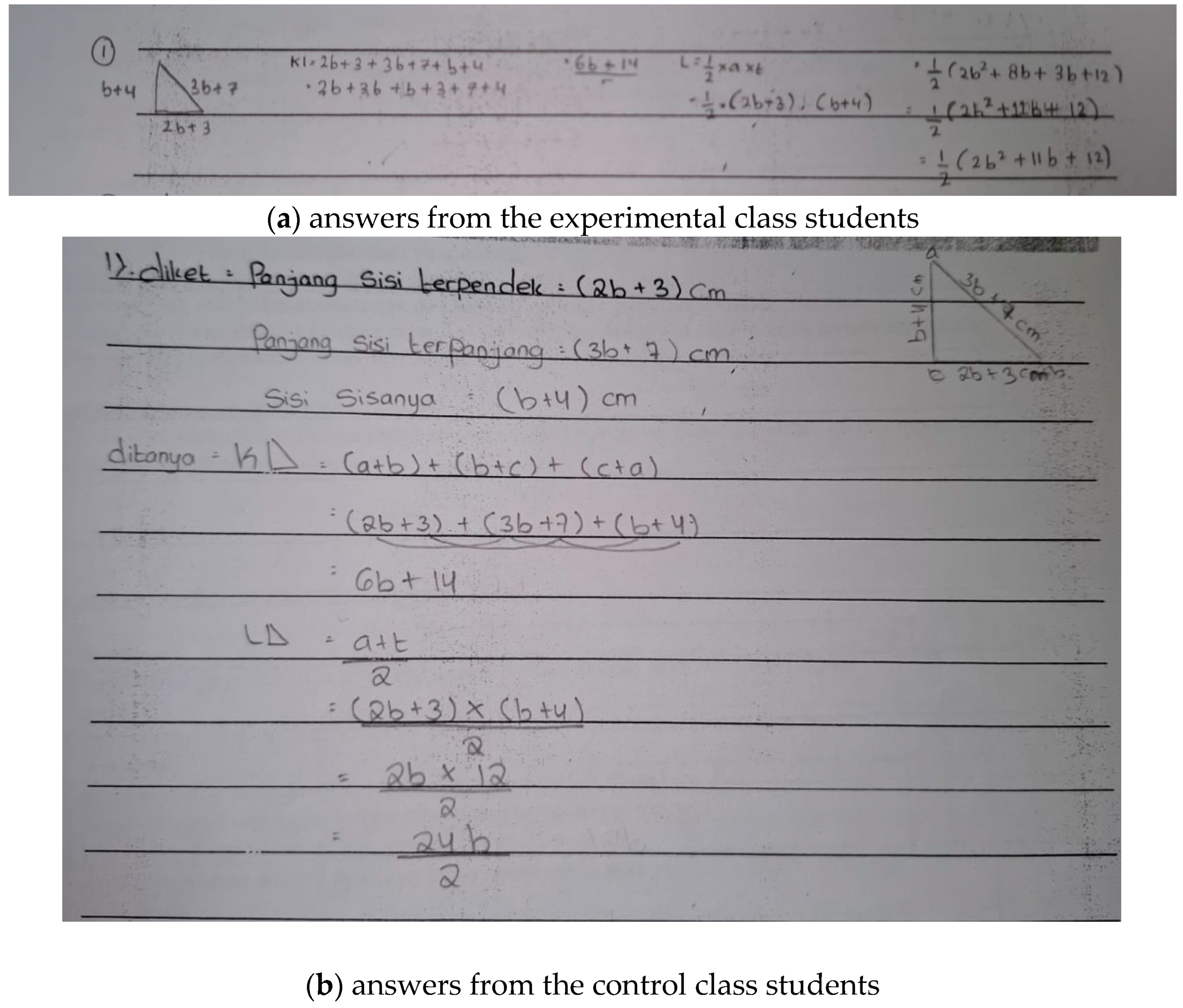
Figure 2 shows students’ responses after receiving treatment (a) and those who received conventional instruction (b) (see
Figure 2).
Figure 2 shows that students in the experimental class demonstrated a strong understanding of algebraic operations, such as addition and multiplication. They worked systematically, beginning by writing down the known information, the question, and the answer, reflecting a clear understanding of the problem. Next, they planned a strategy by drawing a triangle and placing the known information on the diagram. They correctly wrote the perimeter formula, performed the calculations accurately, and concluded with an evaluation that yielded the correct answer.
In contrast, students in the control class also wrote down the known information, the question, and the answer, indicating basic problem comprehension. They planned a strategy by drawing a triangle and writing the perimeter and area formulas. However, minor conceptual errors occurred, such as writing the perimeter formula as (a + b) + (b + c) + (c + d) and the area of the triangle being ½ x base x height. Despite following the calculation strategy, conceptual misunderstandings in multiplication led to errors in the final answers. While addition operations were correct, multiplication errors persisted, indicating that the evaluation of the solution was incomplete for the control class students.
These findings align with
Booth et al. (
2013), who reported that examples accompanied by prompts for self-explanation can effectively enhance students’ conceptual understanding and procedural skills in algebra when integrated with guided practice. Specifically, elucidating worked examples during guided practice improves conceptual comprehension relative to guided practice alone. The use of worked examples—whether independently or alongside correct examples—promotes students’ conceptual understanding.
Worked examples also help alleviate cognitive load (
Chinnappan & Lawson, 1996;
Huang, 2021;
Sweller et al., 2019) by combining learned concepts with visualization, which aids in knowledge construction and allows students to accurately solve problems. In the deep learning approach, students first develop a correct understanding of the concepts and gain confidence in solving algebraic problems. They then engage with problem-based worked examples, using various strategies to arrive at accurate solutions. As
Yayuk et al. (
2020) note, these strategies enable students to demonstrate creativity in resolving difficulties, although not all students achieve top performance.
Overall, students can enhance their cognitive abilities through worked examples integrated with the deep learning approach. This approach enables students to effectively integrate conceptual knowledge and apply it to solving real-life and story-based problems. Three key elements contribute to improving problem-solving skills: textbooks, software, and teachers (
Verschaffel et al., 2020). Teachers should regularly introduce students to simple, routine word problems as examples to strengthen their problem-solving strategies (
Csíkos & Szitányi, 2020).
Based on the research findings, it was found that there is no significant difference in the improvement of students’ metacognitive awareness between the group receiving instruction using visualization-based work examples with a deep learning approach and the group receiving conventional instruction. Based on the statistical results, it was found that there is a significant improvement in problem-solving abilities and a large effect, but in reality, the effect is small. Therefore, this intervention is limited, so their metacognitive awareness did not increase after the intervention. Therefore, it is indeed important to emphasize strengthening cognitive knowledge and cognitive regulation as strategies to improve students’ mathematics achievement, especially through the gradual development of their problem-solving skills (
Abidin, 2026).
Conceptually, the findings of this study indicate that the intervention contributes more to cognitive processes than to metacognitive processes. Cognition plays a role in understanding and processing information, while metacognition regulates and controls that process through planning, monitoring, and evaluation (
Flavell, 1979). In this context, the use of visualisation and deep learning approaches seems effective in helping students build problem representations, thereby enhancing their abilities in the early stages of problem-solving, particularly in understanding the problem. However, because the intervention did not explicitly target metacognitive regulation, students have not optimally developed the ability to plan strategies, monitor processes, and evaluate solutions in accordance with the actual results, and there was a decrease in both classes after the intervention was carried out. This explains why the improvement is more evident in the initial indicators, while the advanced stages show limited effects. Thus, although the intervention is capable of strengthening cognitive processing, its effectiveness in comprehensively improving problem-solving abilities still depends on the integration of strategies that support the development of students’ metacognition. Therefore, the development of subsequent interventions needs to explicitly integrate metacognitive strategies in order to optimally enhance all stages of problem-solving. This shows that students’ metacognitive awareness does not fully depend on the teaching model used by the teacher. Therefore, the intervention did not have an observable impact on students’ metacognitive awareness.
This aligns with the findings of
Flavell et al. (
1993), who reported that children often face difficulties applying their understanding of memory and learning strategies to regulate their cognition. They have not yet integrated their metacognitive knowledge and regulatory skills into a unified framework, which means that many of the abilities they possess remain dormant and are difficult to apply outside the context in which they were learned.
According to Piaget’s cognitive development theory, middle school students are in a transitional phase, moving from the concrete operational stage to the formal operational stage. This development supports a more mature ability to think abstractly and logically. However, students develop at different rates, and learning should be adapted to each individual’s cognitive readiness. In the formal operational stage, middle school students are able to think abstractly, use reasoning, approach problem-solving systematically, understand algebraic concepts, and develop critical thinking skills (
Piaget, 1952). Based on the results from
Özcan (
2016), metacognition contributes 4% to problem-solving, 13% to internal motivation, and 7% to students’ willingness to complete homework. These findings indicate that metacognitive awareness is internally developed through individuals’ evaluation of their own efforts and outcomes, as well as their intrinsic motivation for self-improvement. Thus, students have not yet realized the importance of metacognition (or non-metacognition) because these differences may be caused by the limited capacity of executive functions in children’s minds and different brain functions (
Csíkos, 2022).
As
Schraw and Moshman (
1995) state, effective learners activate relevant knowledge from memory, employ automatic procedures when appropriate, allocate resources strategically, use selective strategies, and self-motivate to engage deeply with the material, thereby enhancing control over the learning process. In addition to students’ cognitive abilities, teacher reflection plays a crucial role.
Paris and Byrnes (
1989) suggested that self-directed reflection develops as part of self-correction and gains importance with age. Similarly,
Karmiloff-Smith (
1992) argued that reflection helps reorganize knowledge, enhancing theoretical comprehension of cognition.
Metacognitive awareness has a particularly strong influence on students with advanced cognitive development, such as pre-service mathematics educators. The findings of this study contrast with those of
Hidayati et al. (
2025) and
Sümen and Çalışıcı (
2016), which suggested that metacognitive awareness significantly predicts problem-solving abilities, accounting for 15% of the variance. However, those studies focused on pre-service mathematics teachers, who may employ moderate metacognitive awareness to formulate problem-solving strategies. Students with moderate metacognitive awareness often fail to monitor the steps involved in problem-solving effectively.
Moreover,
Adinda et al. (
2021) identified substantial deficiencies in students’ metacognitive awareness when solving absolute value problems, including failures to recognize errors in problem identification and algebraic procedures. They also struggled to acknowledge incorrect actions. The development of metacognitive strategies is therefore essential.
Salam et al. (
2020) found that behavior-based metacognitive strategies can significantly enhance metacognitive awareness in mathematics education, particularly in analytical skills. For secondary school students, problem-solving skills play a critical role in mathematics achievement, and metacognitive awareness supports this development (
Hassan & Rahman, 2017). Learning models such as Realistic Mathematics Education (
Alindra & Fauzan, 2019) and scaffolding approaches (
Csíkos, 2022) should be emphasized in schools to foster both problem-solving and metacognitive skills.
Based on the research findings, metacognitive awareness is not the main predictor in improving problem-solving ability. only pretest problem-solving ability significantly predicts posttest problem-solving performance, while metacognitive awareness does not emerge as a statistically significant predictor. Initial abilities serve as a critical foundation for learning because they function as a cognitive structure that facilitates the integration of new information (
Piaget, 1972).
Ausubel (
1968) emphasized that students’ prior knowledge is the primary determinant of learning success. In the context of problem-solving, prior ability helps students recognize patterns, select appropriate strategies (
Pólya, 2004)), and reduce cognitive load during information processing (
Sweller, 1988). Furthermore, adequate prior knowledge supports the development of metacognitive awareness through planning, monitoring, and evaluation processes (
Flavell, 1979).
Abdullah et al. (
2014) assert that the complexity of the problem-solving process requires students to integrate multiple cognitive and metacognitive components to arrive at correct solutions.
Yildirim and Ersözlü (
2013) note that problem solving involves not only finding the correct answer but also achieving a deeper understanding and mastery of the process. Metacognitive awareness, in particular, enables students to strategize, monitor, and assess the effectiveness of their problem-solving approaches.
These findings contrast with numerous prior studies that reported a positive correlation between problem-solving skills and metacognitive awareness (
Gultepe et al., 2013;
Abdullah et al., 2014;
Osman, 2010;
Yildirim & Ersözlü, 2013),
Yildirim and Ersözlü (
2013) argue that effective problem-solving requires students to engage both cognitive and metacognitive processes. Selecting appropriate strategies and evaluating alternatives exemplify the cognitive processes students encounter, while metacognitive processes such as monitoring help regulate and evaluate performance.
Several factors may explain the lack of correlation in this study. External factors include insufficient teacher support in developing students’ cognitive maturity and deepening their skills. Internal factors involve the still-maturing ability of junior high school students to self-manage according to planned learning strategies and to recognize their own strengths and weaknesses. Additionally, a dislike of mathematics may also contribute to the weak relationship between problem-solving ability and metacognitive awareness.
Nevertheless, prior research confirms that metacognitive awareness can enhance problem-solving development and improve student achievement.
Hassan and Rahman (
2017) emphasize the importance of metacognitive awareness in mathematics learning, while (
Siqueira et al., 2020) note its close relationship with motivation. Students with strong metacognitive awareness tend to employ more effective problem-solving strategies and achieve better learning outcomes than those with weaker metacognitive skills (
Alindra & Fauzan, 2019).
Based on the result that the intervention had the most significant effect on the “understanding the problem” indicator, the treatment provided a moderate improvement in problem-solving ability compared to the control, but the absolute increase was relatively small. This is evident in the worked example where students understand well how to follow the examples in the worksheet, so with the intervention, their ability to understand the problems has improved. Visualization helps students understand problems in questions so that their reasoning abilities begin to be utilized.
Students can understand information clearly and not misunderstand when interpreting problems in questions into algebraic equations. This aligns with
Cai (
2003)’s findings that problems facilitate the assessment of students’ cognitive processes, their application of solution strategies, the justification of their reasoning, and their ability to formulate new problems derived from a given circumstance. In the control class, students do not have a guide to understand the problems well but only listen to the teacher explaining at the blackboard and do the exercises given by the teacher, because the teacher provides a conventional instructional design.
Understanding the problem stage is a crucial initial step in the problem-solving process, involving not only the ability to read the problem but also conceptual understanding, identification of important information, and the formation of a mental representation of the problem. According to
Pólya (
1945), problem solvers need to first understand what is known and what is being asked before proceeding to the next stage. This process also involves the ability to identify relevant information and ignore irrelevant information, as explained by
Schoenfeld (
1985). Furthermore, problem understanding is strongly influenced by the activation of prior knowledge, which allows individuals to link new information to existing cognitive structures (
Ausubel, 1968). From a cognitive perspective, this process also includes the formation of a mental representation or model of the problem, which plays a crucial role in determining subsequent problem-solving strategies (
Mayer, 2002). Thus, the success of the problem-understanding stage is crucial for the overall effectiveness of the problem-solving process.
Next is planning strategies; this indicator also increased after the intervention with a small effect, showing that the treatment provides a slight improvement in planning strategies compared to the control, but the practical impact is limited. After the students accurately understand the problem information without any misunderstandings, they then plan the strategies to be used in solving the problems given by the teacher. In the experimental class, students were provided with worksheets and example problem guides in the form of worked examples with visualizations using a deep learning approach. In the worked examples, the teacher provided various strategies for solving the problems, giving students multiple strategy references to use in answering practice questions. This helps students develop their prior knowledge already stored in their memory, and the teacher recalls this through the understanding of algebra concepts previously taught. Thus, students’ cognitive abilities develop due to the variety of strategies that will be used. Unlike the control class, the teacher only provided practice questions without any variation in strategies to solve the problems. This is in line with the result of
Yildizli and Güner (
2025); they found that by thinking about difficulties and coming up with solutions, one can acquire mathematical thinking skills and, by extension, come up with new approaches to the same challenges.
Next is carrying out the plan. The effect is very small or almost nonexistent, meaning the treatment almost does not affect the ability to implement the plan compared to the control group. In this indicator, students were already able to accurately use the strategies they had planned beforehand, so in implementing the strategies used, they were able to write according to the existing algorithms/steps. This proves that the visualization-based worked example intervention with deep learning cannot enhance problem-solving abilities, especially in carrying out the plan, as students are able to write answers and document the process of answering based on the strategies they previously employed. In this case, students know what solution will be used. This is in accordance with
Keleş and Yazgan (
2022), focusing on the examination of commonly and widely recognised strategies, such as making a systematic list, making a table, making a drawing or diagram, reasoning, writing an equation and inequation, looking for a pattern, simplifying the problem, animating, guessing and checking, and working backward.
Last is looking back at the solution. There is no effect, indicating that the treatment does not impact the ability to review the solution. This is because many students are still aware of the importance of rechecking the answers they have completed. Thus, there are some students who follow the formula but make mistakes in calculations/additions. This is important in improving students’ problem-solving skills to review or double-check whether their answers are correct or not. In the experimental class, looking back at the solution is done in terms of reflection in learning. After students finish working on the exercises in the worksheet, they try to present their answers on the whiteboard and evaluate the results together, allowing students to understand what needs to be corrected if they are wrong. It is very important that reviewing solutions can enhance problem-solving skills, which is in contrast to the control class, where students do not reflect on their exercise results. This is in line with the opinion of
Bolat and Arslan (
2024) that if looking back at the solution is done in the classroom, students will be able to cultivate curiosity, think critically at a deeper level, and also have flexible strategies. To get a solution to a specific problem, the students must employ several advanced cognitive skills, such as analysis, interpretation, reasoning, prediction, evaluation, and reflection (
Hassan & Rahman, 2017).
Analysis per indicator also showed that the intervention primarily impacted the problem-understanding stage, while other aspects of problem-solving were not optimally developed. Thus, this intervention can be considered a potential approach to support students’ initial understanding, but cannot yet be widely recommended as a best practice. Its implementation by teachers should be done selectively and combined with other more comprehensive strategies to improve students’ overall problem-solving ability and metacognitive awareness.
Theoretically, the effectiveness of the intervention can be explained through the cognitive mechanisms involved in visualization-based learning and the deep learning approach. Visualization helps students build more concrete mental representations of problems, thereby facilitating the initial stages of problem-solving, particularly in understanding the problem. This is in line with problem-solving theory, which emphasizes the importance of problem representation as a crucial initial step (
Pólya, 1945;
Schoenfeld, 1985;
Schoenfeld, 2016b). Additionally, the deep learning approach encourages deeper cognitive engagement through processes of elaboration, concept connection, and reflection, which theoretically can enhance the quality of understanding compared to surface learning (
Biggs & Tang, 2011). However, research results indicate that the impact of the intervention is more dominant at the stage of understanding the problem, while advanced stages such as planning and evaluation have not yet developed significantly. This indicates that although the intervention successfully supported the formation of initial representations, support for metacognitive processes and advanced strategies remains limited. Thus, the mechanism of this intervention seems to operate primarily at the basic cognitive level and has not yet fully optimized the self-regulation and monitoring processes required for advanced problem-solving. Therefore, this intervention is more appropriately positioned as an approach that supports the initial phase of problem-solving, but requires integration with metacognitive-based strategies to achieve a more comprehensive impact.
Conceptually, the intervention in this research operates through a phased mechanism that begins with the use of visualization in worked examples to support the formation of students’ mental representations of the problem. This representation then facilitates the deep learning process, particularly in connecting concepts and understanding the structure of the problem more deeply. A better understanding at this early stage subsequently contributes to the improvement of problem-solving abilities, particularly in the indicator of understanding the problem. However, because the intervention does not explicitly target metacognitive strategies such as planning, monitoring, and evaluation, its impact on the advanced stages of problem-solving tends to be limited. Thus, the relationship between the intervention and learning outcomes can be understood as an indirect process mediated by the quality of representation and the depth of students’ cognitive processing.
This finding provides a theoretical contribution by demonstrating that a visualization-based worked example within the framework of deep learning is more effective in supporting the early stages of problem-solving compared to the later stages, thereby emphasizing the importance of integrating metacognitive strategies to achieve more comprehensive results.