Review

Sustainability Knowledge Transfer in Higher Education: A Narrative Review


Institute of Economics, Faculty of Economics and Business, University of Debrecen, Böszörményi Str. 138, 4032 Debrecen, Hungary
Educ. Sci. 2026, 16(4), 570; https://doi.org/10.3390/educsci16040570
Submission received: 26 January 2026 / Revised: 24 February 2026 / Accepted: 16 March 2026 / Published: 3 April 2026
(This article belongs to the Section Higher Education)

Abstract

The dissemination of sustainable knowledge within the domain of higher education has grown exponentially since the implementation of the UN’s SDGs; however, the body of evidence is currently fragmented across various institutional and educational sectors. This research synthesizes review-level evidence on how institutions of higher education provide for the dissemination of sustainable knowledge and develop the competencies necessary to support it, through a narrative literature review with a supporting structured Web of Science search, transparent narrowing, and interpretive thematic synthesis. An evidence set of focused relevance (2015–2025) was established from an initial total of 6604 records and through the subsequent full-text analysis yielded a final corpus of 63 review articles. Two dominant theme categories were identified: (i) Institutional Embedding and Governance Level Integration and (ii) Educational Level Implementation. A third area of investigation mapped the development of the discipline through both bibliometric and narrative reviews. A common cross-cutting constraint is that specific links between mechanisms/outcomes, as well as comparative analyses of student outcome metrics across studies, are not uniformly documented, which limits cumulative inferences about effective practices. Thus, greater clarity is needed regarding linkages between competence objectives, curriculum, pedagogy, assessment, and measurable outcomes. Additionally, the governance conditions are frequently referenced as enabling factors.

1. Introduction

Sustainability and Education for Sustainable Development (ESD) have become increasingly prominent in higher education, and higher education institutions (HEIs) are widely discussed as actors that can support societal transformation through education, research, and institutional practice. As such, sustainability and Education for Sustainable Development (ESD) are becoming increasingly widespread across educational levels. However, the higher education context has its own unique characteristics, as HEIs can positively affect multiple domains, including curriculum and pedagogy, research agendas, campus operations, governance, and external partnerships. The broad-based role of Higher Education Institutions in promoting ESD and the SDGs has also been discussed extensively in the HESD literature, with respect to whole-institution approaches and institutional integration (Lozano et al., 2015; Menon & Suresh, 2020). Therefore, due to these multi-domain influences, sustainability knowledge transfer within higher education can be interpreted both as an educational issue and as an institutional integration/implementation issue. The HESD literature is also fragmented in a number of ways. Firstly, the evidence is spread over several thematic streams of research that are largely independent of each other. Secondly, the thematic streams are spread over a number of different disciplinary sub-fields. Finally, this evidence base is lacking in terms of the degree to which there has been a cumulative synthesization of the findings across these thematic streams. These three features of the HESD literature create significant barriers to consolidating findings from individual studies into comparable “what works” claims regarding higher education practice (Hallinger & Chatpinyakoop, 2019; Lim et al., 2022; Vargas-Merino et al., 2024; Wu & Shen, 2016). Prior reviews often focus on specific disciplines, single institutions, or individual educational solutions (e.g., particular pedagogies). As a result, competence and learning-outcome frameworks, curriculum design, assessment practices, and institution-level embedding are frequently discussed in partially separate streams of evidence. Consequently, it is challenging to determine what is currently well-established, where the most robust evidence exists, and what gaps would most hinder the further development of evidence-informed higher education practice. As a result, this study conducted a narrative review of the review literature, supported by a structured database search and a transparent narrowing and synthesis procedure, to summarize how universities facilitate sustainability knowledge transfer and competence development. An explicit analytical framework is used to synthesize existing, disparate research literature regarding sustainability knowledge transfer in higher education and its use as a multi-level, educational implementation problem; i.e., the development of educational outcomes is influenced by organizational-enabling conditions that exist at the level of the institution. Two, interrelated pathways of synthesis were employed to organize this analysis: (1) Institutional Embedding (i.e., leadership and strategy, governance and accountability, campus operations and external engagement), and (2) Educational-Level Implementation (i.e., competence and learning outcome frameworks, curriculum integration, pedagogy and assessment). These two pathways were used to illustrate how institutional arrangements function both as enablers or barriers to educational mechanisms and to describe how these mechanisms can be related to measurable student outcomes. A critical distinction was made regarding descriptive status claims vs. explanatory mechanisms and practice implications to avoid confounding different types of evidence and to preserve an interpretive approach for the synthesis of the literature. The following three research objectives guided this study:
(1)
To map the thematic area(s) through which the discussion of sustainability knowledge transfer occurs in the higher education research literature;
(2)
To provide a synthesis of the primary evidence on competence/learning outcome framework(s); curriculum integration approach(es); pedagogical strategy(ies); and assessment practice(s);
(3)
To identify recurring research gap(s) and practice-implication(s), with a focus on how educational mechanism(s) connect to measurable student outcome(s) and to institution-level implementation/governance.

2. Materials and Methods

The purpose of this research was to investigate how universities can facilitate the transfer of sustainability knowledge and the development of competencies by synthesizing existing knowledge on this subject. To achieve this objective, a narrative literature review was conducted, supported by a structured database search and a transparent selection and synthesis procedure. The methodology used both a narrative review and an interpretive thematic synthesis in combination with a structured database search to ensure that the studies identified are clearly traceable and have been selected using transparent methods. The use of this methodology follows recognized typologies and guidelines for conducting both narrative and integrative literature reviews, in which the primary goal is to synthesize concepts rather than to provide comprehensive coverage as part of a predefined protocol (Grant & Booth, 2009; Snyder, 2019; Torraco, 2016). A combination of keyword-driven identification could emphasize the dominant vocabularies used in a discipline and could potentially undervalue research that is conceptually related but has been documented with different terms than those typically utilized in the discipline. The use of full-text assessment criteria to narrow down the search results was an effort to mitigate this potential issue, and thematic analysis was also conducted at the full-text level (Snyder, 2019; Torraco, 2016).
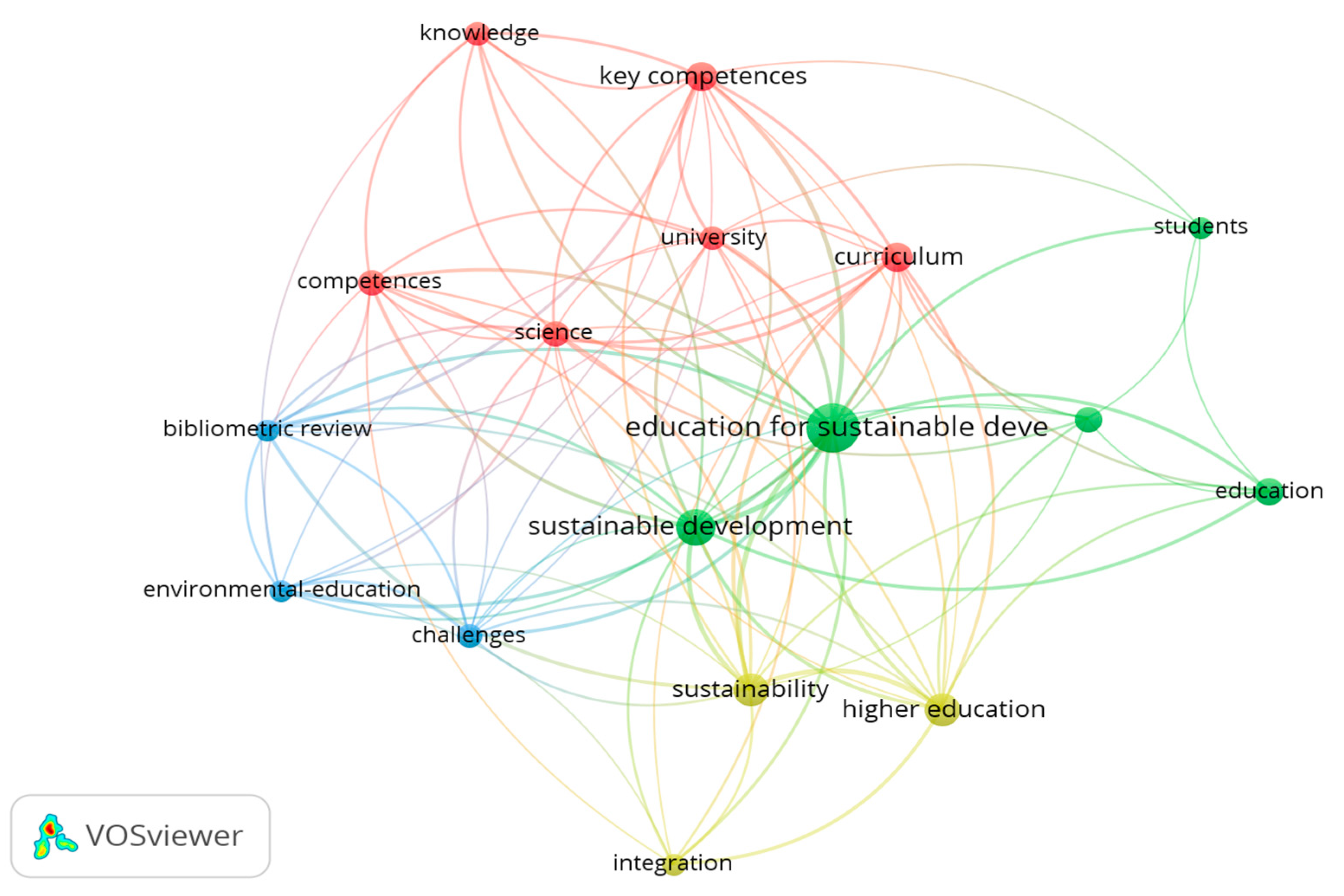
The literature review was conducted in the Clarivate Web of Science Core Collection database. This study was restricted to only peer-reviewed review articles that were available in WoS, in order to provide a synthesis of the field-defining interpretations of sustainability knowledge transfer in higher education. The time frame of 2015–2025 was selected for this study to represent the era of accelerated HESD research related to the SDGs as well as to document the recent expansion into sub-streams focused on competency-based learning, curriculum design, and assessment methods. The exploratory Topic search was formulated around sustainability and higher education using core terms related to sustainability/sustainable development, education for sustainable development/SDGs, and higher education (topic: title, abstract, author keywords). The results have been refined with the following filters: Document Types: Review Article, Language: English, and Publication Years: 2015–2025. With the above settings, 6604 relevant records were flagged in the Web of Science Core Collection. Bibliometric mapping was applied at the exploratory stage to provide a descriptive overview of the conceptual structure of the retrieved literature. The mapping was conducted in VOSviewer 1.6.20. using a keyword co-occurrence network constructed from bibliographic metadata (title, abstract, and author keywords). Co-occurrence refers to the frequency with which two terms appear together within the same record; VOSviewer applies association strength normalization to derive term relatedness from co-occurrence patterns (van Eck & Waltman, 2010). In the resulting map, terms positioned closer to each other indicate stronger relatedness based on these normalized co-occurrence links, while clusters represent groups of terms that are more strongly related to each other than to terms in other groups. This visualization was used for descriptive scoping and transparent reporting of the literature landscape and was not used as an inferential statistical test.
In Figure 1, the research area focuses on the two main themes “Education for Sustainable Development” and “Sustainability” and forms the core of the entire VOSviewer keyword co-occurrence network (van Eck & Waltman, 2010). In addition to this central core, the network includes several thematic clusters, all connected. Several interrelated thematic clusters are visible. A first cluster centers on the student dimension of ESD (e.g., “students,” “education”). A second cluster is focused on the curricular and institutional dimensions of implementing ESD (e.g., “curriculum,” “university,” “key competencies,” “knowledge”). The third cluster, based on “Higher Education” and “Integration,” indicates an additional literature base that examines sustainability as a separate integration problem in Higher Education. The link between “Bibliometric Review” and “Environmental Education” may indicate a research line that follows the historical origins of the field and a trend-based approach to the study of research. Overall, the network is consistent with the idea that sustainability knowledge transfer in Higher Education is primarily discussed from a competence- and curriculum-focused perspective; therefore, it offers possibilities for further research on linking institutional integration with student outcomes.
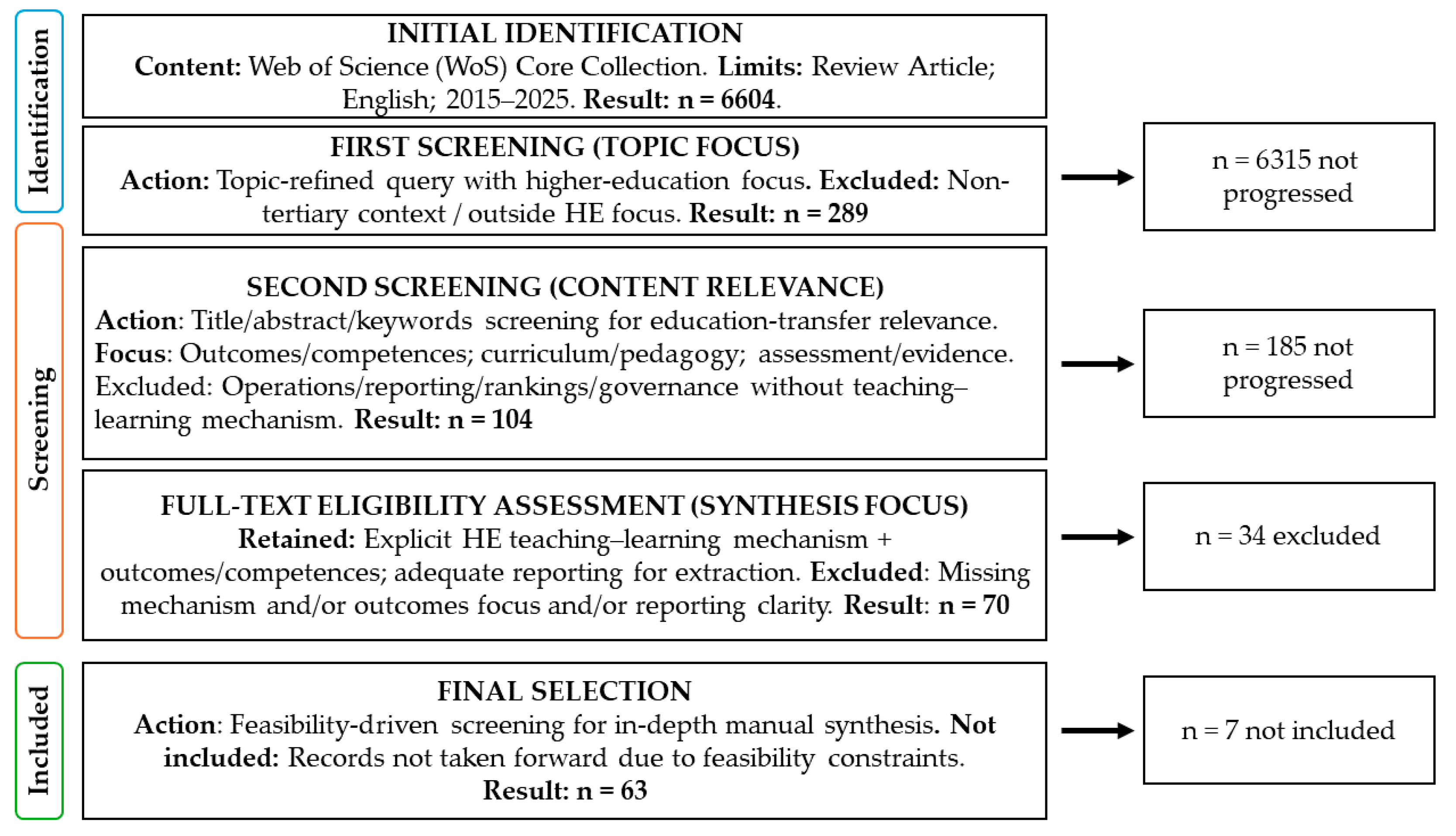
Given the size of the exploratory results (n = 6604), a topic-refined query was applied to construct focused higher-education evidence set for synthesis. No additional bibliographic limits were introduced beyond the focused keyword query and the stated database filters. The following keywords were used: (“higher education” OR “tertiary education” OR university OR universities) AND (“education for sustainable development” OR ESD OR SDG OR SDGs OR “sustainable development” OR sustainability OR sustainable) AND (“sustainability competence” OR “sustainability competences” OR “key competence” OR “key competences” OR “learning outcome” OR “learning outcomes” OR “graduate attribute” OR “graduate attributes” OR curriculum OR “curriculum integration” OR pedagogy OR pedagogical OR “course design” OR “transformative learning” OR “experiential learning” OR “service learning” OR “problem based learning”)) NOT (“primary school” OR “secondary school” OR “high school” OR “K-12” OR K12). As a result, this refinement yielded 289 records in the Web of Science Core Collection. Titles, abstracts and keywords were then used to screen for education-transfer relevance, and 104 records were taken forward for full-text assessment and manual thematic extraction (n = 185 not progressed). The shortlist size (n = 104) reflects feasibility constraints for full-text assessment and manual thematic extraction rather than a fixed top-N rule.
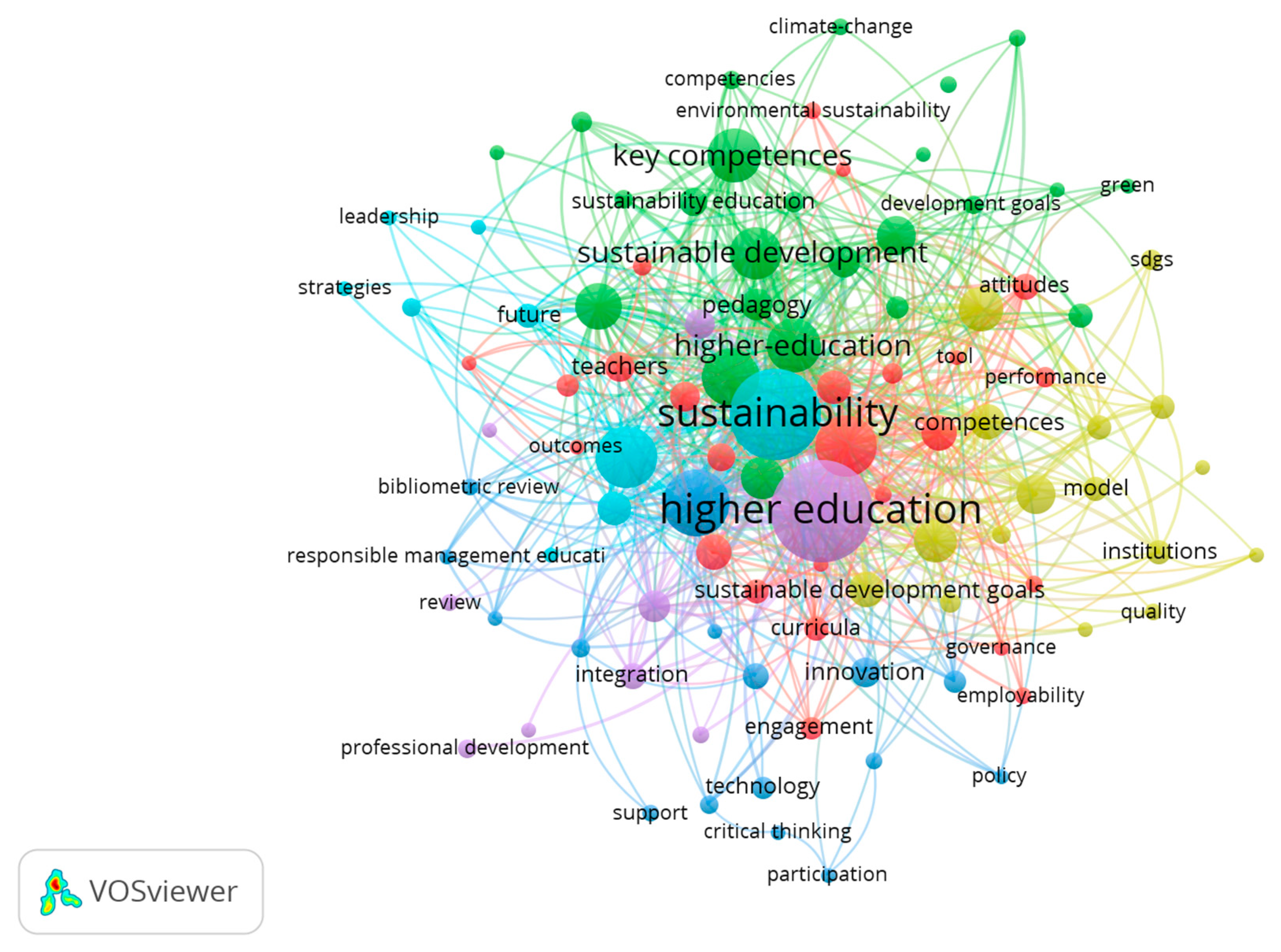
In Figure 2, the co-occurrence of keywords in the VOSviewer network is organized around “Education for Sustainable Development” and “Sustainable Development”. The three main recurrent clusters are: (i) Student-related concepts (e.g., students, education), (ii) Curricula and competence-based implementation (e.g., curricula, universities, key competences), (iii) Integration-related concepts (e.g., higher education, integration). Globally, the map illustrates that, after filtering, the literature is most densely linked to the competence and curriculum implementation; Institutional integration can be seen as an isolated stream from the others, which could indicate a potential area to improve the linkages between the embedding of institutions and their effects on the students’ results.
In order to provide a structured and transparent approach to narrowing down the remaining large number of relevant studies after the first filtering step, a rule-based relevance scoring approach was applied to assign each record an initial relevance score; the screening was informed by whether predefined education-transfer related terms were present in the title, abstract, or keywords of the study. In addition to determining whether the terms were present, a second level of analysis was conducted to assess whether key terms that co-occurred within the same record were present together in the same study. The next step involved shortlisting 104 studies for full-text assessment from the focused set of 289 records; these studies would then be subjected to detailed thematic extraction and narrative synthesis. This process ensured that the final sample of studies selected for inclusion in the qualitative synthesis captured an education-focused subset of studies in the WOS database, while at the same time limiting the sample size to allow completion of the thematic extraction and narrative synthesis.
A rule-based relevance scoring step was applied solely as a transparent prioritization device to focus full-text reading for a narrative synthesis, given the breadth and heterogeneity of the retrieved literature and the feasibility limits of reading all candidates in depth. No PRISMA-style protocol or automated eligibility decision was implemented, and inclusion was not determined by the score. Instead, the score was used to rank records so that conceptually central contributions were read first and taken forward to thematic extraction, while interpretive judgement was retained at the full-text stage where concepts, definitions, and contributions to the narrative framework could be assessed. Ranking or prioritization approaches of this kind are well documented in review workflows as information-retrieval or text-mining support, where the purpose is to order screening or reading effort rather than to replace reviewer judgement or to exclude studies automatically (Grant & Booth, 2009; Greenhalgh et al., 2005; Waffenschmidt et al., 2018).
For the 104 records taken forward to full-text assessment and thematic extraction, the following data were extracted (where available):
  • The review approach reported by the article (systematic, scoping, bibliometric, meta-analytic);
  • The education dimension being focused upon (competences, curriculum, pedagogy, assessment);
  • Any disciplinary focus (e.g., business, engineering, etc.);
  • The primary reported findings from each article, as well as any identified gaps in knowledge.
The synthesis utilized a thematic-narrative method; the themes evolved as they reflected recurring trends in the synthesized literature and were informed by examples of exemplary review studies in major sub-streams (exemplary competence assessment tool reviews, exemplary experiential learning outcome studies, exemplary whole-institutional reviews, and exemplary reviews of SDG-linked teaching/learning strategy implementations).
This structured narrowing was used to focus the narrative synthesis on education-transfer mechanisms and measurable learning outcomes, rather than to claim exhaustive coverage of the field (Snyder, 2019). To improve interpretability and align with the study aims, the focused set (n = 289) underwent a two-stage narrowing procedure. First, titles, abstracts and keywords were used to apply an initial relevance scoring based on three record fields (title, abstract, keywords) across three dimensions: (i) review-reporting transparency signals (review type/methodology; clarity of search and selection reporting), (ii) educational mechanisms (curriculum/programme design; pedagogy; assessment), and (iii) learning outcomes/competences (learning outcomes; competences/skills/graduate attributes; measurement/evaluation). Based on this scoring, 104 records were taken forward for full-text assessment and manual thematic extraction (n = 185 did not progress).
An in-depth reading stage retained records that explicitly addressed (i) a higher-education teaching–learning mechanism and (ii) sustainability outcomes/competences with sufficiently clear reporting to support extraction, resulting in 70 eligible records (n = 34 not retained at this stage). Finally, within the eligible set, feasibility-informed narrowing was applied to enable deep manual synthesis, yielding 63 studies for the final thematic narrative synthesis.
The final corpus (n = 63) was synthesized using an interpretive thematic synthesis approach aligned with narrative and integrative review guidance, where the aim is concept development and pattern identification rather than exhaustive protocol-driven coverage (Grant & Booth, 2009; Snyder, 2019; Torraco, 2016). Full texts were read in full and extracted using a structured template capturing: (1) review type and evidence base, (2) higher-education focus and disciplinary scope, (3) the primary sustainability education mechanism(s) addressed (curriculum integration, pedagogy, assessment, governance and institutional embedding), and (4) any explicitly reported outcomes, competencies, or evaluation approaches.
Cross-cutting linkage indicators (L and M). Two cross-cutting binary indicators were recorded across all included reviews to support transparent reporting of limitations discussed in the narrative synthesis. L (mechanism–outcome linkage) was recorded as 1 when an explicit statement linked a specified teaching–learning mechanism (for example, a named pedagogy, curriculum design choice, or assessment approach) to a defined student outcome (for example, competence, learning outcome, knowledge, attitude, or behaviour) in a directional or evaluative way (for example, “is associated with”, “leads to”, “affects”, “improves”), such that mechanisms and outcomes were analytically connected rather than listed separately. M (cross-study outcome-measure comparability) was recorded as 1 when student outcomes were explicitly compared across more than one underlying study (for example, by comparing comparable metrics, synthesizing effect estimates, mapping instruments onto a common construct for comparison, or making an explicit comparability assessment that enabled cross-study comparison). For both indicators, a short supporting excerpt and a page locator were recorded to ensure auditability of coding decisions. Summary of the joint distribution of L and M. Both marginal frequency distributions and a 2 × 2 cross-tabulation of the joint distribution of L and M were prepared to identify four mutually exclusive patterns across the corpus: (i) both L and M present (L = 1, M = 1), (ii) L present and M absent (L = 1, M = 0), (iii) M present and L absent (L = 0, M = 1), and (iv) neither L nor M present (L = 0, M = 0). This cross-tabulation was used to determine whether linkage and outcome-measure comparability tended to co-occur in the same review or appeared independently in the review literature.
The fact that this review was based on a structured narrative format means that the stages of narrowing were focused on providing clear interpretation and relevant themes rather than covering all possible aspects in detail. Consequently, potentially small, niche empirical streams of the literature that have used different terms to describe their research or have been indexed outside of Web of Science (WoS) may be underrepresented as a result. In order to reduce this risk, multiple field searches (i.e., title/abstract/keywords) were conducted; iterative refinement of search queries was employed; and the prioritized subset of records was extracted using full-text data.

3. Results

The commonality across all the reviews in the last corpus (n = 63) was the identification of a set of commonalities among each other as a whole based on the application of the full-text extraction template described in the Materials and Methods of the pattern found to be present across many independent reviews (evaluation mechanisms, outcomes/competencies and methods of evaluation). In the last review corpus, there is consistent evidence of Higher Education Institutions being the primary setting in which sustainability/ESD/SDGs will be implemented in addition to providing an opportunity to develop sustainability-related knowledge and competences through both the practice of education and actions taken at the level of the institution (Hallinger & Chatpinyakoop, 2019; Lozano et al., 2015; Menon & Suresh, 2020; Wals, 2014; Wu & Shen, 2016). To address the requested ordering, the synthesis below is presented from the most frequently referenced ideas to the least frequently referenced ideas across the final corpus (n = 63), as identified through the full-text extraction template. Two overarching themes were most frequently referenced in the included reviews: (i) Institutional Embedding and Governance Level Integration (strategy and leadership, accountability, reporting/disclosure, campus operations, external engagement) and (ii) Educational Level Implementation (competences/learning outcomes, curriculum integration, pedagogy, assessment) (Lozano et al., 2015; Menon & Suresh, 2020; Viegas et al., 2016). Across the final corpus (N = 63), the institutional embedding theme was identified in N = A reviews, the educational implementation theme was identified in N = B reviews, and both themes were identified jointly in N = C reviews (counts derived from the full-text extraction template described in the Section 2). A third recurring theme or “field development” theme comprises the bibliometric and narrative overviews of the field’s history and structure (Fauzi et al., 2022; Hallinger & Chatpinyakoop, 2019).
The institutional embedding pathway has, in each of the reviewed syntheses, a common focus on the entire institution as a whole, which relates to the strategy and leadership, to governance and accountability, to reporting and disclosure, and to campus operations with external engagement (Menon & Suresh, 2020; Wals, 2014; Wu & Shen, 2016). Several studies show that SDG/ESD and sustainability are embedded at the institutional level, and that the emergence of sustainability in higher education is not only a curricular issue but also an institutional-level strategic and operational transformation: the coordination of campus operations, research, education, and community connections (Bizerril et al., 2018; Machado & Davim, 2023; Menon & Suresh, 2020; Popowska & Sady, 2023; Viegas et al., 2016; Viera Trevisan et al., 2024). The SDGs often serve as a “common language” for this, which also links the social responsibility, pedagogical innovation and communication of higher education institutions (Alcántara-Rubio et al., 2022; Eichberg & Charles, 2024; Fauzi et al., 2022; Wu & Shen, 2016). The corpus includes several country- and region-focused overviews that interpret progress and barriers to sustainability in specific contexts (e.g., Pakistan, rural universities in South Africa, post-Soviet regions) (Hinduja et al., 2023; Hovakimyan et al., 2021; Uleanya, 2022). A typical intersection of these is that institutional capacities, leadership, organizational learning, and available resources (including funding) appear as determining conditions (Montenegro de Lima et al., 2020; Sanchez-Carrillo et al., 2021; Viera Trevisan et al., 2024). Sustainability communication and “visibility” have also become a separate sub-topic: this includes summarizing the motivations for online disclosure related to the SDGs and reviewing trends and patterns in sustainability reporting (Ceulemans et al., 2015; Omazic & Zunk, 2021; Rosa et al., 2023; Sawani et al., 2024). In addition, several bibliometric studies highlight research patterns on sustainable performance in higher education and on institutional engagement in climate action (Bimo et al., 2024; Mazutti et al., 2025; Umar et al., 2024).
One of the most consistently reported findings of the research is the systematization of sustainability competencies and the learning outcomes associated with them (Galleli et al., 2019; Gutierrez-Bucheli et al., 2022; Lozano et al., 2015; Lozano et al., 2017; Vysali & Krishnan, 2025). One direction is the integration of competence frameworks and teacher competencies (what the literature considers “sustainability competence” and the teaching skills needed to teach sustainability) (Bates et al., 2022; Corres et al., 2020; Sedkaoui et al., 2025). The other direction is the specific application of competences, such as sustainability-driven entrepreneurial and business development competences (including the Chinese higher education context), and their mapping to teaching and learning methodologies (Y. Liu et al., 2025; Mindt & Rieckmann, 2017). The output dimension of the student side is especially strengthened by the beliefs and attitudes related to sustainability, which appears as a “soft” indicator of learning outcomes in the review literature (Concina & Frate, 2023). The disciplinary formulation of learning outcomes is also emphasized. In engineering education, the overview of sustainability learning outcomes and a summary of global trends in outcome-based education (OBE) linked to the SDG perspective are also presented (Mahrishi et al., 2025). The competency strand is linked to the overview of “meta-competences” and the comprehensive skills needed to address complex, real-world problems, which implicitly points to the transversal nature of sustainability education. A similarly broad interpretation of the outcome is represented by specific “foundational” educational directions linked to sustainability education, such as curricular logic based on self-assessment (in the context of sustainable education) and the summation of health literacy approaches to higher education (Nuryana et al., 2023; Røe et al., 2025).
Based on the research, one of the most common implementation paths of sustainability knowledge transfer is curriculum integration, which is examined by several reviews in different countries and fields (J. C.-E. Liu & Kan, 2023; Pham Xuan & Håkansson Lindqvist, 2025; Tu & Creativani, 2025). Within this, there is a strong focus on the trainings related to design, design and the built environment: a review of the sustainability pedagogy of design and design education, the integration of architecture programmes into sustainability, and the problems of sustainable design education (Taiwan) and policy–practice–pedagogy are also present (Boarin & Martinez-Molina, 2022; Park et al., 2022). Other disciplinary nodes include sustainability in infrastructure construction higher education program offerings, barriers and intervention points in sustainable fashion design education, sustainable food systems higher education, and teaching sustainable tourism events and implications of Japanese higher education (Handler & Tan, 2022; Hassan & Ahmad, 2025; Salminen et al., 2024; Sandanayake et al., 2022; Yang & Ng, 2026). In higher education in management and business, the emergence of sustainability and SDGs is given a separate overview focus, which indicates that curricular integration is relevant not only in technical or design fields (Figueiró & Raufflet, 2015; Nguyen et al., 2025).
At the level of pedagogical outcomes, several reviews emphasize that, in the transfer of knowledge on sustainability, the pedagogical form (how we teach) is at least as important as the content (what we teach) (Bakar et al., 2024; Basheer et al., 2024; Park et al., 2022; Redman et al., 2021; Sedkaoui et al., 2025). For example, a review of the relationship between civic universities and the SDGs explicitly highlights the role of inclusive and transformative pedagogical pathways (Eichberg & Charles, 2024; Lim et al., 2022; Wyness & Sterling, 2015). This is also linked to the summary of community-engaged teaching and learning in higher education as an SDG support mechanism (Hallinger & Chatpinyakoop, 2019; Singh et al., 2024). In the literature on socio-emotional competencies, a meta-analytical summary of mindfulness-based ESD approaches appears, which shows that a part of sustainability education now thinks not only in terms of cognitive but also in terms of affective and social learning goals (Gómez-Olmedo et al., 2020). Finally, although not with a sustainability-specific label, the overview of service design pedagogy (from the point of view of added value and innovation potential) also fits into the scope of pedagogical innovations in higher education (Ding et al., 2023).
A separate thread of the corpus is the emergence of digital transformation and AI in higher education, partly with explicit sustainability framing. These include a review of the links between AI-sustainability-higher education (towards the SHE framework) and a bibliometric analysis of sustainable digital transformation in the context of higher education (Omar & Abdullahi, 2024; Toha, 2026). A further intersection is the interpretation of e-learning from a sustainability perspective (HR in the context of higher education training) and the review of digital teacher competence (Colás-Bravo et al., 2021; McCotter, 2023). The issue of digital competence is also directly reinforced by the article on the digital competence of Chinese in-service university lecturers (Lan et al., 2024). The SDG strand of technological pedagogy is represented by the review of VR applications in higher education, which explicitly positions the topic in an SDG framework (Llanos-Ruiz et al., 2025).
Cross-cutting limitation: linkage of mechanism to outcome, and comparability of outcome measures across studies. The final corpus contained a total of 63 studies. Of these studies, the mechanism-outcome linkage was documented within the review for a total of 46 studies, and cross-study comparison of the outcome measures used was documented for a total of 42 studies. Joint coding of the data provided an indication of the number of studies that included documentation of both linkage and comparative outcome measure use (n = 42), studies that included documentation of linkage but no documentation of comparative outcome measures (n = 4), studies that included documentation of comparative outcome measures but no documentation of linkage (n = 0), and studies that included documentation of neither linkage nor comparative outcome measure (n = 17). These results indicate that there is variability in the reporting of both the linkage of mechanisms to outcomes and the comparison of the outcome measures across studies in this body of evidence.

4. Discussion

The number of studies that provide evidence for this topic is increasing; however, aggregating evidence continues to be a challenge due to the variations across each theme including: competency-based framework, study design and measurement of outcomes. This Discussion uses the final synthesis dataset (n = 63) for all of the analyses described in this paper; the rationale for the three-stage narrowing of the initial dataset (n = 289) to a focus dataset (n = 104), and then to the final eligible dataset (n = 70) is described in the Section 2 and illustrated graphically in Figure 3. Additionally, there appears to be a recurring disconnect with respect to the “linkage” between the specific mechanisms used in teaching and learning processes and resultant demonstrable student outcomes. This “disconnect” limits our ability to determine what works and for whom in an institutional context. In the current study, a “linkage” between an educational institution or teaching-learning mechanism and a particular student outcome (and/or how that outcome was measured) is defined as being present only when at least one of the synthesis papers reviewed explicitly connects the two (i.e., makes a direct cross-level connection). Conversely, concepts are reviewed separately when no such explicit linkage exists.
Firstly, there is considerable evidence to suggest that much of the literature focused on institutional embedding and educational implementation has treated each domain as separate entities; yet in reality these operate as a couple of set conditions and mechanisms. The separation of these two domains into separate entities has resulted in the fragmentation of evidence due to institutional factors being treated as contextual, rather than as mechanisms that can be related to learning outcomes. Secondly, the persistent difference in student outcome measurement is partially due to the prevalence of case-based design, short evaluation horizons, and non-comparable competency measures that combined result in limited cross-study synthesis and cumulative inference. Gaps were identified through the structured identification of recurring limitations and explicit future research needs cited within the included review articles and alignment of those gaps with the two integrative pathways. An area was identified as a gap if it occurred across multiple synthesized papers or when there was a lack of directly measurable outcome evidence for a pathway component. This continued persistence is reflective of broader issues in defining and assessing learning outcomes of sustainability education that are frequently assessed using broad, locally developed instruments that reduce the ability to compare constructs and discourage longer-term and cross-institutional evaluation designs.

What Is Well-Established, Where Evidence Is Strongest, and What Gaps Most Hinder Evidence-Informed Higher Education Practice

In addition to providing a common structure that was consistently applied throughout the final corpus to represent the “implementation” of sustainability knowledge transfer, the reviewed literature provides a multi-level framework for understanding sustainability knowledge transfer:
-
Institutional Domain (strategy, governance, reporting, operations, engagement).
-
Educational Domain (competency frameworks, curriculum integration, pedagogy, assessment).
While evidence for both domains exists in the literature, it is much stronger at the organizational/descriptive level, providing documentation on how institutions implement sustainability through structures (i.e., reporting requirements), strategies (e.g., development of a sustainability plan), and through institution-wide approaches (e.g., developing a sustainability committee). However, when considering comparative/cause-and-effect research on the effectiveness of educational programmes to promote sustainable learning outcomes, evidence is much weaker due to the predominance of case studies; the relatively short time frames over which evaluations occur; and the lack of comparability among outcome measures. Therefore, the largest limitation is the failure to link specific educational program design elements (i.e., curriculum, pedagogy, assessment) with measurable student outcomes, thereby blocking cumulative “what works” inferences based upon empirical data. In addition to this limitation, there are other limitations including the lack of validation of many of the tools and instruments used to measure outcomes, and the practice of treating institutional enablers (i.e., reporting requirements, availability of funding) as context rather than as variables whose effects could be tested.
Based on the overall picture of the reviewed corpus, research on sustainability knowledge transfer in higher education has expanded markedly in the SDG era, while synthesis remains challenging due to thematic and methodological heterogeneity (Machado & Davim, 2023; Wals, 2014; Žalėnienė & Pereira, 2021). However, it is still divergent and complex to compare on several points. The most important gaps and directions for progress are the need to link pedagogical solutions more clearly to specific competences and learning outcomes, to develop more uniform and better-validated measurement tools for impact measurement, and to better understand how leadership, funding, and organizational learning affect implementation at the institutional level. In addition, it is unclear to what extent sustainability reporting and SDG communication will go hand in hand with real educational and organizational change. At the same time, the spread of AI and digital learning environments will create new risks and opportunities for learning outcomes and assessment. However, assessment validity can also be compromised if AI-generated output is indistinguishable from the individual’s own demonstrated competence; conversely, AI-analytic support and AI-based adaptive learning design can also be utilized to provide stronger feedback, scaffolding, and longitudinal measurement of competence development. Finally, context-sensitive comparisons should be strengthened to make it more straightforward which solutions work well in which countries and institutional types.

5. Conclusions

Sustainability knowledge transfer in higher education is primarily depicted in the thematic narrative synthesis of the final corpus (n = 63 review articles) based upon two interdependent domains: institutional embedding and educational level implementation (competence/learning outcomes, curriculum integration, pedagogy and assessment). A common theme throughout the included reviews was that the explicit alignment of competence or outcome target(s) with curriculum and course design decision(s) and assessment approach(es) was often stated as a critical factor in making educational claims demonstrable. Conversely, the reviewed literature has also indicated that the implementation of sustainability education is often influenced by the institutional capacity and/or incentives for such implementations. Digitalization and AI-related technologies are being increasingly referenced in the reviewed literature as both opportunities and challenges, particularly for developing competencies and ensuring the reliability of assessments. Therefore, we would encourage researchers to: (i) enhance comparability in reported outcomes and methods of assessment, (ii) better document the relationships between pedagogical mechanisms and documented student learning results, and (iii) examine contextual institutional conditions that will enable the continued and large-scale provision of sustainability education in higher education.

Funding

This research received no external funding.

Institutional Review Board Statement

Not applicable.

Informed Consent Statement

Not applicable.

Data Availability Statement

No new data were created or analyzed in this study.

Conflicts of Interest

The author declares no conflicts of interest.

References

  1. Alcántara-Rubio, L., Valderrama-Hernández, R., Solís-Espallargas, C., & Ruiz-Morales, J. (2022). The implementation of the SDGs in universities: A systematic review. Environmental Education Research, 28(11), 1585–1615. [Google Scholar] [CrossRef]
  2. Bakar, E. W., Ami, A. F., Syed, A. T. F. M., & Juhary, J. (2024). Navigating sustainable educational practices in higher education: A systematic literature review. International Journal on Studies in Education, 7(1), 48–75. [Google Scholar] [CrossRef]
  3. Basheer, N., Ahmed, V., Bahroun, Z., & Anane, C. (2024). Exploring sustainability assessment practices in higher education: A comprehensive review through content and bibliometric analyses. Sustainability, 16(13), 5799. [Google Scholar] [CrossRef]
  4. Bates, R., Brenner, B., Schmid, E., Steiner, G., & Vogel, S. (2022). Towards meta–competences in higher education for tackling complex real–world problems—A cross disciplinary review. International Journal of Sustainability in Higher Education, 23(8), 290–308. [Google Scholar] [CrossRef]
  5. Bimo, I. D., Sulistyaningsih, E., & Inderawati, M. M. W. (2024). Quantifying the presence of sustainability education and climate change in higher education: A bibliometric study. International Journal of Sustainability in Higher Education, 27(1), 151–172. [Google Scholar] [CrossRef]
  6. Bizerril, M., Rosa, M. J., Carvalho, T., & Pedrosa, J. (2018). Sustainability in higher education: A review of contributions from Portuguese speaking countries. Journal of Cleaner Production, 171, 600–612. [Google Scholar] [CrossRef]
  7. Boarin, P., & Martinez-Molina, A. (2022). Integration of environmental sustainability considerations within architectural programmes in higher education: A review of teaching and implementation approaches. Journal of Cleaner Production, 342, 130989. [Google Scholar] [CrossRef]
  8. Ceulemans, K., Molderez, I., & Van Liedekerke, L. (2015). Sustainability reporting in higher education: A comprehensive review of the recent literature and paths for further research. Journal of Cleaner Production, 106, 127–143. [Google Scholar] [CrossRef]
  9. Colás-Bravo, P., Conde-Jiménez, J., & Reyes-de-Cózar, S. (2021). Sustainability and digital teaching competence in higher education. Sustainability, 13(22), 12354. [Google Scholar] [CrossRef]
  10. Concina, E., & Frate, S. (2023). Assessing university students’ beliefs and attitudes towards sustainability and sustainable development: A systematic review. Trends in Higher Education, 2(4), 705–717. [Google Scholar] [CrossRef]
  11. Corres, A., Rieckmann, M., Espasa, A., & Ruiz-Mallén, I. (2020). Educator competences in sustainability education: A systematic review of frameworks. Sustainability, 12(23), 9858. [Google Scholar] [CrossRef]
  12. Ding, S., de Bont, C. J. P. M., Cockbill, S., & Zhou, Q. (2023). A review of service design pedagogy to identify potential added value to product innovation in higher education. Sustainability, 15(21), 15530. [Google Scholar] [CrossRef]
  13. Eichberg, E. T. A. M., & Charles, A. (2024). The role of the civic university in facilitating inclusive and transformative pedagogical approaches to the sustainable development goals: A systematic literature review. Sustainability, 16(7), 2752. [Google Scholar] [CrossRef]
  14. Fauzi, M. A., Abdul Rahman, A. R., & Lee, C. K. (2022). A systematic bibliometric review of the United Nation’s SDGS: Which are the most related to higher education institutions? International Journal of Sustainability in Higher Education, 24(3), 637–659. [Google Scholar] [CrossRef]
  15. Figueiró, P. S., & Raufflet, E. (2015). Sustainability in higher education: A systematic review with focus on management education. Journal of Cleaner Production, 106, 22–33. [Google Scholar] [CrossRef]
  16. Galleli, B., Hourneaux, F., Jr., & Munck, L. (2019). Sustainability and human competences: A systematic literature review. Benchmarking: An International Journal, 27(7), 1981–2004. [Google Scholar] [CrossRef]
  17. Gómez-Olmedo, A. M., Valor, C., & Carrero, I. (2020). Mindfulness in education for sustainable development to nurture socioemotional competencies: A systematic review and meta-analysis. Environmental Education Research, 26(11), 1527–1555. [Google Scholar] [CrossRef]
  18. Grant, M. J., & Booth, A. (2009). A typology of reviews: An analysis of 14 review types and associated methodologies. Health Information & Libraries Journal, 26(2), 91–108. [Google Scholar] [CrossRef]
  19. Greenhalgh, T., Robert, G., Macfarlane, F., Bate, P., Kyriakidou, O., & Peacock, R. (2005). Storylines of research in diffusion of innovation: A meta-narrative approach to systematic review. Social Science & Medicine, 61(2), 417–430. [Google Scholar] [CrossRef]
  20. Gutierrez-Bucheli, L., Kidman, G., & Reid, A. (2022). Sustainability in engineering education: A review of learning outcomes. Journal of Cleaner Production, 330, 129734. [Google Scholar] [CrossRef]
  21. Hallinger, P., & Chatpinyakoop, C. (2019). A bibliometric review of research on higher education for sustainable development, 1998–2018. Sustainability, 11(8), 2401. [Google Scholar] [CrossRef]
  22. Handler, I., & Tan, C. S. L. (2022). Are we teaching enough? A literature review on sustainable tourism events and the implications for Japanese higher education. Journal of Hospitality & Tourism Education, 34(3), 170–184. [Google Scholar] [CrossRef]
  23. Hassan, M. M., & Ahmad, A. R. (2025). Systematic literature review on the sustainability of higher education institutions (HEIs): Dimensions, practices and research gaps. Cogent Education, 12(1), 2549789. [Google Scholar] [CrossRef]
  24. Hinduja, P., Mohammad, R. F., Siddiqui, S., Noor, S., & Hussain, A. (2023). Sustainability in higher education institutions in Pakistan: A systematic review of progress and challenges. Sustainability, 15(4), 3406. [Google Scholar] [CrossRef]
  25. Hovakimyan, H., Klimek, M., Freyer, B., & Hayrapetyan, R. (2021). Sustainable shift from centralized to participatory higher education in post-soviet countries: A systematic literature review. Sustainability, 13(10), 5536. [Google Scholar] [CrossRef]
  26. Lan, H., Bailey, R., & Tan, W. H. (2024). Assessing the digital competence of in-service university educators in China: A systematic literature review. Heliyon, 10(16), e35675. [Google Scholar] [CrossRef]
  27. Lim, C. K., Haufiku, M. S., Tan, K. L., Farid Ahmed, M., & Ng, T. F. (2022). Systematic review of education sustainable development in higher education institutions. Sustainability, 14(20), 13241. [Google Scholar] [CrossRef]
  28. Liu, J. C.-E., & Kan, T.-Y. (2023). A comprehensive review of environmental, sustainability and climate change curriculum in Taiwan’s higher education institutions. International Journal of Sustainability in Higher Education, 25(2), 375–389. [Google Scholar] [CrossRef]
  29. Liu, Y., Alias, B. S., & Hamid, A. H. A. (2025). Student entrepreneurship competence and its contribution to sustainable development: A systematic review in the context of Chinese higher education. Sustainability, 17(7), 3148. [Google Scholar] [CrossRef]
  30. Llanos-Ruiz, D., Abella-García, V., & Ausín-Villaverde, V. (2025). Virtual reality in higher education: A systematic review aligned with the sustainable development goals. Societies, 15(9), 251. [Google Scholar] [CrossRef]
  31. Lozano, R., Ceulemans, K., Alonso-Almeida, M., Huisingh, D., Lozano, F. J., Waas, T., Lambrechts, W., Lukman, R., & Hugé, J. (2015). A review of commitment and implementation of sustainable development in higher education: Results from a worldwide survey. Journal of Cleaner Production, 108, 1–18. [Google Scholar] [CrossRef]
  32. Lozano, R., Merrill, M. Y., Sammalisto, K., Ceulemans, K., & Lozano, F. J. (2017). Connecting competences and pedagogical approaches for sustainable development in higher education: A literature review and framework proposal. Sustainability, 9(10), 1889. [Google Scholar] [CrossRef]
  33. Machado, C. F., & Davim, J. P. (2023). Sustainability in the modernization of higher education: Curricular transformation and sustainable campus—A literature review. Sustainability, 15(11), 8615. [Google Scholar] [CrossRef]
  34. Mahrishi, M., Ramakrishna, S., Hosseini, S., & Abbas, A. (2025). A systematic literature review of the global trends of outcome-based education (OBE) in higher education with an SDG perspective related to engineering education. Discover Sustainability, 6(1), 620. [Google Scholar] [CrossRef]
  35. Mazutti, J., Lange Salvia, A., Brandli, L. L., & Leal Filho, W. (2025). Higher education institutions catalyzing climate action: Bibliometric review and future perspectives. International Journal of Sustainability in Higher Education. [Google Scholar] [CrossRef]
  36. McCotter, S. (2023). An interdisciplinary scoping review of sustainable e-learning within human resources higher education provision. Sustainability, 15(21), 15282. [Google Scholar] [CrossRef]
  37. Menon, S., & Suresh, M. (2020). Synergizing education, research, campus operations, and community engagements towards sustainability in higher education: A literature review. International Journal of Sustainability in Higher Education, 21(5), 1015–1051. [Google Scholar] [CrossRef]
  38. Mindt, L., & Rieckmann, M. (2017). Developing competencies for sustainability-driven entrepreneurship in higher education: A literature review of teaching and learning methods. Teoría de la Educación; Revista Interuniversitaria, 29(1), 129–159. [Google Scholar] [CrossRef]
  39. Montenegro de Lima, C. R., Coelho Soares, T., Andrade de Lima, M., Oliveira Veras, M., & Andrade Guerra, J. B. S. O. d. A. (2020). Sustainability funding in higher education: A literature-based review. International Journal of Sustainability in Higher Education, 21(3), 441–464. [Google Scholar] [CrossRef]
  40. Nguyen, A. T., Latapí, M., Kemper, J. A., Berger, P., & Lam, H. (2025). Sustainability and sustainable development goals in business higher education research: A systematic literature review. Environmental Education Research, 31(8), 1721–1750. [Google Scholar] [CrossRef]
  41. Nuryana, Z., Xu, W., & Lu, S. (2023). Developing self-esteem-based curriculum as a foundation for sustainable education: A systematic literature review and bibliometric analysis. Frontiers in Education, 8, 957801. [Google Scholar] [CrossRef]
  42. Omar, A. M., & Abdullahi, M. O. (2024). A bibliometric analysis of sustainable digital transformation in developing countries’ higher education. Frontiers in Education, 9, 1441644. [Google Scholar] [CrossRef]
  43. Omazic, A., & Zunk, B. M. (2021). Semi-systematic literature review on sustainability and sustainable development in higher education institutions. Sustainability, 13(14), 7683. [Google Scholar] [CrossRef]
  44. Park, H. Y., Licon, C. V., & Sleipness, O. R. (2022). Teaching sustainability in planning and design education: A systematic review of pedagogical approaches. Sustainability, 14(15), 9485. [Google Scholar] [CrossRef]
  45. Pham Xuan, R., & Håkansson Lindqvist, M. (2025). Exploring sustainable development goals and curriculum adoption: A scoping review from 2020–2025. Societies, 15(8), 212. [Google Scholar] [CrossRef]
  46. Popowska, M. M., & Sady, M. (2023). Universities’ journey towards sustainability—Systematic literature review. International Journal of Sustainability in Higher Education, 25(3), 596–615. [Google Scholar] [CrossRef]
  47. Redman, A., Wiek, A., & Barth, M. (2021). Current practice of assessing students’ sustainability competencies: A review of tools. Sustainability Science, 16(1), 117–135. [Google Scholar] [CrossRef]
  48. Rosa, M. R. d., Boscarioli, C., & Freitas Zara, K. R. d. (2023). A systematic review of the trends and patterns of sustainability reporting in universities. International Journal of Sustainability in Higher Education, 25(3), 556–576. [Google Scholar] [CrossRef]
  49. Røe, Y., Torbjørnsen, A., Stanghelle, B., Helseth, S., & Riiser, K. (2025). Health literacy in higher education: A systematic scoping review of educational approaches. Pedagogy in Health Promotion, 11(1), 20–29. [Google Scholar] [CrossRef]
  50. Salminen, J., Friman, M., Mikkonen, K., & Mutanen, A. (2024). Higher education of sustainable food systems: A literature review. International Journal of Sustainability in Higher Education, 25(9), 358–377. [Google Scholar] [CrossRef]
  51. Sanchez-Carrillo, J. C., Cadarso, M. A., & Tobarra, M. A. (2021). Embracing higher education leadership in sustainability: A systematic review. Journal of Cleaner Production, 298, 126675. [Google Scholar] [CrossRef]
  52. Sandanayake, M., Bouras, Y., & Vrcelj, Z. (2022). Environmental sustainability in infrastructure construction—A review study on australian higher education program offerings. Infrastructures, 7(9), 109. [Google Scholar] [CrossRef]
  53. Sawani, Y., Joseph, C., & Leong, S. H. (2024). Motivating factors of higher education institutions sustainable development goals online disclosure: A systematic literature review. International Journal of Sustainability in Higher Education, 26(3), 651–671. [Google Scholar] [CrossRef]
  54. Sedkaoui, S., Benaichouba, R., & Mohammed-Belkebir, K. (2025). Leadership, curriculum and pedagogy for sustainability: A systematic review. International Journal of Sustainability in Higher Education, 1–23. [Google Scholar] [CrossRef]
  55. Singh, W., Bhagwan, R., & Singh, M. (2024). Leveraging community-engaged teaching and learning in higher education institutions for advancing sustainable development: A literature review. International Journal of Sustainability in Higher Education, 27(1), 114–131. [Google Scholar] [CrossRef]
  56. Snyder, H. (2019). Literature review as a research methodology: An overview and guidelines. Journal of Business Research, 104, 333–339. [Google Scholar] [CrossRef]
  57. Toha, M. A. (2026). Artificial intelligence, sustainability and higher education: A systematic literature review toward sustainable higher education (SHE) framework. International Journal of Educational Management, 40, 29–52. [Google Scholar] [CrossRef]
  58. Torraco, R. J. (2016). Writing integrative literature reviews: Using the past and present to explore the future. Human resource development review, 15(4), 404–428. [Google Scholar] [CrossRef]
  59. Tu, J.-C., & Creativani, K. (2025). Sustainable design education in taiwan and the curricular gap in policy, practice, and pedagogy: A scoping review. Systems, 13(6), 470. [Google Scholar] [CrossRef]
  60. Uleanya, C. (2022). Rural university education for sustainable development in South Africa: A review. Africa Education Review, 19(1), 160–176. [Google Scholar] [CrossRef]
  61. Umar, S. B., Ahmad, J., Bukhori, M. A. B. M., Mohd Ali, K. A., & Wan Hussain, W. M. H. (2024). A decade in review: Bibliometric analysis of sustainable performance trends in higher education institutes. Frontiers in Education, 9, 1433525. [Google Scholar] [CrossRef]
  62. van Eck, N. J., & Waltman, L. (2010). Software survey: VOSviewer, a computer program for bibliometric mapping. Scientometrics, 84(2), 523–538. [Google Scholar] [CrossRef]
  63. Vargas-Merino, J. A., Rios-Lama, C. A., & Panez-Bendezú, M. H. (2024). Critical implications of education for sustainable development in HEIs—A systematic review through the lens of the business science literature. The International Journal of Management Education, 22(1), 100904. [Google Scholar] [CrossRef]
  64. Viegas, C. V., Bond, A. J., Vaz, C. R., Borchardt, M., Pereira, G. M., Selig, P. M., & Varvakis, G. (2016). Critical attributes of sustainability in higher education: A categorisation from literature review. Journal of Cleaner Production, 126, 260–276. [Google Scholar] [CrossRef]
  65. Viera Trevisan, L., Leal Filho, W., & Ávila Pedrozo, E. (2024). Transformative organisational learning for sustainability in higher education: A literature review and an international multi-case study. Journal of Cleaner Production, 447, 141634. [Google Scholar] [CrossRef]
  66. Vysali, R. M., & Krishnan, H. (2025). A bibliometric analysis of sustainable competencies in higher education institutions for future-ready learning. Discover Sustainability, 7(1), 41. [Google Scholar] [CrossRef]
  67. Waffenschmidt, S., Hausner, E., Sieben, W., Jaschinski, T., Knelangen, M., & Overesch, I. (2018). Effective study selection using text mining or a single-screening approach: A study protocol. Systematic Reviews, 7(1), 166. [Google Scholar] [CrossRef] [PubMed]
  68. Wals, A. E. (2014). Sustainability in higher education in the context of the UN DESD: A review of learning and institutionalization processes. Journal of Cleaner Production, 62, 8–15. [Google Scholar] [CrossRef]
  69. Wu, Y.-C. J., & Shen, J.-P. (2016). Higher education for sustainable development: A systematic review. International Journal of Sustainability in Higher Education, 17(5), 633–651. [Google Scholar] [CrossRef]
  70. Wyness, L., & Sterling, S. (2015). Reviewing the incidence and status of sustainability in degree programmes at Plymouth University. International Journal of Sustainability in Higher Education, 16(2), 237–250. [Google Scholar] [CrossRef]
  71. Yang, T., & Ng, T. F. (2026). Measures and barriers in the implementation of higher education in sustainable fashion design: A systematic literature review. International Journal of Sustainability in Higher Education, 27(4), 938–961. [Google Scholar] [CrossRef]
  72. Žalėnienė, I., & Pereira, P. (2021). Higher education for sustainability: A global perspective. Geography and Sustainability, 2(2), 99–106. [Google Scholar] [CrossRef]
Figure 1. Visual representation of the wide research. Source: Author’s own work, dataset based on WOS, 2026.
Education 16 00570 g001
Figure 2. Visual representation of the filtered research. Source: Author’s own work, dataset based on WOS, 2026.
Education 16 00570 g002
Figure 3. Study identification and narrowing overview (transparent narrowing process). Source: Author’s own work, 2026.
Education 16 00570 g003
Disclaimer/Publisher’s Note: The statements, opinions and data contained in all publications are solely those of the individual author(s) and contributor(s) and not of MDPI and/or the editor(s). MDPI and/or the editor(s) disclaim responsibility for any injury to people or property resulting from any ideas, methods, instructions or products referred to in the content.