1. Introduction
Research on oral reading is mostly situated within the fields of psychology or pedagogy (
Pearson & Cervetti, 2013) and is closely linked to literacy processes (
Frankel et al., 2017). In fact, the most widespread oral reading practices typically take place in school settings as part of what we define as literacy development (
Invernizzi, 2003), which is inherently tied to the initial literacy. In most cases, this process—which we associate with the development of phonological awareness and decoding (
Ehri, 2022)—is accompanied by sporadic and informal aloud-reading attempts of young learners within the familiar or private sphere (
Read et al., 2022). Children tend to oralize texts that they read, whether as a form of play by giving voice to letters on signs and messages encountered in daily life (
Wood, 2012), or because an adult with educational responsibility upon them—such as caregivers or parents—encourages them to attempt reading aloud (
Read et al., 2022). In both scenarios, these oral reading rehearsals constitute an invaluable antecedent for the subsequent development of reading habits (
Parkes, 2023). This theme has been explored by authors such as
Morrow (
1989) and
Clay (
1992), whose works emphasize the value of oral reading in early childhood education as a fundamental predictor of future reading success. However, the impact of reading aloud on fostering reading habits is not limited to early stages of
oralization. It also extends to later stages of literacy development, as analyzed in different educational contexts for the last decades. In this respect,
Trelease (
1982) was one of the early proponents of this approach with his
Read-Aloud Handbook and, in a practical sense, also through his own reading advocacy in U.S. schools.
More recent research has shown that the consolidation of reading habits is not only dependent on early exposure to oral reading but is also closely related to the beliefs, attitudes, and personal reading trajectories of teachers themselves. In this sense, studies focusing on pre-service teachers highlight future educators’ own experiences as readers shape how they conceptualize reading instruction.
Tercanlioglu (
2001), for instance, demonstrated that pre-service teachers of English as foreign language (FL, hereafter) who perceived themselves as readers tended to attribute greater pedagogical importance to reading and to envision it as a central component of their future professional practice, while those with limited or mainly instrumental reading experiences expressed lower confidence and greater uncertainty about how to teach reading effectively. These findings suggest that the promotion of reading habits cannot be dissociated from teacher education and that fostering reflective awareness of reading practices among pre-service teachers is a key factor in sustaining literacy development.
Furthermore, oral reading features prominently in FL teaching and learning processes, particularly following the rise in the
Communicative Approach in the 1980s. Communication, as the primary objective of this methodology, entails the prioritized development of oral skills, which had been ignored in conventional methodological approaches (most of all in the so-called
Grammar-Translation Method). Consequently, within the framework of
Communicative Language Teaching, oral reading acquired a new didactic value: it provides a reasonably secure way of incorporating written language into the instructional process and allows for the close monitoring of learners’ initial oral output (
Horowitz & Samuels, 1987). However, initial oral reading attempts in a FL—except in cases of natural or early bilingualism—generally have an additional difficulty: the effects of prior oral reading experience in the native language (L1 hereafter) (
Kim et al., 2017). For example, readers do not only possess a pre-existing system of graph-phonetic associations for their L1 but are also used to a specific interpretative rhythm that cannot be replicated when reading in a FL (
Upton & Lee-Thompson, 2001).
Within this framework, collaborative and dialogic approaches to reading have gained increasing attention in teacher education. Empirical evidence indicates that structured cooperative reading practices may significantly contribute to reading comprehension among pre-service teachers themselves.
Koşar and Akbana (
2021), through a quasi-experimental study, showed that pre-service English as FL teachers who participated in a reciprocal teaching intervention achieved significantly higher levels of reading comprehension than those following traditional instructional approaches. Moreover, participants reported positive perceptions of collaborative reading strategies and expressed their willingness to incorporate such practices into their future classrooms, despite acknowledging certain organizational challenges. These results reinforce the idea that cooperative oral reading can serve both as a learning tool and as a formative experience shaping future pedagogical practices.
Generally, within the field of FL teaching and learning, learners tend to associate oral reading with instructional processes rather than with other practical or personal purposes (
Zhou, 2017)—less of all with activities linked to emotional pleasure This circumstance typically persists at least until a sufficient level of language proficiency has been attained to allow for such engagement (
Li, 2022). Therefore, initial stages of formal contact with the FL—including the teaching and learning processes that take place within the primary education—ignore the possibility of reading as a means of promoting reading habits and perceive oral reading exclusively as a component of the language acquisition process (
Rosenblatt, 1994). This reductionist view of reading is further compounded by the limited reading habits and literary knowledge reported among pre-service teachers. Research by
Tabuenca-Cuevas and Fernández Molina (
2022) within the Spain context revealed that pre-service pre-primary teachers engage very little in voluntary reading beyond academic requirements and are familiar with only a narrow range of literary texts and genres suitable for early English as FL settings. Literature is often perceived primarily as a resource for vocabulary acquisition, rather than as a means of fostering literacy, interpretative competence, or cultural awareness. Such findings point to a structural weakness in teacher education programs, which may inadvertently perpetuate an instrumental conception of reading in FL classrooms. A first research question arises here: Would it be possible to implement oral reading in the early stages of FL instruction without sacrificing the promotion of reading habits? In other words, what conditions or circumstances should be met so that oral reading, apart from contributing to the language learning process, does also result in the enjoyment of reading?
1.1. Instructed Second Language Acquisition (ISLA)
Since the publication of the Common European Framework of Reference for Languages (CEFR, hereafter) (
Council of Europe, 2001), most didactic models of FL instruction, as well as the various regulations of European educational authorities, refer to the concept of “acquisition.” Until then, this concept had generally been used almost exclusively within the scope of natural L1 development (
Little, 2007). In the field of FL didactics, the concept had emerged tentatively in previous decades with the works of
Ellis (
1991,
1994), who claimed unconscious acquisition as a component of language teaching and learning processes. However, the definitive acceptance of the concept of acquisition in the field of FL didactics occurred with the dissemination of the CEFR and it marked a significant shift: without invalidating the conventional role of teachers or the possibility of regulating learning processes, methodologists began to incorporate didactic formulas linked to authentic language use as part of the instructional process (
VanPatten, 1996). These formulas of exposure to authentic language use attempt to reproduce within the classroom the conditions that naturally surround L1 acquisition processes. The goal is precisely to allow FL acquisition (
Loewen & Sato, 2017)—supported by conscious teaching and learning strategies—that is, to foster the natural development of linguistic intuition.
Exposure to the natural and authentic use of FLs is a central characteristic of so-called language immersion models. CLIL—Content and Language Integrated Learning—(
Coyle et al., 2010) is currently the most widespread immersion model in European countries, featuring regional adaptations to the linguistic, social, and administrative circumstances of each territory. It is a dual model where the authentic use of the FL is specifically diversified as the one and only communicative vehicle for learning non-language content (
Dalton-Puffer, 2011). Consequently, many European faculties of education and pedagogical schools take this scenario into account when designing their FL didactics courses, including those aimed at primary education pre-service teachers. In fact, many FL didactics courses are delivered directly through the CLIL methodological modality; that is, they embrace the vehicular use of the target FL—typically English, French, or German, in Spain, at least—to review and analyze the principles, techniques, and strategies involved in the didactic treatment of FLs in primary schools. One of the central issues in these courses is, precisely, when and how to introduce reading, what role to assign to oral reading, and which frameworks or formulas to apply for its pedagogical treatment.
In this regard, the present work aims to review the didactic strategies used in initial primary teacher education to equip pre-service teachers with the skills to manage oral reading in a FL without sacrificing the promotion of reading habits. Furthermore, it seeks to enable them to act as mediators between texts and readers within the interpretative process, ensuring that text processing aligns with a realistic and updated vision of the society that they live in and, ultimately, updating the development of intercultural competence.
1.2. Cooperative Oral Reading
Our pedagogical review of the possibilities of oral reading is limited to the field of initial primary teacher education (
Romero-Alfaro et al., 2012)—that is, pre-service teachers who will work with children at introductory levels of language learning. In this context, and to be coherent with the CLIL model, alongside the didactic training of future FL teachers, we as trainers also consider language-related objectives: the FL is used as a vehicle for the treatment of didactic content (
Nikula et al., 2016). And in this same direction, the vehicular use of the FL takes place according to the principles of the ISLA (Instructed Second Language Acquisition) model outlined above—that is, by monitoring the vehicular use of the target language as well as its authenticity. Since 2014, this process has been supported by so-called “conversation practices”—brief conversational meetings between small groups of learners and native speakers of the FL aimed at expanding experiences with the use of the target language (
Zayas-Martínez et al., 2012,
2014). Initially, conversation practices offered to future primary school teachers were intended, above all, to reinforce the oral use of the language as the main pillar of their linguistic training—especially for learners who, upon completing their university education, would be expected to oversee FL acquisition processes at introductory levels (
Romero-Alfaro & Zayas-Martínez, 2017).
However, longitudinal research on teacher education suggests that beliefs about learners, teaching, and the role of language(s) are not fixed but can be reshaped through targeted training and reflective practice. As shown by
Reynolds et al. (
2021), pre-service teachers’ conceptions of teaching English as FL to young learners evolve substantially during structured training courses, with new beliefs emerging and existing ones being reformulated as a result of experiential learning and guided reflection. This evidence supports the need to rethink the place of oral reading in early FL instruction, not only as a linguistic tool but also as a potential catalyst for developing reading habits and positive affective engagement with texts from the very beginning of language learning. The emphasis on orality within these conversation practices leaves an important question open: namely, when and how it is appropriate to incorporate written language.
From the contributions of American Structuralism in the 1940s, FL didactics theory establishes that written use of the target language must, indeed, follow oral use, just as productive skills follow receptive skills (
Fries, 1945). Furthermore, for those of us who follow ISLA frameworks, it is equally clear that the proposed use of written language must be as natural and authentic as possible. Thus, alongside the conversation practices that reinforce experience with the oral use of the language, in 2021, we decided to also incorporate trials of written language activities focused on receptive skills as part of pre-service teacher’s training in FL at the University of Cádiz (Spain) Faculty of Education. These reading trainings take place within the framework of the LAb-CORE (Language Acquisition by means of Cooperative Oral Reading Episodes) project (
Estrada-Chichón & Romero-Alfaro, 2025), a project that emerged precisely as a complement to conversation practices with native speakers. The innovative aspect of the LAb-CORE project was its determination to use the
oralization of a FL text to cooperatively review the
oralization itself while simultaneously negotiating the interpretation of the text as a whole and the linguistic elements it comprises. That is, it replicates the format of the so-called language-related episodes (LRE, hereafter) that characterize collaborative contexts and input negotiation (
Swain & Lapkin, 2000), but with an important novelty: by forcing students to vocalize and process the input together, the cooperative oral reading episode (CORE, hereafter) triggers LREs of a particular nature, where negotiation and articulatory correction are guided by the source text rather than solely by the interlocutor’s communicative intent (
Carrillo-Cepero & Kirchhoff, 2025). Beyond providing a space for interaction and exposure to communicatively authentic use of the target language, CORE constitutes a natural way to access written language, which is directly linked to the ISLA research approach.
Beyond the analysis of negotiations during oral reading with FL learners, the LAb-CORE project highlighted the possibility of predicting what might or might not become an LRE during reading
oralization. Furthermore, the truly significant aspect of the model was that potential interactions could arise not only from obstacles encountered in the oral realization of specific graphic sequences but also from the predictable interpretation of the linguistic segments to be read. Potential negotiation episodes are prompted by the text itself, which transforms the teacher (or expert reader) into a mediator between the text and the learner. The work of
Segura-Caballero and Zayas-Martínez (
2025) regarding interculture-related episodes (IREs, hereafter) stems from this same approach and reveals that cooperative oral reading is not only an ideal space for FL negotiation but also contributes decisively to the development of intercultural competence, insofar as it fosters negotiation concerning the cultural understanding of the text.
In recent years, researchers linked to the LAb-CORE project have been working on the identification of criteria to analyze the implementation possibilities of CORE within the field of primary education. This analysis involves the participation of FL teachers in primary CLIL education, as well as pre-service teachers enrolled in FL didactics courses. Together with these participants, we have been reviewing the feasibility of cooperative oral reading in primary education, as well as the linguistic and educational levels for its application, potential grouping strategies, text selection, and even potential negotiation styles. One of the most controversial issues in our analysis is precisely concerning IREs: Is it the text that implicitly proposes intercultural contrasts likely to trigger a valuable IRE? Or is it the expert reader who “draws out” a specific fragment or concept to make the contrast meaningful? And in this same direction, what determines the value of each potential intercultural contrast?
1.3. Revitalizing Interculturality
For decades, the concept of interculturality has been understood as a bidirectional relationship of constant interaction between two cultures that, beyond merely coexisting within a given sphere, aspire to the peaceful resolution of discrepancies. This interrelation can occur in various contexts that consistently involve representatives of two or more cultural identities. In the field of education, the concept is linked to the development of “intercultural competence”—that is, the set of knowledge, skills, and abilities through which we manage not only to naturally accept what is culturally foreign but also to critically review elements of our own culture. It is, therefore, a term that finds a natural space for application within the sphere of language teaching, particularly since the arrival of the
Communicative Approach, where
Byram’s (
1997) Intercultural Communicative Competence (ICC, hereafter) belongs. In this field, the treatment of ICC as part of FL teaching and learning processes has been traditionally hindered by the misconception that cultural issues can only be addressed at intermediate and advanced levels of learning—that is, when learners already possess sufficient capacity to autonomously manage their interpretations in the target language (
Dávila-Romero, 2013). However, if we accept that language and culture are truly two sides of the same coin, and if we assume that oral reading can be implemented in the very first stages of engagement with the FL, it is worth reconsidering the possibility of initiating ICC development at that introductory stage as well. Ten years ago, we took on this challenge: incorporating the development of intercultural communicative competence into FL teaching processes at introductory levels. This challenge implies, logically, practical research, which we carry out both in its final didactic application—FL teaching with learners of various ages—and in the initial and ongoing training of FL teachers.
During the early stages of exploring cooperative oral reading in acquisitive FL didactic processes, we suggested that—together with the value of interactions occurring in relation to FL use for reading and the subsequent negotiations, whether spontaneous (LREs) or not—texts provide themes, settings, characters, events, circumstances, etc., that are ideal for the development of ICC. However, both university and schoolteachers, as well as the pre-service teachers themselves, expressed certain reservations regarding these points: Do these themes, settings, characters, events, circumstances, etc., really align with the worries, dreams, or needs of readers? How is cultural diversity manifested in the contemporary development of ICC? We soon discovered that claiming interculturality as the primary argument for fostering reading habits demanded a modern and updated vision of the concept. In fact, we found that, primarily since 2004, interculturality has been analytically reviewed by numerous pedagogues and sociologists of education. As
Quintero-Polo (
2022) points out, many of the controversies surrounding the concept of interculturality arise from its excessively Eurocentric projection and, therefore, also its colonialist foundations (
Walsh, 2010). Other authors who call for a renewal in teacher education (
Mignolo, 2011) align themselves with this same critical tendency, including those who, from a theoretical perspective, specifically address FL teachers (
Quintero-Polo, 2013), as well as those who formulate practical proposals for teaching (
Álvarez-Valencia & Ramírez-Espinosa, 2021).
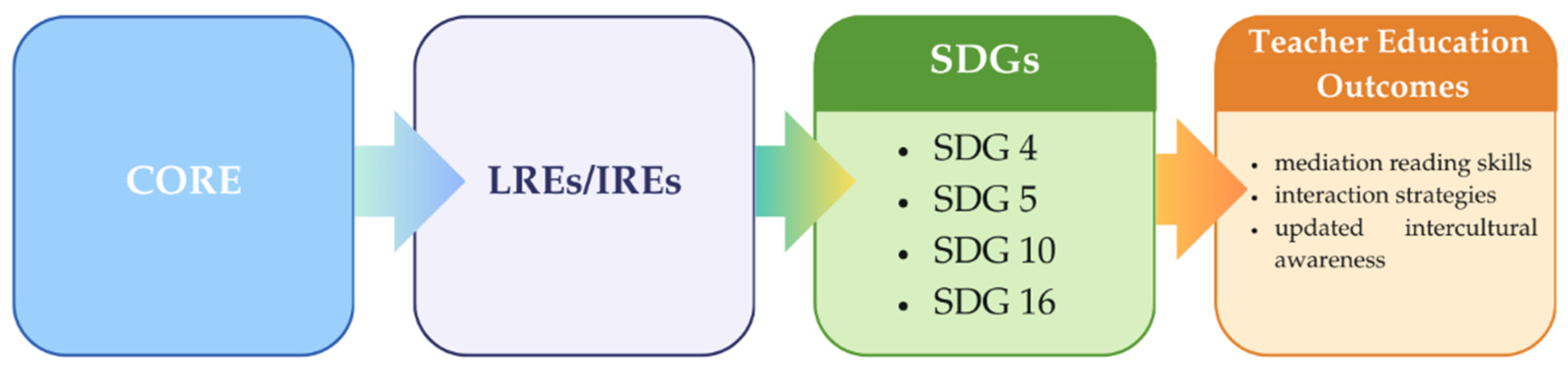
A significant part of this restorative critique of interculturality—and, by extension, of the didactic applications based on the development of ICC, including cooperative oral reading—finds its counterpart in several of the Sustainable Development Goals (SDGs, hereafter) of the 2030 Agenda, which outline the main global challenges in education. Specifically, SDG 4 calls for “Quality education,” making explicit reference to ensuring inclusive, equitable, and quality education available to all individuals. This necessarily entails a universally valid appreciation of linguistic and cultural diversity. Together with this, and no less current, SDG 5 invites us to consider texts and reading approaches where intercultural contrasts resolutely connect with gender equality and the empowerment of women, including within educational settings. Consequently, this allows for the evaluation of scenarios where intersections occur between gender issues, on the one hand, and issues of race and social class, on the other. Moreover, SDG 10, dedicated to reducing inequalities both within and among countries, entails the consideration of texts and reading mediations that allow for the analysis of the structural origins of such inequalities. And finally, SDG 16, which refers to the achievement of peace, justice, and strong institutions, invites the consideration of texts and reading approaches that contribute to understanding the historical and structural roots of violence and inequality. In this sense, it will be crucial to assess the extent to which the texts and the cooperative oral reading processes we implement incorporate intercultural contrasts that—beyond merely demonstrating a certain cultural diversity—accomplish with the SDGs (see
Figure 1).
1.4. Objectives of This Study
The primary objective of this study is to review the basic functioning of cooperative oral reading with primary education pre-service teachers to, as far as possible, have them experience first-hand the interpretation of written texts as part of their didactic training. The cooperative oral reading in which they participate should help them understand the interpretation and negotiation difficulties faced by FL learners, as well as the technical requirements related to the organization and management of cooperative oral reading. On one hand, this includes text selection—their formal, linguistic, and thematic characteristics—as well as the greater or lesser presence of cultural contrasts aligned with the 2030 Agenda SDGs, and the strategies required for their treatment. On the other hand, it encompasses the regularity of the reading activity, the duration of oral reading turns, error tolerance margins and types of corrective feedback, the need for constant recapitulation and paraphrasing, and the duration and depth of negotiations.
Intercultural communicative competence is based on the interpretation of cultural identity traits that, currently, evolve at varying rates and intensities across different environments. The perception among European schoolchildren regarding family structures, the role of school, women’s empowerment, and the value of democracy, inequalities, peace, and so on, differs in every corner of Europe and, even more challenging, is constantly changing. As educational trainers, we must ensure that pre-service teachers—especially those who will teach FLs and cultures—become aware of their key role in this scenario, and that they assume the responsibility of regularly bringing COREs into the classroom, thereby leading primary education pupils to share perceptions and emotions. To guide this research, the following hypotheses were formulated:
H1. Initial learners who engage in cooperative oral reading activities will demonstrate consistent use of mediation strategies through LREs.
H2. Beyond being an ideal didactic space for the spontaneous negotiation of LREs, cooperative oral reading allows for the consideration of intercultural contrasts (i.e., IREs) that are valuable for acquisition.
H3. Mediators with specific training in cooperative oral reading will demonstrate consistent use of identifiable mediation strategies through LREs.
H4. The quality of IREs depends primarily on the authenticity of the texts being read (mostly literary), as didactic texts—those specifically constructed for language teaching—are poor in terms of valuable intercultural references.
2. Materials and Methods
2.1. Participants
The study involved a total sample of 121 undergraduate students (i.e., pre-service teachers) enrolled in the Primary Education Degree at the University of Cádiz (academic year 2025/26), Spain, who voluntarily agreed to participate: 2 were enrolled in English (2%), 43 in French (32%), and 76 in German (66%). Among the total number of participants, 112 attended at least 80% (n = 8) of the FL training sessions concerning oral reading. The sample was predominantly female, a distribution consistent with the gender profile of primary school teachers in Spain. The average age of the participants was between 19 and 20 years old, with most students being in their second year of the degree program. Regarding language proficiency, almost all participants were placed at level A of the CEFR, reflecting limited or non-existent prior knowledge, particularly in the case of German. French students were distributed across levels A (A2) (70%, N = 30) and B (B1) (30%, N = 13), while both English students were placed at level C (C1). In this respect, the fact that only two English learners participated in the study constitutes a limitation worth noting. Therefore, some of the conclusions reached should be interpreted with caution.
2.2. Reading Texts
Learners of German read the book Urlaub intensiv, written by German teacher Claudia Peter (2013), as a didactic reader for the publishing house Verlag Liebaug-Dartmann. This publisher specializes in the publication of texts, grammars, and workbooks for German as a FL. As with other volumes in the collection Deutsch als Fremdsprache Lektüre, the selected work includes exercises on global comprehension, specific comprehension (selected vocabulary), grammar, and other formal aspects, as well as research tasks related to Landeskunde (regional culture).
The story depicts the holiday trip to Alicante (on the Spanish east coast) of Hanna Harrer, a young librarian from Frankfurt, and her mother, Renate. The plot includes classic vacation episodes (airplanes, hotels, landscapes, leisure activities), as well as accidents and hospital stays which, along with romantic adventures, serve as the central plot points. During their stay in Spain, the protagonists could compare the eating habits, leisure activities, behaviours, and personalities of other characters. The text itself (excluding exercises and glossaries) has around 3000 words distributed into no more than 22 pages, including illustrations given as visual aids. The story is organized in brief chapters of around 2 pages each. The language is simple (intended for A1 level readers) and intentionally literary, maintaining a humorous tone and a clear didactic purpose based on lexical selection and repetition.
The works selected for the oral reading in French are Le Petit Nicolas by René Goscinny and Jean-Jacques Sempé, Le jour où je suis devenue plus méchante que le loup by Amélie Javaux, and Tous les monstres ont peur du noir and Les gens normaux by Michaël Escoffier. These are authentic, non-adapted texts originally written for a French-speaking child and adolescent audience, which implies varying but meaningful levels of lexical, grammatical, and cultural challenge for learners of French as a FL. Together, these works explore key aspects of childhood and early adolescence through accessible narratives and strong emotional content. Le Petit Nicolas portrays everyday school and family life with humour and spontaneity from a child’s perspective. Tous les monstres ont peur du noir reverses the traditional fear narrative by showing that monsters themselves are afraid, encouraging empathy and emotional reassurance. Les gens normaux invites reflection on the concept of normality through Zita’s questioning of social labels and peer judgement. Finally, Le jour où je suis devenue plus méchante que le loup addresses school bullying and exclusion, depicting how a child, in order to belong to a group, reproduces violent behaviours and becomes both victim and aggressor. From a pedagogical perspective, this selection offers significant potential for FL learning: the texts rely on clear narrative structures, everyday vocabulary, and dialogue-based language while introducing students to meaningful social and emotional themes such as fear, identity, empathy, exclusion, and moral choice. Their brevity and engaging tone facilitate comprehension and oral reading, while fostering emotional involvement and critical reflection, thus contributing to a motivating and inclusive learning environment in the French as FL classroom.
In English, students read Barefoot Dreams by Petra Luna, a historical novel of almost 300 pages that tells the story of twelve-year-old Petra and her journey north with her family during the Mexican Revolution in search of safety. Based on real events, the book offers a moving portrayal of hardship, resilience, and hope. Its clear yet expressive language, combined with natural dialogue and cultural references, helps students engage with English in a meaningful and accessible way. The strong sense of place, relatable characters, and themes such as courage, identity, and the importance of education encourage emotional involvement and thoughtful reflection. For these reasons, the book is not only an engaging read but also a valuable resource for developing language skills through authentic and culturally rich content.
2.3. Procedure
No specific selection criteria were applied, as the complementary training activities offered by the Plan de Lenguas de Centro (PLC, hereafter) or Language Plan are open to all students enrolled in the Faculty of Education of the University of Cádiz. Nevertheless, students from the Primary Education Degree constitute the largest group of participants in FL-related activities. During the welcome week, the PLC program is presented to students from all four degrees offered by the faculty (Early Childhood Education, Primary Education, Psychology, and Physical Activity and Sports Sciences). In addition, the PLC coordination team actively promotes language activities among students from other academic years and disseminates information through institutional communication channels and social media.
Data collection took place between 6 October 2025 and 12 January 2026, coinciding with the first semester of the academic year (the second semester runs from February to June, including the examination period). After each cooperative oral reading session, FL assistants were required to complete a data recording form administered via Google Forms. Only assistants who had provided electronic informed consent were granted access to it. The forms were not anonymous, as they did not collect subjective or personal data. Their purpose was only to ensure the accurate recording of information related to the FL reading intervention. Participants were required to complete the respective forms immediately after each CORE practice, to collect the information reliably.
Participation in cooperative oral reading was compulsory only for students who opted for continuous assessment in French and German. Students who chose global assessment were not required to participate in complementary FL activities. However, when students declined participation as part of continuous assessment, they were offered an alternative activity involving an equivalent workload. The study adhered to the ethical principles established by the American Psychological Association (APA), including informed consent, voluntary participation, and data confidentiality, and received explicit approval from the Bioethics Committee of the University of Cádiz (protocol number: CEENB-OMGs_092_2025R1). Furthermore, all procedures complied with national and European data protection regulations, including Regulation (EU) 2016/679 of the European Parliament and the Spanish legislation implementing the General Data Protection Regulation.
2.4. Instruments and Data Analysis
A data recording form was specifically designed for this study to collect detailed quantitative data on LRE and IRE occurring during oral reading sessions. Regarding LRE, FL assistants were asked to record the exact number of interventions related to vocabulary, pronunciation, and grammar, and to provide at least one illustrative example for each category. In the case of IRE, assistants were likewise required to register all occurrences and include a concrete example for each. Each IRE was then linked to one of the SDGs relevant to the study—SDG 4 (Quality Education), SDG 5 (Gender Equality), SDG 10 (Reduced Inequalities), and SDG 16 (Peace, Justice and Strong Institutions)—as specified in the following section. These SDGs were chosen according to consensus-based attribution after considering the social challenges most commonly addressed today in school special days in Andalusia: the International Day of Education, 24 January (SDG 4); International Women’s Day, 8 March (SDG 5); International Day for the Eradication of Poverty, 17 October (SDG 10); School Day of Non-violence and Peace, 16 January (SDG 16). To facilitate accurate data collection, assistants were allowed to take notes during the session using a paper template, which was later transcribed verbatim into the online form.
The design of the form was grounded in interactionist approaches to FL teaching, both regarding LRE and IRE. Its primary objective was to support the development of learners’ FL competence through interaction with the assistant, using literary texts as the basis for oral reading. Reading in a FL was thus conceived not merely as a linguistic instructional tool, but as a pedagogical practice capable of fostering critical thinking and promoting reading for pleasure. The books selected for each language are summarized as follows (see
Table 1):
The data recording form was structured into several sections. An initial section required assistants (N = 9) to identify themselves, indicate the date of the session, specify the student group (by language and CEFR level), and record attendance.
Section 1 focused on monitoring the progression of the reading, including the precise starting and ending points, and documenting the total number of LRE, with the option to provide illustrative examples.
Section 2 addressed IRE, requiring assistants to record the total number of instances, describe each occurrence, and associate it with one of the predefined SDGs. The SDG attribution was initially conducted by the assistants during their respective reading sessions, following the criteria established in the initial training—namely, mapping the identified IRE to one of the four available SDGs. These attributions were subsequently reviewed by the research team to inform the design of the focus group interviews. While no significant discrepancies arose, the research team had established a peer-debriefing protocol to resolve potential ambiguities until a full consensus was reached.
The form also allowed for the identification of IRE not directly linked to any SDG, acknowledging that some intercultural discussions, while not aligned with the SDGs, may still contribute meaningfully to learners’ FL and intercultural development. This section concluded with an open field for additional comments.
Following the quantitative analysis, qualitative data were collected through focus groups. Two types of focus groups were conducted. The first brought together language assistants by FL (English, French, and German) during the week beginning 15 December 2025. The second involved students: in the case of English, both students participated, while for French and German, a random selection was carried out, resulting in three student focus groups (one per FL), held during the same week. The focus group questions explored participants’ perceptions of the pedagogical interventions, the role of cooperative oral reading in FL learning, and its potential to foster intercultural reflection and engagement with the SDGs. So, the questions asked to the three (English, French, and German) groups of students are described below:
How did the way in which the assistants intervened (e.g., clarifications of vocabulary, pronunciation corrections, grammatical guidance, cultural explanations, etc.) influence your learning of the target language, on the one hand, and your participation in the oral reading activity, on the other? In this regard, which types of interventions did you find most useful and why?
How do you assess the ability of the text or texts you read, and of the oral reading dynamics, to initiate reflections related to the SDGs (equality, justice, diversity, education)?
During the oral reading sessions, was there any moment when you felt that the activity helped you better understand cultural or social aspects, or issues of justice (for example, equality, inequality, discrimination, etc.)? If so, could you share a specific example?
Was there any moment during the oral readings when your way of understanding an issue related to diversity, equality, discrimination, justice, etc., changed or was broadened thanks to the contributions of the assistants or the rest of the group? What made you reconsider your thinking?
Furthermore, the questions for the assistants are as follows:
What criteria did you use to decide when to intervene during the oral reading (to correct, clarify, ask questions, open a debate, etc.)? To what extent do you think these decisions influenced the type of linguistic and intercultural learning that took place in your student groups?
How do you assess the capacity of the text(s) you worked with, and of the oral reading dynamic, to initiate reflections related to the SDGs (equality, justice, diversity, education)?
During the oral reading sessions, was there any moment when you perceived that the activity helped students better understand cultural or social aspects or issues of justice (for example: equality, inequality, discrimination, etc.)? If so, could you describe a specific example?
Did you observe any moment when your own contributions or those of the group seemed to modify or broaden the way students understood issues related to diversity, equality, discrimination, or justice, for example? What elements do you think prompted that change or reflection in the students?
3. Results
This section synthesizes the data and observations from oral reading sessions in German, French, and English, considering that each FL comprises different proficiency levels. In German, work was conducted with seven beginner-level groups (A1); in French, with five groups distributed across beginner levels (A2) and the intermediate level (B1); and in English, with a single advanced-level group (C1). The analysis suggests distinct pedagogical and thematic approaches for each FL. The German sessions focused on the text Urlaub intensiv. Reading sessions in German always presented a high number of interventions in lexis and phonetics, but very few in grammar. Intercultural themes were concentrated on stereotypes and cultural products (for example, food or temperament). The French sessions employed a wide variety of texts, showing a strong emphasis on phonetic correction, particularly regarding silent letters and specific sounds. The intercultural analysis was notable for its focus on social justice, including gender equality, discrimination, and school bullying, explicitly linking these topics to multiple SDGs. The English sessions, addressed to an advanced-level group, were characterized by a low number of linguistic interventions and a deep intercultural analysis. Using the book Barefoot Dreams, the discussions explored complex topics such as dictatorships, colonialism, racism, and the value of education, establishing detailed connections with SDGs 10 and 16. Overall, there is a tendency to minimize explicit grammatical correction in favour of lexis and phonetics, along with a significant use of texts as a starting point for complex intercultural discussions, particularly in French and English.
3.1. Language-Based Analysis
3.1.1. German
The German sessions were conducted across seven different groups, primarily using the work Urlaub intensiv. The focus of the interventions (LRE) was on lexis and phonetics, with minimal attention to grammar:
Lexis: Interventions were frequent, with counts ranging from six to approximately 40 per session. Examples of lexical treatment include the use of pantomime and gestures for words such as trinkt, Sonnencreme, and Hunger; pointing to objects (for example, Augen); or explaining concepts (for example, Leute = people).
Phonetics: Numerous interventions were also recorded, with counts of up to 27 per session. The primary focus was on the pronunciation of German-specific sounds, such as those found in words with letters or group of letters “ei”, “ie”, “z”, “ü”, and “sch”, and the digraphs “ch” and “äu”. Examples include “ei → pronunciation, V—not B” and “schwimmen—sch”.
Grammar: Grammatical interventions were almost non-existent, with most sessions recording zero or one intervention. The few examples mentioned refer to specific rules such as third-person singular conjugation (for example, er studiert) or declension (for example, gut, besser, beste).
Intercultural interventions (IRE) were carried out in most sessions, with a focus on German and Spanish customs, stereotypes, and cultural products.
Examples of topics addressed (IRE):
Gastronomy: Currywurst (typical of Berlin), Spargel in Germany, Kartoffelsalat (regional differences), Körnerbrot, etc.
Stereotypes and temperament: A contrast was drawn between Spanish temperament (for example, the taxi driver who sings) and the more reserved character of Germans. It was also mentioned that “Germans sometimes refer to themselves as potatoes.”
Culture and society: Topics included magazines in Germany (for example, Gesund und Fit), the education system (for example, Gymnasium), and Frankfurt Airport as the largest in Germany.
Geography and tourism: The German pronunciation of “Mallorca” and “Ibiza” was mentioned, and the climate and coastline of Spain were contrasted with those of Germany.
Relation to the SDGs: Intercultural topics were mainly linked to SDG 4 (Quality Education); SDG 5 (Gender Equality); and SDG 10 (Reduced Inequalities).
3.1.2. French
The French sessions were characterized using a wide range of literary works, stories, and children’s books. The pedagogical emphasis (LRE) was clearly on phonetics, followed by lexis. Grammar received very limited attention:
Lexis: The number of interventions was highly variable, ranging from a few times to 20 or even 30 times per session. Words such as cauchemards, placard, sifflet, and jumelles were addressed. A strategy was highlighted in which students read in pairs and underlined unknown words for subsequent group discussion.
Phonetics: This was the most intensively addressed aspect. Interventions focused on silent letters (such as the “t” in AgenT or the “s” in mais), specific sounds such as “ch” or “ou”, and the correct pronunciation of words like singe and gracieuse. Some sessions recorded a high number of phonetic interventions (20 or even 25 times).
Grammar: Interventions were scarce (“very little”, 0/2 per session in many cases). When they occurred, they focused on basic aspects such as articles (un/une, le/la) and verb tenses (future tense, past participle + passé composé).
The French sessions stood out for an intercultural analysis (IRE) centred on social justice issues and values.
Examples of topics addressed (IRE):
Gender equality (SDG 5): Discussion of the stereotype of the girl as a vulnerable character (“the character who is going to have problems is automatically a girl”) and gender roles in marriage (“il faut que tu trouves une femme pour te faire à manger”).
Justice and peace (SDG 16): Topics included animal abuse, discrimination, and peace (for example, “the hunter wants peace and therefore wants to hunt the wolf”).
Education and reduction of inequalities (SDGs 4, 10): Discussions included school bullying, the use of insults (French swear words such as “imbécile”), and the acceptance of diversity (for example, “Would you accept a student arriving dressed as a Martian?”).
Relation to the SDGs: Topics were explicitly linked to a wide range of SDGs such as SDG 4 (Quality Education); SDG 5 (Gender Equality); SDG 10 (Reduced Inequalities); and SDG 16 (Peace, Justice and Strong Institutions).
3.1.3. English
The 10 English sessions were addressed to an advanced group, focused on the book Barefoot Dreams by Petra Luna. The approach was markedly different, with minimal linguistic intervention and a maximum emphasis on discussion and intercultural comparative analysis. Initial activities consisted of deep reflections in which students compared the plot of the book with historical dictatorships (for example, the Franco regime in Spain or Latin American regimes), current situations (for example, North Korea or Donald Trump), and personal dilemmas. Direct language interventions (LRE) were very limited and decreased:
Lexis: Fifteen interventions were recorded in the first session, decreasing to only one in the final session. Examples include explanations of terms such as firing squad, trudged, prickly, and feeble.
Phonetics: Interventions were scarce (from three to seven per session), focusing on specific words such as included, frightened, continued, and wilderness.
Grammar: No grammatical interventions were recorded in any of the sessions.
The intercultural topics (IRE) constituted the core of the sessions, with extensive and complex intercultural analysis.
Examples of topics addressed (IRE):
Politics and history: The dictatorship depicted in the book was compared with the Franco regime, the colonization of Ireland, and the presidency of Donald Trump. Topics such as forced recruitment and censorship in education under dictatorships were discussed.
Social justice and inequality: Racism and white privilege were addressed (“Adelin being swooped up and safely brought to the United States while Petra must stay and fight”). Poverty resulting from revolutions and the importance of literacy were also discussed.
Gender and society: The position and expectations of women were discussed in both historical and contemporary contexts.
Values and humanity: Topics included the symbolism of coal turning into a diamond under pressure, religion as a refuge in times of war, and human solidarity during dictatorships.
Relation to the SDGs: Discussions were strongly linked to SDGs such as SDG 4 (Quality Education); SDG 5 (Gender Equality); SDG 10 (Reduced Inequalities); and SDG 16 (Peace, Justice and Strong Institutions).
3.1.4. Illustrative Synthesis
The following table includes an illustrative synthesis of the texts covered in each FL and the main results obtained for different categories (see
Table 2):
3.2. Treatment of the SDGs
This analysis focuses on the treatment of the SDGs 4 (Quality Education), 5 (Gender Equality), 10 (Reduced Inequalities), and 16 (Peace, Justice and Strong Institutions) within the IREs recorded for German, French, and English as FLs. The level of treatment and the specificity of the SDGs vary significantly depending on the language, reflecting the thematic content of the texts read.
3.2.1. German
Intercultural interventions in German (
Urlaub intensiv) focused mainly on stereotypes and tangible cultural differences, resulting in limited coverage of SDGs 5 and 16, with a stronger focus on SDGs 4 and 10 (see
Table 3):
So, intercultural discussion focuses on cultural identity and stereotypes (SDG 10), and education is addressed in terms of school systems and media (SDG 4).
3.2.2. French
IREs in French (based on works such as
Les gens normaux,
Le Petit Nicolas, among others) demonstrate the broadest coverage of the four SDGs, focusing on social equality and justice in everyday or children’s story contexts (see
Table 4):
In conclusion, French shows a deep and diverse integration of all key SDGs, often addressing them simultaneously. There is a clear focus on challenging traditional roles (SDG 5) and promoting social acceptance (SDGs 10 and 16).
3.2.3. English
IREs in English (
Barefoot Dreams) focus on themes of dictatorship, poverty, war, and oppression, resulting in a very strong and consistent emphasis on SDGs 10 and 16, and a specific treatment of SDGs 4 and 5 within this context (see
Table 5).
Intercultural intervention is almost entirely devoted to analyzing the social and political consequences of oppression and injustice (SDGs 16 and 10), using narrative as a starting point to reflect on historical and contemporary regimes (such as the Franco regime, North Korea, or Donald Trump).
3.2.4. Illustrative Analysis of SDG Treatment
The treatment of SDGs in IREs differs in depth and thematic focus:
Thematic Focus:
German: Cultural stereotypes, national customs, and geographical differences.
French: Social roles, bullying, discrimination, and gender equality.
English: Armed conflict, dictatorship, poverty, and racial inequality.
German presents the most superficial coverage of SDGs, using them to map cultural differences (food, temperament) rather than addressing deeper social issues of justice or equality.
French is the language that employs the widest range of SDGs in its interventions, with SDG 5 (Gender Equality) being a frequent focal point in relation to traditional social roles.
SDGs 10 and 16 are the most prevalent in English texts, where the narrative requires discussion of injustice and structural oppression.
3.3. Focus Groups
The focus group data were analyzed using Qualitative Text Analysis (
Kuckartz, 2014). This involved an iterative process of familiarization with the transcripts, generating initial codes, and collapsing them into the four themes (i.e., sections) presented below: Perceptions of Mediation; Textual Potential; SDG Engagement; and Cognitive Dissonance and Prejudice.
3.3.1. Perceptions of Mediation
With regard to the type of intervention carried out by the mediators and the usefulness of such interventions, the response from beginner-level students (German) is almost unanimous: “they helped us understand what we were reading,” “whenever we read a paragraph, they make sure to check whether we have understood it and explain unfamiliar words to us.” Students also value the mediators’ dedication as models of oral reading and phonetic correction. For their part, the assistants stated that their main task was indeed to ensure that students understood what they were reading at a global level, focusing on specific words only when these had a high degree of functional relevance.
Intermediate-level students (French) particularly value the fact that the assistants explain unfamiliar vocabulary through synonyms or descriptions in French rather than resorting to direct translation, which encourages active and contextualized learning. They also highlight the usefulness of immediate pronunciation corrections through repetition, which helps to memorize the sound patterns of the language. Nevertheless, some students admit that excessive concern with form (“pronouncing correctly”) sometimes hindered comprehension of the deeper meaning of the text. As for the role of the assistants, students comment that they focused on ensuring overall comprehension and addressing significant linguistic obstacles, such as confusion between sounds (/u/ vs. /ou/) or basic grammatical errors (use of être and avoir). They also applied strategies to encourage active participation, such as asking students to underline words they did not understand so that these could be explained collectively.
In the case of English, students express complete satisfaction with the mediation provided by the assistant, which was aimed both at reinforcing their linguistic competence and at developing their reading skills. They also point out that her intervention was limited to very specific idiomatic issues—the assistant herself refers especially to corrections related to the articulatory precision of certain English sounds—and that, throughout the reading process, she sought to introduce topics for intercultural debate. In the assistant’s own words, these are issues that are not very common in “normal conversations.” In summary, and in both cases analyzed, students express full satisfaction with the mediating role played by the assistant.
3.3.2. Textual Potential
The second question addressed to the students asked for their assessment of the texts and reading dynamics in relation to their potential for the review of the SDGs. In this regard, some beginner-level students even expressed surprise and requested a more gradual clarification of the question (“I don’t know what we are talking about”), as if the orientation of the debates towards SDGs related to equality, justice, diversity, or education had gone unnoticed. They also pointed out that, given their very low level, digressions were much more frequent at the beginning, which made reading slower, but that it gained momentum over the weeks as students accepted the working method and “learned” how to interpret (“we got used to understanding in a general way what we were reading; we understood that we did not have to understand every word”). For their part, some mediators in these groups noted that they felt somewhat frustrated, both by the text’s capacity regarding addressing the SDGs and by their students’ FL inability to adopt a more critical approach to cultural issues.
The French group presents an intermediate situation, in which the use of authentic literary texts allowed for a gradual transition from concern with linguistic form to social reflection. As in the beginner levels, some students admitted that at first, they focused so much on pronunciation and lexis that the “subliminal message” or ethical dimension of the stories went unnoticed. In the case of English, both the students and the assistant agreed in highlighting the suitability of the selected text for addressing issues related to interculturality, and in particular to the proposed SDGs. It should be recalled that both students have an advanced level of English (C level according to the CEFR), which allows them to focus primarily on debate around the SDGs, rather than (or at least not primarily) on strictly FL aspects, as occurs in German and, to some extent, also in French. In fact, on several occasions throughout the focus group, the language assistant emphasized the text as a key element in fostering the emergence of debates linked to those SDGs.
3.3.3. SDG Engagement
The question regarding the treatment of cultural issues was preceded by the one referring to the potential of the texts as triggers for debate. This facilitated its treatment to a considerable extent and allowed students to recall, with some degree of naturalness, their memories of how cultural issues had been addressed. Along these lines, as shown by the surveys, German students and mediators are aware of having addressed relatively superficial issues—such as German gastronomy (“we talked about food,” “we talked about breakfast and lunch times,” etc.)—and they are equally critical of the text’s potential with regard to the presence of SDGs (“the text is only telling what happens on a trip […]”).
In the French groups, the texts functioned as powerful triggers for IREs and for reflection on the SDGs. Notable examples include the use of Les gens normaux to debate diversity, leading students to conclude that “no one is normal” and that difference is a value, or the analysis of Le Petit Nicolas to address inclusion and social organization in sport. Likewise, stories such as Le jour où je suis devenue plus méchante que le loup made it possible to provoke debates on gender equality and social justice. Despite initial linguistic difficulties, the assistants observed that, by the end of the process, students had not only expanded their vocabulary but had also developed a more nuanced view of social realities such as school bullying.
The English case differs notably from the German one, for example, as both the students and the assistant engaged in an in-depth exploration of cultural issues directly linked to the plot of the work, as well as others derived from it. Thus, aspects related to historical events in Spain—the students’ country of origin—and Ireland—the assistant’s country of origin—were addressed in relation to Mexico, which constitutes the book’s main contextual framework. Likewise, issues such as machismo, marriage, gender-related problems, the LGBTQIA+ community, among others, were discussed. In this way, both the selected text and, especially, the students’ disposition and the assistant’s mediation contributed to generating a space for debate around contemporary cultural issues of great relevance for the participants in the activity.
3.3.4. Cognitive Dissonance and Prejudice
One of the objectives of the activity about the potential of texts and debates was always to enable readers, where appropriate, to respond consciously to their perception of a sociocultural reality, whether by reaffirming it, modifying it, or rejecting it. In this respect, once again, the readers’ level of FL competence appears to have played an important role (“we were concerned about pronouncing correctly and about understanding the assistant”): beginner-level students (German) were surprised by the harshness of a physical description of a character, which even led to rejection of the book (“at first I was struck by the way Ana referred to the overweight man […], later I understood that it was going to be a critique of that behavior”). Other students added that the discomfort did not stem from confusion as to whether it was the author’s critical intention, but rather from the act of “reading aloud these judgments, which many people make internally.”
For their part, the French reading groups showed a significant evolution in the way they approached the texts, which allowed students to broaden their worldview and question preconceived ideas. In this case, work with the reading material fostered a shift in perspective, as discussed in the following section.
In the case of English, the treatment of the reading led students, on numerous occasions throughout the development of the book’s plot, to show empathy towards the experiences lived by Petra, the main character of the story, in her attempt to reach the United States in search of a better life following her mother’s death in a context of revolutionary chaos in Mexico. In this sense, students display an empathetic attitude towards situations which, although they have not experienced them directly, they attempt to understand and feel to the greatest extent possible. In order to foster this reflection, the assistant notes that she posed numerous questions of the type “What do you think…?” or “What would you do…?”, with the aim, in her own words, of “open room for conversation.” Likewise, the assistant highlights that both students shared similar points of view, which contributed to a smoother and more enriching development of the activity.
4. Discussion
The analysis of the cooperative oral reading sessions proposes significant findings that relate to the proposed hypotheses and underscore the need for specific training for future primary school teachers. These results are consistent with previous research highlighting that reading practices in teacher education cannot be understood in isolation from teachers’ beliefs, experiences, and trajectories as readers themselves (
Tercanlioglu, 2001). In this sense, cooperative oral reading does not function merely as a didactic technique but as a formative space where pre-service teachers actively negotiate their understanding of reading, FL learning, and pedagogy.
4.1. The Pedagogical Potential of Oral Reading in Early Stages
The results suggest that oral reading should not be restricted to advanced levels of FL competence. In the case of German (A1 CEFR level), the high frequency of LREs concerning vocabulary and phonetics indicates that the text acts as a reliable trigger for initial oral production. This supports H1, suggesting that
oralization allows for the monitoring of student output from the very beginning of the learning process. However, the absence of interventions aimed at grammatical revision across all levels (including the initial German sessions) reinforces the idea that cooperative oral reading prioritizes fluency and the negotiation of meaning over strict formal accuracy. This finding resonates with
Tercanlioglu’s (
2001) assertion that engagement with reading—even at early or limited FL proficiency stages—can shape pre-service teachers’ perceptions of reading as a meaningful pedagogical practice rather than a purely instrumental activity. This aligns with collaborative and dialogic models of reading described in the literature, where comprehension, interaction, and shared meaning-making take precedence over form-focused instruction (
Koşar & Akbana, 2021). This approach appears particularly relevant in teacher education contexts, as it mirrors the types of reading experiences pre-service teachers are likely to value and replicate in their own classrooms.
4.2. From Landeskunde to Critical Interculturality (SDGs)
One of the most relevant findings is the evolution of the concept of interculturality related to text typology. The analysis proposes the limitations of didactic texts compared to the power of authentic texts. Indeed, the use of the text
Urlaub intensiv with the German groups tended to generate IREs based on relatively superficial stereotypes, gastronomy, and cultural products, as this is the cultural density that a text created for FL teaching can afford. This approach, close to traditional
Landeskunde, shows limited and almost non-existent coverage of SDGs 5 and 16. These results echo previous findings in the Spanish context, where pre-service teachers have been shown to possess a restricted literary repertoire and to conceptualize reading primarily as a tool for vocabulary acquisition rather than as a means for fostering intercultural or critical literacy (
Tabuenca-Cuevas & Fernández Molina, 2022). The reliance on pedagogical texts may therefore contribute to perpetuating a reductionist view of reading and culture in early FL instruction.
On the contrary, the authentic literary texts used with French (Le petit Nicolas, Tous les monstres ont peur du noir, Les gens normaux, and Le jour où je suis devenue plus méchante que le loup) and English (Barefoot Dreams) readers enabled a certainly revitalized interculturality. These texts acted as catalysts for a deeper social and even geopolitical consciousness, addressing contemporary issues such as school bullying, gender equality, and even authoritarian political regimes. The discovery of the ethical dimension present in children’s literature led students to go beyond mere FL decoding and to formulate moral and social judgments about the characters’ actions. Likewise, the impact of group work proved to be decisive, as the exchange of opinions among peers, together with the assistants’ explanations of certain cultural contexts from France or Belgium—which, according to the students themselves, “did not make much sense here”—contributed to students rethinking their own views and adopting a more reflective and engaged attitude towards issues related to justice and equity.
All of this points to H2, by illustrating that cooperative oral reading is an ideal space for the emergence of valuable IREs for FL acquisition, which constitute “micro-moments of European citizenship construction” where respect and alterity are negotiated. Importantly, these findings support the idea that reading experiences during teacher education can reshape pre-service teachers’ beliefs about what reading is for and what it can achieve in the classroom. As
Reynolds et al. (
2021) have shown, such beliefs are not static but evolve through experiential learning and guided reflection, particularly when pre-service teachers engage with texts that invite ethical, emotional, and social positioning. Furthermore, these findings also point to H4 regarding the extent to which the quality of IREs and their link to SDGs 4, 5, 10, and 16 depend directly on the authenticity and thematic depth of the selected material.
Nonetheless, a prudent caveat should be made regarding the influence of the assistants’ (i.e., mediators) prior training and attitude. While the only requirement for them acting as mediators—besides participating as students in the PLC—was to be native speakers of the FL they tutored, it must be considered that assistants of beginner-level texts (German in our case) feel greater communicative limitations than those working at intermediate (French) or advanced (English) levels. To this, one must add the commitment of all assistants to the progress of the activity (reflecting weekly the starting and ending points of the reading, which could foster a sense of commitment to the reading progress itself), as well as the exclusive use of the target language as a vehicular tool.
Overall, in terms of impact, if IRE analysis is considered as a lens, (i) German acts as a lens of cultural identity, exploring SDGs through the comparison of customs and stereotypes related to travel or identity; (ii) French acts as a lens of internal social awareness, analyzing how language and stories reflect and perpetuate (or challenge) gender inequalities and social discrimination; and (iii) English acts as a geopolitical and historical lens, using fiction to connect oppression, lack of justice, and inequality with real-world events and dictatorial regimes.
4.3. The Teacher as Mediator and the Need for Training
The disparity in the treatment of SDGs according to the FL and the respective levels of the readers suggests that the mediation of the FL assistant is also a determining factor. Through final summaries, reformulations, and guided questioning, pre-service teachers were able to move beyond mere reading to make moral judgments about the actions of the characters. While in English and French, social justice themes emerged in a complex manner, in German, they remained within basic cultural identity. For pre-service teachers to transform a reading session into a space for critical reflection on the themes of the 2030 Agenda, they require training that goes beyond the instrumental. This finding directly supports previous research emphasizing that teachers’ own reading experiences and confidence as readers shape how they approach reading instruction (
Tercanlioglu, 2001;
Tabuenca-Cuevas & Fernández Molina, 2022). Without explicit training that promotes reflective awareness of reading practices, there is a risk that pre-service teachers will reproduce limited, utilitarian approaches to reading in FL classrooms.
They must learn to identify references or fragments in texts that allow them to “extract” the potential of IREs and to manage the emotional tensions that topics such as discrimination or inequality can generate in the classroom. This finding points to H3, which postulates the need for specific practical training to manage both the reading process and the resulting interactions from political and ethical competence. It is not enough for the teacher to know how to manage reading. They must know how to link it to the European framework of rights and values so that the activity has a real impact on the formation of critical European citizens. In this sense, the cooperative oral reading sessions can be understood as a form of experiential learning, similar to the collaborative reading interventions described by
Koşar and Akbana (
2021), which not only improve reading comprehension but also encourage pre-service teachers to envisage cooperative reading as a transferable pedagogical practice.
4.4. Cooperative Reading as a Vehicle for European Union Values and Policies
The results can be interpreted as being aligned with the strategic priorities of the European Education Area. The disparity observed between the
Landeskunde approach (in German) and critical interculturality (in French and English) highlights a challenge for pre-service teacher training within the European framework: the transition from a compartmentalized national identity toward an inclusive European citizenship. From this perspective, cooperative oral reading can be seen as a privileged context for reshaping pre-service teachers’ beliefs about the social role of FL education, in line with evidence showing that teacher cognition evolves through sustained, reflective engagement with meaningful learning experiences (
Reynolds et al., 2021).
Regarding the promotion of European values, it is worth noting that the use of authentic texts addressing the SDGs (especially in the French and English groups) suggests that oral reading may function as a space where shared European values, such as human dignity, freedom, and equality, can be explored. By debating school bullying or social justice, pre-service teachers are practicing the “citizenship education” that the European Commission promotes to strengthen democratic resilience. In terms of multilingualism and social cohesion, the LAb-CORE project does also respond to Europe’s goal for citizens to master several languages not only as a professional tool but as a means of intercultural understanding. The revitalized interculturality we claim suggests the idea that learning a FL is, in essence, learning to coexist in a diverse and multicultural Europe, thereby reducing prejudice (SDG 10).
Finally, an explicit reference to European teacher training policies should also be made. In this sense, this study points to the potential of a training model that empowers primary teachers to be “agents of social change”. By connecting IREs with the SDGs, the teacher ceases to be a mere FL instructor and becomes a tutor of European civic competence, fulfilling the Council’s recommendations on the promotion of common values and inclusive education. The implementation of the LAb-CORE project illustrates that cooperative oral reading is not just a tool for FL acquisition, but a driver for the European dimension in education, facilitating the transformation of the FL classroom into a space of ethical and democratic commitment aligned with the 2030 Agenda and the ideals of the European Union. In line with the literature reviewed, these findings suggest that fostering rich, collaborative oral reading experiences during teacher education is essential not only for developing FL competence, but also for consolidating sustainable reading habits and reflective pedagogical identities among pre-service teachers.
4.5. Limitations
This study has some limitations that should be acknowledged:
The exploratory nature of the data recording forms, including the fact that they were specifically designed for this study and were not previously validated, and the very small English-language sample (n = 2), does not allow for comparative inference and broad generalization of the findings.
The study was conducted in a specific institutional and cultural context, which may influence both the dynamics of cooperative oral reading and the emergence of LREs and IREs.
Differences observed across languages may be partially influenced by learners’ proficiency levels, text types, group sizes, and assistants’ individual styles, rather than by the reading materials alone. In this sense, the non-equivalence across language groups in terms of proficiency level, text type, and group size prevents cross-linguistic comparison.
These limitations invite further research with larger samples and comparative designs to examine the transferability of the findings.
5. Conclusions
Following the analysis and discussion of the data, this study concludes that working with COREs makes oral reading transcend its traditional decoding function to become a cornerstone of comprehensive pre-service teacher training. The main contributions are summarized as follows: To understand the cooperative oral reading model as a mediation tool, the study illustrates that collective
oralization is a trigger for learning episodes (LREs and IREs) across all proficiency levels. It is concluded that the success of the activity does not lie in grammatical correctness, but in the reading process’s capacity to generate spaces for the negotiation of meaning and mutual support, aligning with
Ehri’s (
2022) thesis on the role of voice in consolidating linguistic learning.
Regarding the imperative of textual authenticity for the SDGs, a fundamental conclusion is that a teacher’s ability to engage with the 2030 Agenda is heavily conditioned by material selection. Authentic texts do not only increase linguistic demand: they are essential for elevating interaction from superficial Landeskunde toward a critical and revitalized interculturality, enabling a meaningful approach to SDGs 4, 5, 10, and 16. It is also concluded that the practice of oral reading within primary education degrees should serve to help pre-service teachers recognize themselves as mediators of values—such as dignity, equality, and democracy—and as promoters of inclusive European citizenship, moving beyond a purely instrumental view of language. Based on these findings, it is recommended that FL pre-service teacher training should integrate the European dimension, guiding faculties of education and pedagogy schools toward fostering a teaching identity committed to Europe. In response to H3, the inclusion of practical reading–tutoring modules in university curricula is proposed as a recommendation for high quality initial teacher training. Such training should aim to empower pre-service teachers not only in FL didactics but also in the ethical and political management of debates generated by authentic literature, ensuring the classroom remains a space for democratic resilience.
Finally, while the study is limited by the variability in the assistants’ prior training, it opens a promising line of research: the standardization of CORE tutoring protocols that may ensure a profound treatment of the SDGs, regardless of the FL level of the text.