


Abstract
The future of innovation and economic growth depends on our ability to nurture the next generation of scientists. The global shortage of qualified STEM (Science, Technology, engineering, Mathematics) teachers has led many countries to expedite the transition of subject-matter experts from industry and academia into teaching roles. These second-career science student teachers typically participate in accelerated training programs designed to address urgent shortages. This study addresses a gap in the literature regarding effective pedagogical interventions for career-changing professionals in STEM fields, focusing on the experience and transformation of second-career science student teachers. This qualitative case study explores how a Challenge-Based Learning (CBL) course fosters the development of pedagogical competences via developing an instructional unit collaboratively, among five second-career science student teachers enrolled in an accelerated teacher education program. Drawing on data collected through instructors’ field notes, iterative work-in-progress lesson drafts, and reflective final papers, the study employs qualitative content analysis to trace changes in participants’ instructional approaches and professional identity. Findings reveal that engagement with the CBL framework promoted a significant shift from teacher-centered to learner-centered instruction, as participants increasingly integrated collaborative learning, inquiry-based activities, and reflective practices into their lesson planning and classroom teaching. The iterative nature of CBL, which emphasizes real-world problem-solving and structured opportunities for reflection and peer feedback, was instrumental in supporting participants’ adaptive expertise and confidence as novice teachers. Moreover, the course experience contributed to the emergence of a professional teaching identity, with participants reporting greater self-efficacy, a stronger sense of belonging to the teaching community, and increased motivation to persist in the profession. The results underscore the potential of integrating CBL and learning sciences principles into accelerated teacher preparation programs to enhance both cognitive and affective dimensions of teacher development.
1. Introduction
The global shortage of qualified STEM (Science, Technology, engineering, Mathematics) teachers has led many countries to expedite the transition of subject-matter experts from industry and academia into teaching roles (Watters & Diezmann, 2015). These second-career student teachers, individuals who previously worked as scientists in STEM fields, typically participate in accelerated training programs (e.g., 1 year instead of 3 years) designed to address urgent shortages (Troesch & Bauer, 2020).
Such programs, designed for professionals transitioning from other fields, align with accelerated education frameworks that compress essential competencies for rapid professional entry. It often last less than a year, focus primarily on disciplinary content, and include a brief practicum component, usually consisting of weekly classroom observations with limited teaching experience, alongside theoretical coursework.
Recent years have seen a growing body of research examining the unique needs and trajectories of second-career student teachers, particularly in STEM education. Unlike traditional teacher candidates, second-career student teachers often enter the profession with substantial disciplinary expertise but limited experience in pedagogy (Richardson & Watt, 2018; Williams, 2013). This background can be both an asset and a challenge: while their content knowledge and real-world experience enrich classroom instruction, many report difficulties in translating disciplinary expertise into effective teaching practices and in adapting to the cultural norms of schools (Kahn, 2015; Tigchelaar et al., 2010). While they bring deep subject expertise and motivation, second-career student teachers frequently encounter significant challenges adapting to teaching demands, such as classroom management, instructional strategies, and developing a professional teaching identity (Ruitenburg & Tigchelaar, 2021; Troesch & Bauer, 2020).
Recent research highlights that many second-career student teachers experience confusion and frustration during their transition, often due to unrealistic expectations, the brevity of their training and a lack of sufficient connection between theory and practice (Troesch & Bauer, 2020; van Heijst et al., 2025). A key factor in their successful integration is the development of pedagogical competence and self-efficacy, which are closely linked to job satisfaction and retention. Pedagogical competence refers to a teacher’s capacity to develop, implement, and evaluate effective teaching methods that meet the diverse needs of students. In this study, it encompasses classroom management, instructional strategies and methods, and effective teaching practices. Beyond mere subject-matter expertise, pedagogical competence involves the ability to design, carry out, and assess instructional strategies tailored to students’ varying requirements and contexts (Liakopoulou, 2011). This conceptualization aligns with established frameworks that emphasize its dynamic, multifaceted nature, comprising teaching practice, theoretical understanding, observation skills, and planning abilities (Klaassen, 2002). For second-career science student teachers, pedagogical competence is particularly critical, as it bridges their prior professional expertise with emerging instructional capabilities essential for effective science education. Current research highlights approaches such as guided experiential learning, collaborative lesson planning, and structured professional reflection to enhance these competencies among pre-service teachers (Feser & Haak, 2023; Harun, 2025; Leijon et al., 2022).
Building their professional identity and pedagogical competence is essential for second-career science student teachers’ success and for their ability to teach science effectively. Pedagogical competences, distinct from skills, represent integrated, holistic capacities that synthesize knowledge, attitudes, and professional judgment (Nguyen, 2023; Moreira et al., 2023). For instance, Nguyen (2023) differentiates skills like lesson delivery and classroom management from competences that enable teachers to manage both teaching and learning processes effectively. Complementing this, Moreira et al. (2023) emphasize that competences require reflective practice beyond isolated abilities. However, there remains a gap in the literature regarding effective models for fostering these competences among second-career science student teachers, particularly through innovative, active learning approaches. While Moreira et al. (2023) call for contextually diverse professional development, and Nguyen (2023) underscores reflective application, few studies address this specific population. The present study fills this gap by examining CBL as a mechanism for developing pedagogical competence and professional identity among second-career student-teachers.
CBL has emerged as a promising framework for teacher professional development, offering opportunities for active engagement, collaboration, and real-world problem-solving (Leijon et al., 2022). Despite the growing use of CBL in teacher education, little is known about its effectiveness for second-career science student teachers, professionals who transition from STEM fields into teaching through expedited programs, as such programs lasting less than a year and emphasizing science content knowledge for teaching over pedagogy (e.g., being facilitators of science learning). This study addresses the existing gap by examining how a standalone CBL-based course fosters pedagogical competence among second-career science student teachers through a process of designing an instructional unit. These student teachers represent a unique population, having entered an accelerated teacher preparation program for high school teaching at a college of education, from industry and business experience. The study also considers the participants’ prior scientific qualifications. It recognizes that for individuals coming from science backgrounds, the complexity and depth of content knowledge required to teach science may necessitate careful and critical evaluation of accelerated pedagogical training.
Therefore, this study examines the following research questions:
- How does a CBL-based course contribute to the development of pedagogical competences among second-career science student teachers?
- How does the CBL process contribute to the formation of professional identity among second-career science student teachers?
2. Theoretical Background
2.1. Professional Identity and Pedagogical Competence Development
Teacher professional identity is commonly defined as the constellation of teachers’ perceptions, values, beliefs, and attitudes, and it encompasses multiple types of knowledge: disciplinary knowledge (subject matter), pedagogical knowledge (ways of mediating content), curricular knowledge (instructional planning), and educational values (educational vision) (Beijaard et al., 2023). The literature on professional identity distinguishes between definitions of what identity is and the processes through which it is formed. From a socio-cultural perspective, emphasis is also placed on the processes that enable individuals to see themselves as belonging to, differentiated from, or in opposition to others; in this view, dialogue with others is an essential arena for identity construction (Andreouli, 2010; Green et al., 2020).
Furthermore, from this socio-cultural perspective, professional identity refers to teachers’ conceptions of their role and to the behaviors expected of them in professional contexts that involve psychological, sociological, philosophical, and epistemological dimensions (Murray, 2020). Accordingly, professional identity reflects not only how teachers understand their role, but also how they act within organizational, social, and cultural contexts (Sachs, 2005; Shand, 2023). Professional identity is therefore a dynamic entity that changes and develops over the career trajectory and is influenced by interpersonal relationships, emotions, and social interactions.
Feser and Haak’s (2023) meta-review reveals the lack of homogeneity in science teacher identity, challenging the notion of a uniform professional profile among this group. Their analysis indicates that science teachers do not constitute a monolithic category, as identity varies significantly based on career stage, such as beginning versus experienced educators, and educational level, including primary, secondary, or higher education contexts. These variations underscore the complex, context-dependent nature of science teacher identity, which differs markedly from that of generalist or other subject-area teachers, and highlight the need for nuanced, differentiated research approaches.
The development of science teacher identity is a dynamic and multifaceted process influenced by various interconnected themes (Feser & Haak, 2023; Zhai et al., 2024). First, disciplinary knowledge, including subject-specific content knowledge in areas such as physics, chemistry, and biology, plays a crucial role in shaping science teacher identity by fostering a deeper understanding of the subject matter and strengthening their sense of belonging to the scientific community. Second, pedagogical attitudes and mediation are essential, as science teachers develop specific pedagogical approaches, such as inquiry-based learning and innovative teaching methods, to effectively mediate complex scientific concepts to students. Third, curricular knowledge, including lesson planning and curriculum design, is integral to science teacher identity, as it enables teachers to align their instructional practices with educational standards and reform-oriented strategies. Finally, educational values and philosophical beliefs significantly influence science teacher identity, guiding teachers’ professional values, their attitudes toward teaching and learning, and commitment to equity and social justice in science education. Together, these dimensions highlight the dynamic, contextual, and evolving nature of science teacher identity, emphasizing the importance of personal, social, and professional factors in its formation and development.
In the context of professional development, identity is shaped through processes of dialogue, reflection, and participation in an active educational community (Deniz, 2022; Shand, 2023). Hermans’ Dialogical Self Theory (DST) describes how identity is constructed and developed through dialogue about professional knowledge with “others,” including situations of conflict and dilemmas that require reflection, processing, and the reconstruction of knowledge (Hermans, 2016).
This understanding of learning as identity construction underpins the present study, which seeks to examine the dialogues that occur within a CBL-based learning process and the ways in which these dialogues contribute to shaping student teachers’ professional identity, that is, to the development of pedagogical competence in the strategic sense of instructional design based on pedagogical judgment, attitudes toward the learning process, and corresponding instructional actions.
Pedagogical competence refers to a teacher’s capacity to develop, implement, and evaluate effective teaching methods that meet diverse student needs, encompassing classroom management, instructional strategies and methods, and effective teaching practices (Liakopoulou, 2011). This dynamic construct comprises teaching practice, theoretical understanding, observation, and planning (Klaassen, 2002), particularly vital for second-career science student teachers transitioning disciplinary expertise to instructional proficiency (Feser & Haak, 2023). While complementary to teacher identity, which centers on beliefs, self-efficacy, values, and social interactions, pedagogical competence is analytically distinct, focusing on methodological-instructional skills (“pedagogical”) rather than philosophical orientations (“educational”). Current research supports its development through experiential learning, collaborative planning, and reflection (Fauzi & Aisyah, 2024; Harun, 2025).
2.2. Addressing Second-Career Student Teachers’ Challenges Through a Learning Sciences Lens
The learning sciences constitute a multidisciplinary field that investigates how people learn, drawing on insights from cognitive psychology, neuroscience, education, and computer science. This body of research has established that effective teacher education must go beyond content knowledge and foster evidence-based instructional strategies, reflective practice, and adaptive expertise (Darling-Hammond et al., 2020; Gallagher & Savage, 2020).
The learning sciences offer a robust theoretical foundation for addressing second-career students challenges emphasizing the importance of active learning, metacognition, and adaptive expertise (Sawyer, 2014). Programs grounded in these principles cultivate evidence-based strategies, critical reflection, and growth-oriented professional identities (Darling-Hammond et al., 2020). Specifically, they offer structured opportunities to bridge theory and practice through collaborative inquiry and reflection on teaching beliefs, supporting both pedagogical competence and identity development.
This perspective contrasts transmission models where knowledge flows unidirectionally from teacher to student with constructivist approaches emphasizing active knowledge construction through inquiry, collaboration, and authentic problem-solving (Bacak & Byker, 2021). The CBL framework (Section 2.3) embodies this constructivist shift, positioning second-career teachers as active designers rather than passive recipients of pedagogical knowledge.
Furthermore, studies highlight the role of mentorship, peer collaboration, and iterative practice in supporting the transition of second-career student teachers (Troesch & Bauer, 2020). These elements are central to learning sciences-informed teacher education, which values the co-construction of knowledge, feedback-rich environments, and the development of professional communities of practice (Dille & Røkenes, 2021). Integrating these principles into accelerated teacher preparation programs can help second-career student teachers navigate the complexities of classroom life, develop pedagogical resilience, and sustain their commitment to the profession.
2.3. Challenge-Based Learning (CBL) in Teacher Preparation
Challenge-Based Learning (CBL), as implemented in this course, is firmly rooted in learning sciences principles. Specifically, CBL operationalizes key tenets, authentic problem-solving, iterative design, collaboration, and knowledge co-construction, through the structured process of designing instructional units around real-world science challenges (Gallagher & Savage, 2020; Dikilitaş et al., 2025).
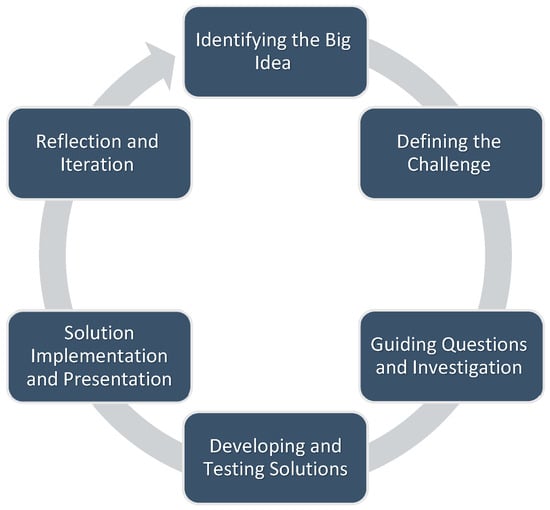
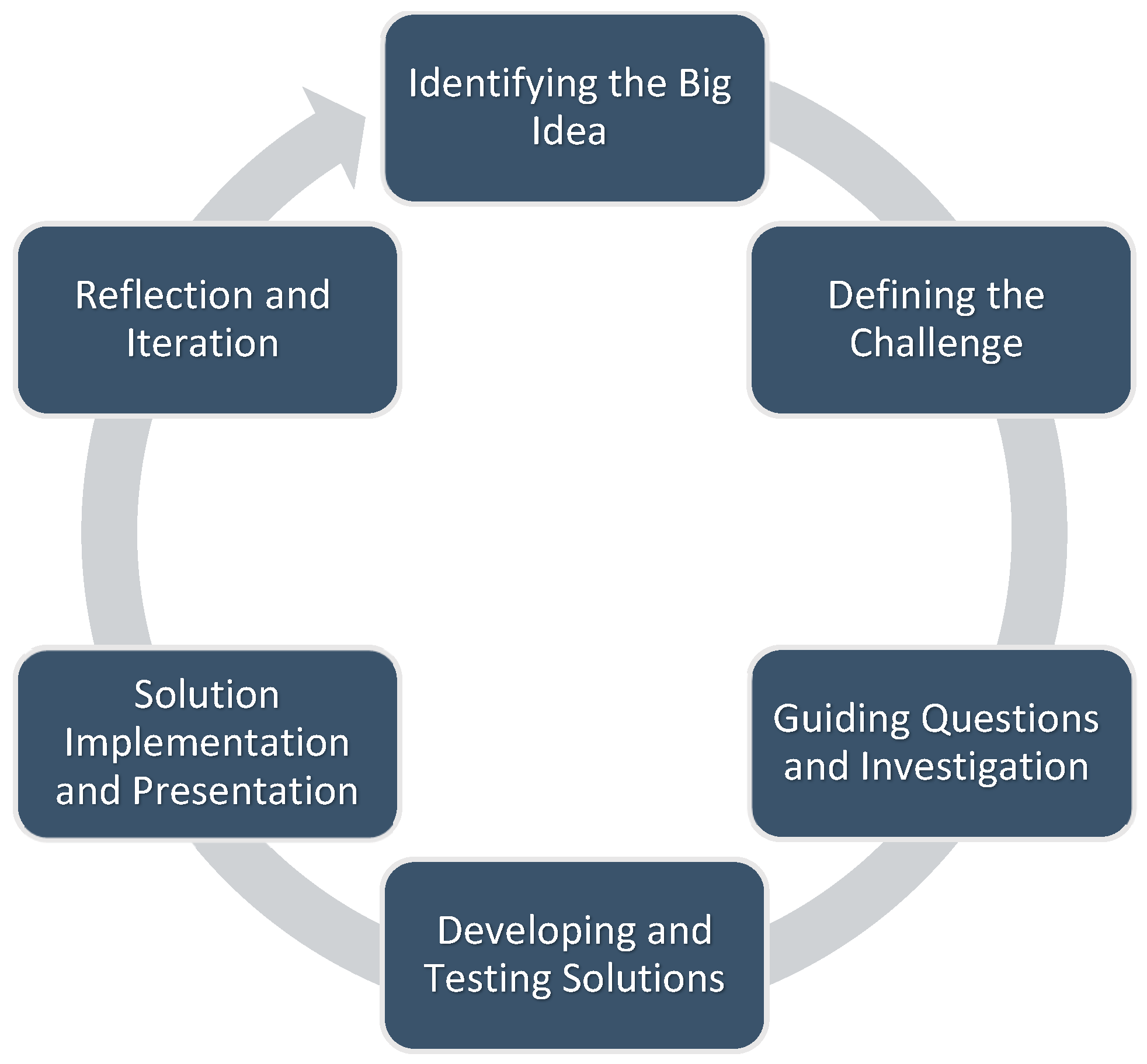
Recent research in teacher education has explored a range of constructivist learning models, including Problem-Based Learning (PBL), Inquiry-Based Learning (IBL), and Lesson Study, which focus on students constructing their own knowledge through experience, inquiry, and connecting prior knowledge with new information (Bacak & Byker, 2021; Doppenberg et al., 2012; Simone, 2014). These approaches share several core characteristics: they are student-centered, emphasize collaborative and reflective practice, and position the teacher as a facilitator rather than the sole source of knowledge. In PBL, learners address open-ended problems, typically situated in real-world contexts, through inquiry and evidence-based reasoning, which closely aligns with IBL’s focus on cycles of questioning, investigation, and justification. Lesson Study, originating in Japan, similarly promotes collaborative, iterative improvement of teaching through joint planning, observation, and reflection. Consistent with PBL and IBL, CBL emphasizes real-world problem-solving, collaboration, and active engagement. It has been shown to foster critical thinking, creativity, and practical pedagogical skills among both pre-service and in-service teachers (Gallagher & Savage, 2020; Leijon et al., 2022). In CBL, participants identify meaningful challenges, investigate possible solutions, and reflect on their learning processes (see Figure 1).
Figure 1.
Cycle of CBL.
Unlike more traditional, didactic models (e.g., teacher-centered instruction, structured content delivery), CBL situates learning within authentic contexts, requiring participants to identify pressing challenges, engage in collaborative inquiry, and design innovative solutions. This process not only promotes critical thinking and creativity but also mirrors the dynamic, unpredictable nature of classroom teaching.
In line with the broader family of constructivist approaches, PBL, IBL, Lesson Study, and CBL share a commitment to student-centered, inquiry-oriented learning grounded in real-world contexts. In this study, CBL is adopted not as a fundamentally distinct paradigm, but as a particular design framework that aligns closely with learning sciences principles and provides a coherent structure for engaging second-career science student teachers in authentic instructional design.
CBL’s alignment with the learning sciences is evident in its emphasis on active engagement, social negotiation of meaning, and iterative cycles of reflection and refinement (Darling-Hammond et al., 2025). For second-career science student teachers, CBL offers a platform to leverage their disciplinary expertise while simultaneously developing pedagogical flexibility and responsiveness. Research shows that CBL participants report increased confidence in facilitating inquiry, managing diverse classrooms, and integrating technology (Gallagher & Savage, 2020; Leijon et al., 2022).
Moreover, CBL fosters professional teaching identity by positioning participants as both learners and designers of meaningful educational experiences (Major & Mulvihill, 2018). This identity work is particularly salient for second-career student teachers reconciling prior professional identities with teaching demands. Through CBL, they construct agency, purpose, and belonging within the educational community.
This manifests in the course’s core task of challenge identification, unit design, implementation, and reflection, reflecting an iterative design-for-learning approach central to learning sciences. Thus, CBL provides authentic contexts for developing pedagogical competence (RQ1) and professional identity (RQ2).
3. Methodology
Despite growing recognition of the importance of pedagogical competence for second-career student teachers, there is a lack of empirical studies examining how CBL-based training can address their specific challenges and foster their professional identity growth. This study seeks to address this gap by investigating how a learning sciences course, which was designed specifically for this program at a college of education, grounded in CBL, contributes to the development of pedagogical competences among second-career science experts transitioning into teaching.
3.1. Research Method
This study employed a qualitative case study approach (Creswell & Poth, 2016; Samaras, 2010). This approach was chosen specifically to illuminate the gap between theory and practice. It focuses on exploring the learning trajectories, experiences, and professional growth of second-career science student teachers during their transition into teaching. As an in-depth exploration of a bounded group in a teacher education context, this case study enabled a thorough examination of five second-career science student teachers within a specific CBL-based course.
3.2. Participants
All five participants hold an academic M.Sc. degree (one with Ph.D.). Two worked in industrial engineering, two as computer engineers, and one in biotech. All participants were selected for the program based on established careers in STEM fields, as documented in their admission applications. All participants are enrolled in a program designed to train outstanding academics as educators at a College of Education. None of them are employed as school staff, so the training is pre-service, and each participant attends one practicum day per week in a school setting. During the practicum day, student teachers divide their time between teaching whole classes or small groups and observing the mentor teacher’s instruction.
3.3. The Context of the Study
The program is conducted at a teacher education college situated in a rural area. The program’s objective is to cultivate exceptional teachers who will enrich secondary school science education and inspire more students to pursue these subjects. The program lasts one year and is structured around two distinct days each week: one day is dedicated to school-based practicum (teaching and observing the mentor teachers’ science lessons in secondary schools), and a second day is dedicated to theoretical and pedagogical studies, both face-to-face at the college and online.
The course that is examined in this study is a stand-alone course, defined as a mandatory course within the program. It spans an entire year, consisting of two semesters. It is delivered in a hybrid format, with four face-to-face sessions on campus and ten asynchronous lessons via MOODLE each semester. The curriculum of the course covered key theories from the learning sciences, including Behaviorism, Developmental Psychology, Constructivism, and contemporary sociocultural and cognitive approaches. Special emphasis was placed on contrasting teacher-centered and learner-centered instruction, examining the evolving role of teachers, understanding student learning processes, and exploring diverse assessment methods. A central goal of the course was to equip these aspiring science student teachers with a deep understanding of learning processes and to empower them to apply these theories in their teaching practice.
The first semester was dedicated to familiarizing students with the development of learning theories over time. The teaching approach combined reading, watching demonstrating videos, and collaborative discussions through the Moodle platform, alongside experiential learning during in-person sessions at the college. The second semester focused on hands-on, group-based experience with the CBL process through the development of a teaching unit and the application of these practices during the practicum.
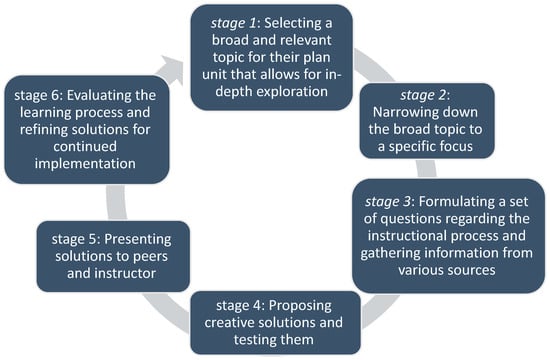
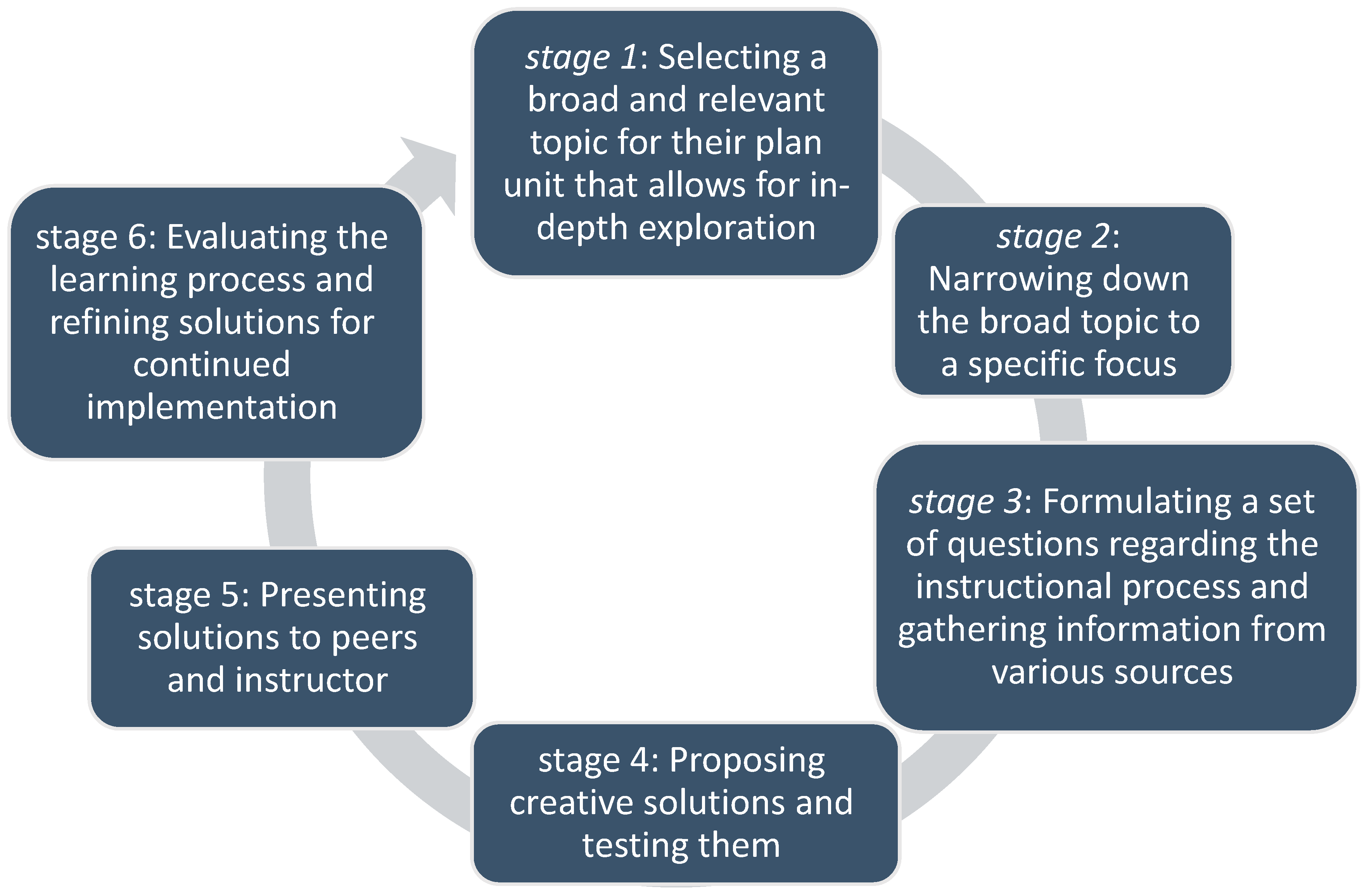
The CBL process was designed specifically to bridge the gap between theory and classroom practice. Within this framework, participants have to translate their extensive scientific knowledge into practical pedagogical knowledge, enabling them to effectively mediate and convey it to their students. Through collaborative inquiry and guided reflection, the course supports their professional transition and demonstrates the practical application of CBL in science teacher education. As demonstrated in Figure 2, participants engaged in cycles of identifying and analyzing pedagogical challenges, designing innovative learning environments, and reflecting on their instructional practices.
Figure 2.
Implementation Stages of CBL during the course.
Starting the second semester with a group-based CBL experience, participants’ initial challenge was to identify a broad, relevant topic that would enable in-depth inquiry and meaningful problem-solving in science for their secondary school practicum students [CBL stage 1]. Recognizing a significant ‘big idea’ in biological understanding, they selected the intricate relationship between surface area and volume in science as their main theme [CBL stage 2]. In defining the challenge, their primary objective in their work-in-progress draft was to enhance learners’ ability to identify and apply this principle across diverse real-life contexts. At the next stage [CBL stage 3], participants formulated a specific research question: “How can we mediate the abstract concept of the relationship between surface area and volume to young learners?” They divided it into several sub-questions: “Which meaningful methods and tools should be used? How will students construct this abstract principle through hands-on experiment?”. In order to answer their questions, instructor asked them to delve deeper into the science curriculum, examining how textbooks present the topic and identifying the main challenges. This investigation reinforced their assumption that the structure and function paradigm is an essential tool for understanding biology, with applications across all natural systems. At this point, to proceed to the next phase, following the instructor’s suggestion, they turned to professional academic literature on science education to examine what research adds to the instructional challenges of this abstract scientific concept. Specifically, they were interested in finding evidence on how fundamental principles governing the relationship between surface area and volume in science can be effectively taught. Their main challenge now was to integrate all the knowledge they had independently built with the learning theories learned during the first semester to plan their well-planned teaching sequence.
While proposing creative solutions in face-to-face discussions with the instructor [CBL stage 4], a fundamental concern emerged underlying the planning process. It was related to finding a balance between conventional, didactic content delivery and the need for constructivist pedagogy, as emphasized during the course. Divergent viewpoints arose when participants presented their solutions to peers and the instructor [CBL stage 5]. Their goal was to establish a shared language and to clarify how they would mediate fundamental concepts to their own students, without relying solely on traditional knowledge-transmission practices [CBL stage 6].
3.4. Data Sources
Multiple data sources were utilized to provide a comprehensive view of the participants’ learning processes and pedagogical development. Data sources included three work-in-progress lesson plan drafts per participant (5 pages each), five field notes by the instructor (1–2 pages each), and final reflective papers (3 pages per participant). Work-in-progress drafts were submitted by each participant at different stages of the course, documenting the development of the design and rationale for their lesson plans. The Field notes included detailed observational reports by the course instructor, focusing on participant engagement, instructional strategies, and classroom interactions. These notes included reflections on actions, dilemmas, and various vignettes from the course, offering additional context for understanding the research process. Final reflective papers were summative reflections written by participants at the end of the course, describing their learning experiences, challenges, and perceived growth. Reflective papers were structured around prompts that encouraged participants to articulate their evolving beliefs about teaching and learning, challenges encountered, and perceived changes in their professional identity.
3.5. Data Analysis
Qualitative content analysis was used, involving iterative coding and theme development to trace changes in pedagogical thinking. The data were analyzed using an inductive approach, identifying themes and recurring patterns without preconceived templates (Braun & Clarke, 2022). Data from lesson plans, reflective papers, and instructor field notes were analyzed using data triangulation across multiple timepoints and sources, enabling chronological progression tracking and cross-validation of reported instructional shifts (Nowell et al., 2017).
The analysis process included the following phases:
Open reading—Initial reading of all documents, interview transcripts, and field notes to gain a first impression and identify recurring ideas.
Initial coding—Identification of meaningful text segments, labeling them, and documenting the researchers’ initial thoughts.
Theme identification—Collating meaningful excerpts into five central themes: pedagogical, disciplinary, curricular, values, traditional instructional planning (teacher-centered), and constructivist instructional planning (learner-centered). Within the constructivist instructional planning theme, evidence of CBL practices was identified by asterisks.
Categorization into theoretical categories—Themes were deductively mapped to theoretical categories using established frameworks (Table 1):
Table 1.
Examples of Coding Process.
Pedagogical competence (Themes #5, #6) reflects the shift from traditional instructional planning (Theme #5, teacher-centered) to constructivist instructional planning (Theme #6, learner-centered/CBL). This shift aligns with constructivist models emphasizing student-centered inquiry versus teacher-centered transmission (Bacak & Byker, 2021; Gallagher & Savage, 2020).
Teacher identity (Themes #1, #2, #3, #4) corresponded to Zhai et al.’s meta-review (2024): Disciplinary (Theme #1): Subject-specific content knowledge), Theme #2 encompassing specific pedagogical attitudes and mediation; Curricular (Theme #3): Lesson Planning knowledge; Educational/values (Theme #4): Philosophical beliefs and professional values. Self-efficacy and social interactions were absent, reflecting early pre-service instructional focus.
Return to data—Validation of interpretations through re-reading the data, searching for contradictory or reinforcing excerpts, and deepening understanding through additional examples. Additionally, a “critical peer” review was conducted. An external researcher independently reviewed and coded a data subset, with discrepancies resolved through discussion (Vanassche & Kelchtermans, 2016).
In the context of this CBL-based course, pedagogical competence development is thus examined distinctly from, yet complementary to, identity shifts (RQ1), distinguishing “pedagogical” aspects (e.g., instructional design and student-centered facilitation) from broader “educational” orientations (e.g., philosophical values). Current research underscores strategies such as guided experiential learning, collaborative lesson planning, and structured reflection to foster these competencies in pre-service teachers. Table 1 illustrates the coding process from raw text → themes → theoretical categories. X marks theme presence; * indicates CBL elements. Pedagogical competence = Themes #2,5,6; Teacher identity = #1,3,4 (see Section 3.5).
This table illustrates the coding scheme used to move from raw textual data through thematic coding to higher-level theoretical categories, highlighting how expressions in the data reinforce themes related to the research questions concerning professional identity development, teaching practices, and the influence of CBL on the entire process.
3.6. Ethical Considerations
All participants provided informed consent prior to data collection. Pseudonyms are used in all reports to protect participant confidentiality. The study received approval from the relevant institutional review board.
4. Findings
Qualitative analysis of iterative lesson plans, reflective papers, and instructor field notes revealed three key themes systematically addressing the two research questions. RQ1 (pedagogical competence) manifested through observable progression from teacher-centered content transmission to constructivist, Challenge-Based Learning (CBL) facilitation. RQ2 (teacher identity) evidenced transformation from dominant scientist identities to emerging professional teaching identities, accompanied by realistic developmental tensions.
Data triangulation across multiple artifacts, early vs. final reflections, draft vs. completed lesson plans, and instructor observations, enabled longitudinal tracking of competence development within the CBL course. The following sections present chronological evidence documenting participants’ instructional and identity shifts, with direct quotations illustrating the transition from initial challenges to course-supported transformation.
4.1. Shift from Teacher-Centered to Learner-Centered Instruction (RQ1)
Participants initially prioritized content delivery over student autonomy. P1 stated, “the initial approach was explaining scientific concepts in detail to ensure accuracy” (reflective paper), P2 worried “if students take the lead, important content might be missed” (reflective paper), and P3 felt “responsible for delivering all content myself” (reflective paper). Instructor field notes confirmed: “three participants advocated teaching basic concepts first to establish common language”, expressing “discomfort relinquishing control”, and noted the tension of “balancing didactic delivery with constructivist pedagogy”.
The CBL course supported this transition through iterative lesson planning. Later drafts showed clear shifts. P2 designed “hands-on experiments where students generated hypotheses” (draft), P3 planned “students designing experiments and presenting findings” (lesson plan), and P4 embraced “letting students struggle productively” because “their questions led to richer discussions” (draft). P5 observed “students working in pairs were more motivated and retained material better” (reflective paper). This progression, from early reflections documenting control reluctance to final artifacts demonstrating CBL enactment, evidences pedagogical competence development through structured course support.
4.2. CBL Integration in Lesson Design (RQ1)
Final lesson plans demonstrated progression from textbook problems to authentic CBL challenges, evidencing participants’ growing ability to relinquish control. P3 acknowledged, “I struggled to move beyond textbook problems” (final draft) yet designed “collaborative investigation where students designed experiments” (draft). P4 framed “How can our school reduce energy consumption?” requiring “learners work[ing] in teams to… present actionable solutions” (draft). P5 developed “investigat[ion of] local environmental issues” with “students divided into pairs… present[ing] outcomes”(draft). P2 advocated “allowing students to explore through experimentation” (draft).
Instructional designs evidenced scaffolding from teacher-led to student autonomy. P3 reflected, “Through CBL, I learned to trust students’ abilities rather than controlling every aspect” (final reflection), illustrating growing pedagogical competence connecting disciplinary content to real-world problem-solving.
Lesson plan analysis revealed consistent CBL integration across participants’ final designs (Table 2).
Table 2.
Components of Participants’ CBL Lesson Plans.
These designs demonstrate participants’ ability to scaffold from teacher-led instruction to student autonomy, blending diverse pedagogical strategies within authentic CBL challenges. This progression, from textbook reliance to authentic CBL implementation, demonstrates concrete course-supported instructional transformation.
4.3. Professional Identity Development (RQ2)
Early reflections revealed dominant scientist identities among participants, struggling to embrace facilitative teaching roles. P1 stated, “I see myself first as a scientist; teaching is new territory” (early reflection), prioritizing content expertise over instructional roles. Instructor field notes captured this orientation: “How can we mediate abstract concepts… to young learners?”, reflecting initial focus on knowledge transmission rather than facilitation.
Through CBL iterations, participants articulated emerging teacher identities. P3 declared, “I now see myself as facilitator of learning, not transmitter” (final reflection), while P4 felt, “truly making a difference… teaching students how to think” (final reflection). P2 learned “to facilitate rather than direct learning” (final reflection), and P5 described himself as “an educator who uses science as a tool for inquiry and growth” (final reflection).
Persistent challenges highlighted identity tensions. P2 admitted, “still learning to be comfortable not having all answers” (final reflection), P4 acknowledged “lesson requires effort… Yes, I can!” (final reflection), and P5 struggled with “facilitating group work… hard to keep everyone engaged” (final reflection). This progression, from scientist-first orientation to emerging facilitator identities with acknowledged tensions, demonstrates course-supported professional identity development.
5. Discussion
This study provides a new insight into the ways in which a CBL framework can support the development of pedagogical competences among second-career science student teachers. Overall, the findings indicate that a CBL sciences course can support second-career science student teachers in moving beyond content delivery to adopt learner-centered, inquiry-driven instructional practices in accelerated teacher education programs. Furthermore, the integration of CBL strategies not only appeared to enhance participants’ pedagogical competence but also contributed to the development of a professional teaching identity grounded in reflective, evidence-based practice. This discussion will interpret the results in relation to existing literature, highlight the study’s contributions, and address its limitations and implications for future research and practice.
5.1. Pedagogical Competence via CBL
Consistent with CBL theory, the study demonstrates how a real-world, open-ended challenge can serve as a bridge between participants’ prior scientific expertise and the transformation of their pedagogical understandings. The CBL cycle mirrors the design phases identified in global CBL literature, where learners move from defining big ideas, through collaborative inquiry, to the implementation and evaluation of evidence-based solutions (Leijon et al., 2022). Participants’ iterative group work, documented in both lesson drafts and reflective papers, closely aligns with CBL-based lesson components summarized in Table 2, emphasizing social negotiation, peer learning, and authentic problem-solving. For example, the shift from teacher-centered to learner-centered instruction described by participants is a concrete instance of learners gradually taking responsibility for their own learning, with instructors providing facilitative guidance rather than dictating solutions. This process echoes the learning sciences notion that the teacher’s role should evolve from content expert to learning coach, empowering students to construct and test their own ideas in collaboration with others (Darling-Hammond et al., 2025).
The move towards active and participatory learning was evident as participants developed and implemented CBL inspired lesson plans. Data show how group-based inquiry, experiment design, and student-led investigation replaced traditional didactic approaches, findings that are echoed in large-scale research pointing to the efficacy of active learning strategies in science and teacher education. Instructors’ field notes and reflection assignments both highlight how supporting student teachers in formulating their own questions, engaging with real-world issues (such as how to teach energy conservation or local environmental challenges), and presenting findings in peer forums foster deeper engagement and autonomy as learners, and transfer of knowledge for their teaching classes in the practicum. These shifts are consistent with studies that identify active learning, not mere content transmission, as a core contributor to both teacher and student success in STEM contexts (see, e.g., Freeman et al., 2014). The evidence from participants reflects that students are more motivated and retained the material better through these approaches reinforces research emphasizing the importance of agency, collaboration, and iterative feedback for meaningful science learning.
5.2. Teacher Identity Development
Following Feser and Haak’s (2023) observation regarding the lack of homogeneity in science teacher identity—particularly across career stages and educational levels, the current study deliberately examined the professional identity development of a specific subgroup: secondary school preservice science teachers at the same early career stage. By focusing on this targeted cohort, the research addresses the heterogeneity challenge through a controlled lens, exploring how shared contextual factors, such as intensive training in challenge-based learning (CBL), influence identity formation within this otherwise uniform group. This approach not only aligns with calls for nuanced, differentiated investigations but also illuminates identity dynamics among aspiring educators who might otherwise be assumed to share a monolithic profile.
The results strongly support the argument, advanced in the learning sciences, that teacher development requires not only mastery of content but also adaptive expertise: the ability to flexibly apply theory, reflect on one’s own learning processes, and respond constructively to classroom complexities. The emergence of participants’ professional teacher identities exemplifies the kind of identity transformation predicted in the literature on learning sciences-informed teacher education (Ruitenburg & Tigchelaar, 2021; Troesch & Bauer, 2020), namely, transition from self-perceptions as “scientists” to “facilitators of learning”. This shift was enabled by iterative cycles of planning, feedback, and guided reflection, precisely the practices advocated by leading theorists as essential for developing confidence and long-term professional commitment among novice teachers (Darling-Hammond et al., 2025).
Notably absent from participants’ reflections were explicit theorized categories of self-efficacy and social interactions, even though these dimensions frequently highlighted in broader teacher identity research (Feser & Haak, 2023; Zhai et al., 2024). While elements of confidence and relational dynamics are implicitly embedded in some participants’ reflections, they were not foregrounded as primary analytic lenses in this case study. Instead, participants’ accounts predominantly concentrated on fundamental instructional shifts, from content transmission to constructivist facilitation, representing proximal developmental priorities for novice science educators transitioning from other careers. This pattern underscores how contextual factors and developmental timing shape which identity dimensions become most salient, and points to the need for future research that explicitly examines self-efficacy and social identity facets as intertwined with professional identity and pedagogical competence in accelerated programs.
5.3. CBL-PD Synergy—Addressing the Research Gap
The CBL process was designed specifically to bridge the gap between theory and classroom practice. This study addresses a gap in the literature by providing empirical evidence on how CBL can be effectively integrated into accelerated teacher preparation programs for second-career science student teachers. While previous research has highlighted the challenges faced by second-career student teachers translating disciplinary expertise into effective teaching practices (e.g., Kahn, 2015), few studies have examined concrete pedagogical interventions designed to address these challenges (e.g., Ruitenburg & Tigchelaar, 2021). These studies concluded that there is great importance in personalized guidance, autonomy, and active experience that allows second career student teachers to bring their own world and previous expertise into the classroom, recognizing and empowering the human capital and skills that they bring.
The present findings suggest that CBL offers a promising model for supporting both the cognitive and affective dimensions of teacher development in this unique population. These findings align with the above conclusions from recent research showing that effective interventions for second-career student teachers focus on recognizing and building on their prior professional expertise, providing personalized support, and fostering autonomy and active engagement, which together promote their professional identity development and positive emotional involvement in teaching
Consistent with international research on the professional trajectories of career-changing science teachers (Richardson & Watt, 2018), participants initially struggled with classroom management and pedagogical adaptation but gradually developed increased confidence and professional commitment. The CBL-based course, with its iterative challenge cycles, peer collaboration, and structured reflection, appears to have accelerated this developmental process. These results indicate that targeted interventions grounded in the learning sciences can play a pivotal role in supporting career-changers, particularly in STEM disciplines where content expertise is high but pedagogical experience may be limited.
Overall, the emergence of a professional teaching identity among second-career science student teachers was closely linked to their engagement with CBL and reflective practice. This development was characterized by increased confidence, a sense of agency, and a commitment to learner-centered teaching, key outcomes that directly address the research questions regarding the contribution of CBL-based training to the professional growth of career-changing educators.
5.4. Limitations
This study illustrates that even within a short, intensive training program, career-changing professionals can develop adaptive, learner-centered teaching approaches when provided with structured, authentic opportunities for reflection, collaboration, and CBL. However, a central limitation of this study is that the data relied on self-reported reflections and course artifacts (work-in-progress drafts, instructors’ field notes, and final reflective papers), which may be subject to bias. Including observation of practice and interviews might add more in-depth insight.
6. Conclusions
This study demonstrates that CBL can facilitate a meaningful shift from teacher-centered to learner-centered instructional practices, encourage the integration of real-world challenges into lesson design, and foster the emergence of a professional teaching identity. By engaging in iterative cycles of challenge identification, collaborative inquiry, and reflective practice, participants moved beyond their initial reliance on direct instruction and developed greater confidence in their ability to facilitate learner-centered instruction. Notably, the absence of self-efficacy and social interaction themes suggests these dimensions may emerge later in professional socialization, warranting longitudinal follow-up. These results contribute to the growing body of literature on teacher education by highlighting the unique needs and strengths of career-changing professionals, and by providing empirical evidence for the effectiveness of CBL in supporting their professional growth.
In conclusion, integrating CBL into accelerated teacher preparation programs offers a promising pathway for equipping second-career science student teachers with the pedagogical skills and professional identity needed to thrive in contemporary classrooms. Future research should track the developmental trajectory of self-efficacy and social identity facets as these teachers transition to full-time practice. Teacher education programs are encouraged to adopt active, inquiry-driven approaches that bridge theory and practice, and to provide ongoing support for reflective and collaborative learning.
Implications for Practice and Future Research
The results of this study have practical implications for teacher education programs seeking to support second-career science student teachers. Integrating CBL into accelerated training can foster both pedagogical competence and professional identity development. However, program designers should ensure that participants receive ongoing opportunities for inquiry, reflection and collaboration.
Future research should explore the longitudinal effects of CBL on student teachers preparation, including its impact on classroom performance by direct observation, and teacher retention. Comparative studies involving larger and more diverse samples could help clarify the mechanisms by which CBL supports professional growth among career-changing educators.
Funding
This research received no external funding.
Institutional Review Board Statement
Ethics approval was obtained by the research ethics committee. Approval number 2023122001. Date of approval: 20 December 2023. This research was performed in accordance with the declaration of Helsinki.
Informed Consent Statement
Informed consent was obtained from all subjects involved in the study on 1 September 2024 by mail. All participants have been fully informed that their anonymity is assured, why the research is being conducted, how their data will be utilized, and if there are any risks to them of participating. participants provided their consent for the use of their materials via email. Those who did not wish to participate were given the opportunity to decline. Consent was obtained only after the students had completed the course and received their grades.
Data Availability Statement
The datasets generated during and/or analyzed during the current study are available from the corresponding author on reasonable request.
Acknowledgments
ChatGPT4.o was used exclusively for English language editing of the text.
Conflicts of Interest
The author declares no competing interests.
References
- Andreouli, E. (2010). Identity, positioning and self-other relations. Papers on Social Representations, 19(1), 14.1–14.13. [Google Scholar]
- Bacak, J., & Byker, E. (2021). Moving from levels of inquiry to the flexible phases of inquiry theory: A literature review of inquiry-based teacher education. Journal of Teacher Education and Educators, 10(2), 255–271. [Google Scholar]
- Beijaard, D., Koopman, M., & Schellings, G. (2023). Reframing teacher professional identity and learning. In The Palgrave handbook of teacher education research (pp. 763–785). Springer International Publishing. [Google Scholar]
- Braun, V., & Clarke, V. (2022). Conceptual and design thinking for thematic analysis. Qualitative Psychology, 9(1), 3. [Google Scholar] [CrossRef] [Scilit]
- Creswell, J. W., & Poth, C. N. (2016). Qualitative inquiry and research design: Choosing among five approaches (4th ed.). Sage Publications. [Google Scholar]
- Darling-Hammond, L., Flook, L., Cook-Harvey, C., Barron, B., & Osher, D. (2020). Implications for educational practice of the science of learning and development. Applied Developmental Science, 24(2), 97–140. [Google Scholar] [CrossRef] [Scilit]
- Darling-Hammond, L., Flook, L., Cook-Harvey, C., Barron, B., & Osher, D. (2025). Using the science of learning and development to transform educational practice. In R. M. Lerner, & G. Greenberg (Eds.), The heredity hoax (pp. 477–493). Routledge. [Google Scholar]
- Deniz, Ü. (2022). What should we understand from teachers’ professional identity? An overview of the literature. Journal of Innovative Research in Teacher Education, 3(2), 113–127. [Google Scholar] [CrossRef] [Scilit]
- Dikilitaş, K., Marshall, T., & Shahverdi, M. (2025). CBL framework today and CBL learning outcomes. In K. Dikilitaş, T. Marshall, & M. Shahverdi (Eds.), A practical guide to understanding and implementing challenge-based learning (pp. 27–53). Springer Nature. Available online: https://library.oapen.org/bitstream/handle/20.500.12657/98548/1/9783031670114.pdf (accessed on 10 March 2026).
- Dille, K. B., & Røkenes, F. M. (2021). Teachers’ professional development in formal online communities: A scoping review. Teaching and teacher education, 105, 103431. [Google Scholar] [CrossRef] [Scilit]
- Doppenberg, J. J., Den Brok, P. J., & Bakx, A. W. E. A. (2012). Collaborative teacher learning across foci of collaboration: Perceived activities and outcomes. Teaching and Teacher Education, 28(6), 899–910. [Google Scholar] [CrossRef] [Scilit]
- Fauzi, K. R. R., & Aisyah, S. (2024). Beyond the classroom: The efforts of teachers in educational enhancement. Scope: Journal of English Language Teaching, 9(1), 257–266. [Google Scholar] [CrossRef] [Scilit]
- Feser, M. S., & Haak, I. (2023). Key features of teacher identity: A systematic meta-review study with special focus on teachers of science or science-related subjects. Studies in Science Education, 59(2), 287–320. [Google Scholar] [CrossRef] [Scilit]
- Freeman, S., Eddy, S. L., McDonough, M., Smith, M. K., Okoroafor, N., Jordt, H., & Wenderoth, M. P. (2014). Active learning increases student performance in science, engineering, and mathematics. Proceedings of the National Academy of Sciences of the United States of America, 111(23), 8410–8415. [Google Scholar] [CrossRef] [Scilit]
- Gallagher, S. E., & Savage, T. (2020). Challenge-based learning in higher education: An exploratory literature review. Teaching in Higher Education, 28(6), 1135–1157. [Google Scholar] [CrossRef] [Scilit]
- Green, J. L., Brock, C., Baker, W. D., & Harris, P. (2020). Positioning theory and discourse analysis. An explanatory theory and analytic lens. In N. S. Nasir, C. D. Lee, R. Pea, & M. McKinney de Royston (Eds.), Handbook of the cultural foundations of learning (pp. 119–140). Routledge. Available online: https://www.taylorfrancis.com/chapters/oa-edit/10.4324/9780203774977-9/positioning-theory-discourse-analysis-judith-green-cynthia-brock-douglas-baker-pauline-harris (accessed on 10 March 2026).
- Harun, A. (2025). Assessing pedagogical competence among prospective primary school teachers: A case study. Journal of Education Review Provision, 5(1), 53–63. [Google Scholar] [CrossRef] [Scilit]
- Hermans, H. J. M. (2016). Assessing and stimulating a dialogical self in groups, teams, cultures, and organizations. Springer. [Google Scholar]
- Kahn, S. (2015). The value of prior professional skills and experiences: Perceptions of second-career teachers. Journal of Education for Teaching, 41(1), 37–52. [Google Scholar]
- Klaassen, C. A. (2002). Teacher pedagogical competence and sensibility. Teaching and Teacher Education, 18(2), 151–158. [Google Scholar] [CrossRef] [Scilit]
- Leijon, M., Gudmundsson, P., Staaf, P., & Christersson, C. (2022). Challenge-based learning in higher education: A systematic literature review. Innovations in Education and Teaching International, 59(5), 609–618. [Google Scholar] [CrossRef] [Scilit]
- Liakopoulou, M. (2011). Teachers’ pedagogical competence as a prerequisite for entering the profession. European Journal of Education, 46(4), 474–488. [Google Scholar] [CrossRef] [Scilit]
- Major, T., & Mulvihill, T. M. (2018). Problem-based learning pedagogies in teacher education: The case of Botswana. Interdisciplinary Journal of Problem-Based Learning, 12(1), 1–11. [Google Scholar] [CrossRef] [Scilit]
- Moreira, M. A., Arcas, B. R., Sánchez, T. G., García, R. B., & Melero, M. J. R. (2023). Teachers’ pedagogical competences in higher education: A systematic literature review. Journal of University Teaching and Learning Practice, 20(1), 90–123. [Google Scholar] [CrossRef] [Scilit]
- Murray, C. (2020). From isolation to individualism: Collegiality in the teacher identity narratives of experienced second-level teachers in the Irish context. Irish Educational Studies, 40(1), 19–35. [Google Scholar] [CrossRef] [Scilit]
- Nguyen, N. T. L. (2023). How to develop four competencies for teacher educators. Frontiers in Education, 8, 1147143. [Google Scholar] [CrossRef] [Scilit]
- Nowell, L. S., Norris, J. M., White, D. E., & Moules, N. J. (2017). Thematic analysis: Striving to meet the trustworthiness criteria. International Journal of Qualitative Methods, 16(1), 1609406917733847. [Google Scholar] [CrossRef] [Scilit]
- Richardson, P. W., & Watt, H. M. G. (2018). Teacher professional identity and career motivation: A lifespan perspective. In P. Schutz, J. Hong, & D. Cross Francis (Eds.), Research on teacher identity: Mapping challenges and innovations (pp. 37–48). Springer. [Google Scholar] [CrossRef] [Scilit]
- Ruitenburg, S. K., & Tigchelaar, A. E. (2021). Longing for recognition: A literature review of second-career teachers’ induction experiences in secondary education. Educational Research Review, 33, 100389. [Google Scholar] [CrossRef] [Scilit]
- Sachs, J. (2005). Teacher education and the development of professional identity: Learning to be a teacher 1. In Connecting policy and practice (pp. 5–21). Routledge. [Google Scholar]
- Samaras, A. P. (2010). Self-study teacher research: Improving your practice through collaborative inquiry. Sage. [Google Scholar]
- Sawyer, R. K. (Ed.). (2014). The future of learning: Grounding educational innovation in the learning sciences. In The Cambridge handbook of the learning sciences (pp. 726–746). Cambridge University Press. [Google Scholar]
- Shand, J. (2023). Professional voices: Building professional identity in an initial teacher education program. Australian Journal of Teacher Education (Online), 48(7), 1–16. [Google Scholar] [CrossRef] [Scilit]
- Simone, C. D. (2014). Problem-based learning in teacher education: Trajectories of change. International Journal of Humanities and Social Science, 4(12), 17–29. [Google Scholar]
- Tigchelaar, A., Brouwer, N., & Vermunt, J. D. (2010). Tailor-made: Towards a pedagogy for educating second-career teachers. Educational Research Review, 5(2), 164–183. [Google Scholar] [CrossRef] [Scilit]
- Troesch, L. M., & Bauer, C. E. (2020). Is teaching less challenging for career switchers? First and second career teachers’ appraisal of professional challenges and their intention to leave teaching. Frontiers in Psychology, 10, 3067. [Google Scholar] [CrossRef] [Scilit]
- Vanassche, E., & Kelchtermans, G. (2016). A narrative analysis of a teacher educator’s professional learning journey. European Journal of Teacher Education, 39(3), 355–367. [Google Scholar] [CrossRef] [Scilit]
- van Heijst, I., Volman, M., & Cornelissen, F. (2025). Understanding professional identity development of second-career teachers: A longitudinal study. Teaching and Teacher Education, 159, 104995. [Google Scholar] [CrossRef] [Scilit]
- Watters, J. J., & Diezmann, C. M. (2015). Challenges confronting career-changing beginning teachers: A qualitative study of professional scientists becoming science teachers. Journal of Science Teacher Education, 26(2), 163–184. [Google Scholar] [CrossRef] [Scilit]
- Williams, J. (2013). Constructing new professional identities: Career changers in teacher education. Springer Science & Business Media. [Google Scholar]
- Zhai, Y., Tripp, J., & Liu, X. (2024). Science teacher identity research: A scoping literature review. International Journal of STEM Education, 11(1), 20. [Google Scholar] [CrossRef] [Scilit]

Disclaimer/Publisher’s Note: The statements, opinions and data contained in all publications are solely those of the individual author(s) and contributor(s) and not of MDPI and/or the editor(s). MDPI and/or the editor(s) disclaim responsibility for any injury to people or property resulting from any ideas, methods, instructions or products referred to in the content. |
© 2026 by the author. Licensee MDPI, Basel, Switzerland. This article is an open access article distributed under the terms and conditions of the Creative Commons Attribution (CC BY) license.