1. Introduction
Science plays a fundamental role in the development of contemporary societies, not only as a generator of knowledge, but also as an essential component for responsible decision-making, complex problem-solving, and informed citizen participation (
Bhandari, 2024;
Osborne, 2007). In this sense, science education takes on strategic importance, as it is a human construct that has been continuously formulated and reformulated throughout history. From ancient civilizations to the present day, its meaning and function have evolved in response to cultural, social, political, and philosophical factors (
Baichun & Mingyang, 2023;
Chalmers, 1987;
Fadda, 2017;
Nichols et al., 2024;
Spier, 2002). Understanding the construct of science and its societal role is fundamental to higher education, particularly in the current global context, which is marked by rapid technological advancement, complex social challenges, and a growing need for critical thinking (
Arias & Navarro, 2017;
Korom et al., 2025;
Silva & Terrazas, 2013;
Ventura, 2022). The information society presents challenges for science. Ways of perceiving science become relevant given the amount of information that circulates and the diverse interpretations that are made of it. Similarly, it is interesting to understand how this information shapes belief systems, feeds paradigms, or dismantles them, transforming constructs articulated to the understanding of science and its nature (
Krause et al., 2025;
Lund & Wang, 2022). Depending on the interpretations made about science, there is also resistance or flexibility to conceptual changes in science. It should be added, that since the 1950s, science, technology, and innovation (STI) policies have been promoted across Latin America, becoming more consolidated in the first two decades of the 21st century, with the aim of fostering interest in science and enhancing its social integration (
Díaz & García, 2011;
Kreimer, 2019;
Kreimer & Vessuri, 2018).
Structures, processes, and procedures were created, and it was in the last decade that debates began to emerge around science, science education, access to knowledge, and the evaluation of science, with the aim of building and promoting a scientific culture that responds to the local and regional context (
Rivas-Castillo et al., 2020;
SENESCYT, 2020;
Trujillo, 2024).
The promotion of scientific culture encourages the analysis of perceptions about science and its nature (
Ah-King, 2023;
Barry et al., 2022;
Emran et al., 2020;
Miller et al., 1998;
Rodríguez et al., 2009), with perception of science understood as “the cognitive process by which we transform information from our environment into representations, mental states, and images that reflect the information from the outside world in our brains, taking into account our knowledge and past experience” (
Van den Eynde, 2022, p. 122).
These perceptions are linked to conceptual change and science constructs, in order to understand how students value the integration into the curriculum of proposals that promote interest in science, what types of concepts and associations prevail around science, from which sources the subject feeds on these concepts, and, of course, to understand how science education in higher education must address contextual and sociodemographic factors that influence the educational experience, such as gender dynamics (
Fussy et al., 2023;
Pinder & Blackwell, 2014).
In today’s information society—where science plays a central role—numerous studies have examined public perceptions of science. These studies have produced useful classifications and frameworks to better understand how individuals conceptualize and relate to science (
FECYT, 2016,
2021;
Miller et al., 1998;
Villarruel Fuentes et al., 2017). Research on conceptual change has shown that students with a deeper understanding of scientific concepts tend to perform better academically and demonstrate more advanced problem-solving abilities compared to those with a superficial grasp (
Nadelson et al., 2018;
Pines & West, 1986;
Savas & Kocakulah, 2025).
Developing a comprehensive understanding of scientific concepts is essential for effective problem solving and the meaningful transfer of scientific knowledge (
Li et al., 2023;
Potvin et al., 2020;
Treagust & Duit, 2008). In this sense, it is equally important to identify students’ preconceptions and misconceptions about science, as these can influence their learning and represent obstacles to proper understanding. Recognizing these conceptions enables educators to design more effective teaching strategies that develop an informed view of the nature of science and science education (
Hallez, 2008;
Lederman, 1992;
Sandoval, 2014;
Tang et al., 2019).
Strengthening science education in Ecuador is essential to promoting an informed citizenry committed to sustainable development. In this context, the region has declared science education a priority, promoting the incorporation of scientific topics into basic and higher education curricula to foster students’ interest in science (
Barañao, 2016;
Furman, 2018). However, initial efforts focused mainly on transmitting content, neglecting to develop the skills that would enable students to engage with science in a critical and meaningful way. This has contributed to imbalances, inequities and inequalities persisting in the implementation of science, technology and innovation policies in Latin America—challenges that university education still faces in countries such as Ecuador (
Giraldo Gutiérrez et al., 2020).
3. Theoretical Elements
Science plays a fundamental role in the development of contemporary societies, not only as a generator of knowledge, but also as an essential component for responsible decision-making, complex problem-solving, and informed citizen participation (
Bhandari, 2024;
Osborne, 2007). In this sense, science education takes on strategic importance, as it should not only focus on the transmission of technical content, but also on the training of citizens capable of understanding the nature of science, its methods, limitations, and its impact on society (
McComas, 2002;
Savas & Kocakulah, 2025). Since 1887, with Ernst Mach, founder of the first science and education magazine, to the present day, several authors, such as
Duschl and Wright (
1989),
Hodson (
1993),
Lederman (
1992),
Mackay (
1971),
Matthews (
1994), to recent authors as
Klopfer and Aikenhead (
2022),
Fussy et al. (
2023) and
Smith (
2026) have repeatedly reflected on the nature of science and the need for articulation with the educational field for the construction of science education, its planning, its models, implementation strategies in teaching and learning processes and use of artifitial and digital technologies (
Kazanidis & Pellas, 2024).
One of the emerging concepts in the field of science education is that of conceptual change, or the restructuring of pre-existing knowledge that involves constructs about science. This phenomenon has been extensively researched in studies conducted by several authors, including
Posner et al. (
1982) and
Marangell and D’Orazzi (
2023),
Treagust and Duit (
2008), whose findings have attributed conceptual change in learning to various factors, including culture, social influence, emotions, beliefs, motivation, personal practices, and epistemological beliefs (
Daniela & Zālīte-Supe, 2025).
Based on this theoretical evolution, the Dynamic Model of Conceptual Change (DMCC) has been proposed, which considers multiple factors associated with change and places special emphasis on the dynamic and complex nature of the process of conceptual transformation (
Nadelson et al., 2018;
Vosniadou, 2007). The extant literature on conceptual change in science teaching and learning underscores the significance of comprehending how students develop their scientific concepts and how teachers can facilitate effective conceptual change (
Treagust & Duit, 2008).
Several studies have pointed out that university students often have diverse—and even erroneous—conceptions about what science is, what its objectives are, and how scientific knowledge is constructed (
Driver, 1989;
Lederman, 1992). These conceptions may be influenced by multiple factors, such as schooling, the media, social networks, family, or personal experiences. Research on conceptual change has found that students who have a deep understanding of scientific concepts tend to perform better academically and have a greater ability to solve problems, compared to those who have a superficial understanding (
Pines & West, 1986).
Conversely, an emphasis on a profound comprehension of scientific concepts is imperative for success in problem solving and knowledge transfer in science. Furthermore, it is imperative to identify prevalent misconceptions and constructs held by students concerning science, as these interpretations would empower those entrusted with the responsibility of education to more effectively nurture informed perspectives on the nature of science, its pedagogy (
Lederman, 1992).
Subsequent studies have proposed three conditions for students to be considered in the context of conceptual change: those students who have no prior knowledge, those who have some reliable prior knowledge but need to expand their information and incorporate new knowledge, and finally, students who have knowledge resulting from everyday experiences, listening to or reading unreliable information, and who have structured erroneous and rigid belief systems that then conflict with the knowledge imparted in science education processes. In the initial two cases, new knowledge is integrated; in the final case, an attempt is made to modify belief systems (
Chiu et al., 2016).
Theories of conceptual change have evolved from linear paradigms of change to more complex perspectives. These invite us to consider ontological and epistemological aspects, developmental processes, and socio-affective and relational factors, among others. The aim of this evolution is to facilitate a more comprehensive understanding of how students integrate scientific knowledge into their learning processes and integrate constructs (
Slaney & Racine, 2013).
Additionally, it is necessary to consider that the spaces in which science is learned have been little studied, despite being relevant to its promotion, and have been thought of only from the perspective of educational institutions, as can be seen in the quote from Fraser and other authors: “class group properties that are measurable and presumably have significance for research on classes as social groups” (
Fraser, 2002, p. 2) These authors emphasize the importance of physical space, the student-teacher relationship, relationships between students, and classroom culture (
Boch & Svabo, 2025). The family and the family environment are not considered a relevant system for science learning, which could reinforce the belief that science is far removed from everyday life.
On the other hand, social networks have a major impact on students’ lives and academic performance. However, they are considered informal means of learning science and represent a challenge for science education insofar as they highlight the need to develop students’ critical thinking and ethical skills and abilities to identify reliable scientific information from fraudulent information and avoid misinformation or confusion (
Kresin et al., 2025;
Lodge et al., 2020). The media, for its part, is associated with scientific dissemination but is not attractive to students, who prefer social media (
Jin & Ibrahim, 2024).
In developing countries, such as those in Latin America, and particularly in Ecuador, these influences occur in a social environment characterized by unequal access to education, high levels of scientific misinformation, and limited promotion of science, especially among women and minority populations (
Camacho et al., 2022). Advancements in science and technology are occurring at an unprecedented rate; however, the corresponding development of science education has not been commensurate, resulting in a decline in interest in the subject (
Gödek, 2004). The social perception of science is also shaped by institutional discourse, educational curricula, and the role of teachers as mediators of knowledge. Research shows that this discourse is generally biased and reinforces stereotypes, incorporating new concepts and constructs (
Carranza Alcántar et al., 2024;
González-Alafita & Flores-Meléndes, 2011;
Muñoz-Barriga et al., 2023;
Rodríguez et al., 2009;
Villarruel Fuentes et al., 2017).
In this regard, it is interesting to note an increase in women’s access to higher education (
SENESCYT, 2020), which has changed the structure and processes of scientific research. However, barriers still exist in terms of funding for women’s scientific development, as well as a lack of adequate infrastructure and the gender pay gap, which undoubtedly also influences misconceptions about science, the possibility of conceptual change, and interest in science (
Camacho et al., 2022;
Cedeño & Mogrovejo Del Valle, 2018;
Del Valle & Perrotta, 2023;
Pessina et al., 2020). It has been posited by several authors (
Li et al., 2023;
Özdemir & Kocakülah, 2021;
Savas & Kocakulah, 2025) that conceptual change should be regarded as a multifaceted process, with gender a salient factor in this instance. This is due to the fact that it engenders variations in the perception of science, its nature, its usefulness, its impact on everyday life (
Cai et al., 2016;
Mim, 2022), and naturally, it poses a challenge to science education, as it necessitates the deconstruction of paradigms that are entrenched in academic structures, from micro to macro spaces of power (
Elu, 2018;
Pinder & Blackwell, 2014).
As posited by
Vilches et al. (
2004), the provision of quality science education should be conducive to the promotion of critical thinking, ethics, civic engagement, and the ability to address social and environmental challenges from an informed perspective. The extant literature on conceptual change in science teaching and learning highlights the importance of understanding how students develop their scientific concepts and how teachers can facilitate effective conceptual change by outlining strategies that broaden their vision of pre-existing ideas, complement prior knowledge, or challenge myths and stereotypes in science (
Korom et al., 2025).
Moreover, it is imperative to address the ethical dimensions that must be considered in scientific research in the context of a society that is becoming increasingly complex and risky. It is imperative that human rights, the rights of nature, and the rights of ancestral cultures, among others, are made visible to ensure that science serves the development of societies and not particular interests or market logic. In a similar fashion, confidentiality, transparency, equity, and the democratisation of knowledge are recognised as fundamental tenets of scientific ethics. It is imperative that these principles are consistently integrated within academic training to ensure adherence to the ethical principles of science (
European Commission (DG Research and Innovation), 2021;
UNESCO/COMEST, 2015).
The integration of subjects such as ethics, critical thinking, research, and information technology into Ecuadorian university curricula aims to cultivate a more comprehensive understanding of science among future professionals (
CES, 2019). The assessment of the impact of these subjects on the perception and understanding of science is pertinent to the guidance of improvements in academic programmes and the promotion of more contextualised training in terms of Science, Technology, and Innovation. It has the potential to motivate processes that extend beyond the mere incorporation of subjects into the curriculum. This is because the incorporation of subjects alone is insufficient to consolidate conceptual changes and generate new perceptions about the world of science and its challenges in the current context.
5. Results
5.1. Demographic and Academic Profile
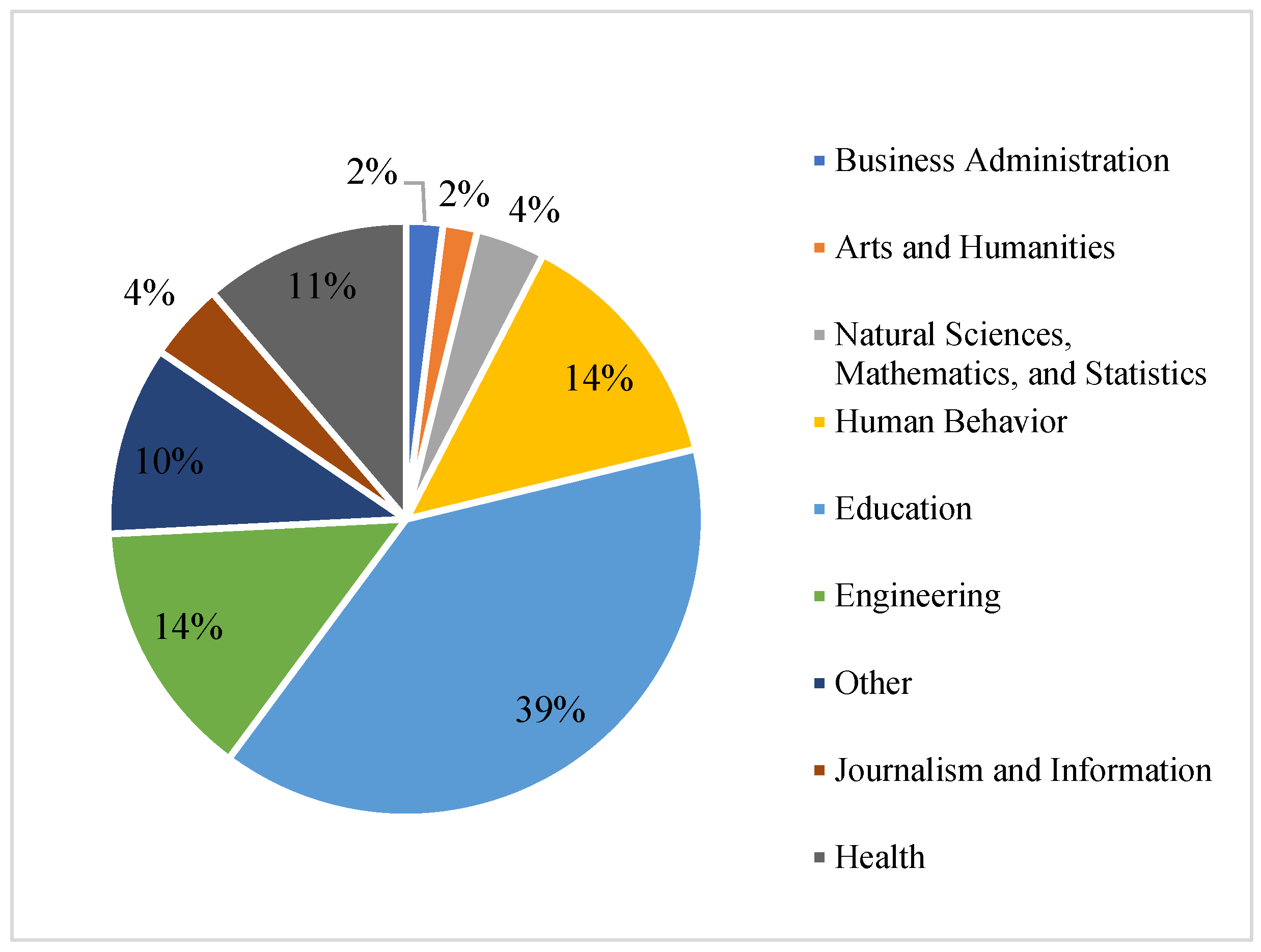
Of the 212 students who responded to the questionnaire, 67% were female and 33% were male. Their fields of study are shown in
Figure 1.
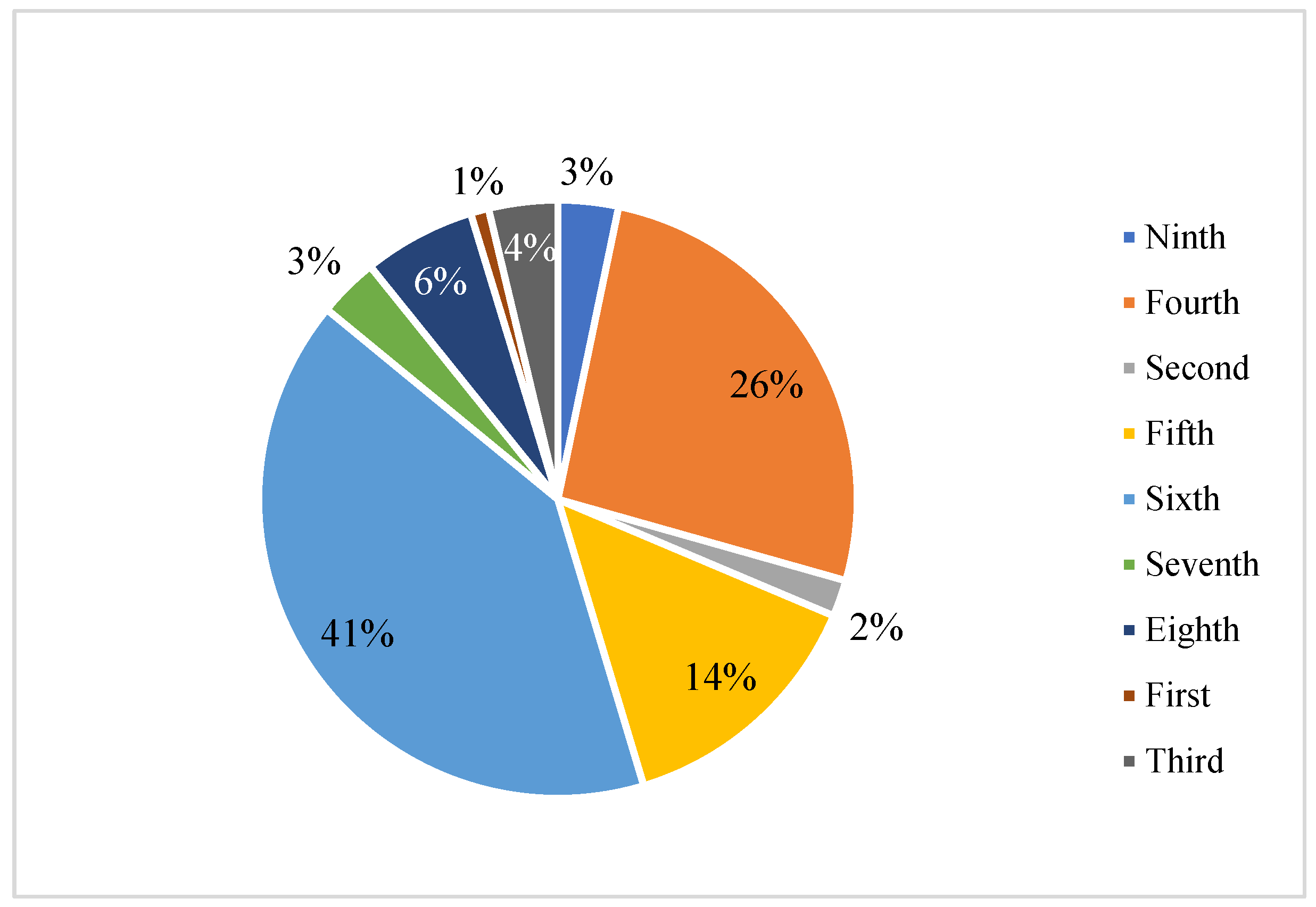
The academic semester to which students belong is shown in
Figure 2. Degree programs generally range between eight and ten semesters.
Additionally, 67% of students attend public universities, while 33% are enrolled in private universities.
5.2. Science Conceptualization
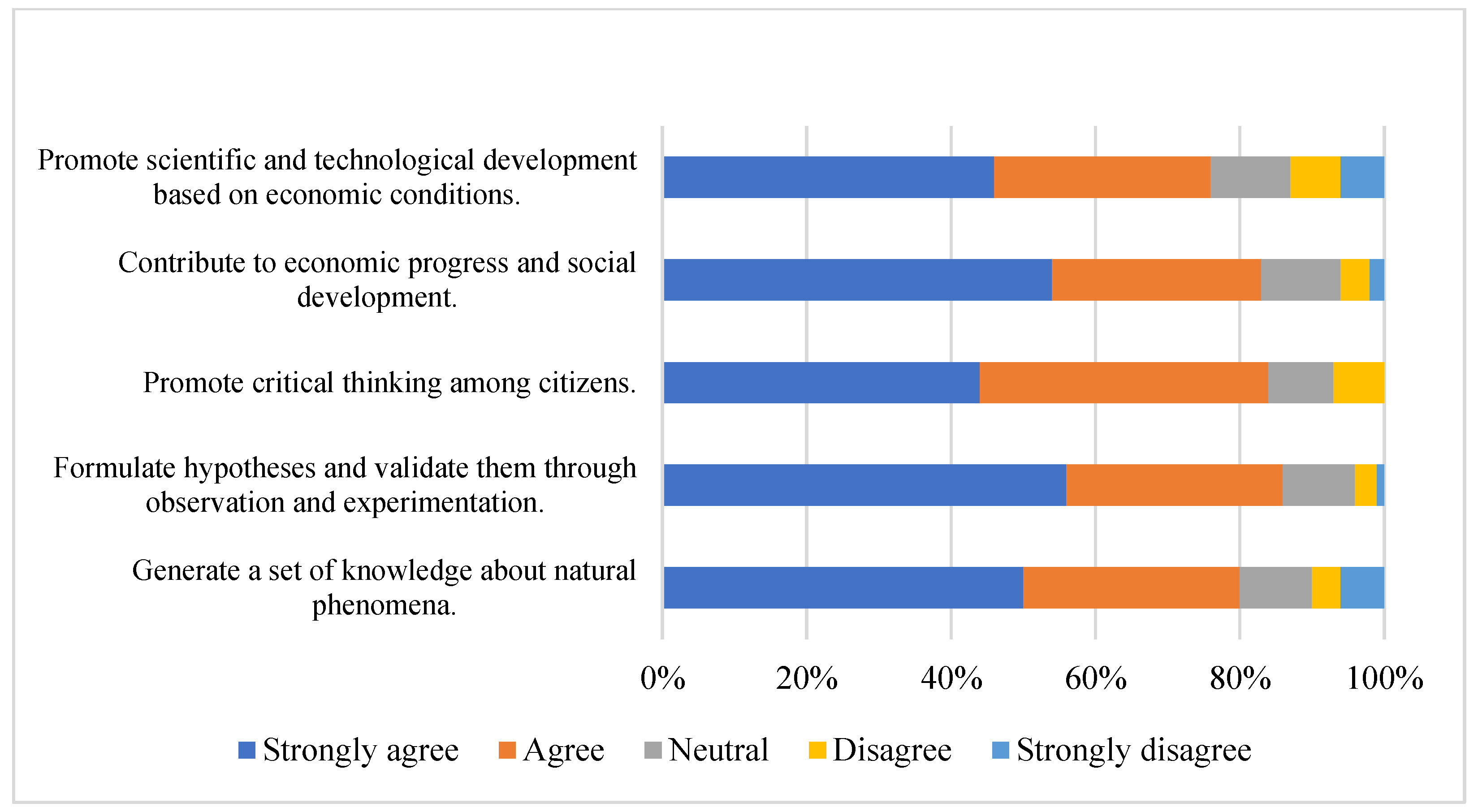
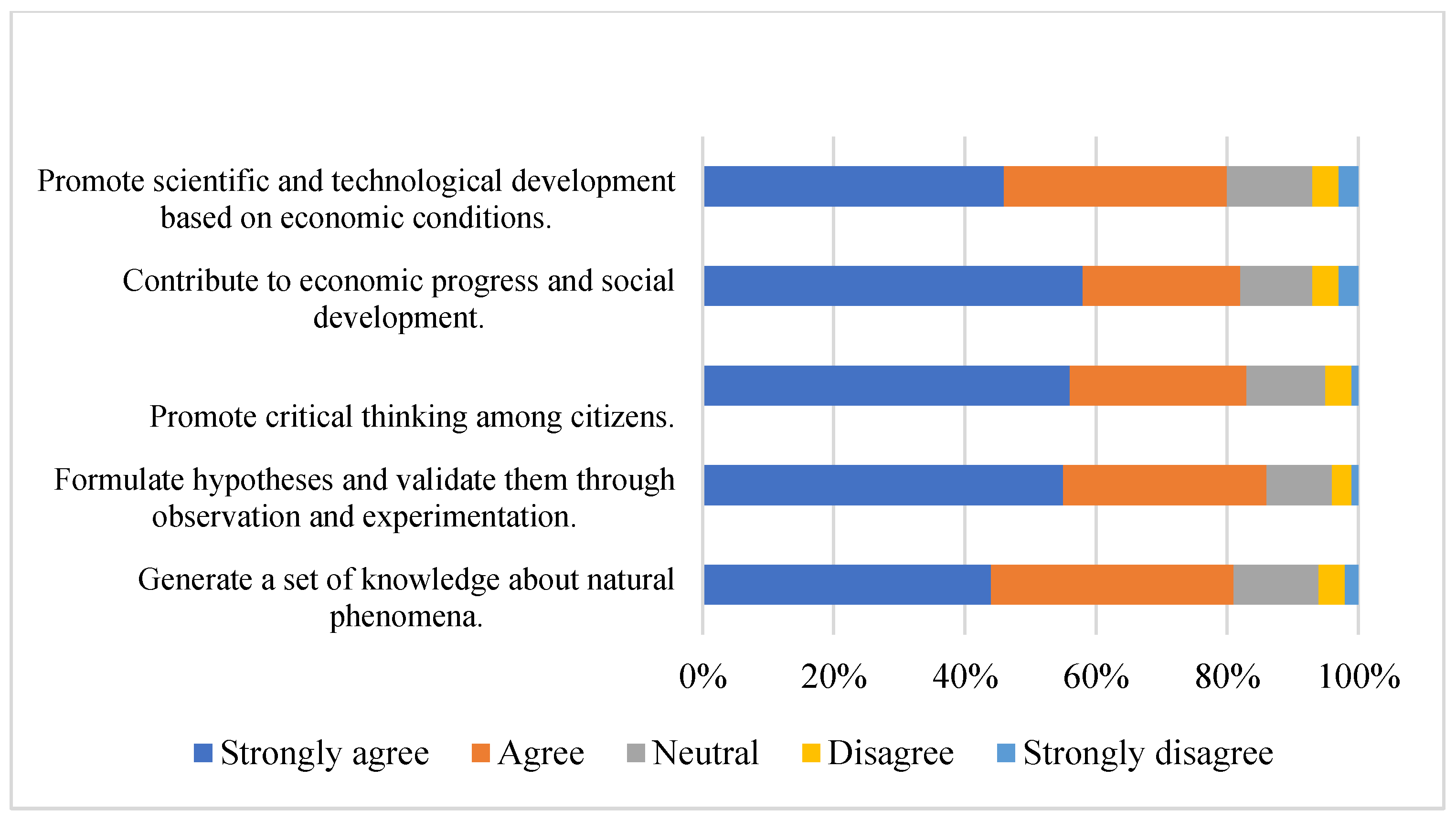
The results regarding how students conceptualize science as a body of knowledge contributing to different objectives are shown in
Figure 3 and
Figure 4, disaggregated by gender.
A multivariate analysis of variance (MANOVA) was performed with the variables from the ethical and social dimensions associated with science as dependent variables and gender as the independent variable. Pillai’s Trace test indicated that there were no significant multivariate differences between male and female participants in the set of perceptions analysed (Pillai = 0.032, F (5, 206) = 1.354, p = 0.243).
The findings indicate that the aggregate response patterns concerning the ethical and social dimensions associated with science are statistically comparable between both genders, thereby refuting Hypothesis H3. In summary, both genders appear to adopt analogous perspectives on a range of concepts, including truth, experimentation, institutions, civic responsibility, and profession. The absence of significant differences lends support to the hypothesis of a homogeneity of perception of the ethical and social dimensions of science, irrespective of the gender of the participants.
5.3. Science Learning
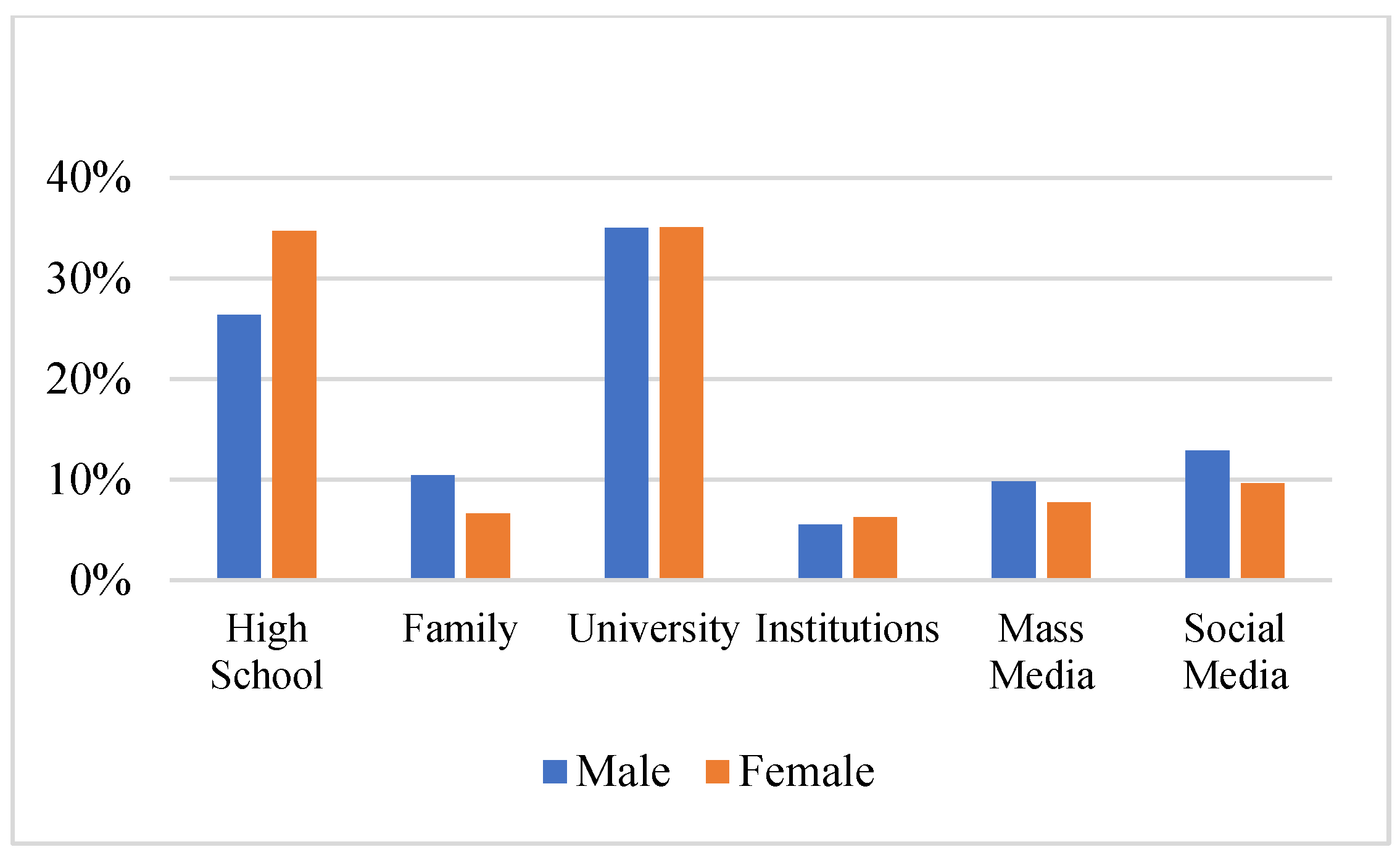
Regarding where science learning occurred, most university students indicated that it was primarily acquired during secondary school and higher education, as shown in
Figure 5.
To assess whether the place where science is learned varies by gender, a chi-square test of independence was applied between the gender of the respondents and their responses. The dependent variable corresponded to the degree of agreement expressed by participants with this statement. The analysis yielded a χ2 statistic = 42.75 with 33 degrees of freedom and a p-value = 0.1191. Given that the p-value is higher than the conventional significance threshold (p > 0.05), insufficient evidence was found to affirm a statistically significant association between gender and perceptions of the place where science is learned.
Consequently, it is concluded that Hypothesis H2 is not supported, since the responses to this question do not vary significantly between male and female participants, suggesting relative homogeneity in the way male and female participants perceive the environment in which they learn science.
5.4. Ethical and Social Dimensions Associated with Science
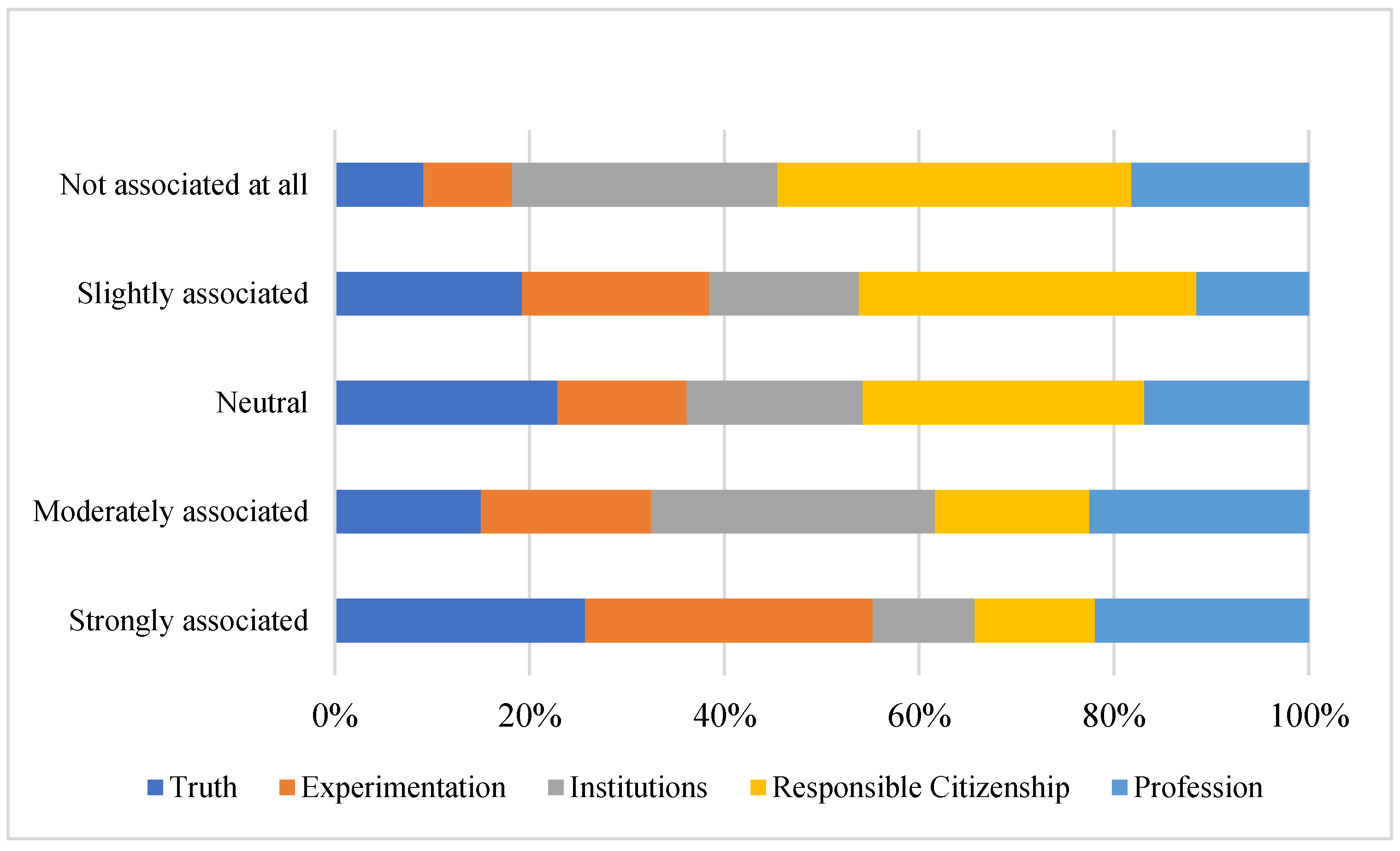
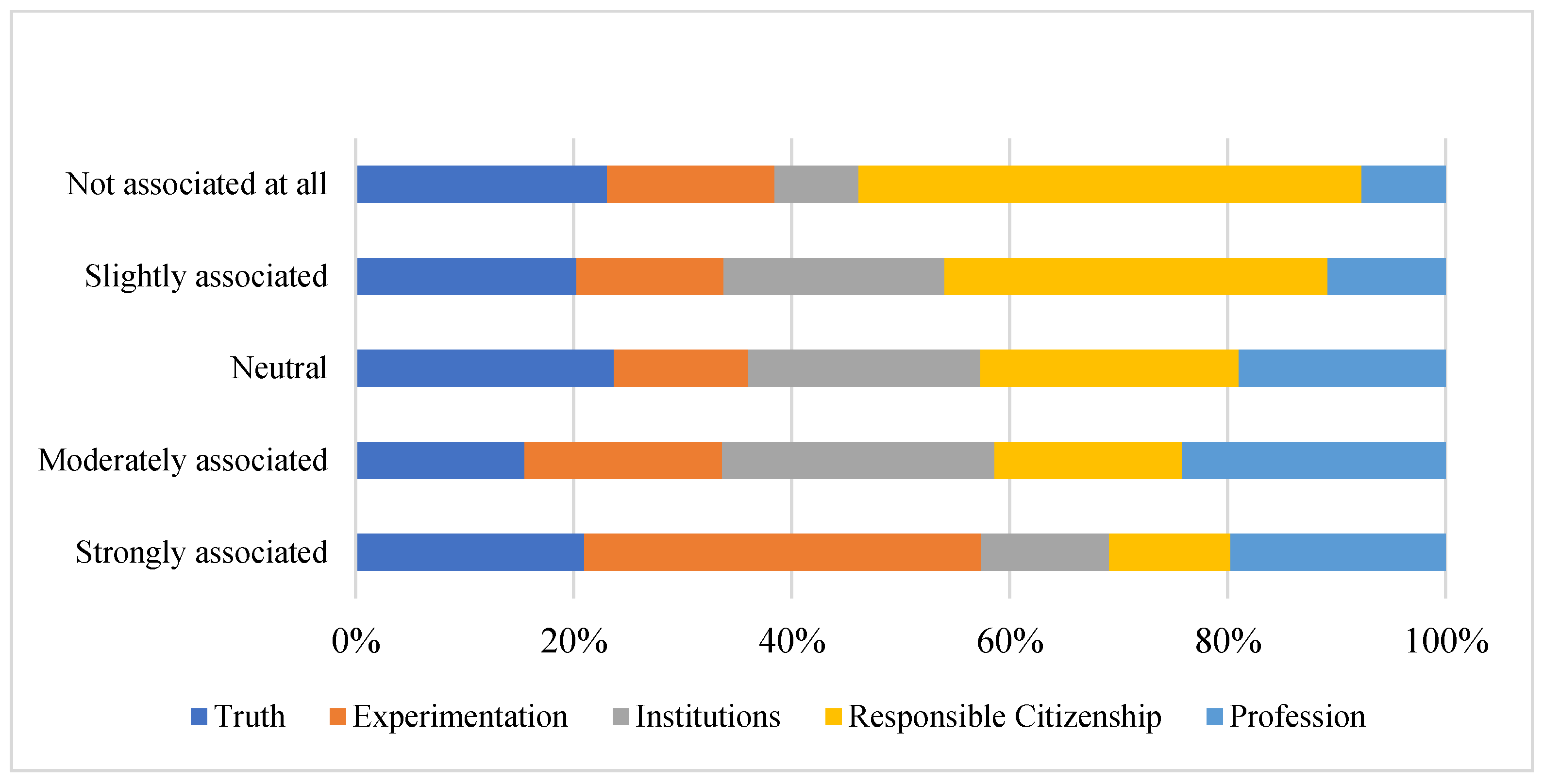
Figure 6 and
Figure 7 illustrate how students associate the word “science” with ethical and social dimensions, broken down by gender.
A multivariate analysis of variance (MANOVA) was performed with the variables from the ethical and social dimensions associated with science as dependent variables and gender as the independent variable. Pillai’s Trace test indicated that there are no significant multivariate differences between male and female participants in the set of perceptions analyzed (Pillai = 0.032, F (5, 206) = 1.354, p = 0.243).
These results suggest that the overall profile of responses on the ethical and social dimensions associated with science is statistically similar between both genders; that is, Hypothesis H3 is not fulfilled. In other words, both male and female participants share a comparable view of dimensions such as truth, experimentation, institutions, civic responsibility, and profession. The absence of significant differences supports the idea of a homogeneity of perception of the ethical and social dimensions of science, regardless of the gender of the participants. These results suggest that the overall profile of responses on the ethical and social dimensions associated with science is statistically similar between both genders; that is, Hypothesis H3 is not fulfilled. In other words, both male and female participants share a comparable view of dimensions such as truth, experimentation, institutions, civic responsibility, and profession. The absence of significant differences supports the idea of a homogeneity of perception of the ethical and social dimensions of science, regardless of the gender of the participants.
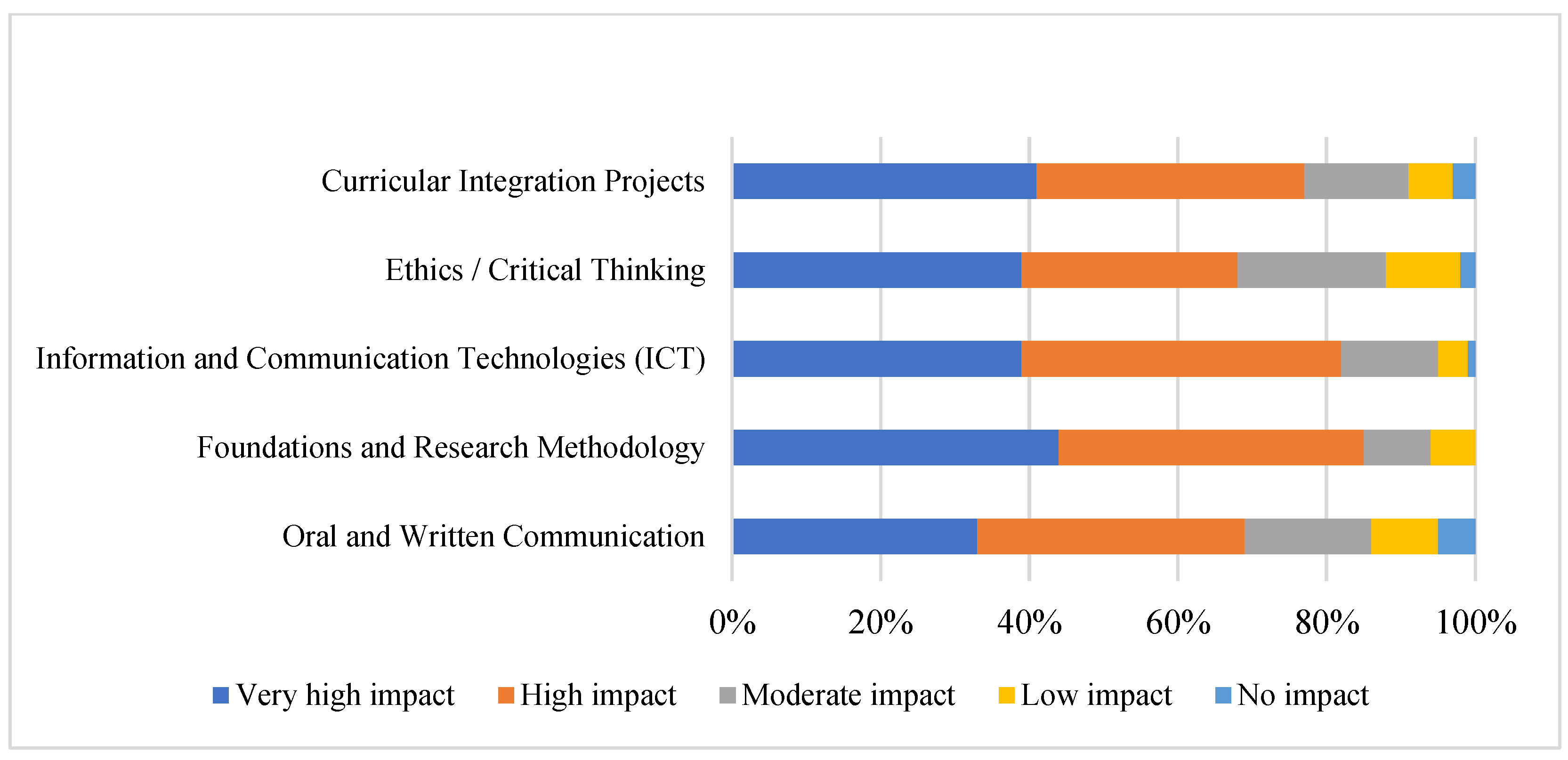
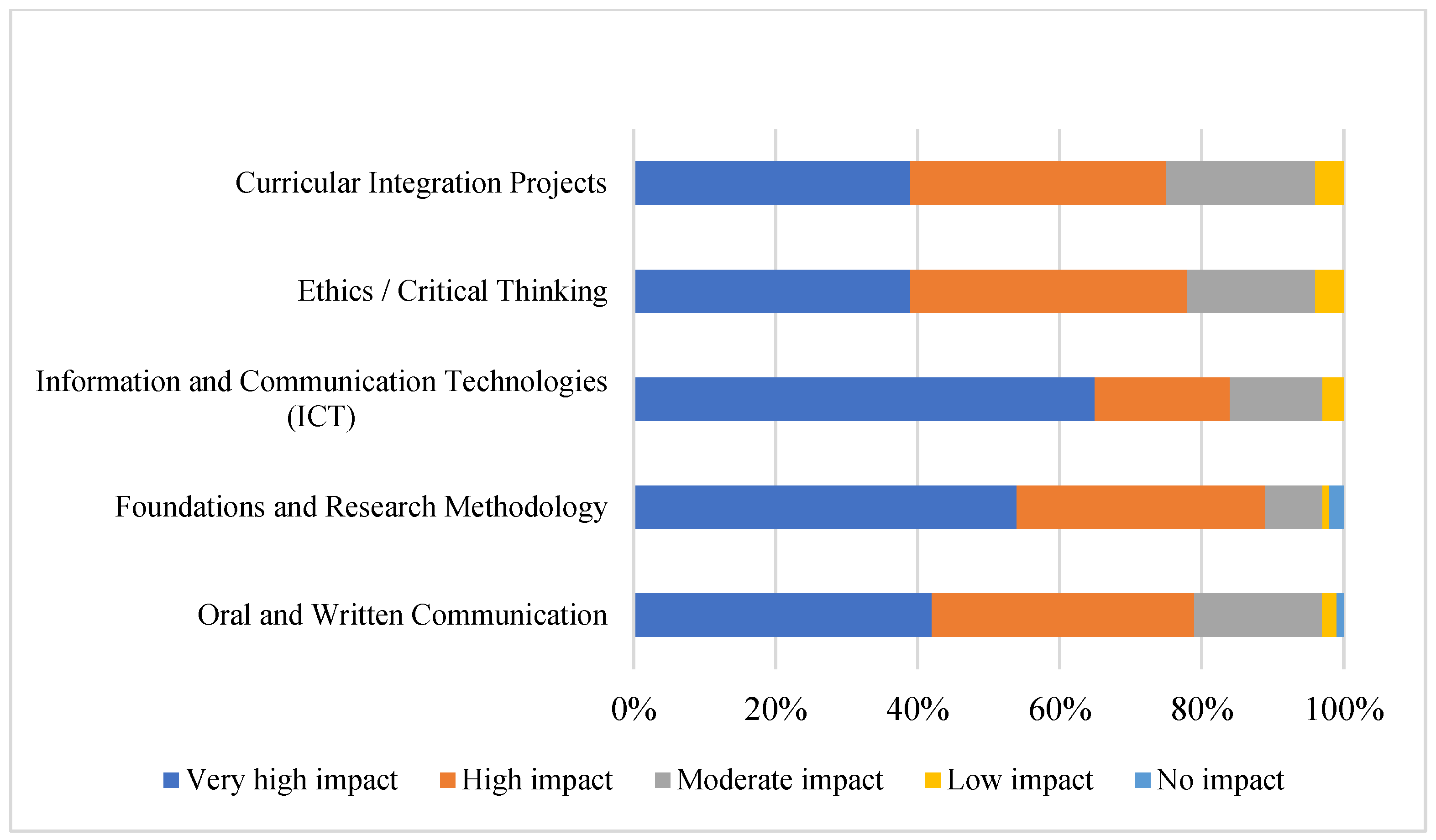
5.5. Impact of Subjects on Science Perception
Figure 8 and
Figure 9 display the academic subjects that students associate most strongly with their perception of science.
A multivariate analysis of variance (MANOVA) was performed with the variables from the block on the perception of science in subjects (SP1–SP5) as dependent variables and gender (GN) as the independent variable. Pillai’s Trace test indicated that there were no significant multivariate differences between male and female participants in the set of perceptions analysed (Pillai = 0.051, F (5, 206) = 2.225, p = 0.053).
The findings indicate that the overall response pattern concerning the perception of science among the subjects is statistically comparable between both genders. Consequently, Hypothesis H4 is not substantiated. In summary, the perspectives of both genders demonstrate a congruence with regard to the function of oral and written communication, the rudiments and methodologies of research, ICT, ethics and critical thinking, and projects. The absence of significant differences supports the hypothesis of a homogeneous perception of science among the subjects, irrespective of gender.
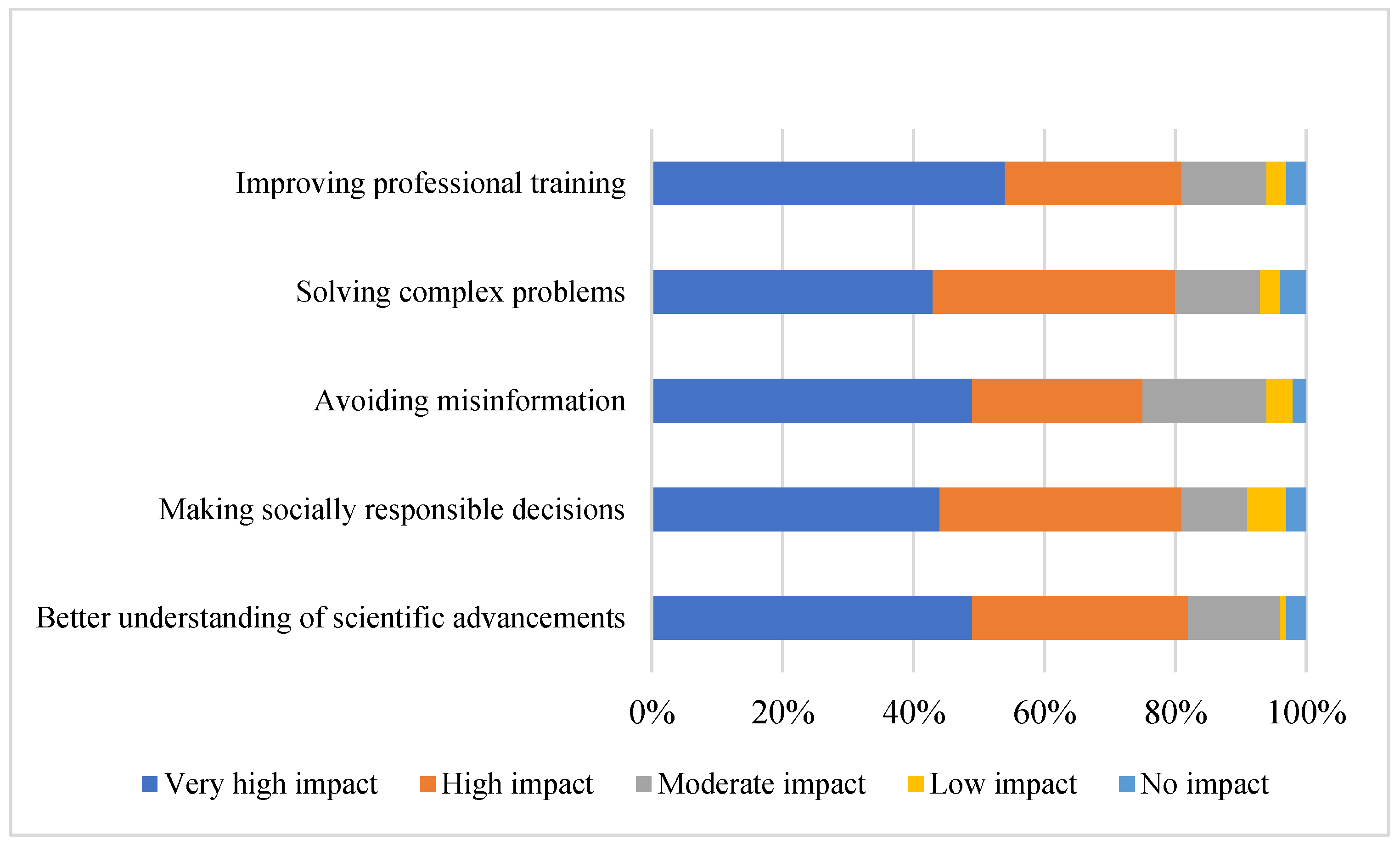
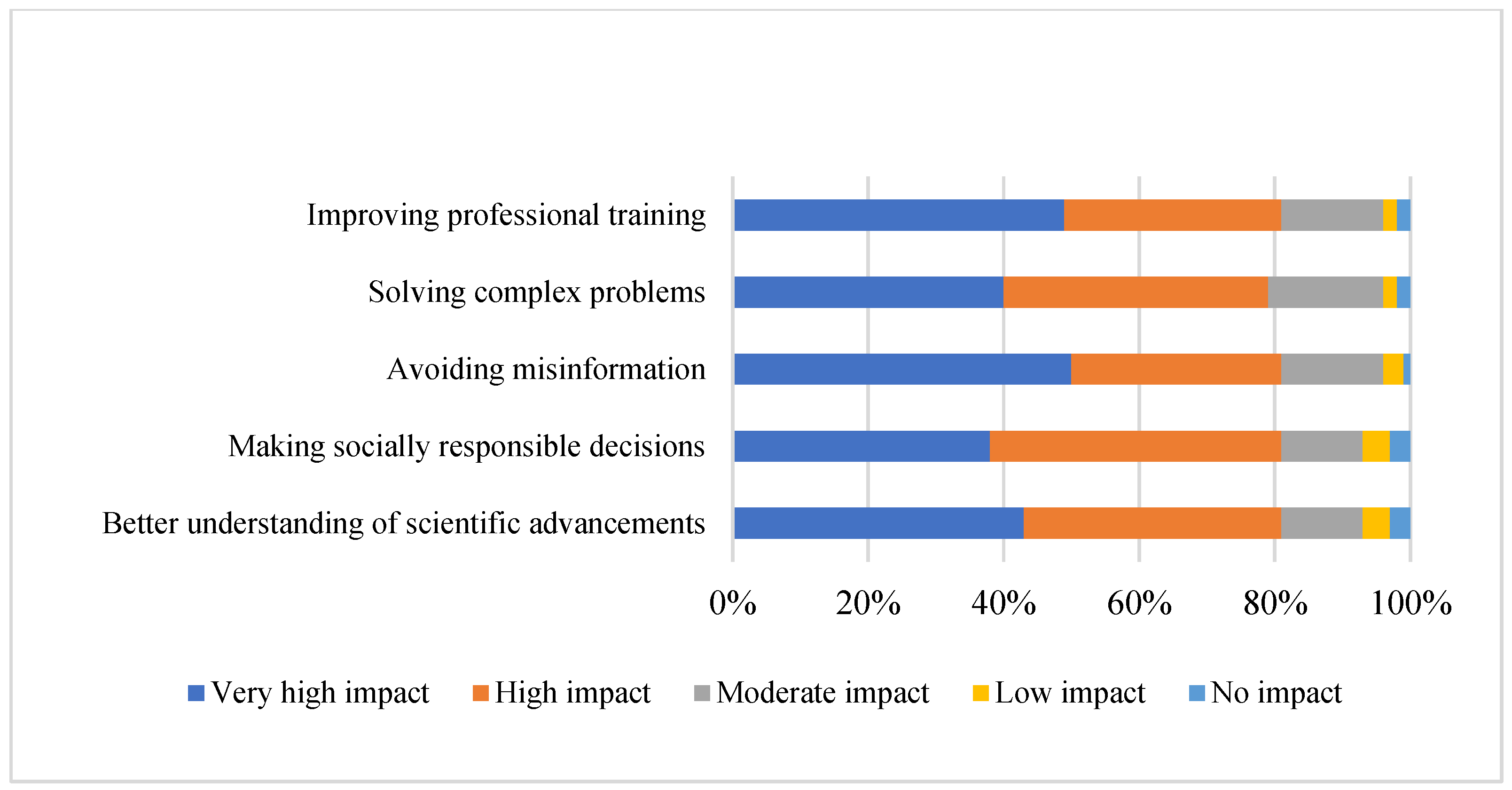
5.6. Personal Impact of Science Education
The personal impact of science education, as perceived by students, is presented in
Figure 10 and
Figure 11, also disaggregated by gender.
A multivariate analysis of variance (MANOVA) was performed with the variables of the construct of the personal impact of science education (PI1–PI5) as dependent variables and gender (GN) as the independent variable. Pillai’s Trace test indicated that there were no significant multivariate differences between male and female participants in the set of perceptions analysed (Pillai = 0.009, F (5, 206) = 0.359, p = 0.876).
The findings indicate that the aggregate response concerning the personal impact of science education is statistically comparable between both genders, thereby refuting Hypothesis H5. In summary, both genders appear to hold a comparable perspective on the role of scientific progress, the importance of informed decision-making, the avoidance of misinformation, the resolution of complex issues, and the enhancement of professional training. The absence of significant differences supports the hypothesis of homogeneity in the personal impact of science education, irrespective of the gender of the participants.
5.7. Evaluation of the Relationship Between Constructs
5.7.1. Hypothesis 6
To test Hypothesis H6, a multivariate regression model or Structural Equation Model (SEM) was constructed. The construct of conceptualisation of science was represented by the following variables: SC1–SC5, and the construct of the ethical and social dimensions of science was represented by the variables: CDA1–CDA5. The analysis performed with the R software, according to
Table 2, demonstrates that the structural effect of the construct of conceptualization of science on the ethical and social dimensions of science is positive and statistically significant.
This finding lends further support to Hypothesis H6, which posits a positive correlation between the extent of conceptual development in science and the adoption of its ethical and social dimensions. The model fit indices are displayed in
Table 3.
Consequently, the model fit was considered acceptable according to standard thresholds. The positive and significant path from Conceptual → EthicalSocial (β = 0.29, p = 0.001) supports Hypothesis 6, confirming that greater conceptual understanding of science predicts stronger ethical and social awareness.
5.7.2. Hypothesis 7
In order to evaluate Hypothesis H7, a multivariate regression model, or structural equation model (SEM), was developed. This model proposes that the impact of subjects on the perception of science, represented by variables SP1–SP5, positively predicts the personal and social impact of science education, represented by variables PI1–PI5.
The structural effect of the construct “impact of subjects on the perception of science” on the “personal and social impact of science education” is shown to be positive and statistically significant, as shown in
Table 4.
This finding lends further support to Hypothesis H7, which posits that an increased personal engagement with science education is associated with a greater impact of science-focused subjects. The model fit indices are displayed in
Table 5.
All factor loadings and structural paths were significant at p < 0.001. Model fit was acceptable to excellent according to recommended thresholds. The path coefficient supports H7, indicating a strong effect of academic scientific influence on students’ personal and social appropriation of science.
5.7.3. Hypothesis 8
The objective of the present study was to test Hypothesis H8 and verify whether gender moderates the relationship between the construct of conceptual understanding of science (SC1–SC5) and the construct of personal appropriation of science (PI1–PI5). To this end, a structural equation model (SEM) was developed.
The results of the gender moderation analysis are displayed in
Table 6 and summarise the SEM model estimates for the structural path of science comprehension versus personal appropriation of science by gender groups, and the chi-square difference test for regression equality between groups.
Therefore, for the group of women, the perception of the academic impact of science significantly and positively predicts personal/social appropriation (β = 0.430,
p < 0.001). The effect is moderate. On the other hand, for men, there is also a positive and significant prediction (β = 0.393,
p = 0.034), with a moderate effect, slightly less than in women. Next, a Multi-Group SEM analysis was performed which is shown in
Table 7.
The unrestricted model was compared with a model that imposes equality in the structural coefficient with no significant differences observed (∆χ2 (1) = 1.086, p = 0.298), indicating that the structural effect does not vary according to gender. In both groups, the relationship was positive and statistically significant: Female (β = 0.430, p < 0.001) and Male (β = 0.393, p = 0.034). However, because regression equality did not deteriorate the model fit, there was insufficient statistical evidence to affirm a moderating effect of gender on the hypothesized relationship. Therefore, H8 is not supported by the data.
6. Discussion
Conceptualization of science is reflected in the perception of science as a process that involves the formulation and validation of hypotheses through observation and experimentation, as well as a tool for promoting critical thinking and a driver of economic and social development. Contrary to the expectations formulated in Hypothesis H1, the analysis showed that both male and female participants share a comparable view of the role of science as a generator of knowledge, hypothesis formulation, experimentation, social development, and economic progress.
Miller et al. (
1998) in studies conducted in the United States, Japan, the European Economic Community and Canada found polarized perceptions of science. Positive schemes reflecting confidence in science and technology and negative schemes showing reservations about the negative consequences of science and technology were identified. The study’s findings indicated that the literacy level of the individuals participating in the study was a determining factor in the type of perception (
Miller et al., 1998).
Pines and West (
1986) suggest that the construction of formal knowledge that leans toward a positivist perspective of science and is the result of an institutional discourse linked to a curriculum that can be difficult to connect to spontaneous knowledge, the student’s belief system, or conceptual changes. On the other hand,
Ascencio (
2014) insists on the emerging need for the renewal of science education and emphasizes the clarification of ideas about the conception of science and the scientific method, to avoid distorted visions about science that are still transmitted in the educational context as far as science education is concerned.
Perceptions can clearly determine the increase or decrease in interest in science by students, with a direct impact, for example, on the type of careers they choose or the stereotypes that are consolidated around scientists (
Barry et al., 2022). In this sense, it is relevant to identify and analyze science learning spaces.
The results related to scientific learning environments confirm Hypothesis H2, reflecting a homogeneous perception between genders regarding the environments in which science learning takes place, highlighting the relevance of formal educational institutions in this process, as pointed out by
Fraser (
2002).
Aldridge and Rowntree (
2022) posit that the learning environment and the relationship with teachers have a significant impact on student motivation, particularly in female students. They further show the efficacy of strategies that emphasize collaborative learning in this regard. “When girls perceive their science teacher to be friendly, understanding of their problems and to care about them, they respond more positively to the learning” (2022, p. 1557).
Complementing this perspective
Abo-Zena and Beatty (
2022),
Andrews and Wang (
2019),
Ennes et al. (
2023) mention the family as an important space for the promotion of scientific culture. However, there is a low presence of the family as an agent promoting scientific interest. Academic motivation is usually formed in the family environment and is influenced by attitudes and beliefs toward science, so this limited participation takes on analytical importance. Previous studies have pointed out that family involvement plays a fundamental role in the development of scientific curiosity and in the construction of sustained learning trajectories (
Ennes et al., 2023;
Mittelmeier et al., 2021;
Dökme et al., 2022). Other research shows that, in the case of women, mothers’ academic education influences their perception of the value of STEM fields, and that men whose parents have academic education influence expectations of success in STEM careers (
Dökme et al., 2022). Consequently, the results underscore the need to strengthen family participation mechanisms in order to foster the development of scientific interest and empowerment in university students.
Since 10% of students associate science learning with the family environment, literacy and science promotion events could be hosted at universities, involving family members of students. Projects could also be generated from students to families, focusing on the development of critical thinking around the management of pseudoscientific information circulating on social networks, the re-signification of science in everyday life, open science, citizen science and guided experiments, among others. Short science communication workshops could be held, in which students and their families would work together to create evidence-based content to counteract misinformation on social networks. These initiatives would reinforce science as a shared social practice rather than an exclusively academic activity.
With regard to the ethical and social dimensions of science, the results demonstrated that the terms most frequently cited by both male and female participants are experimentation, profession, and truth. This finding suggests a perception oriented towards the fundamental pillars of scientific practice. These conceptual associations are relevant insofar as they reflect an understanding aligned with the epistemological and operational principles of science. Furthermore, they contribute to the strengthening of students’ connection with scientific knowledge, as well as their development as informed citizens in an increasingly techno-scientific social context.
Consistent with recent studies, students who are interested in research activities, have trust in outcomes of scientific discovery prefer formal education in science and are already active citizens who influence their society through their professional development (
Vrana, 2015).
Hypothesis H3 indicates that perceptions of the ethical and social dimensions of science are homogeneous across genders (
Dökme et al., 2022), with no differences attributable to the gender of the participants.
Scott et al. (
2010) showed gender differences linked to job expectations, the labor market, and the presence of more women in academia and STEM professions. These differences have changed over time and have decreased as women have gained ground in the scientific world (
Mim, 2022;
Zhang et al., 2021).
Similarly, analyzing the influence of the subjects studied on the perception of science is essential to understanding how academic training shapes students’ understanding, appreciation, and relationship with scientific knowledge. Subjects such as Research Fundamentals and Methodology and Information and Communication Technologies emerge as the most significant in this process.
Students have a discerning understanding of the linkage between theoretical concepts and practical applications, the incorporation of scientific subject matter into real-world contexts, and the potential for forging meaningful links between academic instruction and contemporary societal concerns. Male and female subjects expressed comparable perceptions regarding the presence and function of science within the subjects that constitute their respective educational programmes.
In line with the above mentioned Sager adds the importance of the development of new skills in the framework of the development of science especially linked to the understanding of scientific literature, as well as scientific communication that not only implies an act of transmission of information but the implementation of technical skills that allow to respond to the specificities and purposes of each audience (
Sager et al., 2025).
Despite this positive assessment by students, research conducted in Latin America indicates the necessity to review curricula, as there is evidence that they are focused on the transmission of information rather than on the development of research skills and the promotion of critical thinking about science, its evolution, and its relationship to the social, political, and economic development of countries in the region (
Furman, 2018).
Science education has a significant impact on students’ personal development, improving cognitive abilities, shaping worldviews and strengthening the capacity for informed decision-making. It promotes a deeper understanding of scientific advances, encourages socially responsible decision-making, supports professional development and enhances problem-solving skills, while helping to reduce the spread of misinformation. Together, these factors demonstrate that students value the scientific knowledge they acquire, as well as its contribution to fostering autonomy, reflection and awareness of the societal relevance of science. Furthermore, the results confirm Hypothesis H5, indicating that male and female participants have similar perceptions of the personal impact of science education.
The absence of statistically significant gender differences in this sample does not imply the absence of structural gender inequalities in Ecuador. It is possible that the characteristics of the participant population may be reflected by the following: undergraduate students enrolled in urban universities in Quito who have already passed key educational selection filters. In such contexts, perceptions related to science may be more strongly influenced by shared curricular experiences, institutional culture, and exposure to similar academic resources than by gender alone. Furthermore, the gender disparities in employment outcomes (e.g., remuneration and research funding) that have been documented may not be entirely reflected in the perceptual distinctions observed among undergraduate student cohorts.
Hypothesis H6 posits that a more profound conceptual comprehension of science is demonstrably linked to a more robust evaluation of its ethical and social dimensions. This finding lends support to the approaches of Socio-scientific Issues and critical scientific literacy (
Zeidler et al., 2002), which argue that scientific knowledge does not operate in isolation but directly influences students’ ability to reflect on the moral, environmental, and social implications of scientific practice.
Students who have attained mastery over the conceptual foundations of science tend to exhibit heightened sensitivity to its societal implications. This observation is in alignment with the extant literature concerning the correlation between knowledge and ethical reasoning within educational settings. This underscores the necessity for enhancing comprehensive scientific instruction in higher education institutions, encompassing not only cognitive domains but also ethical dimensions.
On the other hand, hypothesis H7 was tested using the structural model, which states that the perception of the academic impact of science acts as a solid and positive predictor of personal and social appropriation by students. Consistent with the Science Identity Model (
Carlone & Johnson, 2007), this finding suggests that when students perceive science as relevant to their academic training, studies, and professional career, they are more likely to integrate scientific thinking into their daily lives, decision-making, and civic participation.
These results align with the findings of Aivelo and Huovellin’s study, which examined the impact of citizen science on student engagement. Their research indicated that participation in community projects, where students apply their learning, fosters an interest in science (
Aivelo & Huovelin, 2020).
In congruence with the Value-Belief-Norm Model (
Stern et al., 1999), it has been demonstrated that the perception of value exerts a pivotal influence on the cultivation of prosocial attitudes and behaviours, orienting them towards the collective well-being of the community. Consequently, students are able to recognize the academic value of science and incorporate it into their personal and social identity, with relevant implications for university science education.
Gender could moderate the relationship between conceptual understanding of science and personal appropriation of science (H8), the results of the multigroup SEM analysis did not provide statistically significant evidence to support this moderating effect. Although both groups showed positive relationships between the variables, the tests of metric, scalar, and regression equality showed that the models did not differ significantly between male and female participants, indicating that the strength and direction of the relationship remain stable regardless of gender.
Recent studies suggest that, despite the existence of gender disparities in specific domains of scientific identity and engagement in STEM, the personal internalization of the value of science may demonstrate a greater degree of homogeneity among students who share similar educational backgrounds (
Archer et al., 2012;
Hazari et al., 2013). The absence of gender moderation in this study therefore shows that personal appropriation of science appears to be more influenced by common cognitive and motivational factors than by sociocultural differences associated with gender.
According to
Giraldo Gutiérrez et al. (
2020) and other authors, in Latin America, it is not yet possible to speak of an identity, culture, and memory of its own in terms of science, technology, and innovation, although the implementation of science, technology, and innovation policies. Statistics show an increase in institutions and knowledge production, as well as in the number of researchers, but not in the appropriation of the knowledge produced.
The outcomes of this research constitute a valuable resource for Ecuadorian universities, as they furnish essential information for enhancing the quality and relevance of their science education programmes. The implementation of these measures enables the identification of the curriculum’s strengths and weaknesses, the design of more effective teaching strategies, the promotion of a robust and critical scientific culture, the basis of institutional decisions on empirical evidence, and the provision of a more accurate response to contemporary social and technological challenges.
7. Conclusions
This study provides a comprehensive perspective on how university students in Ecuador conceptualize science, the sources they utilize to construct this knowledge, and the influence of academic training on their personal and social appropriation of it. Firstly, a remarkable homogeneity is observed between male and female students across all constructs evaluated, suggesting that gender differences do not significantly influence their comprehension and valuation of science within the educational context analyzed.
Conversely, the absence of gender-related differences in conceptualization, learning environments, ethical–social dimensions, the impact of subjects, and personal appropriation suggests that students draw from relatively similar educational references. This phenomenon may be attributed to the standardization of curricula in Ecuadorian universities, as well as to the increased transversality of science education in study programs.
On the other hand, structural models reveal significant relationships that transcend sociodemographic variables. It has been demonstrated that a solid conceptual understanding of science is associated with greater ethical and social awareness, reinforcing the idea that scientific knowledge does not operate in isolation, but rather is integrated into frameworks of moral reflection and responsible citizenship.
Complementarily, it is evident that the academic impact of science-related subjects strongly predicts the personal and social appropriation of scientific knowledge. This finding underscores the role of higher education as a decisive space for consolidating scientific attitudes, developing critical thinking, and fostering informed participation in society. In contrast, the moderating role of gender was not confirmed, as it did not moderate the relationship between conceptual understanding and personal appropriation. This suggests that, in the context studied, shared cognitive and motivational factors carry more weight than sociocultural differences associated with gender.
Taken together, the results provide useful empirical evidence to guide curricular improvements, strengthen scientific literacy strategies, and promote a more critical, inclusive, and socially engaged university education. This knowledge provides a basis for future research that expands the sample to other regions of the country and integrates intersectional perspectives to more accurately understand the dynamics of scientific appropriation in Ecuadorian higher education.
8. Limitations and Future Studies
Among the main limitations of this study is the fact that the university population surveyed comes exclusively from four higher education institutions located in Quito. Furthermore, the participants belong to diverse areas of professional training, which gives the results a general nature and is not necessarily representative of more specific contexts.
The sample size (n = 212) and its concentration in urban universities in Quito may limit generalizability to rural contexts or to other Latin American countries with different educational conditions. Second, the study relies on self-reported questionnaire data, which may be affected by social desirability and common-method bias. Third, the quantitative design identifies associations but cannot fully explain the underlying mechanisms; mixed-methods research (e.g., interviews or focus groups) could provide richer accounts of how students connect scientific understanding with ethical–social concerns and appropriation outcomes.
In this sense, it is suggested that future research expand the geographic scope of the sample, including university students from different regions of the country. It is also recommended to incorporate an intersectional approach that allows for the integration of variables such as ethnicity, socioeconomic status, sexual orientation, and disability, with the aim of more precisely identifying how multiple identities impact students’ relationships with scientific knowledge and the educational environments in which they are educated. This methodological expansion will allow for a broader, more contextualized, and more representative understanding of perceptions surrounding science and its impact on the academic and daily lives of university students in Ecuador.
Future research around this topic should test evidence-based intervention strategies to strengthen students’ ability to distinguish reliable scientific information from misinformation in social media. Promising approaches include media and information literacy programs, ‘inoculation’ and prebunking interventions that expose learners to common misinformation tactics, and structured fact-checking training embedded in university coursework (
Roozenbeek et al., 2020;
Verhalle & Loos, 2025). Experimental and quasi-experimental studies could evaluate short modules integrated into general education courses and measure changes in epistemic vigilance and science-related decision-making.
Although the quantitative survey design enabled the modelling of relationships among constructs, it does not provide in-depth insight into how students narratively construct the relationship between scientific understanding and ethical–social awareness. Qualitative methods such as interviews, focus groups, or narrative analysis could complement the present findings by exploring the cognitive and experiential processes underlying these associations. Future research adopting mixed-methods designs would allow for a richer and more contextualized interpretation of students’ science-related worldviews.