Article

Assessing Causal Links Between Mathematics Teaching Efficacy, Attitudes Towards Inclusion, and Efficacy in Implementing Inclusive Practices: A Cross-Lagged Panel Autoregressive Model Analysis


by
Garyfalia Charitaki
1,*,
Georgia Andreou
1,
Anastasia Alevriadou
2 and
Spyridon-Georgios Soulis
3
1
Department of Special Education, University of Thessaly, 38221 Volos, Greece
2
Department of Psychology, Aristotle University, 54124 Thessaloniki, Greece
3
Department of Primary Education, University of Ioannina, 45500 Ioannina, Greece
*
Author to whom correspondence should be addressed.
Educ. Sci. 2026, 16(2), 267; https://doi.org/10.3390/educsci16020267
Submission received: 24 November 2025 / Revised: 30 January 2026 / Accepted: 6 February 2026 / Published: 8 February 2026

Abstract

Previous research has documented that mathematics teaching efficacy, attitudes towards inclusion, and efficacy in implementing inclusive practices are interrelated through reciprocal relationships. Nowadays, the need for enhancing inclusive mathematics education and supporting teachers in diverse classrooms is insatiable. In this study, we evaluated these dynamic relationships through the use of a cross-lagged panel autoregressive model. The sample consisted of first-year students (n = 212), at three time points, attending the joint distance inter-university postgraduate program (Hellenic Open University–University of Thessaly) in special education: “Educational Sciences: Special Education and Training for People with Oral and Written Language Difficulties”, which aims to provide specialized knowledge in the field of special education. Results revealed a phenomenon with increased complexity characterized by reciprocal relationships among mathematics teaching efficacy, efficacy in implementing inclusive practices, and attitudes toward inclusion. Within the lens of Self-Determination Theory, aspects such as autonomy, competence, and relatedness are crucial for professional development programs that reinforce both self-efficacy and intrinsic motivation, resulting in effective, inclusive mathematics instruction.

1. Introduction

Embracing inclusivity in schools stresses the need to gain insights into the specific factors affecting teachers’ ability to effectively teach all students, including diverse student populations (e.g., students with disabilities) (Alam & Mohanty, 2023; Baglieri, 2022; Woodcock et al., 2022). The United Nations’ Convention on the Rights of Persons with Disabilities (Wong, 2021) emphasizes the fact that all students, especially those diagnosed with disabilities, deserve to be educated in their neighborhood school co-jointly with their typically developing peers. Moreover, the implementation of high-quality education for all students is of major importance (Hofman-Bergholm, 2022; Madani, 2019). Every school is a transformative organization, and achieving high-quality education significantly depends on its teachers (Burnett, 2024; Odell et al., 2020). Their beliefs, attitudes, and self-efficacy, in many cases, drive their actions and, consequently, are closely related to the successful implementation of inclusive education (Dignath et al., 2022; Kourti et al., 2023; Wray et al., 2022).
When it comes to the field of mathematics education, the implementation of inclusive teaching is getting more demanding (Büscher & Prediger, 2024; Oppong, 2022). The specific difficulties are related to the abstract nature of the mathematical concepts that are being taught (related to the cognitive disposition of mathematics content knowledge) (Malinen et al., 2013), the existing students’ anxiety regarding maths (Ramirez et al., 2018), and the necessity to address a wide range of diverse learning needs simultaneously (pedagogical knowledge) (Sharma & George, 2016). Previous research in the field (Nührenbörger et al., 2024; Skaalvik & Skaalvik, 2010) suggests that teachers’ self-efficacy expectations for inclusive mathematics instruction are in fact related to their openness to adopt inclusive practices, instructional effectiveness, and students’ outcomes, as well.
Furthermore, attitudes towards inclusion should be considered for their effect on teachers’ commitment to implementing inclusive education (Avramidis & Norwich, 2002). Another crucial parameter affecting the successful implementation of inclusive education is teachers’ efficacy in implementing inclusive practices, which is related to teachers’ confidence in adapting teaching strategies, providing accommodations, and managing heterogeneity within their classroom (Sharma et al., 2012). Regardless of these well-known relationships between mathematics teaching efficacy, attitudes toward inclusion, and efficacy in implementing inclusive practices, there is sufficient research revealing potential causal relations (Keppens et al., 2021; Weissenfels et al., 2021). Existing research findings cannot discriminate whether mathematics teaching efficacy is responsible for formulating more positive attitudes toward inclusion or vice versa (Savolainen et al., 2022). Similarly, the bidirectional relationships among efficacy in implementing inclusive practices and mathematics teaching efficacy have not been investigated yet.
Consequently, this study aims to shed light on the reciprocal relationships between mathematics teaching efficacy, attitudes toward inclusion, and efficacy in implementing inclusive practices through a cross-lagged panel autoregressive model analysis (Selig & Little, 2012). The application of the analytical framework mentioned above enables us to investigate the temporal ordering of these relationships and identify possible feedback loops that sustain or hinder inclusive teaching efficacy (Snyder, 2013).

2. Mathematics Teaching Efficacy, Attitudes Towards Inclusion, and Inclusive Mathematics Teaching

Inclusive mathematics teaching mainly depends on cognitive dispositions such as mathematics content knowledge, mathematics pedagogical content knowledge, and pedagogical knowledge (Karlen et al., 2023; Schmid et al., 2024; Shulman, 1987). According to the first disposition, namely mathematics content knowledge, effective and inclusive mathematics teaching is based on understanding the specific mathematical concepts and procedures that are being taught. The second disposition, namely mathematics pedagogical content knowledge, is related not only to mathematics content knowledge but also to teachers’ efficacy in creating appropriate learning environments to facilitate mathematics teaching by reflecting a variety of didactic principles (Nührenbörger et al., 2019, 2024; Zawojewski et al., 2014). The last disposition, namely pedagogical knowledge, is related to teachers’ efficacy in implementing inclusive learning environments, classroom management, and collaboration.
Apart from the three dispositions that are related to teachers’ knowledge, competencies operationalized by cognitive, affective, and conative characteristics are of major importance, since they formulate effective mathematics teaching, namely performance (Barroso et al., 2021; Blömeke et al., 2015; Jenßen, 2021; Jenßen et al., 2015). The effective transformation of dispositions to teaching performance is mediated by the development of situation-specific skills, which include the teachers’ perception, interpretation, and decision-making while teaching mathematical concepts. A focused effort to implement inclusive mathematics education within the framework of effective transformation of dispositions to teaching performance requires the promotion of quality in education and the facilitation of all children to acquire basic mathematical competencies (Clapton, 2009; Pérez, 2018; Strnadová et al., 2018). Implementing adaptations has a central role in inclusive mathematics education and is a demanding task for teachers. Consequently, inclusive mathematics teaching has its basis in the teacher’s knowledge, but a significant number of parameters formulate a teacher’s performance (Abdulah & Mahmud, 2025; Bertram & Scherer, 2023; Bock et al., 2019). Among these parameters, there are affective, cognitive, and conative dimensions of attitudes concerning inclusive education and expectations of self-efficacy concerning inclusive mathematics instruction in terms of differential mathematics instruction in general, and instruction for children with disabilities or/and special educational needs.
According to the Theory of Planned Behavior (Ajzen, 1991), attitudes formulate not only intentions but also teachers’ behavior. Existing findings in the field (Hellmich et al., 2019; Lindner et al., 2023; Opoku et al., 2021; Savolainen et al., 2022; Wilson et al., 2019) suggest that teachers’ positive orientation towards the inclusion of students with disabilities or/and special educational needs has a significant effect on their active efforts to employ inclusive teaching strategies, and to adopt inclusive pedagogical strategies, engage in differentiated instruction, and accommodate diverse learning needs (Avramidis & Norwich, 2002; Forlin, 2010; Miesera et al., 2019; Szumski et al., 2017). Another parameter that has a significant effect on teachers’ positive orientation towards inclusive mathematics education is teachers’ expectations for their efficacy in teaching mathematics (Saloviita, 2020; Savolainen et al., 2022; Werner et al., 2021). The concept mathematics teaching self-efficacy is used to describe teacher’s self-perception for his/her ability to cope with achieving desired outcomes in terms of engagement and learning for all students, including those with disabilities and/or special educational needs (Tschannen-Moran & Hoy, 2001; Woodcock et al., 2022; Wray et al., 2022).
Although attitudes towards inclusion and self-efficacy expectations are considered significant predictors for teachers’ efficacy in implementing inclusive practices, there are no research findings regarding the bidirectional relationship. Gaining insights into the specific way that attitudes towards inclusion are related to mathematics teaching efficacy and efficacy in implementing inclusive practices is of major importance for the promotion of teachers’ professional development and the formulation of policy oriented to the promotion of inclusive mathematics education. This study aims to gain insights into these bidirectional effects using a longitudinal approach.

3. Research Aim and Hypotheses

More specifically, using autoregressive cross-lagged panel models with longitudinal data on mathematics teaching efficacy (MTES), attitudes towards inclusion (ATTAS) and efficacy in implementing inclusive practices (TEIP), it was attempted to specify the nature and identify potential bidirectional or reinforcing effects among these variables concerning attending the module “EAG50-Special Education” of the joint distance inter-university postgraduate program (Hellenic Open University–University of Thessaly) in special education: “Educational Sciences: Special Education and Training for People with Oral and Written Language Difficulties”. Therefore, the main research hypotheses of the present study are the following:
  • RQ1: What is the temporal ordering and directionality of MTES–TEIP dimension associations (determination of the nature of existing associations across time and within a single time)?
  • RQ2: What is the temporal ordering and directionality of MTES–ATTAS dimension associations (determination of the nature of existing associations across time and within a single time)?
  • RQ3: Are the suggested structural paths invariant across time?

4. Method

For this study, we employed a longitudinal within-subject design with three repeated measurements across the EAG50 module (T1–T3). Given the absence of random assignment and a comparison group, the design is best described as an intervention-context longitudinal (quasi-experimental) study.

5. Participants

A total of n = 212 participants were enrolled in the study. All of them were first-term students attending the joint distance inter-university postgraduate program (Hellenic Open University–University of Thessaly) in special education: “Educational Sciences: Special Education and Training for People with Oral and Written Language Difficulties”. Table 1 presents key demographic aspects, such as gender, age, region of residence, ICT knowledge, marital status, number of children, and experience in Open and Distance Education. The vast majority of the students participating in the study were female (95.8%), and more than half (59.9%) of them were 22–30 years old. Participants were distributed across all regions of Greece, with the majority of them residing in the region of Attica (30.7%), followed by Central Macedonia (17.9%) and the Peloponnese (15.1%). A significant proportion (68.4%) possess basic ICT knowledge and experience in Open and Distance Education. Regarding marital status, 67.5% are single, and 70.8% have no children. In-service participants were employed in typical education settings, which aligns with the study’s focus on inclusion-related attitudes and self-efficacy beliefs that are developed prior to, and independently of, systematic implementation in inclusive classrooms.

6. Measures

6.1. Demographics

A total of seven demographic questions were used to assess each student’s gender, age, region of residence, ICT knowledge, marital status, number of children, and experience in Open and Distance Education.

6.2. Mathematics Teaching Efficacy Scale (MTES)

The MTES is an adaptation of the Science Teaching Efficacy Belief Instrument (Riggs & Knochs, 1990). MTES demonstrated excellent reliability (α = 0.856) (Charitaki et al., 2025a, 2025b). It addresses the mathematics teaching outcome expectancy and personal mathematics teaching efficacy belief dimensions. It is a self-rating questionnaire, adapted appropriately to assess the mathematics teaching outcome expectancy and personal mathematics teaching efficacy belief. It consists of 25 close-ended statements, rated on a 5-point Likert-type scale ranging from one (strongly disagree) to five (strongly agree).

6.3. Attitudes Towards Teaching All Students Scale (ATTAS)

ATTAS (Charitaki et al., 2023; Gregory & Noto, 2012, 2018, 2019) is a questionnaire designed to assess attitudes towards inclusive education. The authors provided sufficient evidence for the validity and reliability of the scale (α = 0.833). ATTAS consists of nine variables. It covers extensive content and addresses cognitive, affective, and behavioral dimensions of attitude. The cognitive factor (Q1–Q3) assesses teachers’ beliefs about whether all students can succeed in general education classrooms (e.g., “Q1: Most or all separate classrooms that exclusively serve students with mild to moderate disabilities should be eliminated.”). The affective factor (Q4–Q6) assesses the development of personal and professional relationships (e.g., “I would like to be mentored by a teacher who models effective differentiated instruction.”). Finally, the behavioral dimensions of the attitude factor (Q7–Q9) assess teachers’ efforts to create an accepting environment for all students (e.g., “I would like people to think that I can create a welcoming classroom environment for students with mild to moderate disabilities.”). ATTAS scoring is made through using a 7-point Likert scale (one = very strongly agree to seven = disagree). Specifically, a high score indicates negative attitudes towards the school inclusion of children with disabilities. For the purposes of the present analyses, ATTAS scores were reverse-coded so that higher scores indicated more positive attitudes toward inclusion, ensuring conceptual alignment with MTES and TEIP.

6.4. Teacher Efficacy for Inclusive Practices (TEIP) Scale

All participants administered the TEIP scale, which was designed to measure perceived teacher efficacy to teach in inclusive classrooms (Sharma et al., 2012; Vogiatzi et al., 2022), as we described. The scale consists of 18 items scored on a six-point Likert scale (from one = strongly disagree to six = strongly agree). The TEIP 18 items are divided into three subscales: efficacy in using inclusive instruction (EII), efficacy in collaboration (EC), and efficacy in managing behavior (EMB) (Sharma et al., 2012). The TEIP was first developed and validated by Sharma et al. (2012). They reported a Cronbach’s alpha coefficient formed at 0.89 for the total scale score and of 0.85 to 0.93 for the scores on the three subscales: EII, EC, and EMB (Park et al., 2016).

6.4.1. Description of the Postgraduate Program and the Module “EAG50-Special Education”

The joint distance inter-university postgraduate program, “Educational Sciences: Special Education and Training for People with Oral and Written Language Difficulties,” aims to provide specialized knowledge regarding oral and written language problems, theoretical approaches related to speech problems, and educational interventions that can be designed and implemented to address and/or mitigate these problems in monolingual and bilingual/multilingual speakers. All modules are compulsory. Students may choose from one (1) to two (2) units per semester. When they register for a module, they must first have completed the modules from the previous semester and then select the units of the next semester or the remaining modules (from the previous semester) at the same time. The first unit is EAG50-Special Education, which aims to enable students to gain insights into the basic concepts, principles, and models of special education in the framework defined by the relevant legislation and educational practice. Emphasis is placed on contemporary educational approaches to special education.

6.4.2. Data Collection and Analysis

Firstly, permission for this study was obtained by the Ethics Committee of the Hellenic Open University (54, 27 October 2021). Data were collected through three different repeated measures (Time 1: during the second and third week, Time 2: during the sixth and seventh week, and Time 3: during the eleventh and twelfth week) during the spring semester of the 2023–2024 academic year. The analysis was conducted using SPSS AMOS 16. Firstly, we assessed the measurement invariance across time. Afterwards, we evaluated the relevance of the first and higher-order autoregressive and cross-lagged paths and we established the structural invariance of the final cross-lagged path model across time. Finally, we evaluated the stability of the structural paths of the final cross-lagged path model. We employed the robust maximum-likelihood estimation method for the estimation of all parameters in all models. Although some variables exhibited skewness and kurtosis, robust maximum-likelihood estimation was used, which is appropriate for non-normal distributions in samples of this size. For the goodness of model fit, we employed criteria such as model chi-square (p-value > 0.05), the adjusted goodness of fit index (AGFI ≥ 0.90), the confirmatory fix index (CFI ≥ 0.90), the Tucker–Lewis index (TLI ≥ 0.95), root mean square error of approximation (RMSEA < 0.08) and (standardized) root mean square residual (SRMR < 0.08) (Hooper et al., 2008; Kline, 2015). Although no external control group was available, the analytical strategy strengthens inference by modeling autoregressive stability and adjusting for prior levels of each construct. Consequently, the analyses support conclusions about temporal directionality and reciprocal dynamics within an intervention context, rather than definitive causal effects.

7. Results

7.1. Preliminary Analysis

Firstly, we estimated Pearson’s correlation coefficients for all measures at all three time points. The results suggested that mathematics teaching efficacy was significantly associated with ATTAS, such that higher levels of mathematics teaching efficacy were related to lower (i.e., less negative) attitudes toward inclusion. Moreover, the analysis of the repeated measures (T1, T2, and T3) revealed the stability of the pattern of associations mentioned previously across time (Table 2).

Assessing Measurement Invariance over Time

To ensure that the constructs were represented consistently across measurement occasions, a stepwise series of invariance tests was conducted. Each successive model introduced additional constraints on factor loadings and item intercepts to evaluate the temporal stability of the measurement structure. Fit indices supported the assumption that the underlying configuration and parameter patterns remained comparable across time points, indicating adequate longitudinal measurement equivalence (below the cutoffs of non-invariance from Models 1 to 3 in both cases, MTES-TEIP and MTES-ATTAS). A detailed presentation of the fit statistics for the suggested models can be seen in Table 3 and Table 4.

8. Main Analysis

8.1. Higher-Order Dynamic Path Models

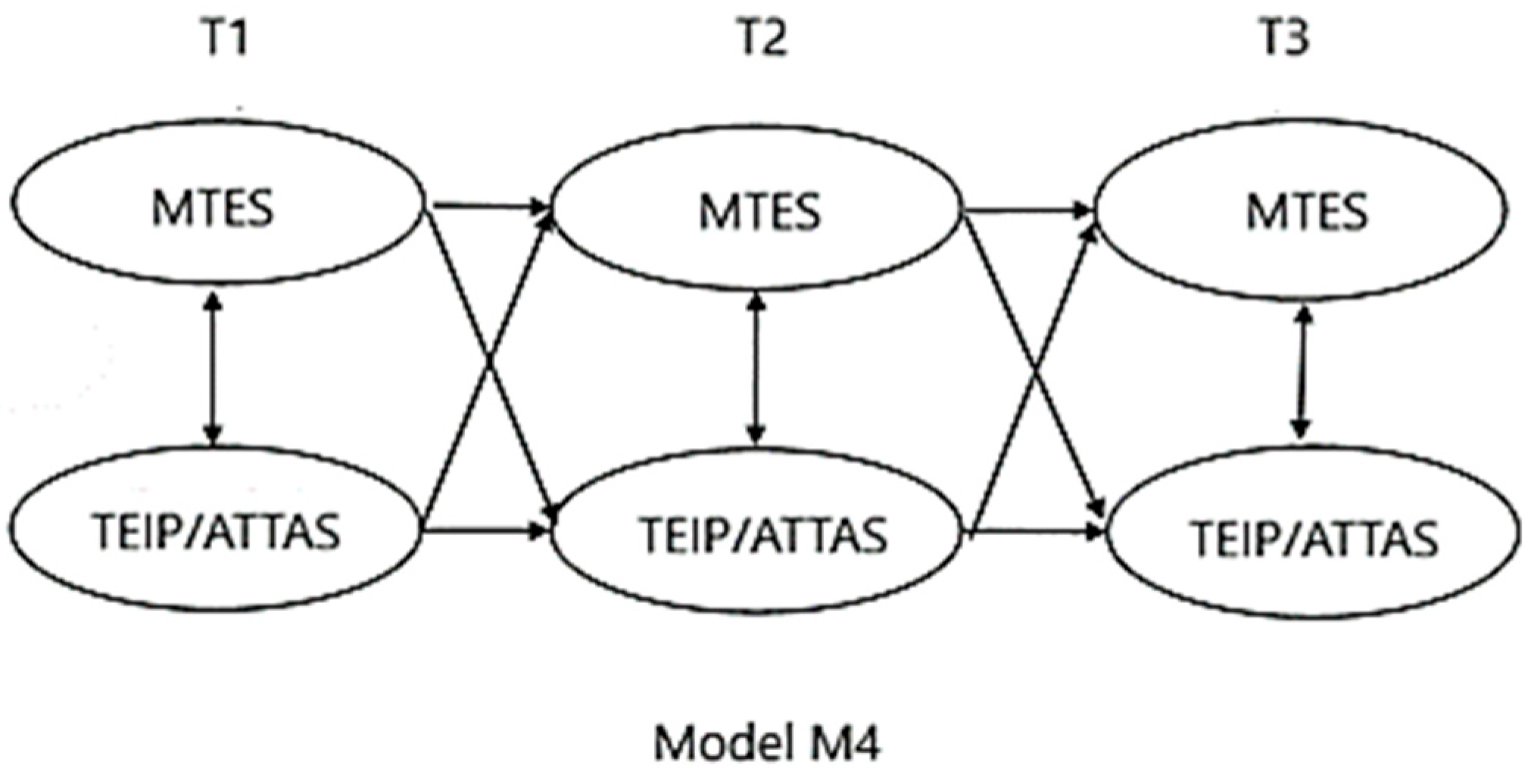
A total number of 18 models (nine for MTES-TEIP and nine for MTES-ATTAS) were assessed in order to build evidence regarding the hypothesized structural associations. These models are presented in detail in Table 3 and Table 4. All nested invariance models yielded a good fit of the data, with the statistical criteria taking values below the cutoffs of non-invariance from Models 1 to 3, suggesting measurement invariance for MTES-TEIP and MTES-ATTAS models over time. Model M4 restricts both stability and cross-lagged relations to first-order effects only; Model M3 extends this structure by allowing for cross-lagged influences to also appear at higher-order intervals, while retaining first-order stability paths; Model M2 incorporates stability effects across both first- and higher-order lags, but limits cross-lagged associations to first-order connections; and Model M1, the most comprehensive specification, includes stability and cross-lagged pathways operating across multiple temporal distances, offering the broadest representation of possible longitudinal dependencies. The M1 model demonstrated the best fit for both the MTES-TEIP and MTES-ATTAS models compared to the M2, M3 and M4 models, based on the ΔCFI, ΔRMSEA, and ΔAIC criteria presented in Table 3 and Table 4. Consequently, the M1 models, which retained both first- and higher-order stability paths for first-order cross-lagged paths, were identified as the optimal models. In summary, the best-fitting model suggested that the current MTES levels predicted the future MTES levels. Analysis suggested the same finding for TEIP and ATTAS. Also, findings supported bidirectional relationships.

8.2. Assessment of Structural Stability Across Time

After establishing the M1 model as the best-fitting one, we assessed for structural invariance across time. As expected, Μ1 for both the MTES-TEIP and MTES-ATTAS models remained stable when constrained across time (MTES-TEIP model: ΔCFI = 0.003, ΔRMSEA = −0.004, ΔAIC = 19.36 and MTES-ATTAS model: ΔCFI = 0.003, ΔRMSEA = −0.007, ΔAIC = 100.69). These findings indicate that the longitudinal structural relationships were invariant across time. Competing models were evaluated by examining changes in key fit indices.

8.3. Final Evaluation of Cross-Lagged Effects Across Time

As shown in Table 5, MTES is significantly correlated with higher levels of both TEIP and ATTAS at all time points. More specifically, MTES (Time 1) was significantly correlated with TEIP (T1: r = 0.61, p < 0.001; T2: r = 0.72, p < 0.001; T3: r = 0.34, p < 0.001) and with ATTAS (T1: r = 0.41, p < 0.001; T2: r = 0.39, p < 0.001; T3: r = 0.54, p < 0.001). The same pattern of correlations is observed for MTES (Time 2) and MTES (Time 3) (Figure 1). Furthermore, MTES, TEIP and ATTAS showed significant autoregressive effects. Regarding the directional paths, we found that all paths from MTES to TEIP, TEIP to MTES, MTES to ATTAS and ATTAS to MTES were statistically significant, Table 5. These results highlight the reciprocal nature of MTES, ATTAS, and TEIP, reinforcing the importance of fostering inclusive teaching environments that support both subject-specific and inclusive teaching efficacy.

9. Discussion

This study attempted to specify the nature and identify potential bidirectional or reinforcing effects among mathematics teaching efficacy (MTES), attitudes towards inclusion (ATTAS) and efficacy in implementing inclusive practices (TEIP) in a sample of first-year university students attending the module “EAG50-Special Education” of the joint distance inter-university postgraduate program (Hellenic Open University–University of Thessaly) in special education: “Education Science: Special Education and Education of Individuals with Speech and Writing Difficulties”. Through using higher-order autoregressive and cross-lagged models, we were able to reveal key dynamics that influence inclusive mathematics education within a structured training context.
Regarding the first research question, the temporal ordering and directionality of MTES—TEIP dimension associations are better described through bidirectional relationships. More specifically, the results suggested that mathematics teaching efficacy is closely related to teachers’ efficacy in implementing inclusive practices. The finding is partly in line with the existing findings in the field, which suggest that teachers’ positive orientation towards inclusive mathematics education has a significant effect on their expectations for their efficacy in teaching mathematics (Saloviita, 2020; Savolainen et al., 2022; Werner et al., 2021). The support of bidirectional relationships suggests that these factors may mutually reinforce each other over time (Avramidis & Norwich, 2002) and are consistent with the view that teachers’ knowledge and competencies, operationalized by cognitive, affective, and conative characteristics, formulate effective mathematics teaching, namely performance (Barroso et al., 2021; Blömeke et al., 2015; Jenßen, 2021; Jenßen et al., 2015), which is also the case for MTES-ATTAS relationships.
Regarding the second research question, the temporal ordering and directionality of MTES—ATTAS dimension associations are also described by bidirectional relationships. The finding is partly in line with the existing findings in the field (Hellmich et al., 2019; Lindner et al., 2023; Opoku et al., 2021; Savolainen et al., 2022; Wilson et al., 2019), suggesting that teachers’ positive orientation toward the inclusion of students with disabilities and/or special educational needs has a significant effect on their active efforts to employ inclusive teaching strategies, adopt inclusive pedagogical strategies, engage in differentiated instruction, and accommodate diverse learning needs (Ajzen, 1991; Avramidis & Norwich, 2002; Forlin, 2010; Miesera et al., 2019; Szumski et al., 2017). Results suggested that a feedback loop may exist, wherein an increase in efficacy in inclusive teaching strengthens attitudes towards inclusion and mathematics teaching efficacy, creating a sustainable cycle of professional growth and improved student outcomes (Baglieri, 2022). This reinforces the argument by Florian and Linklater (2010) that inclusive teaching is not only about accommodating diverse students but also about enhancing teachers’ pedagogical adaptability. Finally, the support of bidirectional relationships provides support for the interpretation that factors mutually reinforce each other over time (Avramidis & Norwich, 2002) and supports the claim that teachers’ knowledge, competencies operationalized by cognitive, affective, and conative characteristics formulate effective mathematics teaching, namely performance (Barroso et al., 2021; Blömeke et al., 2015; Jenßen et al., 2015; Jenßen, 2021).
Regarding the third research question, the results suggested that structural paths are invariant among the assessed variables (mathematics teaching efficacy (MTES), efficacy in implementing inclusive practices (TEIP) and attitudes towards inclusion (ATTAS)) remained stable across time. This finding is in line with previous research suggesting that teachers’ self-efficacy beliefs and attitudes toward inclusion tend to be relatively stable over time, indicating relative stability in these beliefs and attitudes over the observed period (Malinen et al., 2013; Sharma & Sokal, 2015). The finding highlights the potential for longer-term benefits associated with developing mathematics teaching efficacy, efficacy in implementing inclusive practices, and fostering positive attitudes toward inclusion. More specifically, there is significant evidence suggesting that early professional development and teacher training programs focusing on enhancing mathematics teaching efficacy and inclusive teaching practices can have lasting effects on instructional effectiveness and inclusivity in classrooms.
Furthermore, it is of major importance for pre-service teachers to foster positive attitudes toward inclusion as early as possible (Goddard & Evans, 2018). Due to the stability of formulated attitudes and efficacy beliefs, interventions, training programs or other curricula should aim to improve these constructs from the very beginning of teachers’ careers to ensure long-term benefits (Vasseleu et al., 2024). Teachers’ professional development should be designed to provide sustainability in terms of support and opportunities for reflective practice (Howell, 2021). Overall, the present findings clarify the temporal and reciprocal dynamics among MTES, ATTAS, and TEIP within a postgraduate training context. However, these patterns should be interpreted as directional associations, rather than definitive causal effects.

9.1. Practical Implications

The results highlighted the importance of establishing professional development programs that simultaneously enhance mathematics teaching efficacy and foster positive attitudes toward inclusion. The only way to overcome barriers preventing the implementation of inclusive mathematics education is by providing targeted training and support to pre-service and in-service teachers (Abdulah & Mahmud, 2025). Participating in professional learning communities has a significant effect on teachers’ confidence and ability to implement inclusive practices effectively (Avramidis & Norwich, 2002; Florian & Linklater, 2010). Embracing evidence-based strategies, such as differentiated instruction, prerequires a problem-solving situation to equip teachers with the skills needed to address diverse learning demands in the mathematics classroom (Sharma et al., 2012; Forlin, 2010).
Additionally, providing teachers with hands-on experiences in inclusive classrooms as practical exposure or job-shadowing has been found to enhance teachers’ self-efficacy and positive attitudes towards inclusion, as well (Jordan et al., 2009). Moreover, extensive training in inclusive education could provide teachers with the competency and motivation to implement inclusive practices (EADSNE, 2012). Consequently, integrating modules on inclusive pedagogy in teacher education curricula is essential for fostering long-term improvements in inclusive teaching efficacy.
Another critical implication of this study is related to policy and curriculum design. Educational policymakers should consider the interdependence of these factors when developing teacher training initiatives. Ensuring that mathematics educators receive both subject-specific pedagogical training and inclusive education strategies can contribute to more effective teaching practices and better learning experiences for students with diverse needs (Forlin, 2010; Sharma et al., 2012). Policies should mandate ongoing professional development and encourage collaboration among teachers, special educators, and other stakeholders to create a more cohesive and inclusive educational system.
Furthermore, institutional support plays a crucial role in sustaining inclusive teaching practices. Studies have demonstrated that teachers in schools with strong administrative backing, sufficient resources, and collaborative teaching environments are more likely to implement inclusive practices successfully (Gore et al., 2017; Lindsay, 2007). Providing teachers with access to mentorship programs, peer collaboration opportunities, and resource-sharing platforms can significantly enhance their confidence and competence in inclusive mathematics instruction.

9.2. Limitations

The findings of the present study should be interpreted within the scope of the analytical and educational context in which they were generated. First, although the longitudinal cross-lagged panel models allow for the examination of temporal ordering and reciprocal dynamics among MTES, TEIP, and ATTAS, they do not fully rule out alternative explanatory influences operating alongside the training process, such as the broader program climate, instructional characteristics of the module, parallel professional experiences, or social–motivational factors related to participation in postgraduate studies. Accordingly, the observed patterns are best understood as directional associations embedded within a structured learning context, rather than as isolated causal mechanisms. Τhe absence of an external comparison group and random assignment means that the findings should be interpreted as evidence of temporal ordering and reciprocal associations within a structured training context, rather than definitive causal effects. Although cross-lagged panel models adjust for prior levels and stability over time, unmeasured time-varying factors during the semester cannot be fully ruled out.
Second, the study relies on self-reported measures of mathematics teaching efficacy, attitudes toward inclusion, and efficacy in implementing inclusive practices. These constructs were assessed using well-established and psychometrically validated instruments (MTES, ATTAS, TEIP) that have been widely employed in international research across diverse educational contexts. As such, the measures capture theoretically central dimensions of teachers’ beliefs and professional readiness for inclusive practice. While the present design does not include direct observation of classroom implementation, the focus on validated self-report instruments is appropriate for examining developmental changes in efficacy beliefs and attitudes, which are widely recognized as foundational precursors to inclusive teaching behavior.
Moreover, the gender distribution of the sample reflects the current demographic composition of special education postgraduate programs in Greece and provides contextual specificity; however, gender distributions may differ across international contexts.
Finally, the sample was drawn from a postgraduate program in special education that plays a central role in the Greek educational system, as it admits a large number of students annually and provides recognized professional qualifications for employment in special education and has a small dropout rate (Charitaki et al., 2024). Within the Greek context, such programs constitute a primary pathway into the field and significantly shape the preparation of future and in-service professionals for inclusive education. Importantly, this structure resonates with teacher education and professional qualification pathways that are observed in several other European and neighboring countries, such as Cyprus, Bulgaria, Turkey, Italy, and Spain, where postgraduate or specialized training programs similarly function as gateways to professional practice in special and inclusive education. While direct extrapolation to all international contexts should be approached with contextual sensitivity, the present findings are likely to be relevant to educational systems characterized by comparable training structures and professional trajectories.

Author Contributions

Conceptualization, G.C., G.A., A.A. and S.-G.S.; methodology, G.C., G.A., A.A. and S.-G.S.; software, G.C.; validation, G.C., G.A., A.A. and S.-G.S.; formal analysis, G.C.; investigation, G.C., G.A., A.A. and S.-G.S.; resources, G.C., G.A., A.A. and S.-G.S.; data curation, G.C.; writing—original draft preparation, G.C., G.A., A.A. and S.-G.S.; writing—review and editing, G.C., G.A., A.A. and S.-G.S.; visualization, G.C., G.A., A.A. and S.-G.S.; supervision, G.C., G.A., A.A. and S.-G.S.; project administration, G.C., G.A., A.A. and S.-G.S.; funding acquisition, G.C., G.A., A.A. and S.-G.S. All authors have read and agreed to the published version of the manuscript.

Funding

This research received no external funding.

Institutional Review Board Statement

The study was conducted in accordance with the Declaration of Helsinki, and approved by the Ethics Committee of the Hellenic’s Open University (protocol code No. 54/21-10-2021, with approval granted on 27 October 2021).

Informed Consent Statement

Informed consent was obtained from all subjects involved in the study.

Data Availability Statement

Data is available upon request and completion of the research project.

Conflicts of Interest

The authors declare no conflict of interest.

References

  1. Abdulah, N. N., & Mahmud, M. S. (2025). Teaching competencies of mathematics teachers in inclusive education at primary schools. International Journal of Learning, Teaching and Educational Research, 24(1), 190–208. [Google Scholar] [CrossRef]
  2. Ajzen, I. (1991). The theory of planned behavior. Organizational Behavior and Human Decision Processes, 50(2), 179–211. [Google Scholar] [CrossRef]
  3. Alam, A., & Mohanty, A. (2023). Cultural beliefs and equity in educational institutions: Exploring the social and philosophical notions of ability groupings in teaching and learning of mathematics. International Journal of Adolescence and Youth, 28(1), 576–599. [Google Scholar] [CrossRef]
  4. Avramidis, E., & Norwich, B. (2002). Teachers’ attitudes towards integration/inclusion: A review of the literature. European Journal of Special Needs Education, 17(2), 129–147. [Google Scholar] [CrossRef]
  5. Baglieri, S. (2022). Disability studies and the inclusive classroom: Critical practices for embracing diversity in education. Routledge. [Google Scholar]
  6. Barroso, C., Ganley, C. M., McGraw, A. L., Geer, E. A., Hart, S. A., & Daucourt, M. C. (2021). A meta-analysis of the relation between math anxiety and math achievement. Psychological Bulletin, 147(2), 134–154. Available online: https://psycnet.apa.org/doi/10.1037/bul0000307. [CrossRef] [PubMed]
  7. Bertram, J., & Scherer, P. (2023). Which factors do pre-service teachers consider most important for successful inclusive mathematics classrooms? Results of an interview study. In Thirteenth congress of the European society for research in mathematics education (CERME13) (No. 2). Alfréd Rényi Institute of Mathematics. ERME. [Google Scholar]
  8. Blömeke, S., Hoth, J., Döhrmann, M., Busse, A., Kaiser, G., & König, J. (2015). Teacher change during induction: Development of beginning primary teachers’ knowledge, beliefs and performance. International Journal of Science and Mathematics Education, 13, 287–308. [Google Scholar] [CrossRef]
  9. Bock, A. S., Siegemund, S., Nolte, M., & Ricken, G. (2019). Preparation for inclusive teaching: Entangling prospective teachers’ perspectives on inclusive teaching using mathematics education as an example. In Inclusive mathematics education: State-of-the-art research from Brazil and Germany (pp. 581–605). Springer. [Google Scholar] [CrossRef]
  10. Burnett, S. (2024). Transformative leadership: Creating and sustaining a thriving school culture. iUniverse. [Google Scholar]
  11. Büscher, C., & Prediger, S. (2024). Teachers’ practices of integrating challenging demands of inclusive mathematics education in a professional development program. Journal of Mathematics Teacher Education, 27(2), 209–233. [Google Scholar] [CrossRef]
  12. Charitaki, G., Andreou, G., Alevriadou, A., & Soulis, S. G. (2024). A nonlinear state space model predicting dropout: The case of special education students in the Hellenic Open University. Education and Information Technologies, 29(5), 5331–5348. [Google Scholar] [CrossRef]
  13. Charitaki, G., Kypriotaki, M., & Alevriadou, A. (2023). Greek adaptation of the teachers’ attitudes towards teaching all students (ATTAS-mm) scale. Equity in Education & Society, 3(1), 76–88. [Google Scholar] [CrossRef]
  14. Charitaki, G., Vretudaki, H., & Kypriotaki, M. (2025a). Assessing mathematics teaching profiles in kindergarten: The impact of special educational needs, school climate, responsibility for student achievement, self-efficacy and locus of control. Asian Journal for Mathematics Education, 4(3), 394–415. [Google Scholar] [CrossRef]
  15. Charitaki, G., Vretudaki, M., & Kypriotaki, M. (2025b). Revisiting the factor structure of the mathematics teaching efficacy through a bifactor approach in a Greek sample of special and typical preschool education teachers. Mathematics Education Research Journal, 1–25. [Google Scholar] [CrossRef]
  16. Clapton, J. (2009). A transformatory ethic of inclusion: Rupturing concepts of disability and inclusion (Vol. 2). BRILL. [Google Scholar]
  17. Dignath, C., Rimm-Kaufman, S., van Ewijk, R., & Kunter, M. (2022). Teachers’ beliefs about inclusive education and insights on what contributes to those beliefs: A meta-analytical study. Educational Psychology Review, 34(4), 2609–2660. [Google Scholar] [CrossRef]
  18. EADSNE. (2012). Teacher education for inclusion: Profile of inclusive teachers. European Agency for Development in Special Needs Education. [Google Scholar]
  19. Florian, L., & Linklater, H. (2010). Preparing teachers for inclusive education: Using inclusive pedagogy to enhance teaching and learning for all. Cambridge Journal of Education, 40(4), 369–386. [Google Scholar] [CrossRef]
  20. Forlin, C. (2010). Teacher education reform for enhancing teachers’ preparedness for inclusion. International Journal of Inclusive Education, 14(7), 649–653. [Google Scholar] [CrossRef]
  21. Goddard, C., & Evans, D. (2018). Primary pre-service teachers’ attitudes towards inclusion across the training years. Australian Journal of Teacher Education, 43(6), 122–142. [Google Scholar] [CrossRef]
  22. Gore, J., Lloyd, A., Smith, M., Bowe, J., Ellis, H., & Lubans, D. (2017). Effects of professional development on the quality of teaching: Results from a randomised controlled trial of Quality Teaching Rounds. Teaching and Teacher Education, 68, 99–113. [Google Scholar] [CrossRef]
  23. Gregory, J. L., & Noto, L. A. (2012). Technical manual for attitudes towards teaching all students (ATTAS-mm) instrument. ERIC. Available online: https://files.eric.ed.gov/fulltext/ED537530.pdf (accessed on 5 February 2026).
  24. Gregory, J. L., & Noto, L. A. (2018). Attitudinal instrument development: Assessing cognitive, affective, and behavioral domains of teacher attitudes toward teaching all students. Cogent Education, 5(1), 1422679. [Google Scholar] [CrossRef]
  25. Gregory, J. L., & Noto, L. A. (2019, March 6–8). Revalidating an instrument to gain insights into changing attitudes towards teaching all students. NERA Conference Proceedings 2019 (pp. 1–18), Uppsala, Sweden. Available online: https://opencommons.uconn.edu/nera-2019/2 (accessed on 5 February 2026).
  26. Hellmich, F., Löper, M. F., & Görel, G. (2019). The role of primary school teachers’ attitudes and self-efficacy beliefs for everyday practices in inclusive classrooms—A study on the verification of the ‘Theory of Planned Behaviour’. Journal of Research in Special Educational Needs, 19, 36–48. [Google Scholar] [CrossRef]
  27. Hofman-Bergholm, M. (2022). High quality educated teachers and high-quality textbooks—The two pillars of quality education. In Transitioning to quality education (pp. 23–37). MDPI (Multidisciplinary Digital Publishing Institute). [Google Scholar]
  28. Hooper, D., Coughlan, J., & Mullen, M. (2008). Evaluating model fit: A synthesis of the structural equation modelling literature. In 7th European conference on research methodology for business and management studies (Vol. 2008, No. 2, pp. 195–200). European Institute for Advanced Studies in Management (EIASM). [Google Scholar]
  29. Howell, R. A. (2021). Engaging students in education for sustainable development: The benefits of active learning, reflective practices and flipped classroom pedagogies. Journal of Cleaner Production, 325, 129318. [Google Scholar] [CrossRef]
  30. Jenßen, L. (2021). A math-avoidant profession?: Review of the current research about early childhood teachers’ mathematics anxiety and empirical evidence. In Early childhood teachers ‘professional competence in mathematics (pp. 1–24). Taylor & Francis eBooks. [Google Scholar] [CrossRef]
  31. Jenßen, L., Dunekacke, S., Eid, M., & Blömeke, S. (2015). The relationship of mathematical competence and mathematics anxiety. Zeitschrift für Psychologie. [Google Scholar]
  32. Jordan, A., Schwartz, E., & McGhie-Richmond, D. (2009). Preparing teachers for inclusive classrooms. Teaching and Teacher Education, 25(4), 535–542. [Google Scholar] [CrossRef]
  33. Karlen, Y., Hirt, C. N., Jud, J., Rosenthal, A., & Eberli, T. D. (2023). Teachers as learners and agents of self-regulated learning: The importance of different teacher’s competence aspects for promoting metacognition. Teaching and Teacher Education, 125, 104055. [Google Scholar] [CrossRef]
  34. Keppens, K., Consuegra, E., De Maeyer, S., & Vanderlinde, R. (2021). Teacher beliefs, self-efficacy and professional vision: Disentangling their relationship in the context of inclusive teaching. Journal of Curriculum Studies, 53(3), 314–332. [Google Scholar] [CrossRef]
  35. Kline, P. (2015). A handbook of test construction (psychology revivals): Introduction to psychometric design. Routledge. [Google Scholar]
  36. Kourti, I., Charitaki, G., & Kypriotaki, M. (2023). The critical role of personal and professional characteristics on teachers’ efficacy and attitudes towards inclusion: A comparative study between Greece and the UK. Trends in Psychology, 1–24. [Google Scholar] [CrossRef]
  37. Lindner, K. T., Schwab, S., Emara, M., & Avramidis, E. (2023). Do teachers favor the inclusion of all students? A systematic review of primary schoolteachers’ attitudes towards inclusive education. European Journal of Special Needs Education, 38(6), 766–787. [Google Scholar] [CrossRef]
  38. Lindsay, G. (2007). Educational psychology and the effectiveness of inclusive education/mainstreaming. British Journal of Educational Psychology, 77(1), 1–24. [Google Scholar] [CrossRef]
  39. Madani, R. A. (2019). Analysis of educational quality, a goal of education for all policy. Higher Education Studies, 9(1), 100–109. [Google Scholar] [CrossRef]
  40. Malinen, O. P., Savolainen, H., Engelbrecht, P., Xu, J., Nel, M., Nel, N., & Tlale, D. (2013). Exploring teacher self-efficacy for inclusive practices in three diverse countries. Teaching and Teacher Education, 33, 34–44. [Google Scholar] [CrossRef]
  41. Miesera, S., DeVries, J. M., Jungjohann, J., & Gebhardt, M. (2019). Correlation between attitudes, concerns, self-efficacy and teaching intentions in inclusive education evidence from German pre-service teachers using international scales. Journal of Research in Special Educational Needs, 19(2), 103–114. [Google Scholar] [CrossRef]
  42. Nührenbörger, M., Rösken-Winter, B., Link, M., Prediger, S., & Steinweg, A. S. (2019). Design science and design research: The significance of a subject-specific research approach. In Traditions in German-speaking mathematics education research (pp. 61–89). Springer Nature. [Google Scholar]
  43. Nührenbörger, M., Wember, F. B., Wollenweber, T., Frischemeier, D., Korten, L., & Selter, C. (2024). Development of teachers’ attitudes and self-efficacy expectations for inclusive mathematics instruction: Effects of online and blended learning programs. Journal of Mathematics Teacher Education, 28, 151–177. [Google Scholar] [CrossRef]
  44. Odell, V., Molthan-Hill, P., Martin, S., & Sterling, S. (2020). Transformative education to address all sustainable development goals. In Quality education (pp. 905–916). Springer Nature. [Google Scholar] [CrossRef]
  45. Opoku, M. P., Cuskelly, M., Pedersen, S. J., & Rayner, C. S. (2021). Applying the theory of planned behaviour in assessments of teachers’ intentions towards practicing inclusive education: A scoping review. European Journal of Special Needs Education, 36(4), 577–592. [Google Scholar] [CrossRef]
  46. Oppong, R. A. (2022). Investigating demand for senior high school mathematics teachers and their preparedness to implement an inclusive education mathematics curriculum [Doctoral dissertation, University of Education]. [Google Scholar]
  47. Park, M.-H., Dimitrov, D. M., Das, A., & Gichuru, M. (2016). The teacher efficacy for inclusive practices (TEIP) scale: Dimensionality and factor structure. Journal of Research in Special Educational Needs, 16(1), 2–12. [Google Scholar] [CrossRef]
  48. Pérez, A. (2018). A framework for computational thinking dispositions in mathematics education. Journal for Research in Mathematics Education, 49(4), 424–461. [Google Scholar] [CrossRef]
  49. Ramirez, G., Shaw, S. T., & Maloney, E. A. (2018). Math anxiety: Past research, promising interventions, and a new interpretation framework. Educational Psychologist, 53(3), 145–164. [Google Scholar] [CrossRef]
  50. Riggs, I., & Knochs, L. (1990). Towards the development of an elementary teacher’s science teaching efficacy belief instrument. Science Education, 74, 625–637. [Google Scholar] [CrossRef]
  51. Saloviita, T. (2020). Teacher attitudes towards the inclusion of students with support needs. Journal of Research in Special Educational Needs, 20(1), 64–73. [Google Scholar] [CrossRef]
  52. Savolainen, H., Malinen, O. P., & Schwab, S. (2022). Teacher efficacy predicts teachers’ attitudes towards inclusion–a longitudinal cross-lagged analysis. International Journal of Inclusive Education, 26(9), 958–972. [Google Scholar] [CrossRef]
  53. Schmid, M., Brianza, E., Mok, S. Y., & Petko, D. (2024). Running in circles: A systematic review of reviews on technological pedagogical content knowledge (TPACK). Computers & Education, 214, 105024. [Google Scholar] [CrossRef]
  54. Selig, J. P., & Little, T. D. (2012). Autoregressive and cross-lagged panel analysis for longitudinal data. In B. Laursen, T. D. Little, & N. A. Card (Eds.), Handbook of developmental research methods (pp. 265–278). The Guilford Press. [Google Scholar]
  55. Sharma, U., & George, S. (2016). Understanding teacher self-efficacy to teach in inclusive classrooms. In Asia-pacific perspectives on teacher self-efficacy (pp. 37–51). SensePublishers. [Google Scholar]
  56. Sharma, U., Loreman, T., & Forlin, C. (2012). Measuring teacher efficacy to implement inclusive practices. Journal of Research in Special Educational Needs, 12(1), 12–21. [Google Scholar] [CrossRef]
  57. Sharma, U., & Sokal, L. (2015). The impact of a teacher education course on pre-service teachers’ beliefs about inclusion: An international comparison. Journal of Research in Special Educational Needs (JORSEN), 15, 276–284. [Google Scholar] [CrossRef]
  58. Shulman, L. (1987). Knowledge and teaching: Foundations of the new reform. Harvard Educational Review, 57(1), 1–23. [Google Scholar] [CrossRef]
  59. Skaalvik, E. M., & Skaalvik, S. (2010). Teacher self-efficacy and teacher burnout: A study of relations. Teaching and Teacher Education, 26(4), 1059–1069. [Google Scholar] [CrossRef]
  60. Snyder, S. (2013). The simple, the complicated, and the complex: Educational reform through the lens of complexity theory. OECD. [Google Scholar]
  61. Strnadová, I., Johnson, K., & Walmsley, J. (2018). “… but if you’re afraid of things, how are you meant to belong?” What belonging means to people with intellectual disabilities? Journal of Applied Research in Intellectual Disabilities, 31(6), 1091–1102. [Google Scholar] [CrossRef]
  62. Szumski, G., Smogorzewska, J., & Karwowski, M. (2017). Academic achievement of students without special educational needs in inclusive classrooms: A meta-analysis. Educational Research Review, 21, 33–54. [Google Scholar] [CrossRef]
  63. Tschannen-Moran, M., & Hoy, A. W. (2001). Teacher efficacy: Capturing an elusive construct. Teaching and Teacher Education, 17(7), 783–805. [Google Scholar] [CrossRef]
  64. Vasseleu, E., Neilsen-Hewett, C., & Howard, S. J. (2024). An early start to self-regulation: Evaluating the effects of an early childhood self-regulation intervention on educator beliefs, knowledge, and practice. Journal of Research in Childhood Education, 39(4), 643–663. [Google Scholar] [CrossRef]
  65. Vogiatzi, C. A., Charitaki, G., Kourkoutas, E., & Forlin, C. (2022). The teacher efficacy for inclusive practices (TEIP) scale: Further evidence for construct validity in Greek-speaking teachers. Prospects, 52(3), 387–403. [Google Scholar] [CrossRef]
  66. Weissenfels, M., Benick, M., & Perels, F. (2021). Can teacher self-efficacy act as a buffer against burnout in inclusive classrooms? International Journal of Educational Research, 109, 101794. [Google Scholar] [CrossRef]
  67. Werner, S., Gumpel, T. P., Koller, J., Wiesenthal, V., & Weintraub, N. (2021). Can self-efficacy mediate between knowledge of policy, school support and teacher attitudes towards inclusive education? PLoS ONE, 16(9), e0257657. [Google Scholar] [CrossRef]
  68. Wilson, N., Thomson, A., Thomson, A., & Holliman, A. F. (2019). Understanding inclusive design education. In Proceedings of the design society: International conference on engineering design (Vol. 1, No. 1, pp. 619–628). Cambridge University Press. [Google Scholar]
  69. Wong, M. E. (2021). United Nations Convention on the rights of persons with disabilities in Singapore: Considering some post-ratification implications. In Special needs in Singapore: Trends and issues (pp. 11–30). World Scientific. [Google Scholar]
  70. Woodcock, S., Sharma, U., Subban, P., & Hitches, E. (2022). Teacher self-efficacy and inclusive education practices: Rethinking teachers’ engagement with inclusive practices. Teaching and Teacher Education, 117, 103802. [Google Scholar] [CrossRef]
  71. Wray, E., Sharma, U., & Subban, P. (2022). Factors influencing teacher self-efficacy for inclusive education: A systematic literature review. Teaching and Teacher Education, 117, 103800. [Google Scholar] [CrossRef]
  72. Zawojewski, J., Chamberlin, M., Hjalmarson, M. A., & Lewis, C. (2014). Developing design studies in mathematics education professional development: Studying teachers’ interpretive systems. In Handbook of design research methods in education (pp. 237–263). Routledge. [Google Scholar]
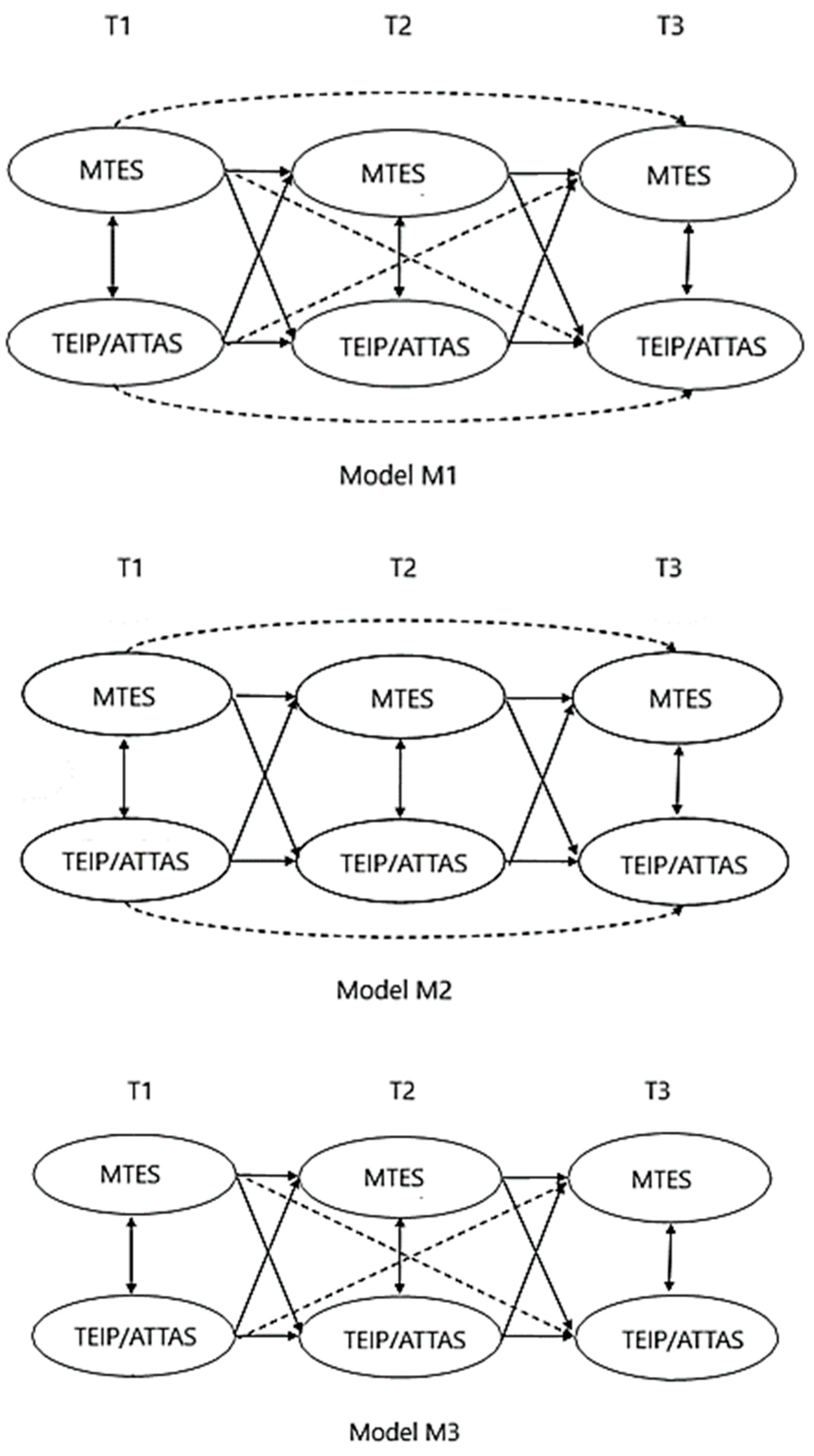
Figure 1. Presentation of all hypothesized higher-order and cross lagged panel models.
Education 16 00267 g001aEducation 16 00267 g001b
Table 1. Demographic characteristics of the participants.
Demographic CharacteristicsFrequencies
Participants (n = 212)
Gender
 Males9 [4.2%]
 Females203 [95.8%]
Age
 22–30127 [59.9%]
 31–3537 [17.5%]
 36–4033 [15.6%]
 41–455 [2.4%]
 46–507 [3.3%]
 >513 [1.4%]
Region of residence
 Attica65 [30.7%]
 Central Greece16 [7.5%]
 Central Macedonia38 [17.9%]
 Crete13 [6.1%]
 Eastern Macedonia and Thrace9 [4.2%]
 Epirus9 [4.2%]
 Ionian Islands2 [0.9%]
 North Aegean5 [2.4%]
 Peloponnese32 [15.1%]
 South Aegean9 [4.2%]
 Thessaly12 [5.7%]
 Western Macedonia2 [0.9%]
Basic knowledge regarding
information and communication technologies (ICTs)
 Yes145 [68.4%]
 No67 [31.6%]
Marital Status
 Married69 [32.5%]
 Single143 [67.5%]
Number of children
 No child150 [70.8%]
 1 child35 [16.5%]
 2 children22 [10.4%]
 3 children3 [1.4%]
 4 children1 [0.5%]
 6 children1 [0.5%]
Experience in Open and Distance Education
 Yes145 [68.4%]
 No67 [31.6%]
Note. Relative frequency percentages are written in brackets; total n = 212.
Table 2. Brief presentation of descriptive measures, Cronbach’s alpha, and correlation coefficients for all measures.
VariableMSDSkewness
(SE)
Kurtosis (SE)Cronbach’s
Alpha Coefficient
(α)
23456789
Math Teaching Efficacy T1 [1]3.890.49−1.51 (0.18)0.79 (0.36)0.9290.65 **0.59 **0.41 **0.39 **0.54 **0.61 **0.72 **0.34 **
Math Teaching Efficacy T2 [2]4.360.42−0.36 (0.24)0.39 (0.48)0.927 0.57 **0.61 **0.39 **0.46 **0.37 **0.43 **0.59 **
Math Teaching Efficacy T3 [3]4.570.31−0.29 (0.17)0.24 (0.32)0.925 0.37 **0.43 **0.61 **0.57 **0.41 **0.53 **
Attitudes Towards Inclusion T1 [4]4.870.83−0.14 (0.18)0.10 (0.36)0.830 0.71 **0.67 **0.68 **0.63 **0.72 **
Attitudes Towards Inclusion T2 [5]5.070.95−0.87 (0.24)1.08 (0.48)0.832 0.58 **0.43 **0.54 **0.68 **
Attitudes Towards Inclusion T3 [6]6.120.71−0.42 (34)1.12 (0.13)0.831 0.62 **0.57 **0.76 **
Efficacy in Implementing Inclusive Practices T1 [7]4.670.65−1.32 (0.18)5.76 (0.36)0.937 0.78 **0.71 **
Efficacy in Implementing Inclusive Practices T2 [8]5.030.47−0.02 (0.24)0.29 (0.48)0.942 0.074 **
Efficacy in Implementing Inclusive Practices T3 [9]5.460.31−0.07 (0.12)0.31 (0.25)0.945
Note. ** p < 0.01.
Table 3. Goodness of fit statistical criteria for mathematics teaching efficacy MTES-TEIP models.
Modelχ2 (df)CFITLIRMSEASRMRAICModel ComparisonΔCFIΔRMSEAΔAIC
Measurement Invariance Models Over Time
Configural376.42 (256)0.9590.9870.0430.052174,825.46---
Metric392.13 (262)0.9610.9840.0370.051174,839.12Model 2 vs. 10.002−0.00613.66
Scalar395.07 (266)0.9640.9850.0320.050174,912.04Model 3 vs. 20.003−0.00572.92
Higher-Order Autoregressive and Cross-Lagged Path Models
M4 most restricted structure407.13 (312)0.9610.9810.0440.052174,825.46---
M3 allows higher-order cross-lagged effects413.04 (324)0.9610.9830.0420.052175,013.25Model 3 vs. 40.001−0.002187.79
M2 higher-order stability, but first-order cross-lags416.52 (325)0.9630.9780.0390.053175,246.12Model 2 vs. 30.002−0.003232.87
M1 full forward model424.05 (332)0.9650.9750.0350.052175,452.18Model 1 vs. 20.002−0.004206.06
Structural Invariance Models
Unrestricted M1432.32 (340)0.9620.9810.0410.051163,935.16---
Constrained M1437.13 (345)0.9650.9830.0370.054163,954.52Model 2 vs. 10.003−0.00419.36
Note: For higher-order autoregressive and cross-lagged path models, Model 4 restricts both stability and cross-lagged relations to first-order effects only; Model 3 extends this structure by allowing for cross-lagged influences to also appear at higher-order intervals, while retaining first-order stability paths; Model 2 incorporates stability effects across both first- and higher-order lags, but limits cross-lagged associations to first-order connections; and Model 1, the most comprehensive specification, includes stability and cross-lagged pathways operating across multiple temporal distances, offering the broadest representation of possible longitudinal dependencies.
Table 4. Goodness of fit statistical criteria for mathematics teaching efficacy MTES-ATTAS models.
Modelχ2 (df)CFITLIRMSEASRMRAICModel ComparisonΔCFIΔRMSEAΔAIC
Measurement Invariance Models Over Time
Configural invariance348.13 (256)0.9610.9820.0430.049177,133.15---
Metric invariance353.04 (262)0.9670.9820.0370.049177,526.08Model 2 vs. 10.006−0.006392.93
Scalar invariance367.12 (266)0.9710.9840.0320.050178,128.36Model 3 vs. 20.004−0.005602.28
Higher-Order Autoregressive and Cross-Lagged Path Models
M4 most restricted structure413.77 (312)0.9610.9790.0470.054177,613.22---
M3 allows higher-order cross-lagged effects415.18 (324)0.9620.9840.0450.053177,965.08Model 3 vs. 40.001−0.002315.86
M2 higher-order stability, but first-order cross-lags421.33 (325)0.9640.9850.0410.053178,024.05Model 2 vs. 30.002−0.00458.97
M1 full forward model424.05 (332)0.9670.9870.0390.053178,126.27Model 1 vs. 20.003−0.002102.22
Structural Invariance Models Over Time
Model 1: Unrestricted M1441.58 (340)0.9690.9820.0430.055164,865.25---
Model 2: Constrained M1444.09 (345)0.9720.9860.0360.052164,965.94Model 2 vs. 10.003−0.007100.69
Note: For higher-order autoregressive and cross-lagged path models, Model 4 restricts both stability and cross-lagged relations to first-order effects only; Model 3 extends this structure by allowing for cross-lagged influences to also appear at higher-order intervals, while retaining first-order stability paths; Model 2 incorporates stability effects across both first- and higher-order lags, but limits cross-lagged associations to first-order connections; and Model 1, the most comprehensive specification, includes stability and cross-lagged pathways operating across multiple temporal distances, offering the broadest representation of possible longitudinal dependencies.
Table 5. Standardized factor loadings and path coefficients of final cross-lagged path models (MTES-TEIP and MTES-ATTAS).
MTES–TEIP ModelMTES–ATTAS Model
Parameter estimateMTESTEIPMTESATTAS
Factor loadings0.617/0.717 *0.579/0.789 *0.623/0.724 *0.642/0.776 *
Stability paths
T1→T20.632 *0.721 *0.586 *0.714 *
T2→T30.671 *0.658 *0.613 *0.659 *
T1→T30.659 *0.674 *0.629 *0.723 *
Cross-lagged effectsMTES → TEIPTEIP → MTESMTES → ATTASATTAS → MTES
T1→T20.517 *0.386 *0.526 *0.572 *
T2→T30.556 *0.372 *0.468 *0.498 *
Note. * p < 0.001.
Disclaimer/Publisher’s Note: The statements, opinions and data contained in all publications are solely those of the individual author(s) and contributor(s) and not of MDPI and/or the editor(s). MDPI and/or the editor(s) disclaim responsibility for any injury to people or property resulting from any ideas, methods, instructions or products referred to in the content.