


Abstract
This article reports on a comparative case study that examined the ground rules used to facilitate a dialogic space in two discrete and diverse research studies: Year 5 & 6 children learning to code with ScratchMaths as part of their mathematics programmes, and crop farmers in rural east Africa developing their practice through various communications. The intention was to see if there were common actions or principles important for the establishment of ground rules in dialogic spaces in general. Understanding the nature of dialogic space has become increasingly important in many areas of education. STEM subjects, particularly when integrated, frequently involve collaborative interaction, and utilise a dialogical approach. Some initial aspects of ground rules were collaboratively identified, with both studies then independently analysed to identify emerging themes related to these ground rules. Several key elements emerged: developing the processes for interaction and communication; developing trust between participants; developing respectful dialogue; teacher roles; and facilitating collaborative work and the co-construction of meaning. The comparative case study suggested that these were important for other education work when establishing dialogic space.
1. Introduction
In recent years, there has been a growing interest in understanding how dialogic spaces can be created and sustained in a variety of educational contexts to facilitate meaningful learning outcomes (Alexander, 2020; Wegerif, 2007). Understanding the nature of dialogic space has become increasingly important in many areas of education. STEM subjects, particularly when integrated, frequently involve collaborative interaction, and utilise a dialogical approach. Hence a better understanding of the central elements of dialogic space, such as ground rules, is valuable and of interest to the STEM education community. Dialogic spaces are, in part, environments where learners engage in open, respectful, and collaborative dialogue, allowing diverse perspectives to interact and new ideas to emerge. Establishing effective ground rules for interaction is thought to be essential in creating such spaces, yet there is insufficient evidence on how effective ground rules develop and are enacted across different cultural and educational settings, especially when mediated by technology. For the purposes of this paper, technology is considered as digital technology, including applications and coding, rather than technology in the broader sense, for instance, material or food technology.
This study addresses this gap by reporting on a comparative case study of two distinct educational contexts: (1) Year 5 and 6 students in New Zealand learning to code with ScratchMaths as part of their mathematics curriculum; (2) farmers in rural East Africa engaging in technology-enhanced small group learning to improve agricultural practices. Despite significant differences in geographical location, participant demographics, and educational settings, both projects aimed to facilitate learning through the creation of technology-mediated dialogic spaces.
The purpose of this study was to explore how ground rules for dialogic interaction are developed and enacted across contrasting contexts and to identify any common principles that may be important for establishing dialogic spaces more generally. Specifically, we sought to understand:
- Are there commonalities between the ways in which ground rules emerge or evolve in different cultural and educational contexts?
- What role might technology play in the development and enactment of ground rules?
By addressing these questions, this study contributes to current scholarship and practice in STEM education by offering insights into how ground rules can be developed to encourage learner participation regardless of socio-economic background, cultural differences, or educational settings. The research also identified other interesting aspects in relation to STEM education, such as, the case studies involved young people learning dialogue in the STEM classroom and adults learning dialogically. The spanning of school-based and vocational education is worthy in itself, but this paper, through the comparative case study, focusses on the emergence and evolution of ground rules in STEM education contexts. This research is important for educators, practitioners, and researchers interested in fostering effective dialogic learning environments, particularly in contexts where technology plays a significant role.
The paper begins by providing an overview of the importance of dialogic spaces in education and the role of ground rules in facilitating such spaces. It then critically reviews relevant theoretical frameworks, situating the concept of ground rules within the broader literature on dialogic education, collaborative learning, and technology-mediated learning. Following a detailed description of the methodology and the two case studies, we present the findings, highlighting commonalities and differences in the development of ground rules and the role of technology. The discussion explores the implications of these findings for theory and practice, and the conclusion offers suggestions for future research.
2. Literature Review
2.1. Dialogue and Dialogic Spaces in Education
Dialogic teaching and learning calls attention to the importance of interaction and dialogue in the construction of knowledge (Alexander, 2020; Mercer & Littleton, 2007; Wegerif, 2007). Dialogic spaces allow learners to engage and identify with the dialogue itself, enabling them to engage in open-ended, meaningful dialogue. This allows for the co-construction of understanding through the interaction of diverse perspectives (Wegerif, 2007; Wells & Arauz, 2006). The creation of dialogic spaces involves moving beyond traditional transmission models of education where teachers deliver content and students passively receive it (Alexander, 2020; Resnick, 1987; Wells, 2000; Wells & Arauz, 2006). Dialogic education involves and encourages active participation, critical thinking, and collaborative problem-solving, aligning with sociocultural theories of learning that emphasize the social nature of cognition (Lave & Wenger, 1991; Vygotsky, 1978).
Establishing dialogic spaces requires careful attention to the pedagogical approaches and practices that encourage learners to engage in dialogue. This includes creating an environment (in a classroom or otherwise) where learners feel safe to express their ideas, challenge others, and reflect critically (Mercer & Dawes, 2014; Wells & Arauz, 2006). Ground rules are intended to facilitate the development of such environments.
Technology is recognized as a tool that can support the creation and enhancement of educational dialogic spaces (Major & Warwick, 2019; Mercer et al., 2019; Wegerif, 2007). It can provide new platforms and affordances for interaction, enabling collaborative learning experiences that transcend traditional classroom boundaries. For collaborative learning, technology can facilitate communication, provide access to resources, and support the structuring of learning processes (Jeong & Hmelo-Silver, 2016).
2.2. Ground Rules in Dialogic Education
It has been argued that the establishment of ground rules that guide interaction and communication among participants (Mercer, 2000; Wegerif & Mercer, 1997) is a critical component in the creation of dialogic spaces. Ground rules are shared norms and expectations that shape how participants engage in dialogue. In particular, promoting behaviours that facilitate collaborative learning and the co-construction of meaning (Wegerif, 2007).
Wegerif and Mercer (1997) introduced the concept of social ground rules in exploratory talk, which combines features of other types of talk, such as cumulative and disputational talk. Exploratory talk is characterised by participants engaging critically but constructively with each other’s ideas, offering reasons and challenging assumptions in a collaborative effort to reach shared understanding (Mercer, 2000; Wegerif, 2001). Ground rules in dialogic education may mitigate unspoken assumptions and social norms that may hinder effective communication and participation, such as groupthink or dominance by higher-status individuals (Janis, 1982; Mannion, 2020).
Groupthink may manifest in the adoption of implicit or unspoken rules that members of a social group adhere to for the sake of group cohesion and harmony, or as a response to culturally influenced assumptions and expectations (Mannion, 2020). By making expectations for contributions and dialogue explicit, it is argued that ground rules can help create an inclusive environment where all participants feel empowered to contribute (Wegerif, 2007).
Relatedly, in collaborative vocational contexts dominance by higher-status individuals has also been a focus of research and action, as it has been associated with avoidable accidents. Social status (understood as a characteristic upon which perceptions of cognitive ability and potential to contribute may be organised) can impact group collaborative work, especially where low status group members possess critical information (Hollingshead, 1996). Technologies and protocols have been developed to promote equal participation in dialogue and communication and mitigate the inhibiting effects of status. Gawande’s (2009) checklist protocols for medicine and construction can be viewed as a form of ground-rules that promote dialogue among team members of varying status, as all individuals are required to speak. This helps to flatten hierarchies and empowering everyone to voice opinions and concerns. Similarly, the “two-challenge rule” in medical training (Pian-Smith et al., 2009) provides a structured approach to enable junior team members to challenge colleagues of higher social status if they think patient safety may be at risk.
It has been argued that in some cultures, deference to figures perceived to be of higher status may be more pronounced (Earley, 1999; Kowner & Wiseman, 2003). Understanding the role ground rules might play in varying cultural contexts (and for adults as well as children) is important, as cultural values and social norms may influence communication patterns and expectations in educational and vocational settings (Alexander, 2020; Anicich et al., 2015; Wells & Arauz, 2006). Given these dynamics, dialogic ground rules might serve as a potential mechanism for more equitable participation by explicitly structuring interaction in ways that mitigate status-related barriers.
Ground rules may help prevent dominance by higher-status individuals and create an environment where all participants are afforded opportunities to contribute (Barak & Lefstein, 2022). In summary, ground rules have been argued to play an important role in structured interaction aimed at dismantling barriers to participation and fostering mutual respect among learners. When effectively embedded into group discourse, dialogic ground rules promise a pathway for more democratic and productive collaborative problem-solving.
2.3. Critiques of the Concept of Ground Rules
The concept of ground rules has itself been subject to criticism, however. It has been suggested that imposing predetermined ground rules may disadvantage learners from cultures or backgrounds unfamiliar with such practices, potentially reinforcing existing social inequalities (Lambirth, 2006, 2009; Swann, 2007). For example, Barak and Lefstein (2022) question the democratic aims of predetermined ground rules, suggesting that they may orientate only the students’ behaviour while excluding that of the teacher. However, it has also been argued that such critiques overestimate the quality of dialogue that emerges when no ground rules are adopted (Sutherland, 2013).
The processes for the establishment of ground rules are therefore worthy of consideration, to understand how they might be sensitive to cultural contexts. Also, how they might promote inclusive participation (including teachers and leaders) without imposing inappropriate norms (Lambirth, 2009; Swann, 2007).
2.4. Ground Rules and Technology
The relationship between ground rules, dialogic spaces, and technology is complex. The concept of ground rules initially emerged from work intended to assist the orientation of group talk around technology—a computer (Mercer et al., 1991). Since then, there has been an increasing interest in studies of interactions between dialogic pedagogy and digital pedagogy, and of their possible interdependency (e.g., Major & Warwick, 2019).
In some cases, technology might be specifically designed to support the development or enactment of ground rules, such as tools that prompt collaborative behaviours or facilitate equitable participation. For example, in the metafora project (Dragon et al., 2013) or with Gawande’s (2009) checklists which are intended to support workplace dialogue. In other contexts, ground rules may emerge organically around the use of technology, reflecting how participants negotiate new forms of interaction (Wegerif, 2007).
However, the interaction of technology and ground rules for dialogue is not straightforward. While technology can offer new avenues for interaction, it can also introduce challenges, such as issues of access, digital literacy, and potential reinforcement of social hierarchies (Calder & Murphy, 2018; Mercer et al., 2019). Additionally, in considering the interaction of technology and ground rules, it may be the case that pre-existing ground rules developed for collaboration in other contexts need to be adapted or reinterpreted in technology-mediated contexts (Wegerif, 2007). Hence, considering how technological affordances and constraints influence communication patterns is important. Understanding how ground rules develop and function in technology-enhanced dialogic spaces, especially across different cultural contexts, is of value for designing effective educational interventions and for introducing technology intended to support collaborative learning.
3. Methodology
3.1. Research Design
This study employs a comparative instrumental case study methodology (Stake, 2005; Yin, 2009) to explore how ground rules for dialogic interaction are developed and enacted in two contrasting educational contexts. An instrumental case study focuses on a specific issue or phenomenon—in this case, the development of ground rules in dialogic spaces—and uses particular cases to gain insight into that issue (Stake, 2005). Case studies are particularly valuable in educational research as they provide rich, contextually situated data that can reveal the complex interplay of social, cultural, and institutional factors shaping dialogic interactions.
Comparative case studies allow for an in-depth examination of phenomena within their real-life contexts, considering the influence of cultural, social, and technological factors (do Amaral, 2022; Yin, 2009). By comparing cases from different settings, it is possible to identify commonalities and differences that contribute to a more nuanced understanding of the phenomenon. This methodological approach enables researchers to explore not only the effectiveness of dialogic ground rules but also the contextual conditions that influence their adoption and impact. Additionally, by incorporating multiple cases, comparative case studies help to refine theoretical insights, offering broader applicability beyond individual contexts while still preserving the depth of qualitative analysis.
3.2. Case Selection
The two cases in this study were:
- ScratchMaths project in New Zealand: Involving Year 5 and 6 students learning to code with ScratchMaths as part of their mathematics curriculum.
- TIST project in Rural East Africa: Involving farmers engaging in technology-enhanced small group learning to improve agricultural practices.
These cases were chosen because they represent diverse educational settings, participant demographics, and cultural contexts, yet share a common aim of facilitating learning through technology-enhanced dialogic spaces. While convenience and purposive sampling were key factors in the choice of projects, they both had aspects that made their selection pertinent. Both had educational purposes; used case studies and design-based research methodologies; had culturally embedded power differentials that would require some transition for dialogic space to emerge; included collaborative practice and the need for shared understandings; and had DT interactions that had the potential to open up different types of dialogic spaces.
3.3. Participants
- ScratchMaths project: Five teachers and their Year 5 and 6 classes (128 students aged 9–11) from four primary schools in New Zealand. The key participants were the teachers and students actively involved in the coding and mathematics activities.
- TIST project: Farmers from rural communities in Kenya, Uganda, and Tanzania, participating in the International Small Group and Tree Planting (TIST) program. Key participants included six TIST trainers and approximately 115 adult farmers engaged in the small group learning activities.
The participants were individuals central to the development and enactment of ground rules in each context. These participants were actively involved in each research project and provided insights into the creation of the ground rules in each context.
3.4. Data Collection
Data were collected using multiple methods to ensure triangulation and enhance validity (Feldman et al., 2018; Yin, 2009):
- ScratchMaths project:
- ○
- Classroom observations (one 45-min video-recorded session in each of the five classrooms) captured interactions among students and between students and teachers.
- ○
- Interviews with teachers and selected students focused on their perceptions and experiences related to the development of ground rules and dialogic interactions. There were three recorded semi-structured interviews with each teacher participant and one recorded semi-structured interview with a focus group of students in each school.
- ○
- Document analysis of lesson plans, student work, and ScratchMaths resources were part of the four one-day teacher meetings.
- TIST project:
- ○
- Interviews with TIST trainers and selected farmers exploring their experiences with ground rules, dialogic learning, and the use of technology.
- ○
- Analysis of TIST program materials, such as newsletters and small group training documents.
3.5. Ethical Considerations
Both studies were conducted in accordance with ethical guidelines, with approval obtained from relevant institutional review boards. Informed consent was obtained from all participants, including parental consent for minors in the ScratchMaths project.
3.6. Data Analysis
In this comparative study, we built on two validated and ethically enacted research studies (Calder, 2018; Calder & Rhodes, 2023; Martin, 2022). Data from each case had initially been collected and coded to identify themes related to the development of ground rules, dialogic interactions, and the role of technology, but without the initial intention to compare them. Each case had been separately and independently analysed and validated before the research team embarked on the comparative case study.
The analysis process for the comparative study went through five phases of an inductive thematic analysis adapted from Braun and Clarke (2021). This involved.
- Step 1: Themes identified in each case were compared and contrasted by researchers involved in both studies, looking for commonalities and differences (phases 1–3).
- Step 2. The researchers engaged in a series of collaborative discussions to refine themes and interpret findings (phases 4–5).
The analysis was iterative and reflexive, allowing for the emergence of new insights and the refinement of themes (Stake, 2005). Analytical grounding was also enhanced through this systematic coding and ongoing comparison, while the recording of iterations with mind maps and notes, allied with the revisiting of data to consider suitability or relevance to emerging themes also assisted with this. The use of multiple data sources and involvement of multiple researchers enhanced the credibility and trustworthiness of the findings (Feldman et al., 2018; Yin, 2009). The instrumental comparative case study methodology enabled an in-depth exploration of the phenomenon within real-life contexts (Yin, 2009). By focusing on participants’ perceptions and experiences, we aimed to gain rich, nuanced insights that could inform understanding and practice in dialogic education. The selection of diverse cases allowed us to explore how cultural, social, and technological factors influence the development and enactment of ground rules.
Throughout the project, researchers from each case study worked closely to analyze the data sets gathered to find trends, similarities, and important themes pertinent to answering the research questions. Initially, there were meetings when patterns in the data were considered, and data were identified that illustrated these patterns. However, after a period of pattern matching, a table was formulated that matched evolving themes to the data that they were hinged to. These were then considered and scrutinized by the full team. This cooperative approach enabled a deeper comprehension of the data by utilizing the team’s viewpoints and areas of expertise. The research team had all been involved in dialogic spaces in social sciences, although each only had an in-depth understanding of the contexts in which they had researched. While care was taken to be reflexive in our interpretation and analysis, this would have influenced the particular insights that the team would have perceived. The selection of diverse cases allowed the researchers to explore how cultural, social, and technological factors influence the development and enactment of ground rules. Multiple data collection methods and rigorous analysis procedures ensured the findings were robust and credible. This variety allowed for a more in-depth examination, assisting in formulating strong conclusions.
3.7. Limitations
While comparative case studies offer rich insights, they have limitations in terms of generalizability (Bassey, 1999; Yin, 2009). The findings may not be directly transferable to other contexts but can offer valuable insights and tentative generalizations that can inform future research and practice. As well, there are limitations in the initial studies and the comparative case study due to the positionality and associated preconceptions that each researcher brings. While this was mitigated to some extent by the structured processes of checking and iterations of comparison, it can never completely be removed. It could be argued though that the variety of perspectives and experiences that the researchers brought to the research also enables some extent of insight and richness to the analysis, but it is nevertheless an interpretive approach.
Additionally, this study focused on the ways in which dialogic spaces were established over time but not on the dialogue itself, for example, whether it developed into more cumulative or collaborative forms over time.
4. Findings
This section presents the findings from the comparative case study, focusing on how ground rules were developed and enacted in each context, and the role of technology in this process. Five elements appeared common to the ground rules developed in each context:
- (i)
- Developing the processes for interaction and communication
- (ii)
- Developing trust between participants
- (iii)
- Developing respectful dialogue
- (iv)
- The roles of students and teachers
- (v)
- Facilitating collaborative work and the co-construction of meaning.
Detailed descriptions of each case are provided to allow for a richer understanding of the dialogic practices and the development of ground rules.
4.1. Case Study 1: ScratchMaths Project in New Zealand
Context and Participants
The ScratchMaths project involved five primary school teachers and their Year 5 and 6 classes (students aged 9–11) from four schools in New Zealand. The project aimed to integrate coding into the mathematics curriculum using the ScratchMaths resources developed by University College London (UCL), adapted for the New Zealand context.
The aim of the project was twofold; to impact positively on learners’ computational and mathematical thinking and to evaluate and modify these effective UK resources so that they would be suitable for the New Zealand context. It introduced the UCL ScratchMaths resources to five teachers, examined their use with their classes, and evaluated teacher resource use to inform the modification of the resources.
The classrooms were diverse in terms of socio-economic backgrounds and cultural compositions. The teachers had varying levels of experience with coding and technology integration.
4.2. Development of Ground Rules in the ScratchMaths Project
The ground rules for dialogic interaction emerged organically as the teachers and students engaged with the coding activities. While general classroom norms already existed, specific ground rules related to collaborative coding and mathematical problem-solving developed over time. Several of the classroom norms of interaction, roles and collaboration were either consolidated through the ScratchMaths work, or at times, evolved through engaging and learning through the coding and digital technology pedagogy processes. In particular, the rotation of roles, where the teacher might deliberately, or through their personal understanding or disposition with coding, not be the leader of learning. At times, students led individual or group sessions, which enhanced the explanations and understanding of the students leading the learning and the recipients. Another notable area was in the development of trust. The teachers at times portrayed themselves as vulnerable to indicate that this was acceptable in learning. This enhanced trust in this “uncertainty” that is inherent in problem-solving or inquiry processes.
Interestingly, participants indicated that some aspects were facilitated through the nature and structure of the ScratchMaths programme and resources, as well as those facilitated by the teachers. The data extracts and discussion relate predominantly to teacher interviews, but there are some student observations and excerpts that support their comments. In the ScratchMaths project, technology played a facilitative role in the development of ground rules. The coding platform (Scratch) provided a shared space for interaction, and the novelty of coding fostered engagement and collaboration. Ground rules emerged around the technology but were not specifically shaped by it. Five themes related to developing dialogic learning emerged through analysis of the data.
4.2.1. Developing the Processes for Interaction and Communication
Teachers observed that students needed guidance on how to interact effectively during coding tasks. Although teachers often took an approach where they allowed students to lead their dialogue and learning, the teachers also took an active role in noting aspects of discussion or interaction that needed to be revisited, discussed, or re-modelled to students.
“I know that they’re using dialogue, but my intention would have to be listening into these discussions and I’d have to look at what they’re talking about and probably model.”A
An important part of the teacher’s role was to model and set up interactions amongst students. Teacher modelling throughout the school year played an important role with teacher’s revisiting aspects that might have dwindled or lost traction. The teacher modelling of ground rules and abiding by those rules was in contrast to Barak and Lefstein’s (2022) critique that ground rules are often only applied to children, not teachers.
“As you go throughout the year. I think you have to spend a lot of time setting it up at the beginning. But then as you go throughout the year, it becomes intrinsic for the children to do, and that’s when as a teacher you go oh, actually, that’s a great question. Or maybe I need to remodel this again, because I’m not seeing what my expectation is. We might have to come back and look at our ground rules again. It’s being connected and woven through. Sometimes you have to reconnect the strand because it’s got a bit loose, let’s have another look at it, let’s tighten it up and we’ll continue.”A
The teachers agreed that developing the specific language for the context and facilitating the connections between the coding experiences and the mathematics also enhanced the interaction and communication. For example:
“…making links for them and giving them the language—the coding and mathematical language.”A
The teachers also recognised how ScratchMaths itself at times enabled both the use and informal assessment of dialogic interaction. For example:
“… an intention was to see how the kids were able to explain and justify the choices, and this (ScratchMaths) gives us a perfect opportunity to get that knowledge from them without them even recognizing they’re being assessed.”J
Interaction was also facilitated through the app, as the students had agency and wanted to explain their decisions and outcomes.
“So then it’s agency; the students have agency over the process, so they’re telling you what they’re learning about.”E
4.2.2. Developing Trust Between Participants
Teachers in the ScratchMaths case study identified ways that they ensured relationships were nurtured to build and maintain trust with students.
“Set ongoing modeling from yourself and giving feedback to the kids around the quality of what they’re doing”A
Ground rules emerged around sharing ideas, asking for help, and providing feedback.
“I think one way to manage the dialogue is actually really focusing or noticing the positive… talking it out loud, other children hear that, and it’s actually making that child feel safe. ‘Thank you for your ideas. That’s really good. I can see how you explain that. Can you see how we got to the answer that may not have been your answer here is another way of doing it. But thank you for being willing.’ It’s managing the dialogue in a safe way, all the time.”
Several of the teachers also found that not being the expert, and being vulnerable through their limited understanding, was also a way through which trust developed.
“I think for me it’s that letting go of control. Being able to actually admit that I’m not the know all, and listen to and learn alongside the kids, has been really powerful. Showing my fallibility, being vulnerable, with the kids has been really good for me to show them that in class.”J
ScratchMaths encourages an initial “playful” interaction. This facilitated trust between participants as their language developed more naturally and organically, and also trust in the process of learning. For example, one teacher took the initial approach of:
“Open it up, have a look at it. Have a play and then once you’ve had a play, I’m going to get you to just stop and we’ll come back and we’ll have a discussion—that actually worked well.”E
The students also indicated the value of this type of engagement through the app when asked what were things that they liked about using ScratchMaths:
“S1: Well, you can sort of muck around with it; S2: You just try it using heaps of different things.”
The coding activities, allied with the agency and collaborative approach, also changed their trust and self-efficacy:
“It changed their own philosophy of themselves; their self-efficacy and their self-belief came through.”J
4.2.3. Promoting Respectful Dialogue
Noticing and affirming aspects of discussion that were positive and made the students feel safe to continue to contribute, were an important part of the ScratchMaths teacher’s development of respectful dialogue. Teachers identified this aspect as an ongoing process throughout the school year, rather than a singular event.
“The respectful feedback in your class happens throughout the year but you’ve got to start right at the beginning building the classroom culture of what respect is and what it looks like.”A
4.2.4. Rotating Roles and Responsibilities
In the ScratchMaths project, collaboration and collective meaning-making were facilitated by placing students into a role of authority. Each student was given opportunities to be utilized as an expert in the room, with the class socially constructing knowledge between one another, rather than the teacher being the main information resource. This unsettled the more standard perceptions of teachers as experts and students as non-experts.
“They see themselves as teachers, they have this and that role. They see themselves in that role and they don’t see me as the expert. They see each other as experts more.”A
Teachers reported instances where children who normally struggled with mathematics became efficient at debugging and problem-solving. They then took the role of a teacher showing their group members what to do. This resulted in teachers feeling able to relinquish more power as the project progressed, aligning with Gawande’s (2009) point about role definition being important in flattening hierarchies.
“If anyone is really getting it, then we’ll identify who and then people can go and see them. It’s been identifying themselves. Asking is there anyone who thinks that they can put themselves in that expert role and they could actually help others.”M
As well, it gave them confidence in other students who were in the teacher role:
“You know that confidence to seek help and support (from classmates)… it’s huge.”J
The teacher’s mindset was important too:
“ I didn’t know as much—I wasn’t the sage on the stage to go to. And we would try and work it out together.”M
“It’s really important to let them have a play as well and that’s my mentality when it comes to coding because I don’t know everything. If they teach me something—mean (great).”E
This could be deliberately orchestrated by the teacher as well:
“I’m gonna say hey Jake look. Mine’s not quite working but I don’t know what I’ve done wrong and Jake will say, he’ll help or he’ll suggest something and they’ll go away and work at it a bit more.”J
4.2.5. Facilitating Collaborative Work and the Co-Construction of Meaning
The active, collaborative approach that the teachers intended meant that classrooms were often noisy, and students were able to move around the room freely to seek support from one another autonomously.
“There is a whole lot of interaction. It’s quite noisy in the classroom when children are actually working on any digital program or platform. There’s always lots of discussion, complete engagement with each other. Especially probably with the boys. They’re always looking at what each other is doing.”J
Interactions in the classroom were often seen as ad hoc, however, teachers identified that there might be occasions when they would facilitate the setting up of specific groups or pairs who they felt would support one another.
“You get to know what students can sit next to each other because I know that they’ll help to support that person with their coding, but I think too you can have your differentiated groups.”A
The teachers promoted a collaborative approach, even if there was one device per student. In the context below there were two students per device:
“They were really good at sharing and teaching others that couldn’t use it and when they were exploring themselves, they were creating cool stuff that they hadn’t been asked to.”K
The teachers were consistent in their reporting of how the app and resources helped them to facilitate the ground rule of collaboration, how these and the teachers normalised this approach, and how this then enhanced other dispositions that enhanced a dialogic approach to learning:
“The collaboration was phenomenal. I love it, and the support and the help and the positivity towards each other; the kindness, and the resilience, perseverance for the task to actually complete it.”J
“it’s actually collaboration, perseverance, all those softer skills that you can’t really teach”.E
4.3. Case Study 2: TIST Project in Rural East Africa
- Context and Participants
The TIST project involved adult farmers from rural communities in Kenya, Uganda, and Tanzania, participating in the International Small Group and Tree Planting (TIST) programme. This initiative aimed to improve agricultural practices through small group learning, supported by mobile technology. The three-year design-based project addressed the misalignment between traditional online learning models, often derivative of formal classroom environments, and indigenous dialogic methods deeply rooted in communal learning traditions.
Subsistence farmers, with varying levels of literacy and technological experience, expressed a strong desire for educational opportunities that respected their cultural practices and provided practical, immediately applicable knowledge. Interviews revealed that farmers valued collaborative knowledge-sharing, underpinned by oral traditions and reciprocal exchange, as vital for community cohesion and effective learning. The groups were culturally diverse, shaped by local customs, social hierarchies, and norms of collective responsibility.
In collaboration with TIST, a digital learning platform was co-designed to align with these dialogic traditions. The platform leveraged cultural norms such as communal problem-solving and narrative learning while exploring how mobile technologies could enhance these practices. The goal was to adapt a Learning with Mobiles (LWM) approach to meet the technological and pedagogical needs of rural East African communities, highlighting how technological affordances might complement existing dialogic spaces in line with reconceptualisations by Major and Warwick (2019).
4.3.1. Development of Ground Rules
Ground rules were explicitly identified at the outset of the TIST project, drawing on existing cultural practices and the values of the TIST program rather than being imposed externally. These rules were foundational for fostering effective interaction and communication within small groups, promoting respect, trust, and collaboration. The process acknowledged and integrated the social and ethical norms already familiar to the participant farmers.
4.3.2. Key Elements of Ground Rules in the TIST Project
The ground rules incorporated specific practices that were rooted in the cultural traditions of the participating communities and the operational ethos of TIST. Examples of these include:
- Taking turns to speak: Ensuring that all members had an opportunity to share their views.
- Listening respectfully: Encouraging active listening and acknowledgment of each member’s contributions.
- Following meeting agendas: Structuring discussions to ensure time efficiency and clarity of purpose.
These rules were not arbitrary but were primarily shaped by the longstanding practices of the TIST small groups, which had evolved over two decades. These rules were embedded in a set of “best practices” designed to scaffold dialogic interaction, including rotating leadership, servant leadership, and kujengana—a Swahili term meaning “to build up”—which encouraged equitable participation and the affirmation of contributions. These practices fostered a structured but dynamic dialogic space that balanced both dialogic structure (rules governing how dialogue should be conducted) and dialogic agency (practices enabling participants to shape the dialogue and take ownership of their learning) (Martin, 2022). Before the introduction of the technological intervention, small groups relied on face-to-face interactions, which, while effective, were limited by lack of access to external information sources. The introduction of the intervention altered this dynamic by providing an additional platform for engagement, broadening access to learning materials, and extending opportunities for dialogue beyond in-person meetings.
4.3.3. Developing the Processes for Interaction and Communication
The TIST program involved face-to-face small group meetings with an optimum group size of 6 to 12 members. This range was chosen to strike a balance: fewer than six members risked a few voices dominating discussions, while more than 12 could discourage some individuals from participating actively. The structured nature of these small group interactions allowed all members to contribute equitably, fostering a conducive environment for learning and dialogue.
4.3.4. Developing Trust Between Participants
Trust was cultivated through a shared value system that had been refined over decades. This value system, explicitly adopted by the TIST program, was encapsulated in six guiding principles:
- We are honest
- We are accurate
- We are transparent
- We are servants to each other
- We are mutually accountable
- We have low budgets and big results
These principles were integrated into the technology and processes used in the project, ensuring alignment with the community’s established norms. A participant reflected this ethos, saying:
“Even adopting (the TIST Values) for other farmers is huge, because when you go to a farmer and tell them we are farmers like you, they immediately adopt because they say even if a farmer can do this, even me I can do. So that is how we are reaching out to members and farmers. They are very much excited to see that people are not coming with big cars and big offices, they are being served by their fellow farmers.”
4.3.5. Developing Respectful Dialogue
Respect formed the cornerstone of interaction within TIST groups. As mentioned above, a notable aspect of this was kujengana, a Swahili term meaning “to build up.” This was a distinctive pedagogical practice that emphasized positive affirmation, recognizing and celebrating the strengths and contributions of individuals within the group.
At the end of each meeting, members engaged in kujengana by sharing specific and unique positive feedback about the group leader. This feedback was not repeated and focused on observable behaviours, fostering a culture of appreciation. Leaders acknowledged this feedback simply with a “thank you,” reinforcing mutual respect and support. A TIST trainer, reflecting on the impact of kujengana, remarked:
“This process of sharing [kujengana] between the farmers is confidence building for the farmers.”
Kujengana can be described as a community-developed “social ground rule” (Wegerif & Mercer, 1997). It aligns with the principles of dialogue, as outlined by Wegerif (2001), and is designed to create group cohesion and a positive atmosphere. This practice not only strengthened the bonds within the group but also enhanced the overall learning environment by prioritising recognition and trust. The LWM intervention introduced prompts to both scaffold and encourage participating groups to practice kujengana.
Rotating Roles and Responsibilities in the TIST Project
Roles in the TIST were clearly defined, with leadership rotating among members. Importantly, leadership was assigned to group members regardless of their gender or social status outside of the context of the small groups.
“We have rotational leadership, where every community member is given the opportunity to lead. The skills of leadership have been brought up. Socially people are working in teamwork, and in our meetings people have shared best practices like table banking… now we have the experience that community members are working together and socially sharing ideas to uplift their living standards.”—TIST Farmer
The rotational role-playing aspect of this approach echoes Wells and Arauz (2006) observations on reciprocal role playing, as it provides a structure in which all participants must take on roles which they may not be naturally inclined to adopt. As observed by Wess and Arauz, this role playing focused the joint attention of the group back within the dialogic space (p. 384).
Established ground rules resulted in the designation of three formal roles, as follows:
- Small Group Leader: responsible for guiding and facilitating the group discussion.
- Small Group Co-Leader: tasked with timekeeping and recording meeting notes.
- Accountability Person: responsible for reviewing decisions made in the previous meeting and ensuring that the outcomes of those decisions are met.
Groups hold weekly meetings and after each meeting, the current leader relinquishes their role, and the current co-leader assumes the position of the new leader. Likewise, the existing accountability person transitions to become the new co-leader. Subsequently, the group collectively elects a new accountability person to take on the role for the next cycle.
In the context of a small group, the leader’s purpose is not to dominate the conversation but rather to foster an equitable discussion and advocate for the diverse viewpoints within the group. This approach reflects an indigenous cooperative ethos and embodies the underlying humanism of Ubuntu, where the idea that “a person is a person through other people” is embraced. In this project, the rotational roles seemed to mitigate the effect of existing social status, which has not always been the case in other studies of ground rules (Lambirth, 2006, 2009).
The results of this transformational knowledge were seen across the TIST program. TIST’s local country leadership was composed almost entirely of subsistence farmers who developed their leadership acumen and confidence through participation in TIST small groups. The six TIST trainers interviewed for this section exemplify this journey, each starting from origins as subsistence farmers and developing into recognised community leaders. A female TIST farmer alluded to this transformation when relating her personal experience of her TIST small group:
“In the (small group) meetings people come to interact and even get more experiences, like me. When I started joining the TIST program I could not stand in front of a crowd of people and talk to them. But because of interacting with so many people I have started even going to lecture… so socially people are gaining a lot of experiences and even skills.”
The LWM platform played a crucial role in reinforcing and expanding the rotational leadership structure within TIST small groups by providing structured learning modules on leadership roles, responsibilities, and facilitation techniques. By offering accessible, asynchronous training, the platform enabled members—especially those new to leadership—to gain confidence and understanding of their roles before stepping into them. Through digital scaffolding, small group leaders could review best practices, receive peer feedback, and access guidance on fostering equitable discussions, aligning with the cooperative ethos and ensuring that leadership transitions were supported rather than intimidating. Additionally, LWM helped document and disseminate successful leadership practices, allowing lessons learned in one group to benefit others, thus strengthening the collective leadership pipeline within the TIST network.
Facilitating Collaborative Work and the Co-Construction of Meaning
The co-construction of knowledge was central, with farmers sharing knowledge and learning from each other’s experiences. The TIST small-group approach involves non-formal learning, that is, learning that is ‘organized and structured,’ with an explicit intentionality towards gaining knowledge. Learning happened mainly through dialogues among participants, facilitated by the trainers, and often assisted by a communicative tool to inspire discussions, such as the TIST monthly newsletter.
The role of the trainer in TIST is to facilitate or moderate these discussions. Far from being the sole source of knowledge, the trainer played the role of inspiring and encouraging members of the small group to share their knowledge and expertise with one another. This leads to fluidity in the roles of trainer and participants, where the discussion inspired by a topic in the monthly newsletter may change form and lead to a training conducted by one of the small group members who has a deeper level of expertise in the subject area. For instance, an article on green manure production may start as a small group discussion and then lead to a demonstration from a small group member who has already collected fodder and garden compost. A TIST trainer from Uganda commented on these ad hoc trainings, noting:
“Farmers contribute to indigenous knowledge because they are the experts. The richness from the trainings comes from farmers sharing their own experience.”
4.3.6. Role of Technology in the TIST Project
In the TIST project, a Learning with Mobiles platform enhanced communication and access to information while being carefully adapted to align with the group’s established ground rules. These devices provided educational content such as videos, training modules, and guides on sustainable farming practices, designed to be accessible offline and in local languages to address connectivity and literacy challenges. This ensured that technology supported, rather than disrupted, the cultural and dialogic norms of the small groups.
The platform reinforced small group principles such as taking turns to speak and listening respectfully by allowing asynchronous access to materials and enabling participants to engage with content individually before group discussions. Kujengana, the practice of positive affirmation, was amplified through features like recorded contributions and messaging apps, fostering appreciation within and beyond in-person meetings. In this way, mobile technology complemented TIST’s values of honesty, transparency, and mutual accountability while preserving the integrity of its dialogic learning processes.
The LWM platform complemented and enhanced the co-construction of knowledge in TIST small groups by providing a digital space for sharing expertise, documenting insights, and extending discussions beyond face-to-face meetings. While the traditional model relied on dialogic interactions facilitated by trainers and aided by communicative tools like newsletters, the mobile platform expanded access to learning materials, enabled asynchronous participation, and facilitated knowledge-sharing across geographically dispersed groups. By incorporating video demonstrations, discussion prompts, and interactive learning modules, the platform reinforced the fluidity of roles between trainers and participants, allowing farmers to take an even more active role in the knowledge exchange process.
4.4. Comparison of the Two Cases
In both cases, the ground rules were a combination of explicit and implicit norms. In the TIST project, ground rules were more explicitly stated and formally adopted, while in ScratchMaths, they were negotiated and reinforced through practice.
In both studies, the underlying principle was active ‘discussion,’ as the small groups were purposely designed to be dialogically driven, intentionally creating an environment related to Wegerif’s “Space of Learning” (Wegerif, 2007) and actively attempting to avoid transmissary approaches to education but rather create a dialogic space where co-construction of meaning could be scaffolded by group design. The ground rules encompassed both declared expectations (e.g., meeting guidelines in TIST) and enacted behaviours (e.g., collaborative problem-solving in ScratchMaths).
Common to both cases was a growth in confidence related to the establishment of ground rules, but which also could be seen to arise over time. In addition to ongoing adherence to rules and processes for collaborative and respectful dialogue, the ability of those individuals who may have been perceived as higher status at the start of the projects (whether as teachers, community leaders or TIST trainers) to gradually step back from any initial leadership or facilitation roles, as others gained the confidence to step forward, also appeared important.
By examining two quite distinct projects, one involving coding in classrooms and the other focusing on mobile learning about arboriculture in rural Kenya, the study was able to identify commonalities related to the development of ground rules which were evident in both situations, as well as some differences.
Commonalities were related to the development of the rules over time, and the facilitation of rotational roles:
- Both contexts emphasized the importance of establishing ground rules to facilitate dialogic interaction.
- Key elements included processes for interaction, building trust, promoting respectful dialogue, defining roles (which could be fluid and rotational), and facilitating collaboration.
- The rotation of experts and leadership roles emerged as important in both projects
- Both contexts saw the development and enactment of ground rules as essential for effective learning and participation.
- Participants reported increased confidence and engagement as a result of the collaborative practices.
However, there were also a number of differences, related to whether the rules were established prior to the project, and the role played by technology:
- In the ScratchMaths project, ground rules emerged organically around the technology, whereas in the TIST project, ground rules were explicitly established prior to the introduction of technology—however, these rules were culturally grounded and rather than being part of a dialogic education initiative. That is to say that the rules emerged from within the culture but pre-existed the introduction of the technology.
- The role of technology differed: in ScratchMaths, technology facilitated the emergence of ground rules; in TIST, technology use was adapted to fit within existing learning practices and ground rules.
- Cultural contexts influenced the nature of the ground rules. For example, rotational leadership was a formal practice in TIST, reflecting communal values, whereas the rotational roles in ScratchMaths were more fluid and informal and not specifically or only focused on leadership.
The relationships between the five identified commonalities were considered, with three key themes emerging: trust, social status, and collaboration. These themes were found to be linked by three features: roles, process and respect. Central to these themes and interlinking features are the concepts of facilitating collaborative work and the co-construction of meaning. The findings also suggest the importance of highlighting the reciprocal relationships among these three themes in considering the development of ground rules for effective dialogic spaces. Figure 1 introduces a framework that captures the reciprocity between trust, social status, and collaboration. While the three themes each enhanced the development of ground rules in dialogic learning, the double-ended arrows indicate that they are also mutually influential on each other.
Figure 1.
Five key elements, through three themes and one central aspect that emerged.
Ground rules that develop trust between participants encourage collaboration. In the same way, more opportunities for collaboration lead to increased trust. The reciprocity between trust and collaboration seems to be facilitated by ground rules that develop effective interaction and communication among participants. This is evident in the ways that the creation of a supportive environment, providing opportunities for learners and participants to learn from each other, was structured in both case studies. Flexibility and differentiation, for example, allowing the classrooms to be noisy and for students to check on their peers, seemed effective in encouraging collaboration and trust in the NZ case study. Collaboration and trust between the farmers in the TIST group was facilitated by controlling the size of the group, and fruitful conditions for interaction and collaborative learning were created by reducing dominance and/or passivity. In the same way that checklists structured communication in collaborative problem solving (Gawande, 2009), ground rules in both case studies helped create conditions where collaborations could be facilitated by effective communications and vice versa.
Ground rules that address communication barriers that may arise due to social status (e.g., Hollingshead, 1996) also appeared necessary for the development of trust among learners and participants, for example by assigning expert or leadership status to a variety of group members in turn. Despite recognizing the importance of the teacher’s role in providing consistent modelling, teachers in the NZ classrooms were open to relinquishing the modelling role to students as the lesson progressed. Parallels to this can be seen in the practice of rotational leadership within the TIST small groups, and through affording opportunities for farmers to take on the role of facilitators by sharing their expertise with one another.
Both case studies suggested the importance of an explicit emphasis on positivity, that is, by focusing on an ongoing process of building a respectful classroom culture in the NZ case study, and through the practice of kujengana among the TIST farmers. Positive reinforcement and affirmation helped learners and members to participate freely in dialogically driven collaborative learning regardless of initial social status. We notice resonances between some of these practices with those adopted in the fields of organizational behaviour (Argyris et al., 1985) and medicine (Pian-Smith et al., 2009), which seek to overcome communication barriers through systematic and ongoing building of an open and honest culture of interactions among members of an organization, regardless of rank or position.
5. Discussion
This study set out to explore how ground rules for dialogic interaction were developed and enacted in two contrasting educational contexts, and to understand the role of technology in this process. By examining the commonalities and differences between the ScratchMaths project in New Zealand and the TIST project in rural East Africa, several insights emerge that have implications for theory and practice in dialogic education.
In both contexts, the development of ground rules was viewed as critical in creating an environment where participants felt empowered to contribute, engage in meaningful dialogue, and co-construct knowledge. This supports the notion that ground rules are fundamental in fostering effective dialogic education (Mercer, 2000; Wegerif, 2007).
The findings suggest that some common elements could be essential in establishing ground rules to facilitate dialogic spaces across cultural and educational settings. These include developing processes for interaction, building trust, promoting respectful dialogue, defining roles but then potentially rotating roles, and facilitating collaboration.
5.1. Explicit and Emerging Ground Rules
The literature points to a potential tension between the explicit stating of ground rules and the principles of dialogic education. If ground rules are imposed or dictated by teachers or facilitators, does this undermine the dialogic nature of the learning environment?
In the TIST project, ground rules were explicitly stated and formally adopted, yet they emerged from shared cultural values and were co-constructed by the participants over time. The rotational leadership and emphasis on communal values reflect a participatory approach that aligns with dialogic principles.
In the ScratchMaths project, ground rules emerged organically, negotiated through practice rather than being explicitly imposed from the outset. Teachers facilitated discussions about expectations but allowed students to contribute to the development of norms.
This implies that while the explicit stating of ground rules may seem prescriptive, it does not necessarily conflict with dialogic pedagogy if the process involves participants in meaningful ways. Ground rules can provide a framework that supports dialogue, especially when they are co-constructed and adapted to the participants’ context.
5.2. The Role of Technology in the Development of Ground Rules
The role of technology in the development and enactment of ground rules differed between the two contexts. In the ScratchMaths project, technology facilitated the emergence of ground rules by providing a shared platform that encouraged collaboration and dialogue. The novelty and engaging nature of coding activities prompted students to negotiate how they interacted. In the TIST project, technology was adapted to fit within existing ground rules. The mobile phones and digital resources supported communication and access to information but did not fundamentally alter the established practices.
These differences highlight the importance of considering how technology interacts with pedagogical approaches and cultural contexts. Technology can be a catalyst for developing ground rules or a tool that supports existing practices. Educators need to be mindful of how technological affordances influence interaction and how ground rules may need to be adapted accordingly (Jeong & Hmelo-Silver, 2016; Major & Warwick, 2019).
In the literature review, a third potential relation of technology to ground rules was apparent, technologies and tools developed so as to afford the emergence of appropriate ground rules, whether checklists designed to encourage respectful and inclusive dialogue in vocational contexts (Gawande, 2009; Pian-Smith et al., 2009), or aspects of tools intended to support children learning to collaborate while learning STEM (Dragon et al., 2013).
We therefore propose three ways in which technology may relate to emerging ground rules in collaboration around computer contexts (Jeong & Hmelo-Silver, 2016) where collaborators are co-located and dialogic and physical spaces overlap. These are:
- Technology affords and expands existing ground rules in new projects
- Technology affords dialogic learning, but ground rules emerge around the technology, rather than being specifically shaped by it
- Technology is specifically designed to prompt or guide the emergence of ground rules
We propose this as offering a valuable framework to guide future design-based research projects.
5.3. Implications for Practice
The study offers several implications for educators and practitioners. First and foremost, ground rules can emerge from and be adapted to the cultural context in hand, taking into account existing social norms, communication patterns, and values. What works in one context might not be appropriate in another, although commonalities were evident across the diverse contexts considered in this study.
Relatedly, involving participants in the co-construction of ground rules has the potential to enhance ownership of the rules and ensure alignment with cultural values, as well as the principles of dialogic education. More generally, role rotation may be a valuable way to assist in the enactment of ground rules. In both cases, teachers and facilitators did play a critical role in initially modeling and reinforcing ground rules but were also willing and able to step back and allow participants to take on leadership roles and importantly were also bound by the ground rules. When integrating technology, educators should consider how it affects interaction and whether ground rules need to be adapted, as technology can both support and challenge existing practices.
The nature of the app and any supporting resources also needs to be considered. ScratchMaths through its open workspace but using a structured unfolding of skill development and creative elements, enabled the teachers to deliberately take a more facilitative approach, with teachers enabling exploration to help develop the aspects of trust, rotation of roles, and the collaborative exploration in the development of ground rules. Several of the teachers found that it allowed for a “playful” exploratory initial stage that assisted these aspects too. In the TIST project the communication and social media apps also allowed some agency in the engagement and type of sharing, such as videos or asynchronous engagement. In both studies the DT supported the development of the ground rules and in both the DT influenced the ongoing nature of the ground rule development and use.
There are implications for professional development learning (PDL) too. While utilizing a design-based methodology meant that this occurred implicitly for the participants, PDL for educators, and STEM educators in particular, needs to be made available through a range of media, including online. STEM subjects, particularly when integrated, frequently involve collaborative interaction, and a dialogical approach. The contexts and nature of STEM education evolves too, and this is particularly true with DT, where the development of apps is always in transition. Formal and informal PDL (e.g., through social media groups) are both ways in which this could enhance educators’ practice.
Linked to this are implications to policy, with both government and school policies, curriculum development and agencies, such as the Education Review Office, needing to be mindful of and incorporating a dialogic approach in STEM education. Policies that include recognition of, and opportunities for, the development of ground rules.
5.4. Theoretical Contributions
The study contributes to the field by pointing to the dynamic interplay between ground rules, dialogue, and technology in different cultural contexts. The findings support a nuanced understanding of how explicit and implicit ground rules function in dialogic spaces. While explicit ground rules can provide clarity, they should be flexible and responsive to participants’ needs and contexts and should not be imposed. The tension between explicit grounds rules and dialogic spaces appeared to be alleviated by the rotation of roles and initial explicit grounds rules enabling the empowerment for all participants to contribute meaningfully. The rotation of roles proved to be essential in this regard, when there were deeply entrenched power differentials, such as in primary-school classrooms. This is an important contribution to the theory in this space.
The study also indicated that, despite the contrasting contexts, certain dialogic ground rules, such as those aimed at developing interactive communication, were consistent. This suggests the possibility that these are fundamental ground rules for enhancing a dialogic approach across a broad range of contexts. The design tech element in both case studies also suggested that DT opens different types of interaction, including between app and participant; that they foster engagement with some otherwise reticent contributors; and engage participants in different ways, including taking on different roles than those expected or traditional to the context. These DT elements provide a key contribution to theory. Undertaking a comparative case study in such diverse learning contexts, but with both having design-based methodologies and a DT element also contributes to the theory. Although the specific findings need to be considered tentatively due to the scope of the studies, nevertheless the study enhances understanding and offers insights that might not be evident in other larger studies. In this way it enhances the practice, theory, and overall field of dialogic education.
5.5. Future Research
Further research could explore how ground rules develop over time and how they influence the quality of dialogue and learning outcomes. Studies could examine additional contexts beyond the two cases considered here, and consider factors such as age, educational settings, and types of technology.
Larger studies, including ones with surveys, and interviews of key informants would also help develop our understanding of ground rules and dialogic approaches to learning in general. They might work well in tandem with these smaller studies to give great depth of insight and understanding.
It would be interesting and valuable to investigate contexts where AI was part of the learning ecosystem. How AI might influence the nature of dialogue, but also the nature and development of ground rules. Design-based methodology could be gainfully employed here, with perhaps both participant perspectives and the AI evolving through the various iterations of interaction. Just how the AI might evolve would be revealing for research in that field, as well as the development of ground rules. Research might also be undertaken with participants interacting and learning through immersive technologies such as virtual realities. How people interact, collaborate and learn through their avatars in virtual spaces might also inform alternative ways of developing ground rules.
Investigating the participants’ perspectives on the ground rules and their experiences with dialogic learning could provide deeper insights. Longitudinal studies might reveal how ground rules evolve and their impact on sustaining dialogic spaces.
6. Conclusions
This comparative case study explored the ways in which ground rules for dialogic interaction are developed and enacted in two contrasting educational contexts—a primary school coding project in New Zealand and a technology-enhanced agricultural learning program in rural East Africa. Despite significant differences in cultural, social, and educational settings, common elements emerged in the establishment of ground rules that facilitate dialogic spaces. The development of ground rules that enhance interaction and communication, while simultaneously developing trust between participants, can better facilitate the development of respectful dialogue. The role of the teacher, both as an instigator of processes and participant in those processes that emerge, facilitates collaborative work and the co-construction of meaning. Facilitation of collaboration, and the co-construction of meaning through a dialogic approach, are important when STEM education is approached in an integrated or project-based way, where ideas and solutions are explored and negotiated.
Common elements of ground rules across contexts included a focus on developing processes for interaction, building trust, promoting respectful dialogue, defining and rotating roles, and facilitating collaboration. Historically, developing practices for interaction and facilitating collaboration occur in many contexts, for a diversity of purposes. In this research all five common elements of ground rules emerged through the iterative research process and the particular contexts and participants. The ground rules were sensitive to cultural contexts, reflecting participants’ values and communication norms, which may address some objections to ground rules noted in the literature. Important too, was the recognition that trust and respectful dialogue, necessary for facilitating collaboration, requires processes that mitigate for the power differentials inherent to classrooms and traditional cultural norms. Technology played varied roles in the development of ground rules, either facilitating their emergence or being adopted in ways that aligned with existing practices. These will be different in different contexts, while the purpose for them will also vary. Understanding the intentions of the learning and the context are central to developing an appropriate dialogic space, while using the available technology to support this space is key. Importantly, while tensions can arise between explicit rules and dialogic principles, explicitly stating ground rules does not necessarily undermine dialogic education when participants are actively involved in their development.
This study contributes to the understanding of how ground rules function in dialogic education in diverse contexts, particularly in STEM Education, emphasizing the importance of co-construction, cultural sensitivity, and thoughtful integration of technology.
For educators and practitioners, the findings suggest the need to:
- Involve participants in developing ground rules to enhance ownership and relevance.
- Adapt ground rules to cultural contexts to ensure they are appropriate and effective.
- Consider the role of technology in shaping interaction and adapt ground rules accordingly.
- Incorporate ways to facilitate ground rules for dialogic learning into teacher education and teacher PDL.
Future research could further examine the development of ground rules in different STEM settings, the impact on learning outcomes, design-based research on the influence of AI in dialogic spaces and strategies for effectively integrating technology in dialogic education.
Author Contributions
Conceptualization, N.C., I.C., K.M.; methodology, N.C., I.C.; validation, N.C., I.C., K.M., K.R.; formal analysis, N.C., I.C., K.M., K.R., C.J.; investigation, N.C., I.C., K.M., K.R., C.J.; resources, N.C., K.M.; data curation, N.C., I.C., K.M., K.R., C.J.; writing—original draft preparation, N.C., I.C., K.M., K.R., C.J.; writing—review and editing, N.C.; I.C.; project administration, N.C., I.C.; funding acquisition, N.C., I.C. All authors have read and agreed to the published version of the manuscript.
Funding
This project was supported by the DEFI and the University of Waikato.
Institutional Review Board Statement
The study was conducted in accordance with the Declaration of Helsinki, and approved by the Ethics Committee of the University of Waikato (protocol code: FEDU017/20, on 23 March 2020).
Informed Consent Statement
Informed consent was obtained from all subjects involved in the study.
Data Availability Statement
Data is unavailable due to privacy and confidentiality restrictions.
Conflicts of Interest
The authors declare no conflict of interest.
References
- Alexander, R. (2020). A dialogic teaching companion (Illustrated). Routledge. [Google Scholar]
- Anicich, E. M., Swaab, R. I., & Galinsky, A. D. (2015). Hierarchical cultural values predict success and mortality in high-stakes teams. Proceedings of the National Academy of Sciences of the United States of America, 112(5), 1338–1343. [Google Scholar] [CrossRef] [Scilit] [PubMed]
- Argyris, C., Putnam, R. W., & Smith, D. M. (1985). Action science: Concepts, methods, and skills for research and intervention. Jossey-Bass. [Google Scholar]
- Barak, M., & Lefstein, A. (2022). Above the law? The democratic implications of setting ground rules for dialogue. Language and Education, 36(3), 195–210. [Google Scholar] [CrossRef] [Scilit]
- Bassey, M. (1999). Case study research in educational settings. Open University Press. [Google Scholar]
- Braun, V., & Clarke, V. (2021). Thematic analysis: A practical guide. SAGE Publications. [Google Scholar]
- Calder, N. (2018). Using Scratch to facilitate mathematical thinking. Waikato Journal of Education, 23(2), 43–58. [Google Scholar] [CrossRef] [Scilit]
- Calder, N., & Murphy, C. (2018). Reshaping the learning experience through apps: Affordances. In L. Ball, P. Drijvers, S. Ladel, H.-S. Siller, M. Tabach, & C. Vale (Eds.), Use of technology in primary and secondary mathematics education: Tools, topics and trends. Springer. [Google Scholar] [CrossRef] [Scilit]
- Calder, N., & Rhodes, K. (2023). Coding and mathematics: How did coding and collaboration facilitate thinking? Australasian Journal of Technology Education, 8, 1–11. [Google Scholar] [CrossRef] [Scilit]
- do Amaral, M. P. (2022). Comparative case studies: Methodological discussion. In S. Benasso, D. Bouillet, T. Neves, & M. Parreira do Amaral (Eds.), Landscapes of lifelong learning policies across Europe. Palgrave studies in adult education and lifelong learning. Palgrave Macmillan. [Google Scholar] [CrossRef] [Scilit]
- Dragon, T., Mavrikis, M., McLaren, B. M., Harrer, A., Kynigos, C., Wegerif, R., & Yang, Y. (2013). Metafora: A web-based platform for learning to learn together in science and mathematics. IEEE Transactions on Learning Technologies, 6(3), 197. [Google Scholar] [CrossRef] [Scilit]
- Earley, P. C. (1999). Playing follow the leader: Status-determining traits in relation to collective efficacy across cultures. Organizational Behavior and Human Decision Processes, 80(3), 192–212. [Google Scholar] [CrossRef] [Scilit] [PubMed]
- Feldman, A., Altrichter, H., Posch, P., & Somekh, B. (2018). Teachers investigate their work: An introduction to action research across the professions. Routledge. [Google Scholar]
- Gawande, A. (2009). The checklist manifesto. Profile Books. [Google Scholar]
- Hollingshead, A. B. (1996). Information suppression and status persistence in group decision making the effects of communication media. Human Communication Research, 23(2), 193–219. [Google Scholar] [CrossRef] [Scilit]
- Janis, I. L. (1982). Groupthink; Psychological studies of policy decisions and fiascoes (2nd ed.). Houghton Mifflin. [Google Scholar]
- Jeong, H., & Hmelo-Silver, C. E. (2016). Seven affordances of computer-supported collaborative learning: How to support collaborative learning? how can technologies help? Educational Psychologist, 51(2), 247–265. [Google Scholar] [CrossRef] [Scilit]
- Kowner, R., & Wiseman, R. (2003). Culture and status-related behavior: Japanese and American perceptions of interaction in asymmetric dyads. Cross-Cultural Research, 37(2), 178–210. [Google Scholar] [CrossRef] [Scilit]
- Lambirth, A. (2006). Challenging the laws of talk: Ground rules, social reproduction and the curriculum. The Curriculum Journal, 17(1), 59–71. [Google Scholar] [CrossRef] [Scilit]
- Lambirth, A. (2009). Ground rules for talk: The acceptable face of prescription. The Curriculum Journal, 20(4), 423–435. [Google Scholar] [CrossRef] [Scilit]
- Lave, J., & Wenger, E. (1991). Situated learning: Legitimate peripheral participation. Cambridge University Press. [Google Scholar]
- Major, L., & Warwick, P. (2019). Affordances for dialogue: The role of digital technology in supporting productive classroom talk. In N. Mercer, R. Wegerif, & L. Major (Eds.), The routledge international handbook of research on dialogic education (1st ed.). Routledge. [Google Scholar] [CrossRef] [Scilit]
- Mannion, J. (2020). The importance of talk rules—And how to make them work for your pupils. Oracy Cambridge. Available online: https://oracycambridge.org/talk-rules/ (accessed on 23 March 2023).
- Martin, K. (2022). Using mobile phones to enhance small group dialogic learning: A design based approach to educational innovation in Rural East Africa [Doctoral dissertation, University of Cambridge]. [Google Scholar]
- Mercer, N. (2000). Words and minds: How we use language to think together. Routledge. [Google Scholar] [CrossRef] [Scilit]
- Mercer, N., & Dawes, L. (2014). The study of talk between teachers and students, from the 1970s until the 2010s. Oxford Review of Education, 40(4), 430–445. [Google Scholar] [CrossRef] [Scilit]
- Mercer, N., Hennessy, S., & Warwick, P. (2019). Dialogue, thinking together and digital technology in the classroom: Some educational implications of a continuing line of inquiry. International Journal of Educational Research, 97, 187–199. [Google Scholar] [CrossRef] [Scilit]
- Mercer, N., & Littleton, K. (2007). Dialogue and the development of children’s thinking: A sociocultural approach (1st ed.). Routledge. [Google Scholar]
- Mercer, N., Phillips, T., & Somekh, B. (1991). Research note: Spoken language and new technology (SLANT). Journal of Computer Assisted Learning, 7, 195–202. [Google Scholar] [CrossRef] [Scilit]
- Pian-Smith, M. C., Simon, R., Minehart, R. D., Podraza, M., Rudolph, J., Walzer, T., & Raemer, D. (2009). Teaching residents the two-challenge rule: A simulation-based approach to improve education and patient safety. Simulation in Healthcare, 4(2), 84–91. [Google Scholar] [CrossRef] [Scilit] [PubMed]
- Resnick, L. B. (1987). The 1987 presidential address: Learning in school and out. Educational Researcher, 16(9), 13–54. [Google Scholar] [CrossRef] [Scilit] [PubMed]
- Stake, R. E. (2005). Qualitative case studies. In N. K. Denzin, & Y. S. Lincoln (Eds.), The Sage handbook of qualitative research (3rd ed., pp. 443–466). Sage Publications Ltd. [Google Scholar]
- Sutherland, J. (2013). Going ‘meta’: Using a metadiscoursal approach to develop secondary students’ dialogic talk in small groups. Research Papers in Education, 30(1), 44–69. [Google Scholar] [CrossRef] [Scilit]
- Swann, J. (2007). Designing ‘educationally effective’ discussion. Language and Education, 21(4), 342–359. [Google Scholar] [CrossRef] [Scilit]
- Vygotsky, L. (1978). Mind in society: The development of higher psychological processes. Harvard University Press. [Google Scholar]
- Wegerif, R. (2001). Applying a dialogical model of reason in the classroom. In R. Joiner, D. Faulkner, D. Miell, & K. Littleton (Eds.), Rethinking collaborative learning. Free Association Press. [Google Scholar]
- Wegerif, R. (2007). Dialogic education and technology: Expanding the space of learning (1st ed.). Springer. [Google Scholar] [CrossRef] [Scilit]
- Wegerif, R., & Mercer, N. (1997). A dialogical framework for researching peer talk. In R. Wegerif, & P. Scrimshaw (Eds.), Computers and talk in the primary classroom. Multilingual Matters, Ltd. [Google Scholar]
- Wells, G. (2000). Dialogic inquiry in education: Building on the legacy of Vygotsky. In C. D. Lee, & P. Smagorinsky (Eds.), Vygotskian perspectives on literacy research (pp. 51–85). Cambridge University Press. [Google Scholar]
- Wells, G., & Arauz, R. M. (2006). Dialogue in the Classroom. Journal of the Learning Sciences, 15(3), 379–428. [Google Scholar] [CrossRef] [Scilit]
- Yin, R. K. (2009). Case study research: Design and methods (Vol. 5). SAGE. [Google Scholar]
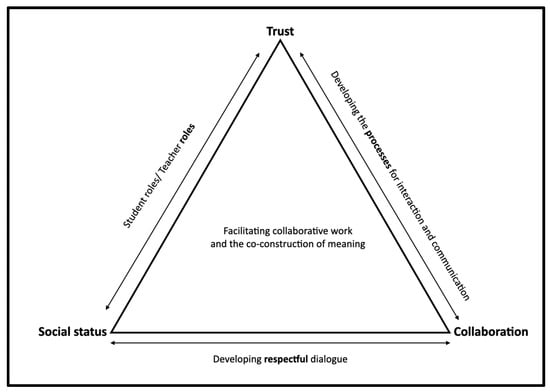
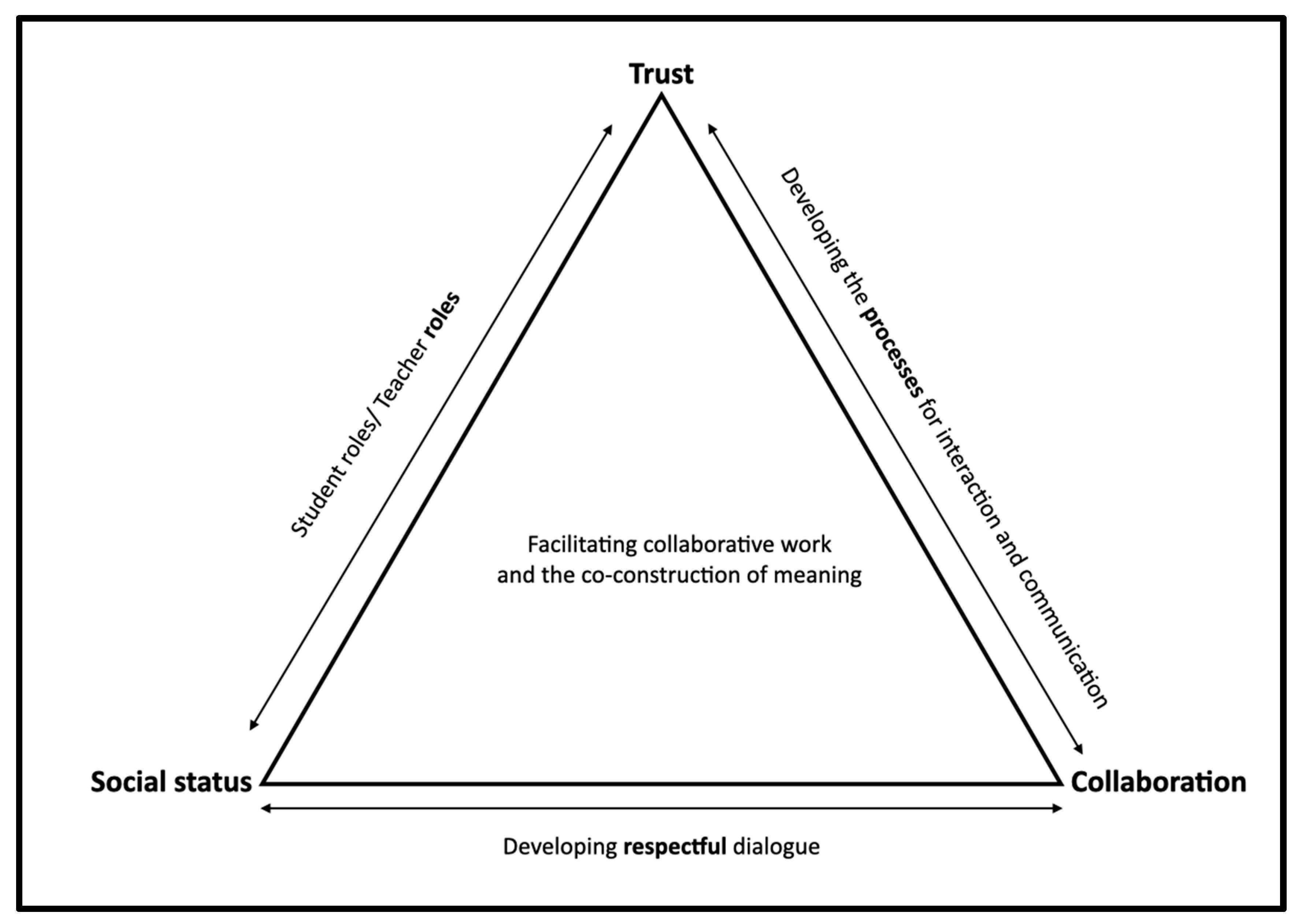
Disclaimer/Publisher’s Note: The statements, opinions and data contained in all publications are solely those of the individual author(s) and contributor(s) and not of MDPI and/or the editor(s). MDPI and/or the editor(s) disclaim responsibility for any injury to people or property resulting from any ideas, methods, instructions or products referred to in the content. |
© 2026 by the authors. Licensee MDPI, Basel, Switzerland. This article is an open access article distributed under the terms and conditions of the Creative Commons Attribution (CC BY) license.