Article

Making Creative Thinking Visible: Learner and Teacher Experiences of Boundary Objects as Epistemic Tools in Adolescent Classrooms

Dyson School of Design Engineering, Imperial College London, South Kensington, London SW7 2DB, UK
*
Author to whom correspondence should be addressed.
Educ. Sci. 2026, 16(1), 13; https://doi.org/10.3390/educsci16010013
Submission received: 24 September 2025 / Revised: 1 December 2025 / Accepted: 11 December 2025 / Published: 22 December 2025

Abstract

Creative thinking has become more important in education globally due to industry demand and a fast-paced world. In this study, boundary objects that can be tangible and digital objects are investigated to understand their role in facilitating creative thinking across five subject areas for teenagers aged 13–18 and their teachers, in their natural learning environment. A multiple case study method is used to investigate learners’ and their teachers’ experience in using boundary objects, to enable communication and understanding between individuals or groups in learning. Participants from an inner London secondary school comprised case groups: 8 Teachers and 16 Learners (8 from the lower school, aged 13–15 years, and 8 from the upper school, aged 16–18 years). Participants were invited through email and a short presentation. Consented participants were organised into male and female across teachers and students and were approached in lessons where boundary objects were being used. Data was collected through interviews and comprised photos of tool use, analysed through Reflexive Thematic Analysis for data analysis. The resulting five themes for teacher and student themes showed that boundary objects were perceived to facilitate creative thinking across all case groups within the studied context, with important insights such as iterative design, which develops real-world skills; metacognition, which is critical in learning and enables students to actively question their own thinking; memory, which is very important in enabling students to remember what they learned and how; and individual liberty, suggesting that learning need not be linear nor prescribed but that there must be freedom to learn in ways that are enjoyable and challenging too, amongst others. This study’s interpretive results indicate that when participants experience the use of boundary objects in a natural classroom or learning setting, the learning process is perceived to bring benefits that allow the process of creative thinking to occur.

1. Introduction

1.1. Defining Creative Thinking: A Theoretical Consensus

Creative thinking as a concept is grounded within research over many years as it is now well understood and its importance is of high value, as it is embedded across industries. Many key theorists have contributed to the current unanimous view on its core elements. Sternberg and Lubart (1999) define creativity as the ability to produce work that is both novel (original, unexpected) and appropriate (useful, adaptive to task constraints—limitations or boundaries which may affect or influence how a given task is performed). This symbiotic condition of novelty and appropriateness has become a globally agreed-upon norm in creativity research with Runco and Jaeger (2012) referring to it as the “standard definition” that underlies most contemporary approaches. Cropley (2006) further refines this understanding by highlighting the dynamic exchange between divergent thinking (generating multiple ideas) and convergent thinking (deciding upon solutions)—suggesting that creativity requires not just idea generation but also critical evaluation, which is at the heart of innovation and design thinking and could benefit education if appropriate context and resources are available.
Boden’s (1991) work on creative thinking indicates the importance of mental structures which form the foundations of forming new connections, using analogies and similarities to understand concepts how these together, enable us to think and behave uniquely. Kaufman and Beghetto (2009) developed their creativity framework comprising the “4 Cs of creativity”, which views creativity from various lenses such as everyday “mini-c”, “little-c” creativity, to professional “Pro-c” and notable or “Big-C” successes. This model has helped researchers and educators appreciate that creativity exists in various contexts and, therefore, can enable creative thinking to develop if appropriate educational experiences allow it. In education, creative thinking needs to be valued as a developmental milestone, where it needs to be cultivated and nurtured through facilitating environments (Beghetto & Kaufman, 2017).
A collective view that has gathered from practice and research is that creative thinking develops along a continuum influenced by both individual differences and socio-economic contexts, thus making it a practical and operational goal for educational intervention, furthering a global perspective. (Glăveanu, 2011; Abraham, 2018). This again reinforces the central importance of creative thinking as it is relevant at both the individual and societal levels, making it useful in many situations. For example, Glăveanu’s (2018) “5 A’s framework” describes types of creative thinking relevant to specific situations such as ‘Artefacts’ used or being created for the material and tangible world. The “5 A’s framework” repositions creativity as a distributed and interactive sociocultural phenomenon with five interacting and interrelated factors of creativity as the Actor (the social agent), Action (the embodied act of creativity), Artefact (the cultural product), Audience (the social world that consumes the work), and Affordances (the possibilities given by the environment). Overall, the model states that creativity does not reside inside someone but emerges from the relationship that occurs between all five elements. Therefore, creative acts are always situated in a specific material and social context (see Glăveanu, 2018).

1.2. Creativity as a Process Rather than a Product

Although the prior discussion emphasises the importance of key research in the definition and development of creativity situating it in an educational context, it is important to note that they are all largely assessment based: that is, they objectively measure creativity and have grounded the understanding and application of these over many years. For the purpose of this study, however, it is imperative to know that creative thinking as a process is perhaps even more useful in a learning environment pedagogically. The notion of creativity as a product was reinforced by psychometric traditions of divergent thinking tasks (Guilford, 1950; Torrance, 1966) and output-based rubrics. Runco and Jaeger (2012) in their influential review argue that these definitions limit the meaning of creativity to “originality and effectiveness” (p. 93) and consider less the emergence and iteration of how creativity is cognitively generated. Sawyer (2012) proposes that “Creativity results from sparks, in a series, not in one burst of insight” (p. 5), thereby emphasising the moment-to-moment processes through which creative ideas are generated, assessed, and transformed.
Current models of creativity clearly support this view of the process of creativity. Kaufman and Beghetto (2009) describe mini-c creativity, the personal, meaningful reinterpretation of experience, as the most educationally relevant aspect of creativity. Mini-c creativity is the “novel and personally meaningful interpretation” (p. 3) of experiences, actions, communication, and events. When creativity is assessed through outputs alone, many of the internal micro-transformations that form the basis of mini-c creativity are rendered largely invisible. Beghetto (2023) provides additional support by asserting that creativity requires experiencing “risk, uncertainty, and the potential for failure” (p. 28) in a subjective manner.
Adolescence is a developmental period characterised by heightened neural plasticity, exploration of identity, and emotional reactivity; therefore, subjective experience is central to this developmental stage (Kleibeuker et al., 2013; Sawyer, 2012). Csikszentmihalyi (1990) proposed the concept of flow to describe creativity as requiring deep involvement, intrinsic motivation, and synchrony between cognitions and emotions. According to Csikszentmihalyi, “Flow is the state of being so involved in an activity that nothing else seems worth doing” (p. 4). The experiential qualities of flow cannot be inferred from final products and must be accessed through methodologies that enable students to document their thoughts, emotions, and interactions as they occur. Motivational research similarly emphasises the centrality of internal processes. Hennessey and Amabile (2010) state that “social and motivational factors are critical influences on creative performance” (p. 570), including autonomy, emotional safety, and the learner’s perception of challenge. These subjective states shape whether learners persist through creative difficulties.
Thus, to follow the guidelines of global think tanks, we need to understand the subjective experience of creativity as they emphasise the need for students to have the capabilities of adaptability, resilience, and flexible reasoning. It is therefore crucial to investigate internal processes subjectively that provide the basis for motivation and reflective interpretation of creative experiences. Without the insights of these internal processes and experiences educational systems cannot effectively cultivate the creativity of learners in today’s modern society.

1.3. The Growing Importance of Creative Thinking in Education

The growth and importance of creative thinking in education globally have been researched and proposed by key industry players. The Organisation for Economic Co-operation and Development (OECD, 2023) has increasingly situated creative thinking as one of the “core competencies” in its Education 2030 Framework but also in its Skills for Jobs reports, recognising its foundational function in preparing students for the fast-changing global employment landscape. The OECD asserts that creative thinking allows learners to generate, evaluate and improve ideas in ways essential for innovation, problem-solving, and democratic participation (OECD, 2023).
These calls highlight the need for education systems to cultivate not only creative outputs but the underlying cognitive, emotional, and social capacities that drive creative thought.
Yet despite these global demands, educational research and practice frequently conceptualise creativity through products rather than processes. This led to their development of the 2022 PISA Creative Thinking Assessment, the first large-scale international approach to measure this creative thinking in 15-year-old students across various countries. In addition, the European Commission (2019) in their “Key competencies for Lifelong Learning” set out key drivers in teaching and learning that could facilitate growth highlighting “Project based learning, Arts based learning, Inquiry, Experiential or work based to improve learning outcomes and learner engagement” (European Commission, 2019, p. 15) which intend to foster collaborative learning environments through active participation leading to innovation. They discuss further how digital know-how within the learning context can enhance the digital competencies of citizens.
In parallel with the EU Commission’s competency framework, the UK’s Education Committee at the House of Lords (2023) published a report on education for 11–16-year-olds (secondary education) reviewing the role of assessments and curriculum—with curriculum here referring to the subjects on offer in this case, up to the terminal age 16 GCSE exam. For example, most schools follow the National Curriculum, which requires certain subjects to be studied for the GCSE exam, while also specifying which subjects have more weighting for school performance measures, etc. Maths, English and Science are compulsory, while there are options for humanities (history or geography), and so on. They proposed changes that favour fewer assessments and increase the offer for creative, technical and vocational subject domains whilst enriching the learning experiences of teenagers, to adapt to the demands of the global economy facing the youth. The current UK Curriculum review (Department for Education, 2025) has recommended key changes including innovation, but unfortunately the focus on creative thinking does not appear to have much weight due to the continued (slightly reduced) exam system. Aside from government-level reviews to inform policy, other think-tanks, notably the World Economic Forum and McKinsey have also advocated a similar line of argument in the need for developing human capital to improve educational and subsequently employment outcomes to future-proof the need for digital literacy. McKinsey Global Institute indicates significant growth and demand for higher-order cognitive skills such as creativity and complex problem-solving by 2030 alongside reduction in routine cognitive skills (McKinsey Global Institute, 2021), while The World Economic Forum (WEF, 2023) who have consistently updated their global economic outlook on what future jobs will demand have steadily maintained creative thinking amongst the top job skills under their “Core skills 2030” report required for current and future employability, moving from fourth place in 2015 to third place in their most recent Future of Jobs report (2025). The WEF identifies creative thinking as one of the most essential skills for the future workforce because it enables individuals to adapt to rapid technological and social change (WEF, 2025). This elevated importance from forecasting and industry developments, illustrates that as more tasks are being automated, the human mind will overtake creative problem-solving capabilities. To enable innovation, organisations are moving into agile operations and enhanced digital deployment to avoid being resource intensive and this also requires thinking creatively which IBM indicated in Global CEO reports where 60% of global CEOs identified creativity as the most sought after quality in leadership which requires dynamic and adaptable thinkers to drive optimisation and success in complex business environments affected by fast technological change, sustainability goals, and oft-changing consumer demands, which further revealed that innovation is a core feature of business growth in 2025 (IBM, 2010, 2023). Although these reports may originate from various viewpoints in terms of their economic or social standing and therefore their own perceived reality, they converge on creative thinking as being a key asset for growth and innovation.
Unfortunately, The Durham Commission on Creativity and Education (2019) highlighted a troubling disconnect between the rhetorical support for creativity in education policy and the practical implementation of creativity-fostering pedagogies in classrooms. This implementation gap suggests the need for evidence-based approaches to creative thinking development that can be integrated across academic subjects. There are challenges in UK secondary schools due to systemic barriers, to implement boundary objects as catalysts for creative thinking. Lucas and Spencer (2017) view that the assessment heavy curriculum structure has systematically marginalised approaches that prioritise creative thinking and cross-disciplinary learning as they are deemed less important due to the value placed on school performance in academic terms. This assessment-driven culture creates what Priestley and Biesta (2013) term “policy hyperactivity”—a rapid succession of educational reforms that prioritise standardisation and measurable outcomes over creative development. The result is a system where teachers have limited flexibility to incorporate innovative pedagogical approaches like boundary objects.

1.4. Boundary Objects as Facilitators of Creative Thinking

Star and Griesemer’s (1989) influential work on boundary objects provides an encouraging set of tools for addressing the challenge of fostering creative thinking across disciplinary boundaries. They thus describe boundary objects as artefacts that function at the interfaces between different communities of practice, being “plastic enough to adapt to local needs and constraints of the several parties employing them, yet robust enough to maintain a common identity across sites” (p. 393). Boundary objects are “entities that enhance the capacity of an idea, theory or practice to translate across culturally defined boundaries, for instance between communities of knowledge and practice” (Brown & Duguid, 1991; Wenger, 1998) and are being used across various fields such as education, engineering, government, etc., (Fox, 2011). Chatterjee proposes that interacting with historical objects facilitates “multi-sensory engagement” through a student-centred approach (Chatterjee & Hannan, 2015) and has also presided over its value in learning and well-being by enabling students to explore material connections in this object-based world (Chatterjee & Kador, 2021).
Depending on the school’s focus or educational settings, boundary objects can take diverse forms—physical manipulatives, conceptual models, digital tools, or project frameworks—that facilitate movement between concrete and abstract thinking, a process essential for creative idea development (Pennington, 2016) and an important pedagogical process in terms of the established Bloom’s (1956). The potential for boundary objects to facilitate creative thinking is particularly relevant for adolescent education. During this developmental period, students are increasingly capable of abstract reasoning but often struggle to integrate knowledge across subject boundaries artificially maintained by traditional curriculum structures (Akkerman & Bakker, 2011).
Akkerman and Bakker (2011) outline four mechanisms (identification, coordination, reflection, and transformation) through which boundary objects can facilitate learning between perspectives. These four mechanisms are quite similar to the micro-processes of creative thinking that have been identified in cognitive and socio-cultural research (Sawyer, 2012; Glăveanu, 2013).
Empirical studies have established that boundary objects assist in collaboration (Tsurusaki et al., 2013), STEM design reasoning (Leung, 2020), and interdisciplinary inquiry (Liukkonen et al., 2023) as being useful. However, to this point, there has yet to be any research on what ways boundary objects mediate the subjective cognitive, embodied, and emotional processes of creative thought, nor has any research looked at how these processes are mediated at different stages of adolescent development in a natural, classroom environment, investigated in terms of experience and subjective views.
Material culture shapes and extends cognition, rather than reflects it. Anthropologists and cognitive scientists contend cognition is embodied and situated: it arises not just from the brain, but through dynamic interactions between the body, tools and the environment (Clark, 2008; Ingold, 2013). Children are natural learners who manipulate their childhood surroundings, just as adults tend to offload cognitive effort into other external notes, lists, diagrams, interfaces and so forth, that scaffold and organise thinking. When we talk about tools and objects in this way, we are conceptualising them not only as extensions, but as constituent components of the thinking system we navigate. Don Norman’s (Norman, 2013) understanding of affordances, for instance, brings some clarity to the role and nature of tool use and interaction. Affordances describe how objects communicate their use through physical design, such as a handle suggesting pull and a button suggesting push. What affordances do in essence, is make possibilities of action more concrete for a user allowing an opportunity to act meaningfully (often without instruction). Affordances are not only principles of design, but cognitive bridges between what humans intend to do, and what we do materially. Affordances operate between ancient tools and modern technologies (Leakey et al., 1993; Domínguez-Rodrigo et al., 2005) guiding behaviour, mediating understanding and appropriate responses to context, and ultimately supporting problem identification and solving. Although existing studies show that boundary objects support engagement, identity work, and disciplinary integration (Akkerman & Bakker, 2011; Leung, 2020; Tsurusaki et al., 2013), no research has examined how they mediate the subjective, cognitive, and embodied processes of creative thinking, particularly in adolescent contexts.

1.5. Neuroscientific Evidence Supporting Boundary Objects in Adolescent Learning

The neurobiological foundations of adolescent brain development provide a sound basis for deploying boundary objects to promote creative thinking. The adolescent brain according to Blakemore and Choudhury (2006) and Blakemore (2012) is a period of rapid change where social interactions, cognitive flexibility, decision-making and inhibition undergo structural and cognitive changes, where it is crucial for educators to understand how to adapt teaching to ensure the teenage brain is able to cope with the learning needed in the modern context. This includes learning that considers emotion, motivation and social interactions that facilitate the adolescent brain in their learning journey, to enhance neuronal communication and neuroplasticity (Blakemore, 2018). Siegel (2013) identifies this developmental period as one of “cognitive liminality”—positioned between concrete childhood thinking and adult abstract reasoning, making it particularly receptive to boundary objects that bridge these cognitive domains. Given that the present study is interested in understanding how teenagers engage with boundary objects and how this facilitates creative thinking as a process, it becomes important to consider evidence from neuroscience about the brain and how it processes tactile information and what implications this has for learning and memory, since the very point of teaching and learning activities or approaches is to enable students to learn and remember—creativity should enhance this. While Blakemore’s work is primarily on adolescent brain development, Chen et al. (2023) found that overlapping brain regions seem to be active when participants report creative uses of objects and creative metaphors, both of which require cognitive flexibility in thinking. This suggests that creative tasks within learning must be good for neuroplasticity so that more connections and therefore consolidation of learning through schema and experience, can facilitate learning and memory integration.
The prefrontal cortex (PFC) is responsible for executive functions, including cognitive flexibility and divergent thinking, all of which undergo major reorganisation in adolescence (Luna et al., 2015). This reorganisation leads to a functionally distinct period, where boundary objects can leverage the nature of creative cognitive processes, optimal for scaffolding. A study more recently looked at whether there were as a higher activation of brain networks involved in either of screen-based typing or paper-pen based writing and found that the latter showed a much higher level of activation in EEG synchronization for drawing and writing suggesting strong evidence of tactile learning in the parietal and central regions, important for memory (Ose Askvik et al., 2020). Another exciting finding from Hutmacher and Kuhbandner (2018) found that in their first study of exploring 168 everyday objects, participants paid attention to salient features of objects such as weight, shape or even texture and found that recall one week later in identification of the objects was perfect. Blindfolded in a haptic memory test, they were given the objects they were exposed to and similar but unexposed items. The results indicated that object recognition occurred across sensory modalities, leading the authors to conclude that the “human mind effortlessly and automatically stores detailed and durable representations of a vast number of perceptual experiences, including haptic ones” (Lacey & Campbell, 2006).
The default mode network (DMN) composed of medial prefrontal cortex (mPFC), posterior cingulate cortex, and angular gyrus, has been highlighted as specifically important for creative ideation and for the insight moment, showing activation patterns when individuals engage with object-related divergent thinking tasks (Beaty et al., 2020). Individuals showed increased functional connectivity in the DMN with the executive control networks, a neural signature of increased creative performance. This shows that boundary objects could also foster creativity as they allow both generative and evaluative cognitive processes to occur at the same time. Beaty et al. (2014) found that there was strong brain connectivity in terms of excitatory activity between the Inferior Frontal Gyrus and the DMN which suggests that idea generation utilizes various brain regions. Furthermore, creative thinking is profoundly shaped by affective and emotional processes. The salience network detects novelty, conflict, and uncertainty (Beaty et al., 2016), triggering the cognitive shifts necessary for insight or reframing. This neurological sensitivity aligns with educational theories emphasising risk, uncertainty, and emotional investment. The neurobiological evidence thus reinforces the argument that creativity involves subjective experiences of tension, curiosity, and absorption, that is states inaccessible through product based measures and as Benedek et al. (2014) found, active brain regions in the use of creative idea generation recruits memory related processes of which are crucial in the formation of long-term memories, necessary for learning.
Action, gesture, and object manipulation activate neural pathways involved in cognitive flexibility and conceptual expansion. Goldin-Meadow (2014) demonstrates that gesture “changes our thoughts” by supporting abstract reasoning (p. 4). Malafouris (2013) encapsulates this phenomenon by arguing that “we do not simply use things; we think through them” (p. 14). Material engagement supports cognitive offloading, memory extension, and conceptual exploration—mechanisms directly relevant to how boundary objects function in learning environments.
Together, these findings support a process-based, experience-sensitive view of creativity and highlight the potential of boundary objects to mediate and externalise these neurocognitive and emotional dynamics.

1.6. Educational Applications and Evidence of Effectiveness

Investigations into boundary objects in education illustrate that they aid creative thinking processes in adolescents. Pennington (2016) in his review found that using tools to integrate knowledge helped individuals navigate between formal academic knowledge and their personal experiences, creating opportunities for novel connections. Akkerman and Bakker (2011) observed boundary objects supporting individuals in considering and integrating perspectives from disparate areas to ideate, a critical process for creativity.
In recent years, discussion of digital boundary objects has become a research focus. Holland et al. (2021) demonstrated how augmented reality (AR) in education was used to learn history. They show that students were able to observe an actual artefact and situate it in a contemporary or possible future space. This capability enabled students to demonstrate their resources and engage in temporal perspective-taking, which assisted creative historical thinking. García-Martinez and Fardoun (2018) showed that multilingual digital storytelling platforms demonstrated the capacity of a digital tool as a boundary object for learning across contexts and connection to different cultural colonisations, supporting students to create more complex and creative cross-cultural narratives.

1.7. Relevance

Educating with boundary objects helps to connect theoretical and practical aspects (e.g., as in Holland et al., 2021), developing flexible educational pathways for students to creatively solve problems in global contexts. Boundary objects offer learning opportunities across contextual considerations, providing possibilities for pedagogies that link empirical aspects of the world to students’ abstract notions, and potential pedagogy for cross-contextual communication and learning.
Although students and teachers exist within the same learning context of a classroom for example, they exist as two separate social worlds with different epistemic commitments and interpretive experiences between one student and another, and between student and teacher. What is referred to as a boundary object in the context of the current study relates to the constructions made through learning objects as part of a learning process, that facilitates communication between these groups by allowing coordination between students’ experiential, design-informed understanding on the one hand, in response to the teachers’ disciplinary framing or learning objective. This interpretive approach is made explicit building on the Star and Griesemer (1989) claim that boundary objects serve as negotiation sites across various social understandings. Consistent with Star and Griesemer’s (1989) concept of interpretive flexibility, the models as visual versions of their thinking, were conceptualised as creative artefacts for the purposes of revealing and representing the process of any possible creative thinking of the students, and in terms of sharing with other peers and their teachers, a boundary object was considered. This dual interpretation underlines their position as boundary objects that help mediate epistemic dialogues in the classroom community. Thus, the interpretive flexibility of using boundary objects allow for shared reference points to support both students’ exploratory meaning-making and the teacher’s focus on conceptual refinement. As described by Star and Griesemer (1989), a boundary object is an artefact that maintains a stable identity while being interpreted flexibly across different communities, enabling shared understanding and collaboration. In the context of creative pedagogies, the findings of Mullet et al. (2016) systematic review reveal that teachers often hold divergent and discipline-specific conceptions of creativity where they may be an arts bias or that they struggle with how novelty can also mean usefulness in terms of learning, shaped by contextual factors such as subject traditions and assessment pressures. Using a physical boundary object could potentially help bridge these conceptual divides by providing a tangible, adaptable medium for exploring creativity that transcends subject boundaries. Thus, a boundary object could be perceived as a shared artefact that embodies principles of creativity such as experimentation, problem-solving, and collaboration while allowing teachers from different disciplines (e.g., arts, STEM, humanities) to interpret and apply it according to their own curricular goals. For example, science teachers might use LEGO to model physical systems, while art teachers might use it to explore design and aesthetics, both engaging in creative processes that align with their disciplinary norms yet share a common language of making and iteration. In this way, serving as a boundary object, artefacts could make creative thinking visible and negotiable across subjects, supporting the kind of cross-disciplinary dialogue and shared understanding that Mullet et al. (2016) argue is needed to overcome fragmented conceptions of creativity in education.
Advocates of creativity, informed by neuroscience and pedagogical theory, suggest boundary objects are prototypes for adapting teaching and instruction methodology for more critical standards in education that extend our skills development as informative, creative thinkers who can navigate complex affordances and rapidly changing external attributes. However, unknowns exist about their subjective and interpretive use as options for educational experiences or as significant impacts on the learning experience. Across creativity research, neuroscience, psychology, and educational studies, a clear pattern emerges. Creative thinking is a dynamic, relational, embodied, and subjective process. Yet, research overwhelmingly studies creativity through products or tasks, leaving the core phenomenon of creative thinking underexamined. Moreover, although boundary objects offer a theoretically powerful means of accessing creative processes, they have not been studied through the lens of creativity or adolescent development.
This paper addresses these gaps by examining how boundary objects mediate the unfolding processes of creative thinking in a natural learning environment.
(i) 
To understand the experience of teenagers and their teachers when using boundary objects to learn, and whether this enables them to think creatively, across the curriculum on offer.
(ii) 
To further understand how teenagers and their teachers experience using boundary objects in their lessons and what role they have in their learning and creative thinking.
Research Questions:
i. 
How do students describe their experiences of using boundary objects in their lessons, to learn?
ii. 
How does the use of boundary objects trigger or support students’ creative thinking processes?
iii. 
How do teachers perceive boundary objects in being effective (or limiting) in facilitating student creativity?

2. Methodology: Qualitative Multiple Case Study

Case study research investigates phenomena in natural settings with small sample sizes to understand individuals’ experiences where experimental manipulation is absent. As Yin (1994, p. 13) defines it, a case study is an “empirical inquiry that investigates a contemporary phenomenon within the real-life context, especially when the boundaries between the phenomenon and context are not evident.” Stake (1998) highlights case studies’ unique approach offering “naturalistic generalisations” for holistic interpretation, where a multiple case study, which Stake (2006) also calls a collective case study, is a methodology used to study a specific phenomenon, issue, or programme by examining multiple case studies. A multiple case study is therefore employed to gain a deeper understanding of an issue or phenomenon and where a researcher studies multiple cases, they have an opportunity to explore both the similarities and any differences, ultimately resulting in what Stake establishes as a more substantial understanding, which is more generalizable than what a single case can establish (Stake, 2006). Conducting a multiple case study also consists of intentional case selection and purposeful data collection, which is why this is an appropriate method for the intended study in a natural classroom setting, where teachers and students engage in a learning process using boundary objects.
Stake (2006) and Merriam (1998) approach multiple case study research through constructivist and interpretivist lenses, both recommending data triangulation, though Merriam emphasises more structure to ensure rigour and reliability. This study primarily aligns with Merriam’s approach, where the researcher brings “a construction of reality to the research situation, which interacts with other people’s constructions or interpretations” (Merriam, 1998, p. 22).
Unlike positivistic approaches seeking generalisable laws through experimental interventions, case studies aim to gain deeper insights into real-life experiences that should not be reduced to variables and given that the present study intends to gain rich insights into the role that boundary objects play to facilitate creative thinking, it is relevant and purposeful to use a multiple case study approach. To further address Flyvbjerg’s (2011) critique that single cases do not lead to generalisations, this study employs multiple case studies to develop deeper insights and context-based relevance through emerging themes.

2.1. Location and Sample

The study was reviewed and approved by the Science Engineering Technology Research Ethics Committee, Imperial College London, SETREC number 6474782, on the 13 June 2023, before sample recruitment and selection.
As part of a larger multiple-case study (MCS), the focus of this multiple case study involved school-going teenagers in an inner-city London state school, serving largely disadvantaged pupils from low socio-economic backgrounds, but with students also attending from 80 surrounding boroughs across London. This means the student body represents various ethnicities and languages, making it more illustrative of a London school, where the same curriculum (8 compulsory subjects) up to age 16 is taught, and further options focused on STEM (science, technology, engineering, and mathematics) and employer engagement, which is industry-led learning, are on offer. The school is keen on driving change and is open to trying new methods of learning, which facilitated access for this study.
The recruitment of participants was through a short presentation explaining what a boundary object is, and that interviews would take place with teachers and their students about their experience with boundary objects in a lesson, alongside any photographs of student creations or models. For teachers, this was through a staff meeting followed by an email with an invitation letter, the consent form, participant information sheet detailing General Data Protection Regulation (GDPR) details for ethics purposes (including deleting recordings after being transcribed) and safeguarding approval from the vice principal. Following this, consented teachers who had already planned lessons using boundary objects or were keen to, were finalised for the teacher sample.
For the student selection, the study was shared through a simpler, mini presentation to those classes or lessons for which the teachers had consented, again explaining what the study is about and what a boundary object is, so that both the teaching and the learning experience of a boundary object in a lesson can be fully understood. The student presentation included the same details of the study (interview and photos of any objects that could be used by their teachers), including the requirement for parental or guardian consent for all students below 18 years of age. As per the rigorous ethics process in terms of teachers being extremely busy and to ensure there was inclusion of all students and safeguarding, it was expected to provide meticulous detail about the study to any potential participants with the exact detail surrounding participation, and explain what boundary objects are with the same set of presentation slides so that there is standardisation in instruction and involvement. It was also explained clearly that the researcher’s role was to collect and interpret the data, and the questions were all scripted to avoid any potential researcher bias due to involvement.
Emails with the invitation letter, consent form and child assent form, participant sheet detailing General Data Protection Regulation (GDPR) details for ethics purposes (including deleting recordings after being transcribed) and safeguarding approval from the vice principal was sent to all parents of students who showed interest on a first-come basis ensuring equal numbers of male and females for the final sample. All communication for consent was through Imperial College’s Microsoft Office 365 as per ethics approval. Participation in the study was conducted only after full informed consent was gained from the relevant person or their guardian.
For the final sample, participants consisted of three case groups with an equal ratio of males and females in each group. Purposive sampling was ensured to show variation across disciplines and roles. Sixteen students (eight male and eight female) were selected to represent five faculties offering distinct subject domains (Engineering and Design, English (including Humanities), Science, Digital (Consisting of Digital Media and Computer Science) and Maths. This distribution was intended to capture diverse perspectives on the use of boundary objects or learning tools in teaching and learning across disciplinary contexts.
Eight teachers participated, where each represented a different classroom context within these faculties, being consistent with multiple case study research (Stake, 2006; Yin, 2018). The sample size was determined by both practical considerations of access and the aim of achieving data saturation, the point at which no new themes or insights emerged from the interviews (Guest et al., 2006). Saturation was decided through the reflexive iterations during analysis, where recurring insights and themes began to stabilise or plateau after approximately the 14th student and 6th teacher interview. Additional participants were included to confirm thematic consistency across cases. Developmentally, it was necessary to include students representing the different year/grade groups which comprised eight students for each stage of learning years/grades 9, 10, 11 (ages 13–16, lower school) and for years/grades 12–13 (ages 16–18, upper school).
For the student case groups lower and upper, this is grouped as per the UK school system where there is a broader curriculum in place leading towards the age 16 exam called the GCSE (General Certificate for Secondary Education) for which learning and preparation usually begin from age 13–14, and then the A level (and other certificates) at age 18 which are specialised, selected subjects that run for two years. This is why the students have been grouped in this way.

2.2. Materials and Tools

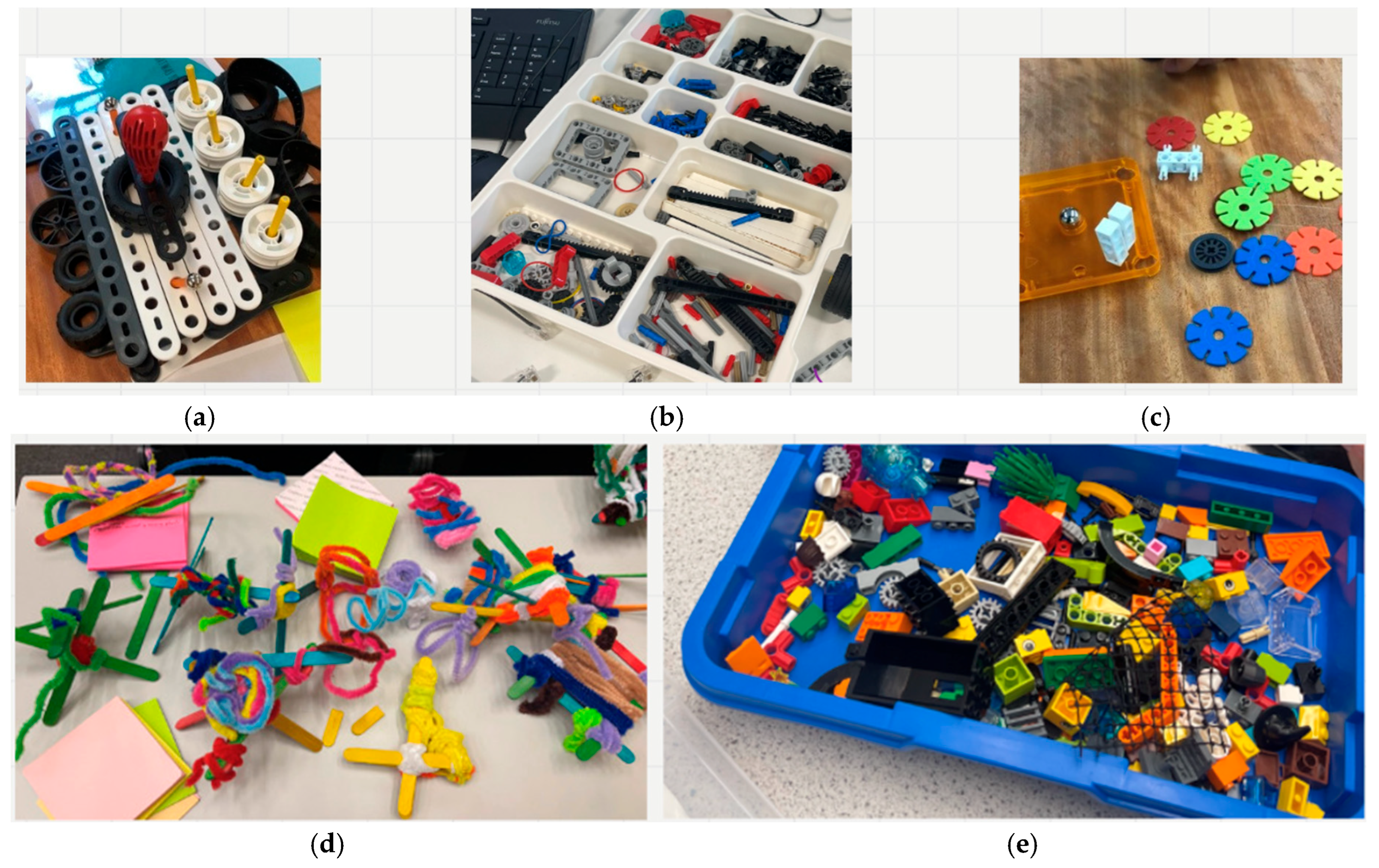
Each group of participants was interviewed Face-to-face using audio only, in their natural lessons for the lower and upper school case groups, and all participants were interviewed with scripted questions to avoid leading and biased approaches. Their responses were recorded verbatim on MS Teams using an Apple iPad Air 5th generation, with a USB-C microphone for recording (Microsoft Office 365) and were transcribed simultaneously on Teams directly. The materials (boundary objects/tech toys) used were as per the teacher’s own needs and purpose for their lessons for Case groups as above. Teachers were free to use any resource that aligned with the concept of a boundary object. These objects are shown in Figure A1a–e and included LEGO Education or building bricks alike; Meccano, Play-Doh, K’nex, Cardboard, Pipe cleaners or other construction toys or technology, including digital technologies (such as PowerPoint, Padlet, or whatever they were using) that were interactive and tangible. The resources were offered by the researcher if needed. Some teachers used LEGO story kits (Build to Express, which all contain the same number and type of pieces, Figure 1), others used LEGO Mindstorm (Figure 2), Scratch and EV3 Micropython 2.0 software, or digital and physical objects, FESTO pneumatics board, depending on the needs of the lesson and the learners as below in Table 1.

2.3. Procedure

After consent from teachers and students who had expressed interest, teachers provided information relating to lesson times and dates where boundary objects or epistemic tools had been planned for use in the lesson and where those students were available for interview/data collection purposes. The interviews were recorded with a USB microphone through audio recording on Microsoft (MS) Teams as soon as participants were ready. They were reminded what boundary objects were before the interview questions. Where required, the term ‘boundary object’ was replaced with the object being used (e.g., screen or LEGO) to make it more natural and to adapt to the interviewee’s response. Transcription started at the same time to ensure verbatim recording. Participants were pseudonymised with numbers and were interviewed according to the same protocol for each case group.
To reduce the influence of social desirability bias, interviews were conducted in a relaxed, conversational manner. The interviewer emphasised that there were no right or wrong answers and that interest was only in the participant’s real, genuine views of their experience. When discussing creative thinking, questions were phrased openly and followed by prompts inviting elaboration on both positive and critical perspectives. Building rapport and maintaining confidentiality helped create a sense of trust and openness, allowing participants to speak freely about their experiences and opinions.
Interviews were conducted in a confidential, non-judgemental setting. The interviewer maintained a neutral stance, reminding participants that there were no right or wrong answers. Open-ended questions and follow-up probes encouraged both positive and critical reflections. Rapport-building and assurances of confidentiality further reduced the potential for social desirability bias.
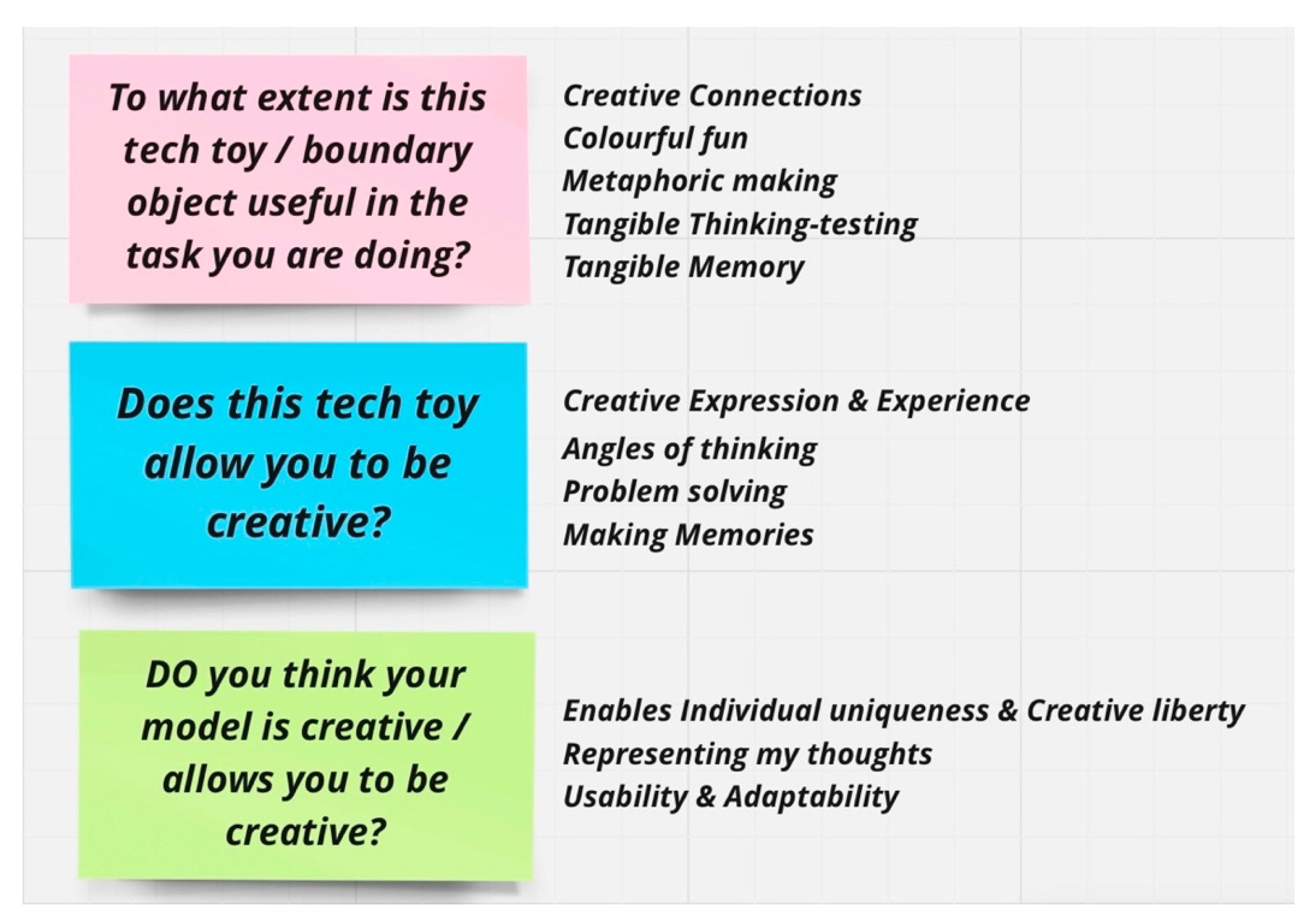
The interview questions asked are shown below, where for student participants, the questions were based on what was being used to create their models to understand their (possible) creative thinking process in terms of the lesson instructions and objectives. The interview questions were validated by qualitative experts to ensure the protocol aligns with the study and research questions and are not leading or biased.
Interview questions for each case:
Interview questions for student participants:
(1)
What are you making?
(2)
To what extent is this boundary object/tech toy useful in the task you are doing this lesson?
(3)
Do you think your model is creative? Please explain why. (This was to seek authenticity in understanding how students view creative thinking).
(4)
Do you feel this activity allows you to be creative? If so, in what ways and if not, why not?
(5)
What is an activity that you are creative and explain why.
(6)
How do you feel about learning this way (i.e., using boundary objects)?
Interview questions to teachers during or after their lessons:
(1)
Overall question: What are the benefits/limitations of using boundary objects in a learning environment?
(2)
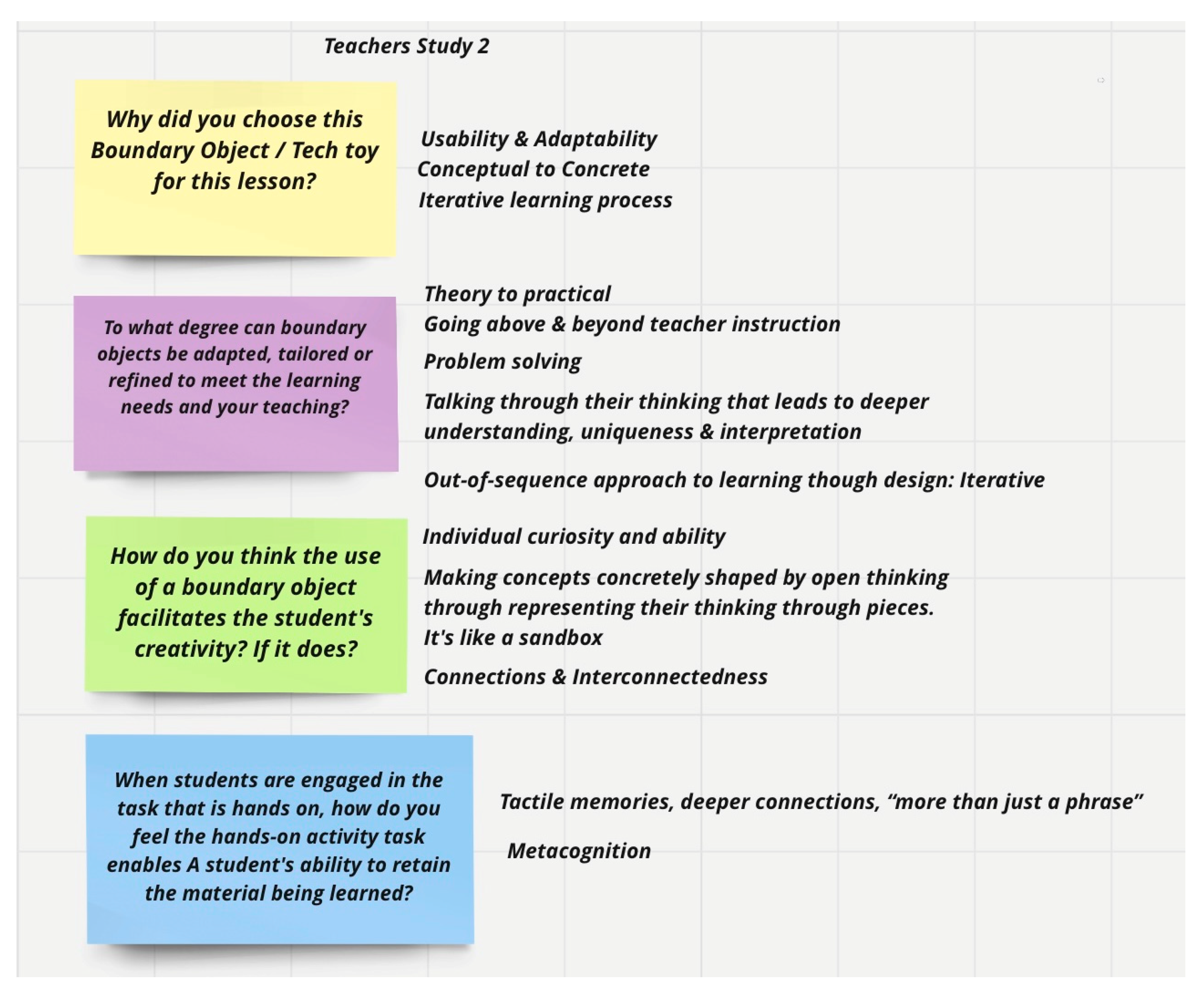
Why did you choose this/these boundary object (s) for the lesson?
(3)
To what degree do you think, boundary objects can be adapted, tailored or refined to meet the learning needs and your teaching?
(4)
How do you think the use of a boundary object facilitates the students’ creative thinking (if you think it does) and why if it doesn’t?
(5)
When students are engaged in a hands-on task, how do you feel the hands-on activity enables a student’s ability to retain the material being learned?
Any photos of student models and designs or boundary objects being described as part of the interviews were taken using the same device and stored on MS Office 365.
This multi-case study utilised visual documents (photos) as contextual references for participant quotations to assist in the development of themes and were not utilised as data points. The study took place within the students’ normal lesson context to provide validity to the data collection process. Qualitative case study research emphasises the importance of examining instances of a phenomenon in the actual environment in which it occurs, and where possible, in a naturalistic setting. The purpose of this case study was to explore how boundary objects serve as epistemic tools for creative thinking. Therefore, photographs provided contextual reference points for participant quotes but were not used as data points for systematic analysis of the final product.
Merriam and Tisdell (2016) define documents and artefacts as valuable resources of information in case study research, only as long as they are systematically collected across all case studies. In our investigation, some students were at various stages in the creation of their final products, with some having completed their products and others still working on theirs. Consequently, the models developed by these students could not have been relevant to creating a unified dataset or a systematic collection of information. Based on the recommendations of Yin (2018), that researchers should not make analytic inferences based on an uneven collection of information, we did not engage in a post hoc analysis of the models; rather, our understanding was based on systematically collected data from the participant interviews and the classroom observations.
All participants were given a certificate for participation, thanking them for their time.

2.4. Data Analysis

After interview completion, transcripts were verified against audio recordings and finalised for coding using Quirkos, an online platform using coloured bubbles for manual interpretation.
As inter- rater reliability is not a feature of Multiple case study research since it emphasises interpretive depth and reflexivity, participants were instead invited to review and confirm the accuracy of their interview transcripts to ensure transparency and provide credibility to the process. This was done as, although member validation is not a defining feature of Multiple case study research, it can increase the credibility of the research (Lincoln & Guba, 1985). The essential characteristics of multiple case research involve the use of several bounded cases, multiple data sources, and cross-case analysis (Yin, 2018). The checking of participant transcripts in this study aligns with best practices for ensuring trustworthiness in qualitative inquiry (Nowell et al., 2017).
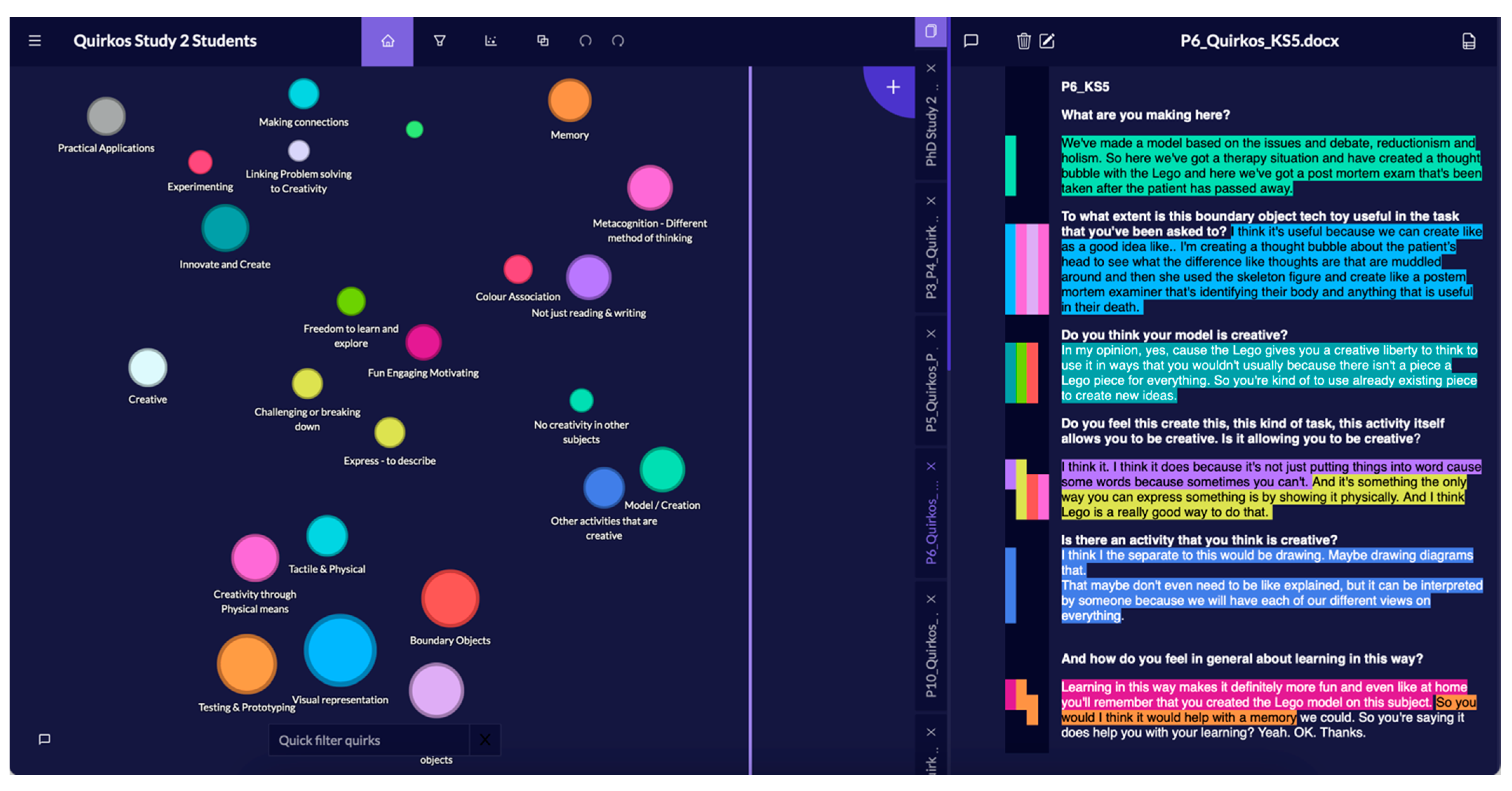
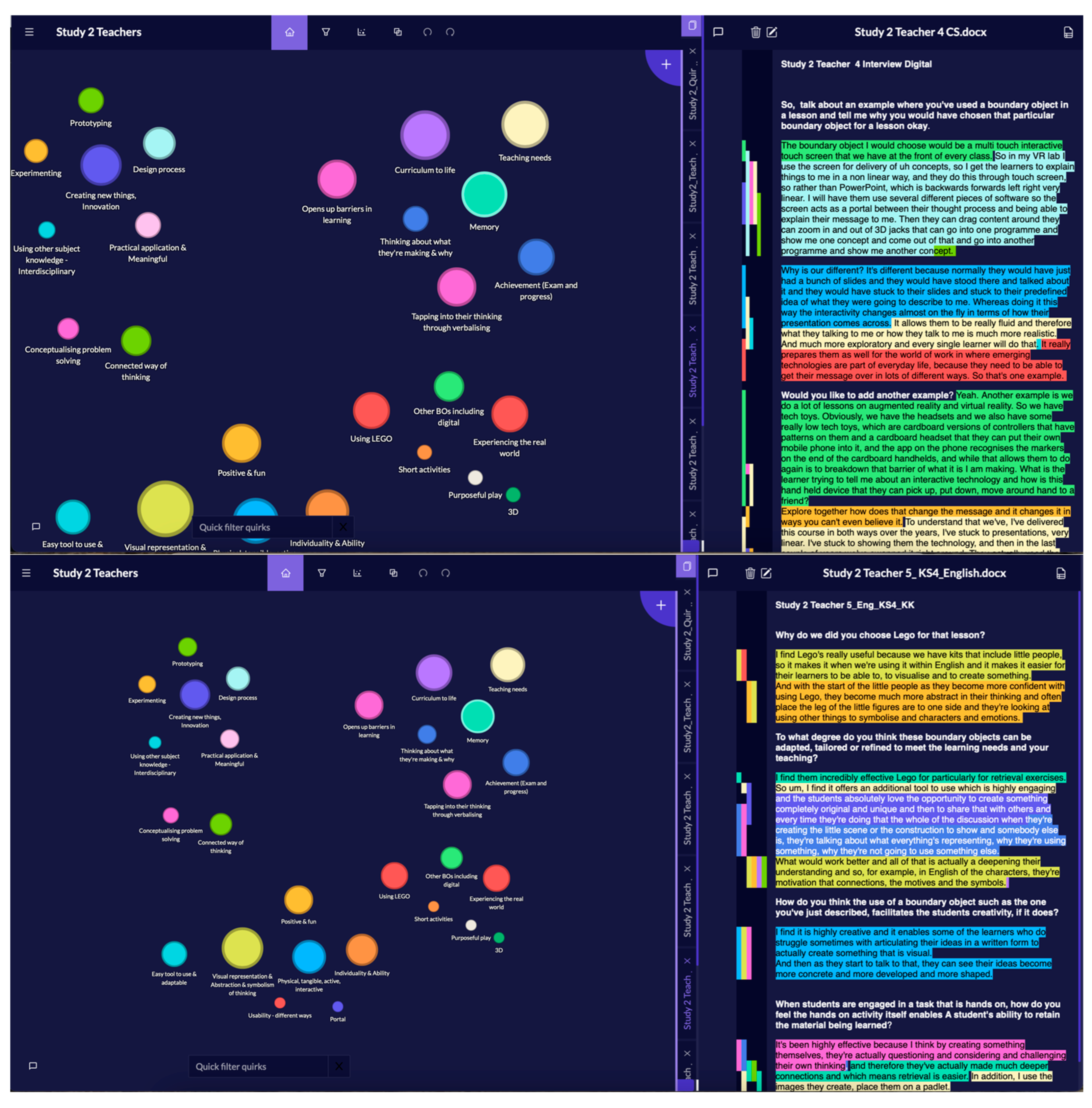
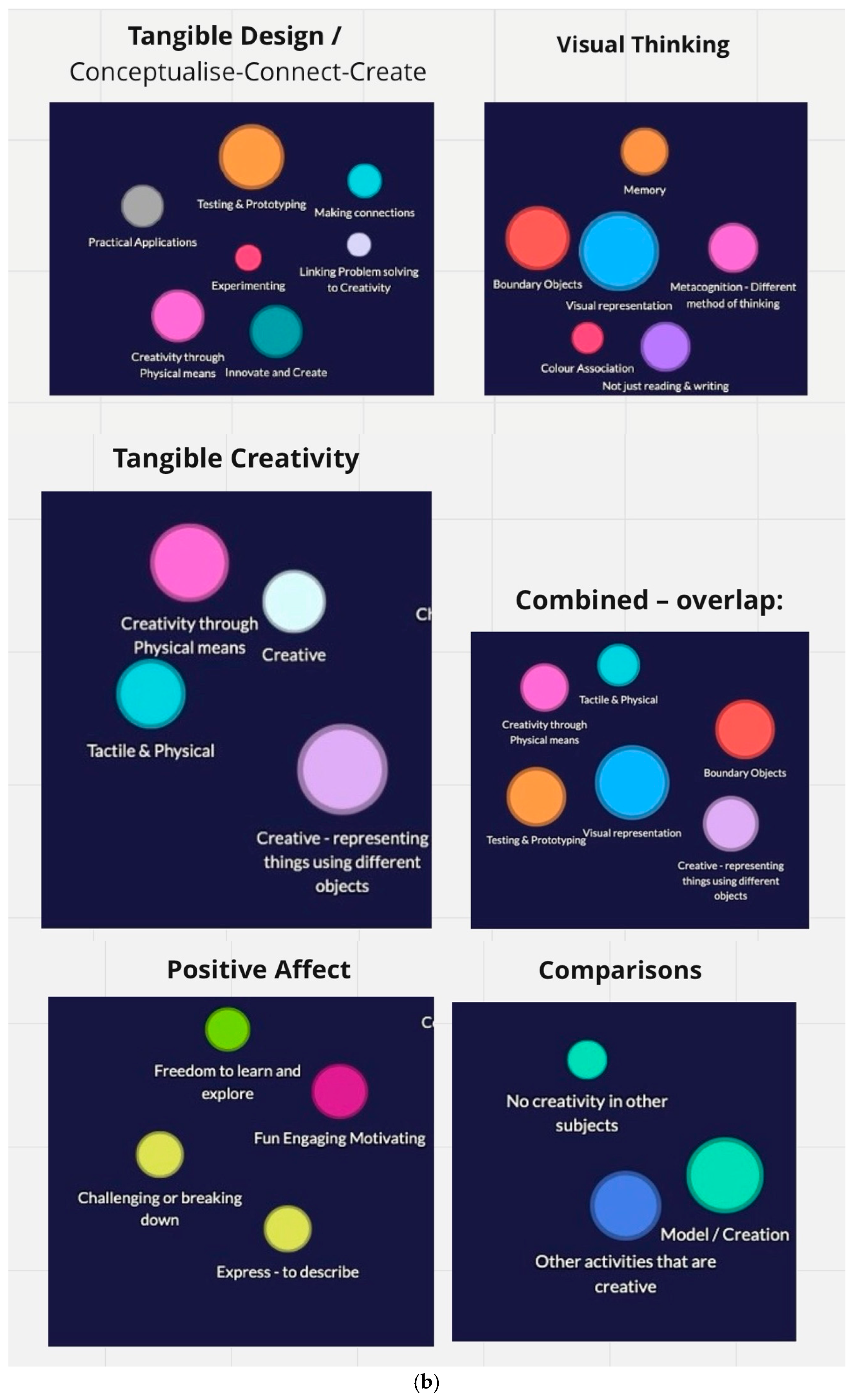
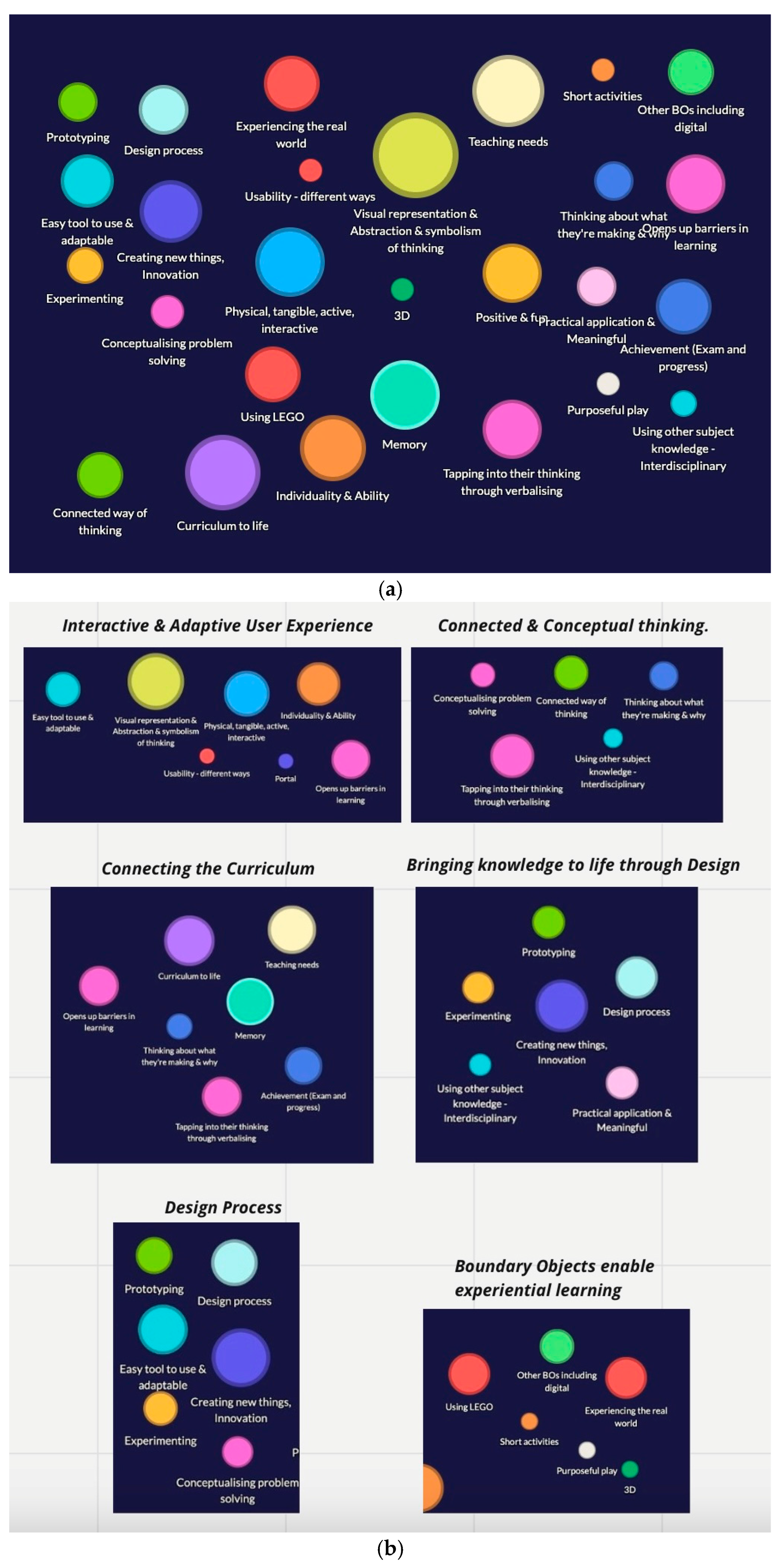
Examples of the first stages of coding are shown in Figure A2 for student transcripts and Figure A3 for teachers’ transcripts. Here, the Quirkos canvas shows the transcript text on the right-hand side of the canvas for each participant, which is then manually highlighted to generate early codes. The highlighted texts are then dragged and dropped into the left-hand side of the canvas to form bubbles. These bubbles form codes which are then named and grouped into bubbles on the left-hand side of the canvas, and this process is repeated until all the data has been coded. As more highlighted text is added to relevant bubbles, the bubbles grow bigger. The distance between the bubbles is irrelevant in terms of data and analyses—there is no meaning to the proximity; the closeness of the bubbles is to fit them on the canvas for data illustration purposes. The data is then read again through the early codes to gather deeper, meaningful insights and then further grouped and so on, through Reflexive Thematic Analysis (RTA) (Braun & Clarke, 2006), through colour coding for ease. This is particularly helpful when data might overlap. RTA was employed to interpret how the experience of boundary objects facilitates creative thinking in the learning process for both teachers and students. The process (Braun et al., 2023) involved coding, recoding, and reflecting through repeated transcript readings to develop interpretations. Through the process of RTA, some themes overlapped, and these were grouped into bigger bubbles as shown in Figure A4, while the smaller bubbles contained more specific themes. After five iterations, emergent themes were identified, allowing the data to inductively drive theoretical development.

3. Results—Student Case

3.1. Student Interview Analyses

A total of 8 students were placed in the lower school case group (lower school students aged 13–16, relevant for grades or years 9, 10, and 11).
A total of 8 students were placed in the upper school case group (upper school-aged 16–18 years, relevant for grades or years 12 and 13 or pre-university).
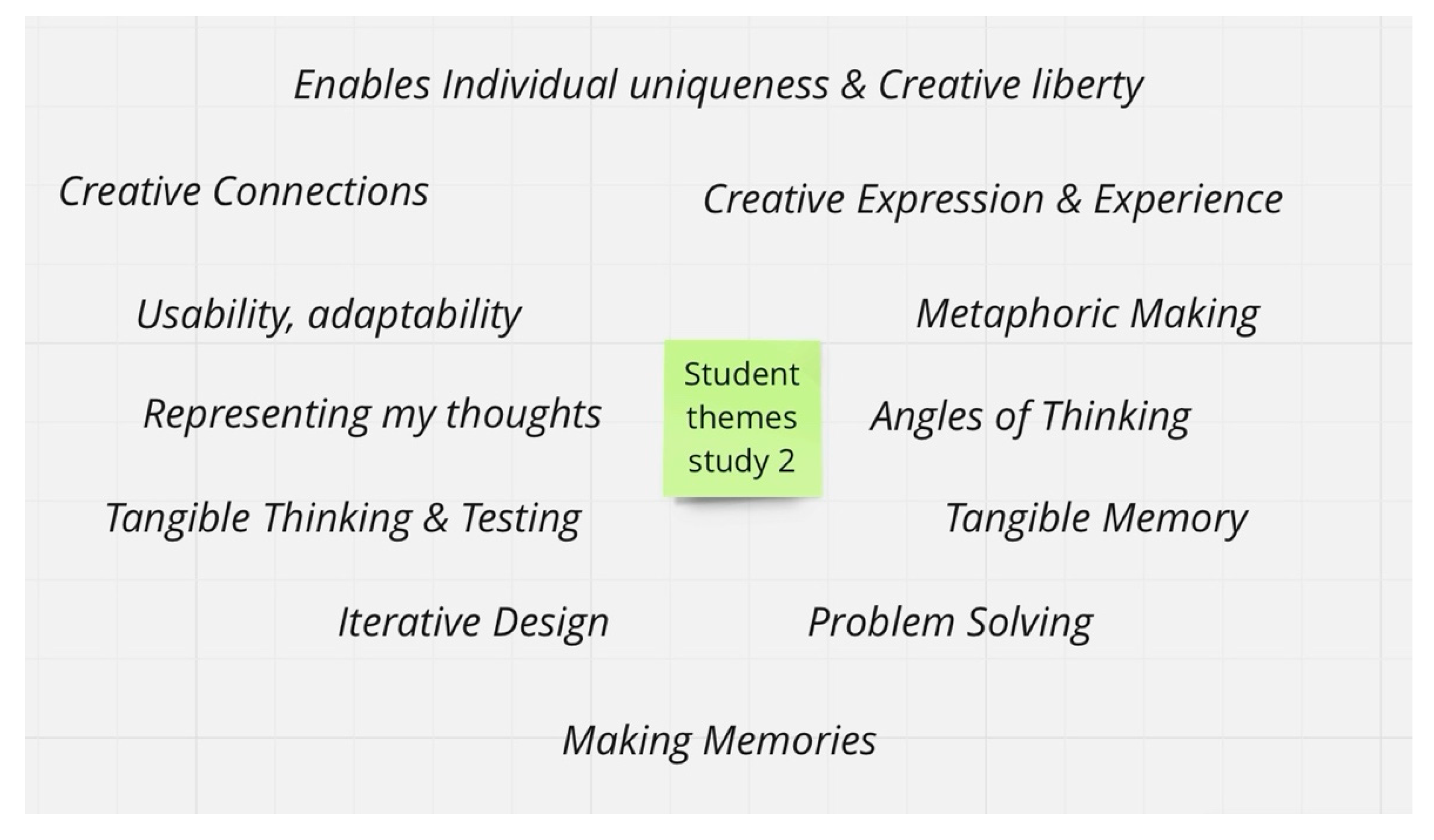
For teenage participant responses about lessons, Quirkos coding and Reflexive Thematic Analysis produced a progressive analytical framework. Beginning with initial codes from the codebook (Stage 1), deeper ‘Stage 2’ codes were developed through repeated reading and interpretation of all student data (Figure A4). Please see Figure A4, Figure A5 and Figure A6 for student coding and themes. These interpretations were further refined into clustered themes (Figure A4a), organising the comprehensive text analysis based on interview questions (Table 2). Memos were used throughout the coding and reflexive interpretation process to document meaning that led to the generation of the final themes. The bubble sizes in Figure A4, simply represent the number of relevant quotes that generated the codes, i.e., the more relevant the quotes, the bigger the bubble. The proximity between bubbles does not indicate anything specific; (Figure A4a) the same can be said for the themes (Figure A4b). Figure A5 and Figure A6 show the emerging themes.
The results of further Reflexive Thematic Analysis led to the emergence of themes to understand the overall perception and experience of using boundary objects reported and interpreted and if/how they facilitated creative thinking. The final five themes emerged from the final and fifth stage of iteration of reading and re-reading, and regrouping of the themes, for the student case from the data overall, indicate that students engaged with boundary objects through project-based learning across STEM fields, reporting enhanced creativity, problem-solving, and practical application through hands-on experiences.
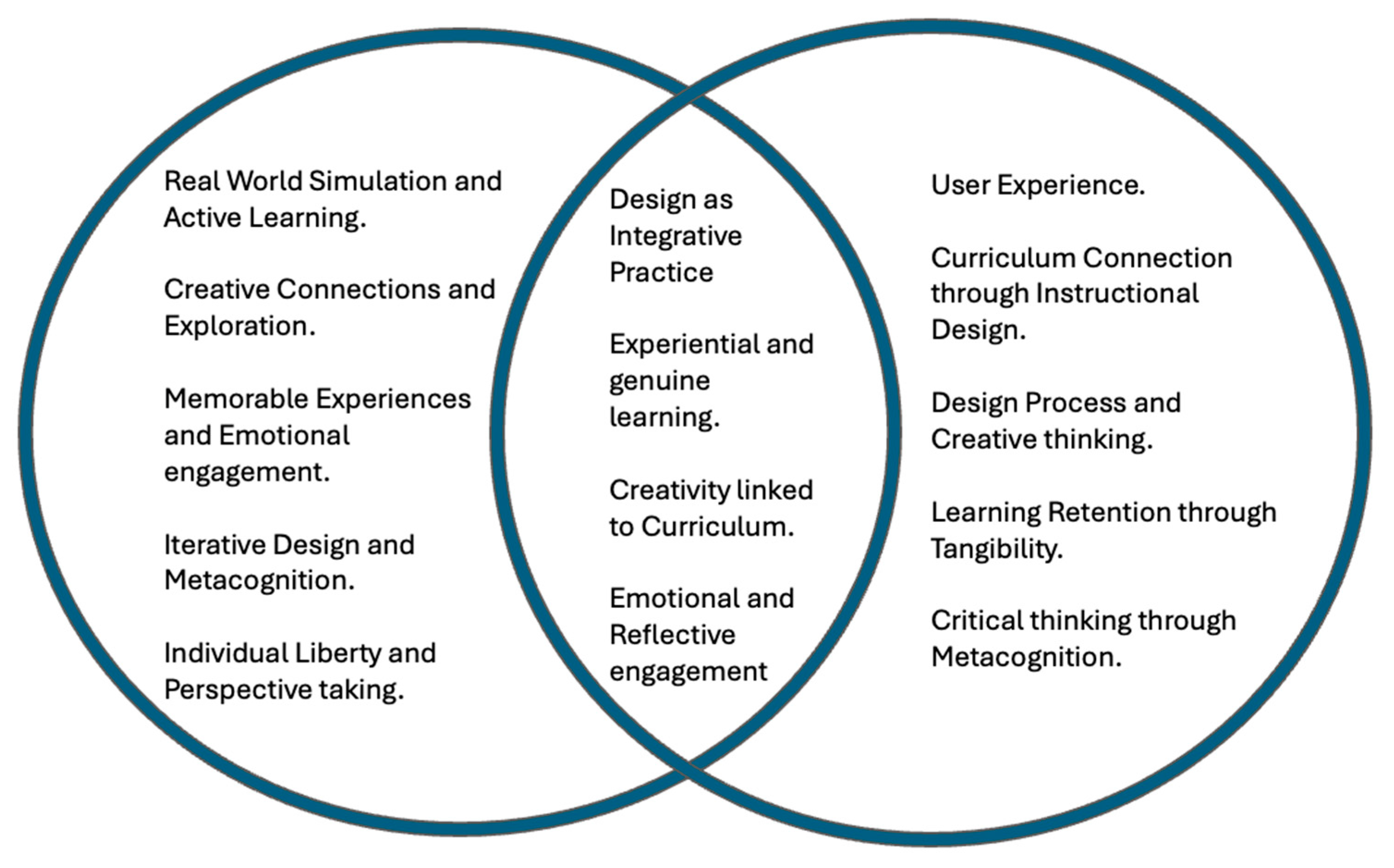
  • Real-world simulation and active learning
  • Iterative design and metacognition
  • Individual liberty and perspective-taking
  • Memorable experiences and emotional engagement
  • Creative connections and exploration.
A summary of the themes, their relevant quotes and the images/figures that these themes and quotes relate to is summarised here in Table 2. The quotes are in consecutive order, but the figures and themes are not, due to the nature of reflexive thematic analysis, which is data driven. Following this, a detailed presentation of the quotes is given.
As is shown in the summary table, the themes are presented further in Section 3.1.1, Section 3.1.2, Section 3.1.3, Section 3.1.4 and Section 3.1.5 with their relevant quotes from the interviews that have been substantially summarised for relevance. Following this, the images in Figure 1, Figure 2, Figure 3, Figure 4, Figure 5, Figure 6 and Figure 7 are the photos of either the creations that students made using boundary objects, or the boundary objects being used to interact with in different ways during the lesson they were being interviewed for, to understand their experience of using them in terms of the focus on creative thinking and learning. These figures have been kept here to support the themes being generated and for illustrative purposes only as the study is interested in the process of thinking using objects and therefore no analysis on the images themselves is being conducted in terms of post hoc analysis.
Following the quotes for each theme, there is a synthesised commentary based on the generated meanings through interpretation from the quotes it relates to. Although some themes may appear to overlap, as in the earlier interpretation stages, the final themes are based on overarching key themes that have been developed from analyses. It is important to note here that each set of quotes and therefore theme, may also seem relevant for inclusion in other themes and from other quotes but as per the process of reflexive thematic analysis, the meanings and insights generated iteratively have led to the themes as addressed below.

3.1.1. Real World Simulation Active Learning

This theme was particularly strong in the engineering, design, computer science and digital domains, where project-based learning was taking place where students reported their experience of using boundary objects, or where lessons were connected across units, enabling hands-on learning to take place over time, as indicated in the following representative quotes.
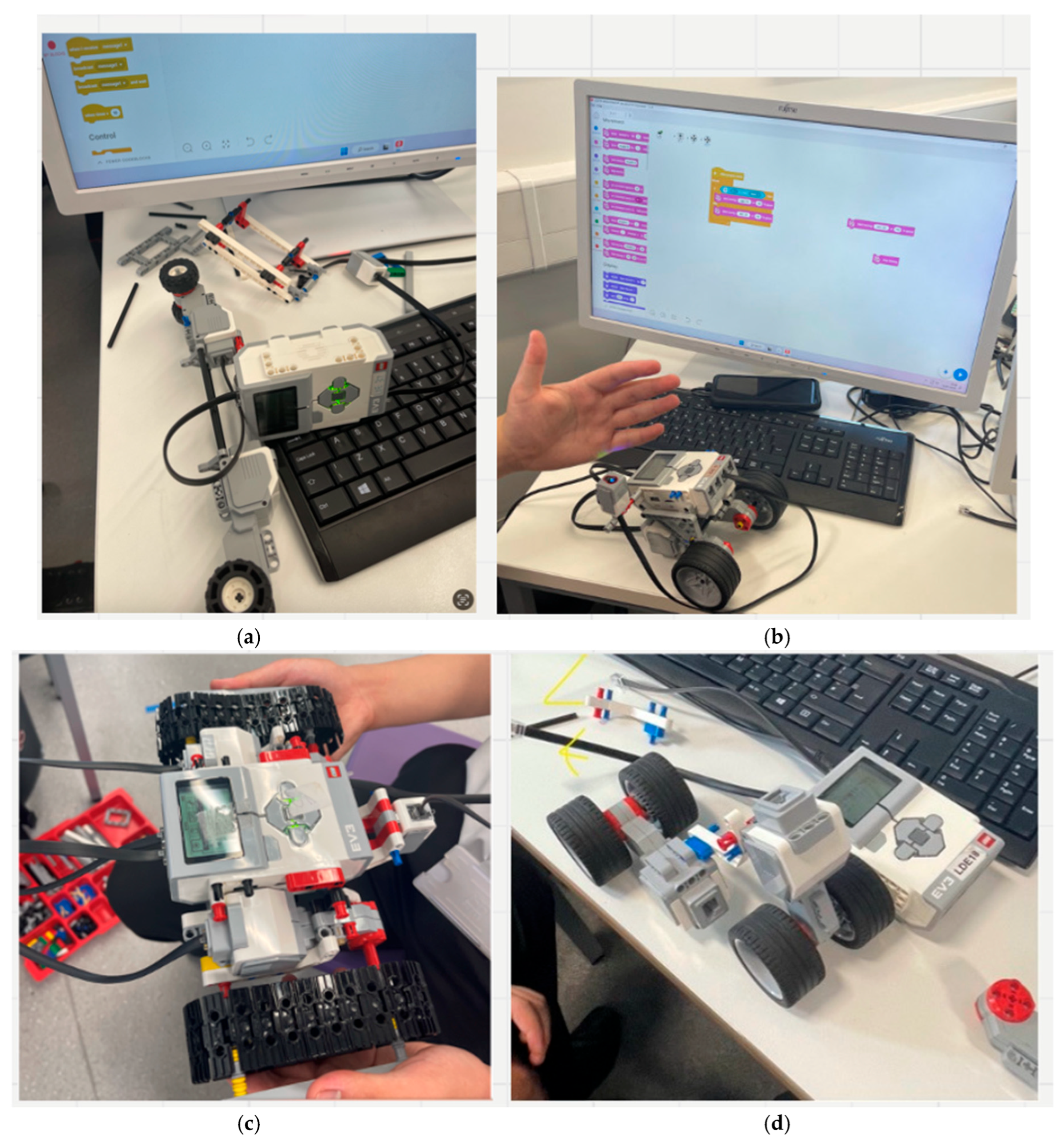
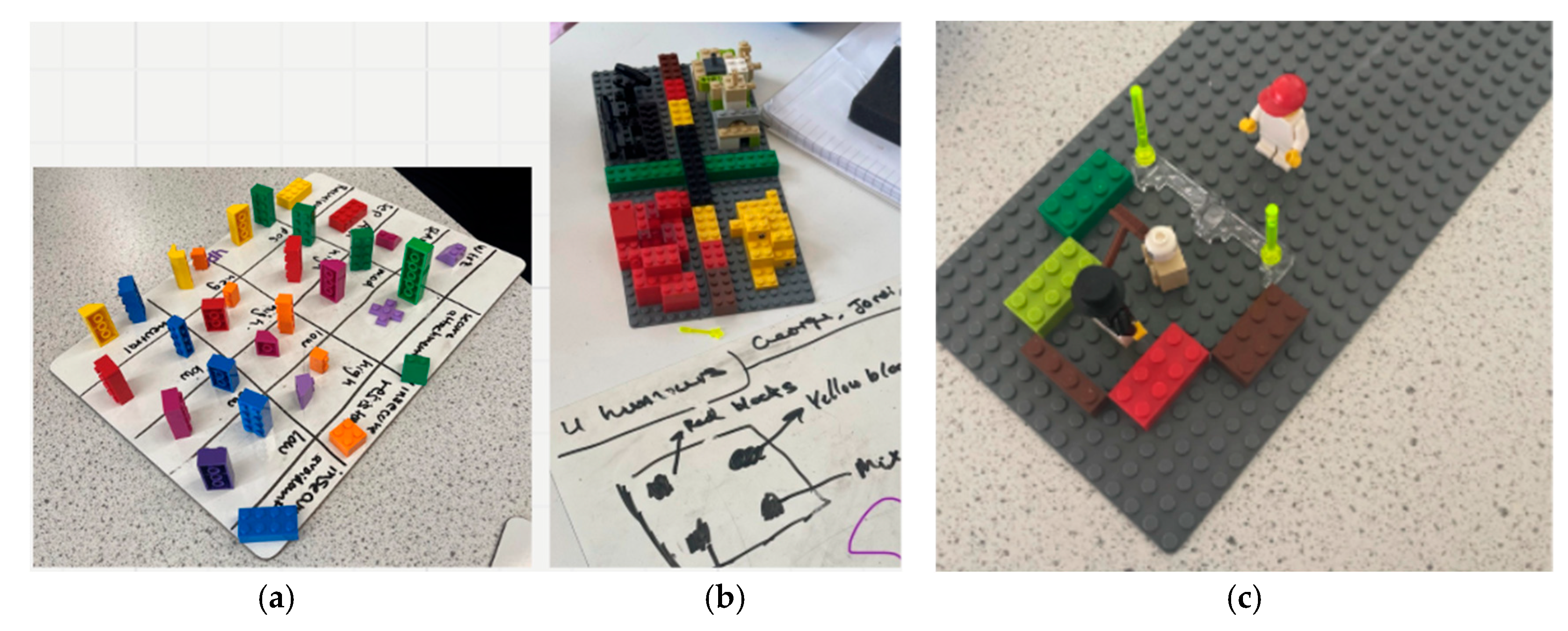
Quote 1, Figure 1a “Think for what was creative because … it’s quite … a unique idea … what we’re trying to do. We’re making a 3 wheeled vehicle which nobody else is doing in here today, so I think that’s quite creative … These pieces give us like a more, wide range of things to use and to get our head around to, like make it more advanced and better … Yeah. I think that allows us to explore creativity and much more than just books with writing … Cause with books and writing, we’re just memorising things all the time, but this we actually get to use our heads and like explore like opportunities with different things and how they work to solve a problem …”.
(Digital Year 10)
Quote 2, Figure 1b “Because being an online, there’s only so much you can do with software. But as you’re creating things with your hand, anything is possible. So, us being able to build stuff that’s real and makes you think … yeah you’re constantly thinking … Like you can make any sized vehicle or any type of small vehicle but with LEGO Mindstorm you can make anything.”.
(Digital Year 10)
Quote 3, Figure 1c “Yeah, as it’s more hands on … so you can think and do it. So, like you have the experience of doing it … it gets you thinking in different ways. Where to attach like the … pieces to make it like more compact, more like less weight so it can drive faster, thinking of physical physics and things”.
(Computer Science Year 9)
Quote 4, Figure 1d “There’s a gadget … helps us then have like more hands on gives us hands on experiences so we can get a better understanding of the topic …”.
(Computer Science Year 9)
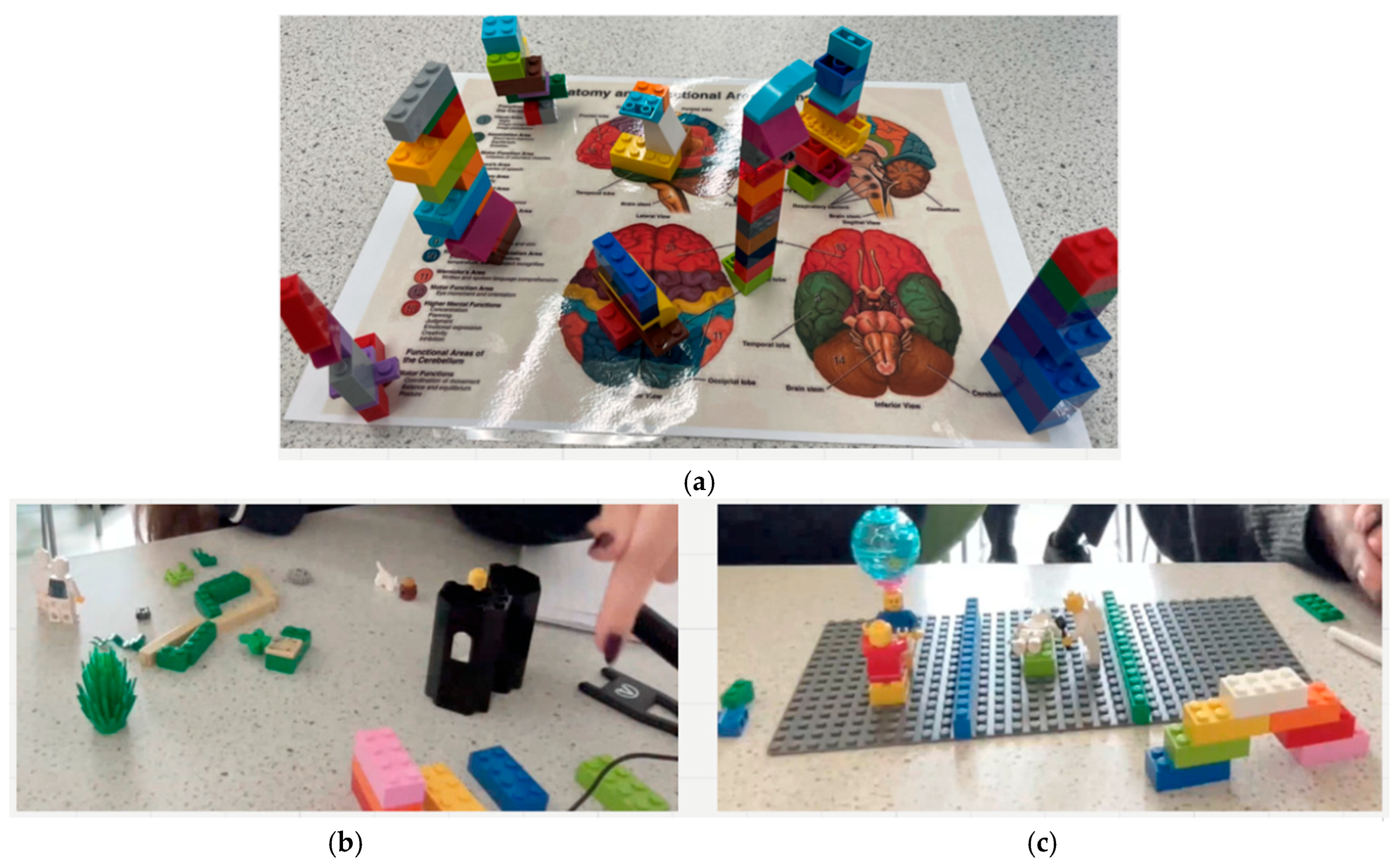
Quote 5, Figure 2c “So for the holism today, I combined all the three bricks to represent a whole concept because that’s what holism is. And for reductionism, I separated the bricks, but I took a step further and I used the colours to represent something. So, the green one, I said the biological reductionism coz green can represent genes … and for the yellow bit I said maybe sunset, represents the environment and something that could be environmental reductionism. For this one I just took the whole human body … that can be the blood, the brain …”.
(Psychology Year 13)
This theme was very much illustrative of how students subjectively perceived and engaged with lesson tasks that enabled them to relate to real-world situations because of physically solving problems to make something work, even though they were using LEGO robotics. The emphasis of this theme rests on the hands-on aspect, which the students report enjoying as they are being actively involved in their learning journey while trying out things to see how a vehicle for example, would operate in real life. The theme also highlights how students view that using a boundary object more simply provides them with the opportunity to develop their understanding of how real-world psychological or biological concepts are dealt with by linking colours to mean different sides of a debate. The physical colours and keywords begin to mean something more than a word in a subject. Although this theme did have some overlap with metacognition in the earlier stages of analysis, the meaning interpreted reflects the learning value in terms of real-world tasks.

3.1.2. Iterative Design and Metacognition

The insights gathered from the interpretation of students’ reporting of their experience in using boundary objects, demonstrated a design process in thinking through iterative approaches, experimenting with ideas and creating solutions through non-linear thinking. 3D (3-dimensional) forms. This, according to students helped validate thinking across subjects, physically visualising cognitive processes as indicated in the following representative quotes.
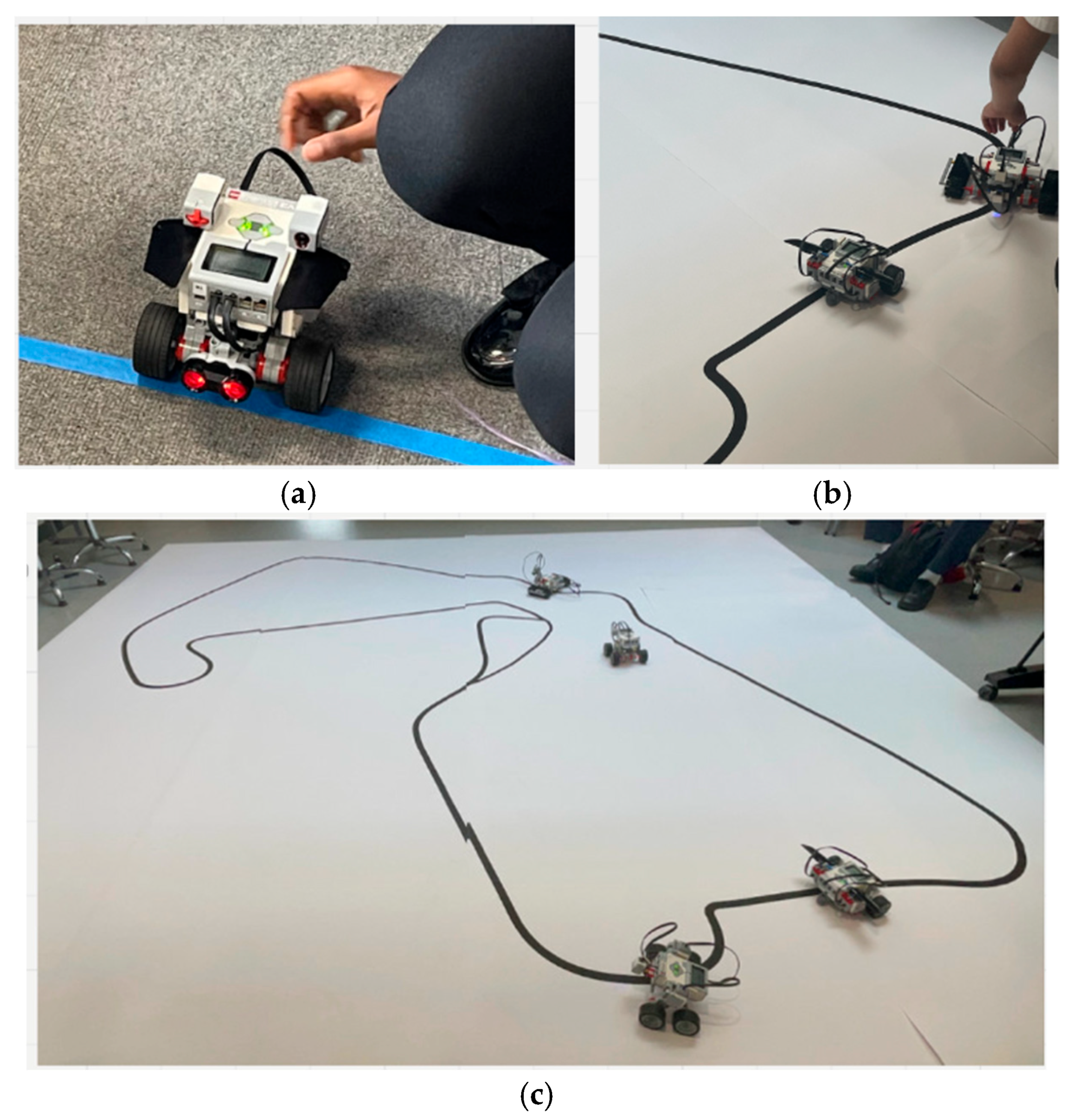
Quote 6, Figure 3a “… a robot which is gonna drive itself from the one line to the other line. We have to measure how long this distance is … And then we had to make a code for it for it in order to go there … And how they have this code behind them for them to drive themselves … Because we have two motors, which means it is gonna … drive and all the motors are gonna spin once the code is already and also, we have to make a strong so I can hold the device on top as well … Some of the pieces are used in the same way but like 90% of it’s different it’s we did ourselves for, you know, not copy from anyone.”.
(Computer Science Year 9)
Quote 7, Figure 3b,c “Allows us to be creative because the car is not already made and we have to be creative to make it and for to work as well and they have to be creative with the code because you have blocks and we have to connect them so they can now work … so that needs us to try things out and then start again like we just did … because we didn’t think about one bit that affected everything else … we’re struggling at the moment with a bracket because the brick is not secured into the Lego by default … Then you realise that you can’t secure the brick. So maybe if you have a little bit more time it would have been able to figure out creative ways to secure the brick in place while still having the wires”.
(Digital, year 10)
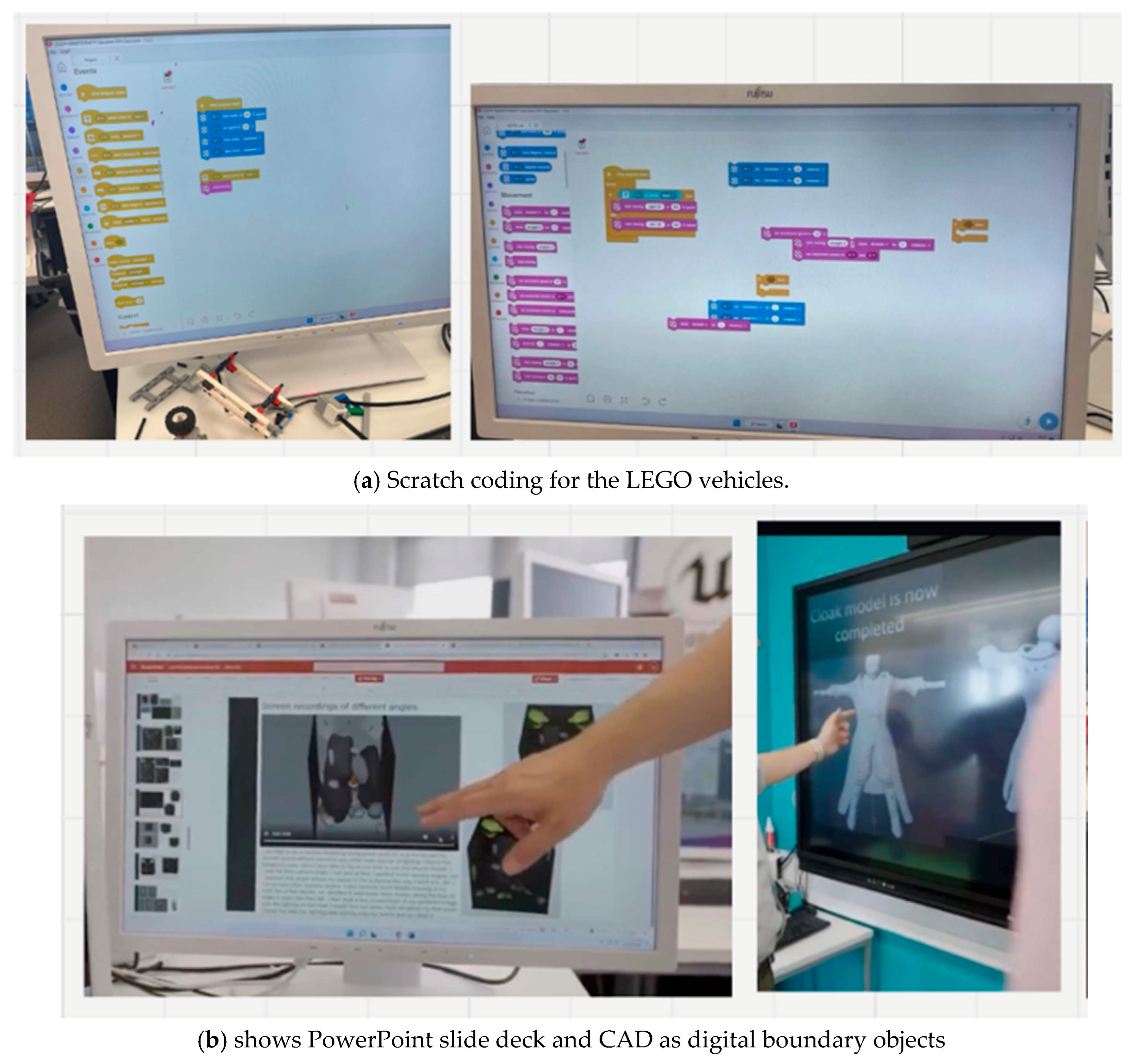
Quote 8, Figure 4a “And how they have this code behind them for them to drive themselves … And I can feel the type … I can actually understand what I’m doing, and creating as well …”.
(Computer Science Year 10)
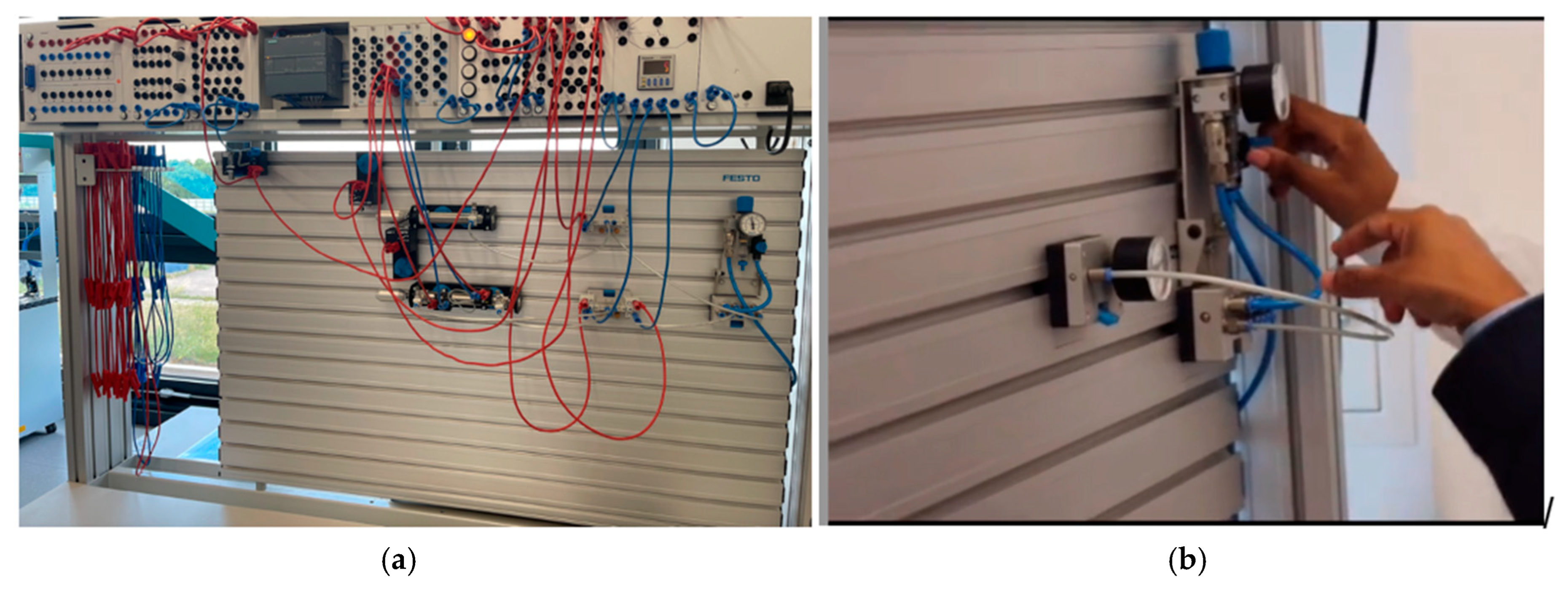
Quote 9, Figure 6a “So the reason why we’d use this method with this board here, above all other types of methods, is that it’s physical. So, for me it allows me to actually work with different components and understand how they work, how they’d feel and then if there’s anything wrong, I can troubleshoot it … that requires creative thinking by physically seeing where it all connects for example …”.
(Engineering Year 12)
Quote 10, Figure 6b “It does allow us to be creative because we can be given several types of scenarios where we have to think about what components we’d have to use, right, how we have to arrange it, and then even with those scenarios, we could either have it where it’s just purely pneumatics or you’d have to include the electrical boxes at the top of the machine or even having to programme my plc okay.”.
(Engineering Year 13)
The theme here reflects iterative design elements to thinking and processing which is where students, whether designing a car or other vehicle, or using a pneumatic board, are reporting that they are thinking in a non-linear manner where they try something, see if it works and then go back and forth until they are satisfied with their design and it works or meets the learning tasks. Although creative thinking is needed here, the interpretations gathered seem to reflect more the process of design. This thinking also illustrates metacognition more heavily as the students encounter challenges throughout their lessons using boundary objects and must think why they are facing these challenges, how to make the components work to achieve a goal, and this requires the decision-making process simultaneously with their physical manipulation. As metacognition is ‘thinking about one’s thinking’, this is a key aspect of this theme.

3.1.3. Individual Liberty and Perspective-Taking

Students valued choice in demonstrating understanding, with increased motivation through flexible approaches. Boundary objects according to the perceived experiences reported by students allowed space for collaborative learning and perspective-taking, creating greater ownership of learning as indicated in the following representative quotes.
Quote 11, Figure 4b “Using interactive digital things like CAD or unreal engine with Padlet to showcase our work is really cool because you are designing and interacting physically with the board and you can see your ideas come to life …”.
(Digital Year 9)
Quote 12, Figure 5a “In my opinion … the LEGO and bricks gives you creative liberty … freedom to think and to use it in ways that you wouldn’t usually because there isn’t a piece of LEGO for everything. So, you’re kind of … you have to use what you have already existing to create new ideas and show your thinking because it’s not just putting things into word because sometimes you can’t. And it’s something the only way you can express something is by showing it physically. And I think Lego is a really good way to do that …”.
(Psychology Year 13)
Quote 13, Figure 5b “… think in all topics we should have more freedom to do what we want and to be creative, not as in just do whatever you want. Learn what you want to but we can have a choice to pick and choose what would make us feel like we’re doing more or be more creative in our own way. We’re not just sitting down writing notes all day, just being more creative when you’re working …”.
(History, Year 10)
This theme highlighted the students’ reporting that having the freedom through experience to explore their thinking by creating a model to show this in a way is meaningful to them. This theme also shows the importance of students being able to think and perceive ‘freely’ without being right or wrong in the process of creating their models which let them explain how they view the argument made in history for example, or how they view the behaviour of infants in attachment theory from their perspective which then enables discussion with other peers to gauge their views and for the students, this was an important element in learning. They were able to generate a plausible explanation of their view as well to meet the set learning objectives of the class. The theme also highlighted that using a digital boundary object, such as CAD or other design platforms, helped them to test out their drawings in different ways, which provides them with the visual freedom to showcase their ideas and understanding of the lesson task.

3.1.4. Memorable Experiences and Emotional Engagement

The process of using Boundary objects in learning was reported and interpreted as having created long-lasting memories through colourful, metaphoric learning, that offered a space to concretise understanding before abstract thinking according to learner perceptions as indicated in the following representative quotes.
Quote 14, Figure 2a “Here, you can see colour coding parts of the brain to their function linked to a coded map thing and then we have to explain a scenario or behaviour by doing that and you never forget it … it’s fun and so much is learned in those few minutes … this is a famous activity because it works … yeah it seems hard at first but it’s so simple … you have to imagine but you have this in front of you which helps you to make the connection … maybe it’s the colours …”.
(Psychology, Year 12)
Quote 15, Figure 4a “It’s very helpful and useful as well for me to understand what’s behind programming and coding as well so I can visualise it in my head and understand them more for my real GC and know what to do that, so you think it’s going to help you in your exams. Because I can see how, how a couple of sentences (of code) can make the whole car move …”.
(Computer science Year 10)
Quote 16,Figure 5c “… so it combines something that I enjoy with something which is very at first, very kind of complicated to understand. So, when I put something fun with something hard it makes understanding like a little bit easier for me, cause then I can connect stuff. For example, I could remember that I made this model, and I can link it with the model with the Bandura model …”.
(Psychology Year 12)
Computer science students reported being active in their learning and seeing how the coding to their car design affects the movement which helps them to remember as they are visualising while implementing the code for their car designs. For Psychology, being typically a less ‘active’ or ‘hands-on’ subject, the use of a boundary object here offered students a way to remember what they were learning about. The experience and use of colour and interacting with the resources while thinking about their learning provided them with a positive emotion as they reported enjoying the learning process, as the physical pieces helped them to make direct connections with the brain functions. The students reported how the use of a boundary object, in this case LEGO bricks, made it more accessible to aid their learning, which is important for their exam-based subject. This insightful reporting and interpretation are based on their experience and perception in their learning context.

3.1.5. Creative Connections and Exploration

Students’ reports and the interpretation here suggest that their experience in using tangible boundary objects helped them to make connections with the curriculum in divergent ways, as they could think about different ways through exploration to connect their ideas through a creative thinking process. They reported that this process helped them to foster a clearer understanding of the learning objective.
Quote 17, Figure 1a “Allows us to be creative because the car is not already made and we have to be creative to make it and for to work as well and they have to be creative with the code because you have blocks and we have to connect them so they can now work … so that needs us to try things out and then start again like we just did … because we didn’t think about one bit that affected everything else …”.
(Computer science, Year 10)
Quote 18, Figure 2b “Using 6 bricks, we did nature, nature. So, the way nature and nurture connects to each other. So … the environment works your biology and vice versa. Using this object is useful as you’re highlighting … you get to associate colours with certain things that you’re learning … Like … nature and you’ve got blue green … So, it’s helping you with association in the brain … but the fact that you thought that Oh pink maybe childhood and like red trauma for example, those colours …”.
(Biology, Year 13)
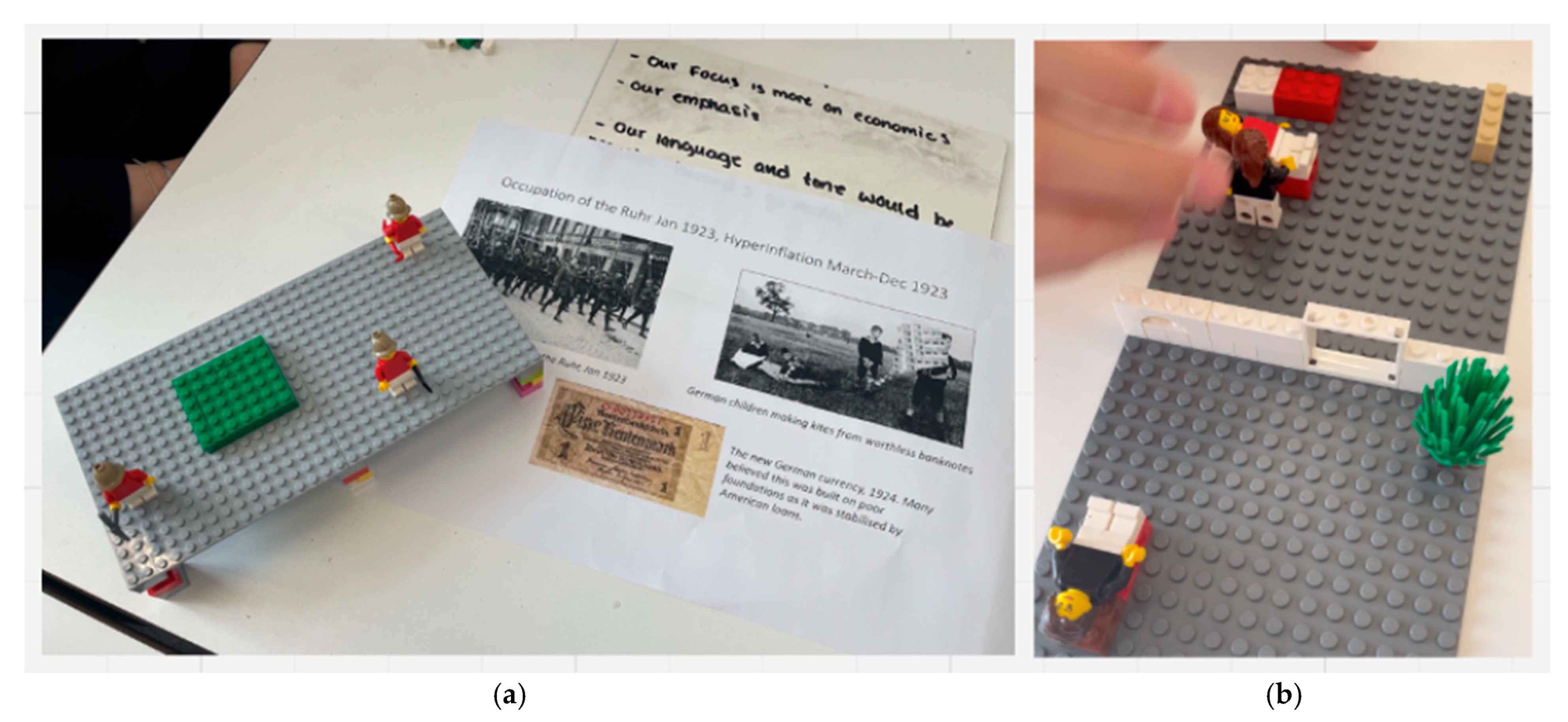
Quote 19, Figure 7a “So … interpretation is based off the crisis that the Weimar Republic faced in 1923 … showed foundations … when they built back up after the occupation of the Ruhr and the hyperinflation is that it is sort of crumbling, is not stable with using gaps in the in the pillars that are underneath the flooring and then these are basically like just soldiers that, um, walk above these gaps and then this thing is supposed to represent like the money that they used … And yes, I do think it is creative as it doesn’t really contain much, but it contains just enough that you can really tell what is going on with all the gaps and stuff…”.
(History, Year 10)
Quote 20, Figure 7b “… I think to be creative because outside of your words you have to actually make an object that represents what you’re thinking of to… like making mind maps like the way you connect certain topics each other. So, using something that could be tactile or something that’s object based that is not a typically writing. I think it makes it memorable. You actually remember or you can look at the model and be like ohh I made this because of this, for example here with medicine in history comparing before and now.”.
(History, Year 9)
This theme had a lot of quotes that led to a strong perception from students, in terms of creative thinking and exploring, which has a lot of similarity to design thinking, where an individual, in this case a student, thinks divergently during the exploration process by using various pieces to represent concepts that may be abstract. This suggests that students are using boundary objects in their thinking of multiple uses of the pieces before converging into, or deciding on what works, or which piece or code best represents the outcome they intend on achieving. This subjective experience is important to understand as they perceive the use of boundary objects being an important factor in helping them make connections with the learning and they feel that they do not need to use many pieces to show their thinking and understanding. The opportunity to represent their thinking in different ways is central to their view of boundary objects offering a space for creative thinking. According to the students, because they have the flexibility to be creative, this enhances their understanding of the learning task at hand.
Figure 1. (ad) Images relating to Real World Simulation and Active Learning theme; Creative Connections and Exploration.
Education 16 00013 g001
Figure 2. (ac) Images relating to themes: Real World Simulation and Active Learning; Memorable Experiences and Emotional Engagement; Creative Connections and Exploration.
Education 16 00013 g002
Figure 3. (ac) Images relating to themes: Iterative Design and Metacognition.
Education 16 00013 g003
Figure 4. (a,b) Images relating to themes: Iterative Design and Metacognition, Memorable Experiences and Emotional Engagement; Individual Liberty and Perspective-taking with Scratch coding on screen below.
Education 16 00013 g004
Figure 5. (ac) Images relating to themes: Individual Liberty and Perspective-taking; Memorable Experiences and Emotional Engagement.
Education 16 00013 g005
Figure 6. (a,b) Images relating to theme Iterative Design and Metacognition.
Education 16 00013 g006
Figure 7. (a,b) Images relating to the theme Creative Connections and Exploration.
Education 16 00013 g007

4. Results—Teacher Case

4.1. Teacher Interview Analyses

The teachers are for the same lessons where students were interviewed, aside from Maths, Physics and English, who did not have a lesson at the time of the interview, so they answered questions for lessons delivered before (a maximum of 2 days prior to the interview).
The results for the teacher case group are presented. Quirkos was again used as it was for the student case group for coding and the generation of themes (Figure A7).
Themes emerged inductively and were generated using Quirkos, with participants’ narratives coded using open and iterative methods, as was the case for the student case group where codes were then merged into similar meaning themes through the writing of memos. This allowed for the interpretation of the meanings to indicate induction. The theoretical framework was indicative of the nature of learning that is relevant for qualitative enquiry where there is construction of learning taking place that allows for interpretive flexibility. This was confirmed only after the initial coding phase to inform interpretation, not to predetermine findings. Reflexive discussions and analytic memoing (as outlined by the student group) made clear that themes faithfully reflected participants’ data.
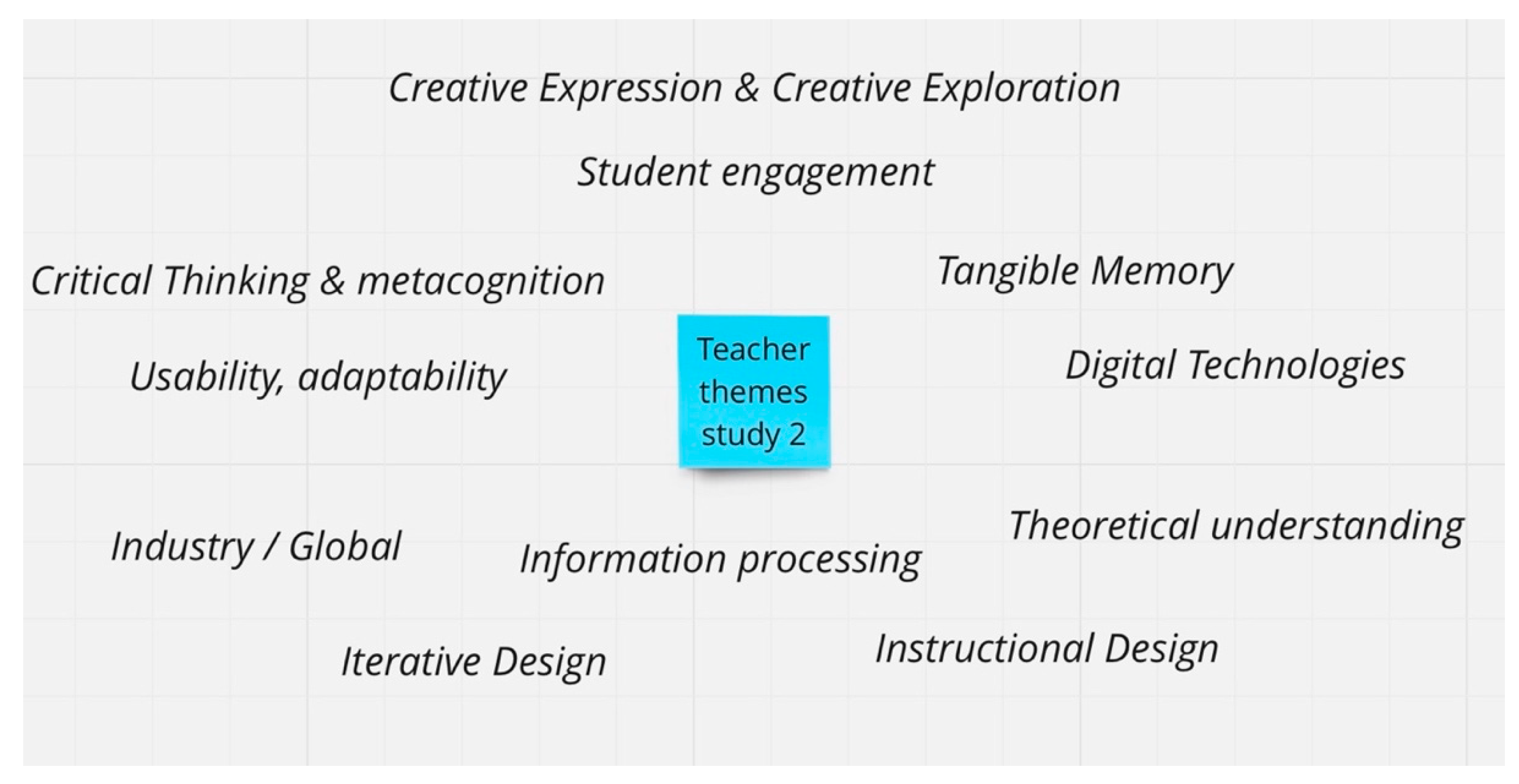
Figure A7, Figure A8 and Figure A9 indicate the teacher themes being generated before the final themes are presented in Section 4.1.1, Section 4.1.2, Section 4.1.3, Section 4.1.4 and Section 4.1.5.
Study 2 teachers’ views aligned with student interpretations while providing deeper rationale for boundary object use. Teachers reported verified benefits including enhanced understanding, application, and memory as students verbalized their models and creations, demonstrating how these met or exceeded learning objectives.
The final five themes, as follow, emerged from the teacher interviews based on questions combined as teachers overlapped answers.
  • User Experience—Usability, adaptability
  • Curriculum Connection through instructional design
  • Design process and creative thinking
  • Learning retention through tangibility
  • Critical thinking and metacognition.
A summary of the themes generated from their relevant quotes are summarised in Table 3. There are no images here and therefore the quotes and themes can be ordered consecutively. A detailed presentation of the data is shown in Section 4.1.1, Section 4.1.2, Section 4.1.3, Section 4.1.4 and Section 4.1.5.

4.1.1. User Experience—Usability, Adaptability

Boundary objects are adaptable tools bringing curriculum to life, expanding thinking while meeting diverse learning needs, as indicated in the following representative quotes.
Quote 1:  Science Teacher: “I find that LEGO is such a dynamic toy and tool … it’s just easy to use as it can mean different things to different people … it really helps students to bring in scientific thinking, alongside creative thinking … It’s easy, flexible and can be used in different ways.”
Quote 2:  Geography Teacher: “… students … looking at specific models where you have to think about what did they actually connect together … it really helps them to think about keywords because some of the pieces … are very much mimicking the real world. So, they’ll have spoons and magnifying glasses … things you might not even think about …”
Quote 3:   Computer Science Teacher: “They complement teaching really well … it’s quite flexible … lends itself well to abstract concepts, but also sequential concepts … following … steps and patterns and then algorithm works quite well … learners to have a kind of out-of-sequence approach … stretch our learners … also enable them to … change their designs …”
Quote 4:  Digital Teacher “Physical blocks, digital building blocks … link together things like sensors and motors … you get a different output ‘n different input. You can also adapt them because you can programme things … understand what each of these blocks do … then put them together in new ways … coming up with a really mad, crazy way of linking these things together.”
This theme showed that from the perspective of the teacher, their students’ learning experience using boundary objects was improved. This theme explores how adaptable and flexible the boundary objects, such as LEGO and other physical or digital building blocks, positively shaped the user experience in an educational context. According to the interpretations gathered from Teacher perceptions, they view boundary objects as flexible and interpretable in many ways to suit the needs of the user or the student. They see that when students explore and engage with abstract and/or sequential concepts (like scientific thinking and algorithms), boundary objects seem to provide opportunities for students to interact through flexible medium. This duality of being adaptable and flexible seems to allow learners to relate abstract concepts to real-world examples too, think and process creatively, and investigate understanding by constructing and changing their own design to show what they are thinking and how they understand the learning aim.

4.1.2. Curriculum Connection Through Instructional Design

Teachers perceive that boundary objects help to connect theory to practice, transforming metacognitive processes into 3D forms, that helps students to recall through tactile experiences, as indicated in the following representative quotes.
Quote 5: Computer Science Teacher: “Connect the experience … to complete a task … concepts they’re learning … more varied the links to the concepts, better they are to visualize … learners are now able to see a link between … the programming environment and then actually getting the object to do something versus seeing it on a screen.”
Quote 6: History: “So (boundary objects) … allows our learners to not be limited. They’re able to use autonomy and imagination to … build on what they understand … talk us through the thought process … understand the deep thinking behind choosing the objects or their representations and symbolism …”
Quote 7: Maths Teacher: “LEGO has met the Year 12 learning objective of understanding how Pascal’s triangle and the binomial expansion are used to expand brackets … learners discover for themselves other methods … it definitely does support an enhanced learning … it’s physical hands-on on they’re able to verbally tell … what they’re doing and why … that pivotal moment … And then for writing, that’s kind of stepping stone for the writing structure”
Quote 8: History Teacher: “Now obviously where they are writing about language and tone, the Lego can still show their perception … they were answering how far they thought the government were successful It was a fantastic activity to meet … the teaching needs … allowed learners to … those two layers to have the skills where sometimes in history we … find it very limiting …”
Quote 9: Physics Teacher: “My learning aims with LEGO are to model equations, physical processes, and science practical activities, and explain how the created models illustrate the set concept. The LEGO is very helpful in these terms.”
In this theme, the key insights that came through from teacher perceptions viewed boundary objects being effective instructional design tools because they appear to bridge the gap between abstract curriculum theories and physical/practical learning experiences. This is considered very helpful in learning from a teacher’s point of view. Moreover, the main idea is that these objects provide a way for students to translate their internal idea-construction into a three-dimensional physical model with the learning and understanding being visible as they are able to explain their thoughts. This is an intentional process whereby instructors rely on boundary objects to work towards achieving certain curriculum goals across a range of subjects, including when modelling physical laws (e.g., physics equations) or modelling a maths concept (e.g., relating a representation of adding fractions to physical models). These tools are perceived to transform abstract concepts (e.g., matching code with a physical outcome; the difference between an educated decision and a complex historical argument) into more visible and concrete explanations particularly when these ideas would tend to be examined through language representations alone (i.e., writing). The final point that emerged through the subjective experience of teachers is they view that boundary objects enable student development from passive learners to active discoverers. Developing a physical model as part of a learning and thinking process, by saying how and why the model was being constructed provides insights into a deeper understanding that is an important building block to more formal assessments, such as writing.

4.1.3. Design Process and Creative Thinking

Teachers reported that they perceived boundary objects to support and promote iterative learning through prototyping cycles where students demonstrate thinking while problem-solving, which is very important when explaining to teachers why something works or does not, as indicated in the following representative quotes.
Quote 10: Computer Science Teacher: “… They relate back to prior knowledge … they need to start working on a prototyping … once they get over the initial … engaging with the … playing with the object … development happens later on … they see past the aesthetics … they get the full the conceptual application …”
Quote 11: Digital Teacher: “In the VR lab … screens deliver concepts non-linearly … creates fluid, realistic, exploratory presentations … screen becomes a portal between thought process and explanation … Students learn inputs/outputs through play, using tools like Lego you can take just a handful of blocks and make an entire world … creating short movies in one lesson despite animation not being specified in curriculum”
Quote 12: Science Teacher “ … it helps them to think at a much deeper level … they will assign their own interpretation to the different pieces … they may not have all the pieces they want, so they have to improvise … think in a very divergent open-ended manner. And what could I use this piece to represent …”
Quote 13: English Teacher “… additional tool … highly engaging … students absolutely love the opportunity to create something completely original and unique and then to share … they’re talking about what everything’s representing, why they’re using something … enhances the imagination … physically engaging … motivates them to expand on the knowledge and creativity … when students are engaged in a task that is hands on …”
Quote 14: Maths Teacher: “The objects (LEGO) … allows them to be creative and deduce short cuts to finding the number of combinations … creative thinking might just be the only thing we can really develop in our learners given that we live a world of AI … with no real learner connection or thinking.”
Through the subjective interpretations of what teachers reported from their perception, they view a design process emerging in the learning process as students move from the initial exploration and experimentation to careful prototyping, finally arriving at conceptual depth. This reflects a professional design cycle with ideas being nurtured and developed in stages. These non-linear tools helped to speed up the process, allowing thoughts to be rapidly brought into the physical world and explained. At the same time, creative thinking was viewed as a necessity to innovate and adapt. They inferred that resource constraints supported the activation of improvisation and divergent, open-ended thinking in which students could give new meanings to the same parts. This allows for imagination to take place, to make and create new versions of an idea as well as discovering innovative shortcuts in problem-solving. In effect, these objects were viewed as providing an iterative design process and required the intuitive and improvisational thinking from students needed to create novel solutions to the set teacher task.

4.1.4. Learning Retention Through Tangibility

Quote 15: English Teacher: “incredibly effective … LEGO for … retrieval exercises … help them remember … deepening their understanding … the characters, they’re motivation that connections, the motives and the symbols”.
Quote 16: Digital Teacher: “… a multi touch interactive touch screen … screen acts as a portal between their thought process and being able to explain their message … show me one concept and … show me another concept … lesson being memorable. The concept becomes more than just a phrase … It made it a memorable experience … They were using a hand-held piece. Just cardboard … they remember it …”
Quote 17: History Teacher: “… create arguments … recall memory …think about really difficult concepts … differences between capitalism, fascism, communism … difficult ideologies to teach … best ways to teach them about these different societies is to give them Lego and allow them to represent these ideologies … learners will remember the experience … the more I can give them an experience in the lesson, then the more they will retain … using your hands, it enhances their learning and it will create a positive memory … help with their retainment”.
The core of the theme was interpreted as a learning process that helped move abstract concepts to more concrete and tangible ones so that they may increase a student’s capacity to memorise and learn them. Teachers observe that if students are allowed to use their hands to construct or work with a model of an idea, whether an intricate political belief or imagination of a character, then the process of learning becomes interactive, generating a desire to learn through experience. This process of literally constructing their minds is an effective memory anchor. The hands-on activity aids enhanced comprehension since students must actively interpret the information in such a way, that they can construct their own physical model as a representation of the learning. The lesson is no longer a momentary event but helps in becoming an enduring memory attached to a concrete experience, which makes for much greater long-term retention, that is also key for assessments.

4.1.5. Critical Thinking and Metacognition

Students demonstrate metacognition by articulating thoughts about how objects illustrate their knowledge, as indicated in the following representative quotes.
Quote 18: History Teacher: “… highly effective … creating something themselves, they’re actually questioning and considering and challenging their own thinking … made much deeper connections … retrieval is easier … use them in later lessons and as soon as they see the image they remember the thinking behind it … LEGO works in developing, thinking and using it as a tool to recall and retrieve … their understanding of the key text … go beyond, which some of them couldn’t do through their writing. So there were visual representations to help.”
Quote 19: Geography Teacher: “The (OFSTED) inspector was absolutely blown away … because we used so many different methods to help the learners with not just content but also with those analytical skills … small Lego pieces with OS maps … use Lego to represent distribution … reflects their real exam … Learners really struggle with OS maps … using Lego on top of a physical OS map also adds that layer and really helps them … different layers of the rainforest … then plate boundaries … Their marks went up in assessment as they could relate to the concepts … urban sustainability to plan for the future … focused on energy … food … water … 2nd order concept … represent whether this was a possibility or not …”
Quote 20: Digital Teacher: “… LEGO Mindstorms to develop our learners programming skills … theory learned in class … transferred to a physical object … programme demonstrate their programming skills and see an outcome in a physical … rather than seeing it inside a computer … there’s always an uptick in the results … they achieve quicker and with much more detail when they’ve been playing.”
A common thread uniting the teachers’ quotes is the use of boundary objects, such as LEGO as a powerful enabler of critical thinking and metacognition. Teachers report that this hands-on approach provides a medium for students to engage in active problem-solving, making their internal thought processes tangible and visible for reflection, which is key in a learning environment. This process gives students the space to think about their own thinking and their decision-making, while making links to the lesson objectives set. The multi-sensory act of building helps concretise abstract concepts, leading to deeper understanding and improved memory because of the effort required to generate an understanding such that they can explain their thinking clearly too. By engaging in the creation of physical models, taking steps, making decisions and reflecting, students are not simply showing what they know but are actively engaging in the metacognitive process of understanding how they know it, fostering transferable critical thinking skills essential for academic success.

5. Discussion

5.1. Using Boundary Objects to Foster a Creative Curriculum

Overall, the present study shows perceived creative engagement through the use of boundary objects in a teenage classroom, across various subjects. There was some expectation that perhaps learners and their teachers may report that there was no creative engagement or thinking but this was surprisingly, not reported. But alongside this, other significant insights were revealed indicating that using boundary objects in learning also provides other very important benefits including enabling a design thinking style process.
Boundary objects investigated through this multiple case study that comprised three case groups generated key themes through insights that reflect the very meaning of boundary objects as being integrative tools to learn. This creates a medium that enables students to connect their thinking and understanding by creating a visual of their thinking and understanding.
In the case of the themes, LEGO, pneumatic boards and digital platforms seem to really help students grasp their learning aims as they explain how these objects helped them to visualise their thoughts and then explain this to their teachers. Collectively, the themes elicited insights centred around the ability to use these objects in ways that were meaningful, flexible and that facilitated creative thinking due to the freedom to use them as needed. As per Glăveanu’s (2018) 5 A’s framework discussed earlier it is evident through the themes that the “Action”, “Artefact” and “Affordances”, play an integral part in learning with boundary objects supporting his theory in practice as students reported that their subjective experience in using objects offered several thinking opportunities to reflect and move forward.
Boundary objects in Finnish education can include real life phenomena. For example, boundary objects are deliberately chosen as too complex to be viewed from a single academic perspective, forcing students and teachers to cross the boundaries of traditional subjects. Examples of these phenomena used as boundary objects in Finnish education include conceptual and thematic objects where large holistic topics like “The European Union,” “Climate Change,” or “Media and Technology,” are also boundary semantic objects. All these examples require students to pull from history, geography, science, civics, and the arts to make sense of complex realities (Lonka, 2018).
Project-Based objects illustrate learning through project-based education with students creating a physical product such as a 3D model, a digital presentation, or a piece of art that displays their integrated knowledge. These products also serve as boundary objects by providing a common object of reference to represent the ongoing process of interdisciplinary learning, (Silander, 2015). This has thus led to exceptional performance on the PISA 2022 Creative Thinking Assessment (OECD, 2023).
Singapore’s Schools project shows conceptual and pedagogical shifts through STEM subjects connected by boundary objects, resulting in a 34% improvement in divergent thinking over conventional methods (Singapore Ministry of Education, 2023), which is shown through the themes in the present study particularly for Design process and Creative thinking, and Iterative Design themes which reveal the opportunity to think divergently and explore ways to represent thinking. In Australia, national frameworks emphasise creative thinking as a general capability across subject areas, showing that schools that use boundary objects as cross-curricular approaches develop a greater strength of creative pedagogies (Harris & de Bruin, 2018). Estonia’s curricular reform, called “connection creators”, links digital competencies with traditional subjects to prepare students with transferable skills, leading to more novel idea generation in math and science learning experiences (Tammets & Ley, 2020). Although the present study is not intending to establish cause and effect or make generalizable claims about student behaviour and learning using boundary, the current study did view that digital platforms acted as boundary objects as they allowed students to interact with their learning hands-on through the design and creation of visual concepts. Consequently, we suggest that boundary objects be considered for every level of systemic educational design, as the findings indicate a consistent effect with the same tools across sections and subjects within a curriculum.

5.1.1. Student Learning with Boundary Objects

Across all case studies, students report that physical/tangible objects (boundary objects) enhance creative thinking, helping them illustrate knowledge while meeting or exceeding lesson objectives. The core meaning and value of boundary objects help students visualise thoughts, approach tasks individually, express ideas creatively, while enjoying meaningful learning experiences. Reflexive Thematic Analysis reveals multiple benefits through active participation.
It is apparent from the themes derived from the data across the student and teacher interviews that the enjoyment and exploration freedom motivated students, giving them flexibility while meeting learning aims. Whether in science, maths, humanities, design, engineering or digital subjects, boundary objects helped students understand processes. The very option to try things out, move things about, test and redevelop Even in less hands-on subjects, boundary objects facilitated creative thinking and scaffolded learning. Students reported objects enabled original thinking beyond lesson aims by contextualising knowledge and providing a “virtual reality” of thoughts. Examples include robotics in computer science, concept models in psychology/science, character development in English, and representations of war causes or medical changes in History.
Boundary objects enable “versions of thinking” benefiting both younger and older students across STEM and non-STEM subjects. This approach aligns with Bloom’s taxonomy, where creation represents the highest thinking level. The iterative design process builds secure knowledge before accelerating thinking through reflection. For assessment purposes, students can metacognitively check their reasoning through 3D engagement with concepts. The boundary object approach enhances memory, critical for high-stakes exams. Whether breaking down challenging concepts, cementing knowledge through modelling, or exploring solutions, meaningful experiences form lasting episodic and semantic long-term memories while engaging multiple senses to assist cognitive functions.
It must be addressed that while neuroscience provides valuable insights into the brain-body connection which is becoming increasingly popular due to advanced imaging techniques and testing paradigms in the quantitative sphere, it cannot directly prescribe or instruct on classroom practice (Bruer, 1997).
Neuroscientific research on embodiment highlights how cognition is grounded in sensory–motor systems that support thinking, perception, action, and conceptual understanding (Barsalou, 2008; Gallese & Lakoff, 2005; Glenberg, 2010). These studies suggest that tactile and movement-oriented engagement (sensory-motor) in tasks show activity in many neural pathways exercising the role of neuroplasticity—the formation of new networks and strengthening others (Draganski et al., 2004; Doidge, 2007) through repetition, thus enabling metacognitive thinking through meaningful (episodic) experiences that can aid student learning. This is key to understanding learning and memory and therefore can be useful to inform pedagogic practice.
It must be made clear, however, that using physical objects and using hands, for example, in learning may inform pedagogical design through experiential and active learning approaches that promote metacognition and conceptual understanding, rather than ‘prove it’—an outcome not intended under qualitative enquiry. These designs create conditions in which abstract concepts are anchored in sensory experience, collaboration, and reflection, fostering deeper conceptual change through ongoing neuroplastic adaptation (Wilson, 2002).
Learning relevant activities such as model-building with LEGO, experimentation, or using interactive boards for example, enable the externalisation of thought, monitoring learner choices and reflect on their reasoning that are key in metacognitive development. These changes ensure that our pedagogical recommendations are theoretically grounded yet expressed with appropriate caution.
Lucas and Spencer (2017) contend that the intense focus on traditional academic performance and accountability systems is the largest hurdle to encouraging creativity within schools. They suggest replacing the traditional process of amassing subject knowledge with an active process of five creative “habits of mind” constituting being inquisitive, imaginative, persistent, collaborative, and disciplined. They argue that those habits can be cultivated using specific pedagogies, or ‘signature pedagogies.’ The use of boundary objects in the present study has thus illustrated these concepts or “habits” in various way as the users (students) appeared to show curiosity and imagination when exploring how to use boundary objects in their lesson tasks. Lucas and Spencer (2017) request a type of ‘dispositional teaching’ to cultivate creative habits of mind that are part of the school experience to help prepare learners for a complex future, which has also been evidenced in the present study where students and teachers have related their use of boundary objects to developing an understanding of the real world whether that is through the iterative design of a LEGO robot, or using a pneumatics board or reflecting deeply about History.
LEGO was used the most frequently for many reasons but primarily its usability, adaptability, and the playful experience it provides in the learning context. This could be because of its intuitive design and position as a cognitive tool, and its utility as a constructivist learning device. Concerning affordance and physical design, LEGO bricks precisely match Don Norman’s view of perceived action possibilities. The stud-and-tube interlocking system that LEGO employs provides both clear physical and visual affordances to connect with a user’s perceived intention, thus aligning precisely with Don Norman’s idea of perceived action possibilities (Norman, 2013). Cognitively, working with LEGO allows a person to become part of a distributed cognition system. When a person is planning, problem-solving, and iterating a design, the LEGO bricks are not just manipulated objects to them; they become agentic parts of their thought processes (Clark, 2008). This action illustrates how LEGO can function as a cognitive scaffold as the user couples their thoughts and the objects in question alongside its embodied and constructivist learning. Complementing Seymour Papert’s view on constructionism, the meaningful deep learning happens when people are actively constructing meaning or meaningful products (Papert, 1980). LEGO engages learning through the physical act of building (engagement) and engages learning through the thinking and meaningful knowledge and development in peoples’ minds. This can be seen through all the student and teacher comments through all the themes generated.
Within design education and practice, physical artefacts, sketches, and models serve as classic boundary objects; they allow abstract ideas to be visualised as physical objects to be jointly evaluated for iteration and improvements. These artefacts are shared references that facilitate the negotiation of meaning while uncovering design issues (Eris, 2004; Subrahmanian et al., 2003) as evidenced by studies involving prototypes by engineering students. This has also been shown in the present study across all themes. Visual representations, such as whiteboard sketches or digital mock-ups, serve as boundary objects in a similar capacity, where they are supporting collaborative engagement through iterative feedback loops. In interdisciplinary design teams, these boundary objects facilitated “conversations with the material” that permitted real-time adjustments and established mutual understanding (Bechky, 2003).
Additionally, when students engage in an activity that requires them to provide a physical representation of their thinking (a concept map, a diagram or a model), they are forced to think about how to put their thoughts into a physical representation. This process also allows students to discover what they do not understand and to organise their thoughts. Research, using “Thinking Routines,” developed at Harvard’s Project Zero found that several routines facilitated students making visual artefacts using different media. Evidence was built that using visual artefacts facilitated students making their thinking visible to themselves and to others and provide them with metacognition opportunities (Ritchhart et al., 2011). In one study examining students modelling complex systems using LEGO® bricks, students used the process of building and explaining their models to engage in metacognitive reflection of their own understanding and problem-solving approaches (Nisanci & Cengiz, 2021). This was also the case in the present study where within their natural subject lessons, students reported being able to think deeply, or metacognitively about their choices and it was aided by being able to see a physical version of their thoughts.

5.1.2. Perceptions of Teaching and Learning Using Boundary Objects

The convergence between learner and teacher themes was not expected nor anticipated to the extent they emerged but rather a small overlap, instead. This was because both groups engaged with the same learning environment that occurs every day in terms of the teacher setting the learning objective and the learners doing the tasks set. However, the importance of critically reflecting on this overlap is acknowledged and it is important to note that instead of indicating social desirability or researcher bias the converging overlap that occurred was interpreted as evidence of the shared understanding of the underlying and evident processes that took place in the teaching and learning context. This impact illustrates the analytical triangulation across participant groups or case groups and thus reflects the role these ‘boundary’ or epistemic or learning objects played in the learning. To minimise potential bias, interviews were conducted separately using neutral, open-ended questions, and analysis was conducted inductively within each dataset before cross-case comparison. Reflexive discussions among researchers were used to ensure that similarities were grounded in participants’ accounts rather than researcher assumptions.
Table 4 below is the set of final themes from teachers and students with a column that interprets any similarity between themes generated.
Both sets of themes demonstrate conceptual overlap, especially around experiential and reflective learning themes. “Real world simulation and active learning” are closely related to “user experience, usability, and adaptability,” pointing to authentic, adaptable interaction with real contexts. Both “creative connections and exploration” and “curriculum connection through instructional design” are models for how creativity can be thoughtfully integrated into curricular structures. “Memorable experiences and emotional engagement” likewise relate to “design process and creative thinking,” highlighting the emotional and cognitive aspects of creative learning. The linkage between “iterative design and metacognition” coupled with “learning retention through tangibility” exemplifies how hands-on, reflective practice deepens understanding, while “individual liberty and perspective taking” is linked with “critical thinking through metacognition,” which brings forth the influence of autonomy and self-reflection on higher-order thinking.
The concept of a design -oriented thinking and learning process is also shown in the overlap between the two thematic sets illustrating how design functions as a construct connecting creativity, pedagogy, and reflection. Designing with objects becomes the shared process through which authentic experience, structured learning, and emotional engagement converge—making it the central mechanism that unites otherwise discipline-specific approaches to creative education.
The interpretive context of the analysis specifically where the overlap occurs in Figure 8. can be further interpreted to depict the design process that is based on a standard design process which the Stanford d.school (Plattner et al., 2009) began teaching as the now famous five-stage Design Thinking process comprising Empathize, Define, Ideate, Prototype, Test in 2003, to create a solution through user experience for a particular need or problem. The themes and the meaning generated from the study align with this design process given that the Stanford design process clearly visualises the practical approach in the design process such as prototyping and. testing which are experimental in nature although they are based entirely on the needs of a user in the design of a product or service. The user’s experience in the design world can also be aligned with the themes here as it is the student or learner who is the user of a boundary object, by epistemically experimenting with how to visualise their thoughts and this process has been seen to also be iterative, as is the Stanford design process. In the case of this study the outcome is how the learner or student has created a physical or ‘tangible thinking’ of their understanding of the activity task or learning objective which cognitively, goes through a series of thinking processes.
As mentioned in the introduction and the literature conducted, creative thinking in schools has been shown to be inconsistent despite global think-tanks and industry demanding it a key workforce skill. There are many parameters involved in a learning context and schools vary from country to country, with differing values and approaches to education and although the current study revealed some interesting experiences about using objects in learning, the study itself took place over a long period of time due to various reasons. And since this study has been able to demonstrate that learners and their teachers positively report their experiences in perceiving creative thinking through the use of boundary objects, one questions why such an approach is not common practice in most schools, regardless of their pedagogical focus or value. The following is a discussion of the possible challenges that educators could face in attempting to implement boundary objects or epistemic tools in their learning environments.

5.2. Enabling Conditions for Creative Thinking in the Context of This Study

The interpretive findings through themes in this study indicated that the ability of adolescents to engage with boundary objects within a supportive learning environment is reflected in their visible creative thinking, which is shown to be a relational, material, and iterative process. Participants in the study reported that they experienced enabling conditions (rather than barriers) for exploration, meaning-making, and collaborative inquiry. The following subsections synthesise the enabling conditions identified in the dataset.

5.2.1. A Culture of Shared Exploration and Teacher Autonomy

The teachers interviewed expressed that they were able to develop and adjust their own teaching experiences and use boundary objects as a meaningful part of their lessons. Teachers indicated that they valued the flexibility to create student-centred, emergent learning experiences. Teachers also indicated that they felt confident developing their students’ ideas further and making adjustments to student work performed through observing students’ changing thought processes. Research has shown that these conditions are critical to encouraging creative behaviours (Sawyer, 2012). Both learners and teachers expressed an overarching belief or perception that creative thinking is associated with exploration, iteration, and the need to solve problems. This belief aligned closely with Kaufman and Beghetto’s (2009) mini-c creativity framework. In addition to sharing these beliefs, both groups placed great value on uncertainty, experimentation, and the co-construction of knowledge. Creatively thinking in this manner allowed for the continuous development of ideas and beliefs and did not create a framework of ‘is there a right answer?’ or ‘is this going to work?’. This shared culture enabled learners and teachers to take risks in their creative behaviours by framing their creation of ideas as a continual process, as opposed to a single time frame aligned with producing a product (Sawyer, 2018).

5.2.2. The Creative and the Material Affordances for Boundary Objects

Through their role as epistemic and material mediators of thought, Boundary Objects enabled learners to externalise the developing ideas by testing and/or exploring alternative representations. This illustrates Malafouris’s (2013) Material Engagement Theory, which suggests a relationship between thought and the entities with which people engage, and Goldin-Meadow’s (2014) work on cognition through gesture. Glăveanu’s (2014) model of creative affordances provides an opportunity to consider how the ecological context influences the multiple relational approaches that were available in the context of this study. Material affordances: Students were able to manipulate, iterate, explore, and engage with material objects. Social affordances: Students were able to establish shared focus on creating meaning from the objects; engage in coordinated meaning-making through the use of dialogue. Cultural affordances: The school acknowledges and promotes inquiry and exploration as legitimate and acceptable ways to engage in creativity. Affective affordances: The supportive environment through teaching and emotional safety to experiment and tolerate ambiguity afforded learners the ability to take risks and make progress in their learning (Hennessey & Amabile, 2010). Collectively, the various affordances existed within an ecology in which learners were able to engage in creative thought through boundary objects as epistemic tools.

5.2.3. Relational Safety and Developmentally Aligned Practice

Through the study students indicated that they felt safe sharing tentative thoughts, publicly revising those ideas and making mistakes without fear of judgement. Additionally, teachers modelled uncertainty, promoted curiosity and framed failure as part of the learning process. Emotional safety was by Beghetto’s (2023) assertion that to take imaginative risks, learners need emotional and inter-personal safety, as well as with Hennessey and Amabile’s (2010) findings on how social-emotional contexts influence creativity. The benefits of working with boundary objects are also aligned with the developmental needs of adolescents to develop autonomy, explore their identity, interact with peers and have hands-on learning experiences (Kleibeuker et al., 2013; Sawyer, 2012). The objects were a means for adolescents to explore roles as designers and explainers, to negotiate the interpretation of their objects and to share their thought processes with others, which in turn further fostered cognitive and socioemotional development and sustained creative thinking processes.

5.2.4. A Note of Caution: Context

This study was conducted in a highly supportive, innovation-oriented school where teachers had autonomy, learners experienced psychological safety, and material resources were readily available. As such, the findings represent a positive case of how boundary objects can mediate creative thinking when favourable conditions are present. Structural or cultural barriers frequently reported in other more traditional educational contexts did not appear in the participants’ accounts and therefore are not part of this study’s findings. Due to the intention and importance of understand the subjective experience of teachers and their students, the study is not claiming causality by any degree and therefore the results cannot and should not be generalised to all school settings. Instead, the results should be understood as illustrating the processes that can emerge when creative affordances and supportive pedagogical conditions align. Future research should explore how boundary objects function in environments with fewer resources or more restrictive pedagogical constraints.

6. Conclusions

Students’ subjective experiences provide insights into how boundary objects can help learning through five important dimensions: real-world engagement, iterative metacognitive development, empowered student agency, memorable emotional connections, and creative curriculum exploration. Students consistently reported that boundary objects considered as tools can create meaningful, hands-on learning experiences that develop critical thinking skills while fostering genuine ownership of their education. The combination of concrete understanding, collaborative perspective-taking, and creative articulation represents exactly the transformative learning that 21st-century education demands. This student voice, across all age groups under investigation and across the various subjects included in the sample, demonstrates that boundary objects are not merely pedagogical tools but important drivers for deep, meaningful learning that prepares students for creative futures. Teacher experiences demonstrate that boundary objects helped to reduce important pedagogical challenges by making abstract concepts concrete, engaging diverse learners, and promoting creative problem-solving through iterative design processes. Teachers consistently reported their perceptions of improved learning retention through tangible experiences that create lasting memories, while observing enhanced metacognitive development as students articulate their thinking through physical objects, and this is a cornerstone of progress in learning. The combination of curriculum connection, adaptability to diverse needs, creative thinking development as a process, improved retention, and metacognitive growth providing compelling professional insights about boundary objects transforming how students learn, think, and demonstrate understanding. These subjective and interpretively reflected themes of teacher testimonies indicated that boundary objects are useful pedagogical tools in this exploratory context that can and possibly even be considered for educational integration due to their multi-faceted nature and deploy ability. This warrants further investigation in order to enhance the value of boundary objects or epistemic objects in being enablers of creative thinking.
Across diverse cultural and socioeconomic contexts, boundary objects are shown to be beneficial in learning. As Star and Griesemer’s (1989) work showed, the usefulness of boundary objects rests in their flexibility and adaptability, thereby meeting the local needs and their possible constraints within different social contexts. They are therefore robust enough to enable a common identity across these social settings, and because of this, they facilitate collaboration and communication. A research project on international collaborations, for example, illustrates how different cultural meanings of concepts such as “sustainability” can alter the intended use of shared documents and plans as boundary objects. To be effective in this regard, the documents and plans need to be ‘co-constructed’ by the respective groups to generate shared meaning and value of diverse cultural interpretations.
In the context of education, cultural context may impact how students inhabit and engage with boundary objects. For instance, a map considered in a history class may be understood differently by students from dissimilar cultural backgrounds, since they all draw from their unique narratives and histories regarding space and place. Thus, while the map can function as a boundary object for learning, the opportunity depends on the instructor’s ability to facilitate a dialect that positions (or bridges) the understanding of the same physical object. Likewise, in multicultural software development teams, prototypes, and design documents (the classic form of boundary objects) can become misunderstood sources unless cultural assumptions about the design and how users’ experience (Kankainen, 2003) are considered.
Furthermore, the very design and construction of boundary objects may lead to knowledge problems. For example, in community development projects, an architectural model or land use policy document may be designed as a boundary object to enable discussion and negotiation between city planners and the residents. If a group of residents has a low socioeconomic status and has little or no technical language or ‘literacies’ to meaningfully work with these objects, the objects can serve as exclusions instead of bonding tools (Lee, 2007). Therefore, for boundary objects to work effectively across socioeconomic divides, the objects need to be relevant to all the groups’ meanings, and a simple, low-tech boundary object that meets the community members’ meaning is appropriate.
Further research evidence is required to establish a clear direction and definitive stance on using boundary objects as tools for creative thinking in classrooms. It would further benefit the wider education community to have available longitudinal data that can illustrate the continuous impact through a student’s learning journey from early years, primary, secondary or high school to higher education contexts to further compare the impact of using boundary objects across various developmental and cognitive stages, rather than small scale studies. This would obviously require careful planning, effective resource allocation and consideration of funding.

Author Contributions

Conceptualization and Methodology, S.V.; Software S.V.; Validation Imperial College SETREC committee; Formal analysis, S.V.; Investigation, S.V.; Resources, S.V.; Data curation, S.V.; Writing—original draft preparation, S.V.; Writing—review and editing, Professor P.C.; Visualization, S.V.; Supervision, Professor P.C.; Project administration, S.V. and P.C. All authors have read and agreed to the published version of the manuscript.

Funding

This research received no external funding.

Institutional Review Board Statement

The study was conducted in accordance with the Declaration of Helsinki and approved Institutional Review Board of the Science Engineering Technology Research Ethics Committee, Imperial College London (SETREC number 6474782, 13 June 2023).

Informed Consent Statement

Informed consent was obtained from all subjects involved in the study.

Data Availability Statement

Due to GDPR and privacy, transcripts and data are not available for public viewing.

Acknowledgments

Thank you to Geoffrey Fowler, Gloria Gold, all other Staff and Students involved in any way in the research. Thank you to the Imperial College Ethics team, fellow colleagues in the department. Thank you to external employers, organisations, and governors and Ofsted for the recognition of the work.

Conflicts of Interest

The authors declare no conflict of interest.

Appendix A

Figure A1. (ae) From top let to bottom right: Meccano; LEGO Education Robotics; Construction Toy; Mixed Crafts (Pipe cleaners, Card, Pla-doh, LEGO Build to Express).
Education 16 00013 g0a1

Appendix B

Student Case study example of codebook: Screenshot of Quirkos showing how the transcripts of interviews are colour coded manually in the early stage of Reflexive Thematic Analysis.
Figure A2. This is an example of the data coding process under Reflexive Thematic Analysis following Braun and Clarke’s approach for the student case groups.
Education 16 00013 g0a2
Figure A3. This is an example of the data coding process under Reflexive Thematic Analysis following Braun and Clarke’s approach for the teacher case groups.
Education 16 00013 g0a3

Appendix C. Figure A4, Figure A5 and Figure A6: Student Codes and Themes
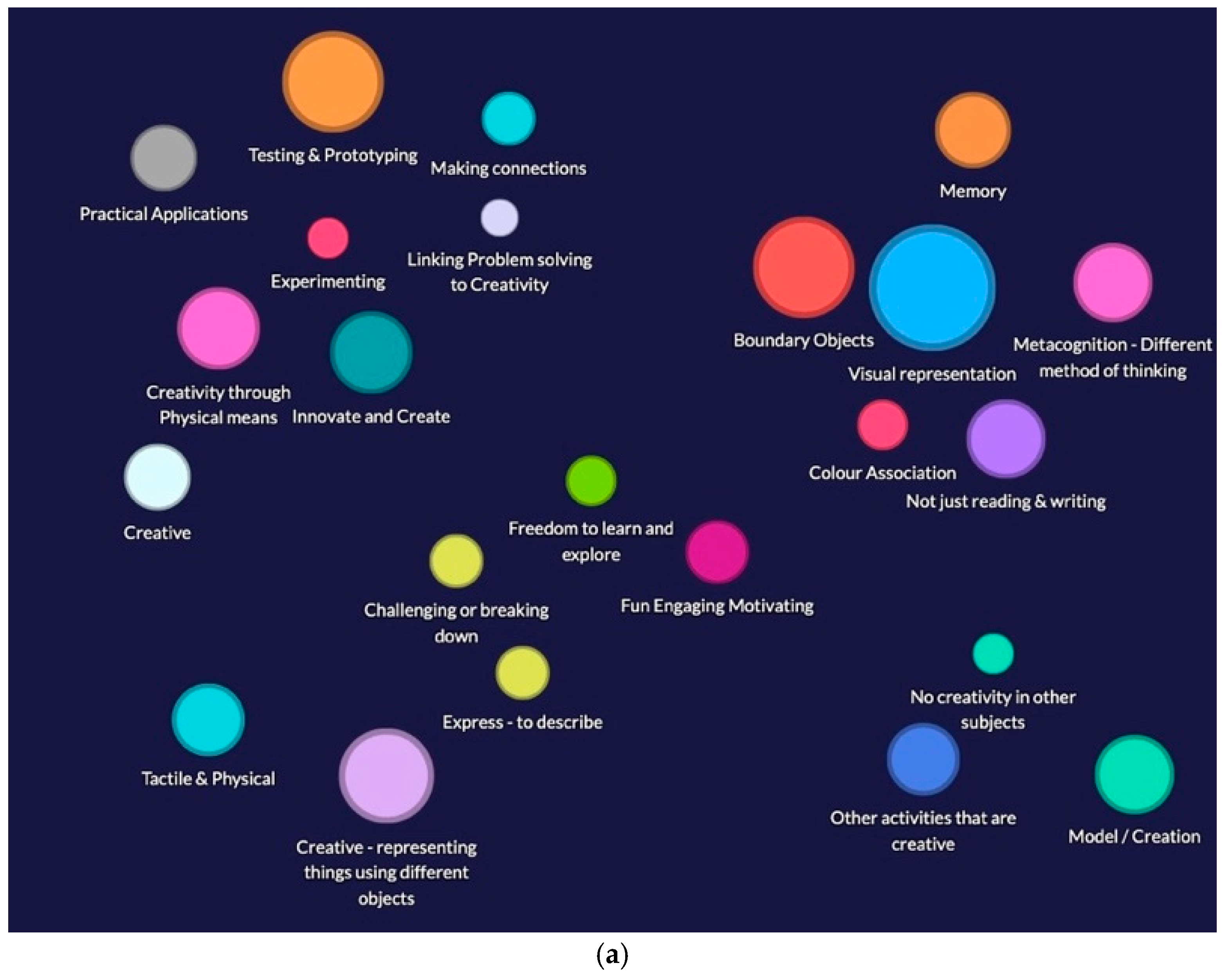
Figure A4. Coding analysis for student interviews. (a) Stage 2 coding using Quirkos for student interviews. (b) Coding Cluster Quirks’ using Quirkos resulting from coding and grouping interview transcripts for student interviews.
Education 16 00013 g0a4aEducation 16 00013 g0a4b
Figure A5. Stage 3 Themes based on student case group interview questions.
Education 16 00013 g0a5
Figure A6. Stage 4. Emergent big themes from the student case group interviews.
Education 16 00013 g0a6
Figure A7, Figure A8 and Figure A9: Teacher codes and themes
Figure A7. Coding for teacher interviews. (a) Stage 2 coding using Quirkos from teacher interviews. (b) Stage 3 coding Cluster Quirks’ using Quirkos resulting from coding and grouping interview transcripts for teacher interviews.
Education 16 00013 g0a7
Figure A8. Stage 4. Study 2 Teachers Themes that emerged from teacher interviews.
Education 16 00013 g0a8
Figure A9. Stage 5 Final themes generated from the teacher interviews.
Education 16 00013 g0a9

References

  1. Abraham, A. (2018). The neuroscience of creativity. Cambridge University Press. [Google Scholar]
  2. Akkerman, S. F., & Bakker, A. (2011). Boundary crossing and boundary objects. Review of Educational Research, 81(2), 132–169. [Google Scholar] [CrossRef]
  3. Barsalou, L. W. (2008). Grounded cognition. Annual Review of Psychology, 59, 617–645. [Google Scholar] [CrossRef] [PubMed]
  4. Beaty, R. E., Benedek, M., Kaufman, S. B., & Silvia, P. J. (2014). Default and executive network coupling supports creative idea production. Scientific Reports, 5, 10964. [Google Scholar] [CrossRef]
  5. Beaty, R. E., Benedek, M., Silvia, P. J., & Schacter, D. L. (2016). Creative cognition and brain network dynamics. Trends in Cognitive Sciences, 20(2), 87–95. [Google Scholar] [CrossRef] [PubMed]
  6. Beaty, R. E., Kenett, Y. N., Christensen, A. P., Rosenberg, M. D., Benedek, M., Chen, Q., Fink, A., Qiu, J., Kwapil, T. R., Kane, M. J., & Silvia, P. J. (2020). Robust prediction of individual creative ability from brain functional connectivity. Proceedings of the National Academy of Sciences, 117(5), 2087–2096. [Google Scholar] [CrossRef]
  7. Bechky, B. A. (2003). Sharing meaning across occupational communities: The transformation of understanding on a production floor. Organization Science, 14(3), 312–330. [Google Scholar] [CrossRef]
  8. Beghetto, R. A. (2023). Creative learning in action: A teacher’s guide to cultivating creativity (2nd ed.). Routledge. [Google Scholar]
  9. Beghetto, R. A., & Kaufman, J. C. (2017). Nurturing creativity in the classroom (2nd ed.). Cambridge University Press. [Google Scholar]
  10. Benedek, M., Beaty, R. E., Jauk, E., Koschutnig, K., Fink, A., & Neubauer, A. C. (2014). To create or to recall? Neural mechanisms underlying the generation of creative new ideas. NeuroImage, 88, 125–133. [Google Scholar] [CrossRef]
  11. Blakemore, S.-J. (2012). Development of the social brain in adolescence. Journal of the Royal Society of Medicine, 105(3), 111–116. [Google Scholar] [CrossRef]
  12. Blakemore, S.-J. (2018). Inventing ourselves: The secret life of the teenage brain. PublicAffairs. [Google Scholar]
  13. Blakemore, S.-J., & Choudhury, S. (2006). Development of the adolescent brain: Implications for executive function and social cognition. Journal of Child Psychology and Psychiatry, 47, 296–312. [Google Scholar] [CrossRef]
  14. Bloom, B. S. (1956). Taxonomy of educational objectives: Cognitive and affective domains. David McKay. [Google Scholar]
  15. Boden, M. A. (1991). The creative mind: Myths and mechanisms. Basic Books. [Google Scholar]
  16. Braun, V., & Clarke, V. (2006). Using thematic analysis in psychology. Qualitative Research in Psychology, 3(2), 77–101. [Google Scholar] [CrossRef]
  17. Braun, V., Clarke, V., Hayfield, N., & Terry, G. (2023). Thematic analysis: A practical guide. SAGE Publications. [Google Scholar]
  18. Brown, J. S., & Duguid, P. (1991). Organizational learning and communities-of-practice: Toward a unified view of working, learning, and innovation. Organization Science, 2(1), 40–57. [Google Scholar] [CrossRef]
  19. Bruer, J. T. (1997). Education and the brain: A bridge too far. Educational Researcher, 26(8), 4–16. [Google Scholar] [CrossRef]
  20. Chatterjee, H. J., & Hannan, L. (2015). Engaging the senses: Object-based learning in higher education. Routledge. [Google Scholar]
  21. Chatterjee, H. J., & Kador, T. (Eds.). (2021). Object-based learning and object-based well-being: An introduction. In Object-based learning and well-being: Exploring material connections (pp. 1–8). Routledge/Taylor & Francis. [Google Scholar]
  22. Chen, Q., Beaty, R. E., Qiu, J., & Silvia, P. J. (2023). Neural representations of creative object use and metaphorical thinking. NeuroImage, 269, 119870. [Google Scholar] [CrossRef]
  23. Clark, A. (2008). Supersizing the mind: Embodiment, action, and cognitive extension. Oxford University Press. [Google Scholar]
  24. Cropley, A. (2006). In praise of convergent thinking. Creativity Research Journal, 18(3), 391–404. [Google Scholar] [CrossRef]
  25. Csikszentmihalyi, M. (1990). Flow: The psychology of optimal experience. Harper & Row. [Google Scholar]
  26. Department for Education. (2025). Curriculum and assessment review: Building a world-class curriculum for all (Final report). UK Government. Available online: https://assets.publishing.service.gov.uk/media/690b96bbc22e4ed8b051854d/Curriculum_and_Assessment_Review_final_report_-_Building_a_world-class_curriculum_for_all.pdf (accessed on 20 July 2025).
  27. Doidge, N. (2007). The brain that changes itself. Viking. [Google Scholar]
  28. Domínguez-Rodrigo, M., Pickering, T. R., Semaw, S., & Rogers, M. J. (2005). Cutmarked bones from Pliocene archaeological sites at Gona, Afar, Ethiopia: Implications for the function of the world’s oldest stone tools. Journal of Archaeological Science, 48(2), 109–121. [Google Scholar]
  29. Draganski, B., Gaser, C., Busch, V., Schuierer, G., Bogdahn, U., & May, A. (2004). Neuroplasticity: Changes in grey matter induced by training. Nature, 427, 311–312. [Google Scholar] [CrossRef]
  30. Durham Commission on Creativity and Education. (2019). Durham Commission on creativity and education: Final report. Arts Council England & Durham University. [Google Scholar]
  31. Eris, O. (2004). Effective inquiry for innovative engineering design. Kluwer Academic Publishers. [Google Scholar]
  32. European Commission. (2019). Key competences for lifelong learning. Publications Office of the European Union. Available online: https://www.fi.uu.nl/publicaties/literatuur/2018_eu_key_competences.pdf (accessed on 20 July 2025).
  33. Flyvbjerg, B. (2011). Case study. In N. K. Denzin, & Y. S. Lincoln (Eds.), The SAGE handbook of qualitative research (4th ed., pp. 301–316). Sage Publications. [Google Scholar]
  34. Fox, N. J. (2011). Boundary objects, social meanings and the success of new technologies. Sociology, 45(1), 70–85. [Google Scholar] [CrossRef]
  35. Gallese, V., & Lakoff, G. (2005). The brain’s concepts: The role of the sensory-motor system in conceptual knowledge. Cognitive Neuropsychology, 22(3–4), 455–479. [Google Scholar] [CrossRef]
  36. García-Martinez, S., & Fardoun, H. M. (2018). Digital storytelling as a boundary object in multilingual education. Computers in Education Journal, 9(1), 17–32. [Google Scholar]
  37. Glăveanu, V. P. (2011). How are we creative together? Comparing socio-cognitive and sociocultural answers. Theory and Psychology, 21(4), 473–492. [Google Scholar] [CrossRef]
  38. Glăveanu, V. P. (2013). Rewriting the language of creativity: The Five A’s framework. Review of General Psychology, 17(1), 69–81. [Google Scholar] [CrossRef]
  39. Glăveanu, V. P. (2014). Distributed creativity: Thinking outside the box of the creative individual. Springer. [Google Scholar]
  40. Glăveanu, V. P. (2018). The 5 A’s of a developmental-cultural framework for creativity. In V. P. Glăveanu, & I. Lebuda (Eds.), The Palgrave handbook of creativity and culture research (pp. 47–68). Palgrave Macmillan. [Google Scholar]
  41. Glenberg, A. M. (2010). Embodiment as a unifying perspective for psychology. Wiley Interdisciplinary Reviews: Cognitive Science, 1(4), 586–596. [Google Scholar] [CrossRef]
  42. Goldin-Meadow, S. (2014). How gesture works to change our thoughts. Trends in Neuroscience and Education, 3(1), 4–6. [Google Scholar] [CrossRef]
  43. Guest, G., Bunce, A., & Johnson, L. (2006). How many interviews are enough? An experiment with data saturation and variability. Field Methods, 18(1), 59–82. [Google Scholar] [CrossRef]
  44. Guilford, J. P. (1950). Creativity. American Psychologist, 5(9), 444–454. [Google Scholar] [CrossRef] [PubMed]
  45. Harris, A., & de Bruin, L. R. (2018). Secondary school creativity, teacher practice and STEAM education: An international study. Journal of Educational Change, 19(4), 545–571. [Google Scholar] [CrossRef]
  46. Hennessey, B. A., & Amabile, T. M. (2010). Creativity. Annual Review of Psychology, 61, 569–598. [Google Scholar] [CrossRef]
  47. Holland, J., Smith, H., & Davinroy, M. (2021). Augmented reality as a boundary object for historical thinking. Journal of Computer Assisted Learning, 37(2), 284–297. [Google Scholar]
  48. House of Lords. (2023). Education for 11–16 year olds (HL Paper 39). UK Parliament. Available online: https://publications.parliament.uk/pa/ld5804/ldselect/ldedu1116/17/1705.htm (accessed on 20 July 2025).
  49. Hutmacher, F., & Kuhbandner, C. (2018). Long-term memory for haptically explored objects: Fidelity, durability, incidental encoding, and cross-modal transfer. Psychological Science, 29(12), 2031–2038. [Google Scholar] [CrossRef]
  50. IBM Institute for Business Value. (2010). Capitalizing on complexity: Insights from the Global Chief Executive Officer Study. IBM Corporation. Available online: https://public.dhe.ibm.com/software/it/events/smartwork/pdf/Retail_Ex_Summary.pdf (accessed on 20 July 2025).
  51. IBM Institute for Business Value. (2023). The CEO’s guide to generative AI: Turning uncertainty into opportunity. IBM Corporation. Available online: https://www.ibm.com/thought-leadership/institute-business-value/report/ceo-generative-ai (accessed on 20 July 2025).
  52. Ingold, T. (2013). Making: Anthropology, archaeology, art and architecture. Routledge. [Google Scholar]
  53. Kankainen, A. (2003). Interaction as a source of creativity in design problem-solving [Ph.D. thesis, Helsinki University of Technology]. [Google Scholar]
  54. Kaufman, J. C., & Beghetto, R. A. (2009). Beyond big and little: The four C model of creativity. Review of General Psychology, 13(1), 1–12. [Google Scholar] [CrossRef]
  55. Kleibeuker, S. W., De Dreu, C. K. W., & Crone, E. A. (2013). The development of creative cognition across adolescence: Distinct trajectories for insight and divergent thinking. Developmental Science, 16(1), 2–12. [Google Scholar] [CrossRef]
  56. Lacey, S., & Campbell, C. (2006). Haptic memory in the lateral occipital complex (LOC). Neuropsychologia, 44(2), 181–186. [Google Scholar]
  57. Leakey, M. D., Tobias, P. V., & Napier, J. R. (1993). Olduvai gorge: Excavations in beds I and II, 1960–1963. Cambridge University Press. [Google Scholar]
  58. Lee, C. P. (2007). Boundary negotiating artifacts: Unbinding the routine of boundary objects and embracing chaos in collaborative work. Computer Supported Cooperative Work (CSCW), 16(3), 307–339. [Google Scholar] [CrossRef]
  59. Leung, A. (2020). Boundary crossing pedagogy in STEM education. International Journal of STEM Education, 7(15). [Google Scholar] [CrossRef]
  60. Lincoln, Y. S., & Guba, E. G. (1985). Naturalistic inquiry. Sage Publications. [Google Scholar]
  61. Liukkonen, P., Vartiainen, H., Pöllänen, S., & Kokko, S. (2023). Interacting with nature in and through boundary crossing learning: A case of bioart-making. Journal of the Learning Sciences, 32(4–5), 534–572. [Google Scholar] [CrossRef]
  62. Lonka, K. (2018). Phenomenal learning from Finland. Edita Publishing. [Google Scholar]
  63. Lucas, B., & Spencer, E. (2017). Teaching creative thinking: Developing learners who generate ideas and can think critically. Crown House Publishing. [Google Scholar]
  64. Luna, B., Marek, S., Larsen, B., Tervo-Clemmens, B., & Chahal, R. (2015). An integrative model of the maturation of cognitive control. Annual Review of Neuroscience, 38, 151–170. [Google Scholar] [CrossRef] [PubMed]
  65. Malafouris, L. (2013). How things shape the mind: A theory of material engagement. MIT Press. [Google Scholar]
  66. McKinsey Global Institute. (2021). Defining the skills citizens will need in the future world of work. McKinsey & Company. Available online: https://www.mckinsey.com/featured-insights/future-of-work/defining-the-skills-citizens-will-need-in-the-future-world-of-work (accessed on 20 July 2025).
  67. Merriam, S. B. (1998). Qualitative research and case study applications in education. Jossey-Bass. [Google Scholar]
  68. Merriam, S. B., & Tisdell, E. J. (2016). Qualitative research: A guide to design and implementation (4th ed.). Jossey-Bass. [Google Scholar]
  69. Mullet, D. R., Willerson, A., Lamb, K. N., & Kettler, T. (2016). Examining teacher perceptions of creativity: A systematic review. Thinking Skills and Creativity, 21, 9–30. [Google Scholar] [CrossRef]
  70. Nisanci, Z. N., & Cengiz, D. (2021). Using LEGO® modelling to support students’ understanding of complex systems and metacognitive reflection. International Journal of Technology and Design Education, 31, 1021–1042. [Google Scholar] [CrossRef]
  71. Norman, D. A. (2013). The design of everyday things (rev. & expanded ed.). MIT Press. [Google Scholar]
  72. Nowell, L. S., Norris, J. M., White, D. E., & Moules, N. J. (2017). Thematic analysis: Striving to meet the trustworthiness criteria. International Journal of Qualitative Methods, 16(1), 1609406917733847. [Google Scholar] [CrossRef]
  73. OECD. (2023). PISA 2022 results: Creative thinking (Volume VI). OECD Publishing. [Google Scholar]
  74. Ose Askvik, E., van der Weel, F. R., & van der Meer, A. L. H. (2020). The importance of cursive handwriting over typewriting for learning in the classroom: A high-density EEG study. Frontiers in Psychology, 11, 1810. [Google Scholar] [CrossRef] [PubMed]
  75. Papert, S. (1980). Mindstorms: Children, computers, and powerful ideas. Basic Books. [Google Scholar]
  76. Pennington, D. (2016). A conceptual model for knowledge integration in interdisciplinary teams: Orchestrating individual learning and group processes. Journal of Environmental Studies and Sciences, 6(2), 300–312. [Google Scholar] [CrossRef]
  77. Plattner, H., Meinel, C., & Weinberg, U. (2009). DesignThinking: Innovation lernen–Ideenwelten öffnen. mi-Wirtschaftsbuch. [Google Scholar]
  78. Priestley, M., & Biesta, G. (2013). Reinventing the curriculum: New trends in curriculum policy and practice. Journal of Curriculum Studies, 45(6), 701–711. [Google Scholar]
  79. Ritchhart, R., Church, M., & Morrison, K. (2011). Making thinking visible: How to promote engagement, understanding, and independence for all learners. Jossey-Bass. [Google Scholar]
  80. Runco, M. A., & Jaeger, G. J. (2012). The standard definition of creativity. Creativity Research Journal, 24(1), 92–96. [Google Scholar] [CrossRef]
  81. Sawyer, R. K. (2012). Explaining creativity: The science of human innovation (2nd ed.). Oxford University Press. [Google Scholar]
  82. Sawyer, R. K. (2018). Teaching and learning how to create: Rethinking learning for the 21st century. Cambridge University Press. [Google Scholar]
  83. Siegel, D. J. (2013). Brainstorm: The power and purpose of the teenage brain. Penguin. [Google Scholar]
  84. Silander, O. (2015). How to create the school of the future: Phenomenal-based learning. Finnish National Board of Education. [Google Scholar]
  85. Singapore Ministry of Education. (2023). Our mission and vision—Thinking Schools, Learning Nation. Available online: https://www.moe.gov.sg/about-us/our-mission-and-vision (accessed on 20 July 2025).
  86. Stake, R. E. (1998). Case studies. In N. K. Denzin, & Y. S. Lincoln (Eds.), Strategies of qualitative inquiry (pp. 86–109). Sage Publications. [Google Scholar]
  87. Stake, R. E. (2006). Multiple case study analysis. Guilford Press. [Google Scholar]
  88. Star, S. L., & Griesemer, J. R. (1989). Institutional ecology, translations, and boundary objects: Amateurs and professionals in Berkeley’s Museum of Vertebrate Zoology, 1907–1939. Social Studies of Science, 19(3), 387–420. [Google Scholar] [CrossRef]
  89. Sternberg, R. J., & Lubart, T. I. (1999). The concept of creativity: Prospects and paradigms. In R. J. Sternberg (Ed.), Handbook of creativity (pp. 3–15). Cambridge University Press. [Google Scholar]
  90. Subrahmanian, E., Monarch, I., Konda, S. L., Granger, H., Milliken, R., & Westerberg, A. W. (2003). Boundary objects and prototypes at the interfaces of engineering design. Computer Supported Cooperative Work, 12(2), 185–210. [Google Scholar] [CrossRef]
  91. Tammets, K., & Ley, T. (2020). Collaborative learning and digital innovation in curriculum reform: Developing transferable skills in Estonia. Education and Information Technologies, 25, 5143–5162. [Google Scholar]
  92. Torrance, E. P. (1966). Torrance tests of creative thinking: Norms-technical manual. Personnel Press. [Google Scholar]
  93. Tsurusaki, B. K., Calabrese Barton, A., Tan, E., Koch, P. D., & Contento, I. (2013). Using transformative boundary objects to create critical engagement in science: A case study. Science Education, 97(1), 1–31. [Google Scholar] [CrossRef]
  94. Wenger, E. (1998). Communities of practice: Learning, meaning, and identity. Cambridge University Press. [Google Scholar]
  95. Wilson, M. (2002). Six views of embodied cognition. Psychonomic Bulletin & Review, 9(4), 625–636. [Google Scholar] [CrossRef]
  96. World Economic Forum. (2023). The future of jobs report 2023. Available online: https://www.weforum.org/reports/the-future-of-jobs-report-2023/ (accessed on 20 July 2025).
  97. World Economic Forum. (2025). The future of jobs report 2025. World Economic Forum. Available online: https://www.weforum.org/publications/the-future-of-jobs-report-2025/ (accessed on 20 July 2025).
  98. Yin, R. K. (1994). Case study research: Design and methods (2nd ed.). Sage Publications. [Google Scholar]
  99. Yin, R. K. (2018). Case study research and applications: Design and methods (6th ed.). Sage Publications. [Google Scholar]
Figure 8. Illustrates the aforementioned conceptual overlap in a simple Venn diagram.
Education 16 00013 g008
Table 1. Objects used in their lessons for students to engage with the images of creations using these in the student results section.
FacultyBoundary Object Chosen
Engineering (and Design)FESTO pneumatics board
DigitalLEGO Mindstorm EV3; Card; Interactive screens
HumanitiesLEGO build to express
ScienceLEGO build to express
Maths Mixed LEGO bricks
Table 2. Summary table of student data comprising figure sets, their related quotes and the final student themes generated. The figures are further broken down into a, b, c, etc., in the actual figures (images).
FiguresQuotesFinal Themes
Figure 11, 2, 3, 4,
17
Figure 25
14
18
Figure 36,7
Figure 48
11
15
Figure 512, 13
16
Figure 69, 10
Figure 719, 20
Table 3. A summary of teacher quotes and the generated themes from the teacher data.
QuotesFinal Themes
1, 2, 3, 4Section 4.1.1 User Experience—Usability, Adaptability
5, 6, 7, 8, 9Section 4.1.2 Curriculum Connection through Instructional Design
10, 11, 12, 13, 14Section 4.1.3 Design Process and Creative Thinking
15, 16, 17Section 4.1.4 Learning Retention through Tangibility
18, 19, 20Section 4.1.5 Critical Thinking and Metacognition
Table 4. Final themes from teachers and students that interprets any similarity between themes generated.
Student Themes Teacher ThemesExplanation
Real World Simulation and Active learningUser experience—usability, adaptabilityBoth highlight genuine engagement—learning through doing, adapting to real contexts.
Creative connections and explorationCurriculum connection through instructional design Both link creative thinking to structured learning through design and planning
Memorable experiences and emotional engagement Design process and creative thinking Both reveal affective engagement and creative cognition in learning that underlines emotion and intellect.
Iterative design and metacognition Learning retention through tangibility Both promote reflection through making—hands-on iteration leading to deeper understanding.
Individual liberty and perspective taking Critical thinking through metacognition. Both support autonomous and reflective thinking—developing empathy and self-awareness through reflection.
Disclaimer/Publisher’s Note: The statements, opinions and data contained in all publications are solely those of the individual author(s) and contributor(s) and not of MDPI and/or the editor(s). MDPI and/or the editor(s) disclaim responsibility for any injury to people or property resulting from any ideas, methods, instructions or products referred to in the content.